













































































The vice president suggested Iran could help rein in Hezbollah, while the secretary of state emphasized Lebanon’s sovereignty and described the Iran and Lebanon talks as separate diplomatic tracks
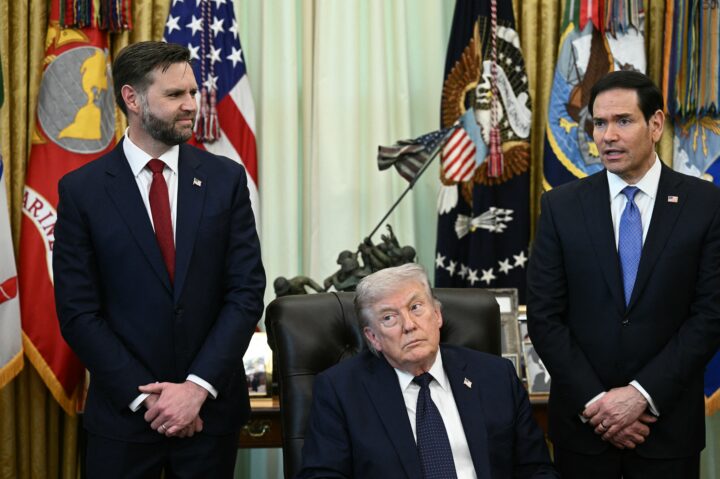
Photo by Brendan SMIALOWSKI / AFP via Getty Images
Vice President JD Vance and President Donald Trump listen to Secretary of State Marco Rubio speak during a meeting with Lebanon Ambassador to the U.S. and Israel Ambassador to the U.S., at the White House in Washington, D.C. on April 23, 2026.


 Add JewishInsider on Google
As the details around the memorandum of understanding between the U.S. and Iran emerge, Vice President JD Vance, who has been deputized with leading the effort, and Secretary of State Marco Rubio, ostensibly the Trump administration’s top diplomat, have offered different messaging around the issue of Lebanon and Hezbollah being subsumed into discussions with Tehran.
After the U.S. and Iran agreed to create a “deconfliction cell” for military operations in Lebanon — a mechanism that, notably, does not include Israel — Vance said on Monday that the U.S. will be counting on Iran to “rein in” its proxy Hezbollah, without referencing Tehran’s material support for the terror group.
Vance called on Israel to respond to Hezbollah’s attacks “in the context of a conversation that’s ongoing between Hezbollah, Lebanon, Israel and other partners in the region.” He said the conflict is “a bit of a chicken and egg problem,” in which he claimed lower-level Hezbollah operatives are firing on Israel without approval from their superiors.
Rubio, meanwhile, has been clearer about Iran’s role in propagating terror in the Middle East. Arriving in the United Arab Emirates on Tuesday, he said a “complete end of hostilities in the entire region” is “not possible … as long as Iranian proxies are launching missiles and drones from Iraq and are participating in terrorism like Hamas did and like Hezbollah did.”
WATCH: Marco Rubio said upon arriving in Abu Dhabi that the U.S.–Iran and Israel–Lebanon diplomatic tracks “are separate because Lebanon is a sovereign country,” while adding that Iran’s “support and sponsorship of Hezbollah” will be part of “our conversations with the Iranians.” pic.twitter.com/iADhszGTZC
— Jewish Insider (@jewishinsider) June 23, 2026
Rubio also distanced the Lebanon conflict from negotiations with Iran: Asked if he believes the Israel-Lebanon peace process should be separate from the Iran discussions, Rubio said, “That process is separate.”
“It’s separate because Lebanon is a sovereign country. … When it comes to Lebanon and what’s happening inside of Lebanon, we’re going to negotiate a deal directly with the Lebanese government,” he continued, again without mentioning Israel.
“Now, there’s an Iranian issue with regards to Lebanon, and that is their support and sponsorship of Hezbollah. And so that factor will be discussed as part of our conversation with the Iranians, but … the future of Lebanon belongs to the Lebanese people, through their sovereign, elected government, and that’s who we’re going to be working with,” Rubio said.
He referenced a phone call he and Vance held earlier on Tuesday with Lebanese President Joseph Aoun, who said in a readout that the deconfliction mechanism will now include Lebanon as a party.
Olivia Wales, a White House spokesperson, told Jewish Insider, “Both Vice President Vance and Secretary Rubio are in lockstep with President Trump: Iran can never have a nuclear weapon and must stop their proxies in Lebanon from causing trouble. What President Trump and his entire national security team achieved on the battlefield and at the negotiating table is nothing short of remarkable and will strengthen American security for years to come.”
This story was updated on June 23 to include comment from the White House.
‘The main discussion is about Lebanon and Hezbollah — not about the extent to which Iran can restrain Hezbollah. That is not Iran’s role,’ the Israeli envoy said of Tehran’s involvement in the conflict in Lebanon
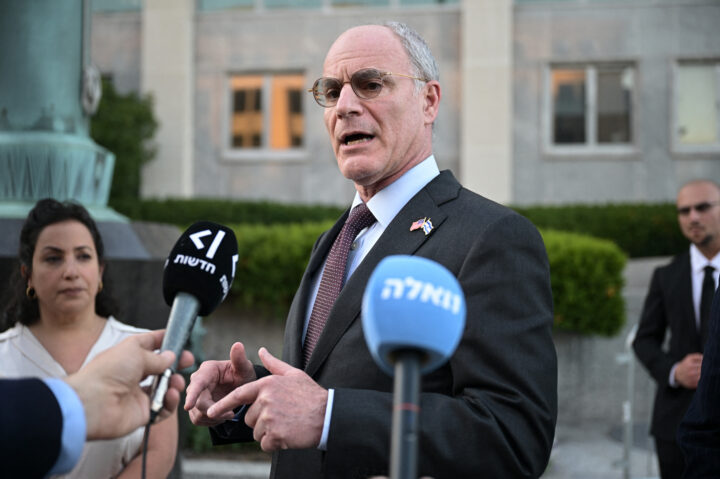
Oliver Contreras / AFP via Getty Images
Israel's Ambassador to the U.S. Yechiel Leiter speaks to reporters after a meeting between Israeli and Lebanese delegations hosted by the United States at the State Department in Washington, DC, on June 3, 2026.
Israeli Ambassador to the U.S. Yechiel Leiter criticized the Trump administration on Tuesday for agreeing to establish a “deconfliction cell” to end military operations in Lebanon without Israel’s involvement as part of the ongoing peace talks with Iran, the first public statement from Jerusalem denouncing the move.
Leiter released a pair of statements in English and Hebrew at the start of the fifth round of multi-day diplomatic talks at the U.S. State Department between Israel and Lebanon, in which he warned that both parties were “heading towards a train wreck.”
The ambassador said that while the Israelis “support President Trump’s vision of ensuring that Iran no longer has nuclear capabilities, ballistic missiles or the ability to funnel money to its proxies to threaten its neighbors and maintain its regional hegemony,” he worried “that the concept of ‘deconfliction’ is misplaced.”
“Israel is not in conflict with Lebanon. Therefore, deconfliction is not the issue. All that is needed is coordination with Lebanon. The only issue is Hezbollah,” Leiter said.
In his Hebrew statement, he added that “the basic premise” of the talks out the outset “was that Iran was not involved, and the main discussion is about Lebanon and Hezbollah — not about the extent to which Iran can restrain Hezbollah. That is not Iran’s role. Its role is to get out of Lebanon.”
He went on to pose a series of questions, without specifically directing them toward the Trump administration or his Lebanese counterparts, about the aim of Israeli-Lebanese peace talks. “We agreed to a ceasefire that was conditional on Hezbollah withdrawing north. Is this agreement still binding?” he asked, referencing the parties’ agreement reached at the end of the last round of talks earlier this month. “We cannot afford commitments that fade away. And it is important to be clear: Israel will act against immediate and evolving threats to its citizens and soldiers.”
Leiter also pointed to the memorandum of understanding between the U.S. and Iran, asking how to assure that the funds Iran will gain access to “do not find their way to Hezbollah? If we cannot guarantee that, then all the words we agree to here will make no difference, because Hezbollah will simply rebuild itself.”
Leiter’s statements came as Secretary of State Marco Rubio pushed back on the notion that U.S. peace talks with Iran were tied to Israeli-Lebanese normalization efforts.
“That process is separate,” the secretary of state said while arriving in the United Arab Emirates on Tuesday when asked about the two efforts. “It’s separate because Lebanon is a sovereign country.”
“When it comes to Lebanon and what’s happening inside of Lebanon, we’re going to negotiate a deal directly with the Lebanese government,” he continued, making no mention of Israel.
Please log in if you already have a subscription, or subscribe to access the latest updates.
 Continue with Google

 Continue with Apple