



















































Treasury Department adds new sanctions targeting Iranian oil exports
The U.S. announced sanctions on a network of companies and shipping facilitators involved in Iran’s oil export business

ATTA KENARE/AFP/Getty Images
Oil tanker SC Hong Kong is seen off the port of Bandar Abbas, southern Iran, on July 2, 2012.


 Add JewishInsider on Google
The Treasury Department implemented new sanctions on Thursday targeting what the agency described as a “network of front companies and shipping facilitators that bankroll the Iranian armed forces by selling crude oil” — a critical revenue stream for the regime.
The latest round of sanctions, one of several announced in recent months, also targets six vessels in Iran’s “shadow fleet” of tankers used to transport oil to international markets, joining a list of more than 170 such vessels which have been sanctioned this year.
The Treasury is also adding sanctions on a subsidiary of Mahan Air, an Iranian airline used by the Islamic Revolutionary Guard Corps to help supply proxies and allies across the region.
“Today’s action continues Treasury’s campaign to cut off funding for the Iranian regime’s development of nuclear weapons and support of terrorist proxies,” Treasury Secretary Scott Bessent said in a statement. “Disrupting the Iranian regime’s revenue is critical to helping curb its nuclear ambitions.”
In its announcement, the Treasury Department said that Iran’s oil exports are a crucial source of funding for the Iranian regime, particularly as the Islamic Republic seeks to rebuild after its war with Israel.
“Following its defeat in the 12-Day War with Israel, Iran’s military has increasingly come to rely on the sale of Iranian crude oil to supplement its annual budget and finance the rebuilding of its depleted forces,” the statement reads.
The companies targeted under the sanctions are tied to Sepehr Energy Jahan Nama Pars Company, an arm of the Iranian military responsible for oil sales and exports. The companies being targeted operated variously out of the UAE, Panama, Greece, India and Liberia.
The ships in question are flagged in Palau, Panama and Gambia.
According to the Treasury’s announcement, Mahan subsidiary Yazd International Airways Company was used by the IRGC to transport Quds Force officers to Lebanon to support Hezbollah attacks on Israel and to ship weapons to the Assad regime in Syria.
The sanctions also seek to crack down on Mahan’s procurement of Western aircraft and identify several such aircraft as blocked property.
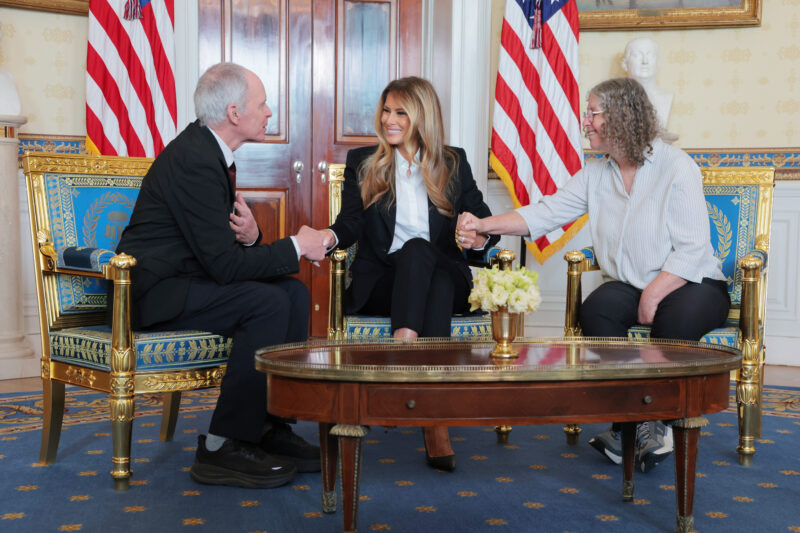
Bessent also attended a meeting at the White House on Thursday with recently freed hostages.
“We heard their firsthand accounts of the atrocities experienced on that day and over the past two years,” Bessent said on X. “Thanks to President Trump’s historic actions and bold leadership, all of the hostages have been freed, and we are closer than ever to a lasting peace in the Middle East. At @USTreasury, we are committed to safeguarding Americans and our allies from terror, wherever it presents.”
More Stories
DOHA DEALINGS
FBI Director Patel signs security deals with Qatar, his former lobbying client
TEAM EFFORT
U.S., Israel worked for months on Iran strikes with ‘unprecedented cooperation,’ IDF chief of staff says
MEDIA MOMENT
White House taps Hamas-sympathetic Drop Site News in press corps rotation
PARIS POSITION
France denies role in drafting Palestinian constitution enshrining ‘pay for slay’

CHICAGO SHAKEUP
Major ad buys boost moderates facing anti-Israel challengers in Chicago-area House races
INFO WARS
Congressional Progressive Caucus invites Trita Parsi, Ben Rhodes to brief on Iran strikes
Please log in if you already have a subscription, or subscribe to access the latest updates.