































European nations trigger ‘snapback’ sanctions on Iran
The sanctions will be reinstated in 30 days; Iran could come to an agreement with the West before then
Selcuk Acar/Anadolu via Getty Images
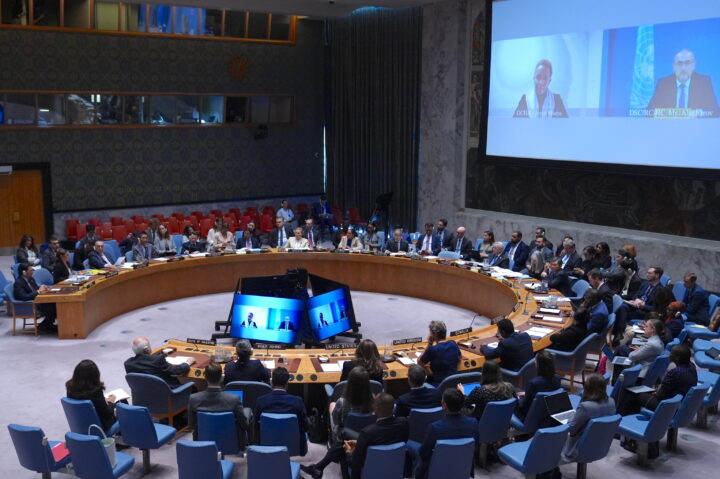
U.N. Security Council meeting New York City on August 27, 2025.


 Add JewishInsider on Google
France, Germany and the United Kingdom triggered the snapback sanctions mechanism on Thursday, to reinstate all United Nations Security Council sanctions on Iran that had been lifted since the implementation of the 2015 nuclear deal.
The European parties to the Iran deal, known as the E3, notified the UNSC that they were triggering snapback sanctions due to Iran’s continued noncompliance with its commitments under the Joint Comprehensive Plan of Action, to which they are still parties despite the U.S. withdrawal in 2018.
If the UNSC does not adopt a resolution stopping the process — which is unlikely unless Iran reaches an agreement with the West, because it would be subject to vetoes from the states triggering the sanctions and the U.S. — all of the sanctions sunsetted in the framework of the 2015 deal will be restored in 30 days.
However, the E3 said it is open to continuing negotiations with Iran during those 30 days.
The E3’s move came after its foreign ministers met with their Iranian counterpart Abbas Araghchi in Geneva earlier this week in a last-ditch effort to reach an agreement with the Islamic Republic to scale back its nuclear program. It also comes less than three months after Israel and the U.S. bombed Iranian nuclear facilities, after which U.S.-Iranian negotiations broke down.
“Since 2019,” the E3 foreign ministers’ statement reads, “Iran has exceeded JCPoA limits on enriched uranium, heavy water, and centrifuges, restricted the IAEA’s ability to conduct JCPoA verification and monitoring activities, and has abandoned the implementation and the ratification process of the Additional Protocol to its Comprehensive Safeguards Agreement. These actions contravene Iran’s commitments set out in the JCPoA and have serious implications on the capacity of Iran to progress toward developing a nuclear weapon.”
The E3 noted that it repeatedly negotiated with Iran to return to its 2015 commitments, to no avail.
“Today, Iran’s non-compliance with the JCPoA is clear and deliberate, and sites of major proliferation concern in Iran are outside of IAEA monitoring,” the foreign ministers stated. “Iran has no civilian justification for its high enriched uranium stockpile … Its nuclear program therefore remains a clear threat to international peace and security.”
Among the sanctions that would be restored are an arms embargo, a ban on Iranian uranium enrichment and reprocessing, a ban on transferring ballistic missile technology and technical assistance, a global asset freeze on targeted Iranian individuals and entities and foreign inspections of Iranian cargo planes.
The snapback mechanism was set to expire at the end of October, in accordance with the terms of the JCPOA, but Russia will assume the presidency of the UNSC in October, raising concerns in the West that it would try to delay the 30-day snapback process. As such, the E3 set a deadline for the end of August for Iran to make progress in rolling back its nuclear program.
In 2020, two years after the U.S. left the JCPOA, the first Trump administration attempted to trigger snapback sanctions, but the other parties argued that it was no longer entitled to do so.
Iran’s Foreign Ministry said that it “categorically reject[s] and condemn[s] in strongest terms the unlawful notification by the E3 to the UNSC … This escalation will severely undermine the ongoing process of engagement between Iran and the International Atomic Energy Agency. It will be met with appropriate responses.”
Secretary of State Marco Rubio said the U.S. supports the E3’s move and called it “a direct response to Iran’s continuing defiance of its nuclear commitments.”
“At the same time,” Rubio said in a statement, “the United States remains available for direct engagement with Iran … Snapback does not contradict our earnest readiness for diplomacy, it only enhances it.”
Israeli Foreign Minister Gideon Sa’ar posted on X that “even after Israel and the U.S. operation against Iran’s nuclear program, Iran hasn’t abandoned its desire to acquire a nuclear weapon. This is why the E3’s move to initiate the return of UN sanctions on Iran is inevitable. It is an important step in the diplomatic campaign to counter the Iranian regime’s nuclear ambitions.”
More Stories
rabbinic rebuke
Over 800 rabbis speak out against Mamdani as threat to ‘safety and dignity of Jews in every city’
TERROR TAGS
Florida designates Muslim Brotherhood, CAIR as terrorist organizations
ALLIES ASSEMBLE
Western allies close ranks behind U.S. as Iran strikes across Middle East
RAISING RED FLAGS
Israel eyeing upcoming Iran-U.S. talks with deep skepticism

TEXAS TALK
Two Republicans condemned by Jewish groups looking to make comebacks in Texas
MEDIA MOMENT
White House taps Hamas-sympathetic Drop Site News in press corps rotation
Please log in if you already have a subscription, or subscribe to access the latest updates.