

















































Izabella Tabarovsky’s ‘Be a Refusenik’ offers a productive mindset and practical ideas for Jewish students facing antisemitism
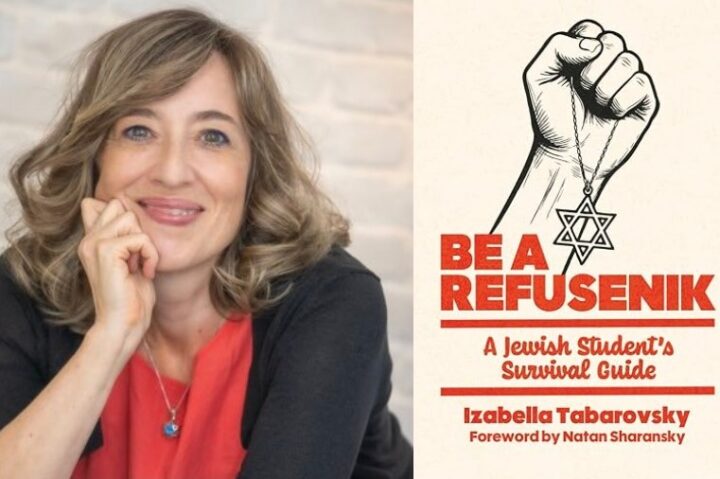
Izabella Tabarovsky


 Add JewishInsider on Google
Pocket your kippah. Tuck your Star of David into your shirt. Keep your head down as you walk through the quad, That’s just some of the advice Jewish college students around the country told the Soviet-born writer and activist Izabella Tabarovsky they were given by the leaders of major Jewish organizations as a strategy to weather the anti-Israel and antisemitic storms that have raged on campus since Oct. 7, 2023.
Tabarovsky’s counter-message: Don’t hide. Reclaim your Zionism. And take inspiration from the Soviet refuseniks of the 1980s who stared down Communist Party strongman Leonid Brezhnev, held fast to their Judaism and eventually won their freedom.
Tabarovsky lays out some of these strategies for college students in a new book, Be a Refusenik: A Jewish Student’s Survival Guide, in which she argues that the anti-Israel sentiment on college campuses in recent decades, which has metastasized into antisemitism, mirrors Soviet anti-Jewish propaganda. In the book, Tabarovsky looks back to that era not only to understand the root causes of contemporary antisemitism, but to take inspiration on how to fight it.
The book features a history of Soviet anti-Zionist propaganda with its parallels to the rhetoric on college campuses today, interviews with refuseniks – Soviet Jews who were denied the right to emigrate to Israel, and often imprisoned for trying – and campus activists, and a foreword from the best-known refusenik, Natan Sharansky. Tabarovsky, who was born in the Soviet Union, emigrated to the U.S. in 1990 and now lives in Israel, also offers concrete strategies for students encountering antisemitism to stand proud and strong as Jews.
Tabarovsky told Jewish Insider that she saw a need for her book after many discussions with young Jews: “We’re in a bleak moment, and a lot of books diagnose the bleakness. … I saw a hunger for an inspirational message.”
In the near-decade that she has been writing about the subject, it has become “widely accepted among scholars and people involved in this [activism] that the patterns of anti-Zionist demonization and erasure are some of what Soviet Jews experienced in [former Soviet Union leader Leonid] Brezhnev’s USSR,” she said.
“If American Jews are today encountering the same language, the same explanatory logic and worldview … wouldn’t it make sense to look at how Soviet Jews responded?” Tabarovsky said. “We have this heroic story at the center of the Soviet Jewish story, which is really bleak, but had one really bright light that led to massive change.”
Tabarovsky clarified that, while the U.S. is a democracy and the Soviet Union was an oppressive totalitarian regime, “historic parallels are complex and nothing is ever exactly the same. I would never say that America today is like Brezhnev’s USSR, and the dangers that American Jews face are incomparable to what somebody like Sharansky faced.”
However, she said, “what is similar are the ideological echoes and anti-Zionist erasure. … In every society, there is a scale of punishments that’s different. What’s the worst thing that can happen in America? Your reputation is ruined; you lose your career, you’re ruined financially. All of these things can happen to people who declare themselves Zionists.”
While the refuseniks are remembered for their attempts to emigrate from the Soviet Union, Be a Refusenik focuses on their domestic dissident activity, especially their underground actions to strengthen Jewish identity, spread Jewish education, teach Hebrew and learn about Israel and Zionism. They were “crowdsourcing Jewish knowledge” when the Soviet party line was that “Zionism is racism, is Nazism,” Tabarovsky recounted.
Part of the strategy Tabarovsky suggests for young Jews on campus is modeled after “an inner journey the refuseniks took” in strengthening their Jewish identity.
“Some refuseniks told me this is how they viewed it,” Tabarovsky said, “the system refused to allow them something they wanted, but before that, they refused [to accept] something about the system itself. They refused [to accept] the antisemitism that the system demanded from them, that they erase their Jewish identity, that they give up their sense of peoplehood. … The refuseniks said ‘we don’t buy it; we refuse [to accept] this version of reality. We believe something different.’”
Tabarovsky noted that in her speaking engagement with young American Jews, she realized that many are unfamiliar with the refuseniks, and when she would ask for examples of Jewish heroes, they would usually mention the Warsaw Ghetto Uprising or the Maccabees.
“[Refuseniks] are a real example of Jewish courage and defiance. … They found each other and created a different reality. They wrote their own Jewish story and recreated the Jewish identity that had been taken away from them. … They are the role models we need,” she said.
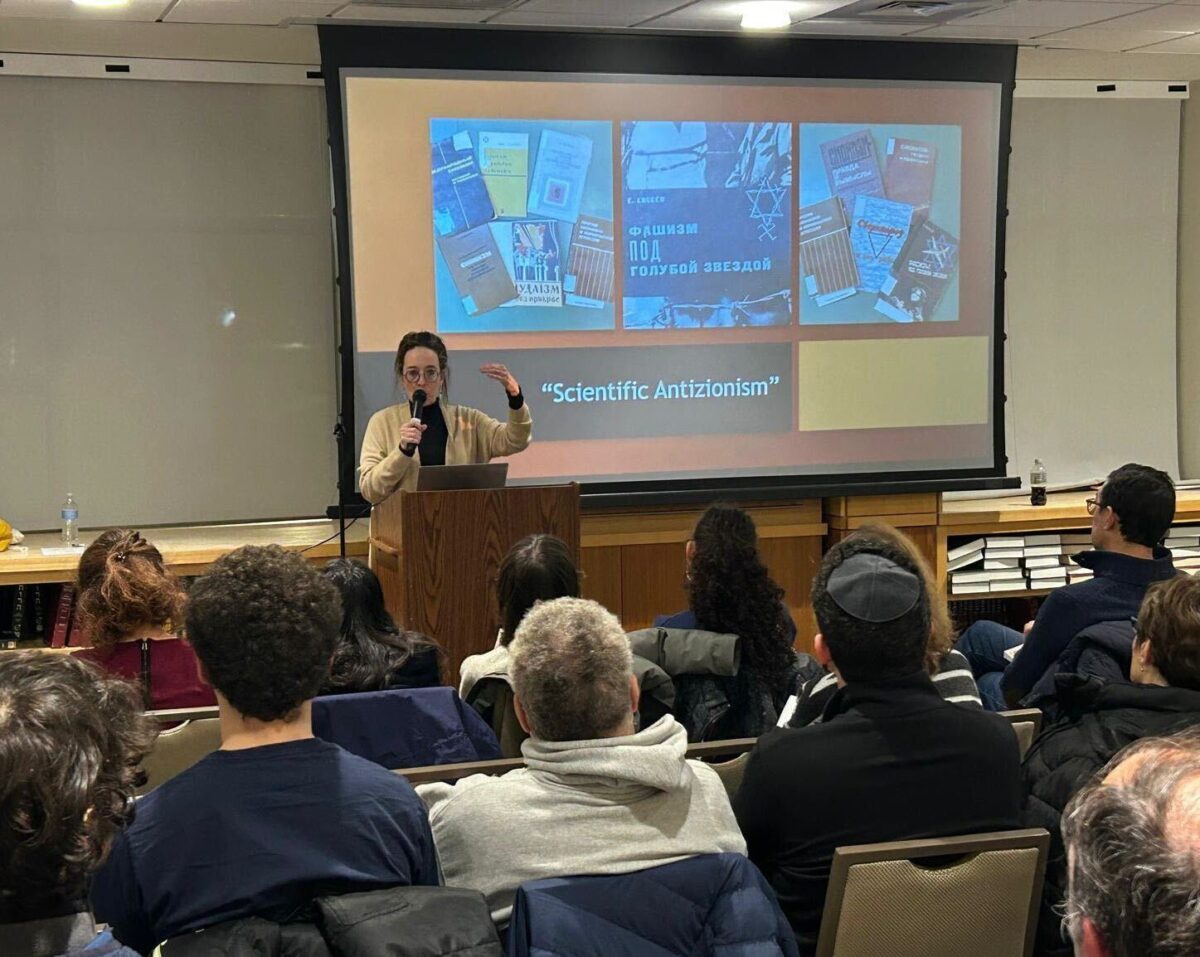
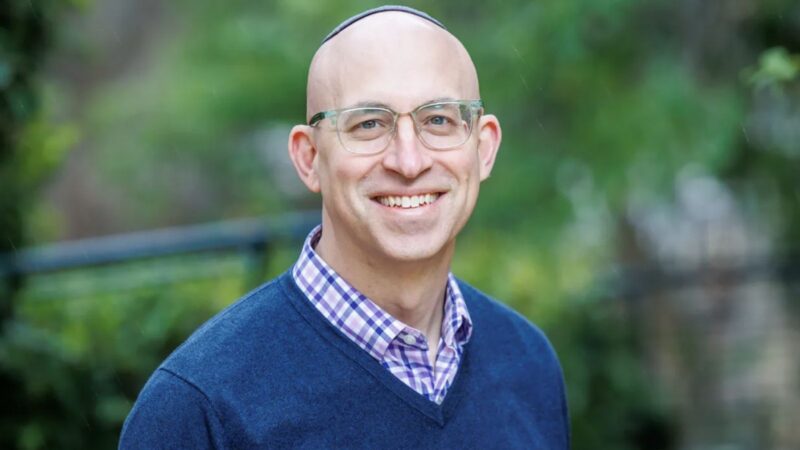
Izabella Tabarovsky speaking at a Be a Refusenik book talk in Needham, MA, organized by Jewish Alumni Strong and Association of Jewish Princeton Alumni. (Yelya Margolin)
Tabarovsky said that American Jews need to rebalance the narratives of Jewish victimhood and heroism, because victimhood has become too dominant.
“You read the horrible things refuseniks went through, but none of them talked about themselves as victims,” she said. “They felt like protagonists in their own story. They took responsibility; they took risks consciously. We need to think of ourselves in these terms, as well.”
Tabarovsky said she heard from many students who were told by large Jewish organizations to keep their heads down and try not to provoke or attract attention, or engage, and applauded those who did not take that advice.
To Jewish students, Tabarovsky suggests: “Reclaim your Zionism.”
“Build a community. Find other people like you. Re-empower yourself and think about your situation strategically,” she said. “The Jewish community has been improvising responses on the fly, while the other side is in the driver’s seat, creating all these propagandistic narratives. … We need to think strategically about how we need to organize ourselves.”
Once that happens, Tabarovsky said she is confident that Jewish students “will know how to act.” One example she cited was Lishi Baker, a rising senior at Columbia studying Middle East history, who she said saw American flags being defaced during anti-Israel protests at Columbia University and organized a counter-protest with American, not Israeli flags, to show that the protests are not only anti-Israel, but anti-American.
Tabarovsky called on students “to be more creative in the way they protest. The other side is doing all kinds of things to attract the media. The Soviet Jewry movement was so creative and knew how to attract attention.”
Sen. John Kennedy told JI that Barrack was ‘very incorrect’ when casting doubt on Israel’s status as a democracy
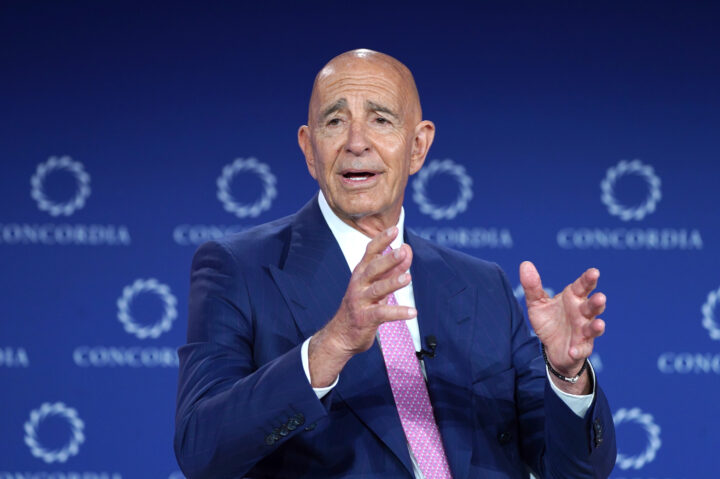
Leigh Vogel/Getty Images for Concordia Annual Summit
U.S. Ambassador to Turkey Tom Barrack speaks during the 2025 Concordia Annual Summit on September 24, 2025 in New York City.
Republican lawmakers are criticizing U.S. Ambassador to Turkey Tom Barrack over his recent comments questioning whether Israel is a democracy while voicing support for Turkey joining the proposed U.S.-led International Stabilization Force to operate in Gaza.
Barrack raised eyebrows with his comments on Sunday at the Doha Forum in Qatar — where the Syria envoy appeared to cast doubt on Israel’s status as a democracy while suggesting that “benevolent” monarchies were typically more successful in the region. Earlier last week, the ambassador drew attention for endorsing Turkey’s inclusion in the ISF because their “criticized relationship” with Hamas would “soften whatever has to be done” to disarm them.
Barrack’s comments in Doha were made in the context of criticizing previous efforts by the U.S. and others to impose democratic governing models in the Middle East. “Almost every decision that the West has imposed on the region, rather than allowing it to evolve on its own, has been a mistake,” Barrack said.
“The first thing that has to happen is that we have to allow them, Syria, to define it themselves without going in with Western expectations and saying, ‘We want a democracy in 12 nights,’” Barrack said on Sunday. “We’ve never had a democracy [in the Middle East]. I don’t see a democracy anywhere. Israel can claim that it’s a democracy, but in this region, really what has worked the best, whether you like it or don’t like it, is a benevolent monarchy.”
At the Milken Institute’s Middle East and Africa Summit in Abu Dhabi, United Arab Emirates, on Friday, Barrack said, “If you think about it, having Turkey, who has a relationship and an Islamic foothold, will soften whatever has to be done in this, disarming Hamas. … How are you going to disarm them? Are you really going to militarily disarm them? Are we going to be in the soup again? Do you have caches and say, show up at public storage, and we’ll give you a ticket, and this is going to go into the IDF?”
Sen. John Kennedy (R-LA) told JI that Barrack was “very incorrect” with his musing about Israel’s standing as a democracy. “I think Israel is a democracy, and Israel is our only true friend in the Middle East,” Kennedy said.
Asked for his reaction to Barrack’s public support for Turkey joining the ISF, the Louisiana senator replied: “I don’t trust Turkey.”
Sen. Lindsey Graham (R-SC) said about Barrack’s comments, “If I had to give you an example of a robust democracy, it would be Israel. If you don’t like the government, stick around a month, they’ll get a new one.”
Daniel Shapiro, who served as U.S. ambassador to Israel during the Obama administration and as deputy assistant secretary of defense for the Middle East for a year and a half of the Biden administration, told JI that Barrack’s comments about Israel’s democratic bona fides were “a bit chilling.”
“There’s no cause for calling into question Israel’s status as a democracy,” Shapiro said. “I’ll give him the benefit of the doubt that that was simply a misstatement that he probably will think better of.”
“I know it’s better when ambassador’s statements are fully aligned with the policies of their administration,” he continued. “This administration generally may be less coordinated in that regard than others because our president speaks so frequently and extemporaneously, but that actually raises the importance of ambassadors ensuring that they are fully aligned with whatever the president’s policy is.”
The remarks also prompted criticism from foreign policy analysts and experts, who suggested the ambassador to Ankara was acting more in the interests of Turkey than the United States.
“There’s no question that he often reflects the Turkish view on a number of things,” Michael Makovsky, president of the Jewish Institute for National Security of America, told JI. “That might be his view, or in my opinion, he doesn’t really understand the Middle East or proper U.S. interests in the Middle East. Generally, he often reflects Turkish views of the region.”
“That happens sometimes with ambassadors, they sometimes strongly reflect the views of the countries to which they’re posted, but he’s really been out there on this,” he continued. “Personally, that is concerning to me.”
Makovsky questioned Barrack’s broader approach to the media while criticizing his remarks about whether Israel is a democracy as “a bit incomprehensible.”
“I find that Barrack speaks a lot in public or to journalists, to the media. Frankly, a number of the statements he makes are kind of hard to understand, and certainly this is one of them,” he explained, describing Barrack’s previous statements to the media as “word salads.”
Sinan Ciddi, a senior fellow at the Foundation for Defense of Democracies, similarly voiced concerns about Barrack’s warm stance toward the Turkish government.
“He’s made it no secret that he is essentially very pro-Turkey, and that he sympathizes [with the view that] the key to stability or [achieving] U.S. interests goes through projecting Turkish interests in the region,” Ciddi told JI. “For a long time [he has been] suggesting that if there is going to be lasting peace and essentially a cessation of hostilities inside of Gaza, then Turkey has to play a role, which means putting Turkish troops inside of Gaza as part of the stabilization force.”
“Obviously, Israel has a problem with that,” he added. “Not only Israel, but also significant parts of the U.S. government and a handful of Arab states, because they feel that a Turkish presence there would unsettle the balance there because of Turkey’s ties to Hamas.”
Ciddi noted that the United Arab Emirates, Saudi Arabia and Egypt have all voiced concerns about what type of involvement Ankara would have in the ISF. He added that Turkish President Recep Tayyip Erdogan sees the ISF “as a momentous opportunity to step into Gaza and undermine Israel and really project Turkey’s power.”
The Arab states are “deeply worried that Turkey’s military presence there would be to basically prop up Hamas. They’re not going to be there to essentially disarm and dissolve Hamas, that Turkey is basically going to stand shoulder to shoulder [with Hamas],” Ciddi told JI. “That’s going to just basically heighten tensions between Turkey and Israel and could lead to the potential of an arms conflict between them. Nobody wants that. Nobody understands why Barrack is pushing for that.”
“Either Tom Barrack is ignorant of the facts pertaining to Turkey’s deep enmeshment and involvement with Hamas over the years, particularly since Oct. 7 in terms of the material support it has provided Hamas … or he is choosing to ignore that,” he continued. “I think he’s either coming at it from a perspective of ignorance, or he’s choosing to ignore it. But neither bodes well, and that is the unfortunate circumstance.”
Ciddi also accused Barrack of “essentially running a portfolio where he feels very emboldened as ambassador to Ankara, as well as special envoy to Syria,” citing that he “doesn’t come from a traditional diplomacy or foreign service background. He knows he has the ear of [President Donald] Trump. He knows he’s one of the few people that Trump listens to.”
Barrack faced backlash from Israel on Tuesday for his recent comments, with Walla News reporting that Israeli Prime Minister Benjamin Netanyahu and his team view Barrack as too closely aligned with Turkey.
“Barrack is acting like a Turkish ambassador and undermining regional stability,” a senior Israeli official told the outlet, adding that Barrack is “overly influenced by Turkish interests in Syria” and is operating “to a significant extent in line with Syrian interests.”
An Israeli diplomatic source confirmed the Walla report, adding that they were “stunned by [Barrack’s] statements praising benevolent monarchies and belittling Israeli democracy,” and saying that the remarks were unprecedented.
The White House did not respond to JI’s request for comment.
Lahav Harkov contributed to this report.
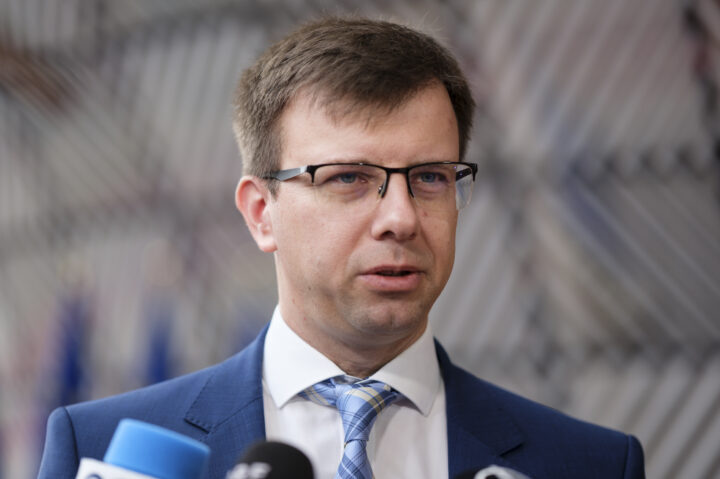
In an interview with JI, János Bóka, Hungary’s minister for EU affairs, says the allegation that Orbán is antisemitic is ‘wrong’ and ‘a misunderstanding of what he does.’
Thierry Monasse/Getty Images
Hungarian Minister for European Union Affairs Janos Boka talks to media prior to the start of an EU General Affairs Ministers Council in the Europa building, the EU Council headquarter on July 18, 2025 in Brussels, Belgium.
In the last decade and a half, Hungary has gained a reputation as the most conservative European nation, a distinction happily touted by the country’s prime minister, Viktor Orbán, who has been in office since 2010.
In building that reputation, Orbán has courted controversy — with inflammatory comments about racial minorities and the LGBTQ community, by taking measures that critics say erode the country’s democracy and by adopting a more pro-Russia stance than most of the rest of the European Union. His hard-line policies are part of why Orbán and President Donald Trump have been able to cultivate a close relationship, with the U.S. and Hungary now far more aligned than they were during the Biden administration.
“That’s an understatement,” János Bóka, Hungary’s minister for EU affairs, told Jewish Insider with a laugh during a visit to Washington last week.
But if Trump has taken a page from Orbán’s conservative governing playbook, bringing the two countries closer together, Bóka said there is one political trend playing out among American conservatives that he hopes Hungary avoids: the rise of antisemitism on the political right.
“I am aware of the discussion that you are now having in the States on the reviving of antisemitism on the right. One of the added values of my trip in the U.S. is that I can study this firsthand and can discuss this with people so I have a better understanding,” Bóka said. “This phenomenon is something that is very difficult for me to understand, because at least in Hungary and in most parts of Europe, it doesn’t have a parallel, or at least not yet.”
That’s because Bóka says Hungary has all but eliminated right-wing antisemitism and the lingering vestiges of Nazi ideology, or at the very least that the country has made it “politically irrelevant.”
“I cannot pretend the 20th century did not happen,” said Bóka, who as of May also serves as Hungary’s special commissioner tasked with fighting antisemitism. But, he added, “this government has basically expelled political antisemitism from the political discourse.”
The situation in Hungary is more complicated than Bóka let on. Orbán has faced criticism from Jewish organizations for years over his targeting of Hungarian Holocaust survivor and financier George Soros, with the Anti-Defamation League writing in 2018 that the Hungarian campaign against Soros is “chilling.” Deborah Lipstadt, the Holocaust historian who served as the State Department’s antisemitism envoy during the Biden administration, said in 2022 that Orbán’s rhetoric warning against racial mixing “clearly evokes Nazi racial ideology.”
Bóka, who was in Washington to meet with American Jewish communal leaders, said Hungary has adopted a “zero-tolerance policy toward antisemitism,” and said the allegation that Orbán is antisemitic is “wrong” and “a misunderstanding of what he does.”
Similar to Trump, Budapest has adopted the stated goal of combating antisemitism, even if its approach is controversial and targeted toward one particular political ideology. And like Trump, Bóka views the fight against antisemitism as tied to the country’s broader efforts to limit migration.
“We see some elements coming from the far left and as a part of a European network that is becoming more active and vocal in Hungary as well in the past few months. But I think this is very limited,” said Bóka. “We haven’t seen violent incidents that are in any way similar to what we see in some Western European cities because of the strict migration policy we have in place. And also because of the zero tolerance policy on antisemitism, we don’t see radical Islamism as a political factor in Hungary.”
Because his job description includes Hungary’s relationship with the EU, Bóka sees his purview as broader than just antisemitism in Hungary. He called it a “European challenge” that must be addressed together. “Antisemitism exists in all EU member states, including Hungary,” Bóka acknowledged. He thinks he — and Hungary — have something to offer other European nations as they seek to combat antisemitism.
His first lesson to them is about Israel: If you are serious about fighting antisemitism, Bóka argues, attacking Israel’s actions in Gaza in EU forums will undermine that goal. Israel has leaned heavily on Orbán as a pro-Israel bulwark in the EU. Hungary announced earlier this year that it would leave the International Criminal Court to protest its treatment of Israel and Israeli Prime Minister Benjamin Netanyahu, who faces an arrest warrant from the body.
Jewish communities “will never believe that you are credible, that you have a real political commitment for fighting antisemitism, if at the same time you send very mixed messages as far as your relationship with the State of Israel is concerned,” said Bóka. “If you start speaking the language of isolation, sanctions and so forth, then you will lose the opportunity to cooperate with the State of Israel on fighting antisemitism in Europe, which is indispensable.”
During his time in Washington, Bóka met with Rabbi Yehuda Kaploun, Trump’s nominee to serve as U.S. antisemitism special envoy. Kaploun had his Senate confirmation hearing last week but has not yet been confirmed. Bóka also met in New York with Jeff Bartos, the U.S. ambassador to the United Nations for management and reform. He said he is “convinced” that the U.S. and Hungary can collaborate on fighting antisemitism.
“I believe that we have a very similar strategic view on objectives and the ways and means to get there,” said Bóka. “I think there’s a lot of openness on both sides to cooperate.”
Israel strikes offline nuclear reactor in Arak

JOHN WESSELS/AFP via Getty Images
Smoke billows from Soroka Hospital in Beersheba in southern Israel following an Iranian missile attack, on June 19, 2025.
Iranian ballistic missiles struck Soroka Hospital in Beersheba in southern Israel and sites in the Tel Aviv area on Thursday morning, wounding 89, including three seriously.
A missile struck the hospital’s old surgical building, severely damaging it and causing what a Soroka spokesperson described as “extensive damage in various areas” of the hospital complex. The surgical building had been recently evacuated in light of the war, and patients and staff had been moved to areas with reinforced walls. Injuries from the strike were light, hospital representatives said.
Soroka is the largest hospital in the Negev, such that the strike left a large swath of Israel without a functioning major medical center. Other hospitals in the area, including Barzilai Medical Center in Ashkelon and Assuta Medical Center in Ashdod, prepared to take in patients from buildings that were damaged. Magen David Adom provided four intensive care buses, able to transport a total of 23 ICU patients and 50 lightly injured casualties.
Israeli Foreign Minister Gideon Sa’ar wrote that “The Iranian regime fired a ballistic missile at a hospital. The Iranian Regime deliberately targets civilians. The Iranian regime is committing war crimes. The Iranian regime has no red lines.”
Prime Minister Benjamin Netanyahu posted on X that “Iran’s terrorist dictators shot missiles at Soroka Hospital in Beersheba and the civilian population in the center of the country. We will make the dictators in Tehran pay the full price.”
Israeli Defense Minister Israel Katz said in a statement that the price would be to destabilize the Islamic Republic’s regime.
“The prime minister and I instructed the IDF to increase the force of the attacks against strategic targets in Iran and against governmental targets in Tehran to remove the threats to the State of Israel and undermine the Ayatollahs’ regime,” he stated.
Iranian news agency IRNA claimed that the target of the strike was an IDF intelligence outpost in Beersheba’s HiTech Park, which is over a mile away from the hospital. A television channel tied to the Islamic Revolutionary Guard Corps said that the missile was aimed at a “military hospital” in response to strikes on “civilian hospitals” in Gaza.
In the same 30-missile barrage, Iranian missiles struck a school in Holon. No children were present, because schools have been closed across Israel since Friday, but three elderly residents of adjacent buildings were wounded in serious condition, in addition to 62 others with minor to moderate injuries.
Another missile struck near the Ramat Gan Diamond Exchange, abutting Tel Aviv, causing minor injuries to 21 people and damage to 20 buildings in the neighborhood, which includes some of Israel’s tallest buildings.
Shrapnel struck Sheba Medical Center, Israel’s biggest hospital, also in Ramat Gan.
Overnight, the IDF intercepted several drones launched by Iran at Israel towards central and northern Israel.
Jordanian authorities reported that an Iranian drone fell in a shopping center north of Amman, damaging a car and a bus station. Syrian media reported that an Iranian drone was shot down over the country.
The IDF struck an inactive nuclear reactor near Arak in Iran early Thursday after sending warnings to civilians in the area. The IDF Spokesperson’s Office said the strike included “the structure of the reactor’s core seal, which is a key component in plutonium production.”
“The strike targeted the component intended for plutonium production, in order to prevent the reactor from being restored and used for nuclear weapons development,” the IDF Spokesperson’s Office said.
The IDF also gave details of strikes on the active nuclear site in Natanz, which “contained components and specialized equipment used to advance nuclear weapons development and projects designed to accelerate the regime’s nuclear program.”
In addition, 40 IAF fighter jets struck dozens of military targets in Tehran and other parts of the country, including factories manufacturing ballistic missile and air-defense components, as well as air-defense batteries, surface-to-surface missile storage sites, radar systems and other targets.
IDF Chief of Staff Lt.-Gen. Eyal Zamir sent a letter of encouragement to IDF soldiers and commanders on Thursday, saying that they are “writing a new chapter in history for the State of Israel and the entire Middle East.”
”Thanks to a decisive and impressive surprise opening strike, we have achieved tremendous goals: We eliminated the regime’s command echelons, delivered a deep blow to the capabilities used for the Iranian nuclear program, identified and struck missile launchers, and we are continuing and increasing the strength of our operations as necessary,” Zamir wrote.
Iranian news reported that the country’s military shot down a second Israeli Hermes Drome. The IDF confirmed that Iran downed the first UAV a day earlier.
Israel’s Home Front Command loosened restrictions on Israelis on Wednesdays, allowing people to return to workplaces with safe rooms and for up to 30 people to attend synagogue at a time. Schools and kindergartens remained closed.
A poll published by the Israel Democracy Institute found that 70% of Israelis support the campaign launched against Iran last week, while 10% support the campaign but think the timing is wrong and 13.5% oppose it. Among Israeli Jews, 82% support the strikes, whereas only 11% of Israeli Arabs do, according to the poll. Jewish Israelis across the political spectrum support the operation: 57% of those who self-identify as left-wing, 75% of centrists and 90% on the right.
Though in past polls, most Jewish Israelis did not think Israel should strike Iran without help from the U.S., this week 69% thought it was the right decision. In addition, 68% of Jewish Israelis thought that Netanyahu’s motivation behind launching the operation against Iran was security-related, while 68% of Arab Israelis thought it was political.
The poll was conducted this Sunday-Tuesday among 594 Israelis, with a 3.61% margin of error.
The Jewish text-sharing platform has developed a prototype for applying its model globally

Homepage for Sefaria 'Democracy' Project
The Mishnah meets the American Revolution?
Sefaria, a non-profit that provides public domain access to Jewish texts and commentary, has developed a prototype of its highly praised model to bring its technology to other bodies of work — starting with the U.S. Constitution.
In addition to providing primary source material, Sefaria, founded in 2013 by Google developer Brett Lockspeiser and author Joshua Foer, maintains a user-friendly interface and software to highlight interlinking references and citations throughout Jewish scripture.
“I think we were really inspired by the shape of Torah itself. The Torah tradition has this texture and shape that the printed ‘Vilna Shas,’ the printed Talmud, really has this visual sense of,” Lockspeiser, who serves as the organization’s chief technology officer, explained to Jewish Insider.
“All along, we’ve had in the back of our heads that the software that we’re building isn’t necessarily specifically about Jewish content,” he continued. “It’s something that applies to any body of text where you have lots of voices kind of in communication and dialogue with one another.”
Sefaria, working with a grant from the Lippman Kanfer Foundation, developed a prototype of its model with texts related to the birth of American democracy. The group chose the United States Constitution as an example, partly for its robust links to other noted texts but also because the Constitution and related texts already existed in the public domain. Lockspeiser emphasized this was only an initial example, mentioning the works of Shakespeare, Greek and Roman literature, medical texts, and texts of other religions as potential future projects.
Just as with its original platform, the goal of Sefaria will remain the same: to promote learning by providing free access to primary and secondary sources. Lockspeiser said he and others on the team have already spoken to experts about the unlimited future potential.
Tamara Mann Tweel, a professor in Columbia University’s American Studies Program, spoke glowingly of Sefaria’s new direction.
“The project will benefit teachers and students across the country by allowing them to access their rich democratic inheritance and converse with the great political and literary minds who have helped build that inheritance,” Tweel told JI. ”Sefaria took the infrastructure built for our Jewish textual tradition and gave it to our democratic one.”
Currently, the prototype website — which also lists works including the Declaration of Independence, Madison’s notes from the Federal Convention, the Magna Carta and important Supreme Court decisions — appears bare-bones, especially in comparison to the complexity of its mother site.
Still, the possibilities for future development are immediately apparent. While Lockspeiser admits there remain “a million steps,” before the site is ready for mass use, the Google alum is enthusiastic about the progress.
“I think we’re being really successful right now at the initial demo moment,” he said. “You look at it and you’re just like, ‘This is interesting. This is cool. There’s something here.’ And that’s the seed of a project being successful.”
Please log in if you already have a subscription, or subscribe to access the latest updates.
 Continue with Google
 Continue with Apple