






















Pro-Israel moderates hold momentum in several Chicago-area House races
Former Rep. Melissa Bean emerged as the clear frontrunner in her old suburban Chicago district, while state Sen. Laura Fine looking formidable in race to succeed Rep. Jan Schakowsky
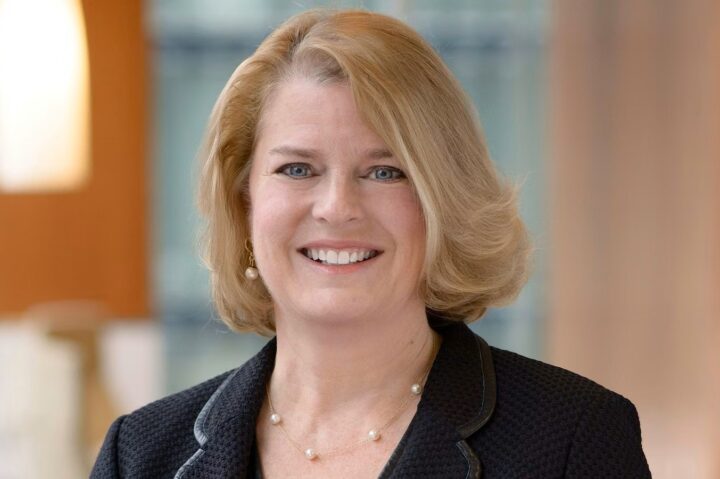
Melissa Bean campaign page
Former Rep. Melissa Bean (D-IL)


 Add JewishInsider on Google
Fundraising reports for the fourth quarter of 2025, released on Sunday, brought the state of the race in several hotly contested Chicago-area Democratic congressional primaries into focus, with pro-Israel candidates putting up strong showings in several seats.
In the 9th District, state Sen. Laura Fine led the field with $1.2 million raised and ended the quarter with a narrow cash-on-hand lead, at $1.4 million in the bank. Evanston Mayor Daniel Biss, an Israel critic, raised $659,000 and had $1.37 million on hand at the end of the quarter, and far-left influencer Kat Abugazaleh raised $1.1 million, but spent $1.4 million, leaving her with $811,000 in her war chest.
With her substantial fundraising, Fine has been the only candidate in the district to air advertisements on network television, while other candidates are advertising on cable.
Though publicly released polling has shown Biss and Abugazaleh at the top of the field and Fine trailing, Chicago political strategist Frank Calabrese emphasized to Jewish Insider that — with the large number of candidates in the race and Fine’s fundraising and momentum — she remains a leading contender.
On the other hand, he said that Biss, who previously ran for governor, and Abugazaleh, with her substantial online presence, are likely the most recognizable candidates, giving them a built-in advantage in a crowded field.
Calabrese also stressed that the fundraising data shows Abugazaleh is a serious and competitive candidate — despite some having written her off earlier in the race — and she is likely to pick up significant support among younger and more transient voters.
Calabrese predicted that an ad blitz against Biss — which the AIPAC-linked United Democracy Project is rumored to be considering — could ultimately redound to Abughazaleh’s benefit, rather than sending Biss voters toward Fine’s campaign.
UDP has said it has not yet made any decisions about the race.
One Jewish community activist in the district expressed concerns to JI in recent weeks about such a scenario, arguing that AIPAC and other Jewish community affiliated groups should be focused on stopping Abughazaleh above all else, and that they should agree to get behind either Biss or Fine, depending on which candidate polling shows has the best chance of beating Abughazaleh.
But others in the pro-Israel community have raised significant concerns about Biss’ own stance on Israel policy, which includes support for an offensive weapons ban on Israel.
Calabrese said that Phil Andrew, a former FBI hostage negotiator who closed the quarter with almost $1 million on hand — including $400,000 in self-funding — could be a wild-card candidate.
Calabrese explained that Bruce Leon, a prominent member of the local Orthodox Jewish community community who recently left the race, had thrown his support behind Andrew, following a spat with Fine and AIPAC, potentially pushing the Orthodox Jewish community toward Andrew and away from Fine.
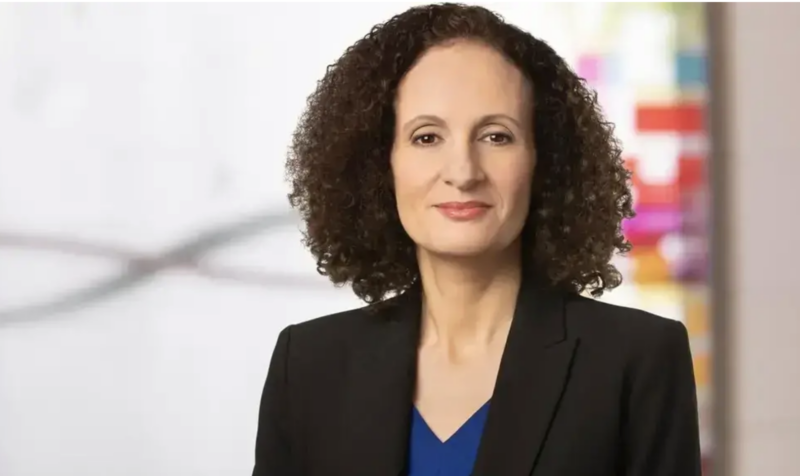
In the 8th Congressional District, former Rep. Melissa Bean (D-IL) solidified her spot as front-runner by raising $772,000, ending the quarter with more than $1 million on hand, followed by anti-Israel challenger Junaid Ahmed, who raised $360,000 and ended the quarter with $836,000 on hand.
Businessman Neil Khot finished the quarter with $573,000 on hand, having provided $765,000 to his own campaign during the cycle, which has made him the only candidate in that race to run network television ads. But he received just $58,000 in the last quarter in donations.
Others, including Cook County Commissioner Kevin Morrison and Hanover Park Trustee Yasmeen Bankole, an Israel critic, trailed further behind, with $233,000 and $170,000 on hand, respectively, though Calabrese emphasized that Morrison enjoys substantial support from local officials. Veteran Dan Tully ended the quarter with $412,00 on hand, but may see a boost from outside spending by pro-veteran groups.
Calabrese said that Bean, given her defined public image and name recognition, is the front-runner, but noted that Ahmed has been building a strong base of support in the Muslim community. He said Bean, as a conventional moderate Democrat, also stands out among a series of other candidates trying to define themselves as more liberal or progressive, and will likely benefit from those other candidates dividing the field.
“Everyone agrees the favorite is Melissa Bean, and if someone tells you otherwise, they’re lying to you,” Calabrese said.
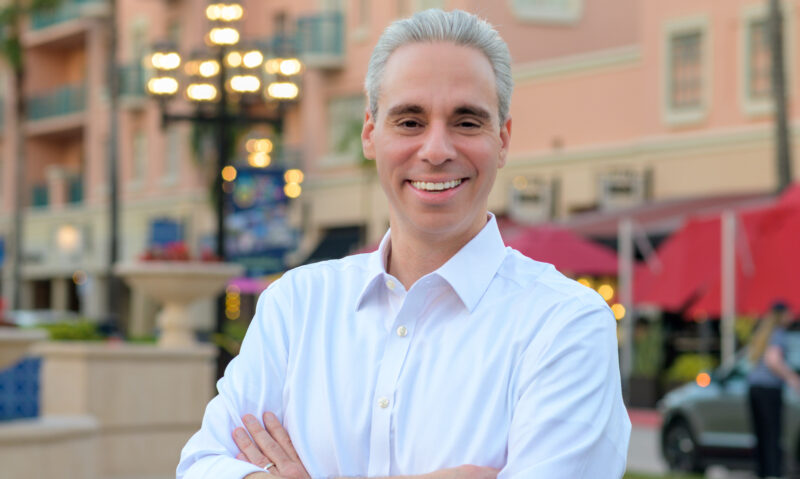
In the 7th Congressional District, Jason Friedman, a real estate developer and leader in the local Jewish community, cemented his place as a leading candidate, ending the quarter with $1.3 million on hand and $1.8 million raised over the course of the race, including $296,000 in the quarter.
Calabrese said that Friedman “has a very decent shot at winning” if he’s able to lock down the upper-income downtown area, while other candidates compete for votes in the district’s Black community. Friedman also has substantial support from the Jewish community, Calabrese added.
He said that Friedman’s chances have been underestimated by some in the area who have failed to recognize the demographic changes in the once Black-dominated district over time, but also said the race could be a “jump ball” among any of several candidates in the running.
Friedman’s war chest gives him a substantial lead over the rest of the field, but his fourth quarter fundraising was comparable to that of Dr. Thomas Fisher, an emergency medicine doctor, who raised $243,000 and finished with $455,000 on hand.
State Rep. LaShawn Ford, the handpicked successor of retiring Rep. Danny Davis (D-IL), raised $145,000 and closed the quarter with $308,000 on hand, and Chicago Treasurer Melissa Conyears-Ervin raised $112,000 and finished with $217,000 on hand. Anthony Driver, a former leader of the Chicago police oversight board and a local union leader, raised just $73,000 in the quarter, but is likely to receive significant outside backing from union groups, Calabrese said.
Anti-Israel progressive Kina Collins, making her third run for the seat, still had not filed her quarterly report as of Monday evening, leaving her status somewhat unclear.
In the 2nd Congressional District, Cook County Commissioner Donna Miller dominated the field in fundraising, raising $1.1 million and closing the quarter with nearly $1 million on hand, followed by anti-Israel state Sen. Robert Peters, who raised $210,000 and closed the quarter with $263,000 on hand. Peters has raised $900,000 over the course of the race, but burned through the majority of his reserves and outspent what he raised in the last quarter.
Calabrese said he was “extremely surprised” by the poor fundraising performance of former Rep. Jesse Jackson, Jr. (D-IL), who raised $85,000 in the fourth quarter and finished the quarter with just $90,000 on hand, despite being a local political celebrity and enjoying substantial institutional support.
Nevertheless, internal polling by other campaigns has shown Jackson in the lead with around 25% support, and Calabrese argued that it’s still his race to lose. With his local reputation and endorsements, he may not need to spend as much to get his message out, Calabrese noted.
“Donna Miller has the money advantage. But is it enough? I don’t think so, but I could be wrong,” Calabrese said.
The progressive Peters is a poor fit for the district, Calabrese argued. “He’s trying to run as a university, campus-centric progressive, and it’s just not the district,” he said. “It’s a very work-a-day district.”
More Stories

LAYING DOWN THE LAW
Trump: ‘Final documents are being drawn’ to designate Muslim Brotherhood as terrorist group
JOHNSON'S JOURNEY
House Speaker Mike Johnson headed to New Square on Sunday to help Mike Lawler
eye on the prize
Virginia lawmaker with history of anti-Israel rhetoric eyes 2026 congressional run
senator says
Lindsey Graham calls on Saudi Arabia to ‘knock it off’

exclusive
Schumer, Senate Democrats introduce resolution condemning Fuentes, Carlson
DAMASCUS WARNING
Former U.S. religious freedom ambassador warns of genocide of Syrian minorities
Please log in if you already have a subscription, or subscribe to access the latest updates.