




























Graham says conversation with Saudi leaders eased his concerns about kingdom’s pivot
The South Carolina senator also said that he expects action against Iran is still forthcoming, and that U.S. credibility is now on the line after Trump promised to help protesters
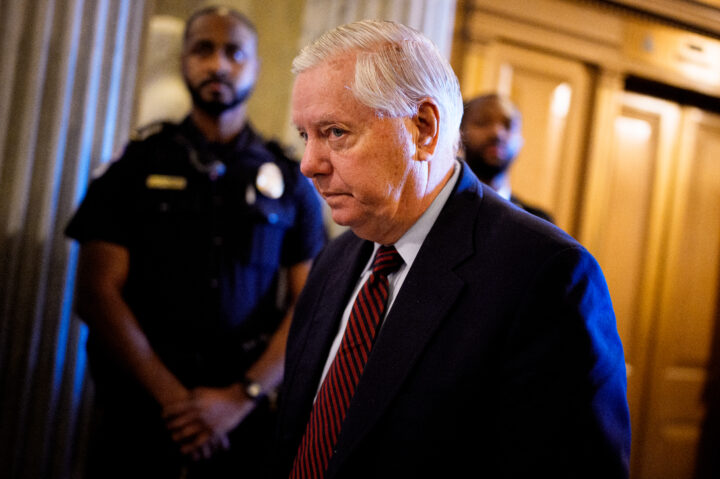
Andrew Harnik/Getty Images
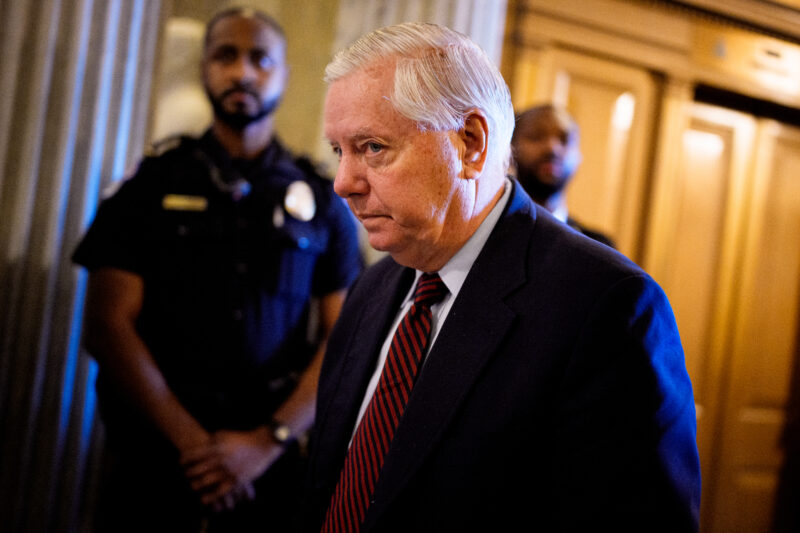
Sen. Lindsey Graham (R-SC) walks into the Senate Chamber on December 11, 2025 in Washington, DC.


 Add JewishInsider on Google
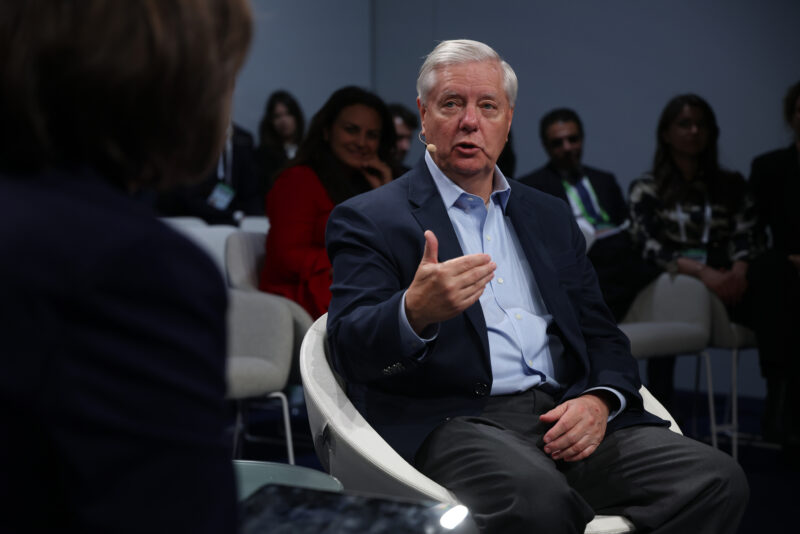
Sen. Lindsey Graham (R-SC) expressed confidence on Thursday that Saudi Arabia is intent on maintaining its status as a moderating force in the Middle East amid growing concerns that Riyadh is entertaining more hardline Islamism.
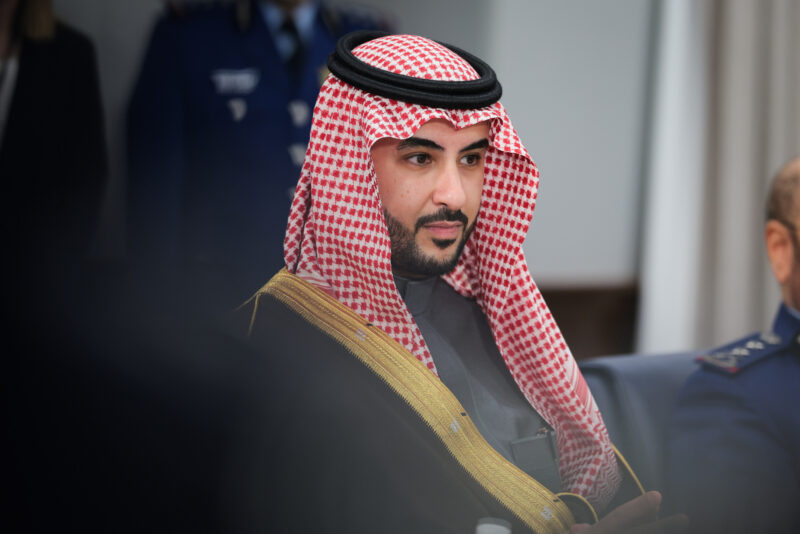
Graham met on Thursday morning with Saudi Defense Minister Khalid bin Salman Al Saud in Washington and spoke by phone on Wednesday with Saudi Foreign Minister Faisal bin Farhan Al Saud. The South Carolina senator sat down with Jewish Insider on Thursday afternoon for a wide-ranging discussion, where he said that, despite feeling unsettled by some Saudi conduct, he is not concerned that the kingdom is making a pivot toward a more extremist posture, as some in the region and the Jewish community have worried.
Graham had earlier this week publicly criticized the kingdom for its growing conflict with the United Arab Emirates and what he described as a failure to act to protect the Syrian Kurds against Syrian government advances.
“After having met with the Saudis today, I understand their concerns better. I don’t agree with everything they’ve done, but I fundamentally believe that the vision is still the same,” Graham told JI. “To all those who think like me and have been upset by what you’ve heard, I understand why you’re upset, but I would just say this: If I feel good, you should feel good.”
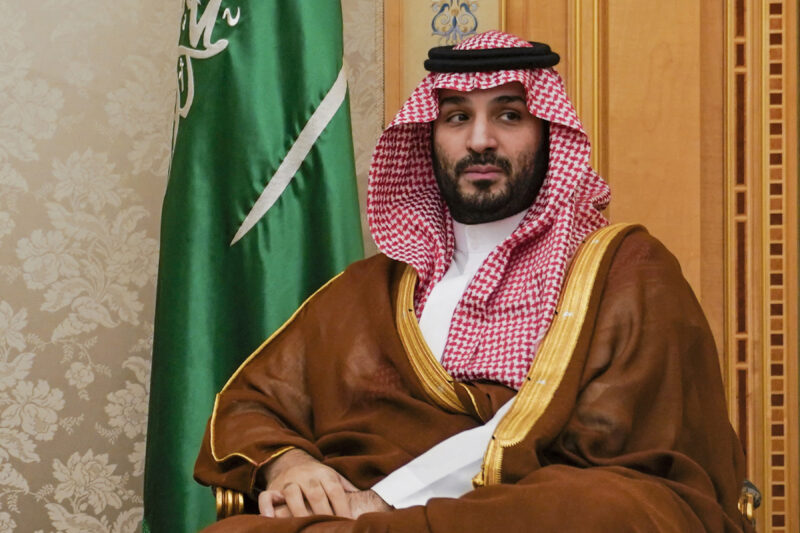
Once a vocal critic of Saudi Arabia and Crown Prince Mohamed Bin Salman — particularly in the aftermath of the 2018 murder of Washington Post contributor Jamal Khashoggi — Graham said that MBS’ grand economic and development plan, Vision 2030, convinced him that the Saudi government is interested in development, peace and deradicalization, because those factors would be incompatible with MBS’ plan.
“If the man is willing to spend a trillion dollars to make Saudi Arabia a destination of choice, he’s got to be smart enough to know that the old model of the Mideast has to be replaced,” he said of the crown prince.
Graham said claims that Vision 2030 had stalled were “overstated” and dismissed the notion that the Saudis were struggling financially, despite flagging oil prices. The kingdom recently announced plans to significantly scale back the flagship Vision 2030 project and the futuristic megacity Neom.
“They’ve had 97 projects, 94 are on target,” Graham said of Vision 2030. “This idea that Saudi Arabia is running out of money is bulls**t. Every time you fill up your car, they appreciate it. … They’re not abandoning their 2030 model. Has anybody in Turkey talked about a 2030 model?”
The South Carolina senator, a leading advocate for U.S. strikes against the Iranian regime, also said he expects that action against the Islamic Republic is still forthcoming, arguing that the United States’ credibility is on the line after President Donald Trump promised protesters that the U.S. would assist them.
Graham framed the protests and their ultimate outcome as a tipping point for the region and the world.
“[Trump] said, ‘Keep protesting. Help is on the way.’ That is his Ronald Reagan moment. You have to follow through,” Graham said, referring to Reagan’s demand for the Berlin Wall to be torn down, and arguing that there is now a clock running for the U.S. to take action.
“Regime change is being led by the people. The question is: Are you for the ayatollah or the people? Donald Trump said, ‘I’ll be with the people.’ Well, that means you’ve got to be with the people,” he added. “I’d like to find a solution without conflict. I don’t know what that would be, but I am confident that it can’t go on forever. There’ll come a point where the people lose hope. We’re not there yet, but the sooner we can demonstrate help is on the way, the better.”
If the U.S. fails to follow through, Graham warned, “It’s going to make Afghanistan look like a cakewalk.”
“Everybody’s gonna hedge their bets. Nobody will follow America. Nobody will trust the idea that, you know, making peace is good. It will set the region back 100 years,” he continued.
And, Graham argued, the fall of the Iranian regime is a precondition for any further progress toward regional normalization.
“Nobody in their right mind can talk about normalization in the Mideast until we know how the protests end in Iran,” Graham said. “If, in fact, the ayatollah is still standing after all this bluster and rhetoric, normalization is lost for decades.”
But if the regime falls, bringing its proxies Hamas, Hezbollah and the Houthis down with it, Graham asserted that normalization would be easy to achieve, adding, “If you could sink the mothership, the ripple effect changes Lebanon and Syria.”
Graham said that, from everything he knows about Trump, he expects the president to follow through on his promise to the protesters. He added that he expects the U.S., and potentially Israel, to deliver a “bigger” hit to the regime now than they might have if they struck several weeks ago when the protests began.
“I will judge the president by what he says and what he does. I have no reason to believe that he will not fulfill the promises he’s made. His track record is pretty good. He doesn’t want conflict, but he won’t be trifled with,” Graham said.
Trump’s vacillating threats to the regime, and the lack of U.S. action following a crackdown that officials said has quelled the recent protests, have created uncertainty about how the U.S. plans to proceed. Media reports and public comments by Trump indicated that the administration was interested in reopening negotiations with Tehran, but over the last week, Trump has gradually amped up threats of a military strike against Iran amid continued intransigence from Tehran.
Graham said that the Islamic Republic should accept any offers of diplomacy from the U.S., but that he’s not surprised the regime hasn’t been amenable, describing Supreme Leader Ayatollah Ali Khamenei as a “religious Nazi.”
He expects that a U.S. campaign would involve “enough lethality to make the people who live without fear live with fear, to make those who are killing the people … wonder if maybe they’ll wake up dead tomorrow.” He said the U.S. would also maintain economic pressure on Iran.
“If whatever we do doesn’t inspire the people and put some fear in the regime, we’ve made a mistake,” he continued.
Still, he emphasized that he does not expect a U.S. invasion of Iran.
Graham rejected concerns that Khamenei could be replaced by someone equally radical if removed from power.
“Most likely, the day after in Iran, if the ayatollah falls, is a long road back to a more accommodating Iran that wants to be prosperous,” Graham said. “Why would you double down on the things that got you in this? … Now, it won’t be Jeffersonian democracy, but it’ll be something we can live with.”
The GOP senator also said that he supports the approach in a post-regime Iran outlined Wednesday by Secretary of State Marco Rubio, which would likely involve a transfer of power to others inside the Iranian government, potentially within its military, if the ayatollah falls — akin to the approach the U.S. took in Venezuela.
“We’re not going to do the Iraq thing where we fire everybody,” Graham said. “We’re going to trust the people taking over to understand that the old ways have got to go. If you want to perpetuate the old ways, you’re not going to make it. … To the people taking over in Iran, if you act like the ayatollah, we’ll bomb you too.”
Graham, together with Sen. Richard Blumenthal (D-CT), introduced legislation on Thursday, the Save the Kurds Act, that aims to largely re-implement the Caesar Act sanctions on Syria, repealed by Congress in December amid pressure from the Trump administration.
Graham was a longstanding skeptic of unconditional sanctions relief, without snapback measures, for the Syrian regime, and the new legislation comes in response to advances on territory run by the Kurdish-led Syrian Democratic Forces (SDF), the U.S.’ primary allies in Syria in the war against ISIS.
In a reversal of current U.S. policy, the bill would sanction Syrian government officials and financial institutions, and any foreign individuals who engage in any transaction with the Syrian government, as well as re-designating Hay’at Tahrir al-Sham (HTS), the faction that Syrian President Ahmad al-Sharaa led, as a terrorist organization.
The administration would be able to suspend the sanctions if the Syrian government stops all attacks on the SDF, but would be required to immediately reimpose them if attacks resume.
Softening his rhetoric from earlier in the week, Graham told JI he’s optimistic that Saudi Arabia wants to deal as an honest broker to decrease tensions between al-Sharaa’s government and the Kurds — something he said was not the case with Turkey — and urged Saudi officials to maintain that approach.
He said that he’s very concerned about al-Sharaa, after he “gave him a chance,” warning that failing to protect the Kurds would ultimately lead to a situation in Syria as bad or worse than under the former Assad regime.
“If we let radical Arab groups and [Turkish President Recep Tayyip] Erdoğan eliminate the Kurds, nobody would ever follow America again,” Graham warned. “‘One Syria’ cannot be accomplished through the threat of the gun.”
Graham made waves in Washington and Jerusalem earlier this month with comments that he wanted to quickly wind down U.S. aid to Israel, after Israeli Prime Minister Benjamin Netanyahu said that he wants to wean the Jewish state off of U.S. financial assistance in the next decade.
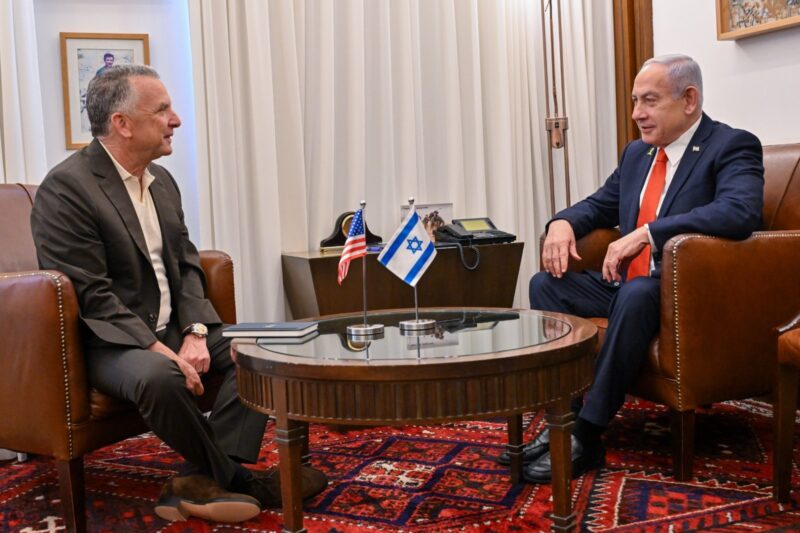
He promptly traveled to Israel to discuss the matter of future U.S. aid and Israel’s plans for Iran with Netanyahu and top Israeli defense officials. Following a meeting with Netanyahu in Jerusalem, tensions seem to have cooled, with Graham saying he “understand[s] better what he’s saying” despite the two not being totally aligned.
He said that his concern has been that U.S. aid to Israel has been a strong investment that has paid dividends for the U.S., while Netanyahu is concerned with being perceived as a burden on the U.S. — though Graham maintained that ending aid will do nothing to placate anti-Israel voices in the U.S.
Graham said that Netanyahu had a “very, I think, clever way of modernizing the weapons systems to our mutual benefit that’s different than aid, so I was impressed,” adding, “I’d like to be a partner with” Israel’s technological developments.
Many analysts believe that the future of U.S.-Israel cooperation lies more in co-produced and jointly developed programs than in direct financial assistance from the U.S. to Israel, and such programs have been growing in recent years.
More Stories

PROBLEMATIC POST
Top Michigan Democratic fundraiser shared Veterans Day post honoring Nazi officer grandfather
olive branch
Rabbi Ammiel Hirsch, outspoken backer of Israel, leaves meeting with Mamdani ‘encouraged’
COMMUNITY CONCERN
Jewish leaders, lawmakers, scramble to protect synagogues amid threatening anti-Israel protests
BARAKA'S BACKING
In progressive pivot, N.J. congressional candidate Brian Varela secures Newark Mayor Ras Baraka’s endorsement
center stage
Quincy Institute among anti-Israel sponsors of Doha Forum

chant controversy
Zohran Mamdani says ‘globalize the intifada’ is expression of Palestinian rights
Please log in if you already have a subscription, or subscribe to access the latest updates.