




























White House’s Sebastian Gorka: U.S. not pursuing regime change in Iran
Gorka also discussed efforts to designate the Muslim Brotherhood as a terrorist organization and end Qatari and Turkish support for Hamas
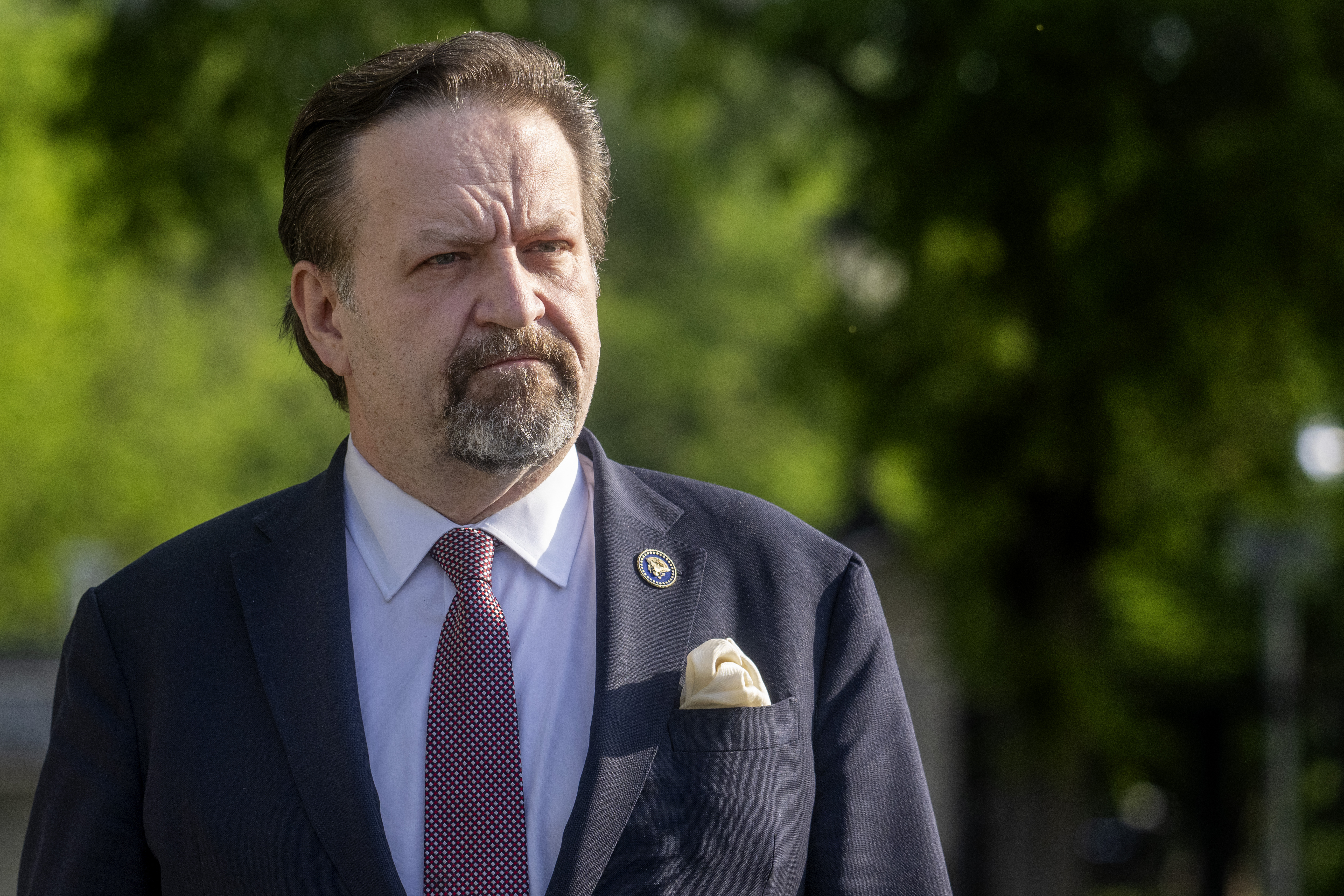
JIM WATSON/AFP via Getty Images
U.S. Senior Director for Counterterrorism Sebastian Gorka walks outside the White House in Washington, DC, on May 7, 2025.


 Add JewishInsider on Google
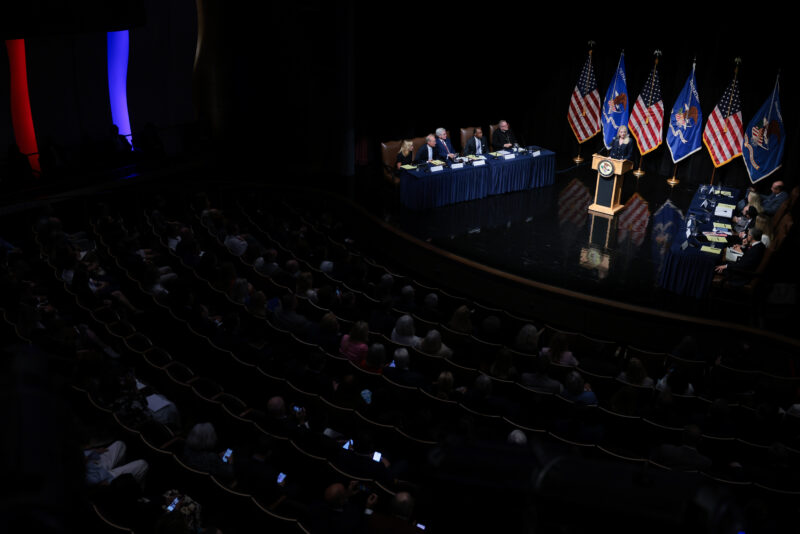
Sebastian Gorka, the White House senior director for counterterrorism and a deputy assistant to the president, said Wednesday at the Foundation for Defense of Democracies that the U.S. is not seeking regime change in Iran, but will maintain its maximum-pressure campaign on Tehran.
Gorka also said that he supports efforts to designate the Muslim Brotherhood as a terrorist organization, suggested that he’s pursuing efforts to convince Qatar and Turkey to cut ties with Hamas and said the U.S. wants to see Syrian minority groups come to the table and join with the new Syrian government.
He said that the Trump administration views Iran as the paramount threat and focus in the Middle East, and that its strategy toward Iran is “max pressure, no regime change,” with the goal of stopping Iran’s nuclear program and ending its support for terrorist proxies.
“We are not in the business of deploying the 82nd Airborne to do regime changes anywhere. We don’t believe in that,” Gorka said.
In the long term, he added, “we would like the people of Persia, including the minorities of Persia, to eventually liberate themselves.”
Trump had publicly floated the possibility of regime change in Iran after the U.S. strikes on the country last month, but subsequently said he does not seek regime change. Some administration officials had also floated the idea of sanctions relief for Iran.
Gorka said he backs efforts to designate the Muslim Brotherhood as a terrorist organization, describing the group as the “granddaddy” of all of the terrorist organizations that have attacked the United States and its allies for decades.
“If we can designate, as we have, Hamas, which in its founding charter from 1984 says, ‘We are a chapter of the Muslim Brotherhood,’ then why haven’t we designated the Brotherhood itself?”
“So what I’ll say right now,” Gorka said, clearing his throat, is, “I like the idea,” he finished in a whisper.
Asked by Jewish Insider about whether the administration is working to end Turkey and Qatar’s sponsorship of Hamas, he said that he is “imminently traveling to that part of the world, so that should tell you something.”
He added that Turkey is an “important nation, it’s a geopolitical nation, it has a role to play with us as a NATO nation, but there are things I will be discussing with Ankara that I find leave me with a sense of unease,” including the Turkish government’s relationship with Hamas as well as reports that ISIS terrorists have been moving through Turkey.
“There has to be a balance between their conceptualization of the PKK threat,” Gorka said, referring to the Kurdish militant group, “and threats that we share, such as ISIS. I think that’s where the rebalance has to come.”
“With regards to Qatar, Qatar has … a very simple choice it has to make. Do you give any kind of succor to those who do not help in the stabilization of the region? That’s all I’m going to say,” he continued.
In Gaza, Gorka said that there “are a lot of good things happening at a tactical and operational level” on the ground, in that the U.S. is working to train anti-Hamas police and security units and that those units are “working quite closely with Israel.”
But, he said, “as far as I’m concerned, none of that goes anywhere until the political leadership changes,” saying that the “cultural issue” of widespread support in Gaza for Hamas and the Oct. 7, 2023, attacks on Israel is a problem that cannot be solved by a police force. “We need some brave men and women to say, ‘I am here to help fix Gaza.’”
Gorka framed President Donald Trump’s proposal for the U.S. to take over Gaza and relocate the Palestinian population as a negotiating tactic to motivate Middle Eastern countries to step up to take responsibility and invest in Gaza — though that investment hasn’t yet come to fruition.
Gorka, who said he regularly watched videos of ISIS and Al-Qaida’s brutal torture and murder of their victims, described footage of the atrocities committed by Hamas on Oct. 7 as far beyond anything he had ever seen before. “Nothing I’d watched in my two decades prepared me for what I saw that day.”
“I praise the government of Israel. I praise the IDF because what they have done in response is a redrawing of the map of the Middle East that will change your politics for at least a century,” Gorka said. “One of the greatest things they have done is to ensure that the strategic threat of Iran is now incapable of resupplying its proxies in the territory of Syria. God bless Israel for doing that. Now we have to finish the job. We have to make sure Iran stops supplying its proxies. We have to stabilize Syria.”
He added that, “despite the ideological way it has been exploited by certain actors here and elsewhere, the response to Oct. 7 has actually benefited us, because people have woken up to the horrors of modern … Jew hatred.”
The White House advisor said that the administration has told Syrian President Ahmad al-Sharaa that the U.S. “want[s] him to make Syria great again,” and that doing so will require bringing all elements of Syria to the table, including Kurds, Christians, Alawites and Druze. Additionally, the U.S. has told those minority groups, including Kurdish allies, that it does not support them making pushes for autonomy.
“Come to the table, because this is your shot,” Gorka said. “Get in on that deal, because it’s the only time it’s going to happen.”
In the short term, he said, the administration wants to make sure those minority communities can protect themselves and to “make sure the state sees an end to the massacre of whichever confessional community.”
Asked by JI about the possibility of Iranian retaliatory attacks in the United States, Gorka said that “because of how we boxed in Iran, they are basically forced to use surrogates. … They can’t deploy their own assets, which is a good thing. Beyond that, we take it very seriously and that’s all I can say right now.”
He highlighted other recent intercepted plots, including one in the United Kingdom, where Iran has attempted to utilize Iranian expatriates to attack the Israeli Embassy, adding that the group has also sought to employ domestic criminal groups to carry out operations on its behalf.
Gorka praised Israel’s operations against Hezbollah in Lebanon, and noted that the country’s new president, Joseph Aoun, studied under him at the National Defense University.
“The relationship is positive but it could be improved in terms of matching verbiage to actual results,” he said.
Gorka previewed U.S. plans for a “series of short efforts, high-intensity efforts to make the leading terror threats to America combat-inneffective, at which point our friends, our allies, our partners in the Middle East and elsewhere pick up the terrorist suppression operations.” The goal, he explained, is to prevent terrorist groups from being able to carry out operations on U.S. soil.
He said that the U.S. does not want to maintain a global presence permanently to counter terrorism, though he added that the U.S. is willing to maintain a “small footprint” in certain locations to address specific threats.
He also emphasized the need for the U.S.’ Muslim partner nations to lead efforts to counter jihadist narratives and recruiting efforts, and poke holes in jihadist ideology.
More Stories
MEDIA MOMENT
White House taps Hamas-sympathetic Drop Site News in press corps rotation
SCOOP
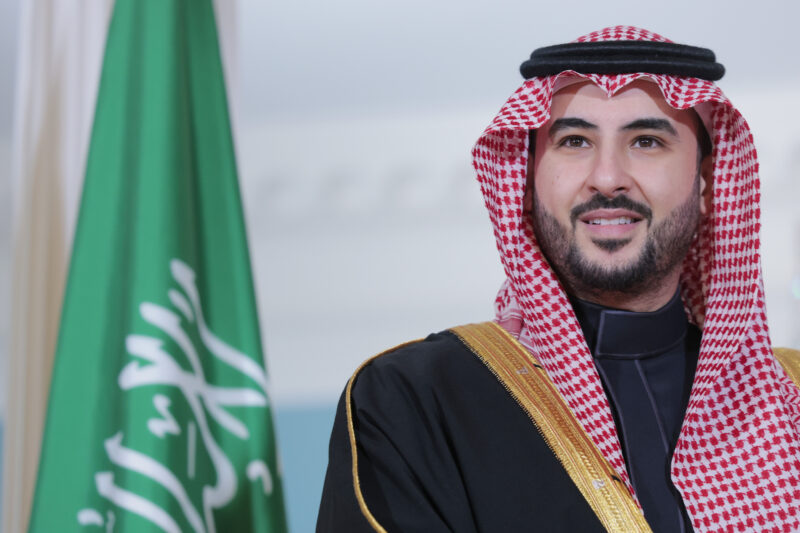
Jewish leaders invited to meet with Saudi Defense Minister Khalid bin Salman in D.C.

AI EVALUATION
ADL rates Anthropic’s Claude best AI model at detecting antisemitism
rabbinic rebuke
Over 800 rabbis speak out against Mamdani as threat to ‘safety and dignity of Jews in every city’

ALL OUT BLITZ
Robert Kraft’s latest Super Bowl ad targets antisemitic bullying

analysis
Josh Shapiro and the politics of faith
Please log in if you already have a subscription, or subscribe to access the latest updates.