

























Waltz commits to combating ‘pervasive antisemitism’ at U.N. during nomination hearing
The former national security advisor, now U.N. ambassador nominee, was largely spared from expected questions over his participation in the ‘Signalgate’ controversy
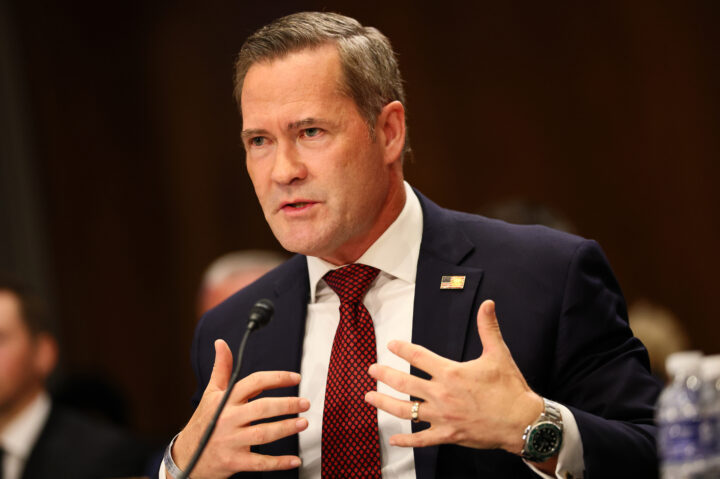
Michael M. Santiago/Getty Images
Former National Security Advisor Mike Waltz testifies during his confirmation hearing before the Senate Committee on Foreign Relations in the Dirksen Senate Office Building on July 15, 2025 in Washington, DC.


 Add JewishInsider on Google
Former White House National Security Advisor Mike Waltz laid out an aggressive approach to countering anti-Israel sentiment at the United Nations during his Senate confirmation hearing on Tuesday to be U.S. ambassador to the global body, accusing the organization in his opening statement of “pervasive antisemitism.”
Waltz, a staunch supporter of Israel and an outspoken critic of Iran who was nominated for the U.N. post in May after being removed from his position as national security advisor, said he would seek to block “anti-Israel resolutions” in the General Assembly and would push for the dismantlement of the United Nations Relief and Works Agency over some of its employees’ involvement in the Oct. 7, 2023, Hamas attacks.
He also voiced support for U.S. sanctions against Francesca Albanese, the U.N. special rapporteur for Israel and the Palestinian territories, who has faced widespread accusations of espousing antisemitism in her commentary on Israel.
More broadly, Waltz — echoing the “America First” ethos of President Donald Trump — said he would “focus on peacekeeping, not nation-building,” and expressed support for the administration’s plans to slash funding to the U.N., calling for “major reform” to make the organization “great again.”
“The U.S. must ensure that every foreign aid dollar and every contribution to an international organization, particularly the U.N., draws a straight and direct line to a compelling U.S. national interest — one that puts America first, not last,” Waltz said.
Waltz was largely spared of the grilling he had been expected to face from Democrats at the hearing over his widely criticized handling of the use of a nonsecure messaging app to discuss sensitive U.S. attack plans in Yemen last March.
The so-called Signalgate controversy, in which Waltz inadvertently added a journalist to a group chat on the encrypted messaging app Signal while discussing a military operation against the Houthis with top Trump administration officials, was first raised around halfway into the two and a half hour hearing — after several Democrats on the Senate Foreign Relations Committee had bypassed the topic in favor of other issues, such as countering China’s global influence.
Still, Waltz strained to defend his misuse of the app, claiming no classified information had been shared and suggesting he had been following Biden-era guidance that recommended the app for end-to-end encrypted chats.
“The use of Signal was not only authorized, it’s still authorized, and highly recommended,” Waltz said at the hearing.
He also said the White House had investigated the matter and no disciplinary action had been taken — while adding that the Defense Department was still conducting a review of the incident.
“I was hoping to hear from you that you had some sense of regret over sharing what was very sensitive, timely information about a military strike on a commercially available app that’s not, as we both know, the appropriate way to share such critical information,” Sen. Chris Coons (D-DE), who first brought up the Signal controversy, said during the hearing.
Sen. Cory Booker (D-NJ), who issued the most forceful remarks against Waltz, said he had no questions for the nominee, accusing him of lying about his involvement in the Signal debacle and failing to take accountability for his actions while smearing the journalist he had added to the chat.
“Smearing people, attacking folks, singling them out just compounds what I think is disqualifying about you for this position,” he said of the former Florida congressman and Green Beret. “It also, to me, just shows profound cowardice.”
Booker said he would not support Waltz’s nomination.
Despite such opposition, Waltz, who is expected to be confirmed by the GOP-controlled Senate, was otherwise presented with a range of friendlier questions from Republicans on the panel, many of whom expressed concerns about the U.N.’s long-standing hostility toward Israel.
Trump had weighed firing Waltz in the wake of the Signal debacle, but ultimately chose to remove him from his national security post and nominate him to serve at the U.N., where he will be based in New York City rather than the West Wing — far removed from the internecine battles that plagued his brief time in the White House.
Near the end of the hearing, Waltz dismissed a new report that he has continued to receive a White House salary in recent months despite being removed from his role — calling the story “fake news.”
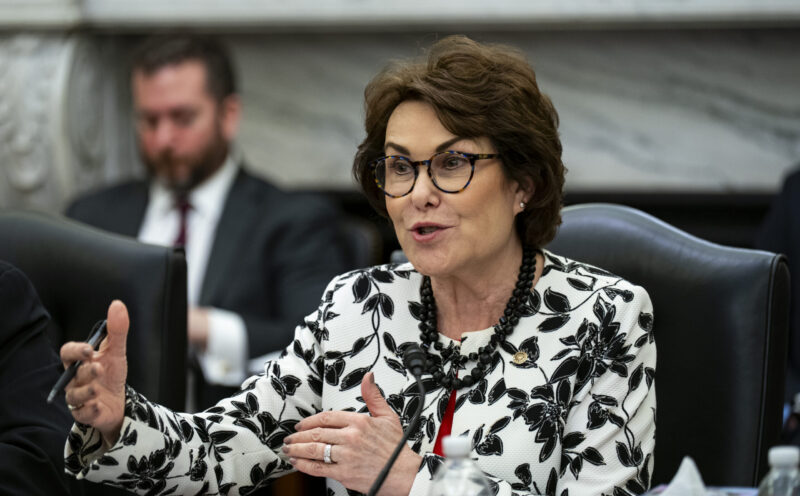
“I was not fired,” Waltz said in response to Sen. Jacky Rosen (D-NV). “The president never said that, nor did the vice president.”
More Stories
olive branch
Rabbi Ammiel Hirsch, outspoken backer of Israel, leaves meeting with Mamdani ‘encouraged’

STANDING TOGETHER
New York Jewish community comes out in solidarity with Park East Synagogue at major rally
DOHA DEALINGS
FBI Director Patel signs security deals with Qatar, his former lobbying client
BUDAPEST BEAT
The Orthodox Jewish GOP donor vying to be U.S. ambassador to Hungary
MICHIGAN MOVES
Haley Stevens maintains support for Israel as her primary rivals battle over anti-Israel lane