







































House committee advances Muslim Brotherhood terrorism bill in bipartisan vote
The legislation is more expansive than the Trump administration’s executive order, which authorizes designating individual branches of the Muslim Brotherhood

Salah Malkawi/Getty Images
Jordanian police close the entrance of a Muslim Brotherhood headquarter after the announcement of banning the society in the country on April 23, 2025 in Amman, Jordan.


 Add JewishInsider on Google
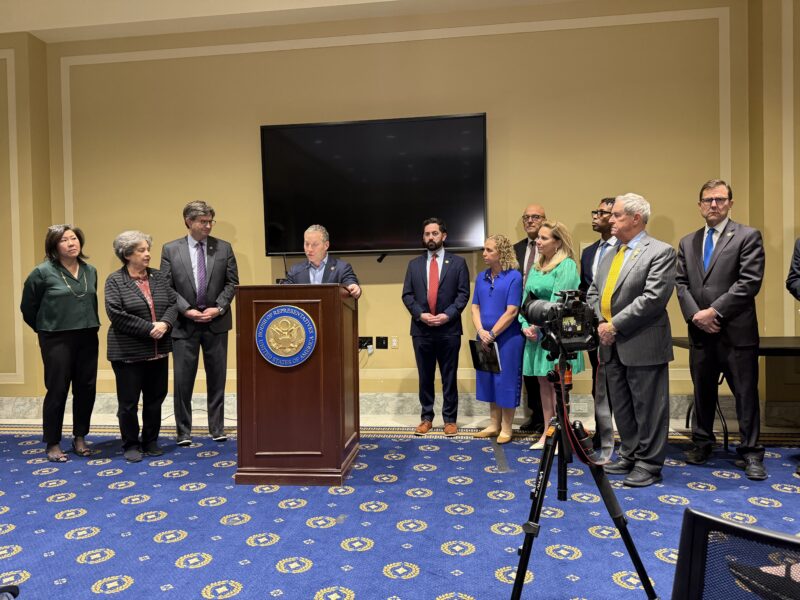
The House Foreign Affairs Committee voted on a bipartisan basis on Wednesday to advance a bill designating the entire Muslim Brotherhood globally as a terrorist organization, weeks after the Trump administration took action to target certain branches of the group.
Every Republican on the committee, joined by Democratic Reps. Brad Sherman (D-CA), Sheila Cherfilus-McCormick (D-FL), Greg Stanton (D-AZ), Jared Moskowitz (D-FL), Jim Costa (D-CA), George Latimer (D-NY) and Brad Schneider (D-IL), voted in favor of the bill, which was led by Reps. Mario Diaz-Balart (R-FL) and Moskowitz.
The legislation is more expansive than the Trump administration’s executive order, which authorizes designating individual branches of the Muslim Brotherhood. The bill would mandate the administration conduct assessments of all Muslim Brotherhood branches to determine if they meet the standard for designation as terrorist groups, and ultimately designate the entire Muslim Brotherhood network based on those findings.
“This is more than just a political organization. It promotes extreme and destabilizing views which continue to inspire acts of terrorism across the globe, most notably Hamas in its horrific Oct. 7, 2023, attack on Israel,” Rep. Brian Mast (R-FL), the committee chairman, said. “For too long, the threat the Muslim Brotherhood poses to U.S. national security has been downplayed here in the United States and it’s well past time for a course correction.”
Rep. Greg Meeks (D-NY), the committee’s ranking member, argued against attempting to sanction the entire Muslim Brotherhood, arguing that it is a diffuse ideology, without any true central leadership or coordination.
He said that, while certain Muslim Brotherhood branches, such as Hamas, meet the criteria to be designated as terrorist groups, the authorities already exist to take action against them. And he warned the legislation “would complicate the U.S. engagement with political leaders and parties who have historic and non-violent ties to Brotherhood-affiliated movements, like in Morocco. It would alienate important regional partners in the Middle East, such as Qatar and Turkey.”
Meeks also cautioned that the legislation could also be used to target Muslims generally, including American Muslims as well as Arab and Muslim groups in the U.S. He said the bill could be used to implement a “back-door Muslim ban” and “subject millions of people … to arbitrary and subjective determinations based on indirect or tangential affiliations. The language is so imprecise, this bill invites discriminatory and political targeting under the pretext of national security.”
Democrats who support the legislation, including Schneider and Moskowitz, pushed back, though they both said they do not think the legislation is perfect. Moskowitz rejected the idea that the legislation could facilitate a Muslim ban, and said the U.S. should follow the model of regional allies like Saudi Arabia, the United Arab Emirates, Jordan and Egypt, which have experience with the Muslim Brotherhood and have themselves banned it.
Schneider said that the pattern of Muslim Brotherhood extremism and violence, most notably by Hamas, “demands Congress take the threat seriously and confront the networks that enable violent extremism.” He emphasized that the legislation includes clear guidelines and grounding in intelligence, as well as strong congressional oversight provisions to prevent overbroad application of the law.
“Moving this legislation … ensures Congress, not an inconsistent executive or one with personal conflicts, remains the arbiter of how terrorism designations are used in America’s name,” Schneider added.
Rep. Keith Self (R-TX) emphasized that the legislation would “codify key elements” of the Trump executive order and “provide a permanent statutory framework to address the ongoing threat posed by the Muslim Brotherhood and its violent offshoots.” He emphasized that Brotherhood documents have laid out a plan to infiltrate and subvert U.S. institutions and society.
Rep. Randy Fine (R-FL) warned that the American Muslim Brotherhood affiliates are stoking instability and violence at home. “It is more important than it has ever been for us to stand up and say we’re going to follow the lead of 11 other countries … and saying we are not interested in having this organization in the United States. It is a terrorist movement.”
Diaz-Balart, in a statement, praised the committee for advancing the legislation, and said it “further amplifies other efforts, like those of President Trump, to take decisive action against this insidious threat.”
Moskowitz also celebrated the move, saying, “For decades, the Brotherhood has been tied to extremism and instability across the Middle East and around the world. Other nations have already taken steps to investigate the Brotherhood and its affiliates, and the United States must have the authority to do the same.”
Boris Zilberman, the senior director of public policy and strategy for the Christians United For Israel Action Fund, emphasized in a statement that executive orders can be repealed as easily as they can be signed, and noted that the bill targets Brotherhood branches not specifically called out in the executive order.
“While a close reading of the president’s executive order does not exclude the possibility of sanctioning Muslim Brotherhood affiliates in Qatar or Turkey, this legislation is specific in calling out Doha and Ankara along with many other nations that the Muslim Brotherhood uses to advance its malign activities,” Zilberman said.
Companion legislation in the Senate has yet to move forward.
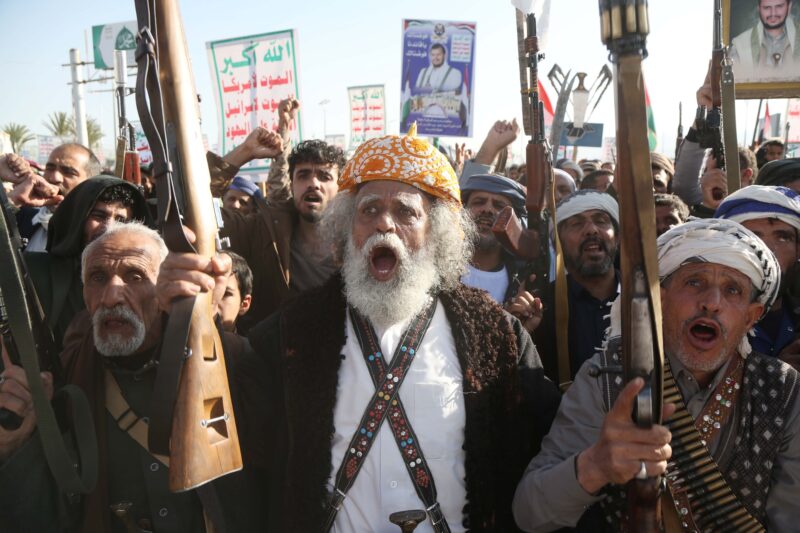
The committee also voted unanimously in favor of legislation sanctioning the Iran-backed Houthis for violations of human rights and hostage-taking, instructing the State Department to take action to engage with European governments about antisemitism in their countries and creating new procedures to harmonize various U.S. sanctions registries — assessing whether entities sanctioned under certain authorities should also be sanctioned under others.
Another bill, which would sanction specific Iranian leaders who have issued fatwas against President Donald Trump and Israeli Prime Minister Benjamin Netanyahu, passed on a bipartisan basis with 47 votes in favor and two Democrats, Reps. Joaquin Castro (D-TX) and Pramila Jayapal (D-WA), abstaining.
Castro introduced an amendment, which failed on party lines, that would have broadened the legislation to apply to measures taken against any U.S. leader or senior official, or the leaders of major U.S. allies.
Democrats argued that those measures would make the legislation more lasting and applicable in the long term, while Republicans said they wanted to keep the legislation focused on discrete, specific threats against Trump and Netanyahu.
More Stories

on the agenda
Trump meeting with Netanyahu at Mar-a-Lago later this month
MICHIGAN MOVES
Haley Stevens maintains support for Israel as her primary rivals battle over anti-Israel lane

STANDING TOGETHER
New York Jewish community comes out in solidarity with Park East Synagogue at major rally
eye on the prize
Virginia lawmaker with history of anti-Israel rhetoric eyes 2026 congressional run

ANALYSIS
Most Jewish voters oppose Mamdani — but remain divided on an alternative