






















What New York City Jewish leaders are most worried about in a Mamdani mayoralty
JI asked senior New York Democratic officials and Jewish community leaders to discuss the top threats that a Mamdani administration could pose to Jewish life in the city
ANGELA WEISS/AFP via Getty Images
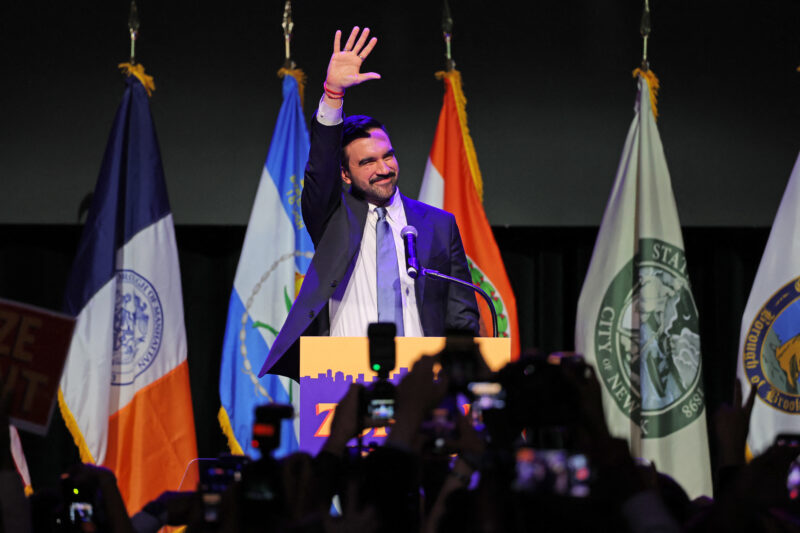
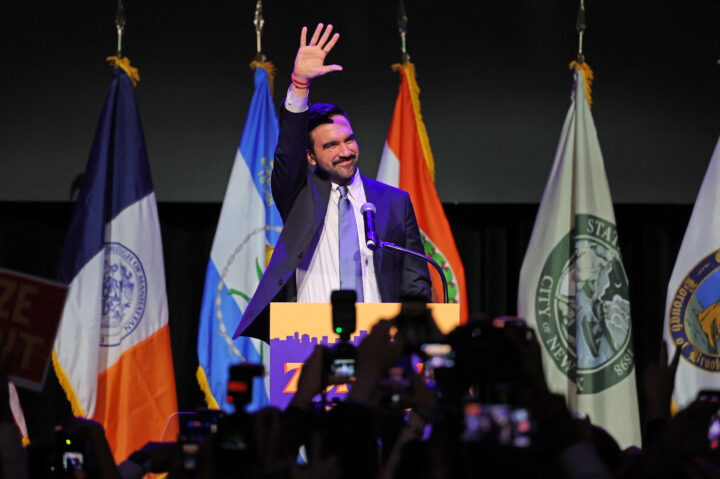
New York City Mayoral candidate Zohran Mamdani celebrates during an election night event at the Brooklyn Paramount Theater in Brooklyn, New York on November 4, 2025.


 Add JewishInsider on Google
New Yorkers elected democratic socialist Zohran Mamdani on Tuesday as the next New York City mayor, ensuring the city will be headed in a leftward ideological direction for the next four years. Mamdani’s election has also sparked widespread concerns in the city’s Jewish community about how the incoming mayor, who refused to condemn “globalize the intifada” rhetoric or acknowledge the state of Israel as a Jewish homeland, would impact the day-to-day life of Jewish New Yorkers.
Jewish Insider asked senior New York Democratic officials and Jewish community leaders — granted anonymity to offer their candid thoughts — to discuss the top threats that a Mamdani administration could pose to Jewish life in the city.
Respondents expressed worry that Mamdani’s anti-Israel worldview could lead to heightened antisemitism, bring a vanguard of leftist operatives hostile to Jewish concerns into City Hall, impact the effectiveness of the New York Police Department and fray ties between the city and Israeli institutions or businesses. He has even vowed to arrest Israeli Prime Minister Benjamin Netanyahu if he visits, though experts have voiced doubt on the legality of the move.
These are five of the leading concerns from the Jewish communal leadership in New York City, home to the largest Jewish community in the country, about what Mamdani might do as mayor:
1. Mamdani has expressed a desire to defund, or even disband, the NYPD’s Strategic Response Group — the unit that responds to major protests, such as the anti-Israel encampment on Columbia University’s campus last year:
“He’s been pushing for years to disband the NYPD’s Strategic Response Group,” a source with knowledge of city government told JI. In December 2024, Mamdani tweeted, “As mayor, I will disband the SRG, which has cost taxpayers millions in lawsuit settlements and brutalized countless New Yorkers exercising their first amendment rights.”
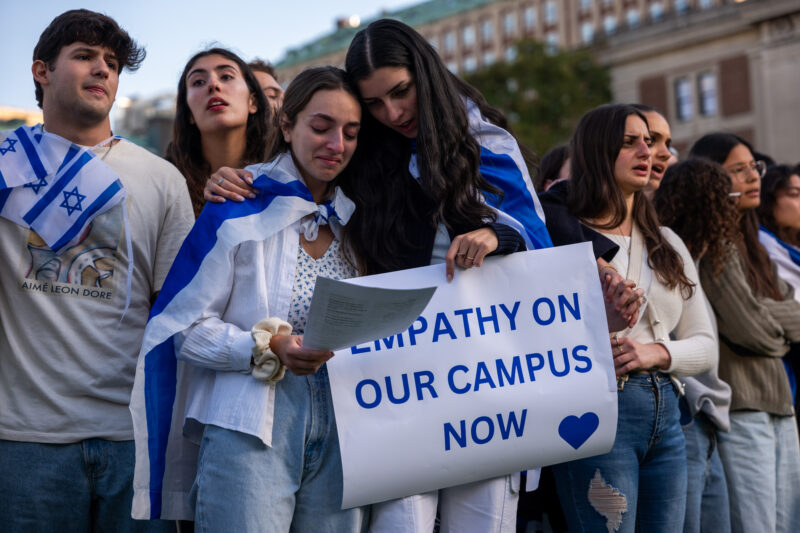
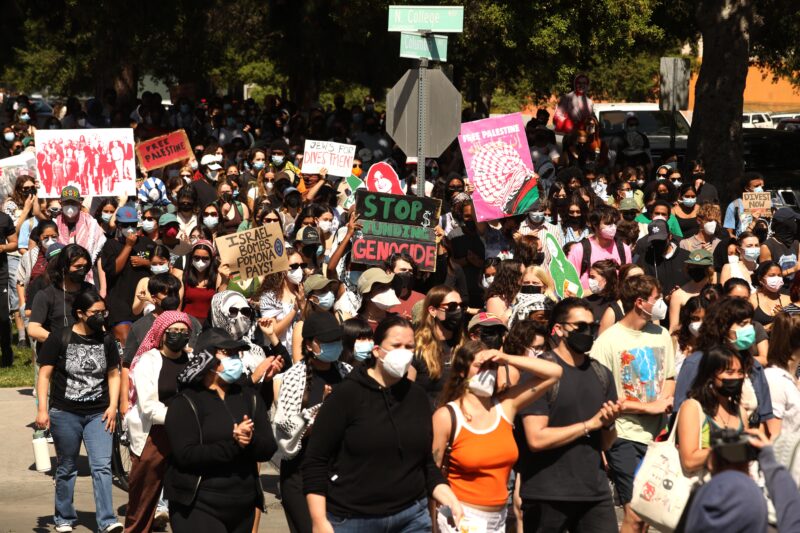
The SRG responds to hostage situations, riots and protests, including the deadly Park Avenue office building shooting that occurred in July. In April 2024, the Strategic Response Group was called in to assist with clearing the anti-Israel encampment that overtook Columbia University, which saw several incidents of physical assault against Jewish students.
“One question is if he’s actually successful in disbanding them,” the source continued. “That will depend on his will and bureaucracy and whether he can put together an administration to accomplish his tasks. If he’s going to be an effective mayor, then yes he could do it. And if he is, then you’re going to see completely different responses in the city.
“Something super important is whether a Mamdani administration would actually have a proactive approach to policing and using security in a way that will make sure Jewish New Yorkers are safe. If it’s not a priority for them, then I’m afraid to see what will happen.”
2. Mamdani could further politicize NYC Public Schools at a time when anti-Israel rhetoric and related antisemitic incidents have surged dramatically in K-12 schools:
In the aftermath of the Oct. 7, 2023, Hamas terror attacks, New York City Public Schools launched new curriculum materials on antisemitism and Islamophobia in its schools. As mayor, Mamdani will have power to appoint a new chancellor of public schools, who could rewrite that curriculum.
Former Rep. Jamaal Bowman, previously a far-left congressman who lost reelection in part because of his radical views towards Israel, has been discussed as a potential candidate to lead the country’s largest public school system. Bowman embraced a number of hostile positions toward Israel in the aftermath of Oct. 7 and throughout his reelection campaign, including pledging to oppose funding for Israel’s Iron Dome missile defense system and endorsing the BDS movement.
The New York City Public School system has seen a surge of anti-Israel activity since Oct. 7. In November 2023, a Queens high school teacher said she was forced to hide in a locked office as a mob of students tried to push their way into her classroom, after learning she attended a pro-Israel rally.
In May, a “Teacher Career Pathways” newsletter for educators in the city’s 1,800 schools called for students to be heard on the “genocide in Gaza.” NYC Schools Chancellor Melissa Aviles-Ramos apologized for the mass communication, stating that it should not have been released without consultation from the mayor’s office.
A political insider told JI there is anxiety the new administration will fuel anti-Israel discourse in the classroom. “There’s concern about what curriculums will be used to teach about the [Israeli-Palestinian] conflict,” he said. “What vendors will be used?”
The American Jewish Committee announced plans on Wednesday to “boost the ‘Hidden Voices’ curriculum in New York City public schools, which provides resources, lesson plans and workshops to highlight the histories and contributions of underrepresented groups in U.S. history.”
3. Mamdani has expressed support for the BDS movement, which could have a wide-ranging impact on Israeli partnerships with New York City companies or institutions.
Mamdani said in June that he would attempt to divest from Israel if elected mayor — including discontinuing the NYC-Israel Economic Council, which Mayor Eric Adams recently launched.
“His pursuit of discriminatory policies that boycott and divest from Israel, companies doing business in Israel, and U.S.-Israel tech partnerships could cost New York taxpayers billions over the next ten years,” said the head of a leading Jewish organization. “He knows [BDS] policy is discriminatory and antisemitic, yet he refuses to abandon it. Even worse, he continues to double down and has made it an important piece of his economic strategy.”
Mamdani has also said he would “reassess” the partnership between Cornell University and Israel’s Technion, potentially displacing it from its campus on Roosevelt Island. “Ending [the Cornell-Technion] partnership would deal a blow to the city’s booming tech sector, chase away innovators, destroy vital educational opportunities, and damage New York’s reputation as a global business hub,” Ted Deutch, CEO of the AJC, said in a statement.
A political insider and Jewish communal leader told JI those are policies Mamdani could enforce, but “he would have to go out of his way to.”
“He said he’ll divest from Israel but it would be unprecedented for him to start organizing the pension boards under the comptroller,” the source said. “It doesn’t mean he won’t do it, but it’s more complicated than the stroke of a pen. No one knows if he will be passive, aggressive or proactive; there are many options of what we could do.”
4. Mamdani’s inability to condemn antisemitism from his public perch, while associating himself with extremist individuals could lead to a rise in antisemitism:
During the campaign, Mamdani affiliated with anti-Israel activist Linda Sarsour, considered to be one of the mayor-elect’s mentors and Imam Siraj Wahhaj, who Mamdani called one of the “foremost Muslim leaders” in the U.S. Wahhaj has a history of supporting controversial figures involved in terrorism, including testifying as a character witness at the trial of Omar Abdel-Rahman who was found guilty of seditious conspiracy for his role in plotting the 1993 World Trade Center bombing. Jeremy Corbyn, who led Britain’s Labour Party and was suspended over antisemitic comments, also phone-banked for Mamdani in the closing days of the campaign.
Mamdani has said he would oppose using the International Holocaust Remembrance Alliance’s working definition of antisemitism, which would dismantle an executive order signed by Adams in June as part of a push against rising antisemitism.
“Even if Mamdani doesn’t do anything to actually impact the day-to-day of the Jewish community, the symbolic impact of Mamdani’s victory [is] devastating,” another veteran Jewish communal leader said. “It shows that a person espousing views that most of us consider dangerous and antisemitic can get elected. It’s the breaking of a taboo.”
5. Mamdani’s failure to equate anti-Zionism with antisemitism could weaken enforcement of laws protecting Jewish institutions:
Throughout his campaign, Mamdani repeatedly said he does not support Israel’s right to exist as a Jewish state and that his criticism of Israel does not amount to antisemitism. But the majority of Jewish Americans report that Israel is a large part of their Jewish identity.
Antisemitism watchers have noted that anti-Israel demonstrations — especially those on college campuses — have increasingly turned blatantly antisemitic by targeting Jewish, not Israeli, institutions such as Hillels and Chabad houses.
The communal leader and political insider added that it’s uncertain where Mamdani draws a line at anti-Israel activity crossing into antisemitism, and therefore whether he would protect Jewish institutions. For example, they said, “it’s unclear if he would use protesting a university Hillel with ‘Free Palestine’ as antisemitic or anti-Zionist.”
More Stories
MICHIGAN MOVES
Haley Stevens maintains support for Israel as her primary rivals battle over anti-Israel lane

exclusive
Schumer, Senate Democrats introduce resolution condemning Fuentes, Carlson

Fuentes’ following
New report documents foreign engagement driving online antisemitic activity
temple talks
Khanna addresses California synagogues on Israel policy, antisemitism

Fashion Faux Pas?
Anna Wintour mingles with Qatari royal who glorified Hamas’ slain leader