














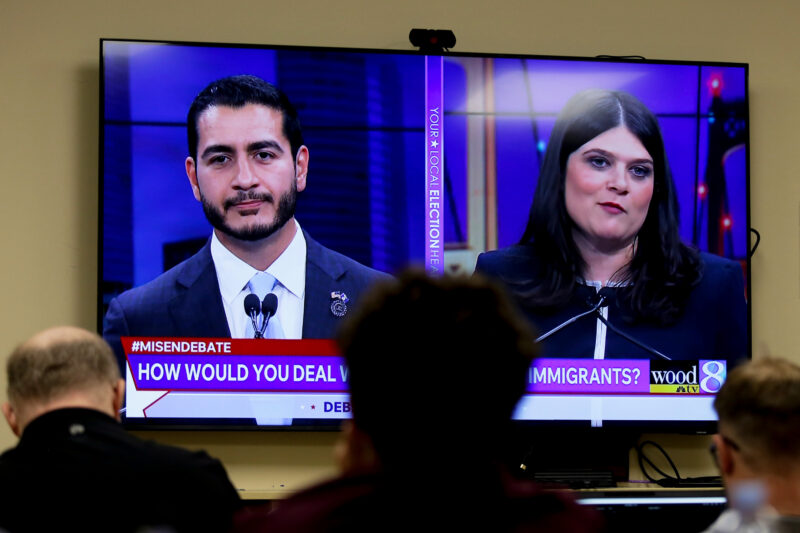












The Senate minority leader’s comments come as recent polling and Abdul El-Sayed’s progressive policies and have raised concerns for Democrats that he could lose the pivotal swing state
Anna Moneymaker/Getty Images
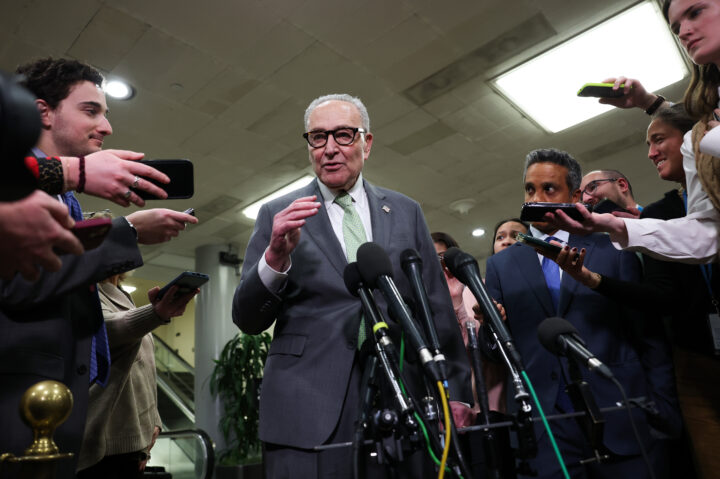
Senate Minority Leader Charles Schumer (D-NY) speaks to the media after briefings on Iran at the U.S. Capitol on March 3, 2026 in Washington, DC.


 Add JewishInsider on Google
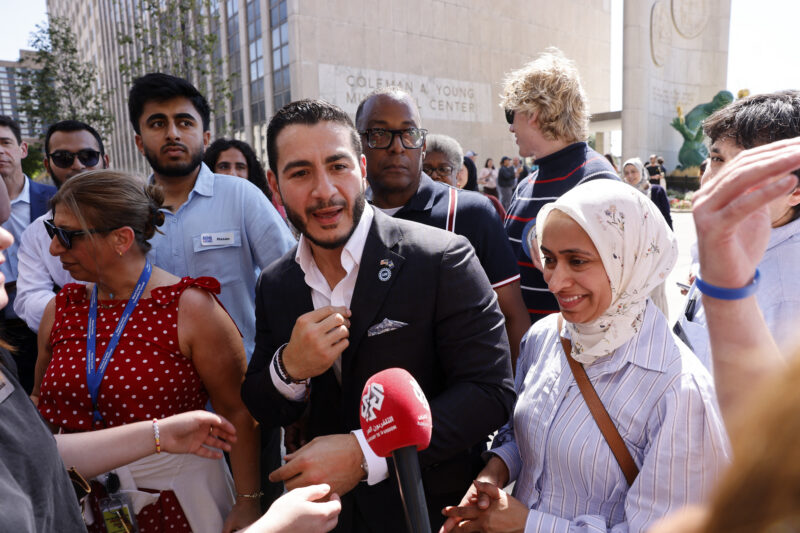
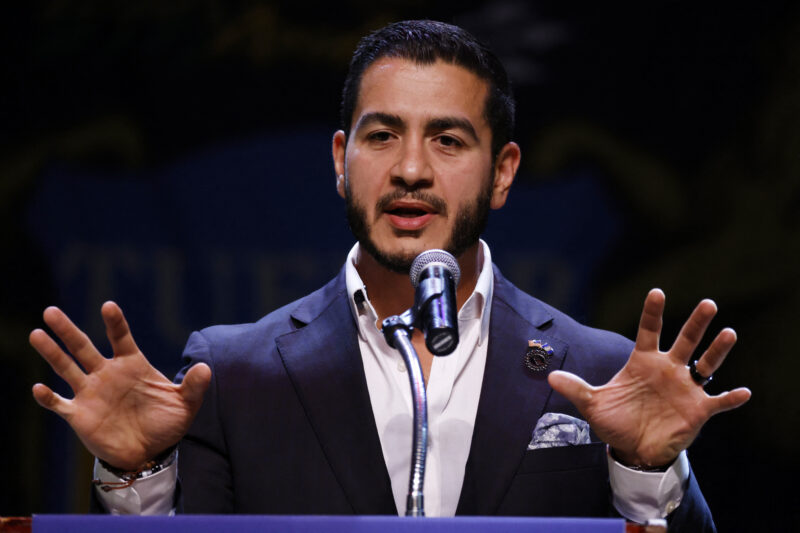
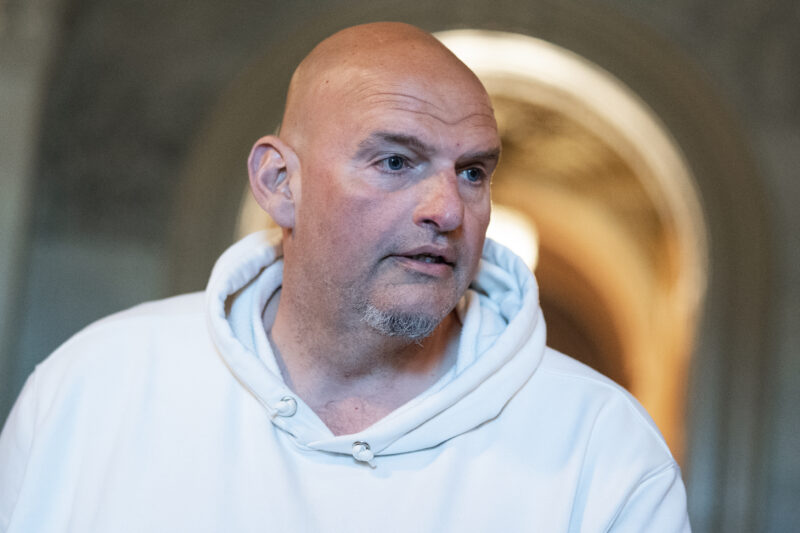
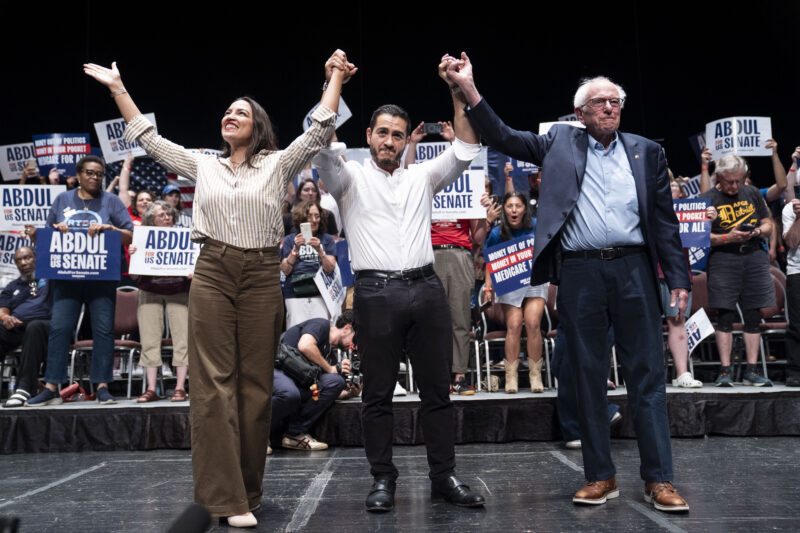
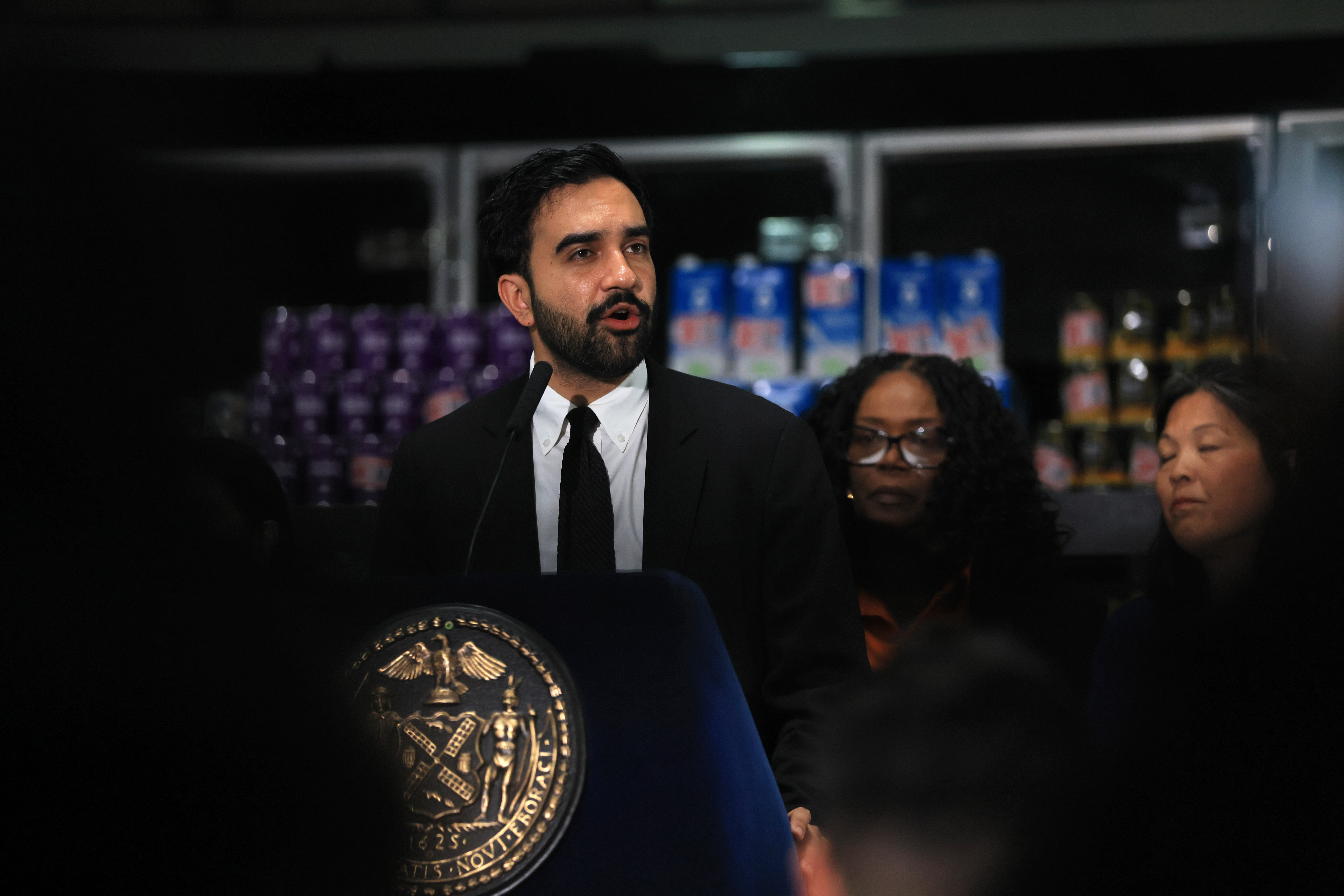
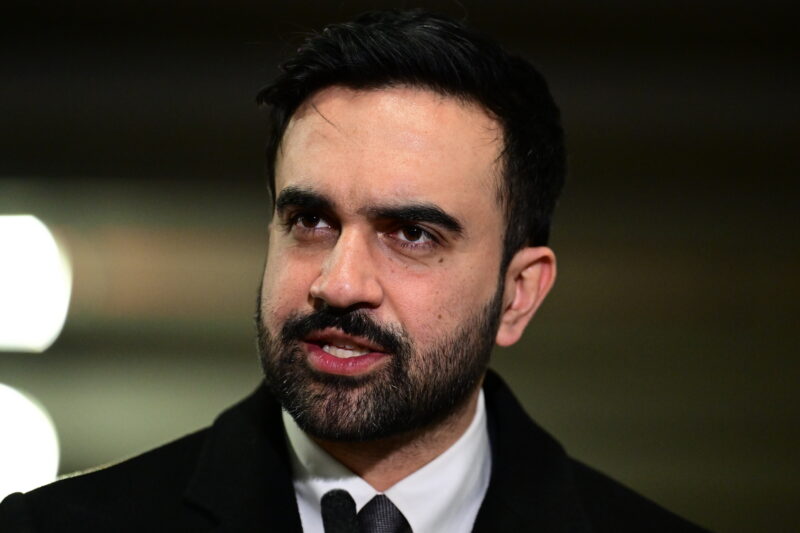
Senate Minority Leader Chuck Schumer (D-NY) suggested in an interview with The Washington Post published on Tuesday that he believes Democrats can still win the Senate even if far-left Michigan Senate nominee Abdul El-Sayed, whom Schumer has endorsed, does not win in November.
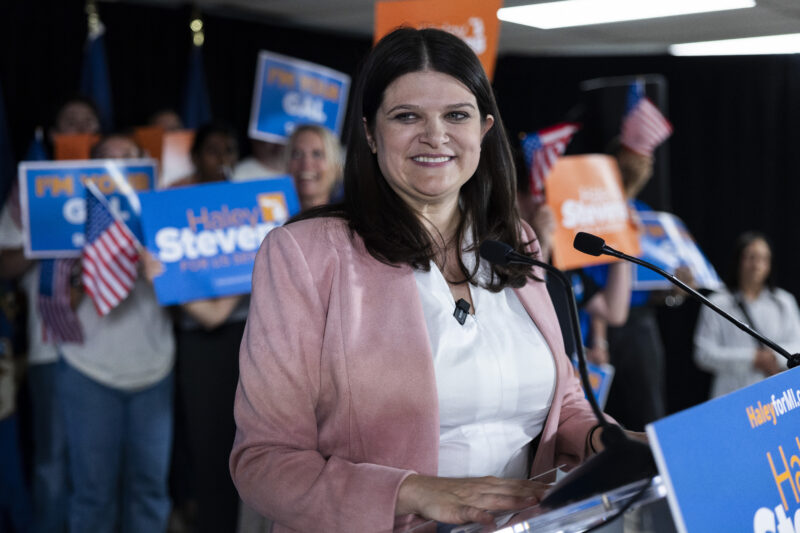
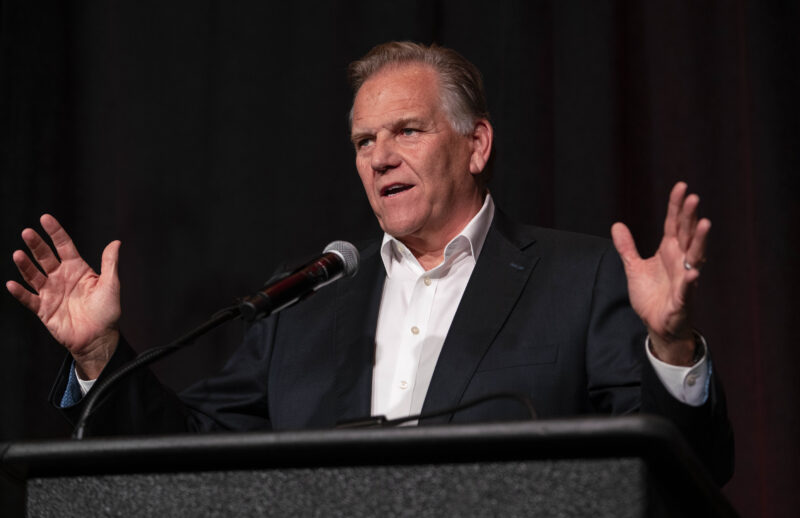
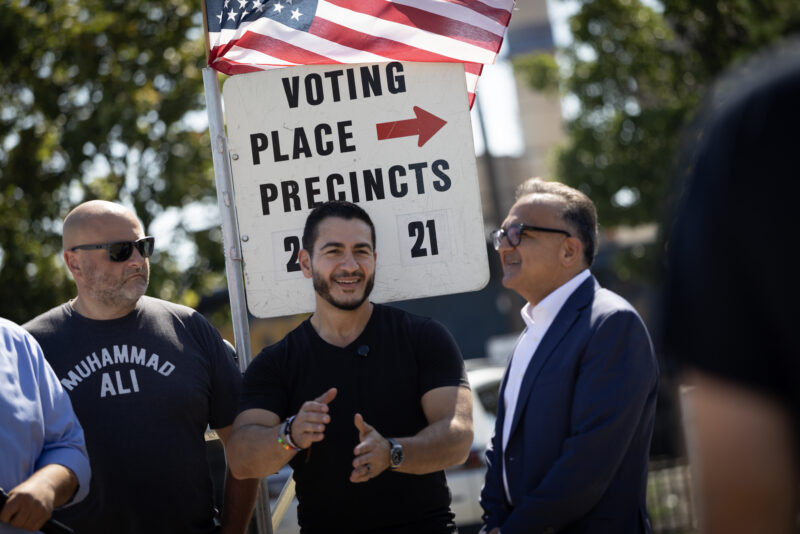
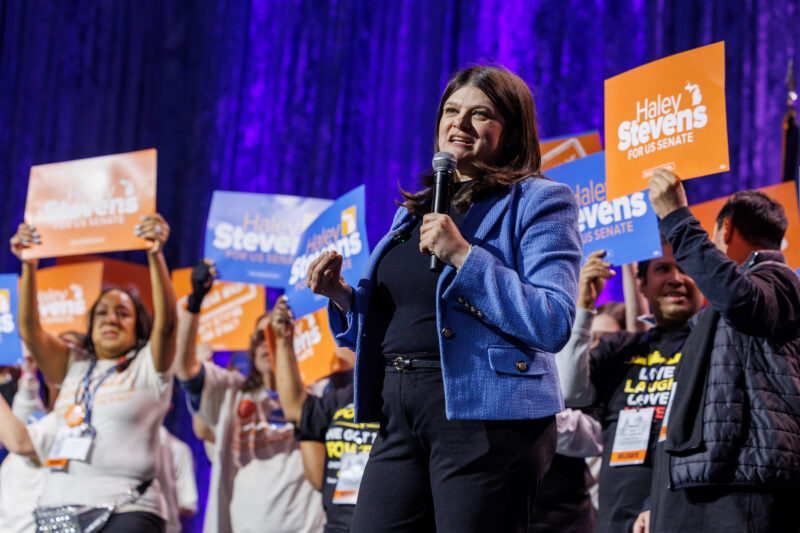
El-Sayed’s progressive positioning and recent polling showing him narrowly trailing the Republican nominee, former Rep. Mike Rogers (R-MI), have raised concerns among Democrats that El-Sayed could lose what many in the party consider to be a must-win state. Some Democratic donors, particularly in the Jewish community, are also now backing Rogers after El-Sayed won the primary.
“A path to winning back the Senate clearly goes through Michigan, but we have a whole bunch of different paths,” Schumer told the Post.
Schumer acknowledged that his views on Israel differed from El-Sayed’s, but didn’t directly say whether he believed the Michigan nominee had said or done anything antisemitic.
“I think he makes an effort to fight antisemitism even though his views on Israel are much different than mine,” Schumer told the outlet.
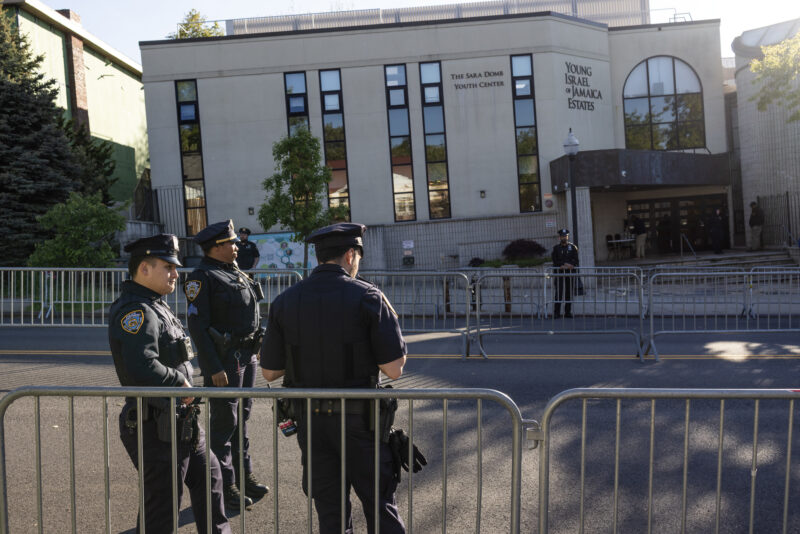
El-Sayed has come under fire for his comments that appeared to justify an attempted attack on a synagogue and Jewish preschool in the Detroit suburbs earlier this year, his repeated refusal to acknowledge Israel’s right to exist and his alliance with Hasan Piker, the far-left antisemitic and anti-Israel streamer.
Though much change has occurred in the last six weeks, the decisions made in the next two could determine the future of the region for decades to come
JONATHAN ERNST/ POOL/ AFP via Getty Images
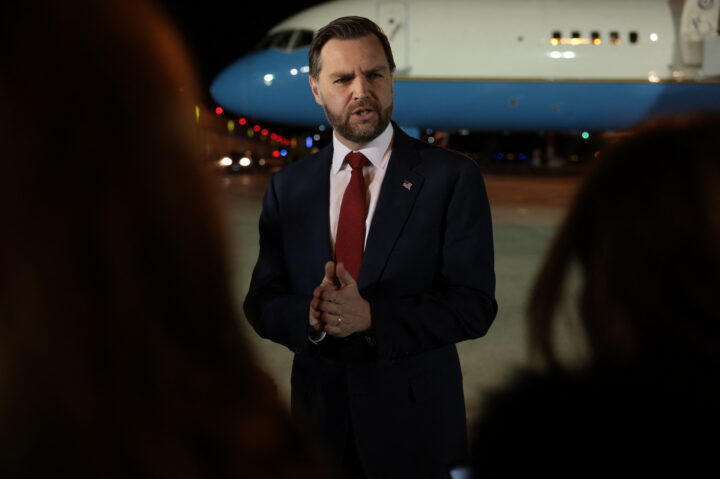
Vice President JD Vance speaks to the media before boarding Air Force Two in Budapest, Hungary, on April 8, 2026.
American and Iranian officials are meeting on Saturday in Islamabad, Pakistan, to begin conversations aimed at ending the conflict that has consumed the Middle East since late February. Though much change has occurred in the last six weeks, the decisions made in the next two could determine the future of the region for decades to come.
The “fog of diplomacy,” as The Washington Post’s David Ignatius put it, has shrouded much of what is known about the talks and their contours. The first 24 hours after the ceasefire was announced saw dueling — and often conflicting — statements, denials and claims about various points, including the inclusion of Lebanon in the agreement, Iran’s “right” to enrich uranium and the status of the Strait of Hormuz, that were proposed and supposedly agreed to by the parties.
Those sticking points deepened in the days between the ceasefire announcement and Saturday’s meeting in Pakistan. On Wednesday, Israel conducted widespread strikes in Lebanon targeting Hezbollah infrastructure and operatives whom the IDF said had embedded in civilian areas, while Hezbollah has launched dozens of missiles into Israel — including one fired at the southern city of Ashdod that also triggered sirens across Tel Aviv and surrounding towns early Friday morning. Meanwhile, Trump on Thursday accused Iran of “doing a very poor job, dishonorable some would say, of allowing Oil to go through the Strait of Hormuz.”
It is against that backdrop that Vice President JD Vance, joined by White House Special Envoy Steve Witkoff and Jared Kushner, will enter into negotiations tomorrow in Islamabad.
In tandem, a separate set of negotiations is slated to take place in Washington early next week, when the U.S. will convene the envoys from Israel and Lebanon for rare direct, public talks aimed at reaching a peace agreement between Beirut and Jerusalem. If reached — and if Lebanon takes meaningful action to demilitarize Hezbollah — Iran could lose its most powerful proxy in the region. Under pressure from Washington, Israel has limited its attacks on Lebanon.
While the inability to agree on the parameters for a ceasefire does not portend well for the ability to secure a more lasting agreement,both sides have a vested interest in reaching an accord that allows both to declare victory. Watching from the sidelines are Israel and the Gulf states, which will not be represented in Islamabad, and will instead have to hope from their respective capitals that the U.S. does not acquiesce to an agreement that emboldens Iran — and leaves the American allies vulnerable.
With the regime still intact — and still pledging destruction — Israel has reason to worry. Iran’s new supreme leader, Ayatollah Mojtaba Khamenei, warned on Thursday night that “we definitely won’t allow the criminal aggressors who attacked our country to go unpunished.”
And even as Pakistan positions itself as a convener, its senior officials make clear it is not hosting talks as an impartial actor. On Thursday morning, Pakistani Defense Minister Khawaja Asif posted on X — and later deleted — that “Israel is evil and a curse for humanity,” adding, “I hope and pray people who created this cancerous state on Palestinian land to get rid of European jews burn in hell.”
With elections in both the U.S. and Israel later this year, both Washington and Jerusalem have a vested interest in U.S. negotiators securing the best possible deal with Tehran. With rising fuel prices, the White House will want to project strength in reopening the Strait of Hormuz, while Israeli Prime Minister Benjamin Netanyahu will need to convince voters that they are safer now than they were a year ago — and that Israel won’t find itself in an ongoing cycle of wars that bring the country to a halt for weeks on end every year.
But the longer-term questions remain. Will Iran, whose nuclear and ballistic missile programs were dealt significant blows, further conceal aspects of both? What degree of threat can Israel live with on its borders? How has the Iranian regime’s survival emboldened its allies in Beijing and Moscow? And what of the Iran-backed Houthis in Yemen, who have largely held their fire over the last six weeks?
Those are questions unlikely to be resolved in Islamabad in the coming days, but they are the ones that Israel and the West will have to grapple with once the dust from this war has settled.
The Washington Post reported that the symbol would instead be classified as ‘potentially divisive’

Photo by Alex Brandon / POOL / AFP
US Homeland Security Secretary Kristi Noem participates in a tour at the US Coast Guard Station Charleston, on November 7, 2025, in Charleston, South Carolina.
A Washington Post report that the U.S. Coast Guard will no longer classify the swastika as a hate symbol under a new policy set to be implemented next month is garnering condemnation from Jewish groups and Democratic officials.
According to the report, the new policy will classify the Nazi emblem as “potentially divisive.” It is also set to apply to nooses.
Acting Coast Guard Commandant Adm. Kevin Lunday denied the reports, saying “The claims that the U.S. Coast Guard will no longer classify swastikas, nooses or other extremist imagery as prohibited symbols are categorically false. These symbols have been and remain prohibited in the Coast Guard per policy. Any display, use or promotion of such symbols, as always, will be thoroughly investigated and severely punished.”
Coast Guard spokesperson Jennifer Plozai, however, told the Washington Post that the Coast Guard would be “reviewing the language” of the new policy.
Rep. Lauren Underwood (D-IL), the ranking member of the House Appropriations subcommittee responsible for funding the Department of Homeland Security, said she’d met with Lunday on Thursday evening and he had committed to changing the policy and publishing an updated version on Thursday evening.
She said that Lunday had “assured us that there is a[n] across-the-board prohibition on hate symbols, including swastikas and nooses.” She said the policy would also make clear that there will be “zero tolerance” for “any display” of such symbols in the Coast Guard.
“The swastika and the noose aren’t ‘potentially divisive.’ They are explicit symbols of antisemitism and hate. Treating them as anything less than hate symbols is a dangerous mistake,” Anti-Defamation League CEO Jonathan Greenblatt said.
“Nazi swastikas are not ‘divisive.’ They are antisemitic,” the American Jewish Committee said in a statement. “They represent a regime responsible for the murder of six million Jews and insult the hundreds of thousands of Americans who gave their lives to defeat the Nazis 80 years ago.”
The AJC called on Secretary of Homeland Security Kristi Noem, under whose jurisdiction the Coast Guard falls, to “reverse these deeply troubling guidelines immediately.”
Amy Spitalnick, the CEO of the Jewish Council for Public Affairs said, through the amended policy, “the Coast Guard is doing nothing less than normalizing violent extremism.”
Halie Soifer, the CEO of the Jewish Democratic Council of America, told Jewish Insider the policy marks as “dark and unprecedented moment in our country’s history,” in conjunction with President Donald Trump’s recent comments accusing Democrats of “SEDITIOUS BEHAVIOR, punishable by DEATH!”
“This signaling to right-wing extremists and antisemites — combined with the President’s explicit threat of political violence — is depraved, unconscionable, shocking, and incredibly dangerous, including for Jews,” Soifer continued.
Sen. Richard Blumenthal (D-CT) said that, “Granting hate symbols like swastikas & nooses even an ounce of respectability is absolutely an anathema.”
“Sec. [Kristi] Noem should be ashamed & Americans outraged. This edict besmirches the Coast Guard’s honor & should be immediately reversed,” he continued.
Sen. Alex Padilla (D-CA) called the policy change “indefensible.”
Reps. Dan Goldman (D-NY), Brian Fitzpatrick (R-PA), Haley Stevens (D-MI), Mark Veasey (D-TX), Ted Lieu (D-CA) and Grace Meng (D-NY), co-chairs of the House Antisemitism Task Force, issued a statement condemning the decision.
“By eliminating the terminology of ‘hate incident’ symbols at a time of rising antisemitism and increasing hate, the Coast Guard risks emboldening those who seek to intimidate or target Jewish Americans, Black Americans, and other minority communities,” the lawmakers said. “This change sends a chilling signal to American Jews at a moment when antisemitic incidents have already hit record highs in the United States. This policy change must be reversed immediately.”
Rep. Don Bacon (R-NE), also a co-chair of the task force, said, “This would be an egregious move on the part of the Administration if true.”
“The Department of Homeland Security is outright refuting and another outlet has confirmed it reporting that officials say they are still covered under the new language and will not be tolerated,” Bacon said. “We need some clarity on this issue and the Coast Guard should make it 100% clear. It would help if the Coast Guard had a Commander, as the position has been vacant for many months.”
Rep. Laura Gillen (D-NY) wrote to Lunday, the Coast Guard commandant, expressing “deep concern” and “strong opposition” to the policy, and said that the policy change should be reversed immediately and requested an explanation of the policy change, who was involved and how the Coast Guard will “reaffirm its zero-tolerance posture toward racism and antisemitism.”
Illinois Gov. J.B. Pritzker, who is Jewish and a potential 2028 presidential candidate, said that he “helped build a Holocaust museum so future generations would understand the horror of the swastika — not watch our own government rebrand it, the noose, and the Confederate flag as merely ‘potentially divisive.’ These are symbols of mass murder and racial terror. The Trump Administration must reverse this immediately. You do not sanitize evil. You confront it.”
Rep. Bennie Thompson (D-MS), the ranking member of the House Homeland Security Committee, said that the policy “is vile and horrific.”
“Swastikas and nooses aren’t ‘potentially divisive’; they are longstanding and well known representations of genocide and lynchings,” he said. “The Trump Administration is looking to take us back all the way to the era of the Nazi Party and the Jim Crow South.”
He dismissed the Coast Guard’s denials, saying that the “administration is trying to claim they don’t mean what the policy says,” and should withdraw and disavow the policy.
Rep. Jim McGovern (D-MA), the ranking member of the House Rules Committee, posted on X, “Welcome to Donald Trump’s America—where it’s fine to be a Nazi or in the KKK.”
Doug Emhoff, the former second gentleman and a leader of the Biden administration’s efforts to combat antisemitism, said on X, the change is “Completely wrong and unacceptable. Leaders cannot remain silent on this if they are serious about combatting antisemitism and hate.”
The Google cofounder criticized the U.N. as ‘transparently antisemitic’ in comments on an internal employee forum

Taylor Hill/FilmMagic
Sergey Brin attends the 2025 Breakthrough Prize Ceremony at Barker Hangar on April 05, 2025 in Santa Monica, California.
Google cofounder Sergey Brin recently panned the use of the term “genocide” to describe Israel’s war against Hamas, describing it as “deeply offensive” to Jewish people “who have suffered actual genocides.”
Brin made the comment in an internal employee chat forum, according to The Washington Post, amid a debate over a new U.N. report that accused corporate entities, including Google, of profiting from “Israel’s economy of illegal occupation, apartheid and now, genocide.”
In the Google DeepMind staff forum, screenshots of which were viewed by the Post, Brin wrote, “With all due respect, throwing around the term genocide in relation to Gaza is deeply offensive to many Jewish people who have suffered actual genocides. I would also be careful citing transparently antisemitic organizations like the UN in relation to these issues.”
The U.N. report was authored by U.N. special rapporteur Francesca Albanese, who has faced ongoing accusations of antisemitism from U.S. officials and lawmakers who have called for her to be removed from her position.
The newspaper, which has repeatedly faced scrutiny for its Gaza coverage, had previously updated the story without publicly acknowledging the issues in its reporting

AFP via Getty Images
Men look around on alert in the wake of gunfire shots as displaced Palestinians receive food packages from a US-backed foundation pledging to distribute humanitarian aid in western Rafah in the southern Gaza Strip on May 27, 2025.
The Washington Post issued an apology on Tuesday for an article that, citing the Hamas-controlled Gaza Health Ministry, claimed that Israeli troops had killed more than 30 people on Sunday at an aid site in Gaza, a story picked up by a variety of U.S. news outlets in spite of denials by Israeli forces and U.S.-backed aid contractors.
Israeli military officials said soldiers had fired warning shots toward “suspects” advancing toward an Israeli position nearby an aid distribution center but denied any connection between that incident and the claims of an attack on civilians collecting aid.
The Post’s acknowledgement came days after the newspaper, which has repeatedly faced scrutiny over its reporting on the war in Gaza and related issues, changed the story quietly, without issuing a public correction.
“The article failed to make clear if attributing the deaths to Israel was the position of the Gaza health ministry or a fact verified by The Post,” the Post said in an editor’s note. “The article and headline were updated on Sunday evening making it clear that there was no consensus about who was responsible for the shootings and that there was a dispute over that question.”
“While statements from Israel that it was unaware of injuries and that an initial inquiry indicated its soldiers didn’t fire at civilians near the site were included in all versions, The Post didn’t give proper weight to Israel’s denial and gave improper certitude about what was known about any Israeli role in the shootings,” the statement continued. “The early versions fell short of Post standards of fairness and should not have been published in that form.”
The newspaper has repeatedly faced accusations of bias and faulty reporting in its coverage of the war and the families of hostages. It has repeatedly been forced to issue corrections to high-profile stories accusing Israel of misconduct.
One of the lead reporters on the latest story, Louisa Loveluck, recently delivered a scathing speech to the Post newsroom criticizing Israel and elevating claims by the Health Ministry, without any mention of Hamas, after being nominated as a Pulitzer Prize finalist for her reporting on the war.

Anna Moneymaker/Getty Images
President Donald Trump delivers remarks during a swearing-in ceremony for Special Envoy to the Middle East Steve Witkoff in the Oval Office at the White House on May 06, 2025 in Washington, where he provided an update on the Houthi conflict in the Middle East.
Good Wednesday morning.
In today’s Daily Kickoff, we look at how Capitol Hill is responding to the Trump administration’s Houthi ceasefire agreement, and report on a Washington Post correspondent’s condemnation of Israel’s military conduct following the paper’s citation by the Pulitzer Prize Board for its Gaza reporting. We preview today’s House Education & Workforce Committee hearing on campus antisemitism, and report on Sen. James Lankford’s voicing of frustration over the stalled Antisemitism Awareness Act. Also in today’s Daily Kickoff: Education Secretary Linda McMahon, Jessica Tisch and Jonathan and Mindy Gray.
What We’re Watching
- The House Education & the Workforce Committee is holding a hearing on campus antisemitism. The presidents of Haverford College, DePaul University and California Polytechnic State University (San Luis Obispo) as well as Georgetown professor David Cole, the former national legal director of the American Civil Liberties Union, are slated to testify.
- In the afternoon, the House Appropriations Committee is holding a hearing on FEMA.
- Later tonight, Israeli Ambassador to the U.S. Yechiel Leiter is hosting a Yom Ha’atzmaut celebration at the ambassador’s residence.
- Israeli Strategic Affairs Minister Ron Dermer is in Washington today for meetings with senior officials, including Secretary of State Marco Rubio and Middle East envoy Steve Witkoff.
- The Milken Global Conference wraps up in Los Angeles today with a three-part series on Israel in a post-Oct. 7 world. Former hostage Noa Argamani is slated to speak in conversation with Milken’s Richard Sandler, followed by author Noa Tishby. A third session, focused on the Israeli economy, will feature Pinegrove Venture Partners’ Tilli Kalisky-Bannett, Apollo Global Management’s Michael Kashani, Tel Aviv Stock Exchange Chairman Eugene Kandel and Israel Securities Authority Chairman Seffy Zinger. Earlier in the day, Rabbi Sharon Brous will sit in conversation about her book, The Amen Effect.
- The papal conclave to select the successor to Pope Francis, who died last month, began today. More below on Vatican-Jewish relations.
What You Should Know
A QUICK WORD WITH JI’S TAMARA ZIEVE AND MELISSA WEISS
President Donald Trump surprised lawmakers in Washington — as well as senior officials in Israel — with his announcement on Tuesday that the U.S. had reached an agreement with the Houthis to end strikes on the Iran-backed terror group in Yemen in exchange for the group’s cessation of attacks on vessels in the Red Sea.
The Houthis said that Trump’s claim related only to the group’s attacks in the Red Sea, and that the group’s “operations to support Gaza” — i.e. attacks targeting Israel — would continue, days after a Houthi ballistic missile struck the Ben Gurion Airport complex, injuring six.
Trump’s decision to strike a deal with the Houthis — even as the group vowed to continue its attacks on Israel — underscores the growing influence of isolationist thinking in the administration, raising questions about how U.S. leadership might redefine its commitments to allies under fire and the message this sends to Israel’s adversaries.
Pressed by reporters in the Oval Office yesterday about how Israel’s security might be affected by the deal, Trump replied that the issue was not a term of this agreement. “No, I don’t know about that frankly, but I know one thing: they [the Houthis] want nothing to do with us, and they’ve let that be known through all of their surrogates and very strongly,” Trump said.
“Trump’s announcement that the US will stop attacking the Houthis is a resounding message to the entire region: attack Israel, just leave us Americans alone,” Israeli political analyst Amit Segal wrote on X. “If I were Iranian, that’s how I’d interpret it.”
The move also calls into question the strength of the relationship between Trump and Israeli Prime Minister Benjamin Netanyahu. Barak Ravid wrote in Walla, “The fact that the ceasefire was agreed upon behind Israel’s back during the very days that the Houthis were launching missiles at Ben Gurion Airport and the IDF was bombing Sana’a indicates extremely serious coordination and trust issues between the Netanyahu government and the Trump administration.” A senior official in Jerusalem was still unsure of the announcement’s impact on Israel as of Wednesday morning.
“No attacks on US ships is good news,” Dan Shapiro, who served in senior roles in both the Biden and Obama administrations, including as U.S. ambassador to Israel from 2011-2017, said. “But the win is modest if attacks on others’ ships or on Israel continue. A terror org launching missiles around the region (incl to Israel’s airport) can’t continue.” He said that Israeli strikes may need to continue.
Another close ally of the U.S. involved in striking the Houthis was also not informed before Trump’s statement, and Secretary of Defense Pete Hegseth received at least one angry phone call from a foreign counterpart on Tuesday, an Israeli defense source told JI.
The pushback on Capitol Hill was swift. “Clearly, that’s a problem,” Sen. James Lankford (R-OK) said of the deal excluding terms ensuring the Houthis would stop firing at Israel. “The initial statement was they’ve got to stop firing at American ships. As much as I know is what’s actually printed. But clearly, they shouldn’t be able to shoot at us, our allies or any of the shipping in the area.” Read the full story here with additional comments from Sens. Rick Scott (R-FL), Lindsey Graham (R-SC), Thom Tillis (R-NC), Ted Cruz (R-TX), Richard Blumenthal (D-CT), Chris Coons (D-DE) and Chris Murphy (D-CT).
Jonathan Schanzer, the executive director of the Foundation for Defense of Democracies, told JI that decreased Houthi attacks on targets in the Red Sea might not necessarily lead to an uptick in attacks against Israel, noting that the ballistic missiles often used to target Israel are different weapons than those the Houthis have frequently used in the Red Sea. But, he continued, if U.S. strikes drop off, it could give the Houthis more ability and opportunity to maneuver weapons to launch sites.
Trump’s announcement also comes days after Mike Waltz’s ouster as national security advisor. Waltz, a former Green Beret who has advocated for a tougher U.S. stance against the Houthis and their Iranian sponsor, was a leading voice backing military action against the Yemeni group, which has fired dozens of ballistic missiles at Israel since December and significantly disrupted shipping routes in the Red Sea.
MEDIA MATTERS
Washington Post’s Pulitzer finalist for Gaza coverage slams Israel’s military conduct in one-sided acceptance speech

A Washington Post correspondent who has faced scrutiny over major factual errors in her reporting on Gaza gave a scathing critique of Israel’s military conduct on Monday after the paper’s war coverage was named as a Pulitzer Prize finalist for international reporting — even as it has drawn accusations of bias stemming from its handling of the war with Hamas, Jewish Insider’s Matthew Kassel reports.
Critical comments: Louisa Loveluck, a London-based correspondent focusing on the Middle East who was cited among several Post journalists in the Pulitzer announcement for their reporting about the ongoing conflict, delivered virtual comments to the paper’s newsroom during which she decried Israel’s military actions in the wake of Hamas’ Oct. 7 terror attacks, according to audio of her remarks obtained by JI.
VATICAN VIEWS
Catholic cardinals shared Italian Jews’ concerns that pope ‘abandoned’ them, veteran journalist says

Italian Catholic cardinals showed solidarity with the local Jewish community, many of whose members felt Pope Francis was insensitive to the suffering of Israelis in the ongoing war, Maurizio Molinari, former editor-in-chief of major Italian daily la Repubblica, told Jewish Insider’s Lahav Harkov on Monday. Speaking as the cardinals began to gather in Rome to choose a new pope to replace Pope Francis, who died last month, Molinari noted that Italian Jewish and Catholic leaders have “historical strong relations.” Community leaders held one of their annual interfaith meetings in February, during which, Molinari said, “one of the rabbis who was there in the framework of this dialogue told the other side, the priesthood, ‘We felt that you abandoned us.’”
A journalist’s insights: Molinari said that the rabbi in the Jewish-Catholic interfaith meeting represented “the feeling that many [Italian] Jews had that after Oct. 7, the pope didn’t dedicate so much attention to the suffering of the Israeli victims as he did with the suffering of the Palestinian victims. No one is raising objections to solidarity towards the Palestinian victims. The question comes when there is no balance. That was the point raised.” While it is a taboo for senior figures in the Catholic Church to publicly criticize the pope, Molinari said that as part of his own reporting he found that “some of the most important cardinals that will sit inside the conclave to choose the pope share this feeling. They are well aware of the feeling of the Italian Jews, and they share it.”
The next pope: In The Atlantic, Vatican reporter Francis X. Rocca writes that with a globally diverse and unfamiliar College of Cardinals, the media is playing an outsized role in shaping the papal conclave, where Pope Francis’s successor remains uncertain.
campus questions
Three more college presidents to testify before House Education and Workforce Committee

The House Education and Workforce Committee is holding the latest in its series of hearings on campus antisemitism with college presidents on Wednesday, this time focusing on colleges and universities outside of the most elite circles, Jewish Insider’s Marc Rod reports.
What to watch: The hearing will feature the presidents of Haverford College, California Polytechnic State University (San Luis Obispo) and DePaul University. David Cole, the former national legal director of the American Civil Liberties Union, is also set to testify. “This isn’t just an Ivy League issue,” Rep. Lisa McClain (R-MI), the new chair of the House Republican Conference, told Jewish Insider on Tuesday. “This is a widespread issue across academia. This shouldn’t be about partisanship, this is about public safety … My hope for tomorrow is that we get some actionable change from the universities.”
Protest pandemonium: After more than 30 anti-Israel demonstrators were arrested for occupying a University of Washington engineering building — causing more than $1 million worth of damage — the Trump administration announced on Tuesday night that the public university in Seattle would be the latest target in its widespread investigations of colleges for not doing enough to combat antisemitic activity, Jewish Insider’s Haley Cohen reports.
POLICY STANDOFF
Lankford airs frustration with Senate impasse over Antisemitism Awareness Act

Sen. James Lankford (R-OK) expressed frustration on Tuesday about the debate in the Senate Health, Education, Labor and Pensions Committee last week that added poison-pill amendments to and stymied a vote on the Antisemitism Awareness Act, potentially halting its progress in the Senate, Jewish Insider’s Marc Rod reports.
What he said: “In the past week, I watched our committee here break into a battle about, ‘Does this interrupt free speech?’ which just makes me scratch my head and say, ‘Of course it does not,” Lankford said of the AAA at an Orthodox Union event. “This just protects the speech that we all have, and protects the rights of every single individual and clearly puts a definition of what antisemitism looks like.” He also discussed the conversations he’d had with the administration regarding the freeze in reimbursements for Nonprofit Security Grant Program funding for synagogues and other institutions facing security threats, and his initial concerns — now allayed — that the administration might cancel grant programs wholesale.
ANSWERS FOR ACADEMIA
University leaders differ on future of higher education at Milken Institute conference

University leaders sparred over the direction of higher education in the era of the second Trump administration at the Milken Institute’s Global Conference on Tuesday, largely agreeing that universities have not done enough to maintain freedom of expression but differing over ways to address it, Jewish Insider’s Danielle Cohen reports.
Addressing antisemitism: Speaking on a panel titled “Hurdles and Hopes in American Higher Education,” Yeshiva University President Ari Berman argued that universities and their formal bodies, including the American Association of Universities, need to more clearly denounce antisemitism in the name of academic freedom. “There’s certainly no place in the academy [for antisemitism], because the core of the academy is academic freedom. … And that needs to be said. Tenured professors need to know it. The presidents need to say it: that antisemitism is hate, and that hate attacks the foundation of the university, which is academic freedom,” Berman said.
Coalition admonition: The American Jewish Committee — together with major groups representing U.S. universities — on Tuesday released a statement asking the Trump administration to reconsider its approach to combatting campus antisemitism, which it said involves steps that “endanger” academic freedom, Jewish Insider’s Haley Cohen reports.
MILKEN MOMENT
McMahon raises ‘July Fourth Seder’ concept at Milken conference

Secretary of Education Linda McMahon said on Tuesday that she was inspired by a program by PragerU to teach American children and families the history of the Fourth of July like the “Seder in the Jewish religion” where “once a year families share the stories of their heritage.” McMahon made the comment at the Milken Institute Global Conference in Los Angeles, prompted by a question from moderator Nina Rees about promoting civics education, Jewish Insider’s Melissa Weiss reports.
What she said: “Civics has just been removed from so many schools’ curriculums,” McMahon said, noting that she had visited PragerU earlier in the day and learned about the conservative organization’s “4th of July Declaration Ceremony,” the brainchild of PragerU founder Dennis Prager, who first advocated for the idea in 2007. “To have a similar kind of a program that kind of brings it back to ‘let’s start it at home,’” McMahon told Rees. “And then let’s spread to all of the different schools that we have.”
Worthy Reads
Damascus Debate: In Foreign Affairs, The Washington Institute for Near East Policy’s David Makovsky and Simone Saidmehr look at Israel and Turkey’s diverging interests and goals in Syria, which borders both countries, following the ascension of Hayat Tahrir Al-Sham leader Ahmed al-Shara as Syria’s president. “Turkey is clearly the power behind the new Syrian regime, largely because of its long-standing ties to HTS, and has helped Syria’s new leaders plan for reconstruction. Ankara also appears to be pursuing a defense pact with Syria that would expand Turkey’s influence, currently concentrated in the north, to the rest of the country. Israel is deeply alarmed by this trajectory. Two competing schools of thought have emerged on how to manage relations with Syria’s new regime. One set of Israeli officials holds that Israel should try working with Shara before deciding that he is an enemy. But another set, which includes Israeli Prime Minister Benjamin Netanyahu, believes that a moderate, centralized Syrian government is unlikely to emerge under Sunni Islamist leadership and that Israel should prepare itself for hostility by establishing informal spheres of influence.” [ForeignAffairs]
Charity Case: In The Wall Street Journal, Ira Stoll considers the legality of the Trump administration’s efforts to revoke Harvard’s 501(c)3 status. “On the education-or-propaganda question, first-year Harvard medical students were required to take a course on the ‘principles of advocacy and activism’ while focusing on ‘a most consequential public health threat — climate change.’ A high-profile Harvard task force recently reported ‘that certain faculty were injecting highly partisan discussions of the Israeli-Palestinian conflict and of American Jewish groups in courses that had no direct connection with these subjects.’ The task force described a divinity school program on religion and public life as ‘one-sided, ideologically partisan, and biased.’ At the education school, some sections of a required course featured a ‘pyramid of white supremacy’ illustrating ‘the day-to-day racist norms’ at work in American culture. Examples include the Anti-Defamation League, opposition to boycotting Israel, Wall Street, the war on terror and community policing.” [WSJ]
Word on the Street
President Donald Trump is expected to announce plans to rename the Persian Gulf when he travels to Saudi Arabia next week; the president will announce that the U.S. will refer to the area as the Arabian Gulf or the Gulf of Arabia…
Trump declined the suggestion that he might add a stop in Israel to his trip to the region next week — an idea first proposed by Israeli Ambassador to the U.S. Yechiel Leiter — but said a trip could happen in the future…
The State Department is shuttering the Office of Palestinian Affairs and merging the office into the U.S. Embassy in Jerusalem; the office was opened by the Biden administration in June 2022 to work with Palestinians following the first Trump administration’s moving of the Embassy from Tel Aviv to Jerusalem…
Sen. Jim Risch (R-ID) and 19 Senate Republicans, as well as nine House members, re-introduced the No Official Palestine Entry (NOPE) Act, cutting U.S. funding to any U.N. Agency that provides additional rights or privileges to the Palestine Liberation Organization…
NYPD Commissioner Jessica Tisch met on Tuesday with Chabad-Lubavitch officials at Chabad World Headquarters…
A new campaign is targeting Hasidic and Orthodox Jewish voters in Monsey, N.Y., with ads calling on voters to contact Rep. Mike Lawler (R-NY) to oppose proposals cutting Medicaid funding. But the group behind those ads has its own checkered history with Jewish community issues, Jewish Insider’s Marc Rod reports…
A federal judge in Washington state ruled that a lawsuit filed by former Israeli hostages against the Palestine Chronicle can move forward; the nonprofit news site had employed a Palestinian man who held hostages in his Gaza home at the time he worked as a correspondent for the outlet…
Police in Philadelphia are investigating a weekend incident at a bar, owned by Barstool Sports’ Dave Portnoy, where servers held an antisemitic sign requested by patrons; Portnoy slammed one of the patrons, a Temple University student, for crowdfunding in the wake of the incident…
Howell Township, N.J., is facing a religious discrimination lawsuit after members of the town’s zoning committee rejected an application to build a Jewish cemetery…
The Wall Street Journal spotlights Penny Pritzker, the senior fellow on Harvard Corporation who “stands at the center of the most consequential battle between a school and the U.S. government in more than half a century” as the Trump administration and Harvard administrators battle over federal funding and campus oversight…
Blackstone President Jonathan Gray and his wife, Mindy, are donating $125 million to Tel Aviv University’s health science and medical school, eJewishPhilanthropy’s Judah Ari Gross reports…
Friedrich Merz, of Germany’s Christian Democratic Union party, won the Bundstag’s second round of voting to become Germany’s next chancellor, hours after falling short by six votes in the first round…
An American F-18 fighter jet fell off the USS Harry S. Truman as it was landing, the second time in two weeks that a fighter jet on the aircraft carrier has been lost in the Red Sea…
A federal judge ordered the NSO Group to pay Meta $167 million in damages over the cybersecurity firm’s hacking of 1,400 WhatsApp accounts of journalists, human-rights activists and government officials through its Pegasus spyware…
Israeli Prime Minister Benjamin Netanyahu spoke on Tuesday with Russian President Vladimir Putin, during which time Netanyahu thanked Moscow for its assistance in securing the release of Russian-Israeli hostage Sasha Trufanov…
An American-Jewish man was reportedly killed while visiting Turkey to photograph wildlife; the Yeshiva World reported that Yitzchak Alishayiv, a former gabbai of the Vorhand Shteibel on Manhattan’s Upper West Side, was fatally stabbed by his host in the country…
Dr. Philip Sunshine, a pioneer in the field of neonatalology, died at 94…
Holocaust survivor Eve Kugler, who escaped Nazi Germany as a 10-year-old when she and her sister were sent to live with foster families in the U.S., died at 94…
Pic of the Day

U.S. Ambassador to Israel Mike Huckabee met former Israeli hostage Omer Shem Tov at an event on Tuesday night hosted by the Friends of Zion Heritage Center in Jerusalem welcoming Huckabee to Israel.
Birthdays

President of Harvard University, Alan Michael Garber turns 70…
Member of the New York State Assembly from 1993 to 2022, Sandra R. “Sandy” Galef turns 85… Senior member of the Mobile, Ala. law firm of Silver, Voit & Thompson, Irving Silver turns 85… Napa, Calif.-based media executive and podcast host, Jeffrey Schechtman… Theatrical producer at Press the Button Productions in Monterey, Calif., Jane J. Press… Former member of the Knesset for the Shas party, Rabbi Meshulam Nahari turns 74… Former deputy secretary of state, deputy national security advisor, currently the dean of Johns Hopkins SAIS, James Braidy “Jim” Steinberg turns 72… Director of films including “Fast Times at Ridgemont High,” “National Lampoon’s European Vacation,” “Look Who’s Talking” and “Clueless,” Amy Heckerling turns 71… Mayor of El Paso, Texas, from 2013 to 2017 and again from 2021 to 2025, Oscar Leeser turns 67… Professional poker player and hedge fund manager, Daniel Shak turns 66… CEO of Rationalwave Capital Partners, Mark Rosenblatt… Emmy Award-winning film, television and music video director, Adam Bernstein turns 65… Mexican actor best known for his work in telenovelas and the stage, Ari Telch turns 63… Founder of JewBelong, an organization to introduce people to the joy, meaning, relevance and connection that Judaism has to offer, Archie Gottesman… Chairman and CEO of Hertz from 2022 to 2024, Stephen Scherr turns 61… Former member of the Virginia House of Delegates, Mark H. Levine turns 59… CEO of the American Jewish Committee, he was previously a member of Congress for 12 years, Ted Deutch turns 59… Principal at Cornerstone Government Affairs, Keith Stern… Chief judge of the United States Court of Federal Claims, Matthew Hillel Solomson turns 51… Former member of the Knesset who served as interior minister and justice minister, she now chairs Kardan Real Estate Group, Ayelet Shaked turns 49… AIPAC leader and activist, Yana J. Lukeman… VP of sales at Harvey, Robert Warren Saliterman… Head of school at Manhattan Day School, Dr. Pesha C. Kletenik… Social entrepreneur, winemaker and CEO of Napa Valley’s OneHope, Jake Kloberdanz turns 42… Director of government affairs for the Port of Los Angeles, Arthur L. Mandel turns 40… CEO of Austin-based Harris Media, he has worked on four presidential campaigns, Vincent Robert Harris turns 37… Adventurer, dogsled racer, advice columnist and writer, she raced in and completed the 2019 dog sled Iditarod, Blair Braverman turns 37… Las Vegas-based fashion blogger, model, DJ and writer, known as Bebe Zeva, Rebeccah Zeva Hershkovitz turns 32… Film and television actress, Dylan Nicole Gelula turns 31… Actor and singer, Andrew Barth Feldman turns 23…
Heba Farouk Mahfouz expressed alignment with Hamas and Hezbollah and dismissed her critics as ‘Zio-Nazis’

Getty Images
Main entrance to the The Washington Post headquarter building located on 15th Street in Washington DC.
A Middle East reporter for The Washington Post is facing scrutiny for online commentary in which she has called Israel an illegal state, openly identified as an anti-Zionist and signaled support for Hamas and Hezbollah, among other posts now raising questions about the objectivity of her coverage on the region.
In an extensive series of social media remarks mostly published between 2012 and 2014, Heba Farouk Mahfouz, a reporter and researcher in the Post’s Cairo bureau whose recent coverage largely focuses on Israel and Hamas, frequently inveighed against Israel, saying it was “not a point of view” but “a fact” that the country is a “colonial, illegal” state. She also described Zionism as “racism,” while dismissing her critics as “Zio-Nazis” — a pejorative deemed by some watchdog groups as antisemitic.
“If my anti-Zionist views hurt your Zio-Nazi feelings, FUCK OFF & SHUT THE FUCK UP!” she wrote in an aggressively worded post in September 2012. “Better, go live in #Israel & see how they’d treat a brown man.”
“Call me a Nazi, call me a terrorist, call me backward, but still, fuck your illegal ‘state’ of #Israel,” she said in another post published the same day.
Elsewhere, Mahfouz claimed that Israel “despises #African #Jews and any dark skinned Jew,” and compared Israel’s treatment of Palestinians to the Holocaust. “‘Never again,’ said the Zionist settler who is killing Palestinians now in a genocide,” she wrote in November 2012, ending her comment with the words “Holocaust” and “Gaza.”
Mahfouz has otherwise expressed alignment with Hamas and Hezbollah, according to translated posts first written in Arabic. While she voiced disapproval of what she called “Hamas’ social suppression of the Palestinians,” Mahfouz wrote in May 2013 that she was “always and forever with the resistance as long as it is against the Zionist entity,” according to one translation.
“With the resistance always and forever,” Mahfouz said in a separate post published the following year. “And with Hamas and Hezbollah if their weapons are against Israel and not against Arabs like them.”
Mahfouz, now 34, began working at the Post in August 2016, according to her LinkedIn profile. Months before, she had publicly identified as “anti-Zionist” on her Twitter page, according to archived screenshots — a description she removed after joining the paper.
A spokesperson for the Post confirmed to Jewish Insider on Monday that the newspaper is “aware of the alleged social media posts and” is “looking into” the matter. The spokesperson added that the paper would provide additional information “should there be a development to share.”
Several posts were first uncovered last week by Eitan Fischberger, a writer and pro-Israel activist. Mahfouz has since locked her X account — though Fischberger and JI preserved many of her posts via screenshots.
Since Hamas’ Oct. 7, 2023, attacks, the Post has sparked backlash for its reporting on Israel and the war in Gaza, which critics have accused of veering into activism and presenting a one-sided picture of the conflict, among other issues. The paper has also dealt with a series of factual errors that have drawn major corrections — contributing to a perception of systemic sloppiness in its Middle East coverage.
Mahfouz’s newly unearthed social media comments underscore how the paper is continuing to navigate such issues, even as its new CEO and publisher, Will Lewis, has reportedly voiced private concerns about coverage he and others have interpreted as suffering from anti-Israel bias.
The Post, meanwhile, has been shedding several top editors and reporters amid internal discontent with changes implemented by its owner, Jeff Bezos, who has faced accusations of seeking to curry favor with President Donald Trump — after taking a more adversarial approach to his first administration.
Since January, Mahfouz’s byline has appeared on 13 Post stories, all of which have been focused on Israel and Gaza.
Please log in if you already have a subscription, or subscribe to access the latest updates.
 Continue with Google
 Continue with Apple