




















Ted Cruz takes aim at Iran-backed Polisario Front for threatening U.S. interests in North Africa
The Texas senator has drafted legislation to designate the group as a foreign terrorist organization ‘if there’s no change in their behavior’
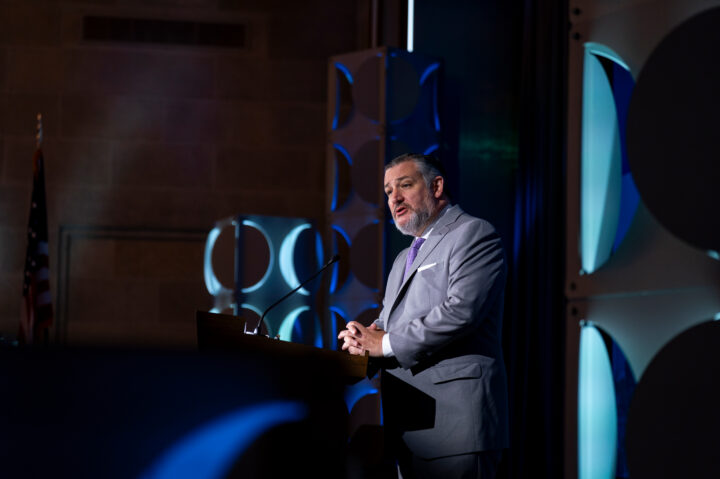
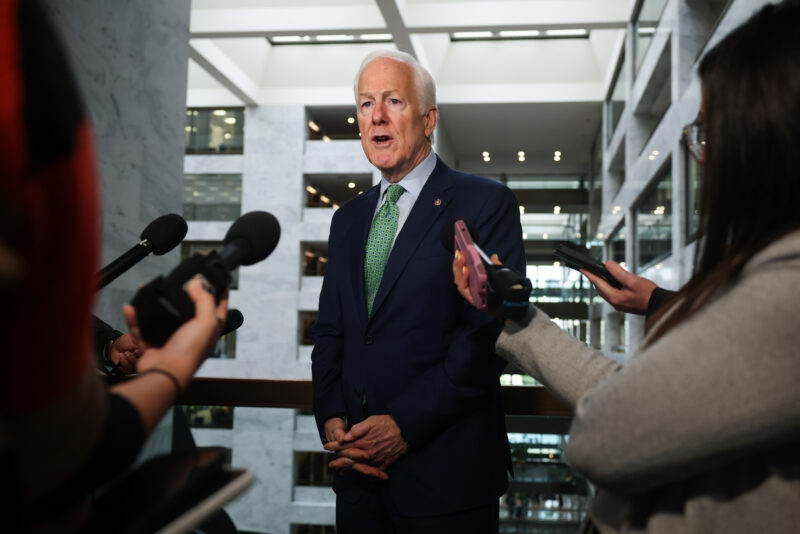
Al Drago/Bloomberg via Getty Images
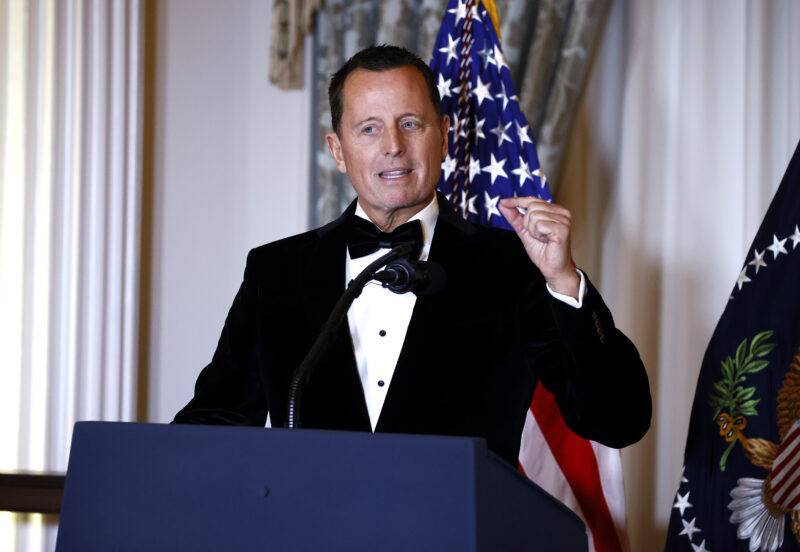
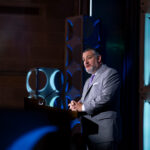
Sen. Ted Cruz speaks during a U.S. Chamber of Commerce summit in Washington on Sept. 10, 2025.


 Add JewishInsider on Google
Sen. Ted Cruz (R-TX) announced on Tuesday that he had drafted legislation designating the Polisario Front, the militant group that claims sovereignty over parts of the Western Sahara, as a foreign terrorist organization and will formally introduce it “if there’s no change in their behavior.”
Cruz made the comments at a Senate Foreign Relations subcommittee hearing focused on U.S. counterterrorism efforts in North Africa, after the hearing’s witnesses — the State Department’s Robert Palladino and Joel Borkert — both declined to agree with his statement that “the terrorist activity in the Sahel [region in Africa] is coming from the Polisario Front.”
“Iran is trying to turn the Polisario Front into the Houthis for West Africa, a proxy force capable of waging war to threaten regional stability and pressure U.S. partners whenever Iran wants leverage,” Cruz said. “The Polisario Front works with Iranian terrorist groups. It takes drones from the IRGC. It moves weapons and resources around the region, including to jihadists and much more.”
“I believe they should be designated as a terrorist group, and I’ve drafted a bill to do so if there’s no change in their behavior,” he added.
The Polisario Front is a separatist militant group founded in 1973 to fight against the Spanish occupation of parts of the Western Sahara. After Spain handed control of the territory to Mauritania and Morocco in 1975, splitting the land between the two countries, the PF waged war against both nations, hitting military and civilian targets while demanding recognition of Sahrawi ethnic group’s claims to the territory. The group declared in 1976 that all disputed territory in the region was part of the Sahrawi Arab Democratic Republic, and currently controls an area east of the Moroccan Wall.
Mauritania, now an Islamic republic, fell to the PF and formally recognized the SADR in 1979. While Morocco and the PF agreed to a United Nations-brokered ceasefire in 1991 that remains in effect today, the PF’s increasingly close ties to Algeria, Nigeria and Iran while governing the disputed Saharan territory have become a source of concern to those opposed to Tehran’s growing influence in the region.
President Donald Trump recognized Morocco’s claim to the Western Sahara in late 2020 at the conclusion of his first administration, as part of the deal brokered for Morocco to join the Abraham Accords.
Rep. Joe Wilson (R-SC) introduced legislation designating the PF as a foreign terrorist organization last June. The House bill has been co-sponsored by Reps. Randy Fine (R-FL), Jimmy Panetta (D-CA), Mario Diaz-Balart (R-FL), Jefferson Shreve (R-IN) and Lance Gooden (R-TX).
Speaking on his “Verdict with Ted Cruz” podcast on Tuesday evening, the Texas senator described Africa as a “major front for radical Islamic terrorism” and said the continent serves as “a major battleground” pitting Russia and China against the United States.
Regarding the PF, Cruz noted that, “The best way to understand it is as a Cold War relic, analogous to the Palestinian Liberation Front, the PLO, but it was in West Africa, and there’s still a degree to which that framework is accurate.”
“It is a darling of the international left and the United Nations, and the group has continued its insurgency against Morocco,” Cruz explained. “The critical dynamic is that Iran has begun pouring resources into the group. … The Iranians have been providing money and weapons and directions.”
Palladino, a senior bureau official with the Bureau of Near Eastern Affairs, said in his opening remarks to the committee that the Trump administration was looking “to North African countries to provide critical support to ensuring terrorist activity in the Sahel does not spread west to the Gulf of Guinea or north to regain a foothold in North Africa, where they represent a more immediate threat to the United States and our interests.”
After Cruz pressed him on if he was referring to the PF, Palladino did not answer directly, instead telling the Texas senator that “President Trump has made clear his desire to achieve a lasting resolution to the problem in the Western Sahara, to that dispute, and as part of that American policy currently, we are engaging all parties.”
Cruz went on to ask Palladino if he believed the PF posed a threat to U.S. interests, to which the NEA official replied, “We’re actively engaging all parties in the Western Sahara dispute in the interest of achieving a lasting and durable peace. That’s the policy of the president. We’re seeking more time to continue to find a way to find common ground and to come to an agreement to stabilize the situation and allow there to be prosperity to follow based upon stability.”
The Texas senator told Palladino that his answers were “positively Shakespearean. It was full of sound and fury and yet signifying nothing.”
Cruz then turned to Borkert, the deputy coordinator for programs and military coordination at the Bureau of Counterterrorism, who similarly declined to single out the PF by name.
“We continue to monitor activities throughout North Africa,” Borkert said. “We continue to see the IRGC and Hezbollah, their activities in that region and globally, and as we look at these activities, we will work with our partner countries in order to counter those threats, and where possible, designate or encourage those countries to designate the IRGC, Hezbollah and those terrorist groups.”
Both men told Cruz that they were not instructed to exclude mentions of the PF in their testimony. Cruz later revealed he did not believe their claims.
“I believe both witnesses were instructed: Do not say a negative word about the Polisario Front,” Cruz said on his podcast that evening. “They were instructed to say nothing about the Polisario Front.”
“The administration is trying to negotiate a big peace deal in Africa. There are folks in the administration who are trying to negotiate a deal in Western Africa, and right now, one of the consequences of that is that they’re reluctant to call out the Polisario Front,” he explained. “I think the Polisario Front is really dangerous. They’re funded by Iran, and so I’m working to call out people who are enemies of America and to impose real costs and consequences on those jihadists that are enemies of America.”
More Stories

exclusive
New lawsuit accuses Binance of ‘knowingly’ enabling Oct. 7 terror attacks
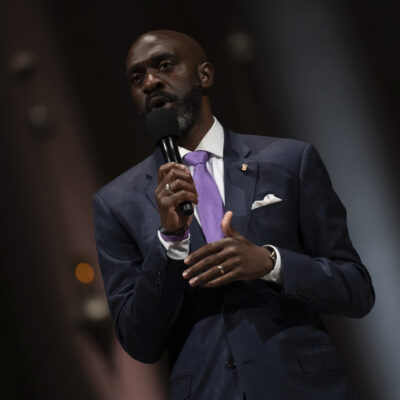
blake's backtrack
In 2020 AIPAC position paper, Michael Blake vowed to support Israel, highlighted Black-Jewish unity
ON THE HILL
2026 defense bill includes unconditional repeal of Syria sanctions, Iraq war authorizations
NAZI-ERA ACCOUNTABILITY
Senators demand UBS release documents on Credit Suisse’s Nazi ties
TERROR TAG
EU designates IRGC as terror organization in policy reversal