


























Take a look at the banner new releases we’re recommending from this spring, as well as books we’re looking forward to in the coming months



 Add JewishInsider on Google
Memorial Day Weekend marks the unofficial summer kickoff, and for observant Jews, the long weekend is made even longer with the two-day holiday of Shavuot, starting Thursday evening, which commemorates the day the Jews received the Torah at Mount Sinai.
Jews mark the day by studying at all-night learning sessions at synagogues and JCCs around the country. We know that many will also use the occasion to jump-start summer reading goals, so the Jewish Insider team has compiled our summer reading list — beginning with some banner new releases from this spring, and looking towards books coming out this summer.
RECENT RELEASES:
Allegra Goodman, This Is Not About Us (February)
The author of several novels with heavily Jewish themes, Goodman returns to Jewish characters in this novel about a decades-long feud between two Jewish sisters that started with a misunderstanding about apple cake.
Mark Oppenheimer, Judy Blume: A Life (March)
The journalist published the definitive biography of beloved YA author Judy Blume, based on more than 100 interviews with Blume and her inner circle — though she disapproved of the finished product.
Nicholas Lemann, Returning: A Search for Home Across Three Centuries (March)
The longtime New Yorker staff writer traces his family’s history from Germany to New Orleans, recounting the ways they reckoned with religion, race and belonging.
Matti Friedman, Out of the Sky: Heroism and Rebirth in Nazi Europe (March)
One of Israel’s most celebrated English-language writers tells the story of the young Jews who had made it to Mandate Palestine but chose to parachute into Nazi Europe to try to rescue their Jewish brethren — ultimately failing in their mission — and examines what motivated them.
Daniela Gerson, The Wanderers: A Story of Exile, Survival, and Unexpected Love in the Shadow of World War II (March)
The journalist recounts the story of how she and her wife discovered that decades before the two of them met, their grandparents had escaped the Nazis through Soviet Russia on the same route.
Judy Batalion, The Last Woman of Warsaw: A Novel (April)
Better known for her nonfiction work, including a 2021 bestseller about Jewish female resistance fighters in the ghettos of Poland, Judy Batalion released her debut novel about the intersecting lives of Jewish women in Warsaw in the late 1930s.
Rachel Goldberg-Polin, When We See You Again (April)
The world got to know Goldberg-Polin when she became a tireless advocate on the global stage for her son, Hersh, who was kidnapped by Hamas on Oct. 7, and killed almost a year later. Her book chronicling her grief, which was published last month, soared to the top of the best-seller list.
Theo Baker, How to Rule the World: An Education in Power at Stanford University (May)
The Stanford student, who chronicled the campus chaos of 2023-2024 with a crucial article in The Atlantic, investigates the ways that Stanford undergrads, located just miles from the tech billionaires of Silicon Valley, are seeking out power, influence and money in place of an education.
UPCOMING RELEASES:
Rabbi Eli Schlanger and Nikki Goldstein, Conversations With My Rabbi: Timeless Teachings for a Fractured World (May 26)
Three years before the rabbi was murdered in the Hanukkah terror attack at Bondi Beach in Australia last year, he got to know Goldstein after praying by her bedside as she recovered from a near-death experience that brought her to the ICU three years earlier. Goldstein, a secular Jew, and Schlanger, a Chabad rabbi, recorded their conversations about faith in the hope of writing a book together. She finished the project after Schlanger’s death.
Batya Ungar-Sargon, The Jews and the Left (June 2)
The conservative journalist examines American Jews’ historic ties to liberal politics and argues that their alliance has been fundamentally broken in the aftermath of the Oct. 7 attacks and the war in Gaza.
Marc David Baer, Children of Abraham: The 1,400-Year History of Jewish–Muslim Relations (June 9)
The professor of history at the London School of Economics and Political Science looks at the centuries of cooperation and coexistence between Jews and Muslims in the Middle East that predated the current regional conflicts.
Stephan Talty, The American School of Spies: The Archaeologists Who Fought the Nazis and Saved the Treasures of Ancient Greece (June 9)
The journalist and novelist recounts the true story of a group of American archaeologists who trained as spies during World War II in order to go undercover and protect Greek artifacts that were at risk during the war.
JD Vance, Communion: Finding My Way Back to Faith (June 16)
The vice president’s forthcoming book — his second memoir, to be published nine years and a political lifetime after the release of Hillbilly Elegy, about his childhood growing up poor in Appalachia — will discuss his connection to Christianity and his decision to convert to Catholicism.
Maggie Haberman and Jonathan Swan, Regime Change: Inside the Imperial Presidency of Donald Trump (June 23)
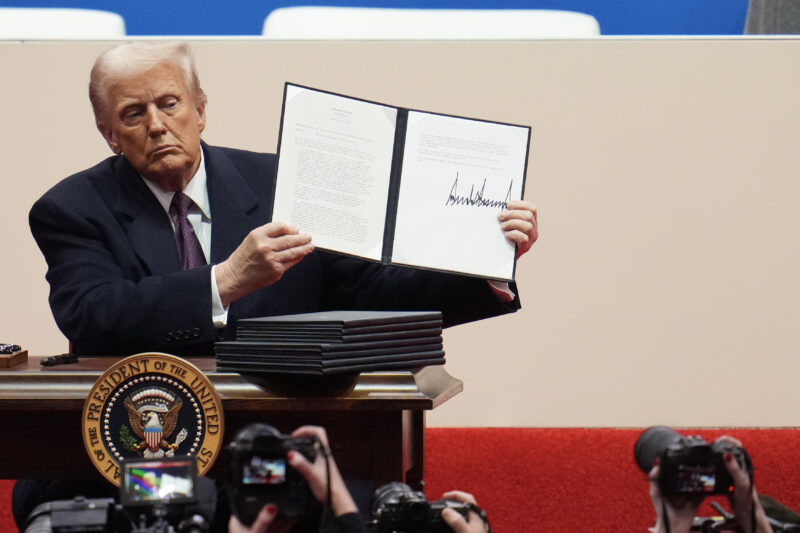
Two of America’s top White House reporters tell the story of the first year of President Donald Trump’s second term, and how he learned to use political power more effectively than in his first term.
Dara Horn, The Final Solution to the Jewish Question: A Love Story for the Living (Sept. 1)
Her 2021 book of essays reckoning with the curiosities of modern antisemitism, People Love Dead Jews, went about as viral as a book possibly could. She published a children’s book in 2025, but this will be her first book for adults in years. Aside from announcing its scheduled release, her publisher has not shared any information about the project.
Simon Sebag Montefiore, The Cauldron: The Making of the Modern Middle East (Sept. 8)
The British historian presents a history of the last 125 years of the modern Middle Eastern, surveying the key events and narratives — both accurate and misguided — that led to the current state of the region.
Barney Frank, The Hard Path to Unity: Why We Must Reform the Left to Rescue Democracy (Sept. 15)
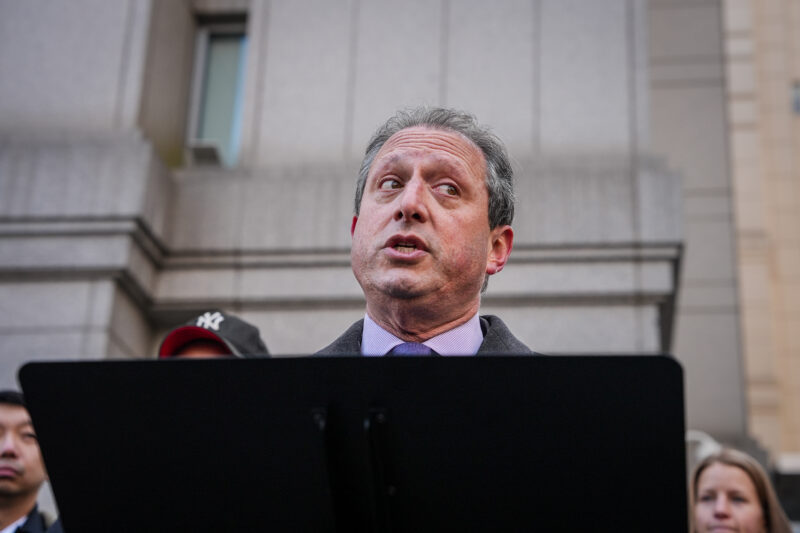
The trailblazing politician served in Congress for 32 years, representing suburban Boston. The Jewish Democratic lawmaker, who was also the first openly gay member of Congress, died this week at 86. His upcoming book argues that the political left must reform itself so it does not cater to its most extreme adherents.
Evan Gershkovich, This Cursed Beautiful Land: A Russian-American Story (Sept. 29)
The Wall Street Journal journalist who spent over a year wrongly imprisoned in Russia details his harrowing experience in the Russian carceral system against the backdrop of the country’s history and culture.
Trump says Herrera is ‘strongly supported by many Highly Respected MAGA Warriors’

screenshot
Brandon Herrera pictured here in a video about Nazi guns.
President Donald Trump on Wednesday announced his endorsement of Brandon Herrera, the far-right social media influencer who is the presumptive Republican nominee in Texas’ 23rd Congressional District.
Herrera has faced condemnation for videos he posted that featured imagery, music and jokes related to the Nazis and the Holocaust. He also spoke on a podcast last year about owning a copy of Mein Kampf, though he said he does not share the views expressed in Adolf Hitler’s manifesto.
Trump previously backed Herrera’s opponent, incumbent Rep. Tony Gonzales (R-TX), who dropped out of the race last week amid an escalating scandal.
“Brandon is strongly supported by many Highly Respected MAGA Warriors in Texas, and Republicans in the U.S. House,” Trump said on Truth Social on Wednesday. Herrera has been backed by the House Freedom Caucus’ affiliated PAC.
“As your next Congressman, he will work tirelessly to advance our MAKE AMERICA GREAT AGAIN Agenda,” Trump continued. “Brandon Herrera has my Complete and Total Endorsement to be the next Representative from Texas’ 23rd Congressional District — HE WILL NEVER LET YOU DOWN!”
Trump’s endorsement of Herrera marks a sharp turnabout for the president. Just a month ago, a lawyer for the president sent Herrera a cease-and-desist demanding he stop using Trump’s image in campaign advertisements, calling the ads misleading in light of Trump’s then-endorsement of Gonzales.
Herrera, who has generally taken an anti-interventionist stance on foreign policy issues, including opposing supplemental aid to Israel in 2024, said at the start of the U.S. strikes on Iran that he hopes that “If there must be military action, let it be QUICK, effective, and please God keep our service members safe.”
He said on X in June 2025, the day before the start of the 12-day war between Israel and Iran, which the U.S. eventually joined, “I don’t want to go to war with Iran. I don’t want to be involved in the Middle East. But if you decide to f*** with us (like they did last time), I wish you a very happy sunk Navy.”
Herrera has faced condemnation and opposition in the past from groups including the Republican Jewish Coalition. Asked last week about Herrera’s comments that resurfaced last week about Mein Kampf, the RJC affirmed its continued opposition to Herrera.
“The RJC has a long-standing policy of speaking out against those who traffic in Nazi ideology, and this is another case,” spokesperson Sam Markstein told Jewish Insider. “The RJC opposed Mr. Herrera in 2024, and he will not get our support now.”
Blumenthal: ‘Our bipartisan effort seeks to strengthen measures to bring long overdue justice to families whose cherished art was brazenly stolen by the Nazis’

J. Scott Applewhite/AP Photo
Sen. John Cornyn, R-Texas, center, is flanked by Senate Judiciary Committee Chairman Dick Durbin, D-Ill., left, and Sen. Richard Blumenthal, D-Conn., at the Capitol in Washington, Thursday, Nov. 14, 2024.
Sens. John Cornyn (R-TX) and Richard Blumenthal (D-CT) introduced bipartisan legislation last week aimed at eliminating loopholes used by museums and other stakeholders to continue possessing Nazi-looted artwork that Jewish families have been trying to recover.
Introduced on Thursday, the Holocaust Expropriated Art Recovery (HEAR) Act would expand on Cornyn’s 2016 legislation of the same name, which was passed at the time by unanimous consent, by ending the Dec. 31, 2026, sunset date on the original bill and strengthen the existing procedural protections to ensure that victims’ claims are not dismissed due to non-merit-based factors such as time constraints.
“The artwork wrongfully ripped from Jewish hands during the Holocaust bears witness to a chapter in history when evil persisted and the worst of humanity was on full display. I’m proud to introduce this legislation to support the Jewish people and Holocaust survivors by helping them recover art confiscated by the Nazis that they are rightfully owed and give them the justice and restitution they deserve,” Cornyn said in a statement.
“The theft of art by the Nazi regime was more than a pilfering of property — it was an act of inhumanity. Our bipartisan effort seeks to strengthen measures to bring long overdue justice to families whose cherished art was brazenly stolen by the Nazis,” Blumenthal said.
Many families of Holocaust victims in the U.S. who have located artwork from deceased relatives and sued to recover those items face the deadline at the end of next year before the statute of limitations sets in. Thousands of stolen works of art remain unreturned to their rightful owners from the Nazi plunder, and there are scores of ongoing cases to resolve disputes over ownership of those items.
“Unfortunately, many museums, governments, and institutions have contradicted Congress’ intent and obstructed justice by stonewalling legitimate claims, obscuring provenance, and employing aggressive legal tactics designed to exhaust and outlast Survivors and their families. Rather than embracing transparency and reconciliation, too many have chosen to entrench and litigate, effectively preserving possession of stolen works rather than returning them to their rightful owners,” a press release for the bill states.
Sens. Thom Tillis (R-NC), Cory Booker (D-NJ), Marsha Blackburn (R-TN), John Fetterman (D-PA), Eric Schmitt (R-MO) and Katie Britt (R-AL) co-sponsored the bill, which was endorsed by a number of Jewish organizations including Agudath Israel of America, the American Jewish Committee, Anti-Defamation League, Jewish Federations of North America, StandWithUs and World Jewish Congress, among others.
“This legislation helps to right a historic wrong committed during one of the darkest chapters in history. By eliminating unnecessary legal obstacles, the HEAR Act establishes a clear path to restitution for Holocaust survivors and their families, ensuring that art and cultural property stolen by the Nazis can finally be returned to their rightful owners,” Tillis said.
Fetterman said in a statement, “Eighty years after the Holocaust, we have a moral responsibility to do right by the victims of these atrocities and their families. I’m grateful to join my colleagues from both sides of the aisle in introducing the HEAR Act to help return artwork stolen by the Nazis to its rightful owners.”
Please log in if you already have a subscription, or subscribe to access the latest updates.
 Continue with Google
 Continue with Apple