




























To mark the second anniversary of the Oct. 7 attacks in Israel, the Jewish Insider team asked leading thinkers and practitioners to reflect on how that day has changed the world. Here, we look at how Oct. 7 changed higher education

JOSEPH PREZIOSO/AFP via Getty Images
Tents and signs fill Harvard Yard in the pro-Palestinian encampment at Harvard University in Cambridge, Massachusetts, on May 5, 2024.


 Add JewishInsider on Google
As conflicting accounts emerge about the strike’s outcome, Trump voices frustration while Netanyahu says the operation could bring the war in Gaza closer to an end
JACQUELINE PENNEY/AFPTV/AFP via Getty Images
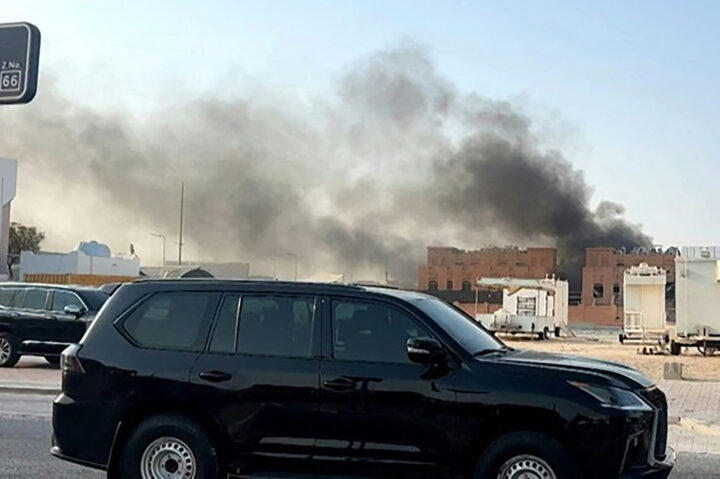
This frame grab taken from an AFPTV footage shows smoke billowing after explosions in Qatar's capital Doha on September 9, 2025.
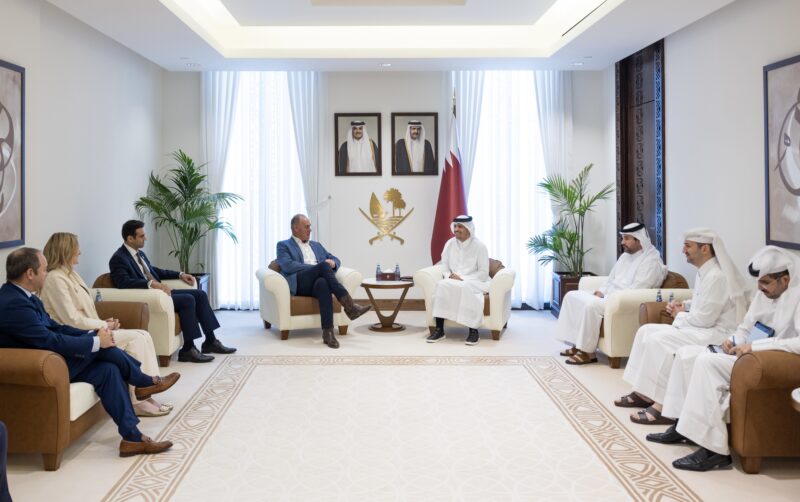
Nearly a day after an Israeli airstrike targeted a meeting of high-level Hamas officials in Doha, Qatar, there are more questions than answers, both in Jerusalem and Washington. Israel has not confirmed which officials were killed in the strike, while Hamas has said that five officials from the group, including the son of Hamas’ chief negotiator, Khalil al-Hayya, were killed in addition to a member of the Qatari security forces.
Israeli reports earlier today indicate that the strike did not kill the most senior echelon of the terror group, which for years has been based in Qatar, a U.S. ally.
Amid ongoing uncertainty over the success of the strike, the operation was met with rare condemnation from the White House, first from Press Secretary Karoline Leavitt and then from President Donald Trump himself, who said he “was very unhappy about it, very unhappy about every aspect” — perhaps, in part, because the operation is not believed to have taken out the most senior Hamas officials.
But it was Trump himself who said over the weekend on his Truth Social site that he had “warned Hamas about the consequences of not accepting” the ceasefire and hostage-release deal that had been put forward by the U.S.
At the same time that Trump officials, including the president, were criticizing the operation, U.S. Ambassador to Israel Mike Huckabee was embracing Israeli Prime Minister Benjamin Netanyahu at the U.S. Embassy’s belated Independence Day celebration in Jerusalem, where the prime minister addressed a smaller group of VIPs attending the party.
“Israel acted wholly independently and we take full responsibility for this action,” Netanyahu said of the Doha strikes. “This action can open to an end of the war in Gaza.”
Israeli officials and defense sources said on Wednesday that they are waiting for better intelligence before commenting on who was killed, but they viewed the operation as a success.
Israeli Defense Minister Israel Katz warned that there could be additional strikes of this kind: “The long hand of Israel will act against its enemies anywhere in the world. There is no place where they can hide. Whoever was a partner in the Oct. 7 massacre will be fully brought to justice.”
Everyone from Israeli Opposition Leader Yair Lapid to Finance Minister Bezalel Smotrich put out statements praising the IDF and Shin Bet and saying the terrorists got what they deserved.
At the same time, the Hostages and Missing Families Forum said the affiliated families felt “deep concern and heavy anxiety” that their loved ones would pay the price. “We know from survivors who have returned that the revenge directed at the hostages is brutal. The chance of bringing them back now faces greater uncertainty than ever before.”
However, Shimon Or, uncle of hostage Avinatan Or, said on Kan radio that “this action brings us closer to bringing Avinatan and the rest of the hostages. …We will not bring back the hostages anymore with military operations and ‘the gates of hell,’ but with control over Gaza.”
Meanwhile, Israeli officials have pushed back on criticism that the strikes would affect ceasefire talks, briefing press in Hebrew and English that the operation will help talks, because there are other channels for negotiations.
The president announced ‘very high-level’ negotiations with Iran to dismantle its nuclear weapons program during his Oval Office meeting with Netanyahu

Kevin Dietsch/Getty Images
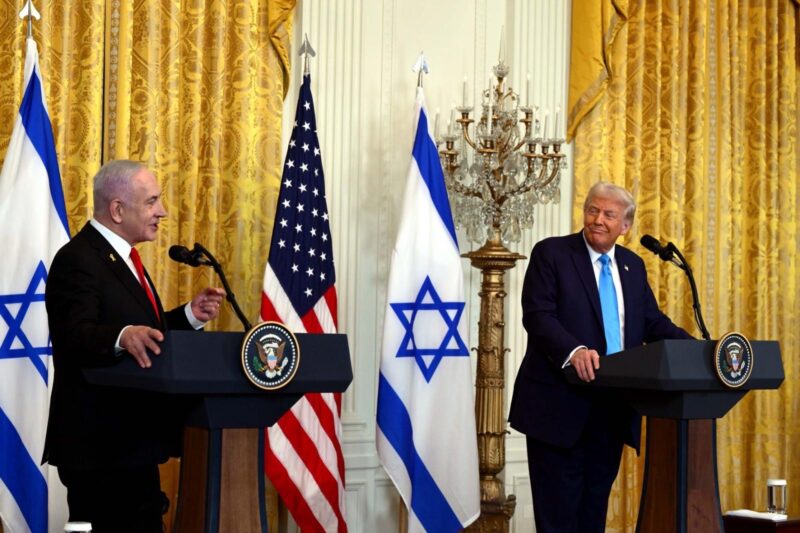
President Donald Trump (R) speaks alongside Israeli Prime Minister Benjamin Netanyahu with a model of Air Force One on the table, during a meeting in the Oval Office of the White House on April 7, 2025 in Washington, DC.
High-level direct negotiations between the U.S. and Iran will begin on Saturday, President Donald Trump announced in an Oval Office meeting with Israeli Prime Minister Benjamin Netanyahu on Monday.
Netanyahu, who has historically expressed skepticism about the possibility of reaching an effective nuclear deal with Iran, raised the topic, saying that “Iran cannot have a nuclear weapon. If it can be done diplomatically as it was in Libya, that would be a good thing. But if it can’t, we have to ensure it has no nuclear weapons.”
In response, the president said: “We are having direct talks with Iran. It’ll go on Saturday.”
Iran, however, has yet to publicly agree to enter direct talks with the U.S.
”I think everybody agrees that doing a deal would be preferable to doing the obvious,” Trump added, a reference to a possible attack on Iran’s nuclear facilities. “And the obvious is not something I want to be involved with or frankly, that Israel wants to be involved with if they can avoid it.”
Trump said Iran’s nuclear program is “getting to be very dangerous territory.”
Asked the level of the delegation to the nuclear talks, Trump said “high level, very high level … almost the highest level.” He would not say where the talks will take place.
The president’s Middle East envoy, Steve Witkoff, said he had no comment when asked by Jewish Insider on Monday if he would be involved in the negotiations on Saturday.
Iranian state media reported on Tuesday that Iranian Foreign Minister Abbas Araghchi and Witkoff will lead the talks, characterized by Araghchi as “indirect,” in Oman. Omani Foreign Minister Badr al-Busaidi will reportedly serve as the mediator.
The president acknowledged that it’s “a possibility” that Iran is trying to buy time and does not plan to seriously negotiate.
“I think if the talks aren’t successful with Iran, I think Iran is going to be in great danger, and I hate to say it. Great danger,” he said. “Because they can’t have a nuclear weapon. You know, it’s not a complicated formula. Iran cannot have a nuclear weapon, that’s all there is.”
However, Trump stopped short of threatening to bomb Iran, as he did last week.
The president said that if he makes a deal with Iran, “it’ll be different and maybe a lot stronger” than the 2015 Joint Comprehensive Plan of Action.
Deputy Special Envoy Morgan Ortagus said in an interview with Al Arabiya that “what we’re not going to do is get into the Biden trap where you do indirect talks that last for years and the Iranians just string us along. Not happening in this administration.”
“If we’re going to have talks, they need to be quick, they need to be serious about dismantling their nuclear weapons program,” she said. “President Trump wants a peaceful future for both countries, but we’re not going to be extorted like the Biden administration was.”
Ortagus noted that the U.N. Security Council Resolution underpinning the JCPOA, which would allow parties to the deal to snap back all pre-deal sanctions on Iran, expires in October, and that there have long been grounds to bring back those sanctions, because Iran has been violating the terms of the agreement since 2021.
This story was updated at 4 a.m. ET