











































Lindsey Graham hints at reducing U.S. support for Lebanese Armed Forces over general’s Hezbollah stance
Graham ended the meeting when Chief of Defense Gen. Rodolphe Haykal refused to call Hezbollah a terrorist organization
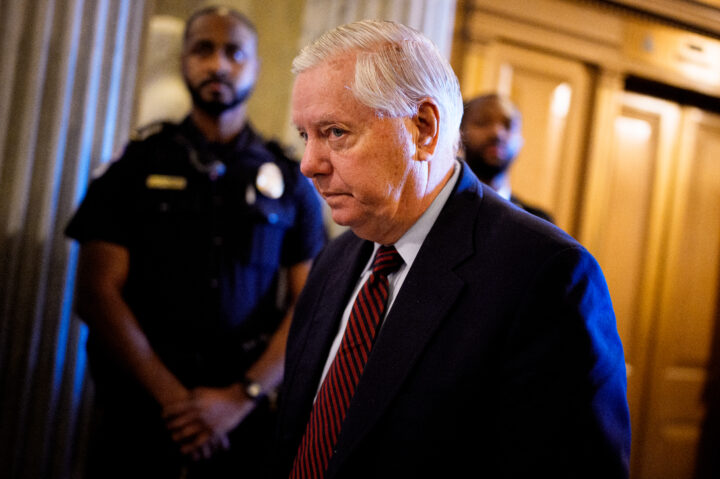
Andrew Harnik/Getty Images
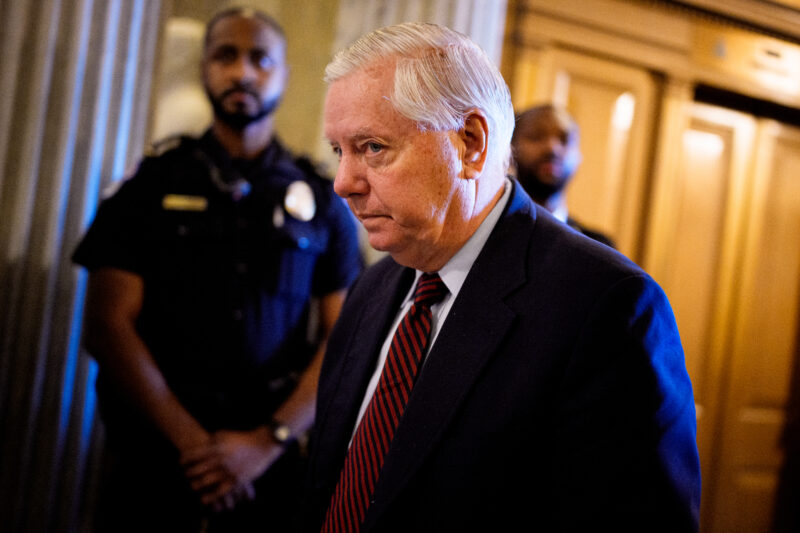
Sen. Lindsey Graham (R-SC) walks into the Senate Chamber on December 11, 2025 in Washington, DC.


 Add JewishInsider on Google
Sen. Lindsey Graham (R-SC) abruptly ended his meeting with Gen. Rodolphe Haykal, the head of the Lebanese Armed Forces, on Thursday after Haykal declined to refer to Hezbollah as a terrorist organization.
Graham met with Haykal in his Senate office for a planned discussion on the latest military developments in Lebanon and the LAF’s approach to Israel and Hezbollah. The South Carolina senator wrote on X that he asked the Lebanese military official at the start of the meeting if he viewed Hezbollah as a terrorist organization, and did not appreciate the response he received.
“I just had a very brief meeting with the Lebanese Chief of Defense General Rodolphe Haykal,” Graham said. “I asked him point blank if he believes Hezbollah is a terrorist organization. He said, ‘No, not in the context of Lebanon.’ With that, I ended the meeting.”
“They are clearly a terrorist organization. Hezbollah has American blood on its hands. Just ask the U.S. Marines. They have been designated as a foreign terrorist organization by both Republican and Democrat administrations since 1997 — for good reason,” he added. “As long as this attitude exists from the Lebanese Armed Forces, I don’t think we have a reliable partner in them. I am tired of the double speak in the Middle East. Too much is at stake.”
Haykal has been in Washington this week for meetings with U.S. lawmakers and Trump administration officials. Aside from Graham, Haykal met with Sen. Jeanne Shaheen (D-NH), the top Democrat on the Senate Foreign Relations Committee, and Reps. Brian Mast (R-FL) and Gregory Meeks (D-NY), respectively the chairman and ranking member of the House Foreign Affairs Committee, respectively. Haykal also met with Joint Chiefs Chairman Gen. Dan Caine and officials at the CIA, the Pentagon and the National Security Council.
He was previously slated to visit the U.S. in November, but scrapped the trip after Graham and others canceled their meetings over a statement Haykal released weeks prior that blamed Israel for the unrest in Lebanon without mentioning Hezbollah. Graham, who has visited Lebanon multiple times in the last year to encourage the Lebanese government to disarm Hezbollah and stabilize its border with Israel, warned in numerous statements responding to Haykal at the time that his position toward U.S.-Lebanon relations would likely shift if changes were not made.
“It is clear that the Lebanese Chief Head of Defense — because of a reference to Israel as the enemy and his weak almost non-existent effort to disarm Hezbollah — is a giant setback for efforts to move Lebanon forward,” Graham wrote on X in November. “This combination makes the Lebanese Armed Forces not a very good investment for America.”
“The idea of the Lebanese military joining forces with Hezbollah to combat Israel would put in jeopardy everything that I and many others are trying to do to help Lebanon move forward,” he cautioned in another tweet.
The U.S., along with Graham, has been pushing Lebanon to follow through on its commitment to disarm Hezbollah, made as part of the Trump administration’s ceasefire deal between Israel and Hezbollah in 2024. The first phase of the deal, which went into effect in November of that year, called for the Lebanese military to remove Hezbollah from the territory south of the Litani River, near Israel’s border, by the end of 2025. The second phase would then focus on Hezbollah’s disarmament north of the Litani.
The Lebanese government announced it accomplished that goal in early January, though Israel has disputed that claim, with Prime Minister Benjamin Netanyahu’s office saying, “Efforts made toward this end by the Lebanese Government and the Lebanese Armed Forces are an encouraging beginning, but they are far from sufficient, as evidenced by Hezbollah’s efforts to rearm and rebuild its terror infrastructure with Iranian support.”
Graham said while in Israel in late December that the “trend lines in Lebanon” were “optimistic” following months of public statements from several senior Lebanese government officials calling for Hezbollah to be disarmed.
“If you want peace, deal with the people who do not. Take them out of the game. Get your head out of the sand,” Graham said at a press conference in Tel Aviv. “If you want a peaceful Lebanon, you need to find a way to deal with Hezbollah because they don’t want peace with Israel. They want to destroy Israel. Most people in Lebanon don’t want to destroy Israel.”
More Stories

COMEBACK BID
Elaine Luria wants to reclaim her post as a pro-Israel leader in Congress
BARAKA'S BACKING
In progressive pivot, N.J. congressional candidate Brian Varela secures Newark Mayor Ras Baraka’s endorsement
rabbinic rebuke
Over 800 rabbis speak out against Mamdani as threat to ‘safety and dignity of Jews in every city’
BISS' BACKTRACK
Daniel Biss reversed position on aid to Israel after launching congressional campaign
UNSEALED
Newly released memos reveal State Dept. concerns about basis for student deportations

JOHNSON'S JOURNEY
House Speaker Mike Johnson headed to New Square on Sunday to help Mike Lawler
Please log in if you already have a subscription, or subscribe to access the latest updates.