































Fetterman joins call for Somaliland independence, but many lawmakers remain wary
The Pennsylvania Democrat joins a handful of Republicans in supporting U.S. recognition of Somaliland, but other lawmakers warn it may not be fully aligned with U.S. interests

Lev Radin/Pacific Press/LightRocket via Getty Images
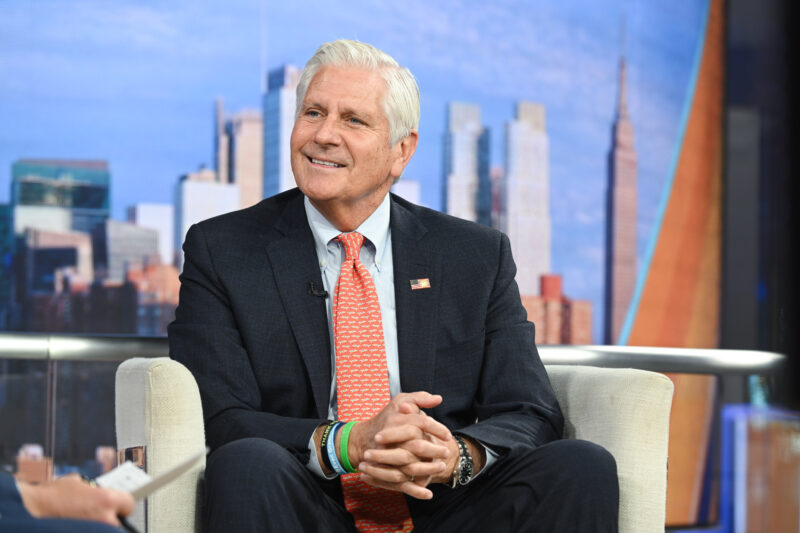
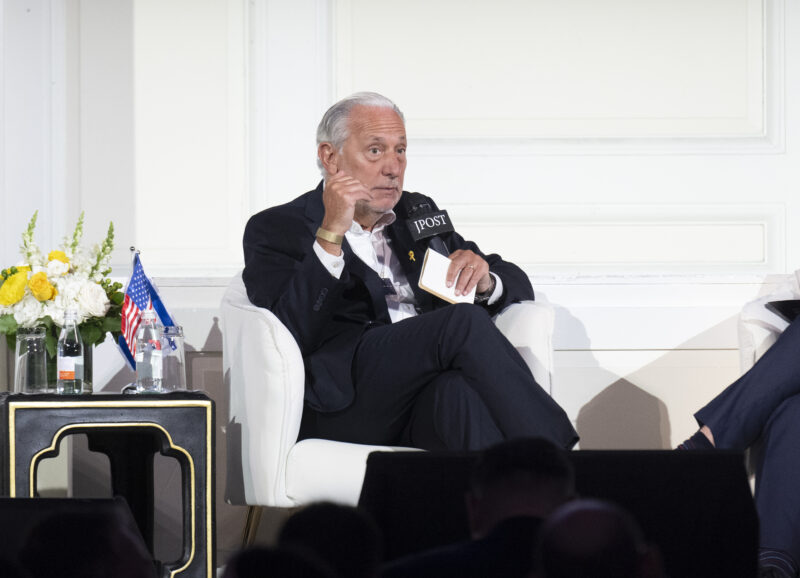
Senator John Fetterman speaks during the grand opening of The Altneu synagogue.


 Add JewishInsider on Google
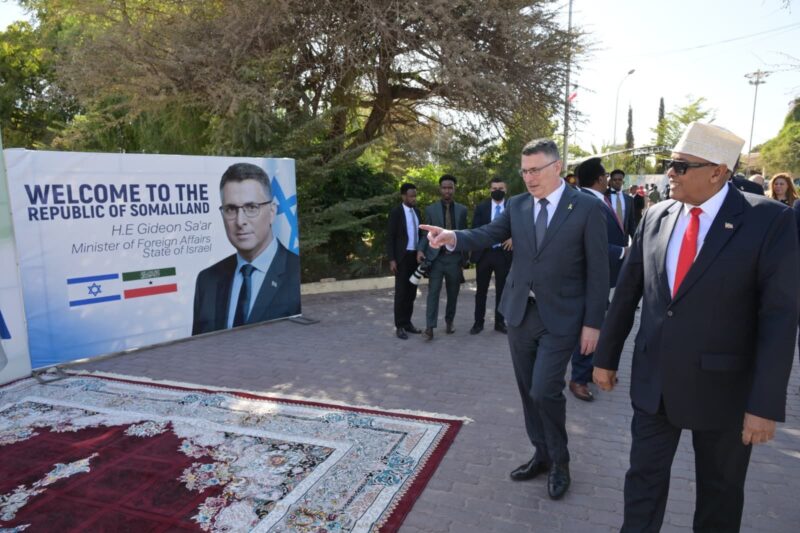
Some Republicans and at least one Democrat on Capitol Hill are voicing their support for the U.S. to follow Israel’s lead in recognizing Somaliland — but many lawmakers, even some who have supported expanded U.S.-Somaliland ties in the past, say such a step would be premature, if not misguided, at this point.
Sen. John Fetterman (D-PA), one of the most vocal pro-Israel Democrats in Congress, said in a statement to Jewish Insider that he’s in favor of U.S. recognition of Somaliland, making him the first member of his party to do so publicly.
“As an unapologetic friend of Israel, I fully support their decision on Somaliland. I support the U.S. doing the same,” Fetterman told JI.
“Recognizing Somaliland isn’t charity — it’s strategy. It aligns with America’s security interests and the ‘America First’ doctrine by strengthening an ally that shares our values in a region vital to global trade and counterterrorism,” Sen. Ted Cruz (R-TX) said in a statement on Monday.
Cruz has been a longtime champion for Somaliland recognition, urging the administration to take such a step last August in a letter to President Donald Trump.
Rep. Chris Smith (R-NJ), the chairman of the House Foreign Affairs Committee subcommittee on Africa, praised Israel in a statement on Tuesday for recognizing Somaliland and urged others, including the U.S., to do the same.
“Somaliland is a functioning democracy, as demonstrated by the peaceful transfer of power more than a year ago following elections — a rare, positive example in the Horn of Africa, and, indeed, in much of Africa,” Smith said. “Somaliland’s strategic location and deep-water port at Berbera also underscore its national security significance to the United States. And Somaliland’s close ties with Taiwan offset Communist China’s malign influence in the region … Above all, official recognition signals to the Somaliland people that their commitment to democracy — and to free and fair elections — is not in vain, and their nation is getting the acknowledgment it deserves.”
Reps. Scott Perry (R-PA), Andy Ogles (R-TN), Pat Harrigan (R-NC) and Tom Tiffany (R-WI) introduced a bill last June to recognize Somaliland’s independence. Reps. Tim Burchett (R-TN) and John Rose (R-TN) have since joined as cosponsors.
Still, lawmakers on both sides of the aisle said that U.S. recognition would be either premature or a mistake entirely.
Sen. James Lankford (R-OK) told JI that he didn’t support the idea “yet,” citing issues the U.S. has had with recognizing still-developing nations. “I’m still deciding on that. I was just in the region not long ago on that. I don’t share their [the Israelis’] recognition of it yet, but it is one I’m actually looking at,” Lankford told JI.
Lankford also pointed to issues that experts have raised around the need for continued positive relations with Somalia, which opposes Somaliland independence, as it pertains to regional stability and counterterrorism efforts.
“We’ve done a lot to try to stabilize Somalia over the years, which has just been a hot mess for a very long time. We need their country to be a stable country. Al-Shabaab has been a major threat of terrorism in the entire region. The work they [Somalia] have done has destabilized Kenya, a close ally of ours,” Lankford said. “There’s a lot that we’re trying to be able to work with the countries in the region on what they’re going to do. You don’t want to see Somalia collapse. You want to see Somalia succeed. We want successful democracies there, and I think Somaliland has struggled with that.”
Sen. Richard Blumenthal (D-CT) said that the U.S. should examine the issue but that it has other considerations to take into account that Israel may not.
“We should take a close look at it, but I don’t know that we should be the second in the world to do it,” Blumenthal said. “I think that Israel’s reasons for recognition, while deserving of respect, probably are different from what ours should be.”
Sen. Mike Rounds (R-SD), a lead sponsor of legislation in 2022 that sought to expand U.S. ties with Somaliland — but explicitly stopped short of recognizing Somaliland’s independence or establishing a relationship with Somaliland as an independent entity — said that U.S. recognition would be premature.
“There are some diplomatic issues that have to play out there yet. I’m not sure how that’s going to look when it’s all done,” Rounds said. “I’m aware of what [Israel has] done, but I’m not exactly sure what the next steps will be, so I really can’t give you a whole lot of information right now, that I can share publicly anyway.”
Parts of that legislation were adopted as part of the 2023 National Defense Authorization Act, directing a report and feasibility study on existing and potential greater collaboration with Somaliland.
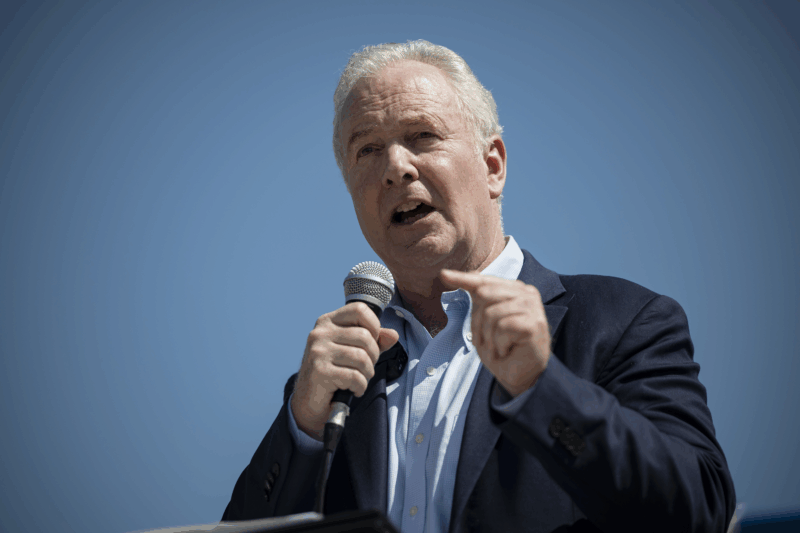
Sen. Chris Van Hollen (D-MD), another lead sponsor of the bill with Rounds, said the U.S. should not recognize Somaliland’s independence.
“I think the United States should be engaged with people throughout Somalia, including Somaliland,” Van Hollen said. “It continues to be part of Somalia. And I don’t think that the United States should be essentially getting in the middle of that.”
Sen. Jim Risch (R-ID), the chair of the Senate Foreign Relations Committee, also sponsored the 2022 bill on expanded ties. Risch did not respond to a request for comment.
Multiple other senators indicated to JI that they hadn’t followed the issue closely enough to weigh in.
Other prominent lawmakers on the Hill have also called for steps to deepen the U.S.-Somaliland relationship without endorsing full recognition of its independence.
Smith and Rep. John Moolenaar (R-MI), the chair of the House Select Committee on China, urged the administration in September to distinguish Somaliland from Somalia in its travel advisory report, a step toward expanding relations with Somaliland and incentivizing U.S. investors to enter its market.
That letter also noted that Somaliland is working with U.S. partners including Israel and Taiwan.
Moolenaar in January 2025 urged the State Department to open a representative office in the Somaliland capital, Hargeisa. He did not respond to a request for comment.
Dating back to 2022, bipartisan members of the House Foreign Affairs Committee, including the committee’s former chairman, Rep. Michael McCaul (R-TX), have called for expanded ties with Somaliland.
Beyond Capitol Hill, analysts and former military personnel say the question of U.S. recognition hinges on a complex tradeoff: potential military and geopolitical gains weighed against the risk of destabilizing existing alliances and inflaming regional tensions.
Vice Adm. Kevin Donegan (Ret.), who served as commander of the U.S. Fifth Fleet and the 32-nation Combined Maritime Forces in the Middle East, told JI that an expanded American presence in Somaliland could carry military benefits – from greater access to the Red Sea to deeper cooperation on counterterrorism – in what he described as a “critical choke point” in the world.
“Having options is always good for the military,” Donegan said, pointing to concerns about ISIS and broader counterterrorism efforts in the region. “When you look at the region in general, we are worried about ISIS and doing counterterrorism operations when necessary, or at least collecting information and maybe empowering other nations to help in this anti-terrorism fight.”
He added that “it’s always better to have more places that you have access to and more governments that are going to work with you against counterterrorism.”
Another factor potentially shaping U.S. thinking is growing Chinese influence in Africa, according to Donegan. “We all know that Chinese influence exists in Africa,” he said, adding that expanded engagement in Somaliland could provide Washington with “options” to push back against Beijing’s footprint on the continent.
Edmund Fitton-Brown, a former British diplomat and senior fellow at the Foundation for Defense of Democracies, who supports a U.S. move to recognize Somaliland, said that the east African nation’s capital city and Berbera port “could be very useful.”
“The U.S. would have a great deal of freedom of action in a landmass and coastline with potential strategic significance, close to Yemen, the Gulf of Aden, the Red Sea, and not far from Iran,” said Fitton-Brown. “In my opinion, the U.S. should recognize [Somaliland].”
Donegan, however, stopped short of endorsing formal recognition, instead suggesting that it may not be necessary to “unlock” military and geopolitical benefits in the region.
“Ensuring that what’s in the best interests of the United States for helping to create stability in the region is the number one predominant thing that we should look at, as opposed to adding another issue that’s relatively charged to the plate,” he said. “Some of these things, including access to the port in Berbera and access to helping their forces, potentially can be worked out without declaring Somaliland independent.”
Donegan also warned that recognition risked adding to regional instability. He pointed to the complex regional dynamics involving Saudi Arabia and the United Arab Emirates, two U.S. partners whose growing policy differences include whether to support Somaliland. The UAE has quietly supported Somaliland’s de facto independence, while Saudi Arabia has strongly backed Somalia’s territorial integrity.
“The harder problem is, does [recognition] make [the U.S.] aligned or misaligned with regional allies?” he said. “As a country, the United States is very much supportive of the Emiratis and very much supportive of the work they’re doing, and very much supportive of the Saudis and the work they’re doing, and we wouldn’t want to pick sides between those, and that’s where it starts to get complex.”
Steven Cook, a senior fellow at the Council on Foreign Relations, told JI that geopolitical concerns among Middle East partners are a possible reason that the Trump administration has thus far refrained from formal recognition.
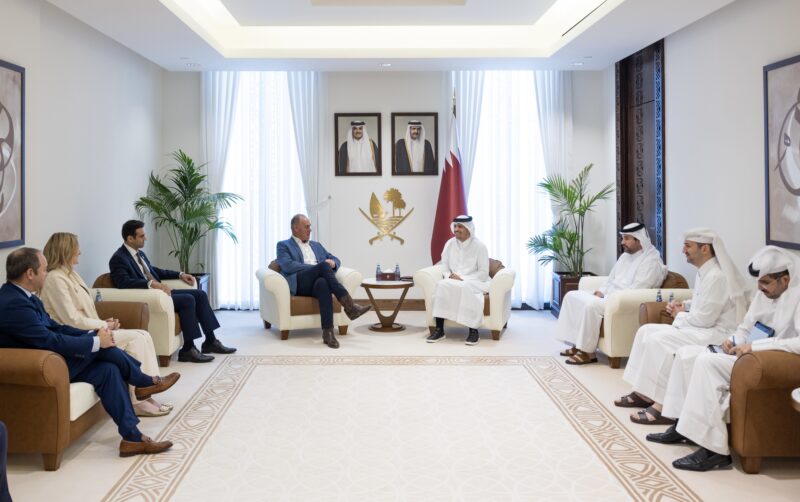
“It is unclear to me exactly why President Trump is opposed to recognition of Somaliland, but I surmise it has to do with Turkey, Qatar, Egypt and Saudi Arabia — four countries that are important to U.S. foreign policy,” said Cook. “The Qataris and Turkey are invested heavily in Somalia and as a result, are likely concerned about an Israeli partner next door and an Israeli presence in the Red Sea.”
Cook added that Egypt is likely “worried that the Israelis will forcibly relocate Gazans [in Somaliland],” despite calling such a move “unlikely.”
As U.S. officials weigh whether to follow in Israel’s lead, Fitton-Brown said there is “talk of other states,” such as Ethiopia, Kenya, Morocco, the UAE and India, moving towards recognition of Somaliland, which could “put the issue more firmly on the U.S. radar screen.”
More Stories
MICHIGAN MOVES
Haley Stevens maintains support for Israel as her primary rivals battle over anti-Israel lane
PLAYING AGAINST TYPE
Pat Ryan endorses Zohran Mamdani for New York City mayor
blake's backtrack
In 2020 AIPAC position paper, Michael Blake vowed to support Israel, highlighted Black-Jewish unity
eye on the prize
Virginia lawmaker with history of anti-Israel rhetoric eyes 2026 congressional run
MAKING IT OFFICIAL
Trump signs executive order pledging to designate chapters of Muslim Brotherhood as terrorist orgs