









































MBS to DC, MOU movement — plus MTG’s Trump trouble
Plus, Plus, Rahm's wake-up call for American Jews


 Add JewishInsider on Google
Good Monday morning.
In today’s Daily Kickoff, we look at Israel’s reported push for a new 20-year memorandum of understanding with the U.S., and report on President Donald Trump’s pledge to back a primary challenger to Rep. Marjorie Taylor Greene amid an escalating feud between the two. We cover a new bill from 21 House Democrats accusing Israel of genocide that has the backing of Code Pink, and report on the firing of the New Jersey teachers’ union magazine editor over her antisemitic and pro-Hamas posts on social media. Also in today’s Daily Kickoff: Rahm Emanuel, Tua Tagovailoa and New York City Mayor Eric Adams.
Today’s Daily Kickoff was curated by Jewish Insider Executive Editor Melissa Weiss and Israel Editor Tamara Zieve with an assist from Marc Rod. Have a tip? Email us here.
What We’re Watching
- The U.N. Security Council is expected to vote today on a U.S.-proposed resolution backing the White House’s plan for Gaza and showing support for the creation of an International Stabilization Force in the enclave. More below.
- Outgoing New York City Mayor Eric Adams continues his trip to Israel today. Earlier today, Adams held separate meetings with Israeli President Isaac Herzog, Foreign Minister Gideon Sa’ar and New York Consul General Ofir Akunis. He’s slated to meet with Prime Minister Benjamin Netanyahu at 3 p.m. local time, followed by meetings with Knesset Speaker Amir Ohana and Jerusalem Mayor Moshe Lion. Tonight, he’ll attend a dinner hosted by the Israel Export Institute honoring the New York City-Israel Economic Council.
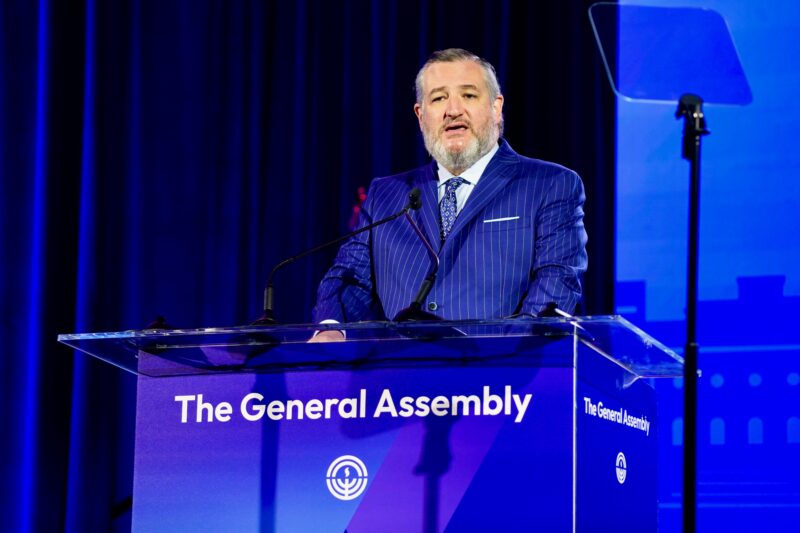
- The Jewish Federations of North America’s General Assembly kicked off yesterday in Washington. Sen. John Fetterman (D-PA), Rabbi Angela Buchdahl and Commentary’s John Podhoretz are among the speakers slated to take the main stage in today’s plenaries. Are you at the GA? Say hello to JI’s Gabby Deutch!
- The House is set to vote today on a resolution introduced by Rep. Marie Gluesenkamp Perez (D-WA) “disapproving the behavior” of Rep. Chuy Garcia (D-IL), who announced plans to retire on the last day for candidates to file, hours after his chief of staff had filed her own paperwork to run for the seat. House Democratic leaders have said they plan to kill the resolution.
What You Should Know
A QUICK WORD WITH JI’S LAHAV HARKOV
The members of Israeli Prime Minister Benjamin Netanyahu’s governing coalition spent much of the weekend arguing over something on which they all ostensibly agree — opposition to a Palestinian state.
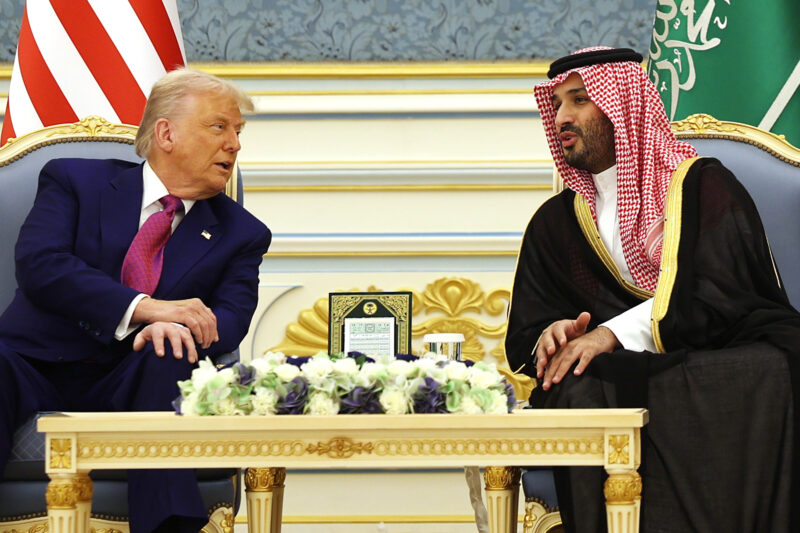
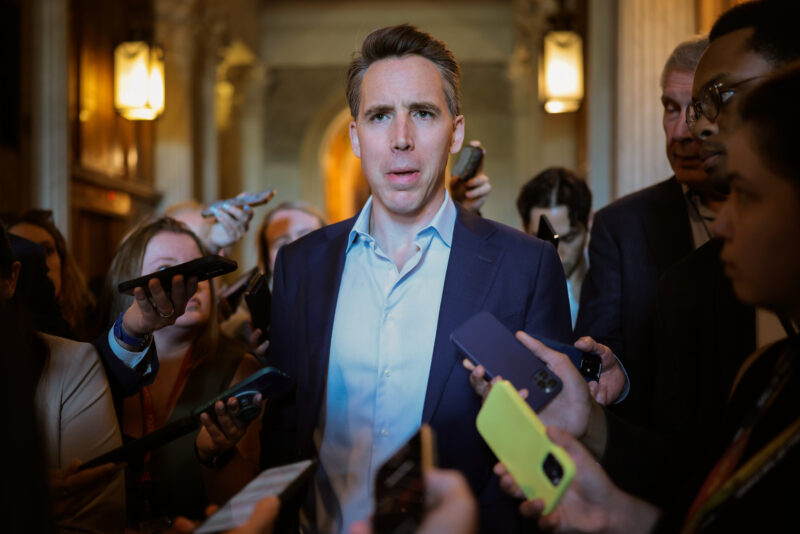
They may have been expressing their long and openly held opinions, but the timing could be damaging, coming days before Saudi Crown Prince Mohammed bin Salman is set to visit the White House. In the meeting, slated for Tuesday, President Donald Trump is expected to push for normalization between Riyadh and Jerusalem — something the Saudis have long conditioned on tangible steps towards a Palestinian state.
The latest debate started with far-right Israeli Finance Minister Bezalel Smotrich, who recently apologized for saying the Saudis can “keep riding camels” rather than normalize ties with Israel in exchange for a Palestinian state. On Saturday night, Smotrich said that Netanyahu was responsible for a “dangerous” increase in pressure on Israel, criticizing the prime minister for not speaking up more forcefully after nearly a dozen countries recognized a Palestinian state earlier this year. “Immediately come up with an appropriate and decisive response that will make clear to the entire world that a Palestinian state will not be established in our homeland,” Smotrich wrote on X.
Next came Likud ministers. “Israel will not agree to the establishment of a terror state in the heart of the Land of Israel,” Israeli Foreign Minister Gideon Sa’ar asserted. “Israel’s policy is clear: A Palestinian state will not be established,” chimed in Defense Minister Israel Katz.
The impetus for reiterating their position was the U.S.-proposed resolution at the United Nations Security Council backing Trump’s plan for Gaza and the formation of an International Stabilization Force, leading to a scenario in which “the conditions may finally be in place for a credible pathway to Palestinian self-determination and statehood.”
It’s unclear where these Cabinet ministers were in late September, when Netanyahu signed onto Trump’s 20-step plan, which uses the exact same language.
The Saudis saw Netanyahu’s agreement to a horizon for Palestinian statehood as satisfying their demand for a step in that direction, an Israeli diplomatic source who frequently advises Netanyahu said earlier this month.
MILITARY MATTERS
Israel eyes new defense agreement with U.S. as future of assistance faces uncertainty

With Israel’s current 10-year memorandum of understanding (MOU) with the U.S. set to expire in 2028, Jerusalem is reportedly seeking a renewed and expanded agreement that would run through 2048 — though questions remain over the deal’s final framework and the future of U.S.-Israel assistance, Jewish Insider’s Matthew Shea reports. Israel is looking to finalize a new 20-year agreement that entails more in annual assistance, with hopes of securing the deal within the next year. Negotiations were previously delayed due to the war in Gaza; however, Israeli and U.S. officials confirmed to Axios that initial discussion began in recent weeks. Israeli Prime Minister Benjamin Netanyahu, however, denied the report.
Time is of the essence: “MOU negotiations typically take a long time, and waiting for both countries to get through their respective 2026 elections puts the start of these talks well into fiscal year 2027,” said Dana Stroul, a senior fellow at The Washington Institute for Near East Policy. “If there are going to be changes in the funding levels, Israeli and American budgeteers will want this information as early as possible.” Experts argued that it would be in Israel’s best interest to secure a deal now amid the uncertainty over future support from U.S. officials. Stroul said Israel “may be calculating that it is better to get out ahead of this trend and lock in U.S. commitments before the midterm elections.”
TROUBLING TIMES
Rahm Emanuel warns American Jewish community ‘on the precipice’ with shifting political winds
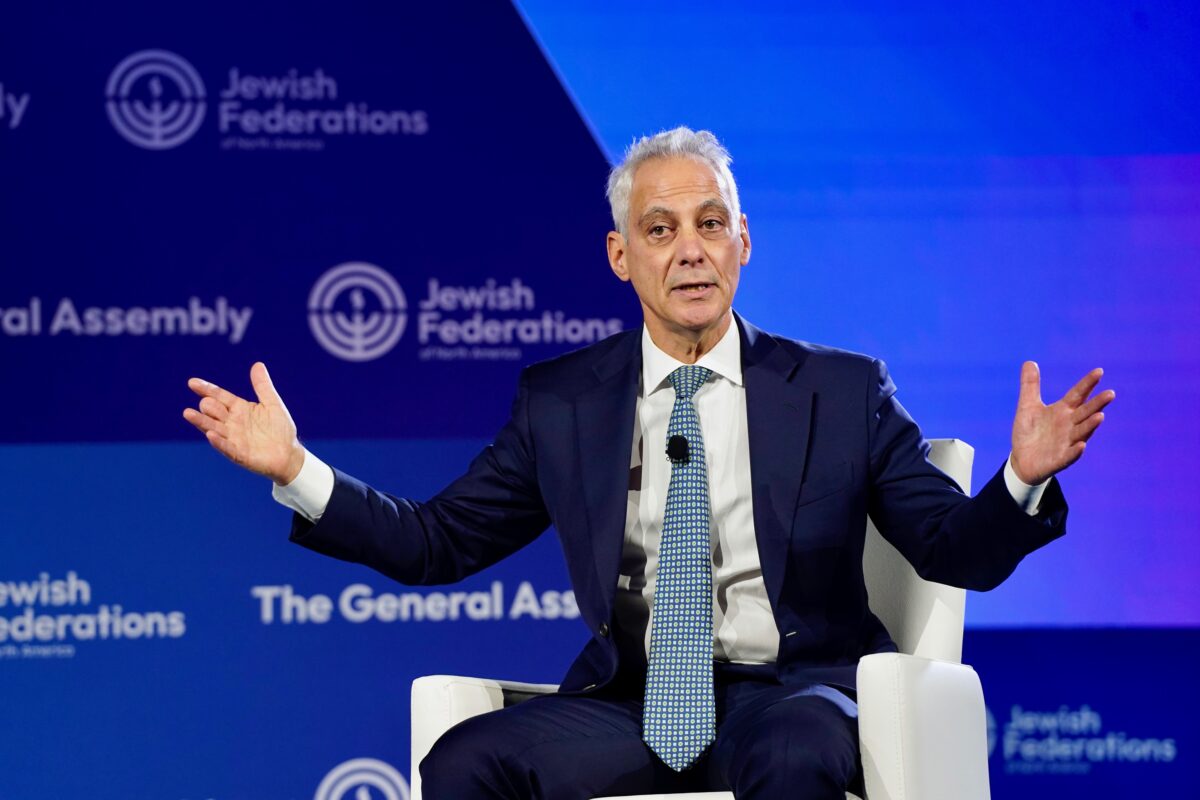
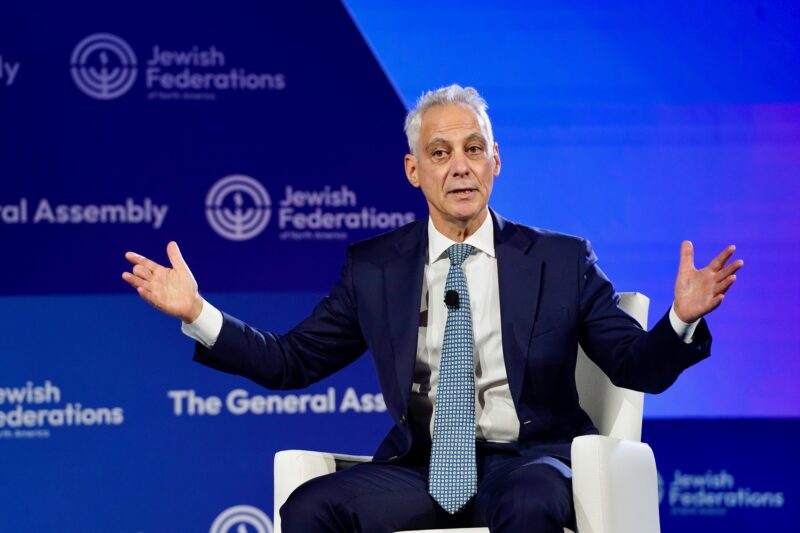
Longtime Democratic official Rahm Emanuel offered a word of warning on Sunday night to the thousands of Jewish communal leaders gathered in Washington to kick off the Jewish Federations of North America’s General Assembly: Don’t expect 2028 presidential candidates to visit Israel like his old boss, Barack Obama, did on the campaign trail in 2008, Jewish Insider’s Gabby Deutch reports.
Out of flavor: He used an ice cream metaphor to make his point. “If in 2024 the Democrats didn’t have a choice, in 2028 it’s going to be like Baskin-Robbins. There’s gonna be, like, 31 flavors. Some of us are gonna be chocolate mint. Nobody is going to Jerusalem,” Emanuel said at the opening plenary. “Nobody is leaving America to go travel to Jerusalem. That’s the politics. And it’s not just in the Democratic primary.” Emanuel, Obama’s former chief of staff and the former U.S. ambassador to Japan, beseeched the attendees to reckon with the shifting political winds on Israel and work to make a stronger case for the U.S.-Israel relationship.
On the main stage: Four former Israeli hostages — Noa Argamani, Avinatan Or, Evyatar David and Guy Gilboa-Dalal — shared accounts of their time in Hamas captivity, some of which had never before been revealed, at the JFNA’s opening plenary, eJewishPhilanthropy’s Nira Dayanim reports.
CHANGES IN ATTITUDE
Trump pulls support for ‘ranting lunatic’ MTG, says he’ll endorse a primary challenger
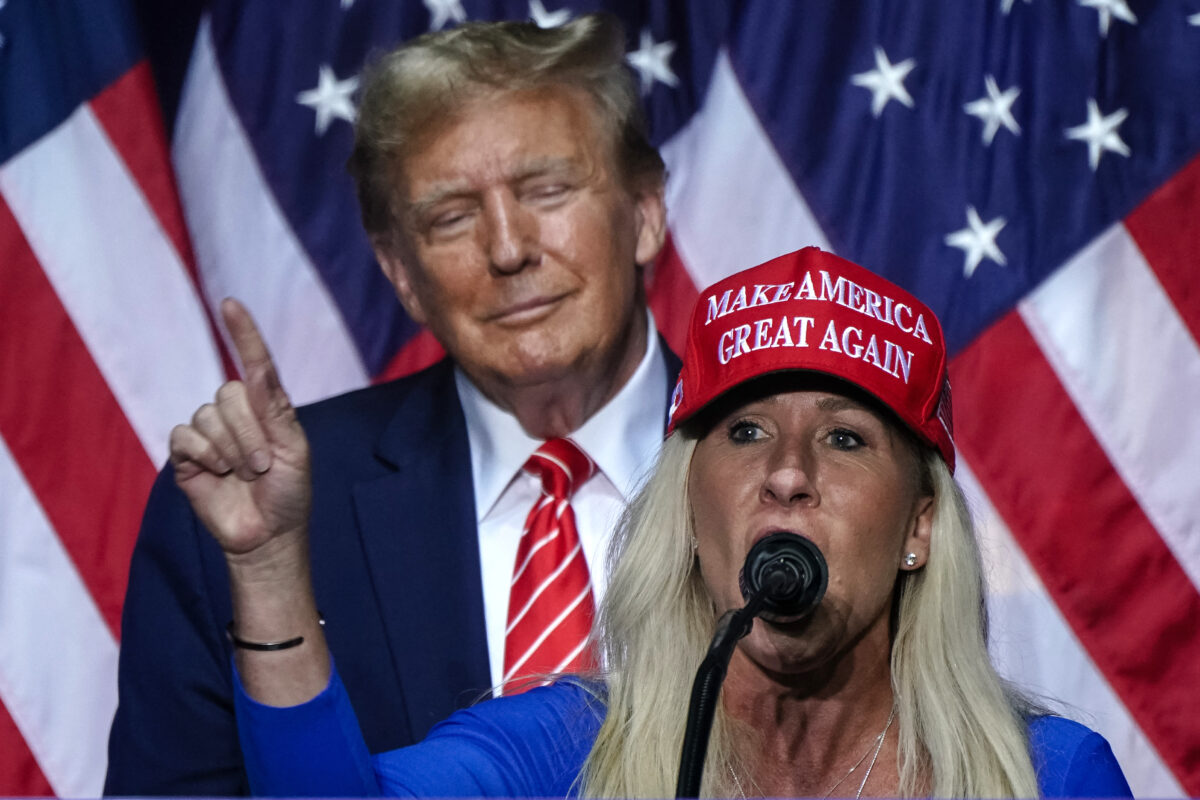
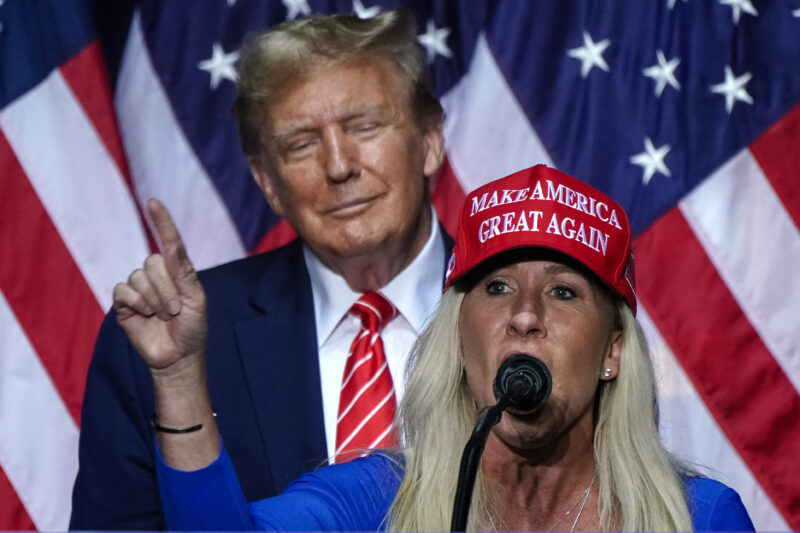
President Donald Trump on Friday night publicly disavowed Rep. Marjorie Taylor Greene (R-GA), once one of the president’s closest and most committed allies on Capitol Hill, saying he was withdrawing his endorsement of Greene and is prepared to support a primary challenger to the far-right Georgia congresswoman, Jewish Insider’s Marc Rod reports.
The latest: Trump said on his Truth Social platform that he has heard that “wonderful, Conservative people are thinking about primarying Marjorie” and that “if the right person runs, they will have my Complete and Unyielding Support,” accusing her of having “gone Far Left.” In one of her posts in response, Greene highlighted the fact that she has not received support from pro-Israel groups and suggested that a foreign country is pressuring Trump to distance himself from her.
ON THE HILL
21 House Democrats introduce Code Pink-backed resolution accusing Israel of genocide
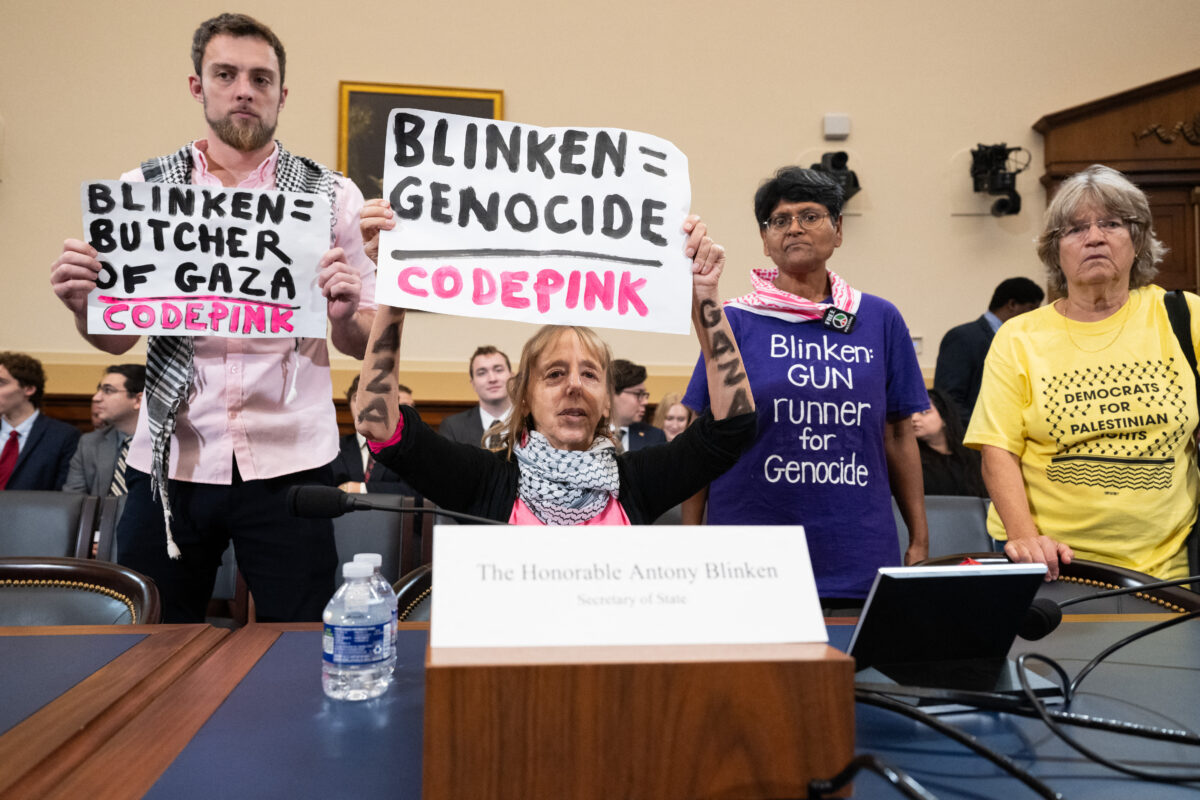
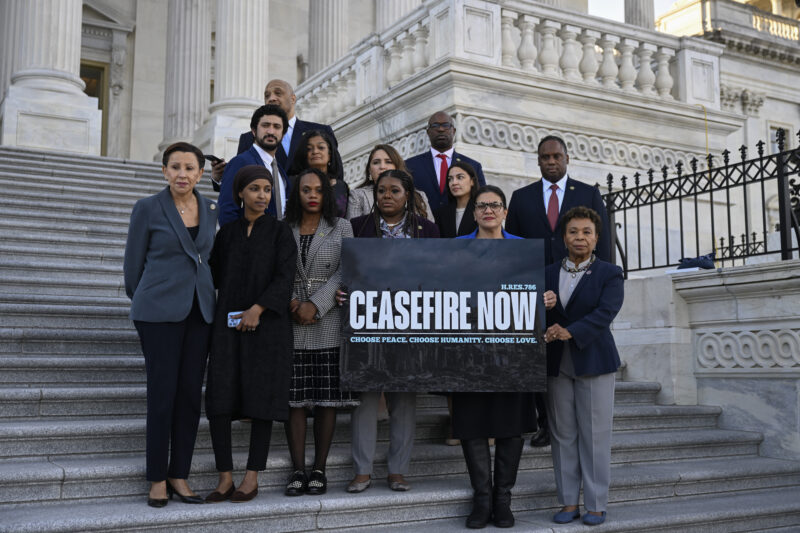
A group of 21 House progressives, led by Rep. Rashida Tlaib (D-MI), introduced a resolution accusing Israel of committing genocide in Gaza, Jewish Insider’s Marc Rod reports. The resolution is backed by a slew of anti-Israel groups, including the Democratic Socialists of America, Jewish Voice for Peace, IfNotNow, the Quincy Institute, Sunrise Movement, Amnesty International, Code Pink, CAIR, American Muslims for Palestine, American-Arab Anti-Discrimination Committee and DAWN.
Sponsor list: The legislation is co-sponsored by Reps. Becca Balint (D-VT), Andre Carson (D-IN), Greg Casar (D-TX), Maxine Dexter (D-OR), Maxwell Frost (D-FL), Chuy Garcia (D-IL), Al Green (D-TX), Pramila Jayapal (D-WA), Hank Johnson (D-GA), Ro Khanna (D-CA), Summer Lee (D-PA), Jim McGovern (D-MA), Alexandria Ocasio-Cortez (D-NY), Ilhan Omar (D-MN), Mark Pocan (D-WI), Ayanna Pressley (D-MA), Delia Ramirez (D-IL), Lateefah Simon (D-CA), Nydia Velazquez (D-NY) and Bonnie Watson Coleman (D-NJ).
MINORITY ALERT
Syrian Druze, Christians, Alawites warn of religious persecution by new government

Representatives of Syria’s Druze, Christian and Alawite communities warned members of the U.S. Commission on International Religious Freedom on Thursday about the systematic targeting, persecution and atrocities their communities have endured under the new Syrian government led by President Ahmad al-Sharaa, Jewish Insider’s Marc Rod reports.
Pump the brakes: They urged the U.S. to condition the removal of remaining sanctions on Syria and its evolving partnership with the Syrian government on the government’s efforts to protect religious minorities and prevent further atrocities. Members of the commission, an independent body created by Congress, likewise expressed alarm about the pattern of violations against Syria’s minorities.
Bonus: A spokesperson for Rep. Mike Lawler (R-NY), who is leading a bill in the House to condition the lifting of human rights sanctions on Syria under the Caesar Act, told JI he continues to oppose the unconditional repeal of sanctions. “Congressman Lawler continues to believe that any changes to the Caesar sanctions must be tied to meaningful benchmarks and strict accountability to ensure the al-Sharaa regime cannot exploit relief. He is actively working with the administration to advance a responsible, conditional approach with snapback measures rather than a blanket repeal,” spokesperson Ciro Riccardi told JI.
EDITED OUT
N.J. teachers’ union fires editor after Jewish officials express concern over antisemitic

New Jersey’s largest teachers’ union, the New Jersey Education Association, cut ties with an editor of its magazine on Friday, following criticism from top state officials over her antisemitic and pro-Hamas posts on social media. Ayat Oraby’s since-deleted posts on X, screenshots of which were viewed by JI, claimed Israel “killed many of its citizens” during the Oct. 7, 2023, terror attacks and voiced her support of Hamas, praising its actions on social media as “resistance,” among other views, Jewish Insider’s Haley Cohen reports.
Chain of events: Oraby, who started at the NJEA Review magazine in August, told the New Jersey Globe, the first outlet to report her termination, that her “intent has always been humanitarian: to stand against the killing of civilians and to advocate for peace. When compassion is politicized, even empathy can be misread.” Local Jewish elected officials voiced worry about Oraby’s appointment in October, sending a letter to NJEA with 24 signees, expressing “deep concern.” The letter followed one sent by Rep. Josh Gottheimer (D-NJ) to the NJEA, which also voiced concern. Oraby told the New Jersey Globe that Gottheimer was unfair to condemn her for a post she deleted that compared Israel to Nazi Germany, a claim she said “reflects public opinion and legitimate criticism, not hatred.”
Worthy Reads
What MBS Wants: In The New York Times, former U.S. Ambassador to Saudi Arabia Michael Ratney previews tomorrow’s meeting between President Donald Trump and Saudi Crown Prince Mohammed bin Salman in Washington. “After two years as U.S. ambassador to the kingdom, and after conversations with many Saudis, it is clear to me where the crown prince’s priorities now lie: He would rather focus on attracting international business and investment to the kingdom than become enmeshed in the region’s interminable conflicts. He would rather accept an imperfect Syrian leadership than fuel a civil war that will exacerbate the region’s ills. He would rather reach an uneasy détente with Iran than antagonize it and draw its ire and missiles. And he would rather end the Gaza war on less than ideal terms than have it continue as a source of inspiration for extremists.” [NYTimes]
Tucker Takes on the Bible:The Washington Post’s Jason Willick posits that conservative commentator Tucker Carlson is, in his own rhetoric and platforming of extremist voices, explicitly targeting the Judeo-Christian consensus. “That Jewish-Christian pairing, though not uncontroversial, has proved remarkably resilient over the decades. Carlson sees an opening to undo it. A recent theme of the podcaster is that the Old Testament (the part of the Bible subscribed to by both Jews and Christians) is dark and tribal, while the New Testament (the part subscribed to only by Christians) is the fount of enlightened Western values. … His Fuentes provocation successfully prompted massive recriminations on the institutional right. His gamble is that in the turmoil, he can pry more conservatives away from the Judeo-Christian settlement that arose in the past century and toward his own narrower sect on the right.” [WashPost]
Water Woes: In The Wall Street Journal, Seth Siegel, author of Let There Be Water: Israel’s Solution for a Water-Starved World and Troubled Water: What’s Wrong with What We Drink, looks back at the role that Israel played in building water infrastructure in Iran prior to the 1979 revolution. “The first few water engineers to arrive in Iran were followed by dozens, and ultimately hundreds. So many Israeli water experts worked on Iran’s water restructuring and rethinking of agricultural practices that by the late 1960s Hebrew-language schools for their children were established in several locations in Iran. Shops in some areas had signs in Hebrew. I interviewed several Israeli water engineers who worked in Iran before the 1979 revolution. They described a warm environment in which Israelis and Iranians worked together. Other than at a soccer match involving a visiting Israeli team, none of the interviewees had any memory of anti-Israel or antisemitic conduct or speech.” [WSJ]
Word on the Street
Axios reports that Sen. Ted Cruz’s (R-TX) vocal opposition to Tucker Carlson is part of the Texas Republican’s plans to mount a 2028 presidential bid in which he’ll speak out against the party’s isolationism, setting him up on a collision course with Vice President JD Vance…
In a Washington Post op-ed, U.S. Ambassador to the U.N. Mike Waltz calls on the U.N. Security Council to pass an upcoming resolution backing President Donald Trump’s peace plan for Gaza, saying that doing so will create an opportunity “for the United States and our international partners to take concrete action and renew our commitment to the project of peace and build a future in which Gaza is governed by the Palestinian people — not Hamas”…
Politico spotlights Michael Needham, who is serving as a top strategist to Secretary of State Marco Rubio, describing Needham as “Rubio’s chief policy filter, surfacing America First proposals that blend ideology with implementation”…
Puck looks at tensions between Secretary of Defense Pete Hegseth and Secretary of the Army Dan Driscoll, the latter of whom Puck describes as “a rare Trump appointee who commands bipartisan respect and affection”…
The New Yorker profiles Kash Patel, noting that in his high school yearbook, the FBI director quoted Rabbi Abraham Joshua Heschel, saying “Racism is man’s gravest threat to man—the maximum of hatred for a minimum reason”…
In comments made at a Combat Antisemitism Movement reception in Tel Aviv on Sunday night, outgoing New York City Mayor Eric Adams suggested that the city’s Jewish community “must prepare itself” for New York City Mayor-elect Zohran Mamdani, saying, “If I were a Jewish New Yorker, I’d be concerned about my children”…
A staffer on Mamdani’s campaign who served as director of Muslim engagement and now claims to have a senior role on Mamdani’s transition team is facing criticism for a series of antisemitic and homophobic social media posts…
Columbia University’s Advisory Committee on Socially Responsible Investing, which advises the school’s board of trustees on issues related to investments, rejected three proposals calling on Columbia to divest from Israel; the committee found that the proposals failed to secure a broad consensus…
A federal judge blocked the Trump administration from collecting $1.2 billion in fines from UCLA that were imposed over the school’s handling of antisemitism on campus, its admissions process and its recognition of transgender students…
A new study from the Institute of International Education found that international student enrollment in American universities dropped by 17% this year…
The Wall Street Journal looks at how WhatsApp is surpassing Apple’s iMessage as the messaging app of choice for large groups…
Miami Dolphins quarterback Tua Tagovailoa, speaking at a press conference in Madrid following the NFL’s final international game for the season, said, “it would be pretty cool to go play in Jerusalem” after being asked where the league should play its next international game…
“Succession” actress Dasha Nekrasova was dropped by the Gersh agency following an episode of her podcast in which she interviewed antisemitic conspiracy theorist Nick Fuentes…
The Washington Post reviews the Arlington, Va., Signature Theatre’s production of “Fiddler on the Roof”…
University College London suspended researcher Samar Maqusi following the distribution of video taken during a lecture in which Maqusi shared antisemitic blood libel; the school also announced it will reopen its investigation into a student who is alleged to have told a Jewish student that the Oct. 7, 2023, attacks were “justified and reasonable” and that Hamas was not a terrorist entity…
Germany confirmed plans to lift its restrictions on military exports to Israel that went into effect in August, citing last month’s ceasefire between Israel and Hamas and the increasingly stabilized situation in the Gaza Strip…
The Wall Street Journal reports on how increasing support for Hamas in Gaza since the implementation of a ceasefire last month has complicated efforts to disarm the terror group…
Israel’s GDP rose 12.4% in the third quarter of 2025, rebounding from the second-quarter drop attributed in part to the Israel-Iran war in June…
Iran began cloud-seeding operations to spur rainfall in an effort to address the country’s severe drought…
Iranian Deputy Foreign Minister Saeed Khatibzadeh said on Sunday that the country’s nuclear program was “still intact,” the same day that Foreign Minister Abbas Araghchi denied that the country was still enriching uranium, citing the damage sustained during the 12-day war with Israel in June…
The Islamic Revolutionary Guard Corps seized a Marshall Islands-flagged oil tanker carrying petrochemicals near the coast of the United Arab Emirates en route to Singapore from Sharjah, UAE…
Lebanon is preparing a complaint against Israel to the U.N. Security Council over the construction of a concrete barrier that Beirut said crosses the “Blue Line” between the countries; Israeli officials denied that the barrier crossed the line of demarcation…
The New York Times’ Vows section spotlights the recent wedding of Sausalito, Calif., City Councilmember Melissa Blaustein and real estate investor David Saxe, who were set up by a matchmaker Blaustein connected with at a Yom Kippur break fast…
New York City attorney Sid Davidoff, a founding partner of Davidoff Hutcher & Citron LLP who was included on President Richard Nixon’s “enemies list,” died at 86…
Elizabeth Franz, who won the 1999 Tony Award for Best Featured Actress in a Play for her portrayal of Linda Loman in “Death of a Salesman,” died at 84…
Poet and performance artist Hal Sirowitz, honored in the early 2000s as the poet laureate of Queens, died at 76…
Psychologist Arline Bronzaft, whose work focused on the effects of urban noise, died at 89…
Pic of the Day

Rabbis from 111 countries and over 6,000 communities posed on Sunday for the annual “class photo” at the international gathering of Chabad emissaries outside the movement’s headquarters at 770 Eastern Parkway in Brooklyn, NY.
Birthdays

Film and television director, writer and producer, Jon Avnet turns 76…
Rabbi of Agudath Israel of Baltimore and rabbinic administrator of the Star K Kosher supervision service, Rabbi Moshe Heinemann turns 88… Original creator and producer of “Saturday Night Live,” Lorne Michaels (born Lorne Lipowitz) turns 81… Philanthropist and director of the William Davidson Foundation, Karen Davidson… Editor-at-large for Washingtonian Magazine and author of a biography of Sen. Bernie Sanders (I-VT), Harry Jaffe… Founder and principal of ourCovenant, Diana Aviv… Operations manager at NPC Global, Daniel Gastaldi… Author and journalist, he lectures in the graduate journalism program at Stanford University, Gary M. Pomerantz turns 65… Attorney and business executive who once played on the South African national teams in both cricket and field hockey, Mandy Yachad turns 65… U.S. senator (R-PA) until 2023, Pat Toomey turns 64… Former director of the Domestic Policy Council in the Biden administration and former national security advisor in the Obama administration, Susan Rice turns 61… Attorney General of the United States, Pam Bondi turns 60… “The Travelling Rabbi” of the South African Jewish Board of Deputies who serves 11 sub-Saharan countries, Moshe Silberhaft turns 58… U.S. ambassador to Switzerland during the Obama administration, Suzan Gail Davidson (Suzi) LeVine turns 56… Editor at large of Talking Points Memo, David Kurtz turns 56… Segment producer at HBO’s “Real Time with Bill Maher,” Michele Tasoff… Chief communications officer at American Hotel & Lodging Association, Ralph Posner… Human resilience coach, Michael Ostrolenk… President of Stanford University, Jonathan David Levin turns 53… Former president of NBC News, Noah Oppenheim turns 47… President of Thematic Campaigns, Isaac Baker… CEO of the Jewish Democratic Council of America, Halie Soifer… MLB player for 14 seasons, NL Rookie of the Year, five-time NL All-Star and NL MVP in 2011, Ryan Braun turns 42… NFL fullback for six seasons with the Bucs and Saints, he has since earned an MBA from Wharton, Erik Lorig turns 39… Diplomatic correspondent at Politico, Felicia Schwartz… Mortgage lender at River Holdings, Zack Teichman… Chief of staff at America250, Aidan Golub…
Recent Daily Kickoff Newsletters