





































































Rep. Suzanne Bonamici, one of several Democrats running to lead the committee, says the program that’s championed by top Jewish groups favors private schools rather than public education
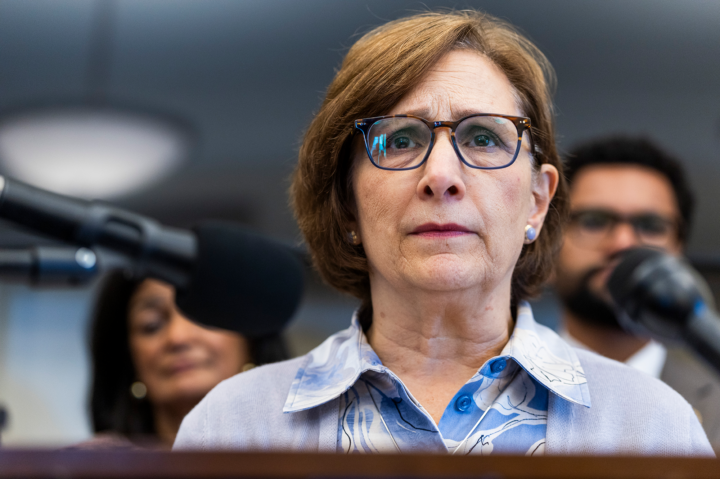
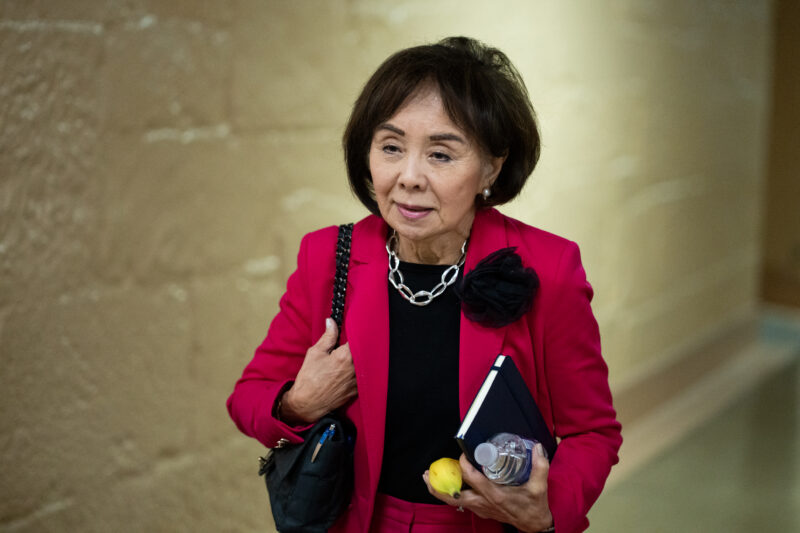
Finn Gomez/Getty Images
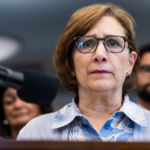
Rep. Suzanne Bonamici (D-OR) speaks during a press conference in the Cannon House Office Building on September 2, 2026 in Washington, DC.


 Add JewishInsider on Google
Rep. Suzanne Bonamici (D-OR), who is running to lead the House Education and Workforce Committee in the next Congress, is pushing to repeal a federal education tax credit that could benefit Jewish day schools and other religious institutions, arguing that the program improperly directs taxpayer-subsidized funding to private schools rather than public education.
The proposal is part of Bonamici’s Transforming Education for the Future Act, a package of 22 Democratic education bills that would repeal the Education Freedom Tax Credit, created under Republicans’ One Big Beautiful Bill Act.
The program, set to take effect in 2027, allows taxpayers to claim credits of up to $1,700 annually for donations to scholarship-granting organizations that fund K-12 private school tuition, including at religious schools. Bonamici has argued that the policy diverts public resources to private institutions that can selectively admit students and are not subject to the same accountability requirements as public schools. Bonamici did not respond to a request for comment from Jewish Insider.
The tax credit has become a point of contention between some Democrats and Jewish communal organizations, which have been lobbying governors to opt their states into the program that they say could make Jewish day school tuition more affordable. While many Republican governors have embraced the initiative, only Colorado Gov. Jared Polis, New York Gov. Kathy Hochul and New Mexico Gov. Michelle Lujan Grisham have opted in among Democrats, with several others weighing whether to participate amid opposition from teachers’ unions.
Rep. Bobby Scott (D-VA), the current ranking Democrat on the House Education and Workforce Committee, and Rep. Jahana Hayes (D-CT) — both of whom are competing against Bonamici for the committee’s top Democratic spot — have also backed repealing the Education Freedom Tax Credit.
Scott co-sponsored the Keep Public Funds in Public Schools Act of 2026 and has been an outspoken critic of the program, similarly arguing that it diverts taxpayer resources from public schools to private education. In an October interview with Education Week, Scott said Democrats had been “targeting it for repeal.”
Hayes is also a co-sponsor of the repeal legislation, introduced in June by Rep. Gwen Moore (D-WI), putting her on record in opposition to the tax credit. Neither Scott nor Hayes responded to requests for comment from JI.
The New York governor’s decision is likely to build momentum for other Democratic governors to join the program

(Howard Schnapp/Newsday RM via Getty Images)
New York Governor Kathy Hochul speaks at Westbury Middle School on Jan. 10, 2024 in Westbury, New York
Gov. Kathy Hochul announced Friday that she will opt New York into the new federal scholarship tax credit program, making her the second Democratic governor to do so since the administration published formal regulations for the program.
Hochul’s decision bucks intense opposition from teachers’ unions, but has won her support from the Jewish community, which has been urging governors to opt in. She had previously said that she was inclined to support the program but was waiting to see if the regulations contained any poison pill provisions.
Given New York’s substantial Jewish population, her decision to join the program will be one of the most consequential for the Jewish community. It could prompt action by other Democratic governors as well. Colorado Gov. Jared Polis had been the only Democrat — until Hochul’s decision — to opt into the program.
“I’ve been clear from the start that New York would participate in the federal scholarship tax credit program if, and only if, all schools and students, including those in our public schools, could benefit,” Hochul said in her Friday statement. “After a careful review of the federal regulations, we believe this program has the potential to bring millions of additional dollars to New York students and families without taking a single dollar from public schools or our state or local budgets.”
She said that she would not “leave money on the table when it could help our kids” and that she has been “directly engaging with business leaders, who have committed to use this program to support public school students and their academic needs.”
The program will allow taxpayers to deduct up to $1,700 from their federal taxes through donations to scholarship granting organizations. Some Jewish community groups are supporting scholarship organizations to help students attend Jewish schools, but the scholarships can also help support public school students.
Hochul insisted that her “commitment to public education has not changed, and it never will.” Teachers’ unions have insisted that the program amounts to a federal private school voucher program and will sap funding from public education.
“We thank Governor Hochul for putting New York kids first,” Teach NYS, the New York branch of the Teach Coalition, said in a statement. “This is a historic moment for New York students and a testament to the power of collective advocacy.”
The group thanked the UJA-Federation of New York, Agudath Israel of America and various other groups, including the Catholic community, that have been advocates for the program.
Yeruchim Silber, the director of New York government relations for Agudath Israel of America, said it was a “tremendous day for education in New York.”
“This decision opens the door to millions of dollars in additional educational resources and opportunities for students in public and nonpublic schools alike, without taking a dollar away from public education,” Silber continued. “[Agudath Israel] is deeply grateful to the Governor and her team for recognizing the importance of this opportunity and ensuring that New York’s children and families will be able to benefit.”
Meanwhile, United Federation of Teachers president Michael Mulgrew condemned Hochul and vowed to work to roll back the policy.
“Giving up local control of public education to the federal government through the Trump administration’s private school voucher scheme is a failure of leadership. Gov. Hochul will bear the responsibility, but our students, educators, and families will bear the price,” Mulgrew said.
If a far-left, anti-Israel wave sweeps over the Democratic Party in tonight’s statewide primaries, it will be a wake-up call for those downplaying the rise of the socialist left
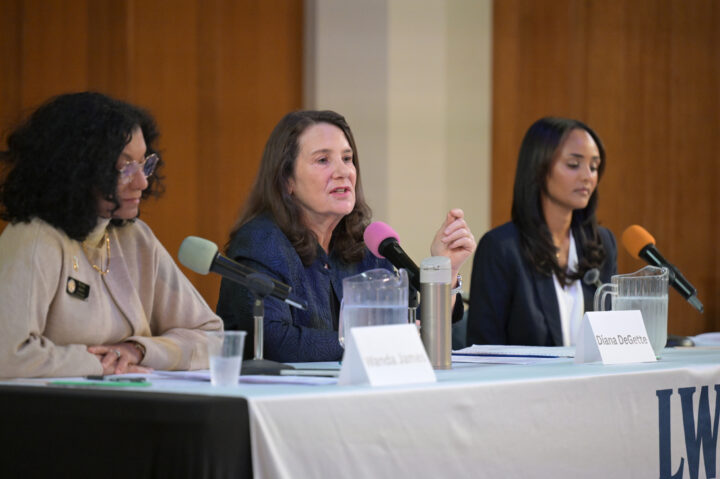
RJ Sangosti/MediaNews Group/The Denver Post via Getty Images
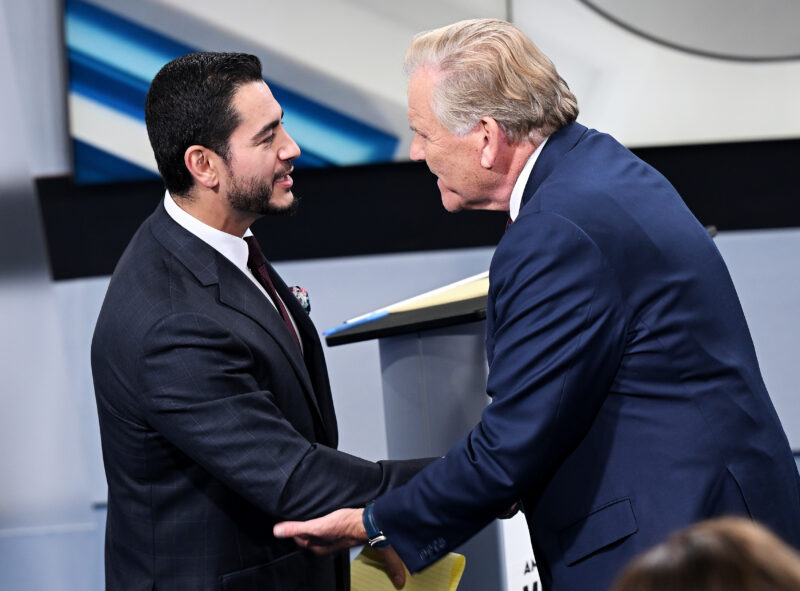
From left, Wanda James, Diana DeGette and Melat Kiros participate in a League of Women Voters Congressional District 1 candidate forum on May 28, 2026, in Denver, Colorado.
Colorado is a state famous for its moderation, with its governor (Jared Polis) and two senators (Michael Bennet and John Hickenlooper) among the most pragmatic figures in Democratic politics. So if a far-left, anti-Israel wave sweeps over the Democratic Party in tonight’s statewide primaries, it will be a true wake-up call for those downplaying the rise of the socialist left.
The biggest race we’re tracking — and the one where a Democratic incumbent looks most vulnerable — is the primary between longtime Rep. Diana DeGette, 68, an influential progressive who has left an imprint on major legislation in Congress, and Democratic Socialists of America-affiliated 29-year-old doctoral student Melat Kiros, whose deep-seated antagonism against Israel is a top focus of her campaign.
Kiros is the latest example of how radical candidates running for office on their hostility toward Israel are also indulgent of the rising antisemitism around them. Her political awakening came after she was fired from the law firm Sidley Austin for writing a public letter denouncing the hundreds of law firms that signed a petition calling on law schools to do a better job addressing antisemitism on their campuses.
Kiros was angered that the law firms considered those calling for the elimination of Israel as antisemitic. In the last week, she also refused to call the firebombing of a hostage awareness march in Boulder, Colo., antisemitic. Sense a pattern?
As JI’s Marc Rod reported, Kiros’ extreme views have done little to dent her support in a progressive Denver-area district that DeGette has easily held for the last three decades. DeGette barely won the 30% of the vote from party activists necessary to qualify for the primary ballot — in what could be a foreshadowing of the primary results tonight.
The overall landscape in Colorado is looking similarly treacherous for other Democratic moderates, even if they end up prevailing. Sen. John Hickenlooper, once considered a shoo-in to win renomination, is facing a credible challenge from DSA-backed state Sen. Julie Gonzales. If Hickenlooper loses, it would be a political earthquake across the country, but even a close race against a fringe candidate would be a major warning sign for the health of the Democratic Party.
And well outside of Denver, another primary in a swing district is being closely watched for ideological signals of where the party is headed. Early in the cycle, Democratic Majority for Israel’s political arm rallied behind former state Rep. Shannon Bird, a moderate who has been a reliable supporter of Israel and outspoken critic of antisemitism in the state Legislature, in her race against Rep. Gabe Evans (R-CO).
State Rep. Manny Rutinel, a progressive who has attacked Bird as insufficiently liberal on immigration, has been vague on where he stands on Israel policy, but his record as a college student has raised concerns from the broader Jewish community.
As an undergraduate at the University of Florida in 2014, Rutinel attended a demonstration that was co-organized by Students for Justice in Palestine, the extreme anti-Israel group that has expressed alignment with Hamas, according to a local news story covering the event at the time. A Rutinel spokesperson told JI that Rutinel did not have any affiliation with SJP and said the demonstration was focused on police brutality in the U.S.
Neither candidate has focused much on Israel policy — a sign that opposing Israel isn’t a winning message in swing districts like Colorado’s 8th District, which also features a sizable Hispanic population.
The state’s Democratic gubernatorial primary between Bennet and Attorney General Phil Weiser will also be closely watched as a signal of voters’ discontent with Washington. Bennet was viewed by many as an early favorite, but Weiser holds a powerful statewide role that allowed him to position himself in opposition to the Trump administration by filing dozens of lawsuits against federal government policy.
Weiser, who is Jewish and told JI he blocks off Shabbat to spend with his family, is running as the progressive in the race but has kept his focus on campaigning as an anti-Trump candidate and as a Washington outsider.
The DSA chapter in Denver is opposing his gubernatorial campaign because, they write, he “remained a strong supporter of Israel despite the ongoing genocide.” (They also are opposing Bennet because of his votes for military aid to Israel.)
The Colorado governor cited the number of presidential candidates with Jewish backgrounds

Colorado Gov. Jared Polis, who was elected in 2018 as the state’s first Jewish governor, celebrated the increasing number of Jewish Americans involved in politics, with some rising through the ranks of the Democratic Party.
“It is very heartening to see the increasing visibility of Jewish Americans throughout politics,” Polis said during a virtual event on Tuesday for Jewish Democrats hosted by the Democratic National Committee during the 2020 Democratic National Convention. “This year, several of the candidates for president of the United States were of Jewish heritage. And of course, with the selection of [Sen.] Kamala Harris, our soon-to-be second gentleman of the U.S., Douglas Emhoff, is Jewish.”
Polis noted Emhoff’s possible role is “another reason” why Joe Biden’s selection of Harris as his running mate “was not just outstanding, but, frankly, groundbreaking.”
“These are milestones and speak well of the inclusive nature of our nation and of the Democratic Party,” said the Colorado Democrat.
Los Angeles Mayor Eric Garcetti, who participated in a follow-up panel focused on American Jewish voters, said he was deeply moved to watch “a Jew named Bernie Sanders give, I think, the most enthusiastic speech about a nominee in the nomination that he competed for and came in second place, of any second-place finisher I’ve ever heard.”
On the webcast, Polis also highlighted President Donald Trump’s comments on the campaign trail on Monday, suggesting that he “moved the capital of Israel to Jerusalem… for the evangelicals.”
“For once, President Trump was honest about his motives. It wasn’t because of a belief that Jerusalem is the capital of the State of Israel. It wasn’t because of any deeply held belief in the Jewish state. It was simply what he said it was: an appeal to evangelical voters,” Polis stressed. “I have friends on both sides of when or how, or if the embassy should be moved. But it should not be moved — I think we would all agree — simply because evangelical voters in America want it. It should be situated because of where we can best support the peace process, the stability and survival of the Jewish State of Israel.”
Please log in if you already have a subscription, or subscribe to access the latest updates.
 Continue with Google

 Continue with Apple