






























Plus, Israel-Ukraine relations face grain of contention

Joe Raedle/Getty Images
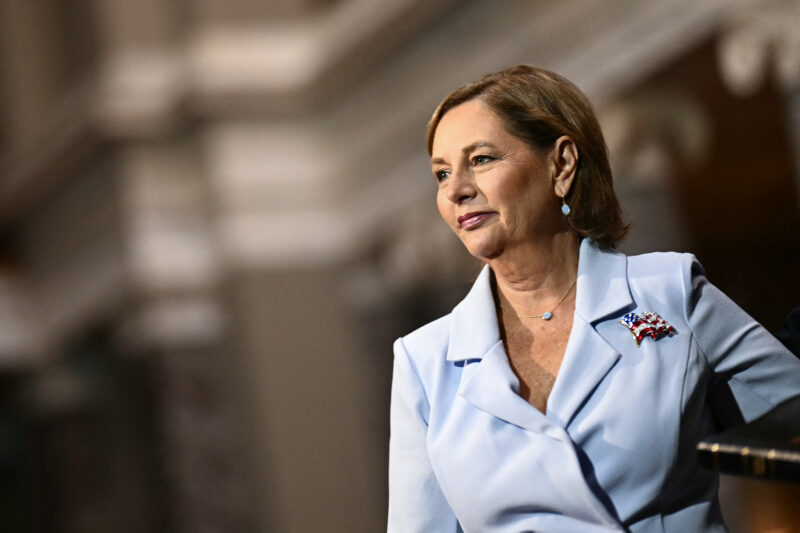
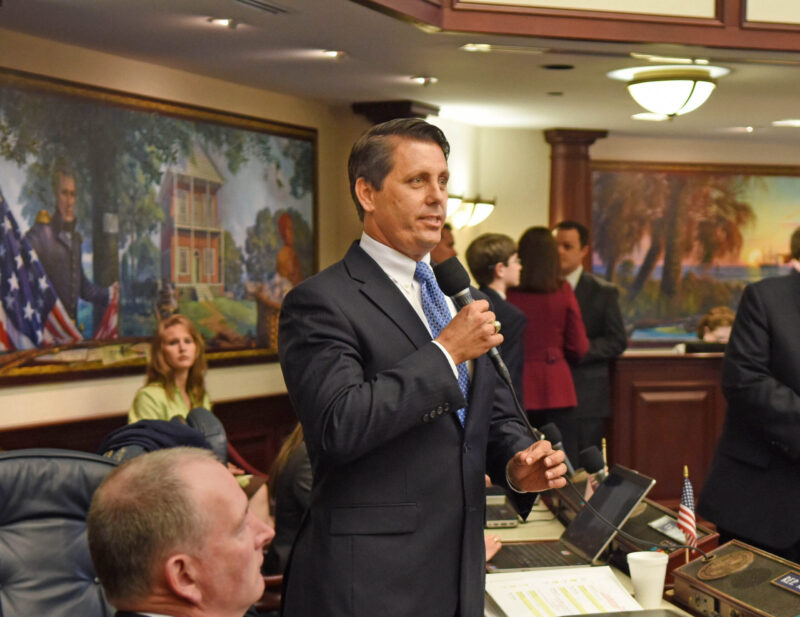
Rep. Debbie Wasserman Schultz (D-FL)


 Add JewishInsider on Google
This P.M. edition is reserved for our premium subscribers like you — offering a forward-focused read on what we’re tracking now and what’s coming next. Please don’t hesitate to share your thoughts and feedback by replying to this email.
📡On Our Radar
Notable developments and interesting tidbits we’re tracking
The gunman who attacked the White House Correspondents’ Dinner on Saturday night, Cole Tomas Allen, was arraigned in Washington this afternoon. He is being charged with transportation of a firearm between states, discharging a firearm during a crime of violence and attempting to assassinate the president of the United States, which carries a potential life sentence.
Assistant U.S. Attorney Jocelyn Ballantine said Allen, 31, had “a 12-gauge, pump-action shotgun, a .38-caliber semiautomatic pistol and … three knives and other dangerous paraphernalia” during the attack. He will remain in detention with another hearing scheduled for Thursday…
White House Press Secretary Karoline Leavitt confirmed that President Donald Trump met with his national security team this morning where they discussed Iran’s latest proposal to end the war, which reportedly includes reopening the Strait of Hormuz but postponing talks on the country’s nuclear program…
German Chancellor Friedrich Merz said the U.S. is “being humiliated” by Iranian leaders after negotiations between the two countries this weekend were called off.
“The Iranians are obviously very skilled at negotiating, or rather, very skillful at not negotiating, letting the Americans travel to Islamabad and then leave again without any result,” Merz told a group of students. The result is “an entire nation is being humiliated by the Iranian leadership, especially by these so-called Revolutionary Guards,” he added…
Russian President Vladimir Putin praised how “courageously and heroically the people of Iran are fighting for their independence” in a meeting with Iranian Foreign Minister Abbas Araghchi today in St. Petersburg. Araghchi thanked Russia for standing by its side and said the countries will continue their “strategic partnership”…
Hezbollah leader Naim Qassem said today that the terror group will not disarm, despite the Lebanese government’s intent to remove the group from power in the south of the country under the terms of the ongoing ceasefire with Israel. Hezbollah and Israel have continued to exchange fire throughout the ceasefire, including a wave of Israeli airstrikes today in response to Hezbollah’s deadly drone attack that killed an IDF soldier and wounded six yesterday…
New Department of Homeland Security training materials allow green card applicants to be denied for antisemitic and anti-Israel social media posts and activism, as well as anti-American activism, The New York Times reports. The documents, distributed to immigration officers last month, cite “as an example of questionable speech a social media post that declares, ‘Stop Israeli Terror in Palestine’ and shows the Israeli flag crossed out”…
Ukrainian Foreign Affairs Minister Andrii Sybiha summoned Israel’s ambassador to the country to protest the arrival of a ship allegedly carrying grain taken from Russian-occupied Ukraine at Israel’s Haifa Port, Sybiha said on X. Sybiha also denounced Israel’s “lack of appropriate response to Ukraine’s legitimate request” regarding a similar vessel that docked in Haifa last week.
Israeli Foreign Minister Gideon Sa’ar slammed Sybiha for his announcement: “Diplomatic relations, especially between friendly nations, are not conducted on Twitter or in the media,” Sa’ar wrote. He said that “evidence substantiating [Ukraine’s] allegations have yet to be provided” and that “the matter will be examined”…
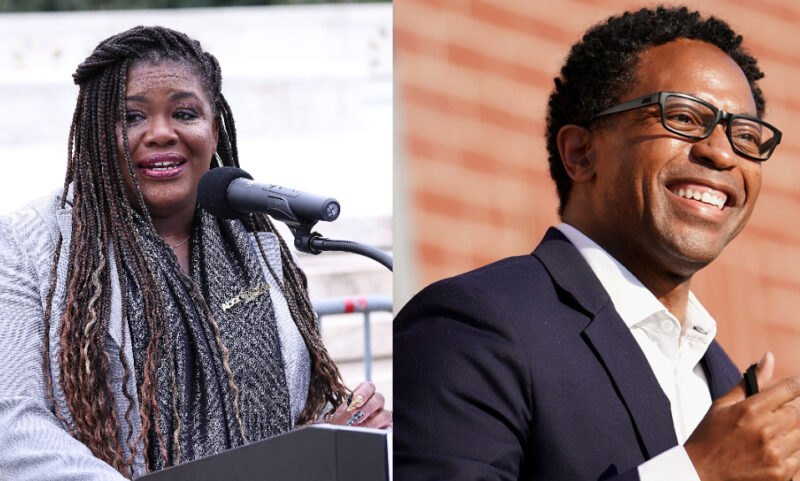
Several pro-Israel House Democrats in Florida could lose their seats after Gov. Ron DeSantis unveiled a new congressional map that eliminates their districts — state lawmakers are expected to approve the map for use in this year’s midterm elections at a special session of the state Legislature tomorrow.
The new map could give the GOP up to four additional House seats by redrawing Democratic-leaning districts, including those of Reps. Jared Moskowitz (D-FL), Debbie Wasserman Schultz (D-FL) and Darren Soto (D-FL)…
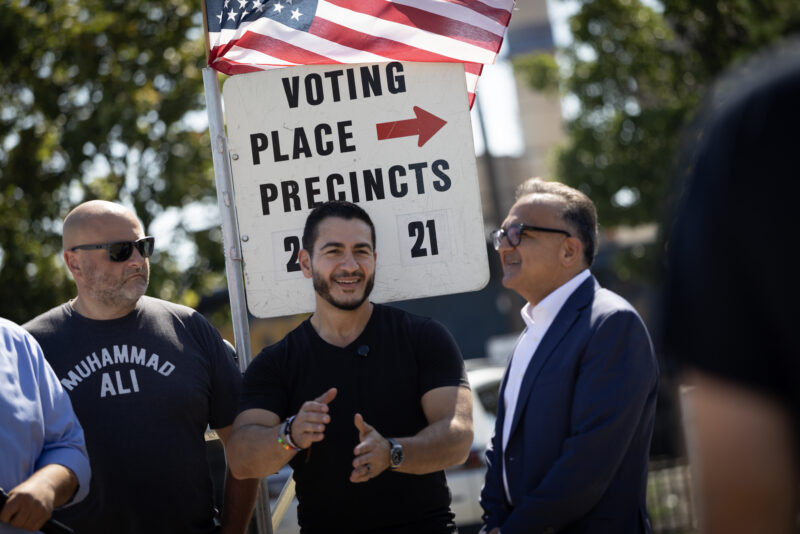
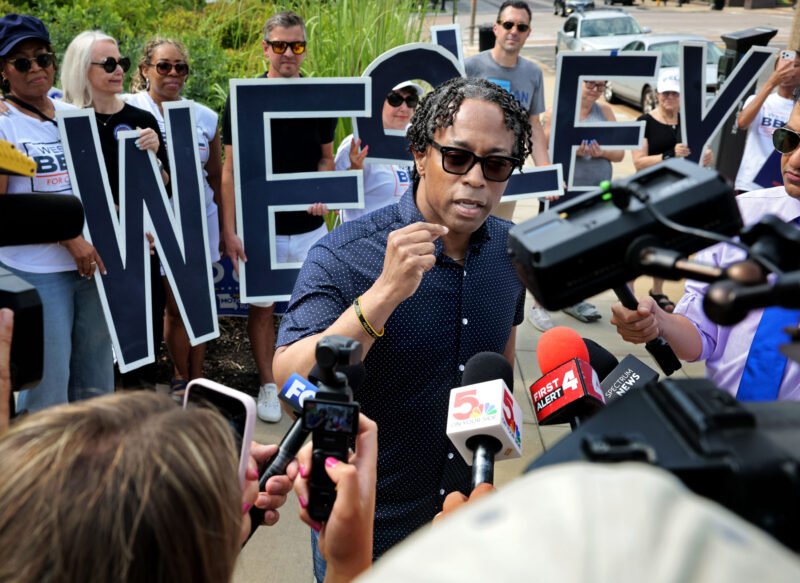
Claims by New Jersey congressional candidate Adam Hamawy that the Gazan hospital where he volunteered as a trauma surgeon in 2024 during Israel’s war with Hamas was a “completely benign civilian hospital with no tunnels underneath it” are false, The Washington Free Beacon reports.
While Hamawy claimed in an interview shortly after he returned that “there were definitely no tunnels underground and no command base there,” Hamas leader Yahya Sinwar was killed a year later “in a tunnel directly under the hospital emergency department, where he was leading a high-level meeting with senior Hamas terrorists,” the Free Beacon writes…
All five of Pennsylvania’s living former governors, both Democrats and Republicans, released a statement today calling on state officials to prioritize the safety and security of Gov. Josh Shapiro, Jewish Insider’s Gabby Deutch reports.
The letter came days after state Treasurer Stacy Garrity — Shapiro’s leading Republican opponent in this year’s gubernatorial race — said the state will not pay for security upgrades made to Shapiro’s privately owned family residence, done after the state-owned governor’s mansion was targeted in an antisemitic arson attack last spring…
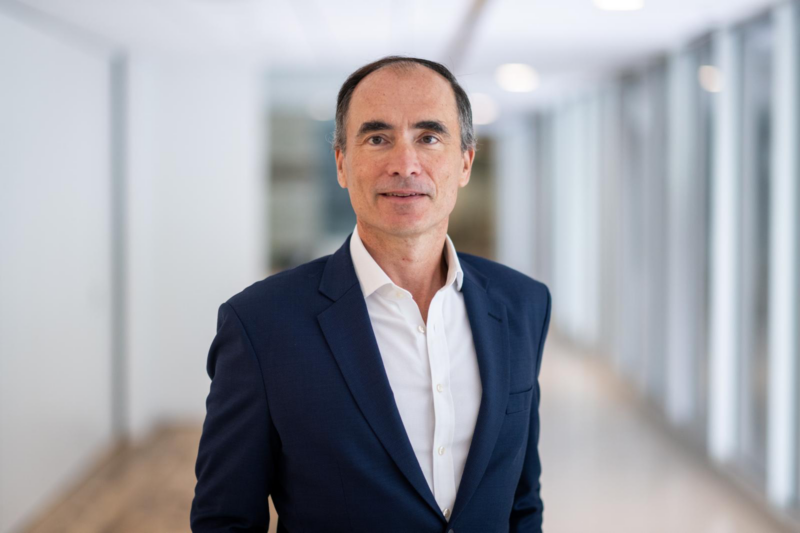
The New York Times chronicles Google co-founder Sergey Brin’s turn away from the Democratic Party and increasing political involvement, including against the proposed “billionaire tax” in his home state of California.
“I fled socialism with my family in 1979 and know the devastating, oppressive society it created in the Soviet Union. I don’t want California to end up in the same place,” Brin told the Times. Brin, who is Jewish, has also been disturbed by the Democratic Party’s leftward shift on Israel policy…
Toronto-based Jewish advocate Adam Hummel argues in the “Boundless Insights” Substack that “anti-Zionism” is an obsolete position, given the 78-year-old existence of the State of Israel.
“Israelis don’t owe anyone an argument for their existence. … The debate is over, not because one side won, but because the thing itself came into being. They are a people. They speak a language. They live on a piece of land and have mortgages. That is what peoples do. The Greeks do it. The Poles do it. The Québécois do it. The arguments about whether they should are, at this point, a leisure activity for people who live elsewhere”…
⏩ Tomorrow’s Agenda, Today
An early look at tomorrow’s storylines and schedule to keep you a step ahead
Keep an eye out in Jewish Insider for a profile of Keith Sonderling, the acting secretary of labor, who is Jewish and the grandson of Holocaust survivors, following the resignation of Secretary Lori Chavez-DeRemer.
The Zionist Rabbinic Coalition will present its first “Pillar of Zion” award to Rep. Steny Hoyer (D-MD) at the organization’s fifth annual National Conference in Washington. Other speakers at the three-day conference will include Israeli Ambassador to the U.S. Yechiel Leiter; State Department antisemitism envoy Yehuda Kaploun; Assistant Attorney General for Civil Rights Harmeet Dhillon; and Jonathan Schanzer, executive director of the Foundation for Defense of Democracies.
Stories You May Have Missed
REPORTER’S NOTEBOOK
Hiding under a table at the White House Correspondents’ Dinner

‘Two thoughts ran through my head. The main one: I’m getting married in six days. I can’t die now. The second: I can’t believe this is happening to me again’
FOLLOW THE MONEY
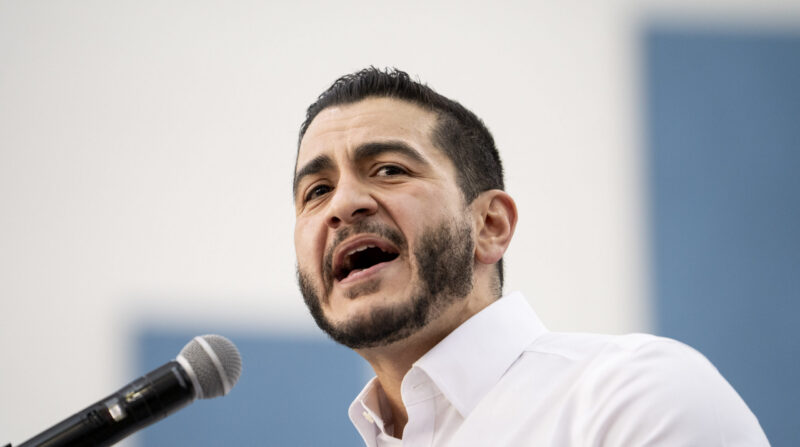
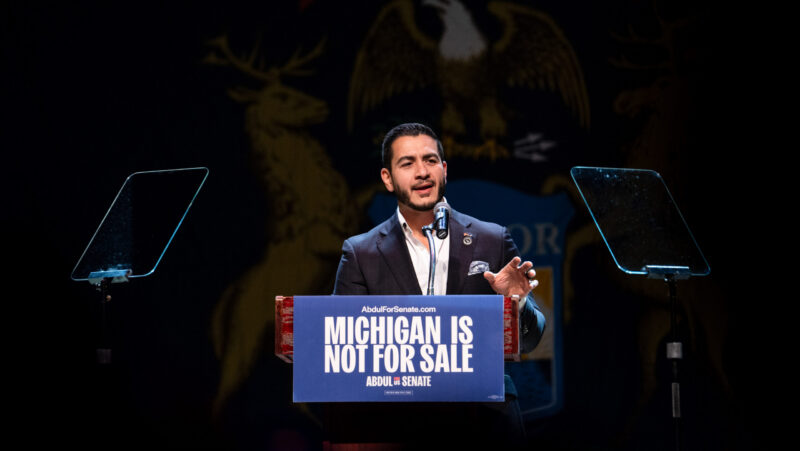
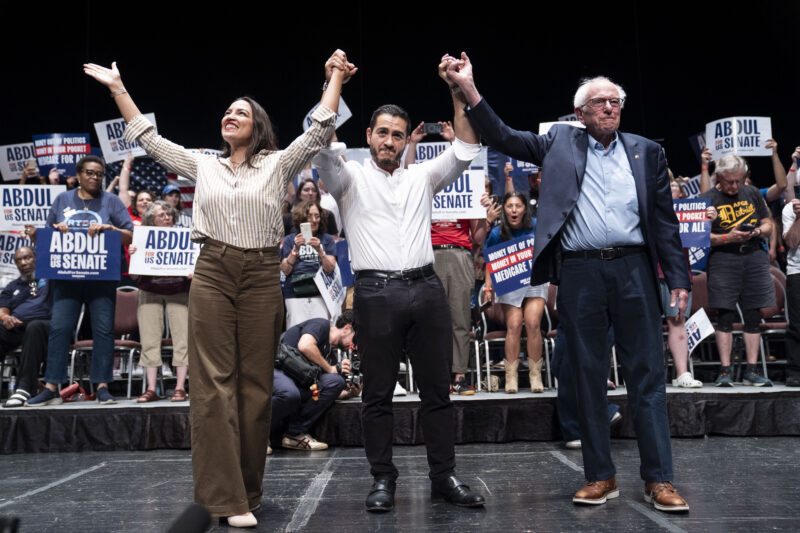
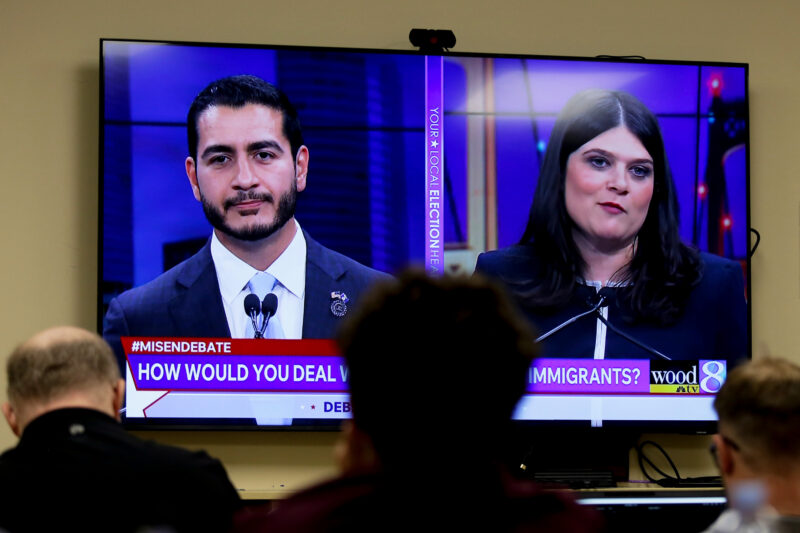
Abdul El-Sayed brings in campaign cash from head of Hamas-cheering group
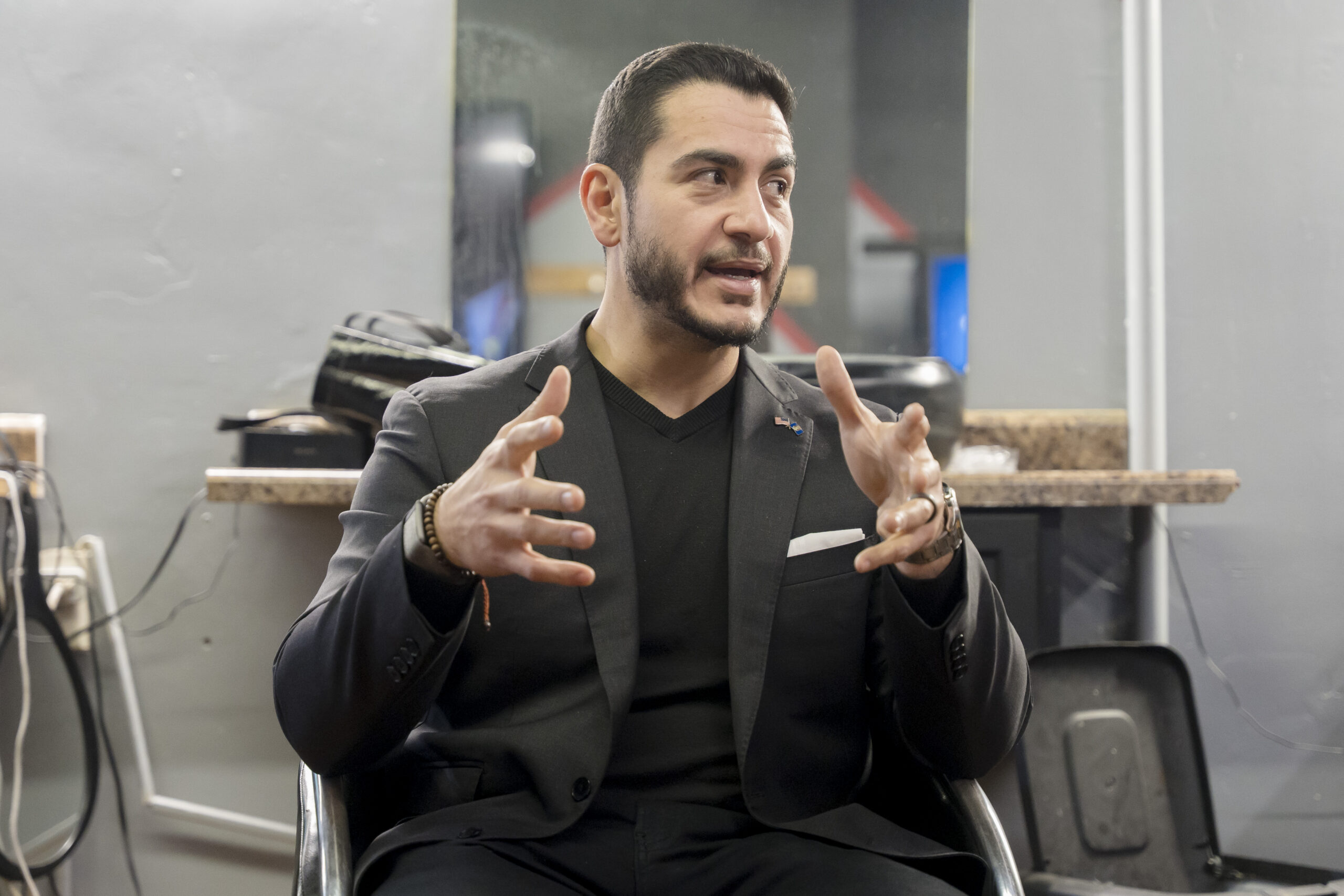
The Michigan Senate contender accepted $7k from the chair of Al-Awda/PRRC — and hired her son
Plus, half of young Americans view Israel as a burden
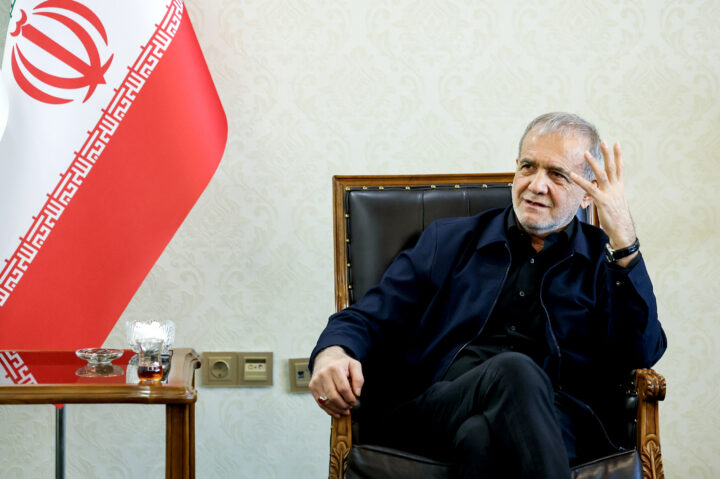
Iranian Presidency/Handout/Anadolu via Getty Images
Iranian President Masoud Pezeshkian delivers a speech on April 19, 2026.
This P.M. edition is reserved for our premium subscribers like you — offering a forward-focused read on what we’re tracking now and what’s coming next. Please don’t hesitate to share your thoughts and feedback by replying to this email.
📡On Our Radar
Notable developments and interesting tidbits we’re tracking
Talks between Israel and Lebanon, which are currently underway, were moved from the State Department to the White House. Vice President JD Vance and Secretary of State Marco Rubio were spotted arriving there together this afternoon, and a White House official told Jewish Insider that President Donald Trump would greet the participants at the opening of the discussion…
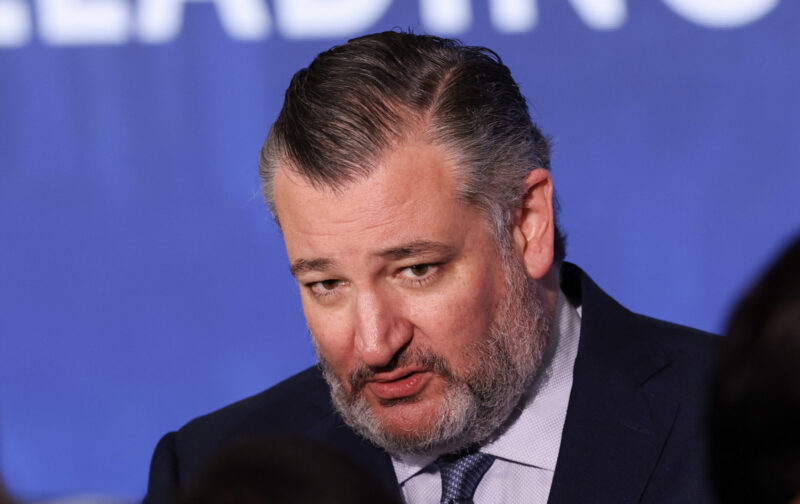
U.S. Ambassador to Israel Mike Huckabee, who returned to Washington in order to participate in the talks, also stopped by Capitol Hill where he met with Sen. Ted Cruz (R-TX)…
While the bombing campaign in Iran is on pause, the battle at sea continues: U.S. forces boarded another vessel carrying Iranian oil in the Indian Ocean this morning and Trump said he had ordered the U.S. Navy to “shoot and kill any boat” placing mines in the Strait of Hormuz — just as a third U.S. aircraft carrier arrived in the region…
Trump also said Iran is “having a very hard time figuring out who their leader is,” indicating the regime may still be struggling to present the U.S. with a unified proposal. “The infighting is between the ‘Hardliners,’ who have been losing BADLY on the battlefield, and the ‘Moderates,’ who are not very moderate at all (but gaining respect!),” he claimed.
In response, Iranian parliament Speaker Mohammad Bagher Ghalibaf and President Masoud Pezeshkian, both considered relative moderates, issued nearly identical statements on X pledging “complete obedience to the Supreme Leader”…
Iranian officials tell The New York Times their new supreme leader, Mojtaba Khamenei, is alive but injured, and so far ruling differently than his late father; the younger Khamenei is relying on Islamic Revolutionary Guards Corps commanders to provide him advice to make decisions “as though he is the director of the board.”
Khamenei’s injuries are extensive and he is largely inaccessible in person: “One leg was operated on three times, and he is awaiting a prosthetic. He had surgery on one hand and is slowly regaining function. His face and lips have been burned severely, making it difficult for him to speak, the officials said, adding that, eventually, he will need plastic surgery”…
U.S. officials are expressing concern over the military’s ability to defend Taiwan from China in the near future should the need arise, given that the U.S. has burned through more than 1,000 Tomahawk missiles and more than 1,500 air-defense missiles in the course of the war with Iran so far, supplies that could take up to six years to replace…
Israeli Foreign Minister Gideon Sa’ar named Israel’s first Christian ambassador, George Deek, as the country’s special envoy to the Christian world, JI’s Lahav Harkov reports, after several recent controversies in Israel relating to Christians. Deek is part of the Arab Orthodox Christian community in Jaffa…
Sen. Elissa Slotkin (D-MI) joined other Michigan Democrats in denouncing Amir Makled, a Democratic nominee for regent of the University of Michigan, over Makled’s past comments expressing antisemitic sentiments and support for terrorism.
“I’m going to have a problem with any candidate — Democrat, Republican or independent — who shares antisemitic and hateful posts on social media. Especially when they refuse to disavow those comments or show remorse,” Slotkin said in a statement to JI’s Marc Rod, in response to a question about Makled…
Defense Secretary Pete Hegseth did not give advance notice to senior Republican senators before announcing yesterday that he was firing Navy Secretary John Phelan, causing surprise and confusion on Capitol Hill. “I found out about it the way everybody else did,” Senate Majority Leader John Thune (R-SD) told JI’s Emily Jacobs and Marc Rod of the Pentagon’s announcement on social media of Phelan’s dismissal.
Trump praised Phelan in a post on Truth Social this afternoon and said he’d “certainly like to have him back within the Trump Administration sometime in the future” — Phelan had reportedly bumped heads with Hegseth but had a close relationship with the president…
Nearly half of young American adults view Israel as a burden to the United States, according to a new Harvard Youth Poll of 18- to 29-year-olds. The survey found that 46% of young Americans consider Israel to be mostly a burden to the U.S., compared to just 16% who say Israel is mostly a benefit, JI’s Gabby Deutch reports.
In addition, Ukraine, which has also received U.S. support in its lengthy war with Russia, was also determined to be more of a burden by young Americans — 31% of respondents said Ukraine is mostly a burden, while 21% said it is mostly a benefit…
The Wall Street Journal‘s Matthew Hennessey issued a defense of Elliot Kaufman, a member of the Journal‘s editorial board, after Trump slammed him on Truth Social as an “idiot” and a “moron.”
“What triggered the president’s ire was an op-ed under Mr. Kaufman’s byline headlined ‘The Iranians Take Trump for a Sucker.’ That’s a provocative title, yes, but the piece delivers on the provocation. Mr. Kaufman wasn’t calling Mr. Trump a sucker; he was merely pointing out that the Iranians are acting like they think he is one. The piece offers plenty of recent evidence to support that claim,” Hennessey wrote…
American journalist Shelly Kittleson details in The Atlantic her experience being kidnapped and held hostage by the Iran-backed Kataib Hezbollah terror group in Iraq for nine days earlier this month…
Former Disney CEO Bob Iger, who stepped down last month, is returning to Joshua Kushner’s venture firm, Thrive Capital, in an advisory role…
⏩ Tomorrow’s Agenda, Today
An early look at tomorrow’s storylines and schedule to keep you a step ahead
Keep an eye out in Jewish Insider for an interview with Rep. Tom Suozzi (D-NY) as he introduces a buffer zone bill in Congress, which follows legislation under consideration in New York and elsewhere, aiming to protect attendees at houses of worship.
Washington is abuzz ahead of the White House Correspondents’ Dinner, being held at the Washington Hilton on Saturday night. The event will be headlined by American Israeli mentalist Oz Pearlman and attended by Trump for his first time as president, alongside celebrities (including Trump fan Nicki Minaj), politicians and media figures. Politicos and reporters will schmooze at events beginning this evening through Sunday morning.
We’ll be back in your inbox with the Daily Overtime on Monday. Shabbat Shalom!
Stories You May Have Missed
SHAPIRO SPOTLIGHT
Josh Shapiro supports U.S. aid to Israel, but calls to use it as leverage
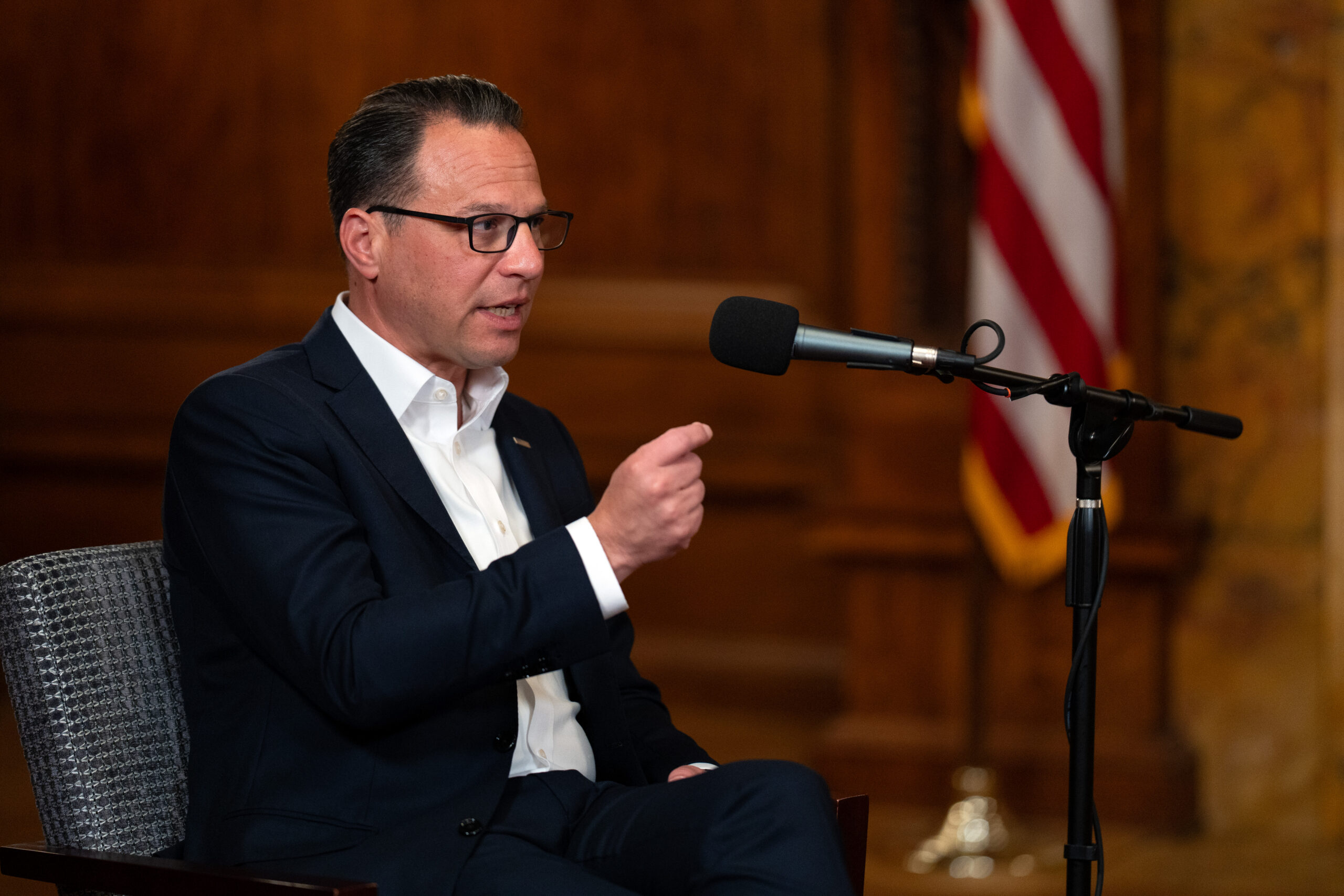
In an interview with JI, Shapiro said he ‘[hasn’t] really thought about’ whether he would appear on Hasan Piker’s stream but that he hasn’t been invited
DEFINITION DEBATE
Mamdani won’t set definition of antisemitism after repealing IHRA, his antisemitism czar says
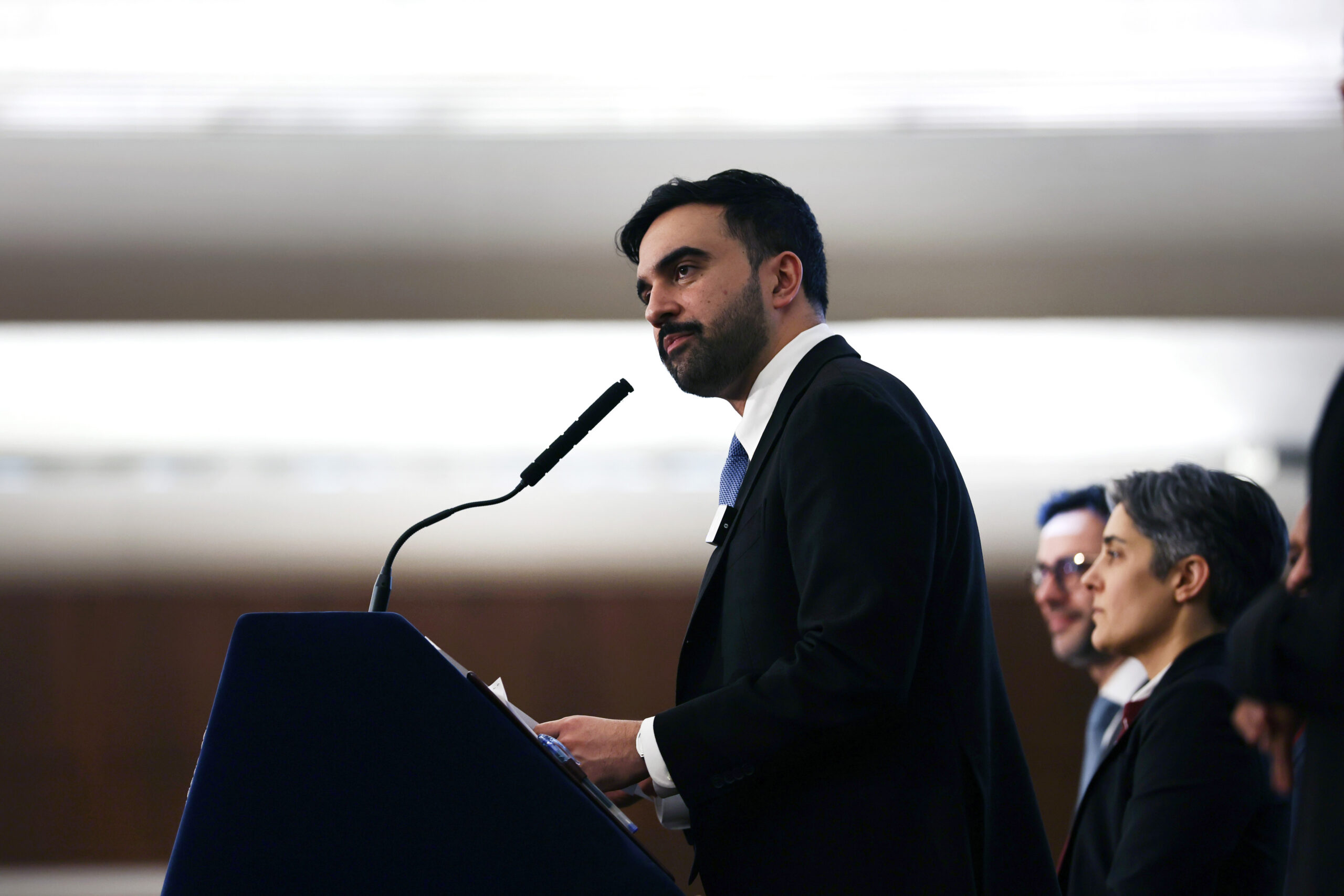
In testimony before the City Council’s antisemitism task force, an NYPD official said Mamdani played no role in a controversial change in reporting data from hate crimes
Plus, Dems concerned over fraying Israel-Europe ties

Gage Skidmore
Elizabeth Warren
This P.M. edition is reserved for our premium subscribers — offering a forward-focused read on what we’re tracking now and what’s coming next. Please don’t hesitate to share your thoughts and feedback by replying to this email.
📡On Our Radar
Notable developments and interesting tidbits we’re tracking
White House Press Secretary Karoline Leavitt maintained this afternoon that President Donald Trump is “generously offering a bit of flexibility” to Iranian leaders and has not given them a “firm deadline” to provide a proposal to the U.S., contrary to reports that said Trump only intended to wait a few days before ending the ceasefire that he extended yesterday.
Leavitt also said the president did not view Iran’s seizure of two ships near the Strait of Hormuz today as a violation of the ceasefire: “These were not U.S. ships. These were not Israeli ships,” she said — a change in tone for Trump, who has taken a hardline against Tehran’s escalatory actions in the key waterway.
Meanwhile, mediating countries are reportedly working to get Tehran and Washington back to the negotiating table, with a meeting possibly on Friday. Iranian President Masoud Pezeshkian said Iran “has welcomed dialogue and agreement and continues to do so,” but that “breach of commitments, blockade and threats are the main obstacles” to continuing talks…
Even as negotiations to end the war are still in flux, Trump thanked Iran for granting his request not to execute eight women who were reportedly due to be killed by the regime tonight, instead releasing four of them and holding the other four in jail for one month…
The Financial Times profiles Pakistani army chief Asim Munir as he emerges as an unexpected key mediator between the U.S. and Iran, utilizing his ties to Tehran’s security establishment — including the Islamic Revolutionary Guard Corps — and personal rapport with Trump to help secure a comprehensive deal…
Former Secretary of State Mike Pompeo is keeping the door open to a possible 2028 presidential run, saying “only the good Lord knows” what comes next as he continues to reestablish himself in the private sector and policy world after serving in the first Trump administration.
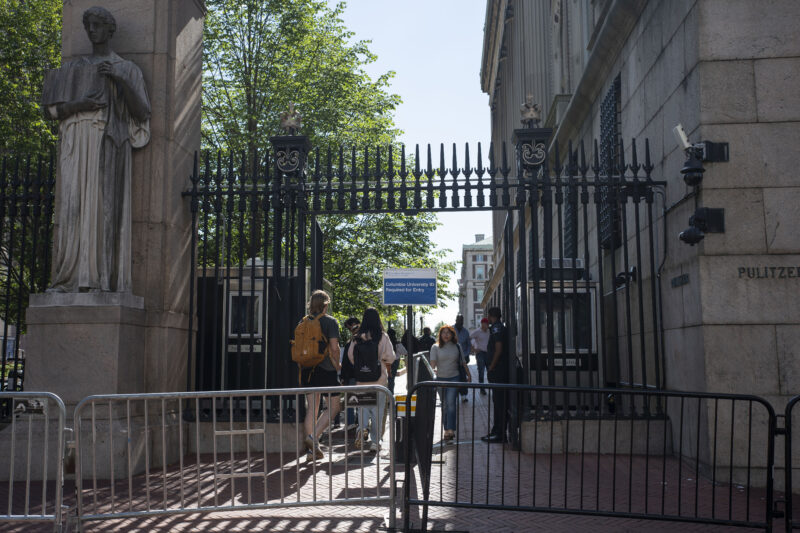
In a wide-ranging interview with Jewish Insider’s Emily Jacobs, Pompeo also praised Columbia University, where he now teaches at the School of International and Public Affairs, for “beg[inning] to get back the correct leadership … in a way where more voices can be heard”…
U.S. Ambassador to Turkey Tom Barrack stood by his comments that drew criticism over the weekend in which he repeatedly criticized Israel and praised Turkey, saying he was merely “stating the obvious.”
“When I described the Israel-Hezbollah ceasefire as a ‘time out’ and said that ‘everybody has been equally untrustworthy,’ I was simply stating the obvious reality on the ground. This is realism, not criticism of any side,” Barrack told Fox News Digital. He also reaffirmed his comments that the goal in Lebanon is “not killing Hezbollah,” and that Turkey should be readmitted to the F-35 fighter jet program…
A group of Jewish District of Columbia residents gathered at the city’s municipal building today for a scheduled meeting with Janeese Lewis George, a D.C. councilmember and one of the leading candidates in this year’s mayoral race, but she never showed, two people who were in the meeting told JI’s Gabby Deutch.
A staff member for Lewis George told attendees at the start of the meeting that she was having a busy morning, and they should begin the conversation without her. At the end of the meeting, when Lewis George still had not arrived, the staff member apologized that she could not attend…
New York City Council Speaker Julie Menin warned this morning that if Mayor Zohran Mamdani vetoes the council’s legislation intended to regulate protests at religious and educational sites, the city will face “more divisiveness,” calling the decision a critical test for the mayor, JI’s Haley Cohen reports.
Menin, New York City Comptroller Mark Levine and Manhattan Borough President Brad Hoylman-Sigal, speaking at 92NY on the future of Jewry in New York, beseeched the Jewish community not to flee despite tensions with the mayor. “This is not a time to lose hope. Hopefully the three of us here can embody the future of the commitment to fighting antisemitism, the commitment to supporting the Jewish community,” Menin said…
Rep. Tom Suozzi (D-NY) is set to introduce a federal buffer zone bill, similar to that of the New York City Council, alongside Anti-Defamation League CEO Jonathan Greenblatt on Friday, as Suozzi seeks reelection to his swing-district seat on Long Island…
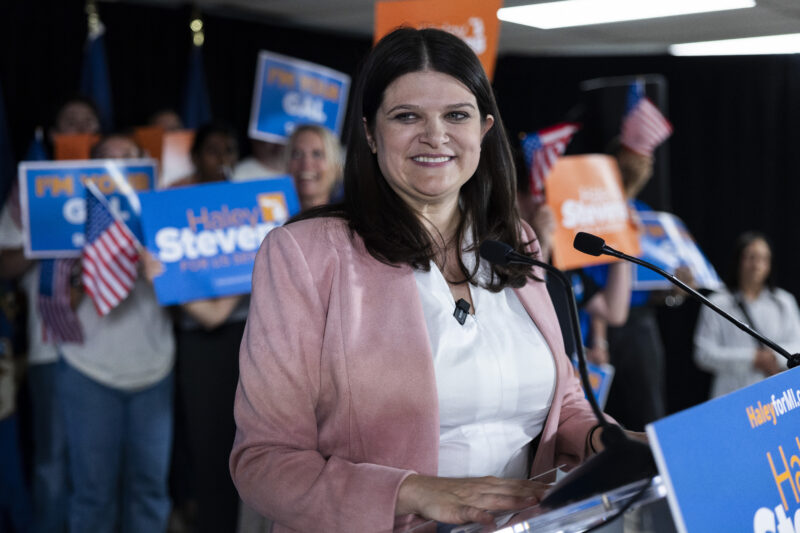
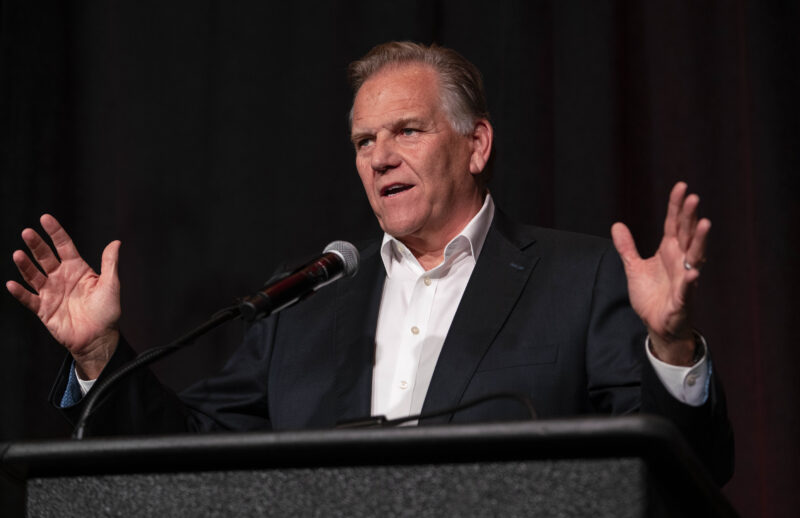
Democratic lawmakers and strategists are expressing concern over the rising popularity of far-left Michigan Senate candidate Abdul El-Sayed, fearing that if he clinches the Democratic nomination, he would lose in a general election to former Rep. Mike Rogers (R-MI), the GOP front-runner, Semafor reports. Democrats must retain the Michigan Senate seat to have any hope of taking back the chamber in the midterm elections.
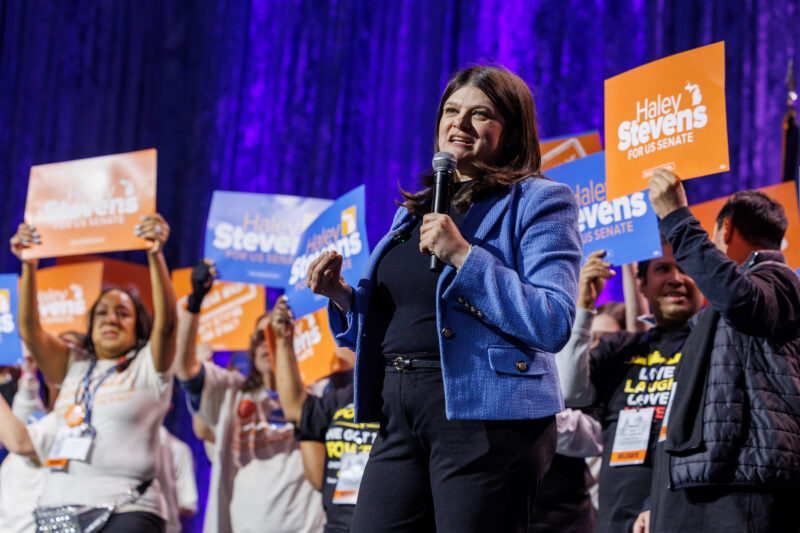
Rep. Hillary Scholten (D-MI), who is backing Rep. Haley Stevens (D-MI) in the race, told the outlet that “all three candidates are qualified, but dinged El-Sayed for campaigning with [Hasan] Piker and said ‘we are continuing to see consistent polling that suggests that Haley is the only one that can win in a general election’”…
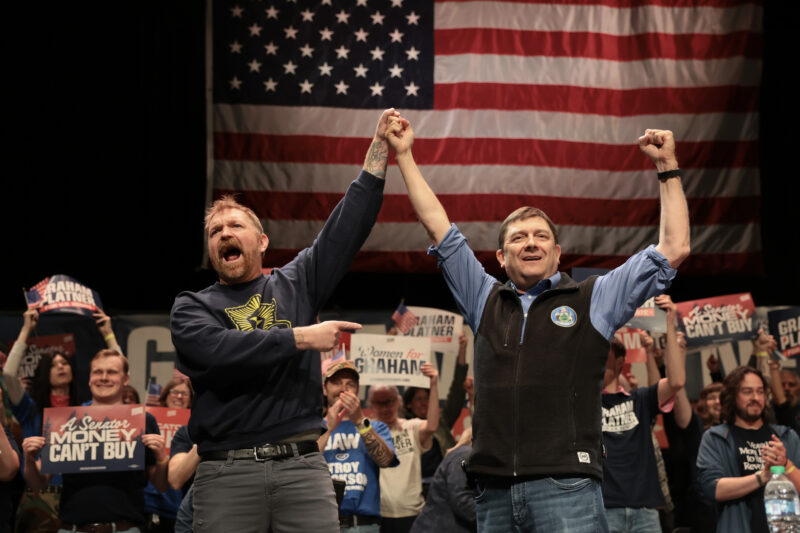
Maine Senate candidate Graham Platner said he would not support keeping Senate Minority Leader Chuck Schumer (D-NY) as the party’s leader in the chamber, naming as potential replacements Sens. Chris Van Hollen (D-MD), Mark Kelly (D-AZ), Chris Murphy (D-CT) or Brian Schatz (D-HI). He also said he would oppose a ban on semiautomatic assault weapons, a priority policy for much of the Democratic caucus…
Sen. Elizabeth Warren (D-MA) dismissed criticism of Platner after campaigning with him in Maine last weekend: Asked on CNBC about her comment that Platner is “my kind of man” given his past incendiary rhetoric and actions including his Nazi chest tattoo, Warren said, “He has apologized, he’s out meeting with the people of Maine every single day so they can evaluate not who Graham Platner was but who Graham Platner is today.”
Warren sidestepped a question specifically about Platner’s 2014 praise of Hamas tactics during an attack on Israeli soldiers, as reported by JI: “You guys want to be the party of inclusivity, right?” host Sara Eisen asked regarding the report. “I want to be the party that stands up for hardworking people,” Warren answered…
Schumer dodged a question yesterday asking if he is on the wrong side of his party after most Democratic senators voted in favor of blocking arms sales to Israel — a measure he opposed. “Our caucus is united and focused on ending the war in Iran,” he said, and touted Democrats’ war powers resolutions before walking away…
Rep. David Scott (D-GA) died today at 80. Scott, who voted on the House floor last night, had been running for reelection for his 13th term…
⏩ Tomorrow’s Agenda, Today
An early look at tomorrow’s storylines and schedule to keep you a step ahead
Keep an eye out in Jewish Insider for the results of this afternoon’s war powers resolution vote in the Senate, which is expected to be blocked by Republicans as the previous four were.
Israeli Ambassador to the U.S. Yechiel Leiter and Lebanese Ambassador to the U.S. Nada Hamadeh will meet at the State Department tomorrow for the second round of direct talks between the two countries. Lebanon is reportedly seeking a one-month extension to the ongoing ceasefire, which is set to expire on Sunday; Hezbollah, which has said it is not bound by the agreement, has continued to fire rockets and a drone at Israeli troops in southern Lebanon.
Paramount Skydance CEO David Ellison will host an exclusive dinner honoring President Donald Trump and CBS News’ White House correspondents at the recently renamed Donald J. Trump Institute of Peace. Ellison is currently seeking regulatory approval of Paramount’s deal to acquire Warner Bros. Discovery.
The Jewish Democratic Council of America will host a candidate forum for New York’s 17th Congressional District featuring leading candidates Beth Davidson, a Rockland County legislator, and Cait Conley, a national security veteran.
Stories You May Have Missed
DEM DIVIDES
Jewish Dems vow to keep fighting in Michigan, even as they question if they belong
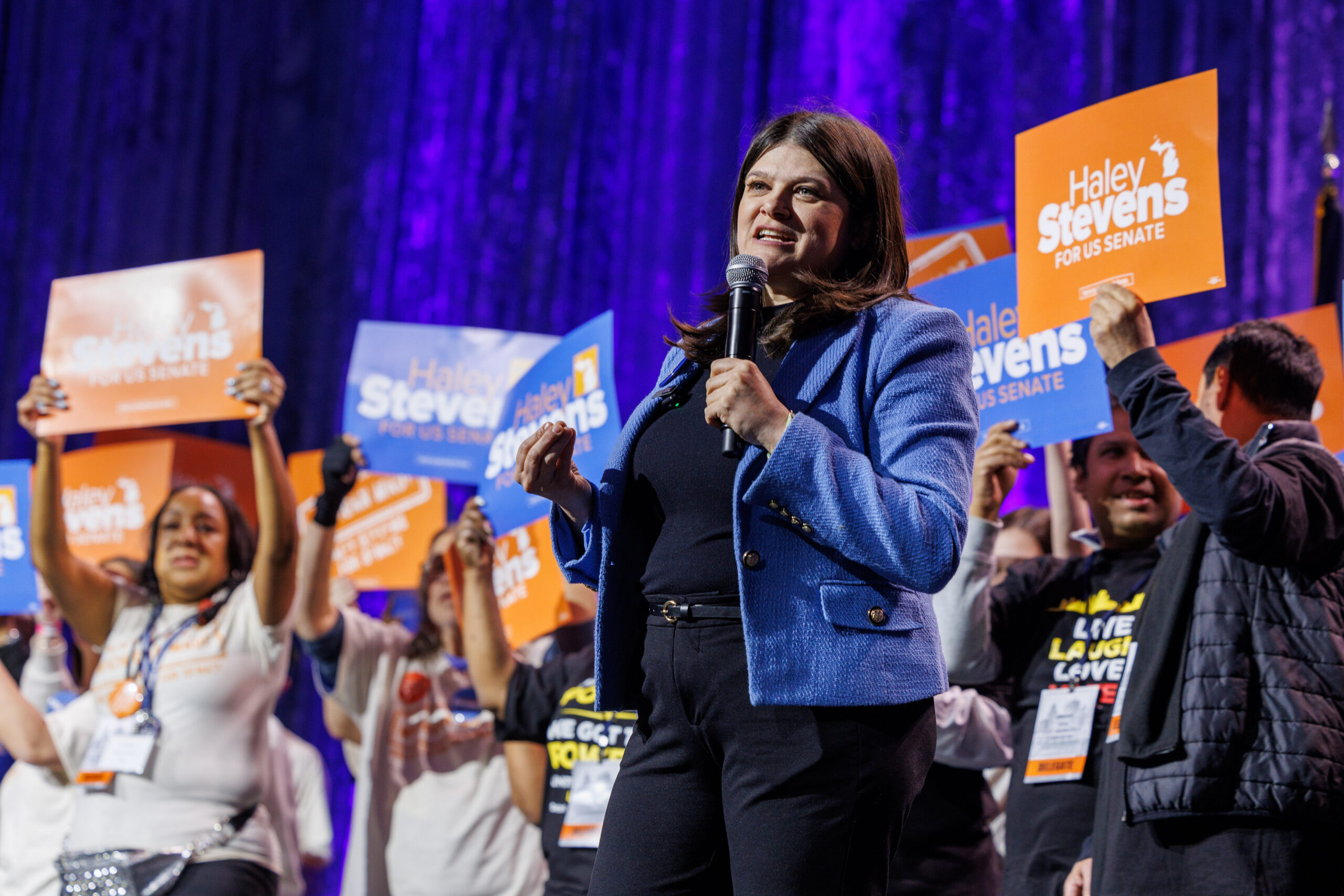
Jewish Democrats described a ‘shell-shocked’ atmosphere at their statewide convention that saw marked hostility to pro-Israel voices
CAMPAIGN CLASH
Ex-Democratic Socialists of America official working as top consultant to Osborn, Platner
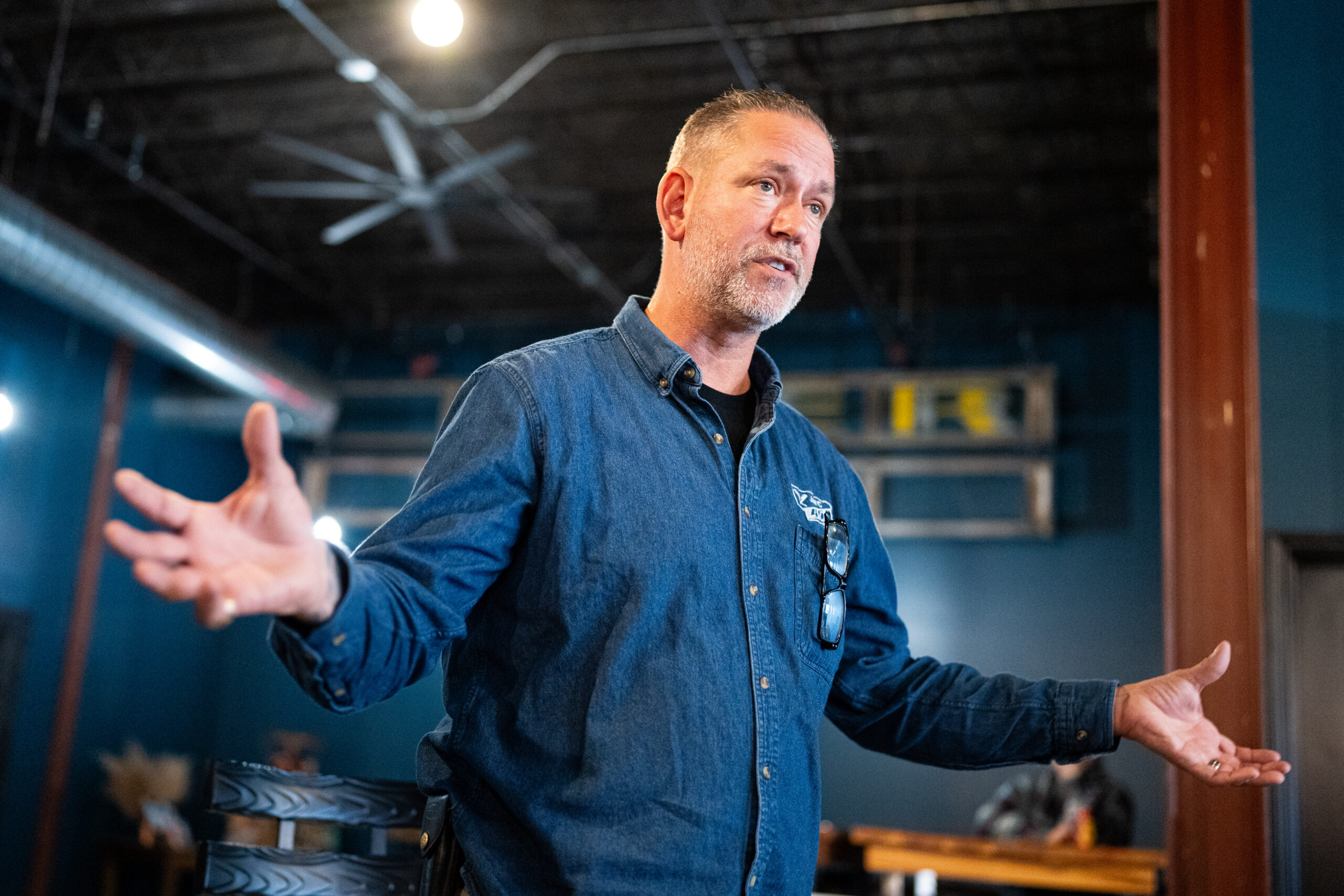
Daniel Moraff also recruited Rep. Summer Lee, a leading anti-Israel Democrat, to pursue her political career
Trump’s former top diplomat sat down with JI to discuss the U.S. war in Iran, backsliding support for Israel among young Americans, and how he’s looking at the midterms

Siavosh Hosseini/SOPA Images/LightRocket via Getty Images
Former Secretary of State Mike Pompeo speaking at a conference titled "Iran: Organized Resistance, Key to Overthrow" held at the National Council of Resistance of Iran (NCRI) headquarters in January 2025.
Former Secretary of State Mike Pompeo is keeping the door open to a possible 2028 presidential run, saying “only the good Lord knows” what comes next as he continues to reestablish himself in the private sector and policy world after serving in the first Trump administration.
In a wide-ranging interview with Jewish Insider, Pompeo emphasized that there will be a “donnybrook” of competing visions for both parties in the next election cycle, and urged candidates to focus on “important issues” rather than online theatrics. He also praised Columbia University, where he now teaches at the School of International and Public Affairs, for “beg[inning] to get back the correct leadership … in a way where more voices can be heard.”
The conversation came one day after Pompeo made a brief visit to the State Department for a private ceremony unveiling his official portrait. The gathering included an appearance by Secretary of State Marco Rubio, who delivered remarks to the crowd on his predecessor’s tenure as the chief U.S. diplomat.
This interview has been condensed and edited for clarity.
Jewish Insider: What’s your message to the current Iranian leadership if you were traveling to Islamabad, Pakistan, on behalf of President Trump to negotiate an end to the war in Iran?
Mike Pompeo: My message would be that you’ve lost. You’ve lost the people of your country, who no longer want you to lead. You’ve lost the capacity to project terror around the world. You’re about to lose any capability to use nuclear weapons to continue to blackmail the world. The Strait [of Hormuz] is going to be reopened. You’re going to miss payroll in just a few weeks, because you’re not going to be able to ship product and receive currency that is usable in foreign exchange, and people will stop doing their jobs.
You miss payroll enough times and all of a sudden, Hezbollah decides it’s not as great a fighting force, or the Shia militias, or the knuckleheads in Yemen, the Houthis. They’ve all become hooked on Iranian money.
There is a solution that is different to that. It’ll mean you’re not in power. It will mean that you lose. It will mean that you personally lose power, but the other alternative is that you will be killed.
JI: Do you think that the president made the right decision by reentering negotiations with the Iranians when he did, or do you think there are targets he should have hit beforehand, for military or diplomatic leverage?
Pompeo: I think the blockade is sufficient to merit another try. Look, I’m deeply skeptical. I’m not sure there is a decision maker in Iran today. I think there are multiple fractured decision making processes and lots of confusion.
I don’t know that he needed to go after additional targets. The denial of their capacity to move product through the strait is a very significant impact on them, but I do think it’s the case if, in fact, the Iranian regime cannot coherently present a resolution that will look and feel to them like surrender … — because they’re going to give up the entirety of their nuclear program, they’re going to have to stop funding their proxy forces, their ballistic missile program is gone, their industrial base will have to be shut down and redirected towards commercial activity, not terror; that will feel like surrender to them — then I think the president will have to begin to go back at some of those industrial targets that continue to pose risk to Israeli and American servicemembers that are in the region, and more broadly, to commercial activity that needs to move through the region as well.
JI: We’re seeing a lot of reporting about various terms that the Trump administration has purportedly offered Iran in these talks, specifically when it comes to the enrichment of uranium. There have been reports suggesting the U.S. proposed a 20-year moratorium on Iran’s enrichment program, while others allege a 10-year pause is being discussed. What do you make of these reported offers and, more broadly speaking, what would a good deal look like to you?
Pompeo: Color me cynical, but having lived as a secretary of state for two and a half years, when I see that reporting — and I don’t have first hand knowledge — I suspect that is someone playing games.
I put no credit in anything that I read in The New York Times or The Washington Post, only in the sense that they don’t know or they heard from a single individual that wasn’t actually representing the holistic view of the U.S. government. I spend no time thinking about those. I do spend a lot of time thinking about what “good” looks like. Good is infinity.
I’m also practical as someone who was a practitioner. I get it. You don’t ever get forever, but you don’t put external constraints on duration when it comes to something as serious as a regime that is in power with the capacity to inflict enormous harm on the world, with a conventional force that is serious and a nuclear capability that is real.
There’s two things. One, you can’t pay them. That’s what President Obama, then President Biden tried to do, send pallets of cash to buy your way out of this solution. The regime is not for sale. Second, I think it’s also the case that you can’t falsely give them hope that says, ‘You’re going to be able to return to status quo in five years, 10 years, 20 years from now. I think it’s the case that we’ve reached the moment where now this is a durational change in the nature of the regime.
Maybe some of the names will be the same, maybe the good spirit will move them and they will become a normal nation again. These are the things we hope and pray for as Jews and Christians, but we also do it with the knowledge that it is unlikely, and that means we have to change the leaders that are actually directing activities inside of the country.
JI: Do you think NATO has handled this moment and responded to President Trump deciding to take action in Iran well? The president is vocally frustrated with them and thinks they’ve been a thorn in the administration’s side.
Pompeo: We all know that you figure out exactly who’s with you in times of stress. This is true in our personal lives. It’s true in our professional lives. It’s certainly true in sovereign interactions.
Putting aside NATO for the moment, the way some of the European nations have behaved is absolutely abhorrent. I get that they weren’t brought in at the beginning and how that makes it complicated and it creates hurt feelings, but this isn’t about feelings. This is about national sovereignty and the safety of their own citizens.
Whether it was Spain or another nation that wouldn’t do so much as to be quiet and allow our aircraft to fly through their space, for someone who has been a staunch defender of NATO, because I believe deeply it has been important to the United States of America and to global security, to watch a leader of a country cozy up to China while the United States is doing its level best to save the very security for his own citizens is deeply indecent.
I hope there will come to be an understanding that America is indeed the good guy in this all throughout Europe and many nations in Europe, that’s why I hesitate to broad brush NATO. Many nations in Europe have actually been great and have done their best with the tools that they have available. Others have chosen a path that is very different from that. I think that will be something that takes a long time to rebuild — the trust with those countries — and they’ll have to demonstrate that they are worthy of partnership with Israel or the United States or the West.
JI: Are you still facing death threats from Iran or has your standing with Tehran changed as a result of the war?
Pompeo: As far as I know, they have not lifted the fatwa on me, so yes. We still do our level best to have adequate security to keep me from being killed by the Iranians, who have repeatedly said that they would like to see me go away.
JI: How would you grade Israel as an ally, both historically and in the last few years in the post-Oct. 7, 2023, landscape?
Pompeo: First, the United States and Israel have sovereignty, they’re independent of each other, and a different set of priorities and a different set of understandings on particular matters, very full stop. Second, they are the most fundamentally important ally and a great partner and enormous friends and important to the United States in so many deep ways.
As a Christian, this matters to me, but more importantly as a security matter, I had no better partner than the Israeli intelligence services when I was CIA director and Prime Minister Netanyahu and the foreign policy and security team inside of Israel when I was secretary of state. They did so many things to help America, often when it was difficult and much more in our interest than theirs.
That doesn’t mean we’re not going to have knock down, drag out fights over certain things. I’m sure that’s going to be true. We’ll have different target priorities, and that’s normal. It would be odd if you didn’t find that, but boy, I don’t know that the United States has ever had a closer military and security relationship than today between the United States and Israel, and I think the Iranians found that out the hard way.
They saw us flying together. They saw us intelligence sharing together. They saw the hard work that is the logistical tail that sits behind all of this. It doesn’t get much glory, but you’ve got to move a lot of ammo, a lot of fuel, a lot of people, a lot of stuff. We did that alongside Israel, and it would have been very difficult for either of us to have achieved what’s been achieved today without the other.
JI: With that in mind, we’re seeing a real shift in attitude, especially with young people, both in the Democratic and Republican parties on supporting Israel. What’s your reaction to this and what do you think was the catalyst for this change? Do you attribute it to negative feelings about the war on terror in the 2000s? What role do you think antisemitic figures in the podcast space play?
Pompeo: The causation is so difficult to identify. I think probably each of those has some element of impact and shaping. Israel has always been a flashpoint because of the conflict between Israel and the terrorists, but it’s been framed as a Palestinian-Israeli conflict, with Israel pitched to most of the world as the bad guy in that. My judgment is nothing could be further from the truth.
Israel has simply wanted to live as a sovereign, independent nation. It’s made many offers. The Palestinian Authority rejected them for decades. I think that has worn on a certain piece of the intelligentsia, the American left and some pockets on the right for sure. Some of it’s rooted in antisemitism, almost certainly. Some of it’s rooted in that it’s popular. It’s cool on a campus because the faculty is all talking about the genocidal horrors inflicted by Israel, which, I mean, it’s just patently false. I think each of those things contribute to it.
My prayer and my hope is, and I think this will prove to be true, that in the end, decent people who are part of Western civilization can identify evil from good, and will see the difference between the two. They may not like a particular strike that the United States takes somewhere where innocent civilians are killed — it’s true, as collateral [damage], it happens — but they will be able to see the difference between genocidal intent, that is driven by the Iranian regime around the world, and a desire for peace, which is driven by nations like the United States and Israel.
That means those of us who see it that way have a duty to try and articulate it, to explain it, to be relentless in articulating why that’s true, not to call people names, not to mock them, but rather to make the arguments, to use reason to convince them of reality and of the truth about what’s really taking place there. I pray one day that the bad guys will lay down their weapons, because the moment they do, the reality will be before us all. There will be peace.
JI: Staying on politics, there’s a lot of trepidation from Republicans on Capitol Hill about how the November midterms are going to play out. Do you share that concern?
Pompeo: Having served in Congress, having been elected four times, I’m always mindful that this conversation isn’t that important. What’s really important is that you work your tail off, and you, the candidates, have the first responsibility, and the rest of us try our best to help them.
It is the case, I think, that there’s a lot of energy in the progressive movement on the left today. I think that energy is there that sometimes has been more on our side. When I got elected in 2010, we had 74 brand new Republicans in districts we hadn’t won in years and years, so there was more energy. I think the next six months require us to go build that energy. If we build that energy, I think we’ll do better than the mean.
These midterms are always tough for the party that’s in control. No reason to think that historical change will take place, but if you work hard and tell a story properly, which is that these conservative ideas will deliver better outcomes for America, then we’ll do better than I think some of the fearmongers are predicting.
JI: Do you worry about the situation in the Middle East hurting Republicans in November?
Pompeo: You’ve seen that already. You’ve seen Sen. [Chris] Murphy (D-CT) do this. You’ve seen Sen. [Bernie] Sanders (I-VT) do this. They’re already trying to say: ‘This was a war of choice. President Trump failed. This is a disaster. Look how expensive gasoline is.’ So yes, this will be part of the political conversation, but that just means you have to go and articulate the why of this.
I know how people are struggling, and I feel bad when I see gas prices high for everybody too, especially the least amongst us, but I’d remind them we just have lived in this false state for so long where we thought we could just ignore this problem when it had to be solved. If the price of that, of solving that and keeping Americans for decades to come from Iran with a nuclear weapon, then to pay a little bit more at the gas pump for a little while is an acceptable cost, in my view.
I think most Americans actually get that, and they just need to understand the why and the how. When explained, I think they’ll come to the same conclusion I do, that this was a noble and important decision that President Trump made, and that it is, in the long run, better for them and their children and their grandchildren. We [Republicans] shouldn’t play politics with it either, because this is about national security, but we should articulate the rationale for why this is the best outcome for every American, Democrat and Republican alike.
JI: How are you looking at the 2028 Republican presidential bench? Do you see yourself being a part of that race?
Pompeo: It’s gonna be a donnybrook on both sides. I think there will be lots of candidates who present themselves, and I love that. As for what comes for the Pompeo family next, only the good Lord knows. We’ll see. I have a brand new grandson, I’m loving life, but we’ll see.
But I will say something that I do think is really important about the 2028 election. I hope it’s fought over important issues in a rational way. I hope the progressives show up and make their best arguments to the American people, and that the center-left and center-right do the same, and the MAGA folks and the right wing, just everybody don’t do memes, don’t tell fibs, don’t think, ‘Gosh, I was really good. I owned a lib on X.’ That might bring a sugar high, but what it doesn’t do is really deliver for the American people. I hope the campaign will turn out to be about things that really matter and be discussed in a serious way, and if so, I always have confidence the American people will get it right.
JI: What are the next steps for you in your career?
Pompeo: I’m back in the business world. It’s what I did for most of my life, before I ran for Congress. I’m involved with a private equity firm. I’m helping a couple other businesses as a board member, back in the capitalist mode, and that’s great because there’s lots of risk but lots of joy. … I’m keeping my hand in the policy space too. I teach at Columbia University and at Liberty University, two very different institutions, and I love them both, each in their own way. Then I’m trying to help some candidates be successful in these midterm elections as well.
JI: We’ve covered Columbia closely at JI since Oct. 7, and it’s notable for them to have a voice like yours join their faculty. On that front, what’s your take on the lack of campus protests or encampments against the Iranian regime? We’re not seeing the same type of protests we saw against Israel taking place against Iran.
Pompeo: It’s a great question. It got out of control because of failed leadership. The institution’s leaders failed those students. They didn’t keep the students safe. They didn’t set the correct boundaries.
We all want to protect First Amendment freedoms. That’s what college is about. Knock yourself out. You can say crazy stuff, but you can’t threaten and you can’t put other students at risk, and you can’t blockade classrooms so the students can’t enter. That’s just functionally terrible leadership.
I think what you’re seeing is some of these institutions have begun to get back the correct leadership, and I think they’ve actually done it in a way where more voices can be heard.
I was at another liberal campus a few weeks back, and some of the conservative students were still saying to me that they felt like it was still difficult to speak up in class, and that the faculty was, they didn’t use the word oppressive, but they felt the faculty was difficult. I hope that veil will be lifted, and I hope those students and all students that have different views will all feel comfortable saying, ‘Here’s what I think, and here’s why I think that.’ Then somebody will challenge them and say, ‘Well, have you thought about X or Y,’ or ‘I see it differently.’ That’s what these institutions are all about. It’s what Columbia was when it was at its finest. That’s what Harvard and Dartmouth and Liberty all should aspire to.
Speaking at the World Affairs Council of New Hampshire, the former secretary of state said Trump’s decision to act militarily ‘delivered more security for our friends in Israel and made the world safer’
Siavosh Hosseini/SOPA Images/LightRocket via Getty Images
Former Secretary of State Mike Pompeo speaking at a conference titled "Iran: Organized Resistance, Key to Overthrow" held at the National Council of Resistance of Iran (NCRI) headquarters in January 2025.
Former Secretary of State Mike Pompeo praised President Donald Trump on Wednesday for his decision to strike Iran’s nuclear facilities over the weekend, pushing back on criticism from the isolationist right that the attack would embroil the U.S. in another prolonged conflict in the Middle East.
Pompeo appeared at the World Affairs Council of New Hampshire, a part of the New Hampshire Institute of Politics, for “Building Back American Deterrence and Strength in a Dangerous World.” The former secretary of state said during a moderated conversation with Tim Horgan, WACNH’s executive director, that the U.S. strikes served to prevent war rather than cause it.
“Make no mistake, President Trump’s decision to act … delivered more security for our friends in Israel and made the world safer. America reasserted its global leadership. We didn’t send the 82nd [bomb squadron] — we sent America,” Pompeo said.
Pompeo said that he believed the strikes by Israel and the U.S. on Iran’s nuclear facilities had restored deterrence in regard to both Iran and North Korea. “I do know this: [North Korean] Chairman Kim [Jong Un] is sitting a little less comfortably on his throne today,” he said.
Pompeo, who also served as CIA director from 2017-2018, said he rejected accusations from the progressive left and isolationist right that U.S. military engagement in recent decades had largely led to extended wars that failed to achieve any serious national security objectives.
“I’ve been called a neocon warmonger or worse. But for four years [when I was CIA director and secretary of state] we had no wars. It wasn’t because we were peaceniks and isolationists, it was because of our understanding of the things that matter to America,” Pompeo explained.
Pompeo also reaffirmed his belief in continued U.S. support for Ukraine in its war with Russia, arguing that the success of the Ukrainians would ensure the safety of Western nations.
“We have to win,” Pompeo said. “The West needs to win, Ukraine needs to win, Europe needs to win.”
The announcement comes at a time when Columbia faces continued scrutiny from the administration and Congress over antisemitic activity and accusations of political bias
Siavosh Hosseini/SOPA Images/LightRocket via Getty Images
Former Secretary of State Mike Pompeo speaking at a conference titled "Iran: Organized Resistance, Key to Overthrow" held at the National Council of Resistance of Iran (NCRI) headquarters in January 2025.
Former Secretary of State Mike Pompeo will teach a course at Columbia University this spring on diplomacy, decision-making and organizational leadership at the school’s Institute of Global Politics, a prominent conservative hire for the embattled Ivy League school.
“The Academy cannot be an ivory tower,” Keren Yarhi-Milo, the dean of the School of International and Public Affairs, told The Wall Street Journal, which first reported the appointment. “We should engage with the world because we learn a lot from engaging with practitioners with differing positions and ideologies who also ultimately can learn from us.”
The announcement comes as Columbia faces ongoing scrutiny from the administration and Congress over antisemitic activity on campus since the Oct. 7, 2023 Hamas attack on Israel and ensuing war between Israel and Hamas, and amid long-running accusations from some conservatives that elite institutions are silencing and sidelining conservative voices.
“I suspect that [Columbia’s] outreach was intentional in the sense that they were seeking to bring onto campus … someone with a view that is very different than most of the faculty on their staff,” Pompeo told the Journal.
Pompeo said that he seeks to “teach the next generation about the greatness of our nation” and that he wants to hold “fair, reasoned and fact-based discourse.”
Prior to serving as President Donald Trump’s second secretary of state, Pompeo led the Central Intelligence Agency and served as a member of Congress. He took a hard-nosed approach to the Iranian regime as secretary of state and was a vocal supporter of the U.S.-Israel relationship.
Pompeo fell out of favor with Trump after he didn’t endorse the president’s false claims that the 2020 election was rigged and condemned the Jan. 6, 2021, Capitol riot. Last month, Trump revoked Pompeo’s security detail that had been put in place to protect him from assassination attempts by the Iranian government.
Signatories include Kevin McCarthy, Lee Zeldin, David Kustoff, and Steve King

Gage Skidmore
U.S. Congressman Jeff Duncan speaking with attendees at the Conservative Review Convention at the Bon Secours Wellness Arena in Greenville, South Carolina.
Twenty-six Republican members of Congress signed onto Rep. Jeff Duncan’s (R-SC) letter to Secretary of State Mike Pompeo urging the State Department to pressure the government of Ukraine to allow Jewish pilgrims to visit the town of Uman for the holiday of Rosh Hashanah.
The announcement of the final list of signatories comes after a two-day extension of the signing deadline. Among the letter’s signatories are House Minority Leader Rep. Kevin McCarthy (R-CA), Foreign Relations Committee Ranking Member Rep. Joe Wilson (R-SC) andRep. Steve King (R-IA) — who was sidelined within the Republican caucus after controversial comments regarding white supremacy. Reps. Lee Zeldin (R-NY) and David Kustoff (R-TN), the only two Jewish Republicans in Congress, also signed onto the letter.
Duncan told Jewish Insider that he took up the pilgrims’ cause out of a desire to protect religious freedom.
“I have a deep respect for all people of faith, and I believe Ukraine had good intentions in crafting their travel restrictions,” he said in a statement. “But I also believe they need to find creative ways to accommodate people of faith in a safe and commonsense manner. Governments don’t have to choose between allowing religious expression and public safety, and believe this letter makes it clear that common sense steps can be taken to achieve both goals.”
“Even during times of uncertainty, governments should continue to allow maximum flexibility for religious expression and practice,” he added.
None of the other signatories responded to requests for comment.
The political consulting firm Stonington Global had circulated the letter around Capitol Hill to gather additional signatures from other members of Congress.
Stonington founder and Republican lobbyist Nick Muzin has deep ties to South Carolina, Duncan’s home state.
Muzin, an Orthodox Jew, previously served as a policy advisor and chief of staff for Sen. Tim Scott (R-SC), beginning more than a decade ago when the senator was a congressional candidate. Muzin advised Scott during his tenure in the House, and stayed with him after his appointment to the Senate in 2013. Muzin was also previously married to Andrea Zucker, whose mother, Intertech Group CEO Anita Zucker, is the wealthiest individual in the state of South Carolina.
“This is a religious freedom issue, and Jeff Duncan has always been a champion of religious freedom and Judeo-Christian values,” Muzin explained to JI.
Muzin dismissed health concerns raised by Ukrainian and Israeli government officials over this year’s pilgrimage.
“These travelers have offered to adhere to every health precaution that others who have been granted exemptions by the Ukrainian government are taking, so we hope that even in these challenging times, the Ukrainian government will respect American citizens’ right to worship,” he said.
28 Democratic senators and 8 Senate candidates in battleground states have publicly expressed opposition to Israeli annexation of parts of the West Bank

U.S. Senate Studio / Gage Skidmore
Minnesota Sens. Amy Klobuchar (D-MN) and Tina Smith (D-MN) have joined more than two dozen Senate Democrats publicly warning Israeli leaders of the implications of efforts to unilaterally annex portions of the West Bank. Israeli Prime Minister Benjamin Netanyahu has said that the government could start annexing territory as early as July 1.
In individual letters sent last month and made public over the weekend, both senators — Klobuchar addressed Secretary of State Mike Pompeo and Smith wrote to Netanyahu and Israeli Defense Minister Benny Gantz — posited that annexation would undermine efforts to attain a two-state solution.
Twenty-eight senators have so far spoken out against the annexation proposal.
Last month, 19 Democratic senators sent a letter to Netanyahu and Gantz urging the Israeli leaders not to move forward with the effort. That letter, which was updated several times before being sent, cautioned the new Israeli government that “unilateral annexation puts both Israel’s security and democracy at risk” and “would have a clear impact on Israel’s future and our vital bilateral and bipartisan relationship.” Sens. Dianne Feinstein (D-CA) and Bob Casey (D-PA) sent individual communiques to Netanyahu and Gantz, similarly opposing the move, and Sens. Michael Bennet (D-CO) and Maggie Hassan (D-NH) addressed the matter in individual letters to Pompeo.
In addition, Sens. Mark Warner (D-VA) and Catherine Cortez Masto (D-NV) issued statements against annexation, and Sen. Chris Coons (D-DE) indicated to Jewish Currents that instead of signing or authoring a letter on annexation, he would “communicate directly with [Israeli] Ambassador [Ron] Dermer and Israeli officials to express his concerns.”
On Monday, eight Senate candidates in battleground states are expected to join the list expressing their strong opposition to such a move. In statements provided to J Street and shared with Jewish Insider, the candidates — Cal Cunningham (North Carolina), Sara Gideon (Maine), Teresa Greenfield (Iowa), Al Gross (Alaska), Jaime Harrison (South Carolina), MJ Hegar (Texas), John Hickenlooper (Colorado), Amy McGrath (Kentucky) and Jon Ossoff (Georgia) — emphasized that annexation would put the future of a two-state solution at risk.
Read their statements in full here.
Earlier this month, House Speaker Nancy Pelosi (D-CA) warned that unilateral annexation “puts the future [of peace] at risk and undermines our national security interest and decades of bipartisan policy.” Presumptive Democratic presidential nominee Joe Biden also came out against annexation, saying it “will choke off any hope for peace.”
“From the presidential nominee to the speaker of the House and from the Senate to the senatorial campaign trail, Democratic leaders have now made absolutely clear that they do not and cannot support unilateral annexation in the West Bank,” J Street President Jeremy Ben-Ami told JI. “For annexation to move forward in the face of this overwhelming opposition would be incredibly harmful to the future of Israelis and Palestinians and to the US-Israel relationship.”
Please log in if you already have a subscription, or subscribe to access the latest updates.
 Continue with Google
 Continue with Apple