










































Vance: U.S. is ‘not at war with Iran’ but with its nuclear program
The vice president said the U.S. made the decision to strike Iran after assessing it was only using negotiations as a stalling tactic

Screenshot/NBC News
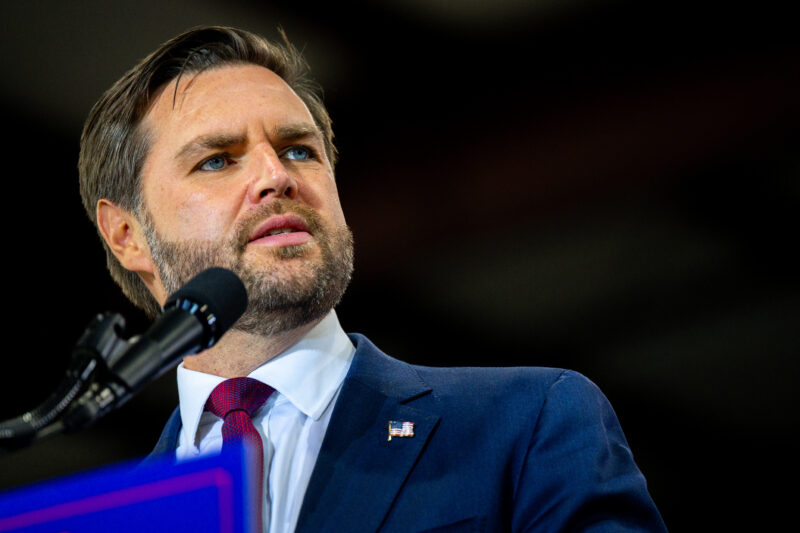
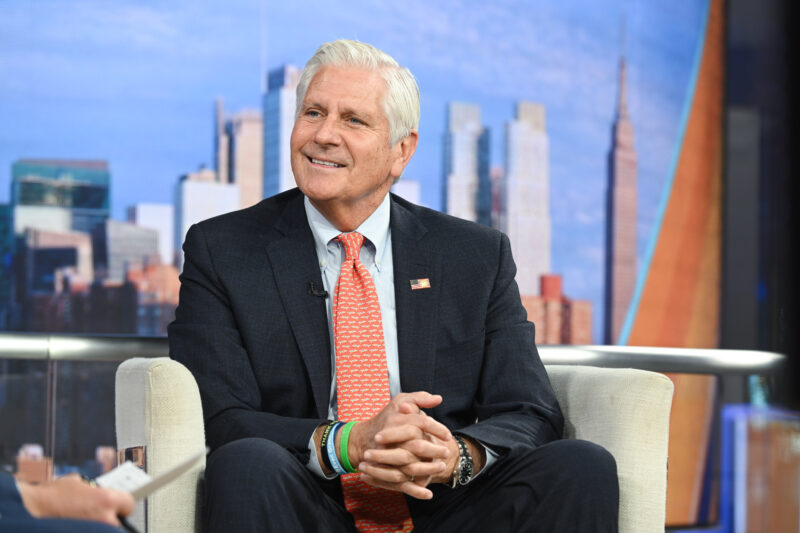
Vice President JD Vance speaks on NBC News' "Meet the Press" on June 22, 2025.


 Add JewishInsider on Google
Vice President JD Vance emphasized that the United States is “not at war with Iran” but instead “at war with Iran’s nuclear program,” in an interview with NBC News’ “Meet the Press” Sunday.
Vance also denied that the U.S. is seeking regime change in Iran but is instead seeking peace with a non-nuclear Iran. He said it’s up to Israel whether it wants to take its own action to kill Iran’s supreme leader, Ayatollah Ali Khamenei.
“Our expectation is we’re going to learn a lot about what the Iranians want to do, how they want to proceed over the next 24 hours,” the vice president said. “The president has said he wants, now, to engage in a diplomatic process. But if the Iranians are not going to play ball here, they didn’t leave as many options as it pertains to last night, and they won’t leave as many options in the future.”
He said that if Iran continues its nuclear program, continues to fund international terrorism and attacks U.S. forces, “it will be met with overwhelming force,” but it has the opportunity to rejoin the international community if it changes course.
“What would make sense is for them to come to the negotiating table, to actually give up their nuclear weapons program over the long term,” he reiterated. “And, again, if they’re willing to do that, they’re going to find a willing partner in the United States of America.”
He said the U.S. only took action after it became clear Iran was “stonewalling” in talks and was not serious about negotiations, instead using them as a tactic to build out their nuclear program. “Diplomacy never was given a real chance by the Iranians,” Vance said.
He said that Iran had “stopped negotiating in good faith” and that was “the real catalyst” for the U.S. strikes. Vance said the administration came to the conclusion that talks were stagnant in mid-May.
Vance added that the U.S. had a “limited window” in which to strike Fordow, and that such an operation may not have been feasible in six months.
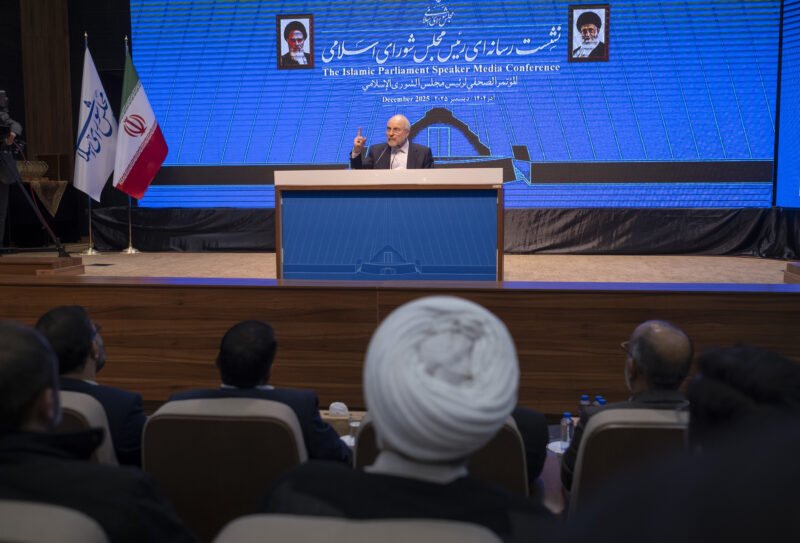
Asked about the possibility of Iran closing the Strait of Hormuz, a key waterway for the international oil trade, Vance said that such a decision would be “suicidal” for Iran. The Iranian parliament voted Sunday to close the waterway, but that decision will have to be approved by others in the regime.
“Their entire economy runs through the Strait of Hormuz. If they want to destroy their own economy and cause disruptions in the world, I think that would be their decision,” Vance said. “But why would they do that? I don’t think it makes any sense.”
Vance, who has been aligned with the “restrainer” foreign policy camp within the GOP wary of American military interventions, defended Trump’s actions from those critical that the strikes could lead the U.S. to get enmeshed in a protracted conflict in the Middle East once again.
”The difference is that back then, we had dumb presidents, and now we have a president who actually knows how to accomplish America’s national security objectives. So this is not going to be some long, drawn-out thing,” Vance said.
He said the U.S. has “no interest in boots on the ground.”
Vance emphasized on ABC News’ “This Week” that allowing Iran to achieve a nuclear weapon would not have generated peace in the Middle East.
“We can achieve peace much more fully than if we sort of sit on our hands and hope that somehow, if the Iranians get a nuclear weapon, they’re going to be more peaceful,” the vice president said. “That is a stupid approach, and the president rejected it.”
Vance asserted on “Meet the Press” that the raid had “substantially delayed” the regime’s ability to build nuclear weapons by “many, many years.”
“I’m not going to get into sensitive intelligence about what we’ve seen on the ground there in Iran, but we’ve seen a lot, and I feel very confident that we’ve substantially delayed their development of a nuclear weapon, and that was the goal of this attack,” Vance said. The vice president’s comments match an initial assessment provided by Pentagon leaders Sunday morning.
Vance added on “This Week” that the U.S. will have to “work in the coming weeks to ensure” that Iran’s stockpiles of highly enriched uranium are addressed.
“One of the things that we’re going to have conversations with the Iranians about. But what we know is they no longer have the capacity to turn that stockpile of highly enriched uranium to weapons grade uranium, and that was really the goal here,” Vance said, emphasizing that Iran’s enrichment capacity was the primary U.S. target.
“We’re now going to have a serious conversation about how to get rid of Iran’s nuclear weapons program permanently, meaning they have to choose not to have a nuclear weapons program, and they have to give this thing up,” Vance continued.
With congressional Democrats, and a small group of Republicans, denouncing the strikes as lacking the proper congressional authorization, Vance argued on “Meet the Press” that the president has the authority to “act to prevent proliferation of weapons of mass destruction.”
“The idea that this was outside of presidential authority, I think any real serious legal person would tell you that’s not true,” Vance said.
Asked about previous U.S. intelligence assessments that Iran was not actively building a nuclear weapon, Vance said, “There’s of course an open question about whether they were weeks away, whether they were months away. But they were way too close to a nuclear weapon for the comfort of the president of the United States, which is why he took this action.”
He said that the final decision had been made based on American, not Israeli, intelligence, and that U.S. intelligence concluded Iran was not interested in serious negotiations.
More Stories

RIYADH REFLECTIONS
Saudi pivot could have implications on antisemitism globally, Lipstadt contends

AI ALERT
ADL study finds leading AI models generate extremist content after antisemitic prompts
ON THE AGENDA
White House religious liberty commission to hold first antisemitism hearing next month

MICHIGAN MOVES
Haley Stevens maintains support for Israel as her primary rivals battle over anti-Israel lane
COMMUNITY CONCERN
Jewish leaders, lawmakers, scramble to protect synagogues amid threatening anti-Israel protests