







































Daily Kickoff: Previewing congressional amendments on Israel, Iran + Noah Arbit’s Michigan bid


 Add JewishInsider on Google
👋 Good Wednesday morning!
Ed. note: The High Holy Day publishing season continues. In honor of Yom Kippur, the Daily Kickoff will return on Monday.
For less-distracted reading over the long weekend, browse this week’s edition of The Weekly Print, a curated print-friendly PDF featuring a selection of recent JI stories, including: Bill Kristol’s evolution; J.D. Vance on Trump, Israel and his chosen faith; Michael Eisenberg is applying the lessons of the Torah to technology and business; and Noah Arbit wants to bring Jewish values to the Michigan statehouse. Print the latest edition here.
At the Four Seasons Hotel in Washington yesterday, the Abraham Accords Peace Institute held its first public event commemorating the one-year anniversary of the normalization agreement signed between Israel, the United Arab Emirates and Bahrain.
Speakers included Jared Kushner, former special advisor to President Donald Trump and the Institute’s founder, followed by a panel discussion featuring Israeli Ambassador to the U.S. and U.N. Gilad Erdan, UAE Ambassador to the U.S. Yousef Al Otaiba and Bahraini Ambassador to the U.S. Shaikh Abdulla bin Rashid bin Abdulla Al-Khalifa. The event was moderated by the Institute’s Executive Director Robert Greenway.
Referring to a new UAE goal to grow business ties with Israel to $1 trillion over the next decade, Otaiba remarked: “That’s a pretty ambitious forecast, but I think it’s achievable and is exactly what we need to get out of the pandemic” and quipped that if the number ends up being $750 billion that it would be a “pretty acceptable failure.” Erdan concurred and spoke of the possibility for the countries to jointly present a “different diplomatic solution” on Iran instead of the JCPOA.
Among the notable attendees at the event were 6-foot-10 Boston Celtics center Enes Kanter, a former Turkish national who campaigns against racism, and Egypt’s Ambassador to the U.S. Motaz Zahran, who later addressed the gathering at a luncheon, according to a video clip shared by author Joel Rosenberg. Acting Assistant Secretary of State for Near Eastern Affairs Yael Lampert also delivered remarks at the luncheon. Rep. Ted Deutch (D-FL) was also in attendance.
Secretary of State Tony Blinken will host a virtual event commemorating the signing of the Abraham Accords on Friday. Foreign ministers from Israel, the United Arab Emirates, Bahrain and Morocco are slated to participate in the event.
Israeli Prime Minister Naftali Bennett gave a blitz of wide-ranging interviews to Israeli media outlets on Tuesday evening. He spoke about his recent meetings with Egyptian President Abdel Fattah el-Sisi and Jordan’s King Abdullah II, telling one outlet that the creation of a Palestinian state would be a “terrible mistake.”
While Israel is willing to work with its allies to stop Iran from obtaining a nuclear weapon, Bennett said it would also work alone. “We presented, to our friends in the United States, a plan of action and also to partners in the region, and we would be happy if they acted with us,” Bennett told Channel 12. “But ultimately the responsibility is here with us, and we have to stop Iran from becoming nuclear at any price.
on the hill
More than a dozen Israel, Iran NDAA amendments proposed for House consideration

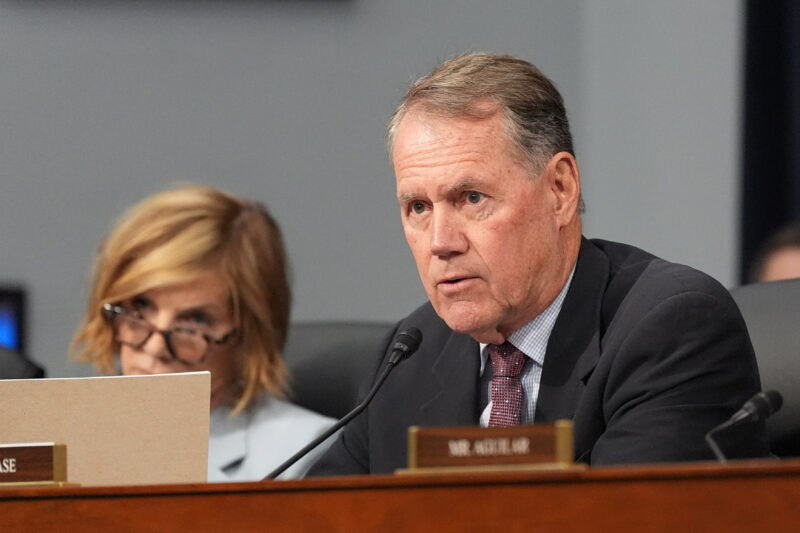
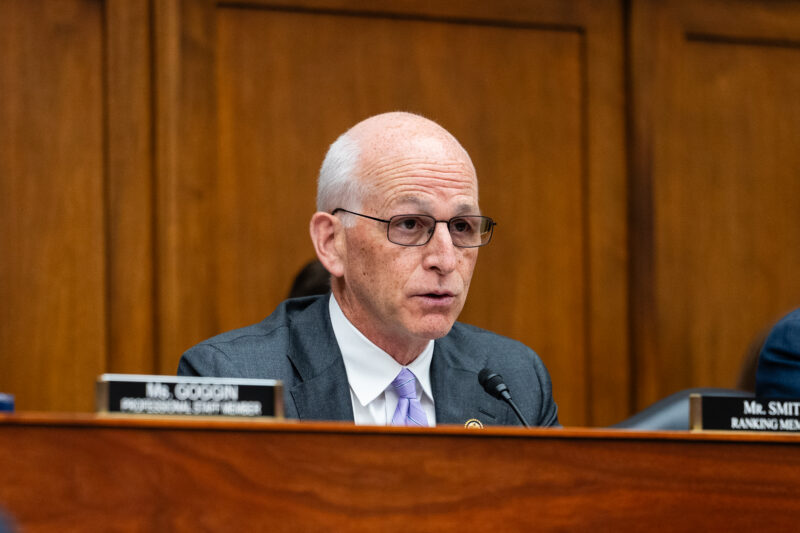
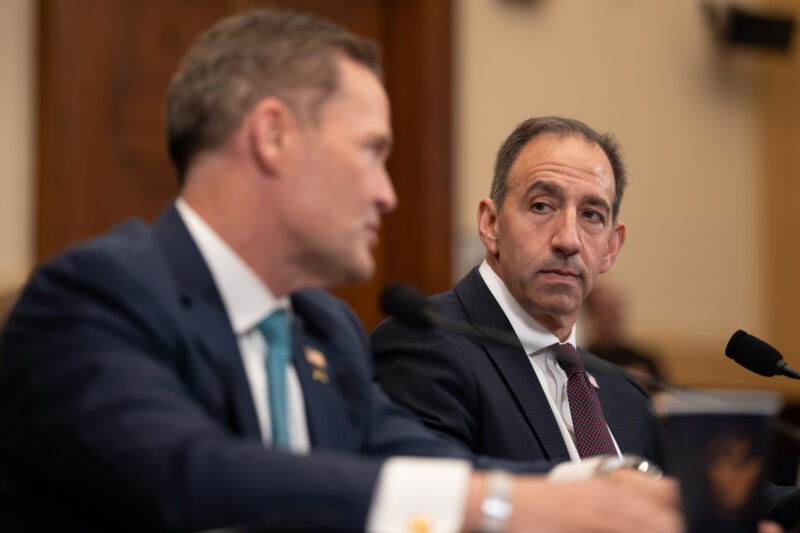
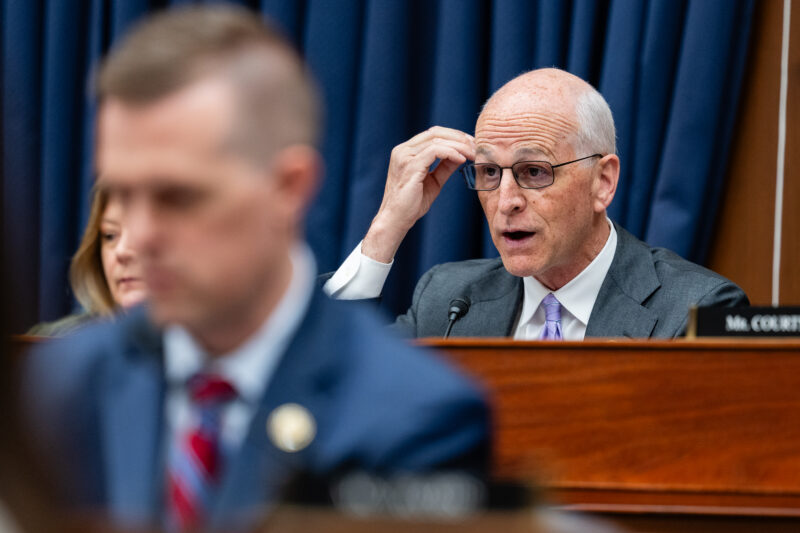
House Appropriations Committee members testify as the House Rules Committee meets to formulate a rule on the H.R.4502 appropriations bill on Monday, July 26, 2021.
Among the more than 800 amendments to the 2022 National Defense Authorization Act submitted for possible consideration on the House floor next week, more than a dozen address Middle East issues, including the U.S.-Israel relationship and Iran, Jewish Insider’s Marc Rod reports. The proposed amendments must first be approved by the House Rules Committee, which will likely meet early next week, before receiving consideration on the House floor. The amendment submission period closed on Tuesday afternoon.
Tech talk: Twoamendments propose new programs promoting U.S.-Israeli technology cooperation, including funding for joint cybersecurity partnerships and a joint artificial intelligence center. Both programs were introduced earlier this year as separate bipartisan bills in the House and Senate. “Cyberattacks are the preeminent threat of our time. In order to protect ourselves from cyber criminals, we must work closely together with our allies to strengthen our collective cyber posture,” Rep. Andrew Garbarino (R-NY), who proposed the cybersecurity partnerships amendment, told JI. Garbarino spokesperson Kristen Cianci said that, given the bipartisan support for the cybersecurity program in the House and Senate, they “feel that chances are good” the amendment will reach the House floor.
More cooperation: Reps. Brad Schneider (D-IL), Joe Wilson (R-SC), Stephanie Murphy (D-FL), Kathy Manning (D-NC) and Lois Frankel (D-FL) proposed an amendment requiring the creation of a U.S.-Israel defense technology working group for developing and acquiring weapons and other capabilities, pushing forward a program introduced in the 2021 NDAA. Wilson and Murphy sought to introduce the amendment in the Armed Services Committee, but House Foreign Affairs Committee Chair Gregory Meeks (D-NY) declined to provide the necessary waiver. A spokesperson for Manning told JI that the amendment’s sponsors feel it “has a good chance” of reaching the floor, though it is still early in the process.
Block attempt: Reps. Alexandria Ocasio-Cortez (D-NY), Mark Pocan (D-WI) and Rashida Tlaib (D-MI) are also attempting to block the transfer of $735 million in guided bomb equipment to Israel. Democrats critical of Israel, including the three House members and Sen. Bernie Sanders (I-VT), tried unsuccessfully to block the sale of the equipment during May’s conflict in Gaza. House leadership did not allow Ocasio-Cortez’s resolution on the issue to receive a floor vote in May.
Trying again: On Iran, Rep. Pat Fallon (R-TX) is making a second attempt to introduce an amendment eliminating a waiver to Iran sanctions that allowed trade between Iran and Afghanistan for the purposes of Afghan reconstruction. Fallon sought to introduce the amendment, which had bipartisan support and was backed by AIPAC, in the Armed Services Committee, but Meeks declined to provide a waiver for it.
wolverine politics
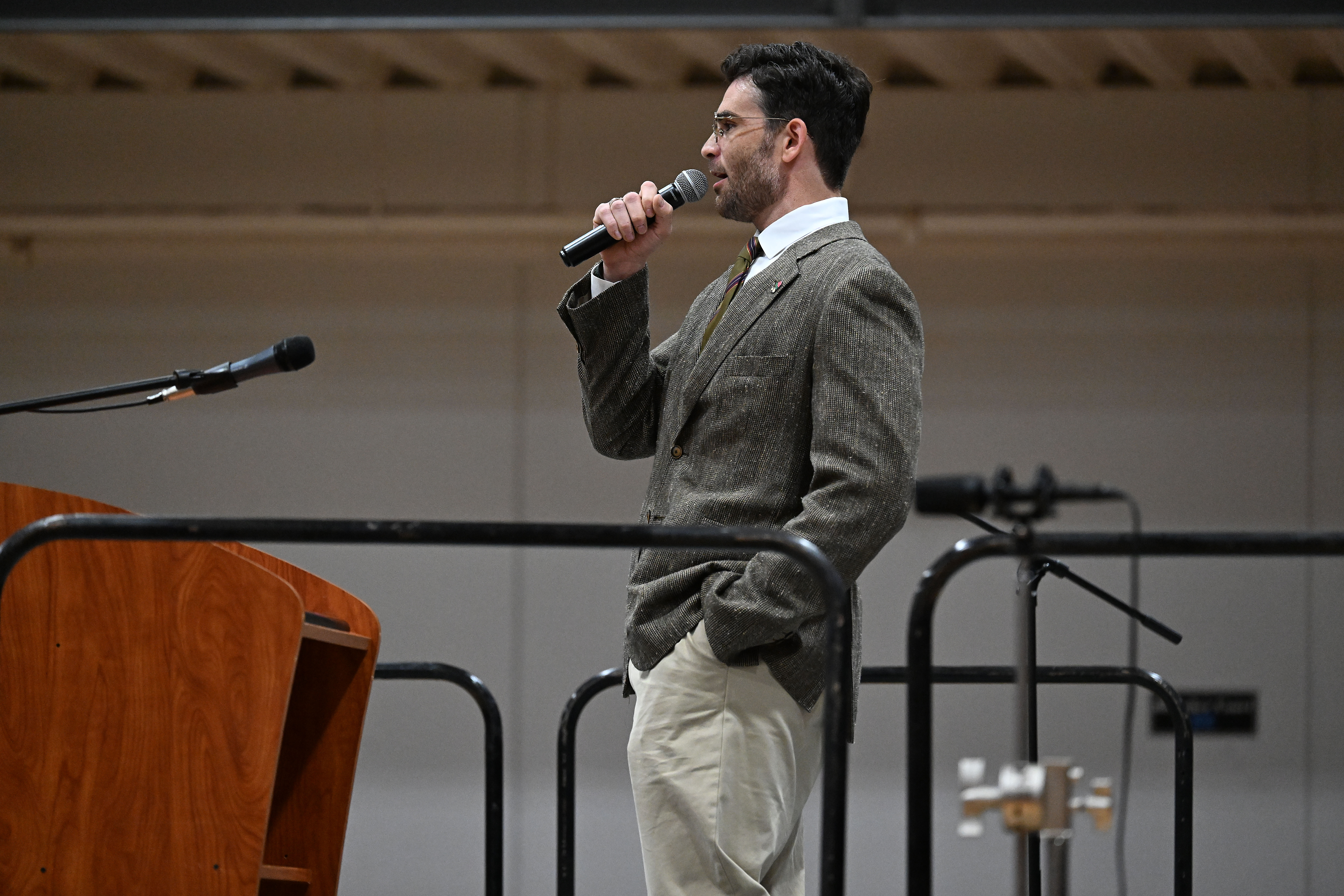
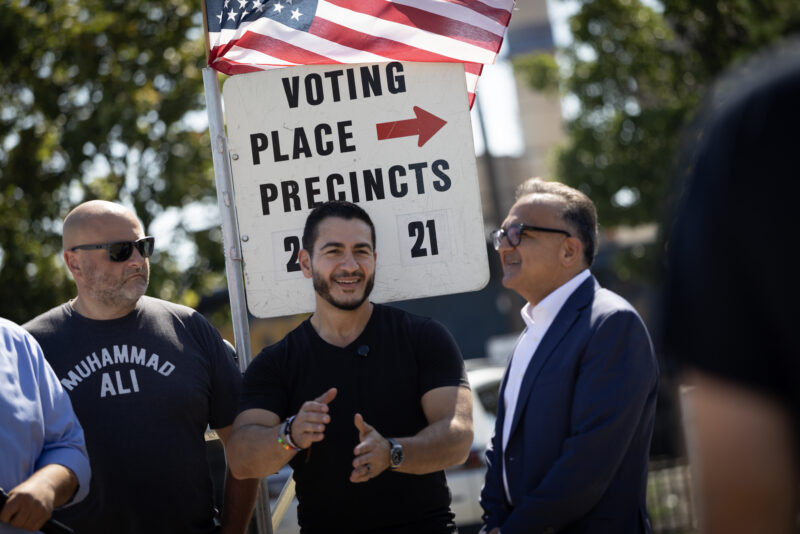
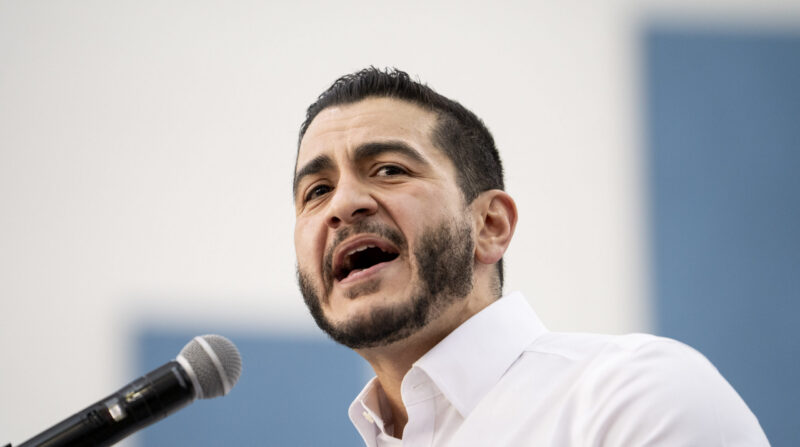
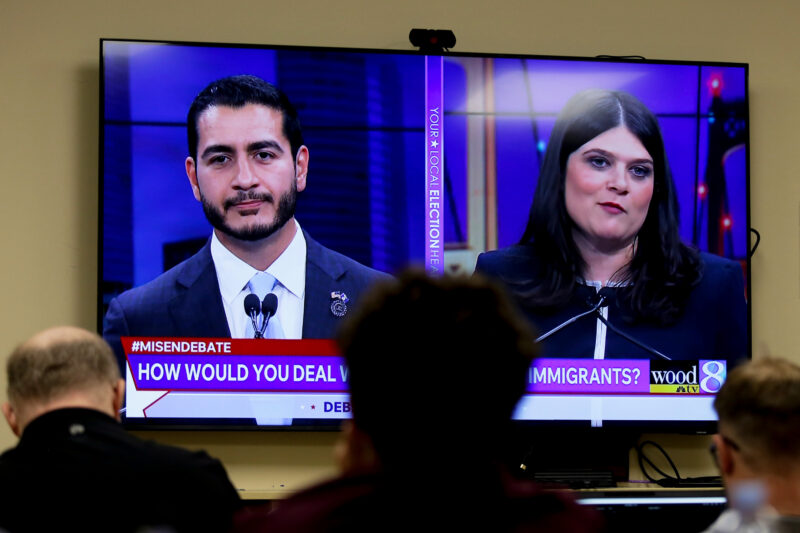
Noah Arbit wants to bring Jewish values to the Michigan statehouse

Noah Arbit
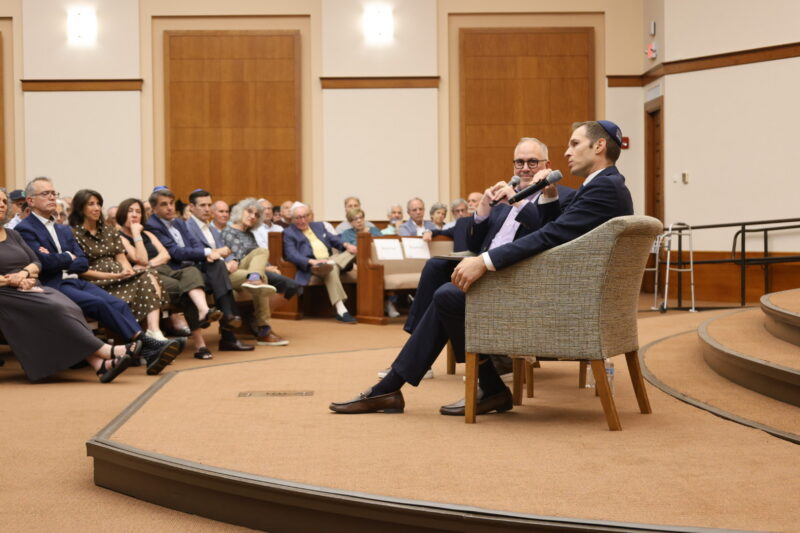
Noah Arbit founded the Michigan Democratic Jewish Caucus in 2019 with a goal of increasing Jewish representation in state politics. Now, the 25-year-old community organizer and Michigan native is mounting his own bid for public office. Last month, Arbit announced his candidacy in the open-seat race to represent Michigan’s 39th state House district, which includes his hometown of West Bloomfield. “I have spent the past two-and-a-half years mobilizing and empowering the Jewish community to get involved in politics in a way that was unprecedented in Michigan,” Arbit said in a recent interview with Jewish Insider’s Matthew Kassel. “I think I’ve set myself up to be successful.”
Path to victory: If elected, Arbit would join a long list of Jewish politicians in the state, including former Sen. Carl Levin (D-MI) as well as Reps. Andy Levin (D-MI) and Elissa Slotkin (D-MI). Arbit — who now works as the director of communications for Oakland County’s prosecutor’s office — is hoping that upcoming redistricting will reverse what he described as a “punitive, partisan gerrymander that deliberately disempowered the Jewish community” in West Bloomfield. “Hopefully we’ll have a district that is actually fair and representative of the community I’m from. I think that is the pathway to victory.”
Beyond Israel: The first-time candidate emphasized that he plans to focus on Jewish issues that go beyond Israel. “I’m really tired of people believing that Israel is the sole focus of Jews and politics,” Arbit told JI. “The locus of my organizing work has always been about antisemitism and Jewish representation, not about Israel. It’s not because I don’t care or my community doesn’t care. Of course we do. I certainly am a progressive Zionist; that’s how I see myself. But it is essential that we model to the people who are listening — the politicians and the leaders and the candidates — that the Jewish community cares about so much more than that.”
stayin’ alive
Newsom soundly defeats California recall attempt

California Gov. Gavin Newsom speaks to union workers and volunteers on election day at the IBEW Local 6 union hall on September 14, 2021 in San Francisco, California. (Credit: Justin Sullivan/Getty Images)
California Gov. Gavin Newsom survived a recall attempt yesterday by a sizable margin, with roughly two-thirds of the votes counted as of early this morning. Former San Diego Mayor Kevin Faulconer, one of the Republicans vying to replace Newsom, tweeted that “I trust the democratic process and know Californians deserve a governor focused on solving California’s problems.” Larry Elder, the Republican frontrunner, told his supporters to “be gracious in defeat,” but suggested that the recall had forced “them now to pay attention to the things they should’ve paid attention to two years ago.”
Above expectations: “It’s a very big victory above expectations, a tribute to the power of party unity and to Newsom’s ability to frame the recall not as a referendum but as a choice between radically different party philosophies,” Raphael Sonenshein, executive director of the Pat Brown Institute for Public Affairs at California State University, Los Angeles, told JI on Tuesday night shortly after the election was called. Newsom “ran against Trumpism and it worked,” Sonenshein said. The results “should draw a lot of attention from national Democrats heading into perilous waters in next year’s midterms.”
Safe space: Newsom’s win is likely to keep other Democrats from challenging him next year, when he’s up for reelection. “The practical impact for Gavin Newsom is that winning by such a huge margin will allow him to avoid facing another Democrat in next year’s campaign,” Dan Schnur, a professor at the University of Southern California’s Annenberg School of Communications and a former GOP consultant who worked for an unsuccessful Republican challenger in California’s 2003 recall, told JI. “If he had just barely beaten the recall, he almost certainly would have faced a challenge from the left. But after a landslide like this one, no one from his own party will take him on.”
Worthy Reads
🧑💼 Tough Job: Business Insider offers a deep dive into the chaotic life of President Joe Biden’s Chief of Staff Ron Klain, gathering interviews with colleagues, friends and former staffers who know Klain and the requirements of “Washington’s most unforgiving job” intimately. “Klain has been sleeping less than ever, a White House official told Insider. Fueled by countless cans of Diet Coke — he doesn’t drink coffee, and his beloved but discontinued soda Tab is selling for eight bucks a can on eBay — he has been helping Biden steer the ship of state through unceasing tempests. Klain has yet to even decorate his West Wing digs, on the first floor in a corner office, steps from Biden’s presidential study and the Oval Office. Its walls remain barren, a White House aide said. A lonely picture frame on his desk cycles through photos of his family.” [Business Insider]
👨New Guard: The Jerusalem Post’s Gil Hoffman explores the contrasts between Israeli Prime Minister Naftali Bennett and his predecessor, Benjamin Netanyahu, that have been spoofed on Israeli television, but also discussed by the prime minister in interviews with Israeli press this week. “Time will tell whether Bennett will keep his ‘anti-Bibi’ act going. He did not bring Gilat and his kids to the White House as Netanyahu did. Now the prime minister has another U.S. visit coming up, to the U.N. General Assembly in New York in two weeks. Bennett met his wife when they were starting their professional careers in New York. Coming back as prime minister would close a circle, but it would also ruin his act. Leaving Gilat at home in Israel again and not having her clap from the gallery, like Sara Netanyahu always did for her husband, would go a long way to prove that there really is a new kind of prime minister in Jerusalem.” [JPost]
Around the Web
🍦 Boycotting the boycott: The State of New Jersey announced Tuesday that it was planning to divest funds from Ben & Jerry’s and its parent company, Unilever, over the ice cream maker’s decision to cease sales in what it referred to as “Occupied Palestinian Territory.”
✍️ Drawing Board: Redistricting efforts in New York, which is slated to lose one House seat, could see as many as five Republican districts flip blue, as state Democratic leaders look to preserve the party’s slim majority in Congress.
⚖️ In the Courts: A federal court in Portland, Maine, charged a local man for issuing anonymous death threats on Twitter against Jews.
🧒 Custodial Case: An Italian woman is petitioning an Israeli court to return her nephew, who was the sole survivor of a cable car crash that killed his immediate family, after the boy’s grandfather took him to Israel, in violation of a court order.
🪦 Rest in Peace: Leaders from Warsaw’s Jewish community buried the recently uncovered remains of an unknown Holocaust victim who died in the Warsaw Ghetto.
🖥️ Varied Ventures: Forbes spotlights former rabbinical student Tzury Bar Yochay, the owner of the recently founded web security firm Reblaze, who taught himself to read English and then learned about coding and computer science as a young adult.
🏍️ Road Trip: An Illinois man traveled 15,000 miles by motorcycle, visiting 42 Jewish delis across the country in an effort to raise funds to fight food insecurity.
📜 Good Government: A new law in Texas will ease the difficulty of obtaining expedited death certificates, a necessity for families who are burying their loved ones abroad, after lawmakers were lobbied by Jewish community members who had struggled to bury relatives in Israel.
💉 Taking Cues: The Biden administration’s push to distribute COVID-19 booster shots is rooted in unpublished Israeli data showing that the Pfizer vaccine’s protection against the virus diminishes over time, Politico reports, citing two unnamed sources.
💉Third Time’s the Charm: Serological research conducted at Israel’s Sheba Medical Center found that antibody levels following a third COVID-19 vaccine dose were 10 times greater than those following a second dose.
🖥️ Final Decision: Facebook’s Oversight Board ruled that the platform was correct in reversing the deletion of a post sharing an Al Jazeera article about the Al-Qassam Brigades.
🕍 Religious Freedom: A synagogue in Bahrain held Shabbat services last month for the first time in 74 years, a peace dividend resulting from last year’s Abraham Accords.
🏆 High Honor: Abu Dhabi Crown Prince Sheikh Mohammed bin Zayed Al Nahyan will receive The Washington Institute for Near East Peace’s Scholar-Statesman Award for his work in securing last year’s Abraham Accords.
🤝 Deal with Iran: Israel’s Defense Minister Benny Gantz told Foreign Policy that Israel would be willing to accept a return to a U.S.-negotiated nuclear deal with Iran, in an apparent departure from previous Israeli policy.
🏅 Sport Severance: The International Judo Federation banned Algerian judoka Fethi Nourine from competition for 10 years over his withdrawal from the Tokyo Olympics to avoid competing against an Israeli athlete.
💼 Transition: Rabbi Joanna Samuels was named the new CEO of the Marlene Meyerson JCC Manhattan. Sam Dorn is now congressional liaison at Democratic Majority for Israel. He most recently was comms director for Rep. Carolyn Bourdeaux (D-Ga.). (H/t Playbook)
🕯️ Remembering: Former refusenik and activist Ida Nudel, who left the Soviet Union in 1987, died at 90.
Pic of the Day

Israeli President Isaac Herzog (right) receiving the credentials of Ambassador Khaled Yusuf Al Jalahma (left) of Bahrain on Tuesday. Al Jalahma is the first ever Bahraini ambassador to Israel.
Birthdays

Chief rabbi of Migdal HaEmek, known as the “Disco Rabbi,” Rabbi Yitzchak Dovid Grossman turns 75…
Founder and former CEO of Elektra Records, he is a member of the Rock and Roll Hall of Fame, Jac Holzman turns 90… Professor at the Hebrew University and a leading scholar of the Dead Sea Scrolls, Emanuel Tov turns 80… Professor of education at Wheelock College in Boston, Diane Levin turns 74… NYC-based composer and multi-instrument musician, Ned Rothenberg turns 65… Business litigator in the Miami office of Gunster, Aron U. Raskas turns 59… Film executive, she produced “The Hunger Games” film series, Nina Jacobson turns 56… Managing partner and chief technology officer at Differential Ventures in Philadelphia, he is also the founder of a series of kosher restaurants, David Magerman turns 53… NPR’s media correspondent, David Folkenflik turns 52… Actor, best known for his roles on “Sports Night” and “The Good Wife,” Josh Charles turns 50… Comedian, writer and actress, Kira Soltanovich turns 48… VP of leadership at the Anti-Defamation League, Deborah Leipzig turns 45… Chicago public school teacher, event organizer and fundraiser, Shayla Rosen turns 43… Author and education correspondent at NPR, Anya Kamenetz turns 41… Data scientist, economist and author of the 2017 New York Times bestseller Everybody Lies, Seth Stephens-Davidowitz turns 39… Israeli model and beauty queen, Yael Markovich turns 37… Brand manager at GlaxoSmithKline, Jonah Raskas turns 36… Tomer Zvi Elias turns 34… Chief strategy officer at PW Communications, Amanda Bresler turns 33… Reporter at The New York Times covering NYC education, Eliza Shapiro turns 31… Singer and actress, she was the 2009 winner of the Israeli version of “A Star is Born,” Roni Dalumi turns 30… Miss Israel 2012, Shani Hazan turns 29…
Recent Daily Kickoff Newsletters




Please log in if you already have a subscription, or subscribe to access the latest updates.
 Continue with Google
 Continue with Apple