
















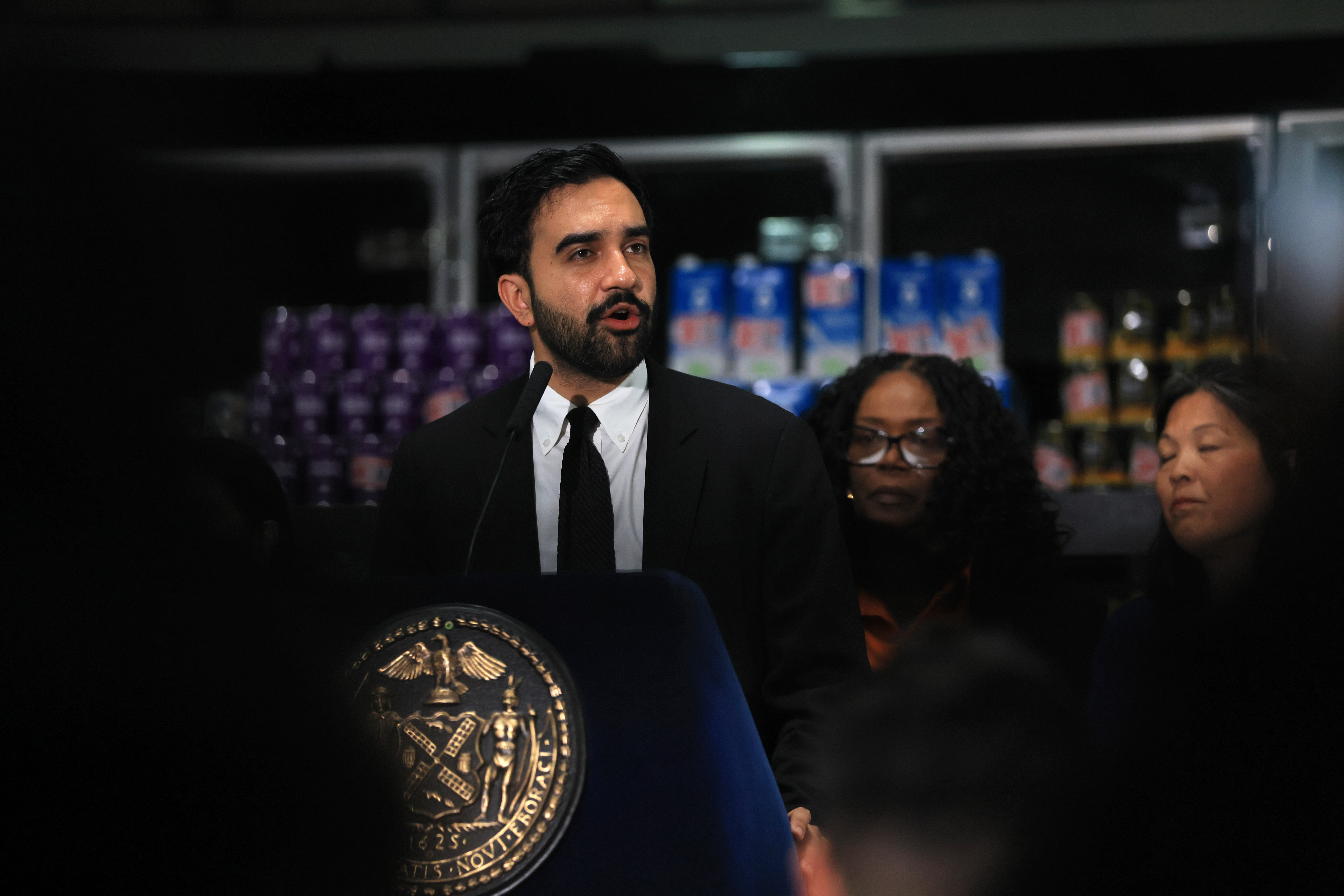















Plus, how Ritchie Torres outplayed the far left
Evan Vucci
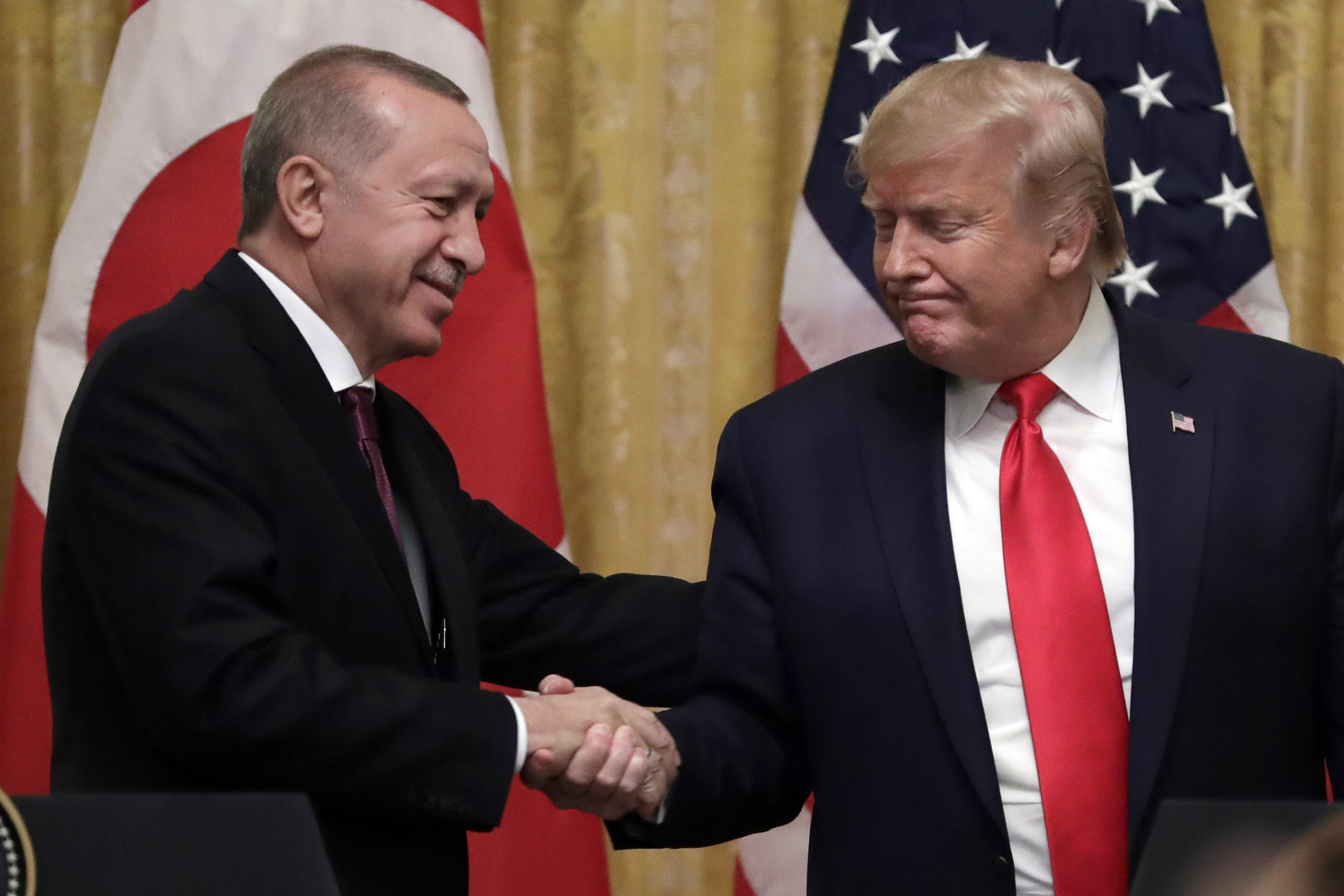
President Donald Trump shakes hands with Turkish President Recep Tayyip Erdoğan after a news conference in the East Room of the White House, Wednesday, Nov. 13, 2019, in Washington.


 Add JewishInsider on Google
Good Thursday morning.
In today’s Daily Kickoff, we talk to moderate and establishment Democrats who are raising alarms over the surge of socialists in Tuesday’s New York City congressional primaries and report on how Rep. Ritchie Torres (D-NY) dodged the DSA wave in the city. We cover last night’s Senate vote to block a Democratic-led war powers resolution seeking to end military operations against Iran and report on the shouting match between President Donald Trump and Sen. Bill Cassidy (R-LA) that preceded it. We also report on the Trump administration’s consideration of Turkey’s eligibility to receive F-35 fighter jets. Also in today’s Daily Kickoff: Rep. Dan Goldman, Sen. Adam Schiff and Rep. Judy Chu.
Today’s Daily Kickoff was curated by JI Israel Editor Tamara Zieve and U.S. Editor Danielle Cohen-Kanik, with an assist from Marc Rod. Have a tip? Email us here.
What We’re Watching
- Jewish and Israeli aid and rescue organizations are preparing to send teams to Venezuela after the poverty-stricken South American country was hit by massive back-to-back earthquakes on Wednesday night, representatives of the groups told eJewishPhilanthropy’s Judah Ari Gross. At least 164 people have been pronounced dead so far, and the number is expected to rise considerably as search efforts get underway, with some projections putting the death toll into the tens of thousands. Read more here.
- Under Secretary of State for Economic Affairs Jacob Helberg is hosting the State Department’s two-day Pax Silica Summit at the U.S. Institute of Peace. Attendees include representatives from the signatory countries to the strategic initiative — which include Israel, Qatar, the UAE, India, Germany and the U.K., among others — and senior business executives.
- On the Hill, acting Pentagon Comptroller Jules W. Hurst III will appear before the Senate Armed Services Committee for his confirmation hearing to be permanently appointed to the role — Hurst is likely to face questions about the Trump administration’s $88 billion supplemental funding request, largely to cover the cost of the Iran war, sent to Congress on Wednesday.
- The House Committee on Education and Workforce will mark up the No Antisemitism in Education Act, and Homeland Security Secretary Markwayne Mullin is slated to testify at an oversight hearing in the House Appropriations Committee.
- The Alliance for Responsible Citizenship‘s third annual conference wraps up in London today. Speakers at the summit, which focused on the future of Western civilization at the 250th anniversary of the United States, included House Speaker Mike Johnson; Energy Secretary Chris Wright; former Virginia Gov. Glenn Youngkin; Under Secretary of State for Public Diplomacy Sarah Rogers; and Axel Springer CEO Mathias Döpfner.
- The Texas Democratic State Convention begins today: The three-day event will feature remarks from Sens. Cory Booker (D-NJ) and Bernie Sanders (I-VT), Texas U.S. Senate candidate James Talarico, Illinois Gov. JB Pritzker and Democratic National Committee Chair Ken Martin. Activists are set to consider close to 20 resolutions critical of Israel.
- The annual Aspen Ideas Festival, which brings together leading figures from politics, business, media and academia, kicks off in Colorado with an opening session featuring Aspen Institute leaders and journalists Fareed Zakaria and David Brooks.
What You Should Know
A QUICK WORD WITH JI’S JOSH KRAUSHAAR
There’s little doubt that socialism is on the march within the Democratic Party after the latest primaries, with extreme candidates who would have been dismissed as nonviable prevailing in numerous congressional primaries and mayoral contests from coast to coast.
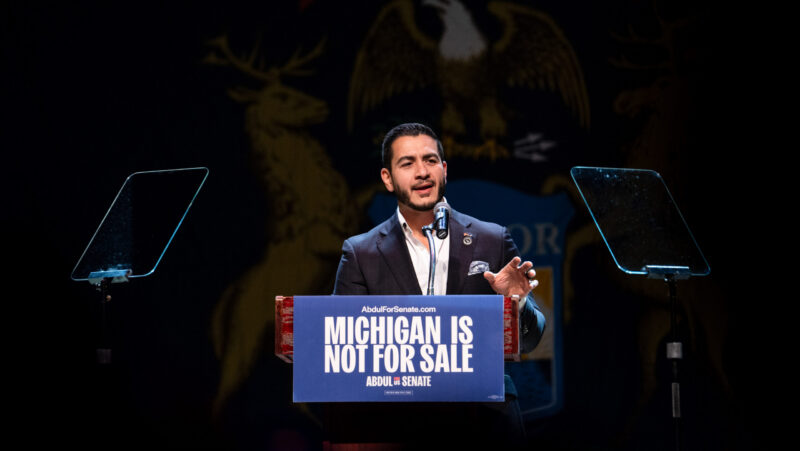
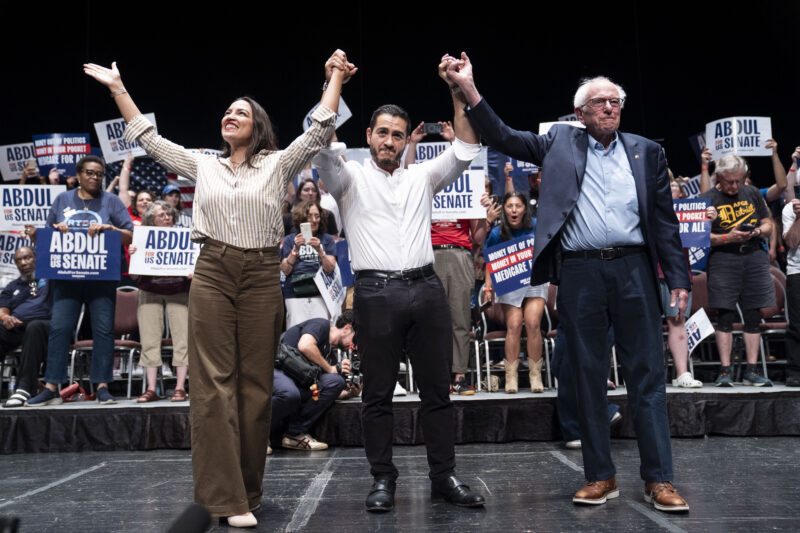
Factor in the political resilience of far-left Maine Senate nominee Graham Platner despite numerous scandals and the momentum of anti-Israel Senate candidate Abdul El-Sayed in a contested Michigan primary despite facing well-funded opposition, and there’s the potential of radicals toppling mainstream candidates well outside the deep-blue confines of major urban centers.
Ultimately, that’s a major question looming for the Democratic Party’s future — and the health of our democracy. Is the rise of socialism primarily a product of urban angst and college-age naivete, or does it have staying power beyond the most-progressive precincts in the country? Can left-wing candidates prevail in swing districts, far away from the urban progressive centers that make up its base? Or will they end up being more of a noisy but powerless faction in Congress?
Either way, socialist candidates have gone from a curiosity that rarely won any congressional seats to riding a Democratic Socialists of America-organized grassroots wave that now has to be reckoned with. You could count the number of Squad members on one hand when Rep. Alexandria Ocasio Cortez (D-NY) and her like-minded allies were first elected in 2018 and 2020. Now their representation is poised to double from its previous peak — and AOC now counts as downright pragmatic, compared to several of her soon-to-be-colleagues.
SOCIALIST SWEEP
Some moderate Dems raise alarms over NYC results, while others dismiss them as localized phenomenon
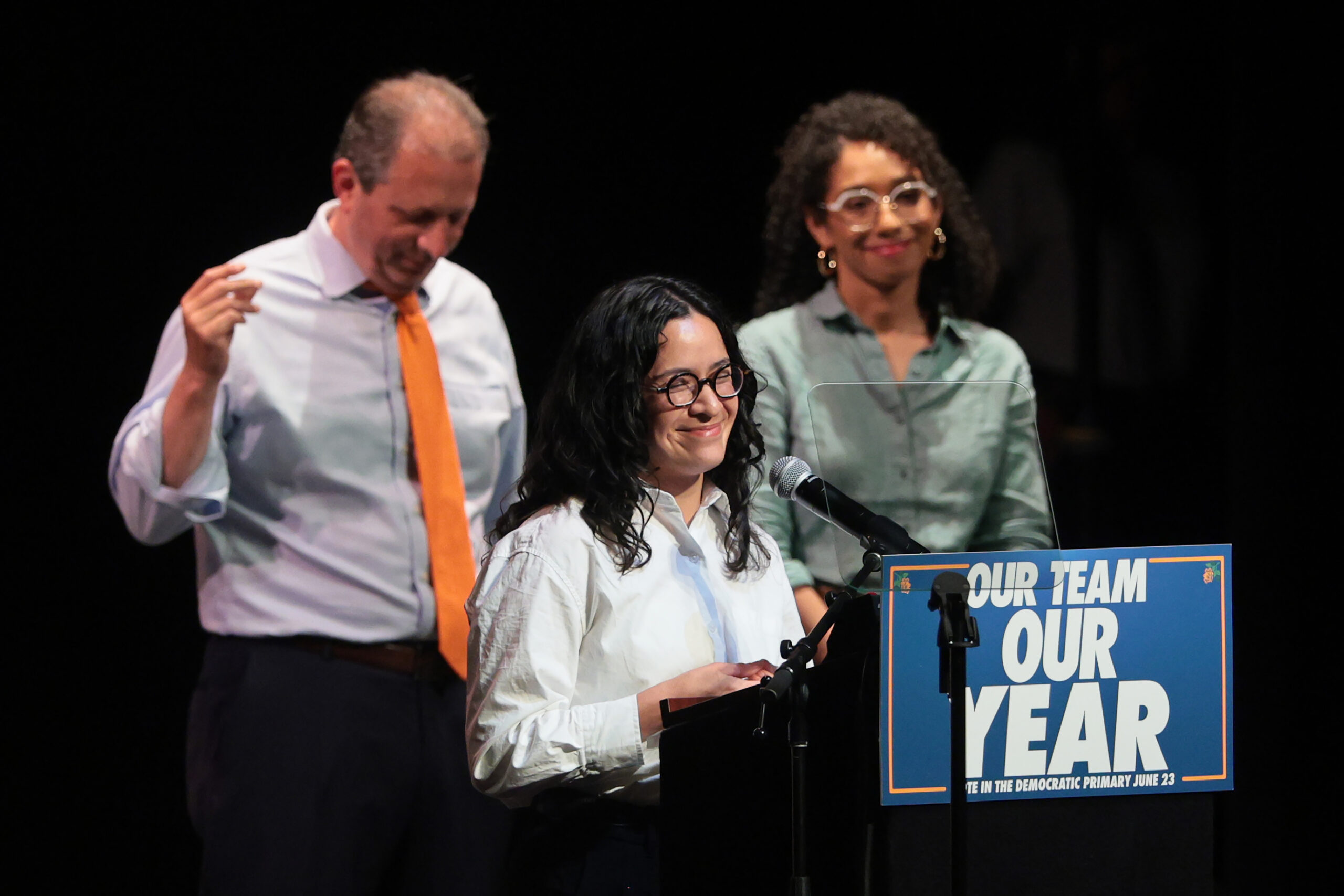
Some moderate and establishment Democrats are raising alarms over the surge of democratic socialists in New York City congressional primaries on Tuesday — which took down two Democratic incumbents. But others are dismissing the phenomenon as one localized to New York City and not applicable to the party at large, Jewish Insider’s Marc Rod, Matthew Shea and Christina Sher report.
Wider view: Rep. Greg Meeks (D-NY), a longtime Democratic leader from Queens, lamented Tuesday’s results, particularly Rep. Adriano Espaillat’s (D-NY) loss. Meeks told reporters that the party as a whole is not a socialist party, and that socialist ideas are very much out of step with the country overall. “That’s not where America is, that only happens in certain parts — like New York City now, apparently — deep, deep, deep blue,” Meeks said. If the entire party follows the same path, “that means that all the other seats that are not [deep blue], we can never win, which means we will never be in the majority, and we [will] never get anything done.”
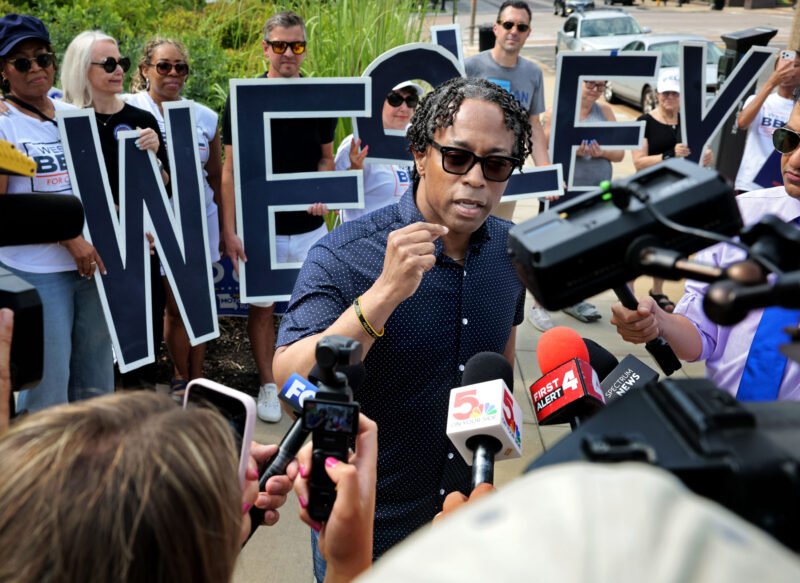
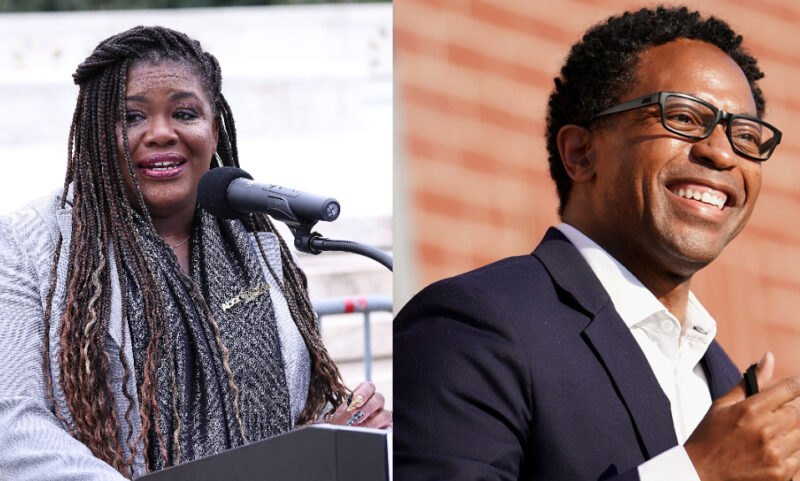
Read the full story here with additional comments from Senate Minority Leader Chuck Schumer (D-NY), Reps. Tom Suozzi (D-NY), Josh Gottheimer (D-NJ), Wesley Bell (D-MO), Jared Moskowitz (D-FL), Pete Aguilar (D-CA), Jamie Raskin (D-MD) and Ro Khanna (D-CA) and Sens. John Fetterman (D-PA), Ruben Gallego (D-AZ), Gary Peters (D-MI), Raphael Warnock (D-GA), Dick Durbin (D-IL), Tim Kaine (D-VA) and Bernie Sanders (I-VT).
Eye on Washington: Having conquered New York City with a stunning primary night sweep on Tuesday, Mayor Zohran Mamdani is wasting no time in moving on Capitol Hill. In an uncharacteristically long question-and-answer session at an unrelated announcement on Wednesday, the mayor announced he would sit down later in the day with House Minority Leader Hakeem Jeffries (D-NY), JI’s Will Bredderman reports.
TORRES TACTICS
How Ritchie Torres dodged the DSA wave in New York City

Rep. Ritchie Torres (D-NY) has long been a target of the far left in New York City, largely because of his outspoken support for Israel and his Jewish constituents. But Torres emerged with a commanding victory over a far-left challenger in Tuesday’s Democratic primaries, even as pro-Israel Reps. Dan Goldman (D-NY) and Adriano Espaillat (D-NY) were defeated by democratic socialist-aligned challengers, Jewish Insider’s Marc Rod reports.
Standout factors: Observers attribute Torres’ landslide win against former New York Assemblymember Michael Blake to a variety of factors, including the different demographics of his district — which includes the heavily Jewish neighborhood of Riverdale, as well as some of the poorest neighborhoods in the city — his strength as a member of Congress and as a campaigner and Blake’s own weaknesses as a candidate. Torres is popular in the district, has prioritized constituent services, has been a longtime presence in the district — as a city councilman from 2014 to 2020 before his time in the House — and maintains a strong reputation locally, Torres campaign spokesperson Benny Stanislawski said.
Concession speech: Goldman, a pro-Israel Jewish Democrat who was unseated in a bitter primary on Tuesday, warned in his concession speech that antisemitism “will ultimately be the undoing of our democracy if we all don’t lean in and speak out,” JI’s Matthew Kassel reports.
ON THE HILL
Senate blocks effort to advance war powers resolution in reversal after heated GOP meeting with Trump
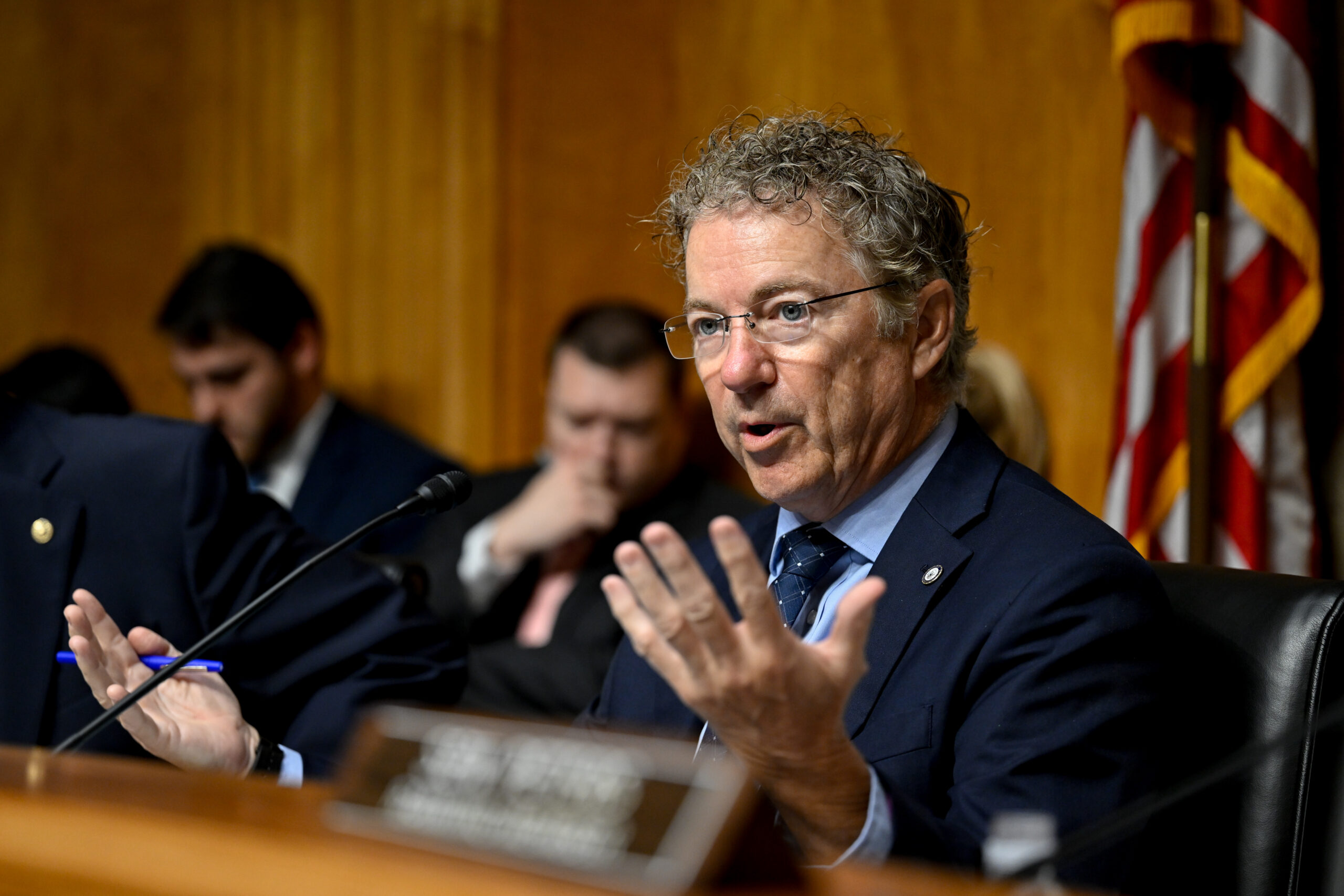
The Senate voted on Wednesday night to block a Democratic-led war powers resolution seeking to end military operations against Iran, after a heated meeting between President Donald Trump and Senate Republicans where he berated a handful of lawmakers over their votes in favor of a successful war powers resolution the previous day, Jewish Insider’s Marc Rod and Emily Jacobs report.
How it happened: Sens. Bill Cassidy (R-LA) and Rand Paul (R-KY), supporters of previous war powers efforts, changed their votes on the resolution on Wednesday, which had previously passed a procedural hurdle — Cassidy now voting no and Paul voting present. Sens. Susan Collins (R-ME) and Lisa Murkowski (R-AK) again voted yes, while Sen. John Fetterman (D-PA) voted no. The final vote was 50-47. Cassidy, who engaged in a shouting match with Trump in the meeting over his recent war powers votes, told reporters after the meeting that he would not change his vote until he had been briefed on the war. Hours later, Cassidy received a private briefing on the war from Vice President JD Vance and White House Special Envoy Steve Witkoff.
Supplemental request: The Trump administration on Wednesday formally sent an $87.6 billion supplemental funding request to replenish stockpiles and otherwise cover the costs of the war with Iran to Congress, JI’s Emily Jacobs and Marc Rod report.
SHOWN THE DOOR
Acting DNI Pulte forces out top Gabbard deputy Will Ruger
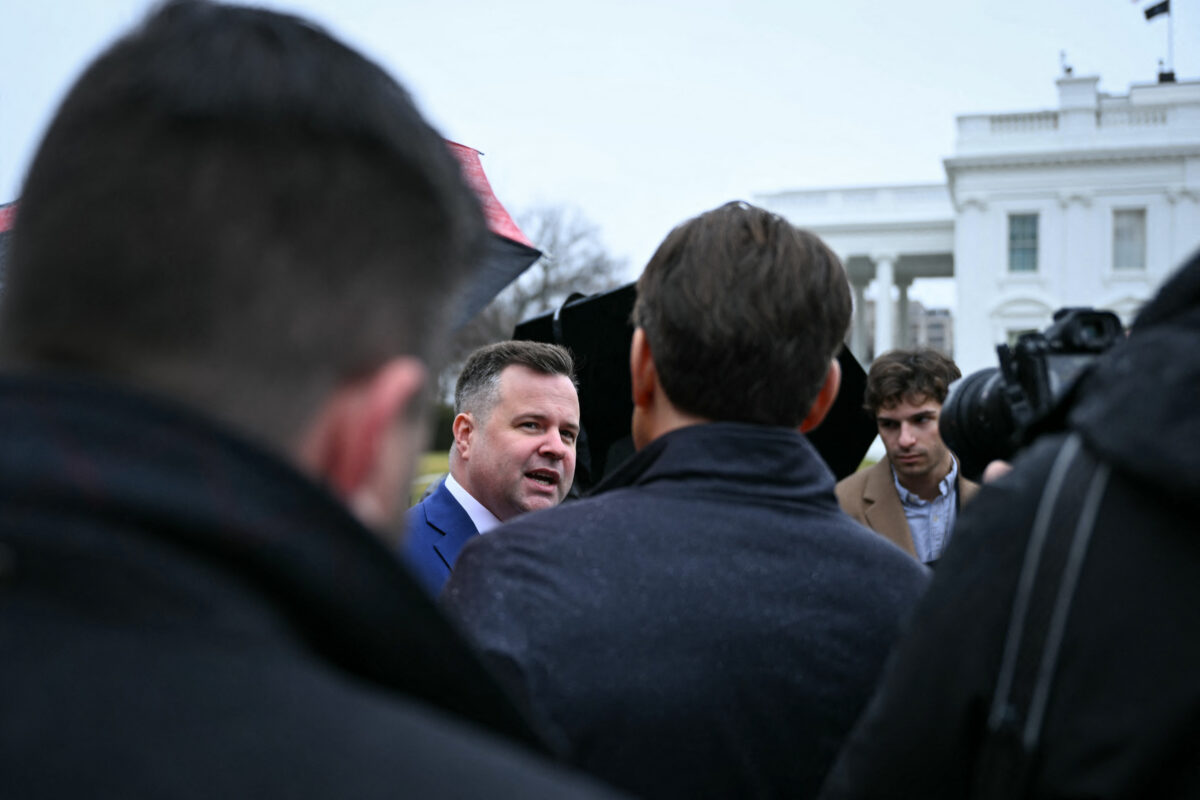
Acting Director of National Intelligence Bill Pulte forced out Will Ruger, the deputy director for mission integration, from the agency as part of a series of cuts said to be targeting the “deep state,” according to CBS News. Ruger previously held senior positions at groups tied to the libertarian Koch network, and had been affiliated with the isolationist Defense Priorities think tank, Jewish Insider’s Marc Rod reports.
Background: Ruger had been a vocal opponent, prior to his government service, of both the maximum pressure sanctions campaign against Iran and potential U.S. military operations against the regime. He was also a defender of the 2015 Iran nuclear deal. Ruger’s role included overseeing the president’s daily intelligence briefing.
ANKARA OPPORTUNITY
Vance: Admin is reviewing Turkey’s eligibility to receive F-35 fighter jets

Vice President JD Vance said on Wednesday that the administration is “confirming” Turkey has fulfilled its obligations under U.S. law in order to receive advanced F-35 fighter jets, which Ankara has long sought but has been barred from purchasing since 2020 after it acquired the S-400 air-defense system from Russia, Jewish Insider’s Danielle Cohen-Kanik and Christina Sher report.
Legal requirement: U.S. law requires the secretaries of state and defense to certify to Congress in writing, prior to any F-35 transfer, that Turkey no longer possesses the S-400 system and has provided credible assurances it will not acquire similar Russian air-defense systems. Latest reports indicate the S-400 system is inactive but still intact in Turkey, which would not fulfill the obligations required under law to lift the sanctions.
Strait security: Lawmakers and Middle East analysts are expressing support for Washington’s reported agreement to help Oman strengthen its maritime intelligence and monitoring of transit through the Strait of Hormuz, saying the move could help secure free access to the critical waterway and deter Iranian influence, JI’s Matthew Shea reports.
SCHOOL CONTROVERSY
Massachusetts principal under fire for apologizing to Arab students for Holocaust lesson

A Massachusetts middle school principal is receiving criticism from Jewish groups for apologizing to Arab students who he claimed “felt unseen” during a Holocaust education lesson, Jewish Insider’s Haley Cohen reports.
Back and forth: In a message sent to seventh graders via a school portal, a screenshot of which was obtained by JI, Diamond Middle School Principal Johnny Cole said the lesson at the Lexington, Mass., school was aimed at teaching the students to recognize hate and to speak out against it, something he called “an important goal.” Cole then apologized after he said some students’ families had expressed that the lesson left them feeling “unseen.” Cole wrote, “Some of you felt like your own history, your identity, or your community was left out or erased. Some of you left that session feeling less safe, not more. We have heard this from families, and we believe you.”
Worthy Reads
Radical Shift: Reason’s senior editor Robby Soave examines Democratic congressional candidate Darializa Avila Chevalier’s record as she is set to become what he calls Congress’ “first campus radical.” “In 2019, when I published my first book, Panic Attack: Young Radicals in the Age of Trump, I predicted that the era’s campus protesters would not shed their radicalism when they graduated college and moved out into the so-called real world — rather, they would force the world to conform to their quixotic expectations. This would be particularly felt in the areas of American life most susceptible to their influence: education, media, entertainment, and eventually, politics. Now that day has finally arrived. Welcome, congresswoman.” [Reason]
The Socratic AI Method: The Economist examines the rise in philosophers being hired by AI firms. “Some of the lessons that philosophy can offer AI researchers are ancient. The Socratic method — as described by Plato, an ancient Greek philosopher — uses feigned ignorance and sequential questioning to clarify meanings, spot contradictions and reveal ramifications. Many current AI systems tend towards sycophancy. Models trained in the Socratic method, says Jörg Noller, an expert on philosophy and AI at Ludwig Maximilian University of Munich, are less keen on people-pleasing and more willing to pursue the truth.” [Economist]
House Majority Math: Joel Wanger, DMFI PAC’s chief political officer, breaks down the results from Tuesday night’s primary elections. “Here’s the thing about House Majority math, and it’s something I’ve said before: it isn’t won in New York City or San Francisco. It’s won in places like San Diego and South Texas — and that’s exactly where pro-Israel Democrats had some of their best nights this cycle, nominating strong general-election candidates in competitive seats. … The pattern I’ve tracked all cycle keeps repeating: pro-Israel Democrats win decisively when they take primary challenges seriously and early, build broad coalitions rather than narrow ones, and talk about the kitchen-table issues — affordability, economic anxiety — that are actually driving voters right now. Where that didn’t happen, races were close. Where it did, they weren’t.” [Substack]
No Socialist Takeover: The Atlantic’s Adam Serwer argues that the Democratic Party is not being taken over by democratic socialists as a unified national force, but rather is becoming more ideologically diverse and locally shaped. “The modern Democratic Party, by virtue of its class and ethnic diversity, has always been ideologically heterodox. An approach that works for a Zohran Mamdani or a Janeese Lewis George will not necessarily work for a James Talarico in Texas or a Mary Peltola in Alaska. Many people outside of the democratic socialists’ cities and districts will focus on whether the candidates’ stances on Israel and Palestinian rights reflect a shift within the party (and they do) and the fact that they differ from more centrist Democrats (also correct). But whether they succeed as leaders and politicians will depend on much more local concerns — matters such as jobs, public safety, and affordability.” [Atlantic]
Word on the Street
Israeli and Lebanese officials have reportedly denied a claim by a State Department official, cited by Reuters, who said that Israel had withdrawn from some of the southern Lebanese territory it has held during its war against Hezbollah…
Saudi Arabia is planning to host reconciliation talks between Gulf countries and Iran, a diplomat with knowledge of the arrangements told Agence France Presse. The summit, aimed at mending ties between Gulf nations, Iran and possibly other regional neighbors in the aftermath of the war, will be independent of ongoing U.S.-Iran talks, the diplomat said…
Secretary of State Marco Rubio met with UAE President Sheikh Mohamed bin Zayed in Abu Dhabi on Wednesday; pictured sitting next to the secretary of state in a working lunch with MBZ was Michael Boulos, Trump’s son-in-law, whose father serves as a senior advisor to the president on the Middle East…
Bahraini National Security Advisor Sheikh Nasser bin Hamad Al Khalifa met separately with Sens. Jacky Rosen (D-NV), Lindsey Graham(R-SC) and Brian Schatz (D-HI) and Rep. Brian Mast(R-FL) during a visit to Washington…
FBI Director Kash Patel hosted Qatari Interior Minister Sheikh Khalifa bin Hamad Al Thani in Washington…
CENTCOM announced that the U.S. killed senior ISIS leader Ali Husayn al-‘Ulaywi in an airstrike in northwest Syria last Friday…
Sen. Adam Schiff (D-CA) and Rep. Judy Chu (D-CA) introduced a resolution to award a Congressional Gold Medal to Americans and relief organizations involved in saving Jewish Holocaust refugees…
An intelligence report obtained by journalists from the Israeli public broadcaster Kan details how Qatar became a central channel of economic and military strength for Iran, helping it to circumvent sanctions after the 2018 cancellation of the Joint Comprehensive Plan of Action and also after the Oct. 7, 2023, Hamas attacks on Israel…
A Kuwaiti air-defense officer shared a firsthand account of the opening moments of Iran’s missile and drone attacks on the Gulf country, describing at a conference in London the frantic five minutes as ballistic missiles filled the sky and the air-defense network scrambled to respond…
Vice President JD Vance and his allies are embracing his role as the public face of President Donald Trump’s Iran deal, Semafor reports, arguing that backing an end to the conflict distinguishes him from the GOP’s neoconservative wing and strengthens his standing with the MAGA base ahead of a potential 2028 presidential run…
The New York Times traces a generational and ideological shift on the American right toward viewing Iran as a pragmatic country the U.S. can learn to live with — a pivot led by Trump but driven by other factors that include younger Republicans’ war fatigue and waning support for Israel…
New Lines Magazine spotlights the unrest surrounding a resort project in Albania’s Vjosa-Narta protected area by Jared Kushner and Ivanka Trump that has sparked unprecedented mass protests in the country; the demonstrations have evolved from an environmental campaign to a broad expression of frustration with long-serving Prime Minister Edi Rama…
Ari Emanuel, TKO CEO and Mari Group founder, is in advanced talks to buy theater group ATG for $6 billion…
Morris Dancyger, a child survivor of Auschwitz who built a successful pharmacy and real estate career and co-founded the first modern art gallery in Calgary, Canada, died at 86…
Pic of the Day

Haredi demonstrators blocked major highways in Israel on Wednesday, causing massive traffic disruptions, in a nationwide protest against the imprisonment of yeshiva students who fail to comply with military draft orders.
Birthdays

Free agent center fielder, formerly in the San Francisco Giants organization, he was the 10th overall pick in the 2019 MLB draft, Hunter David Bishop turns 28…
Music publicist in the 1970s and 1980s for Prince, Billy Joel and Styx, later an author on human behavior, Howard Bloom turns 83… Founder and CEO of Bel Air Partners, a financial advisory firm for automotive retailers, Sheldon J. Sandler turns 82… Real estate developer in Brooklyn, Manhattan, Las Vegas and Miami and founder of The Continuum Company, Ian Bruce Eichner turns 81… Florida resident, Joseph C. Goldberg… Southern California-based mentor, coach and consultant for business executives through Vistage International, Gary Brennglass… Associate justice of the Supreme Court of the United States, Justice Sonia Sotomayor turns 72… Former member of the Knesset for the Meretz party, Michal Rozin turns 57… Founder and CEO of The Agency, a high-end real estate brokerage, Mauricio Umansky turns 56… Managing director of A-Street, an investment fund focused on seeding and scaling innovative K-12 student learning, Mora Segal… Senior media and PR specialist at Hadassah, Helen Chernikoff… Israeli philosopher, writer and publicist, he teaches at Yeshivat Har Etzion and Midreshet Lindenbaum, Rabbi Chaim Navon turns 53… Founder and director of The Biblical Museum of Natural History in Beit Shemesh, Israel, popularly known as the “Zoo Rabbi,” Natan Slifkin turns 51… Former fashion model and television presenter, Michele Merkin turns 51… Deputy director of government relations at Bread for the World, Zachary Silberman… President of Gratz College in Melrose Park, Pa., Zev Eleff turns 41… One-half of the husband-and-wife duo known for their YouTube channel h3h3Productions with more than 1.3 billion views, Ethan Edward Klein turns 41… Organizational change management specialist at CACI International, Isaac Snyder… VP of strategy at Saint Paul Commodities and co-founder of Veriflux, Daniel “Dani” Charles turns 39… Family Medicine Residency Faculty at Jefferson Einstein Hospital in Philadelphia, Pa., Avital Mintz-Morgenthau, MD… Senior reporter and writer covering the White House for CNN, Betsy Klein…
The pro-Israel congressman raised early campaign cash, defined his opponent aggressively and prioritized strong constituent services

Blue/Bloomberg via Getty Images
Representative Ritchie Torres, during an interview in New York, US, on Tuesday, Jan. 28, 2025.
Rep. Ritchie Torres (D-NY) has long been a target of the far left in New York City, largely because of his outspoken support for Israel and his Jewish constituents.
But Torres emerged with a commanding victory over a far-left challenger in Tuesday’s Democratic primaries, even as pro-Israel Reps. Dan Goldman (D-NY) and Adriano Espaillat (D-NY) were defeated by democratic socialist-aligned challengers. Brooklyn Borough President Antonio Reynoso, a progressive backed by party leaders, was also defeated by a challenger aligned with the Democratic Socialists of America.
Observers attribute Torres’ landslide win against former New York Assemblymember Michael Blake to a variety of factors, including the different demographics of his district — which includes the heavily Jewish neighborhood of Riverdale, as well as some of the poorest neighborhoods in the city— as compared to the other three districts, his strength as a member of Congress and as a campaigner and Blake’s own weaknesses as a candidate.
Torres is popular in the district, has prioritized constituent services, has been a longtime presence in the district — as a city councilman from 2014 to 2020 before his time in the House — and maintains a strong reputation locally, Torres campaign spokesperson Benny Stanislawski said.
That’s in spite of the online vitriol that’s frequently directed the congressman’s way by the far left.
House Minority Leader Hakeem Jeffries (D-NY), in an MS NOW interview on Wednesday, pointed largely to the demographics of the districts — wealthier voters taking more of an interest in Middle East policy issues — as the reason for the differential results.
“What’s interesting is that, in some of those districts, which tended to be higher-income districts … there was an outsized focus on issues connected to the Middle East, the Middle East,” Jeffries said. “In other districts, for instance, in the South Bronx, Ritchie Torres was running against somebody who was heavily critical of Ritchie Torres’s position on Israel, and he won by fifty points.”
Strategists largely offered a similar assessment.
Torres is a strong fit for his district, as an Afro-Latino man who grew up in housing projects in the district, Hank Sheinkopf, a longtime New York Democratic strategist, said.
The voting population in Torres’ district, overall, is less friendly to the far left than the other districts where left-wing candidates surged, and Torres retained strong support among both the Jewish community and older minority voters.
Blake didn’t benefit from the same institutional DSA backing that others received. Blake himself is not a DSA member and is “not particularly DSA-adjacent, although he’s tried to position himself there since the mayoral primary,” Jake Dilemani, another New York Democratic strategist, said.
“[The DSA] supports candidates who they think have the best shot at winning based on who the candidate is, but also who or what the district is,” Dilemani said. “They pick carefully where they engage, and I think a combination of, potentially, they couldn’t find a legitimate candidate for them to run, coupled with the district is not as favorable to a DSA candidate as some of the others, they wanted to use their resources wisely.”
Strategists said Blake is also known as being a politically unreliable striver — he pivoted during his recent mayoral campaign and congressional bid against Torres from being a supporter of Israel and ally of AIPAC to staunchly anti-Israel, for instance — who has run for a slew of different offices.
“I don’t know that anyone particularly took his candidacy all that seriously. He’s run for nearly every single office there is, with the exception of maybe king of England,” Dilemani quipped.
Blake also faced a barrage of attacks and scrutiny from the outset of his congressional campaign, something that was not the case for other candidates like Darializa Avila Chevalier, who defeated Espaillat.
“Torres is a better pol[itician] and a smarter campaigner. He just is,” Sheinkopf said. “The other guys … didn’t define their opponents. Torres knew that anything was possible. He has a smarter way of looking at New York City Mayor Zohran Mamdani, and he did what was appropriate to protect himself.”
Sheinkopf also speculated that Mamdani didn’t want to take a chance on Blake when he had other, easier targets that were more fertile ground for his brand of politics. DSA-style politics have typically thrived among younger populations newer to the area, a smaller contingent in Torres’ district.
Sheinkopf noted that Torres also significantly outraised Blake — he stockpiled millions in campaign cash even before Blake emerged as his leading rival.
And, strategists said, Torres’ outspokenness on behalf of Israel has been somewhat less prominent over the past year, even as the congressman’s views and positions have remained largely the same. Torres offered some criticism of Israel last year, similar to that expressed by some other pro-Israel Democrats.
“It’s smart on his part,” Sheinkopf said. “He understands that survival is important. Has he betrayed the pro-Israel community and the Jewish community as others have? The answer is no. Is he being smart about it? The answer is yes, and we should respect him for that.”
Strategists said Torres can’t count on his strong victory on Tuesday deterring future efforts to challenge him.
Dilemani emphasized that “two years is an eternity in politics,” and that it would be foolhardy to try to predict what might happen in the next race.
“The DSA people have no sense of what fits and what doesn’t fit … they will do it again because they can,” Sheinkopf said.
The group, Progressive Voters Network, also endorsed Maureen Galindo, the antisemitic Texas Democrat repudiated by her party
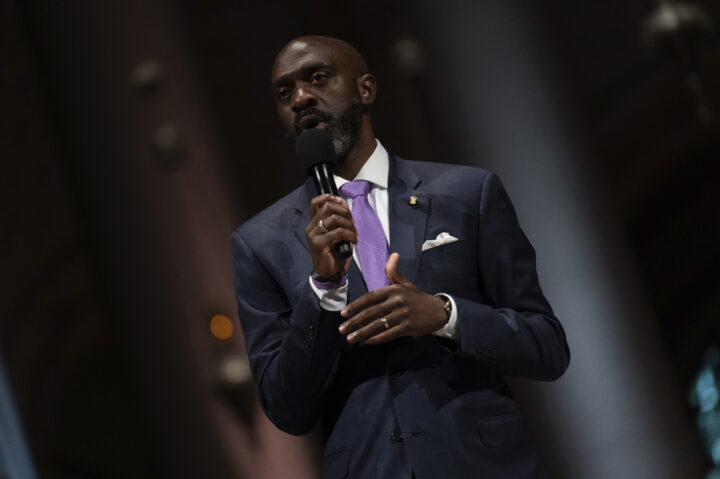
Derek French/Sipa USA via AP Images
Democratic congressional candidate Michael Blake speaks during the 'Mayoral Candidate Forum All Faiths, All Candidates' event at Cathedral of St. John the Divine.
Michael Blake, the anti-Israel candidate challenging Rep. Ritchie Torres (D-NY) in a Democratic primary in the Bronx, accepted an endorsement on Wednesday from a small progressive group that, in its announcement, attacked Torres for his relationship with “Jewish donors.”
The group, Progressive Voters Network, also maintains an active endorsement of Maureen Galindo, the antisemitic Texas Democratic primary candidate who faced condemnation from across the party and was repudiated even by other far-left groups.
Blake’s campaign shared the Progressive Voters Network endorsement announcement attacking Torres on Blake’s Instagram account.
“This AIPAC puppet has raked in millions from the zionist lobby while our people struggle with rent, groceries, and crumbling NYCHA buildings,” the announcement reads. “Torres prioritizes his Jewish donors over his own Black and Brown constituents, cheerleading genocide and shielding war criminals instead of fighting for affordability and justice.”
The group said Torres “must be crushed” and the Democratic Party must be “purge[d] … of these corporate zionists who value zionist interests and fat checks over our community’s survival.”
In its endorsement of Galindo, posted in February, long before Galindo gained nationwide attention, the group obliquely acknowledged her long-standing controversial rhetoric, saying “her calls for systemic overhaul may scare the faint-hearted, but they rally the bold to action.”
After Galindo, who lost the Tuesday primary, made further extreme comments, including calling for the imprisonment and castration of American Zionists, other groups like TrackAIPAC pulled their endorsements.
The Progressive Voter Network has endorsed a slew of challengers to incumbent Democrats and Republicans, as well as a handful of sitting progressive Democratic lawmakers.
Blake’s campaign did not respond to a request for comment.
Blake, challenging Rep. Ritchie Torres in the Democratic primary, had said just months ago that he would support Iron Dome funding

AP Photo/Andrew Harnik
Michael Blake speaks at a "Souls to the Polls" drive-in rally at Sharon Baptist Church, Sunday, Nov. 1, 2020 in Philadelphia.
Michael Blake, a far-left challenger to Rep. Ritchie Torres (D-NY), said at a debate on Tuesday hosted by One NYC Action that he would oppose missile defense aid for the Jewish state — the latest flip-flop on Israel policy issues by a candidate who has reversed numerous of his past stances on the subject over the course of his campaign.
Blake was once a close ally of AIPAC and a champion of the U.S.-Israel relationship, but has repositioned himself as a harsh critic of the Jewish state — and has continued to move left during the course of his campaign.
Blake said this week that he would oppose all aid, including defensive aid, to Israel.
“We need a permanent ceasefire, full stop. We need to absolutely stop the aid that is happening. We need to stop sending money,” Blake said.
Blake expressed the opposite view just months ago in a January event with the Ben Franklin Club, saying that he viewed protecting and supporting Israel’s Iron Dome missile defense system as a separate issue than blocking other military aid, and indicated that he would continue to support Iron Dome.
In that same event, Blake asserted his continued support for anti-Boycott, Divestment and Sanctions legislation he helped pass in the state assembly — before going on to reverse that stance in late March.
Blake reiterated his new opposition to the anti-BDS legislation in the debate this week, saying he lacked the proper information about the bill at the time of his previous support.
On Thursday, Blake picked up an endorsement from TrackAIPAC, the virulently anti-Israel group that has attracted accusations of antisemitism from other Democrats, and which requires endorsees to adopt a host of anti-Israel stances, including a full arms embargo on Israel.
He also argued that the war in Iran, and efforts to stop Trump from launching an all-out assault on the country, were proof of why Torres needed to be defeated, without fully explaining that argument. Torres has also opposed the war, condemned Trump’s comments threatening the destruction of Iranian civilization and said the president needs to be removed from office.
“It was reported today that Trump went into [the war] because Netanyahu and the Israeli government lied to him consistently in a February meeting and prior to that,” Blake continued, again asserting that as an “indication on why Ritchie Torres has to go,” without explaining further.
The progressive challenger to Ritchie Torres who frequently criticizes Israel has traveled there twice

Screenshot
Michael Blake's campaign site
The campaign website home page for Michael Blake, a progressive challenger to Rep. Ritchie Torres (D-NY) who has made his criticism of Israel a centerpiece of his campaign, features a picture of Blake in Israel.
Blake was once a strong supporter of the Jewish state, and traveled there with the AIPAC-backed American Israel Education Foundation and with the New York Jewish Community Relations Council.
In the photo, part of a gallery on the campaign home page, Blake poses, holding a Bible, in front of signage for the White Synagogue, one of the oldest synagogues in Israel located in the ancient village of Capernaum on the Sea of Galilee.
Capernaum holds particular significance for Christians given that it is thought to be where Jesus lived and taught, and the home of Saint Peter.
Blake’s campaign did not respond to a request for comment.
Blake now says he opposes efforts to target the anti-Israel Boycott, Divestment and Sanctions movement, after saying just months ago he opposed BDS
Derek French/Sipa USA via AP Images
Democratic congressional candidate Michael Blake speaks during the 'Mayoral Candidate Forum All Faiths, All Candidates' event at Cathedral of St. John the Divine.
Michael Blake, a far-left primary challenger to Rep. Ritchie Torres (D-NY) who has grounded his challenge largely in criticism of Torres’ pro-Israel stance, flipped his view on the anti-Israel Boycott, Divestment and Sanctions movement during his campaign.
In January, at a candidate forum, Blake affirmed his opposition to the BDS movement and highlighted anti-BDS legislation he helped sponsor as a state assemblyman. But in an X post on Friday, he reversed his position on the issue.
“I oppose efforts that punish [BDS movement] participation,” Blake said on X. “My previous support of NY bills was wrong b/c I didn’t understand the harm incl. the ‘Palestine exception’ on speech & academic freedom for Palestinian rights. Gov’t must protect Free speech & reject retaliation & fear.”
That stance is at odds with the position he staked out just two months ago in a forum with the Ben Franklin Club.
Asked whether he supports New York City Mayor Zohran Mamdani’s efforts to divest the city from investments in Israel, Blake said during the forum, in audio obtained by Jewish Insider, “I have repeatedly — as it relates to the BDS movement itself — have not been in that same position. … As you’ve seen, when I was in the Assembly, I was one of the co-sponsors,” adding that “there is a broader variance.”
The longtime local political organization ultimately endorsed Torres.
In a position paper for a previous congressional campaign obtained by JI, Blake proudly touted his support for anti-BDS legislation. He said he was “pleased to see” bipartisan opposition to the BDS movement, as well as pledged to support anti-BDS legislation in Congress and described the movement as antisemitic.
Blake’s flip-flop on the issue is emblematic of his broader repositioning on Israel-related issues as part of his congressional campaign. Blake was once a close ally of AIPAC and a strong supporter of Israel, but has staked out a strongly anti-Israel line in the campaign.
Blake’s campaign did not respond to a request for comment.
In the same Ben Franklin Club event, asked initially about Mamdani’s divestment efforts, Blake focused his response on aid to Israel, saying that he supports “divestment” from the Israeli government while also suggesting he would protect funding for Iron Dome — a position unlikely to satisfy the far left.
“I’m not going to give a blanket answer on everything because obviously there’s variance to that question, but when we talk about what’s happening around the war itself, I think there definitely should be a divestment in place to what’s going on in the war,” Blake said in another clip obtained by JI. “I think it’s very different as it relates to the protection of the Iron Dome — I think there’s a different distinction that’s there but I’m giving that clarity of that position, because I think saying just holistically can be ambiguous there.”
Blake has also sought to simultaneously capitalize on the insurgent energy of Mamdani’s rise, and to draw support from the democratic socialist’s detractors. Earlier this month, he joined a rally of public housing advocates that attacked Mamdani’s decision to exclude tenants of city-run apartments from hearings on poor living conditions.
Blake has also repeatedly touted the support of local advocacy group Veteran Action Now and its founder Kevin Meggett, who has vocally criticized the mayor and his allies in the Democratic Socialists of America.
Blake, running on an anti-Israel platform, called Kent’s resignation letter ‘courageous and bold’ on social media
AP Photo/Andrew Harnik
Michael Blake speaks at a "Souls to the Polls" drive-in rally at Sharon Baptist Church, Sunday, Nov. 1, 2020 in Philadelphia.
Michael Blake, who is mounting a primary challenge to Rep. Ritchie Torres (D-NY), praised Joe Kent, the former director of the National Counterterrorism Center, who resigned on Tuesday with a conspiratorial statement that lawmakers on both sides of the aisle have characterized as antisemitic.
Kent has a history of affiliations with far-right and antisemitic extremists and, on Tuesday, issued a statement announcing he would leave his post in opposition to the war in Iran, which Kent claimed Israel and pro-Israel advocates had tricked the U.S. into joining.
Kent also, falsely, blamed Israel for the Iraq war and the U.S. operations against ISIS in Syria, and asserted in the letter that there was no immediate threat to the U.S. necessitating an operation in Iran.
“An absolutely breathtaking, courageous and bold resignation letter stating that Iran posed NO IMMINENT THREAT to us and Trump made this decision due to the Israeli government and its American Lobby,” Blake said on X on Wednesday. “This is the person who led COUNTERTERRORISM.”
Blake has made criticism of Israel and AIPAC a centerpiece of his campaign, despite himself being a onetime ally of AIPAC and vocal supporter of Israel. He also faced criticism for featuring an antisemitic activist who supported the murder of two Israeli Embassy staffers in his campaign launch video.
“Michael Blake just called a neo-Nazi-adjacent, Proud Boy-affiliated, January 6th conspiracy theorist ‘breathtaking, courageous and bold,’” Benny Stanislawski, a Torres spokesperson, said. “It should be possible to oppose the war without praising antisemites and bigots in the process.”
Beth Israel Congregation in Jackson, Miss., was previously bombed by the Ku Klux Klan in 1967
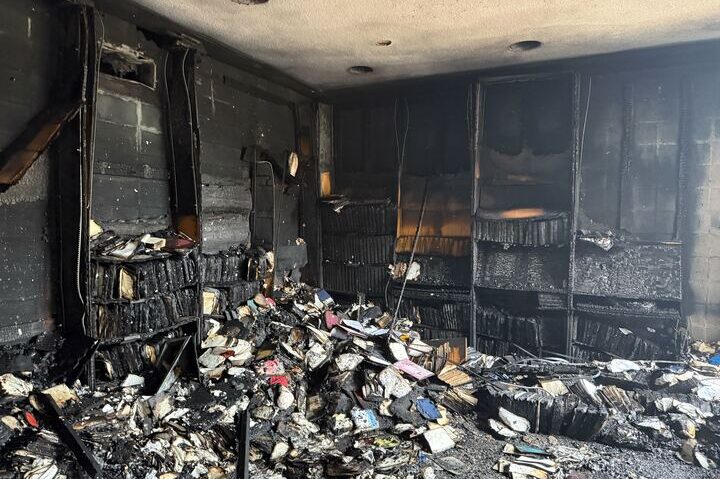
Beth Israel Congregation
Beth Israel Congregation in Jackson, Miss., targeted in an arson attack on Jan. 10, 2026.
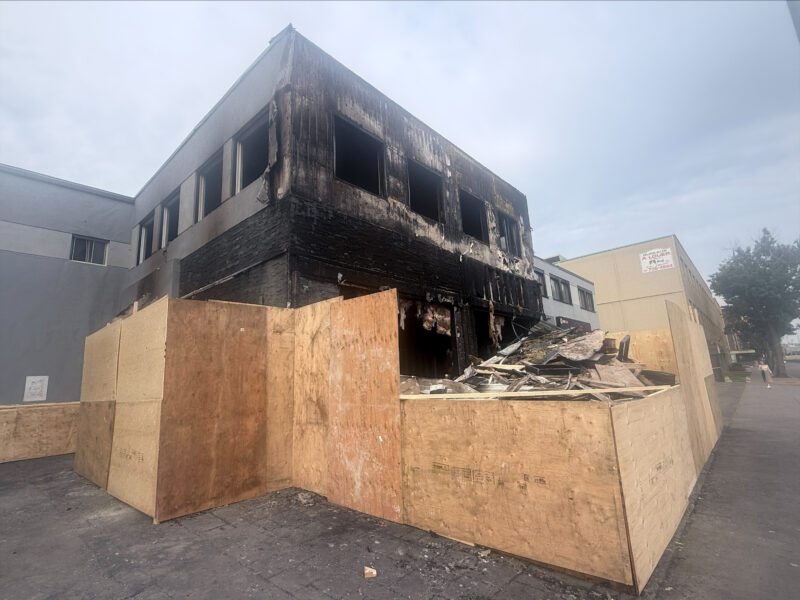
A suspect is under arrest for an act of arson that significantly damaged Mississippi’s largest synagogue early Saturday morning, authorities reported.
Local law enforcement arrested a suspect whom they believe purposefully set fire to Beth Israel Congregation shortly after 3 a.m. Saturday, Jackson Mayor John Horhn confirmed. The suspect’s name and motive have not been disclosed.
Beth Israel Congregation is the only synagogue in Jackson, the state’s capital and most populous city. The historic building also houses the offices of the Institute of Southern Jewish Life, which supports Jewish life in the region.
Located in a major hub of the Civil Rights Movement, Beth Israel was bombed in 1967 by the Ku Klux Klan over the rabbi’s support for racial justice — including providing chaplain services to activists incarcerated for challenging segregated bussing in the state.
No congregants were injured in Saturday’s blaze. Two Torah scrolls were destroyed in the fire, and five more were damaged. A Torah that survived the Holocaust, which was kept in a glass case, was unharmed. The congregation’s library and administrative office were ruined, and the congregation has canceled services indefinitely.
“We have already had outreach from other houses of worship in the Jackson area and greatly appreciate their support in this very difficult time,” the synagogue president, Zach Shemper, said in a statement. About 3,000 Jews live in Mississippi, comprising 0.1% of its 3 million residents. The southern state is home to around a dozen synagogues.
While police and the FBI have not yet determined the suspect’s motive, the arson comes as antisemitic hate crimes in the U.S. reached a record high in 2024 since the FBI started tracking data in 1991.
The incident drew condemnation from elected officials and Jewish leaders.
“Acts of antisemitism, racism and religious hatred are attacks on Jackson as a whole and will be treated as threats to our residents’ safety and freedom to worship,” Horhn said in a statement. “Targeting people because of their faith, race, ethnicity or sexual orientation is morally wrong, un-American and incompatible with the values of this city.”
“I would hope that all Mississippians and all Jacksonians would commit themselves toward moving beyond such behavior and activity and find a way where we can all get together and get along,” continued Horhn, who said he remembers the 1967 attack, which occurred when he was 12.
“Our hearts are with the members of Beth Israel Congregation. We stand together with them as do all the caring people of Mississippi. We denounce violence and find attacks on places of worship especially despicable,” Sen. Roger Wicker (R-MS) said in a statement.
“Regardless of the findings of the investigation, this is what it means to be Jewish in America right now: antisemitic violence and attacks on synagogues and Jews are so common that they barely register beyond local news, and the people most often naming it, mourning it, and sounding the alarm are Jews themselves,” Sheila Katz, chief Jewish life officer at Jewish Federations of North America, wrote on social media.
“It also means this: the Jewish community in Mississippi will come together. They will support one another and be supported by Jews they don’t know around the country and the world. They will rebuild. They will continue to celebrate Jewish holidays and live Jewish life with joy,” Katz continued.
“Waking to the news of an arson attack on a Mississippi synagogue feels all too familiar. This description is chilling. We stand with the Jackson community,” said Ted Deutch, CEO of the American Jewish Committee.
“Grateful that law enforcement has apprehended a suspect,” Deutch continued. “Glad the Mayor has spoken out. Now will you touch base with your Jewish friends, neighbors and co-workers? Let them know that you understand this attack in Jackson is an attack on them as well. Tell them you stand with the Jewish community. It will mean more than you know.”
“The fact that this historic synagogue … has once again been targeted is particularly painful and disturbing. We will continue to monitor the situation closely,” said Lindsay Baach Friedmann, regional director of Anti-Defamation League South Central.
Amy Spitalnick, CEO of the Jewish Council for Public Affairs, called on leaders “to speak out, stand with the Jewish community in meaningful ways, and work to build strong coalitions and advance holistic approaches to counter hate, violence, and extremism wherever it exists. This crisis threatens Jews, all communities, and our democracy — and until it’s treated with the seriousness and urgency it deserves, none of us will be safe,” she said.
“Domestic terrorism against Jews never happens in a vacuum,” Rep. Ritchie Torres (D-NY), a staunch ally of the Jewish community, said in a statement. “Instead of extinguishing the fires of antisemitism, American politics is often guilty of fanning the flames.”
Deborah Lipstadt, the former State Department special antisemitism envoy, called the arson attack “another step in the globalization of the intifada.”
Septimo would join a field of several challengers from Torres’ left, most of whom are focusing their campaigns squarely on the congressman’s support for Israel
Michael M. Santiago/Getty Images
Assemblymember Amanda Septimo speaks during a rally for New York City Mayoral Candidate Zohran Mamdani at Lou Gehrig Plaza on September 02, 2025 in the South Bronx in New York City.
New York state Rep. Amanda Septimo is planning to declare a primary challenge to Rep. Ritchie Torres (D-NY), two sources informed about her plans confirmed to Jewish Insider.
Septimo has represented the South Bronx in the state Assembly since 2021, after defeating the previous incumbent from the left. She would join a field of several challengers from Torres’ left, most of whom are focusing their campaigns squarely on the congressman’s support for Israel and backing from pro-Israel groups.
The New York Times described Septimo as a member of New York Mayor-elect Zohran Mamdani’s “brain trust”; though she did not endorse him in the Democratic primary, she is reportedly a key advisor to him on policy and political questions after they served together in the Assembly and she spoke at several of his campaign events.
That said, Septimo has a robust history of support for Israel as recently as this summer, and would likely — like fellow Torres challenger Michael Blake — face accusations of hypocrisy if she attempts to criticize Torres for his own support for the Jewish state.
Septimo visited Israel in 2016 on a trip sponsored by the AIPAC-affiliated American Israel Education Foundation, praising the country and the trip in a series of social media posts at the time.
“Clearly Israel acts as a bastion of stability in a part of the world where instability has major global implications,” Septimo said on X, then Twitter. “Spending this week in Israel learning about the rich culture, history, & promising future of this historical land,” she said in another post.
During that trip, she appeared in a group photo alongside Israeli Prime Minister Benjamin Netanyahu.
Earlier this year, she praised Israel’s decision to strike Iran’s nuclear facilities.
“A nuclearized Iran is [a] danger to the United States, to the Middle East, and to our closest ally in the region, Israel,” Septimo said. “After [the] failure of diplomatic efforts, Israel has taken an important step to protect its long term security, and ours, by preventing Iran from gaining the power to destroy life as we know it.”
Septimo faced attacks from at least one prominent anti-Israel organizer for that stance.
Immediately after the Oct. 7, 2023, Hamas attacks on Israel, Septimo issued a strong condemnation of both the attacks as well as individuals in the United States who had justified or defended those atrocities.
“We’ve watched indiscriminate, brutal violence unleashed on innocent civilians, and yet we have parts of our society uplifting this as a victory; but, there is no victory to be found in the slaughtering of unsuspecting civilians,” she said. “While the situation between Israelis and Palestinians is complicated and full of important nuances, there is absolutely no justification for Hamas’ attacks. Narratives that work to paint Hamas as an underdog organization carrying out acts of retribution are deeply misinformed, and incredibly dangerous. Simply put, to justify what has happened to Israelis today is to justify terrorism.”
She said she would “continue to stand by [Israel’s] right to defend itself and its people” and “will not stand by as our Israeli allies are expected to accept this horrifying carnage,” even as she said she would also continue to advocate for diplomacy and peace between Israel and the Palestinians.
Septimo opposed legislation in the Assembly, led by Mamdani, that sought to strip nonprofit groups of their tax-exempt status for “engaging in unauthorized support of Israeli settlement activity.” She described the bill in a statement as a “disturbing effort to bring the delegitimization of Israel to the halls of power in New York” and a “harmful, one-sided, divisive approach which fans the flames of hatred that threaten us all.”
“Any piece of legislation that calls Israel’s sovereignty into question provides unacceptable legitimacy to the hateful rhetoric which dominates this issue, and stymies efforts toward peace,” Septimo continued. “The relationship between New York and Israel brings innumerable benefits to communities across our state. … New York will continue to support Israel by finding new ways to deepen the state’s relationship with the nation, and we will always support our Jewish friends and neighbors by standing against hate in all its forms.”
She has also repeatedly met with pro-Israel advocates and attended AIPAC events as recently as late 2023, per photos shared on her and others’ social media.
Septimo did, however, oppose moving the U.S. embassy in Israel to Jerusalem during the first Trump administration as “a step in the wrong direction re: peace with Palestinians,” she said in a social media post.
One individual familiar with Septimo’s plans and record said she visited Israel weeks after Oct. 7 on a solidarity mission with other New York City leaders, and said that “Were she to win, the pro-Israel community would have absolutely nothing to fear,” predicting that she’s “going to let Torres and Blake fight it out over that issue.”
Septimo did not immediately respond to a request for comment.
Blake also highlighted his efforts to combat the BDS movement and anti-Israel sentiment
Derek French/Sipa USA via AP Images
Democratic congressional candidate Michael Blake speaks during the 'Mayoral Candidate Forum All Faiths, All Candidates' event at Cathedral of St. John the Divine.
In a position paper shared with AIPAC in 2020 and obtained by Jewish Insider, Michael Blake, who is challenging Rep. Ritchie Torres (D-NY) in the Democratic primary in New York’s 15th Congressional District, vowed to offer strong support for Israel and to fight against anti-Israel sentiment, and emphasized the connections he feels as a Black person to the Israeli people and the Jewish community.
At the time, Blake — who had been an AIPAC affiliate for years — was seeking the group’s support for his 2020 run for the district. But now, in his second campaign against Torres, Blake is making criticism of Israel and strident opposition to AIPAC a central theme of his campaign.
Blake had expressed similar views in support of Israel in an interview with JI at the time of his 2020 campaign, but his pursuit of AIPAC’s support five years ago highlights the extent to which Blake has flipped on the issue in his latest campaign.
“The State of Israel is a beacon of hope in the Middle East. I understand the absolute priority in ensuring Israel remain that beacon, not just for the Middle East, but for the world,” Blake said in his 2020 position paper, obtained by JI and verified by an informed source.
“When I become a member of Congress from the 15th Congressional District in New York, representing the most diverse county in America, I will continue the commitment I have shown as a community leader, lay minister, Assemblymember and national Democratic official in ensuring that the U.S.-Israel relationship remains strong and bipartisan for generations to come,” Blake continued.
He argued that he’s “uniquely positioned” to ensure that America and Israel remain close allies.
Blake had visited Israel twice, which he said “channeled my core values I developed here in the U.S., and allowed me to further internalize the remarkable bond between our two countries; that bond must continue to be strengthened.”
Blake now says that AIPAC’s treatment of the Black community was a key reason he broke with the group at some point prior to the start of the war in Gaza. But he struck a different note in his 2020 AIPAC paper, emphasizing the need for continued unity and solidarity between the Black and Jewish communities and the common experiences of the two communities.
“While circumstances may vary, I can understand the emotional, mental and physical duress that occurs when you don’t feel safe in your own land,” Blake said, referring to his visits to Israel. “The very idea of Israel demonstrates that the promise can be realized, and serves as an inspiration for all those who have kept the faith in the face of oppression and persecution. … I feel strongly that Israel is the homeland of the Jewish people — a group who fled persecution across the world, to achieve a dream that they held onto for more than 2,000 years.”
He added in the position paper that he takes care to speak out in the district and across the country to emphasize that “anti-Israel rhetoric has no place anywhere.” He vowed to work to strengthen the ties between the Black and Jewish communities, and between Americans and Israelis.
“As a Black man in this country, after what we have endured for centuries and what I have personally endured via police brutality, I will not be silent while divisive language and actions are taken against the Israel people, the Jewish people, or anyone from anywhere,” Blake said at the time.
In the paper, Blake highlighted his work to support anti-Boycott, Divestment and Sanctions legislation in New York and vowed to support similar efforts to fight anti-Israel activity in Congress.
“As a member of Congress, a son of immigrants, and as an American citizen, I will oppose all efforts that seek to delegitimize Israel,” Blake said. “Because anti-Semitism and anti-Zionism are so closely linked, we must not tolerate the actions of the BDS movement, just as we do not tolerate racism and other forms of prejudice.”
And he promised to support continued military assistance with Israel, which he described as a mutually beneficial relationship, saying he “strongly support[s]” the 10-year memorandum of understanding for military aid between the United States and Israel.
The position paper also further undercuts Blake’s claims as a candidate, in public fora, that he walked away from AIPAC eight years ago, after coming to realize at AIPAC’s 2017 policy conference — where he was a speaker — that the group disdained President Barack Obama and other Black leaders.
Instead, Blake continued to attend AIPAC events through at least 2019, as previously reported by JI, and as the position paper demonstrates, unreservedly sought the group’s support in his 2020 campaign.
Blake’s campaign did not respond to a request for comment.
The move comes after the Coast Guard walked back a policy that loosened restrictions around displaying the symbol
Blue/Bloomberg via Getty Images
Representative Ritchie Torres, during an interview in New York, US, on Tuesday, Jan. 28, 2025.
Rep. Ritchie Torres (D-NY) on Monday introduced legislation to codify a policy in the Coast Guard prohibiting displays of swastikas and other hate symbols, following backlash last week over a new Coast Guard policy that loosened the previous ban on such displays.
Amid bipartisan pressure from Congress and public outcry, the Coast Guard walked back the policy, which would have classified swastikas, nooses and other similar symbols as “potentially divisive” and would not have banned them outright.
Torres’ bill would prohibit the Coast Guard from issuing, without congressional approval, “any guidance that is less restrictive on prohibiting divisive or hate symbols and flags” than the updated policy issued following the public backlash, which partially, although not fully, reinstated the previous policy. The new policy states that “divisive or hate symbols and flags are prohibited,” including swastikas.
The legislation does not specify how “less restrictive” would be defined or determined in practice.
The latest iteration of the Coast Guard’s policy keeps in place changes made to the investigative process for such incidents — previously, they would be subject to a full investigation, now they are subject to a potentially less stringent inquiry by the relevant commanding officer.
Torres’ bill is not likely to move forward in its current form given the unified GOP control of the government.
Former DNC vice chair Michael Blake’s launch video included Guy Christensen, who justified the murder of two Israeli Embassy staffers at the Capital Jewish Museum
Derek French/Sipa USA via AP Images
Democratic congressional candidate Michael Blake speaks during the 'Mayoral Candidate Forum All Faiths, All Candidates' event at Cathedral of St. John the Divine.
Major New York Jewish groups criticized former Assemblyman Michael Blake, who is running in the Democratic primary against Rep. Ritchie Torres (D-NY), for featuring a clip of an influencer who supported the shooting of two Israeli Embassy employees at the Capital Jewish Museum in Washington in his campaign launch video.
Blake’s video features a short clip from a social media video posted by Guy Christensen, an anti-Israel activist, accusing Torres of “investing in genocide,” one of the first clips in the video.
Christensen praised the alleged D.C. shooter, Elias Rodriguez, urging his followers to support Rodriguez and describing his “act of resistance” as “justified” and to respond with “greater resistance and escalation” in the face of a potential crackdown against the anti-Israel movement.
“I do not condemn the elimination of those two Zionist officials,” Christensen said on social media at the time of the shooting. “[Rodriguez] is not a terrorist. He’s a resistance fighter. And the fact is that the fight against Israel’s war machine, against their genocide machine, against their criminality, includes their foreign diplomats in this country and internationally.”
Christensen was expelled from The Ohio State University for the video, which was taken down by TikTok.
In a statement, the Jewish Community Relations Council of New York condemned Blake’s video, both for featuring Christensen and for its use of other antisemitic tropes.
“Hurling a bus load of antisemitic tropes and platforming bigots who cheer antisemitic violence in a launch video is not the pro-humanity flex one thinks it is. In the backdrop of rising hate, this only deepens division, further inflames an already inflammatory climate in New York, and makes us all less safe,” the group said in a statement.
The Anti-Defamation League of New York and New Jersey focused its criticism specifically on the Christensen clip.
“No matter what your views are on the candidates or the issues, we can all agree that Michael Blake’s platforming of anti-Zionist influencer Guy Christensen should be roundly condemned,” the group said. “Christensen is an activist who regularly touts Hamas and promotes antisemitic ideas, and he defended the shooter that left two dead at the Jewish Museum this past spring.”
UJA-Federation of New York said in a statement, “We strongly condemn any use of antisemitic vitriol and those who promote it to attack opponents.”
“Regardless of beliefs, actively platforming Guy Christensen, who regularly shares antisemitic ideas and pro-Hamas rhetoric — in addition to defending the heinous antisemitic shooting in Washington, DC, this spring — is absolutely unacceptable,” UJA continued.
Blake apologized in a statement, issued late Monday after a group of local rabbis also joined the chorus of criticism.
“I unequivocally denounce the murder and celebration of the two young Israeli embassy staffers, as stated in my May 22nd, 2025 post on X, and I apologize for any pain our campaign video caused any member of the Jewish community by including someone who condoned this horrific event,” Blake said. “Just as I would for anyone targeted for the color of their skin, faith, or identity, I stand firmly against all acts of hate and violence. I am focused on the Cost of Living and Affordability crisis impacting all of the district, where Ritchie Torres’ actions have failed, along with continuing to address Antisemitism, Anti-Muslim hate, Housing and Immigration. We deserve better than Ritchie Torres.”
Michael Blake frequently attended AIPAC events between 2014-2019, and was a featured speaker at their 2017 policy conference
Derek French/Sipa USA via AP Images
Democratic congressional candidate Michael Blake speaks during the 'Mayoral Candidate Forum All Faiths, All Candidates' event at Cathedral of St. John the Divine.
Michael Blake, a former New York state assemblyman and eighth-place-finishing New York City mayoral candidate, announced a primary challenge to Rep. Ritchie Torres (D-NY) on Wednesday focused squarely on Torres’ support for Israel and ties to AIPAC.
But Blake himself has an extensive history with AIPAC and was, at least through 2020, a vocal supporter of the Jewish state.
In his campaign announcement on X, Blake said, “I am ready to fight for you and lower your cost of living while Ritchie fights for a Genocide. I will focus on Affordable Housing and Books as Ritchie will only focus on AIPAC and Bibi,” a reference to Israeli Prime Minister Benjamin Netanyahu. “I will invest in the community. Ritchie invests in Bombs.”
Blake attached a video that focuses heavily on attacking Torres’ support for Israel and the backing he has received from AIPAC, with clips accusing Torres of being “bought” by supporters of Israel and of focusing more on Israel than his own district. At one point, the video shows Torres with dollar signs over his eyes.
“In 2025, Ritchie has nearly $15 million on hand, largely from AIPAC, while many of his constituents barely have $15 to get by,” Blake states in the video. “Ritchie Torres cares more about Bibi than he cares about the Bronx. More about AIPAC than he does about your academics.”
Social media posts by Blake and others show that he was for years a frequent attendee at AIPAC events, having attended no less than 10 of the organization’s events between 2014 and 2019, and was a featured speaker at least once.
“From entrepreneurship, to political organizing, to deepening my faith as a Christian, AIPAC and AIEF [AIPAC-affiliated American Israel Education Foundation] changed my life forever,” Blake said as a speaker at AIPAC’s 2017 policy conference. “Traveling to Israel made me a better legislator, better activist, and helped me to understand that as a leader within my community and the Democratic Party, I have a responsibility to support America’s friend and ally, Israel.”
Blake traveled to Israel with AIEF and with the New York Jewish Community Relations Council.
As recently as 2020, as a Democratic National Committee vice chair, Blake insisted that the Democratic Party would continue to support Israel, saying of the party platform, “We have been attentive to the previous conversations that have happened in terms of making sure there’s not language in there that would be anti-Israel.”
In a 2020 interview with Jewish Insider, Blake — who posted a photo of Netanyahu speaking at a 2014 AIPAC event — declined to endorse Sen. Bernie Sanders’ (I-VT) characterization of Netanyahu as a “reactionary racist.” And he drew parallels between his experience as a Black man in the Bronx and the experience of Israeli Jews facing terrorism.
Blake also met on various occasions with Israeli officials and diplomats and attended the 2018 Israel Day Parade in Manhattan.
The former state lawmaker made a sharp turn on Israel following the Oct. 7, 2023, Hamas attacks on Israel and the ensuing war in Gaza, accusing Israel of “genocide” weeks after Oct. 7 and calling for a ceasefire while making no mention of the Israeli hostages held by Hamas.
He also opposed congressional legislation aimed at combating antisemitism and the censure of Rep. Rashida Tlaib (D-MI) for antisemitic and anti-Israel comments, and backed former Rep. Jamaal Bowman (D-NY), who denied Hamas atrocities on Oct. 7.
A pro-Israel activist who requested anonymity in order to speak candidly told JI, “The pro-Israel community is surprised by his 180-degree reversal. Blake spoke at pro-Israel events and received considerable financial support from the community. Once he proclaimed to be a pro-Israel stalwart and now he has joined the ranks of the detractors.”
Blake’s campaign did not respond to questions from JI but he faced criticism and questions on X over his past AIPAC ties. In response, he claimed that he walked away from the group “before the Genocide” and after “seeing how they treated Black leaders including Pres. Obama.”
But Blake’s appearance at an AIPAC conference, and other contacts with the group, continued well after Obama’s time in office and the former president’s public clashes with the group over issues like the Iran nuclear deal.
Blake also downplayed his speech at the 2017 policy conference as having happened eight years ago, even as he continued to attend AIPAC events for years afterward.
Torres: ‘War becomes a process of mutual dehumanization which we’re seeing in real time’

Michael M. Santiago/Getty Images
Rep. Ritchie Torres (D-NY) speaks at a press conference endorsing New York City Mayoral candidate Andrew Yang on January 14, 2021 in New York City.
Rep. Ritchie Torres (D-NY) on Tuesday warned that the war in Gaza appears to be turning into a “quagmire” akin to the Iraq war, without clear objectives or any realistic end point.
The pro-Israel Democrat has grown more vocal lately about his criticisms of the Israeli government and how it has been handling the war in Gaza, as concern about the humanitarian situation in the enclave has mounted on both sides of the aisle. He has also continued to offer support for Israel and emphasize that Hamas is primarily responsible for the war in Gaza.
“I want to see Israel secure the release of hostages and end the war, because as long as the war persists, there’s a real potential — our experience with Afghanistan and Iraq tells us that wars in the Middle East can morph into quagmires that have no clear end in sight that have no clearly defined strategic objectives,” Torres said in an interview with The Bulwark.
“I feel this is a quagmire that could persist indefinitely with no clear end in sight,” he continued, a situation he said would limit the Israeli economy and expansion of the Abraham Accords. He said the Israeli government has failed to outline clear objectives for the war. “It feels like a quagmire reminiscent of the war in Iraq.”
He said that Israel has been “extraordinarily effective” in its operations against Hezbollah and Iran, “but [I] have concerns about the war in Gaza.”
Torres said that “war becomes a process of mutual dehumanization which we’re seeing in real time. There should be space in the American heart for the humanity of both Israelis and Palestinians.”
He said that Hamas is the “central cause” and “primarily responsible for the suffering that has been unleashed since Oct. 7.”
But he also said that the “humanitarian crisis in Gaza is simply and morally unacceptable and all parties including Israel and the United States must do their part to ease the hardship and hunger that has taken hold in the Gaza strip. To me, it is wrong to deny or downplay the crisis.”
He rejected arguments that he said he’d seen from Israeli officials that the crisis in Gaza is purely Hamas propaganda, and said that he can’t deny to constituents concerned about the issue that it is happening.
The correct response, he continued, is “not to downplay it, but it’s to tell our constituents that we are doing everything that we can to ease suffering among Palestinian civilians and children. That the war is not against the Palestinian people. It’s against Hamas.”
Torres: ‘The accusations against Israel, whether it’s genocide, apartheid or [deliberate] starvation, are all false. It’s all a propaganda campaign’

Israel on Campus Coalition on X
Rep. Ritchie Torres (D-NY) speaks at the ICC National Leadership Summit in Washington on July 29, 2025.
In comments to a supportive crowd of pro-Israel college students in Washington, Rep. Ritchie Torres (D-NY) said Tuesday that the world needs to be reminded that “Hamas is the central cause of the war in Gaza.”
“We have to remind the world that despite the amnesia, Hamas is the central cause of [Israel’s] war in Gaza. The primary responsibility for a war lies with its cause … Hamas is morally responsible, principally responsible for the war in Gaza,” Torres, a pro-Israel Democratic stalwart in Congress, told about 700 attendees gathered in Washington for the Israel on Campus Coalition’s three-day annual national leadership summit.
Torres went on: “The accusations against Israel, whether it’s genocide, apartheid or [deliberate] starvation, are all false. It’s all a propaganda campaign. But we also have to recognize there is a humanitarian crisis in Gaza … We should be doing everything we can to alleviate the human suffering in Gaza.”
At the same time, Torres offered criticism of the Israeli government’s public diplomacy, saying that it should be “mindful of the words” it speaks.
“Israel is the first country in history to be conducting a war under the scrutiny of 24/7 cable news and social media … so given those realities, you have to be more effective, not only in the actual war but the informational war and be mindful of the words you speak.”
“There are moments when I feel like the Israeli government has the worst PR operation I’ve ever seen,” Torres said. “We are morally better than the other side. We have the moral high ground, we should act like it.”
Asked about the ideological direction of the Democratic Party, which has become increasingly critical of Israel, Torres sidestepped the question. “Look, I reject isolationism whether it’s coming from the far left or the far right. In the end, isolationism is no friend of the United States and it’s no friend of the U.S.-Israel relationship,” Torres said.
The vocal pro-Israel Democrat said he has ‘no real relationship’ with the Israeli government

Al Drago-Pool/Getty Images
Rep. Ritchie Torres, a Democrat from New York, speaks at a House Financial Services Committee hearing on oversight of the Treasury Department and Federal Reserve coronavirus pandemic response on Capitol Hillon September 30, 2021 in Washington, DC.
Rep. Ritchie Torres (D-NY), a vocal Democratic supporter of Israel in Congress, said in an interview with journalist Chuck Todd on Sunday that Israeli Prime Minister Benjamin Netanyahu had done “irreparable damage” to Israel’s relationship with and support among Democrats, tracing the origin of the breach to Netanyahu’s public clashes with President Barack Obama.
“If you’re a Democrat, and if you’re a Democrat of color and if you’re a Black Democrat, you take immense pride in Barack Obama. He represents one of the greatest achievements in politics. We take great pride in his presidency,” Torres said. “To see a foreign leader visibly disrespect him in the manner that Bibi Netanyahu did, I feel did irreparable damage to the relationship with the Democratic Party.”
Asked by Todd how he would advise the Israeli government to repair its relationship with the party, Torres offered no suggestions, repeating that “it feels like the damage may be irreparable.” He added that support for the U.S.-Israel relationship is “eroding, and anyone who denies it is ignoring the numbers.”
(Torres subsequently told Jewish Insider that the “irreparable damage” was referring to “the relationship between Netanyahu and the Democratic Party, not the relationship between Israel and the Democratic Party.”)
Torres also said that he has “no real relationship” with the Israeli government, despite his support for the Jewish state, and said that his conversations are usually general and high-level, and do not yield “useful information.”
“I do not consider myself having a good relationship with the Israeli government,” Torres said.
He said Netanyahu should have been able to disagree with Obama, “but when you inject yourself into partisan politics and put your thumb on the scale in favor of one political party, that sets a dangerous precedent, and I believe that the consequences of geopolitical calculation continue to reverberate to this day.”
Netanyahu and Obama split publicly over the U.S.’s nuclear deal with Iran, and Netanyahu accepted an invitation from then-Speaker of the House John Boehner, a Republican, to address Congress to condemn the deal.
He said that the U.S.-Israel relationship requires bipartisanship and that “if you politicize it, you’re not a friend of the relationship, you’re an enemy.”
Torres said Netanyahu had “made a terrible mistake” and that there is a “legitimate perception that the present Israeli government is just aligned with the Republican Party.”
The Democratic congressman also called for an end to the war in Gaza, the release of hostages, increased humanitarian aid to Palestinians, new Palestinian governance in Gaza and efforts to build on the Abraham Accords, arguing that warnings from Israeli reporters about the deteriorating humanitarian situation in Gaza must be heeded.
He’s one of several pro-Israel Democrats who have grown more critical of the Israeli government’s handling of the humanitarian situation in Gaza in recent days. Additionally, some congressional Republicans have warned that Israel’s conduct is risking American support.
Torres argued that the impact of the war for Israel has been mixed — even as it has severely degraded Iran and its proxies and “emerged from Oct. 7 stronger and … reestablished deterrence,” it has lost significant support in the United States.
The New York congressman has also recently raised eyebrows with his defenses of Democratic New York City mayoral candidate Zohran Mamdani — though Torres has not endorsed Mamdani and said that Mamdani must address “real concerns” in the Jewish community.
The group’s annual conference, being held in August, features a panel that describes the Oct. 7 Hamas terrorism as attacks on ‘military targets’
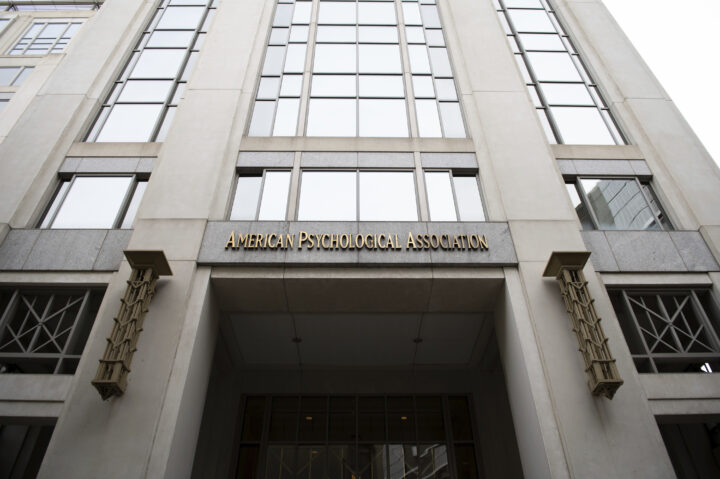
Graeme Sloan/Sipa via AP Images
A general view of the American Psychological Association headquarters in Washington, D.C. on April 23, 2020.
In late February, Dr. Julie Ancis drafted an open letter with a group called Psychologists Against Antisemitism, condemning antisemitism within the American Psychological Association. More than 3,500 people signed on to demand the organization act against what they described as “the serious and systemic problem of antisemitism/anti-Jewish hate” within the APA. With 172,000 members, it is the largest body dedicated to the study of psychology in the world.
For months, the organization appeared to do nothing. Ancis did not even get an acknowledgement that the letter had been received. But then in May, after she and another Jewish colleague raised their concerns in a meeting with Rep. Ritchie Torres (D-NY), Ancis received an invitation from senior APA officials to discuss antisemitism.
The meeting was ostensibly meant as an olive branch from the organization where she had once been a prominent member: In 2010, a division of the APA named Ancis, a distinguished professor at New Jersey Institute of Technology and one of the pioneers of the psychology field’s approach to diversity, equity and inclusion, its Woman of the Year.
Yet when Ancis looked at the list of stakeholders invited to the Zoom meeting, she was astonished to see the names of several APA groups that she considered the biggest perpetrators of antisemitism within the APA. Later, she learned that the list of invited “stakeholders” included Dr. Lara Sheehi, the president of an APA division focused on the study of psychoanalysis, who was called out in the open letter for describing Zionists as “genocidal f**ks.” (Sheehi, who left a teaching position at The George Washington University in 2024 after being accused of antisemitic conduct by some of her students, recently appeared on a podcast to defend the tactics of the man accused of shooting and killing two Israeli Embassy staffers outside the Capital Jewish Museum in Washington in May. She did not respond to a request for comment.)
“The stakeholders should include people who have expertise, not the ones who are promoting antisemitism, where we’re tokenized. It’s an absolute lose-lose situation, and hostile,” Ancis said last week. She decided not to attend. “I’m not going to sit in that farce of a meeting.”
That the APA would host a meeting about addressing antisemitism where the “stakeholders” included both Jews who have scrupulously documented harassment and bias within the organization’s ranks for months, as well as some of the people they identified as the perpetrators of that harassment, is, according to Jewish psychologists, evidence of how this historic organization has lost its way and ceded its moral voice.
“Could you imagine APA having a listening session for LGBTQ+ individuals, which includes people who are known to be homophobic?” asked Dr. David Rosmarin, director of the Spirituality and Mental Health Program at McLean Hospital in Massachusetts and a Harvard Medical School professor. “They want everyone to be included, and all that kind of stuff. What that means is that there’s no room for Jews, because they’re including people who are engaged in antisemitic, anti-Zionist rhetoric, publicly, in the discussions.”
“They’re between a rock and a hard place. They’re trying to appease different constituents, and I feel like they’re appeasing the ones who are loudest and bigger, and that’s not the Jewish professionals,” Dr. Julie Ancis told JI.
Several leading Jewish psychologists told Jewish Insider in interviews last week that the APA has repeatedly failed to respond to the concerns of its Jewish members, despite a stated commitment to promoting an “accessible, equitable and inclusive psychology that promotes human rights, fairness and dignity for all,” according to the organization’s diversity mission. They say the APA has avoided taking a stand against double standards and litmus tests applied to Jewish psychologists who are vilified for their support for Israel.
Instead, the organization has been almost paralyzed in the aftermath of the Oct. 7, 2023, Hamas terror attacks and ensuing war, seemingly afraid to take sides between the Jewish psychologists seeking support and an increasingly vocal contingent of anti-Israel voices in the field, some of whom have described Zionism as a pathology to root out.
“They’re between a rock and a hard place. They’re trying to appease different constituents, and I feel like they’re appeasing the ones who are loudest and bigger, and that’s not the Jewish professionals,” Ancis told JI.
The APA is the key body shaping the education of psychologists in the United States. It accredits masters- and doctorate-level academic programs at hundreds of universities across the country. So while the battle over antisemitism in this organization may seem like an internecine ivory tower fight, the way it is handled is poised to have major implications for the future of psychology — a field that touches the millions of Americans who see a therapist, and whose research shapes the way we understand each other and ourselves.
*****
Concerns about antisemitism in psychology have followed the APA since soon after Oct. 7, when the Association of Jewish Psychologists chided the organization for issuing only a tepid statement about the Hamas attacks. “We … are deeply disappointed and terribly saddened that our professional association could not more forcefully and unequivocally condemn the horrific acts of barbarism against the Jewish people of the State of Israel,” they wrote at the time.
The issue has become a flashpoint again this year in the run-up to the APA’s flagship annual conference, which will be held next month in Denver.
Among the events at next month’s gathering, which is expected to draw several thousand people, is a “critical conversation” called “truth-telling as resistance” focused on understanding the 2024 encampments amid “a global and national effort to distort realities about Palestine and the encampments.”
At a symposium about “resisting anti-Palestinian racism,” psychologists can earn continuing education credit for attending a talk that will discuss “advocacy and actions to resist anti-Palestinian racism” that are “erroneously framed as antisemitism.” Another symposium, focused on mental health during wartime in Gaza and Lebanon, features a talk by a presenter who describes the Oct. 7 terror attacks that killed more than 1,200 people as attacks on “military targets” in Israel.
“What concerns me most are the psychologists who are maybe not Jewish or maybe not aware of these concerns in the Jewish community, who attend these talks with what I consider to be antisemitic rhetoric, and accept and internalize the ideas and rhetoric as true,” said Dr. Caroline Kaufman, a post-doctoral fellow at McLean Hospital. She will be speaking at a symposium about antisemitism, which also offers continuing education credit. “When they treat Jewish clients, or they have Jewish colleagues, or they conduct research, those ideas continue into those endeavors. That is extremely concerning to me.”
Rosmarin, a colleague of Kaufman’s at McLean, put a baseball hat over his yarmulke at last year’s APA convention in Seattle because it didn’t feel like a “safe space,” he said. He worries the organization does not understand the scope of the problem. “This is like a cancer that’s spread throughout the organization,” said Rosmarin, who is also the president of the APA Society for the Psychology of Religion and Spirituality.
*****
The term “gaslighting” — a form of emotional abuse in which one person falsely and repeatedly tells another person that their experience of reality is untrue — has become so popular in recent years that it was named Merriam-Webster’s word of the year in 2022. A growing body of psychological research is devoted to studying the concept, which the APA defines as “manipulat[ing] another person into doubting their perceptions, experiences or understanding of events.”
Given psychology’s deepening understanding of gaslighting, it was particularly ironic that following the APA’s antisemitism meeting, which occurred last Thursday, an email discussion broke out in which several psychologists attempted to invalidate and refute the concerns their Jewish colleagues raised about antisemitism. (The email thread was viewed by JI.)
One psychologist referred to the substance of the Zoom call as “propaganda” and said he would denounce only “actual antisemitism.” Dr. Karen Suyemoto, who chaired the APA’s task force that developed guidelines for addressing race and ethnicity in psychology, agreed.
She called it “imperative” that “actual antisemitism” be addressed, because “the continuing confounding creates barriers to allies and accomplices who do not have [a] nuanced understanding.” (Suyemoto, a University of Massachusetts professor, declined to comment to JI. She was the guest editor of a recent special issue of the APA’s flagship journal that focused on “practicing decolonial and liberation psychologies,” which the Anti-Defamation League, Academic Engagement Network and Psychologists Against Antisemitism criticized in a Tuesday letter as “ethically compromised and biased.”)
To Jewish psychologists, the skepticism from professionals who claim to listen to marginalized communities did not add up.
“We take identity very seriously. We realize that it intersects with both risk and protective factors,” said Kaufman. “That’s a given in our field, and APA seems willing to recognize that for several identities or groups. But it’s seemingly unwilling to address such concerns for the Jewish community. I can’t understand why.”
In 2007, the APA adopted a resolution on antisemitic and anti-Jewish prejudice that detailed modern manifestations of antisemitism alongside a commitment to being a leader in fighting it. (The resolution had the foresight to note that 21st-century antisemitism “may be more difficult for its perpetrators to identify and challenge, as their beliefs about themselves may be that they are not biased against Jews.”)
But since Oct. 7, a vocal group of APA members has been encouraging the organization to revisit this resolution because of its assertion that antisemitism can arise in the context of criticism of Israel. An activist group called Psychologists for Justice in Palestine drafted a petition last year calling on the APA to “refute” that part of the resolution — and instead admit that it is actually “discriminatory” to refer to anti-Zionism as a form of antisemitism.
“With the removal of the claim that criticism of Israel can become antisemitic, it would open psychologists to even more experiences of antisemitism and even more antisemitic aggression, by which Jewish and Israeli psychologists can be excluded, denigrated and denied for reasons that are presumably having to do with Israel, but, from my perspective, are really just antisemitism,” warned Dr. Caroline Kaufman, a post-doctoral fellow at McLean Hospital.
The petition was endorsed by several APA affiliates, including the Asian American Psychological Association; the American Arab, Middle Eastern and North African Psychological Association (AMENA-Psy); and the Society for the Psychology of Women. AMENA-Psy — one of six official APA ethnic associations — declared just four days after the Oct. 7 attacks that the group stands “in full solidarity with our Palestinian siblings in their decolonial struggle for justice.”
The APA ceded to the groups’ demands and agreed to reopen the debate about the 2007 resolution. The APA’s board of directors even created a task force to update the resolution. But the effort was shelved in March, as internal criticism of the organization’s handling of antisemitism began to mount.
“With the removal of the claim that criticism of Israel can become antisemitic, it would open psychologists to even more experiences of antisemitism and even more antisemitic aggression, by which Jewish and Israeli psychologists can be excluded, denigrated and denied for reasons that are presumably having to do with Israel, but, from my perspective, are really just antisemitism,” warned Kaufman.
*****
The solutions that Jewish psychologists seek require a long-term commitment from the APA that they aren’t confident they will receive, although the organization’s leaders stated on last week’s call that they do want to do more to combat antisemitism.
The concerned Jewish members want stronger monitoring on APA-affiliated email servers, which have been used by some APA members to promote boycotts against Israel and, occasionally, to defend Hamas. (An APA spokesperson told JI that “enhanced oversight is now in place to ensure respectful discourse and timely response to violations.”) They are also seeking more stringent oversight of the panels at the summer conference.
“They still struggle to really make a determination as to whether or not anti-Zionism is antisemitism, and so I surmise that people could say some things that would be very hurtful to large swaths of the professional community, and it would be considered acceptable within the new and refined listserv guidelines,” Fordham psychology professor Dr. Dean McKay told JI after last week’s antisemitism Zoom. “That’s one of those places where I don’t think they really know what to do.”
The APA frequently invokes bureaucratic red tape in response to these concerns by asserting that the 54 divisions that fall under the APA umbrella — on topics including developmental psychology, clinical psychology and pediatric psychology — operate autonomously, allowing the APA to claim immunity from the most egregious issues.
“APA’s 54 divisions operate autonomously with their own governance structures,” Kim Mills, the APA’s senior director for strategic external communications and public affairs, told JI in a statement. “Each of them program convention sessions that their leaders believe best represent the concerns of their division and will foster academic discourse on a variety of psychology topics.”
Mills asserted that the APA “unequivocally condemns antisemitism in all its forms and acknowledges the climate of fear such prejudice creates,” and said the organization is “committed to fostering an environment where members of all identities can contribute fully, safely and without discrimination.”
Jewish psychologists are waiting to see if that commitment passes the stress test, but they are not confident. Because while they see general proclamations about the ills of antisemitism as helpful, the true measure of whether the APA is serious about taking on the problem is whether the organization is willing to call out the most extreme members in its ranks, some of whom hold high-profile leadership positions. Doing so would require the APA to wade into the fraught conversation about whether the tactics of anti-Zionist activists can cross a line into antisemitism. It is clear the APA wants to avoid doing that.
“They still struggle to really make a determination as to whether or not anti-Zionism is antisemitism, and so I surmise that people could say some things that would be very hurtful to large swaths of the professional community, and it would be considered acceptable within the new and refined listserv guidelines,” Fordham psychology professor Dr. Dean McKay told JI after last week’s antisemitism Zoom. “That’s one of those places where I don’t think they really know what to do.”
The APA’s diversity webpage features a large section dedicated to explaining antisemitism. However, it does not mention Israel, Hamas or the post-Oct. 7 spike in antisemitism. Nor did Mills refer to Israel or Zionism in a lengthy statement she sent JI last week outlining the organization’s pledge to fight antisemitism. In fact, she ignored a question about Jewish psychologists who feel they have been targeted for being Zionists.
*****
The Jewish psychologists raising concerns about antisemitism in their field know that doing so entails a risk. They worry about the silencing effect on younger Jewish psychologists who are still finding their footing in the field, which is already in a precarious situation amid federal funding cuts to scientific and medical research.
“I’m protected. I’m already mid-career,” said Rosmarin, the Harvard Medical school professor. “I’m animated about this because I care about the next generation.”
Ancis, who spearheaded the open letter to the APA, quit the organization three years ago. She is far enough along in her career to not worry about facing backlash for supporting Israel and speaking out against antisemitism. But she worries about younger people in the field.
“A person coming up trying to get tenure in an APA-accredited program and identifying as a Zionist, I think it’d be extremely difficult,” Ancis said.
Kaufman only completed her Ph.D. four years ago, and she is at the beginning of what she hopes is a career in academia. She has the right credentials: a postdoctoral position at Harvard, an internship at Yale, a speaking slot at a symposium at next month’s APA conference. But she worries that won’t be enough to shield her.
“I have very deep and sincere concerns that my involvement in these issues related to antisemitism will negatively impact the opportunities available to me and my career,” Kaufman told JI. “I hold that truth or that fear in one hand. The other truth in my other hand is that I have a responsibility as a Jewish psychologist to raise my voice and become involved in this issue. There’s truly no other path for me, even if, and I think there will be, serious consequences.”
The congressman once again declined to endorse Zohran Mamdani in the NYC mayoral race but said he is ‘likely to win’

Tom Williams/CQ-Roll Call, Inc via Getty Images
Rep. Ritchie Torres (D-NY) is seen in the U.S. Capitol on Friday, June 28, 2024.
Rep. Ritchie Torres (D-NY) said Wednesday that he’s unlikely to mount a primary challenge against New York Gov. Kathy Hochul, after months of circling a potential run for that office.
“I’m unlikely to run for governor. The assault that we’ve seen on the social safety in the Bronx is so unprecedented, so overwhelming that I’m going to keep my focus on Washington, D.C.,” Torres, a favorite of the Jewish community, said on MSNBC’s “Morning Joe.” “So, my heart lies in Washington, D.C. I feel like now, more than ever, we have to fight the catastrophe that is the Trump presidency.”
Hochul’s lieutenant governor, Antonio Delgado, already declared his candidacy against the governor.
Torres also once again declined to endorse Zohran Mamdani, the Democratic nominee for New York City mayor, but said Mamdani is “likely to win.”
“There’s a difference between praising the man in his policies and praising the manner in which he ran his campaign. I mean, when it comes to how he ran his campaign, he’s genuinely a singular figure,” Torres said. “We do have an obligation to learn from his race. And I suspect he won not because he ran on divisive issues like ‘globalize the intifada’ or ‘defund the police.’ He ran on affordability.”
Torres said he spoke to Mamdani on Sunday and that they have “profound differences of opinion, and I’m not going to downplay those differences, but I’m committed to a working relationship with him. I’m committed to continuing dialogue.” He said that the mayor and the city’s congressional delegation have a “mutually necessary relationship, so we will coexist.”
Plus, Torres urges APA to address 'persistent and pernicious’ antisemitism

SAEED JARAS/Middle East Images/AFP via Getty Images
Dislocated Palestinians carry the humanitarian aid they have received from a United Nations distribution point in Rafah, southern Gaza Strip on May 27, 2025.
Good Thursday morning.
In today’s Daily Kickoff, we consider the efficacy of the first days of the Gaza Humanitarian Foundation’s operations to distribute aid in the enclave, and report on a call by Rep. Ritchie Torres on the American Psychological Association to address antisemitism in its ranks. We have scoops on a call by 33 senators for $500 million in nonprofit security funding on the heels of the Capital Jewish Museum shooting; a bipartisan House letter urging President Donald Trump to reach a deal to release the hostages in Gaza; and a statement by 41 pro-Israel House Democrats praising the resumption of humanitarian aid to Gaza. Also in today’s Daily Kickoff: Marc Steinberg, Sam Feist and Gal Gadot.
What We’re Watching
- The Capital Jewish Museum will reopen today, a week after a deadly attack in which two Israeli Embassy staffers were killed after attending an American Jewish Committee event held at the museum. The museum will hold a program this morning that includes addresses from museum officials, local clergy and Washington, D.C., Mayor Muriel Bowser.
- In Massachusetts, the Holocaust Museum Boston is holding its official groundbreaking ceremony today.
What You Should Know
A QUICK WORD WITH MELISSA WEISS
In October 2023, then-Deputy National Security Advisor Jon Finer said that “getting assistance into Gaza is a complicated undertaking.” In a constantly evolving war in which much has changed over the last 19 months, Finer’s comments remain as relevant and prescient as they did when he first made them to CNN. Aid distribution has long plagued Israeli, American, Palestinian and Arab agencies and officials, who have since the start of the war struggled to unite on a comprehensive aid plan.
There are a variety of challenges, among them the resistance of many aid organizations in Gaza to work with Israel, Israeli bureaucracy and logistical hurdles, and the sheer challenge of delivering aid to two million people in an enclave in which terrorists embed themselves with civilians and in aid groups.
After the failed attempt to create a humanitarian pier to deliver aid by sea, skepticism ran high that outside actors could facilitate the mass transfer of aid across Gaza. And in the first 48 hours of its operations, the Gaza Humanitarian Foundation faced a slew of online criticism — largely from activists and other aid groups.
But a closer look at the GHF’s operations shows a newly formed organization that is serving as an efficient, if imperfect, mechanism to distribute aid in Gaza after an 11-week-long block.
Despite some isolated incidents, including brief chaos ensuing from a rush on supplies that was quickly calmed, and the looting of some facilities, the transmission of aid has largely proceeded smoothly. There are expected hurdles, including the long distances some have to travel to access the aid being provided by GHF. On the first day of operations, GHF said it distributed 8,000 packages, increasing the next day to 14,000. That number is expected to steadily increase as operations are refined and adjusted as needed.
The aid mechanism’s successes to date are underscored by Hamas’ efforts to thwart its work. The terror group used Facebook to spread rumors that GHF had closed some of its facilities. The rumors were quickly picked up by news outlets, such as Reuters, despite a lack of verification. GHF released a statement saying it “urge[s] journalists and the public to verify sources carefully. In several instances, we are seeing news reports echo Hamas statements or online disinformation campaigns without verification for accuracy.” Such narratives, the group added, “endanger humanitarian efforts and mislead the public.”
Outside aid efforts have for months faced resistance from established groups on the ground, including U.N. organizations. UNRWA in particular, which has been largely sidelined from operations since the implementation of an Israeli law banning the group from operating in the Palestinian territories over its staffers’ ties to Hamas, has been among the most critical of the new effort.
Critics were quick to write the GHF’s obituary earlier this week, following the resignation of its CEO and COO. But the first days of operations show what a coordinated, multi-party effort could look like, and provide an alternative for those looking for a new way to address an issue that has long plagued decision-makers. The greatest threat to GHF’s existence may not be the logistical problems or online backlash, but the deeply entrenched institutions that have repeatedly failed to deliver for the people of Gaza.
exclusive
Torres warns American Psychological Association to address ‘persistent and pernicious’ antisemitism in its ranks

Concerned with a “persistent and pernicious pattern of antisemitism” at the American Psychological Association, the preeminent professional organization for American psychologists, Rep. Ritchie Torres (D-NY) is urging the body’s leadership to investigate antisemitism within its ranks and better respond to the concerns of Jewish members, Jewish Insider’s Gabby Deutch reports. His letter comes as the mental health field grapples with an antisemitism problem that has only grown more acute after the Oct. 7, 2023, Hamas attacks on Israel.
Blowing the whistle: “I have spoken directly with whistleblowers — many of them longtime APA members — who accuse the organization of enabling a hostile environment,” Torres wrote in a letter, obtained by JI, that he sent to the APA’s president and president-elect on Wednesday. “These incidents collectively suggest that the APA has not only been dismissive of the legitimate grievances of Jewish psychologists but also permissive of content that traffics in malicious falsehoods against Zionism, Israel, and the Jewish community.”
SCOOP
After Capital Jewish Museum killings, 33 senators call for $500 million in nonprofit security funding
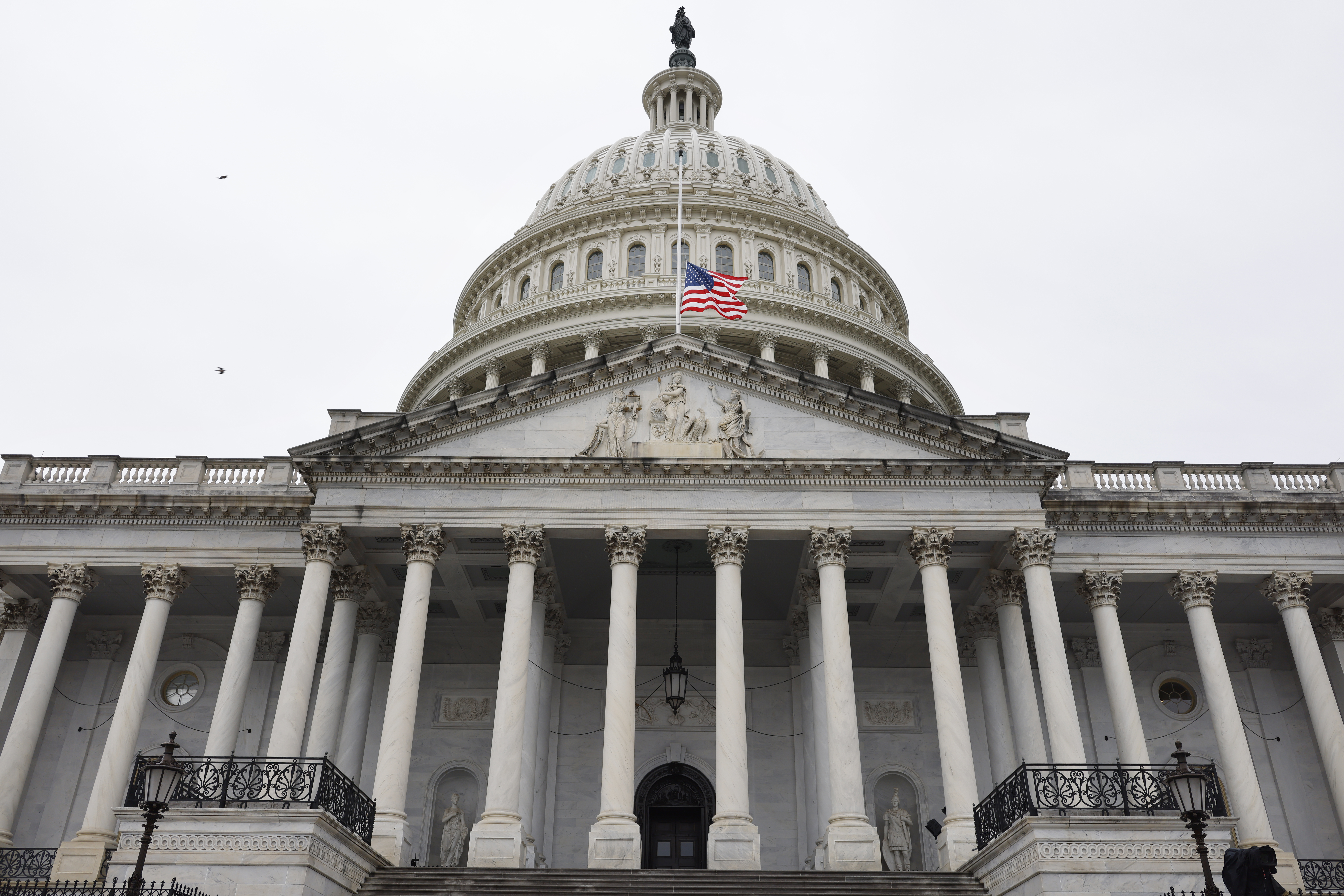
A bipartisan group of 33 senators — mostly Democrats — sent a letter last week urging Senate Appropriations Committee leaders to provide $500 million for the Nonprofit Security Grant Program in 2026, matching the record-high request from a group of House members earlier this month, Jewish Insider’s Marc Rod reports.
About the request: The letter was sent the day following the murder of two Israeli Embassy employees outside the Capital Jewish Museum in Washington, an attack that led a coalition of Jewish groups to call for increasing funding for the program, which provides synagogues and nonprofits with grants to improve their security, to $1 billion. Though only two Republicans signed the letter, the bipartisan request marks a change in Senate advocacy on this issue — in the past, bipartisan Senate groups have not specified amounts in their lobbying for the program. Senate Democrats last year called for $400 million for the program.
rumor realized
Trump confirms he told Netanyahu not to strike Iran last week
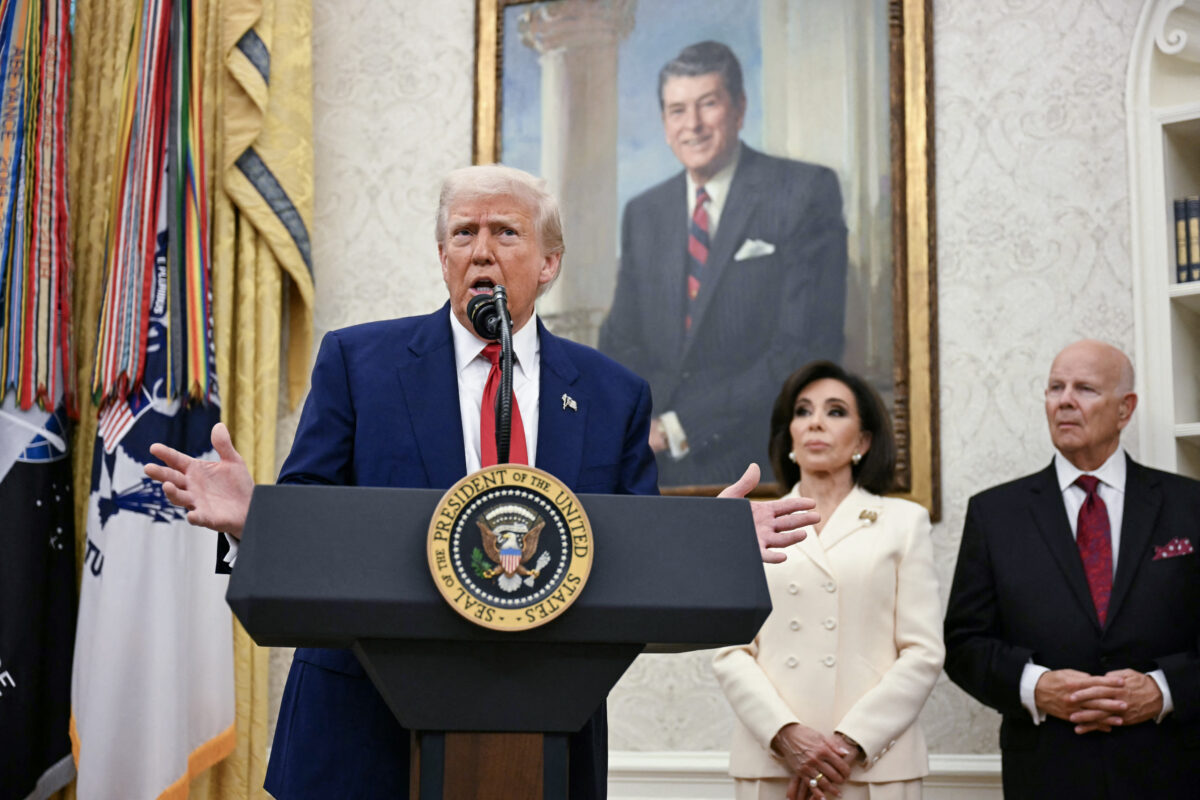
President Donald Trump confirmed reports that he warned Israeli Prime Minister Benjamin Netanyahu in a phone call last week not to proceed with plans to attack Iran’s nuclear facilities while the U.S. and Iran continue negotiations, saying that he told the Israeli leader a strike “is not appropriate right now,” Jewish Insider’s Danielle Cohen reports.
What he said: Speaking to reporters in the Oval Office on Wednesday, the president responded to a question about the validity of the report by saying, “I’d like to be honest. Yes, I did.” Pressed about the nature of the conversation, the president clarified, “It’s not a warning, I said I don’t think it’s appropriate. We’re having very good discussions with them [Iran] and I don’t think it’s appropriate right now.”
EXCLUSIVE
Pro-Israel Dems say resumption of Gaza aid will refocus attention on hostages

A group of 41 pro-Israel House Democrats released a statement on Wednesday praising the resumption of humanitarian aid to Gaza as helping to refocus international attention on releasing the hostages and calling for a comprehensive plan for postwar Gaza, Jewish Insider’s Marc Rod reports.
What they said: The statement, first shared with JI, argues that the renewed delivery of aid, which began on Monday, was “essential to alleviate the humanitarian crisis in Gaza, so that the primary focus of the international community can return to releasing the hostages that remain in captivity.” They added, “the United States, Israel, and key Arab partners must agree upon a serious and credible political and security plan to govern Gaza after the war.” The statement was organized by Rep. Dan Goldman (D-NY), in cooperation with Democratic Majority for Israel.
after captivity
Hostages’ long-lasting mental and physical scars of Gaza captivity are treated at ‘Returnees Ward’

When Israelis held hostage by terrorists in Gaza are released, there is a flurry of attention. Members of the media descend on the hospitals to which the newly freed hostages are sent. Soon after, however, the public no longer hears much from most of them. Beilinson Hospital in Petah Tikva, in central Israel, has treated and continues to treat hostages released in the ceasefire that took place earlier this year. Dr. Michael Bahar, director of the Rehabilitation Unit at Beilinson, who has been overseeing their recovery, told Jewish Insider’s Lahav Harkov in the hospital this week that his department “built rehabilitation programs based on each patient’s specific needs. It’s a multidisciplinary process, working with physical therapists, occupational therapists, dieticians, nurses and psychologists. For the rehabilitation of the female soldiers, “we work with the IDF,” he added.
Meaningful connection: The Rehabilitation Unit at Beilinson also treats many wounded soldiers, and Bahar said they and the former hostages have found it meaningful to undergo joint treatment and exercises together, including in the department’s pool. “The soldiers felt that they were fighting to free the hostages, so we connected between them,” Bahar said. “One evening the [female soldier hostages] went to visit the wounded soldiers in the department. It was an indescribable moment. They couldn’t speak, they were so excited … It was very significant, very powerful for the soldiers and the returnees.”
exclusive
Bipartisan House letter urges use of ‘all available diplomatic efforts’ to free hostages

In a letter to President Donald Trump, a bipartisan group of House members renewed a call for a deal to release all of the remaining hostages held in Gaza, including the bodies of four Americans believed to be deceased, urging him to capitalize on potential momentum from the release of Israeli American Edan Alexander earlier this month, Jewish Insider’s Marc Rod reports.
Letter writing: “Building on the momentum of Edan’s release, we strongly urge your Administration to press forward with all available diplomatic efforts to secure the return of all hostages — including the four remaining Americans: Omer Neutra, Itay Chen, Gadi Haggai, and Judi Weinstein Haggai,” the House letter reads. “While Edan’s return marks a critical breakthrough, the suffering he endured underscores the urgency of this mission … This moment — coming in the wake of Edan’s homecoming—offers a window of opportunity.”
Worthy Reads
Ditch Gaz-a-Lago: In Foreign Policy, former U.S. Ambassador to Israel Dan Shapiro suggests that President Donald Trump should abandon his proposed “Gaza Riviera” plan in the interest of ending the war and freeing the remaining hostages. “The plan was utterly unrealistic from the start. The White House quickly clarified that Trump envisioned no U.S. troops taking part and no U.S. funds being used to implement it. No other countries stepped forward either to host the displaced Palestinians or with money to pay for the grand reconstruction. Having never asked Gaza’s residents if they wanted to leave — surely some do, and should be permitted to, but others would choose to stay — Trump’s plan, if it forced the latter category out, would amount to ethnic cleansing. But even a mirage can cause damage. What the Gaza Riviera plan did accomplish was to empower the far-right Israeli leaders, Finance Minister Bezalel Smotrich and National Security Minister Itamar Ben-Gvir, to pursue their extremist agenda of ridding Gaza of Palestinians, followed by Israeli reoccupation and resettlement. … But Netanyahu’s embrace of this plan has become a major obstacle to the release of hostages and a better path for Gaza. It is fueling the worst instincts of Israeli politicians whose agenda would upset Trump’s own regional goals.” [ForeignPolicy]
The NSC Purge: In The Atlantic, Thomas Wright, who served in the Biden administration’s National Security Council, considers the role that a fully staffed NSC plays in presidential decision-making, following the White House’s purge last week of dozens of appointed officials. “Those who oppose Trump may welcome these cuts, precisely because they reduce the ability of this president to destroy and remake U.S. foreign policy. Decimating the NSC removes a layer of White House oversight from the departments engaged in foreign affairs, which could mean strengthening them relative to Trump: If Rubio is truly a temporary national security adviser, there for just six months, the gutting of the NSC will weaken his successor and strengthen his influence as secretary of state. The Pentagon, Treasury Department, Department of Homeland Security, Central Intelligence Agency, and other agencies could likewise set up their own mini–foreign policies, each based on the Cabinet secretary’s interpretation of what they heard from the president, whether in a meeting, a side conversation, or a Truth Social post.” [TheAtlantic]
Word on the Street
The transfer of a Qatari plane to the Trump administration has not been finalized amid delays regarding a memorandum of understanding that lays out the terms of the agreement; President Donald Trump has said that the plane is a “free” gift from Doha, while Qatari officials have stated that the Trump administration initiated the transaction…
A federal court blocked the imposition of the Trump administration‘s tariffs, saying the administration overstepped its authority in imposing the tariffs…
The New York Times’ Edward Wong posits that Trump may be envisioning a world order in which China, Russia and the United States operate in separate spheres of influence…
CNN interviews released hostages Omer Shem Tov and Keith Siegel about their time in Gaza and efforts to raise awareness about the plight of those who remain in captivity, including Omri Miran and Matan Angrest, with whom Siegel was kept for long periods of time…
A federal judge in New Jersey issued an order on Wednesday ruling that the Trump administration’s justification for its monthslong effort to deport Columbia University protest leader Mahmoud Khalil was likely unconstitutional — but that his failure to disclose his affiliations with anti-Israel groups raises concerns, Jewish Insider’s Haley Cohen reports…
Elon Musk reportedly threatened to withhold the Trump administration’s support for the creation of an artificial intelligence campus in the United Arab Emirates that is being built in partnership with Sam Altman’s OpenAI and Nvidia if Musk’s xAI was not included in the project…
Elliott Investment Management partner Marc Steinberg was appointed to the board of Honeywell International; Elliott, which has a more than $5 billion stake in the company — one of its largest investments — last year called on Honeywell to break itself apart…
C-SPAN CEO Sam Feist said the network is facing a “crisis of funding” amid a broader shift away from cable news and the decision by distributors, including YouTube and Hulu, not to include the channel in its offerings…
The Wall Street Journal looks at the origins of the Trump administration’s targeting of elite universities, positing that the president’s focus on the issue began following the 2019 assault of a conservative student at the University of California, Berkeley…
Five anti-Israel activists were arrested for protesting at the London set where Israeli actress Gal Gadot is filming “The Runner”…
The U.K. is mulling sanctions on Israeli Finance Minister Bezalel Smotrich and National Security Minister Itamar Ben-Gvir…
Israeli Prime Minister Benjamin Netanyahu confirmed that Israel killed Hamas leader Mohammed Sinwar in an airstrike earlier this month…
Israeli Defense Minister Israel Katz said that Israel planned to establish 22 settlements in the West Bank, a move he said “strengthens our hold” on the territory…
The Israeli Defense Ministry said it has shot down more than 40 drones using its new laser air-defense system since October 2023; most of the drones shot down by the new system were fired from Lebanon…
Ravid Haim, the baby born following a West Bank terror attack that killed his mother two weeks ago, died on Thursday morning; the baby had been in serious condition since he was delivered by emergency c-section immediately after the shooting…
The Financial Times looks at the domestic and international challenges facing South African President Cyril Ramaphosa as he confronts “a hostile U.S., a stagnant economy and radical populist parties hovering in the wings”…
International Atomic Energy Agency head Rafael Grossi said that “the jury is still out” on whether the U.S. and Iran will reach a new nuclear agreement, as the parties prepare for a fifth round of talks to start on Friday…
Boston-based philanthropist and business leader Richard Barry Slifka died at 85…
Chicago real estate lawyer Morrie Much, a longtime donor to the Simon Wiesenthal Center and the Jewish United Fund of Chicago who also supported the construction of the Holocaust Museum in Skokie, Ill., died at 88…
Educator and fundraising professional Henry Saltzman died on May 11 at 95…
Pic of the Day

Israelis gathered yesterday in front of the U.S. Embassy branch office in Tel Aviv to mark the 600th day of the war, calling on President Donald Trump to put pressure on Israeli Prime Minister Benjamin Netanyahu to end the war and secure the release of the remaining 58 Israeli hostages from Gaza.
Birthdays

Founder and creative director of the fashion label Shoshanna, style director for Elizabeth Arden, Shoshanna Lonstein Gruss turns 50…
Montreal-based businessman and philanthropist, Marvin Birnbom turns 95… Professor emerita of marine biology at Rutgers University, Judith Shulman Weis turns 84… Former member of the Knesset for the Likud party and then Israel’s ambassador to Japan, Eli Cohen turns 76… Winner of three Emmy Awards and a Grammy, actor, composer, singer, songwriter and record producer, Danny Elfman turns 72… U.S. Sen. Jerry Moran (R-KS) turns 71… Retired senior diplomat in the Israeli Ministry of Foreign Affairs, she was previously a brigadier general in the IDF, Ruth Yaron turns 68… Television writer, producer and actor, best known as the creator of the sitcom “Arrested Development” as well as the co-creator of “The Ellen Show,” Mitchell Hurwitz turns 62… Immediate past president of Ahavath Achim Congregation in Wichita, Kan., she is a trustee-at-large on the board of JFNA, Ellen Ginsburg Beren… Professor at the University of Chicago, co-author of the best-selling books in the Freakonomics series, Steven Levitt turns 58… CEO and executive editor of 70 Faces Media, Amiram (Ami) Eden… Policy analyst at Centers for Medicare and Medicaid Services, Yaakov Feinstein… Founding partner of Blandford Capital, Nathaniel Jerome Meyohas turns 51… Chief communications officer and global spokesperson at Aish, she is also a cookbook author with over 100,000 cookbooks sold, Jamie Geller turns 47… Film producer and former corporate lawyer at Skadden Arps, Edward Frank “Teddy” Schwarzman turns 46… Senior political reporter at The Forward, Jacob Kornbluh… Swedish-born pro-Israel activist, commentator and reporter, Annika Hernroth-Rothstein turns 44… Managing director at Hudson Bay Capital Management, Alexander Berger… Assistant secretary for constituency affairs for New York Gov. Kathy Hochul, Jacob “Jake” Adler… Israeli-born assistant pitching coach for the Miami Marlins, he pitched for Team Israel at the 2020 Summer Olympics, Alon Leichman turns 36… English actor, his bar mitzvah was at the Western Wall in Jerusalem, Gregg Sulkin turns 33…
Torres said the organization is ‘permissive of content that traffics in malicious falsehoods against Zionism, Israel, and the Jewish community’
Al Drago-Pool/Getty Images
Rep. Ritchie Torres, a Democrat from New York, speaks at a House Financial Services Committee hearing on oversight of the Treasury Department and Federal Reserve coronavirus pandemic response on Capitol Hillon September 30, 2021 in Washington, DC.
Concerned with a “persistent and pernicious pattern of antisemitism” at the American Psychological Association, the preeminent professional organization for American psychologists, Rep. Ritchie Torres (D-NY) is urging the body’s leadership to investigate antisemitism within its ranks and better respond to the concerns of Jewish members.
“I have spoken directly with whistleblowers — many of them longtime APA members — who accuse the organization of enabling a hostile environment,” Torres wrote in a letter, obtained by Jewish Insider, that he sent to the APA’s president and president-elect on Wednesday. “These incidents collectively suggest that the APA has not only been dismissive of the legitimate grievances of Jewish psychologists but also permissive of content that traffics in malicious falsehoods against Zionism, Israel, and the Jewish community.”
Torres’ letter comes as the mental health field grapples with an antisemitism problem that has grown more acute after the Oct. 7, 2023, Hamas attacks on Israel. The Association of Jewish Psychologists said in 2023 that it was “deeply disappointed and terribly saddened” by the APA’s actions in the aftermath of Oct. 7.
Torres reported that Jewish and pro-Israel psychologists have been harassed on APA-sponsored listservs, including one email with the phrase “kudos to Hamas,” according to conversations he had with APA members, and that divisions within the organization have “issued politicized and inflammatory statements” accusing Israel of genocide, while “suppressing dissenting academic voices.”
Torres urged the APA to conduct an independent investigation into antisemitism across its affiliated divisions and listservs; to reform accreditation of continuing education programs “to ensure the APA is not lending institutional legitimacy to bigotry”; to enforce “clear standards for respectful discourse,” including “protections for Zionist Jews”; and to make sure that Jews are represented as the APA works to address antisemitism.
“The APA’s legitimacy as a scientific and professional institution is at stake,” Torres wrote, if the body does not take action.
A spokesperson for the APA confirmed that the organization received the letter and that they will reach out to Torres to discuss it.
“In the meantime, I can assure you that the American Psychological Association is categorically not an antisemitic organization,” Kim Mills, APA’s senior director for strategic external communications and public affairs, said.
Sen. John Fetterman asked members of the left, ‘Why can’t you just call it [antisemitism] what it is?’
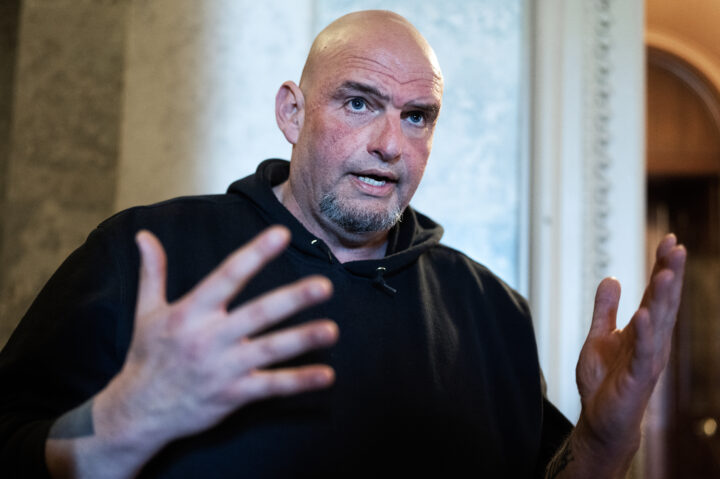
Tom Williams/CQ-Roll Call, Inc via Getty Images
Sen. John Fetterman (D-PA) talks with reporters after the Senate luncheons in the U.S. Capitol on Tuesday, March 11, 2025.
Pro-Israel leaders in the United States on Thursday connected the murder of two Israeli Embassy employees outside the Capital Jewish Museum in Washington to the anti-Israel advocacy seen on the political extremes throughout the country since the Oct. 7, 2023, attacks, characterizing it as a culmination of such rhetoric and, in some cases, the failure of some politicians to denounce it.
The suspected shooter, Elias Rodriguez, shouted “free, free Palestine” and “I did it for Gaza” following the shooting, according to an eyewitness and video from the arrest. He reportedly published a manifesto railing against Israel.
Sen. John Fetterman (D-PA) said that the attack should be a signal to the left that it needs to rethink its rhetoric on Israel and Zionism. He compared the anti-Israel movement in the United States to a “cult” that has been stoked online and is using inherently violent slogans while its members “try to hide behind this idea that it’s free speech to intimidate and terrorize members of the Jewish community.”
He said that too many on the left have failed to call out antisemitism in the anti-Israel movement.
“Why can’t you just call it what it is, and then address and assert the pressure on the aggressor,” which is Hamas,” Fetterman said. “I can’t even imagine having to live with that ever-present antisemitism and what? Why can’t people just acknowledge and call that what it is?”
Fetterman predicted that the same elements of the left that have supported Luigi Mangione, the alleged assassin of UnitedHealthcare CEO Brian Thompson, will also rally behind Rodriguez.
“What part of my party does this come from where it’s like, we try to defend or try to justify assassinating an executive in broad daylight or … somebody [who] guns down” two people at a Jewish event, Fetterman asked incredulously.
Israeli Ambassador Yechiel Leiter connected the shooting to the anti-Israel protests seen on college campuses and elsewhere in the country.
“The point of the matter is that on campuses around this country, where ideas — these are the temples of ideas — where smart ideas, intelligent ideas, moral ideas, truthful ideas, are supposed to be taught, we have useful idiots running around in support of the destruction of Israel,” Leiter said at a press conference.
“This is done in the name of a political agenda to eradicate the State of Israel,” Leiter added. “The State of Israel is now fighting a war on seven fronts. This is the eighth front, a war to demonize, delegitimize, to eradicate the right of the State of Israel to exist.”
He also connected rising global antisemitism to countries like France that have spoken out against Israel and are moving to recognize a Palestinian state.
A coalition of 42 Jewish organizations, in a statement, described the murders as “the direct consequence of rising antisemitic incitement in places such as college campuses, city council meetings, and social media that has normalized hate and emboldened those who wish to do harm.”
William Daroff, the CEO of the Conference of Presidents of Major American Jewish Organizations, said on X, “There is a direct line between demonizing Israel, tolerating antisemitic hate speech in the public square, and violent action.”
“We are now witnessing the deadly consequences of months of relentless antisemitic incitement — amplified by international organizations and political leaders across the globe — since the horrors of October 7,” Daroff said. “This is not a debate over policy; it is the mainstreaming of hatred, and its consequences are measured in blood.”
Rep. Josh Gottheimer (D-NJ) said on X the attack was “the deadly consequence of normalizing Jew-hatred.”
“Since October 7, antisemitic attacks have surged — fueled by violent chants to ‘globalize the intifada’ and slurs like ‘dirty Zionist,’” Gottheimer said.
Rep. Ritchie Torres (D-NY), highlighting a tweet from a local anti-Israel group that praised the attack, said that, “Violence is not a bug but a feature of virulent Anti-Zionism.”
Arizona state Rep. Alma Hernandez called out a series of progressive lawmakers, saying, “spare us the fake outrage.”
“Two Israeli diplomats were murdered in cold blood—and you dare act concerned? Y’all have spent years fueling the hate and antisemitism that’s now exploding across America. Don’t pretend to care,” Hernandez continued, in an X post. “You are constantly surrounded by keffiyehs and “Free Palestine” and have pushed rhetoric that’s radicalized Americans into thinking murdering Jews and harassing them in the streets will somehow “liberate” Palestine and end the so-called genocide. No thanks.”
“We don’t want prayers from politicians who support individuals and organizations that promote this hate and who are being actively supported by said individuals and organizations while they run for office,” Hernandez added.
“You can’t support chants of ‘Globalize the Intifada’ and then be ‘appalled’ when people act it out,” Georgia state Rep. Esther Panitch said on X in response to a statement on the attack from Rep. Ilhan Omar (D-MN) that did not acknowledge that the victims worked for the Israeli embassy and condemned “violence” broadly. Panitch also criticized other progressive Democrats who issued statements on the attack.
Panitch added, “Fascinating that those who campaigned against the Jewish community’s right to define their own experience of antisemitism are the ones who call ‘Globalizing the Intifada’ peaceful protests. The same ones who can’t say the word antisemitism in their posts.”
Jordan Acker, the University of Michigan regent who has been repeatedly targeted with antisemitic harassment and vandalism, drew a direct line between those incidents and demonstrations on the University of Michigan’s campus, and the Wednesday night murders.
“This isn’t protest. It’s a threat. This is what antisemitism looks like — and it’s escalating,” Acker said. “This is part of a terrifying trend: Jews in America being hunted, harassed, and attacked for being visibly Jewish — for existing in public. When we call it antisemitism, we’re told we’re overreacting. That our fear is political. That our pain is inconvenient. We’ve been gaslit for 18 months. Enough.”
He also called out progressives directly, saying “antisemitism isn’t any less dangerous when it comes wrapped in ‘progressive’ language.”
In response to the attack, some of the most prominent far-left critics of Israel on Capitol Hill have offered what many in the Jewish community have seen as half-hearted and inadequate responses.
“My heart breaks for the loved ones of the victims of last night’s attack in D.C. Nobody deserves such terrible violence. Everyone in our communities deserves to live in safety and in peace,” Rep. Rashida Tlaib (D-MI) said, linking to an article highlighting that the victims, Sarah Milgrim and Yaron Lischinsky, were Israeli Embassy workers, but not noting their backgrounds or the circumstances of the shooting in her own post.
Omar noted that the shooting took place at the Capital Jewish Museum but did not acknowledge the victims’ backgrounds and condemned violence broadly.
“I am appalled by the deadly shooting at the Capital Jewish Museum last night. Holding the victims, their families, and loved ones in my thoughts and prayers,” Omar said. “Violence should have no place in our country.”
The New York congressman sparred with Mayor Eric Adams, who said he had no authority to cancel the performance

Gilbert Flores/Variety via Getty Images
Kehlani at the Fashion Trust U.S Awards 2025 held at The Lot at Formosa on April 08, 2025 in Los Angeles, California.
Rep. Ritchie Torres (D-NY) is calling on New York City officials to cancel a Central Park performance at a city-sponsored event by Kehlani, a performer who has called for the destruction of Israel and Zionism.
Kehlani is set to perform in June at a Pride event sponsored by the City Parks Foundation, an independent nonprofit that receives city funding to promote arts, sports, education and other programming in city parks. But Mayor Eric Adams has disputed whether the mayor’s office has any ability to cancel the performance or withhold funds.
Kehlani has posted repeatedly on her Instagram stories calling to “DISMANTLE ISRAEL. ERADICATE ZIONISM,” and calling Zionists “the scum of the Earth.” The performer has also reposted content expressing support for “resistance in all of its forms,” describing Zionists as “evil,” saying that “no one should feel comfortable or safe until Zionism is extinguished” and characterizing all Israelis as settlers.
Other reposts have featured the slogans, “There is only one solution Intifada revolution” and “Long live Palestine, from the river to the sea.”
Torres highlighted Kehlani’s anti-Israel rhetoric in a letter to Mayor Eric Adams, City Parks Foundation Executive Director Heather Lubov and Live Nation Entertainment CEO Michael Rapino, saying, “Our public institutions have a duty to ensure that taxpayer dollars are never misspent on subsidizing or sanitizing antisemitism — especially under the banner of a Pride Event.”
He called on them to cancel the event, adding “her rhetoric flatly contradicts the spirit of Pride Month, which is and must remain a celebration of love and inclusion — not hate and exclusion.”
Torres has also traded messages with Adams about the event on X.
Adams said that the Parks Department “does not select, contract, or pay the artists, and does not fund the City Parks Foundation at all” and that the only city funding it receives is allocated by city council members, not by the mayor or divisions under his supervision.
“Your letter should be addressed to Speaker Adams and her councilmembers who have control over their own discretionary funding,” Adams wrote. “Our administration will not fund organizations that promote antisemitism or any other form of hate.”
He noted that, as a councilmember, Torres himself allocated funding for the City Parks Foundation.
Torres shot back, “The City Charter grants the Mayor the authority to impound city funds. You unquestionably have the power to withhold city funding from any organization or event that provides a platform for antisemitism,” adding, “I find it hard to believe that the most powerful elected official in New York City is powerless to act on a city matter involving city funds.”
The Parks Department, which falls under the mayor’s supervision, also has a contract with the City Parks Foundation to permit festival operations in Central Park.
Torres said he also planned to reach out to Capitol One, a corporate sponsor for the event.
Receiving the group’s inaugural Nita M. Lowey Congressional Leadership Award, the congressman said the ‘future of the Middle East belongs to Israel and the Abraham Accords’

Michael Priest Photography/AJC
Rep. Ritchie Torres (D-NY) receives the inaugural AJC Nita M. Lowey Congressional Leadership Award at the American Jewish Committee Global Forum on April 28, 2025.
Rep. Ritchie Torres (D-NY) offered a message of hope that peace in the Middle East is “as close as we have ever been,” in remarks before more than 2,000 people from 60 countries gathered in Midtown Manhattan on Monday for the second day of the American Jewish Committee Global Forum.
Torres, who was honored with the group’s inaugural Nita M. Lowey Congressional Leadership Award, said that the “future of the Middle East does not belong to the Islamic Republic and its empire of terror.”
“The future of the Middle East belongs to Israel and the Abraham Accords. The future of the Middle East does not belong to hate. The future belongs to hope: hatikva,” Torres continued. “In the grand sweep of history, in the millennia-long Maccabean marathon that is the story of the Jewish people, we are as close as we have ever been to realizing the Abrahamic dream of a world where all the children of Abraham — Jews, Christians and Muslims — can coexist in peace and prosperity. A durable peace is possible, and we as Americans, in the greatest country on earth, have the power — indeed the responsibility — to make it so and make peace.”
Torres also denounced “academics, activists, politicians [and] journalists” who “downplay or even deny the genocidal ideology at the core of” the Oct. 7, 2023, terrorist attacks in Israel.
“You are not part of the solution,” the congressman said, addressing those he condemned. “You are part of the problem.”
AJC has presented the Congressional Leadership Award at its global forums annually since 2001 to members of Congress who have demonstrated a commitment to Israel or the Jewish people. Past recipients include Sens. Joseph Lieberman, John McCain, Hillary Clinton, John Danforth and Richard Lugar as well as Rep. John Lewis.
Earlier this year, the group renamed the award to honor Rep. Nita Lowey (D-NY), who represented Westchester County for more than three decades. Lowey, who died in March at 87, was “a true friend” to AJC, according to its CEO, Ted Deutch.
Other sessions on Monday included “Exposing Bias: The Truth Behind Media Coverage of Israel,” in which former Jerusalem-based Associated Press correspondent Matti Friedman explained that it’s unlikely mainstream media’s anti-Israel bias will change. In a panel on “The Role of the Jewish Community in Responding to Antisemitism on Campus,” University of Michigan Regent Jordan Acker, whose home in a heavily Jewish suburb of Detroit was targeted by anti-Israel vandals several times last year, said that the Trump administration’s federal funding cuts to universities that have not complied with government demands to crackdown on antisemitism risks putting “Jews as the victims.”
The former state representative, who was recently named board chair of the LGBTQ pro-Israel group A Wider Bridge, is running as a stalwart pro-Israel progressive, emulating his ally Rep. Ritchie Torres
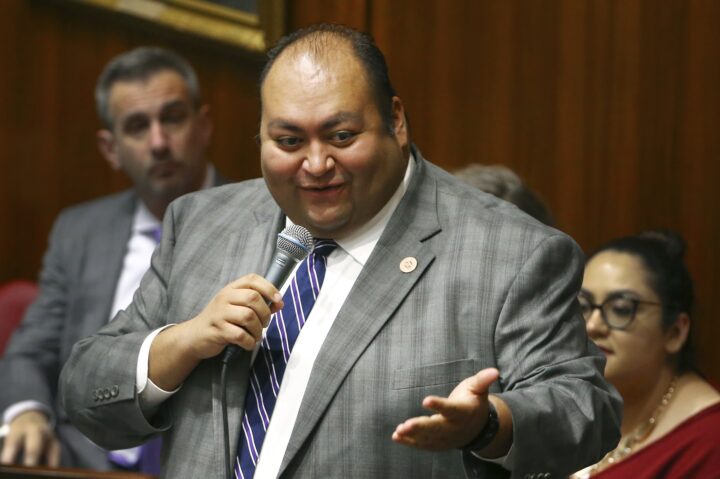
AP Photo/Ross D. Franklin
Arizona Democrat Daniel Hernandez, running for the 9th Congressional District, speaks on the Arizona House of Representatives floor prior to the state of the state address at the Arizona Capitol, Monday, Jan. 14, 2019, in Phoenix.
Former Arizona state Rep. Daniel Hernandez, who is running for the congressional seat vacated by Rep. Raul Grijalva (D-AZ), who died last month after 22 years in office, grew up in a working-class home in Tucson, a child of the desert Southwest. Rep. Ritchie Torres (D-NY) was raised 2,500 miles away in a public housing complex in the southeast Bronx, a child of that borough’s notoriously mean streets.
As different as their sense of place might seem, the two are tied together in a tricky political project that spans their hometowns: trying to carve out a space in the progressive movement for pro-Israel voices in a changing Democratic Party. It’s a narrow needle to thread.
But Hernandez, an outspoken supporter of Israel who was recently named the board chair of the Zionist LGBTQ organization A Wider Bridge, is betting that running as a fiercely pro-Israel progressive — in the mold of Torres, who endorsed Hernandez and called him “the embodiment of the American dream” — is both the right thing to do, as well as good politics.
At the same time, Hernandez knows that the issues of antisemitism and the war between Israel and Hamas are not top of mind for the voters he is trying to woo. He hopes to reach them with an anti-Trump message, pointing out how the president’s policies, such as shuttering large parts of the Education Department, will impact constituents who rely on federal resources.
“When we’re looking at what the needs of this district are, it’s going to be a high focus on cost of living,” Hernandez, 35, said in an interview with Jewish Insider this week. “When we’re looking at this district, it’s one where it’s predominantly working class and it’s predominantly Latino, and that’s my background.”
Yet as he goes door-to-door in the vast district that spans much of Arizona’s southern border with Mexico, pitching himself to voters as a champion for the working class, Hernandez is not shy about the fact that he is also making a play to win over pro-Israel supporters who could have the financial firepower to make a difference in a close primary.
“It is a lot easier to invest in a champion right now, in an open seat and special election in July, where we will have a strong, consistent champion, than having to go after and unseat an incumbent who has been anti-Israel,” Hernandez told JI. “We spent tens of millions of dollars going after anti-Israel voices in the last election. We don’t need to do that here.”
“I keep hearing folks referring to it as this progressive district. It’s a Democratic district where, for many years, it had a progressive member of Congress,” said Hernandez. “But the reality is, the voters in [this congressional district] are asking and needing representation that’s going to work on these kitchen-table issues.”
The strongest opponent Hernandez faces in an already crowded field is Adelita Grijalva, a Pima County supervisor and one of three daughters of Rep. Grijalva. Like her late father, Adelita Grijalva is casting herself as a true-blue progressive, appearing at a March rally with Rep. Alexandria Ocasio-Cortez (D-NY) and Sen. Bernie Sanders (I-VT).
Grijalva has not previously spoken much about Israel or the war in Gaza, but she called for a ceasefire between Israel and Hamas 10 days after the Oct. 7 attacks in 2023. Her father was one of eight Democrats to vote against additional funding for Israel’s Iron Dome missile-defense system in 2021.
Hernandez isn’t concerned that his pro-Israel views diverge from those held by his predecessor. He considers himself a progressive — and he also argues that Grijalva’s brand of progressivism isn’t necessarily what’s desired by local constituents.
“I keep hearing folks referring to it as this progressive district. It’s a Democratic district where, for many years, it had a progressive member of Congress,” said Hernandez. “But the reality is, the voters in [this congressional district] are asking and needing representation that’s going to work on these kitchen-table issues.”
“We are going to meet with all of the candidates to learn their positions, but we know that Daniel would be a strong champion if elected,” Rachel Rosen, chief communications officer at Democratic Majority for Israel, said.
When he was 20 years old, Hernandez interned for former Rep. Gabby Giffords (D-AZ), and he is credited with helping save her life after a gunman attempted to assassinate her at a political event, killing six people and wounding Giffords with a bullet to the head. He later went on to lead Everytown for Gun Safety’s Arizona branch and worked at Planned Parenthood. Hernandez also served on his local school board and spent six years in the state Legislature, which he left in 2023 after losing a congressional bid in a nearby district in 2022.
“The biggest thing that I learned is: Run in a district where people know you. That’s the biggest benefit,” said Hernandez. His campaign raised $300,000 in its first eight days, Hernandez shared with JI, a figure he intends to tout to donors and outside groups.
“It showed that I am a strong and viable candidate. So I’m going to be talking to everybody and continuing to engage with different groups and stakeholders,” he stated. “But I think for me, it’s important to show people that I’m able to run a strong and winning campaign in a district that I have lived in my whole life and that I’ve represented for a large part of my life.”
Less than two weeks into the race and with time until the July 15 primary, major pro-Israel organizations are so far holding their endorsements. AIPAC’s political arm has not yet decided whether to enter the race, a spokesperson told JI. Rachel Rosen, chief communications officer at Democratic Majority for Israel, said the group is also undecided.
“We are going to meet with all of the candidates to learn their positions, but we know that Daniel would be a strong champion if elected,” Rosen said.
“It shouldn’t just be on the few members of the Congress that are Jewish to be the ones standing up for Israel and to make sure that we’re doing everything we can to support this relationship,” Hernandez said.
The Mexican-American activist has two sisters, Conseulo and Alma, who are both Democratic lawmakers in the state legislature. Conseulo and Alma converted to Judaism after learning their maternal grandfather was Jewish. All three have emerged as rising stars in the world of pro-Israel Democratic politics.
While Hernandez did not follow his sisters’ path to Judaism, he said Jewish elected officials cannot and should not be the only ones who care about antisemitism and the Jewish state.
“It shouldn’t just be on the few members of the Congress that are Jewish to be the ones standing up for Israel and to make sure that we’re doing everything we can to support this relationship,” he explained.
The artist, known as Fredwreck, has worked with prominent artists and on the 2022 Super Bowl halftime show
Al Drago-Pool/Getty Images
Rep. Ritchie Torres, a Democrat from New York, speaks at a House Financial Services Committee hearing on oversight of the Treasury Department and Federal Reserve coronavirus pandemic response on Capitol Hillon September 30, 2021 in Washington, DC.
Prominent Palestinian-American DJ and producer Farid Karam Nassar, who goes by the stage name Fredwreck, targeted Rep. Ritchie Torres (D-NY) earlier this week with a series of explicit racial slurs, citing Torres’ support for Israel.
Nassar, who has worked with artists including Eminem, Britney Spears, Ice Cube, 50 Cent, Dr. Dre and Snoop Dogg, won a Grammy in 2020 for an album with R&B artist Anderson .Paak and he assisted with the 2022 Super Bowl halftime show.
In response to a video of a recent public confrontation between Torres and a pro-Palestinian activist, Nassar described Torres as a “s@mbo koon,” using misspellings of two racial slurs for Black people.
Nassar also commented, “He’s lucky I didn’t run into him on the streets.”
The DJ followed up with a direct message to Torres’ Instagram account, shared with Jewish Insider by the congressman’s office, in which he called Torres a “sell out as House Slave” and made a remark referencing AIPAC and gay sex. Torres is openly gay.
“Violence is not a bug but a feature of the Free Palestine movement,” Torres said in a statement. “No amount of harassment and intimidation will deter me from standing up and speaking out against AntiZionism and antisemitism.”
Nassar did not respond to a message requesting comment.
Nassar accused Israel of genocide on Oct. 18, 2023, and posted on Instagram “From the River to the Sea… We will be free… #endapartheidisrael.”
Torres said DSA-backed Zohran Mamdani is ‘treacherously smart and should not be underestimated’
Al Drago-Pool/Getty Images
Rep. Ritchie Torres, a Democrat from New York, speaks at a House Financial Services Committee hearing on oversight of the Treasury Department and Federal Reserve coronavirus pandemic response on Capitol Hillon September 30, 2021 in Washington, DC.
In announcing his endorsement on Monday of Andrew Cuomo in the race for mayor of New York City, Rep. Ritchie Torres (D-NY) argued that the state’s former governor would be best equipped to confront what he called “a level of extremism unprecedented in the history of New York.”
Torres also singled out one candidate as a source of concern, citing Zohran Mamdani, an assemblyman from Queens, as unfit for office because of his close ties to the Democratic Socialists of America, which has faced backlash for promoting a rally after Hamas’ Oct. 7, 2023, attacks where some participants were seen glorifying the violence and voicing antisemitic sentiments.
In an interview with Jewish Insider on Tuesday, Torres suggested his words of caution had in some ways been confirmed as a new poll showed Mamdani emerging from the crowded field to claim second place behind Cuomo, who is preparing to announce a comeback campaign in the coming days.
Mamdani, whose outspoken criticism of Israel and support for the Boycott, Divestment and Sanctions movement has raised alarms among the city’s Jewish leaders, claimed only 12% among likely Democratic primary voters, trailing Cuomo, with 38%, by a wide margin. But Torres still warned that the far-left candidate’s growing popularity represents a major threat as the June primary draws closer.
“The mainstreaming of extremism into the New York City mayor’s office is a greater danger than people realize,” he told JI, even as the 2024 presidential election showed a distinct shift to the right among voters across New York City. “The DSA candidate is treacherously smart and should not be underestimated.”
Torres, a Bronx representative who is among the fiercest supporters of Israel in the House, referred to Mamdani’s statement responding to the Hamas attacks, which drew criticism for equivocating over the violence. Mamdani, Torres argued, “could not bring himself to condemn” the terrorist group “for perpetrating the deadliest massacre of Jews since the Holocaust.”
“If you cannot condemn with moral clarity a terrorist organization for perpetrating the mass murder, maiming, mutilation, rape, torture and abduction of Jews, then you have no business being mayor of the most Jewish city in the world” outside of Israel, Torres said.
A spokesperson for Mamdani’s campaign declined to comment on Tuesday.
Mamdani has been a frequent critic of Cuomo’s pro-Israel advocacy, accusing him of “defending a genocide” by joining a legal team for Israeli Prime Minister Benjamin Netanyahu against the the International Criminal Court’s war crime charges. Mamdani, for his part, has said he would arrest Netanyahu after the ICC issued a warrant for Netanyahu.
In assessing the current primary field, which has drawn several left-wing candidates, Torres said he ultimately concluded that Cuomo, who resigned from the governorship in 2021 amid allegations of sexual misconduct that he denies, “has the courage to stand up to” what he called “the antisemitism of the New York City Democratic Socialists of America.”
“In a post-Oct. 7 world, we can no longer afford a political establishment that appeases antisemitism,” he said. “We need a fearless and formidable fighter like Andrew Cuomo. The nature of Andrew Cuomo is not to capitulate to the antisemitism of the far left. His nature is to crush it.”
Torres declined to comment on the other leading primary challengers to Mayor Eric Adams, who has faced mounting calls to resign as he fights a federal corruption case that has sunk his approval ratings and in many ways paralyzed his government. The Democratic primary field also includes Brad Lander, the city comptroller; Scott Stringer, the former comptroller; and state Sens. Jessica Ramos and Zellnor Myrie.
As he readies his campaign, Cuomo is building support in the Jewish community, even as he faces continued resentment among Orthodox leaders who viewed his crackdown on religious gatherings amid the COVID-19 pandemic as discriminatory.
Torres, who is the first elected official to support Cuomo’s nascent campaign, is among a growing number of city leaders and groups to preemptively back the candidate in waiting, such as Carl McCall, the former state comptroller, and the New York City District Council of Carpenters.
Torres, who called for Cuomo to resign three years ago but has said he is not interested in “relitigating” his departure from office, backed Andrew Yang for mayor four years ago. The congressman is himself now weighing a campaign to challenge Gov. Kathy Hochul, a fellow Democrat, in next year’s election.
In the meantime, Torres said he is prepared to help Cuomo when he enters the race, which could come as soon as this weekend. He clarified that his early support is an “affirmation” of the former governor “rather than a negation of any other candidate” in the primary.
“Having said that,” the DSA “is a singular danger to the city,” Torres told JI, calling the group’s conduct in the wake of Hamas’ attacks “abominable” amid a recent surge in antisemitism sparked in part by the war in Gaza.
“New York City is in danger of becoming ground zero for anti-Zionism and antisemitism in America,” Torres warned.
Torres’s resolution accuses Carlson and Cooper of ‘perpetuating harmful falsehoods, fostering antisemitism and undermining the fight against hate and bigotry’

Chip Somodevilla/Getty Images
Tucker Carlson speaks on stage on the fourth day of the Republican National Convention at the Fiserv Forum on July 18, 2024 in Milwaukee, Wisconsin.
Rep. Ritchie Torres (D-NY) introduced a new resolution on Friday blasting Tucker Carlson for hosting Holocaust revisionist Darryl Cooper on his online show last month.
Carlson’s interview with Cooper became a high-profile issue in the presidential race, given former President Donald Trump and Sen. J.D. Vance’s (R-OH) ongoing associations with Carlson, and their refusals to condemn Carlson. Torres’ resolution could bring new attention to the situation — which has faded from headlines — in the final weeks of the presidential race.
Torres’ resolution, which currently does not have any co-sponsors, accuses Carlson and Cooper of “perpetuating harmful falsehoods, fostering antisemitism and undermining the fight against hate and bigotry.” It offers strong condemnations of both men.
“Carlson’s platforming of these harmful views represents an endorsement of Holocaust denial, which emboldens antisemitism and undermines efforts to combat hate and misinformation,” Torres’s resolution reads. “Tucker Carlson’s failure to critically challenge or denounce these falsehoods on his platform contributes to the spread of Nazi propaganda and historical revisionism, posing a direct threat to historical truth and the dignity of Holocaust survivors.”
Torres said he introduced the resolution because he said that too many on the right have been silent about Carlson and Cooper. He condemned what he described as “selective outrage” about antisemitism only when it comes from the opposite political camp.
“Tucker Carlson has immense influence on the political right. His decision to platform the Hitler apologia of Darryl Cooper is too dangerous to be ignored.” Torres told JI. “If you refuse to condemn antisemitism in your own ideological backyard, then you’re not part of the solution. You’re part of the problem. There are many on the right who have been deafeningly silent about the antisemitism of Tucker Carlson.”
Asked whether he expects any Republicans to sponsor his resolution, which makes no explicit mention of politics, Torres said that Congress “should stand for the proposition that America should have zero tolerance for antisemitism, zero tolerance for Holocaust denial and Hitler apologia. If that is not, if that does not transcend partisanship, then I’m not sure what would.”
The resolution also ties the conversation to trends of increasing Holocaust revisionism over the past decade. It lays out, in significant detail, Cooper’s false claims about the Nazis and the Holocaust and contrasts them with specific historical facts disproving them.
Torres added that he finds it “troubling that both Donald Trump and J.D. Vance are so close to Tucker Carlson as to be co-opted by him, and neither one has condemned the profound disservice, not only to the Jewish community but also to the truth itself.”
The Trump campaign and Carlson’s media company did not immediately respond to requests for comment.
The meeting came as a result of several antisemitic incidents CUNY students have faced just weeks into the new academic year

Haley Cohen
Mayor Eric Adams and Rep. Ritchie Torres (D-NY) met with CUNY Jewish students at City Hall to discuss antisemitism on campus, Sept. 23, 2024
Jewish student leaders from the City University of New York shared firsthand accounts of campus antisemitism with Rep. Ritchie Torres (D-NY) and New York City Mayor Eric Adams at a roundtable inside City Hall on Monday.
The meeting came as a result of several antisemitic incidents CUNY students have faced just weeks into the new academic year. Many of the students in attendance said that antisemitism is more intense on campus than it was last year. They shared that they were met with loud protests outside of a recent event intending to welcome new Jewish students to campus.
On Sep. 3, some CUNY Jewish students were followed to a kosher restaurant in midtown Manhattan, where pro-Palestinian student demonstrators blockaded the entrance and shouted threats at Jewish customers.
Also this month, CUNY’s Baruch College tried to cancel an annual campus Rosh Hashanah celebration over safety concerns. Baruch’s president, Szu-yung David Wu, initially told students that he could not “guarantee their security.” The decision was later reversed on the condition that Hillel’s name would not be on the Sept. 26 event due to fears of anti-Israel protests.
“We’ve been fighting for almost a year now with all of the antisemitism going on both on campus and in the city,” Maya Gavriel, a third-year student studying accounting at Baruch, told Jewish Insider at the event. “Being able to speak with leaders who can actually make change, and they’re listening to what’s happening, feels like I’m finally getting an opportunity to be proud about being Jewish. I’m under the impression that [Adams and Torres] care about wanting to give us the resources to make a change, but it will only come with time and a lot of pressure.”
Gavriel noted that she’s particularly appreciative of Torres for meeting with Baruch Jewish students immediately after the Rosh Hashanah event cancellation. “He set up the meeting with Mayor Adams and the NYPD,” she said. “He listened and gave us resources and that’s how I know things are happening. That’s why we keep showing up to tell our stories and we’re not stopping this fight.”
Students expressed that the NYPD did not move fast enough last year to break up demonstrations.
Adams told the group of about a dozen students that “we need action from you guys to ask them to go onto campus.”
“Our lawyers made it clear you don’t have the authority to go on those college campuses without the permission of the individuals of the schools, the presidents and the faculties,” the mayor said after listening to students’ concerns and experiences.
“Whatever the law allows me to do, I am going to do it to ensure New Yorkers are safe,” Adams said.
“Free expression is vital to a free society,” said Torres. “But there is a difference between free expression and harassment [and] intimidation. What we’re seeing in our colleges and universities is the creation of a hostile environment in violation of Title VI [of the Civil Rights Act of 1964].”
Several Jewish members of Adams’ team also addressed students’ concerns at the roundtable, including Menashe Shapiro, deputy chief of staff and senior advisor to the mayor; Richie Taylor, deputy chief of the NYPD and Fabien Levy, deputy mayor for communications.
Shafik is the fourth Ivy League president to step down in the last year amid growing antisemitism and anti-Israel activism at elite universities

Indy Scholtens/Getty Images
Columbia University President Minouche Shafik visits Hamilton Hall on the campus of Columbia University on May 1, 2024 in New York City.
Columbia University President Minouche Shafik announced her resignation on Wednesday, days before the start of the school year — and months after the end of a chaotic school year that saw her testify before Congress about antisemitism and navigate the unruly fallout of the first anti-Israel encampment in the nation.
Dr. Katrina Armstrong, CEO of Columbia’s Irving Medical Center, will serve as interim president, a university spokesperson confirmed to Jewish Insider. A source familiar said Armstrong has already been in touch with Hillel leadership at Columbia.
News of Shafik’s resignation was first reported by the Washington Free Beacon’s Eliana Johnson. Shafik is the fourth Ivy League president to step down in the last year amid rising anti-Israel activism on campuses, following the University of Pennsylvania’s Elizabeth Magill, Harvard’s Claudine Gay and Cornell University’s Martha Pollack.
“I have had the honor and privilege to lead this incredible institution, and I believe that — working together — we have made progress in a number of important areas,” Shafik, who only started in the role in July 2023, wrote in an email to the Columbia community.
“However, it has also been a period of turmoil where it has been difficult to overcome divergent views across our community. This period has taken a considerable toll on my family, as it has for others in our community. Over the summer, I have been able to reflect and have decided that my moving on at this point would best enable Columbia to traverse the challenges ahead,” she wrote.
Following the Oct. 7 Hamas attacks, Columbia, like other American universities, saw an uptick in antisemitism and targeting of Zionist students. But in an April hearing before the House Education and the Workforce Committee, Shafik avoided the kind of viral moment that dogged her colleagues at the University of Pennsylvania, Harvard and the Massachusetts Institute of Technology.
But when she went back to Manhattan, she faced the first anti-Israel encampment at an American university. Her decision to call in the police to break up the demonstration set off a wave of anger among many students and faculty members on campus and sparked dozens of other solidarity encampments at other universities.
From there, her leadership was under a microscope. Following a number of antisemitic incidents related to the encampment, several members of Congress from both parties went to Columbia to speak to Jewish students and show solidarity.
In a statement, the Anti-Defamation League said it is “saddened that the leadership of another flagship university has crumbled under the weight of antisemitism on its campus,” calling on the school to move quickly to fill the leadership vacancy before the fall semester.
House Speaker Mike Johnson (R-LA), in a statement first shared with JI, cheered Shafik’s decision to step aside: “As a result of President Shafik’s refusal to protect Jewish students and maintain order on campus, Columbia University became the epicenter for virulent antisemitism that has plagued many American university campuses since Hamas’ barbaric attack on Israel last fall.”
“I stood in President Shafik’s office in April and told her to resign, and while it is long overdue, we welcome today’s news. Jewish students at Columbia beginning this school year should breathe a sigh of relief…We hope that President Shafik’s resignation serves as an example to university administrators across the country that tolerating or protecting antisemites is unacceptable and will have consequences,” Johnson added.
Rep. Virginia Foxx (R-NC), the chair of the House Committee on Education and the Workforce, said that, under Shafik’s leadership “a disturbing wave of antisemitic harassment, discrimination, and disorder engulfed Columbia university’s campus” and students were allowed to break the law with impunity.
“Columbia’s next leader must take bold action to address the pervasive antisemitism, support for terrorism, and contempt for the university’s rules that have been allowed to flourish on its campus,” Foxx continued,
Rep. Elise Stefanik (R-NY), a prominent member of the House Committee on Education and the Workforce, crowed, “THREE DOWN, so many to go,” adding that her “failed presidency was untenable and that it was only a matter of time before her forced resignation.”
She added, “We will continue to demand moral clarity, condemnation of antisemitism, protection of Jewish students and faculty, and stronger leadership from American higher education institutions.”
Rep. Mike Lawler (R-NY) told JI that the resignation was “long overdue.”
“I have been calling for President Shafik to be ousted or resign ever since her abysmal failure to condemn Columbia’s antisemitic outbursts or ensure the safety of Jewish students on her campus,” Lawler said. “Let this be a lesson to all who waver in the face of evil.”
Rep. Jared Moskowitz (D-FL) said that “when President Shafik failed to enforce the code of conduct and protect Jewish students just trying to walk to class safely, she failed at her job and allowed a hostile, antisemitic environment to escalate.”
He asserted that similar treatment of any other minority group would have been quickly stopped by school administrators and that signs reading “go back to Poland” displayed just outside Columbia’s gates when he visited the campus have stuck with him.
Rep. Ritchie Torres (D-NY) called Columbia “ground zero for campus antisemitism in NYC,” urging the new leadership to “summon the moral clarity and the moral courage to confront the deep rot of antisemitism at Columbia’s core.”
But Columbia’s problems didn’t stop with the encampment. In late April, student protesters occupied a campus administrative building, leading to hundreds of arrests by police. (The charges have since been dropped against most student protesters.)
Two days later, President Joe Biden condemned unlawful protests at U.S. universities. “Destroying property is not a peaceful protest. It’s against the law. Vandalism, trespassing, breaking windows, shutting down campuses, forcing the cancellation of classes and graduation — none of this is a peaceful protest,” he said in a White House address in May. “It’s against the law.”
In May, the faculty of arts and sciences — which was mostly supportive of the anti-Israel encampment — approved a vote of no confidence in Shafik.
Columbia made news earlier this month when three deans who had been placed on leave over exchanging antisemitic text messages resigned.
And as recently as this week, lawmakers demanded that the school reimburse the New York Police Department for costs incurred in clearing the encampment on the Columbia campus.
Brian Cohen, executive director of Columbia/Barnard Hillel, declined to comment on Shafik’s departure but praised Armstrong’s appointment as interim president.
“I think very highly of Dr. Armstrong and I know many colleagues feel the same way,” Cohen told JI. “She is a strong leader — when there were issues that needed to be addressed at the Medical Center, Dr. Armstrong was quick to respond and to address the issues.”
Jewish Insider Congressional correspondent Emily Jacobs contributed to this report.
Rep. Ritchie Torres, their Democratic House colleague, called the lawmakers’ views ‘repulsive’ and ‘reprehensible’

Tom Williams/CQ-Roll Call, Inc via Getty Images
Rep. Rashida Tlaib (D-MI) attends the House Financial Services Committee on Wednesday, March 29, 2023.
Reps. Rashida Tlaib (D-MI) and Cori Bush (D-MO) blamed U.S. military aid to Israel for contributing to the massive Hamas terror attack on Israel yesterday, which has left more than 700 Israelis dead. Tlaib also described Hamas’ actions as “resistance” to Israeli “apartheid.”
The comments come as most U.S. lawmakers have offered strong support to Israel in the conflict, without many of the typical calls for cease-fires and de-escalation by both sides in the hours following the onset of the attack. The exception to this has been members of the far-left Squad and a handful of other lawmakers aligned with them.
“I am determined as ever to fight for a just future where everyone can live in peace, without fear and with true freedom, equal rights, and human dignity,” Tlaib said in a statement on Sunday. “The path to that future must include lifting the blockade, ending the occupation and dismantling the apartheid system that creates the suffocating, dehumanizing conditions that can lead to resistance.”
Tlaib added that “as long as our country provides billions in unconditional funding to support the apartheid government, this heartbreaking cycle of violence will continue.”
Bush, in a similar statement on Saturday, said she was “heartbroken” by the violence and loss of life, “following attacks by Hamas militants on Israeli border towns and Israeli military bombardment of Gaza.”
“As part of achieving a just and lasting peace, we must do our part to stop this violence and trauma by ending U.S. government support for Israeli military occupation and apartheid,” Bush continued.
Rep. Ritchie Torres (D-NY) condemned the comments by his colleagues.
“U.S. aid to Israel is and should be unconditional, and never more so than in this moment of critical need,” Torres told Jewish Insider in a statement. “Shame on anyone who glorifies as ‘resistance’ the largest single-day mass murder of Jews since the Holocaust. It is reprehensible and repulsive.”
Rep. Josh Gottheimer (D-NJ) highlighted the barbarism committed by Hamas terrorists in his own response.
“Two of my colleagues called for America to end assistance to Israel, despite the countless images of Israeli children, women, men, and elderly, including Americans, murdered by radical Iranian-backed Hamas terrorists,” Gottheimer told JI. “It sickens me that while Israelis clean the blood of their family members shot in their homes, they believe Congress should strip U.S. funding to our democratic ally and allow innocent civilians to suffer.”
Rep. Haley Stevens (D-MI), who serves in the Michigan delegation with Tlaib, distanced herself from Tlaib’s comments in a statement to JI.
“We must continue to come together as a Congress and a country to disavow terrorism and support the Jewish state, our democratic ally, Israel,” Stevens said. “Israel has a right to exist and defend herself.”
None of the other Democratic members of Michigan’s House delegation responded to requests for comment.
Israeli Ambassador to the U.S. Michael Herzog responded directly to Tlaib, in an impassioned statement on X, formerly known as Twitter.
“How much more blood needs to be spilled for you to overcome your prejudice and unequivocally condemn Hamas, a U.S.-designated terror organization?” Herzog wrote. “Hundreds of innocent Israeli civilians massacred in cold blood on a holy day. Babies kidnapped from their mother’s arms and taken to Gaza. An 85-year-old woman in a wheelchair and a Holocaust survivor taken hostage. Is that not enough, @RashidaTlaib?”
At the same time, a number of New York Democrats condemned a Democratic Socialists of America rally on Sunday in New York’s Times Square expressing “solidarity with the Palestinian people and their right to resist 75 years of occupation and apartheid.”
Senate Majority Leader Chuck Schumer (D-NY) called the rally “ill-timed” and “cold-hearted.”
“We’ve seen unprecedented viciousness coming from Hamas aimed at innocent families and children,” Schumer said. “Everyone — no matter your views — should condemn this brutal act.”
Rep. Ritchie Torres (D-NY) said, “The NYC-DSA is revealing itself for what it truly is — a deep rot of antisemitism.”
He added, “There is a special place in hell for those who glorify the cold blooded murder of civilians and children… The DSA should be universally condemned for its genocidal celebration of Israel’s destruction.”
Rep. Pat Ryan (D-NY) called the rally “an absolute disgrace” and “blatant antisemitism.”
“These actions are an insult to the memories of the innocent men, women, and children brutally murdered,” Ryan continued.
Through a spokesperson, House Minority Leader Hakeem Jeffries (D-NY) also condemned the rally.
“Leader Hakeem Jeffries strongly and unequivocally condemns the hate-filled rally held by the DSA in [NYC] and any effort to support the barbaric, inhumane and despicable terrorist attack by Hamas on the State of Israel and its citizens,” spokesperson Andy Eichar said.
New York Gov. Kathy Hochul said the rally was “abhorrent and morally repugnant.”
Former Rep. Mondaire Jones (D-NY), who is currently running for a House seat in the New York City suburbs, said that “no one should support terrorist attacks against Israel” and that “today’s rally by the NYC DSA is despicable.” He added that “Hamas alone is responsible for this heinous violence.”
Brad Lander, the left-wing NYC comptroller who has in the past called for conditioning U.S. aid to Israel — and is affiliated with the DSA — disavowed the group’s rally.
“Today’s DSA rally — which effectively celebrated Hamas’ murder & kidnapping of hundreds of Israeli civilians, including children & grandparents — was abominable,” Lander said. “There is no place for glorifying terror, left, center, or right.”
Please log in if you already have a subscription, or subscribe to access the latest updates.
 Continue with Google
 Continue with Apple

