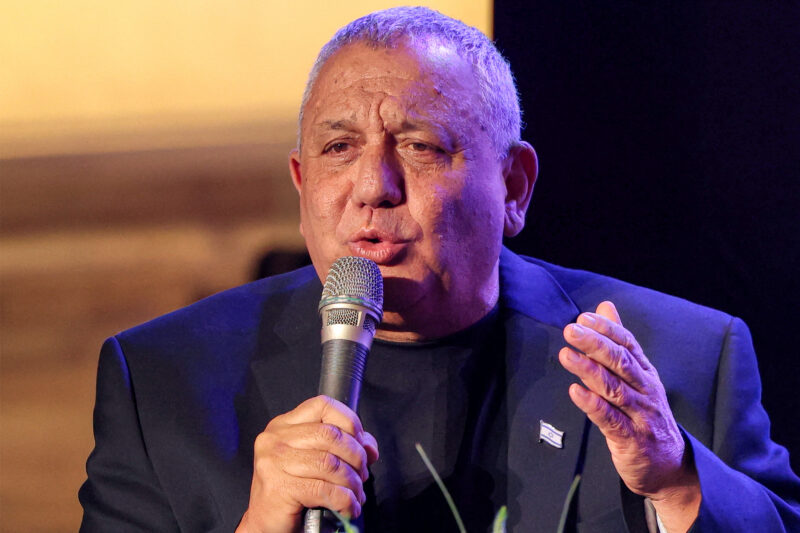

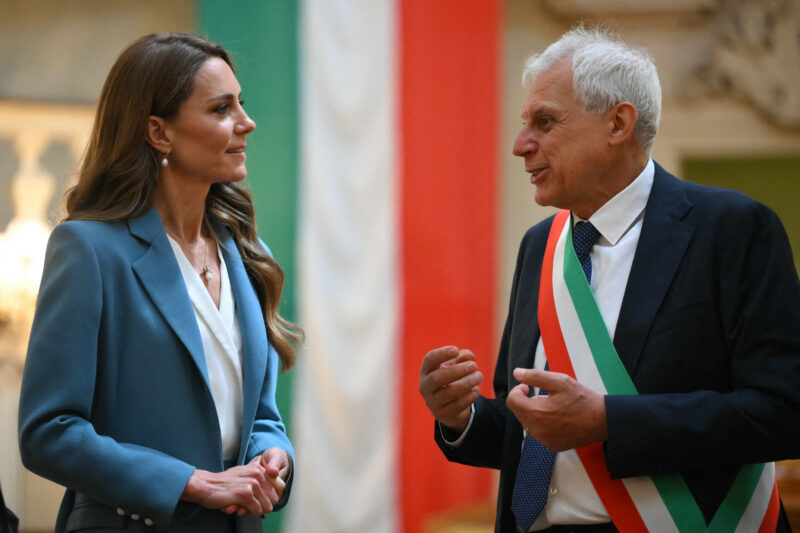
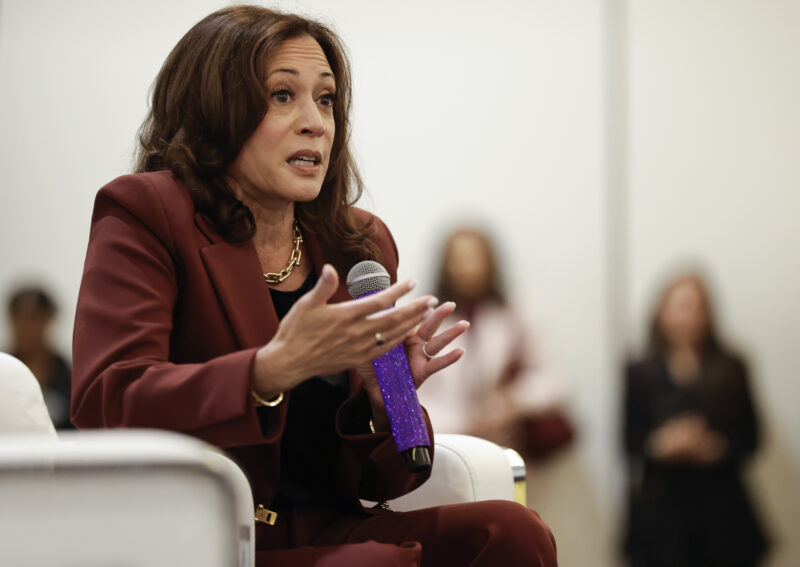
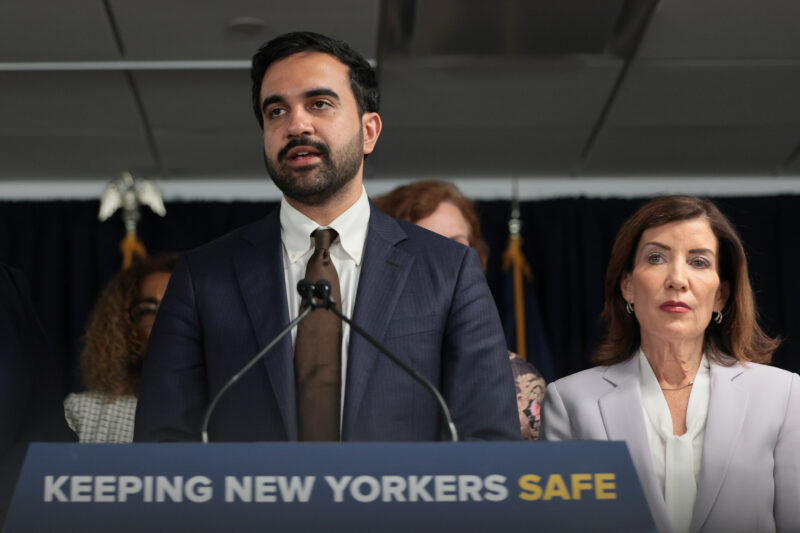












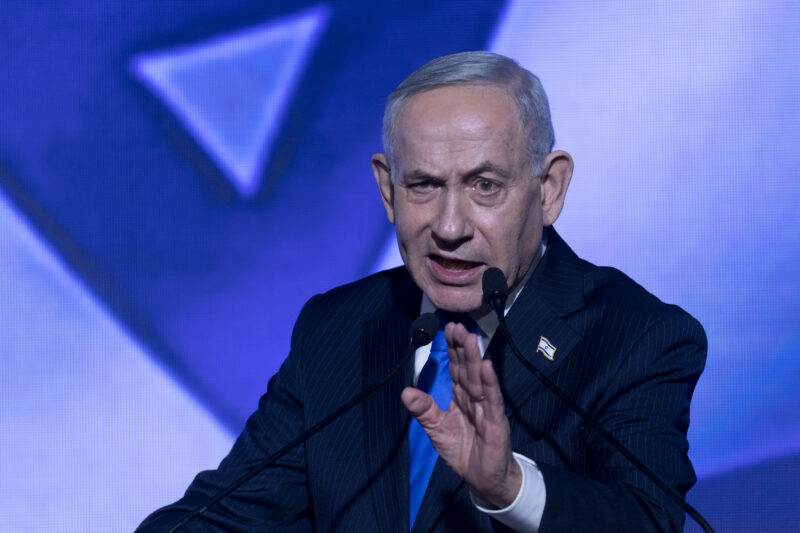

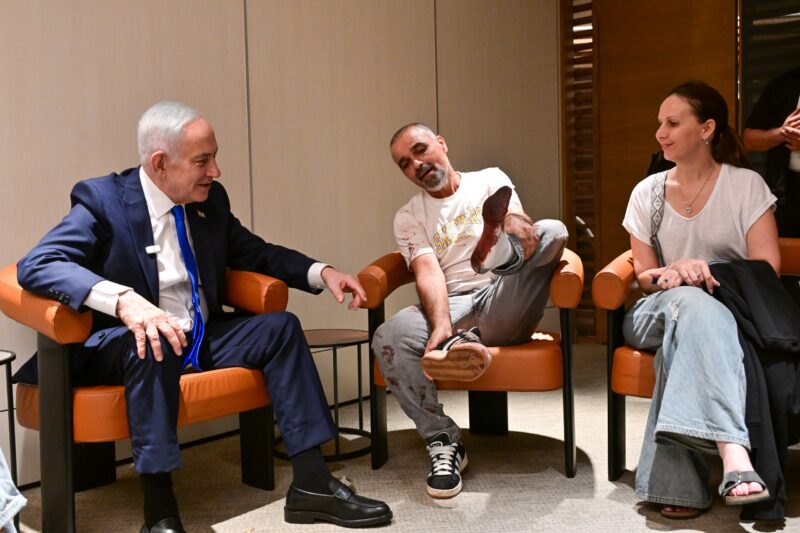

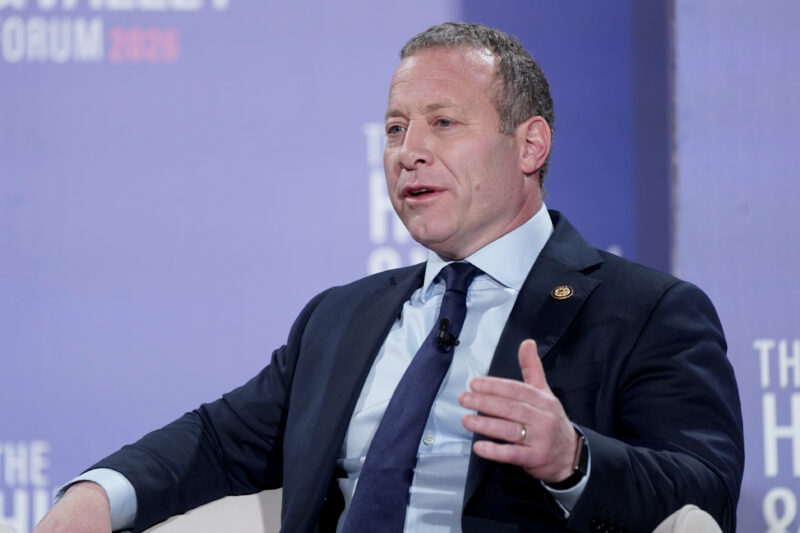



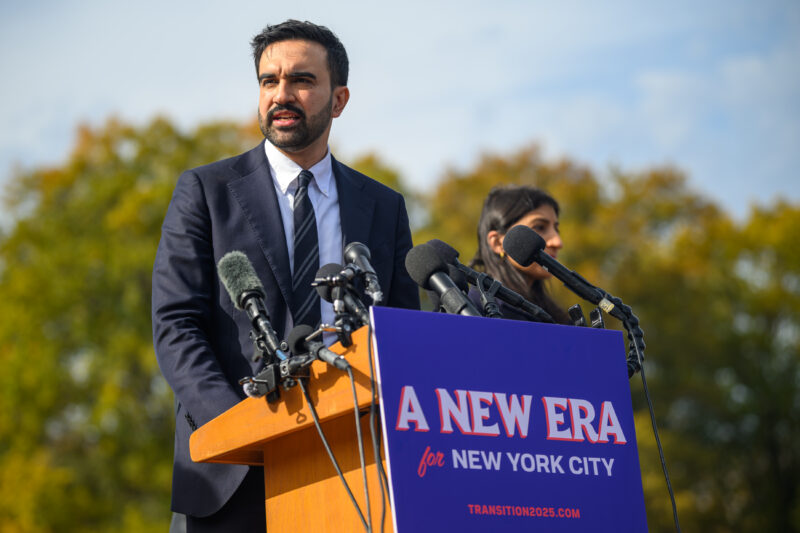

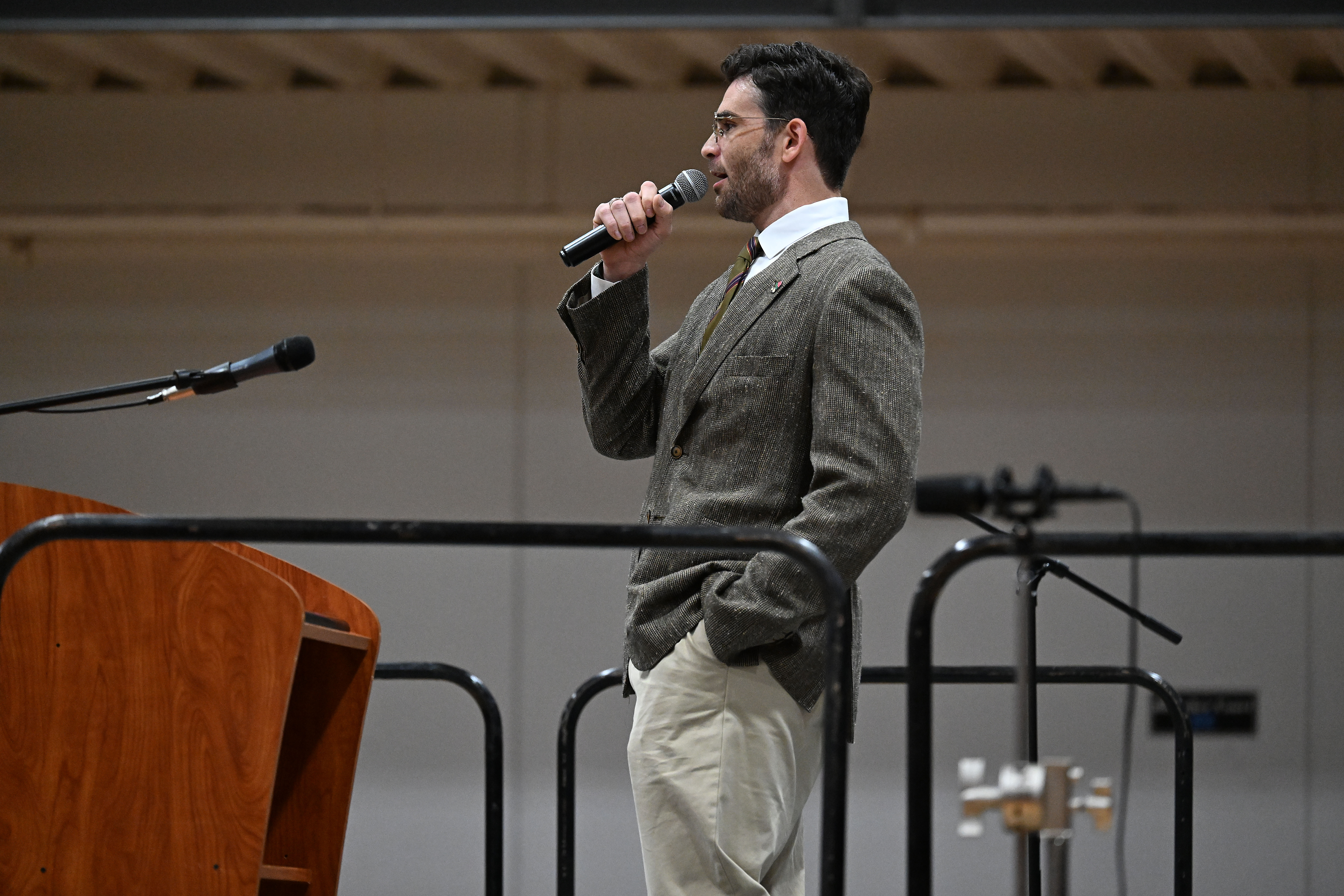










Trump added that ‘if Israel has the wrong leader, which would be anyone other than Bibi, America will have to do this work ourselves, and I am not inclined to do so’
Prime Minister's Office
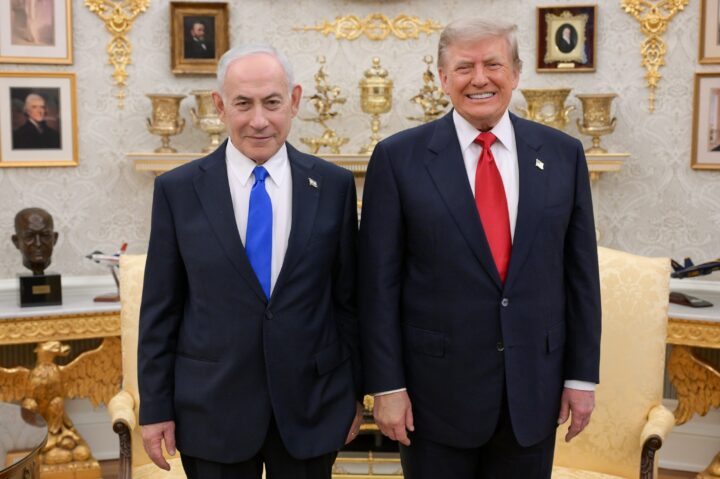
Israeli Prime Minister Benjamin Netanyahu meets with President Donald Trump in the Oval Office on July 28, 2026.


 Add JewishInsider on Google
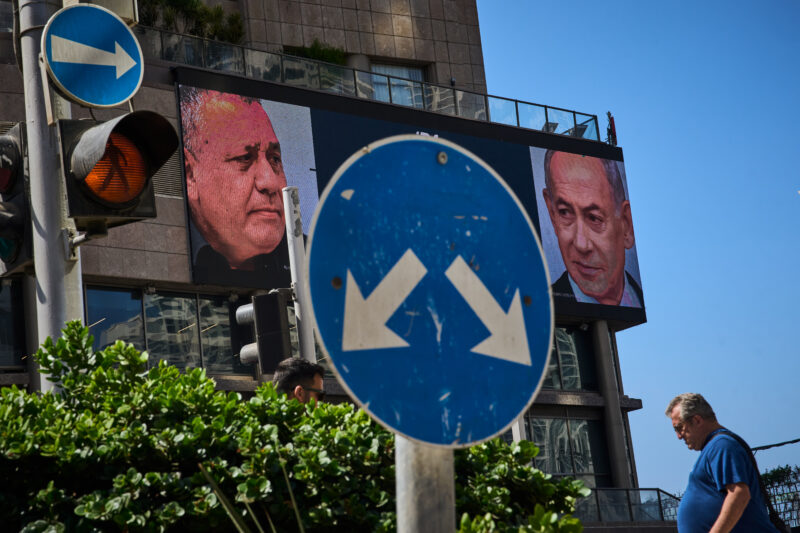
President Donald Trump endorsed Israeli Prime Minister Benjamin Netanyahu on Sunday, ahead of the Knesset election set for Oct. 27.
Addressing a Truth Social post to “the great people of Israel,” Trump called Netanyahu “a great warrior prime minister and an even greater partner for peace in combatting the Islamic Republic of Iran with its 51-year-old chant “death to Israel, death to America!”
Trump said that “if Israel has the wrong leader, which would be anyone other than Bibi, America will have to do this work [of finishing the war against Iran] ourselves, and I am not inclined to do so.”
“Bibi Netanyahu has been strong, brave and brilliant in the face of tremendous opposition, including that coming from even Israel itself,” the president added. “Normal men or women in such situations would have wilted under the pressure, but Bibi did not wilt, he actually got stronger.”
Trump concluded that his statement was his “complete and total endorsement of Bibi Netanyahu in his upcoming race for reelection as prime minister of Israel.”
Immediately after Trump published the endorsement, Netanyahu posted on X: “Thank you President Trump for the tremendous support and joint work. Together we will complete our mission.”
The post was accompanied by a video featuring Trump’s past remarks praising the prime minister.
Trump previously hesitated to endorse Netanyahu, not wanting to repeat what happened in Hungary earlier this year, where he and Vice President J.D. Vance supported Viktor Orban, who lost, but the Likud campaign shared polls with Trump that convinced him that the right was likely to win the upcoming election, Ma’ariv reported.
Last week, following a report that the Trump administration supported a unity government of Netanyahu and his rival Gadi Eisenkot, U.S. Ambassador to Israel Mike Huckabee posted on X that “the US government is NOT trying to manipulate Israel’s election or telling [Netanyahu] what to do. Period. Full stop.”
Trump first endorsed Netanyahu in the 2013 Knesset election, when the former was still a reality TV fixture.
Trump is more popular in Israel than in any country in the world other than the Philippines, according to a Pew Research Center poll taken earlier this year, in which over 66% of Israelis viewed him favorably.
Plus, Dems seek to block Saudi nuclear deal

Scott Olson/Getty Images
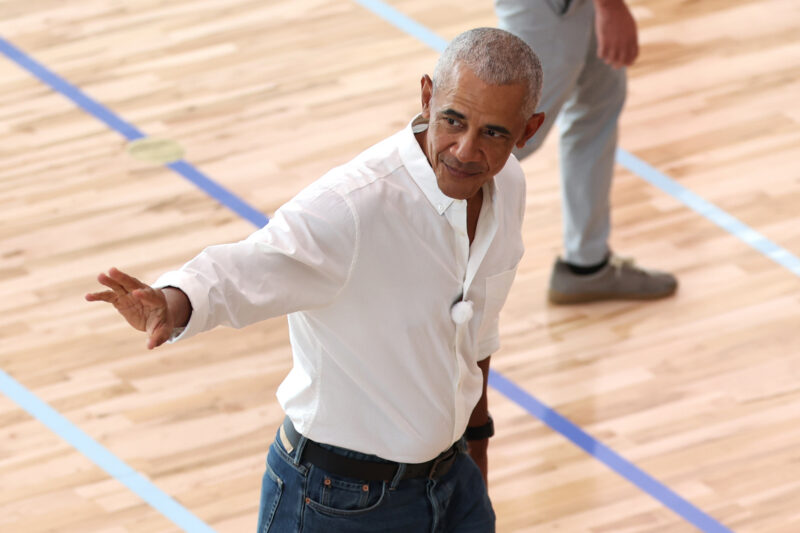
Former President Barack Obama speaks to attendees at the Obama Foundation Democracy Forum on November 03, 2023 in Chicago, Illinois.
Good Thursday afternoon.
This P.M. briefing is reserved for our premium subscribers like you — offering a forward-focused read on what we’re tracking now and what’s coming next.
Today’s Daily Overtime was curated by JI U.S. Editor Danielle Cohen-Kanik.
📡On Our Radar
Notable developments and interesting tidbits we’re tracking
U.S. Ambassador to Israel Mike Huckabee met quietly in recent days with Yashar party leader Gadi Eisenkot amid the final stretch of Israel’s high-stakes election campaign, Gili Cohen reports for Jewish Insider — the first known time U.S. officials have met with the former IDF chief of staff, who is considered Israeli Prime Minister Benjamin Netanyahu’s chief rival in the contentious race…
Eisenkot vowed in a speech today that he would end Hamas rule in the Gaza Strip within 18 months of becoming prime minister, either through fully enacting the U.S.-led Gaza peace plan or through military action if necessary…
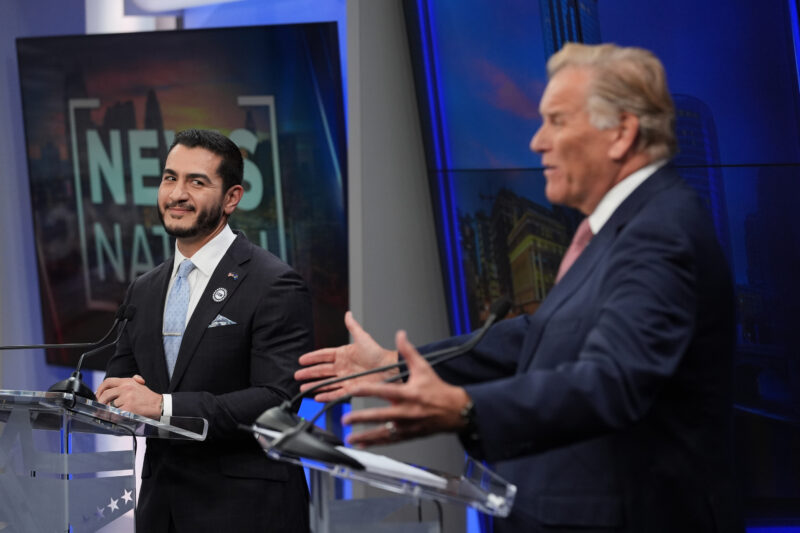
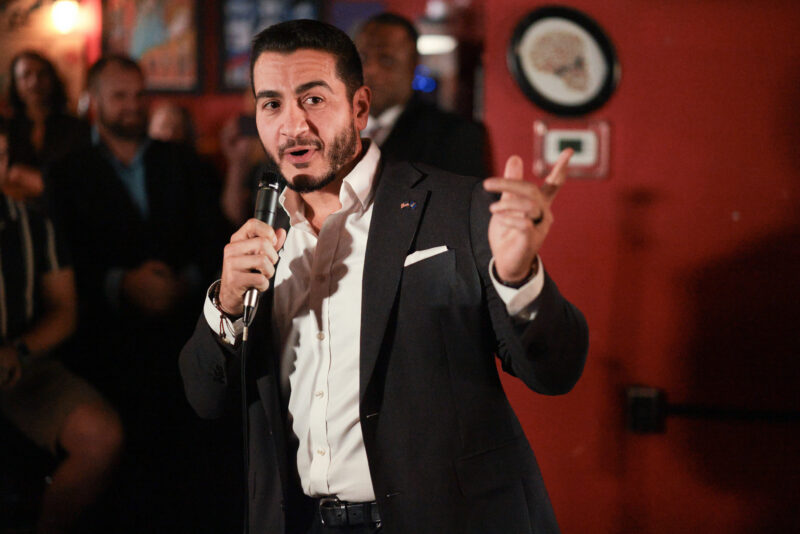
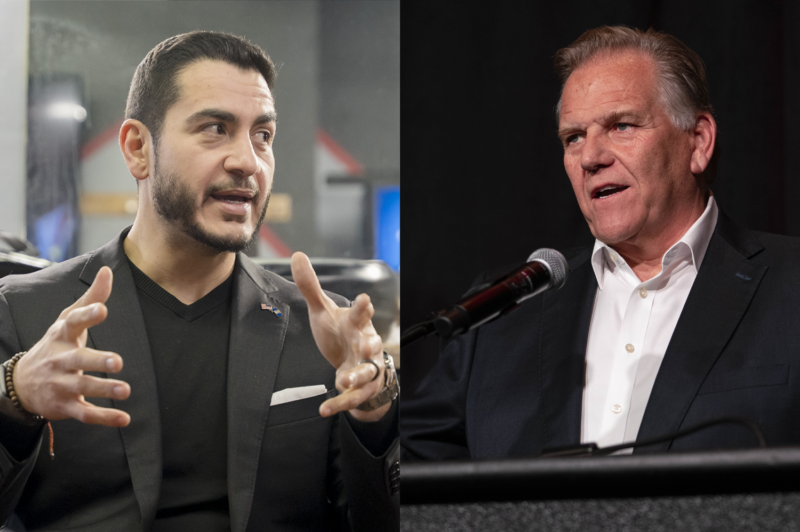
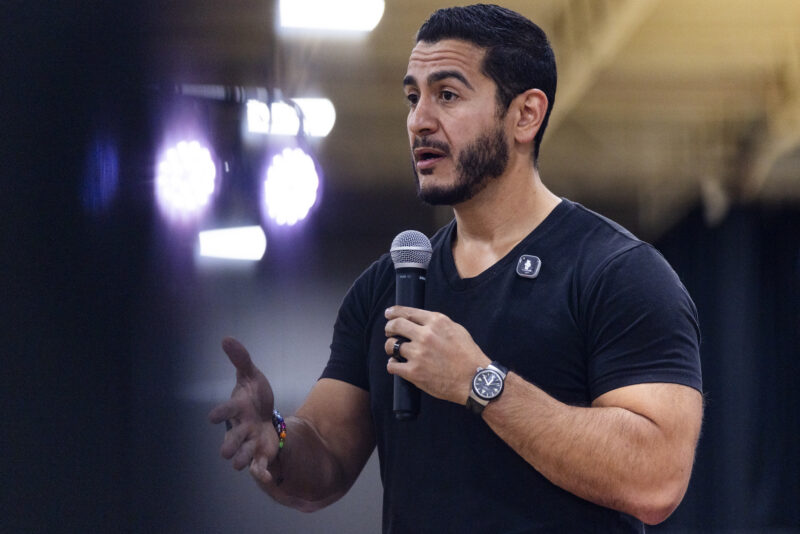
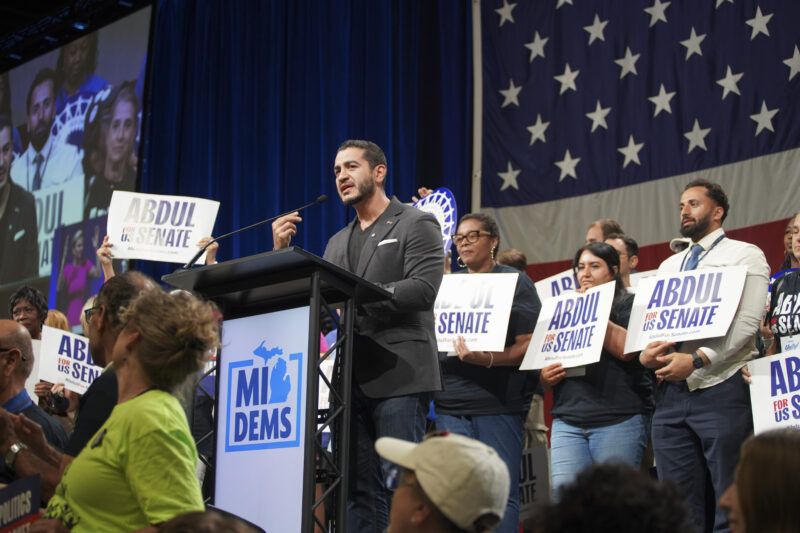
In a combative interview on NBC yesterday, Michigan Democratic Senate nominee Abdul El-Sayed dismissed his half-sister’s past comments about his family’s ties to the Muslim Brotherhood as “hearsay,” JI’s Marc Rod reports.
El-Sayed has denied that his family has any connection to the Muslim Brotherhood, but newly resurfaced tweets by his half-sister threw those denials into question, as she repeatedly said that family members of theirs, including their mother, had long been Muslim Brotherhood members. “You want to ask me about what was happening in Egypt in 1970. Are you serious?” El-Sayed told host Tom Llamas. “I have no ties. We have no ties. … I have never had these conversations with my mother. I wasn’t raised by my mother”…
Sens. Jeff Merkley (D-OR) and Ed Markey (D-MA) introduced a joint resolution of disapproval today that aims to block the U.S.-Saudi nuclear deal, allowing the Democrats to force a vote on the deal as soon as Nov. 29, JI’s Marc Rod reports.
It appears unlikely at this point that the GOP-controlled Congress will vote to block the deal, with most Republicans expressing support for it, though some GOP holdouts have voiced their concerns…
The 10-year-old son of slain Hamas leader Yahya Sinwar wrote to his father that he wanted to “hold the Kalashnikov and shoot the Jews” when he grows up, accompanied by drawings of tanks, rifles and rockets, according to letters recovered by the IDF in Gaza and provided by the military to The Telegraph…
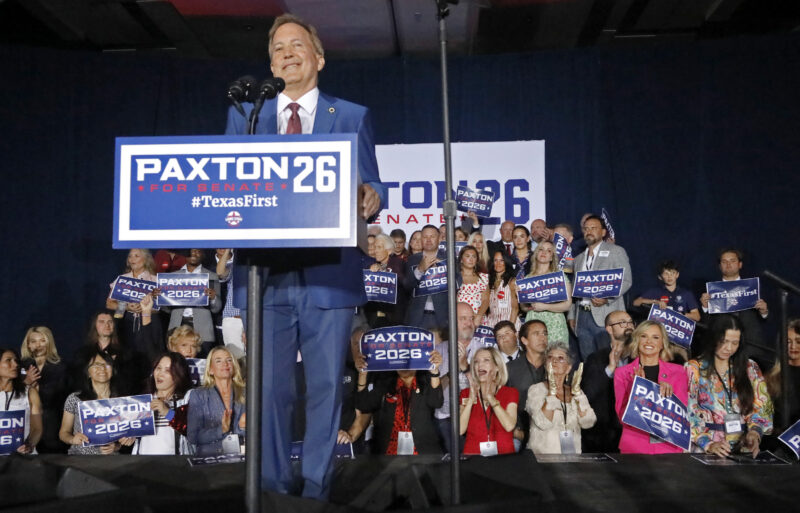
James Talarico, the Democratic Senate nominee in Texas, reiterated his sharp criticism of Israel at a CNN town hall yesterday, accusing Israeli Prime Minister Benjamin Netanyahu of targeting Palestinian civilians and restricting humanitarian aid, JI’s Emily Jacobs reports.
Speaking onstage with the rabbi of a Reform congregation in Dallas, Talarico acknowledged the scale of Hamas’ Oct. 7, 2023, terror attacks and Israel’s right to defend itself, adding, “I don’t believe that Benjamin Netanyahu has a right to wage war against civilians or use collective punishment or restrict aid to civilians”…
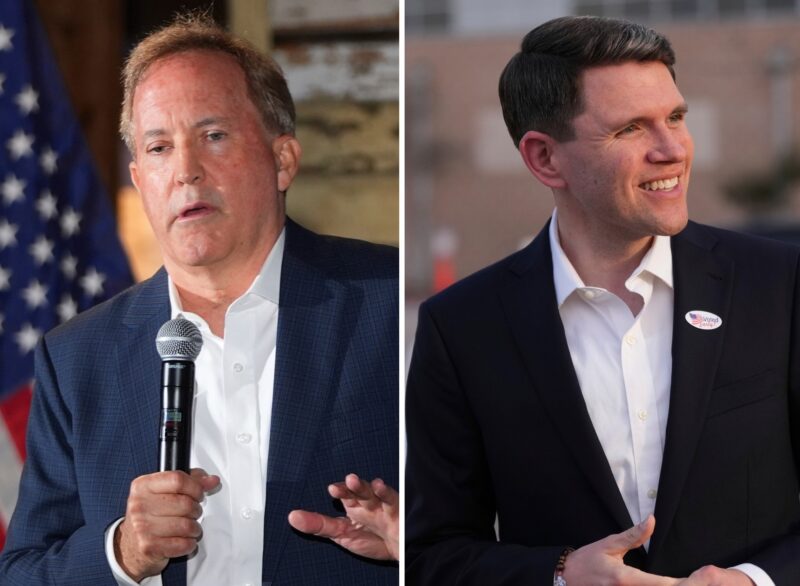
Talarico’s campaign reported today that he brought in $64 million in the third quarter of the year, which the campaign said is the most any candidate for U.S. Senate has raised during that period. Talarico’s GOP opponent, Texas Attorney General Ken Paxton, reported raising $18 million during the third quarter, though most of the spending on his behalf in the race has come from outside Republican groups…
Former President Barack Obama criticized Israel’s security policy as having “ceded moral ground” and said that Israel’s founding had unjustly taken land from Palestinians in remarks in Belfast, Northern Ireland, this week, JI’s Marc Rod reports.
“The fact is that the Jewish people for millennia were oppressed, discriminated against, killed. … They understandably sought a refuge in a place where they had historic ties. That is undeniable,” Obama said. “What is also undeniable is that they took the land of people and they were expelled. And those people, understandably, said, ‘This is an injustice, and I want my land back,’” he continued…
Voting in Israel’s Oct. 27 election began overnight as polls opened at Israeli diplomatic missions worldwide, allowing roughly 4,800 eligible voters — diplomats, emissaries and their families — to cast ballots at 101 stations across 99 missions over a roughly 30-hour window. The largest overseas polling station is the Israeli consulate in New York City, where more than 700 people are eligible to vote…
⏩ Tomorrow’s Agenda, Today
An early look at tomorrow’s storylines and schedule to keep you a step ahead
Keep an eye on Jewish Insider for a look at how the New York Jewish community is responding to City Comptroller Mark Levine’s decision not to reinvest city pension funds in Israel Bonds.
Michigan Democratic Senate nominee Abdul El-Sayed and Rep. Alexandria Ocasio-Cortez (D-NY) launched a bus tour across Michigan’s Upper Peninsula today, continuing with several rallies in the Detroit area tomorrow.
President Donald Trump will host a $1-million-per-plate fundraiser for his super PAC, MAGA Inc., at Mar-a-Lago on Saturday, as the group sits on a more than $400 million war chest just weeks before the midterm elections.
The Jewish Democratic Council of America and the Westchester Jewish Democrats will hold a door-knocking and canvassing event on Sunday for Cait Conley, the Democratic nominee for New York’s 17th Congressional District, as she seeks to unseat Rep. Mike Lawler (R-NY).
Sen. Bernie Sanders (I-VT) will campaign with Democratic Florida Senate nominee Angie Nixon across the Sunshine State this weekend, as the democratic socialist attempts to unseat Sen. Ashley Moody (R-FL) in the largely conservative state.
We’ll be back in your inbox with the Daily Overtime on Monday. Shabbat shalom!
Stories You May Have Missed
PLATFORM CHECK

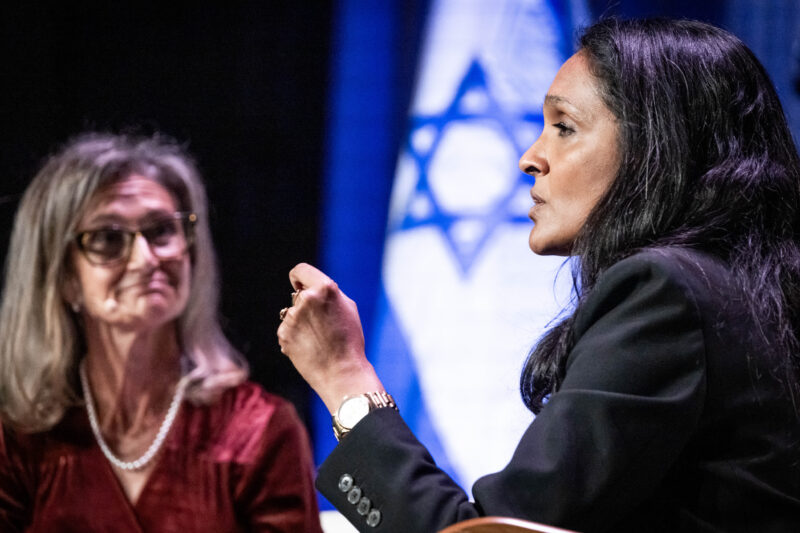
At an eJP–ANU election panel, representatives of eight Zionist parties laid out plans on aliyah, antisemitism and pluralism; the governing coalition sent no one
EDIT WARS

Wikipedia has failed to systematically review or correct edits to pages on Hamas, Zionism, the Oct. 7 terror attacks and Israel’s war in Gaza, even after banning editors involved in the alleged campaign, according to the report
The meeting marks the first known instance in which U.S. officials have met with the Yashar party leader, coming in the final stage of the high-stakes Israeli election
Jack GUEZ / AFP via Getty Images
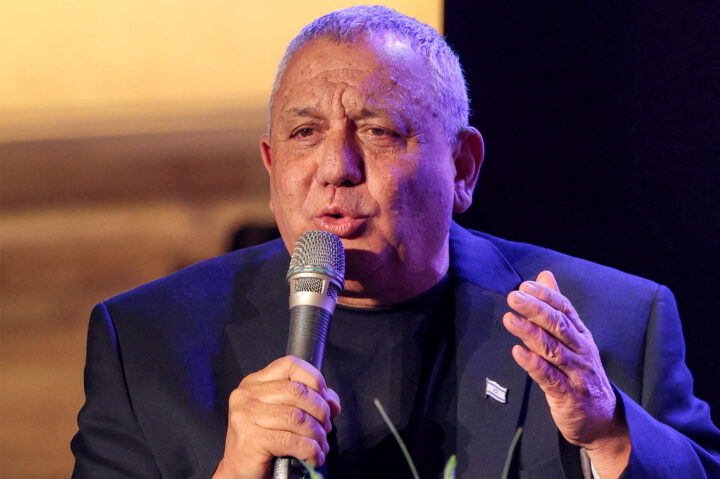
Gadi Eisenkot, former Israeli army chief of staff and head of the Yashar party, speaks during the political "Democracy Festival" in Glilot north of Tel Aviv on October 13, 2026.
U.S. Ambassador to Israel Mike Huckabee met quietly in recent days with Yashar party leader Gadi Eisenkot amid the final stretch of Israel’s high-stakes election campaign, Jewish Insider has learned, the first known time U.S. officials have met with the former IDF chief of staff, considered Israeli Prime Minister Benjamin Netanyahu’s chief rival in the contentious race.
The meeting, according to a source familiar with the matter, focused on critical security concerns, including Gaza, West Bank escalation and rising settler violence.
According to another source, the meeting went beyond formal diplomatic courtesy and served as a reconnaissance move by Washington to gauge Eisenkot’s regional outlook.
Neither side officially announced the meeting, and the Yashar party declined to comment.
News of the meeting comes less than two weeks before Israelis go to the polls, at a time when President Donald Trump has yet to endorse any of the leading candidates, including Netanyahu. Asked on Reshet Bet radio station why an endorsement hasn’t materialized, Israeli Diaspora Affairs Minister Amichai Chikli offered little detail beyond referencing Trump’s past supportive actions.
Trump’s neutral posture toward the election, despite repeated questioning, has raised eyebrows in Israel. In a recent interview with Time magazine, when asked whether Netanyahu should seek another term post-Oct. 7, Trump pointed to his own administration’s achievements for Israel, such as moving the U.S. Embassy to Jerusalem, while avoiding direct praise for Netanyahu himself. Pressed further, Trump noted he “wouldn’t underestimate Bibi,” and admitted he knew little about Eisenkot.
Meanwhile, Israeli political sources tell JI that opposition figures are actively working to blunt the political impact of any potential last-minute Trump endorsement.
Plus, Italian mayor backtracks on Israel litmus test

Getty Images
The Herbert Park Hotel in Ballsbridge, Dublin, Ireland.
Good Wednesday afternoon.
This P.M. briefing is reserved for our premium subscribers like you — offering a forward-focused read on what we’re tracking now and what’s coming next.
Today’s Daily Overtime was curated by JI U.S. Editor Danielle Cohen-Kanik.
📡On Our Radar
Notable developments and interesting tidbits we’re tracking
Former Vice President Kamala Harris said today at the Asan Institute for Policy Studies in Seoul, South Korea, that the Biden administration should have acted “sooner and more forcefully” to restrain Israel during the war in Gaza, Jewish Insider’s AJ Rodriguez reports, as Harris has become more critical of the Biden administration’s policy towards Israel since leaving office…
New York City Mayor Zohran Mamdani today sharply criticized Nassau County Executive Bruce Blakeman — the GOP nominee for New York governor — calling the Republican’s assertions that he would not protect Jewish communities from arson and sexual violence “directly racist,” JI’s Will Bredderman reports.
Referring to Blakeman’s comments in a private meeting with Hasidic leaders in Williamsburg that Mamdani would likely do little “if there is rioting here, if they’re burning down the yeshivas and your shuls, and burning down your house and raping your women,” the mayor said, “It’s not even a dog whistle. It’s just directly racist to say that I would not respond to Jewish New Yorkers being killed and raped”…
Mamdani also said today that he “welcome[s]” the decision by New York City Comptroller Mark Levine not to reinvest portions of the city’s pension system in Israel Bonds, which Levine said was solely a financial consideration and not an ideological one.
“It is something that I’ve said in the past that I don’t believe that our city should purchase Israel Bonds. We don’t purchase the bonds of any other sovereign nation. I don’t think that we should make an exception when it comes to Israel,” Mamdani said…
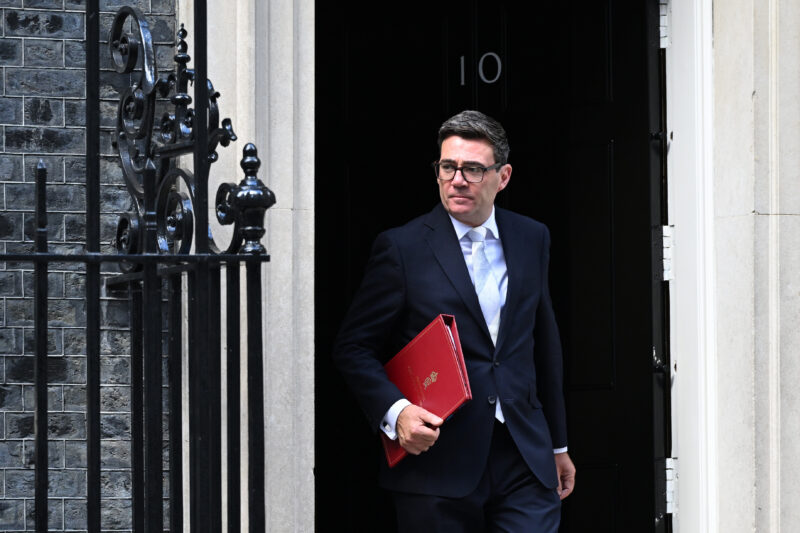
Addressing the House of Commons today, U.K. Prime Minister Andy Burnham denounced as “wrong” and “antisemitic” a recent motion passed by the Green Party defining Zionism as racism, JI’s AJ Rodriguez reports. Burnham stated that the Labour party would “have nothing to do with” the motion and would not sit in a coalition with the Green Party while it maintains such a policy…
The mayor of Reggio Emilia, Italy, defended the city’s handling of a controversy where Israeli and American Jewish preschool teachers were asked to condemn Israel’s actions in Gaza before being permitted to join a trip to his town, denying that the pledge was a requirement to attend, JI’s Haley Cohen reports.
After outreach from the State Department, Mayor Marco Massari said the city’s Charter for Democratic and Participatory Education, a document associated with Reggio Emilia’s early childhood education approach, was intended to be an “open document” and not a requirement that visitors sign on to a particular position…
The Herbert Park Hotel in Dublin canceled 70 rooms booked for participants of an international conference of envoys for combating antisemitism, JI’s Lahav Harkov reports.
Maurice Cohen, the head of the Irish Jewish Representative Council, said at the opening of the summit that the hotel canceled the group’s reservation made in May after finding out the nature of the event and after inquiring if the IDF would be involved, despite having no relevance to the topic of the gathering…
The Israeli Defense Ministry and the Pentagon signed an agreement today for Israel to acquire 12 Boeing-made Apache “Echo” attack helicopters for the IDF, wtih delivery scheduled to begin early next decade…
Colombia opened its embassy in Jerusalem today, fulfilling a campaign pledge by President Abelardo de la Espriella and marking a further restoration of ties with Israel under his right-wing party…
Israeli President Isaac Herzog met today with Bahraini Foreign Affairs Minister Abdullatif bin Rashid Al-Zayani while attending the Conference on Interaction and Confidence-Building Measures in Asia being held in Baku, Azerbaijan.
Herzog said the two “discussed the friendship and ties between Israel and Bahrain, as well as the importance of the U.S.-led Abraham Accords in strengthening security, stability, and prosperity in the Middle East”…
New York City Council Speaker Julie Menin announced that the council will allocate $1.25 million to the Blue Card program — which provides financial assistance to families of Holocaust survivors — to develop a virtual Holocaust education experience and expand educational opportunities for students across the city…
⏩ Tomorrow’s Agenda, Today
An early look at tomorrow’s storylines and schedule to keep you a step ahead
Keep an eye on Jewish Insider for coverage of today’s memorial event at the State Department for the American victims of Hamas’ Oct. 7, 2023, attacks.
National security veteran Brett McGurk will sit in conversation with Washington Post columnist David Ignatius at the Atlantic Council to discuss McGurk’s new book, Brink: Inside the Race to Free the October 7th Hostages.
The annual Hillary Rodham Clinton Awards Ceremony for advancing women in peace and security will be held at Georgetown University.
Stories You May Have Missed
RELATIONSHIP STATUS
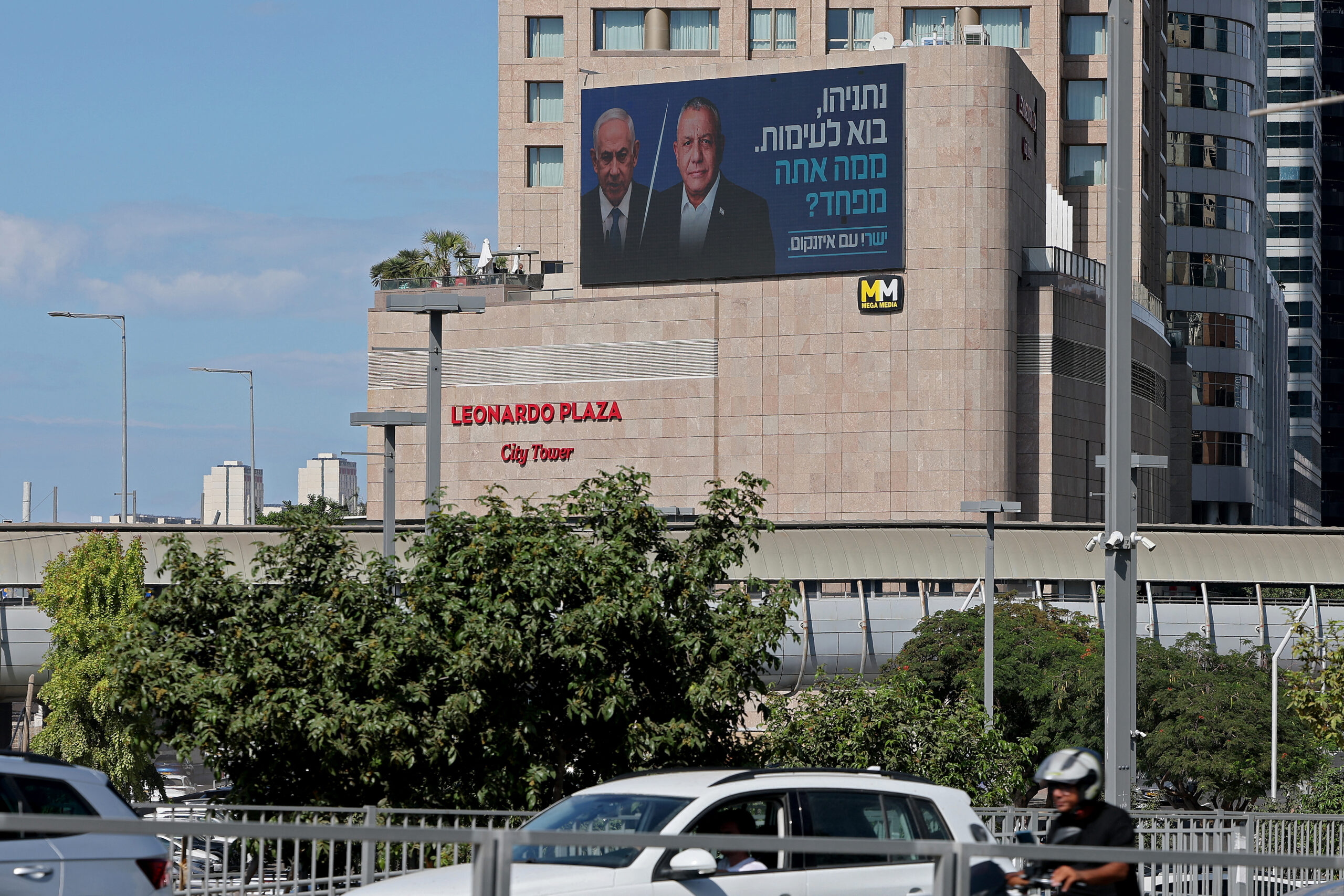
Likud insists Netanyahu can work with any White House, while opposition parties argue a new government is needed to win back Democrats and the broader public
CONTROVERSIAL COCKTAIL

Michelle Smith agreed with a commenter’s remark that ‘shekels would prolly fly out’ of a Republican consultant
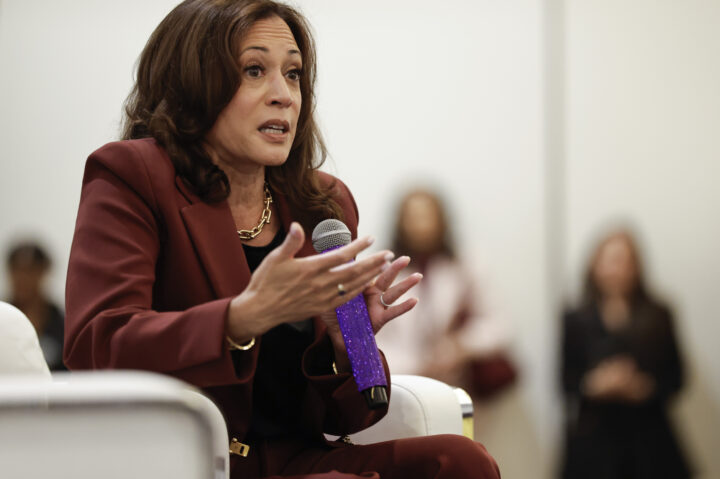
The former vice president criticized her administration's handling of the war and accused Trump of giving Netanyahu a blank check during a speech in South Korea
Mario Tama/Getty Images
Former Vice President Kamala Harris speaks at the third annual SHE LEADS Conference at SLS Hotel on September 29, 2026 in Los Angeles, California.
Former Vice President Kamala Harris said Wednesday that the Biden administration should have acted “sooner and more forcefully” to restrain Israel during the war in Gaza, criticizing the Israeli government’s “horrific conduct” and accusing President Donald Trump of giving Israeli Prime Minister Benjamin Netanyahu a “blank check.”
Speaking at the Asan Institute for Policy Studies in Seoul, South Korea, Harris said the United States had fallen short of its “moral obligation to human rights and international law” by failing to use its influence to curb Israel’s actions in Gaza after the Oct. 7, 2023, Hamas attacks. The remarks came during a broader speech focused on American leadership and artificial intelligence.
Harris largely avoided breaking publicly with former President Joe Biden’s policies toward Israel during her unsuccessful 2024 presidential campaign, maintaining her support for Israel’s right to defend itself while expressing concerns about Palestinian civilian casualties.
Since leaving office, Harris has become more critical of the Biden administration’s response to the war.
In her 2025 memoir, 107 Days, Harris criticized Biden’s public remarks about Palestinian suffering, arguing that his expressions of sympathy appeared inadequate compared to his more passionate declarations of support for Israel.
The comments come as Harris weighs another presidential campaign in 2028.
Plus, GOP retreats from Landsman’s seat
Michael M. Santiago/Getty Images
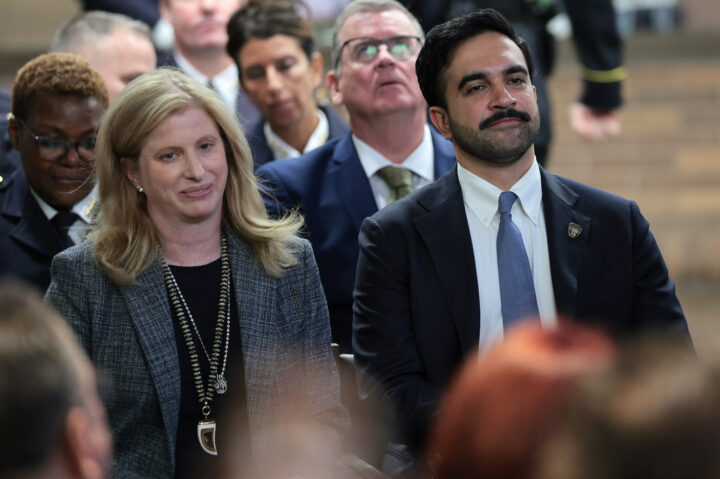
NYPD Commissioner Jessica Tisch and New York City Mayor Zohran Mamdani attend an unveiling ceremony for a new 9/11 Memorial Wall at One Police Plaza on Sept. 9, 2026 in New York City.
Good Tuesday afternoon.
This P.M. briefing is reserved for our premium subscribers like you — offering a forward-focused read on what we’re tracking now and what’s coming next.
Today’s Daily Overtime was curated by JI U.S. Editor Danielle Cohen-Kanik.
📡On Our Radar
Notable developments and interesting tidbits we’re tracking
President Donald Trump declined today to answer whether he had decided to order U.S. strikes on the Iran-backed Houthis, telling reporters only that the group is “behaving very badly,” and later wrote on Truth Social that he “thought they learned their lesson a year ago when we bombed the HELL out of them … but now they’ve emerged again, probably at the behest of Iran.” Trump separately said the administration expects to determine its next steps on Iran “very soon”…
Israeli Prime Minister Benjamin Netanyahu has spoken with Trump several times about the possibility of striking Iran before the U.S. midterms and Israeli elections, Axios reports, with the Israeli leader pushing to address Iran’s apparent efforts to reconstitute its nuclear program — though Trump has recently said he has no intention to resume operations against Iran before November…
The Houthis reportedly attacked today the headquarters of Saudi Aramco, the national oil company of Saudi Arabia, after Riyadh targeted a Yemen Petroleum Company fuel depot; the extent of the damage to Saudi Aramco was unknown, though one source told the Financial Times that the site caught on fire…
New York City Mayor Zohran Mamdani told reporters today that he has no plans to fire NYPD Commissioner Jessica Tisch, as parts of his socialist base have called for him to do, and commended her success in combating violent crime and corruption…
The Congressional Leadership Fund, the independent expenditure arm of the House GOP aligned with Speaker Mike Johnson (R-LA), is reportedly withdrawing plans for independent spending against Rep. Greg Landsman (D-OH), alongside several other swing districts the PAC is seen as essentially surrendering to Democrats, Jewish Insider’s Marc Rod reports. Landsman has been one of the most outspoken pro-Israel Democrats and is running comfortably ahead in a Cincinnati-area district Trump won in 2024…
MI5, Britain’s domestic intelligence agency, is now devoting more resources to countering state threats than during the Cold War, Director General Ken McCallum said today, as the country works to fend off attacks from Iran and Russia. The U.K. has “entered a new era of national security,” McCallum continued, with terrorist and state-threat operations now “pretty much of equal scale”…
Representatives of the J7 Task Force Against Antisemitism, a body representing the seven largest Jewish diaspora communities, gathered at Herzog Park in Dublin — named for Chaim Herzog, the Dublin-raised sixth president of Israel, which activists have sought to rename — in order “to stand in solidarity with Ireland’s Jewish community and raise concerns about antisemitic rhetoric and actions in Ireland.” The group also conveyed those concerns directly to Taoiseach Micheál Martin and Foreign Affairs Secretary-General Joe Hackett…
Canada, Australia, France and the U.K. said in a joint statement today that they “deeply regret” the Palestinian Authority’s decision to postpone its elections until September 2027 and urged it to hold a vote “without further delay.” The countries also called on Israel to refrain from actions that could impede the vote and reiterated that Hamas should have no role in the future governance of the Palestinian territories…
A Delta Air Lines flight arriving in Tel Aviv from New York was cleared today at Ben Gurion Airport after an anonymous report indicated that a “suspicious” device was on board…
Asked if he’s considering running for president in 2028, Rep. Don Bacon (R-NE), a co-chair of the House Antisemitism Task Force, said during a recent podcast appearance, “I won’t lie — yes, I would love to, but I would also just be happy to be the right-hand or the left-hand man to someone else that has the same values”…
⏩ Tomorrow’s Agenda, Today
An early look at tomorrow’s storylines and schedule to keep you a step ahead
Keep an eye on Jewish Insider for a look at how the Washington-area restaurant Busboys and Poets is alienating Jewish customers by promoting its new “free Palestine” drink.
The State Department, along with the American Jewish Committee, will host an event honoring the 46 Americans killed in Hamas’ Oct. 7, 2023, terror attacks in Israel, JI’s Marc Rod reports, after postponing the event from its original date in late September.
Leo Terrell, chair of the Justice Department’s Task Force to Combat Antisemitism, will speak at Congregation Shaarey Zedek in Southfield, Mich., for the first stop of the task force’s “American Tour Against Hate.”
The 2026 American Foreign Service Association awards ceremony will be held at Georgetown University, where former CIA Director Bill Burns will be honored for his “lifetime contributions to American diplomacy.”
Stories You May Have Missed
PACKED PEWS

At Temple Israel, the lawmakers and the New York Times columnist discussed the rise of antisemitism and anti-Israel sentiment with the Call Me Back host
PROBLEMATIC POST
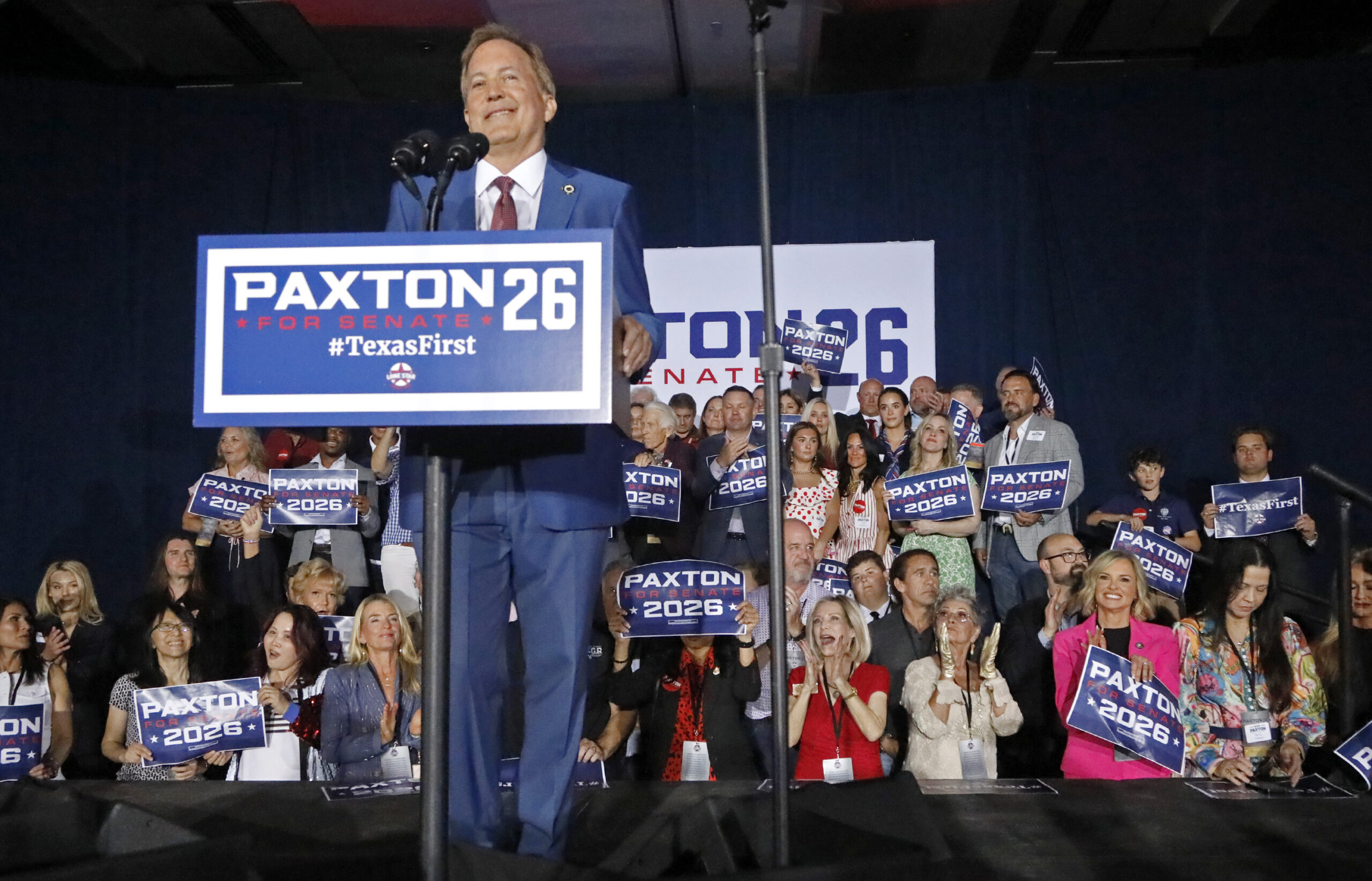
Michelle Smith agreed with a commenter’s remark that ‘shekels would prolly fly out’ of a Republican consultant
Plus, Lankford says Lebanon eyeing Michigan race
Wiktor Szymanowicz/Future Publishing via Getty Images
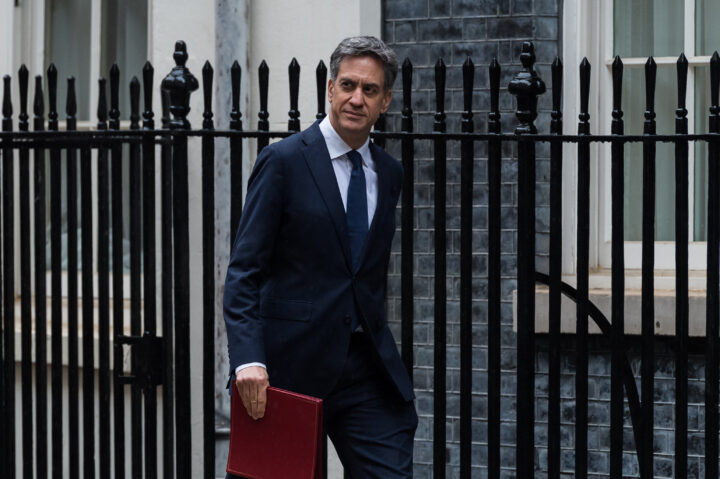
U.K. Foreign Secretary Ed Miliband arrives in Downing Street to attend weekly Cabinet meeting in London, U.K. on Sept. 8, 2026.
Good Monday afternoon.
This P.M. briefing is reserved for our premium subscribers like you — offering a forward-focused read on what we’re tracking now and what’s coming next.
Today’s Daily Overtime was curated by JI U.S. Editor Danielle Cohen-Kanik.
📡On Our Radar
Notable developments and interesting tidbits we’re tracking
British Prime Minister Andy Burnham told the House of Commons today that the suspected plot targeting the U.S.-run RAF Fairford air base was “highly likely to have been coordinated in Iran” and “almost certainly directed by” the Islamic Revolutionary Guard Corps.
In a joint statement, the U.S. and 27 other countries backed Britain’s assessment, condemned Iran’s use of proxies for attacks on Western soil and vowed to identify, disrupt and prosecute those responsible…
British Foreign Secretary Ed Miliband agreed today to host a meeting of officials from seven countries to coordinate efforts against antisemitism, Jewish Insider’s AJ Rodriguez reports, following talks in London with representatives of the J7 Task Force Against Antisemitism — a body of organizations representing the seven largest Jewish diaspora communities.
William Daroff and Betsy Berns Korn, respectively CEO and chair of the Conference of Presidents of Major American Jewish Organizations, told JI that their discussion with Miliband was “frank and direct. We called him to task for the U.K. government’s sanctions against Israel and its rhetoric, which exacerbate antisemitism and increase the risks Jewish communities face. We made clear that these consequences cannot be brushed aside,” they said.
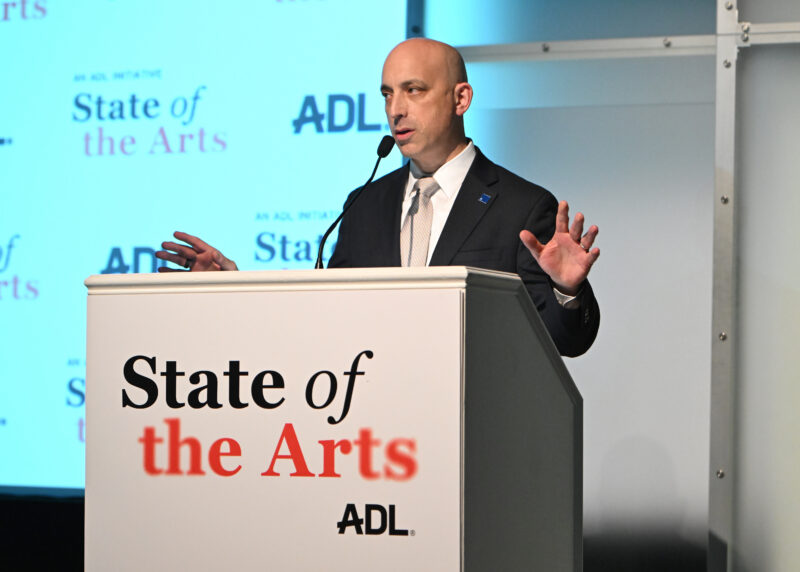
Anti-Defamation League CEO Jonathan Greenblatt told JI that, “while there are areas of strong disagreement [with Miliband], we identified some common concerns including our shared view on the bigoted antizionism of the Green Party … But this was just the first conversation. We intend to keep pushing for action and demanding accountability”…
Former President Barack Obama officially endorsed Democratic Michigan Senate nominee Abdul El-Sayed in a video where he praised El-Sayed for refusing corporate money and for supporting “invest[ing] money here, instead of wasting money on endless wars.” Asked about his past criticisms of Obama following his 2012 reelection, El-Sayed said on “Meet the Press” this weekend that he was “younger” and “angry about circumstances” back then…
El-Sayed’s opponent, former Rep. Mike Rogers (R-MI), released an ad pushing back on El-Sayed’s claim that neither he nor his family have ties to the Muslim Brotherhood, highlighting a social media post from his sister that said, “My family has long been MB [Muslim Brotherhood],” among other similar reports…
Sen. James Lankford (R-OK) told reporters today that Lebanese and Israeli leaders both expressed to him strong interest in the Michigan Senate race while he was on a trip to the Middle East last week, JI’s Marc Rod reports.
Among his conversations, Lankford said Lebanese Parliament Speaker Nabih Berri told him there was an “extension of [his] party in Michigan that he just initiated.” Berri leads the Amal Movement, a Shia political faction allied with Hezbollah….
A teenager was killed and 24 others were injured today when an unexploded Hezbollah cluster munition detonated during a school hike in northern Israel near the Lebanon border. The IDF said the explosive had remained in the area from an earlier Hezbollah attack and that the incident remains under investigation…
American citizens have been detained in Saudi Arabia for photographing recent missile or drone incidents, the U.S. Embassy in Riyadh confirmed today, as it warned Americans not to film or share images of intercepted projectiles or impact sites so as not to violate Saudi law…
Speaking at the TRENDS conference in Abu Dhabi, former Secretary of State Mike Pompeo predicted that “the large Islamic nations,” including Malaysia and Indonesia, will “come to see that something akin to the Abraham Accords makes sense for their countries as well,” given Iran’s destabilizing actions in the Middle East…
A federal court in California denied a motion by The Pokémon Company International attempting to dismiss a discrimination lawsuit brought by an Israeli American professional Pokémon player, who claims he was banned from all Pokémon competitions over his efforts to lobby the gaming company to host official tournaments in Israel. The court found that the allegations represent a “plausible claim of discrimination and retaliation,” allowing the case to proceed…
⏩ Tomorrow’s Agenda, Today
An early look at tomorrow’s storylines and schedule to keep you a step ahead
Keep an eye on Jewish Insider for a look at the small Israeli political parties that could end up playing kingmaker in the upcoming elections.
The Jewish Community Relations Council of Greater Washington will hold a forum this evening focused on issues of concern to the Jewish community for candidates running in contested races for the Montgomery County Board of Education.
The USC Shoah Foundation will mark the grand opening tomorrow of its first office in Washington with a Q&A with Wolf Blitzer on his family’s experience in the Holocaust.
The Israeli Embassy in Washington will present a screening tomorrow of “NAZA: The Real Story,” a documentary meant to counter the controversial film “NAZA” that alleges the IDF intentionally targeted Palestinian civilians in Gaza.
Former Rep. Max Rose (D-NY), a staunchly pro-Israel Jewish Democrat, will host a fundraiser in New York tomorrow for Rep. Jared Moskowitz (D-FL) and singer Bobby Pulido, who is running as a Democrat in Texas’ 15th Congressional Distrct.
The Heritage Foundation will host a conversation tomorrow with Ben Black, CEO of the U.S. International Development Finance Corporation, on American investment abroad.
Stories You May Have Missed
BREAKING POINT
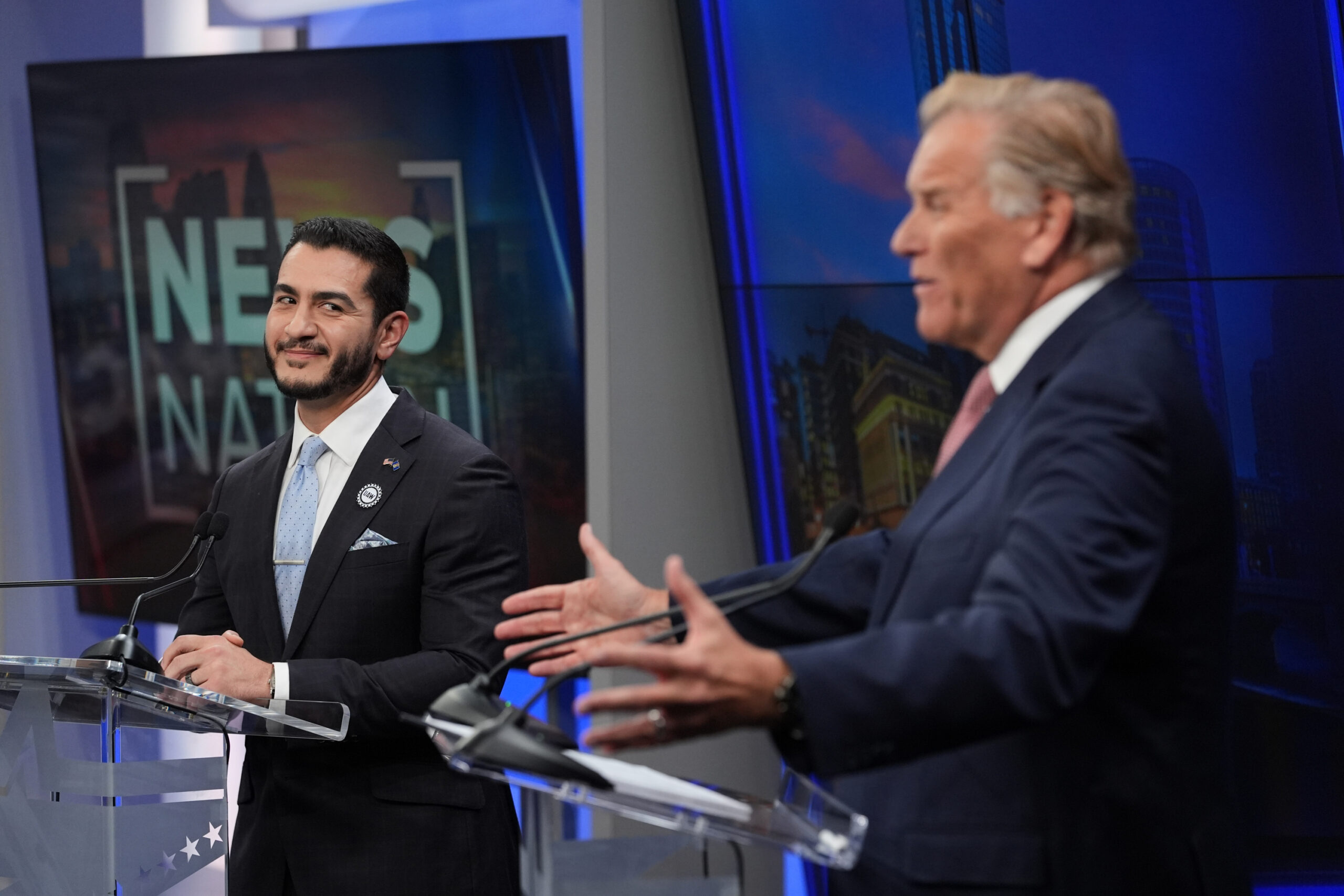
One Jewish community leader said that the debate had ‘reinforced’ Jewish community members’ ‘deep concern’ about El-Sayed and his political ideology
TORAH AND TAXES

Path-breaking academic Nechumi Yaffe is running for Knesset in a party of Orthodox Israelis who want to bring change to their community
Deadly strikes on Riyadh’s airport show the cost of years spent containing rather than confronting an Iranian proxy — and Washington may not ride to the rescue
NATHAN HOWARD/POOL/AFP via Getty Images
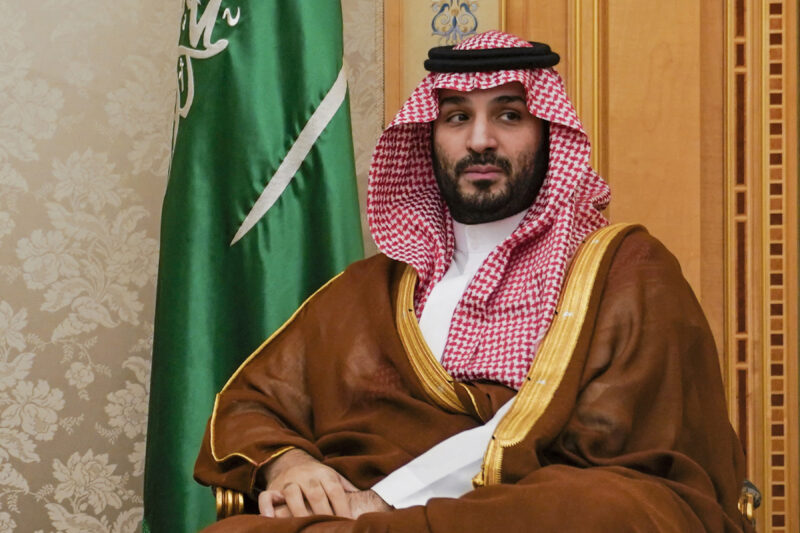
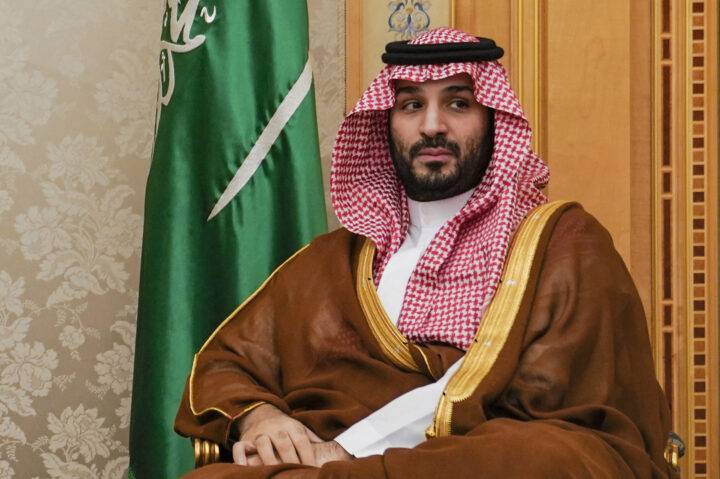
Saudi Arabia's Crown Prince Mohammed bin Salman looks on during his meeting with the US Secretary of State in Riyadh on October 23, 2024.
Saudi Crown Prince Mohammed bin Salman has spent years — and billions of dollars — seeking to transform his country into a global economic powerhouse. But the recent escalation in tensions with the Iran-backed Houthis in Yemen — including the deadly weekend strikes on Riyadh’s main airport — is putting into question whether such a strategy is compatible with the changing geopolitical reality and continued threats posed by Iran and its terror proxies.
Thirteen people were killed and hundreds injured in a strike on a passenger terminal at the airport on Saturday. Another individual was killed in a separate attack when a projectile struck the airport again on Sunday. One American was among those killed in Saturday’s attack, prompting questions over whether Washington will enter the fight.
The weekend attacks mark the most severe escalation since the fragile, four-year ceasefire between Riyadh and the Houthis collapsed over the summer following the July bombing of a runway at the Sana’a International Airport in Houthi-held territory in an effort to prevent Houthi officials from landing after attending the funeral of Iranian Supreme Leader Ayatollah Ali Khamenei. Yemen’s officially recognized government claimed responsibility for the attack, but the Houthis attributed the strike to Saudi Arabia and declared the Gulf state’s aviation hubs to be fair game.
Struggling to defend itself from the missile barrages, Riyadh has few options to protect its vulnerable assets. A defense treaty signed with Pakistan and Turkey has borne little fruit. Experts with whom JI spoke last month said that Saudi Arabia’s predicament is partly of its own making, citing Riyadh’s failure to use the years of quiet to prepare for potential future confrontations with the Houthis, as well as the Gulf state’s rift with the United Arab Emirates, which destabilized efforts within Yemen to combat the terror group.
The Saudi playbook for years has been to lean on diplomacy and deescalation in an effort to prioritize its own economic ambitions. It’s a strategy that did little to address the threats posed by the Houthis, leaving Riyadh vulnerable to the kind of situation it had hoped to avoid.
The Saudi policy has long been something akin to Israel’s “mowing the lawn” approach to Hamas, as Israeli journalist Amit Segal points out. For the Israelis, much like the Saudis, containing the challenges posed by a well-funded Iranian terror proxy was easier than addressing the problem head-on. “The lesson of appeasing terror,” Segal suggests, “is the same.”
Compounding Riyadh’s predicament is the uncertainty over the U.S.’ potential involvement. Washington has so far stayed out of the active fighting between Riyadh and the Iran-backed terror group in Yemen, even as it has provided intelligence and targeting support to Saudi Arabia.
But even U.S. support is not endless, owing to its own military constraints as well as domestic political realities. The U.S.’ own interceptor stockpile is low — so low that it is expected to take years to fully replenish, leaving Washington unable to provide the kind of defensive technology that Riyadh lacks. And while President Donald Trump has said the U.S. could join the active fighting, he is facing political headwinds at home, with the midterms just weeks away and Republicans poised to potentially lose a number of House and Senate seats in traditionally red districts and states.
On Saturday, Trump said the U.S. “may” join Riyadh’s military operations, despite its own ceasefire with the Houthis, which has held since May. “We’re going to look at it,” the president told reporters hours after the deadly attack. “We just found out about the recent attack. So we’ll make a decision. We move very quickly.” A statement from Secretary of State Marco Rubio, meanwhile, expressed solidarity with Riyadh, but stopped short of offering military support or vowing retaliation for the death of the American citizen.
Now Saudi Arabia finds itself in an increasingly precarious situation. Its airports are under attack. Its East-West pipeline is intermittently shut down amid drone attacks. The Gulf state’s marquee fall conferences — the World Petroleum Council Energy Congress and the Future Investment Initiative, known as “Davos in the Desert” — are in doubt amid suspended flights and foreign travel advisories.
MBS spent years trying to build a society focused on economic progress, using diplomacy as a key tool in achieving it. The Houthis don’t need an all-out military win against Saudi Arabia — they have already established themselves as a disruptor: armed, ready and willing to engage in sporadic battles that paralyze the region.
Plus, Israel debuts at Morocco airshow
Brendan SMIALOWSKI / AFP via Getty Images
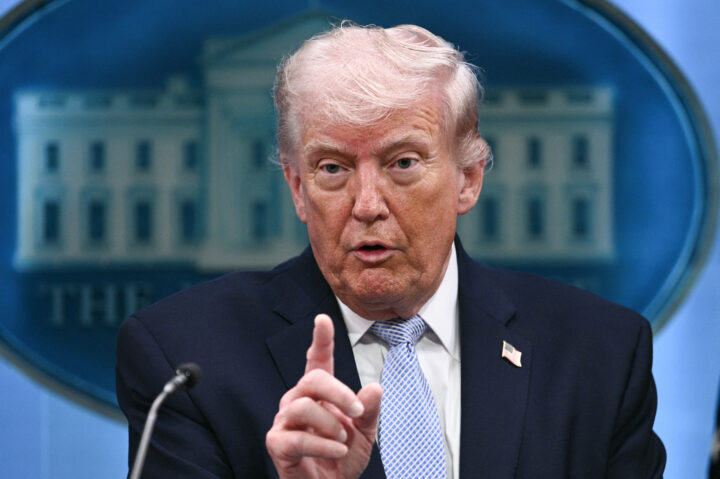
US President Donald Trump speaks about the conflict in Iran in the James S. Brady Press Briefing Room of the White House on April 6, 2026, in Washington, DC.
Good Thursday afternoon.
This P.M. briefing is reserved for our premium subscribers like you — offering a forward-focused read on what we’re tracking now and what’s coming next.
Today’s Daily Overtime was curated by JI U.S. Editor Danielle Cohen-Kanik.
📡On Our Radar
Notable developments and interesting tidbits we’re tracking
President Donald Trump said in a Truth Social post today that the U.S. is having “productive discussions” with Iran and that he “want[s] to make it clear” that Washington will not attack Iran before the Nov. 3 midterm elections, after reports indicated the president was considering such a move…
New York City Mayor Zohran Mamdani today shrugged off the protest — which featured jeers of “traitor” and chants of “long live Hamas” — that sought to drown out an event he attended last night memorializing the victims of the Oct. 7, 2023, Hamas attacks, Jewish Insider’s Will Bredderman reports.
“I was proud to attend last night’s vigil, as I did last year, to listen to testimonies from family members of those who were killed on Oct. 7, and those who’ve been killed in the three years since, and all of whom united in a vision for peace and an end to the genocide in Gaza,” Mamdani told reporters. “As for those protesting me, I am the mayor of New York City, and this is what I signed up for”…
A planned trip to Reggio Emilia, Italy, for some 100 Jewish early childhood educators from the U.S. and Israel was canceled after participants were required to sign a statement condemning Israel’s actions in Gaza.
The educators were meant to study the Reggio Emilia Approach to early childhood education, a method long embraced by Jewish preschools. But ahead of the trip, participants were asked to sign a statement declaring, “I distance myself from the occupation of Gaza and the violation of children’s and human beings’ rights in the occupied territories as well as in every places [sic] in the world,” according to a screenshot obtained by JI’s Haley Cohen…
An ad set to air during the Michigan Senate debate tonight, paid for by a pro-Mike Rogers super PAC, features a mother of a student at Temple Israel who said she identified as a lifelong Democrat but will be voting for Rogers due to remarks by Democratic nominee Abdul El-Sayed seeming to justify the attack on the synagogue earlier this year…
British counterterrorism police arrested two Latvian men today after they were found inside RAF Molesworth, an air base used by the U.S. military and NATO for intelligence operations. The men were detained on suspicion of entering a prohibited place for a purpose prejudicial to the U.K.; police said there is no evidence at this stage linking the incident to the suspected Iran-related plot at RAF Fairford…
The Israeli Defense Ministry opened a national pavilion and led a delegation of defense firms — including Elbit Systems, Israel Aerospace Industries and Rafael — at the Marrakech Airshow in Morocco this week, marking Israel’s first official participation in a Moroccan defense exhibition since signing the Abraham Accords…
The first Iron Dome Tamir interceptor fully produced and assembled in the United States was delivered to the Israeli Defense Ministry at a ceremony yesterday in East Camden, Ark., attended by Arkansas Gov. Sarah Huckabee Sanders. The Raytheon-Rafael facility is the first site outside of Israel to manufacture complete Tamir interceptors, part of the U.S.-Israel missile-defense cooperation program…
Several speakers at the right-wing National Conservatism Conference in Jerusalem this week berated Jews for speaking out against antisemitism, accused Israel of drawing the U.S. into wars and mocked evangelical Christian beliefs about Israel, JI’s Lahav Harkov reports.
Amanda Milius, a conservative documentarian, portrayed those accusing others of antisemitism as being “in a fit of hysteria” and said that doing so is “at risk of becoming [Black Lives Matter] to the younger American right. They are correctly sick of being called racists”…
Trump clarified that his recent comments about Iran bombing Los Angeles and San Diego were not invitations for Tehran to do so, writing on Truth Social that he only meant to make a comparison between the “small price to pay” of increased gasoline prices amid the Iran war and the regime potentially bombing major U.S. cities…
⏩ Tomorrow’s Agenda, Today
An early look at tomorrow’s storylines and schedule to keep you a step ahead
Keep an eye on Jewish Insider for an interview with Nechumi Yaffe, the first woman to run for Knesset on a Haredi party ticket, who spoke with JI’s Lahav Harkov about her new party’s push to transform ultra-Orthodox society — from conscription and the workforce to secular education — all while refusing to call it “change.”
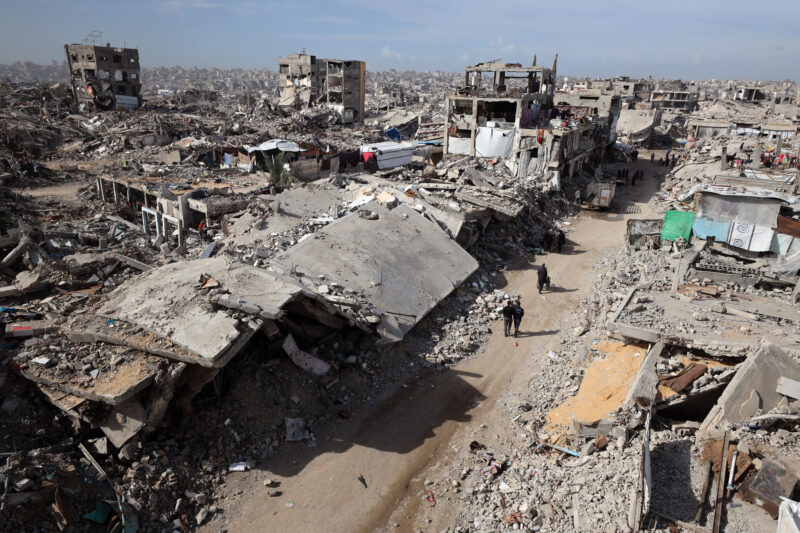
Saturday will mark one year since President Donald Trump’s Gaza peace plan took effect. While the truce halted full-scale fighting and secured the release of the remaining hostages, the plan’s broader goals remain stalled: reconstruction of the enclave has made little progress, the International Stabilization Force has yet to deploy and Hamas is not yet disarmed.
Vice President JD Vance will make a campaign stop in Ohio tomorrow to boost Sen. Jon Husted (R-OH) in his bid to keep his seat against former Sen. Sherrod Brown (D-OH). Trump may make a stop in Alabama, pending a possible hurricane.
We’ll be back in your inbox with the Daily Overtime on Monday. Shabbat shalom!
Stories You May Have Missed
KINGS COUNTY KERFUFFLE
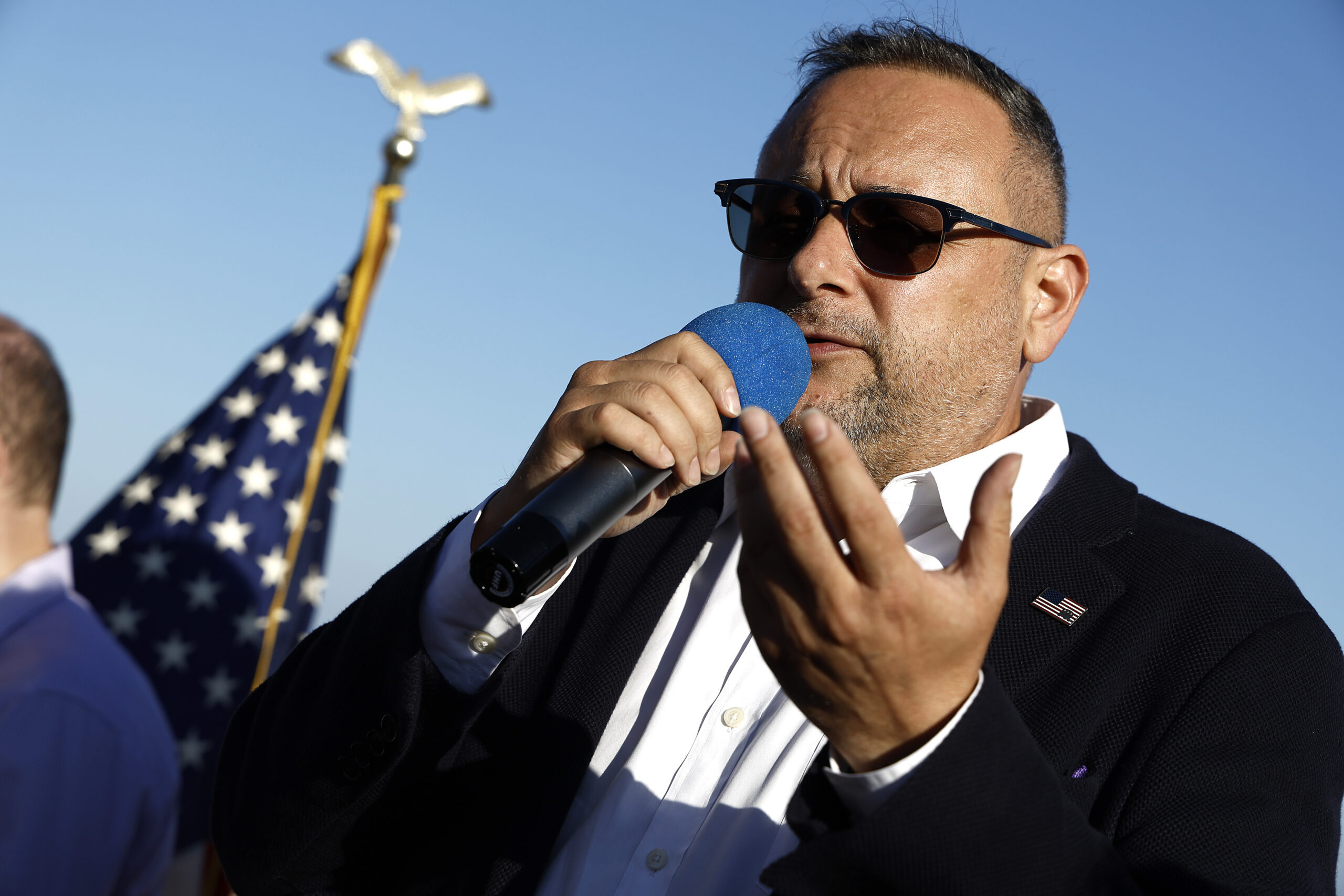
Kings County Victory Project seeks to elevate three Dems, including in contest between Syrian Jewish and Russian Jewish candidates
POLICY PIVOT
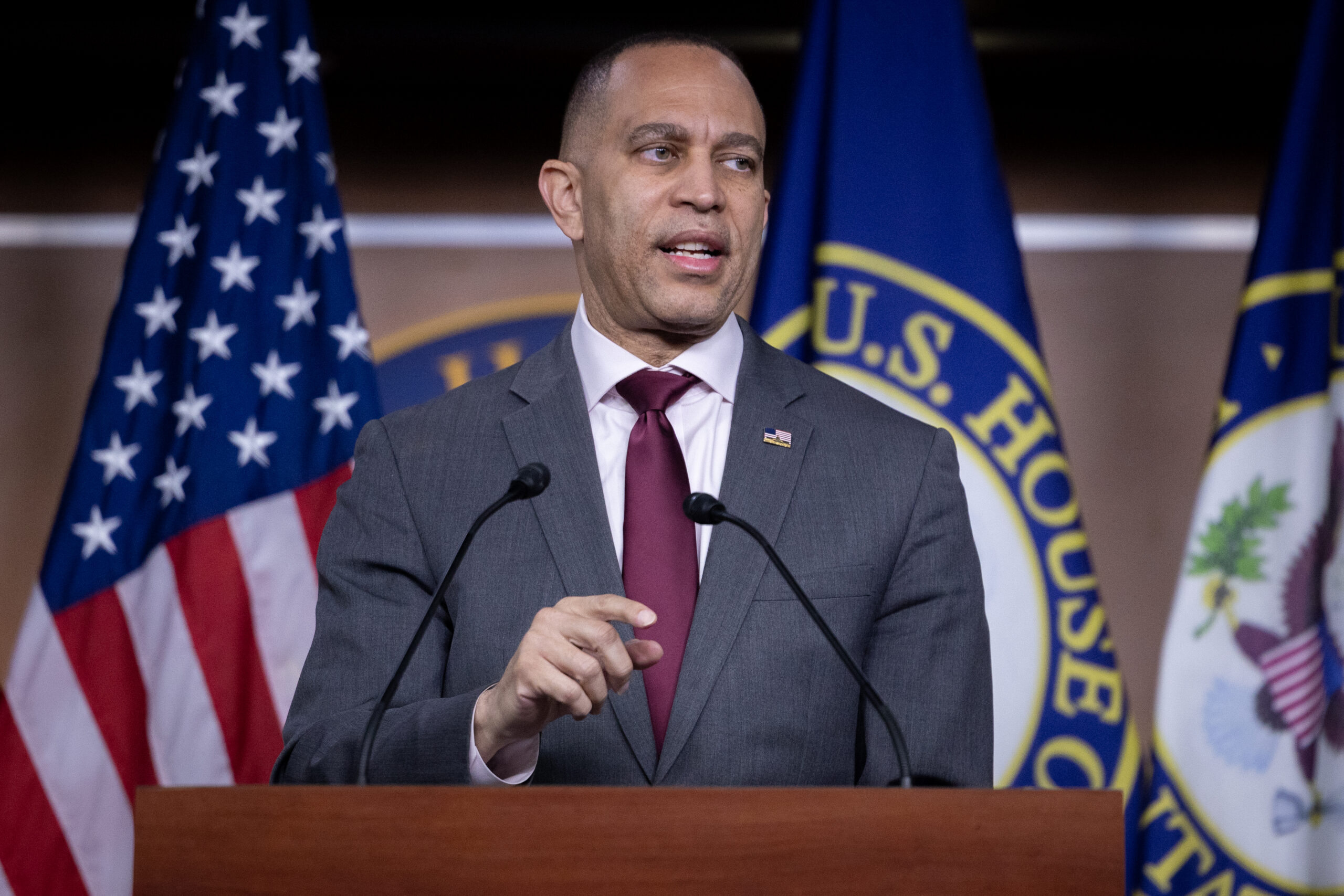
House Minority Leader Hakeem Jeffries said that U.S. policy in the Middle East ‘must change dramatically’ to ensure long-term peace
Plus, Mamdani misses the mark on Oct. 7
Screenshot
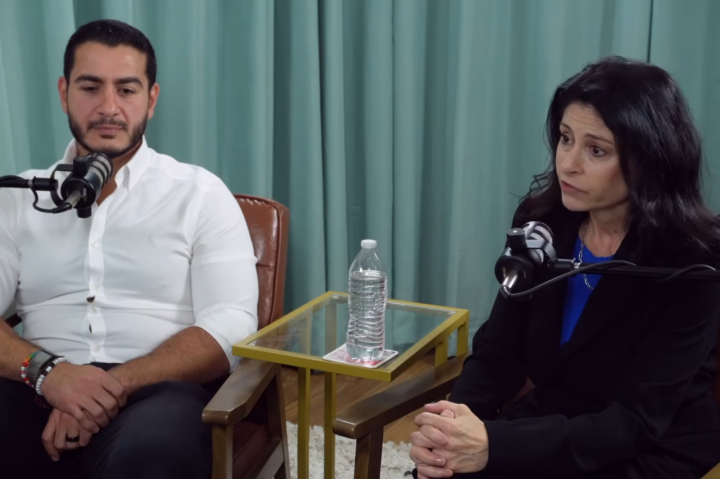
Michigan Attorney General Dana Nessel and Senate nominee Abdul El-Sayed appear on the "“For the Sake of the Argument with Lori Goldman” podcast.
Good Wednesday afternoon.
This P.M. briefing is reserved for our premium subscribers like you — offering a forward-focused read on what we’re tracking now and what’s coming next.
Today’s Daily Overtime was curated by JI U.S. Editor Danielle Cohen-Kanik.
📡On Our Radar
Notable developments and interesting tidbits we’re tracking
President Donald Trump said he spoke with Israeli Prime Minister Benjamin Netanyahu today to wish him and the Israeli people well on the third anniversary of the Oct. 7 attacks. Trump called the attacks “a horrible tragedy” and said “the other side is paying a very big price for what they did on Oct. 7”…
New York City Mayor Zohran Mamdani observed the anniversary of the Oct. 7 attacks with a statement that opened with a denunciation of Hamas and the “horrific war crimes” it committed that day, but spent most of its length excoriating the Israeli response — drawing fierce criticism from mainstream Jewish organizations, Jewish Insider’s Will Bredderman reports.
“Many New Yorkers are reckoning with this unbearable grief, and we mourn alongside them — all while knowing that our tax dollars fund these war crimes,” Mamdani’s statement said. “Three years later, we must refuse to accept a world in which occupation and apartheid continue, where war crimes are met with impunity, and our federal government continues its complicity with every arms shipment.”
UJA-Federation of New York accused Mamdani of choosing “to respond to the grief of Jewish New Yorkers by advancing false and inflammatory attacks against Israel — not only inappropriately shifting the focus away from Hamas’s cruelty, but also placing Jewish New Yorkers at risk”…
Metropolitan Police in the U.K. arrested 11 individuals today at anti-Israel marches, including five at a “spontaneous protest” outside the Camden headquarters of the Board of Deputies — the representative body of British Jews — for “inciting racial hatred, involving allegedly shouting or chanting slogans calling for intifada,” according to a police statement…
French Foreign Minister Jean-Noël Barrot visited Hostages Square in Tel Aviv and Kibbutz Be’eri today, saying in a statement that France “will never forget” the victims of the Oct. 7 attacks — “Nothing will erase their faces or their names,” he added. A French official told The Times of Israel that Barrot has no plans to meet with Israeli officials during his visit, as Jerusalem and Paris continue to be at odds over issues including settlements in the West Bank and the war in Gaza…
The White House has asked the Pentagon to prepare potential options for strikes in Iran to be executed before the midterm elections, The Atlantic reports, as the president considers avenues to signal strength before voters head to the polls…
Democratic Michigan Senate candidate Abdul El-Sayed recently called far-left influencer Hasan Piker to warn him that his extreme rhetoric was costing the candidate votes and asking him to stop, CNN reports…
In a lengthy profile on El-Sayed, CNN revealed that Michigan Attorney General Dana Nessel avoided attending religious services for the High Holy Days after she endorsed El-Sayed, knowing her position was controversial among the Jewish community. Speaking to the outlet, she credited El-Sayed with largely having stopped attacking AIPAC in his public statements, which she said she asked him to do.
Lansing, Mich., Mayor Andy Schor, a Jewish Democrat, also told CNN that he won’t endorse El-Sayed without having spoken to him, and his campaign has not yet made contact. El-Sayed also seems aware of his shortcomings: “I’m not the Democrat the Democrats want, but I am the Democrat that Democrats have,” he told the outlet…
As of this afternoon, El-Sayed still had not issued a public statement about the Oct. 7 anniversary, unlike many other candidates and elected officials across the country…
Meanwhile, the Republican Jewish Coalition announced today a $2 million ad campaign targeting Jewish voters in Michigan, highlighting Jewish Democrats who refuse to support El-Sayed, JI’s Marc Rod reports.
Ads from the group call out El-Sayed’s response to the terrorist attack earlier this year on Temple Israel, featuring several self-described lifelong Democrats saying they will not vote for El-Sayed, including a woman who says in the ad that her grandson attended preschool at the synagogue…
New YouGov polls of key midterm Senate elections found Democrats ahead in Kansas, Michigan, New Hampshire, Ohio as well as Texas, where state Rep. James Talarico is leading his GOP opponent, Texas Attorney General Ken Paxton, by six points (50%-44%)…
In an address today at the Acropolis in Athens, Greece, Secretary of State Marco Rubio hailed Western civilization, drawing a contrast between the Iranian regime, which he cast as a “cult of death” that glorifies martyrdom, and the West’s tradition of loyalty and sacrifice.
Rubio warned that the West has lost its will to fight and its drive to excel, saying that “the ideal of many ideologies in our time has, frankly, become a world of perfect safety, a world devoid of risk or failure” — one in which “we hold the most exceptional things among us hostage to the average, the ordinary, the mediocre”…
Former Boca Raton, Fla., Mayor Scott Singer, the Republican candidate running against Rep. Jared Moskowitz (D-FL) in South Florida, traveled to Qatar in 2024 where he met and was photographed with Qatar’s minister of municipality, Abdullah bin Hamad Al Attiyah, during a visit to the Qatar Economic Forum with other mayors from around the U.S., JI’s Marc Rod reports.
Singer and Moskowitz have been battling over which one of them is the stronger and more reliable supporter of Israel, in a district with a substantial Jewish population that could be up for grabs in the midterm election…
The authors of a play about the Oct. 7 attacks are calling for a police investigation after a fire alarm disrupted a showing of the play at Northwestern University yesterday. Alleging that someone intentionally pulled the alarm, playwright Phelim McAleer told Jerusalem News Syndicate, “These people are demonic.” Rep. Brad Schneider (D-IL) similarly called for an investigation into the incident, calling it “unacceptable”…
⏩ Tomorrow’s Agenda, Today
An early look at tomorrow’s storylines and schedule to keep you a step ahead
Keep an eye on Jewish Insider for a look at GOP concerns with a provision regarding cooperation with Israel in the 2027 National Defense Authorization Act.
El-Sayed and his GOP opponent, former Rep. Mike Rogers (R-MI), will participate in a debate tomorrow evening airing on a local Detroit TV station.
Israel is expected to close the British consulate in east Jerusalem tomorrow in retaliation for London placing sanctions on Israeli settlements; reports indicate the U.K. intends to expel dozens of Israeli diplomats if the closure is enacted.
Stories You May Have Missed
LIFE AFTER CAPTIVITY
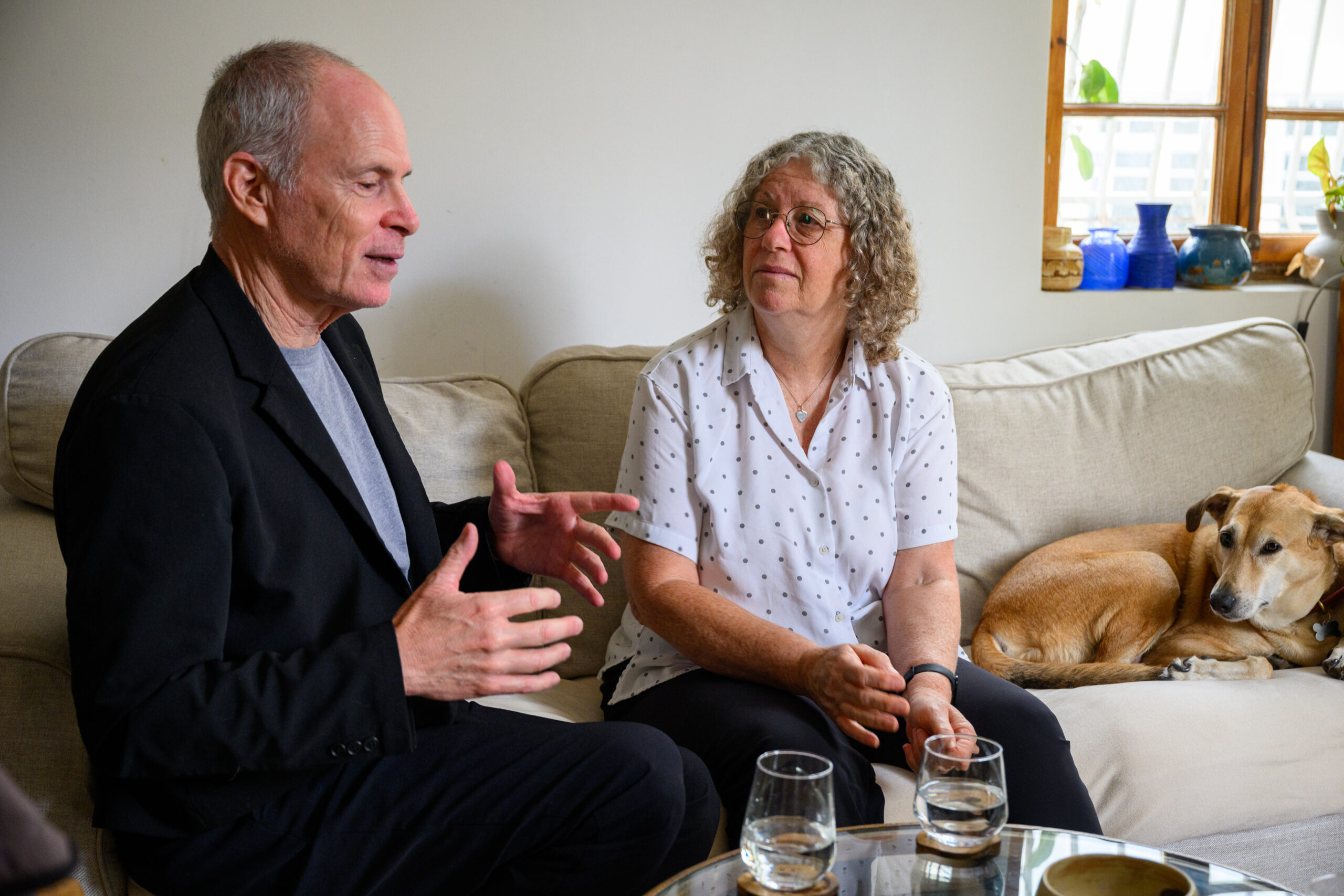
The former hostages talk with JI about survivor’s guilt and rebuilding their lives far from their Kibbutz Kfar Aza home
CAMPUS CHRONICLES

Three students who arrived on campus weeks before the attacks describe how the past three years reshaped their Jewish identities, through religious observance, community and activism
Plus, the freshmen of Oct. 7 are seniors now
(Jamal Awad/picture-alliance/dpa/AP Images)
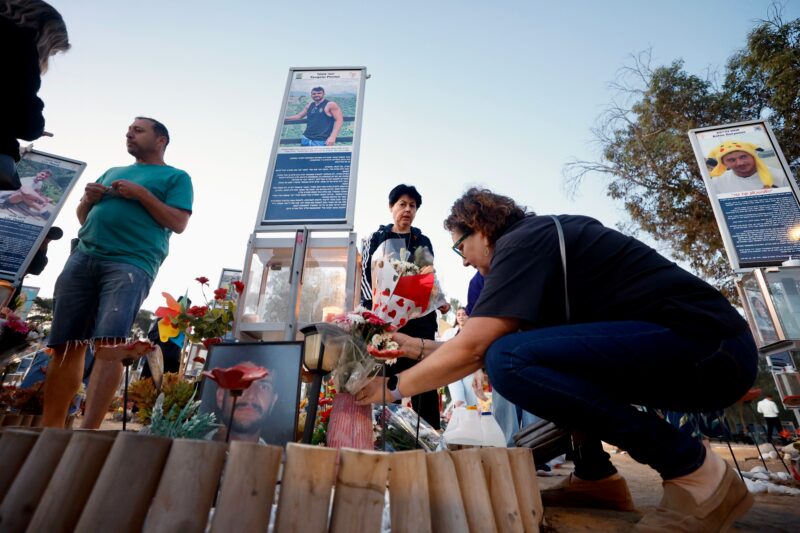
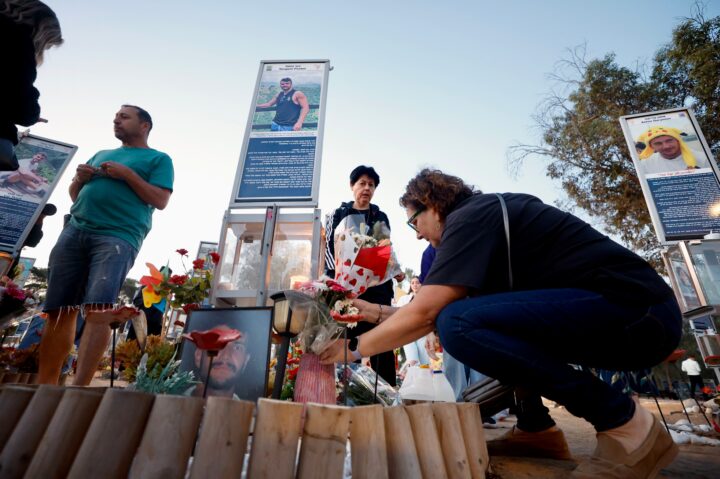
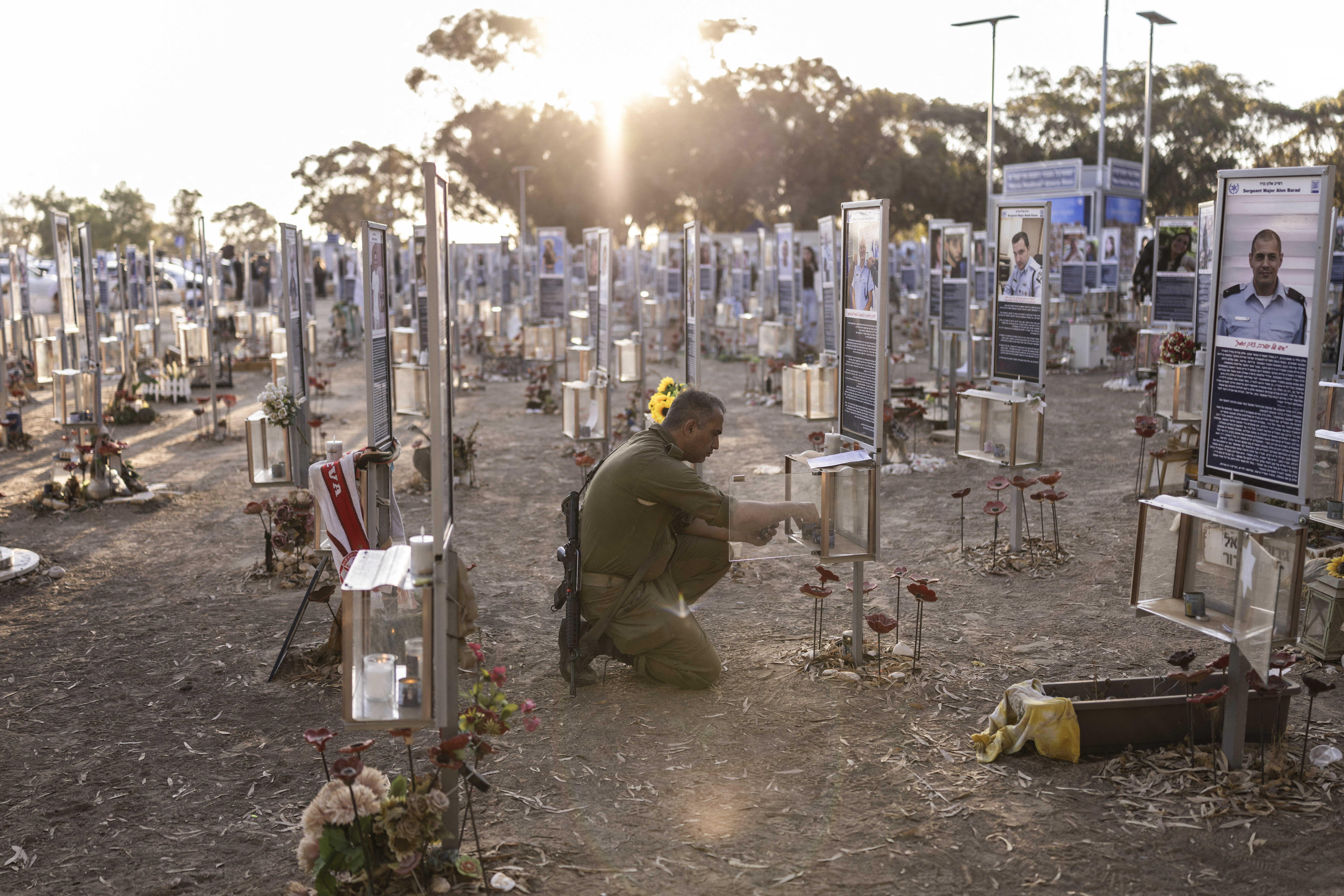
07 October 2026, Israel, Re'im: Mourners place flowers beneath portraits of victims during a memorial at the site of the Nova music festival in Re'im.
Good Wednesday morning.
In today’s Daily Kickoff, we look at how Israel’s security landscape has changed in the three years since the Oct. 7, 2023, Hamas terror attacks, interview former hostages Keith and Aviva Siegel and Shoshan Haran, and talk to Jewish college seniors about how the events of Oct. 7 and ensuing war in Gaza shaped their university experiences. Also in today’s Daily Kickoff: Sen. Chris Coons, Kevin Roberts and Danielle Bernstein.
Today’s Daily Kickoff was curated by JI Executive Editor Melissa Weiss, with assists from Tamara Zieve and Danielle Cohen-Kanik.
Today’s Agenda
Today marks the three-year anniversary of the Hamas-led Oct. 7, 2023, terror attacks. In Israel and around the world, communities will mark the day with solemn ceremonies and memorials. Ceremonies on individual kibbutzim and at the site of the Nova music festival began as early as 6:29 a.m. local time, marking the minute that the attacks began three years ago.
Meanwhile, some will be marking the anniversary by protesting against the Jewish state, including on several college campuses and at New York City Hall, where anti-Israel groups including PAL-Awda, Within Our Lifetime and the youth chapter of the New York City Democratic Socialists of America are promoting a rally with a flyer that features the phrase, “Glory to the martyrs, victory to the resistance.”
Former hostages will be speaking at events marking the day. In Israel, Eli Sharabi is co-hosting a memorial ceremony in Tel Aviv, where he will be joined by other former hostages. In New York, Omer Shem Tov is slated to speak tonight at Yeshiva University, while Or Levy will address a commemoration ceremony on Long Island. Eliya Cohen and his wife, Nova survivor Ziv Abud, are speaking in Boston, and Yosef Chaim Ohana, along with Nova survivor Daniel Sharabi, is speaking at a community memorial in Denver. In France, Omri Miran will speak at the European Union’s official commemoration event.
Speaking at a press conference yesterday alongside New York City Mayor Zohran Mamdani, NYPD Commissioner Jessica Tisch vowed that “Jewish institutions will not be left to protect themselves without a strong partner in the NYPD” amid the demonstrations.
Mamdani, for his part, is slated to attend an Oct. 7 vigil today before meeting with Palestinian New Yorkers, according to his official schedule.
One Thing To Know
ANALYSIS
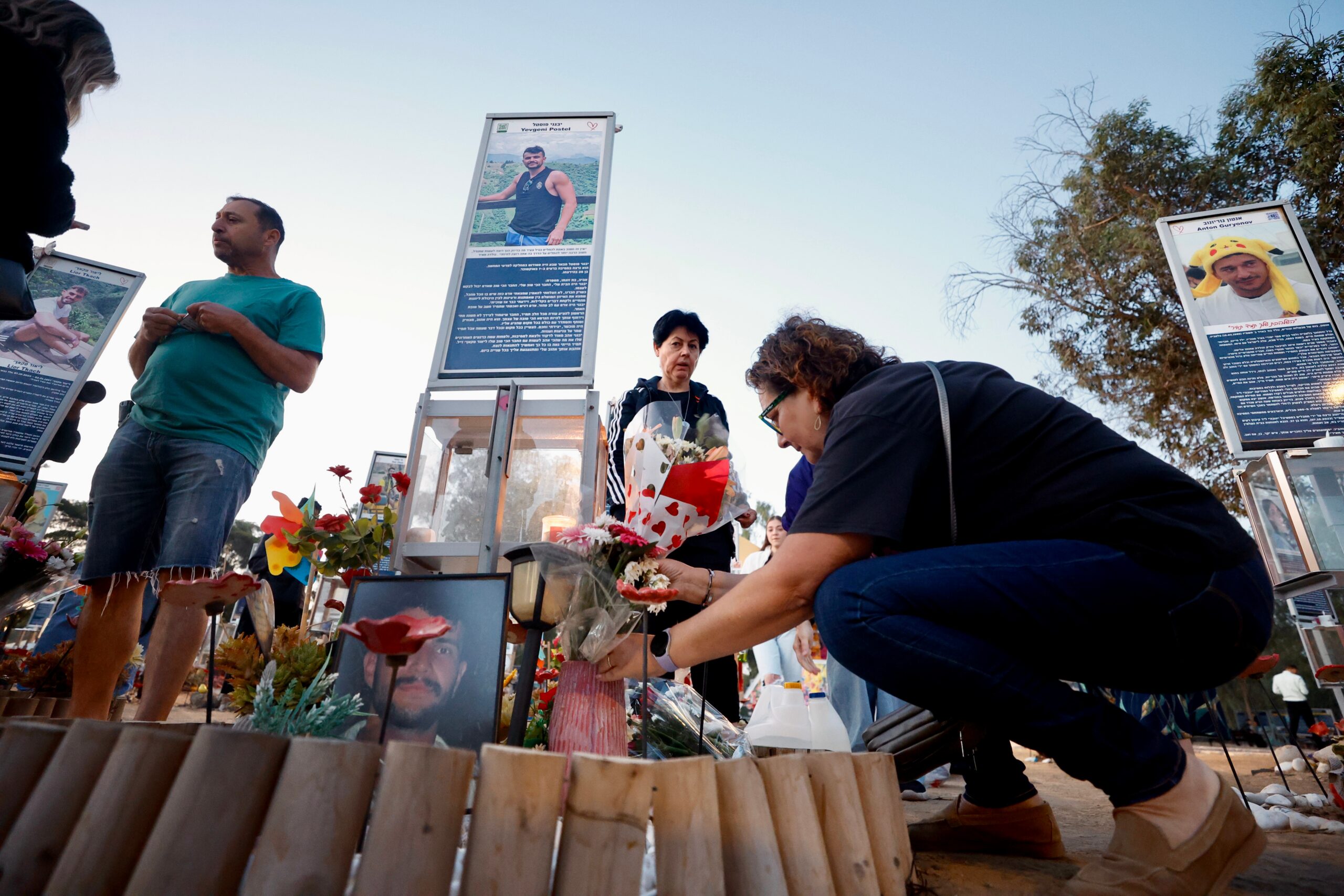
This year, three years since the Oct. 7, 2023, Hamas-led terror attacks, Israelis are marking the first anniversary in which no hostages remain in Gaza. Daily life has shifted to a new phase: one in which fewer reservists are being called up, Tel Aviv’s Hostages Square sits quiet on Saturday nights and Israelis tuning into the evening news normally see something other than war — usually election coverage.
Israelis now face a reckoning on the heels of last week’s FlyDubai attempted hijacking and ahead of the first election since Israel’s south was invaded by thousands of terrorists. The questions that loomed in the wake of the Oct. 7 attacks regarding the security of Israelis and the key role the government plays in that security are again front and center.
The terror attack on a FlyDubai flight bound for Israel, foiled by a miraculous set of events and the bravery of the Indian captain and Israelis on board, serves as a reminder of the threats that Israelis still face — and of the ways in which the institutions designed to protect them failed their societal covenant to do so.
The Big Reads
lessons learned?
On the third anniversary of the Oct. 7, 2023, Hamas-led terror attacks on Israel, the Jewish state’s borders are more secure, but there are still dangers looming and lessons to be learned, according to military and national security analysts. Dan Diker, president of the Jerusalem Center for Security and Foreign Affairs, told Jewish Insider’s Lahav Harkov on Tuesday that Israel “is in a better place in terms of its security. Kinetically, militarily, in counterterrorism and on the battlefield, we are in a much better place,” he said. “We have defensible borders. That’s an important point. It’s not only in Judea and Samaria [the West Bank], but we have them 10 kilometers deep into Lebanon, security zones in [Syria] up to 20 kilometers, and some strategic depth in Gaza. We have multi-border strategic depth that we need to survive, and a consensus that we’re not going anywhere.”
life after captivity
Keith Siegel was held captive by Hamas for 484 days. Of those, 433 were spent apart from his wife, Aviva, who was taken hostage with him but released after 51 days in captivity. “Every day counts,” he was quick to point out on Tuesday, when he and Aviva met with Jewish Insider’s Melissa Weiss in Tel Aviv ahead of the third anniversary of the Oct. 7 Hamas attacks on Israel. “Maybe every hour.” In part to deal with the trauma of her abduction and ordeal in Gaza, Aviva wrote a book about her experiences, Survived to Tell: A Hostage’s True Story of October 7 and 51 Days in Captivity. “I remember thinking, ‘I have to leave all these words for our grandchildren, because if Keith doesn’t come home, and he might never ever come home alive, that they’ll be able to read the love between us and how amazing Keith was,’” Aviva reflected.
Next chapter: On the third anniversary of the attacks, and with every hostage either returned alive or brought home for burial, Kibbutz Be’eri survivor Shoshan Haran, who was, like the Siegels, taken hostage, is allowing herself to think about what comes next. “This is the first anniversary that we can start looking at the future,” she told JI’s Haley Cohen. Her new memoir, Mission in Captivity: One Woman’s Struggle to Survive and Save Her Family in Gaza, is part of that next chapter — an effort to document what she experienced, mourn what she lost and make her voice heard about the events of Oct. 7 and their aftermath.
campus chronicles
Seven months after Hamas’ Oct. 7, 2023, attacks in Israel, Erica Ho stood beneath a Chabad tent on Harvard’s campus and became a bat mitzvah on her 20th birthday. Growing up in Albuquerque, N.M., with a Chinese father and Jewish mother, Ho lived miles away from the nearest synagogue and felt disconnected from the local Jewish community. For Ho and other members of the college class that arrived on campus just weeks before Oct. 7 — most of whom are now seniors — the three years since have become a defining chapter of their Jewish lives. As the third anniversary of Oct. 7 approached, Jewish Insider’s Haley Cohen spoke with three Jewish students who entered college weeks before the attacks.
The Rundown
education consternation
survey says
speaking out
fundraiser fallout
chesapeake challenge
On Our Radar
● The Live Briefing. Word on the street, clips, podcasts and quick updates — the items we’re tracking all day in our Live Briefing on the app (on Apple and Android) and website.
The White House stood by comments made by President Donald Trump on Monday that Iran could “take out” major California cities, including Los Angeles and San Diego; Trump’s comments prompted condemnation from Gov. Gavin Newsom and other state officials…
Vice President JD Vance said that Iran would have to make a “meaningful” change to its enrichment capacity in order to reach an accord with the U.S. to end the war, adding, “If you don’t want a nuclear weapon, then why do you need 60% enriched fuel? And if you want to show commitment to not building a nuclear weapon, don’t build highly enriched fuel. That’s a very basic threshold issue”…
During Maine’s Senate debate last night, Sen. Susan Collins (R-ME) said she supports continued aid at current levels to Israel, while Democratic challenger Troy Jackson said he does not want “any more offensive weapons going to murder people in Palestine”; he added that he believed that Israeli Prime Minister Benjamin Netanyahu is a “war criminal, but Sen. Collins likes him”…
The Cook Political Report shifted its ratings of three key Senate races — in Kansas, New Hampshire and North Carolina — to further favor Democrats…
Heritage Foundation President Kevin Roberts, who had previously defended far-right commentator Tucker Carlson over his friendly interview with white nationalist Nick Fuentes — prompting a series of resignations from the right-wing think tank — told The New Yorker in an exposé on Heritage that he now believes Carlson is “exacerbating antisemitism in America”…
The Wall Street Journal profiles WeWoreWhat founder Danielle Bernstein, who has amassed a large social media following even as she has courted controversies that have garnered her the tabloid nickname “America’s most hated influencer”…
Politico profiles Berlin mayoral candidate Elif Eralp, whose Left Party has galvanized younger supporters even as it faces antisemitic incidents within the party; media have dubbed Eralp the “Berlin Mamdani,” owing to her progressive politics and campaign style, which were influenced by political consultant and Mamdani advisor Morris Katz, who is also advising Eralp…
The New York Times spotlights former hostages Gali and Ziv Berman, twins from Kibbutz Kfar Aza who were among the last living hostages to be released, as they adjust to life post-captivity…
The Wall Street Journal interviews young Americans who chose to immigrate to Israel following the Oct. 7 attacks…
British Airways is set to resume daily nonstop flights between London and Israel on Oct. 25…
The Iran-backed Houthis in Yemen struck two airports in Saudi Arabia overnight amid a Riyadh-backed effort by Yemen’s internationally recognized government to retake areas claimed by the Houthis…
Counterterrorism officials in the U.K. arrested a seventh man in connection with an investigation into a security incident near the country’s RAF Fairford base, which had been used by the U.S. during its operations against Iran…
Actor Eva Marie Saint, known for her role in “Exodus,” died at 102…
Worthy Reads
Find more Worthy Reads in our Live Briefing via our app (on Apple and Android) and website.
Foreign Influence Peddling: In The Washington Post, Sander Gerber and Eugene Kontorovich argue that the government has a role to play in addressing covert foreign influence operations on social media. “Most of us calibrate our opinions at least in part by watching our neighbors. When a foreign government floods our Instagram feed with counterfeit neighbors, real citizens see a consensus that may not exist — and subconsciously adjust toward it. The deception lies in trying to pass off foreign (and often foreign-based) — and perhaps not even human — messages as apple-pie American.” [WashPost]
Seeing Red Over the Greens: In The Free Press, former U.K. Prime Minister Tony Blair raises concerns about the rise of the country’s Green Party, amid its vote over the weekend in favor of a single Palestinian state. “For most of its history, the Green Party was a party on the margins. Today it is a significant force in British politics. It won its best-ever results in this year’s local elections, and its membership has almost tripled. And it has moved itself, and many of its supporters and sympathizers, from condemnation of Israel’s conduct in the Gaza war to a full-on denial of the State of Israel’s right to exist.” [FreePress]
Coons’ New Tune on Israel: Politico’s Daniella Cheslow looks at Sen. Chris Coons’ (D-DE) political evolution on Israel in the three years since the Oct. 7 attacks as he positions himself to assume control of the Senate Foreign Relations Committee if Democrats flip the Senate. “Coons depicted his approach as providing moral clarity to an ally in an uneasy time. Oct. 7, Coons said, made Israelis ‘dramatically more concerned about security and less willing to tolerate or engage in conversations about a two-state solution or a path towards peace with Palestinians.’” [Politico]
Picture of the Day
Birthdays

Matthew Sklar, composer for musical theater on Broadway and the West End, television and film, turns 53
JOHN NACION/GETTY IMAGES
Robert Ian Kaufelt, former owner of Murray’s Cheese, the nation’s leading purveyor of artisanal cheese, turns 79
Allan Nelkin, retired chairman and CEO of Halco Lighting Technologies
Margery Nyberg, Highland Park, Ill., resident
Barry Curtiss-Lusher, co-founder, chair and former CEO of energy company Nexus BSP, he is a former national chair of the Anti-Defamation League, turns 75
Jill Smith, former chair of the Jewish Foundation for Education of Women and chair of the Prize Committee of the Genesis Prize Foundation, turns 73
Bruce Lawrence Bialosky, founder of the Republican Jewish Coalition of California and a former member of the U.S. Holocaust Memorial Council, turns 73
Ron Vosatka, former deputy director of community security at the Jewish Federation of Palm Beach County
Michael W. Sonnenfeldt, entrepreneur and political activist, he co-founded the Israel Policy Forum in 1993, turns 71
Kenneth L. Marcus, founder and chair of the Louis D. Brandeis Center for Human Rights Under Law, he served as assistant secretary of education in the Trump administration, turns 60
Eli Saulson, president of Detroit’s Imperial Management and a board member of the William Davidson Foundation
Gabriele Corcos, creator, host and producer of “Extra Virgin” on the Cooking Channel, turns 54
Rabbi David-Seth Kirshner, rabbi of Temple Emanu-El in Closter, N.J.
Arie Lipnick, political fundraiser and strategist, advisory board chairman of the Combat Antisemitism Movement
Michael Malchieli, member of the Knesset for the Shas party and former minister of religious affairs, turns 44
Natalie Lascar Lefkowitz, SVP of the leadership institute at AIPAC
Adam Teitelbaum, founder of Level III Industries after holding roles at the Jewish Federations of North America, AIPAC and AEPi
Daniel Mael, CEO of Holbrook, N.Y.-based MW Impressions
Tayla Harris, executive assistant for global client operations at WPP
Barbara Martinez, an original Politico staffer, now a manager of editorial and content strategy for the U.S. Holocaust Memorial Museum
Sam Schear, principal on the real estate team at Korn Ferry
Tamara Harel-Cohen, co-founder and chief growth officer at Riseup
Plus, Smotrich urges Israeli self-reliance

Selcuk Acar/Anadolu via Getty Images
Anti-Israel demonstrators protest against 'Great Israel Real Estate' event at the Park East Synagogue in Manhattan on Tuesday, May 05, 2026, in New York City.
Good Tuesday afternoon.
This P.M. briefing is reserved for our premium subscribers like you — offering a forward-focused read on what we’re tracking now and what’s coming next.
Today’s Daily Overtime was curated by JI U.S. Editor Danielle Cohen-Kanik.
📡On Our Radar
Notable developments and interesting tidbits we’re tracking
Speaking at the National Conservatism Conference in Jerusalem today, Israeli Finance Minister Bezalel Smotrich said that Israel “can and must bear a growing responsibility for its own security, develop military and economic independence and stand up for its own interests,” and that Jerusalem “respect[s] the right and the duty of the United States to put the American people at the top of its policy priorities”…
Heritage Foundation President Kevin Roberts said similarly at the conference that, “if Americans put America first, like Israelis put Israel first … we can stand up to this new threat and, bound firmly together, toss red-green leftism into the ash heap of history”…
Roberts told The New Yorker in an exposé on the right-wing think tank released yesterday that he now believes far-right commentator Tucker Carlson is “exacerbating antisemitism in America,” after having previously released a video defending Carlson amid backlash over his friendly interview with white nationalist Nick Fuentes — a move that fractured the organization…
The Telegraph reports that the Green Party member who proposed the “Zionism is racism” motion recently adopted at the party’s conference is a self-described close friend of an al-Qaida terrorist jailed for a foiled 2011 plot to bomb travelers arriving at Heathrow from Israel.
Lubna Speitan had offered to testify in defense of Minh Quang Pham — now serving a 44-year sentence for the plot — and confirmed to the outlet that the two remain friends, suggesting he had been wrongly “targeted” by “the system”…
Meanwhile, the European Green Party said the British Green Party’s “Zionism is racism” policy runs counter to its support for a two-state solution and that it would immediately seek clarification from the British party’s leadership. German Greens co-leader Felix Banaszak separately called the policy “intolerable and unacceptable”…
British counterterrorism police arrested a seventh suspect today in connection with the alleged plot targeting the U.S.-run RAF Fairford air base, detaining a 22-year-old British man in London on suspicion of preparing terrorist acts. The other six suspects have been released on bail as the investigation continues…
The Cook Political Report changed its ratings of three key Senate races further in favor of Democrats: Kansas switched from “Lean Republican” to “Toss Up,” New Hampshire changed from “Toss Up” to “Lean Democratic” and North Carolina shifted from “Lean Democratic” to “Likely Democratic.” The three races will be critical to deciding which party takes control of the upper chamber…
Democratic Maryland Gov. Wes Moore would not commit to serving out a full second term if reelected in November, amid speculation that he plans to run for president in 2028: Asked at a gubernatorial debate today if he would serve the entirety of his next term, Moore said, “I would not be running for reelection if I was not committed to the people of Maryland,” and declined to comment further when pressed for a yes or no answer…
Member of Knesset Zeev Elkin met with Ukrainian President Volodymyr Zelensky today as part of an Israeli delegation to Ukraine marking the 85th anniversary of the widespread extermination of Jews by the Nazis at Babyn Yar. Zelensky said the two discussed Iran’s cooperation with Russia as well as regional issues, and stated, “Strong relations between Ukraine and Israel could certainly contribute to our shared security”…
⏩ Tomorrow’s Agenda, Today
An early look at tomorrow’s storylines and schedule to keep you a step ahead
An early look at tomorrow’s storylines and schedule to keep you a step ahead
Keep an eye on Jewish Insider for a special edition of the Daily Kickoffhighlighting stories from former hostages, college students and the security sector marking the third anniversary of the Oct. 7, 2023, Hamas attacks on Israel.
Others around the world will be marking the anniversary by protesting against the Jewish state, including on several college campuses and at New York City Hall, where anti-Israel groups including PAL-Awda, Within Our Lifetime and the youth chapter of the New York City Democratic Socialists of America are promoting a rally with a flyer that features the phrase, “Glory to the martyrs, victory to the resistance.”
NYPD Commissioner Jessica Tisch vowed today at a press conference alongside New York City Mayor Zohran Mamdani that “Jewish institutions will not be left to protect themselves without a strong partner in the NYPD” amid the demonstrations.
Elsewhere in New York, Jaser AbuMousa, a father from Gaza who lost several family members to Israeli airstrikes during the Israel-Hamas war, and Jonathan Dekel-Chen, the father of former Israeli hostage Sagui Dekel-Chen, will sit in conversation at the 92nd Street Y.
Sen. Susan Collins (R-ME) and her Democratic challenger Troy Jackson will face off tonight in their first debate, one of four to be held in the next two weeks, after Jackson was selected to replace Graham Platner as the state’s Democratic Senate nominee in July.
The National Conservatism Conference continues tomorrow in Jerusalem with speakers including former Polish President Andrzej Duda; Israeli Minister of Diaspora Affairs Amichai Chikli; former Israeli National Security Advisor Meir Ben-Shabbat; and Sebastian Gorka, senior director for counterterrorism at the U.S. National Security Council.
Maryland Gov. Wes Moore will speak at an event tomorrow hosted by the Jewish Federation of Annapolis & the Chesapeake about the third anniversary of Oct. 7 and his commitment to combating antisemitism. The event will also feature a screening of the documentary “Torn: The Israel-Palestine Poster War on NYC Streets,” about the clashes in New York City as pro- and anti-Israel activists put up and tore down the “kidnapped” posters raising awareness about those taken hostage by Hamas.
Stories You May Have Missed
GAZA GRIFT?

The ringleader of the alleged conspiracy is Gaza-based Hamas official Saleem Alzaq, a member of Hamas’ Al-Qassam Brigades and one of its propaganda offices
IN THE CROSSHAIRS

The Jewish Federation of Greater Portland urged the University of Oregon to take action after antisemitic flyers called for ‘Hillel off campus’
Plus, Turkey and Pakistan send troops to Saudi Arabia
Chip Somodevilla/Getty Images
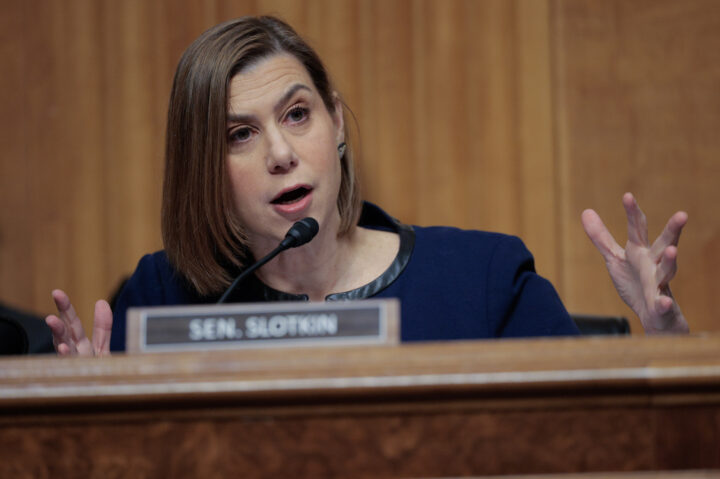
Sen. Elissa Slotkin (D-MI) in the Dirksen Senate Office Building on Capitol Hill on March 18, 2026 in Washington.
Good Monday afternoon.
This P.M. briefing is reserved for our premium subscribers like you — offering a forward-focused read on what we’re tracking now and what’s coming next.
Today’s Daily Overtime was curated by JI U.S. Editor Danielle Cohen-Kanik.
📡On Our Radar
Notable developments and interesting tidbits we’re tracking
Sen. Elissa Slotkin (D-MI) argued during her first joint campaign appearance with Michigan Democratic Senate nominee Abdul El-Sayed that the Jewish vote is not a monolith and that some Jewish voters are prioritizing issues other than Israel and antisemitism in the state’s upcoming competitive Senate race, Jewish Insider’s Marc Rod reports.
“There’s no such thing as the Jewish voters, just like there’s no such thing as the Muslim voters or the Black voters. People have their own views and the things that they prioritize are going to drive their vote,” she said during a joint appearance on MS NOW, after participating in a town hall with El-Sayed over the weekend. “But I think frankly … people want to see a Jewish woman and a Muslim man being able to get along, debate, push and pull each other, and move the state forward”…
Appearing on Fox News this afternoon, El-Sayed declined to answer directly when asked if he supports U.S. terror designations for Muslim Brotherhood chapters in Lebanon, Egypt and Jordan. “I will support a terrorist designation for any organization that is engaged in or committed to political violence,” he said.
He also praised the Israelis who thwarted the attack on the FlyDubai flight last week, calling terrorism “awful and terrible”…
Also lending a hand to El-Sayed on the campaign trail is former President Barack Obama, who is set to campaign with the Senate candidate, as well as Michigan Democratic gubernatorial nominee Jocelyn Benson, in Detroit on Oct. 24…
Turkey and Pakistan will deploy troops to Saudi Arabia, the three countries said in a joint statement today, as the Kingdom continues to battle the Iran-backed Houthi militia in Yemen. The activation of the countries’ trilateral mutual defense pact “demonstrates the credibility of the commitment to collective defense” and “strengthens the effectiveness of deterrence,” the statement said…
Speaking today at a memorial in Jerusalem for those killed in the Oct. 7, 2023, Hamas attacks on Israel, Prime Minister Benjamin Netanyahu vowed to “settle accounts” with the remaining “human beasts” who planned and carried out the attacks; Defense Minister Israel Katz said in a statement that 4,000 of the terrorists who entered Israel on Oct. 7 have already been killed, while 2,000 remain at large…
Asked if he thinks Iran was responsible for the attack on FlyDubai FZ1073, President Donald Trump told reporters today, “I personally do,” even as investigators have not officially determined Iranian involvement…
Trump also said that the U.S. moved its B-1 bombers out of the RAF Fairford air base in the U.K. due to “some threats, and rather than tempting the enemy, we’ll capture the enemy and beat the enemy.” Vice President JD Vance said similarly today that the planes were moved “out of an abundance of caution, trying to protect our guys” from an unspecified threat from Iran…
Secretary of State Marco Rubio spoke with Netanyahu while en route to Iceland today, according to a State Department spokesperson…
British National Security Advisor Jonathan Powell reportedly visited Israel last week in an effort to prevent the closure of the British consulate in east Jerusalem; Israel ordered the consulate closed in response to British sanctions on West Bank settlements, and an Israeli Foreign Ministry spokesperson said it will shut Thursday as planned…
A Kuwaiti national who attempted to attack the Israeli Embassy in London last year was sentenced today to life in prison with a minimum term of 20 years after being convicted of preparing a terrorist act. Abdullah Sabah Albadri, 34, was arrested outside the embassy armed with two knives and carrying a note indicating he was prepared to die as a “martyr”…
Sen. Chris Murphy (D-CT) is continuing his travels in the Middle East in Saudi Arabia, where he met today with Crown Prince Mohammed bin Salman, of whom he’s been a vocal critic. In a video update, Murphy said he pressed MBS about Gulf investments with the Trump family and freedom of political speech and discussed the Iran war and Palestinian statehood.
Murphy also visited the U.S. Embassy in Riyadh, which was struck by Iranian drones early in the Iran war. He claimed, based on the damage, that the strikes would have caused a “mass casualty event” if they had occurred while the building was occupied…
Ambassador Yehuda Kaploun, the State Department’s antisemitism envoy, said at a press conference today that countries including the Dominican Republic, Colombia, Guatemala, Paraguay, Costa Rica and Chile are considering adopting or have already decided to adopt the International Holocaust Remembrance Alliance’s working definition of antisemitism, as several Latin American countries have recently shifted more favorably towards Israel and prioritized combating antisemitism…
⏩ Tomorrow’s Agenda, Today
An early look at tomorrow’s storylines and schedule to keep you a step ahead
An early look at tomorrow’s storylines and schedule to keep you a step ahead
Keep an eye on Jewish Insider for a dispatch from the Israeli Embassy in Washington’s Oct. 7 memorial event taking place this evening.
The National Conservatism conference kicks off tomorrow in Jerusalem with speakers including Israeli scholar Yoram Hazony; Heritage Foundation President Kevin Roberts; writer Rod Dreher; Israeli Finance Minister Bezalel Smotrich; and Israeli Foreign Minister Gideon Sa’ar.
National security veteran Brett McGurk’s new book, Brink: Inside the Race to Free the October 7th Hostages, about his experience negotiating for the release of Israeli hostages held by Hamas during the Biden administration, will hit bookshelves tomorrow.
Stories You May Have Missed
PASTOR’S POSITION
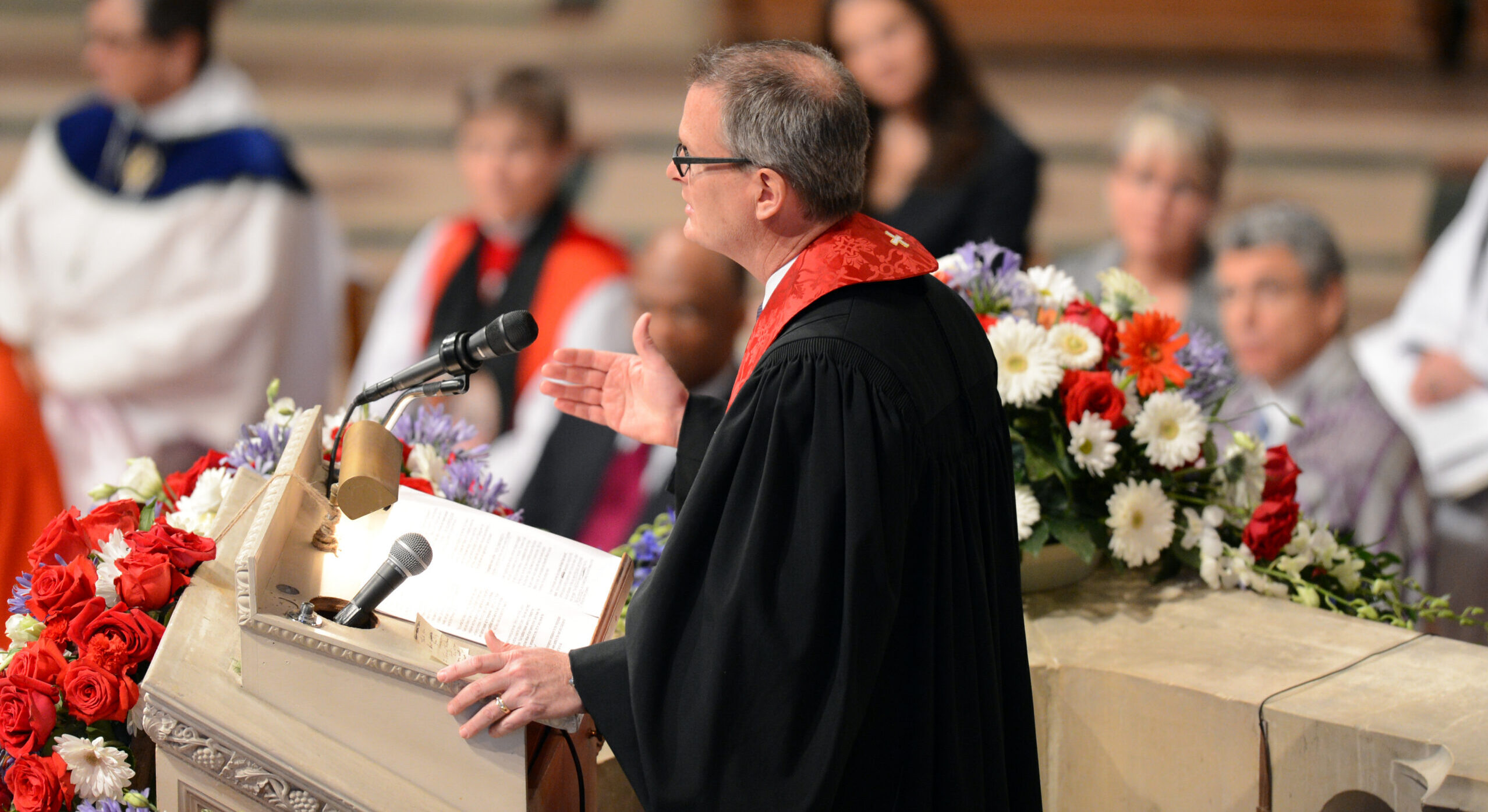
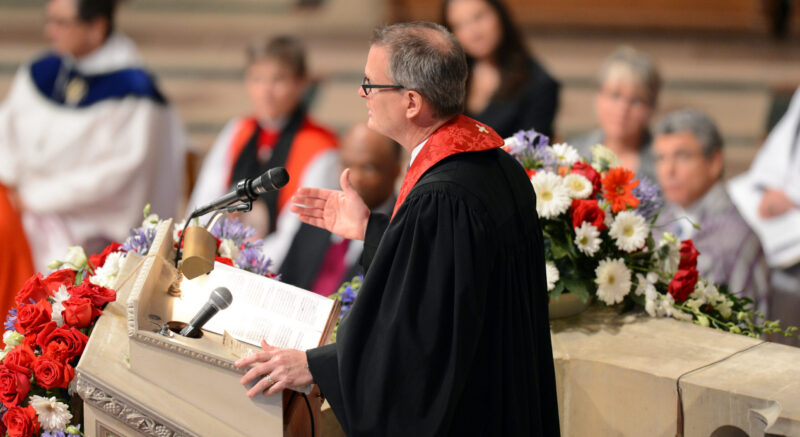
Adam Hamilton called Israel’s war in Gaza ‘irresponsible and unjust’ but said he does not believe Israel’s intent ‘is to wipe out a group of people’
HATE MAIL
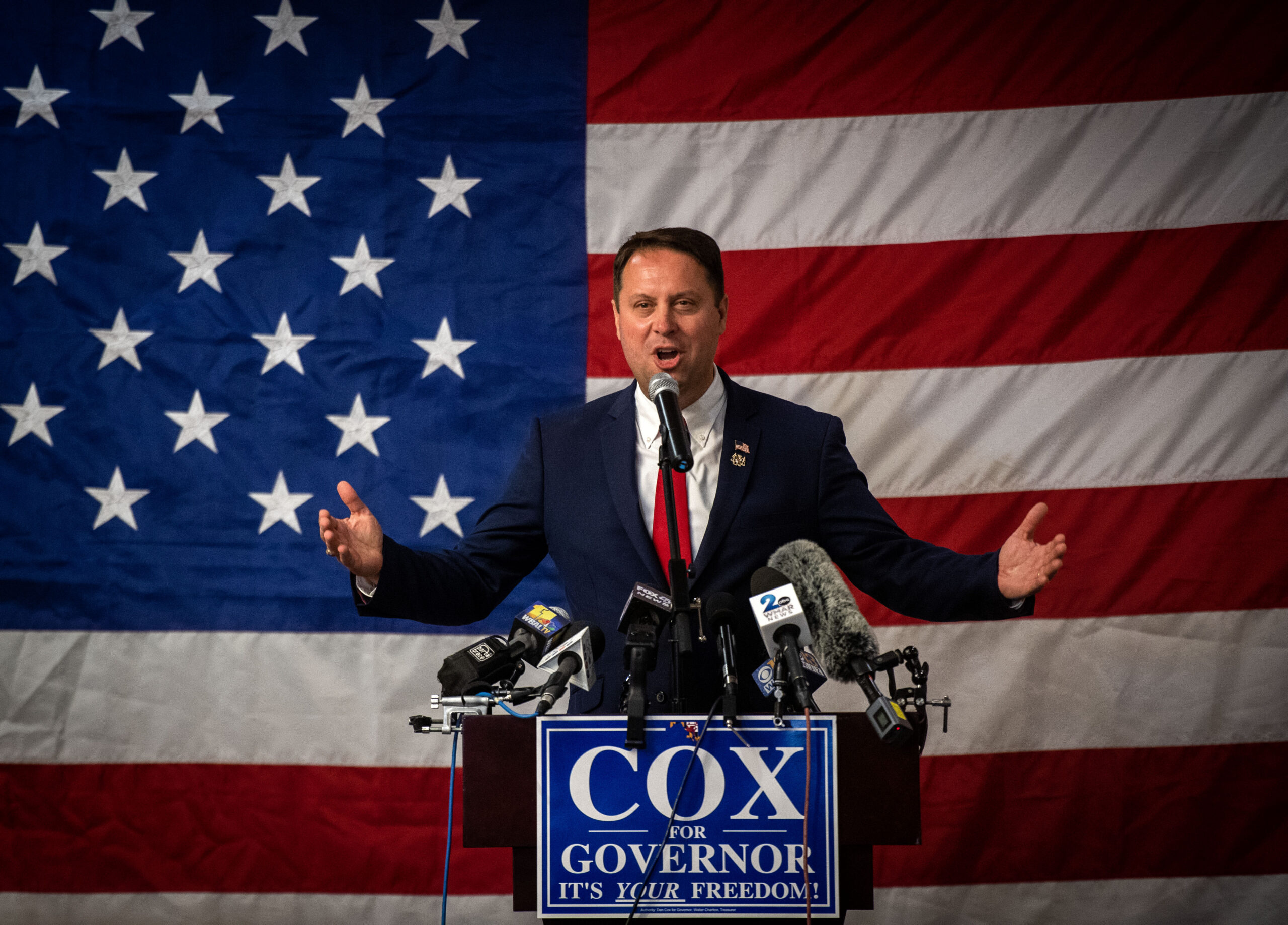
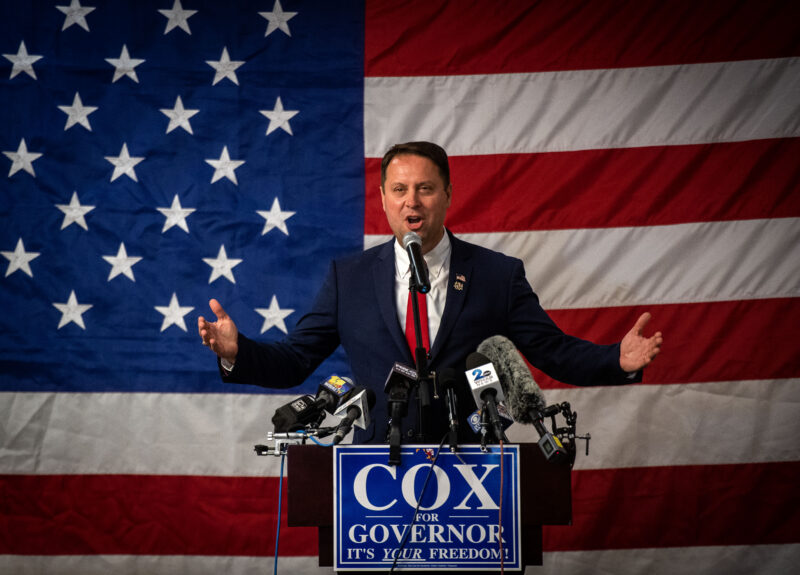
Far-right Maryland Republican Dan Cox’s son and ‘bodyguard’ sent an antisemitic rant to a consultant
Slotkin: ‘People want to see a Jewish woman and a Muslim man being able to get along, debate, push and pull each other’
JEFF KOWALSKY / AFP via Getty Images
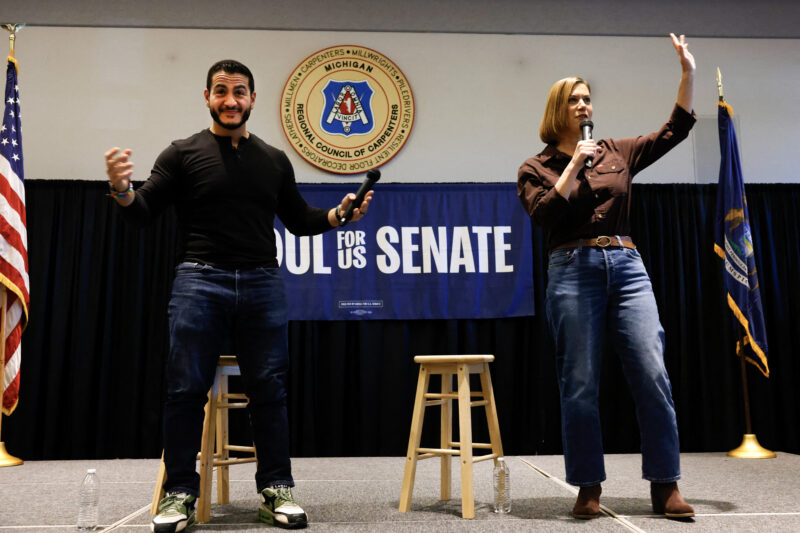
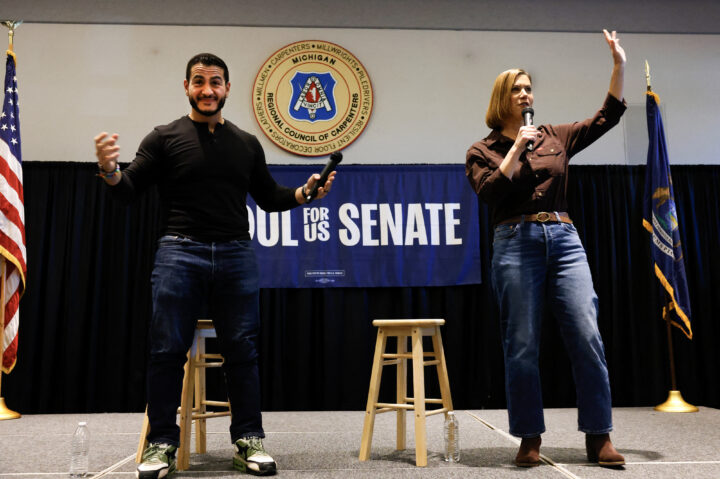
Democratic Michigan Senate candidate Abdul El-Sayed (L) reacts as Sen. Elissa Slotkin (D-MI) speaks during a town hall campaign event in Warren, Michigan, on October 3, 2026.
Sen. Elissa Slotkin (D-MI) argued during her first joint campaign appearance with Michigan Democratic Senate nominee Abdul El-Sayed that the Jewish vote is not a monolith and that some Jewish voters are prioritizing other issues than Israel and antisemitism in the state’s upcoming competitive Senate race.
Many prominent Jewish Democrats in Michigan have offered strident criticism of El-Sayed, saying they will not vote for him without major commitments on Israel policy and antisemitism — or they plan to vote for his opponent. Slotkin is Jewish.
“There’s no such thing as the Jewish voters, just like there’s no such thing as the Muslim voters or the Black voters. People have their own views and the things that they prioritize are going to drive their vote,” she said during a joint appearance on MS NOW after participating in a joint town hall event.
“People want to see a Jewish woman and a Muslim man being able to get along, debate, push and pull each other, and move the state forward.”
"People want to see a Jewish woman and Muslim man … move the state forward." Sen. Elissa Slotkin and Abdul El-Sayed spoke to MS NOW about their first joint appearance on the campaign trail, as El-Sayed’s race against Mike Rogers appears neck and neck. https://t.co/y8aVj0CEkp
— Jewish Insider (@jewishinsider) October 5, 2026
El-Sayed said that he and Slotkin agree that “you ought to be safe in your place of worship” regardless of religion. El-Sayed has faced criticism from many in the Jewish community for responding to the terrorist attack targeting Temple Israel in West Bloomfield, Mich., by saying “hurt people hurt people.” He has since apologized for those remarks.
During their joint appearance at the town hall in Macomb County, Mich., on Saturday, Slotkin downplayed disagreements between moderate and progressive Democrats, arguing that the “real debate among Democrats right now is fight versus flight,” she said. “I am on Team Fight and I need someone with me who is on Team Fight.”
El-Sayed also emphasized that the Iran war is driving up prices at home, and said that the U.S. has “no business fighting” the war.
Slotkin also called Trump “the most successful corrupt leader in the history of the world” and said that former Iraqi dictator Saddam Hussein “would spit out his tea at the amount of money that Donald Trump has stolen from his own people.”
Plus, another Jewish Dem endorses Lawler
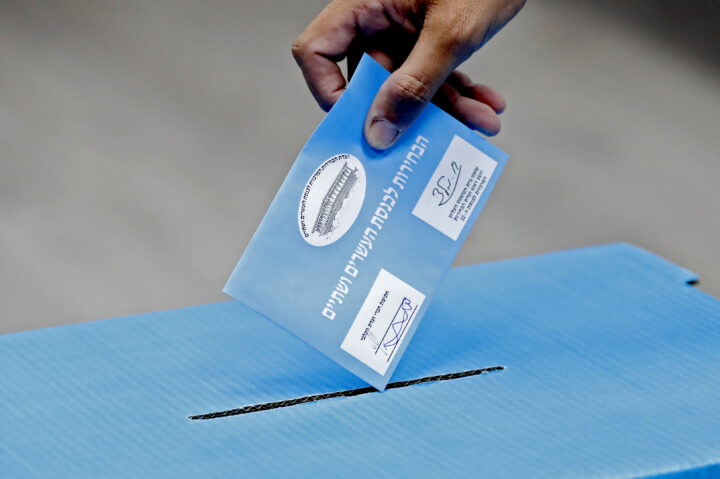
An Israeli man casts his ballot during Israel's parliamentary election, at a polling station in Rosh Haayin, on September 17, 2019. (Photo by Jack GUEZ / AFP) (Photo by JACK GUEZ/AFP via Getty Images)
Good Monday morning.
In today’s Daily Kickoff, we look at whether the upcoming elections in Israel are likely produce a new government or, like in 2019, end in a governing stalemate, and report on Sen. Chris Murphy’s trip to Qatar. We spotlight Kansas Senate nominee Adam Hamilton’s position on Israel as the Midwestern Democrat gains traction in his effort to unseat Sen. Roger Marshall, and report on antisemitic messages posted online by the son of Maryland GOP gubernatorial nominee Dan Cox, who also worked on his father’s campaign. Also in today’s Daily Kickoff: Rahm Emanuel, Feridun Sinirlioglu and Sen. Ron Wyden.
Today’s Daily Kickoff was curated by JI Executive Editor Melissa Weiss, with assists from Tamara Zieve and Danielle Cohen-Kanik.
Today’s Agenda
The Israeli Embassy in Washington is holding its official memorial ceremony this evening for the victims of the Oct. 7, 2023, Hamas-led terror attacks. The event in Washington coincides with the official ceremonies in Israel that are being held today across the country.
Sen. Chris Murphy (D-CT) is in the Middle East this week, having arrived on Saturday in Qatar. Murphy, who has praised Qatar as the U.S.’ “best partner” in the Gulf but more recently opposed Doha’s gifting of a luxury jet to President Donald Trump and attempted to block arms sales to the Gulf state, makes the trip days after Qatari-brokered talks between the U.S. and Iran hit a stalemate. Read more from JI’s Melissa Weiss here.
The investigation into FZ1073 is continuing this week amid deepening concerns over serious security lapses that led an Omani pilot with extremist beliefs to be assigned a flight to Israel.
Israeli Prime Minister Benjamin Netanyahu ordered the country’s National Security Council to appoint an investigator to review “all security aspects regarding foreign civil aviation to Israel,” amid reports that Emirati authorities had sent the names of all passengers and crew to Israeli counterparts prior to the flight. Israeli media reported that the Omani pilot had planned to disable his co-pilot and prepare the flight for normal landing procedures before crashing the jet into Ben Gurion Airport upon its descent.
First in JI: Stacy Caridi, the deputy mayor of Montebello, N.Y., became the second local Jewish Democratic official to endorse Rep. Mike Lawler’s (R-NY) reelection bid, Jewish Insider’s Marc Rod has learned. Caridi, who has known Lawler since his days as a state lawmaker, said the endorsement was in part due to the New York Republican’s record on antisemitism and Israel policy.
Rep. Alexandria Ocasio-Cortez (D-NY) is expected to attend a fundraiser tonight in New York for Michigan Democratic Senate candidate Abdul El-Sayed.
Brazilian President Luiz Inácio Lula da Silva and Sen. Flávio Bolsonaro, the son of the country’s former president and an ally of Trump, are headed to a runoff slated for later this month after neither man garnered enough votes to win Sunday’s election outright. Netanyahu issued congratulations to Bolsonaro, saying, “I look forward to restoring the extraordinary friendship between Israel and Brazil.”
Meanwhile in Spain, Prime Minister Pedro Sánchez this morning called snap elections, slated for late November. The move comes amid widespread protests in the country and the progressive leader’s clashes with right-wing parties over the minority government’s emergency housing measures.
One Thing To Know
BACK TO THE FUTURE
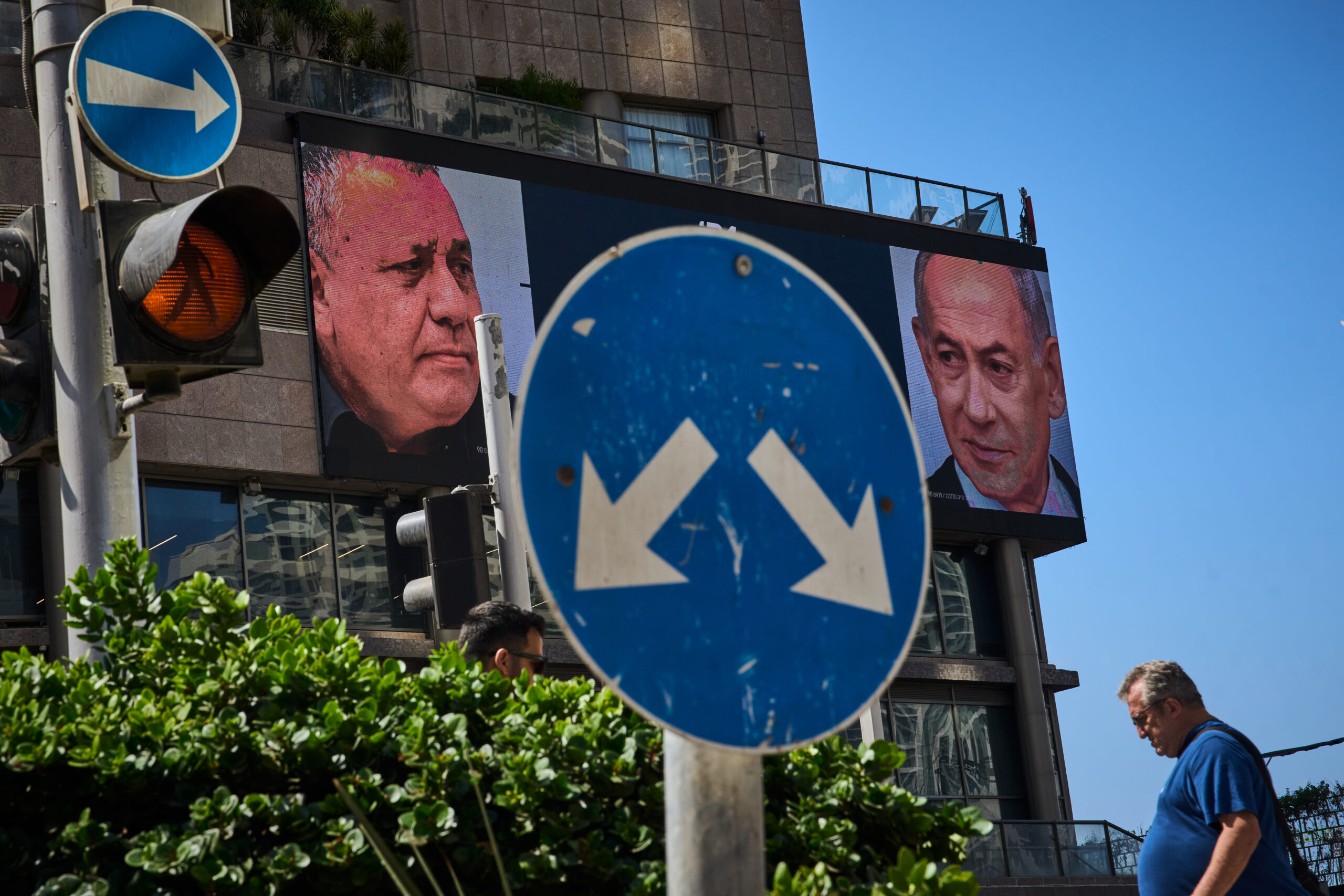
By Lahav Harkov
Welcome to 2019, electorally speaking, that is.
With the High Holy Days season now in the rear-view mirror, Israelis across the country have received postcards in the mail in recent days listing their polling place address, one of the tangible signs that election season is in the homestretch. Yet the Oct. 27, 2026, vote is taking on an unmistakable back-to-the-future feel.
Then, Prime Minister Benjamin Netanyahu was bloodied but unbowed, set to be indicted on bribery and public corruption charges, with a coalition that fell apart over a court order to resolve the issue of Haredi draft exemptions. Now, Netanyahu remains bloodied but unbowed, with a large swath of the public calling for him to take responsibility for security failings surrounding Oct. 7, 2023, and the Haredi draft issue still looms large.
The Big Reads
PASTOR’S POSITION
Adam Hamilton, the Democratic nominee in Kansas’ Senate race running against Sen. Roger Marshall (R-KS), said in a Politico video interview that he wants to end offensive aid to Israel, but disagreed with characterizations of the war in Gaza as a genocide, Jewish Insider’s Marc Rod reports. The comments are a signal of how unpopular Democrats believe U.S. support for Israel has become even in ordinarily deep-red states. “I don’t want my tax money being used for weapons that are going to be dropped on hospitals, destroying entire communities,” Hamilton, a Methodist pastor, said. Pressed on whether he would vote to stop weapons transfers, he said “not all weapons transfers,” carving out an exemption for defensive weapons.
hate mail
The son — and one-time campaign worker — of Dan Cox, the Republican nominee challenging Democratic Maryland Gov. Wes Moore, sent Facebook messages predicting “Israel will fall” and calling Jews “scum who killed my savior Jesus” and the “Synagogue of Satan,” according to a post from a GOP consultant, Jewish Insider’s Will Bredderman reports. Republican operative Alexandra Levine shared screenshots of messages allegedly from Josiah Cox, the GOP gubernatorial nominee’s son, that were posted to a Facebook group in June. The profile in the images uses the same name and photo as one the gubernatorial hopeful tagged in a 2024 post, which also called his son his “bodyguard” and shared photos of him, including one with then-Rep. Marjorie Taylor Greene (R-GA). “Jewish customs disgust me,” one of the screen-grabbed missives reads. “You’re pedophiles and Satan worshipping scum and you slaughter innocents all around the world.”
campaign offensive
Mike Rogers, the Republican nominee for Senate in Michigan, released a new ad featuring the University of Michigan student who confronted his Democratic opponent, Abdul El-Sayed, over his positions on Iran and its repressive Islamic Revolutionary Guard Corps in a viral exchange last week, Jewish Insider’s Matthew Kassel reports. In the 30-second campaign ad posted on Friday, Iman Dashti, who identifies as Persian American, says that his family “escaped oppression in Iran to find freedom in America,” before calling El-Sayed “a real threat to our national security and our values.”
Early adopter: El-Sayed accused Israel of committing genocide in Gaza as early as two weeks after Hamas’ Oct. 7, 2023, attacks on Israel, before Israel’s ground invasion began nearly a week later and well before any other mainstream political leaders used the term, JI’s Marc Rod reports.
The Rundown
photo op
daylight between them
On Our Radar
● The Live Briefing. Word on the street, clips, podcasts and quick updates — the items we’re tracking all day in our Live Briefing on the app (on Apple and Android) and website.
The U.S. withdrew a dozen B-1 bombers from the U.K.’s RAF Fairford air base a week after British officials arrested several dual British-Iranian citizens near the base who were suspected of planning an attack on the facility, which the U.S. used to conduct attacks against Iran during the height of the war…
A U.S. official said that two members of Iran’s delegation to the U.N. General Assembly had been “kicked out” of the U.S. over the weekend after ignoring an order from Secretary of State Marco Rubio to leave the country last week amid stalled talks between the U.S. and Tehran…
Iran’s oil minister, Mohsen Paknejad, resigned on Sunday, citing personal reasons; his resignation was accepted by President Masoud Pezeshkian, who had previously denied Paknejad’s efforts to step down…
The New York Times spotlights the continued operations of Mahan Air amid U.S. sanctions designed to shut down Iranian airlines, noting that Mahan recently began flights to Vietnam and Thailand, months after Iran permitted tankers bound for the region to transit through the Strait of Hormuz…
The Iranian rial hit a new record low of 2.688 million rials to the U.S. dollar on Saturday; the Islamic Republic’s central bank said it would begin selling up to $2 billion to support the rial…
“CBS Sunday Morning” talks to some of the Israeli passengers who neutralized the co-pilot of FZ1073 during last week’s attack on a flight traveling from Dubai to Israel…
The New York Times interviews more than a dozen passengers on the flight to piece together a detailed account of the events that transpired on the plane and in Saudi Arabia, where the aircraft made an emergency landing…
Speaking to NBC’s “Meet the Press,” former U.S. Ambassador to Japan Rahm Emanuel, who is mulling a 2028 presidential bid, addressed questions over the viability of a Jewish candidate, saying, “If my faith is a problem for you, don’t vote for me”…
A federal district court temporarily blocked the release of a long-delayed Department of Education report on individual foreign donors who have contributed to universities amid a lawsuit by a coalition of colleges and universities…
Sen. Ron Wyden (D-OR) condemned antisemitic posters that appeared on the University of Oregon campus that attacked the school’s Hillel director as an “enemy of the people”…
Singer Zach Bryan performed at Robert Kraft’s Gillette Stadium over the weekend wearing a “Free Palestine” shirt, weeks after an uproar over a planned performance at the venue by rapper Macklemore, who had recently chanted “Free Palestine” and displayed imagery from Gaza during two shows in which he opened for singer Ed Sheeran…
The head of the Jewish Greens, the subgroup within the U.K.’s Green Party, said it was “quite possible” that she would leave the party following its weekend vote to equate Zionism with racism and for Israel to be replaced with a Palestinian state “with equal rights for all”…
Meanwhile, a new study from the Institute for Jewish Policy Research found a significant increase since 2022, prior to the Oct. 7, 2023, Hamas terror attacks, in the number of Jewish Brits who identified as Zionist and who said they were “very emotionally attached to Israel”…
The internationally recognized government of Yemen, backed by Riyadh, announced scaled-up operations targeting the Iran-backed Houthis in the country.
Additionally, the U.S. has deployed more than 200 intelligence and military analysts to Saudi command centers to support operations by Riyadh’s Yemeni allies against the Houthis; the U.S. is also providing aerial refueling for Saudi aircraft conducting defensive patrols…
Israel and Ireland played to a 1-1 draw in a spectator-less Nations League match in Serbia on Sunday, in which the Irish players donned black armbands and refused to shake the hands of the Israeli players; members of the Israeli team also wore black armbands, with the team’s captain, Dor Peretz, writing “7/10” on his armband in commemoration of Oct. 7…
Turkey is reportedly considering nominating Feridun Sinirlioglu, the secretary-general of the Organization for Security and Cooperation in Europe, to succeed António Guterres as U.N. secretary-general when his term ends at the end of the year; Sinirlioglu would be entering a race that does not have a clear front-runner but has seen two candidates, Costa Rican economist Rebeca Grynspan and Guyanese Ambassador to the U.N. Carolyn Rodrigues-Birkett, emerge as top-tier hopefuls…
Reuters spotlights the “new geopolitical significance” of Eritrea, the largely isolated East African nation whose positioning along the Red Sea has made it part of an alternative route to the Strait of Hormuz…
Benny Stanislawski, the communications director for Bob Brooks’ Pennsylvania congressional campaign who previously served as spokesperson for Rep. Ritchie Torres (D-NY), got engaged to Dahvi Cohen, a policy advisor to Sen. Adam Schiff (D-CA), over the weekend…
Worthy Reads
Find more Worthy Reads in our Live Briefing via our app (on Apple and Android) and website.
Forced Into Heroism: In his Substack “Between Us,” Nadav Eyal considers the ordinary heroes of FZ1073 and the institutional failures that led to the harrowing midair attack. “There is a saying in the Israeli military: ‘where you find medals, you will also find failures.’ The point is that soldiers and officers sometimes have to display exceptional bravery because someone else failed to plan, prepare, or perform their duty. People are then required to compensate for institutional mistakes with extraordinary courage.” [BetweenUs]
Still on High Alert: In The New York Times, Yonatan Touval weighs the security considerations that are likely to factor into the upcoming Israeli election, taking place weeks after the anniversary of the Oct. 7 attacks. “Israel’s security institutions had been watching and still failed to understand what they saw. Israeli intelligence had obtained Hamas’s detailed invasion plan more than a year earlier and later observed parts of it being rehearsed. The deeper error was strategic. … No election can end the vigilance imposed by the dangers Israel faces. But its citizens can decide whether their own government must also be watched hour by hour.” [NYTimes]
Picture of the Day

Israeli President Isaac Herzog opened the National Memorial Day marking the upcoming anniversary of the Oct. 7, 2023, Hamas terror attacks this morning at 6:29 a.m — the time that the 2023 attacks began — by lowering the flag of the State of Israel at the President’s Residence in Jerusalem to half-staff. Spokesperson of the Office of the President
Birthdays

Dalila Bela, actor known for her role as Agent Olive on the TVOKids/PBS series “Odd Squad,” turns 25
Eli Jacobs, investor and board member of many companies, he was the owner of the Baltimore Orioles from 1989 to 1993, turns 89
Morton Meltzer, psychiatrist in Cameron, N.C., affiliated with WakeMed Health and Hospitals
Theodore Steiner, Fairfax, Calif., resident
Robert Winer, Long Beach, Calif., resident
Ben Cardin, former U.S. senator (D-MD), turns 83
Jonathan Dobrer, author, lecturer and journalist, turns 82
Brian Lehrer, talk show host on New York City’s public radio station WNYC, turns 74
Alan Cohen, founder of several pharmaceutical companies, he was the owner of the NHL’s Florida Panthers, turns 72
Madeleine “Mandy” Grunwald, political consultant and media advisor for the Democratic Party, turns 69
Andrew Cushnir, president and CEO of The Associated: Jewish Federation of Baltimore, turns 63
Michael Jacobs, former editor of the Atlanta Jewish Times, now a consultant, turns 57
Jesse Adam Eisenberg, actor, producer and playwright, he played Mark Zuckerberg in “The Social Network,” turns 43
Charlotte Kaye, past president of the Congressional Jewish Staff Association, turns 32
Eden Golan, Israeli singer, she represented Israel in the Eurovision Song Contest in 2024, turns 23
Gladys Bendahan, Canary Islands native, she is a former coordinator at Israel’s Mission to the United Nations
Daniel Rubenstein, Israeli tour guide and educator
The president posted the GOP senator’s personal cell phone number online, urging constituents to pressure him directly

CHRIS DELMAS/AFP via Getty Images
This illustration photo shows a clock in the background of a smartphone showing the time after daylight saving time was implemented in Los Angeles, California, on March 15, 2022.
President Donald Trump and Sen. Tom Cotton (R-AR) publicly sparred over the weekend about legislation that Trump supports, and Cotton opposes, to make daylight saving time permanent.
Trump has been pressuring the Senate to pass the legislation, which the House passed on a bipartisan basis, while Cotton has been its most visible opponent in the Senate. Orthodox Jewish groups have opposed the push to eliminate the time changes, warning of the impact on morning prayer and schoolchildren’s schedules. Barring that, Orthodox groups have urged making standard time permanent instead.
In a major broadside against Cotton, Trump posted the senator’s cell phone number on Truth Social, urging constituents to contact him personally.
“Everyone in Arkansas, a State I love, and won 3 times, the last by … 34 points, tell Tom to, GET IT DONE!” Trump wrote. “It’s very expensive for our Nation where you have high and dangerous steeples to reach, like on churches and municipal buildings. Almost everybody wants ‘The Sunshine Protection Act’ to pass, except for Tom Cotton.”
Trump attached a letter from PGA Tour President Brian Rolapp to his message to Cotton. The golf and leisure industries, particularly in Florida, have been among the most prominent advocates for permanent daylight saving time. The agricultural industry, particularly in northern states, has generally opposed the change, despite claims by Trump.
Though he didn’t address Trump directly, Cotton responded by highlighting a past experiment with ending time changes several decades ago, which quickly became unpopular and was reversed.
“No one likes changing the clock, me included, but Congress has enacted permanent Daylight Savings Time multiple times before and repealed it each time once Americans experienced absurdly late sunrises in the winter,” Cotton said. “Arkansans don’t want their kids going to school in the pitch dark, and I’ll always put Arkansas first.”
Trump fired back by accusing Cotton of blocking the legislation over “ego,” dismissing the past overturning of permanent daylight saving time as a result of congressional negotiating and asserting — contrary to polling from the time that showed substantial opposition to the policy after it was put in place — that “everybody loved it.”
“If Tom Cotton were putting Arkansas first, he would give them an extra hour of daylight and, more importantly, they wouldn’t have to run all over their houses, farms, work places, and everywhere else, twice a year, having to change their Clocks, and often forgetting to do so. That is really putting Arkansas FIRST, and I know, because, unlike Tom, I won that Great State, three times, and by almost 40 points,” Trump said, also emphasizing that Cotton and other Senate Republicans “NEED” the “WIN.”
Sen. Mark Kelly (D-AZ), whose state has utilized permanent standard time for decades, chimed in to say, “Senator Cotton is right. Permanent Daylight Savings has been tried and Americans didn’t like it.”
“The better way is permanent Standard Time because it’s based on science. No dark mornings, it keeps our time in sync with the Sun, and no more changing the clocks. Arizona has been on Standard Time year round since 1968 without issue,” Kelly wrote on X.
Plus, UT Jewish groups host hostage counter-event to Piker

Samuel Corum/Getty Images
President Donald Trump speaks with reporters while aboard Air Force One on June 5, 2026 en route to Chippewa Falls, Wisconsin.
Good Thursday afternoon.
This P.M. briefing is reserved for our premium subscribers like you — offering a forward-focused read on what we’re tracking now and what’s coming next.
Today’s Daily Overtime was curated by JI U.S. Editor Danielle Cohen-Kanik.
📡On Our Radar
Notable developments and interesting tidbits we’re tracking
The co-pilot who attacked his captain yesterday during a FlyDubai flight from the United Arab Emirates to Israel “underwent Islamist radical indoctrination,” Israeli Prime Minister Benjamin Netanyahu revealed on Fox News this morning based on initial findings from the investigation, and had asked his crewmates after being captured to “kill me.”
Netanyahu acknowledged concerns about how the assailant was able to serve as a co-pilot on a flight to Ben Gurion Airport as an Omani national, given that the Abraham Accords bar pilots from countries that do not have diplomatic relations with Jerusalem from flying into Israel…
While Netanyahu cautioned that investigators have not yet determined whether the attacker had ties to Iran or other foreign actors, President Donald Trump told reporters today that, “based on what I’m hearing,” the pilot was in fact linked to Tehran and “could have been” associated with the Islamic Revolutionary Guard Corps…
Netanyahu also said on CBS yesterday that Israel provided the U.K. with intelligence about an “Iranian-sponsored attack” on British soil, “and pretty much the next day they slapped sanctions on us,” referring to the new British sanctions regime targeting Israeli settlements.
Meanwhile, British counterterror officials arrested a 27-year-old dual British-Iranian national in London today on suspicion of plotting a terror attack in connection with the security incident at the U.S.-run RAF Fairford air base over the weekend. Five British men who were initially arrested near the base on suspected explosives and terror offenses have since been released on bail…
Trump told Time magazine in an interview published this morning that he “can’t imagine” Netanyahu ignored warnings from both the UAE and Egypt in weeks ahead of the Oct. 7, 2023, terror attacks, after reports emerged that the prime minister had been notified of the threats ahead of time.
“You know, I think if he would have known, he would have done something about it. Certainly, he would have had people at least alert,” Trump said…
Democratic Majority for Israel released a proposal today for a “modernized U.S.-Israel relationship,” with a focus on reimagined ties between the countries following the end of the current memorandum of understanding on military aid, set to expire in 2028, Jewish Insider’s Marc Rod reports.
The group urged focusing on “more joint development and production in missile defense, cybersecurity, and emerging technologies” but did not fully rule out the potential for “some” continued military aid and missile-defense funding past 2028 — though the group suggested that such aid would likely be phased out “over time, and by mutual agreement”…
Roughly 20 empty Iranian oil tankers have been stranded off Sri Lanka’s coast — drifting with idled engines as food, fuel and water run low — since July, when the U.S. reimposed its blockade on the Strait of Hormuz. Washington has since pressured Sri Lanka into barring local ships from resupplying the vessels and their crews, according to The Wall Street Journal…
The Pentagon is reportedly sending a third aircraft-carrier strike group and additional Marine Corps ships to the Middle East — adding roughly 9,000 to 10,000 troops — which are set to arrive in the region in November, as Trump publicly weighs renewing strikes on Iran after the midterms. The buildup could bring the U.S. to three carrier-strike groups in the Middle East for the first time since April…
Secretary of State Marco Rubio waived human rights conditions on $320 million in U.S. military aid to Egypt, citing national security interests and Cairo’s “helpful role” following the start of the war with Iran, according to a State Department memo…
A CNN investigation found that Jared Kushner‘s private equity firm, Affinity Partners, is the largest shareholder in an Israeli financial group, Phoenix Financial, that holds stakes in Elbit Systems and at least eight other companies supplying the Israeli military — even as Kushner has served as a lead U.S. negotiator in the Gaza war.
Critics say his envoy status — which lets him avoid financial-disclosure requirements — blurs the line between his public role and private profit, though CNN found no sign that Kushner’s diplomacy affected the investments and his attorney said he has never directed Phoenix’s decisions…
While hundreds of students gathered at the University of Texas at Austin last night to hear far-left streamer Hasan Piker speak about the future of progressive politics, former Israeli hostage Maya Regev was across campus recounting her 50 days in Hamas captivity at a counter-event organized by campus pro-Israel groups in response to Piker’s appearance, JI’s Haley Cohen reports…
The superintendent of Montgomery County Public Schools acknowledged today that the district needs to do more to combat antisemitism, responding to a letter earlier this week from more than 40 local rabbis and cantors who warned that school leaders have failed to adequately address a rise in antisemitic incidents, JI’s Haley Cohen reports.
In his reply, Thomas Taylor called the school district’s response after a swastika was drawn on a student’s desk last month at Walter Johnson High School a “misstep,” and pledged to address concerns about staff training, student education and harmful social media behavior…
⏩ Tomorrow’s Agenda, Today
An early look at tomorrow’s storylines and schedule to keep you a step ahead
Keep an eye on Jewish Insider for a look at how Jewish voters in Texas are viewing the state’s hotly contested race for U.S. Senate between state Attorney General Ken Paxton and state Rep. James Talarico, as community leaders say neither candidate has made a meaningful effort to engage with the local Jewish community.
Israeli carriers El Al, Israir and Arkia will begin repatriation flights tomorrow to bring Israelis stranded in the United Arab Emirates back to Tel Aviv after FlyDubai suspended its 8-10 daily flights to the Jewish state. Meanwhile, we’ll be watching developments in the investigation into the attack as authorities work to officially determine whether the assailant had ties to Iran or other actors.
Sen. Elissa Slotkin (D-MI) will appear on Saturday with Democratic Michigan Senate candidate Abdul El-Sayed at a town hall in Macomb County, Mich.
We’ll be back in your inbox with the Daily Overtime on Monday. Shabbat shalom and chag sameach!
Stories You May Have Missed
MUSEUM MOMENT
Wiesel, the son of Holocaust survivor and Nobel laureate Elie Wiesel, pointed to the museum’s past work documenting atrocities in Sudan and against the Yazidis and Rohingya
PLANNING FOR POWER
Sen. Mark Kelly told JI Democrats could withhold funds for White House operations to put pressure on the president
Trump, in interview with Time magazine: ‘People have written off Bibi many, many times, just like they've written off me many, many times’
Prime Minister's Office
Israeli Prime Minister Benjamin Netanyahu meets with President Donald Trump in the Oval Office on July 28, 2026.
President Donald Trump defended Israeli Prime Minister Benjamin Netanyahu this week against reports that he ignored warnings from Egypt and the United Arab Emirates about the possibility of a Hamas attack in the weeks prior to Oct. 7, 2023, while declining to say whether Israelis should give Netanyahu another term.
Trump made the comments in an interview with Time magazine at the White House on Sept. 28. The interview, published Thursday, covered a wide range of issues, including the wars in Gaza and Iran as well as the upcoming Israeli elections.
Recent reports have suggested that Netanyahu received warnings from Egypt and the UAE before the Hamas attacks that the group was preparing a potential assault. Netanyahu has disputed the allegations, while Trump said he had only heard about the reports for the first time the day of the interview, and rejected the idea that Netanyahu had ignored such warnings.
“I don’t think so. I think if he [Netanyahu] would have known, he would have done something about it. Certainly, he would have had people at least alert,” Trump said. “You know, he’s not going to forget about it. That was a terrible day.”
With Israeli elections less than a month away, Trump stopped short of saying whether voters should give Netanyahu another term, instead saying he was no longer involved in politics.
“People have written off Bibi many, many times, just like they’ve written off me many, many times. I wouldn’t underestimate Bibi,” Trump said.
The interview then turned to the future of the war in Gaza and Trump’s 20-point plan for ending the conflict. The plan, which has been endorsed by the United Nations Security Council, calls for Hamas to disarm, but the group has not agreed to give up its weapons, leaving implementation of the broader plan stalled.
With Hamas refusing to disarm, Trump offered the possibility that he could turn to the White House Situation Room to determine how to proceed.
“I think I’ll probably sit in the Situation Room and make an appropriate decision,” Trump said.
Trump also discussed the war with Iran, amid efforts to break through a stalemate in talks. Iran last week proposed a seven-day ceasefire plan that would have involved reopening the Strait of Hormuz and returning to negotiations, but Trump rejected the proposal as insufficient.
Explaining the rejection, Trump said his standards for an agreement had not changed since the war began.
“Because things that I wouldn’t have approved a year ago I wouldn’t have today,” Trump said. “I mean, it was — they made an offer to open up the strait. You know, you saw some aspects of it, not all. But it’s just, it’s just, it’s not good enough. Nearly.”
Trump also left open the possibility of escalating the U.S. campaign after the midterm elections, responding that it was “possible” he would ramp up bombing.
The president pushed back on reports that the war has caused significant shortages of U.S. munitions, calling them “mostly fake news,” but still acknowledged that some types of ammunition are in shorter supply.
“Some forms of ammunition are a little bit lower than other forms,” Trump conceded. “[We are] building plants all over the country … and we’re stocking up at levels we’ve never done before.”
Trump also defended his decision not to intervene militarily in Iran earlier, including during mass protests in January that prompted him to say at the time that “help is on the way.” Asked whether he regretted waiting, Trump said he did not, arguing that the current campaign was achieving its objectives and predicting that Iran would eventually agree to a deal.
“No, I think we’ve done an incredible job with that,” Trump said. “They want to make a deal. As soon as I make a deal, oil prices will drop to what they were.”
Trump also defended his relationship with Saudi Arabia amid reports that Riyadh was frustrated that the U.S. did not come to its defense against attacks by the Iran-backed Houthis. The dispute comes as Saudi Arabia has been involved in fighting the Houthis in Yemen and seeking support from international partners as the regional conflict has intensified.
“I’ve done a lot for Saudi Arabia. I protect Saudi Arabia. If I weren’t president, Saudi Arabia wouldn’t be here right now. Neither would Israel. They’d be wiped off the face of the planet,” Trump said. “I do a lot for Saudi Arabia. My relationship with them is very good. I like the crown prince. My relationship is very good.”
Plus, Nithya Raman's rocky relationship with LA Jews

30 September 2026, Israel, Lod: Yaniv Hayoun (C), one of the men who helped incapacitate the attacker on the flydubai aircraft bound for Israel from the United Arab Emirates, which was diverted to Saudi Arabia following an emergency signal, is welcomed after arriving at the Ben Gurion International Airport. Photo by: Jamal Awad/picture-alliance/dpa/AP Images
Good Thursday morning.
In today’s Daily Kickoff, we have the latest on yesterday’s midair attack on a FlyDubai flight to Israel, look at tensions between Los Angeles City Councilmember Nithya Raman and the city’s Jewish community as the democratic socialist mounts a bid for mayor, and report on new federal data indicating that fewer than one-quarter of Nonprofit Security Grant Program applications were fulfilled this year. Also in today’s Daily Kickoff: Elisha Wiesel, Ivy Wolk and Ynon Kreiz.
Today’s Daily Kickoff was curated by JI Executive Editor Melissa Weiss, with an assist from Danielle Cohen-Kanik.
Today’s Agenda
The United Arab Emirates has opened an investigation into yesterday’s attack on a FlyDubai flight from the UAE to Israel in which an Indian pilot was stabbed by his co-pilot, prompting the plane to plummet 17,000 feet before Israeli passengers on the flight, assisted by two off-duty pilots, regained control of the aircraft and safely landed it in Saudi Arabia.
The UAE’s attorney general said in a statement that investigators would “collect information and evidence, to determine the truth of the incident, its circumstances, details, and motives, and to verify the extent of its connection to any terrorist activity or purpose, or the existence of prior planning or direction for it.”
Israeli President Isaac Herzog’s office said this morning that he planned to recommend five of the plane’s passengers for the Presidential Award for Civilian Heroism, whom Herzog said in a statement “acted with extraordinary heroism” in alerting passengers and crew to the attack in the cockpit and overpowering the assailant co-pilot.
In Washington, the two-day Nixon Foundation Grand Strategy Summit wraps up today. Speakers include the White House’s Seb Gorka, Sen. Steve Daines (R-MT), former Sen. Roy Blunt (R-MO), Reps. Elise Stefanik (R-NY) and Riley Moore (R-WV), Rich Goldberg and Walter Russell Mead.
The Senate Judiciary Committee’s markup of the bipartisan, bicameral Right to Worship Act — which would create buffer zones outside of religious institutions during services — was canceled after the Senate ended its work week early, sending legislators home until after the midterms. Read more from JI’s Marc Rod here.
One Thing To Know
L.A. rift
By Matthew Kassel
Nithya Raman, a democratic socialist mounting a formidable bid to unseat Los Angeles Mayor Karen Bass next month, faced a particularly hostile crowd on Tuesday night at a Jewish community candidate forum, where the city councilwoman fielded several tough questions about Israel.
Her answers drew audible groans from the audience members at the Skirball Cultural Center as she reiterated her view that Israel has committed genocide in Gaza and defended her decision to sit for an interview with the Twitch streamer Hasan Piker, who regularly espouses antisemitic rhetoric.
The event illustrated how Raman has continued to gain momentum in the final stretch of the race even as she has doubled down on her anti-Israel stances while courting voters in a city that is home to the second-largest Jewish population in the country. Her harsh positions on Israel — coupled with recent efforts to distance herself from some former allies in the Jewish community — suggest Raman has made a strategic calculation she can win without meaningful Jewish support.
The Big Reads
museum moment
Elisha Wiesel urged the U.S. Holocaust Memorial Museum on Wednesday to speak up against what he called the false accusation that Israel is committing genocide in Gaza, arguing that the institution his father helped create has a “unique responsibility” to address the issue, Jewish Insider’s Matthew Shea reports. Wiesel, the son of Holocaust survivor and Nobel Peace Prize laureate Elie Wiesel, made the appeal while delivering special remarks at an event honoring his late father on what would have been his 98th birthday. “You made your own findings for Darfur, the Yazidis, Rohingya,” he said in remarks directed at the institution. “You have the scholars, the credibility and the mandate to do the same hearing to explain with the rigor you applied to Burma why the genocide label does not fit Gaza and what the misuse of Holocaust language does to Jews around the world.”
planning for power
Senate Democrats say that they’d plan to use federal funding authorities to force the Trump administration to negotiate with the Iranian regime and end the Iran war if their party regains the majority in the next Congress, Jewish Insider’s Marc Rod and Emily Jacobs report. Sen. Tim Kaine (D-VA) told JI, with President Donald Trump continuing to ignore war powers votes from Congress that have attempted to force an end to the conflict, “we would use approp[riations] levers — either to put guardrails, not allowing funds unless or until there was an authorization [for use of military force passed by Congress].” Sen. Mark Kelly (D-AZ), meanwhile, said that he thinks lawmakers would be more likely to withhold funds for White House operations, while noting that the administration has asked for a $1.5 trillion Pentagon budget for 2027.
On the other side of Capitol Hill: A group of more than 40 House Democrats introduced the Stop the Settlements Act on Wednesday, which would place sanctions on anyone involved in further settlement expansion in the West Bank or Gaza and ban imports from Israeli settlements, JI’s Marc Rod reports.
security shortfall
In a year when the Jewish community was rocked by a terror attack at a Detroit-area synagogue alongside other antisemitic threats, the Nonprofit Security Grant Program fulfilled less than 23% of applications submitted for funding in 2026, according to new data obtained by Jewish Insider’s Marc Rod. The majority of the funding will be provided to houses of worship from various denominations, according to a source familiar with the situation, but other recipients include schools, medical facilities, senior centers, camps, museums, shelters and community centers. Application numbers and total funding requested seem to be down somewhat from 2025, when the program received in excess of 8,000 applications, with an acceptance rate of just 20%. Even so, the amount of funding requested was higher and the acceptance rate was lower than in any year in documented program history other than 2025.
The Rundown
busy in beirut
mile-high miracle
playing defense
bookshelf showdown
party outreach
On Our Radar
● The Live Briefing. Word on the street, clips, podcasts and quick updates — the items we’re tracking all day in our Live Briefing on the app (on Apple and Android) and website.
Iran said it received a formal response from the U.S. regarding its proposal to end the ongoing war, but did not elaborate on the contents of the response; President Donald Trump, who publicly rejected Tehran’s proposal earlier this week, said on Wednesday that a decision on Iran — either to “blow them up” or “make a deal” — was coming “very soon”…
Secretary of State Marco Rubio ordered the immediate removal of Iran’s delegation to the U.N. General Assembly, including Foreign Minister Abbas Araghchi, from the U.S. earlier this week after Qatar-mediated talks again reached an impasse…
U.K. Prime Minister Andy Burnham said London believes that Iran “played a part” in a weekend incident in which five men were arrested on suspicion of explosives violations and terrorism near the RAF Fairford base, which was used by the U.S. to conduct strikes on Iran during the height of hostilities earlier this year…
Politico looks at the efforts of Meta’s Mark Zuckerberg and Nvidia’s Jensen Huang to pitch the White House on a voluntary but binding “AI accords,” the basis for which originated at last week’s state dinner for Chinese President Xi Jinping, during which Zuckerberg pitched House Speaker Mike Johnson (R-LA) and then Huang on the idea…
Maine Democratic Senate candidate Troy Jackson apologized for comments made earlier this week in which he suggested that it was “unfortunate” that Jewish residents in the state were uncomfortable using the term genocide to describe Israel’s actions in Gaza and that they “don’t like to use that term only because they’re Jewish”…
A former bodyguard for former Sen. Kyrsten Sinema (I-AZ), with whom the former lawmaker was romantically involved, said that he caused $200,000 worth of damage to Sinema’s home and tried to force the former senator to post a decades-old video from one of his deployments to Iraq because he was angry about her post-Senate work with companies he believed contributed to the wars in Gaza and Iran…
The head of the University of Oregon’s Hillel said that a sukkah that had been constructed in front of the building was taken from the property earlier this week, adding that he was unsure if the incident was “common theft” or something “more hostile and antisemitic in nature”…
Mattel CEO Ynon Kreiz was named co-CEO of Paramount and Warner Bros. Discovery, serving alongside CEO David Ellison, after a judge on Wednesday issued an order allowing Paramount’s acquisition of WBD to proceed…
The Wall Street Journal spotlights efforts by Nathan Kirsh, the 94-year-old philanthropist and businessman, to build out what is likely to be one of the largest family offices established in recent years, following the sale earlier this year of Kirsh’s Jetro Restaurant Depot to Sysco for $29 billion…
The New York Times profiles actress and comedian Ivy Wolk, whose provocative social media videos have elicited negative responses that have propelled her to stardom…
Authorities in Texas said they foiled an imminent terror plot targeting the Texas State Capitol in Austin; a friend of the individual arrested in connection with the threat said Benny Caldera Jr. had told the friend he was angry with AIPAC and that “these people have to be exterminated”…
Israel’s Supreme Court cleared for publication the name of the senior Israeli intelligence official believed to be involved in the army’s intelligence failures leading up to the Oct. 7, 2023, Hamas terror attacks; Lt. Col. Aryeh Amidror, the son of former National Security Advisor Yaakov Amidror, was identified as the Gaza Division’s intelligence officer during and before the attacks…
British broadcaster and philanthropist Dame Esther Rantzen, the longtime host of “That’s Life!” — one of the most popular episodes of which featured Sir Nicholas Winton and several dozen of the adults he saved when they were children during the Holocaust — died at 86…
Worthy Reads
Find more Worthy Reads in our Live Briefing via our app (on Apple and Android) and website.
Midair Melee: The Atlantic’s Graeme Wood considers the political implications of yesterday’s attack on a FlyDubai flight to Israel. “The next step will involve determining whether the pilot acted alone — not a good look for Flydubai, to have suicidal or terrorist pilots — or at someone’s behest. The latter possibility could, if confirmed, have serious implications, depending on who directed the attack. Many have a motive: Sunni jihadists (al-Qaeda or the Islamic State), Hamas, and of course Iran and its proxies.” [TheAtlantic]
Strait Man: Bloomberg’s Alex Dooler, Dinesh Nair and Laura Gardner Cuesta spotlight Abu Dhabi Crown Prince Sheikh Khaled bin Mohamed Al Nahyan as the Emirati official, who helms a $300 billion sovereign Abu Dhabi wealth fund, looks to find alternatives to the Strait of Hormuz amid tensions with Iran. “He is known to lean heavily on a small group of Emirati officials, some childhood friends and others who have steered Abu Dhabi’s economy for decades. … According to one former teacher, a young Sheikh Khaled was at ease even in a class of students who went on to become top political scholars in Middle Eastern geopolitics. He’s known to prefer to observe before offering careful interventions.” [Bloomberg]
Picture of the Day

Yaniv Hayoun (center), one of the passengers who helped incapacitate the attacker on the FlyDubai aircraft bound for Israel from the United Arab Emirates, was welcomed after arriving at the Ben Gurion International Airport on Wednesday night, still wearing the blood-stained shirt from the attack. Jamal Awad/picture-alliance/dpa/AP Images
Birthdays
Rod Carew, former MLB second baseman and Hall of Famer who appeared in 18 straight All-Star Games, he is immortalized as Jewish in Adam Sandler’s “Chanukah Song,” turns 81
Lynn Steven Adelman, U.S. District Court judge for the Eastern District of Wisconsin, turns 87
Andrew David Hurwitz, senior judge of the U.S. Court of Appeals for the 9th Circuit, turns 79
Aaron Ciechanover, professor at the Technion, he won the 2004 Nobel Prize in chemistry, turns 79
Lynn Ahrens, Tony Award-winning writer and lyricist for the musical theater, television and film, turns 78
Bruce Levenson, former co-owner of the NBA’s Atlanta Hawks and founding board member of the publicly traded TechTarget, turns 77
Israel Jacob Yuval, professor emeritus of Jewish history at the Hebrew University of Jerusalem, turns 77
Andrew Goodwin, copy editor at Politico since 2009
Yechiel Leiter, Israel’s ambassador to the United States, a native of Scranton, Pa., turns 67
Steven C. González, the first-ever Jewish chief justice of the Washington State Supreme Court, now serving as an associate justice, turns 63
Cynthia Dawn “Cindy” Margolis, reality television personality, model and actor, turns 61
Adam Bennett Frisch, member of the Aspen City Council from 2011 to 2019, turns 59
Robert A. Rosen, founder of Peak Impact Advisors after 17 years at the Bill & Melinda Gates Foundation
Stacie Passon, film director, screenwriter and producer, turns 57
Rob Seidman, partner at FGS Global, specializing in telecommunications, technology, consumer protection and privacy for companies in regulated industries
Michael J. Koplow, chief policy officer at Israel Policy Forum
Rebecca L. Taibleson, former law clerk to Justice Antonin Scalia, now a judge on the 7th Circuit U.S. Court of Appeals, turns 43
Samantha J. Weinberg, director of investor relations and strategic engagement at the Foundation for Defense of Democracies
Yossi Raskas, account manager at Fiserv
Scott Rosenthal
Plus, 'strong indications' Iran involved in attempted U.K. attack

Jack GUEZ / AFP via Getty Images
Passengers board a flydubai flight, bound for Dubai, before taking off from Ben Gurion Airport near Tel Aviv on September 30, 2026.
Good Wednesday afternoon.
This P.M. briefing is reserved for our premium subscribers like you — offering a forward-focused read on what we’re tracking now and what’s coming next.
Today’s Daily Overtime was curated by JI U.S. Editor Danielle Cohen-Kanik.
📡On Our Radar
Notable developments and interesting tidbits we’re tracking
Details continue to emerge about the suspected terror attack this morning on a FlyDubai flight from the United Arab Emirates to Israel, where a co-pilot stabbed his captain and attempted to crash the plane.
Upon landing safely back at Ben Gurion Airport — after making an emergency landing in Saudi Arabia, where video showed Saudi attendants offering medical assistance to the Israelis — a group of passengers met with Israeli Prime Minister Benjamin Netanyahu. One man, Yaniv Hayoun, described how he burst into the cockpit to subdue the attacker; watch the video of his account with English subtitles here.
The injured captain was identified as Smit Machchhar, an Indian national who has 13 years of experience as a pilot, who is reported to be in stable condition. One passenger was also lightly injured and treated by Magen David Adom in Israel…
Israel will now ramp up security checks on pilots flying into the country, the Prime Minister’s Office said, including verifying the identities of pilots on both Israeli and foreign carriers…
Netanyahu spoke with UAE President Mohammed bin Zayed following the attack and was expected to speak with President Donald Trump about the matter afterward, according to Hebrew media…
FlyDubai said it is temporarily suspending all flights to Israel as the incident is under investigation, while El Al announced it expects to restart its Tel Aviv-Dubai route in November…
U.K. Prime Minister Andy Burnham said in a BBC interview today that there are “strong indications” Tehran was involved in the suspected terror plot near a British air base housing U.S. military assets for operations against Iran…
The New York Public Library is coming under scrutiny from Jewish leaders after it hosted author Benjamin Moser at an event where he mocked Jewish fears of antisemitism, ridiculing what he called the “poor me thing that all these Jews are suddenly having,” according to a recording of the event obtained by Jewish Insider’s Haley Cohen.
During an event promoting his new book lauding anti-Zionism, Moser also accused “almost all of the main Jewish institutions” in America of having “supported this genocide” — referring to Israel’s war in Gaza — and said “nothing has made Jews look worse in history” than Zionism…
Meanwhile, New York City Mayor Zohran Mamdani today defended his administration’s strategy to combat antisemitism by spending heavily on nonprofit-based hate crime prevention, while keeping up his fierce criticism of Israel.
Pressed by JI’s Will Bredderman about the effectiveness of allocating tens of millions of dollars to his Office for the Prevention of Hate Crimes, which has already seen a boost in funding while antisemitic hate crimes in New York have increased, Mamdani pivoted to discussing his experience learning about the Holocaust as a teenager and pointed to declining public awareness of it…
The Democratic National Committee announced the launch of a new Jewish constituency council in order to organize and engage Jewish Democrats in advance of the 2028 election, JI’s Matthew Kassel reports.
Adam Goldwyn, a North Dakota state representative who will chair the Jewish American Council, said it is intended to “support critical organizing needs to win elections and ensure Jewish Americans know that a vote for their Democratic candidate is a vote for their values,” as a growing number of Jewish Democrats have felt unwelcome in the party amid rising antisemitism and anti-Israel sentiment…
Senate Democrats told JI’s Marc Rod and Emily Jacobs that they’d plan to use federal funding authorities to force the Trump administration to negotiate with the Iranian regime and end the Iran war if their party regains the majority in the next Congress.
In addition to potentially blocking funds for military operations undertaken without congressional authorization, Sen. Mark Kelly (D-AZ) said Democrats could threaten White House operations funding to put pressure on Trump…
Defense Secretary Pete Hegseth announced a new four-star military command dedicated to drone and robotic warfare, aimed at speeding up how the Pentagon buys and deploys unmanned systems. The “Autonomous Warfare Command,” set to be running by October 2027, is meant to give the U.S. a homegrown supply of cheap drones…
⏩ Tomorrow’s Agenda, Today
An early look at tomorrow’s storylines and schedule to keep you a step ahead
Keep an eye on Jewish Insider for a look at the Los Angeles mayoral race, after Democratic Socialists of America-aligned candidate Nithya Raman said during a Jewish forum last night that she continues to back the Boycott, Divestment and Sanctions movement.
The Senate is expected to depart this evening for recess until after the midterm elections. When the chamber returns, it will have to confront a series of pressing challenges, including the National Defense Authorization Act and government funding, which have already led some senators to warn that they’re preparing for Thanksgiving and Christmas recesses to be canceled.
The Jewish Community Relations Council of New York and the YM & YWHA of Washington Heights & Inwood will host a “Fiesta Sukkot” tonight, marking the holiday of Sukkot during Hispanic Heritage Month. Speakers are set to include outgoing Rep. Adriano Espaillat (D-NY) and other Hispanic elected officials alongside Jewish community groups including UJA-Federation of New York and the New York Board of Rabbis.
Stories You May Have Missed
DRAWING A LINE

State Rep. Noah Arbit said El-Sayed aligns with people who want to ‘purge the Democratic Party and American life of Zionists and, therefore, most Jews’
DEFINITION DEBATE
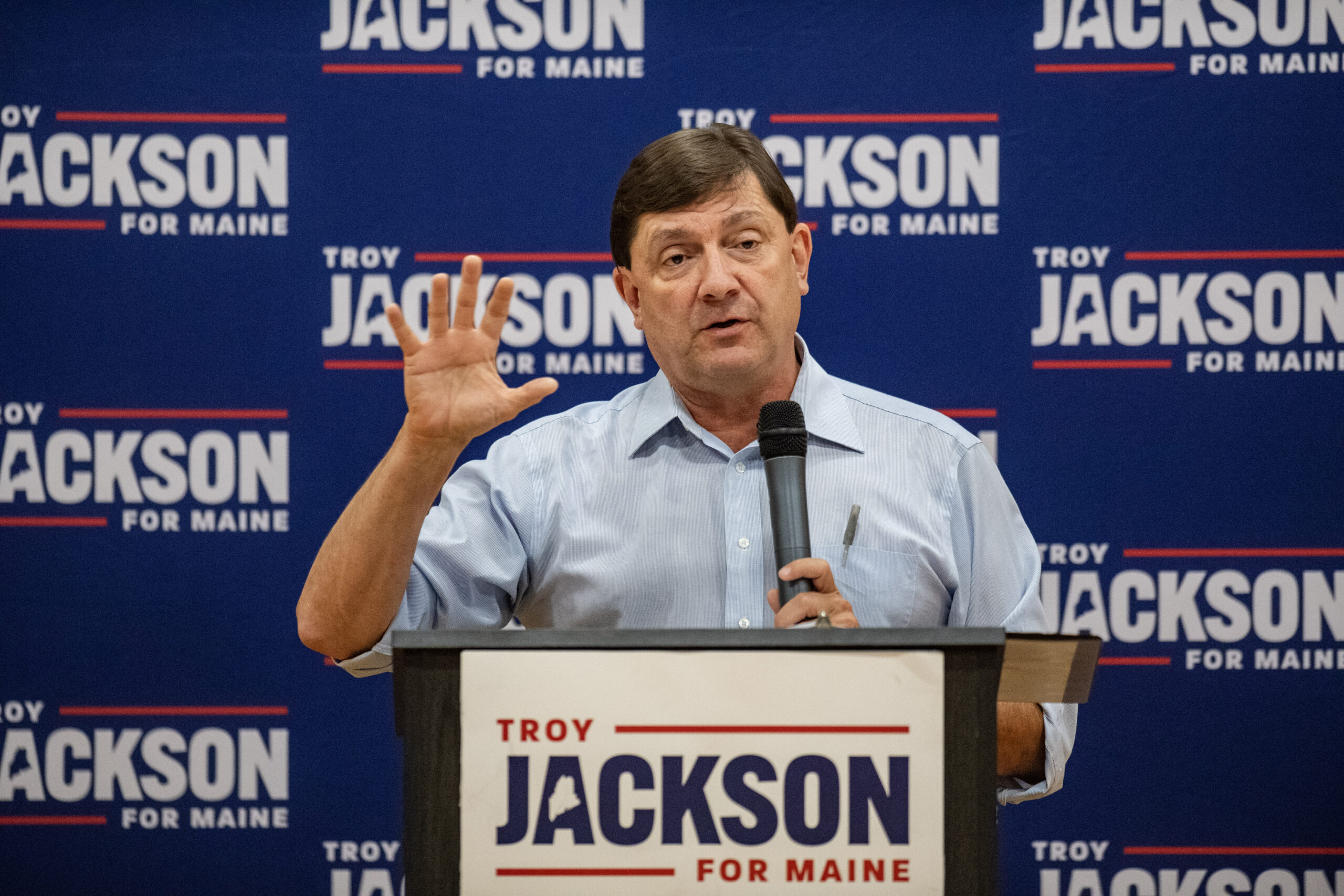
The Maine Democratic Senate candidate said, ‘It’s unfortunate that there are people here in Maine that don’t like to use that term only because they’re Jewish and what that means to them, with the Holocaust’
Plus, this rising Michigan Dem won't back El-Sayed

AFP via Getty Images
Departure hall of Prince Sultan bin Abdulaziz Airport in Tabuk on September 30, 2026 after a flydubai plane bound for Tel Aviv was forced to land in Saudi Arabia on September 30.
Good Wednesday morning.
In today’s Daily Kickoff, we report on a suspected terror attack on an Israel-bound flydubai flight earlier this morning, have the scoop on prominent Michigan Democratic state legislator Noah Arbit’s decision not to endorse Senate candidate Abdul El-Sayed in the November election and cover New York City Mayor Zohran Mamdani’s newly released plan to combat antisemitism, which received a mixed response from Jewish communal leaders. Also in today’s Daily Kickoff: Eric Cantor, Fatima Ezzahra El Mansouri and Elaine Luria.
Today’s Daily Kickoff was curated by JI Executive Editor Melissa Weiss, with an assist from Danielle Cohen-Kanik.
Today’s Agenda
U.S. forces completed their withdrawal from their last bases in Iraq earlier today, ending the more than two-decade-long American military presence in the country.
The U.S. Holocaust Memorial Museum, State Department Office of the Special Envoy to Monitor and Combat Antisemitism, Moment magazine and the Romanian Embassy are holding an event today honoring Elie Wiesel. The author’s son, Elisha Wiesel, is slated to speak at the event commemorating his father’s life and works.
Far-left streamer Hasan Piker is slated to speak at a University Democrats-sponsored event at the University of Texas at Austin. The event will take place in the location originally reserved by organizers, after administrators denied requests from University Democrats to move Piker’s talk to a larger venue.
One Thing To Know
BREAKING

A flydubai flight from the United Arab Emirates bound for Israel’s Ben Gurion Airport made an emergency landing in Saudi Arabia this morning in what Israeli security officials said may have been a terrorist incident following a violent altercation in which the plane’s captain, reportedly assisted by a passenger, wrested control from his co-pilot after the plane was thrown into a brief, rapid descent.
Images emerged in the hours following the incident of several passengers in bloody clothing. “We just heard screams, and then the cockpit door opened and we saw a huge amount of blood,” one passenger told Israeli media after landing in Saudi Arabia’s Tabuk Airport, near the Gulf state’s border with Jordan. Video also showed passengers tending to the pilot covered in blood on the floor, while the co-pilot appears tied up and possibly unconscious.
Israel’s i24News reported that the co-pilot who was subdued and restrained was of Omani origin, and that two additional pilots on board the aircraft, but not working the flight, were nationals of South Africa and New Zealand.
The Big Reads
DRAWING A LINE
Noah Arbit, a rising Jewish Democrat in Michigan’s state Legislature, has been a vocal critic of Abdul El-Sayed, a fellow Democrat whose Senate campaign in the key battleground state has exposed deep divisions within the Jewish community. But until now, Arbit had not yet publicly clarified if he is willing to set aside his differences and endorse El-Sayed, like some prominent Jewish Democrats in the state who have recently announced their support despite reservations with his hostile stances on Israel and approach to countering antisemitism. In an interview with Jewish Insider‘s Matthew Kassel on Monday, Arbit, 31, confirmed that he would not be endorsing El-Sayed, pointing to what he called the nominee’s promotion of antisemitic conspiracy theories and affiliations with extremist figures on the far left, among other issues he cast as deal-breakers in the closely contested race.
big apple blueprint
New York City Mayor Zohran Mamdani’s administration on Tuesday released what it calls the country’s first municipal strategy to combat antisemitism, a 30-page plan that provides $7.4 million for security and prevention grants, but declines to adopt a definition of antisemitism and does not address Israel-related hate, Jewish Insider’s Haley Cohen reports. Jewish leaders offered a mixed response to the mayor’s new strategy, with some welcoming increased security funding and other measures while also arguing that the plan fails to address what they see as a key driver of anti-Jewish hostility — rhetoric targeting Israel and its supporters. In a joint statement, UJA-Federation of New York, JCRC-NY, AJC New York and New York Board of Rabbis said that “any effort to confront antisemitism in New York City must fully address the realities Jewish New Yorkers face today.”
campus in focus
An independent federal commission on civil rights concluded, following a yearlong probe, that campus antisemitism is a “serious and growing civil rights concern,” but also suggested the Trump administration’s efforts to combat it went against both statute and established procedure, Jewish Insider’s Marc Rod reports. The report by the U.S. Commission on Civil Rights highlights that “recent federal enforcement has sometimes represented a departure from established practice” and that some of the administration’s punitive measures have been overturned in court. The report also called for greater staffing and better training for the Department of Education’s Office for Civil Rights — which the Trump administration slashed even as complaints grew significantly — to ensure adequate responses to campus antisemitism.
The Rundown
DEMOCRATIC SHIFT
high seas stakes
definition debate
virginia in view
friends on the trail
euro slip
On Our Radar
● The Live Briefing. Word on the street, clips, podcasts and quick updates — the items we’re tracking all day in our Live Briefing on the app (on Apple and Android) and website.
The Treasury and State Departments announced sanctions on 13 individuals and entities alleged to have assisted Iran in procuring weapons…
Anthropic’s Dario Amodei, SpaceX’s Elon Musk, Meta’s Mark Zuckerberg and former White House AI czar David Sachs were on hand at a press conference following a meeting on AI between President Donald Trump, White House officials and the tech leaders…
Organizers of a16z‘s upcoming Tech Week in San Francisco said that a hackathon event associated with the conference had been removed from its calendar for violating Tech Week’s terms of service after an Israeli applicant was told he could not participate by an organizer who cited Israel’s 2024 pager attack on Hezbollah, saying, “Hackathon participants carry pagers, smartphones and laptops … What happened in Lebanon shouldn’t happen in California”…
Immigration officials are moving to deport an anti-Zionist Israeli member of the Satmar Hasidic community who was present during an incident in which an Israeli flag was removed from a local government building in Rockland County, N.Y….
A new report from the U.K.’s Community Security Trust found that antisemitic incidents at universities in the country rose by 14% during the 2025-26 academic year, with 95 reported incidents compared to 83 the prior year…
Several dozen West Bank settlers clashed with Israeli security forces, several of whom were injured, as they were attempting to help a Palestinian family return to its home in the village of Jalud, from which the family had fled in July amid ongoing attacks by settlers…
eJewishPhilanthropy’s Jay Deitcher spotlights the Har Initiative, a post-Oct. 7 donor collective that plans to distribute $120 million in the coming months to groups fighting antisemitism; the initiave, which is made up of 12 funders including The Tepper Foundation, The Einhorn Collaborative, Charles and Lynn Schusterman Family Philanthropies and Maimonides Fund, is being led by Lindsey Spindle, president of the Samueli Foundation, and Fay Twersky, president of the Arthur Blank Family Foundation…
Hamas, Palestinian Islamic Jihad and former top Fatah official Mohammed Dahlan, an advisor to Emirati President Mohamed bin Zayed, have reportedly agreed to form a coalition in the Nov. 28 Palestinian election if Palestinian Authority President Mahmoud Abbas allows the election to move forward; Abbas has repeatedly postponed national elections, which have not happened in 20 years…
UAE Vice President Sheikh Mansour bin Zayed met with Saudi Crown Prince Mohammed bin Salman in Riyadh on Tuesday, marking the first high-level bilateral meeting since tensions between the two Gulf countries erupted publicly over Yemen last year…
Moroccan King Mohammed VI appointed Fatima Ezzahra El Mansouri as the country’s first female prime minister on Tuesday, after her Authenticity and Modernity Party won the most seats in last week’s parliamentary election…
Former House Majority Leader Eric Cantor (R-VA) is joining PhRMA as CEO after more than a decade at Moelis & Company…
Worthy Reads
Find more Worthy Reads in our Live Briefing via our app (on Apple and Android) and website.
The Missile Mess: The Atlantic’s Christopher Leonard spotlights the challenges associated with THAAD missile interceptors, which were frequently used by the U.S. and its allies during the height of tensions with Iran despite their high cost and dwindling stockpiles. “Munitions stockpiles have long been a neglected element of U.S. military strategy. Pentagon budget writers favor flashier line items, such as new fighter jets and naval destroyers. And munitions procurement relies on a fragile U.S. industrial base that is plagued by points of failure. They are produced by large U.S. defense contractors — such as Lockheed Martin, which makes the THAAD — whose business models constrain them from ramping up production even when a missile shortage is evident.” [TheAtlantic]
Mideast Misadventures: Wall Street Journal columnist William Galston considers the lessons learned over the course of the conflicts with Iran. “This is America’s third Middle Eastern misadventure in the past quarter-century, and likely the last. It signals the end of our effort to dominate the region, and it could set in motion a gradual drawdown of U.S. forces. … Our allies will have to choose between yielding to Iran’s regional dominance and creating a formal anti-Iranian alliance that could eventually include Israel.” [WSJ]
An Oct. 7 Reckoning: In the Jewish Review of Books, Matti Friedman reviews journalist Amos Harel’s 06:29: Anatomy of a Failure, a Hebrew-language account of the events of Oct. 7, 2023, and its aftermath. “Harel has no state budget, team of lawyers, or power of subpoena. But this book is the closest thing we have so far to a comprehensive and public reckoning with the failures that led to October 7. 06:29 is yet another example of a scenario that we in Israel have seen again and again since that fateful hour nearly three years ago, and that indeed can be said to have saved the country: The state fails, and a citizen rises to the occasion.” [JewishReviewofBooks]
Picture of the Day

Interviewed by The New Yorker‘s David Remnick (left) at New York’s Streicker Center on Tuesday night for the launch of his new memoir, Wall Street Journal reporter Evan Gershkovich (right), who was wrongfully detained in Russia for 16 months, reflected on the country he covered for six years — and on how dramatically life there has changed for Russian Jews since the start of the war in Ukraine. Read more from Jewish Insider’s Haley Cohen here.
Birthdays

Natan Levy, mixed martial artist who competed in the lightweight division in the Ultimate Fighting Championship, turns 35
Ehud Olmert, former prime minister of Israel, turns 81
Sanford Kadish, retired volunteer and tutor
Rochelle A. “Shelly” Kassen, past president of the Washington Institute for Near East Policy, she is on the board of the Tikvah Fund
Adam Maximilian Aron, chairman and CEO of AMC Entertainment, he is a former co-owner of the Philadelphia 76ers, turns 72
Fran Drescher, actor and activist, she was president of the SAG-AFTRA labor union, turns 69
Ehud Hrushovski, professor of mathematical logic at Oxford, turns 67
Haim Taib, founder and president of the Menomadin Group and president of the Menomadin Foundation, turns 66
Allison Sommer, journalist for Haaretz since 2012
Jonathan Gruber, professor of healthcare economics at MIT and an architect of Romneycare and Obamacare, turns 61
Lisa K. Robbins
Gilad Menashe Erdan, Israel’s U.N. ambassador from 2020 to 2024, now global president of Magen David Adom, turns 56
Anastasia Goodstein, senior digital director at Inseparable
David Herszenhorn, international editor for The Washington Post
Jacques Stambouli, CEO of Via Trading Corporation, a liquidator of consumer merchandise
Rabbi Eliezer Kaunfer, president and CEO of Hadar Institute in Manhattan
Hildy Kuryk, founder and partner at Artemis Strategies, a boutique consultancy, turns 49
Ari Michael Shapiro, CNN contributor, former host of NPR’s “All Things Considered,” turns 48
Daniel Grossberg, member of the Kentucky House of Representatives since 2023, he lost his May 2026 Democratic primary, turns 48
Jonathan Peter Kasdan, screenwriter, director, producer and actor, turns 47
Yonatan Neril, founder of the Jerusalem-based Interfaith Center for Sustainable Development, turns 46
Stephen Cohen, computer scientist and entrepreneur, he is best known as a co-founder and president of Palantir Technologies, turns 44
Steven Russolillo, chief news editor at Business Insider
Plus, Mamdani's antisemitism plan sidesteps Israel

Wisam Hashlamoun/Anadolu via Getty Images
Streaks of light from Iranian ballistic missiles are seen in the night sky above Hebron, West Bank, as Iran resumes its retaliatory strikes against Israel.
Good Tuesday afternoon.
This P.M. briefing is reserved for our premium subscribers like you — offering a forward-focused read on what we’re tracking now and what’s coming next.
Today’s Daily Overtime was curated by JI U.S. Editor Danielle Cohen-Kanik.
📡On Our Radar
Notable developments and interesting tidbits we’re tracking
In a video address this morning, Israeli Prime Minister Benjamin Netanyahu said Jerusalem has received “indications that, ahead of the [Israeli] elections, our enemies will try to attack us,” and warned such adversaries, “Don’t mess with us — not now, and not ever. Our long arm will reach you anywhere, at any time.”
Opposition Leader Yair Lapid said he had requested an “urgent security update” from Netanyahu’s office regarding his statement, which the PMO said it would provide…
Israeli Defense Minister Israel Katz said in a separate video today that Hamas leaders living abroad are “also in [Israel’s] crosshairs,” after the IDF eliminated the commander of the terror group’s northern brigade in Gaza last night…
Hamas, Palestinian Islamic Jihad and former top Fatah official Mohammed Dahlan, who currently serves as an advisor to Emirati President Mohamed bin Zayed in Abu Dhabi, have agreed to run in a coalition in the upcoming Palestinian elections, a PIJ official confirmed to the Associated Press.
The coalition could challenge the dominance of Fatah, the party that governs the Palestinian Authority, if the Nov. 28 elections take place, which is far from certain — PA President Mahmoud Abbas has repeatedly delayed elections in the past…
President Donald Trump said in the Oval Office yesterday that he was “surprised” British authorities released on bail the five men who were arrested for a potential attempted terror attack at a U.K. air base housing U.S. military assets. “I wouldn’t have done that,” he said, adding that the incident “might be” linked to Iran but that he didn’t want to say definitively. “I know the answer, I could be very specific, but I’d rather not say. I would not have released them,” he added.
Secretary of State Marco Rubio similarly said yesterday that many people were “disturbed” the individuals had been released and that the “very serious situation” over the weekend “clearly involves the hands of a foreign actor,” without specifying further. Rubio indicated there’s “a lot more news that’ll come out on this in the days to come”…
New York City Mayor Zohran Mamdani’s administration today released its delayed municipal strategy to combat antisemitism, a 30-page plan that provides $7.4 million for security grants but declines to adopt a definition of antisemitism and does not address Israel-related hate, Jewish Insider’s Haley Cohen reports.
Jewish leaders offered a mixed response to the strategy, with some welcoming increased security funding and other measures while also arguing that the plan fails to address what they see as a key driver of anti-Jewish hostility — rhetoric targeting Israel and its supporters, some of which they noted has been driven by Mamdani himself…
The U.S. Commission on Civil Rights concluded, following a yearlong probe, that campus antisemitism is a “serious and growing civil rights concern,” but also suggested the Trump administration’s efforts to combat it “sometimes represented a departure from established practice” and went against statute, JI’s Marc Rod reports…
Democratic Majority for Israel’s PAC unveiled a nearly $1 million digital ad buy in Virginia’s 2nd Congressional District targeting Rep. Jen Kiggans (R-VA) over her support for Trump’s policies, in a bid to boost former Rep. Elaine Luria (D-VA)…
The State Department announced sanctions today on 13 individials and entities tied to Iran’s military procurement and proliferation, marking the one-year anniversary of the “snapback” provision that restored U.N. sanctions on Iran and calling on all U.N. member states to fully enforce those measures…
⏩ Tomorrow’s Agenda, Today
An early look at tomorrow’s storylines and schedule to keep you a step ahead
Keep an eye on Jewish Insider for a look at the effectiveness of U.S. efforts to protect commercial shipping in the Strait of Hormuz and how long Washington may be able to sustain them.
The Senate is expected to hold a vote this evening on a bill requiring the State Department to produce a report for Congress on violence by settlers and Israeli forces in the West Bank, including killings and detentions of Americans. If the resolution passes and the State Department does not produce a report in 30 days, most U.S. security assistance to Israel would be cut off. Any senator would also be able to force a vote on cutting off aid to Israel after such a report is delivered.
Far-left influencer Hasan Piker will speak at the University of Texas at Austin tomorrow, though in front of a smaller audience than planned; University Democrats, the group hosting Piker, said the university declined to provide them with a larger venue and other off-campus venues “pulled out” of discussions with the group. “We will not cancel because if we allow them to win, they will not stop until every semblance of left-wing speech is prohibited,” the Democratic Party-affiliated student organization said in a statement.
The U.S. Holocaust Memorial Museum — along with the State Department’s Office of the Special Envoy to Monitor and Combat Antisemitism, the Romanian Embassy and Moment magazine — will host an event honoring the late Holocaust survivor and author Elie Wiesel, with remarks to be delivered by his son, Elisha Wiesel.
U.S. forces are set to withdraw from their last bases in Iraq by tomorrow, ending a military presence that has spanned more than two decades. The withdrawal, agreed to in 2024 under former President Joe Biden, comes as Iraqi security officials warn that the departure could allow Iran-backed militias to gain a stronger foothold in the country and ISIS cells to regroup.
Stories You May Have Missed
QUESTIONABLE COMPANY
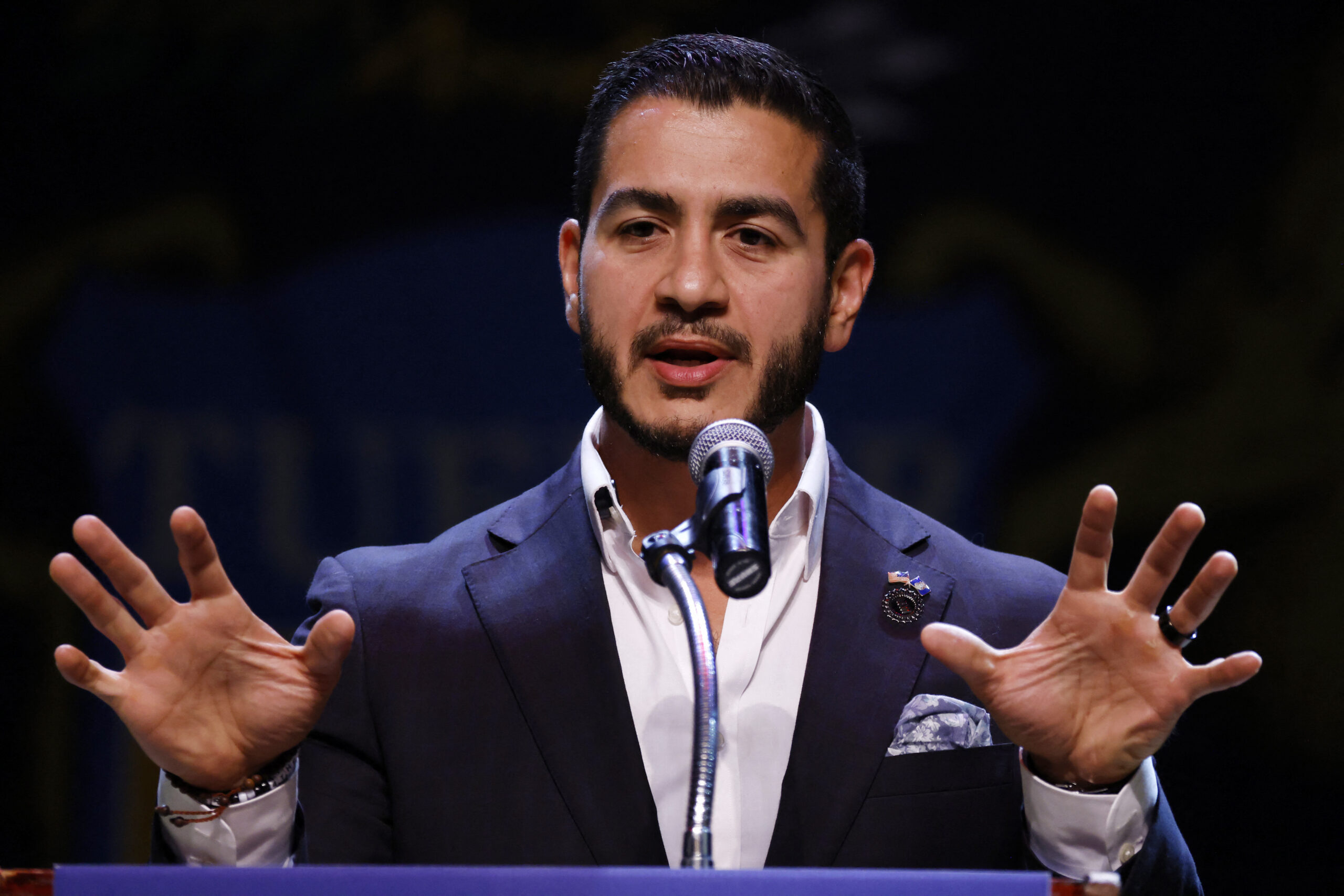
One signatory has repeatedly referred to pro-Israel officials as neo-Nazis while others have been involved with Students for Justice in Palestine and campus anti-Israel advocacy
MARYLAND MATTERS
More than 40 clergy members called on Superintendent Thomas Taylor to require antisemitism-specific teacher training and consequences for hateful social media posts
Plus, MD rabbis sound alarm on school antisemitism
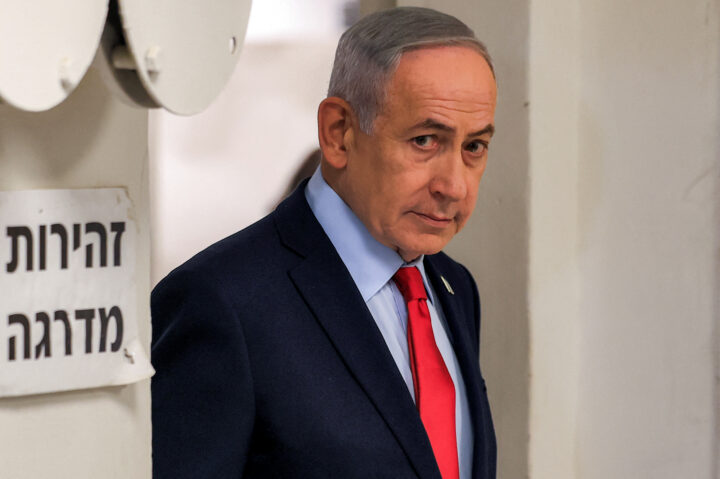
POOL/AFP via Getty Images
Israeli Prime Minister Benjamin Netanyahu arrives for a press conference in Jerusalem on March 19, 2026.
Good Monday afternoon.
This P.M. briefing is reserved for our premium subscribers like you — offering a forward-focused read on what we’re tracking now and what’s coming next.
Today’s Daily Overtime was curated by JI U.S. Editor Danielle Cohen-Kanik.
📡On Our Radar
Notable developments and interesting tidbits we’re tracking
President Donald Trump is willing to release frozen Iranian funds and provide some sanctions relief to Tehran in return for concessions on Iran’s nuclear program, Axios reports, as Qatari and Pakistani mediators met today with Iranian Foreign Minister Abbas Araghchi in New York to continue negotiations. Qatari officials are expected to meet with Trump today or tomorrow…
The official state news agency of the United Arab Emirates confirmed reports that Israeli Prime Minister Benjamin Netanyahu met with Emirati President Mohammed bin Zayed in Abu Dhabi yesterday, where the two leaders discussed “bilateral relations between the two countries and ways to strengthen and develop them.” It was a rare public acknowledgment by Abu Dhabi of its ties with Jerusalem, after having denied a reported Netanyahu visit earlier this year…
The State Department postponed a memorial event for the Oct. 7, 2023, Hamas attacks that was scheduled for Sept. 30, Jewish Insider’s Marc Rod reports, without specifying reasons for the delay or plans for rescheduling…
Five men arrested in connection with a possible attempted terror attack at a British air base on Sunday were released on bail today, Laurence Taylor, the head of Britain’s counterterrorism police, announced, though he said they would be “subject to stringent conditions on their movement and contact with others.”
Taylor said the U.K. is investigating the plot “from every possible angle, including that this may be actively committed by proxies or individuals, either knowingly or unknowingly, working on behalf of a foreign state”…
More than 40 rabbis and cantors in Montgomery County, Md., warned in a letter today that public school leaders have failed to address a rising tide of antisemitism in local classrooms, urging officials to implement new teacher training and stricter social media rules, JI’s Haley Cohen reports.
In the letter addressed to Montgomery County Public Schools Superintendent Thomas Taylor, the clergy — representing dozens of Montgomery County synagogues across denominations — wrote that they are “alarmed that the lack of a meaningful response by MCPS has led to an increase in the normalization of antisemitic attitudes, language and behaviors in our schools”…
Secretary of State Marco Rubio met with Lebanese Prime Minister Nawaf Salam at the State Department today to discuss regional developments including ongoing Israeli-Lebanese negotiations. Also in attendance were Lebanese Foreign Minister Youssef Raggi, State Department Counselor Dan Holler, Lebanese Ambassador to the U.S. Nada Hamadeh and U.S. Ambassador to Lebanon Michel Issa…
Rubio also met with Saudi Foreign Minister Faisal bin Farhan Al Saud today amid escalating hostilities between Saudi Arabia and the Iran-backed Houthis in Yemen. The two were expected to discuss bilateral ties and regional developments, according to Saudi state media…
Saudi Defense Minister Khalid bin Salman invited UAE Vice President Mansour bin Zayed to visit Riyadh tomorrow, the Saudi Defense Ministry announced, in a sign of warming ties between the two Gulf powers after months of visible strain…
Former Israeli hostage Noa Argamani is joining Vine Ventures, a venture capital firm backing Israeli startups in AI, cybersecurity and defense tech. Argamani told Business Insider she intends to use her experience and the global connections she established after her time in captivity to “do something with more impact — to make a change in the world”…
The USS Theodore Roosevelt aircraft carrier departed from San Diego to relieve the USS George Washington in the Middle East while U.S. forces continue to enforce a naval blockade on Iran and facilitate the movement of oil through the Strait of Hormuz…
Dozens of countries joined the U.S. and Israel today in boycotting an event hosted by the U.N. to mark the 25th anniversary of the Durban Conference, the 2001 gathering in South Africa meant to fight global racism that instead became deeply controversial over extreme antisemitism and anti-Israel rhetoric…
Francesca Albanese, the U.N.’s special rapporteur for the Palestinian territories, apologized on X for claiming in a recent interview that antisemitism originally meant hatred of all “Semitic peoples” rather than Jews, and that Jews taken to the Nazi gas chambers were “called ‘the Muslims.’”
Critics accused her of distorting the Holocaust, noting that the camp term “Muselmann” described starving prisoners near death, not a racial category. Albanese conceded she had “misread” the term and that antisemitism “was coined specifically to denote hatred of Jews”…
⏩ Tomorrow’s Agenda, Today
An early look at tomorrow’s storylines and schedule to keep you a step ahead
Keep an eye on Jewish Insider for a look at the silence from Texas Democrats over far-left influencer Hasan Piker‘s speaking engagement at the University of Texas later this week, even as the historically conservative state remains one of the most consequential battlegrounds in the upcoming midterm elections.
The Jewish Federation of Los Angeles and other local groups will host a mayoral forum with L.A. Mayor Karen Bass and City Councilmember Nithya Raman, Bass’ progressive challenger in the Nov. 3 runoff who has taken a critical stance against Israel.
The Senate Armed Services Committee’s Subcommittee on Strategic Forces will receive a briefing on the status of the Golden Dome missile-defense project.
President Donald Trump will headline an event in Washington on innovation with guests including Secretary of State Marco Rubio; Energy Secretary Chris Wright; NASA Administrator Jared Isaacman; SpaceX CEO Elon Musk; Nvidia CEO Jensen Huang; Anthropic co-founder Tom Brown; and Palantir Chief Technology Officer Shyam Sankar, among others.
Stories You May Have Missed
LATIN LINKS
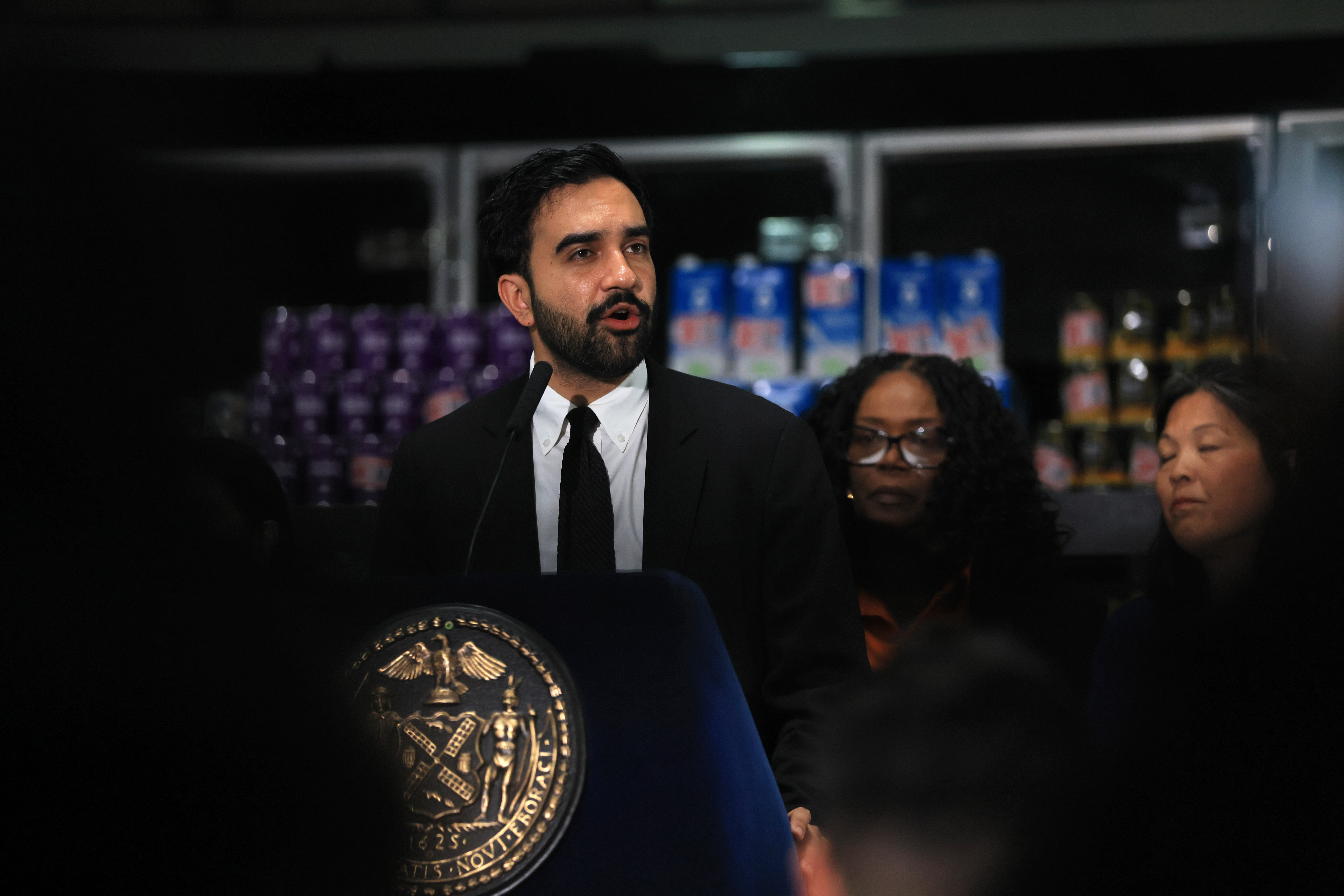
Gianpaolo Baiocchi and Defend Democracy in Brazil worked closely with groups backed by Marxist mogul Neville ‘Roy’ Singham
TALK OF TURTLE BAY
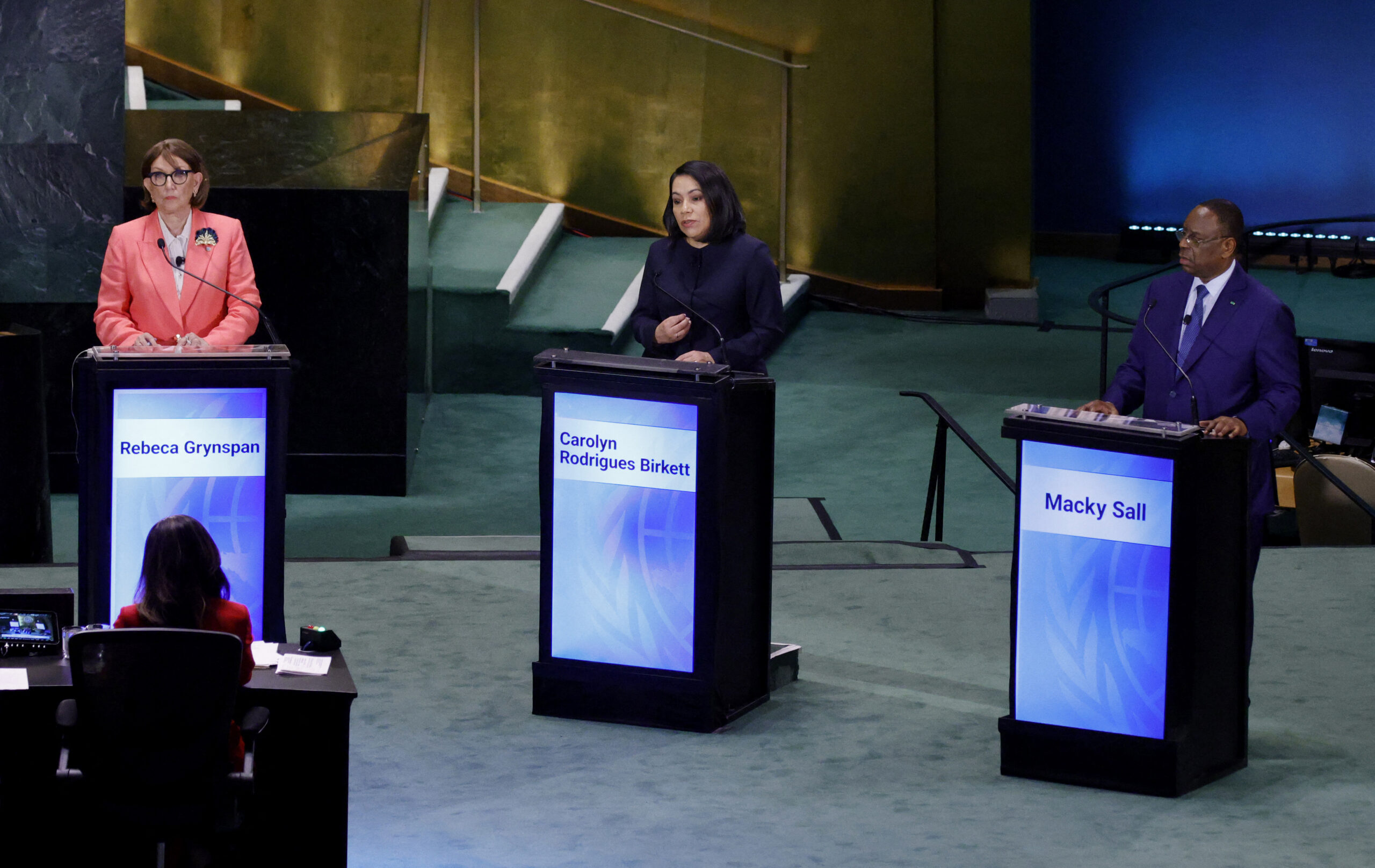
Costa Rican Jewish economist Rebeca Grynspan has emerged as a leading contender, but faces competition from Carolyn Rodrigues-Birkett, the anti-Israel Guyana U.N. ambassador
Plus, Bibi b’Abu Dhabi
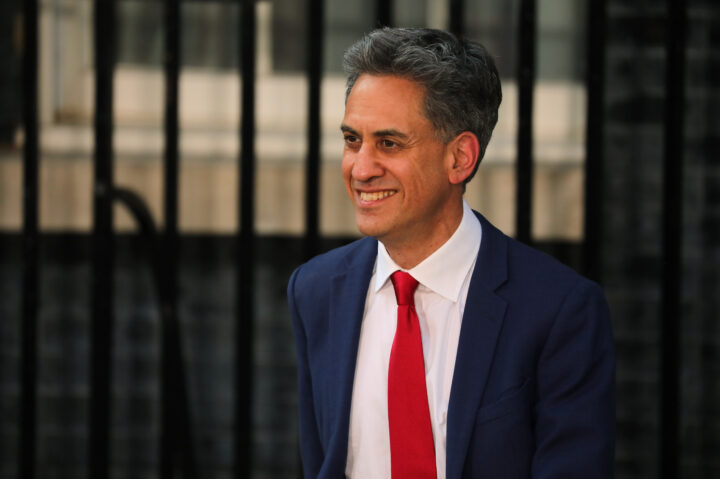
Alishia Abodunde/Getty Images
Newly appointed U.K. Foreign Secretary Ed Miliband departs Downing Street on July 20, 2026 in London, England.
Good Monday morning.
In today’s Daily Kickoff, we look at the race to succeed António Guterres as secretary-general of the United Nations, report on ties between a senior Mamdani administration official and an influence network tied to China-allied tech mogul Neville “Roy” Singham, and cover Sunkist’s decision to bring back its discontinued candy gems that for decades have been a staple at Jewish celebrations. Also in today’s Daily Kickoff: Gov. Gavin Newsom, Noa Argamani and Israeli Foreign Minister Gideon Sa’ar.
Today’s Daily Kickoff was curated by JI Executive Editor Melissa Weiss, with assists from Danielle Cohen-Kanik and Marc Rod.
Today’s Agenda
The U.S. and Iran are expected to engage in talks this week, President Donald Trump said on Sunday after rejecting a proposal from Tehran for a seven-day plan to end the war. “They want to make a deal, but it is not the deal that I want to make. It is what we would have maybe agreed to a year ago. They overplayed their hand,” Trump told Axios.
Earlier in the day, Iranian Foreign Minister Abbas Araghchi, who traveled to the U.S. for the U.N. General Assembly and is expected to stay in the U.S. through the middle of the week, said Tehran is both “ready for diplomacy” and prepared to “stand firm in the face of any aggression.”
The comments from both Trump and Araghchi come as Tehran faces increasing pressure from mediators to make nuclear concessions to restart talks.
Trump is slated to give an address today at 2 p.m., with the subject not yet public.
In Washington, Sens. Bernie Sanders (I-VT), Chris Van Hollen (D-MD) and Tim Kaine (D-VA) are expected to force a vote this week on legislation that would require the State Department present a report to Congress on West Bank violence by settlers and Israeli forces, including any deaths or detentions of Americans. Read more about the effort here.
One Thing To Know
analysis
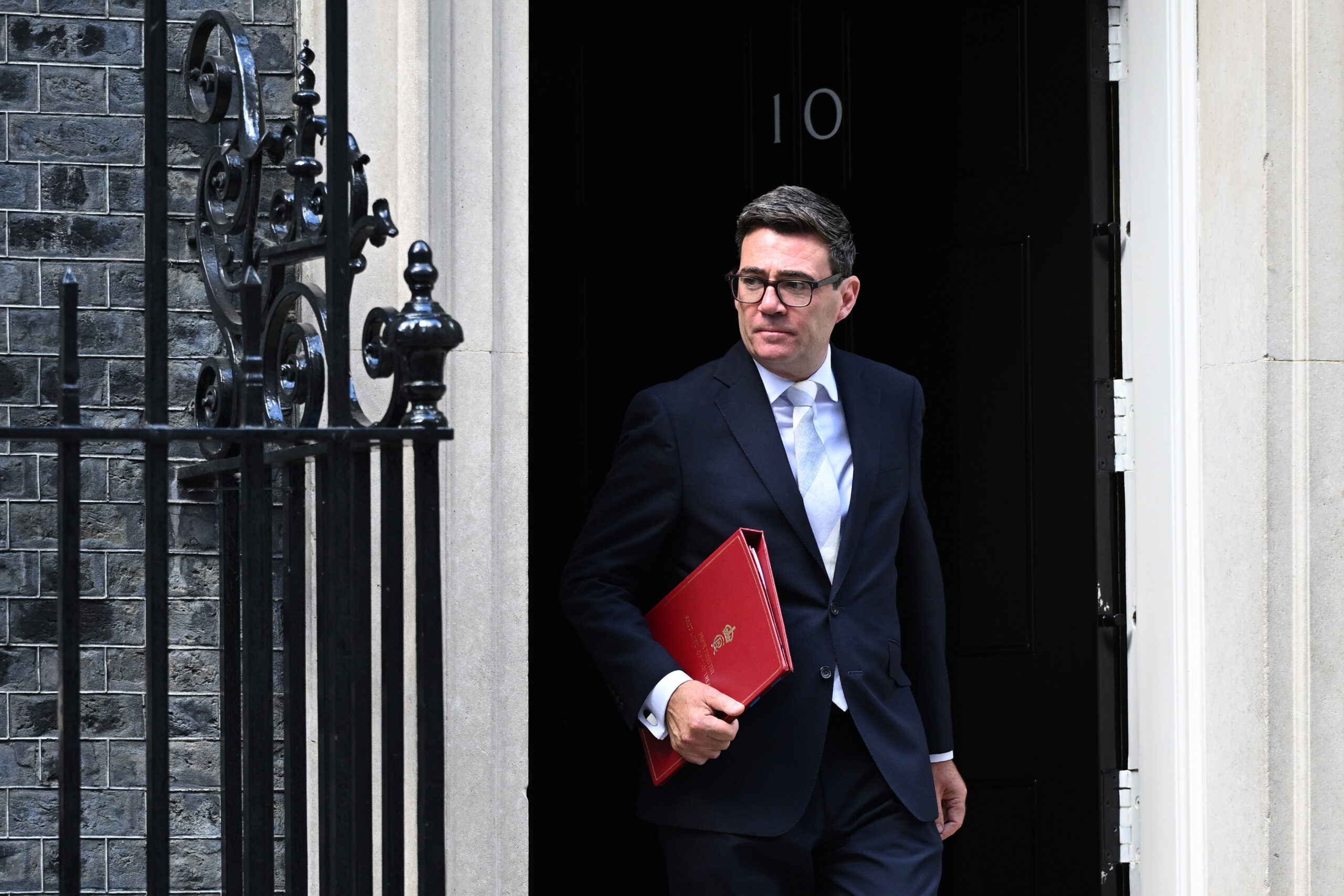
By Melissa Weiss
Two security incidents that transpired in the U.K. over the weekend are presenting Prime Minister Andy Burnham with some of his new government’s first major tests since taking power over the summer: how to address domestic counterterror threats and mounting issues related to asylum seekers, while also responding to concerns by British Jews over their safety and security amid growing tensions between London and Jerusalem.
On Sunday, U.K. officials arrested several individuals near a military base in Gloucestershire used by the U.S. for attacks against Iran. A police statement released about the incident said that an ordnance disposal team had been dispatched to the area and that properties in the vicinity had been evacuated.
The incident occurred hours after a report in the U.K.’s Times that a former bodyguard for Ismail Haniyeh, a Hamas leader who was killed by Israel in 2024, was granted asylum — and later citizenship — in the U.K., from which he plotted attacks across Europe. The man, identified as “Mr. X” due to a British court order protecting his anonymity, was arrested last year in connection with a plot to attack Jewish targets in Germany and Austria on the second anniversary of Hamas’ Oct. 7 attacks.
The Big Reads
talk of turtle bay
The race to succeed U.N. Secretary-General António Guterres is still wide open, with seven candidates vying to lead an organization whose approach toward Israel has become a central concern for the United States and pro-Israel advocates, Jewish Insider’s Matthew Shea reports. Costa Rican economist Rebeca Grynspan and Guyana’s U.N. ambassador, Carolyn Rodrigues-Birkett, have emerged as the leading contenders. Ben Cohen, a senior analyst at the Foundation for Defense of Democracies, described Grynspan, the daughter of Holocaust survivors with family members residing in Israel, as a U.N. insider candidate who knows the U.N. system well and would likely “be in the mold of Guterres.” Rodrigues-Birkett, meanwhile, has previously described the Jewish state’s actions against Palestinians as “brutality that would make some of history’s most cruel oppressors blush,” and praised former Cuban dictator Fidel Castro as a “visionary” in a 2013 speech.
city hall hire
A few months before New York City Mayor Zohran Mamdani met with Brazilian President Luiz Inácio Lula da Silva during the U.N. General Assembly on Monday, his administration hired an expatriate supporter of the left-wing South American leader — an academic and activist involved in a group tied to the sprawling global influence network of China-allied tech mogul Neville “Roy” Singham, Jewish Insider’s Will Bredderman reports. Hired in June as a deputy commissioner for international affairs, Gianpaolo Baiocchi in July brought the organization Defend Democracy in Brazil into his city office for a formal meeting to “strengthen ties of the Brazilian community in New York.”
the sunkist also rises
Sunkist Fruit Gems announced that it plans to bring back its beloved kosher candy, eJewishPhilanthropy’s Judah Ari Gross reports, days after eJP first reported on the discontinuation of the synagogue staple. The discontinuation of the Fruit Gems had prompted a good-hearted national backlash, particularly on social media, where people jokingly called the move “antisemitic” or wrote “baruch dayan emet,” the traditional phrase that is used when hearing that a person has died.
The Rundown
in the courts
On Our Radar
● The Live Briefing. Word on the street, clips, podcasts and quick updates — the items we’re tracking all day in our Live Briefing on the app (on Apple and Android) and website.
The U.S. Navy awarded two military contracts for missile canisters and survival radios, collectively worth $127 million, to subsidiaries of Israel Aerospace Industries and Elbit Systems…
The Department of Education again delayed the release of data on foreign funding to U.S. schools, the sixth such delay since July; the data is now expected to be released on Oct. 2…
Sens. John Cornyn (R-TX) and Richard Blumenthal (D-CT) filed an amicus brief in a Holocaust restitution lawsuit, Reif v. Republic of Austria, citing their legislation that aims to aid the heirs of Holocaust survivors in recovering Nazi-looted art…
Reps. Mark Pocan (D-WI) and Mike Quigley (D-IL), as well as 41 House members, wrote to Secretary of State Marco Rubio urging him to work to ensure the release of Palestinian physicians and healthcare workers held in Israeli detention…
The New York Times looks at VoteVets’ involvement in the midterms as the group spends more than $60 million on more than 300 candidates, the vast majority of whom are running in down-ballot races, and leans into voter antipathy toward the Iran war…
A new poll from the Democratic polling firm GBAO found Michigan Democratic Senate candidate Abdul El-Sayed up four points, 48-44%, over former Rep. Mike Rogers (R-MI)…
Singer Ed Sheeran’s weekend concerts at Boston’s Gillette Stadium were canceled due to weather, weeks after a firestorm over the anti-Israel activism and antisemitic rhetoric of Macklemore; the rapper was removed from the tour by organizers after stadium owners, including Gillette owner Robert Kraft, raised concerns about Macklemore’s recent performances and past activities…
In an event at Los Angeles’ Wilshire Boulevard Temple, California Gov. Gavin Newsom signed into law the Safe Worship Zone Act and the expansion of the California State Nonprofit Security Grant Program…
An Illinois man who previously served jail time for antisemitic vandalism was sentenced to seven years in prison for graffitiing a swastika and other antisemitic imagery across the Northwestern University campus earlier this year…
A Canadian man in Kitchener, Ontario, was arrested in connection with a livestream in which he allegedly made threats targeting the Jewish community…
The council of the eastern German town of Heidenau, in a move led by the far-right Alternative for Germany party and ruling Christian Democratic Union, banned future plaques commemorating residents of the city who were killed during the Holocaust…
Maastricht University in the Netherlands suspended a Palestinian student who claimed he took part in the Hamas-led Oct. 7, 2023, terror attacks…
The IDF said it killed one of the terrorists involved in the abduction of former Israeli hostage Noa Argamani from the Nova music festival during the Oct. 7 attacks…
Israeli Prime Minister Benjamin Netanyahu reportedly traveled to the United Arab Emirates on Sunday to meet with Emirati President Sheikh Mohamed bin Zayed Al Nahyan…
The Wall Street Journal reports that Egypt’s former intelligence chief, Abbas Kamel, personally called Netanyahu with a third warning of an impending attack from Gaza in the days before Oct. 7, 2023, after two earlier Egyptian alerts went unheeded, according to Arab officials…
Israel gave Dutch diplomats in Ramallah seven days to return their Israeli-issued credentials, Foreign Minister Gideon Sa’ar announced on X on Sunday, after a Dutch ban on goods from Israeli settlements in the West Bank, east Jerusalem and the Golan Heights went into effect…
Worthy Reads
Find more Worthy Reads in our Live Briefing via our app (on Apple and Android) and website.
Pressure Points: In The Wall Street Journal, former CIA Director Gen. David Petraeus argues that the U.S.’ continued economic pressure on Iran coupled with its support for Gulf states will strengthen Washington’s negotiating position. “Iran’s leverage comes from imposing costs on everyone else by disrupting Hormuz, threatening bypass routes and widening pressure through aligned groups such as the Houthis in Yemen. Washington’s leverage runs in the opposite direction: helping everyone else’s oil get out while making it harder for Iran’s oil and maritime commerce to do the same.” [WSJ]
The Blair Pitch Project: The Free Press’ Audrey Fahlberg profiles former White House Deputy Chief of Staff James Blair as he works to mitigate Democratic gains in the midterms. “I asked [Blair] about the notion that the president has betrayed his own base by dragging the country into war with Iran after campaigning as a peacemaker — a claim repeated often by popular podcasters like Tucker Carlson and others on the right who prefer a restrained foreign policy. ‘The Tucker Carlsons of the world aren’t being honest about what the president has always said,’ he said. ‘The president has said endless times’ going back to the 1980s ‘that Iran should never have a nuclear weapon.’ By denying this, Blair said, the restrainer wing of the GOP is ‘projecting something that he never said onto him in the Iran case.’” [FreePress]
Groyper Groupie: The Washington Post’s Drew Harwell spotlights former “groypette” Amy Dangerfield in the wake of her falling out with neo-Nazi influencer Nick Fuentes. “Amy had developed tough skin over years of derogatory jokes being made at her expense; for conservative women, she said, it just came with the lifestyle. … But this felt different. The kinds of conspiracy theories she’d once amplified about elites were now being rewritten about her: that she was a spy for Israeli surveillance, or a federal infiltrator, or a rebel attempting revolt.” [WashPost]
Picture of the Day

Israeli soccer fans cheered on the Israeli national team on Sunday during the team’s UEFA Nations League match against Ireland in Debrecen, Hungary.
Members of the Irish team wore black armbands and skipped the customary pre-match handshakes before beating Israel 3-0. In addition, the Irish players bowed their heads during Israel’s anthem, and captain Dara O’Shea kept his hands clasped behind his back rather than greet Israel’s Manor Solomon. Sebastian Frej/Getty Images
Birthdays

Daniel Braverman, former NFL, XFL and CFL wide receiver and kick returner, turns 33
Sir Jeremy Israel Isaacs, Emmy Award-winning Scottish television producer, turns 94
Madeleine Kunin, former governor of Vermont (the first Jewish woman elected to govern any state), she was also the U.S. ambassador to Switzerland, turns 93
Stuart Kauffman, physician and theoretical biologist, he was a 1987 MacArthur genius fellow, turns 87
Warren Lieberfarb, former president of Warner Home Video, turns 83
Alain Wertheimer, French businessman who, with his brother, own the controlling interest in the House of Chanel and several famous vineyards, turns 78
Jerry Weiss, real estate agent in New York’s Hudson Valley
Gary Miller, Teaneck, N.J.-based real estate attorney
Bill Cassidy, physician and outgoing U.S. senator (R-LA), turns 69
Michael Harris, pediatrician and author of the book Winning A Debate with An Israel Hater about the fight against BDS
Ben Greenman, best-selling author of more than 25 books, he is also a magazine journalist, turns 57
Elliott Nahmias, area director for San Diego and Orange counties for AIPAC
Lenny Krayzelburg, winner of four Olympic gold medals in swimming for the USA (2000 and 2004), turns 51
Michael Lipin, news editor and White House correspondent at Voice of America
Nina Pekerman, Israeli Ironman triathlete, turns 49
Lauren France, SVP at the Katz Watson Group
Samantha Collidge, director of leadership engagement for the Anti-Defamation League
Hadassa Levenson, regional director for the Orthodox Union’s Teach Coalition
Ayelet Cohen, VP of operations at Tel Aviv-based iAngels, a women-led venture capital firm
David Hopen, 2023 graduate of Yale Law School and author of a coming-of-age novel set in the Modern Orthodox community, turns 33
Plus, APA accreditation called into question over antisemitism
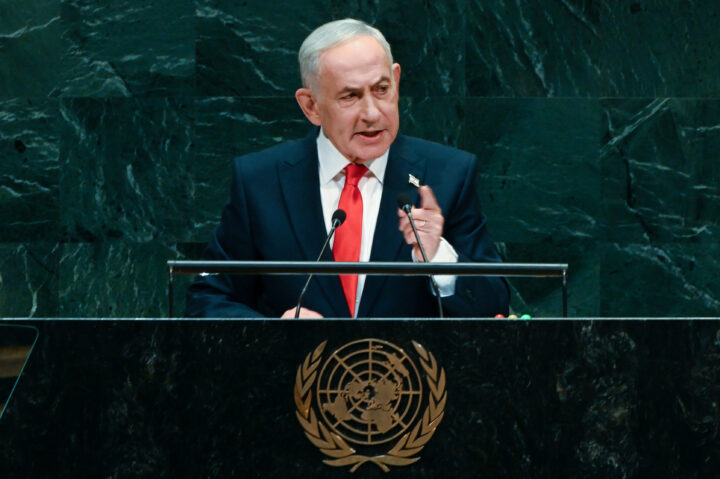
Alexi J. Rosenfeld/Getty Images
Israeli Prime Minister Benjamin Netanyahu speaks during the 81st session of the United Nations General Assembly at U.N. Headquarters on September 24, 2026 in New York City.
Good Thursday afternoon.
This P.M. briefing is reserved for our premium subscribers like you — offering a forward-focused read on what we’re tracking now and what’s coming next.
Today’s Daily Overtime was curated by JI U.S. Editor Danielle Cohen-Kanik.
📡On Our Radar
Notable developments and interesting tidbits we’re tracking
Israeli Prime Minister Benjamin Netanyahu pushed back against criticism of Israel over the Gaza war and settler violence in the West Bank in his address to the U.N. General Assembly this afternoon, taking aim at New York City Mayor Zohran Mamdani, French President Emmanuel Macron, Qatar and Turkey, Jewish Insider’s AJ Rodriguez reports.
The prime minister accused foreign actors of spending “untold billions” to spread anti-Israel messages through traditional and social media — singling out Qatar for “massively funding American universities and toxic media outlets” in what he alleged was an effort to “brainwash young minds to hate Israel, hate America, hate the West” — and called Turkey the latest “superspreader of antisemitic lies”…
During Netanyahu’s speech, several far-left Democrats expected to be elected to the House of Representatives in November attended a protest organized by Jewish Voice for Peace that blocked the streets outside U.N. headquarters.
Dozens of demonstrators, including NY-13 nominee Darializa Avila Chevalier, were detained by the NYPD for refusing to comply with an order to disperse. Also in attendance were NJ-12 nominee Adam Hamawy, PA-3 nominee Chris Rabb, CO-1 nominee Melat Kiros and streamer Hasan Piker…
While in the U.S., Netanyahu is set to meet with the presidents of Argentina, Bolivia, Paraguay, Panama and Ethiopia; the vice president of Colombia; and the prime ministers of Greece, Slovenia and Papua New Guinea, his office said…
In his UNGA address earlier in the day, Palestinian Authority President Mahmoud Abbas criticized the lack of progress on President Donald Trump’s Gaza peace plan while calling for the implementation of a two-state solution and warning that prospects for Palestinian statehood are at a “low point.” Abbas delivered the address by prerecorded video after the U.S. denied him a visa to attend the gathering in person…
The Saudi-backed government in Yemen said it shot down six ballistic missiles today fired by the Houthis deep into Saudi Arabian territory…
Pressed during a town hall at the University of Michigan yesterday to condemn the Iranian regime’s massacre of tens of thousands of protesters earlier this year, Democratic Michigan Senate candidate Abdul El-Sayed declined to do so, focusing his answer on criticizing the U.S. war in Iran, JI’s Marc Rod reports.
“Here’s my point: one can disagree with the governance of a foreign country. One can stand in solidarity with freedom and democracy movements, but my worry is one when one decides that we are going to go in and take out the leadership of a foreign government,” El-Sayed told a student, who had said his own family was targeted by the Iranian regime…
A new New York Times/Siena poll of Senate races in battleground states found Democrats leading in Michigan — where El-Sayed was up 49%-44% over his opponent, former Rep. Mike Rogers (R-MI) — and in New Hampshire, where Rep. Chris Pappas (D-NH) led former Sen. John Sununu (R-NH) 50%-45%. In Maine, however, Democratic nominee Troy Jackson was trailing Sen. Susan Collins (R-ME) 49%-46%…
Sen. Thom Tillis (R-NC) joined Democrats and a handful of Republicans in voting today for a war powers resolution demanding an end to the war in Iran, JI’s Marc Rod reports. But, despite growing calls from vulnerable Republicans ahead of the midterm elections, most of the GOP continued to vote against the war powers effort, and the measure failed by a 50-49 vote…
The National Advisory Committee on Institutional Quality and Integrity, a federal advisory body to the Department of Education, voted today to recommend that DOE suspend the American Psychological Association’s ability to accredit graduate programs, based on its failure to address antisemitism in such programs…
The University of California, Berkeley intends to honor its long-delayed agreement to rehire an Israeli dance professor whom it declined to reappoint over her nationality, the school told J. The Jewish News of Northern California.
The school acknowledged its wrongdoing and vowed to correct the situation in a settlement with Yael Nativ in December 2025; the administration said the delay had been caused by an “internal miscommunication” and that it would provide Nativ with a job offer by Monday…
⏩ Tomorrow’s Agenda, Today
An early look at tomorrow’s storylines and schedule to keep you a step ahead
Keep an eye on Jewish Insider for a look at what legislation a Democratic majority in the next Congress may use to put pressure on Israel.
Iranian President Masoud Pezeshkian will sit for an interview with Fox News’ Bret Baier this evening.
Rep. Jared Moskowitz (D-FL) will campaign tomorrow in Miami Beach with House Democratic Caucus Chair Pete Aguilar (D-CA) and Democratic Congressional Campaign Committee Chair Suzan DelBene (D-WA) along with Hispanic community leaders as Moskowitz attempts to fend off a challenge from former Boca Raton Mayor Scott Singer in his reelection race.
The Jewish Detroit Expat Reception will be held at the start of the Sukkot holiday tomorrow evening, where Rebecca Blumenstein, president of NBC News editorial, will discuss her new book, The Last Free Women: A Daring Escape from Afghanistan and Coming of Age in America.
On Sunday, the New Jersey Globe and Rider University will host the only debate of the New Jersey 7th Congressional District race between Democratic Navy veteran Rebecca Bennett and Rep. Tom Kean Jr. (R-NJ).
We’ll be back in your inbox with the Daily Overtime on Monday. Shabbat shalom and chag sameach!
Stories You May Have Missed
WAKE-UP CALL

Accepting Chabad’s Lamplighter award, the Texas senator warned that pastors don’t see the drift on the right
ENVOY DEBATE

In a new op-ed, local political heavyweights Joe Schocken and Sam Jefferies argue that Seattle is a ‘laboratory’ for tactics for pushing Jews out of civic life that will spread across the country
Plus, Cruz's wake-up call
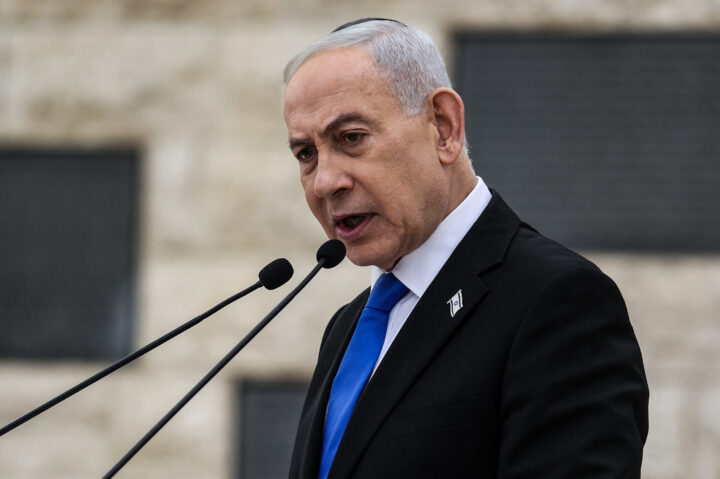
Ilia YEFIMOVICH / POOL / AFP via Getty Images
Israeli Prime Minister Benjamin Netanyahu speaks during a ceremony commemorating Israel's Remembrance Day on Mount Herzl in Jerusalem on April 21, 2026.
Good Thursday morning.
In today’s Daily Kickoff, we preview Israeli Prime Minister Benjamin Netanyahu’s U.N. General Assembly address, report on Michigan Democratic Senate candidate Abdul El-Sayed’s invocation of the Holocaust to justify his anti-Israel rhetoric and cover Sen. Ted Cruz’s warning that Christian leaders are failing to address rising antisemitism and anti-Israel sentiment among younger Christians. Also in today’s Daily Kickoff: House Speaker Mike Johnson, Alina Habba and Wayne Rooney.
Today’s Daily Kickoff was curated by JI Executive Editor Melissa Weiss, with assists from Danielle Cohen-Kanik and Tamara Zieve.
Today’s Agenda
Israeli Prime Minister Benjamin Netanyahu is set to address the U.N. General Assembly around 2 p.m. ET today during his brief visit to the U.S.
Before departing for New York last night, Netanyahu traveled to Shaare Zedek hospital in Jerusalem, where Neria Leiter, a son of Israeli Ambassador to the U.S. Yechiel Leiter, was in critical condition after injuries sustained in a car-ramming attack at a West Bank checkpoint earlier in the day. More below.
Speaking to reporters earlier today at the hospital, Leiter said his son was still “hanging in the balance” but had been stabilized by medical workers. “The next few days will be critical,” the ambassador added.
Security in the area around the U.N. headquarters in Turtle Bay will be tight during Netanyahu’s speech, owing to several protests planned around the Israeli leader’s trip to New York. Read our previous coverage on how the NYPD is preparing to handle UNGA-related protests.
In Washington tonight, President Donald Trump and First Lady Melania Trump will host a state dinner for Chinese President Xi Jinping, with a guest list that includes several tech and finance executives.
An International Court of Justice panel could rule as soon as today on an effort to change the threshold for defining genocide in a case between Gambia and Myanmar that would have implications for South Africa’s case against Israel in the court.
One Thing To Know
analysis
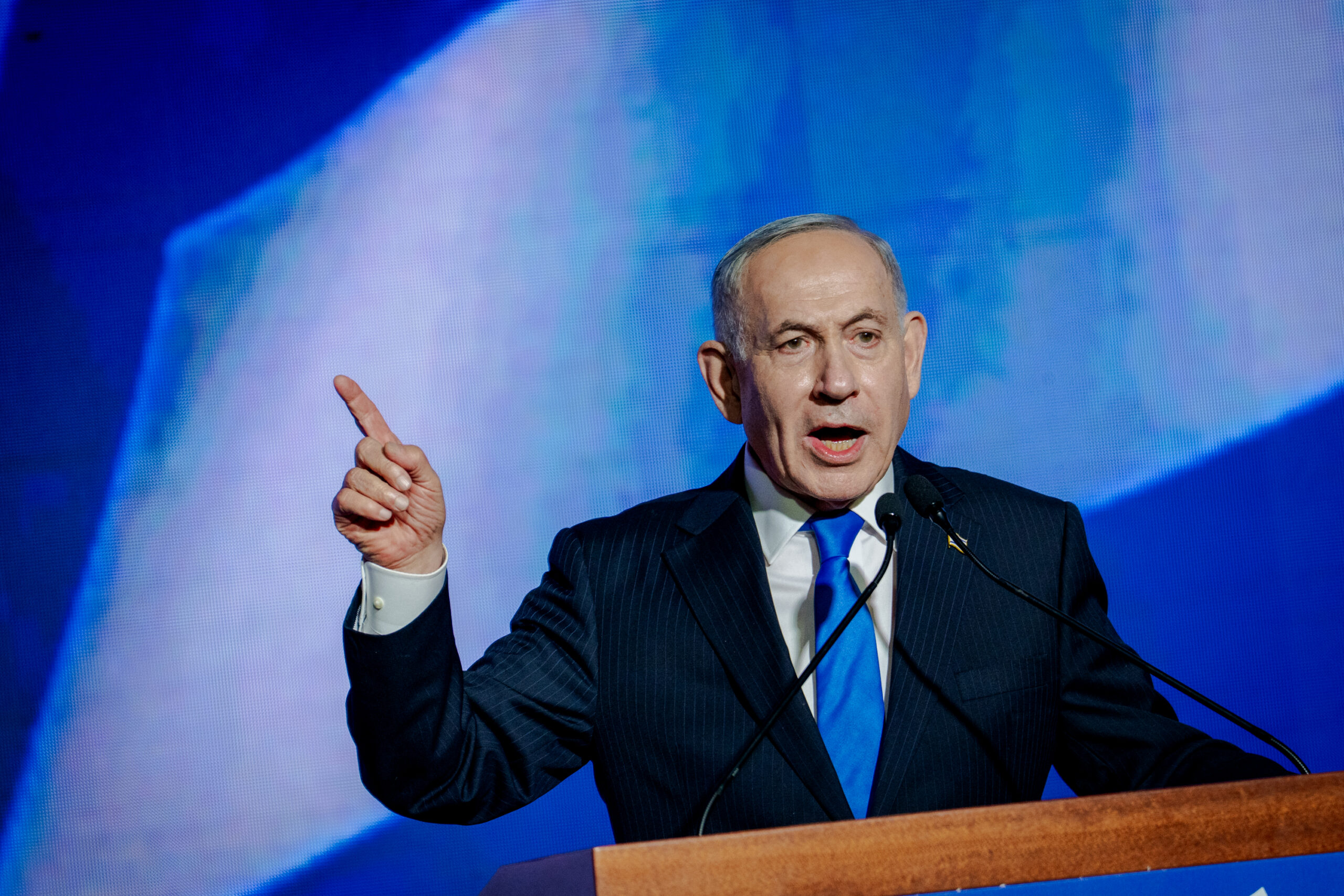
By Gili Cohen
For a few hours, Israel’s deeply polarized political arena, just a month before the elections, found rare unity following the news that Neria Leiter, son of Israel’s ambassador to the U.S., Yechiel Leiter, was critically injured in a car-ramming terror attack in the West Bank.
But even before the attack, which could affect the content of Netanyahu’s speech, the prime minister’s trip to New York was set to be entirely different from prior UNGA appearances. The prime minister’s brief video message about his speech on Tuesday referenced only one individual: New York City Mayor Zohran Mamdani. Not Iran, not Hamas, nor Turkish President Recep Tayyip Erdogan.
Sources close to the prime minister claim Mamdani is the reason for Netanyahu’s unprecedented brief visit. The concern, his aides claim, stems from potential protests or political posturing by Mamdani, despite him admitting he has no authority to arrest Netanyahu, a key campaign pledge of the mayor’s. However, a former official involved in coordinating prime ministerial trips offered a different explanation: As long as Netanyahu remains in New York for only a few hours, the absence of a meeting with President Donald Trump becomes far less conspicuous.
The Big Reads
no compromise
Abdul El-Sayed, the Democratic Senate nominee in Michigan, refused to tone down his hostile rhetoric toward Israel, including his repeated accusations of genocide, during a newly released podcast interview, even as his stances risk alienating Jewish Democrats who are otherwise eager to support his campaign in a key battleground state, Jewish Insider’s Matthew Kassel reports. In an appearance on the “Raging Moderates” podcast hosted by Scott Galloway and Jessica Tarlov, who are both Jewish and disagree with his stances on Middle East policy, El-Sayed doubled down in defense of his repeated use of the term genocide to describe Israel’s actions in Gaza, invoking the Holocaust to justify his position.
sanctions push
Nineteen Senate Democrats, led by Sen. Chris Coons (D-DE), introduced a bill on Wednesday that would impose sanctions on companies, individuals and others involved in the construction and development of Israeli settlements in the E1 area of the West Bank, which the lawmakers argue would be a severe blow to the viability of a Palestinian state, Jewish Insider’s Marc Rod reports. The far-reaching sanctions would also target financial institutions and government officials and entities involved in supporting or facilitating E1 settlement construction.
wake-up call
Sen. Ted Cruz (R-TX) warned on Wednesday that Christian leaders are “asleep” and failing to recognize the degree to which antisemitism and anti-Israel sentiment have spread among Christian youth, Jewish Insider’s Emily Jacobs reports. The Texas senator made the comments while accepting the leadership award at the American Friends of Lubavitch (Chabad) annual Lamplighter Awards in Washington. Cruz voiced concern that older Christian leaders, specifically evangelicals, were not acknowledging that younger adherents have ideologically drifted from previous generations. “If you look at the polling, young evangelicals are turning systematically against Israel, and there are millions of dollars that are being spent to turn them against Israel,” he said.
The Rundown
alternate reality
security advocacy
envoy debate
memorial event
On Our Radar
● The Live Briefing. Word on the street, clips, podcasts and quick updates — the items we’re tracking all day in our Live Briefing on the app (on Apple and Android) and website.
Oman and Azerbaijan halted flights to and from Iran, in accordance with a deadline set by Treasury Secretary Scott Bessent as part of the Trump administration’s Operation Economic Outcast; Iraq, whose president pledged last week to crack down on Iran-backed militias operating in the country, also suspended flights from Baghdad.
Tehran, meanwhile, threatened to paralyze the airports of countries in the region who comply with the U.S.’ block on flights to and from the Islamic Republic…
Sen. Jeanne Shaheen (D-NH), the ranking member on the Senate Foreign Relations Committee, urged President Donald Trump to press Chinese President Xi Jinping during his visit to the White House this week on Chinese companies’ provision of satellite imagery to Iran that helped the regime target American military installations in the Middle East, and China’s continued evasion of U.S. sanctions on Iranian oil…
House Speaker Mike Johnson (R-LA) said the war with Iran needs to be brought “to a resolution,” arguing that the U.S. has achieved its objective of preventing Tehran from obtaining a nuclear capability and pointing to the closure of the Strait of Hormuz as driving up gas, fuel and grocery costs…
American Priorities PAC, which backed several successful Democratic socialist congressional campaigns, said it plans to target nine House Democrats in 2028; the group will focus on challenging Reps. Ritchie Torres (D-NY), George Latimer (D-NY), Laura Gillen (D-NY), Tom Suozzi (D-NY), Greg Landsman (D-OH) and Jared Moskowitz (D-FL), as well as current candidates Melissa Bean, Adrian Boafo and Ben McAdams, all of whom won their primaries and are expected to join the next Congress…
Florida’s attorney general filed a lawsuit against The New York Times on behalf of a group of shareholders alleging that the newspaper’s board of directors failed to hold the Times newsroom to its own editorial standards regarding its coverage of the Israel-Hamas war; the lawsuit claims that the paper’s editorial standards were “weaponized within the company to serve the personal agendas of unchecked editors”…
The attorney general of Missouri launched an investigation into Students for Justice in Palestine’s fundraising activities in the Show-Me State, saying, “We will use every tool the law allows to expose deceptive fundraising, trace where the money goes, and stop any effort to channel charitable donations to violent or terror-linked actors”…
Manhattan District Attorney Alvin Bragg announced the repatriation of three dozen antiquities to Syria, more than a dozen of which had been housed at the Metropolitan Museum of Art…
A federal judge sentenced a Massachusetts man to nearly 10 years in prison for making interstate threats targeting Rep. Randy Fine (R-FL) and his family in August 2024…
Alina Habba, a former lawyer for Trump who briefly served as acting U.S. attorney for the District of New Jersey last year, is reportedly set to marry Turkish businessman Turhan Mildon, whose company has overseen projects in the Democratic Republic of Congo and Venezuela…
A Philadelphia educator and anti-Israel activist who claimed to be Black and Palestinian publicly acknowledged that she was Jewish, with family living in the West Bank, prompting local activist groups with which she was affiliated to distance themselves from her…
Sunkist Fruit Gems, a staple at many a Jewish simcha for the last half century, has been discontinued, eJewishPhilanthropy’s Jay Deitcher reports…
A 19th-century Albert Lang painting was restituted to the descendants of the German-Jewish art collector who owned the work, which was determined by authorities in Germany to have been looted by the Nazis, before she fled the country in 1938…
The Netherlands will rejoin the Eurovision Song Contest in 2027, after its Avrotros public broadcaster refused to take part in this year’s competition as well as the one slated for next year over Israel’s participation; the umbrella body of Dutch broadcasters determined that the NOS will provide coverage instead of Avrotros, while a Dutch contestant will be selected by an independent panel…
Longtime Manchester United star Wayne Rooney, who played for D.C. United after leaving Manchester United in 2017, said in a new docuseries, which includes a trip with his wife and sons to Auschwitz, that his Polish-born maternal great-grandmother was Jewish…
Worthy Reads
Find more Worthy Reads in our Live Briefing via our app (on Apple and Android) and website.
Iran’s BFF: The Wall Street Journal’s Rory Jones, Jon Emont, Vera Bergengruen and Summer Said look at how China is quietly assisting Iran as it faces crippling sanctions spearheaded by the U.S., even as the White House prioritizes good relations with Beijing. “Washington has launched hundreds of sanctions targeting Iran since the war began on Feb. 28, including penalties against companies and individuals in China it believes are helping Tehran. Those steps, along with an embargo of Iranian trade, have caused a contraction of Iran’s economy. But the White House has proven reluctant to more seriously confront Beijing over its support for Iran, which has continued launching attacks on U.S. forces and oil infrastructure in the Middle East.” [WSJ]
Regional Realignment: In an excerpt from his new book The Cauldron: The Making of the Modern Middle East, published in The Atlantic, Simon Sebag Montefiore considers the evolution underway in the Middle East. “The United States, Russia, and China still intervene in the Middle East, but in a manner that is Olympian, erratic, and inconsistent. Behind them lurks a deeper conflict of entire systems: the open world, still (just) led by America, versus the closed world that is the axis of China and Russia. A parallel, simultaneous battle, centered within the Middle East, rages among different versions of, or attitudes toward, the practice of Islam and its complex relationship with the West.” [TheAtlantic]
Picture of the Day

Nova music festival survivor Shalev Biton (right) appeared onstage at yesterday’s rally against antisemitism near the U.N. headquarters in New York alongside Yunes Alkarnawi (left), a Bedouin from southern Israel who saved Biton and dozens of others during the Hamas-led Oct. 7, 2023, terror attacks. Read more about Alkarnawi’s rescue of Biton here. Michael Priest Photography
Birthdays
Marc Guggenheim, screenwriter, television producer, comic book writer and novelist, turns 56
Joanne Greenberg, author of 26 books, best known for the semi-autobiographical novel I Never Promised You a Rose Garden, turns 94
Judith Margolis, artist working visually in paintings, drawings, artist’s books and multimedia collages, turns 82
Rafael Eldad, retired Israeli diplomat who served as Israel’s ambassador to Peru, Argentina, Brazil and Chile, turns 77
David Pecker, former CEO of American Media, publisher of celebrity and health and fitness magazines, turns 75
Franz Lidz, feature writer for Sports Illustrated for 27 years, he is a 2015 inductee into the Philadelphia Jewish Sports Hall of Fame, turns 75
Michael Weiss, attorney and former judge advocate
Jeffrey Hecktman, founder, executive chairman and CEO of Hilco Global, turns 73
William Gross, lead public safety success manager at FirstNet by AT&T
Christopher L. Eisgruber, president of Princeton University since 2013, in his mid-40s he discovered that his mother was Jewish, turns 65
Alan Popovsky, co-founder and principal at DC-based PRG Hospitality
Chanina Sperlin, EVP of governmental affairs at the Crown Heights Jewish Community Council
Noreena Hertz, economist, best-selling author and a great-granddaughter of former British Chief Rabbi Joseph Hertz, turns 59
Yael Goldman-Pfeffer, Israeli television host, actor and model, turns 48
Jessica Schumer, Yale Law graduate and head of New York policy and community engagement at Amazon
Alexandra Jaffe, former White House reporter at the Associated Press, now editorial manager at Elastic
Ben Platt, actor, singer and songwriter, turns 33
Benjamin David Goldberg, rap musician, known professionally as Token, turns 28
Plus, Israel ally leads settlement sanctions bill
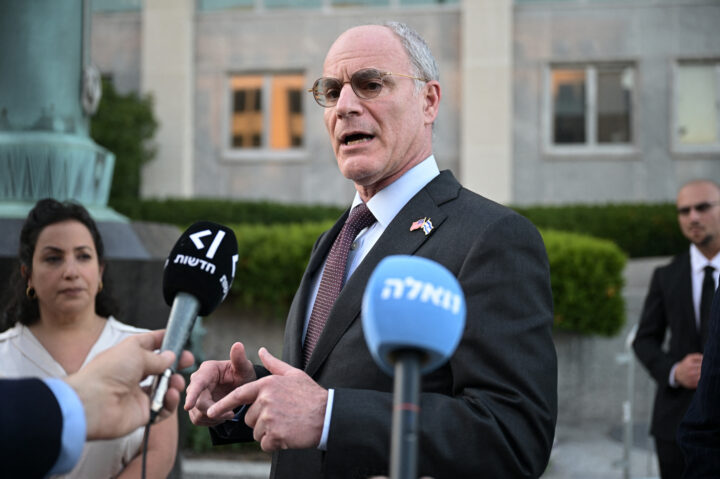
Oliver Contreras / AFP via Getty Images
Israel's Ambassador to the U.S. Yechiel Leiter speaks to reporters after a meeting between Israeli and Lebanese delegations hosted by the United States at the State Department in Washington, DC, on June 3, 2026.
Good Wednesday afternoon.
This P.M. briefing is reserved for our premium subscribers like you — offering a forward-focused read on what we’re tracking now and what’s coming next.
Today’s Daily Overtime was curated by JI U.S. Editor Danielle Cohen-Kanik.
📡On Our Radar
Notable developments and interesting tidbits we’re tracking
Neria Leiter, the son of Israeli Ambassador to the U.S. Yechiel Leiter, was seriously wounded today in a car-ramming terror attack at a West Bank checkpoint, the ambassador confirmed.
Leiter, an IDF reservist in his 30s, was stationed at the Maccabim checkpoint on Route 443 when an assailant accelerated his vehicle and ran him over, Jewish Insider’s AJ Rodriguez reports. Leiter underwent emergency brain surgery at Shaare Zedek Medical Center this afternoon but his “life is still in danger,” said the head of the hospital’s trauma unit.
Leiter’s older brother, Maj. (res.) Moshe Yedidya Leiter, was killed during reserve duty in northern Gaza in November 2023…
Addressing the U.N. General Assembly this morning, Iranian President Masoud Pezeshkian cast Tehran as a peaceful victim of American and Israeli aggression and claimed Iran is only interested in a civilian nuclear program for energy and medical research purposes, JI’s Matthew Shea reports…
Mohsen Rezaei, the secretary of Iran’s Supreme National Security Council, threatened to disable the airports of neighboring countries if they stop Iranian flights, as American sanctions targeting aviation service providers cooperating with Iran kicked in today…
In his UNGA address, Syrian President Ahmad al-Sharaa blasted Israel for its military actions on Syrian territory and said “the opportunity for peace and security is available to those who wish to live in peace”…
Nineteen Senate Democrats, led by Sen. Chris Coons (D-DE), introduced a bill today that would impose wide-reaching sanctions on companies, individuals and others involved in the construction and development of Israeli settlements in the controversial E1 area in the West Bank, JI’s Marc Rod reports.
Coons’ leadership on the legislation is especially notable as he has historically been seen as one of Israel’s strongest allies on Capitol Hill and is in line to be the top Democrat on the Senate Foreign Relations Committee in the next Congress. As potential chair of the influential panel, if Democrats take the majority, he’d have significant latitude to advance the bill and other similar measures…
Appearing on the “Raging Moderates” podcast hosted by Scott Galloway and Jessica Tarlov, Michigan Democratic Senate nominee Abdul El-Sayed refused to tone down his hostile rhetoric toward Israel, including his repeated accusations of genocide, invoking the Holocaust to justify his position, JI’s Matthew Kassel reports.
“The word genocide was created to explain what that was,” El-Sayed said of the Holocaust, “but the whole point of creating that word isn’t that you have to wait until the crime is that big again to be able to use it.” Throughout the exchange, Galloway and Tarlov, both of whom are Jewish, warned El-Sayed that his views are “disqualifying” for some Jewish voters…
Florida’s public pension fund and the National Center for Public Policy Research think tank sued The New York Times, seeking internal records related to its Israel-Hamas war coverage and citing allegations from a former Jewish employee who repeatedly raised concerns about antisemitism and anti-Israel bias in the newsroom…
The Board of Peace convened a meeting of diplomats and advisors on the sidelines of the UNGA today where officials including White House Special Envoy Steve Witkoff, Jared Kushner, BoP head Nickolay Mladenov and advisor Aryeh Lightstone laid out 66 projects necessary to help rebuild Gaza, and urged countries to help contribute to the $2.45 billion needed to kick-start the effort.
They noted that the enclave’s long-term recovery could require as much as $71 billion. “We have no Plan B,” Witkoff told the crowd, and urged them to come up with innovative ways to support the effort, including a new measure to allow countries to fund the International Stabilization Force through the World Bank…
A group of survivors of antisemitic attacks across the nation visited Capitol Hill today to lobby in favor of legislation aimed at protecting Jewish community institutions from future attacks.
“I want to use my story and my voice and show firsthand how federal funding that we did receive through grants actually made the difference between life and death,” Cassi Cohen, the director of strategic development at Temple Israel in West Bloomfield, Mich., told JI’s Marc Rod ahead of the meetings…
A 26-year-old man from Florida was sentenced to nearly 10 years in federal prison and a $15,000 fine for threatening to harm Rep. Randy Fine (R-FL) and his two young sons. The perpetrator’s search history was found to have antisemitic and anti-Israel content, including “israel should burn in hell”…
Argentine President Javier Milei visited Yeshiva Darchei Torah in Far Rockaway, Queens, yesterday ahead of his UNGA address this afternoon. He was presented with the school’s “Lover of Israel” award and delivered a speech to the students…
⏩ Tomorrow’s Agenda, Today
An early look at tomorrow’s storylines and schedule to keep you a step ahead
Keep an eye on Jewish Insider for a preview of Israeli Prime Minister Benjamin Netanyahu’s address to the U.N. General Assembly tomorrow and the stakes for him on the world stage a month before Israel’s elections.
Netanyahu has said that during his remarks he will “tell the truth” about the Israeli military and take aim at New York City Mayor Zohran Mamdani, and added today that viewers should “expect surprises” during his speech. His trip to the U.S. is expected to be brief — less than 24 hours — and he is not expected to meet with President Donald Trump.
Trump will meanwhile host a state dinner tomorrow for Chinese President Xi Jinping, with a guest list including several tech and finance executives. The dinner comes even as Beijing remains the biggest obstacle to Washington’s economic pressure campaign against Iran, as Tehran’s largest trading partner and oil customer.
Stories You May Have Missed
DIPLOMACY DIARIES
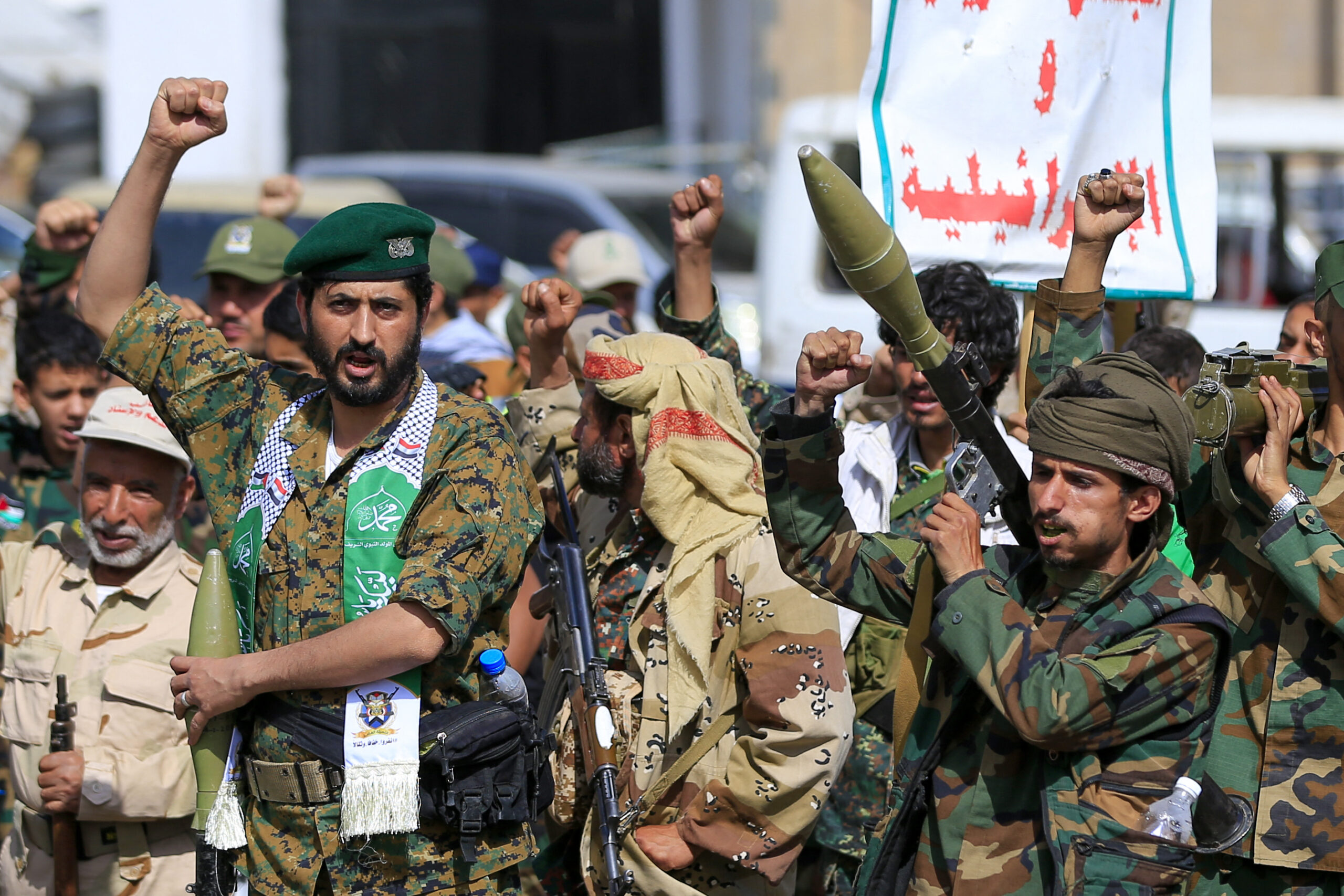
Riyadh squandered a yearslong lull and fractured the anti-Houthi coalition with its UAE split, experts tell JI — and its new defense partners are hanging back
CANARY CALL

In a new op-ed, local political heavyweights Joe Schocken and Sam Jefferies argue that Seattle is a ‘laboratory’ for tactics for pushing Jews out of civic life that will spread across the country
The Iranian president cast Tehran as the victim of U.S. and Israeli aggression
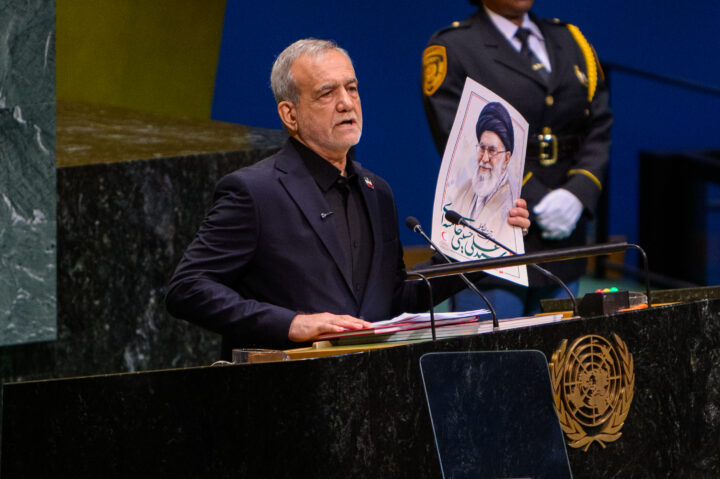
Alexi J. Rosenfeld/Getty Images
Iranian President Masoud Pezeshkian holds up a poster of assassinated Supreme Leader of Iran Ali Khamenei while addressing the 81st session of the United Nations General Assembly on September 23, 2026 in New York City.
Iranian President Masoud Pezeshkian cast Tehran as a peaceful victim of American and Israeli aggression during an address to the United Nations General Assembly on Wednesday, expressing a readiness for further negotiations while downplaying Iran’s state sponsorship of terror, nuclear escalation and regional strikes.
Addressing the assembly a day after President Donald Trump threatened to “annihilate” the Islamic Republic if a deal is not reached, Pezeshkian claimed Tehran has never sought nuclear weapons and painted its atomic program as strictly intended for energy and medical research.
“Iran does not accept for nuclear technology to be at the exclusive disposal of some of a handful. We say it clearly: no nuclear weapons and no limitations to peaceful nuclear technology,” he said.
Pezeshkian’s portrayal of a purely civilian nuclear program contradicts assessments from the International Atomic Energy Agency and U.S. intelligence, which have repeatedly warned that Iran has enriched uranium to near-weapons-grade purity — a threshold with no credible non-military application. Satellite intelligence has also found ongoing construction and activity at fortified Iranian nuclear facilities, despite Tehran’s public denials.
The Iranian leader also sought to frame his country as a “victim of terrorism” at the hands of Washington and Jerusalem, deflecting from Tehran’s decades-long role as the premier state sponsor of terrorism in the Middle East. Pezeshkian falsely accused the U.S. and Israel of intentionally targeting civilians while insisting Iran acts only in self-defense.
Pezeshkian also rebuffed Trump’s claims that Iran is a “source of instability” and claimed that Tehran rather seeks to “cooperate and collaborate for security.”
“We responded, but we did not hit civilian populations. They came into surrounding territories and targeted our universities, our healthcare centers, our schools, our hospitals, our infrastructures — all of it against international law,” he said. Iran has repeatedly targeted civilian infrastructure during the war with the U.S., including hotels, airports and economic centers across the Gulf and Israel.
Pezeshkian also attempted to pivot toward diplomacy, claiming Iran has always maintained a “commitment to the negotiating table,” but insisted Tehran would “not accept the language of force.”
The Iranian president also accused the international community of enforcing a “double standard” by penalizing Tehran with sanctions while allowing Israel to operate outside the Non-Proliferation Treaty (NPT) framework.
“The nuclear weapon is in Israel, but the inspectors are in Iran. Israel kills, but Iran is subject to sanctions,” he said. Israel has never publicly acknowledged operating a nuclear weapons program.
Plus, Trump floats a deal or 'annihilating' Iran
Screenshot
Michigan Attorney General Dana Nessel and Senate nominee Abdul El-Sayed appear on the "“For the Sake of the Argument with Lori Goldman” podcast.
Good Tuesday afternoon.
This P.M. briefing is reserved for our premium subscribers like you — offering a forward-focused read on what we’re tracking now and what’s coming next.
Today’s Daily Overtime was curated by JI U.S. Editor Danielle Cohen-Kanik.
📡On Our Radar
Notable developments and interesting tidbits we’re tracking
Addressing the U.N. General Assembly this morning, President Donald Trump said he faces a “big decision” regarding Iran: “Will a deal be made with Iran that lets them rebuild and create a far greater country than it ever was before … or do I annihilate the Islamic Republic?”
But Trump quickly made clear he believes that a deal will be reached “right after the [midterm] election, because it doesn’t make sense for them not to,” Jewish Insider’s Matthew Shea reports…
Trump later said during a press availability with Ukrainian President Volodymyr Zelensky that White House Special Envoy Steve Witkoff and Jared Kushner had a “very good meeting” with Iranian officials today on the sidelines of the UNGA that lasted for three hours, while Trump has reportedly told his advisors he’s open to meeting with the Iranians himself “if the conditions are right”…
Iranian Foreign Minister Abbas Araghchi will be provided a security detail from the State Department while attending the UNGA, Axios reports…
Speaking on Fox News about recent Houthi and Iran-backed attacks on Saudi Arabia, Secretary of State Marco Rubio said the U.S. has “a defense agreement with Saudi Arabia. We intend to live up to our commitments on it. We will,” though he said Washington is “working to see if this thing can be fixed” first…
New York City Mayor Zohran Mamdani reupped his criticism of Israeli Prime Minister Benjamin Netanyahu in an interview with CNN yesterday, calling him “a war criminal and an architect of a horrific genocide of the Palestinian people.” Netanyahu responded in a video message today accusing Mamdani of supporting Hamas and inciting riots against Jews…
The Trump administration is discussing with Middle East partners a $10 billion investment fund, with $5 billion from the U.S. and matching contributions from the other countries, to rebuild energy infrastructure damaged in the Iran war and develop new oil and gas routes that reduce reliance on the Strait of Hormuz…
Turkish President Recep Tayyip Erdoğan, in his address to the UNGA, accused Israel of having a “genocidal mindset that can never get enough of killing” and called on more world leaders to recognize a Palestinian state…
Michigan Attorney General Dana Nessel announced that she is endorsing the state’s Democratic Senate nominee, Abdul El-Sayed, after having previously voiced reservations over his views on Israel and antisemitism, JI’s Emily Jacobs reports. In a joint podcast appearance with El-Sayed, Nessel, who is Jewish, acknowledged that “people are going to call me a traitor to my people” and a “kapo,” but said, “I can’t be true to my values if I even consider voting for [GOP nominee] Mike Rogers. Yes, I’ll be voting for Abdul.”
El-Sayed, for his part, vowed to support the Jewish American Security Act but said he would work to expand the legislation to provide similar protections for people of other faiths. He also answered in the affirmative when Nessel asked if Jewish Zionists have a place in the Democratic Party…
Meanwhile, Michigan Jewish leaders called on former Vice President Kamala Harris to appeal to El-Sayed, whom she campaigned with in Michigan today, to accept their five “nonnegotiable” demands including Israel’s right to exist as a Jewish state, noting Harris’ own history of fighting antisemitism and standing with the Jewish community, JI’s Marc Rod reports. In their appearance today, Harris and El-Sayed did not address foreign policy…
Vulnerable Republican candidates in high-profile races, including Rogers, Iowa Senate candidate Rep. Ashley Hinson (R-IA) and Michigan gubernatorial candidate Rep. John James (R-MI), have urged a prompt end to the Iran war in recent days, citing rising costs ahead of the midterm elections, JI’s Marc Rod reports…
A new CNN poll found that 61% of Americans view Israel as an “ally” or “friendly” country, down from 73% who said the same in March 2025, while 15% view it as an enemy, the highest in any CNN poll since 2000 and double the amount who said the same last year. The figure who see Israel as an enemy is even higher among Americans under 45, at 23%…
Several airlines are canceling flights to and from Iran as U.S. sanctions kick in tomorrow, targeting any entity that offers Iranian airlines fuel, landing services, ticketing or other services…
Weekend Recap
The Houthis fired on Saudi Arabia’s international airport on Saturday, marking the group’s first direct attack on Saudi soil in months. U.S. embassies across the Middle East issued a security alert following the attack urging Americans to “seriously reconsider travel” to the region, but President Donald Trump has reportedly decided to hold off, for now, on a planned strike against the Houthis…
A gunman opened fire outside the Sons of Jacob Synagogue in Belleville, Ontario, as congregants gathered for Yom Kippur services on Sunday. A police officer was wounded and the assailant was killed…
An Israeli man in his 30s was killed on Sunday in a drive-by shooting terror attack near the Halamish settlement in the West Bank, where he was ritually bathing ahead of Yom Kippur…
Two men in their 30s were arrested in Manchester, England, over a plot to target the Jewish community there during Yom Kippur…
Sen. Jeanne Shaheen (D-NH), the top Democrat on the Senate Foreign Relations Committee, has, like her House counterpart, placed a procedural hold on a $2.8 billion sale of bombs to Israel…
Politico published a story during Yom Kippur targeting David Milstein, an observant Jew who serves as senior advisor to U.S. Ambassador to Israel Mike Huckabee, for soliciting monetary gifts in his wedding invitation, while Milstein remained offline for the holiday…
Retiring Rep. Jared Golden (D-ME) crossed party lines to endorse Rep. Mike Lawler (R-NY)…
Israeli President Isaac Herzog pardoned Elor Azaria, a former IDF combat medic who was convicted in 2017 of manslaughter after he shot dead an incapacitated Palestinian assailant who had stabbed a soldier…
⏩ Tomorrow’s Agenda, Today
An early look at tomorrow’s storylines and schedule to keep you a step ahead
Keep an eye on Jewish Insider for an interview with author Zibby Owens on her latest book, Between Chapters: How I Started Over, Took Some Chances, and Found the Plot.
Iranian President Masoud Pezeshkian will address the U.N. General Assembly tomorrow morning. It remains unclear if Pezeshkian will hold a meeting with President Donald Trump while in the U.S.
Meanwhile, Jewish organizations including UJA-Federation of New York, the Jewish Community Relations Council of New York, American Jewish Committee New York, Anti-Defamation League New York/New Jersey, the New York Board of Rabbis and the Conference of Presidents of Major American Jewish Organizations will hold a rally against antisemitism outside U.N. headquarters.
In Washington, ADL will bring survivors of antisemitic attacks — including the June 2025 firebombing of an Israeli hostage awareness march in Boulder, Colo., the deadly May 2025 shooting at the Capital Jewish Museum and the March 2026 terror attack at Temple Israel in West Bloomfield, Mich. — to Capitol Hill to lobby for the Jewish American Security Act and the Right to Worship Act.
The Senate Armed Services Committee will receive a classified briefing on CENTCOM operations from its commander, Adm. Brad Cooper.
American Friends of Lubavitch (Chabad) will host its Lamplighter Awards reception, this year honoring Sen. Ted Cruz (R-TX) and Jeff Miller, chair of the U.S. Holocaust Memorial Council. The event will be co-chaired by former House Speaker Kevin McCarthy (R-CA); Norm Brownstein, founder and chair of Brownstein Hyatt Farber Schreck; and Eli Miller, senior managing director of Liberty Strategic Capital.
Stories You May Have Missed
DIPLOMACY DIARIES
The group plans to discuss a range of subjects including U.S. allies’ decision to sanction Israel
POLICY PIPELINE

The former State Department envoy says EPICA will stay ‘laser focused’ on policy, tracking whether governments follow through on the global guidelines she helped write
Addressing the UNGA, Trump said, ‘Will a deal be made … or do I annihilate the Islamic Republic?’
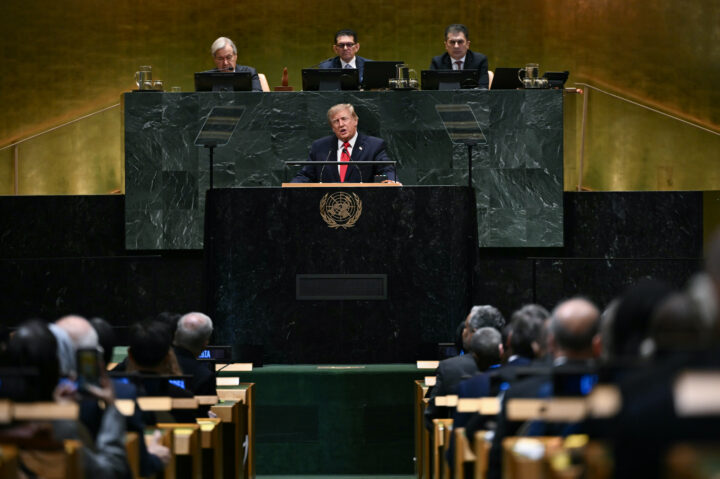
Brendan Smialowski-Pool/Getty Images
President Donald Trump speaks during the 81st United Nations General Assembly at the United Nations Headquarters on September 22, 2026 in New York City.
President Donald Trump said on Tuesday that he faces a “big decision” between making a deal with Iran and escalating military conflict, as he predicted the sides would reach an agreement following the midterm elections.
“I have a big decision to make,” Trump told the U.N. General Assembly in New York, on the first day of the high-level week. “Will a deal be made with Iran that lets them rebuild and create a far greater country than it ever was before? … Or do I annihilate the Islamic Republic and do it quickly, never giving them a chance to kill and destroy people and countries again? Do I drive them into hell with no chance of survival and no hope of future greatness or generations?”
The president has recently made similar statements suggesting he must choose between negotiations and further confrontation, though there appear to be no serious negotiations underway and U.S. strikes have been sporadic.
"I have a big decision to make,” Trump said at the UN. “Will a deal be made with Iran that lets them rebuild and create a far greater country than it ever was before? … Or do I annihilate the Islamic Republic? … I believe we’ll make a deal right after the [midterm] election.” pic.twitter.com/LYB5f2i0Fd
— Jewish Insider (@jewishinsider) September 22, 2026
Trump said he believes an agreement with Iran will ultimately be reached after the U.S. midterm elections in November, arguing that Tehran is waiting to see how Republicans perform.
“I believe we’ll make a deal right after the [midterm] election because it doesn’t make sense for them not to,” Trump said. “They’re waiting to see how I do in the midterm election. What they don’t realize is that I’m not running.”
Even absent a deal, Trump argued that U.S. efforts in Iran have yielded success, including stopping Iran from being the “bully” of the Middle East.
“For 51 years, the fanatical Iranian regime has ruled by bloodshed and mass murder, spreading death and carnage and chaos across the entire Middle East and beyond,” Trump said. “They were the bully of the Middle East, but they are the bully no more.”
While no bilateral sit-downs between Trump and Iranian leadership were scheduled, Trump said during a meeting with Ukrainian President Volodymyr Zelensky that White House Special Envoy Steve Witkoff and Jared Kushner had a “very good meeting” with Iranian officials on Tuesday.
“It was a meeting that lasted for three hours … They had a very good meeting, very productive meeting, and they have another one scheduled in the near future,” Trump said. “We’ll see how it turns out, but, certainly, it’s to their advantage to make a deal, and if we can do that, it’s preferable.”
Prior to the meeting a U.S. official had told CNN that Trump said he would be open to arranging a meeting with Iranian officials in New York “if the conditions are right,” or delegating senior advisors traveling with him to meet with them. Axios further reported that mediating Arab countries had been trying to arrange a meeting as well.
Trump called on “all nations” to “join us in enforcing the complete economic isolation of Iran until they stop their attacks on commercial shipping, relinquish their nuclear ambitions and cease their support of terror.”
Praising international support for Washington’s stance, Trump thanked the U.N. Security Council for passing a resolution in March condemning Iranian attacks on maritime trade.
“That resolution, I’m pleased to say, received more co-sponsors from U.N. member nations than any Security Council resolution in history,” Trump said. “That’s something. Now we must be equally united in maintaining pressure.”
He added that the U.S. Navy has recently escorted more than 1 billion barrels of oil out of the Strait of Hormuz, maintaining that “more oil is flowing than at any point since the start of the war.”
He also dismissed reports suggesting the U.S. military is running dangerously low on munitions as a result of the conflict.
“We have more munitions than we could ever possibly even think of using, and we’re building them at levels that we have never done before. We are adding to our stockpiles faster than we have ever been able to do before,” he said.
Trump noted that 18 new munitions facilities are currently under construction by defense contractors, promising that the expansion will lead to the “very rapid deployment of missiles of every type and ammunition of every type,” as well as faster resupply for allies.
Turning to the Middle East more broadly, Trump touched on the situation in Gaza, where implementation of his administration’s 20-point peace plan remains stalled as Hamas refuses to disarm. The president thanked countries that joined the Board of Peace, as well as those that committed personnel to secure Gaza.
“We ended the war in Gaza, saving untold thousands of lives. We also brought home all the remaining hostages, both living and dead, every single one of them,” Trump said. “Nearly 30 countries have joined the board, which I am honored to chair, and we’re thankful to many of those member nations for contributing billions and billions of dollars to relief. I also want to thank those who have committed troops, police, and training to help stabilize Gaza, including Indonesia, Morocco, Albania, Kosovo, Kazakhstan, Egypt, Jordan and more.”
Jamie Dimon, Michael Dell among those expected at the Thursday evening dinner
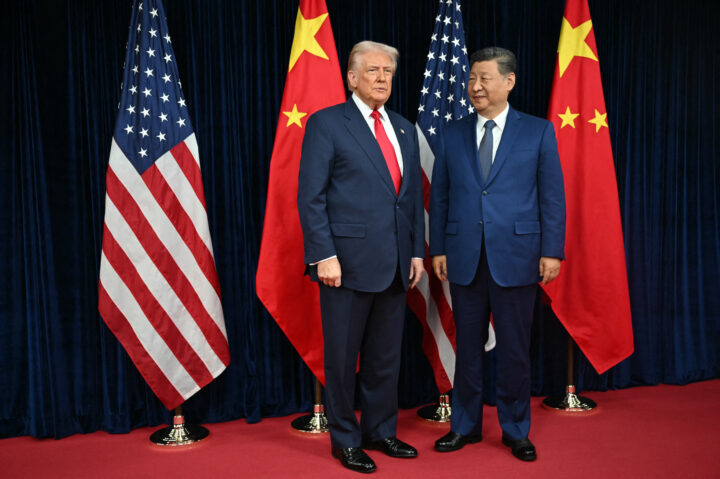
ANDREW CABALLERO-REYNOLDS/AFP via Getty Images
President Donald Trump (L) and Chinese President Xi Jinping arrive for talks at the Gimhae Air Base, South Korea, on October 30, 2025.
OpenAI CEO Sam Altman, JPMorgan Chase CEO Jamie Dimon and Dell Technologies CEO Michael Dell are among the tech and AI executives expected to attend the White House’s state dinner on Thursday night for Chinese President Xi Jinping, according to CNBC and a partial attendee list shared on Friday by the White House.
The list of expected attendees also includes the CEOs of Nvidia, Google and Citigroup, as well as Amazon founder Jeff Bezos, Apple Executive Chairman Tim Cook, Tesla CEO Elon Musk. Politico reported on Tuesday that OpenAI President Greg Brockman is also slated to attend.
Xi, who is scheduled to arrive in the U.S. on Wednesday, will not attend the U.N. General Assembly’s high-level week, which begins on Tuesday, and will instead be in Washington for the duration of his trip. The White House last hosted a state dinner for Xi in 2015, during the Obama administration.
Plus, Piker defends China over Israel

Robert Sullivan
A fleet of F-35 "Joint Strike Fighter's" over Edwards Air Force Base, California.
Good Thursday afternoon.
This P.M. briefing is reserved for our premium subscribers like you — offering a forward-focused read on what we’re tracking now and what’s coming next.
Today’s Daily Overtime was curated by JI U.S. Editor Danielle Cohen-Kanik.
📡On Our Radar
Notable developments and interesting tidbits we’re tracking
President Donald Trump told Axios today that he has “a big decision coming up” regarding Iran: “Do I want to go in and annihilate them [the Iranian regime] or do I not? It’s a big decision.” Trump also said he “may” meet with Israeli Prime Minister Benjamin Netanyahu when he comes to New York for the U.N. General Assembly next week…
The State Department announced it has approved “a possible foreign military sale” to Saudi Arabia for 48 F-35 advanced fighter jets and “related equipment,” including engines, at an estimated cost of $24.3 billion. The proposed sale “will not alter the military balance in the region,” the department said, in a potential reference to Israel’s qualitative military edge, which the U.S. is required by law to uphold…
Meanwhile, a group of House Democrats introduced a resolution today to block the U.S. nuclear agreement with Saudi Arabia, Jewish Insider’s Marc Rod reports, citing the lack of safeguards in the deal applied in previous agreements with other U.S. allies and arguing that the deal paves the path toward a Saudi nuclear weapon.
Under procedural rules, the Democrats should be able to force votes on the resolution, which seems likely to pick up support from most Democrats and potentially a handful of Republicans…
Russia and China vetoed a U.S. resolution at the U.N. Security Council today to renew the mandate of a panel of experts meant to monitor Iran’s nuclear program and efforts to evade sanctions…
In another clip released by Axios of Alex Thompson’s interview with Hasan Piker, the far-left streamer defended his lenient views on China as compared to Israel: Asked by Thompson why he cares more about Israel’s treatment of Muslims than China’s, Piker responded, “Israel is murdering not just Muslims, but Christians as well, with my tax dollars,” and made a distinction between what Israel is doing in Gaza as an “actual genocide,” whereas he said China’s actions against the Uyghur Muslim minority are a “cultural genocide”…
Abdul El-Sayed, the Democratic Michigan Senate nominee for whom Piker has acted as a campaign surrogate, distanced himself from comments Piker made in another clip claiming that the U.S. had “pound for pound” committed more acts of terror than al-Qaida. “I do not agree with this statement [on al-Qaida], nor do I give much weight to the statements made by a social media streamer,” El-Sayed said in a statement to Axios…
A group of Jewish Democrats in Michigan published an open letter today urging voters to support El-Sayed, despite acknowledging they remained concerned about some of his views, “including aspects of his approach to Israel and the language used by some of his allies.”
Among the 500 signatories were Eli Savit, the Democratic nominee for Michigan attorney general; former Rep. Sander Levin (D-MI) and his son, former Rep. Andy Levin (D-MI); Alicia Chandler, the past president of the Detroit chapter of the American Jewish Committee; and Decky Alexander, the chair of the Michigan Democratic Jewish Caucus…
Hedge-fund manager Clifford Asness, a major Jewish GOP donor who is outspoken against antisemitism, took aim at Senate Minority Leader Chuck Schumer (D-NY) on X over a report that Schumer’s Senate super PAC had put another $10 million behind El-Sayed: Sharing the cover of Schumer’s book Antisemitism in America: A Warning, Asness wrote: “by ‘warning’ I think he might’ve meant something a bit different than we were told”…
A new poll from The Hill and Emerson College found the Texas Senate race in a dead heat less than two months from Election Day: Democratic state Rep. James Talarico barely edged out Texas Attorney General Ken Paxton, 47%-46%. In Alaska, another battleground state, an AARP poll found former Rep. Mary Peltola (D-AK) with a more sizable lead over Sen. Dan Sullivan (R-AK), 46%-41%…
The Harvard Kennedy School announced this week the launch of a new program focused on Israel, set to examine issues including Israeli politics and society, U.S.-Israel relations, Jewish-Arab relations and Israel’s place in the region. Barak Sella, a Kennedy School graduate who is spearheading the initiative, spoke with JI’s Haley Cohen about the program’s goals…
Automaker General Motors has begun building missile parts for Lockheed Martin’s Patriot missiles, in an effort to boost production of the critical interceptor whose stockpiles have been depleted by the Iran war and heavy demand from allies…
⏩ Tomorrow’s Agenda, Today
An early look at tomorrow’s storylines and schedule to keep you a step ahead
Keep an eye on Jewish Insider for an interview with former State Department antisemitism envoy Ambassador Deborah Lipstadt on her newly founded institute at Emory University to combat antisemitism.
Axiosis expected to air its full-length interview with Hasan Piker tomorrow, after releasing several clips today.
World leaders will converge this weekend in New York ahead of high-level week at the U.N. General Assembly, which will see speeches from global heads of state and many diplomatic sideline events and meetings.
NYPD Commissioner Jessica Tisch and New York City Mayor Zohran Mamdani said at a press conference today that they are expecting “multiple protests every day” of the event, but that there are “no known, specific or credible threats against the United Nations General Assembly or our city,” JI’s Will Bredderman reports.
U.S. Ambassador to the U.N. Mike Waltz and Anwar Gargash, a senior diplomatic advisor to UAE President Mohamed bin Zayed, will sit for a conversation on Sunday hosted by Al-Monitor.
On Monday evening, as Yom Kippur comes to an end, former U.S. diplomat Morgan Ortagus and Lebanese banker Antoun Sehnaoui will host a break the fast and UNGA welcome reception in New York.
In observance of Yom Kippur, we’ll be back with the Daily Overtime on Tuesday. Shabbat shalom and g’mar chatima tovah!
Stories You May Have Missed
SCOOP
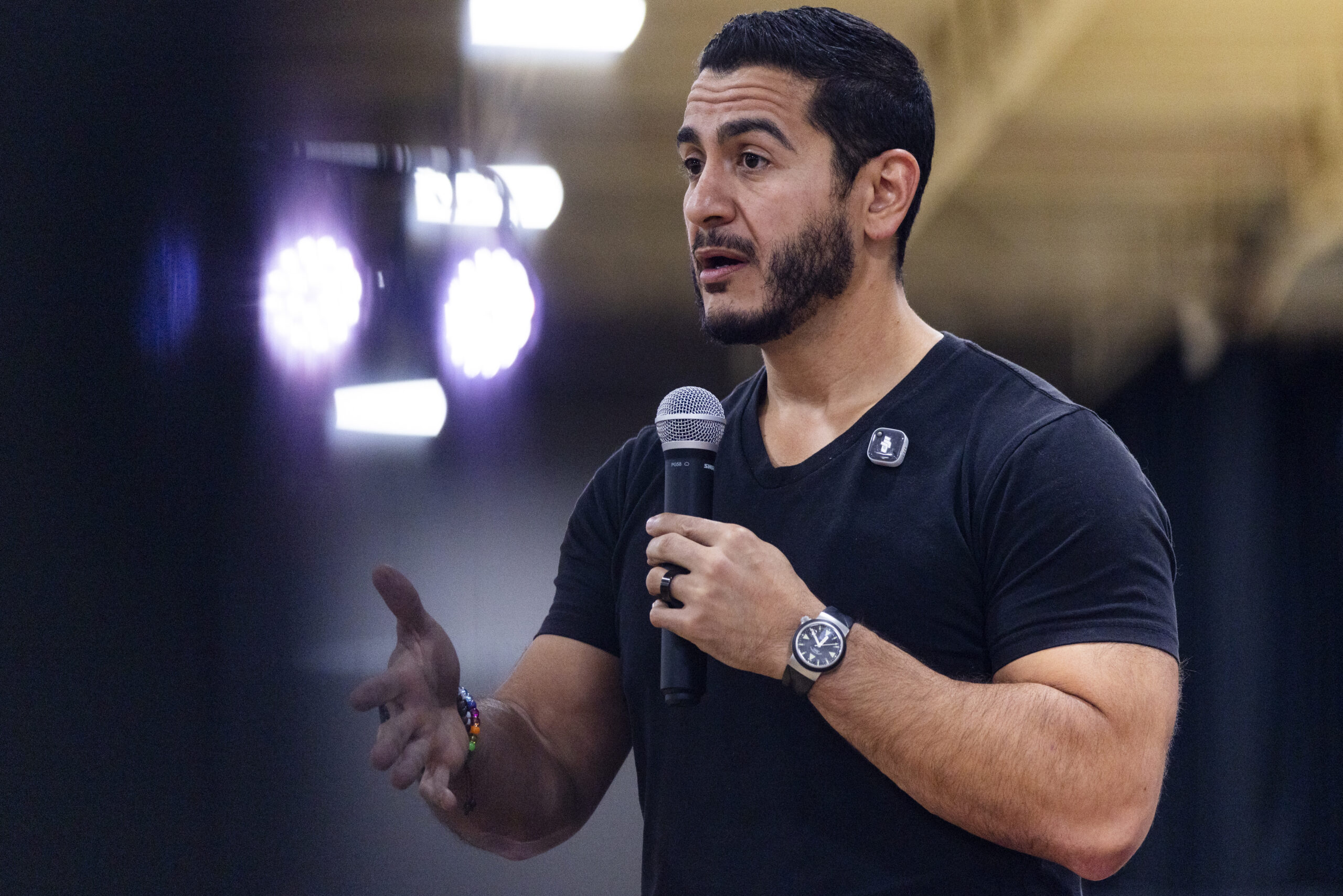
The previously unreported Jewish outreach comes as Democrats worry about El-Sayed’s struggles to expand support beyond his base
ANCHOR POINT
Reshef, an Oklahoma native, said her time growing up in the close-knit Oklahoma City Jewish community played a major part in her identity
Plus, the MS NOW anchor who got her start in Israel
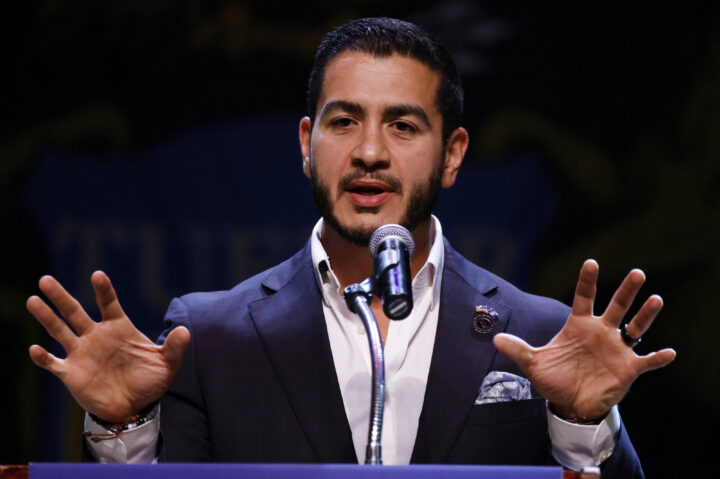
JEFF KOWALSKY / AFP via Getty Images
Abdul El-Sayed addresses supporters at his election night event at The Majestic Theatre in Detroit, Michigan, on August 4, 2026
Good Thursday morning.
In today’s Daily Kickoff, we have the scoop on a recent meeting between Michigan Democratic Senate nominee Abdul El-Sayed and rabbis from Michigan’s Temple Israel, which earlier this year was attacked by a pro-Hezbollah terrorist, and cover yesterday’s Capitol Hill rally supporting the passage of the Right to Worship Act. We report on New York City Mayor Zohran Mamdani’s remarks that he will not participate in protests against Israeli Prime Minister Benjamin Netanyahu during next week’s U.N. General Assembly, and profile MS NOW anchor Erielle Reshef, who got her start on Israeli television. Also in today’s Daily Kickoff: Michael Dell, Lacey Schwartz Delgado and Jonathan Powell.
Today’s Daily Kickoff was curated by JI Executive Editor Melissa Weiss and Israel Editor Tamara Zieve, with an assist from Danielle Cohen-Kanik.
Today’s Agenda
Vice President JD Vance is sitting down for an interview with Sid Rosenberg today, during which the conservative radio host said he intends to press Vance on his relationship with Tucker Carlson and his stance on the U.S.-Israel relationship.
The Hudson Institute is holding a fireside chat this morning focused on Iran-China relations and the U.S.’ Operation Economic Outcast effort to financially isolate Tehran that had initially featured Rep. Zach Nunn (R-IA). Nunn, who is locked in a tight reelection bid and earlier this week voted in favor of a war powers resolution to force an end to the Iran war, no longer appears on Hudson’s promotional page for the event, which now features Rep. Michael Baumgartner (R-WA).
Axios is releasing portions of its recent interview with far-left commentator Hasan Piker over the course of the day, ahead of the release of the full interview tomorrow. In the first released clip, Piker told the outlet’s Alex Thompson that he believed that the U.S. had committed more acts of terror than al-Qaida, saying, “Pound for pound as far as the number of deaths, yes,” adding, “We have caused tremendous terror all around the world.”
New York City Mayor Zohran Mamdani is holding a briefing today alongside NYPD Commissioner Jessica Tisch about security around the U.N. General Assembly, which begins next week. More below.
The Atlantic Festival kicks off today in New York. The three-day convening begins this morning with a sit-down with former Transportation Secretary Pete Buttigieg (who was in New York’s Hudson Valley yesterday campaigning with NY-17 Democratic candidate Cait Conley). This afternoon, former U.S. Ambassador to Japan Rahm Emanuel, who is mulling a 2028 bid, will take the stage for a fireside chat about the future of the Democratic Party.
We’re continuing to follow the fallout from Macklemore’s performance earlier this month at two Ed Sheeran concerts over the rapper’s anti-Israel remarks at previous concerts and past antisemitic incidents. Robert Kraft, who along with several other stadium owners banned the rapper from performing at their venues over his past antisemitic rhetoric and imagery — prompting several other opening acts to drop out of the shows in solidarity — pledged $2 million for aid to the Middle East on Wednesday, matching a donation of the same amount by Sheeran. Read more about the donation here.
One Thing To Know
SCOOP
In the most significant sign of his efforts to make inroads with skeptical Jewish voters in Michigan’s Senate race, Abdul El-Sayed, the Democratic nominee, recently met with rabbis at Temple Israel for a closely guarded conversation, according to two people familiar with the meeting.
Two rabbis who were said to have participated in the conversation, details of which were unclear, declined to comment when reached on Wednesday. El-Sayed’s campaign did not respond to a request for comment.
The covert nature of the meeting, which neither party has publicized, underscores the sensitivities felt among some Jewish leaders who have remained wary of publicly associating with El-Sayed because of their continued discomfort with his positions on Israel and remarks about antisemitism.
The Big Reads
show of support
Reps. Brad Knott (R-NC) and Tom Suozzi (D-NY) rallied outside the Capitol on Wednesday alongside more than two dozen representatives of religious community organizations in support of the Right to Worship Act, their federal bill establishing buffer zones outside of religious institutions to protect them from disruptions. House Speaker Mike Johnson (R-LA), who has been involved in supporting the bill behind the scenes, also expressed his support for it in a statement to Jewish Insider’s Marc Rod. “Religious liberty is regarded as our ‘First Freedom.’ Our Founders listed it first in the Bill of Rights because they understood how essential it was to the foundation of our Republic. But that right rings hollow if worshippers must brave harassment or worry for their safety as they exercise their religion,” Johnson said.
First in JI: Over a year after the deadly firebombing attack targeting an Israeli hostage awareness march in Boulder, Colo., Rep. Joe Neguse (D-CO), who represents the city, and Rep. Don Bacon (R-NE) introduced legislation to modify Nonprofit Security Grant Program conditions to allow grantees to use funding for staffing costs.
PROTEST POLITICS
New York City Mayor Zohran Mamdani told reporters on Wednesday that he does not intend to participate in any demonstrations against Israeli Prime Minister Benjamin Netanyahu’s appearance at the U.N. General Assembly next week — and maintained he did not endorse public agitation against the Jewish state’s premier, an apparent ratcheting-down of his remarks from earlier this summer, Jewish Insider’s Will Bredderman reports. Following an unrelated press conference, Mamdani confirmed information leaked to Politico that he would not take part in anticipated protests against Netanyahu’s scheduled arrival in New York on Sept. 23 or speech at the international summit the next day. He also stressed that he did not call for his anti-Israel allies on the left to take to the streets either. “I do not have any plans to attend any protest at the U.N. General Assembly,” Mamdani said. “To New Yorkers, I have never encouraged them to protest.”
anchor point
MS NOW anchor Erielle Reshef never planned to become a television journalist. After completing a master’s degree in diplomacy and conflict studies in Israel in 2010, she happened to be watching an English-language news program whose anchors were about to go on maternity leave. Her husband wrote down the email address on the screen and pushed her to apply. That opportunity launched a career that has taken Reshef from her hometown of Oklahoma City to local television, international news and eventually ABC News, where she spent eight and a half years, including as a national correspondent. In June 2025, Reshef left the relative comfort of a network news reporting job to join MSNBC, which was rebranded later in the year as MS NOW, where she is now a fill-in anchor for daytime cable news shows for the first time. In an interview with Jewish Insider’s Haley Cohen, Reshef said her Jewish values — particularly curiosity, rigorous debate and a commitment to understanding people on the margins — are the “scaffolding” of her journalism.
The Rundown
ON THE HILL
not so fast
behind the veil
On Our Radar
● The Live Briefing. Word on the street, clips, podcasts and quick updates — the items we’re tracking all day in our Live Briefing on the app (on Apple and Android) and website.
President Donald Trump is planning to meet with Gulf leaders next week on the sidelines of the U.N. General Assembly in New York to discuss a postwar strategy for Iran; the president held a similar meeting on the sidelines of last year’s UNGA to discuss Gaza, a week before publicly releasing his postwar plan for the enclave…
The State Department extended its visa ban on Palestinian Authority President Mahmoud Abbas and other senior Palestinian officials, preventing members of the delegation from attending UNGA next week for the second year in a row; State Department officials attributed the ban to Palestinian leaders’ efforts to “internationalize the Israeli-Palestinian conflict”…
New photos obtained by CBS News indicate widespread damage at U.S. facilities around the Gulf resulting from Iranian attacks, including destroyed planes, buildings and vehicles in Kuwait and Saudi Arabia.
CNN reports that more than a dozen Russian spy satellites had operated over a U.S. base in Saudi Arabia two days before the facility was struck in an Iranian drone and missile attack in which 15 U.S. troops were injured…
The House passed, in a 262-159 vote, a major Russia and Iran sanctions package named for the late Sen. Lindsey Graham (R-SC), which targets Russia’s energy sector as well as Iran’s weapons and energy industries…
Sens. Tim Kaine (D-VA) and Adam Schiff (D-CA) filed a war powers resolution to block military action against Oman, in response to Trump‘s threats to bomb the U.S. ally if it does not cooperate with U.S. efforts to counter Iran in the Strait of Hormuz…
Former Vice President Kamala Harris is slated to campaign with Michigan Democratic Senate nominee Abdul El-Sayed next week in the Wolverine State.
Meanwhile, the Detroit News endorsed El-Sayed’s opponent, former Rep. Mike Rogers (R-MI), citing in part El-Sayed’s history of deleting past social media content and noting that a “candidate who feels the need to hide his past from voters is not someone who can be trusted to be the same person after Election Day as he was on the campaign trail”…
A New York man who pleaded guilty to assaulting a Jewish man days after the Oct. 7, 2023, Hamas terror attacks was sentenced to 90 days in jail; during sentencing, Yehia Amin was photographed smiling and flashing the peace sign with his hands, telling the judge through an interpreter that he wanted to look good in photographs from the courtroom…
Michael Dell listed his Boston penthouse in the city’s Millennium Tower for less than he purchased it a decade ago for $10.9 million…
The Hollywood Reporter reviews documentarian Lacey Schwartz Delgado’s “Re/Pair,” which premiered at the Toronto International Film Festival and pairs Black and Jewish figures, including David Schwimmer, Van Jones, Black Lives Matter co-founder Patrisse Cullors and Rabbi Sharon Brous, for conversations about Black-Jewish relations…
The Spectator reports that both U.K. National Security Advisor Jonathan Powell and London’s ambassador in Israel, Simon Walters, advised Foreign Secretary Ed Miliband against banning imports from Israeli settlements, warning that such a move would bolster support for Israeli Prime Minister Benjamin Netanyahu and his government ahead of next month’s elections…
Air Canada removed an in-flight service director following a report that the employee had shared antisemitic content on social media; the Canadian carrier will also resume direct flights between Toronto and Israel at the end of November, earlier than its planned January resumption of flights…
A Kurdish-Jewish man with Canadian and Israeli citizenship who had traveled to the region to fight ISIS more than a decade ago was freed from an Iraqi Kurdish prison after he was convicted of killing a taxi driver in 2015; Aish announced that Ben Chasin will arrive at the organization’s yeshiva this week, where he will study…
Israeli Foreign Minister Gideon Sa’ar met with Moroccan Foreign Minister Nasser Bourita in New York in a meeting convened by U.S. Ambassador to the U.N. Mike Waltz, during which Jerusalem and Rabat agreed to a series of measures to boost bilateral ties, including appointing full ambassadors to each other’s countries, turning their diplomatic missions into embassies, increasing direct flights and holding high-level visits in the near future.
The night prior, Waltz hosted Sa’ar, Bourita, United Arab Emirates Ambassador to the U.S. Yousef Al Otaiba and diplomats from Bahrain and Kazakhstan for a diplomatic reception marking the sixth anniversary of the Abraham Accords.
While in New York, Sa’ar also met with senior leaders of the Conference of Presidents of Major American Jewish Organizations for a wide-ranging discussion on Israel’s security, regional developments and U.S.-Israel relations…
Dalia Ziada is joining the Institute for the Study of Global Antisemitism and Policy as the director of the organization’s Washington office…
Artist and graphic designer Peter Max died on Monday at 88…
Worthy Reads
Find more Worthy Reads in our Live Briefing via our app (on Apple and Android) and website.
Meta-morphosis: Bloomberg’s Riley Griffin and Alexandra Levine look at the role that Dina Powell McCormick plays at Meta, where she now serves as president, vice chairman and co-leader of Meta Compute after eight months on the company’s board. “While [Mark] Zuckerberg, 42, is the cerebral engineering leader obsessed with improving Meta’s products for the AI race, Powell McCormick, 53, has her pulse on the world outside of Silicon Valley, and can be Meta’s bridge to opportunities and fixer of challenges. ‘She is a close, trusted advisor of the whole senior leadership team, but especially of Mark,’ said CJ Mahoney, Meta’s chief legal officer. ‘She’s generally the last person who’s consulted on really important decisions.’” [Bloomberg]
Riyadh Ruminations: In War on the Rocks, Richard Nephew posits that the burgeoning nuclear agreement between the U.S. and Saudi Arabia is better than had initially been expected. “If it performs as promised, its provisions of exclusivity will provide benefits to the U.S. nuclear industry and lock Russia and China out of a potentially lucrative market that could have attendant political and security implications long term, especially in a Middle East where nuclear proliferation remains a serious threat. The U.S.-Saudi agreement is also innovative and imaginative, a credit to creative negotiations to unlock an issue that has been difficult for multiple administrations.” [WarontheRocks]
AI and the Archives: In The Washington Post, Daniella Greenbaum Davis explains how she used Anthropic’s Claude to recover and translate a 1946 Yiddish-language article that had been authored by her grandmother and detailed the day she was liberated from Bergen-Belsen. “Much of the debate concerning AI today is about scale and mortal threat, about destroying jobs and flooding social media with slop. It’s easy to forget that large language models, like all tools, are a thing human ingenuity has built to finish what human hands cannot. … I had spent years blindly feeling my way through archives; in a matter of days, AI had stitched together pieces of information that I couldn’t see, let alone put together.” [WashPost]
Picture of the Day
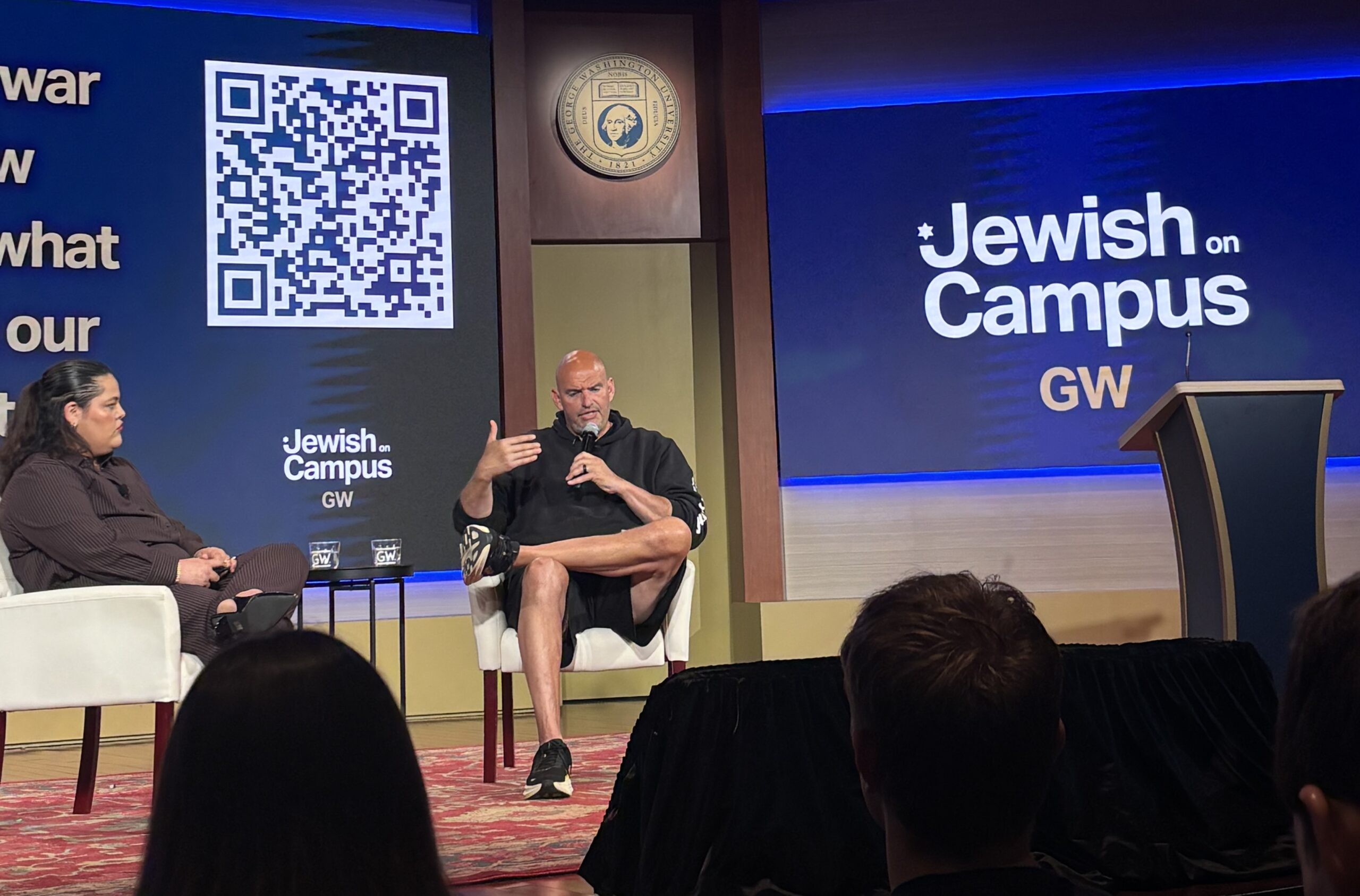
Birthdays
Stan M. Herman, fashion designer known worldwide for his leading-edge corporate uniforms, turns 98
Chuck Grassley, U.S. senator (R-IA) since 1981 and president pro tempore of the Senate, turns 93
Peter J. Solomon, investment banker who once served as a NYC deputy mayor, turns 88
Gail Carson Levine, Newbery Honor-winning author of many young adult books, some with Jewish themes, turns 79
Joshua Muravchik, author of 11 books and hundreds of articles on foreign policy and the Middle East, turns 79
T. Alan Hurwitz, former president of the National Technical Institute for the Deaf and then president of Gallaudet University, turns 79
Frank Hagelberg, Rochester, N.Y., attorney, he has held positions at the UJA-Federation of New York and the Rochester Jewish Federation
Jeremy Don Fogel, retired judge on the U.S. District Court for the Northern District of California, turns 77
Harold Solomon, former professional tennis player who achieved a world ranking of No. 5 in 1980, turns 74
Rita Rudner, comedian, writer and actor, she was a frequent guest of Johnny Carson on the “Tonight Show,” turns 73
Daniel Fingeroth, author, comic book writer and editor, best known as group editor of the Spider-Man books at Marvel Comics, turns 73
Mody Kidon, Israeli businessman with real estate holdings in Israel and NYC, turns 72
Ellen Kahan Zager, author and graphic designer
Rina Frenkel, former member of the Knesset for the Yesh Atid party, turns 70
Rabbi Jonathan Wittenberg, rabbi emeritus of the New North London Synagogue and senior rabbi of Masorti Judaism UK, turns 69
Elliott S. Feigenbaum, former consultant at Quick Hits News
Richard Wolffe, journalist, best-selling author including two books on the Obama presidency and Emmy Award-winning executive producer, turns 58
Mandy Krauthamer Cohen, director of the Centers for Disease Control and Prevention (CDC) for the last 18 months of the Biden administration, turns 48
Adam Abrams, former regional communications director and spokesperson for former President Barack Obama, now a partner at Seven Letter
Nick Melvoin, member of the Los Angeles Unified School District’s Board of Education, turns 41
David Litt, former Obama White House speechwriter who has since written a best-selling comedic memoir, turns 40
Adina Shatz, principal product manager for CathWorks
Rachel Roubein, national healthcare reporter The Washington Post covering the FDA
Natalie Edelstein Jarvis, editorial producer at Google
Max August, founder of the Israel Summit at Harvard, now a member of the partnerships team at OpenAI
Plus, voters split on aid to Israel
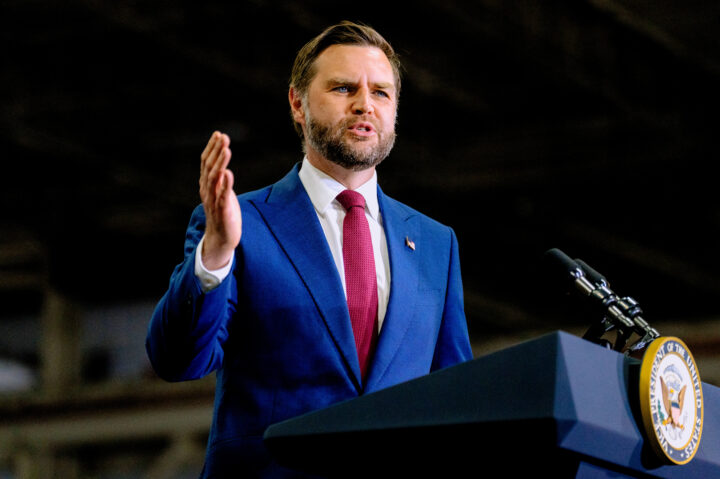
Nic Antaya/Getty Images
Vice President JD Vance speaks during a rally at Universal Contracting and Urban Tree Trimming on August 31, 2026 in Sterling Heights, Michigan.
Good Tuesday afternoon.
This P.M. briefing is reserved for our premium subscribers like you — offering a forward-focused read on what we’re tracking now and what’s coming next.
Today’s Daily Overtime was curated by JI U.S. Editor Danielle Cohen-Kanik.
📡On Our Radar
Notable developments and interesting tidbits we’re tracking
The U.S. destroyed two Iranian vessels yesterday after the Islamic Revolutionary Guard Corps tried to steal a Navy drone in the Strait of Hormuz, U.S. officials told Axios…
Top military leaders from the U.S., Israel, Saudi Arabia, the United Arab Emirates, Bahrain, Kuwait, Qatar, Jordan and Egypt reportedly met in Germany last week to discuss the war in Iran. CENTCOM head Adm. Brad Cooper assured the group that the U.S. does not plan to withdraw its forces from the region, while Lt. Gen. Eyal Zamir, the IDF’s chief of staff, updated participants on IDF operations in several arenas…
Saudi Arabia issued an alert today for a possible attack targeting the pilgrimage city of Mecca, amid ongoing attacks by the Iran-backed Houthis in Yemen in recent days…
Riyadh also canceled some oil shipments meant to depart for Europe in September after its key East-West pipeline was damaged in drone attacks, Reuters reports, compounding the global oil crisis…
The Trump administration is preparing a $2.8 billion sale of 40,000 one-ton bombs and 20,000 Penetrator warheads to Israel, a U.S. official told The Washington Post…
The Iran war could cost the U.S. up to $3 billion for each month that it continues, the nonpartisan Congressional Budget Office found in a report released today, on top of the $38 billion the CBO estimated that the war already cost in its first five months…
U.S. Ambassador to Lebanon Michel Issa visited southern Lebanon today to “see firsthand the progress and challenges in the pilot zones” where the Lebanese Armed Forces have taken over control from the IDF, according to a statement…
Rep. Haley Stevens (D-MI) said she was “followed, shouted at, and harassed by two rogue paid actors,” following a hearing on the Hill today, who ostensibly targeted her for her views on the Middle East. “Let me be clear: I have always wanted the wars in the Middle East to end,” she wrote in a statement on X. “People are free to disagree with me, challenge me, and protest my positions. That is democracy. But disagreement is not license for intimidation or harassment”…
The Trump administration reached a settlement agreement with Lincoln Memorial University to end discrimination against Jewish students, the Justice Department announced today, after a federal investigation found that an LMU college denied requests by Jewish students for religious accommodations, but provided those same accommodations to non-Jewish students…
Michigan Sens. Elissa Slotkin (D-MI) and Gary Peters (D-MI) are imploring the Democratic Senate caucus to help Michigan Democratic Senate nominee Abdul El-Sayed with financial support in his race against former Rep. Mike Rogers (R-MI), Semafor reports, and are inviting members to a meet-and-greet with El-Sayed in Washington later this week…
In a meeting with House Republicans today, Vice President JD Vance urged members who are “running against a Democrat who’s not that crazy” in the midterm elections to “just talk about Abdul El-Sayed. He’s got enough material for the whole country”…
Vance also told the New York Post that the Iran war will be in a “much different phase in a couple of months” and said the U.S. “is not engaged in aggressive operations [against Iran]. We’re just not”…
Appearing at the Hudson Institute today, Sen. Pete Ricketts (R-NE) argued that the U.S. and Israeli strikes that killed much of Iran’s leadership could have a deterrent effect on Chinese President Xi Jinping by proving that authoritarian rulers are not untouchable. He further claimed that Chinese bot networks helped drive the surge in online antisemitism after the Oct. 7 attacks, citing an estimate that these bots accounted for roughly 22% of such social media activity.
Ricketts also sharply criticized the isolationist think tank Defense Priorities, likening its case for a U.S. pullback from the Indo-Pacific to Britain and France’s 1938 agreement in Munich to let Hitler seize part of Czechoslovakia…
Ed Sheeran issued a statement regarding Macklemore being dropped as the opening act from the rest of his U.S. stadium tour, writing on Instagram that the decision was out of his hands and that he respects Macklemore’s choice to speak about Israel onstage, even if he does not choose to do the same. He confirmed that he spoke with New England Patriots owner Robert Kraft about the issue as well as promoters and “activists on both sides.”
Four of Sheeran’s other opening acts — Finneas, Lukas Graham, Aaron Rowe and Irish folk band Beoga — pulled out of his tour today in what they said was solidarity with Macklemore and the Palestinian people…
In a New York Times/Siena poll released today, respondents were split over whether they preferred a candidate who would support or oppose military aid to Israel. The survey found that 36% of respondents overall backed a candidate who was supportive of military aid, while 37% leaned towards someone who was opposed — and responses broke sharply along partisan lines. By a 67%-9% margin, Republicans said they would support a candidate advocating for Israel aid, while Democrats backed the candidate opposing Israel aid, 53%-17%…
Ally Chemtob, a Democratic member of the New Castle, N.Y., Town Council, yesterday endorsed Rep. Mike Lawler (R-NY) for reelection, citing his relationship with the Jewish community and record on antisemitism and Middle East policy, Jewish Insider’s Marc Rod reports…
⏩ Tomorrow’s Agenda, Today
An early look at tomorrow’s storylines and schedule to keep you a step ahead
Keep an eye on Jewish Insider for a dive into Chicago Mayor Brandon Johnson’s attacks on AIPAC and Democratic operative Michael Sacks and what they mean for pro-Israel donors in the deep-blue city.
On the Hill, the House Homeland Security Committee and the House Foreign Affairs Committee will hold hearings on how counterterror efforts have evolved in the quarter-century since the 9/11 attacks.
Politico’s Decoded Summit will take place in Washington, with speakers including David Sacks, co-chair of the President’s Council of Advisors on Science and Technology, and former Commerce Secretary Gina Raimondo.
Stories You May Have Missed
BOOKSHELF

Speaking to JI about ‘I Disagree: Winning Arguments Without Losing Friends,’ the liberal Fox News co-host also shared her conflicted views on Zohran Mamdani and how Oct. 7 deepened her Jewish identity
YE SAYER
House contender Joel Anabilah-Azumah, a Republican, cast the rapper’s antisemitic posts as criticism of a music-industry ‘power structure’ and questioned arrests in an alleged synagogue plot
Plus, Houthi hits, Saudi sits — so far

(Kevin Winter/Getty Images for iHeartMedia)
Recording artists Ed Sheeran (L) and Macklemore perform onstage during the 2014 iHeartRadio Music Festival at the MGM Grand Garden Arena on September 20, 2014 in Las Vegas, Nevada.
Good Tuesday morning.
In today’s Daily Kickoff, we talk to senators about how the U.S. could respond to Houthi attacks on Saudi Arabia, report on New York GOP gubernatorial nominee Bruce Blakeman’s support for a long-shot House candidate who defended Ye’s antisemitic comments, and report on rapper Macklemore‘s removal from the remainder of Ed Sheeran‘s concert tour over his on-stage anti-Israel activism. Also in today’s Daily Kickoff: Rep. Wesley Hunt, Jessica Tarlov and Danny Meyer.
Today’s Daily Kickoff was curated by JI Executive Editor Melissa Weiss and Israel Editor Tamara Zieve, with an assist from Danielle Cohen-Kanik.
Today’s Agenda
Today marks the sixth anniversary of the signing of the Abraham Accords in Washington. The anniversary of the agreement between Israel, the United Arab Emirates and Bahrain — which has held amid several years of war, during which Israel supplied missile-defense technology to Abu Dhabi — comes at a time of renewed tensions in the region as the Iran-backed Houthis continue to disrupt shipping routes and mount attacks on Saudi targets.
Riyadh — which was on the brink of normalizing relations with Israel prior to the Oct. 7, 2023, Hamas terror attacks — now finds itself in what former U.S. Ambassador to Saudi Arabia Michael Ratney described as the “worst-case scenario” for the Saudis as Iran and its proxies increasingly target the Gulf state. Earlier today, Riyadh vowed to respond “firmly” to the ongoing Houthi attacks.
Those regional tensions will form the backdrop to the Arab Media Summit, which kicks off today in Dubai. Syrian President Ahmad al-Sharaa is set to address the opening session of the annual gathering.
In Washington, Vice President JD Vance will address House Republicans today at a political conference meeting at the Capitol Hill Club.
Elsewhere in Washington, Sen. Bernie Sanders (I-VT) and Steve Bannon are slated to speak today at the Future of Life Institute’s AI-focused “Pro-Human Assembly.”
The three-day Eradicate Hate Global Summit begins today in Pittsburgh. Former National Amusements President Shari Redstone, Holocaust survivor Dr. Alfred Garfinkle, commentator Van Jones and political scientist Robert Pape are slated to speak at the annual conference.
At noon ET, the academic consortium CASJE and eJewishPhilanthropy will host a panel discussion, “Who Shapes Campus Conversation? What Research Tells Us About Faculty Attitudes Toward Israel and Jews.” Speakers include Hillel International’s Lisa Armony, the Academic Engagement Network’s Raeefa Shams, the Curricular Review Council’s Yuval Avnur and Leonard Saxe and Graham Wright of Brandeis University., while Vance will represent the White House in attending the memorial ceremony at Ground Zero.
One Thing To Know
ON THE HILL
By Marc Rod and Emily Jacobs
Senators returning to Washington on Monday offered mixed responses to the recent Houthi offensive inside Yemen and Saudi Arabia, with some Republicans telling Jewish Insider that the Iran-backed terror group’s moves warranted a response, while some Democrats framed the Houthi attacks as further fallout from the U.S. war against Iran.
The Iran-backed Yemeni terrorist group seized control of key port cities along the Red Sea coast, near the vital Bab el-Mandeb Strait, as well as Perim Island inside the waterway and the Hanish archipelago to the north. The U.S. has thus far declined to intervene.
Republicans who spoke to Jewish Insider said they had not been fully briefed on the situation since returning to Washington on Monday after being away for the Senate’s extended August recess. Still, they said a forceful response from the Saudis was warranted, while Democrats generally framed the Houthi offensive as an extension and expansion of the Iran war.
The Big Reads
mackle-no-more
Macklemore has been dropped from the remainder of singer Ed Sheeran’s U.S. tour after several venues objected to hosting the rapper, following the rapper’s chants of “Free Palestine” and comments and imagery on Gaza during two recent opening sets for Sheeran, Jewish Insider‘s Haley Cohen reports. Among the eight remaining shows on Sheeran’s tour, Macklemore was set to open for the singer at Massachusetts’ Gillette Stadium, which is owned by Robert Kraft. In an Instagram post, Macklemore claimed that Kraft, the founder of the Blue Square Alliance Against Hate, rallied the other stadium owners to get him dropped from the venues. Kraft responded that the decision came following Macklemore’s “recent actions” and “history of antisemitic rhetoric and imagery,” adding that the rapper crossed a line the stadium would not platform.
YE SAYER
Long-shot Brooklyn Republican House candidate Joel Anabilah-Azumah got a boost last week with an endorsement from Nassau County Executive Bruce Blakeman — who hopes to unseat New York Gov. Kathy Hochul with an appeal to fellow New York Jews, particularly those discontented with Democrats’ declining support for Israel. But Jewish Insider’s Will Bredderman found that Anabilah-Azumah has criticized Zionism while defending a string of antisemitic remarks by rapper Ye, also known as Kanye West, who the now-candidate hinted was at risk of assassination by Jewish music industry figures.
BOOKSHELF
In her new book, Fox News co-host Jessica Tarlov advocates for constructive disagreement — “acknowledge without accepting,” or hearing someone out, hard as it may be, without torching the relationship or one’s own beliefs. In an interview with Jewish Insider’s Haley Cohen ahead of Tuesday’s release of I Disagree: Winning Arguments Without Losing Friends, Tarlov pointed to her closely watched sit-down last year with far-left streamer Hasan Piker as evidence that her framework holds even when strained against its limits. Piker was “incredibly nice and gracious,” she recalled, arguing that calls for him to be shut out of Democratic circles are misguided. The exchange highlights the balancing act central to both Tarlov’s book and her on-air image as the primary liberal co-host on the Fox News talk show “The Five.”
The Rundown
ROAD TO RIYADH
on the trail
delay deja vu
On Our Radar
● The Live Briefing. Word on the street, clips, podcasts and quick updates — the items we’re tracking all day in our Live Briefing on the app (on Apple and Android) and website.
The Pentagon’s inspector general released a congressionally mandated report — the first since the beginning of the conflict with Iran earlier this year — that found that the war has led to a munitions shortfall for the military, as well as some $208 million in damages to the State Department across Iraq, Kuwait, Saudi Arabia and the United Arab Emirates…
The U.S. filed a civil forfeiture complaint against Iran alleging that the Islamic Republic laundered some $1.5 billion in oil through cryptocurrency networks to benefit the Iranian military and the Islamic Revolutionary Guard Corps…
CENTCOM head Adm. Brad Cooper met with Saudi Crown Prince Mohammed bin Salman in Jeddah on Monday, as Riyadh continues to face escalating attacks by the Iran-backed Houthis in Yemen; the Saudi leader reportedly urged President Donald Trump last week to conduct strikes against the Houthis, which Trump refused…
Vice President JD Vance told reporters that the U.S. is in direct contact with the Houthis as well as in continued discussions with the United Arab Emirates and Saudi Arabia, “so we actually feel like we are on top of the situation” amid growing tensions in the region…
Sen. Mitch McConnell (R-KY) returned to the Senate floor on Monday evening for the first time since he was hospitalized after a fall in June, appearing in a wheelchair; in a post on X, the Kentucky Republican wrote, “I’m still not quite back to 100%, but I’ve assured Leader Thune that, as I continue with physical therapy on the advice of my doctors, I will do my best to be present for tough votes when our Conference needs me”…
California Gov. Gavin Newsom told CNN’s Jake Tapper that he would not run for president in 2028 if former Vice President Kamala Harris chooses to mount another bid, saying that the Venn diagram of their personal and professional relationships “is just pure crossover. I wouldn’t do that”…
Former National Security Advisor Jake Sullivan cut an ad for his wife, Rep. Maggie Goodlander (D-NH), for her reelection bid; in the TV spot, Sullivan recounts their meeting at the Munich Security Conference when she approached him “to raise her concerns about some of our foreign policies” while she was working for then-Sen. Joe Lieberman (I-CT) and Sullivan was serving as an advisor to then-Secretary of State Hillary Clinton during the Obama administration…
The New York Times profiles Shake Shack founder Danny Meyer ahead of the release of his new book, What Could Possibly Go Right?, which looks at his past business decisions — for better and for worse — and will be released later this month…
Columbia University anti-Israel protest leader Mahmoud Khalil and several of his fellow activists filed a federal lawsuit against the school, arguing that administrators failed to protect them against harassment they allege that they faced on campus due to their activism…
Widespread protests, the largest since the ouster of former President Bashar al-Assad in 2024, broke out across Syria after Damascus raised diesel prices by 40% and household gas prices by 9% over the weekend…
The New York Times looks at the Israeli pushback to the film “NAZA,” which premiered on Thursday at the Venice Film Festival; Israeli Culture and Sports Minister Miki Zohar called on Jerusalem to revoke the citizenship of the Israeli filmmakers, Yuval Abraham and Rachel Szor, over the film’s content, which included interviews with anonymous Israeli military and intelligence officials regarding the deaths of Palestinian civilians in Gaza…
Bloomberg reports that Malaysian authorities have for more than a month held three shipments of electric bike parts bound for Israel’s Ashdod port that were seized in mid-August; earlier in August, Malaysia seized a shipment from the Philippines that was bound for Israeli defense manufacturer Elbit Systems…
Portuguese Foreign Minister Paulo Rangel said that Israel’s continued settlement expansion efforts were incompatible with a two-state solution and undermined the prospects of Palestinian statehood…
Jon Gambrell is joining The Wall Street Journal as deputy Middle East bureau chief…
Worthy Reads
Find more Worthy Reads in our Live Briefing via our app (on Apple and Android) and website.
Question Mark: Colossus magazine’s Jeremy Stern profiles Meta CEO Mark Zuckerberg. “Unlike the Boomers and Gen X, he is the only trillion-dollar founder of his generation, and Millennials are cringe. He is Jewish and uncool, yet impervious to humiliation. He is, in one man, the personification of responsibility for alt-right populism; leftwing authoritarianism; the death of journalism; polarization; political propaganda; political censorship; the dangers of free speech; human rights violations; teenage depression; body dysmorphia; and male loneliness. He is an emperor for life. He is, in a word, an easy mark.” [Colossus]
No Choice: Politico’s Daniella Cheslow looks at the challenges facing the U.S. as the Iran-backed Houthis scale up their attacks in the Gulf. “The administration could join the fray after Yemeni forces, supported by Saudi Arabia, failed to repel the Houthis’ capture of the Red Sea port of Mokha and three islands key to controlling the waterway. Or the White House could leave the region to sort out the Houthis alone, and bear the pain of oil prices that spiraled up to $109 a barrel Monday. … Neither policy choice for the U.S. is terribly appealing, and one Arab diplomat in the region sensed inaction from the U.S., or ‘a kind of disregard.’” [Politico]
How Not to Teach Your Children: In The Washington Post, Dana Stangel-Plowe, the chief program officer of the North American Values Institute, raises concerns about the increasing politicization of the National Education Association under the leadership of its new president, Princess Moss, who has promoted teacher activism. “In saying so, the president of the nation’s largest teachers union advanced a specific vision for her profession: activism all the way down, no matter how much students struggle to keep up. Her union colleagues are citizens, too, free to have and act on their own political views. But Moss’s vision has no place in the classroom. A teacher’s job isn’t political organizing; it is to educate the nation’s youth.” [WashPost]
Picture of the Day
Noah Wyle celebrated his second consecutive Emmy for outstanding lead actor in a drama series on Monday night for playing Dr. Michael “Robby” Robinavitch in “The Pitt,” which also won outstanding drama series for the second year in a row.
Birthdays

Josh Charles, actor, best known for his roles on “Sports Night” and “The Good Wife,” turns 55
Jac Holzman, founder and former CEO of Elektra Records, he is a member of the Rock & Roll Hall of Fame, turns 95
Emanuel Tov, professor emeritus at the Hebrew University and a leading scholar of the Dead Sea Scrolls, turns 85
Rabbi Yitzchak Dovid Grossman, chief rabbi of Migdal HaEmek, in northern Israel, known as the “Disco Rabbi,” turns 80
Diane Levin, professor emerita of counseling psychology at Boston University’s Wheelock College, turns 79
Ned Rothenberg, composer and multi-instrument musician, turns 70
Michael L. Reiss, television comedy writer, he served as a showrunner, writer and producer for “The Simpsons” and co-created the animated series “The Critic,” turns 67
Aron Uri Raskas, shareholder of law firm Gunster, turns 64
Nina Jacobson, film executive, she produced “The Hunger Games” film series, turns 61
David Magerman, managing partner and chief technology officer at Differential Ventures in Philadelphia, he is also the founder of a series of kosher restaurants, turns 58
David Folkenflik, NPR’s media correspondent, turns 57
Kira Soltanovich, comedian, writer and actor, turns 53
Deborah Leipzig, former VP of leadership at the Anti-Defamation League
Shayla Rosen, customer success manager at Screencastify, event organizer and fundraiser
Anya Kamenetz, author and longtime education correspondent at NPR, turns 46
Seth Stephens-Davidowitz, data scientist, economist and author of the 2017 New York Times bestseller Everybody Lies, turns 44
Evan D. Goldberg, screenwriter, film producer and director, often in collaboration with his childhood friend Seth Rogen, turns 44
Yael Markovich, model and Israeli beauty pageant winner, turns 42
Jonah Raskas, CEO of Harmon Face Values
Josh Gruenbaum, senior advisor to the Board of Peace, he was the commissioner of the Federal Acquisition Service, turns 41
Amanda Bresler, chief strategy officer at PW Communications
Eliza Shapiro, reporter at The New York Times covering NYC affordability issues
Roni Dalumi, singer and actor, she was the 2009 winner of the Israeli version of “A Star is Born,” turns 35
Shani Hazan, beauty pageant titleholder, she was crowned Miss Israel 2012, turns 34
Jeff Lewis, Arizona philanthropist and founder of the Froth and Bubble Foundation
Plus, Dept of Ed report on foreign funding delayed — again
ARNAUD FINISTRE / AFP via Getty Images
Benjamin Haggerty, known as Macklemore, performs at the Goldencoast Rap Festival in Corcelles-les-Monts, France, on Aug. 30, 2026.
Good Monday afternoon.
This P.M. briefing is reserved for our premium subscribers like you — offering a forward-focused read on what we’re tracking now and what’s coming next.
Today’s Daily Overtime was curated by JI U.S. Editor Danielle Cohen-Kanik.
📡On Our Radar
Notable developments and interesting tidbits we’re tracking
President Donald Trump claimed today that Iran “wants to make a deal, quickly and badly,” writing on Truth Social that he “will determine whether or not the U.S.A. will choose to engage – The concept of which we are open to.” He also wrote in another post that rising diesel prices around the world are “mostly caused by the Russia/Ukraine War, not Iran,” and that Russia and Ukraine had agreed not to target each other’s energy infrastructure…
The Treasury Department imposed sanctions today on Russia’s VTB Bank for assisting Iran in evading sanctions, including helping to move billions in frozen Iranian assets. The U.S. had previously sanctioned VTB Bank over its role in financing Russia’s war against Ukraine; Treasury said the bank was now “among the most comprehensively sanctioned financial institutions in the world”…
CENTCOM head Adm. Brad Cooper met with Saudi Crown Prince Mohammed bin Salman in Jeddah today, as the Gulf state continues to face escalating attacks by the Iran-backed Houthis in Yemen. MBS reportedly urged Trump last week to conduct strikes against the Houthis, which the president refused…
Asked about the hostilities, Vice President JD Vance told reporters today that the U.S. is in direct contact with the Houthis as well as in continued discussions with the United Arab Emirates and Saudi Arabia, “so we actually feel like we are on top of the situation”…
Meanwhile, U.K. Prime Minister Andy Burnham is reportedly weighing Saudi requests for assistance, including helping defend against Houthi strikes on oil infrastructure, and has thus far agreed to send British military advisors to Saudi Arabia for consultations…
Trump nominated Rep. Wesley Hunt (R-TX) to be U.S. ambassador to Saudi Arabia; in a statement, Hunt highlighted his previous service in the region as an Army officer and as a diplomatic liaison in Riyadh…
Widespread protests, the largest since the ouster of former President Bashar al-Assad in 2024, have broken out across Syria after Damascus raised diesel prices by 40% and household gas prices by 9% over the weekend…
Columbia University anti-Israel protest leader Mahmoud Khalil and several of his fellow activists filed a lawsuit against Columbia in federal court today, arguing that the school failed to protect them against harassment they allege that they faced on campus due to their activism…
The release of a Department of Education report on foreign funding to U.S. colleges and universities, due out last Friday, was delayed for a fifth time and is now set to be released on Sept. 25…
Macklemore has been dropped as the opening act for the remaining U.S. dates of Ed Sheeran’s stadium tour after several venues refused to host the rapper, the tour’s promoter said, following controversy over his repeated onstage anti-Israel tirades that critics said veered into antisemitism.
Macklemore claimed in a subsequent post on Instagram, which again accused Israel at length of committing genocide, that New England Patriots owner Robert Kraft — who also owns Gillette Stadium, where Sheeran is scheduled to play later this month — rallied other stadium owners to collectively agree they would not allow Macklemore to perform at their venues.
Kraft responded in a statement, saying that hosting Macklemore after his “history of antisemitic rhetoric and imagery that we believe has been deeply offensive and hurtful to the Jewish community” would cross a line into platforming hate speech. He invited Macklemore to a sit-down discussion “because ultimately our goal is the same — peace for all people, an end to suffering, and an end to all hate”…
The Temple Israel congregation in West Bloomfield, Mich., returned to its sanctuary for Rosh Hashanah services on Friday, six months after an attacker drove a truck full of explosives into the synagogue.
During the service, the Forward reports, congregational leaders spoke about the prayer books donated by other synagogues around the country after theirs were destroyed, the neighbors of other faiths who supported the Jewish community and the additional security measures put in place to facilitate the reopening…
Lt. Gen. Eyal Zamir, the IDF chief of staff, denounced “NAZA” — a new documentary by Israeli filmmakers Yuval Abraham and Rachel Szor alleging Israel used AI-assisted systems to kill Gazan civilians — as “blood libel” and ordered a review of possible legal action against its creators, along with a probe into whether classified material was leaked to make it.
The IDF called on the filmmakers to allow the military to view the documentary in its entirety, after it premiered last week at the Venice International Film Festival…
A ProPublica investigation found that Umar Kremlev, a Russian businessman close to President Vladimir Putin, paid for hundreds of thousands of dollars in expenses for Donald Trump Jr.’s three-day May wedding in the Bahamas, including renting a private island.
After the story was published, Trump Jr.’s wife, Bettina Trump, confirmed Kremlev’s role on Instagram, writing that “our dear friend Umar very generously hosted two incredible nights of celebrations for us AFTER our wedding” as “an extraordinarily generous wedding gift,” and insisting “friendship doesn’t require a political motive.” National security experts warned the arrangement gave a Putin ally intimate access to the president’s son…
⏩ Tomorrow’s Agenda, Today
An early look at tomorrow’s storylines and schedule to keep you a step ahead
Keep an eye on Jewish Insider for an interview with Fox News co-host Jessica Tarlov on her new book, I Disagree: Winning Arguments Without Losing Friends, including her reflections on her closely watched sit-down last year with far-left streamer Hasan Piker.
Vice President JD Vance is expected to address House Republicans tomorrow on the White House’s messaging strategy for the midterm elections.
The Eradicate Hate Global Summit will begin in Pittsburgh with a keynote speech from Holocaust survivor and psychiatrist Dr. Alfred Garwood.
New York City Council Speaker Julie Menin will speak at a Democratic Majority Action Committee fundraiser in White Plains, N.Y., where she is expected to address combating extremism, including antisemitism.
Stories You May Have Missed
CLAUDE CONTROLS

The threat intelligence report detailed how Anthropic disrupted several actors running influence operations, building weapons guidance software and surveilling U.S. naval forces
DEMOCRACY DEFICIT

The Progressive Policy Institute calls for making ‘American Democracy’ a three-year high school requirement, arguing weak civic education leaves Jews and liberal democratic values vulnerable
Plus, Iran reconstitutes underground

Courtesy Miznon
Miznon green beans at the US Open
Good Thursday afternoon.
This P.M. briefing is reserved for our premium subscribers like you — offering a forward-focused read on what we’re tracking now and what’s coming next.
Today’s Daily Overtime was curated by JI U.S. Editor Danielle Cohen-Kanik.
📡On Our Radar
Notable developments and interesting tidbits we’re tracking
The International Atomic Energy Agency has observed construction activity at Iran’s Pickaxe Mountain, a suspected underground nuclear site, IAEA head Rafael Grossi told Bloomberg Television. President Donald Trump said similarly yesterday, “We notice there’s a little activity at Pickaxe,” and warned Iran “not to get cute because we will have to hit them very hard”…
Iran has also resumed producing ballistic missiles, officials told The Wall Street Journal, working in underground facilities with components it had stockpiled before the war began…
Former Rep. Mike Rogers (R-MI), the GOP nominee for Senate in Michigan, plans to take aim at his Democratic opponent, Abdul El-Sayed, in his remarks at the GOP midterm convention today, calling out in particular El-Sayed’s relationship with streamer Hasan Piker.
Rogers will highlight Piker’s comments that America “deserved 9/11,” according to Axios, as other Republican candidates also campaign around the 25th anniversary of the attacks…
U.S. Ambassador to Israel Mike Huckabee attended a ceremony today at the 9/11 Living Memorial Plaza in Jerusalem, the only memorial outside of the U.S. to list the name of each victim killed in the terror attacks…
The next round of negotiations between Israel and Lebanon will be held over two days next week in Rome, an Israeli official told The Times of Israel…
Rep. Brian Mast (R-FL), the chairman of the House Foreign Affairs Committee, told Jewish Insider’s Marc Rod last week that he’s likely to support the administration’s proposed nuclear deal with Saudi Arabia, which would reportedly allow for joint U.S.-Saudi nuclear enrichment efforts inside the Gulf country.
Mast’s support, as the chair of a committee that will be responsible for reviewing the deal during a mandatory congressional oversight period, is a strong sign that many congressional Republicans will coalesce behind the administration in support of the agreement…
The Louis D. Brandeis Center for Human Rights Under Law wrote to Qatari Ambassador to the U.S. Sheikh Meshal bin Hamad al-Thani yesterday amid a back-and-forth online, urging the Qatari Embassy to release a full public accounting of its funding to U.S. colleges and universities, JI’s Marc Rod reports.
“There is a straightforward way for the Government of Qatar to demonstrate that public accounts of its activities are inaccurate or misleading: full disclosure,” Brandeis Center CEO Ken Marcus said in a letter to Al-Thani, after the ambassador claimed that critics of Qatar are engaged in a “coordinated disinformation campaign” to manipulate data on foreign funding in U.S. higher education…
Former Secretary of State Hillary Clinton said on MS NOW’s “Morning Joe” today that the U.S. should take a “very tough position” if Israeli voters reelect the government led by Prime Minister Benjamin Netanyahu in Israel’s upcoming elections, but said a new Israeli government could provide opportunities for more constructive progress…
The Honey Deuce — the U.S. Open’s iconic signature cocktail — is facing fierce competition for the tennis tournament’s most popular menu item this year. Surrounded by greasy fried foods, the unexpected breakout star is a green bean bowl from Eyal Shani‘s Tel Aviv-born eatery Miznon, whose head of operations spoke with JI’s Haley Cohen about the craze…
Late-night host Jimmy Kimmel announced that his interview with Texas Democratic Senate nominee James Talarico will not air on his show tonight, and will instead be posted online, after the Trump administration threatened the show, host network ABC and local stations.
The move comes months after former “Late Show” host Stephen Colbert said his show was also prevented from airing an interview with Talarico due to threats from the Federal Communications Commission…
The J50, a forum of Diaspora Jewish organizations, issued a declaration signed by 59 organizations representing 40 countries that states anti-Zionism, “as manifested today through efforts to deny the Jewish people their right to self-determination, or demand that Jews renounce Zionism as the price of acceptance in political, academic, professional, or cultural life,” is antisemitic, and reaffirms the principles of the International Holocaust Remembrance Alliance’s working definition of antisemitism…
Israeli Ambassador to the U.N. Danny Danon launched a Task Force on Combating Antisemitism at the global body yesterday. Its first meeting was attended by representatives from several countries including the U.K., Australia, Argentina and Slovakia…
⏩ Tomorrow’s Agenda, Today
An early look at tomorrow’s storylines and schedule to keep you a step ahead
Keep an eye on Jewish Insider for a look at how New York City Mayor Zohran Mamdani and the NYPD are preparing for Israeli Prime Minister Benjamin Netanyahu’s upcoming visit for the U.N. General Assembly.
President Donald Trump will attend the Pentagon memorial ceremony for the 9/11 anniversary tomorrow, while Vice President JD Vance will attend the memorial ceremony at Ground Zero.
The Council on American-Islamic Relations will host its annual policy conference and gala in Washington over the weekend, with speakers including New York City Democratic congressional nominee Darializa Avila Chevalier; New Jersey Democratic congressional nominee Adam Hamawy; Virginia state Del. Sam Rasoul; anti-Israel activist Linda Sarsour; Code Pink co-founder Medea Benjamin; Drop Site News co-founder Ryan Grim; and commentator Cenk Uygur.
The annual All-In Summit — the influential tech-and-politics gathering run by the “All-In Podcast” — kicks off in Los Angeles on Sunday with speakers including Nvidia CEO Jensen Huang; Microsoft CEO Satya Nadella; NASA Administrator Jared Isaacman; SpaceX President Gwynne Shotwell; California GOP gubernatorial candidate Steve Hilton; and former L.A. mayoral candidate Spencer Pratt.
We’ll be back with the Daily Overtime on Monday. Shana tovah u’metukah!
Stories You May Have Missed
BEYOND WORDS

Rabbi Ronald Kaplan, who volunteered as a spiritual first responder after 9/11, was diagnosed with laryngeal cancer traced to his time on the pile — a battle he’s still fighting on the 25th anniversary of the attacks
DOHA DEALINGS
The network’s new ‘Global Perspectives’ forum comes amid ongoing concerns about its ability to cover the Gulf state objectively
Plus, Trump predicts war ends after Election Day
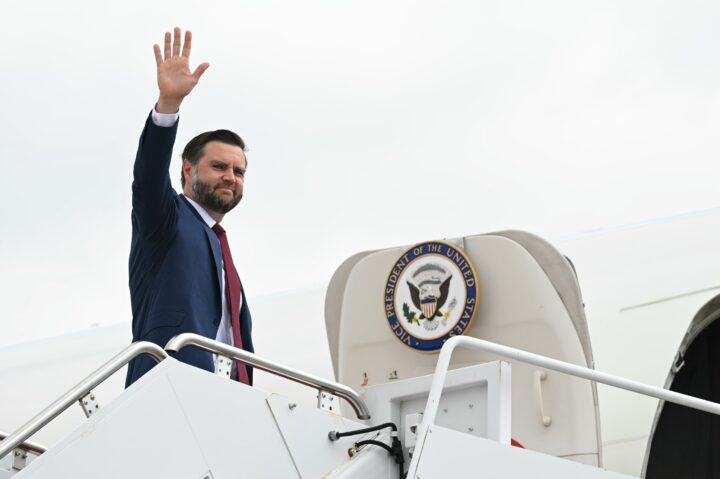
Saul Loeb-Pool/Getty Images
Vice President JD Vance boards Air Force Two on August 31, 2026, at Joint Base Andrews, Maryland.
Good Wednesday afternoon.
This P.M. briefing is reserved for our premium subscribers like you — offering a forward-focused read on what we’re tracking now and what’s coming next.
Today’s Daily Overtime was curated by JI U.S. Editor Danielle Cohen-Kanik.
📡On Our Radar
Notable developments and interesting tidbits we’re tracking
Asked about the U.K., France and Canada enacting sanctions against Israeli settlements in the West Bank, President Donald Trump told reporters this afternoon on his way to Dallas for the GOP midterm convention that he’ll be “speaking to Israel” about the issue. “I understand exactly what’s going on, but I want to find out why all of a sudden does that happen,” he added…
Trump also predicted the Iran war “will end immediately after” the midterm elections because the Iranian regime is “desperate to affect the election”…
White House officials and GOP elected officials told Axios that they’ve stopped trying to persuade Trump on anything and find it futile to push back on his decisions, with one longtime advisor telling the outlet, “Why bother? He’s the boss”…
A new poll of American Jewish voters commissioned by the nonpartisan Jewish Voters Resource Center found that Vice President JD Vance is viewed negatively by 82% of Jewish voters, including 39% of Jewish Republicans, Jewish Insider’s Matthew Shea reports. Vance’s approval numbers are markedly lower than those of Trump — who is viewed positively by 89% of Jewish Republicans — and Secretary of State Marco Rubio, at 93%…
A new CNN poll of the Senate races in Michigan and Maine found the Democratic candidates leading, though both were within the margin of error, indicating the races remain neck-and-neck in the lead-up to November. In Michigan, Democratic nominee Abdul El-Sayed led former Rep. Mike Rogers (R-MI) 47%-44%, while in Maine, Democratic nominee Troy Jackson led Sen. Susan Collins (R-ME) 48%-45%…
Trump has begun tapping his super PAC’s $400 million war chest through a new group, No Going Back PAC — financially backed by his main super PAC, MAGA Inc. — which has reserved at least $47 million in ads across six contested Senate races and one House race, The New York Times reports. The PAC’s top investments include nearly $15 million in Michigan, $11 million in Ohio and $9.6 million in New Hampshire…
Pakistan transmitted a warning from Saudi Arabia to Iran to rein in its Houthi proxies in Yemen amid an escalation in hostilities between the terror group and Riyadh, Reuters reports. Pakistani Defense Minister Khawaja Asif also sounded a cautionary note in an interview reminding global actors that attacks on Saudi Arabia could now trigger its mutual defense pact with Pakistan and Turkey…
The International Atomic Energy Agency’s board of governors voted today for the first time in two decades to report Iran to the U.N. Security Council for violating its nuclear nonproliferation obligations, diplomats told Reuters. The move marks an escalation that opens Iran to possible U.N. sanctions, though Russia and China’s vetoes on the UNSC make actual punitive action unlikely…
Israeli Foreign Minister Gideon Sa’ar inaugurated the first Israeli Embassy in the Slovenian capital of Ljubljana…
Israel and the Palestinian technocratic committee governing Gaza have successfully vetted roughly 16,500 Palestinians to serve in the Board of Peace’s new police force, though Jerusalem has not yet given its approval for the recruits to leave the Gaza Strip for training, two Board of Peace officials told The Times of Israel…
Reps. Brad Schneider (D-IL), Craig Goldman (R-TX), Ann Wagner (R-MO), Debbie Wasserman Schultz (D-FL), Jimmy Panetta (D-CA) and Gus Bilirakis (R-FL) urged Rubio and Treasury Secretary Scott Bessent to take steps to ensure Hamas cannot “exploit” economic instability in the West Bank, raising concerns about Israel’s decision to withhold tax revenues from the Palestinian Authority…
Former Secretary of State Tony Blinken rejected as “complete fiction” a Haaretz report that he delayed an offer by Hamas immediately after the Oct. 7, 2023, attacks to release some of the hostages it had captured…
White House Special Envoy Steve Witkoff earned more than $100 million — including nearly $69 million in cash and $38 million in crypto — from the trust that owns his stake in World Liberty Financial, the cryptocurrency venture he co-founded with Trump and his family in 2024, according to a new financial disclosure…
⏩ Tomorrow’s Agenda, Today
An early look at tomorrow’s storylines and schedule to keep you a step ahead
Keep an eye on Jewish Insider for reactions from Texas officials and Jewish leaders to the decision by the University of Texas’ Democratic student group to host far-left streamer Hasan Piker on campus later this month.
The GOP midterm convention, which offers a test of whether President Donald Trump can boost the prospects of Republicans in competitive general election races, concludes tomorrow with closing remarks from the president and a keynote address from Vice President JD Vance.
Also speaking at the summit tomorrow are Sen. Ted Cruz (R-TX), House Speaker Mike Johnson (R-LA), Michigan GOP Senate nominee Mike Rogers, Texas Gov. Greg Abbott, Rep. Mike Lawler (R-NY), Health and Human Services Secretary Robert F. Kennedy Jr., former White House Press Secretary Karoline Leavitt and Donald Trump Jr.
Stories You May Have Missed
A FATHER’S LOVE
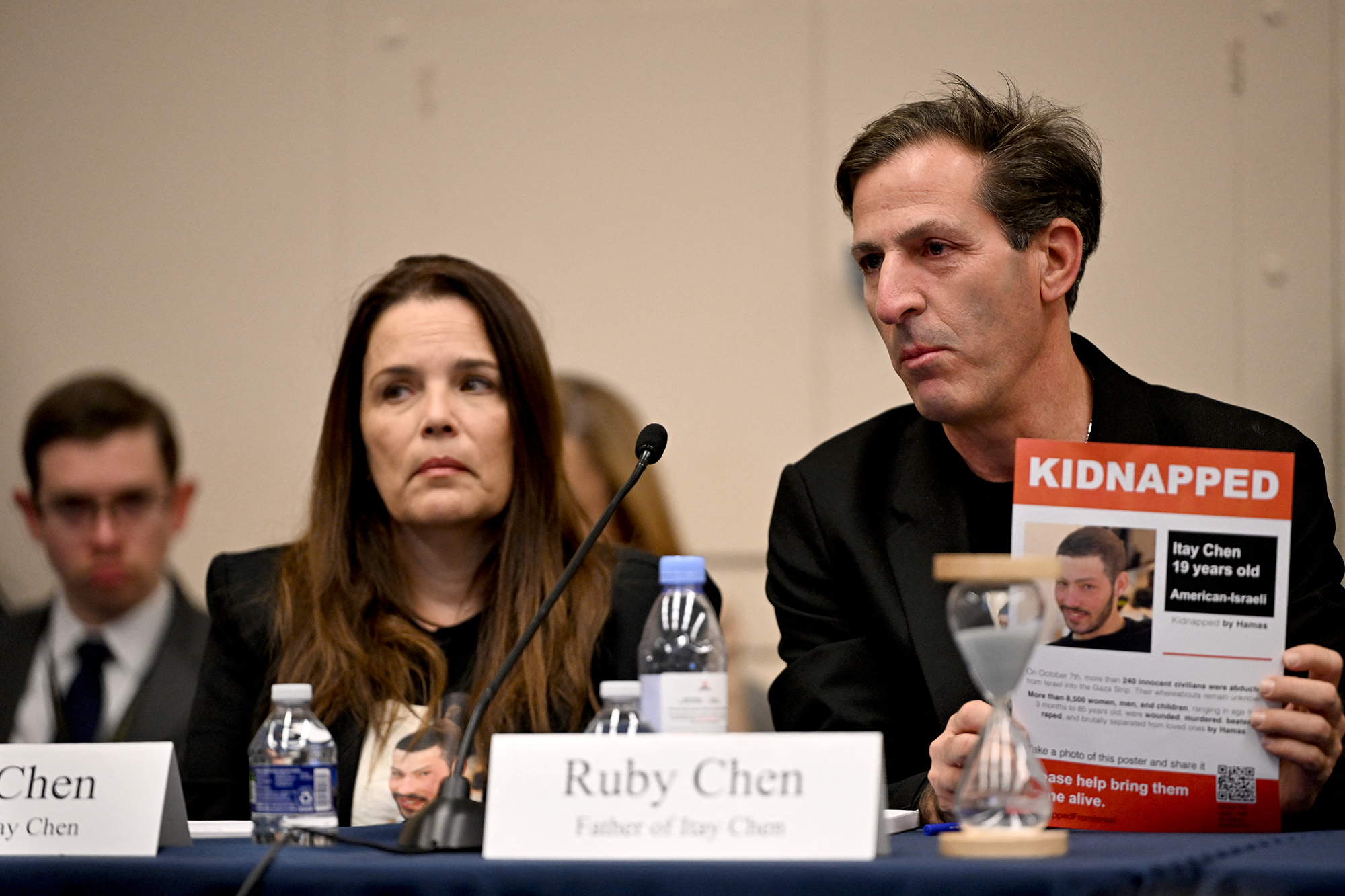
Chen — father of Itay Chen, whose body was held by Hamas for more than two years — is continuing to advocate to ensure that American victims of Oct. 7 are remembered, and that his son’s ‘sacrifice was not in vain’
BOOKSHELF

Jerusalem Post military correspondent Yonah Jeremy Bob and Wall Street Journal editorial writer Elliot Kaufman draw on years of interviews with top Israeli leadership
Plus, Rick Scott floats refuge for Canadian Jews

Amir Levy/Getty Images
A view over the Jewish settlement of Kedumim in the West Bank on Sept. 8, 2026 in Kedumim, West Bank.
Good Tuesday afternoon.
This P.M. briefing is reserved for our premium subscribers like you — offering a forward-focused read on what we’re tracking now and what’s coming next.
Today’s Daily Overtime was curated by JI U.S. Editor Danielle Cohen-Kanik.
📡On Our Radar
Notable developments and interesting tidbits we’re tracking
U.K. Foreign Secretary Ed Miliband announced a sweeping new sanctions regime today targeting Israeli settlements in the West Bank, marking a major escalation in Britain’s diplomatic stance toward Israel, Jewish Insider’s Matthew Shea reports.
Addressing the House of Commons, Miliband unveiled an import ban on goods produced in settlements alongside targeted sanctions against individuals and corporations involved in constructing, advertising or financing settlement expansion. Miliband went further than any previous British official in accusing Israeli settlers of carrying out “ethnic cleansing” of Palestinians in the West Bank and calling them “terrorists” with the tacit backing of the Israeli government…
Denouncing what he described as a “hostile sanctions package,” Israeli Foreign Minister Gideon Sa’ar said Israel would be taking swift retaliatory measures, including closing the British Consulate in Jerusalem, expelling British representatives from the U.S.-backed International Gaza Support Center, terminating the British Support Team in Ramallah tasked with training members of the Palestinian Authority Security Forces and barring 12 British officials, including former Labour leader Jeremy Corbyn, who are “involved in antisemitic and anti-Israel activity”…
Secretary of State Marco Rubio told reporters about Miliband’s announcement, “Obviously, we’re not going to do what the U.K. did,” but declined to comment further. He said Washington and London “share the goal of stability” and “don’t want to see some uptick in violence” in the West Bank…
All the while, Israel Space Agency head Shimrit Maman met today in Brussels with Ekaterina Zaharieva, the European commissioner for startups, research and innovation, as more European countries turn to Israel for their defense technology needs and as the EU looks to increase its presence in space. The moves mark a shift from 2024, when a plan for an EU air-defense shield was reportedly scrapped as officials realized they would need to rely on Israeli technology to construct it…
CENTCOM carried out strikes near Iran’s Kharg Island this afternoon, including on Iranian oil tankers, a U.S. official told Fox News. The Islamic Revolutionary Guard Corps threatened to retaliate against U.S. forces in the region…
The Treasury Department announced sanctions today against 27 Iranian airlines as well as several front companies, foreign intermediaries and other aviation-related actors for supporting the regime’s illicit activities…
Israeli Prime Minister Benjamin Netanyahu’s office denied reports that he was warned by the UAE ahead of the Oct. 7, 2023, Hamas attacks: “If there was any relevant information, it was passed through intelligence channels between the two countries,” the PMO said.
Meanwhile, an Emirati source confirmed to The Times of Israel that UAE President Mohammed bin Zayed personally transmitted the warning in a phone call to Netanyahu days ahead of the attacks…
A coalition of Michigan rabbis and Jewish leaders launched a petition laying out their five “nonnegotiables” for candidates to receive their backing, an effort ostensibly aimed at Democratic Michigan Senate candidate Abdul El-Sayed.
The list includes a candidate’s support for Jewish safety, including for Zionist Jews; for Jews to be able to define their own identities, including a connection to the State of Israel; for Israel’s existence as a Jewish state; for full Jewish participation in American political life; and for an affirmative vision for the Middle East moving forward…
In a letter obtained by JI’s Emily Jacobs, Sen. Rick Scott (R-FL) urged President Donald Trump to establish an expedited legal pathway for Jewish Canadians to obtain refugee status in the United States amid rising antisemitism in their home country…
New York Gov. Kathy Hochul announced today the release of $70 million in state hate crimes funding to “fortify” religious facilities across the state — as well as a “surge” in police presence — as the High Holy Days begin this weekend, JI’s Will Bredderman reports.
Nearly 300 schools, houses of worship and civic groups — not exclusively Jewish ones — will receive grants of up to $250,000 each for cameras, alarms, security training and cybersecurity enhancements…
Spotted at the “Freedom 250” celebration hosted by the U.S. Embassy in Jerusalem and the Museum of Tolerance Jerusalem today to celebrate the American semiquincentennial were U.S. Ambassdor to Israel Mike Huckabee and his wife, Janet; former U.S. Ambassador to Israel David Friedman; Knesset Speaker Amir Ohana; Miriam Adelson; Museum of Tolerance chair and co-founder Larry Mizel; former Israeli Ambassador to the U.S. Michael Oren; National Security Minister Itamar Ben-Gvir; Argentine Ambassador to Israel Rabbi Shimon Axel Wahnish; Meta’s Jordana Cutler; United Hatzalah President Eli Beer; venture capitalist Eric Reiner; businessman Simon Falic; and singer Ishay Ribo, who performed for the guests…
The 59th season premiere of CBS News’ “60 Minutes” this Sunday will feature an interview with one of the officers who was shot down in his F-15 fighter jet over Iran in April. The officer, known as “Dude 44,” will be interviewed by correspondent Norah O’Donnell in his first on-camera sitdown…
⏩ Tomorrow’s Agenda, Today
An early look at tomorrow’s storylines and schedule to keep you a step ahead
Keep an eye on Jewish Insider for an interview with Elliot Kaufman and Yonah Jeremy Bob on their new book, In the War Room: The Inside Story of Israel’s Fight Against Hamas and the Iranian Axis.
The Republican National Committee will kick off its first-ever midterm convention tomorrow afternoon in Dallas, with dozens of candidates and elected officials scheduled to speak over the two days of programming.
President Donald Trump will deliver the keynote address tomorrow night (as well as closing remarks on Thursday), with additional remarks throughout the convention by Vice President JD Vance; Treasury Secretary Scott Bessent; Attorney General Todd Blanche; House Speaker Mike Johnson (R-LA); Sens. Ted Cruz (R-TX), Jon Husted (R-OH) and Dave McCormick (R-PA); Texas attorney general and Senate candidate Ken Paxton; Georgia Senate nominee Rep. Mike Collins (R-GA); Michigan Senate nominee Mike Rogers; and North Carolina Senate nominee Michael Whatley.
Some GOP candidates in tight races, including Sen. Susan Collins (R-ME), former Sen. John Sununu (R-NH) and Sen. Dan Sullivan (R-AK), will not be attending the convention, in what appears to be a pointed effort to keep their distance from Trump.
The MEAD conference, a summit of government officials, policymakers and leaders in Middle East policy, will conclude in Washington tomorrow. Representatives from 24 countries, including several that have no diplomatic relations with Israel, are reportedly in attendance.
The Israeli Embassy in Washington will host its Rosh Hashanah celebration tomorrow evening.
New York City Council Speaker Julie Menin and Comptroller Mark Levine will walk the runway at the Metropolitan Opera House during Style Across the Aisle, where they will be dressed by Jewish designers Elie Tahari and Yosel Tiefenbrun.
Stories You May Have Missed
MAMDANI’S MENSCH

Uri Fraenkel made an improbable ascent from bus-managing bureaucrat to Mamdani’s Borough Park chaperone
PAPPAS UNDER PRESSURE
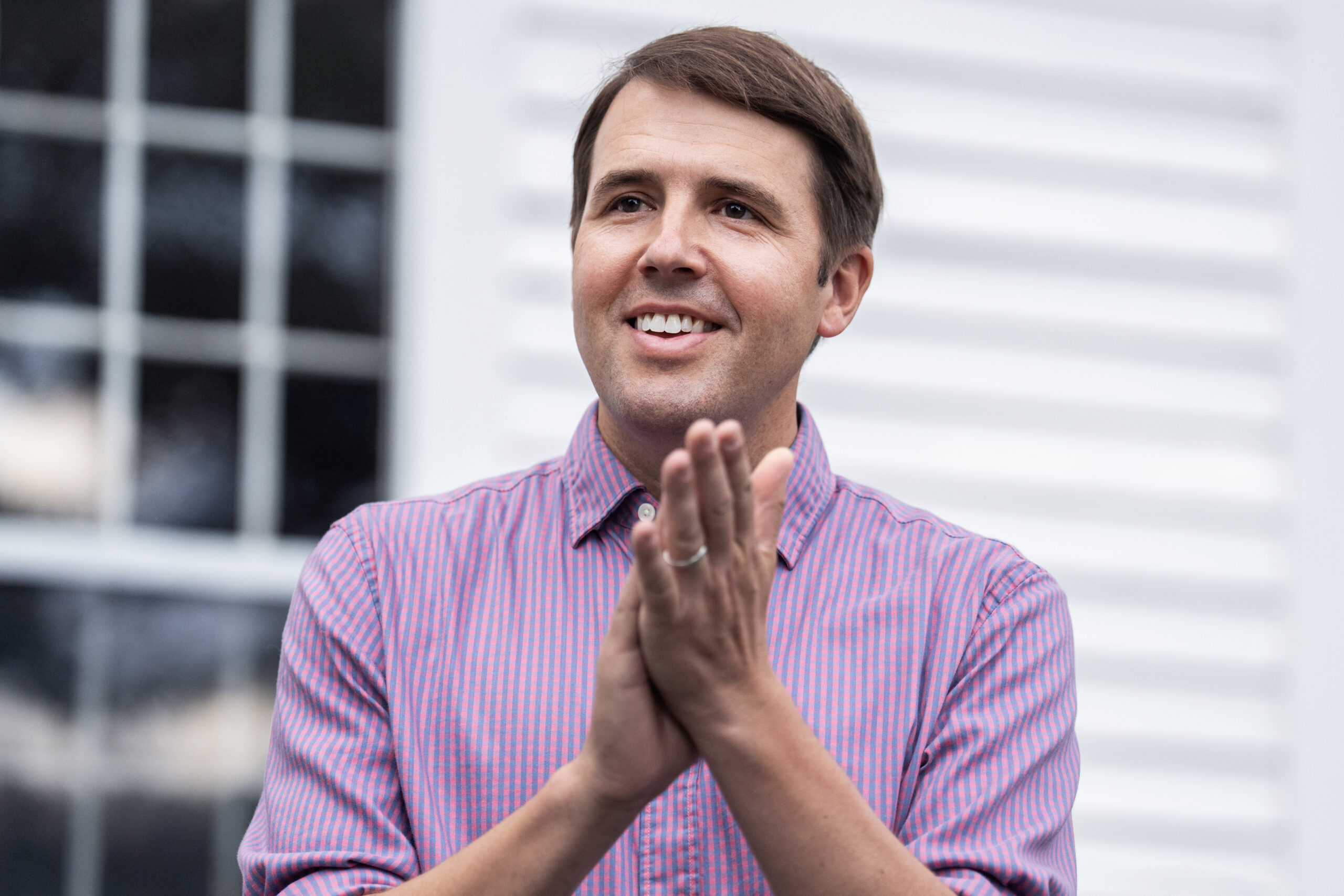
The pro-Israel moderate has been recalibrating his foreign policy views under pressure from a far-left anti-Israel opponent
The Florida Republican cited rising antisemitism in Canada as reason for the emergency measure
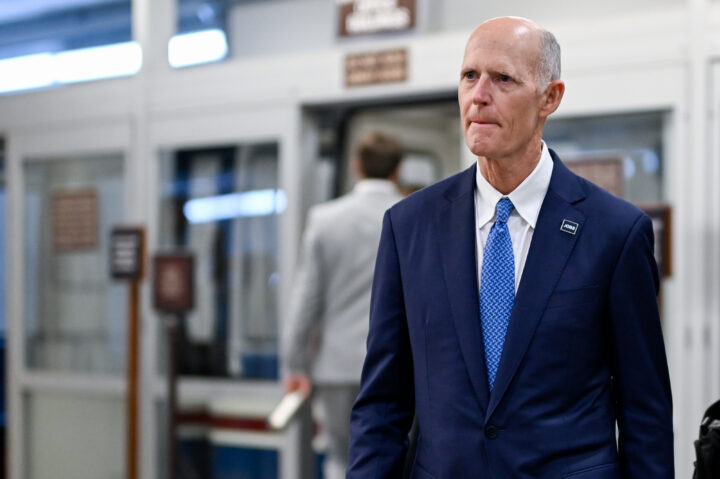
Daniel Heuer/Bloomberg via Getty Images
Sen. Rick Scott (R-FL) at the US Capitol in Washington, on July 16, 2026.
Sen. Rick Scott (R-FL) is urging President Donald Trump to establish an expedited legal pathway for Jewish Canadians to obtain refugee status in the United States amid rising antisemitism in Canada.
In a letter to the president on Tuesday, Scott encouraged Trump to set up a refugee program for Canadian Jews to legally seek refuge from religious persecution in their home country. The Florida senator noted that Trump recently amplified a report on Christian leaders urging him to create a legal pathway for Jews in Canada to come to the U.S., and vowed to support the president if he pursued the idea.
“The Jewish community throughout Canada is experiencing a rapid increase in threats, harassment, and violence. A significant number of these intolerable instances occur in places of worship, schools, and Jewish-owned small businesses,” Scott wrote in the letter, obtained by Jewish Insider.
“As a result of this proliferation of antisemitism, you expressed consideration for an expedited legal pathway for the Canadian Jewish community to find refuge in our great nation,” he continued. “Should you pursue this effort, please know that I stand behind this noble decision.”
Scott predicted that Florida, which is home to some of the largest Jewish communities in the U.S., would embrace Canadian Jews who relocate to the state in search of a more welcoming environment.
“If those in the Canadian Jewish community wish to lawfully come to the United States, Florida will happily welcome them to our proud and thriving state,” Scott wrote. “Unlike other neighboring nations and states, Florida will defend the Jewish community from antisemitism and provide our friends with new opportunities to prosper and live their American Dream.”
“Florida will continue to stand at the ready to assist your administration’s efforts in protecting the Jewish community abroad and at home,” he added.
The White House did not respond to JI’s request for comment on the letter or if the president was considering such a move, which would run counter to the Trump administration’s hardline immigration approach aimed at restricting legal and illegal immigration.
Last Monday, Trump shared a report from Just the News highlighting a letter to him from the National Association of Christian Lawmakers, in which the group called on him to direct the State Department and the Department of Homeland Security to develop “lawful, secure, and appropriately expedited pathways” for Jewish Canadian nationals and their immediate family members to seek refuge in the U.S. as Canada’s Jewish community faces increased threats.
In July, Oklahoma GOP Gov. Kevin Stitt sent Trump a letter vowing to welcome to his home state Jewish Canadian families who legally come to the U.S. while fleeing antisemitism.
“Should Jewish families lawfully come to the United States in search of safety and opportunity, I want you to know that Oklahoma would proudly welcome those who choose to make our state their home,” Stitt wrote to Trump at the time.
Stitt wrote that Oklahoma had been “blessed with a strong and vibrant Jewish community, especially in Tulsa, that has contributed to our state’s success since before statehood and stands ready to welcome new neighbors. I know those traditions of faith, family, entrepreneurship and civic engagement would continue to flourish here.”
“You shouldn’t live in fear because of your faith. In Oklahoma, you can practice freely without fear of violence,” Stitt said in a post on X highlighting his letter to Trump late last month.
The group was joined by Jared Kushner, VP Vance and Rep. Mike Lawler
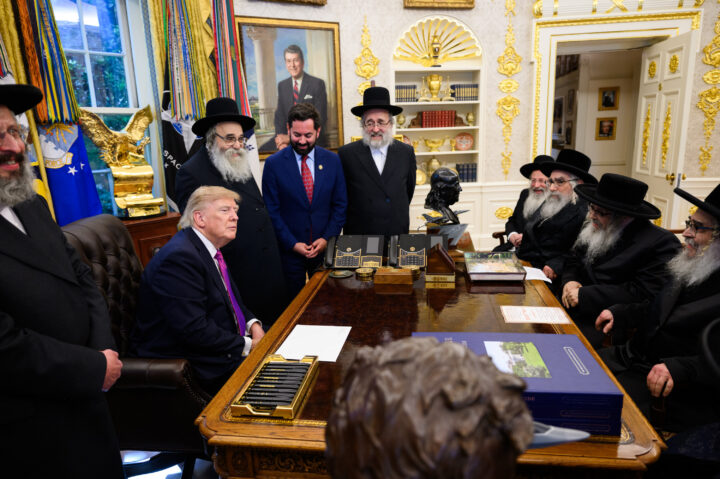
Abraham McNatt
President Donald Trump meets with Hasidic rabbis in the Oval Office on Sept. 3, 2026.
President Donald Trump met with several Hasidic rabbis at the White House on Thursday ahead of Rosh Hashanah, a gathering his office called the first of its kind in nearly 50 years.
The rabbis, many of whom were pictured in photos that circulated on social media ahead of the meeting flying to Washington on private jets, hailed from a range of leading Hasidic communities in New York — including the two rival Satmar sects in Brooklyn and Kiryas Joel; the Bobov sect in Brooklyn; the Vizhnitz sect in Monsey; and the Skver sect in New Square.
The 85-year-old Skver rebbe, David Twersky, whose endorsements in congressional races have long been highly coveted, sent one of his sons to the meeting in his place. Rabbi Malkiel Kotler, dean of Beth Medrash Govoha in Lakewood, N.J., the largest yeshiva in the United States, also joined.
The meeting, according to sources, was attended by Jared Kushner, the president’s son-in-law and key outside advisor, who is Jewish; Vice President JD Vance; and Rep. Mike Lawler (R-NY), who is among the most vulnerable House Republicans running this cycle. The congressman — whose district includes the Hasidic village of New Square — has depended on the politically powerful Skver endorsement in past races.
Vance paid a visit to the Roosevelt Room during the gathering, according to two sources familiar with the matter granted anonymity because they had not been authorized to discuss the private reception. He joked to the attendees that the “Hasidim are the only ones who have larger families than him,” the sources told Jewish Insider afterward.
A spokesperson for Vance, who welcomed his fourth child in July, did not dispute that account but told JI it might have been “a joke one of the rabbis made to” the vice president.
Beforehand, sources familiar with the meeting framed it as a chance for Trump to convey Rosh Hashanah greetings ahead of the Jewish new year marking the beginning of the High Holy Days next week — in a demonstration of mutual respect for a community whose rank and file have shown strong support for his campaigns.
But some more substantive issues were also raised, according to the sources, including topics like “large families” as well as housing concerns, prison reform and “expanding earned income tax credits” for those with more than three children.
One source who attended the meeting also said that Trump, for his part, talked “about pardoning Jewish prisoners” including Sholom Rubashkin — the kosher meatpacking executive convicted of financial fraud in 2009. His 27-year prison sentence was commuted by Trump in 2017.
The president also spoke privately with Rabbi Aaron Teitelbaum, the Satmar leader in Kiryas Joel, another person informed of their exclusive discussion told JI.
A White House official told JI the president and top administration officials “met with the leading Hasidic Rabbis in the United States,” saying it was the first of such gatherings “at the White House since 1979.”
The Hasidic leaders “thanked the president for all he had done in combatting antisemitism, advocating for school choice with the middle-class tax credit and for fighting for peoples of faith,” the White House official added.
In recognition of Rosh Hashanah, the delegation of rabbis “said blessings to the president, and thanked the entire administration for all they had done for all Americans,” according to the official.
The meeting had faced some resistance from a few far-right Trump allies over its inclusion of the Satmar community, an anti-Zionist Hasidic sect that believes only the messiah is supposed to bring about a Jewish state.
But the Trump administration indicated that it was unmoved by such protestations, proceeding with the scheduled meeting on Thursday.
Broadly speaking, the rabbis who joined the meeting “focused on issues important to the community,” one source said of the visit. “It mostly went as planned.”
Plus, Mahdawi's defenders go quiet on resurfaced posts
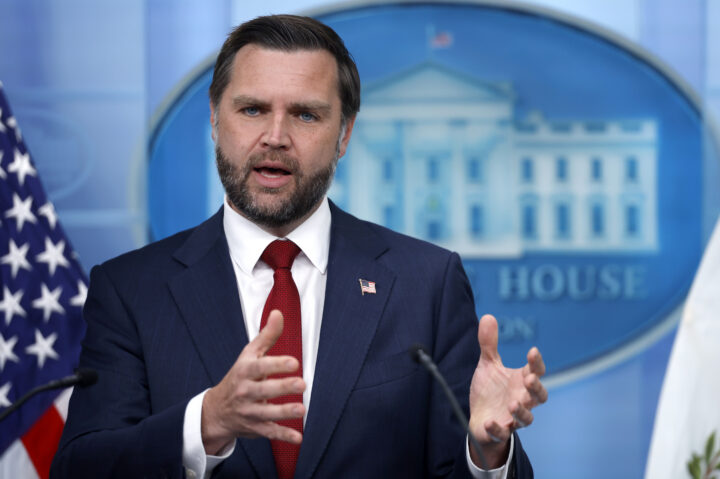
Kevin Dietsch/Getty Images
Vice President JD Vance speaks during a news briefing in the Brady Press Briefing Room at the White House on Sept. 3, 2026 in Washington, DC.
Good Thursday afternoon.
This P.M. briefing is reserved for our premium subscribers like you — offering a forward-focused read on what we’re tracking now and what’s coming next.
Today’s Daily Overtime was curated by JI U.S. Editor Danielle Cohen-Kanik.
📡On Our Radar
Notable developments and interesting tidbits we’re tracking
Vice President JD Vance defended his friendship with far-right commentator Tucker Carlson at a White House press briefing this afternoon, saying that he would not “play the game where I throw friends under the bus because I have political disagreements with them,” Jewish Insider’s Emily Jacobs reports.
“Everybody knows that Tucker Carlson and I are friends. And I think it’s very obvious that Tucker has said some things that I disagree with,” Vance said. He criticized Carlson’s attacks on President Donald Trump and his recent comments expressing support for Democratic nominee Abdul El-Sayed over former GOP Rep. Mike Rogers in Michigan’s Senate race, though he did not mention Carlson’s extreme antisemitic and anti-Israel rhetoric…
On the other side of the spectrum, asked by Stephen A. Smith if there was anything antisemitic streamer Hasan Piker could say that could cause El-Sayed to publicly disavow him, El-Sayed responded, “I mean, sure,” but said the “idea that you just categorically disavow an individual, that to me doesn’t make sense.” He added that Piker has 3 million listeners, to whom he wants to “offer … a pathway into an electoral movement”…
Many of the liberal Jewish and civil rights organizations and lawmakers who protested federal efforts to deport Columbia University anti-Israel protest leader Mohsen Mahdawi are so far silent on new revelations about Mahdawi’s lengthy history of antisemitic and pro-terrorist social media posts, JI’s Haley Cohen and Marc Rod report.
Mahdawi, a 35-year-old Green Card holder and West Bank native, pledged in a 2010 Facebook post, “soon, very soon, we will annihilate the Jews.” He also praised Hamas and honored deceased terrorists in several posts on Instagram and Facebook, declaring that Palestinians have the capacity and conviction “to kill and to wound”…
Iran fired missiles and drones at Kuwait and Bahrain early today local time, according to the Kuwaiti Defense Ministry and Bahraini Foreign Ministry…
Trump disputed reports that the U.S. is running low on munitions, writing on Truth Social that the U.S. has “virtually unlimited amounts of Mid to High Grade Ammunition” and is “stockpiling” more but that “sales to Allies will soon again, begin”…
Israeli Defense Minister Israel Katz said at an event for Defense Ministry employees today that Jerusalem is “seeing signs” that the pressure campaign on the Iranian regime “could push them to desperate measures,” and warned that if Iran is to attack Israel, “we will strike all infrastructure — including energy infrastructure — and return Iran to the Stone Age”…
Israel is releasing five Lebanese civilians who had been detained in southern Lebanon, Prime Minister Benjamin Netanyahu’s office said today, in exchange for Beirut’s assistance in locating the remains of Lebanese Jewish community figures. The PMO said the individuals being released were determined through questioning not to be involved in terror activities…
A new study by the Jewish Federations of North America found that Jewish institutions’ security spending has surpassed $1 billion per year, a 33% increase from 2024. The total breaks down to about $225,000 per institution, including community centers, synagogues, schools, summer camps and nonprofits, with the largest share of the cost allocated to security personnel…
As a group of leading Hasidic rabbis exited their Oval Office meeting with Trump this afternoon, communal leader Yossi Gestetner told reporters that the gathering was “an opportunity for the first time in over 50 years for the president of the United States to meet with the grand rabbis of the largest Hasidic sects … We had the opportunity to thank the president for all that he does for the United States.”
Among the attendees were Vance; Jared Kushner; Satmar leaders Rav Aharon Teitelbaum and Rav Zalman Leib Teitelbaum; Rav Malkiel Kotler, rosh yeshiva of Beth Medrash Govoha in Lakewood, N.J.; New Square Mayor Israel Spitzer; Rav Aron Mendel Twersky; and Rep. Mike Lawler (R-NY), who represents large Hasidic and Orthodox Jewish communities in Rockland County, including Monsey and New Square…
House Democrats overwhelmingly voted against the Protect Economic and Academic Freedom Act, a bill that would strip federal funding from colleges and universities engaged in boycotts of Israel, with just 33 Democrats supporting the measure, JI’s Marc Rod reports. The bill ultimately passed 237-169, with two Republicans voting against the measure along with the majority of Democrats…
Rep. Jim Jordan (R-OH), the chair of the House Judiciary Committee, told JI’s Marc Rod that he’s hoping to take action in the committee on several bills regarding antisemitism in the remaining months of the congressional term, and also previewed plans for a hearing on the International Criminal Court.
“We’ve been supportive of all of those [antisemitism bills] in the past, so we’ll see what we can get done here in the last few weeks of September, or maybe even in the lame-duck session” after the midterm elections, Jordan said…
The Department of Health and Human Services’ (HHS) Office for Civil Rights issued a “Dear Colleague” letter today to all healthcare providers that receive HHS funding, explaining how antisemitic conduct can violate federal civil rights law in patient care, medical education, provider training and other settings.
It’s the first such letter from the federal government to incorporate the International Holocaust Remembrance Alliance’s working definition of antisemitism, according to the Louis D. Brandeis Center for Human Rights Under Law…
⏩ Tomorrow’s Agenda, Today
An early look at tomorrow’s storylines and schedule to keep you a step ahead
Keep an eye on Jewish Insider for an interview with Rep. Jared Moskowitz (D-FL) about his views on the Democratic Socialists of America, being pro-Israel in the Democratic Party and more.
Michigan Democratic Senate nominee Abdul El-Sayed will speak on a panel at the Islamic Society of North America‘s annual convention in Detroit on Saturday alongside outspoken Israel critics Cenk Uygur and Zaid Shakir.
Meanwhile, former Maine Democratic Senate nominee Graham Platner will no longer speak at a Labor Day rally hosted by the progressive group Hancock County Activists, in what was supposed to be his first public appearance following the suspension of his campaign after a former romantic partner accused him of rape. The group said he was dropped as a speaker because “the media frenzy got just too insane,” and he will instead lead a march for veterans after the rally.
In observance of Labor Day, we’ll be back in your inbox with the Daily Overtime on Tuesday. Shabbat shalom!
Stories You May Have Missed
CULTURE CLASH
Sheikha Al Mayassa, who chairs Qatar’s top cultural bodies, shared panels from a Venice Biennale tapestry she said ‘powerfully captures the human atrocity’ in Gaza