








































































While emerging technologies will be a major topic of conversation during the three-day trip, most eyes — and markets — are on the tenuous ceasefire between the U.S. and Iran
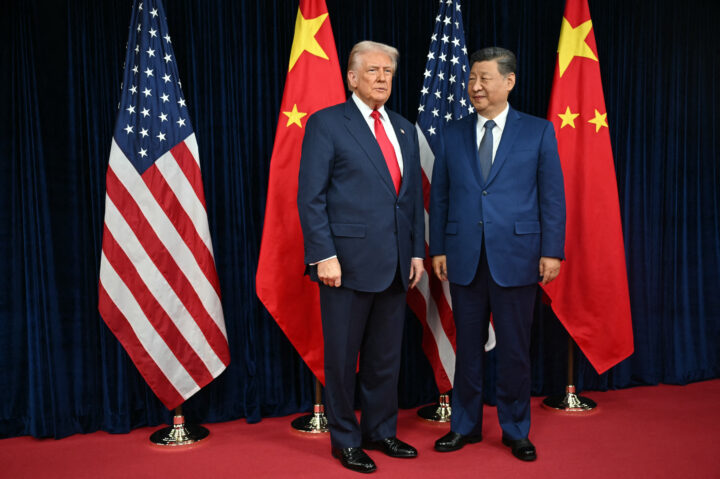
ANDREW CABALLERO-REYNOLDS/AFP via Getty Images
President Donald Trump (L) and Chinese President Xi Jinping arrive for talks at the Gimhae Air Base, South Korea, on October 30, 2025.


 Add JewishInsider on Google
There will be a number of items on the agenda when the two most powerful men in the world — President Donald Trump and Chinese President Xi Jinping — meet in Beijing tomorrow, chief among them tech and AI. The president is bringing with him a roster of top business leaders, including Elon Musk, Nvidia’s Jensen Huang, Apple’s Tim Cook, Goldman Sachs’ David Solomon, Meta’s Dina Powell McCormick, BlackRock’s Larry Fink and Blackstone’s Stephen Schwarzman.
And while emerging technologies will be a major topic of conversation during the three-day trip, most eyes — and markets — are on the tenuous ceasefire between the U.S. and Iran.
“We have a lot of things to discuss,” Trump told reporters before departing for China. “I wouldn’t say Iran is one of them, to be honest with you, because we have Iran very much under control.” Nonetheless, the president said, “We’re going to have a long talk about [Iran]. I think he’s been relatively good, to be honest with you.”
Beijing has, after all, been playing a major role in the U.S.-Iran conflict — even if it has done so from the margins: serving as the largest importer of oil from the Islamic Republic in violation of U.S. sanctions, meeting with top Iranian officials (including last week’s sit-down between Xi and Iranian Foreign Minister Abbas Araghchi) and transferring weapons to Iran through third countries.
Indeed, the summit, delayed from earlier this year due to the war, comes amid reports of a U.S. intelligence assessment that Iran has restored access to 30 of its nearly three dozen missile sites, and days after Washington rejected an Iranian response to a U.S. proposal that fell short of the Trump administration’s demands.
China’s interest isn’t purely power-driven: it’s also economic. Being able to purchase Iranian oil at steeply discounted prices — owing to Tehran’s global economic isolation — has meant that China has not felt the same financial pressures as the West.
Trump, who has spent much of his second term welcoming leaders to Washington, will be on Xi’s home turf, face-to-face with a leader who is opting not to use his leverage to push Iran into making concessions. The longer the uncertainty continues, the more restless even the president’s most fervent supporters will get — especially with the midterms approaching.
That dynamic is already beginning to play out on Capitol Hill. Yesterday, JI reported on divisions among Republican senators over whether the U.S. should reengage militarily with Iran, while last week, Rep. Tom Barrett (R-MI), who is facing a tough reelection battle in his swing district, became the first GOP lawmaker to introduce an authorization for use of military force in Iran.
All of that is good for Xi, and gives him little incentive to use China’s economic and diplomatic leverage over the Islamic Republic, which while knocked down a few pegs, has managed to maintain control despite the severe blows it has been dealt.
The Iranian regime has been able to survive in large part because it knows how to play the long game: to drag out negotiations, give breadcrumbs instead of the whole loaf and wreak just enough havoc to serve as a disruptor without prompting massive retaliation. It has enough to survive, for now.
Xi finds himself in a similar dynamic: unbound by pending elections, unaffected by rising energy costs and distanced from military action in the Middle East, Beijing is — unlike Trump — does not need a quick resolution to the conflict.
This year is being treated inside the Beltway as the most high-profile WHCD weekend in at least a decade, the result of Trump’s decision to participate in this year’s dinner after boycotting it for his entire presidency
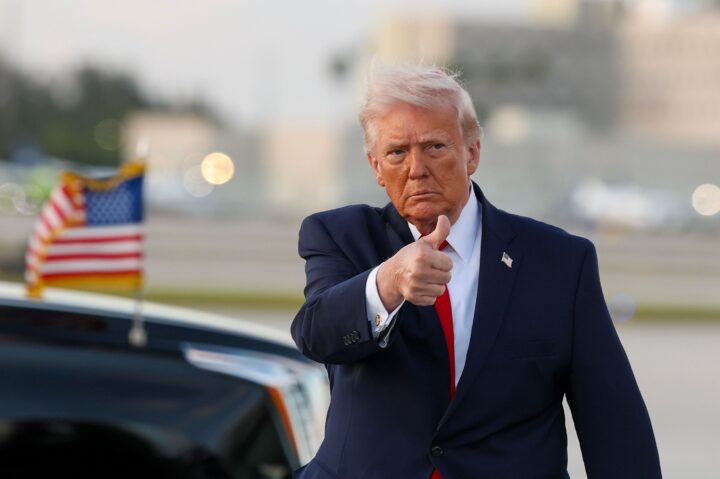
Tasos Katopodis/Getty Images
U.S. President Donald Trump waves to the media after walking off of Air Force One at Miami International Airport on April 11, 2026 in Miami, Florida.
A who’s who of the leading names in media, tech and global and domestic politics are flocking to the nation’s capital for the scores of exclusive parties surrounding the annual White House Correspondents’ Dinner this Saturday — where President Donald Trump will make his first-ever appearance as president and deliver a roast of the political press corps.
The correspondents’ dinner, and the parties thrown in its honor, have always generated enough fanfare to maintain its status as the biggest weekend of the social calendar in Washington. This year, however, is being treated inside the Beltway as the most high-profile WHCD weekend in at least a decade, the result of Trump’s decision to participate in this year’s dinner after boycotting it for his entire presidency.
In addition to Trump’s roast, guests will be entertained by Oz Pearlman, a famed mentalist known for his mind-reading tricks. Pearlman, who is Jewish and was born in Israel, marks a shift from the traditional entertainment choice at the dinner, which is usually a monologue delivered by a comedian. Those comedians’ jokes about Trump were a factor in why the president has skipped previous dinners, and the White House Correspondents’ Association canceled its planned entertainer last year over backlash to her past comments.
The dinner could make for some awkward moments: one of the WHCA’s award winners this year is a team from The Wall Street Journal, for reporting on Trump’s ties to disgraced financier Jeffrey Epstein — an article that led Trump to sue the Journal. And that’s not to mention Trump’s routine hostility toward and criticisms of the media more broadly. It is unclear if the president will be present for the award ceremony.
Celebrities have historically flocked to Washington for WHCD weekend, though the number of famous names willing to appear for the dinner or other events dwindled during the first Trump administration. That trend began to reverse during the Biden administration, though it picked up again last year when Trump returned to office.
Nicki Minaj, the rap superstar who has become an advocate for the Trump administration, will be attending the dinner as a guest of the Washington Times. No other media organizations have announced celebrity guests for their respective tables at the dinner.
Regardless of a diminished turnout of famous faces, this weekend will be jam-packed with nonstop events, and it has already begun.
Trump’s announcement in early March that he would attend Saturday’s dinner — leading many senior administration officials to also make plans to attend the festivities and Donald Trump Jr. to organize an ultra-exclusive event at his Executive Branch Club in Georgetown on Friday night — prompted an avalanche of interest from major companies, U.S. officials, foreign diplomats and dignitaries, top corporate powerbrokers and domestic political firms.
Boeing, Meta and Amazon swiftly organized intimate, invite-only gatherings for this weekend or became lead sponsors for events being hosted by D.C.-area embassies, media outlets, political operatives and high-profile consulting groups. Foreign ambassadors stationed in the U.S. and others looking to connect with the president’s circle or the broader Washington political orbit began calling in favors to get on the guest lists for all of the weekend’s events, making invitations all-the-more difficult to secure for those who have attended in the last decade.
The parties start early on Friday with Axios Live’s annual WHCD weekend kickoff brunch at 9:00 a.m., followed by MS NOW’s brunch at 11:00 a.m. and Punchbowl News’ WHCD weekend kickoff gathering the publication’s townhouse in Capitol Hill at noon.
Meghan McCain’s “Renegade Women’s Cocktail Party” at The Graham in Georgetown starts at 4 p.m. while YouTube’s official WHCD party at Floreria Atlantico in Georgetown and the Motion Picture Association’s reception at the Downtown headquarters begin at 5:30.
Later that night, Semafor is hosting a “house party” at the private residence of its founder, Justin B. Smith, starting at 8 p.m.; Creative Artists Agency’s annual Friday evening party, sponsored by Vanity Fair, will take place this year at 7:30 p.m. at the Belgian ambassador’s residence near Georgetown; and United Talent Agency will host their annual “Celebration of American Journalists” at 9:00 p.m. at Osteria Mozza in Georgetown.
The Qataris are once again hosting a Friday evening correspondents bash with Washingtonian magazine, which starts at 8 p.m. at the Georgetown Four Seasons, which Qatari Ambassador Meshal Al Thani is slated to attend. At 7 p.m., doors will open for the Daily Mail’s party with Brunswick Review Business Magazine at the British ambassador’s residence.
Saturday’s festivities start at 11 a.m. with the annual White House Correspondents’ garden brunch, hosted by Tammy Haddad at the Beall-Washington House in Georgetown. Ahead of the dinner, Puck is hosting a “penthouse pre-party” on the rooftop of The Hepburn, located next to the Washington Hilton. At the Hilton, where the dinner is taking place, The Wall Street Journal and ABC News have their respective annual pre-dinner receptions at 5:30 p.m. The Washington Post has a cocktail reception at the Hilton starting at 6 p.m., the same time that Politico’s pre-dinner event with CBS News — featuring new CBS News honcho Bari Weiss — takes place just down the hall.
Alongside the dinner, Substack is hosting its “New Media Party” at 8 p.m. at the Renwick Gallery, located blocks from the White House; afterward, MS NOW and NBC News have dueling parties starting at 11:30 p.m., with the former hosting theirs at Dupont Underground in Dupont Circle and the latter hosting theirs at the French ambassador’s residence in Kalorama. Time’s WHCD afterparty at the Swiss ambassador’s residence in Woodley Park begins at 11 p.m.
On Sunday, NOTUS and Politico are hosting a brunch at the home of Robert Allbritton starting at 11:00 a.m., and CNN’s “WHCD Weekend Finale” brunch reception starts at 12:30 p.m.
Entrepreneurs Lior Prosor and Michael Broukhim are betting big on Israeli innovation
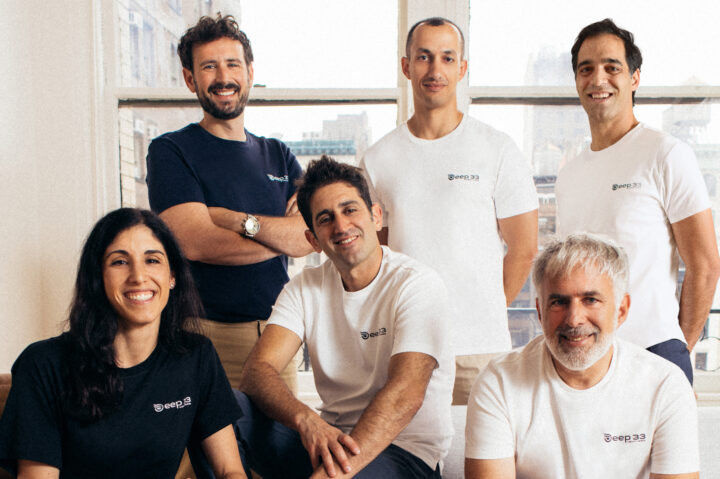
Ohad Kab
Deep33 team
A new deep-tech investment firm seeking to help Israeli startups fundraise and collaborate with U.S. companies emerged from stealth mode on Tuesday, announcing the launch of its $150 million fund.
Called Deep33 Ventures, the firm will be led by serial entrepreneurs and investors Lior Prosor, who has invested in companies including Via Transportation, Lemonade Insurance and Carbyne, and Michael Broukhim, the co-founder of FabFitFun, who has invested in companies such as SpaceX, Stripe and Hut8.
The fund, which already secured $100 million in capital commitments from its first group of investors, will focus on deep tech — which includes quantum computing, advanced energy and autonomous systems.
“There isn’t a deep tech fund focused on Israel’s ecosystem. One of our biggest differentiators is the overlap of being deep tech and concentrated on Israel,” Broukhim told Jewish Insider.
With offices in Tel Aviv, New York and Los Angeles, the firm aims to create what it calls a U.S.-Israel “allied infrastructure corridor” combining the two countries’ technological strengths to counter China.
“There is a trillion dollars of data center spending happening in the U.S. over the next 18 months, all of the critical industries are reshoring here for the first time since World War II. There’s a very meaningful frontier tech war happening between the U.S. and China. That’s the global catalyst for meaningful innovation,” Prosor told JI. “It all starts on a much more global macro trend than anything specifically Israel related.”
Israel, meanwhile, “has always had the core ingredients in place — amazing academic institutions, conductor industry, an optics industry, radio frequency industry and now the defense industry has been catapulted forward,” following the Oct. 7, 2023, terrorist attacks, continued Prosor.
The launch comes days after Israel and the United States signed a joint statement on artificial intelligence at the City of David in Jerusalem as part of the Pax Silica initiative.
“That is what I would call the bilateral memorandum of understanding to what we’re doing on the ground on the investment side,” said Prosor. “We think there’s really only two major ecosystems, other than China, that have the ability to consistently produce companies in these spaces, and that’s the U.S. and Israel. Israel really becomes a crucial ally in the U.S. frontier tech war with China. That collaboration is going to get closer and closer and Israel is going to punch way above its weight in producing things that are incredibly valuable to the U.S.”
But it also comes amid what Broukhim called a “macro pullback in the venture ecosystem” relative to peaks in 2020 and 2021.
Some of that, he said, is due to international scrutiny that Israeli tech founders face compared to their counterparts from other countries.
“We see that as an opportunity for us,” continued Broukhim.
“Being closer to the ground level, [we see] incredible resilience, incredible companies being built,” he said. “There’s almost an evaluation arbitrage between the same types of companies in the same stages in Israel versus what we’re seeing in the United States. We think of that as an opportunity to have much better returns based on a temporary dislocation market.”
Joining the firm as chairman is Lior Susan, founder of Eclipse Ventures and a pioneer of the “deep tech revolution” in Silicon Valley. Additionally, it will draw on experts in quantum, energy, AI, government relations and autonomous robotics from some of Israel’s top technical and security fields, including Col. (res.) Joab Rosenberg, former senior official in IDF intelligence and quantum physicist from the Weizmann Institute of Science; Ori Amsalem, former technology investor at Arkin Capital; Maj. (res.) Yael Barsheshet, who served in technical leadership positions in IDF intelligence; Yarden Golan, former chief of staff to then-Minister of Strategic Affairs of Israel Ron Dermer; and Elram Goren, who served in significant roles in IDF intelligence and co-founded the robotics platform Fabric.
Broukhim, who is based on the West Coast and describes himself as an “Oct. 8 Jew” — someone who experienced re-connection with his Jewish identity following Oct. 7 — said that the attacks and rise of antisemitism prompted by the ensuing war in Gaza are what brought him “deeper into the Israel ecosystem and planted the first seeds of what blossomed into this fund.”
“We’re an outgrowth of the energy around post-Oct. 7 and making big bets on the future of the Israeli ecosystem,” he said.
The name Deep33 is a nod to the number’s significance in Judaism’s mystical tradition of Kabbalah, where it represents growth and hidden truths.
The holiday of Lag B’Omer, which is the 33rd day of the Omer, is “when the hidden truths of the universe become revealed,” explained Broukhim. “A lot of what we think we’re doing as a firm — and our founders are doing in their companies at the intersection of science and discoveries — is to [reveal] the truth of the world.”
Please log in if you already have a subscription, or subscribe to access the latest updates.
 Continue with Google

 Continue with Apple