



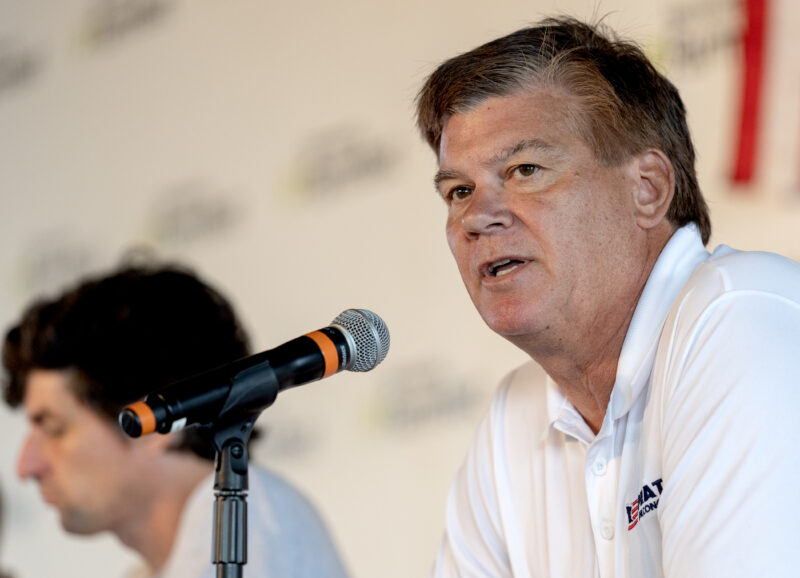








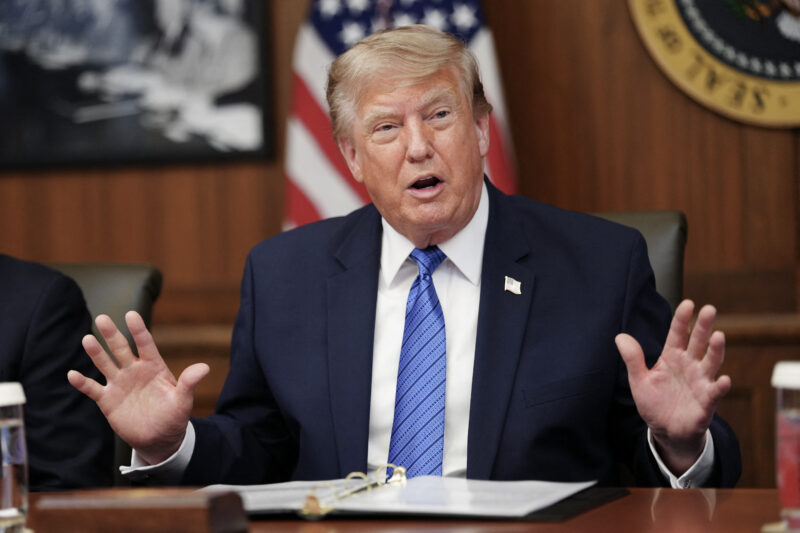





















The 26-year-old man emailed Fine on Florida's primary election day last week threatening to behead the Jewish congressman and calling him a Nazi
Tom Williams/CQ-Roll Call, Inc via Getty Images
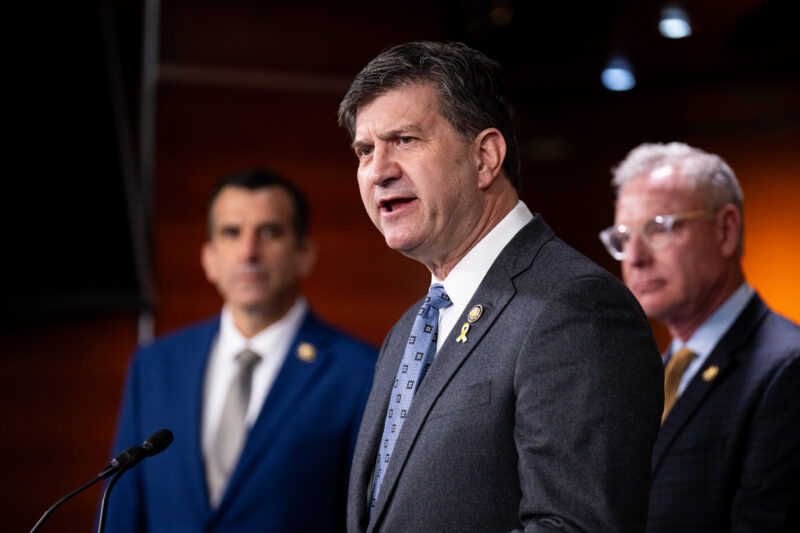
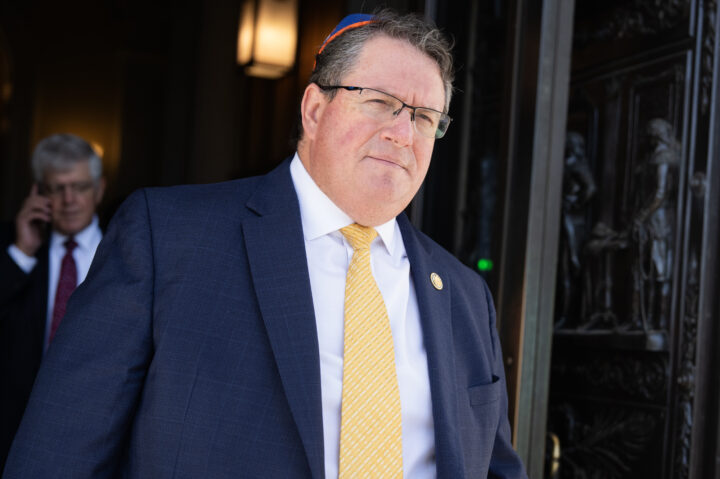
Rep. Randy Fine (R-FL) leaves the U.S. Capitol after the last votes of the week on Thursday, September 4, 2025.


 Add JewishInsider on Google
The Department of Justice announced Tuesday that a 26-year-old Ohio man had been arrested and charged for sending an email threatening to kill Rep. Randy Fine (R-FL) and his family.
Fine has faced ongoing harassment and threats, some tied to his outspoken advocacy for Israel and his Jewish identity. According to Fine, the incident marked the fourth time an individual had been arrested for threatening his life in the past decade.
The email, sent to Fine on Florida’s primary election day last week, makes a series of explicit and violent threats against Fine and his family, including threatening to behead the congressman, and describing him as a “Nazi.” The email also includes a threat against President Donald Trump.
Fine said that the email far surpassed any of the previous death threats he had received in the past.
“If they think this will make me afraid, they are wrong,” Fine said on X. “There is no place in our political system for this. And those who make these threats — whether to a Republican or Democrat — will go to prison for a very long time.”
Fine thanked law enforcement for tracking down and arresting the perpetrator within 36 hours.
Numerous other Jewish members of Congress have also faced death threats or assassination attempts in recent years, as well as various incidents of harassment at their homes and in their communities, and many have said that they fear for their safety.
Five people are in custody after the FBI disrupted a plot that allegedly involved explosive-laden drones, a sniper team, and a plan to storm the White House gate
Jeff Bottari/Zuffa LLC
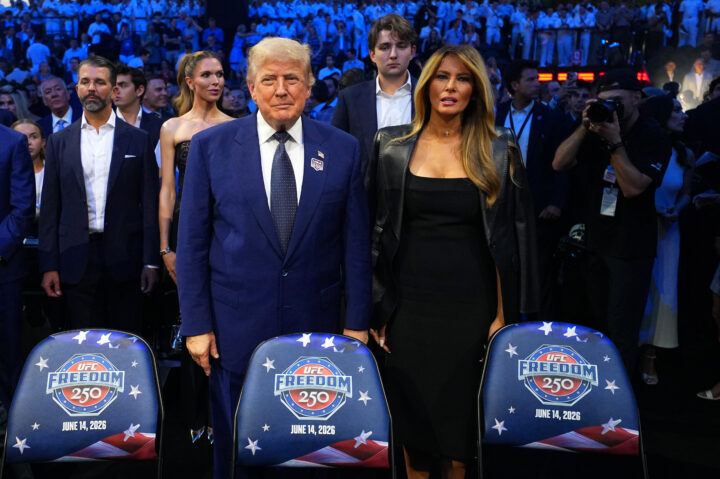
U.S President Donald J. Trump, First Lady of the United States Melania Trump attend the UFC Freedom 250 event on the South Lawn at the White House on June 14, 2026 in Washington, DC.
The FBI announced on Tuesday that it had disrupted a sophisticated attack targeting the UFC fight on the White House lawn on Sunday, with Fox News reporting that one suspect allegedly told investigators that the attack was targeting “capitalist elites,” “billionaires” and politicians who received donations from AIPAC.
FBI Director Kash Patel said on X that multiple individuals outside the D.C. area were in custody in connection with the attack in what he said was a multi-state operation. Fox News reported that five arrests had been made and 23 people were identified as being involved.
In an announcement, the Department of Justice said that the investigation is still ongoing and that arrests were carried out in Ohio, Missouri, Nebraska and California.
According to a criminal complaint released by the DOJ, one of the suspects, Tycen Proper, “appeared to identify potential US Congressional targets due to their support for the American Israel Public Affairs Committee (AIPAC), noting donations the members previously received from AIPAC” and identified several specific leaders he planned to focus on because they “were supportive of Israel.”
The targets included Sens. Marsha Blackburn (R-TN), Tom Cotton (R-AR), Shelley Moore Capito (R-WV) and Jim Justice (R-WV), Rep. Carol Miller (R-WV) and West Virginia state Del. Tristan Leavitt.
According to the complaint, another one of the suspects identified Israeli Prime Minister Benjamin Netanyahu, who some claimed would be attending the fight, as another primary target, alongside President Donald Trump, Vice President JD Vance and Elon Musk.
According to Fox News, the attack plot called for attacking buildings near the event using explosive-laden drones, forcing an evacuation from the UFC event into the path of a sniper team, followed by an attempt to storm the White House gate.
Fox News reported that authorities have identified no foreign connection to the attempted attack.
The ADL condemned the comments from the executive director of CAIR’s Ohio chapter as ‘hateful, utterly false’ rhetoric
Paul Sancya/AP
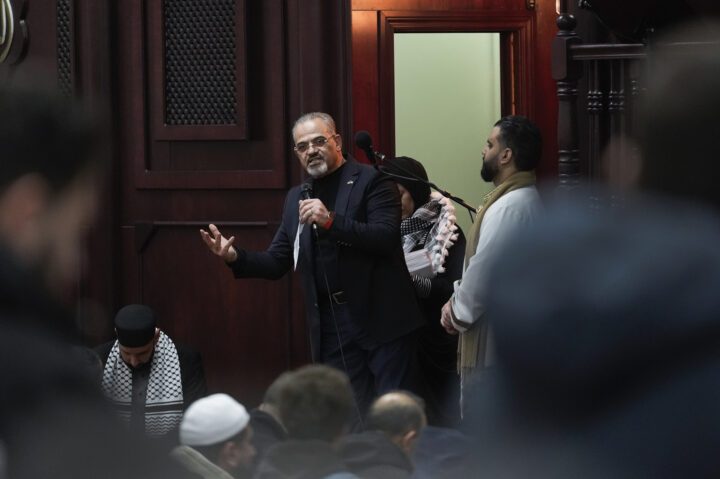
Khalid Turaani, co-chair of the Abandon Biden campaign in Michigan, speaks at the Islamic Center of Detroit in Detroit, Friday, Jan. 26, 2024.
Jewish groups condemned testimony by the executive director of the Ohio branch of the Council on American-Islamic Relations at a recent state Senate Judiciary Committee hearing during which he accused Israel of harvesting skin from deceased Palestinians.
Khalid Turaani testified on Feb. 18 against Senate Bill 87, which would see Ohio adopt the International Holocaust Remembrance Alliance’s working definition of antisemitism, asserting that “Israel has the largest human skin bank in the world.”
Turaani claimed as his evidence a report by Israel’s Channel 10 from March 2014, though no such report exists. The conspiracy theory of Israeli organ harvesting originated in 2009, when a Swedish tabloid published falsehoods that the IDF kills Palestinians to provide organs to Israeli hospitals, and has been repeated by Palestinian media for years.
The claim, which reemerged in the aftermath of Hamas’ Oct. 7, 2023, terrorist attacks, also plays on the blood libel trope, an antisemitic conspiracy accusing Jews of murdering Christians to use their blood, that dates back to the Middle Ages.
“Where do you think they got all this skin from?” Turaani continued. “They have more human skin than China and India. They are literally skinning the dead bodies of my brothers and sisters in Palestine,” he said, without offering evidence. “And if I call them Nazis, your law is going to punish me.”
Greg Miller, board chair of Ohio Jewish Communities, which represents the state’s eight Jewish federations, told Jewish Insider that the “false, abhorrent and libelous statements made during this testimony are the kind that have been inciting hatred and violence against Jews for thousands of years.”
Miller said the testimony “only reinforces the need for passage of this bill that provides absolute clarity that those statements are antisemitic. By codifying the IHRA definition, such statements aren’t criminalized but makes it obvious to be condemned by all Ohioans as the blind hatred that inspired them.”
Lee C. Shapiro, the American Jewish Committee’s Cleveland regional director, told JI that while there is “room for reasoned discussion about the IHRA definition,” Turaani “chose to ignore facts and instead propagated hatred and easily dispelled lies. It’s an insult to Ohioans and a disservice to the public square.”
The Anti-Defamation League’s Ohio River Valley office said it was “appalled” by Turaani’s testimony. “The antisemitic organ harvesting myth plays on the blood libel trope, which has spurred the torture, murder, and expulsion of Jews for centuries,” the statement continued. “It continues to fuel violence against Jewish communities today. Such hateful, utterly false rhetoric has no place in our state capitol. We call on Ohio’s leaders to join us in condemning these remarks and standing firm against antisemitism in all its forms.”
Leaders and senior officials of CAIR have on numerous occasions in recent years drawn ire from the Jewish community over comments relating to Israel and antisemitism.
Turaani himself moderated an event in October featuring a Hamas official designated as a terrorist by the Treasury Department, as well as other Hamas and Palestinian Islamic Jihad members.
And as Hamas was conducting its rampage across southern Israel on Oct. 7, Hussam Ayloush, the executive director of CAIR-LA, praised the attacks, tweeting a prayer for Allah to “grant relief, freedom, and victory to the people of Gaza.” Weeks later, Nihad Awad, the executive director of CAIR, said at a conference that he was “happy to see people breaking the siege” on Oct. 7, describing the attacks as an act of self-defense.
If Democrats want to have hope of regaining the confidence of the silent majority that propelled Trump to victory in 2024, they’ll need to be able to compete in the Buckeye State
Stephen Maturen/Getty Images
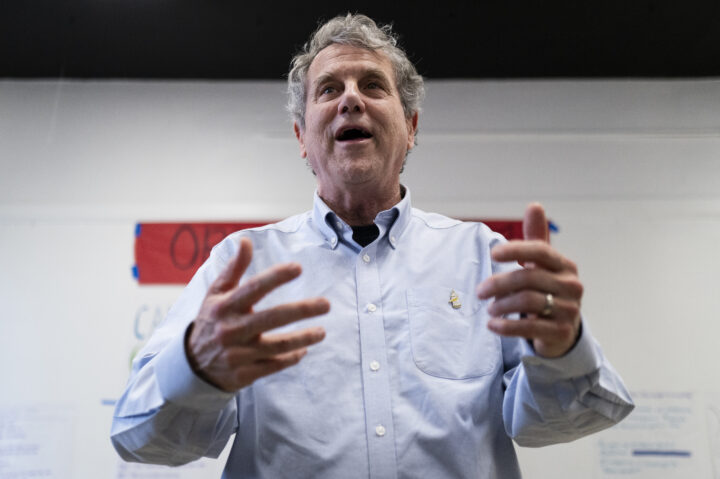
Democratic senate candidate, then-Sen. Sherrod Brown (D-OH), addresses volunteers at a campaign office on November 4, 2024 in Cleveland Heights, Ohio.
Ohio was once a perennial swing state but, as Democrats have lost ground with working-class voters, it has been a Republican stronghold over the last decade. But it could once again emerge as a political bellwether in 2026, as a test of whether Democrats can make inroads in rebuilding a coalition that can win back national power.
If Democrats want to have hope of regaining the confidence of the silent majority that propelled President Donald Trump to victory in 2024, they’ll need to be able to compete in the Buckeye State. And if Democrats hope to have any outside shot at retaking a Senate majority, the path runs through Ohio as well.
The state is holding two major races: appointed Sen. Jon Husted (R-OH) is facing off against former Sen. Sherrod Brown (D-OH), who lost his reelection in 2024. Early polling shows the race is competitive. Of note: Brown significantly outraised Husted in fundraising over the last three months of the year, $7.3 million to $1.5 million, and already has more cash-on-hand than the sitting senator.
Brown had been the only statewide Democratic politician to maintain some support with the blue-collar voters that drifted away from the party in the Trump era. Husted, the state’s former lieutenant governor and secretary of state, is a traditional Republican politician with a party-line voting record but is facing the prospect of rough political headwinds this year for the GOP.
And in an open gubernatorial race to succeed the term-limited GOP Gov. Mike DeWine, Democrat Amy Acton is facing off against Republican Vivek Ramaswamy, two candidates whose time spent in public service and politics have been quite polarizing.
Acton, who was head of the state’s Department of Health during the COVID pandemic, ended up leaving the role early amid a chorus of conservative complaints about her heavy-handed approach to coronavirus regulations and safety protocols. Acton, who is Jewish, is hoping her medical background and role as a political outsider will matter more than the polarizing public health controversies.
Ramaswamy, who made an unlikely jump to presidential politics in 2024 after a career as a biotech entrepreneur, alienated a number of Republicans for his anti-establishment and isolationist messaging during the campaign. But his gubernatorial campaign has tacked more to the center, as he has spoken out against white nationalists within the GOP during his campaign. His newfound pragmatism helped him receive this month the endorsement of DeWine, who had been an occasional critic.
In the Trump era, Ohio has become solidly Republican, giving Trump an 11-point margin of victory in 2024. But the state’s Senate races have been somewhat more competitive: Sen. Bernie Moreno (R-OH) defeated Brown by just three points (50-47%) in the same year, while now-Vice President JD Vance prevailed by six points in his 2022 campaign. Both those elections took place in favorable GOP years, while 2026 is shaping up to be more hospitable for Democrats as the party that’s out of power.
In the big picture, winning Ohio is a necessity if Democrats want to entertain any hopes of retaking the Senate. They need to net four GOP-held Senate seats to retake the majority, and only North Carolina and Maine are currently toss-up races. Among other GOP-held seats, Ohio is the next-closest opportunity and Brown is the strongest recruit they have in the red-state races. (Former Democratic Rep. Mary Peltola’s Alaska Senate candidacy is the other big red-state recruit worth watching.)
More importantly, the Ohio contests will test how partisan voters really are, at a time when Trump is testing the patience of some of his working-class supporters. Persuadable Ohio voters are still anxious about the state of the economy, haven’t seen a return of manufacturing jobs back in the state and are receptive to criticism that the administration is focusing more abroad at the expense of domestic concerns back home.
If the Trump coalition is able to hold together, Republicans should be able to ride the partisan tide to victory in Ohio — even if the party faces a down year in 2026. But if there really is a schism taking place within the GOP, the blue-collar states where Democrats until recently experienced success could end up becoming battleground territory once again.
Ohio is ground zero for testing that scenario.
Acton, the expected Democratic nominee, was the state’s public health director during COVID, a legacy she hopes won’t get in the way of her affordability message
Tony Dejak/AP
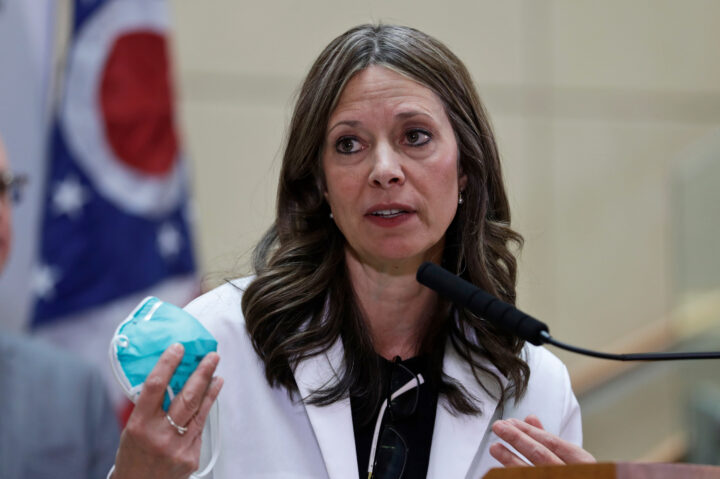
Ohio Department of Health Director Amy Acton holds up a mask as she gives an update on the state's preparedness and education efforts to limit the potential spread of COVID-19 at MetroHealth Medical Centre in Cleveland.
Amy Acton is running for governor of Ohio this November as an outsider: a Democrat challenging 15 years of Republican gubernatorial rule, a medical doctor with no political experience, a “scrappy kid” from Youngstown who experienced homelessness as a child.
But over a three-month period in the spring of 2020, she became a household name across the state. Every night, Ohioans watched Acton, then the statewide health director, in a white lab coat, describing the state’s COVID-19 precautions and trying to calm the anxiety people felt at the start of a new pandemic. The New York Times called her “the leader we wish we all had.” CNN called her “the Buckeye state’s version of the straight-talking Dr. Anthony Fauci” — before Fauci became a polarizing figure.
Now Acton is mounting her first political campaign — a bid for governor in a former swing state that has trended redder and redder in recent elections. Acton, perhaps cognizant of the angst that followed pandemic shutdowns and mask mandates, is not making her COVID-era fame the focal point of her campaign.
In a statement to Jewish Insider, Acton said her campaign will focus on one of the most animating issues for voters and politicians alike right now: affordability.
“I’m running for governor because people in my state are struggling with rising costs. There’s no breathing room,” Acton, who would be Ohio’s first Jewish governor if elected, said. “I refuse to look the other way while special interests and bad actors try to take our state backwards on nearly every measure. Everywhere I go, Ohioans are ready for change.”
But before she can get to that, Acton has to thread a difficult needle in reminding voters who she is. In the spring of 2020, during the peak of the pandemic, it felt like she was in everyone’s living rooms. Acton told the state about her family’s virtual Seder that year as she urged religious communities to celebrate the holiday without congregating. (“My matzah ball soup is the best, just saying,” Acton said, noting she didn’t have time to make it that year.)
“The magic of Amy Acton on those press conferences was her authenticity and her compassion,” said Richard Stoff, the founder of Ohio Business Roundtable.
Acton worked with DeWine to make Ohio one of the first states to shut down mid-March 2020. The move earned widespread praise at the time but now puts her in a precarious position politically, as the public health measures that were implemented early in the pandemic have turned into partisan cudgels in the ensuing years.
“Right now, that’s not the lead thing in her bio,” said Stephen Mockabee, director of the School of Public and International Affairs at the University of Cincinnati. “I think that the message that Acton will present is, ‘I’m a native Ohioan, and I love the state, that’s why I’m running, because I care about the state, and, you know, I have these experiences coming up from humble beginnings, through medical school in Ohio, working on behalf of the public in the public health capacity.’ I think that’s the story, not just referring specifically to COVID.”
“We saw the backlash to COVID, and how that could be a vulnerability for her. But what I’ve seen is it’s a strength. It is a foundation of trust that people have in her,” Ohio state Sen. Casey Weinstein told JI. “And if the worst attack against her from the other side is going to be that she fought for our health and fought to keep people out of the hospital and fought to keep us safe and was working hard to bring science and the absolute best she could to keep us and our families healthy, then okay, like, let’s have it.”
Indeed, Acton doesn’t lean into her turn as a pandemic celebrity in her messaging. Her campaign website describes her tough childhood in Youngstown, where she survived an abusive parent and homelessness, even living in a tent for a period. Her official biography tells of how she worked her way through college and medical school, kicking off a career in public health and advocacy. The only reference to COVID is carefully weighed: “When the pandemic hit, her steady leadership and voice for common sense not only saved countless lives but also helped Ohio’s economy and schools open earlier than other states,” Acton’s website declares.
Acton’s experience as Ohio health director showed her the personal cost of public life. Protesters regularly picketed her home in the Columbus suburb of Bexley. It was mostly people unhappy with pandemic-related restrictions, although the demonstrations also included a Proud Boys activist and a handful of antisemitic signs.
Ohio state Sen. Casey Weinstein, a Democrat whose district includes Akron, was also facing protesters in front of his family’s home as he spoke out against book bans. Acton reached out, and the two developed a friendship. A couple years ago, they reconnected at a Passover Seder hosted at the Ohio statehouse, and Weinstein has helped her campaign in the Cleveland area. (The two were also “celebrity bartenders” at a fundraiser for the Akron JCC last year.)
“We saw the backlash to COVID, and how that could be a vulnerability for her. But what I’ve seen is it’s a strength. It is a foundation of trust that people have in her,” Weinstein told JI. “And if the worst attack against her from the other side is going to be that she fought for our health and fought to keep people out of the hospital and fought to keep us safe and was working hard to bring science and the absolute best she could to keep us and our families healthy, then okay, like, let’s have it.”
Acton stepped down from the role in June 2020, three months into the pandemic. But it wasn’t due to the protests, she asserts. It was, as she told an interviewer last month, because she refused to go along with Republican lawmakers who wanted her to give permission to reopen some venues that had been shuttered due to pandemic restrictions.
“That she’s running I think takes a lot of guts on her part, because she was a face during COVID that people knew and recognized, and got a lot of negativity, I think unwarranted negativity, but about her role in trying to manage that crisis,” said Dan Birdsong, a political scientist at the University of Dayton.
“I could not put my name on orders that, frankly, would have killed people. I have a Hippocratic Oath as a doctor to do no harm,” she said. The campaign pitch is in the pivot that comes next — that she is still proud of leading the shutdown charge because it allowed the state to reopen schools and other spaces sooner.
“In Ohio, we flattened the curve. We saved a lot of lives, and we actually got back to work and life sooner because we took swift, decisive action,” she said. The key question — aside from whether any Democrat can, in 2026, be a viable statewide candidate in Ohio — is how the public will respond to the pandemic flashbacks that her campaign will inevitably spark.
“That she’s running I think takes a lot of guts on her part, because she was a face during COVID that people knew and recognized, and got a lot of negativity, I think unwarranted negativity, but about her role in trying to manage that crisis,” said Dan Birdsong, a political scientist at the University of Dayton.
The primary hasn’t taken place yet, but Acton and her general election opponent — Republican entrepreneur Vivek Ramaswamy, who ran for president in 2024 — have each cleared the field in their respective parties. A December poll showed Acton leading Ramaswamy by one point, but experts cautioned that it is too soon to draw any conclusions.
Acton has not made her Jewish faith central to her campaign in the same way that Pennsylvania Gov. Josh Shapiro did during his 2022 campaign. But she has long been steeped in the Jewish community, serving on boards like the Columbus JCC, Columbus Jewish Day School and Congregation Beth Tikvah outside Columbus. “My Jewish roots in tikkun olam have been a guiding force throughout my career as a public servant and instilled in me the belief that everyone deserves the same chance to get ahead that I had,” Acton told JI.
Antisemitism has taken an unusual place in the race, aside from the anti-Jewish hate that Acton faced as health director six years ago. Ramaswamy, the son of Indian immigrants, published an op-ed in The New York Times last month calling out the racist, antisemitic “Groyper” movement — conservatives who consider themselves followers of the neo-Nazi influencer Nick Fuentes.
“Conservative leaders should condemn — without hedging — Groyper transgressions,” Ramaswamy wrote. “We must practice what we preach: My current Democrat opponent in Ohio is a Jewish woman, and while I criticize her policy record unsparingly, I will be her most vocal defender against antisemitic attacks from left or right.”
Ramaswamy struck up a dialogue with Jewish communal leaders in Ohio after the Republican presidential primary ended.
“He’s staked out a really powerful position opposing some of the antisemitism and the bigotry on the right wing of the Republican Party. He’s gotten hate because of that,” said Howie Beigelman, president and CEO of Ohio Jewish Communities, a statewide advocacy group. “I think that both of them have a personal connection to our community, in that sense, understanding what we’re going through and the fears we have.”
Acton is not running as an uber-progressive Democrat; she did, after all, get her start in politics working for a Republican governor. That moderate sensibility is likely to help her in Ohio.
She is also hoping to ride the coattails of former Sen. Sherrod Brown, the last Democrat to win statewide in Ohio, as he challenges Sen. John Husted (R-OH), who was appointed to the Senate last year. Senate Minority Leader Chuck Schumer (D-NY) said this week that if Democrats hope to regain the Senate majority, they’ll need to win in Ohio — and Democrats will spend heavily to boost Brown.
“There are coattails there, and so making sure that she’s as strong as can be is really important,” said Jeff Rusnak, a Democratic strategist in Cleveland.
And whether COVID ultimately proves to be positive or negative for Acton, there’s no question her actions during that pandemic earned her some hardcore fans who will be trying to get her across the finish line. Acton’s neighbors in Bexley put signs in their yards that read, “DR. AMY ACTON FAN CLUB,” some of which remained well after the pandemic emergency ended. A local apparel company designed shirts in support of Acton that said “Not all heroes wear capes.”
“She had this following, and she still has this. I’ve been with her in public and witnessed this firsthand,” Rusnak said. “You could just be sitting at a coffee shop with her, having coffee, and people who she does not know will just walk up to her in tears and thank her, and want to hug her. It’s this very strange phenomenon.”
Given the dominant Democratic outcomes from the off-year elections, there’s been renewed attention to the possibility of some red-state upsets in 2026
Adobe Stock
A panoramic view United States Capitol Building at Washington, DC, USA with American flag
Given the GOP’s sturdy 53-seat majority in the Senate, combined with the increasing rarity of split-ticket voters, the Republican Party’s hold on the upper chamber looked nearly guaranteed, with a map featuring very few true swing-state pickup opportunities for the Democrats.
Indeed, the unlikely pathway for Democrats to win back control of the Senate in 2026 runs through states that have been reliably Republican in recent years — Ohio, Iowa, Texas, Florida and Alaska. To win back a majority, the party would need to win at least two of these red-state races, reversing the yearslong Democratic drought in many of these states — along with winning GOP-held seats in battleground Maine and North Carolina, which is far from assured.
But given the dominant Democratic outcomes from the off-year elections, there’s been renewed attention to the possibility of some red-state upsets in 2026. Already, political strategists from both parties are mulling over which seats are the most likely to get competitive, in preparation for an unpredictable midterm election.
On paper, Ohio looks like it’s the best opportunity for Democrats to play offense. Former Sen. Sherrod Brown, a populist, battle-tested Democrat won three statewide elections in Ohio even as the state trended in a more conservative direction. He eventually lost in 2024 to Sen. Bernie Moreno (R-OH) by five points, but ran well ahead of Vice President Kamala Harris’ double-digit defeat in the state.
With the national environment tilting back in the Democrats’ favor, Brown is seeking a comeback against appointed Sen. Jon Husted (R-OH), Ohio’s former lieutenant governor. A recently released September poll of the race conducted by the respected Democratic firm Hart Research found Brown narrowly ahead over Husted, 48-45%. Among independents, Brown held a substantial 25-point lead (56-31%).
Of all the five “reach” states for Democrats, Ohio was the closest in the presidential race, with President Donald Trump winning by 11 points. That should make it the best opportunity for Democrats to win a third seat — even as it underscores how many Trump voters Democrats will need to convert in order to win.
Sen. Joni Ernst’s (R-IA) sudden retirement is turning Iowa into a possible opportunity for Democrats. The state was once reliably competitive, but has been a solidly Republican state in the age of Trump. But the state’s farming economy has taken a hit, in part because of the aftereffects from the president’s tariffs. That’s given Democrats a narrow opportunity to capitalize on growing voter dissatisfaction, especially with an open Senate seat in play.
Republicans have coalesced behind Rep. Ashley Hinson (R-IA), a well-liked lawmaker and former TV anchor from the northeastern corner of the state. Democrats, meanwhile, are dealing with a crowded primary, with Iowa state Rep. Josh Turek appearing to be the party favorite. The contested primary could push the eventual nominee to the left, which would be a major handicap in a state that’s now reliably conservative.
Texas hasn’t elected a Democrat to the Senate since 1988, making the Lone Star State an unlikely pickup opportunity. Democrats’ hopes center on scandal-plagued Texas Attorney General Ken Paxton winning the GOP nomination over Sen. John Cornyn (R-TX) and Rep. Wesley Hunt (R-TX), and that Democrats nominate a moderate candidate who can win back the Hispanic voters who swung towards the Republicans in the last election.
Complicating the Democrats’ path: They’re dealing with a competitive primary themselves between former Rep. Colin Allred, who lost his Senate race in 2024, and state Rep. James Talarico, who has won attention for speaking to conservative audiences about his Christian faith.
If there’s a true sleeper race on the board, it’s in Alaska, a state whose Republican voting record belies its independent nature. Sen. Dan Sullivan (R-AK) doesn’t have any obvious vulnerabilities, but respected Alaska pollster Ivan Moore found former Democratic Rep. Mary Peltola leading Sullivan, 48-46%, in his October survey. But Peltola, who held the state’s at-large House seat from 2022-2024, is probably the only Democrat with the political standing who could put the Senate seat in play.
Finally, Florida used to be a perennial swing state but it’s gotten so Republican in recent years that Democrats don’t even look to be seriously challenging appointed Sen. Ashley Moody (R-FL). In a sign of how times have changed: Moody’s leading Democratic challenger appears to be a former Brevard County School Board member without much statewide name recognition.
Hamas member Majed al-Zeer said ‘the resistance’ is key to changing how the Western world views Israel
Paul Sancya/AP
Khalid Turaani, co-chair of the Abandon Biden campaign in Michigan, speaks at the Islamic Center of Detroit in Detroit, Friday, Jan. 26, 2024.
The executive director of the Council on American-Islamic Relations’ Ohio branch moderated an online event last week featuring a Hamas official designated as a terrorist by the Treasury Department, as well as other Hamas and Palestinian Islamic Jihad members.
The Beirut-based think tank Al-Zaytouna Centre for Studies and Consultations hosted an event in Arabic last week titled “Palestinians Abroad and Regional International Strategic Transformations in Light of Operation Al-Aksa Flood,” using Hamas’ name for its Oct. 7, 2023, attacks on southern Israel.
Among the speakers at the web conference was Majed al-Zeer, who was designated by the Treasury Department in October 2024 as “the senior Hamas representative in Germany, who is also one of the senior Hamas members in Europe and has played a central role in the terrorist group’s European fundraising.”
Al-Zeer said that “the resistance” is key to maintaining the momentum of a “strategic shift” in how Europe and the world views the Palestinian issue.
Palestinian Islamic Jihad financier Sami al-Arian, a former University of South Florida computer science professor who was deported from the U.S. in 2015 due to his ties to the terrorist group, said on the same panel as Al-Zeer that “the overall Palestinian situation is much better strategically than it was before the flood [Oct. 7].”
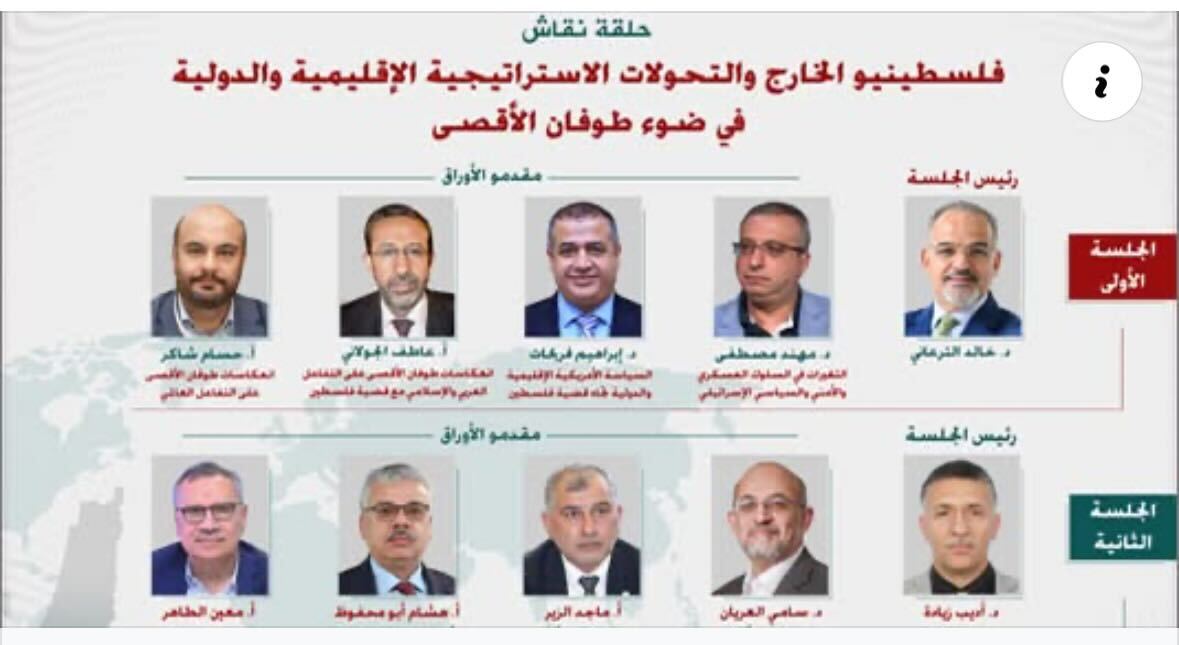
CAIR-Ohio Director Khalid Turaani moderated one panel with commentary provided by Ziad el-Aloul, who is active in several Hamas-affiliated organizations in Europe, including the Popular Conference for Palestinians Abroad, which was designated a terrorist group by Israel in 2021 for its work on behalf of Hamas. More recently, PCPA was found to be involved in facilitating the Global Sumud Flotilla that attempted to sail to Gaza with climate activist Greta Thunberg on board.
Another speaker in the Turaani-led panel expressed hope that the Turkish army would deploy in Gaza and fight the IDF.
The CAIR-Ohio director’s participation in a conference with senior Hamas and Palestinian Islamic Jihad figures came two months after Sen. Tom Cotton (R-AR) called for an IRS investigation into the organization and the revocation of its 501(c)(3) nonprofit status, citing alleged “ties to terrorist organizations like Hamas and the Muslim Brotherhood.”
CAIR did not respond to a request for comment.
Plus, Hamas rejects Trump’s Gaza deal
BRENDAN SMIALOWSKI/AFP via Getty Images
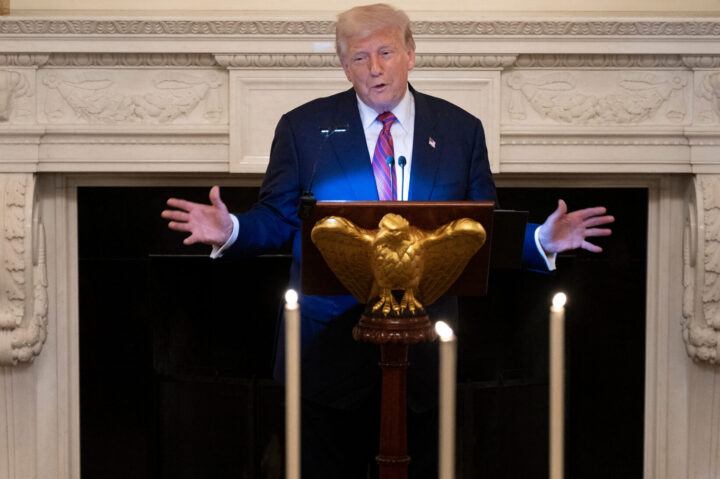
US Senator Markwayne Mullin (R-OK) (L) and US Senator John Thune (R-SD) (R) listen as US President Donald Trump speaks during a dinner for Republican US Senators in the State Dining Room of the White House July 18, 2025, in Washington, DC.
Good Tuesday morning.
In today’s Daily Kickoff, we report on Sen. Kirsten Gillibrand’s comments that the Israel rhetoric employed by some Democratic officials has stoked antisemitism, and talk to former Obama speechwriter Sarah Hurwitz about her new book that focuses on Jewish identity. We have the scoop on a call from Sen. Bernie Moreno for Ohio universities to adopt the International Holocaust Remembrance Alliance’s working definition of antisemitism, and report on a senior Hamas official’s rejection of the Trump administration’s ceasefire proposal. Also in today’s Daily Kickoff: Bruce Pearl, Ken Weinstein and Amb. Charles Kushner.
Today’s Daily Kickoff was curated by Jewish Insider Executive Editor Melissa Weiss and Israel Editor Tamara Zieve, with assists from Marc Rod and Danielle Cohen-Kanik. Have a tip? Email us here.
What We’re Watching
- Jeff Blau, Aby Rosen, Laurie Tisch and Gregg Hymowitz are convening a meeting of associates this morning to strategize over how to boost Andrew Cuomo in New York City’s mayoral election, as a new Siena/New York Times poll shows the former governor trailing Democratic nominee Zohran Mamdani by four points in a head-to-head matchup.
- In Virginia, voters in the 11th Congressional District head to the polls today to vote in the special election to succeed Rep. Gerry Connolly (D-VA), who died earlier this year. James Walkinshaw, who for years served as a top aide to Connolly, is the heavy favorite in today’s race.
- On Capitol Hill, the House Committee on Education & the Workforce’s HELP subcommittee is holding a hearing on “Unmasking Union Antisemitism.”
- Elsewhere in DC, the MEAD conference kicks off today, and the National Union for Democracy in Iran is holding its fourth annual Iran conference.
- The U.S. Embassy in Israel is hosting a belated Fourth of July celebration tonight in Jerusalem.
- The Hili Forum continues today in Abu Dhabi.
- And in Cairo, Rafael Grossi, the head of the U.N. nuclear watchdog, is slated to meet with Iranian Foreign Minister Abbas Aragchi for the first time since the 12-day war between Israel and Iran.
What You Should Know
A QUICK WORD WITH jI’S HALEY cohen and josh kraushaar
Over the weekend, The New York Times published a story contending that the momentum for settlements with elite universities was stalling amid divisions between those in the Trump administration looking to make a deal and those looking for more meaningful reforms in combating antisemitism.
The story glossed over the related development we’ve been hearing from officials involved in the negotiating process: that a zeal for dealmaking from some officials is overshadowing the main reason the Trump administration was playing hardball with these schools in the first place — the rampant antisemitism that has been festering on campus.
In fact, the word “antisemitism” was hardly mentioned in the lengthy Times story, a sign in itself of the administration’s flagging focus.
Indeed, many of the deals struck — along with the outlines of potential future deals — have focused on the dollar amounts in the settlement, without requiring many significant reforms that would deal with antisemitism at the elite schools.
WAR TALKS
Hamas official says disarmament not negotiable, rejects Trump’s Gaza ceasefire plan
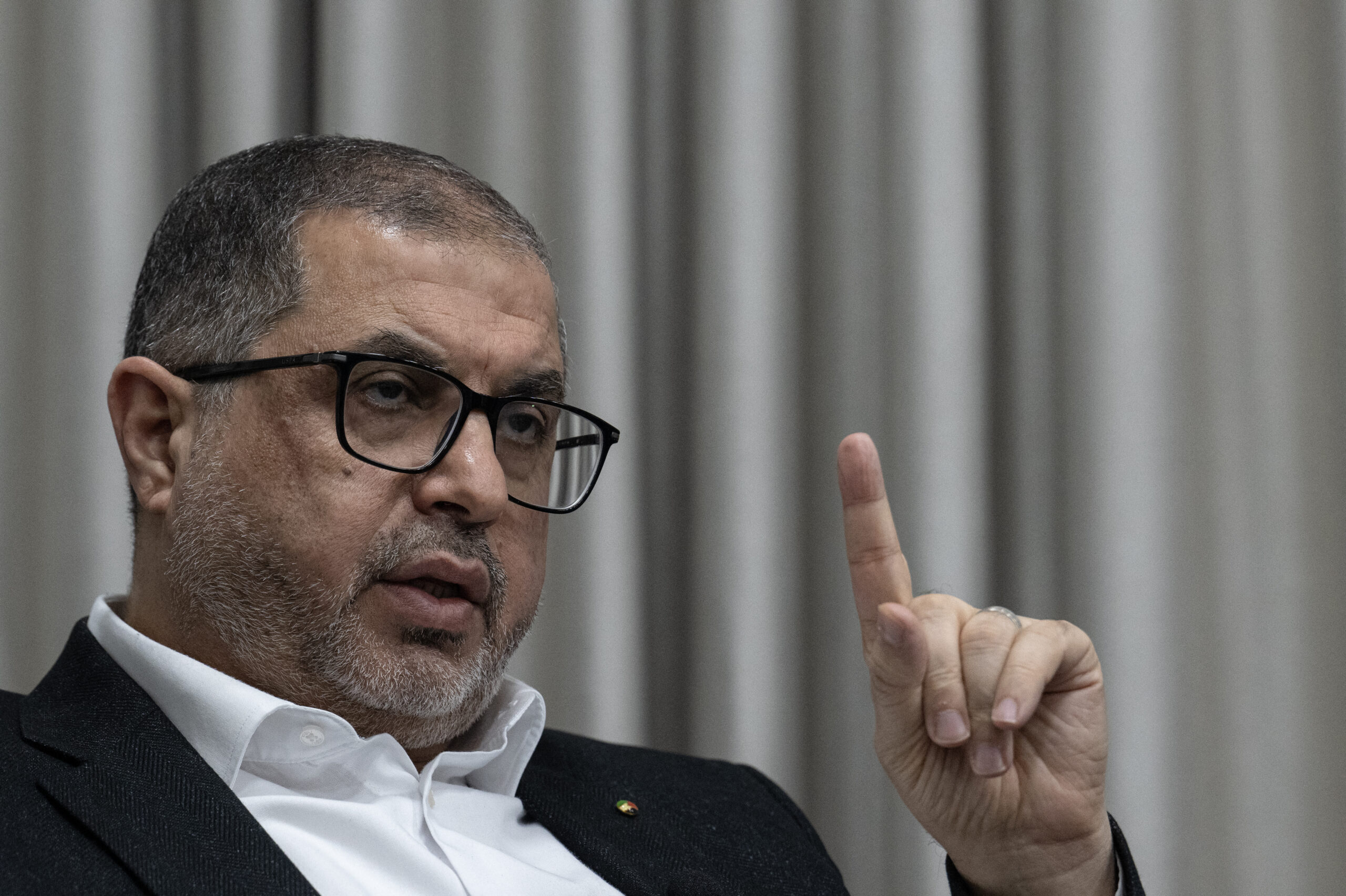
A senior Hamas official publicly rejected any deal requiring the terrorist organization to lay down its arms, after Israel said it would support such a deal proposed by the Trump administration. In response to the Trump deal, Bassem Naim, a Turkey-based senior Hamas official, released a statement on his Telegram channel on Monday calling the proposal a “humiliating surrender document” and not a serious offer to end the war, Jewish Insider’s Lahav Harkov reports.
What he said: Naim told Middle East Monitor, a pro-Hamas, Qatar-funded site, that the terrorist group would agree to a long-term ceasefire and would release all of the hostages in exchange for Palestinian prisoners, but the Palestinians “right” to weapons and to fight Israel “cannot be relinquished.” He also said the terrorist group would only agree to a full IDF withdrawal from Gaza. The Trump administration’s deal, according to Israel’s Channel 12, would require Israel to stop its military operation in Gaza City and start a 60-day ceasefire. In the first 48 hours, Hamas would release all 48 remaining hostages, 20 of whom are believed to be alive, in exchange for hundreds of Palestinian prisoners. Then, the sides would negotiate the end to the war.
SPEAKING UP
Gillibrand says that some Democrats’ rhetoric is inadvertently stoking antisemitism
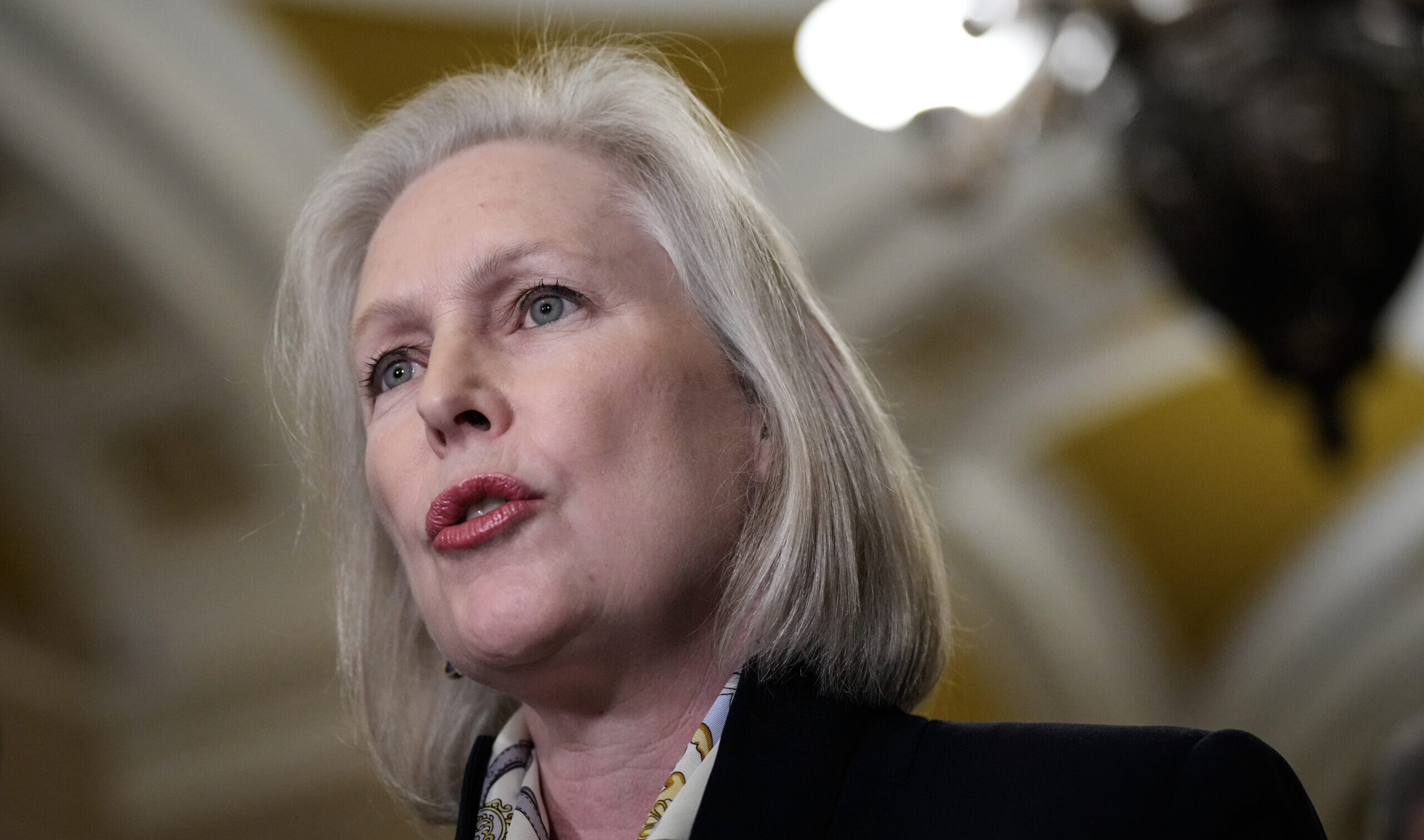
Sen. Kirsten Gillibrand (D-NY) said in comments to Jewish leaders in New York City on Monday that anti-Israel protesters and, in some cases, fellow Democratic lawmakers are fueling antisemitism through the rhetoric and slogans they use, though she said that in many cases it is unintentional, Jewish Insider’s Marc Rod reports.
Notable quotable: “Some of the rhetoric that comes out of various protests globally, various protests on college campuses is so damaging. When they say words like ‘river to the sea,’ whey they say words like ‘globalize the intifada,’ it means end Israel. It means destroy Jews,” Gillibrand said in a video from a roundtable with Jewish leaders in Borough Park shared by The Forward. “No matter what words they intend to be saying, that is the meaning of these simple phrases.” She said some Democratic colleagues, “don’t know how to articulate political disagreement [with Israel], and sometimes it comes out as anti-Israel.”
ALABAMA RACE
Auburn University basketball coach Bruce Pearl leaning against Senate run
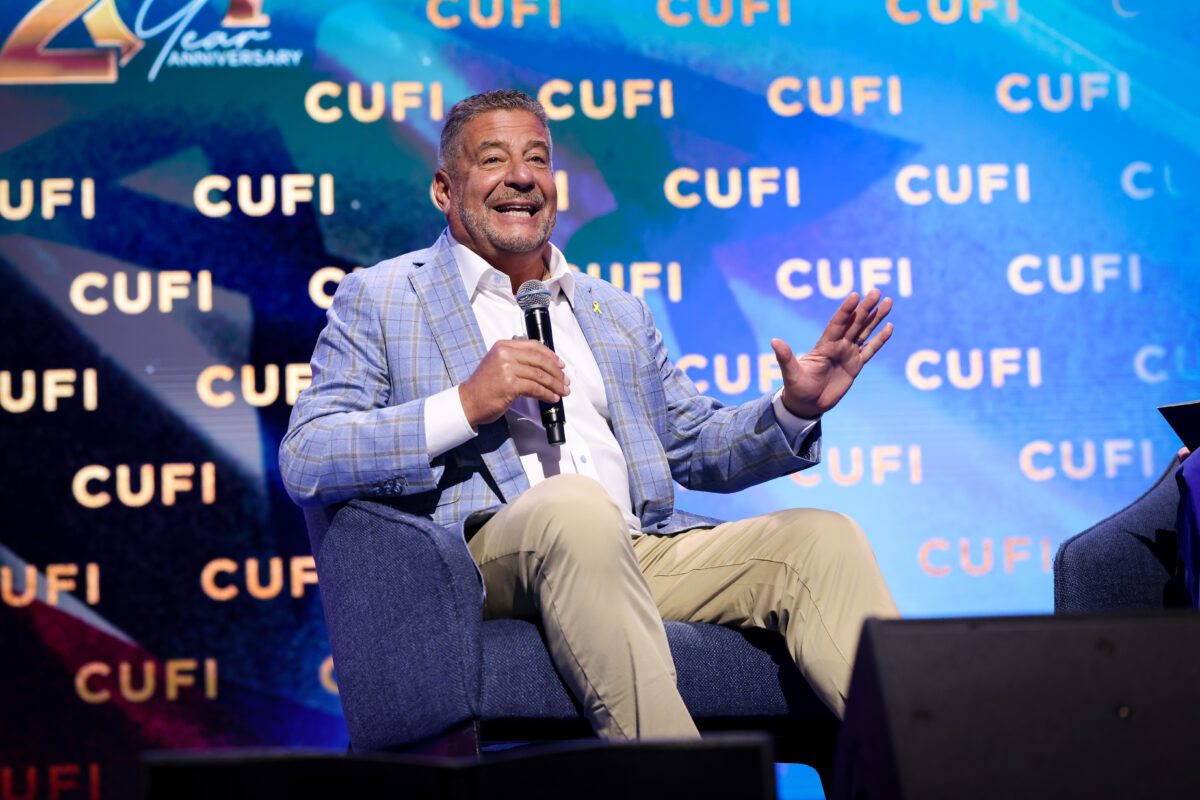
Auburn University men’s basketball coach Bruce Pearl is leaning against running to replace outgoing Sen. Tommy Tuberville (R-AL) and will make a final decision on entering the race by the end of the month, Jewish Insider’s Emily Jacobs has learned.
Status update: Pearl, 65, spent the summer meeting with GOP campaign operatives and Republican senators as he considered whether to enter the race following Tuberville’s announcement in late May that he would not seek a second term in the Senate to run for governor of Alabama. At the beginning of the summer, Pearl had just finished the academic year coaching Auburn’s basketball team, which he joined in 2014 and where he has led the SEC team to six NCAA tournament appearances, including this year’s Final Four. Two sources familiar with Pearl’s thinking told JI that he has not officially decided against running yet and has given himself until the end of September to make a final call, though he is unlikely to enter the contest.
BOOK SHELF
In new book, former Obama speechwriter calls on Jews to stand proud for their values
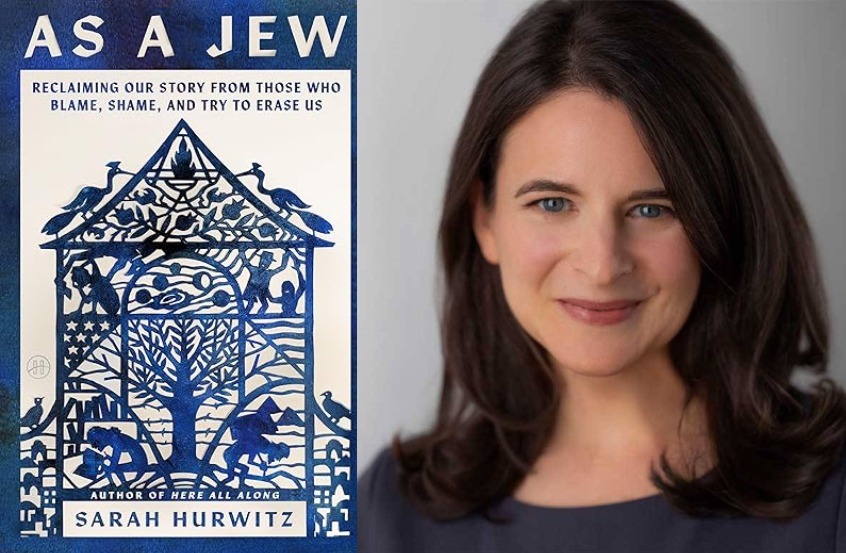
After debuting her first book Here All Along, about rekindling her Jewish faith, in 2019, former Obama speechwriter Sarah Hurwitz’s follow-up work comes out today. In As A Jew: Reclaiming Our Story From Those Who Blame, Shame, and Try to Erase Us, Hurwitz speaks to progressive Jews grappling with identity, Zionism and belonging. In an interview with Jewish Insider’s Gabby Deutch, she explained how the book — pitched before the Oct. 7, 2023, Hamas attacks — has taken on new urgency in the wake of rising antisemitism. “This book was very much my journey to stripping away all those layers of internalized antisemitism, anti-Judaism, all of that internalized shame from so many years of persecution, and just saying, ‘You know what, no, I’m a Jew,’” said Hurwitz.
Post- Oct. 7: Hurwitz said the events of the last two years have only furthered her argument that Jews throughout history have felt the need to separate from parts of their community to earn the approval of the rest of society. “Oct. 7 did not change the overall argument at all. It unfortunately, in many ways, gave this devastating, heartbreaking, new evidence from the argument,” Hurwitz said.
CHANGING TACK
Hudson Institute’s Ken Weinstein tapped as CBS News ombudsman
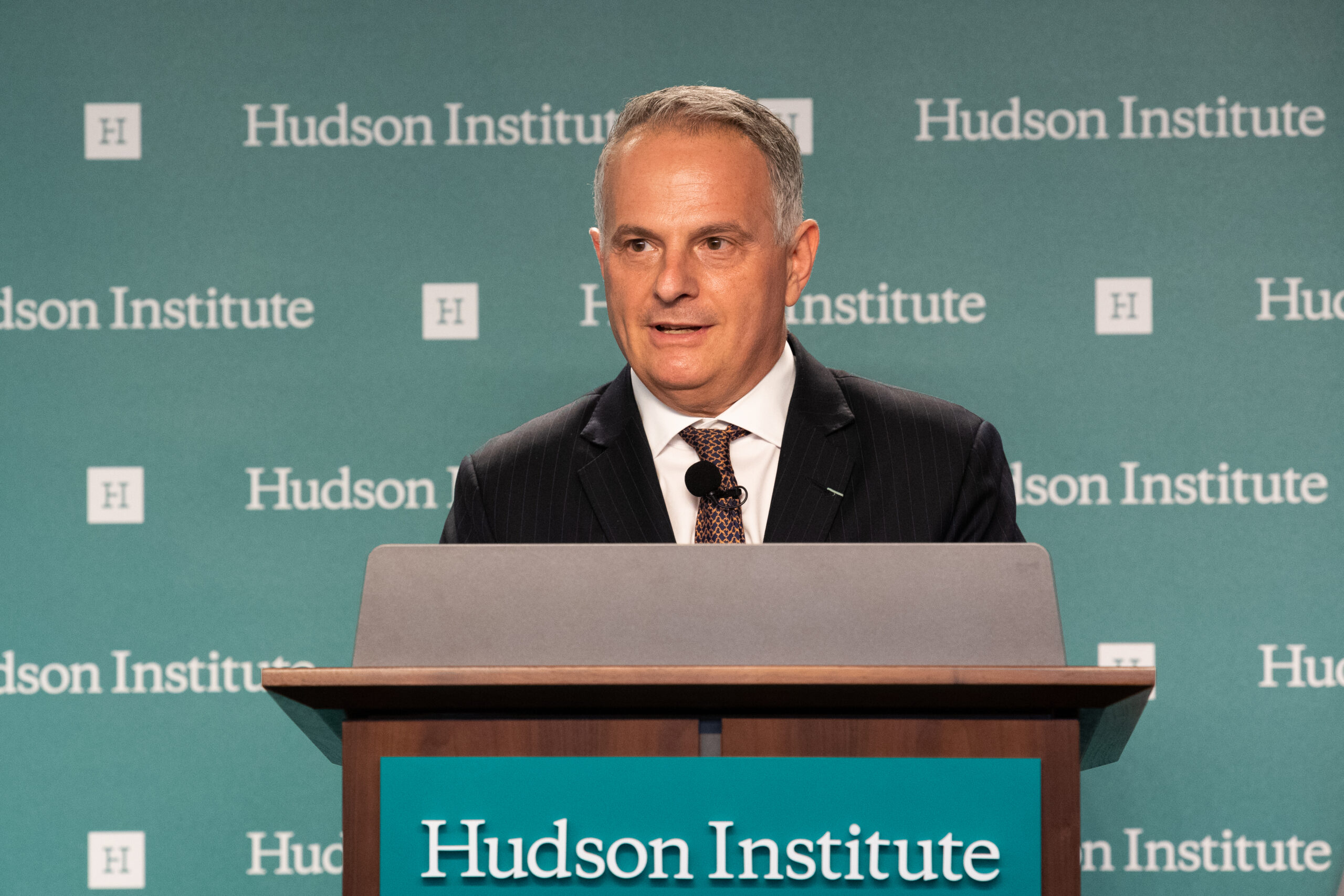
Ken Weinstein, the former president and CEO of the pro-Israel Hudson Institute think tank, has been named ombudsman of CBS News, where he will be tasked with reviewing complaints about editorial bias from consumers and employees, Paramount announced on Monday. The hire represents a shift for the news organization, which has faced accusations of anti-Israel bias in the wake of Hamas’ Oct. 7, 2023, attacks, Jewish Insider’s Matthew Kassel reports.
Following through: The creation of the new role also follows through on a pledge that Skydance Media had made as it sought approval from the Federal Communications Commission for its merger in late July with Paramount, CBS’ parent company. Weinstein will report to Jeff Shell, the president of Paramount. “I’ve known him for many years and have great respect for his integrity, sound judgment and thoughtful approach to complex issues,” Shell said in a statement on Monday. “Ken brings not only a wealth of advisory experience in media and beyond but also a calm, measured perspective that makes him exceptionally well-suited to serve as our ombudsman.”
SCOOP
Bernie Moreno urges schools in Ohio to adopt IHRA definition of antisemitism

Sen. Bernie Moreno (R-OH) is asking the presidents of the largest colleges and universities in Ohio to adopt the International Holocaust Remembrance Alliance’s working definition of antisemitism and ensure that their respective institutions have plans in place to combat campus antisemitism during the upcoming school year, Jewish Insider’s Emily Jacobs has learned.
What he wrote: Moreno sent letters on Tuesday to the presidents of The Ohio State University, Miami University, Kent State University, Cleveland State University, Youngstown State University, the University of Cincinnati, Central State University, the University of Toledo, Bowling Green State University, Akron University, Ohio University, Wright State University, Northeast Ohio Medical University and Shawnee State University. In the letters, the Ohio senator requested information on how each school was responding to “the unacceptable and disgusting rise in antisemitism” and the ways each plans to “protect students’ safety while on campus from antisemitism and/or other religiously motivated crimes.”
Worthy Reads
JD and Rand: Poles Apart: Politico’s Ian Ward spotlights the growing ideological divide in the Republican Party, underscored by recent clashes between Vice President JD Vance and Sen. Rand Paul of Kentucky over U.S. strikes targeting international drug cartels. “The exchange gets to the heart of the question dividing the two factions of restrainers: Should U.S. military action be evaluated based on its respect for the separation of powers and civil liberties? (A bar that blowing up a boatful of alleged drug smugglers without congressional approval or any due process likely does not meet — even as the White House has defended the legality of the strike.) Or should it be judged based on its ability to advance U.S. interests — at least its interests as defined by Trump and his allies? That question may sound academic, but it matters for the long-term political efficacy of the restraint camp. For now, Vance’s populist faction seems to have the upper hand over the libertarians. But try as Vance might to define the ‘Trump Doctrine’ in terms that are favorable to the anti-interventionist camp, the core of Trump’s foreign policy remains whatever Trump says it is.” [Politico]
‘Golden Dome’ Domination: The New York Times’ Sheera Frenkel looks at efforts by tech companies to develop technology for potential use in President Donald Trump’s proposed “Golden Dome” defensive system. “Mr. Trump promised during his campaign last year to build a U.S. system similar to Israel’s Iron Dome, which protects the country against missile attacks. In January, Mr. Trump signed an executive order to create the defense shield. … Many have flocked to defense conferences and conducted exercises to display everything from sonars that monitor incoming threats to lasers that shoot missiles from space. Companies chosen for Golden Dome are likely to become the new cornerstones of U.S. defense, military officials involved in the project said. Larger tech firms including Palantir, which builds advanced data processing systems, and Anduril, which makes A.I.-backed weapons systems, have already been in discussions to get involved, two military officials briefed on the conversations said.” [NYTimes]
Word on the Street
Jared Kushner and U.S. Middle East envoy Steve Witkoff met yesterday in Miami with Israeli Strategic Affairs Minister Ron Dermer to discuss ceasefire and hostage-relief efforts and day-after plans for Gaza…
Former Iran envoy Rob Malley, whose security clearance while serving in the Biden administration was suspended in the spring of 2023 amid an investigation into his handling of classified documents, said he would have resigned from the Biden administration but was not allowed to because of the status of his clearance…
Texas state Rep. James Talarico, a Democrat, who is mounting a Senate bid in the state, told Punchbowl News that part of the reason the Democratic Party is losing young voters is due to “our party’s failure to recognize the moral disaster in Gaza”…
Following a fight with New York City’s Board of Elections over his ability to appear on multiple ballot lines in November, Mayor Eric Adams, who is mounting an independent reelection bid, withdrew himself from the “EndAntiSemitism” ballot line…
A suspect in the vandalism of the Weitzman National Museum of American Jewish History in Philadelphia turned himself in to authorities, and is expected to face charges related to two separate incidents last month in which he spray-painted walls of the museum…
The Chicago Commission on Human Relations held a hearing on antisemitism on Monday that included the testimonies of a Chicago Public Schools student who faced antisemitism from both classmates and a teacher, as well as a Jewish man who was shot while walking to synagogue…
In a recently unearthed joint op-ed written in the Bangor Daily News while he was a high school student, Graham Platner, who is mounting a bid for Senate in Maine, suggested that “one man’s terrorist is another man’s freedom fighter,” while lamenting that in media coverage of the Israeli-Palestinian conflict, “a sometimes-oppressive Israeli state can be, and often is, portrayed as a victim”…
The New York Times spotlights the efforts of the Jewish Theological Seminary in Budapest to recover tens of thousands of Jewish texts seized by the Nazis before and during World War II…
A letter authored by U.K. Deputy Prime Minister David Lammy, who until last week was serving as the country’s foreign secretary, stated that London’s position was that Israel had not committed genocide in Gaza; Lammy wrote the letter prior to his reassignment within Prime Minister Keir Starmer’s government…
French lawmakers overwhelmingly voted to oust Prime Minister François Bayrou after nine months in office, collapsing the country’s government…
U.S. Ambassador to France Charles Kushner posted a video of himself and his staff participating in what he called the “Ambassador Plank Challenge,” modeled after Defense Secretary Pete Hegseth’s “Physical Fitness Challenge”; Kushner won, holding the plank for nearly eight minutes…
Sharren Haskel, Israel’s deputy foreign minister, met in Abu Dhabi with Ali Al Nuaimi, the chairman of the United Arab Emirates’ Foreign Affairs and Defense Committee…
The Wall Street Journal interviews hostage families tied to the Tikva Forum, who support continued IDF action in Gaza and oppose the widespread Israeli public pressure on the government to cut a deal to secure the hostages’ release before Israel’s strategic aims in Gaza are accomplished…
Israel banned two far-left Spanish legislators from entering the country following Madrid’s announcement that it would formalize a de facto weapons ban to Israel and ban ships carrying fuel bound for Israel from docking in Spain…
Syria accused Israel of conducting airstrikes near the cities of Palmyra, Latakia and Homs…
Israel’s soccer team fell short in its World Cup qualifier match to Italy 5-4; the Israeli players wore black armbands in recognition of the Jerusalem terror attack earlier in the day in which six people were killed…
Tunisian authorities denied a claim from the Global Sumud Flotilla that one of its vessels attempting to reach Gaza had been struck by a drone; a spokesperson for Tunisia’s National Guard said the allegations “have no basis in truth”…
International Atomic Energy Agency head Rafael Grossi said that if Iran allows nuclear inspectors into the country, “the possibility of further military action will be diminished”…
More than 1,800 actors, entertainers, producers and other film industry workers signed a pledge not to screen films or work with Israeli film institutions “that are implicated in genocide and apartheid against the Palestinian people”; signatories include Emma Stone, Javier Bardem, Mark Ruffalo, Ayo Edebiri and Olivia Colman…
AIDS activist Michael Seltzer, who raised millions to fund treatment and prevention of the virus, died at 78…
Pic of the Day
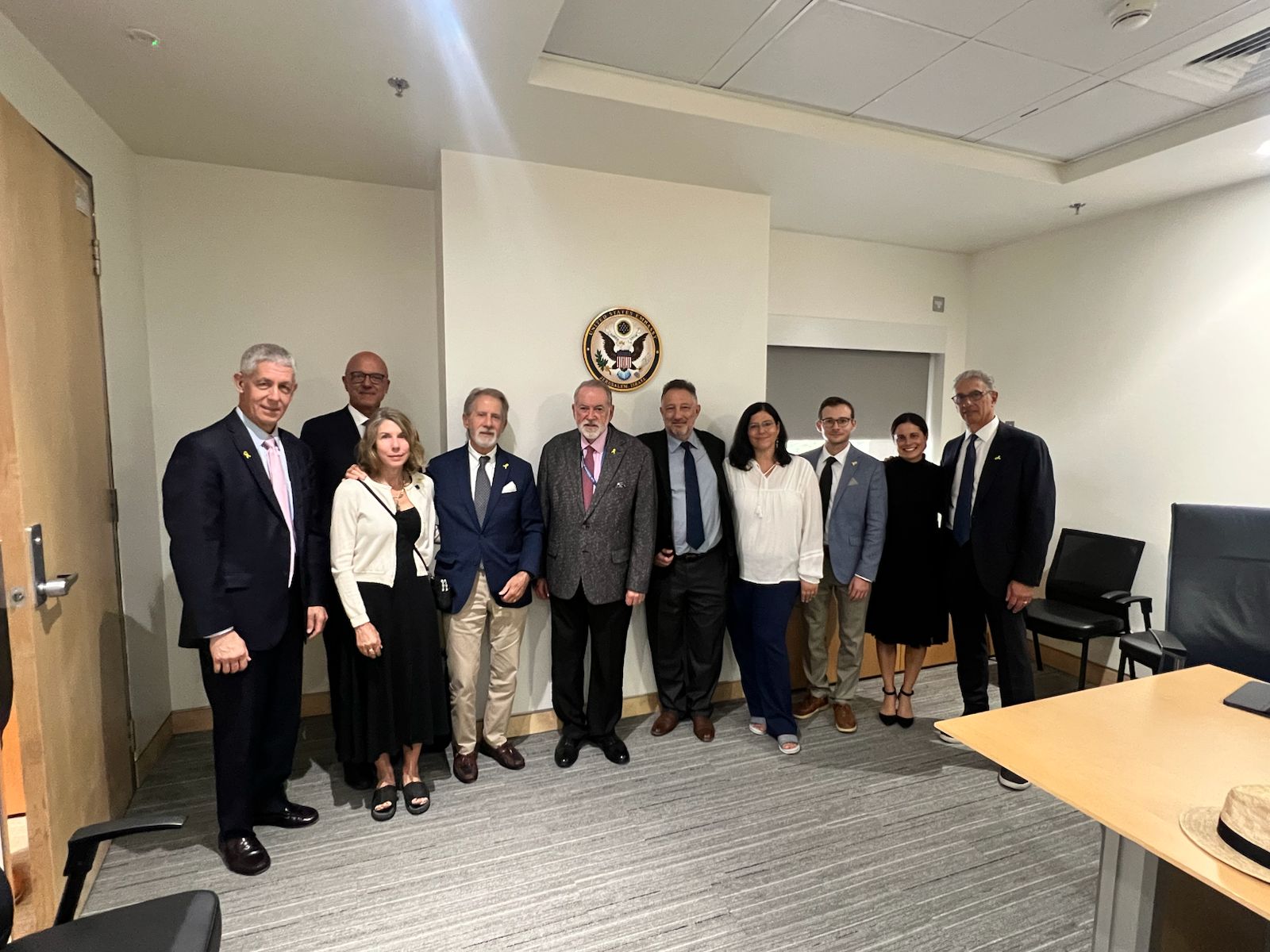
U.S. Ambassador to Israel Mike Huckabee met in Jerusalem on Monday with the families of Sarah Milgrim and Yaron Lischinsky, who were killed in a May terror attack outside an American Jewish Committee event at the Capital Jewish Museum in Washington.
Birthdays

President of Israel from 2014 to 2021, Reuven “Ruvi” Rivlin turns 86…
Beverly Hills resident, Barbara Schechter… Senior fellow emeritus in the foreign policy program at The Brookings Institution, Kenneth G. Lieberthal turns 82… Former administrator of the Centers for Medicare and Medicaid Services, Donald M. Berwick turns 79… President of the Middle East Forum and publisher of its Middle East Quarterly journal, Daniel Pipes turns 76… President emeritus of Yeshiva University, Richard M. Joel turns 75… A founder of the Shas party, he served in the Knesset for 16 years, Nissim Mordechai Ze’ev turns 74… Founding president of Shalem College in Jerusalem, he has been a visiting professor at University of Chicago, Cornell, Johns Hopkins and Georgetown, Martin Seth Kramer turns 71… Brooklyn educator, Steven Elworth… Retired editorial director of Schocken Books (the Judaica imprint of the Knopf Doubleday Publishing Group, which is part of Penguin Random House), Altie Karper… Israeli businesswoman and philanthropist, Shari Arison turns 68… Israeli businessman and president of Limmud FSU, Aaron G. Frenkel… Suzanna Stone… D.C.-based communications strategist and tactician, Jeffrey Weintraub… Crisis management consultant, author and founder of D.C.-based PR firm Dezenhall Resources, Eric B. Dezenhall turns 63… Founder and managing member of Alternative Asset CFO Services, Lloyd Eric Appel… U.S. senator (D-DE), Chris Coons turns 62… Professional golfer formerly on both the PGA Tour and then on the Champions Tour, Jules Ira “Skip” Kendall turns 61… Actor, comedian, screenwriter, film producer and musician, famous for “The Chanukah Song,” Adam Sandler turns 59… Author and former senior national correspondent at HuffPost for 10 years, now a correspondent and podcast host for The Bulwark, Jonathan Cohn turns 56… Former member of the Knesset for the Yesh Atid party, Dov Lipman turns 54… Former partner and associate director at Boston Consulting Group, now an independent consultant, Sacha Frédéric Litman… Features writer and political columnist for New York magazine, David Freedlander… Israeli entrepreneur and the CEO and co-founder of Lightricks, Zeev Farbman turns 46… Global head of financial innovation and digital assets at Amazon Web Services, Michael B. Greenwald… Program specialist at USC’s school of architecture, Carla Hashley… Former head of Google Cuba, now an investor and strategist, Brett Perlmutter… Managing director at Alums for Campus Fairness, he is also the D.C. chair of B’nai B’rith Connect, Trey Meehan… Co-founder of International Hummus Day in 2012, now an angel investor, he served in the IDF’s signals intelligence group, Unit 8200, Ben Lang… Fourth overall pick by the New Jersey Devils in the 2021 NHL draft, he is the son of hockey star Ellen Weinberg-Hughes, Luke Hughes turns 22…
The senator sent letters to the presidents of the largest colleges and universities in the state to ensure they have set plans to combat campus antisemitism

Kevin Dietsch/Getty Images
U.S. Sen. Bernie Moreno (R-OH) participates in a Senate Commerce, Science, and Transportation Committee hearing in the Russell Senate Office Building on January 28, 2025 in Washington, DC.
Sen. Bernie Moreno (R-OH) is asking the presidents of the largest colleges and universities in Ohio to adopt the International Holocaust Remembrance Alliance’s working definition of antisemitism and ensure that their respective institutions have plans in place to combat campus antisemitism during the upcoming school year, Jewish Insider has learned.
Moreno sent letters on Tuesday to the presidents of The Ohio State University, Miami University, Kent State University, Cleveland State University, Youngstown State University, the University of Cincinnati, Central State University, the University of Toledo, Bowling Green State University, Akron University, Ohio University, Wright State University, Northeast Ohio Medical University and Shawnee State University.
In the letters, the Ohio senator requested information on how each school was responding to “the unacceptable and disgusting rise in antisemitism” and the ways each plans to “protect students’ safety while on campus from antisemitism and/or other religiously motivated crimes.”
Moreno also urged the schools to adopt the IHRA definition, which he argued “provides clarity on what constitutes antisemitism and can serve as a tool on campus to help combat hate crimes and foster a safer environment for Jewish students.”
“I want to make sure that university leaders are doing all they can to ensure students are free not only to learn on college campuses but also to feel safe while doing so, regardless of their religion,” Moreno wrote.
Moreno praised the Trump administration’s efforts to combat antisemitism in the letters, writing that the White House was “taking strong and necessary action” on the matter.
“Jewish Americans are under attack in this country. Americans have witnessed the manifestation of rampant antisemitism on college campuses all over the country,” Moreno wrote. “Horrifyingly, hate crimes and domestic terrorism have plagued the Jewish community. Recently, in this country, Jewish Americans have been murdered in cold blood and burned alive. These attacks are reminiscent of 1939. It is 2025 – the violence against Jews must stop.”
As his party becomes more critical of Israel, Brown’s views on the Middle East will likely be in the spotlight for his political comeback
Stephen Maturen/Getty Images
Democratic senate candidate, then-Sen. Sherrod Brown (D-OH), addresses volunteers at a campaign office on November 4, 2024 in Cleveland Heights, Ohio.
Former Sen. Sherrod Brown (D-OH) is set to make a bid to return to the Senate in 2026, according to the Cleveland Plain Dealer.
Brown, who lost his 2024 reelection race by four points to Sen. Bernie Moreno (R-OH), will challenge Sen. Jon Husted (R-OH), who was appointed earlier this year to fill Vice President JD Vance’s seat. President Donald Trump carried the state by more than 11 points in 2024.
The progressive Brown remained relatively popular in the state even as it has trended increasingly red in recent years, and maintained strong ties with the state’s large Jewish community. He had also been floated as a potential gubernatorial candidate in 2026, but was strongly courted by Senate Democrats to make a comeback bid.
In late 2024, Brown voted against Sen. Bernie Sanders’ (I-VT) first efforts to block certain U.S. arms transfers to Israel.
“Senator Brown strongly believes that Israel has a clear and undeniable right to defend itself against Hamas’ brutal terrorism and voted to send military aid to Israel, along with much-needed humanitarian aid to Gaza,” a Brown spokesperson said prior to the vote. “Ultimately, Senator Brown believes that Israel and Hamas must agree to a ceasefire that ends the war, frees the hostages, and delivers desperately needed humanitarian aid to the Palestinian people.”
Numerous Democrats have since shifted their position on the issue, citing the worsening humanitarian situation in Gaza.
In 2022, Brown said that he believed that support for Israel was a majority position in both parties, and that those who opposed the Jewish state were a small group of “outliers,” rejecting the notion that “progressive values” were incompatible with support for Israel.
The former Ohio senator, then the chairman of the Senate Banking Committee, took a relatively hawkish position on Iran last year, pressing the administration, after Hamas’ Oct. 7, 2023, terror attacks, to re-freeze Iranian funds previously released under a deal to free Americans held hostage in Iran.
Brown also called on the Biden administration, in early 2024, to re-impose a Foreign Terrorist Organization designation on the Houthis.
Husted has generally been seen as a moderate and has maintained a pro-Israel record in office, opposing efforts to block weapons transfers to Israel, joining with nearly all other Senate Republicans in demanding full dismantlement of Iran’s nuclear program, supporting American and Israeli strikes on Iran and backing legislation to increase sanctions on Iran.
Speaking at a Senate hearing on campus antisemitism, Husted said that the disruptions in the days after the Oct. 7, 2023 terror attacks appeared coordinated.
Ohio Senate hopeful looks to jump-start campaign with help from pro-Israel stalwarts including former U.S. Amb. to Israel David Friedman

Chris Maddaloni/CQ Roll Call via AP
In this 2016 photo, Ohio Republican Senate candidate Josh Mandel, the current state treasurer, makes a stop on his "Noble County Commit to Mitt Early Vote Express Bus Tour Stop" at the courthouse in Caldwell.
Josh Mandel, a Republican Senate candidate in Ohio, is holding a high-profile virtual fundraising event on Monday alongside several pro-Israel heavyweights including former U.S. Ambassador to Israel David Friedman, billed as a “special guest” on the invitation for the May 10 event.
Elan Carr, the Trump administration’s special envoy to monitor and combat antisemitism, who is one of 15 hosts, shared the invite in a Wednesday morning tweet. “Amb. Friedman and I, with leaders from across the country, are proud to support front-running US Senate candidate Josh Mandel,” Carr wrote. “48th Treasurer of Ohio, US Marine, Iraq War veteran, and my good friend, Josh is a true patriot and great leader for our country.”
Other hosts include Sandy Perl, a partner at Kirkland & Ellis LLP in Chicago; Jon Diamond, president of Safe Auto Insurance in Columbus; former AIPAC President Howard Friedman; Michael Tuchin, a partner at KTBS Law LLP in Los Angeles; author and businessman Seth “Yossi” Siegel; and Phil Rosen, a partner at Weil, Gotshal & Manges LLP in New York.
The fundraiser suggests that Mandel is likely to receive some significant support from prominent members of the pro-Israel community as he struggles to gain traction in the crowded field of candidates vying to succeed outgoing moderate Sen. Rob Portman (R-OH). Former GOP state party chair Jane Timken, tech executive Bernie Moreno and businessman Mike Gibbons have entered the race in recent months, and more are expected to join as election season heats up.
“Josh is a proud American, Marine, Jew and Zionist,” Scott Guthrie, a spokesman for Mandel, told Jewish Insider on Wednesday when asked about the upcoming benefit. “He is grateful to have the support of so many American patriots who have fought for a strong U.S.-Israel relationship. He also feels blessed to have evangelical Christian Zionists across Ohio supporting his campaign for U.S. Senate.”
Still, Mandel appears to have had some trouble courting contributors, despite early favorable polling from the conservative Club for Growth, which endorsed him. Recent filings from the Federal Election Commission revealed that Mandel’s campaign lost money in the first quarter of the year. In April, sources told Axios, Mandel crashed a Palm Beach donor retreat hosted by the Republican National Committee, but was escorted from the event because his name was not on the invitation list.
Mandel has emerged as a polarizing figure as he seeks to channel former President Donald Trump, who remains popular among Republican voters in Ohio and has yet to make an endorsement in the race. In March, Mandel’s Twitter account was briefly suspended after he posted an inflammatory poll asking whether “Muslim Terrorists” or “Mexican Gangbangers” would be “more likely to commit crimes.”
The tweet drew widespread condemnation, including from a Jewish community member in Columbus who, in a Cleveland.com guest column, castigated Mandel’s “reprehensible rhetoric” as “no different than the way people used to talk about Jews.”
Recently, Mandel has somewhat softened his rhetoric, presenting himself as a more traditionally conservative man of faith in his first TV ad, released at the end of March during Passover.
“This time of year we celebrate that God is always in control,” Mandel said in the 30-second spot over soft piano accompaniment. “I’m Josh Mandel, and I personally know that’s true. You see, my grandma was saved from the Nazis by a network of courageous Christians who risked their lives to save hers. Without their faith, I’m not here today.”
“I’m Josh Mandel and I approve this message, because in dark times like this past year, faith is our brightest light,” he concluded.
Mandel ran unsuccessfully against Sen. Sherrod Brown (D-OH) in 2012. He mounted a second challenge in 2018 but withdrew from the race. From 2011 to 2019, he served as Ohio’s state treasurer, overseeing record investments in Israeli bonds.
In a February interview with JI, shortly after he announced his candidacy, Mandel emphasized a deep personal connection with the Jewish state.
“I’m raising my three kids to be proud Americans, proud Jews and proud Zionists,” he said, adding: “I’m also proud to have many cousins who live throughout Judea and Samaria, and I believe that Jews have the biblical right to live, build and prosper in every corner of Judea, Samaria and the entirety of Israel.”
The 43-year old Republican goes for the hat trick, entering a Senate race for the third time
Chris Maddaloni/CQ Roll Call via AP
In this 2016 photo, Ohio Republican Senate candidate Josh Mandel, the current state treasurer, makes a stop on his "Noble County Commit to Mitt Early Vote Express Bus Tour Stop" at the courthouse in Caldwell.
Former Ohio State Treasurer Josh Mandel has long had his eye on the U.S. Senate. The 43-year-old Republican made his first bid for the upper chamber in 2012 in a failed challenge against Sen. Sherrod Brown (D-OH). The following cycle, six years later, Mandel tried again but withdrew from the race citing family health concerns.
Last week, Mandel made clear that he was going for the hat trick when he entered the open-seat race to succeed Sen. Rob Portman (R-OH), who is retiring at the end of his term in 2022. Though Mandel, a Marine veteran, was the first to declare his candidacy in the Republican primary, the race is expected to be a crowded one. Several other Republicans, including Rep. Bill Johnson (R-OH) and former Ohio Republican Party chairwoman Jane Timken, are considering bids.
“Republicans are going to have one of the messiest primaries we’ve ever seen,” said Justin Barasky, a partner at the Democratic media consulting firm Left Hook Strategy who worked as a campaign manager on Brown’s 2018 reelection bid. “There’ll be an opportunity for Democrats to prove themselves as a reasonable alternative.”
Rep. Tim Ryan (D-OH) is expected to enter the race, while Amy Acton, Ohio’s former state health director, is currently exploring a bid. But Mandel insists that he is in a strong position as he enters the race with $4.3 million left over in his campaign account. “I’m confident that we will win the primary and go on to beat Tim Ryan, Amy Acton or whoever the Democrats put up in the general election,” he said.
Mandel, who claims that he entered the race in part because he believes the recent impeachment trial was “unconstitutional,” is positioning himself as a fervent Trump supporter. He avoids acknowledging that the former president lost the election and hopes he will run again in 2024. In a recent interview with Jewish Insider, Mandel discussed his campaign. Edited excerpts follow.
Jewish Insider: Why are you running?
Josh Mandel: I think we need a new generation of conservative leaders in Ohio and in Washington. Unfortunately, there is this cabal of Democrats and Republicans who sound the same, stand for nothing and are more interested in getting invited to cocktail parties than they are in defending the Constitution. And I believe that we need strong America-first senators who are willing to fight for the ideals of economic freedom, individual liberty and constitutional values.
JI: That’s a Trump message. Do you think it will carry enough weight in Ohio given that Trump is no longer in power?
Mandel: I do. You know, Ohio is Trump country.

Then-Ohio Treasurer Josh Mandel, center, and state Rep. Kevin Boyce, right, hold a news conference in Columbus, Ohio in 2015. (Andrew Welsh-Huggins/AP)
JI: When you say you’re running to help define the party’s future, are you envisioning that Trump will run again in 2024?
Mandel: I hope he does. I hope he runs for reelection in 2024 — pardon me, I hope he runs for president in 2024. And once again, I’ll be a full-throated supporter behind his candidacy. In Ohio in 2016, I was the first statewide official to support Trump. Late in the fall of 2016, after the Access Hollywood tapes came out and all these Republicans were jumping ship, I stuck with him. And in the 2020 reelection, I was part of a small group called the Trump 500, which is a small group of people around the country who raised over $500,000 for his reelection. I’ve been a strong Trump supporter. I think what he’s done for America, and what he’s done for Israel, is unrivaled, and I’m proud to call him my president.
JI: Have you spoken to him about your candidacy?
Mandel: No.
JI: Do you believe that Trump lost the election?
Mandel: Listen, I believe that there definitely was fraud in this election, just like there is in every election. And if I were a United States senator, I would have voted with Sen. Ted Cruz (R-TX) and Sen. Rick Scott (R-FL) in delaying the certification of the election to give time for an investigation to ensue. As a Marine Corps veteran who raised his right hand and took an oath to defend the Constitution, I feel like I was also taking an oath to defend the vote of every individual American because that vote and that voice of each citizen is precious, and it’s unique, and it must be protected. And so whether voter fraud occurs to the tune of millions of people, thousands of people or a handful of people, it’s still too much.
One of the things that baffles me is why, you know, the radical liberals oppose photo ID for voting. I mean, if you need a photo ID to get into the Democratic National Convention, and you need a photo ID to do a tour of the White House, why do you not need a photo ID to go vote? In my mind, photo ID should be one of the main priorities in protecting the people’s vote.
JI: What are your thoughts on Trump’s response to losing the election in the lead-up to the Capitol siege on January 6?
Mandel: I think President Trump told the American citizens to march peacefully. And I think ‘peacefully’ is a very clear word that every American understands. The events of January 6 are not President Trump’s fault. It’s the fault of people who chose to break the law. But what President Trump said was very clear — march peacefully — and I think everyone understands what the word peacefully means.
JI: What do you make of Rob Portman’s legacy?
Mandel: Rob is a friend and a statesman — and, you know, I was shocked to hear that he was retiring.
JI: Who in the Senate do you feel you have an affinity for?
Mandel: Ted Cruz. Mike Lee. Marco Rubio. Those are some.

Republican presidential candidate Sen. Marco Rubio, accompanied by Ohio Treasurer Josh Mandel, tours a water hydraulics plant in Salem, Ohio, in 2015. (Scott R. Galvin/AP)
JI: Amy Acton, who is being eyed as a potential Democratic candidate in the Ohio Senate race, faced some pretty vile antisemitic threats before she resigned from her position as Ohio’s health director last June. Do you have any comment on that?
Mandel: I didn’t follow those threats specifically, so I can’t speak to them. But I can tell you that I think Amy Acton did a horrible job as the state’s health director. Her numbers and predictions were completely wrong, and she’s the reason why many families in Ohio are facing economic ruin. Her dead-wrong predictions and her big hand of government invading the lives of small business owners and schools has, unfortunately, waged economic ruin on families and severely harmed the education of kids. I strongly and fundamentally disagree with Amy Acton’s shutdowns of family-owned small businesses, family-owned restaurants and schools throughout Ohio.
JI: Let’s pivot to foreign policy for a minute. Are you worried that Biden will reenter the Iran nuclear deal?
Mandel: Very worried. As a United States senator, I would combat every attempt by the Biden administration to empower and enrich Iran. I think that will forever be a stain on the Obama administration. I mean, the Obama Iran deal was horrible for America, horrible for Israel, and dangerous for anyone who believes in peace and freedom.
JI: On fundraising, are you confident that you’ll be able to pull in as much money as you were able to previously?
Mandel: Listen, I’m confident we’ll be successful in raising money, but this campaign is not going to be about money. This campaign is going to be one of the grassroots. We have an army of Trump activists and conservative warriors around the state who are backing my candidacy, and that will help propel us to victory.
JI: Anything you’d like to add?
Mandel: I guess I would add this: I’m raising my three kids to be proud Americans, proud Jews and proud Zionists. And I am very grateful for the support of evangelical Christians, Jews and others around the state and country who’ve been supporting me and my leadership advancing the U.S.-Israel relationship. One other thing I would say: I’m also proud to have many cousins who live throughout Judea and Samaria, and I believe that Jews have the biblical right to live, build and prosper in every corner of Judea, Samaria and the entirety of Israel.

The CNN and New York Times Democratic Presidential Debate Otterbein University Westerville, Ohio 2019
Westerville, Ohio — In a heated debate Tuesday night, Senator Elizabeth Warren (D-MA) bore the brunt of the attacks from rival candidates after taking the lead in national and early state polls.
On a crowded stage of 12 presidential hopefuls, the Massachusetts Democrat faced barbed questions about her health care and tax policies from more moderate rivals including South Bend, Indiana Mayor Pete Buttigieg and Senator Amy Klobuchar (D-MN).
Buttigieg, who launched a web ad attacking Warren for her support for Medicare for All before Tuesday’s debate, tried to portray her as a classic Washington politician reluctant to acknowledge the tax increases that would come as part of the plan. Warren has emphasized that costs will go down “for hardworking middle-class families” as part of legislation intended to provide free health care coverage to every American.
Senator Bernie Sanders (I-VT), who has long boasted of “writing the damn [Medicare for All] bill,” acknowledged that taxes would go up, but “for virtually everybody, the tax increase they pay will be substantially less — substantially less than what they were paying for premiums and out-of-pocket expansions.” Klobuchar praised Sanders “for being honest” and then accused Warren of not telling Americans “where we’re going to send the invoice.” Klobuchar defended her comments after the debate, telling reporters, “I wasn’t sharply attacking anyone, I was making my case about why I’m the best candidate.”
Although in past debates, Warren had been attacked by centrist candidates for her support for Medicare for All, that criticism came from long-shot candidates like former Congressman John Delaney (D-MD) and former Governor John Hickenlooper (D-CO). The Massachusetts Democrat emphasized her health care policy as a moral position and said that “the issue is whether the Democratic Party has the guts to stand up to the health care industry.”
Warren faced attacks from rivals on a variety of other topics: Businessman Andrew Yang criticized her support of a wealth tax, Congresswoman Tulsi Gabbard (D-HI) attempted to pin her down on foreign policy and Senator Kamala Harris (D-CA) went after her for refusing to call on Twitter to delete President Donald Trump’s account.
Warren also had a tense exchange with former Vice President Joe Biden. After Warren touted her efforts to create the Consumer Finance Protection Bureau (CFPB) during the Obama administration, Biden noted his own efforts at the time, telling her, “I went to the floor and I got you the votes.” In response, Warren pointedly thanked Barack Obama for his efforts.
The debate also featured the first extended discussion of foreign policy in the six presidential debates of the 2020 cycle, and came days after Trump announced the withdrawal of U.S. troops from Syria as the Turkish military launched an invasion of the country.
Gabbard, who has defended the regime of Bashar al-Assad, served as a foil for the other candidates on stage, criticizing “regime-change wars” and attacking “the mainstream media” and politicians from both parties for having, along with Trump, the “blood of Kurds” on their hands. Gabbard’s comments prompted a fierce rebuke from Buttigieg about the president’s decision to withdraw U.S. forces. “Part of what makes it possible for the United States to get people to put their lives on the line to back us up is the idea that we will back them up, too,” said the South Bend mayor, who served a tour in Afghanistan as a Navy reservist. “This president has betrayed American values. Our credibility has been tattered.”
Elizabeth Warren argued, “I think that we ought to get out of the Middle East. I don’t think we should have troops in the Middle East but we have to do it the right way, the smart way.” Warren’s comments were strongly criticized by fellow senator Chris Coons (D-DE) after the debate. Coons, a Biden supporter, told reporters that Warren’s statement “showed a striking degree of naïveté or ill preparedness.”
Former Texas congressman Beto O’Rourke clashed with the other candidates over his support for mandatory buybacks of assault weapons. O’Rourke, whose hometown of El Paso, Texas, was the site of a mass shooting in August, insisted that if assault weapons “are too dangerous to sell, they are also too dangerous to own.” He sparred with Buttigieg, who said that the Texas Democrat was focused on “purity tests,” arguing that O’Rourke had no clear plan for how he would take assault weapons away from their owners. O’Rourke also faced criticism from former HUD Secretary Julian Castro. “I am not going to give these police officers another reason to go door to door in certain communities, because police violence is also gun violence, and we need to address that,” Castro said.
Democrats did find common ground in the first debate since the beginning of the impeachment inquiry against Trump. On stage Tuesday night, there was unanimous support for the impeachment inquiry centered around Trump’s effort to pressure the Ukrainian government to investigate Biden’s son Hunter Biden. Only hours after the former vice president’s son admitted to bad judgment in an interview with ABC News, his father insisted on the debate stage “my son did nothing wrong. I did nothing wrong.”
Please log in if you already have a subscription, or subscribe to access the latest updates.
 Continue with Google
 Continue with Apple