


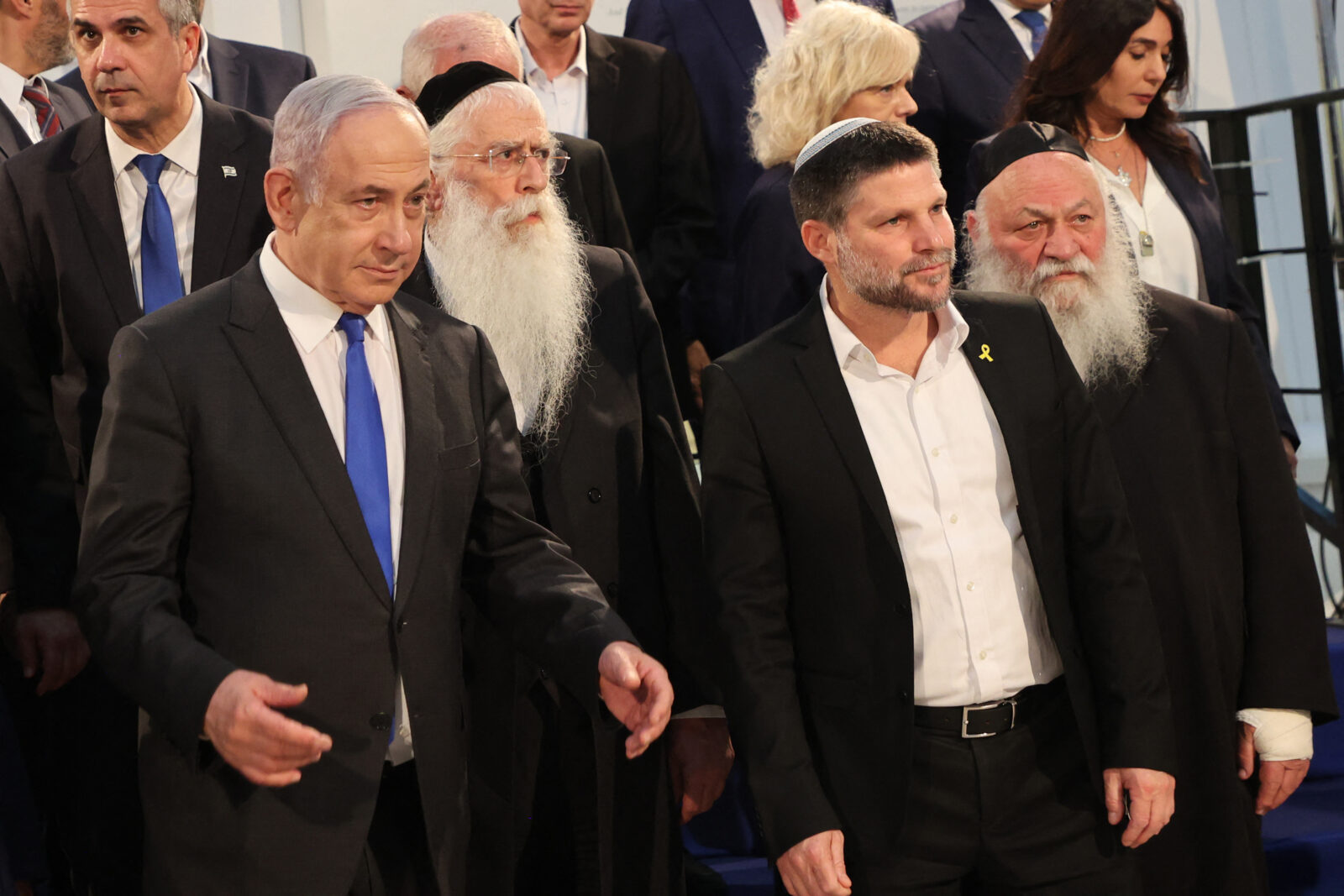
GIL COHEN-MAGEN/POOL/AFP via Getty Images
Netanyahu has less than two weeks to pass a budget — or go to early elections
The prime minister’s governing coalition is struggling to stay intact to pass 2026 budget amid shifting political priorities


 Add JewishInsider on Google
The war against Iran may have united the vast majority of Israelis who support its aims, but much of the governing coalition’s prewar political obstacles still have to be resolved by the end of the month — including the passing of a state budget for the current year and a Haredi conscription law — or else an early election will automatically be called.
The coalition failed to pass a 2026 budget by Dec. 31, a regular occurrence in Israel, due to several policy disputes. By law, if the Dec. 31 deadline is not met, it may be extended to the end of March. However, if the Knesset does not pass a budget by the end of March, the law states that the body will automatically dissolve, with an election held 90 days later.
The Knesset is slated to go into recess on March 24, but it appears increasingly likely that the legislature will stay in session, with efforts to finalize the budget continuing until hours before Passover, which begins on the evening of April 1.
If Israeli Prime Minister Benjamin Netanyahu and his coalition succeed in approving a budget, the official election date would be set for Oct. 26, though the parties could choose to hold it on an earlier date.
Some Israeli media have reported that Netanyahu would prefer to hold the election before Rosh Hashanah (Sept. 12) and the subsequent three weeks of Jewish holidays; other analysts have said he would not want an election after Oct. 7, because the date will serve as a reminder of his government’s failure to prevent Hamas’ 2023 terror attack.
If the coalition does not succeed in passing a budget, the election will be held at the end of June, and Netanyahu’s Likud party will have to launch a campaign, potentially as the war with Iran is still ongoing.
Before the war, the biggest political challenge for Netanyahu’s government related to issues surrounding Haredi military service.
The Haredi exemption from the mandatory IDF draft was canceled by the High Court of Justice in 2023, just prior to the Hamas attacks — and shortly before Israelis became acutely aware of the IDF’s urgent manpower needs. Since then, the government has been embroiled in legal and legislative disputes over how many young Haredi men to conscript and what penalties should be imposed on those who refuse to serve.
With the issue unresolved, both Haredi parties quit their Cabinet posts last year, though Shas and parts of United Torah Judaism mostly continued voting with the coalition in the Knesset. Still, the parties demanded that a bill reducing penalties for not serving in the IDF be passed before they supported the budget.
While the head of the Knesset Foreign Affairs and Defense Committee, Netanyahu loyalist Boaz Bismuth, led the effort to draft legislation that the Haredi parties would agree to — the proposal would institute relatively low enlistment quotas and lessen and defer most penalties for refusing to serve — enough members of Knesset from other coalition parties opposed it that it was unclear that Bismuth’s bill would get enough votes to pass.
Last week, Netanyahu and Finance Minister Bezalel Smotrich announced that coalition parties agreed to put aside all controversial legislation, including the Haredi draft bill, as well as a reform led by Smotrich to further privatize the dairy sector, which faced significant opposition within Likud. The Haredi parties were reportedly incentivized to drop their insistence on passing the bill when Smotrich and Netanyahu agreed to meet their other budgetary demands.
Dropping the Haredi draft bill means that the status quo remains: The IDF is legally required to send draft notices to all Haredi men aged 18-26, though they do not have to send them all at once, and the government must stop funding yeshivas for young men who are required by law to draft. Yet the government does not plan to enforce the law while the war against Iran is ongoing, Cabinet Secretary Yossi Fuchs told the High Court on Thursday.
Attorney General Gali Baharav-Miara flagged some Haredi budgetary demands as illegal, leading the parties to threaten once again to vote against the state budget unless the same amount of funding is diverted to places that Baharav-Miara would not reject. That dispute delayed a vote on increasing the wartime defense budget that had been set for Monday.
At the same time, National Security Minister Itamar Ben-Gvir and his Otzma Yehudit party have yet to drop their most controversial proposal, the death penalty for terrorists, which they continue to demand be passed before the budget vote. Otzma has followed through on past threats to vote against the coalition or absent themselves from key votes if their demands are not met.
Ben-Gvir posted a video on X on Wednesday, in which an off-camera voice said, “I heard the Iranians say that you’re dead.” Standing in front of a gallows with a plaque with Israel’s anthem, a memorial to Jewish underground fighters who were hanged by the British Mandatory government, Ben-Gvir said: “I am dying to execute terrorists. Death penalty for terrorists.”


Please log in if you already have a subscription, or subscribe to access the latest updates.
 Continue with Google
 Continue with Apple