Amos Ben-Gershom (GPO)
Israel’s Somaliland recognition rattles Qatar and other critics
Jerusalem’s recognition of Somaliland — strategically positioned across the Gulf of Aden from Houthi-controlled parts of Yemen — has left some regional governments on the defensive as Jerusalem moves first


 Add JewishInsider on Google
Israel’s recognition of Somaliland has stirred unease across parts of the Arab and Muslim world, challenging regional power dynamics as Jerusalem moves first in a strategically sensitive corner of the Horn of Africa.
Israel became the first country to recognize Somaliland on Friday, 34 years after the democratic, pro-Western state declared its independence from Somalia. The move puts Israel at odds with a number of Arab and Muslim nations including Qatar, a major power broker in Somalia and a key mediator in regional conflicts, at a time when Washington is seeking to expand the Abraham Accords and manage competing Arab interests in the Horn of Africa.
Israeli Prime Minister Benjamin Netanyahu and Foreign Minister Gideon Sa’ar signed a document establishing full diplomatic relations between the countries which affirms that they have “shared values, strategic interests and the spirit of mutual respect that binds our peoples,” and that “this relationship will contribute to advancing peace, stability, and prosperity in the Horn of Africa, the Middle East and beyond.”
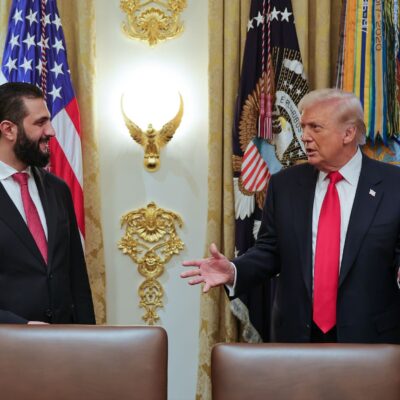
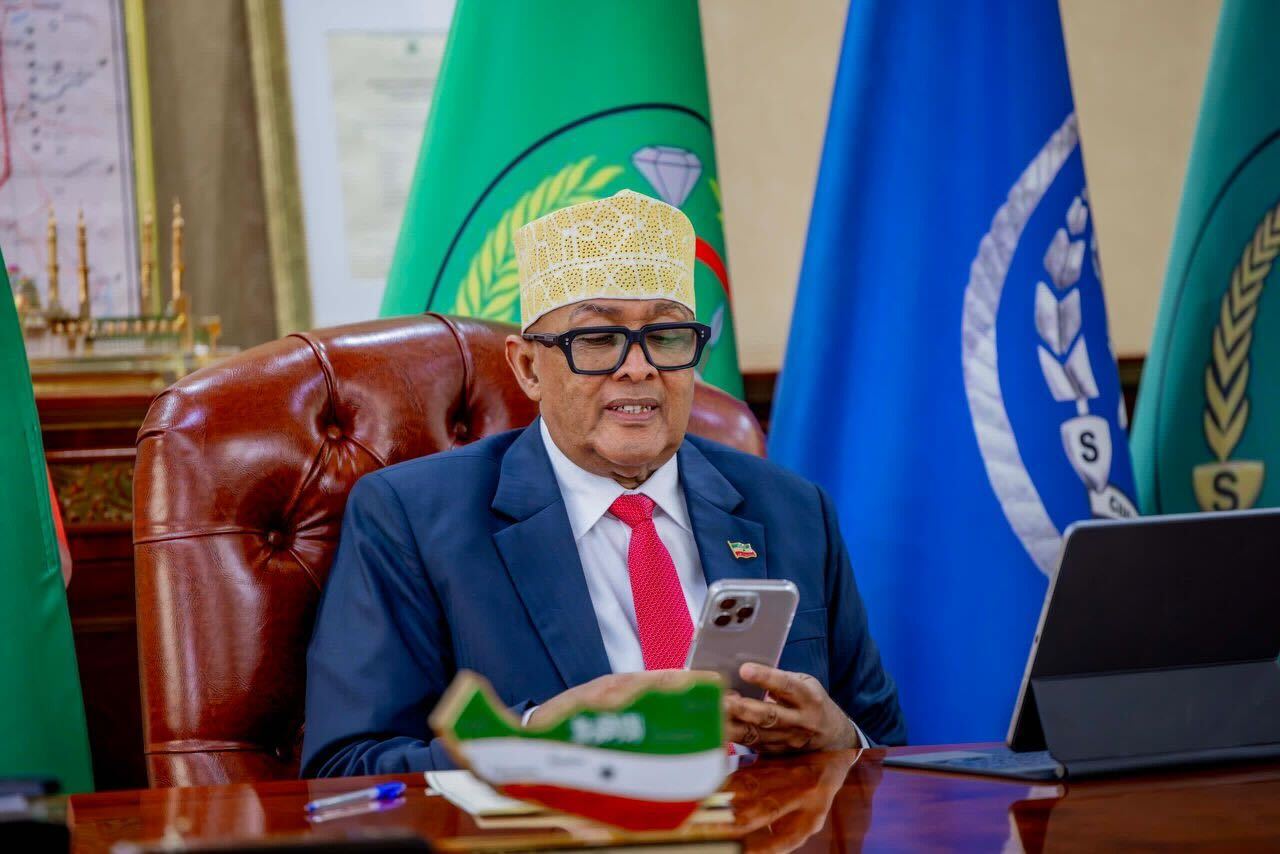
The Prime Minister’s Office described the recognition as being “in the spirit of the Abraham Accords, signed at the initiative of President [Donald] Trump,” and Netanyahu told Somaliland President Abdirahman Mohamed Abdullahi that he would “communicate to President Trump your willingness and desire to join the Abraham Accords.”
However, Trump has largely dismissed the idea that the U.S. would follow suit at this juncture, saying it is “under study.”
“Does anyone know what Somaliland is, really?” Trump told The New York Post.
Somalia is a member of the Arab League, joining in 1974 as the first non-Arab nation due to strong cultural, religious and historical ties. Somalia also holds a crucial geopolitical location for global trade.
Somalia has served as a proxy battleground for broader regional power struggles, with influential Middle Eastern states supporting different factions and projects.
Qatar has sought to establish itself as a dominant influence and key mediator in Somalia, supporting the central government and pouring resources into the country for over a decade.
“Want another reason to back Somaliland? Qatar — the Muslim Brotherhood’s biggest bankroller — backs the other side,” Foundation for Defense of Democracies CEO Mark Dubowitz said.
On Saturday, the Qatari government released a statement rejecting “the announcement of mutual recognition between the Israeli occupation authorities and the Somaliland region,” and “any attempts aimed at establishing or imposing parallel entities that would undermine the unity of Somalia.” Doha also said in the statement that it would be “more appropriate” for the Jewish state to “recognize the State of Palestine.”
Qatar also released a statement with 21 Arab and Muslim countries — including Jordan, Egypt, Iran, Pakistan and “the State of Palestine” — “stressing their unequivocal rejection of Israel’s recognition of the Somaliland region.”
Recognizing Somaliland is also a way of positioning Israel against Qatar, as Foundation for Defense of Democracies CEO Mark Dubowitz pointed out: “Want another reason to back Somaliland? Qatar — the Muslim Brotherhood’s biggest bankroller — backs the other side.”
An official Somaliland X account posted that “Doha has no business meddling in Somaliland’s affairs while bankrolling Muslim Brotherhood proxies to prop up Mogadishu’s failed regime. … Foreign powers parroting Mogadishu’s line can shove their hypocrisy. Our future is ours—not dictated by Qatar’s Islamist agenda.”
Egypt and Turkey, both close allies of Somalia, have also condemned Israel’s recognition of Somaliland. Saudi Arabia, a country that holds a more moderate posture toward the Jewish state but has expressed reticence to establish relations with it, is reportedly less likely to normalize ties with Israel due to the recognition of Somaliland, according to Israel’s Channel 12.
The UAE, in contrast, has nurtured a close relationship with Somaliland, a factor that may have encouraged Jerusalem in its move to recognize the African state, though Abu Dhabi has not yet recognized Somaliland, Asher Lubotzky, a researcher at the Israel-Africa Relations Institute, wrote.
Sa’ar said in a statement that relations between the two countries grew over the course of the last year, and that they will exchange ambassadors and open embassies. Israel and Somaliland also plan to cooperate in the fields of agriculture, health and technology, the Prime Minister’s Office stated.
Israeli and Somaliland officials have reportedly held secret meetings over the course of the past several months. The president of Somaliland has met with Netanyahu and Sa’ar, as well as Israeli Defense Minister Israel Katz, and Netanyahu invited him for another visit.
“Somaliland could serve as a forward base for a range of missions,” Asher Lubotzky, a researcher at the Israel-Africa Relations Institute, wrote in a paper published last month, “intelligence collection and monitoring of the Houthis and their military buildup; logistical support for Yemen’s internationally recognized government in its war against the Houthis; and direct operations, from offensive actions to intercepting Houthi attacks at sea or by UAVs.”
In a paper published by Tel Aviv University’s Institute for National Security Studies a month before Israel recognized Somaliland, Lubotzky wrote that the African state’s “security importance for Israel has become even more pronounced over the past two years.”
Somaliland is strategically located for Israel, across the Gulf of Aden from parts of Yemen controlled by the Houthis, who have frequently attacked Israel over the past two years.
“Somaliland could serve as a forward base for a range of missions,” Lubotzky wrote, “intelligence collection and monitoring of the Houthis and their military buildup; logistical support for Yemen’s internationally recognized government in its war against the Houthis; and direct operations, from offensive actions to intercepting Houthi attacks at sea or by UAVs.”
The growing number of countries recognizing a Palestinian state also may have curbed Israel’s former reluctance to recognize secessionist states out of a concern that it could set a precedent for supporting Palestinian statehood, Lubotzky noted.
Earlier this year, reports indicated that Somaliland could be open to accepting Palestinian refugees from Gaza, as President Donald Trump expressed support for relocation from the enclave to enable reconstruction efforts. Recent reports suggest this idea has resurfaced and may factor into any emerging arrangement between Israel and Somaliland.
The European Union released a statement that it “reaffirms the importance of respecting the unity, the sovereignty and the territorial integrity of the Federal Republic of Somalia … This is key for the peace and stability of the entire Horn of Africa region.”
The African Union has declined to formally recognize Somaliland in the past, citing concerns that doing so could set a precedent for secession across the continent and trigger wider instability.