


Dan Kitwood/Getty Images
U.K. Cabinet shake-up not likely to change British position on Israel, experts say
On Sunday, British Jews marched to protest against rising antisemitism in the country


 Add JewishInsider on Google
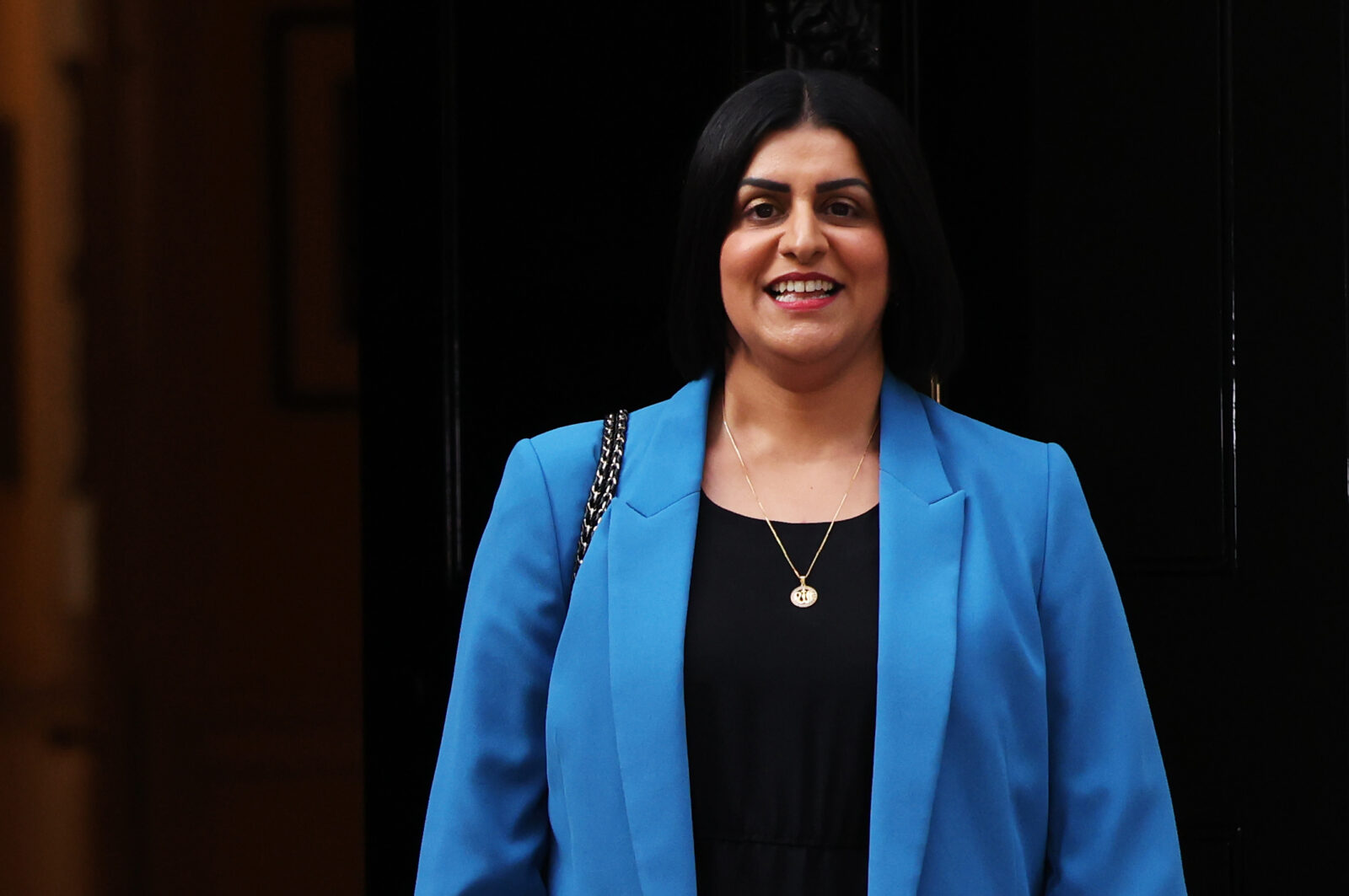
U.K. Prime Minister Keir Starmer’s recent announcement of a Cabinet reshuffle comes at a tense time for British Jewry and the U.K.-Israel relationship, but experts in London told Jewish Insider on Sunday that new appointees in the Foreign Office and Home Office are likely to maintain the status quo, despite scrutiny of new Home Secretary Shabana Mahmood’s past participation in anti-Israel activism.
Absent from a Sunday gathering of tens of thousands of demonstrators in London to protest against antisemitism was any senior representative from Labour, a party whose previous leader, Jeremy Corbyn, had a history of antisemitic remarks and supporting antisemites, the rally’s organizer, Campaign Against Antisemitism, said.
A new YouGov poll commissioned by the Campaign Against Antisemitism found that the Jewish community is currently experiencing “the worst antisemitism in the U.K. in living memory”: One in five Britons holds antisemitic views and 45% believe Israel treats Palestinians like Nazis treated Jews.
A day earlier, about 1,500 people took part in a protest against the ban on Palestine Action — a group that broke into a Royal Air Force base earlier this year and damaged two planes — and its declaration as a terrorist group. Most of the attendees were arrested, as it is illegal to express support for terrorist organizations in the U.K.
Meanwhile, Starmer made new Cabinet appointments, including Mahmood, the first woman of Pakistani Muslim origin in such a senior Cabinet post, who was scrutinized for her past participation in anti-Israel protests, raising questions on how she would address the frequent demonstrations in the U.K.
A 2014 video of Mahmood resurfaced on X over the weekend, where it received millions of views. Mahmood made the selfie video during Operation Protective Edge, launched by Israel in Gaza after Hamas kidnapped three Israeli teenagers, at a protest outside a Sainsbury’s supermarket in Birmingham calling on the store to boycott Israeli products. Mahmood’s comments at the time, when she was already a member of parliament, focused on boycotting products from Israeli settlements, yet the viral post, boosted by Sen. Ted Cruz (R-TX), falsely claimed she called to “globalize the Intifada.”
Days after the 2014 supermarket protest, Mamhood spoke against Israel at a Palestine Solidarity Campaign rally in London. She told Britons to start “getting involved with the boycott campaign,” and was met with cheers when she said the demonstration outside Sainsbury’s shut down the store for five hours.
“Israel’s actions, killing our children, bombing our schools and hospitals, must be condemned. We know what they do in Israel. If [Prime Minister] David Cameron fails to speak up, it’s a moral outrage. … We will never stay silent,” she said.
In July of this year, Mahmood, who was justice secretary at the time, abstained on the parliamentary vote to ban Palestine Action, though she indicated on Sunday that she would uphold her predecessor’s decision, writing on X that “supporting Palestine and supporting a proscribed terrorist group are not the same thing.” The Home Office, which is responsible for the police, among other things, posted that “she backed [police] officers for arresting those who support … Palestine Action.”
Jonathan Sacerdoti, a British Jewish journalist and columnist for The Spectator, argued that “there is no getting away from who she is and where she comes from.”
“She is not inspiring confidence in any Jews I know,” Sacerdoti added. “She appeals to the more antisemitic elements in the country. She is no friend of Israel and has never been shy about that … Her views are aligned with the Muslim electorate and community in the U.K. and beyond.”
Sacerdoti argued that all Labour politicians face pressure “to placate the Muslim vote and the hard Left.”
“They won’t suddenly find their conscience on Israel,” he added.
Alex Hearn, a director of Labour Against Antisemitism, said of Mahmood: “I don’t think I’ve ever heard so much misinformation about someone.”
Hearn argued that not only was the video of Mahmood at the protest taken during her “pre-government, pre-political life,” but noted she has taken a more nuanced approach as a member of parliament and has “no red flags” in her record on Israel.
“She has attended Palestine Solidarity Campaign protests, but on Oct. 13, [2023], she wrote a letter to her constituents denouncing Hamas and saying, ‘I unequivocally condemn the despicable actions of Hamas,’ and talking about the hostages,” he said.
Of the letter, U.K. Jewish News’ deputy editor, Daniel Sugarman, said that “you can’t take that for granted in this country.”
“I’m not with people saying it’s a disaster and she’s so anti-Israel,” he said. “I don’t think that at all. The reason she got this job is she’s been the most effective member of the government in its first year. She was a big success in her role [as justice secretary] … taking a hard line on criminality.”
Sugarman said “in some ways it doesn’t really matter who’s in those positions. … Every single Labour MP knows they are a potential target in the next election. The last general election was the first time there was a proper effort particularly from the Muslim community to field candidates to challenge Labour candidates who they felt weren’t sufficiently anti-Israel.”
Sugarman called the handful of those candidates who made it into parliament “Gaza independents,” and said that Mahmood only narrowly defeated one in her race.
As home secretary, Mahmood “will be a major target,” he said. “Mahmood is now the face of [the Palestine Action] proscription and will be targeted politically by the wider anti-Israel brigade.”
Hearn argued that “the claim that she harbors Islamist sympathies [is] contradicted by … [the fact that she was] attacked by Islamist groups in the last election … The idea that she supports those harassing, intimidating and threatening her doesn’t seem right at all.”
More broadly, Mahmood is on the more conservative wing of the Labour Party when it comes to crime and immigration, Hearn noted, and expressed optimism that she will “do the right thing.”
Daniel Ritterband, director of communications for the pro-Israel group BICOM and a former political campaign director for Prime Minister Boris Johnson, similarly said that Mahmood’s record “exposes the tensions of the Muslim vote. Muslims are conservative in every aspect of their lives, yet they made strange bedfellows with progressives and socialists … [Mahmood] is quite conservative at heart. She has been a loyalist to Keir Starmer and helped rebrand the party and get it into a more centrist space.”
In the decade since Mahmood appeared in the video calling to boycott Israeli products, she “learned how to be a politician. I think she is pragmatic,” Ritterband said.
As such, “there is no reason speaking to Jewish community groups engaged with the Home Office and counterterrorism police wouldn’t continue. It’s beneficial for both sides.”
Mahmood’s predecessor in the Home Office was Yvette Cooper, whom Starmer appointed as foreign secretary succeeding David Lammy, who was named deputy prime minister on Friday – which Ritterband said was a demotion.
Lammy’s ouster as foreign secretary likely had more to do with his past negative statements about President Donald Trump than Israel, Sugarman said.
Lammy was confrontational towards Israel and Israeli Prime Minister Benjamin Netanyahu refused to meet with him when he visited Jerusalem. Cooper, Hearn said, “is more nuanced. … She is suited to approaching complex challenges, and there is no challenge more complex than the current-day Middle East.”
Ritterband said that Cooper has a better understanding of the Jewish community’s concerns, noting that her husband, Ed Balls, put Holocaust education into U.K. school curricula when he was education secretary.
According to Sugarman, “Yvette Cooper has a good relationship with people in the [Jewish] community and understands what we’re going through, but I don’t think there will be a magical change of the U.K. stance on Israel from what it has shifted to.”
“I don’t think the U.K. is going to magically not recognize a Palestinian state, unfortunately. Yvette Cooper is coming in the middle of this and she is not going to back out of a policy this government is committed to,” he said.
Similarly, Ritterband said that “it’s fair to say all of Starmer’s decisions on Israel are done for a domestic audience and have nothing to do with Israel.”
“Realistically,” Ritterband added, “Foreign Office civil servants are very anti-Israel and it takes a strong foreign secretary to resist the urges. Lammy made no signs of trying to do that. Cooper has more experience and probably knows how to manage.”
Hearn was optimistic about Cooper: “I think she seems positive towards Israel. She voted to declare Palestine Action a terrorist organization … She’s got a really strong parliamentary voting record. She didn’t sign letters calling for sanctions or to uphold [International Criminal Court] arrest warrants. She’s probably more friendly, even generally supportive, with a track record of opposing extreme pro-Palestinian activism.”
Sacerdoti, however, noted that in her first post on X since becoming foreign secretary, Cooper mentioned Russia and Ukraine, as well as “famine and conflict in Gaza.”
“Not hostages and not Hamas — an imaginary famine,” Sacerdoti said. “It’s clear the agenda won’t change in the Foreign Office … which is traditionally quite Arabist and not in favor of Israel.”
Featured Stories
PROBLEMATIC POSTS
Lander campaign operative shared Israel conspiracy theories, pro-Hamas content

sending a message
Senior Ed. Dept. advisor Noah Pollak calls for universities to have a ‘backbone’ in disciplining students for antisemitic activity

BASEBALL DIARIES
Team Israel’s World Baseball Classic team unveils its 2026 roster
Please log in if you already have a subscription, or subscribe to access the latest updates.