



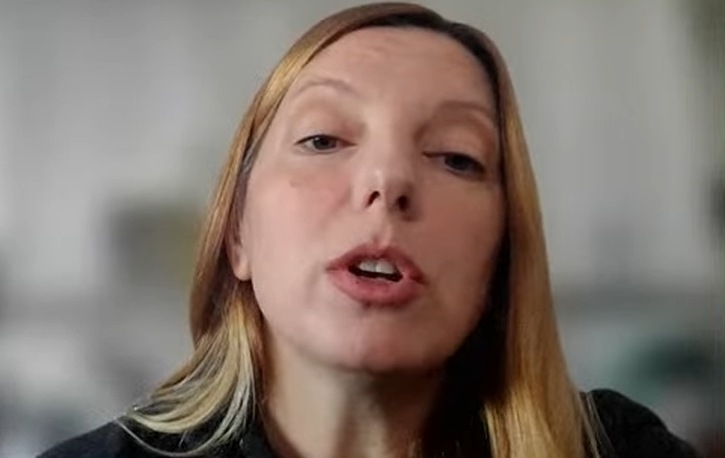


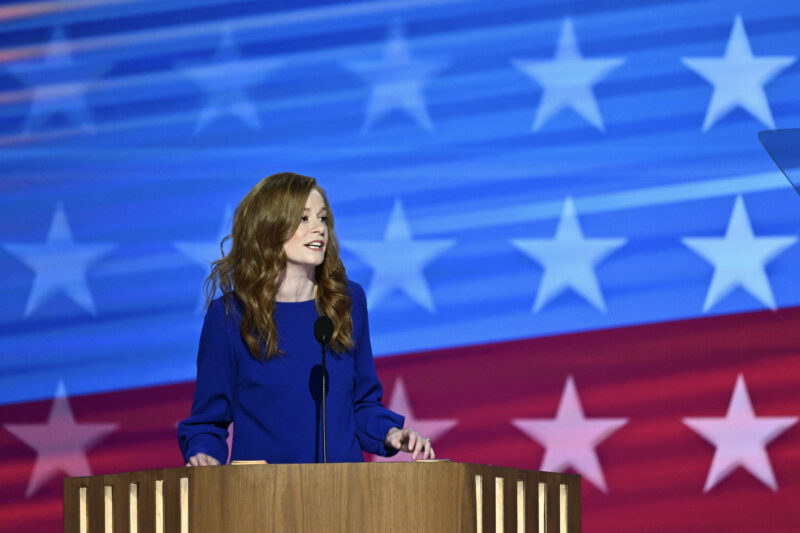






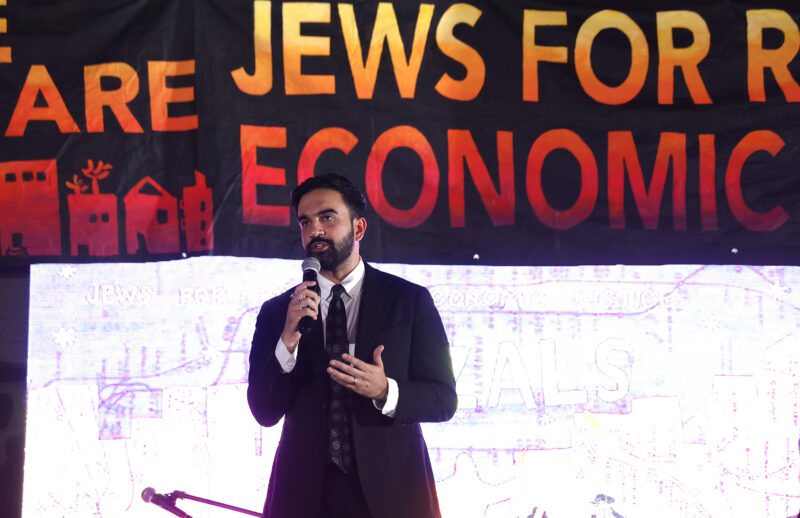



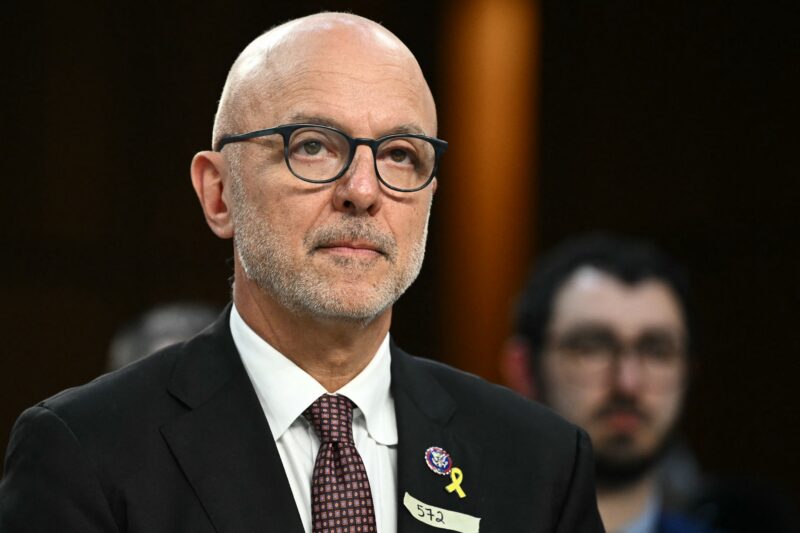












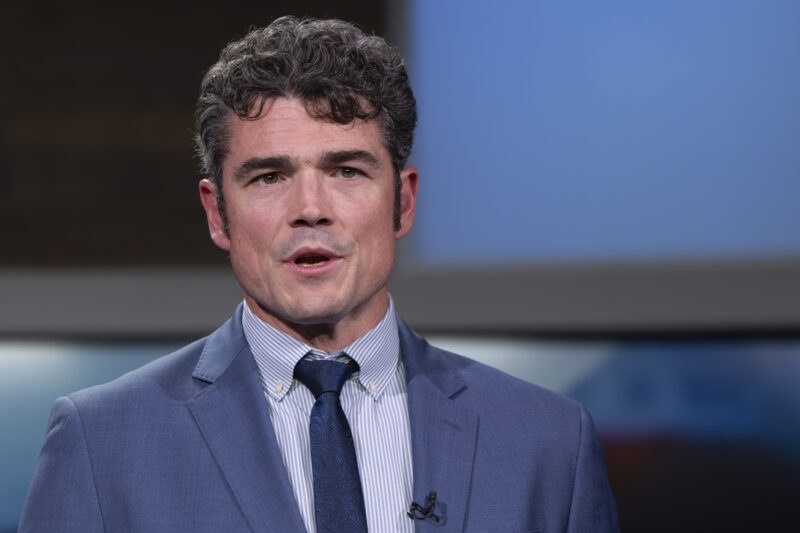

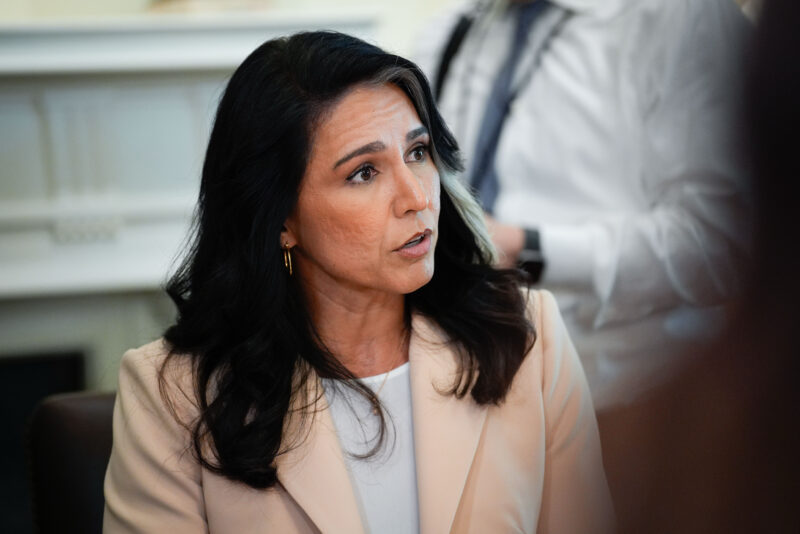


















In an interview on CNN, Platner accused Israel of committing genocide and alleged that the Trump administration started the war to distract from the Epstein files
Sophie Park/Getty Images
Senate candidate from Maine Graham Platner speaks at a town hall at the Leavitt Theater on October 22, 2025 in Ogunquit, Maine.


 Add JewishInsider on Google
Graham Platner, the progressive Maine Senate candidate, in a CNN interview that aired Sunday accused Israel of committing genocide and said the U.S. should cut off all aid, as well as dismissed concerns that bringing the Iran war to a halt would endanger U.S. forces in the region.
“I fundamentally believe that a nation that is committing a genocide should not be a place that we are putting money. We should be leveraging the fact that we have a lot of power in this relationship due to our funding,” Platner said in the interview. “We should be leveraging that to, frankly, get the Israeli government to stop behaving in such an utterly atrocious fashion.”
Platner said that he would vote against any further funding for the war in Iran, dismissing concerns that cutting funding for the war would leave U.S. forces in harm’s way, despite ongoing attacks by Iran.
“I’ve been very close to the realities of wars [in Iraq], and that was a war that never should have happened, and that we find ourselves here with another war that should not be happening, that is resulting in destruction and horror, all, frankly, on the taxpayers dime,” Platner said. “That is money that should be spent here in the United States, on schools, on hospitals, on infrastructure.”
He said that U.S. troops would not be in danger if Congress defunds the operation “because the troops should not be in harm’s way. End the war. Bring people home. Stop bombing. We started this thing, we can end it.”
Platner said he believes the Trump administration started the war to distract from revelations in the Epstein files because “Benjamin Netanyahu finally found a president that was sucker enough to launch the war that he’s been pushing for for 30 years.”
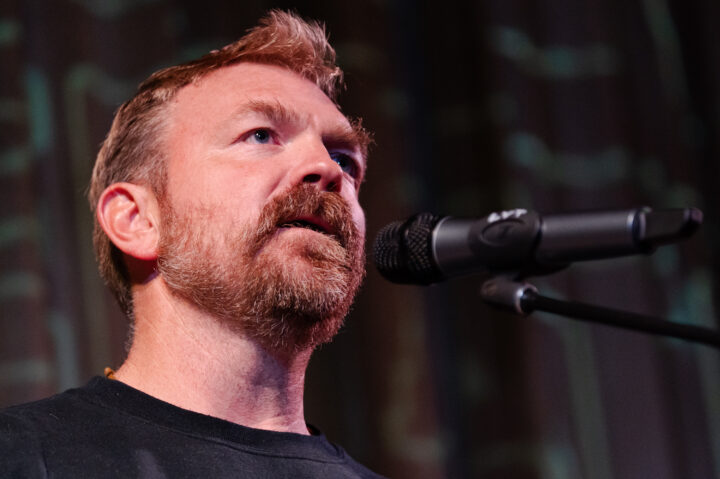
Podcaster Nate Cornacchia has said that Israel was behind John F. Kennedy’s assassination and the global war on terror

Sophie Park/Getty Images
Maine Senate Graham Platner speaks at a town hall at the Leavitt Theater on October 22, 2025 in Ogunquit, Maine.
Weeks before Graham Platner promoted an antisemitic conspiracy theorist in a now-deleted social media post on Thursday, the controversial Maine Senate candidate appeared on a popular YouTube show whose host has spread specious claims about Jews and Israel.
Platner faced blowback this week for boosting a social media comment about a looming war with Iran by Stew Peters, a neo-Nazi influencer who has frequently espoused antisemitic tropes and engaged in Holocaust denial. Platner’s team said the post was made in error and “immediately” removed it after learning it elevated a “despicable account.”
In late January, however, Platner sat for a lengthy online interview with Nate Cornacchia, a retired Green Beret who has also promoted antisemitic conspiracy theories. Near the end of their hour-long conversation, Platner, a fellow military veteran, called himself “a longtime fan” of Cornacchia’s YouTube channel, “Valhalla VFT,” and said it was “an absolute pleasure being” on the show.
Cornacchia, whose show claims nearly 500,000 YouTube subscribers, has in recent months helped stoke a burgeoning far-right conspiracy theory alleging that Israel was involved in the assassination of the conservative activist Charlie Kirk.
Two days before speaking with Platner, for instance, Cornacchia went on a podcast hosted by Jake Shields, a former mixed martial arts fighter who is now a prominent Holocaust denier, and pointed to what he described as “huge links” connecting Israel to Kirk’s killing. “The biggest one, the way I look at it, is because he was basically so important from the Zionist side to the young right wing, sort of that counter Nick Fuentes audience” that “Israel needs desperately,” he said.
“Charlie Kirk said that he was tired of being bullied by his Jewish donors” and that he “no longer could support the pro-Israel cause, and he was dead 48 hours later,” Cornacchia added on the show, where he also agreed with Shields’ assertion that President John F. Kennedy had “probably” been assassinated in a covert “venture between the CIA and Mossad,” the Israeli intelligence agency. “100%,” he replied.
In addition, Cornacchia has suggested that the global war on terror was conducted “on behest of Israel” and claimed Israel would benefit if another 9/11-style attack were carried out during the tenure of New York City Mayor Zohran Mamdani, saying it would help to drum up Islamophobic sentiment and lead to another foreign military entanglement in the Middle East.
The Jewish state “got exactly who they wanted” in Mamdani, the city’s first Muslim mayor whom the Israeli government has accused of antisemitism, he argued on his own show in November. “That’s their candidate, guys. You got to pay attention.”
The conservative YouTube commentator has also questioned why George Soros’ son Alex was seen posing for a photograph with Mamdani on the night of his election. “You may immediately be thinking, ‘Oh, well, of course, that’s because Soros funds all the socialists,’” Cornacchia said of George, a Jewish billionaire donor to left-wing causes and a Holocaust survivor who is often a target of antisemitic attacks.
“No, no, no, no, that’s surface level,” he told his viewers, claiming that the philanthropist “moves in coordination with our greatest ally,” a term he uses to sarcastically allude to Israel.
Platner’s interview with Cornacchia, which he promoted on his social media channels, did not touch on such topics. His team did not respond to a request for comment on Friday about Cornacchia’s antisemitic remarks.
The 41-year-old Senate candidate, who is running in a competitive Democratic primary to challenge Sen. Susan Collins (R-ME), faced skepticism from critics last fall after he denied knowing a tattoo that was on his chest for years closely mirrored a Totenkopf, the skull-and-crossbones icon adopted by an infamous Nazi SS unit. A former acquaintance of Platner who spoke with Jewish Insider said he had identified the symbol as such more than a decade ago, a claim he has denied. He had the tattoo removed last October.
Still, even as he maintains a commanding polling advantage in the Maine Democratic primary against Gov. Janet Mills, Platner’s explanation of the tattoo — combined with past and recent online blunders — is raising questions about whether he can weather scrutiny in a general election that party leadership views as key to reclaiming the Senate majority.
Mills, for her part, strongly hinted at such doubts in a snarky X post on Friday. “For what it’s worth,” she wrote, “I don’t have any tattoos.”
And on the same day he was drawing backlash for amplifying a conspiracy theorist this week, Platner was fielding a combative call from a listener during an appearance on a podcast hosted by the comedian Tim Heidecker.
The caller cast suspicion on Platner’s claim that he did not know the tattoo represented a Nazi symbol until recently, citing his self-proclaimed knowledge of World War II history, and called on the candidate to apologize rather than “dodging around” the issue.
But Platner held firm. “I’m not going to apologize for something that I didn’t know about or do,” he insisted. “The moment that it was clear and I was putting it in that context I had it covered, because I don’t want that on my body.”
Tucker Carlson’s interview with the U.S. ambassador to Israel sparks backlash over comments about Israel’s Biblical land rights and a false claim linking Israeli President Herzog to Epstein
Screenshot
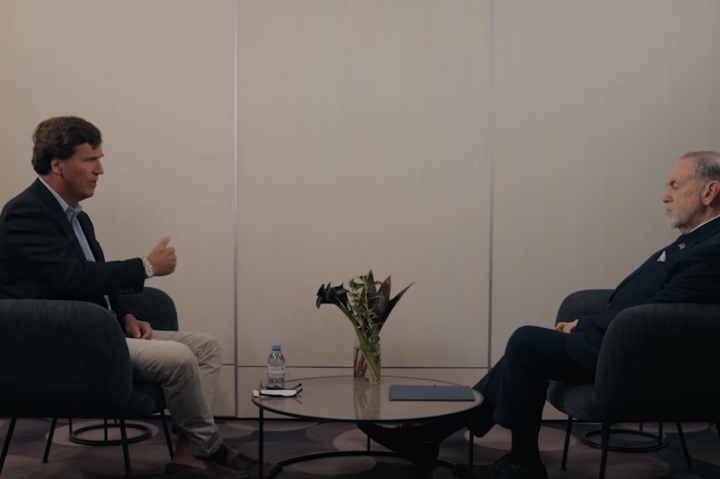
Tucker Carlson interviews U.S. Ambassador to Israel Mike Huckabee on Feb. 18, 2026.
Tucker Carlson’s interview with U.S. Ambassador to Israel Mike Huckabee seemed to get off to a rough start before the commentator had even touched down in Israel, when it became known that Carlson would be conducting the interview from Ben Gurion Airport without plans to leave the complex to engage with the country — about which he spends significant airtime discussing — itself.
The troubles began before the interview aired,with Carlson alleging on social media that the passports belonging to his team members had been taken by Israeli security and that the group had been interrogated at the airport. But Carlson flew into Ben Gurion’s VIP Fattal Terminal, where passports are taken by airport officials to be expedited through a special processing service that avoids the immigration lines at Ben Gurion’s regular terminal. Questioning, as anyone who has flown into or out of Israel knows, is standard procedure and has been for decades.
But it was the release of the interview — nearly three hours long — that caused the most issue for Carlson. The initially released edition of the podcast included comments from Carlson to Huckabee alleging that Israeli President Isaac Herzog had ties to Jeffrey Epstein. “The current president of Israel, whom I know you know, apparently was at ‘Pedo Island,” Carlson claimed. “That’s what it says.”
That was, in fact, *not* what it — it being the Epstein files released earlier this month — said. Carlson appeared to be referencing an email in the trove of documents that referenced “Herzog,” despite no actual linkage between the Israeli president and the disgraced financier.
The outcry, as well as a letter from Herzog’s team and a statement from Huckabee, prompted a swift apology from Carlson, and a rerelease of the interview with that portion of the conversation removed. “They didn’t know each other, they never emailed with each other, never been in the same room. They had no relationship of any kind,” Carlson said. “So I just want to say clearly I’m sorry to imply that I knew something I didn’t know.”
But it was a conversation about the Bible that dominated headlines. The Tucker Carlson Network posted a partial clip on Saturday in which Carlson spoke at length about a passage in Genesis in which God tells Abraham, “to your descendants I will give this land, from the River of Egypt to the great river Euphrates,” then asking Huckabee if he believes that the Jewish people therefore have the right to the land that includes modern-day Jordan and parts of Syria, Lebanon, Iraq and Saudi Arabia.
“It would be fine if they took it all,” Huckabee said before the video cuts off mid-sentence. The rest of the sentence that was omitted from the clip includes Huckabee saying, “But I don’t think that’s what we’re talking about here today,” adding “they” — meaning Israel — “don’t want to take it over; they’re not asking to take it over.”
Huckabee continued: “It was somewhat of a hyperbolic statement if that’s what you feel like we’re talking about, but it isn’t. We’re talking about this land that Israel, the State of Israel, now lives in and wants to have peace in. They’re not trying to take over Jordan … Syria, Iraq or anywhere else, but they do want to protect their people.”
“Huckabee’s Israel land remarks condemned as ‘dangerous and inflammatory’” read the headline from The Guardian. The Hill’s headline was similar: “Huckabee claims it would be ‘fine’ if Israel took all of Middle East.” NBC News went with “Outcry after Ambassador Mike Huckabee suggests Israel has God-given right to Middle East land,” while Axios headlined its story, “Israel has biblical right to the Middle East, Huckabee tells Carlson.”
The cavalcade of stories framing Huckabee as supporting an imagined Israeli territorial conquest of the Middle East prompted a response from a group of Arab and Muslim states and multinational organizations, led by Saudi Arabia, condemning the comments. Egypt, Jordan, Bahrain and the United Arab Emirates — all of whom have peace agreements with Israel — signed onto the statement.
The conversation and the resulting diplomatic fallout is not happening in a vacuum, but against the backdrop of escalating tensions between Washington and Tehran as the U.S. pours military assets into the region in anticipation of a possible strike on Iran. The New York Times reported on Sunday that Arab leaders have made calls to their American counterparts to complain about Huckabee’s comments, “[f]urther complicating any final decision on military strikes.”
It’s far from the first time that inaccurate media reports have impacted diplomatic efforts. In October 2023, a trip to Jordan by then-President Joe Biden, weeks after the Oct. 7 attacks, was called off by King Abdullah II amid the uproar over what mainstream outlets from CNN to the BBC, citing Hamas officials, reported was an Israeli strike on Gaza’s Al-Ahli Hospital. It was quickly revealed through intercepted calls that a Palestinian Islamic Jihad rocket had misfired and hit the hospital complex, though not quickly enough to catch up with the lie that had surged around the world and into the phones and computers of millions of people.
Carlson faced backlash for his handling of the interview from former supporters, including Rep. Marlin Stutzman (R-IN), who said he was “appalled” watching the interview, citing a previous interview with far-right conspiracy theorist Nick Fuentes in which Carlson “gave ample platform and time to Nick Fuentes to share his anti-Semitic vitriol, but constantly interrupted, was impatient, disingenuous, argumentative and disrespectful to Huckabee. Ambassador Huckabee was nothing but gracious and kind.”
Carlson, Stutzman said, “is intentionally divisive with an obvious anti-modern Israel agenda when it comes to the Bible, Christianity and the deep roots of America‘s friendship with the Jewish people.”
While Carlson faced backlash from some on the right, he was met with praise by elements of the far left. Mehdi Hassan, who admitted that he is “not a fan of Tucker Carlson,” said that “as an interviewer, Carlson actually, brilliantly, asks follow-up questions, and keeps going, in a way that pretty much no US TV interviewer has done with pro-Israel guests since Oct 7.”
Plus, Bowman boosts Fuentes

Samuel Corum/Getty Images
Ben Shapiro walks the red carpet at the Turning Point USA Inaugural-Eve Ball at the Salamander Hotel on January 19, 2025 in Washington, DC.
👋 Good Friday morning!
In today’s Daily Kickoff, we interview former Israeli hostage Omer Shem Tov ahead of his address today at Turning Point USA’s AmericaFest, and report on barbs exchanged between Ben Shapiro and Tucker Carlson at the confab’s opening night plenary. We have the scoop on an effort by Sen. Bill Cassidy to press the National Education Association on an alleged “deeply troubling” pattern of antisemitism, and report on the resignation of a senior official in the incoming administration of New York City Mayor-elect Zohran Mamdani over past antisemitic posts. Also in today’s Daily Kickoff: Amy Latzer, Dana Rubinstein and Kinney Zalesne.
Today’s Daily Kickoff was curated by Jewish Insider Executive Editor Melissa Weiss, with assists from Danielle Cohen-Kanik and Marc Rod. Have a tip? Email us here.
For less-distracted reading over the weekend, browse this week’s edition of The Weekly Print, a curated print-friendly PDF featuring a selection of recent Jewish Insider and eJewishPhilanthropy stories, including: Norman Podhoretz remembered as visionary of neoconservative thought; Serving faith and nation: The rabbis bringing light to U.S. troops on Europe’s front lines; and The new book urging young Jews to take inspiration from Soviet Jewish dissidents. Print the latest edition here.
What We’re Watching
- White House Special Envoy Steve Witkoff is meeting in Miami today with senior officials from Qatar, Egypt and Turkey to discuss the continued implementation of the Trump administration’s Gaza peace plan. Qatari Prime Minister Mohammed bin Abdulrahman Al Thani, Turkish Foreign Minister Hakan Fidan and Egyptian Foreign Minister Badr Abdelatty are slated to attend the meeting, the first convening at such a senior level since the ceasefire went into effect in October. The meeting comes as The Wall Street Journal reports on the challenges — namely Hamas’ refusal to disarm — facing the Trump administration as it attempts to implement the second phase of the agreement.
- Turning Point USA’s AmericaFest continues today in Phoenix, Ariz. Former Israeli hostage Omer Shem Tov will take the main stage today (more below), as well as Heritage Foundation CEO Kevin Roberts, former HUD Secretary Ben Carson, Transportation Secretary Sean Duffy, Erika Kirk, Steve Bannon, Vivek Ramaswamy, Megyn Kelly and James O’Keefe.
What You Should Know
A QUICK WORD WITH JI’S MATTHEW KASSEL
In recent weeks, James Fishback, a 30-year-old Republican investor who last month launched a long-shot campaign for governor of Florida, has drawn online attention for a series of incendiary social media posts attacking Israel and invoking antisemitic tropes.
In addition to praising followers of the neo-Nazi influencer Nick Fuentes, comments for which he has refused to apologize, Fishback has promoted a range of extreme anti-Israel positions, including in a recent campaign ad vowing to defend those who accuse the Jewish state of genocide. He has taken repeated aim at the pro-Israel organization AIPAC, which he calls a “foreign lobbying group,” saying its supporters are “slaves” and that his own “allegiance is to America.”
“I’ll be the first to admit that I fell for the ‘Israel is our greatest ally’ scam and the lie that criticizing Israel is ‘antisemitic,’” he wrote in a social media post this week. “It wasn’t until I was offered a paid trip to Israel this summer (which I never took) that I realized how cringe and pathetic the propaganda was.”
In using such inflammatory rhetoric, Fishback, a political newcomer, is likely seeking to channel the views among a younger audience of far-right voters increasingly fueling anti-Israel as well as antisemitic sentiment in the GOP, which has recently forced the party to confront a growing schism within its ranks over its ideological direction.
But while Fishback has sought to cast next year’s Republican primary as “very clearly a two-person race” between him and Rep. Byron Donalds (R-FL) — the pro-Israel GOP front-runner now dominating the polls while reporting a $40 million fundraising advantage — political operatives in both parties are skeptical his insurgent bid will ultimately amount to any sort of meaningful on-the-ground traction even as he continues to provoke controversy from behind the screen.
“Social media is the only reason anyone has heard of Fishback, and 20 years ago no one would even be talking about him,” Steve Schale, a Democratic strategist in Florida, told Jewish Insider. “Unless he stumbles into a pile of cash, it’s hard for me to see this being more than just an effort to get clicks.”
center stage
Freed Israeli hostage Omer Shem Tov to address Turning Point USA’s AmericaFest
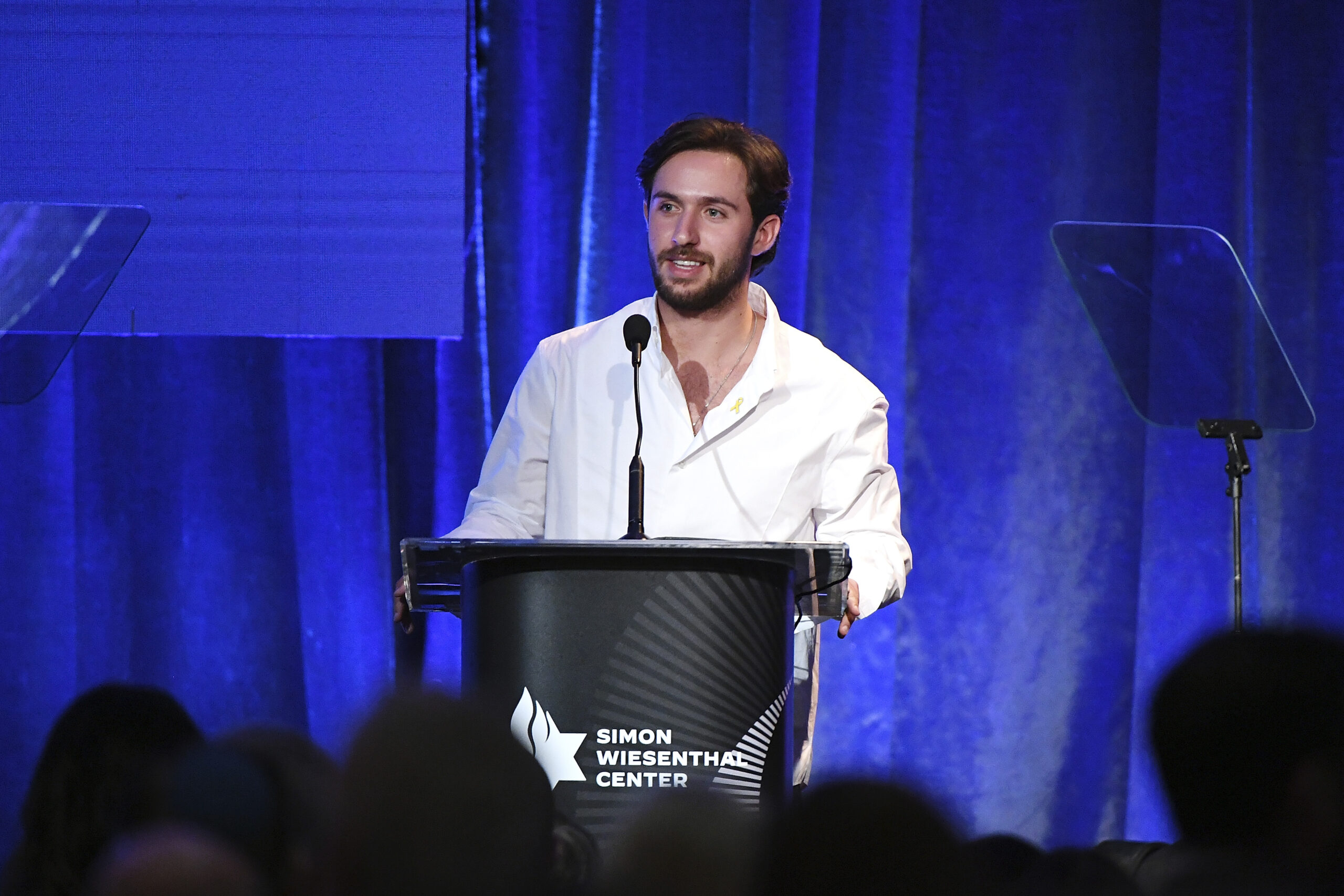
Turning Point USA’s annual AmericaFest kicked off on Thursday with prominent names on its four-day agenda, including Vice President JD Vance and House Speaker Mike Johnson (R-LA). Some speakers, such as Tucker Carlson and Steve Bannon, have spread anti-Israel and even antisemitic messages through their platforms, while others, including Ben Shapiro and Glenn Beck, have been strong advocates for Israel. Joining them on the program on Friday is Omer Shem Tov, who was held hostage by Hamas in Gaza for 505 days, Jewish Insider’s Lahav Harkov reports.
Courting the crowd: Shem Tov plans to tell the audience at AmericaFest the story of his captivity, in addition to paying tribute to Kirk and discussing the importance of the U.S.-Israel relationship. Shem Tov told JI that he’s speaking to TPUSA because “we can see on social media that something is changing on the American right. You can see more and more people coming out with all kinds of antisemitic statements and anti-Israel statements,” adding, “It’s very concerning, because these are people who vote for Trump, people who are supposed to be good for us.”
scene last night
At AmericaFest, Shapiro, Carlson clash over the future of the conservative movement

The ongoing dispute between Ben Shapiro and Tucker Carlson took center stage on Thursday during the opening night of Turning Point USA’s AmericaFest, the organization’s annual gathering and its first since the killing of TPUSA founder Charlie Kirk in September, Jewish Insider’s Emily Jacobs reports.
Shapiro’s slam: Shapiro began his remarks by warning that conservative commentators including Candace Owens, Tucker Carlson, Megyn Kelly and Steve Bannon are “frauds and grifters” who are threatening the future of the Republican Party. “Today, the conservative movement is in serious danger, not just from the left that all too frequently excuses everything up to and including murder,” Shapiro said. “The conservative movement is also in danger from charlatans who claim to speak in the name of principle but actually traffic in conspiracism and dishonesty, who offer nothing but bile and despair, who seek to undermine fundamental principles of conservatism by championing aggravation and grievance.”
Tucker’s rebuttal: Carlson took the stage later on in the program, and began his remarks by revealing he had “laughed” while watching Shapiro take digs at him. He later criticized Shapiro’s push to purge fringe figures such as Fuentes and Owens from the conservative ecosystem. “To hear calls for, like, deplatforming and denouncing people at a Charlie Kirk event, I’m like, what? That’s hilarious.”
appointee unmasked
Mamdani appointee resigns after complaining about ‘money hungry Jews’ on social media
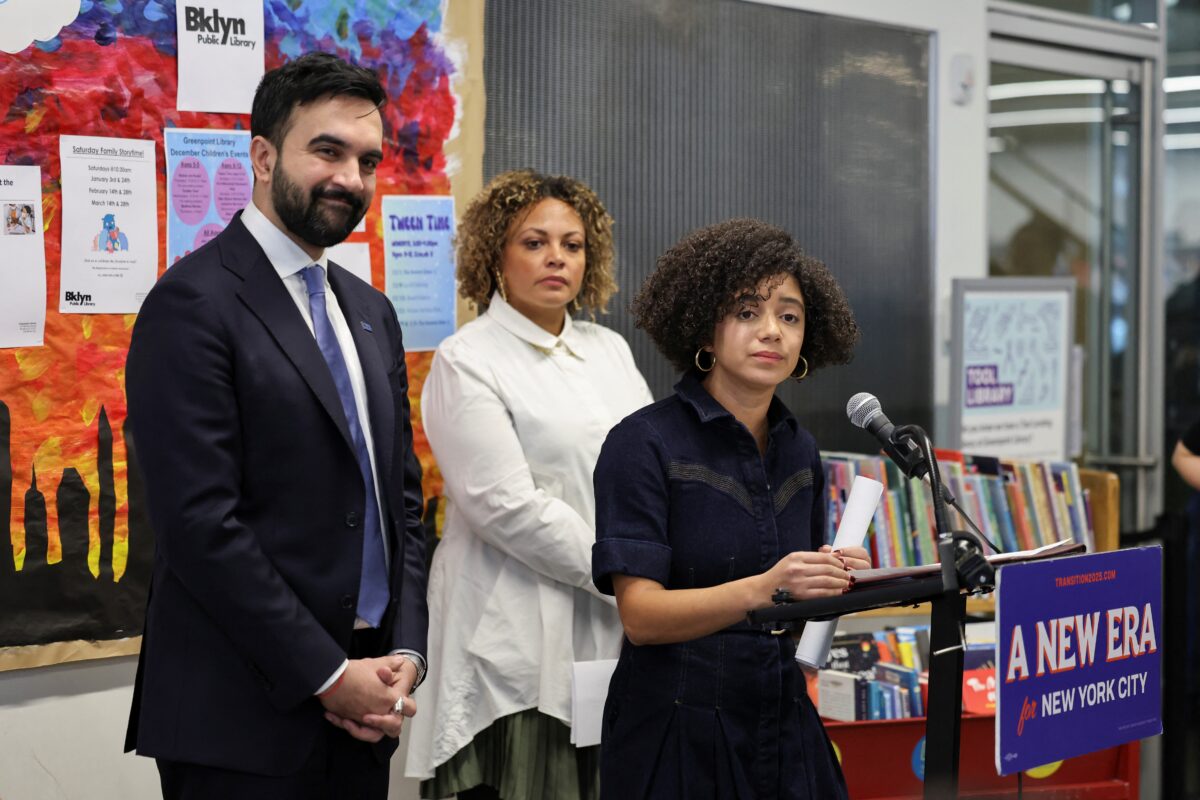
New York City Mayor-elect Zohran Mamdani’s newly tapped director of appointments, Catherine Almonte Da Costa, resigned on Thursday afternoon after her history of antisemitic online posts — including complaining about “money hungry Jews” — was exposed. “Catherine expressed her deep remorse over her past statements and tendered her resignation, and [Mamdani] accepted,” Dora Pekec, the mayor-elect’s transition team spokesperson, told Jewish Insider’s Haley Cohen. The recently unearthed posts come as several of Mamdani’s transition appointees have drawn scrutiny from Jewish leaders, who remain skeptical of the mayor-elect as he takes office on Jan. 1, and his commitment to fighting antisemitism.
Digital history: Da Costa, who previously served as executive assistant to former Mayor Bill DeBlasio and was appointed by Mamdani on Wednesday, posted a series of antisemitic comments in 2011 and 2012, which were shared by the Anti-Defamation League. Da Costa’s account — and the posts, which had remained online — was deleted once the antisemitism watchdog published her posts on Thursday. “Money hungry Jews smh,” Da Costa posted on X in January 2011, according to screenshots. “Woo! Promoted to the upstairs office today! Working alongside these rich Jewish peeps,” she posted in June 2011. In June 2012, Da Costa wrote that the “Far Rockaway train is the Jew train,” a reference to the neighborhood’s sizable Jewish population.
closing of the horseshoe
Former Rep. Jamaal Bowman, eyeing NYC school chancellor post, praised Nick Fuentes online

Jamaal Bowman, the far-left former House member who is pursuing an appointment as New York City Mayor-elect Zohran Mamdani’s public schools chancellor, recently posted a comment on Instagram supporting remarks from neo-Nazi Nick Fuentes, Jewish Insider’s Emily Jacobs reports. The unearthed comment comes weeks after Bowman said that he has been “pushing hard” for Mamdani to name him as schools chancellor so he could lead a “revolution in our public schools.”
Show of support: Bowman made the comment on an Instagram reel of Fuentes posted in September, which featured the antisemitic commentator making the case that Republicans weren’t a “better” choice than Democrats for working people, but were instead “better” for Israel, the oil and gas industry, Silicon Valley and Wall Street. The caption on the video, posted by an unnamed user, which has 2.6 million views and more than 239 thousand likes, reads: “The type of Racist ifw [I f*** with].” In a comment, Bowman wrote, “Finally getting it Nick. Now go a step further. This is the same playbook they use to divide and conquer us based on race to maintain their oligarchy. It’s us, against the oligarchy. Now no more racist bullshit from you.”
scoop
Senate education committee chair presses NEA over antisemitism complaints

Sen. Bill Cassidy (R-LA), the chairman of the Senate Health, Education, Labor and Pensions Committee, sent a letter this week to the National Education Association accusing the largest teachers’ union in the country of a “deeply troubling” pattern of antisemitism within its ranks, Jewish Insider’s Marc Rod and Emily Jacobs report.
Laying out the evidence: “The Jewish people have suffered assaults on their identity, religion, culture, and lives for millennia. Disturbingly, we are witnessing a rise in antisemitic sentiment across the Western world, including in the United States,” Cassidy wrote. He said that the NEA has “lost sight” of its congressionally chartered purpose, adopting a “misplaced” focus on “political activism, foreign policy, and environmental and social justice causes” and becoming “hostile” to Jewish NEA members. The letter lists out a litany of incidents, including a map sent in a mass email to three million NEA members describing the entire land of Israel as “indigenous” Palestinian territory and linking to resources from Hamas-supporting organizations, an attempted boycott of the Anti-Defamation League and reported harassment of Jewish delegates at the NEA’s national conference.
Elsewhere on the Hill: A new bill introduced by several prominent House progressives — Reps. Jerry Nadler (D-NY), Rosa DeLauro (D-CT), Becca Balint (D-VT) and Maxwell Frost (D-FL) — blasts the Trump administration’s agenda and actions on combating antisemitism, while also implementing new posts and requirements across a series of federal departments to fight Jewish hate, JI’s Marc Rod reports.
on the trail
Longtime Jewish activist mounts bid for D.C. congressional delegate seat
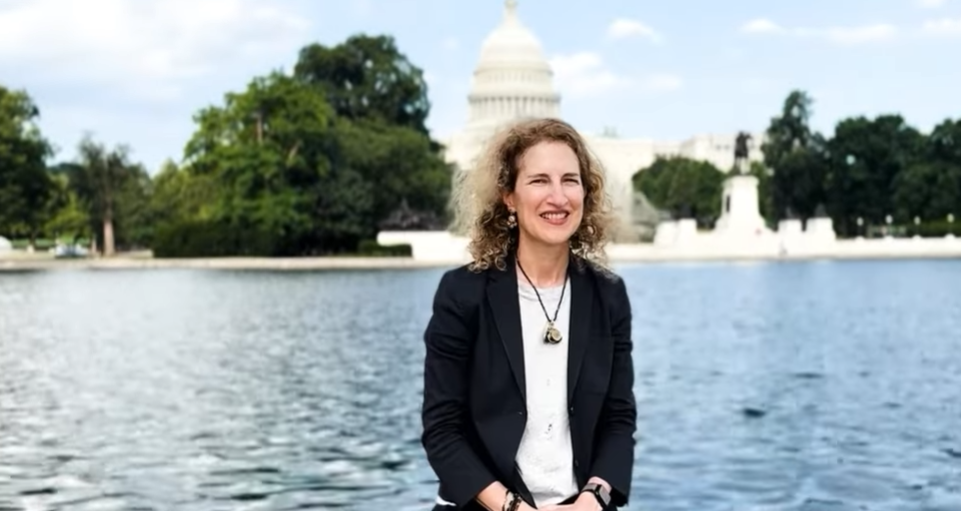
Kinney Zalesne, a longtime Jewish community activist, is one of a slew of Democratic candidates mounting a bid to unseat the District of Columbia’s longtime non-voting representative to Congress, Del. Eleanor Holmes Norton (D-DC), Jewish Insider’s Marc Rod reports.
Background: Zalesne grew up in a Conservative synagogue in Philadelphia, learning to read Torah at age 16 and lead services at 25. She said she’s been doing both ever since, including leading Mincha services on Yom Kippur annually for 32 years — a fact she said would distinguish her from any other Jewish member of Congress. She also served as a board member and board chair of D.C.’s Jewish day school, serves on the American Board of the National Library of Israel and advised two hostage family groups, as well as worked with a group of Israelis trying to convene a constitutional convention prior to the Hamas terror attacks on Oct. 7, 2023. “My run for office is really motivated by my Jewish sensibility,” she told JI. “My whole career has been about expanding opportunity for people, and that, to me, has always felt like that’s always been a huge part of my Jewish identity, and so this run for Congress is really an extension of that.”
Read the full story here.District politics: D.C. City Councilmember and mayoral candidate Janeese Lewis George, a self-identified democratic socialist, who spoke on a panel at a Jewish Community Relations Council of Greater Washington breakfast on Thursday, committed to standing up for the Jewish community and taking proactive steps to ensure its security, JI’s Marc Rod reports.
Worthy Reads
The Women of Iran: In The Free Press, Roya Hakakian spotlights the Iranian women “quietly rebelling” against the regime in Tehran. “If the long struggle of Iranian women against mandatory dress codes is now succeeding, it is because it is the continuation of a historic effort toward secularization that began in Iran more than a century and a half ago. … In truth, the Iranian struggle for freedom is one of the country’s most enduring traditions. The women refusing the hijab, the workers on strike, the students demanding accountability are not importing foreign ideas. They are voicing old ones — from Tahireh, from the constitutionalists of 1906, from a native movement for secularism and civil rights that long predates the Islamic Republic.” [FreePress]
Survivor’s Story: In The Wall Street Journal, Arsen Ostrovsky, the head of the Sydney office of the Australia/Israel and Jewish Affairs Council, reflects on the terror attack earlier this week in Sydney, Australia, in which he was injured. “I’ve spent years telling stories of terror and resilience as a lawyer. I have advocated for victims, documented atrocities and fought for survivors. I never imagined I would become one. Doctors later told me it was millimeters between life and death, ‘a miracle’ I survived. Trolls, spreading AI-generated images, said I was faking it, something I first learned about as I was about to be wheeled into the operating room. God willing, I will make a full recovery. What I saw on Bondi was pure evil. The terror, screams and lifeless bodies. It felt like the Nova Music Festival all over again, except this time it was on the beach I’d grown up on — an Australian sanctuary. I’d moved my family here to escape war and was taking up a new job to help combat antisemitism.” [WSJ]
Bridging the Gulf: In Mishpacha Magazine, Rabbi Efrem Goldberg reflects on his recent trip to the United Arab Emirates. “In the UAE, we discovered a modern echo of that golden age, made possible by a people who do not merely tolerate us, but who admire and respect us. They share many of our values, ethics, priorities, and even practices. They are deeply committed to their faith, yet they do not seek to impose it on others. The proof is in their actions. The UAE was the first Arab country to condemn Hamas after October 7. While airlines around the world stopped flying to Israel, Emirates Airlines never stopped once and, during that time, even increased their service. What moved me most were the stories we heard so often. Despite the message from the leaders, prior to the Abraham Accords and a meaningful Jewish presence in the UAE, many of those we met grew up with stereotypes about Jews, just as too many of us grew up with stereotypes about them. They were taught to feel hate until real encounters rewrote their hearts.” [Mishpacha]
Forging Ties: In Newsweek, former White House Middle East envoy Jason Greenblatt calls for renewed ties between Jewish and Muslim communities, as well as Israel and Muslim-majority nations, in the wake of the Bondi Beach terror attack. “ISIS and its ideological offshoots are not Islam. They are a violent, nihilistic cult that hijacks religious language to sanctify the murder of innocents. What they practice is not faith — it is desecration. They strip Islam of its humanity, weaponize grievance and turn God into a justification for cruelty. … Grief does not require us to abandon clarity. Anger does not require us to abandon truth. And solidarity does not require silence about antisemitism. We can, we must, hold all of these realities at once. As a Jew, I say this plainly: The answer to terror cannot be retreat into tribal isolation. It must be a redoubling — a tripling — of efforts to build bridges between Jews and Muslims, between Muslim-majority nations and Israel, between communities extremists are determined to tear apart.” [Newsweek]
Word on the Street
The Senate voted to confirm Rabbi Yehuda Kaploun as the Trump administration’s special envoy to monitor and combat antisemitism on Thursday, as part of a package of nearly 100 nominees for various federal posts; the package was passed along party lines…
President Donald Trump nominated Air Force Lt. Gen. Patrick Frank to be the next deputy commander of CENTCOM; USMC Maj. Gen. Sean Salene, who had been filling the role on an interim basis, was nominated to be the U.S. security coordinator for Israel and the Palestinian territories…
Secretary of State Marco Rubio announced sanctions on two International Criminal Court judges, saying that the legal officials from Mongolia and Georgia “directly engaged in efforts by the ICC to investigate, arrest, detain, or prosecute Israeli nationals, without Israel’s consent”…
TheTreasury Department levied sanctions against 29 vessels alleged to be a part of Iran’s “shadow fleet” that helps the Islamic Republic transport oil and petroleum products in violation of international sanctions…
After pressure from Capitol Hill — including a blockade by Democratic senators of the confirmation of the Coast Guard commandant — the Coast Guard struck from its disciplinary policies language describing swastikas and nooses as “potentially divisive,” rather than as explicitly banned hate symbols, Jewish Insider’s Marc Rod reports…
Sen. Maggie Hassan (D-NH) is urging the Senate to include the long-gestating Pray Safe Act in upcoming government funding legislation in the wake of the deadly shooting at a Hanukkah celebration in Sydney, Australia…
Sens. Lindsey Graham (R-SC), Dick Durbin (D-IL), Chuck Grassley (R-IA), Sheldon Whitehouse (D-RI), Josh Hawley (R-MO), Amy Klobuchar (D-MN), Marsha Blackburn (R-TN), Richard Blumenthal (D-CT), Ashley Moody (R-FL) and Peter Welch (D-VT) introduced legislation to repeal Section 230 of the Communications Decency Act, which provides websites with broad immunity from liability for the content their users post…
Rep. Claudia Tenney (R-NY) led a letter to Treasury Secretary Scott Bessent calling on the department to conduct a formal review of Spain’s recently enacted Israel boycott law; Tenney was joined by Reps. Sheri Biggs (R-SC), Earl “Buddy” Carter (R-GA), Scott Franklin (R-FL), Harriet Hageman (R-WY), Brian Jack (R-GA), Nicholas Langworthy (R-NY), Mike Lawler (R-NY), Barry Moore (R-AL), Andy Ogles (R-TN), John Rose (R-TN), Derek Schmidt (R-KS), Keith Self (R-TX), Jefferson Shreve (R-IN), Pete Stauber (R-MN), Daniel Webster (R-FL), Joe Wilson (R-SC) and Rudy Yakym (R-IN)…
TikTok CEO Shou Chew said that the company had reached an agreement to divest its U.S. branch from its Chinese parent company ByteDance; under the terms of the agreement, the U.S. entity will be jointly controlled by Oracle, Silver Lake and the Abu Dhabi-based MGX, which will own 45% of the company, while another third will be held by affiliates of current ByteDance investors and the remaining 20% will stay with ByteDance…
Los Angeles Rams wide receiver Puka Nacua apologized for performing an antisemitic dance on social media after Robert Kraft’s Blue Square Alliance and other leading figures and groups spoke out, Jewish Insider’s Haley Cohen reports…
Jewish leaders in California are calling for the resignation of Richmond Mayor Eduardo Martinez, who shared multiple social media posts suggesting that the Sydney terror attack was a “false flag” operation and suggesting that “the root cause of antisemitism is the behavior of Israel and Israelis”; Martinez had previously compared himself to Hamas while speaking at the People’s Conference for Palestine in Detroit over the summer…
In The Washington Post, presidential historian Tevi Troy reflects on the legacy of longtime Commentaryeditor Norman Podhoretz, who died earlier this week…
The Free Press talks to Jewish parents in New York City — and their children — who are split over the results of the New York City mayoral race and the election of Zohran Mamdani…
A French court sentenced an Algerian nanny to two-and-a-half years in prison for poisoning a Jewish family for whom she worked; the court dropped additional charges that ascribed an antisemitic motive to the acts, saying that the woman’s confession that she poisoned the family because they were Jewish was not made in the presence of an attorney…
eJewishPhilanthropy’s Judah Ari Gross interviews Australian Jewish philanthropy leaders about their efforts to meet the needs of the country’s Jewish community following the terror attack on Sunday at Sydney’s Bondi Beach…
A hotel in Davao City, Philippines, confirmed that the two men accused of committing the Bondi Beach attack had stayed at the hotel for weeks last month, as investigators look into whether the father-and-son pair traveled to the region, known for its ties to ISIS, to prepare for the attack…
TheIranian rial hit a new record low against the U.S. dollar this week, dropping to just under 1.3 million rials to the dollar…
Former Israeli Prime Minister Naftali Bennett is the subject of an alleged Iranian hacking plot; hundreds of Telegram messages and contacts from Bennett’s phone have been posted online by the hackers in recent days…
Axel Springer CEO Mathias Döpfner told The Wall Street Journal that he is seeking to invest in new digital media but has not yet found businesses in the field that he wants to acquire…
Nvidia announced plans to build a 160,000-square-meter tech campus in the northern Israeli town of Kiryah Tivon, with construction expected to begin in 2027 and continue through 2031…
Ken Griffin’s Citadel will open an office in Dubai, United Arab Emirates, as an increasing number of hedge funds establish offices in the Gulf nation…
Turkey is mulling returning the S-400 air-defense systems it purchased from Russia in an effort to deepen ties with the U.S. as Ankara seeks to purchase F-35 fighter jets from Washington and lift American sanctions on Turkish entities…
The New York Times’ Dana Rubinstein was named the paper’s City Hall bureau chief… Amy Latzer is joining the American Jewish University as chief operating officer…
Aviva Jacobs, the director for U.S. Jewish grantmaking at Charles and Lynn Schusterman Family Philanthropies, will join Leading Edge next month to serve as its next chief impact officer…
Pic of the Day

The Brooklyn Nets, who hosted the Miami Heat last night, paid tribute to the 15 people killed in the Sunday terrorist attack at a Hanukkah celebration in Sydney, Australia. From left to right: Rabbi Moshe Hecht of Chabad Windsor Terrace, Inspector Igor Pinkhasov of NYPD Brooklyn South, Rabbi Mendy Hecht of Chabad Prospect Heights, Eli Drizin, Director of CTeen International Rabbi Shimon Rivkin, Yair Elias and Rabbi Zevy Geisinsky.
Birthdays
Acclaimed actor, Jake Gyllenhaal turns 45…
FRIDAY: Chair emeritus of the Democratic Majority for Israel, Ann Frank Lewis turns 88… Journalist and playwright, he worked as a foreign correspondent for The New York Times based in Saigon, London, Nairobi and New Delhi, Bernard Weinraub turns 88… NYC-based real estate investor, Douglas Durst turns 81… Ardsley, N.Y., resident, Ruth Wolff… Israeli computer scientist and high-tech entrepreneur, she is a director of technology at Google Cloud, Orna Berry turns 76… Former town justice in Ulster, N.Y. and a past president of Congregation Ahavath Israel, Marsha Solomon Weiss… Host of RealTalk MS Podcast, he was previously the publisher of Long Beach (California) Jewish Life, Jon Strum… SVP at the Steinhardt Foundation for Jewish Life, Eli Schaap… CFO at wine importer and distributor, New York Wine Warehouse, Jane Hausman-Troy… Former U.S. Senator (R-OH) Rob Portman turns 70… British cellist, distinguished for his diverse repertoire and distinctive sound, Steven Isserlis turns 67… Author of 25 best-selling thriller and espionage novels, Daniel Silva turns 65… Member of the Knesset for the Meretz party until 2022, Moshe “Mossi” Raz turns 60… Israeli high-tech entrepreneur, he is the founder and CEO of MyHeritage, Gilad Japhet turns 56… President and chief creative officer of Rachel G Events, Rachel L. Glazer… EVP of global government affairs at American Express, Amy Best Weiss… Film and television actress, Marla Sokoloff turns 45… Deputy Washington bureau chief for The Boston Globe, Tal Kopan turns 39… Head of premium content and community strategy at LinkedIn, Callie Schweitzer… Co-founder and CIO of Aption, Aaron Rosenson… Actress, known for her role in Amazon Prime’s “Sneaky Pete,” Libe Alexandra Barer turns 34… Member of the Minnesota Senate, Julia Coleman turns 34… Consultant at Boston Consulting Group, Haim Engelman… Reporter for The New York Times, Theodore Schleifer… Sarah Wagman turns 21… and her brother, Daniel Wagman, turns 19… David Ginsberg…
SATURDAY: Founder of an online children’s bookstore, Yona Eckstein… Former chair of the executive committee of the Jewish Federations of North America, Michael Gelman turns 81… Illusionist, magician, television personality and self-proclaimed psychic, Uri Geller turns 79… Television producer, he is the creator of the “Law & Order,” Chicago and FBI franchises, Richard Anthony “Dick” Wolf turns 79… Southern California resident, Carol Gene Berk… Owner of the Beverly Hilton Hotel and the Waldorf Astoria in Beverly Hills, Binyamin “Beny” Alagem turns 73… President of the University of Miami from 2015 until 2024, now chancellor of UCLA, Julio Frenk turns 72… Flushing, N.Y., resident, Bob Lindenbaum… Educational advocate and strategist at the Melmed Center in Scottsdale, Ariz., until 2024, Ricki Light… Dean of the Faculty of Arts and Sciences at Yale since 2014, she is a professor of both philosophy and psychology, Tamar Szabó Gendler turns 60… Author of the 2019 book Maybe You Should Talk to Someone, she writes the “Dear Therapist” column for The Atlantic, Lori Gottlieb turns 59… Retired IDF general and commander of the Israeli Air Force until 2022, Amikam Norkin turns 59… CEO of the Jewish Community Relations Council of Greater Boston, Jeremy Burton… Swiss-born British philosopher and author, Alain de Botton turns 56… Former tight end for the Indianapolis Colts and the New Orleans Saints, now a senior sales rep for Medtronic, Scott Lawrence Slutzker turns 53… Israeli-American television and film writer and producer, Ron Leshem turns 49… Actor, producer, screenwriter and comedian, known by his first and middle names, Jonah Hill Feldstein turns 42… Director of development for Hadassah Metro (N.Y., N.J., CT), Adam Wolfthal… Program and special initiatives director at Kirsh Philanthropies, Megan Nathan… Humor and fashion writer best known as “Man Repeller,” Leandra Medine Cohen turns 37… Israeli singer who performs Hebrew, English, Arabic and Spanish songs and covers, Ofir Ben Shitrit turns 30… Pitcher in the Houston Astros organization, he pitched for Team Israel in the 2023 World Baseball Classic, Colton Gordon turns 27…SUNDAY: Former chair of the N.Y. Fed and a partner at Goldman Sachs, Stephen Friedman turns 88… Philanthropist, she has held many leadership roles at the Jewish Federation of Greater New Haven, Helaine Lender… Producer of over 90 plays on and off Broadway for which she has won seven Pulitzer Prizes and 10 Tony Awards, Daryl Roth turns 81… Born in Auschwitz five weeks before liberation, she is one of only two babies born there known to have survived, Angela Orosz-Richt turns 81… Artistic director laureate of the New World Symphony, conductor, pianist and composer, Michael Tilson Thomas (family name was Thomashefsky) turns 81… Member of Knesset since 1999 for the Likud party, now serving as minister of tourism, Haim Katz turns 78… Director of the LA Initiative at the UCLA School of Public Affairs, he was a member of the LA County Board of Supervisors for 20 years following 20 years on the LA City Council, Zev Yaroslavsky turns 77… Film, television and voice actor, he served as president of the Screen Actors Guild for seven years, Barry Gordon turns 77… Managing partner of WndrCo, he is the former CEO of DreamWorks Animation and chairman of Walt Disney Studios, Jeffrey Katzenberg turns 75… Former member of the Legislative Assembly of Victoria, where she became the first female Jewish minister in Australia, Marsha Rose Thomson turns 70… Atlanta-based criminal defense attorney, he is a behind-the-scenes fixture in the world of rap musicians, Drew O. Findling… Retired four-star general who served as chief of staff of the U.S. Air Force, David L. Goldfein turns 66… Former U.S. secretary of the Treasury in the Trump 45 administration, Steven Mnuchin turns 63… Senior NFL insider for ESPN, Adam Schefter turns 59… Owner of Liberty Consultants, Cherie Velez… Former member of the Knesset for the Kulanu party, Rachel Azaria turns 48… President of France since 2017, Emmanuel Macron turns 48… Principal of Kona Media and Message, he is also the founder of Scriber, Brian Goldsmith… State scheduler for Sen. Patty Murray (D-WA), Laura Benbow turns 40… Israeli actor and fashion model, he has appeared in the Israeli versions of “Dancing with the Stars” and “Survivor,” Michael Mario Lewis turns 38… Chief creative officer of Five Seasons Media, Josh Scheinblum… EVP in the financial services practice at Weber Shandwick, Julia Bloch Mellon… Assistant metro editor for The Boston Globe, Joshua Miller…
Plus, an interview with Yehuda Kaploun

Salah Malkawi/Getty Images
Syrian President Ahmad al-Sharaa arrives at Marka airport on Feb. 26, 2025 in Amman, Jordan.
👋 Good Thursday morning!
In today’s Daily Kickoff, we interview Rabbi Yehuda Kaploun, the Trump administration’s nominee to be antisemitism envoy, about how he hopes to shape the role once confirmed, and look at Israeli concerns over the U.S. push for a Syria-Israel security agreement. We talk to Merrill Eisenhower about carrying on his great-grandfather’s legacy, and spotlight new bipartisan legislation seeking to address Chinese circumvention of Iran sanctions. Also in today’s Daily Kickoff: Rep. James Walkinshaw, Sen. David McCormick and Daniel Freedman.
Today’s Daily Kickoff was curated by Jewish Insider Executive Editor Melissa Weiss and Israel editor Tamara Zieve with assists from Danielle Cohen-Kanik and Marc Rod. Have a tip? Email us here.
What We’re Watching
- Secretary of Homeland Security Kristi Noem is testifying before the House Homeland Security Committee this morning during a hearing on “Worldwide Threats to the Homeland.”
- The House Foreign Affairs Committee’s subcommittee on Africa is holding a hearing this afternoon on the humanitarian crisis in Sudan.
- Elsewhere in Washington, historians Pamela Nadell and James Loeffler will speak about modern-day antisemitism at an event at the Capital Jewish Museum.
What You Should Know
A QUICK WORD WITH JI’S Lahav harkov
Tensions escalated between Washington and Jerusalem this week over Israel’s handling of Syria and negotiations for a possible agreement to renew the 1974 ceasefire between the two neighboring countries, with adjustments.
Speaking at The Jerusalem Post conference in Washington on Wednesday, U.S. Ambassador to Turkey Tom Barrack, who also serves as the Trump administration’s Syria envoy, said the time is ripe for Israel and Syria to reach an agreement: “It’s the easiest place to show the world a soft hand and bridge grievances.”
In Barrack’s telling, an agreement between Syria and Israel will only be possible with an immediate, complete Israeli withdrawal from the buffer zone between the countries. The IDF has held the 155-square-mile area since the fall of Syrian President Bashar Assad a year ago, and Israel has sought to withdraw incrementally and remain at the peak of Mount Hermon.
Instead, Barrack said, “Let’s not fight over geography. What we’re concerned about is we’re not going to let Oct. 7 happen ever again,” so the focus should be on demilitarizing the area south of Damascus. “Syria knows its future depends on a security and border agreement with Israel. Their incentive is non-aggressive toward Israel,” Barrack said. However, he added, “After Oct. 7, Israel doesn’t trust anybody. … The Syrians have been unbelievably cooperative.”
Israeli Foreign Minister Gideon Sa’ar, however, was skeptical in his remarks at the same event: “The gaps between us and Syria have widened. They have new demands. Of course, we want an agreement, but we are further from one now than we were a few weeks ago.”
“In [Israel’s] perspective, the problem is mistrust as well as hard security indicators,” Ahmad Sharawi, a research analyst at the Foundation for Defense of Democracies, told Jewish Insider’s Matthew Shea. “Southern Syria is awash with weapons, weapon trafficking routes and Iran-backed networks. At the same time, Israel is being asked to make concessions to a government led by a former Al-Qaida emir whose coalition still includes figures that praised the Oct.7 attacks and openly endorse armed resistance against Israel.” Read more here.
Since Syrian President Ahmad al-Sharaa toppled and replaced Assad, Israel has been extremely skeptical about the former leader of Syria’s branch of Al-Qaida, whom Sa’ar and others have branded a “terrorist in a suit.” The concerns have not dissipated over the course of the last year, even as President Donald Trump embraced al-Sharaa as a “young, attractive guy” with a “tough past” and dropped sanctions, Europe moved towards lifting sanctions, as well, and Abraham Accords countries have accepted him.
“The train has left the station; the whole world accepts al-Sharaa as the legitimate leader of Syria and is ignoring his jihadi background as well as that of the people heading his military – but we can’t ignore it,” Sarit Zehavi, founder and president of the Alma Research and Education Center, which focuses on Israel’s north, told JI.
Shira Efron, distinguished Israel policy chair and senior fellow at RAND, told JI that “the hilltops Israel is holding now in Syria, especially the Hermon, are really strategic, security-wise, and it doesn’t make sense to withdraw when you have a neighbor who is still unstable.”
THE FACTS FIGHT
Antisemitism envoy nominee Yehuda Kaploun backs labeling misinformation on social media
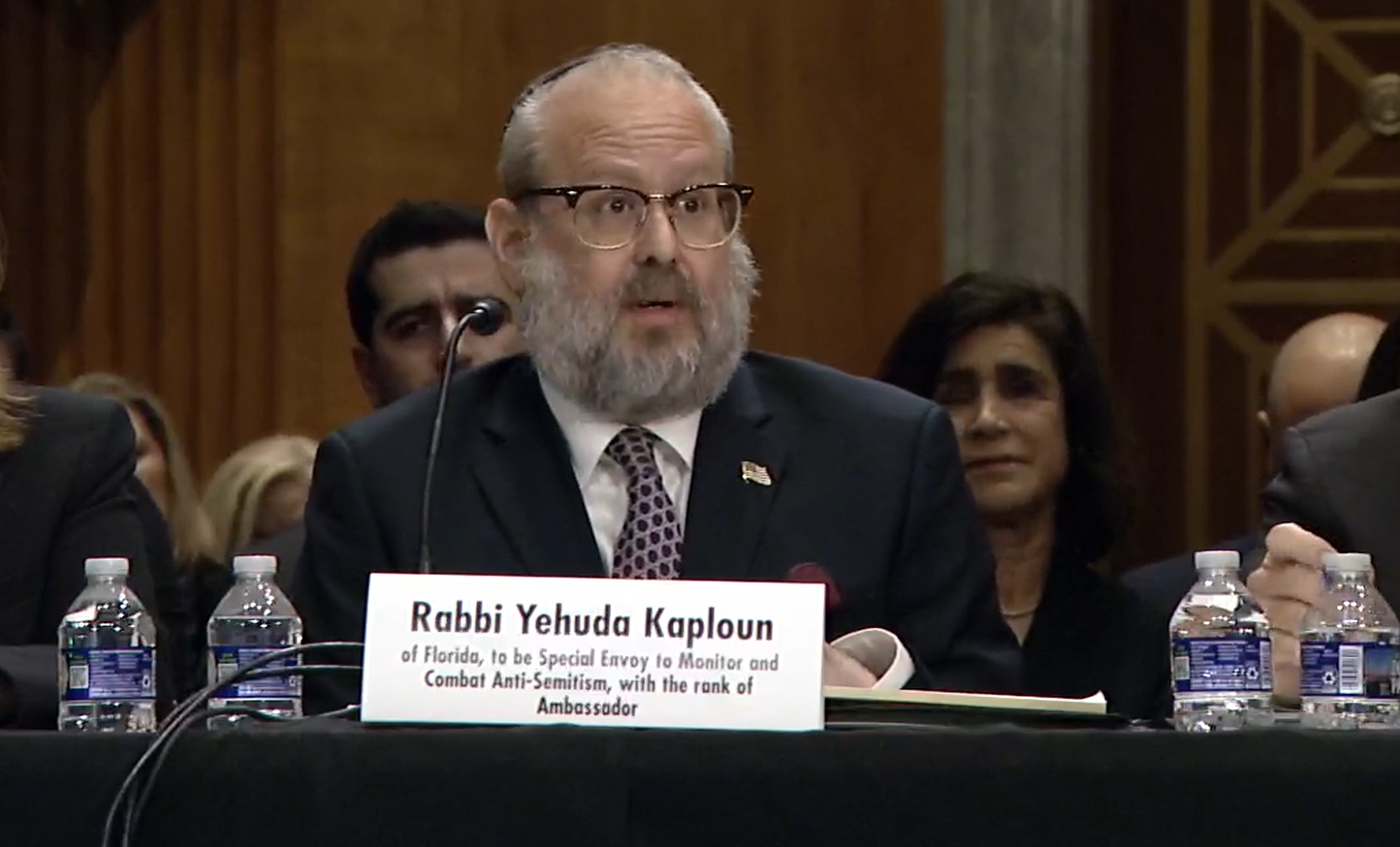
Rabbi Yehuda Kaploun, President Donald Trump’s nominee to serve as U.S. antisemitism special envoy, warned in an interview with Jewish Insider’s Gabby Deutch that inaccurate, inflammatory content is being allowed to spread on social media, and pledged to work with social networks to curb the spread of antisemitic falsehoods online. Kaploun spoke to JI on Wednesday, with his Senate confirmation vote for the State Department role expected this month before the holiday recess.
What he said: “The ideal outcome is, I want to continue America’s tradition of free speech and allowing free speech anywhere and everywhere, freedom of expression,” Kaploun said. “But I would like the platforms — because of the advent of AI and those technologies, you have the ability to recognize when something is not factually correct and it should be labeled as such. I think that’s something that we’d like to target.” His comments about working with social media platforms to label misinformation contradict the approach of the Trump administration, which has urged the major platforms not to “censor” information.
TERRITORY TALK
Lawmakers, witnesses spar over meaning of Trump’s veto of West Bank annexation
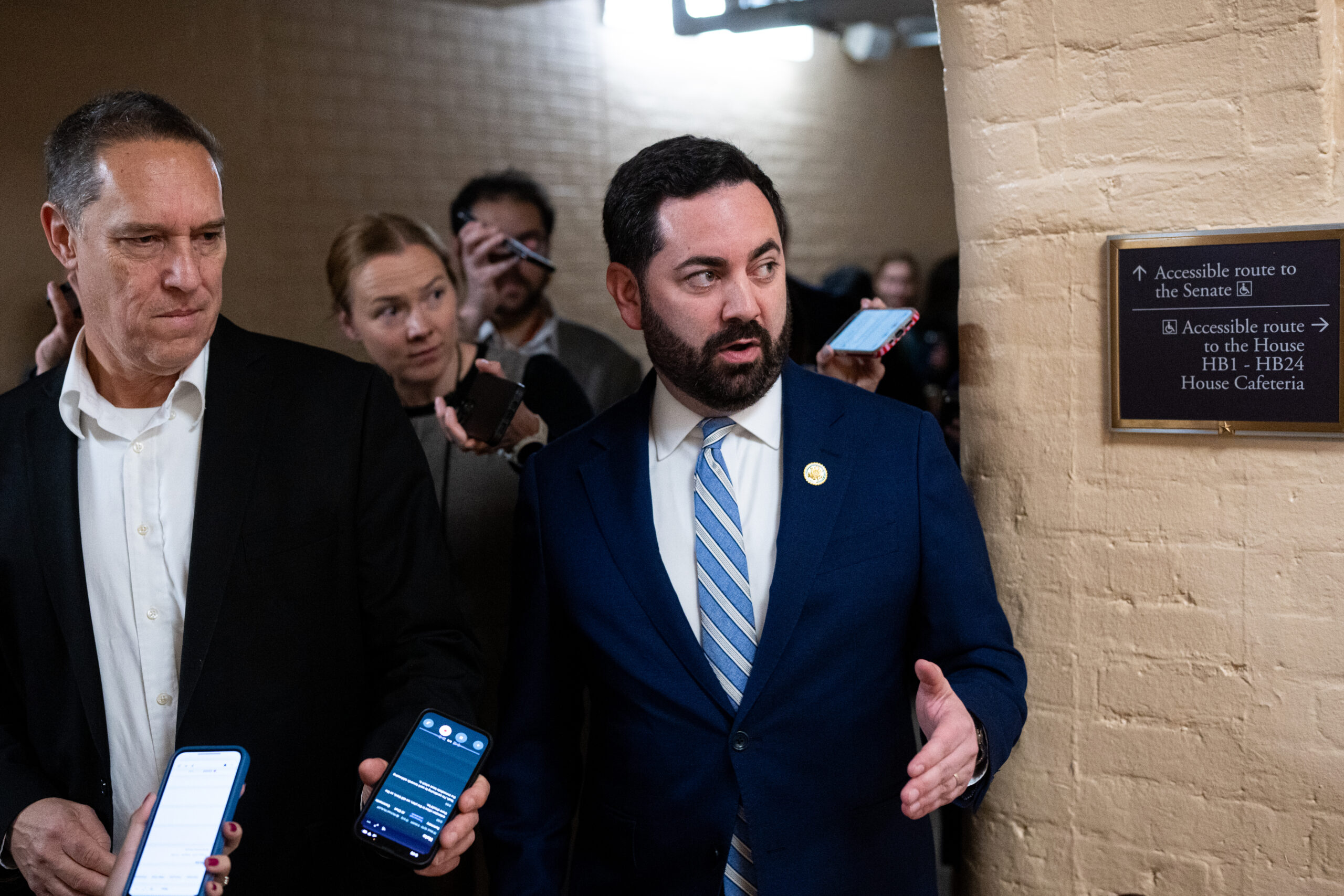
Members of the House Foreign Affairs Committee and expert witnesses on Wednesday debated the meaning and significance of President Donald Trump’s edict in September that he “will not allow Israel to annex the West Bank,” which came amid a reported effort earlier this year by the Israeli government to assert sovereignty over all or part of the territory, Jewish Insider’s Marc Rod reports.
Lay of the land: The at-times contentious hearing focused on “Understanding Judea and Samaria: historical, strategic and political dynamics in U.S.-Israel Relations,” referring to the biblical term for the West Bank preferred by members of the Israeli government and also used by Republicans on the Foreign Affairs Committee. Rep. Mike Lawler (R-NY), the chairman of the Foreign Affairs subcommittee on the Middle East, which hosted the hearing, asserted that Trump was only expressing his opposition to the annexation of territory not currently controlled by Israel. “When the president is talking about annexing, again, I think it’s important to actually look at the map,” Lawler said. “Sixty percent of the West Bank is under Israeli control.”
ON THE HILL
Bipartisan, bicameral bill pushes for assessment of whether China is violating Iran sanctions

A new bipartisan and bicameral bill is pushing for greater accountability and transparency on China’s violations of the U.S.’ oil sanctions on Iran, Jewish Insider’s Marc Rod reports. Recent reports by the Foundation for Defense of Democracies have found that Iran oil exports, primarily to China, have remained near their peak level in spite of U.S. sanctions, which FDD has attributed to a “failure of U.S. sanctions enforcement.”
What it does: The new bill, led by Sens. Richard Blumenthal (D-CT) and Lindsey Graham (R-SC) and Reps. Raja Krishnamoorthi (D-IL) and Ben Cline (R-VA), requires the administration, within a year of the bill’s passage, to determine whether the People’s Republic of China is conducting sanctionable activities with regard to Iran. In advance of that determination, the bill requires the administration to report to Congress within 180 days on China’s purchases of Iranian oil as well as on Chinese efforts to sell or transfer chemical precursors to Iran to support its ballistic missile program.
virginia vows
Rep. James Walkinshaw wins warm reception from Jewish community after first few months on job

Rep. James Walkinshaw (D-VA) touted his history with local Jewish organizations and vowed to make combating antisemitism a priority in Congress while speaking to members of Northern Virginia’s Jewish community on Wednesday, Jewish Insider’s Emily Jacobs reports. Walkinshaw appeared at the Jewish Community Relations Council of Greater Washington’s “Lox and Legislators” breakfast in Falls Church, Va., where he lauded attendees for helping to “build communities in ways that make our communities better and stronger for all of us,” recounted his visits to the Fairfax community’s eruv and highlighted his relationships with Congregation Olam Tikvah and the JCRC.
Fighting antisemitism: Walkinshaw expressed concern about the rise in antisemitism nationally and in Virginia, vowing to fight for an increase in Nonprofit Security Grant Program funding for the next fiscal year and to urge the House Education and Workforce Committee to “take a holistic look at antisemitic incidents in school districts across the country,” something he penned a letter to Committee Chairman Tim Walberg (R-MI) about last month. “We have to be united. We have to be firm in our opposition to hatred in any form or opposition to antisemitism,” Walkinshaw said. “We can’t allow antisemitism to be a partisan issue. We have to stand against it, Democrats and Republicans, no matter where it takes place.”
LEGACY IN ACTION
Eisenhower’s great-grandson carries the torch for Holocaust remembrance
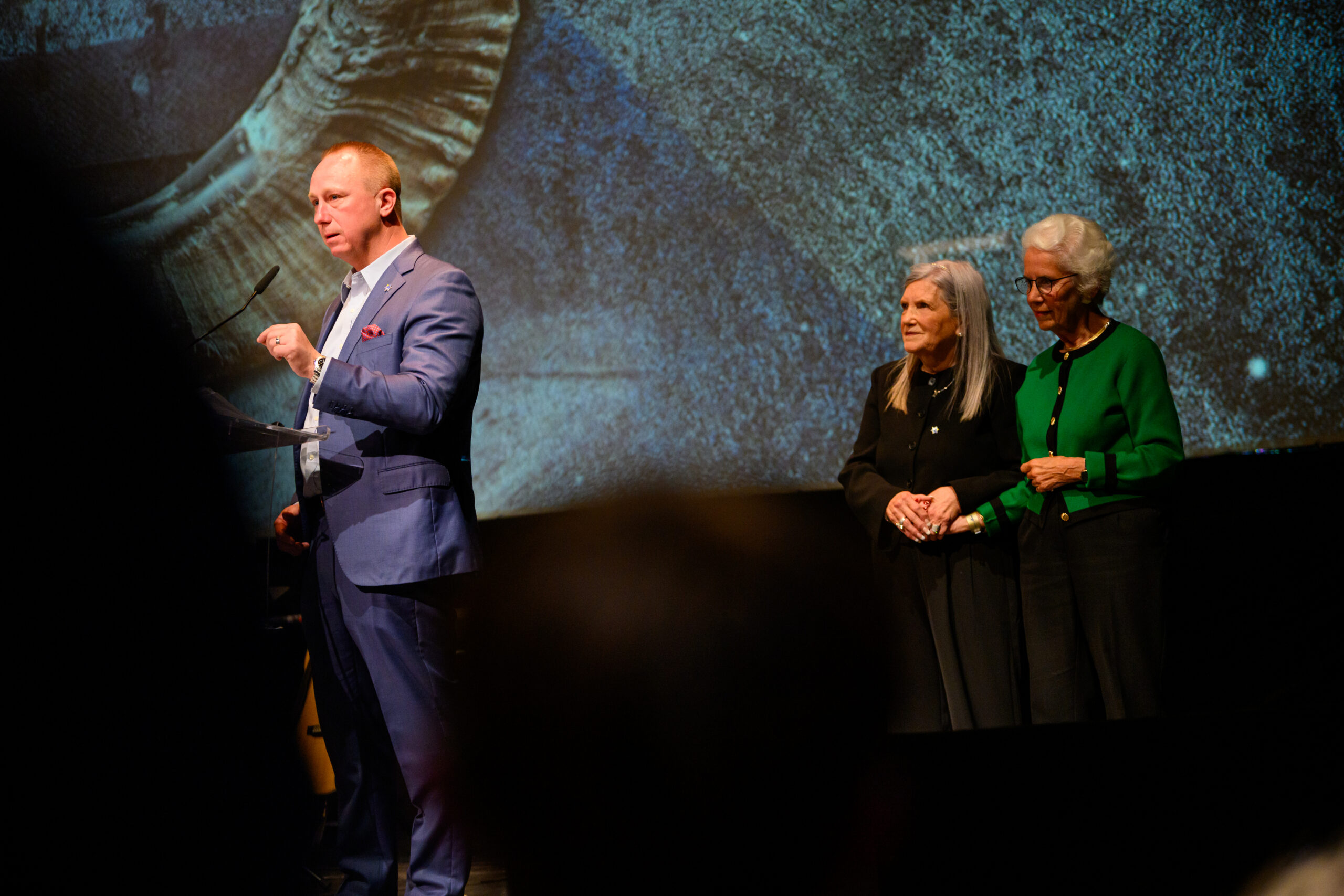
When he arrived at a Buchenwald subcamp in April 1945, Gen. Dwight D. Eisenhower was appalled by what he saw. The first to be liberated by U.S. troops, the camp was strewn with the decomposing remains of hundreds of prisoners murdered by the SS. Three days later, Eisenhower, the supreme commander of the Allied Expeditionary Force in Europe, wrote to U.S. Army Chief of Staff George C. Marshall saying, “I made the visit deliberately in order to be in a position to give first hand evidence of these things if ever, in the future, there develops a tendency to charge these allegations merely to ‘propaganda.’” Eighty years later, Eisenhower’s great-grandson, Merrill Eisenhower, the CEO of People to People International, is carrying the torch for Holocaust remembrance, as he seeks to ensure the world never forgets, Lianne Kolirin reports from London for Jewish Insider.
Predicting the future: “When my great-grandfather arrived at his first camp, he said directly to my grandfather: ‘Make sure you document this, take photos. Bring Congress, bring the press. One day there’s going to be some bastard that says this never happened.’” Sadly those words proved prophetic. Holocaust denial and distortion are surging around the world, including in the U.S. The haunting images are part of what motivates Eisenhower. “Those photos that he [his grandfather] was taking, some of those still sit in my house and some are in the National Archives and some are in the Eisenhower Presidential Library in Kansas,” he said.
Worthy Reads
🕎 The Billings Beacon: In The Wall Street Journal, Daniel Freedman ties the upcoming Hanukkah holiday to the lessons learned from an antisemitic incident in Billings, Mont., more than three decades ago in which the community showed solidarity with a Jewish family whose home, which displayed a menorah, was attacked. “This solidarity cuts to the heart of Hanukkah. … The Maccabee warriors fought to worship God freely — a right that underpins the American experiment. When the non-Jews of Billings put up their menorahs, they were standing for religious liberty for all. The Talmud records a debate among rabbis after the Romans destroyed the holy Temple in the year 70: Should Hanukkah still be celebrated even though its physical center was gone? Their answer was yes. Hanukkah’s celebration of faith’s victory against even the mightiest adversary was central to its message and would inspire generations. It inspired the people of Billings more than 30 years ago, and it has inspired the Jewish people through some of their most trying times in history — from the Spanish Inquisition to the Holocaust.” [WSJ]
📢 Lessons in Leadership: In his Substack “Vahaviyotim,” Daniel Swartz reflects on the state of modern leadership and public service. “I often hear suggestions about how we might improve the quality of public sector leadership: Pay people more — like they do in Singapore. These well-intentioned ideas aren’t bad ones. But they won’t really do anything because they simply don’t change the incentive structure for a would-be leader. Currently, the value proposition for a well-intentioned public servant is this: Your kids’ lives will be a living hell. You’ll be hounded by self-righteous mobs — they’ll camp outside your home and house of worship and shout slogans at you at all hours. You’ll get credible death threats and actual attempts on your life. … The only way that we’ll be able to crowd out the masochists and the grifters is if we make it such that leadership doesn’t entail martyrdom — if we make it possible for critical masses of good people to go into public service, live their lives while in office, and then ride off peacefully into the sunset.” [Vahaviyotim]
Word on the Street
President Donald Trump is planning to appoint a two-star U.S. general to lead the International Stabilization Force in Gaza; the president said on Wednesday that he will announce the members of the newly created Gaza Board of Peace early next year…
Sen. David McCormick (R-PA) said at yesterday’s Aspen Security Forum event in Washington that he’s “hopeful” that the next phase of the ceasefire agreement between Israel and Hamas will proceed, arguing that Trump has “unique credibility” with both Israel and the Gulf states…
Following outgoing New York City Comptroller Brad Lander’s launch of a primary challenge to Rep. Dan Goldman (D-NY), J Street, which had previously endorsed Goldman, indicated it was unlikely to get involved in the primary, saying the organization “deeply value[s Goldman’s] pro-Israel, pro-peace and pro-democracy leadership in Congress,” while calling Lander “a vocal leader for our values”…
A group of Democrats from Colorado’s congressional delegation wrote to Secretary of Homeland Security Kristi Noem questioning the implementation and execution of the Nonprofit Security Grant Program, Jewish Insider’s Marc Rod reports…
Pomona College settled a Title VI complaint filed by a range of Jewish groups, including Hillel International, the Anti-Defamation League and the Brandeis Center for Human Rights Under Law, in which the school will adopt the International Holocaust Remembrance Alliance’s working definition of antisemitism, appoint a coordinator to ensure implementation of Title VI and update school policies related to speech and demonstrations…
The father of deceased Israeli hostage Noa Marciano said that the family received a video of Marciano allegedly being killed by a Palestinian doctor in Gaza’s Shifa hospital who injected air into her veins…
The Times of Israel reports that Palestinian American teenager Mohammed Ibrahim, who had been detained since February by Israeli authorities who alleged that he was throwing rocks at Israeli soldiers, was freed due to the intervention of Jared Kushner, who reached out to senior Israeli officials…
Taiwanese Deputy Foreign Minister Francois Wu reportedly quietly visited Israel, where the territory has an economic and cultural office, in recent months, as Taiwanese leaders concerned about a potential invasion by Beijing look to deepen defense partnerships…
Iceland became the fifth country to boycott next year’s Eurovision Song Contest, citing the decision to allow Israel to participate in the annual competition…
The leader of Yemen’s Southern Transitional Council separatist group, which is backed by the United Arab Emirates, said amid a deepening rift with Yemen’s Saudi-backed Presidential Leadership Council that the STC’s next goal should be the capital of Sana’a…
Pic of the Day
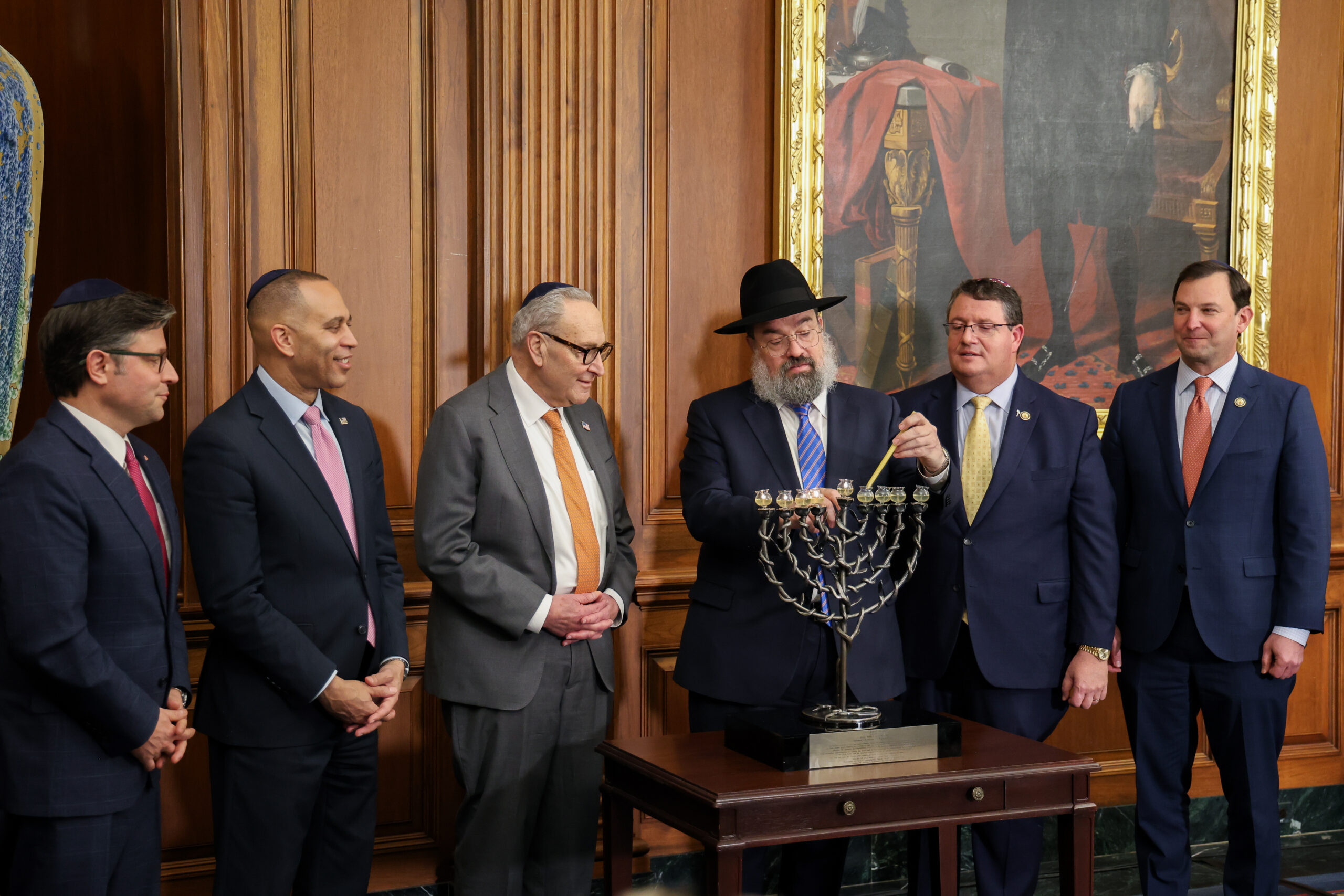
House Speaker Mike Johnson (R-LA), Senate Minority Leader Chuck Schumer (D-NY) and House Minority Leader Hakeem Jeffries (D-NY) hosted a pre-Hanukkah menorah lighting ceremony yesterday on Capitol Hill alongside Chabad Rabbi Levi Shemtov, the executive vice president of American Friends of Lubavitch (Chabad), Jewish Insider’s Emily Jacobs reports. Pictured with the congressional leaders are Reps. Randy Fine (R-FL) and Craig Goldman (R-TX).
Birthdays

Hasidic rapper from Boston, known as Nosson, Nathan Isaac Zand turns 44…
U.S. secretary of state in the Obama administration and former U.S. senator, John Kerry turns 82… Lumber and wood products executive in Bethany, Conn., Stuart Paley… University professor of Jewish history and Jewish thought at Yeshiva University, Rabbi Jacob J. Schacter turns 75… Digital media expert and entrepreneur, he serves as chair emeritus of the UJA-New York of New York’s marketing communications committee, Michael E. Kassan turns 75… Professor of international economics at Princeton University, Gene Grossman turns 70… Former senior attorney in the environmental and natural resources division of the U.S. Department of Justice, Perry Rosen turns 70… Best-selling author, she has published 11 novels including seven books in The Mommy-Track Mysteries series, Ayelet Waldman turns 61… Beverly Hills-based cosmetic surgeon for many celebrities, Dr. Simon Ourian turns 59… Partner in Pomerantz LLP where he leads the corporate governance litigation practice, he serves as a trustee of Manhattan’s Beit Rabban Day School, Gustavo F. Bruckner… Senior director of Middle East programs at the Atlantic Council, William F. Wechsler… Former member of the Knesset for the Labor party and then the Independence party, she just launched the Oz party, Einat Wilf… Distinguished Israel policy chair and senior fellow at RAND, Shira Efron… Israeli poet and founder of the cultural group Ars Poetica, Adi Keissar turns 45… Israeli actor, director, playwright, rapper and singer, known by his stage name Pedro Grass, Amit Ulman turns 40… Head of people and communications at Constellation, Michael Chananie… CEO at D.C.-based Brown Strategy, Josh Brown… Sports editor for Apple News until 2024, now a freelance content strategist for FanDuel, Kelly Cohen… National political reporter at The Washington Post, Marianne LeVine… Managing director of alternative investments at CAIS, Judah Schulman… Senior editor at Apple News, Gideon Resnick… Actress and singer, Hailee Steinfeld turns 29… Associate at Gordon Rees Scully Mansukhani, Segev David Kanik…
Yehuda Kaploun’s strategy differs from the Trump administration’s stance against censorship
Screenshot
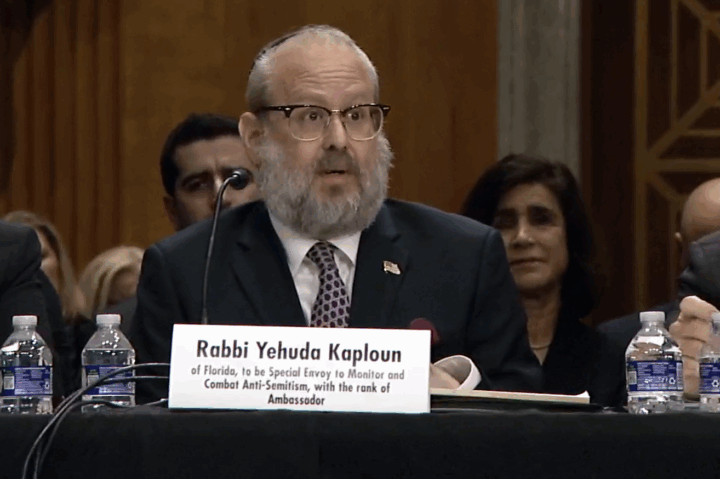
Rabbi Yehuda Kaploun, the Trump administration's nominee to be special envoy to monitor and combat antisemitism
Rabbi Yehuda Kaploun, President Donald Trump’s nominee to serve as U.S. antisemitism special envoy, warned in an interview with Jewish Insider that inaccurate, inflammatory content is being allowed to spread on social media, and pledged to work with social networks to curb the spread of antisemitic falsehoods online.
“The ideal outcome is, I want to continue America’s tradition of free speech and allowing free speech anywhere and everywhere, freedom of expression,” Kaploun said. “But I would like the platforms — because of the advent of AI and those technologies, you have the ability to recognize when something is not factually correct and it should be labeled as such. I think that’s something that we’d like to target.”
Kaploun spoke to JI on Wednesday, with his Senate confirmation vote for the State Department role expected this month before the holiday recess. His comments about working with social media platforms to label misinformation contradict the approach of the Trump administration, which has urged the major platforms not to “censor” information. Earlier this year, after Trump took office, Meta announced the end of its fact-checking program, and YouTube eased many of its content moderation policies.
“There’s many other areas of working with the companies — the algorithms and things that have been now proven, that bots are busy promoting antisemitic rhetoric on the internet, how we get to some of that and preventing some of that. These are very tall tasks. These are not things that occur overnight,” said Kaploun, a Chabad-trained rabbi and businessman from Miami. “But I truly believe there is a true willingness of many people within the administration to tackle these problems and confront them head on, globally.”
As an example of the kind of content he would seek to flag as false, Kaploun referred to a July New York Times article about the hunger that many civilians in Gaza were experiencing during Israel’s war against Hamas. The Times published a correction regarding the article several days after it was published, once it was revealed that a child who was featured prominently in the article as an example of malnutrition had preexisting health conditions.
The misrepresentation in the photo could contribute to antisemitism, according to Kaploun, who suggested that the article had been viewed hundreds of times more than the correction.
“I’m not exactly 100% sure of the actual number, but in that realm, a total disbalance and disproportionate view of people saw something that could be creating antisemitic behavior,” said Kaploun. “All those people that saw it have incorrect information.”
He declined to say whether he believes social networks should have removed posts that included that article.
“I’m not going to get into the specifics or the semantics of what that’s going to look like. We are going to work collectively and together with these companies and try and come up with productive solutions that will lower the disinformation and lower the hatred,” Kaploun said. “That’s what I’d like to work with these social media platforms to do a better job with, recognizing that and making sure that we can do a better job of getting accurate facts out.”
Discussing strategy, Kaploun laid out a vision for his tenure as special envoy to monitor and combat antisemitism, stating that his first priority would be to fight antisemitism with “pro-Semitism” — teaching about Jewish history and culture, and convincing countries and groups that are experiencing antisemitism that Jews are productive members of society and contribute a great deal to the countries in which they live.
“What I mean by pro-Semitism is to explain to countries the benefits of what it is the Jewish nation provides, and our historical perspective of what the Jewish communities have always done for communities, in terms of growth in countries,” said Kaploun. “The countries that have literally attacked the Jews and expelled the Jews don’t always have success, and there’s a reason for that. And when countries are welcoming and when Jews are in countries, usually the benefits far exceed any type of whatever detriments [there] are. There really aren’t detriments.”
“It’s not all about Israel,” Kaploun added. “It’s about the Jewish culture, the Jewish religion, the Jewish sciences.”
Still, he recognizes that separating Israel from discussions of antisemitism is not possible — like if he encounters people who insist that they have no problem with Jews, and that their only issue is with the Jewish state.
“Understand the battle that Israel has to fight here,” said Kaploun. “You’re fighting a culture that was teaching children to kill themselves, that the benefit to get to heaven is to kill a Jewish person. So we have to get to the root causes. You want to condemn Israel, ‘Oh, I love the Jews, but I hate Israel.’ Why is Israel in existence? Because there was a period of time when Jews were being slaughtered throughout Europe and the world was silent and there wasn’t a country for the Jews to go to.”
Here, too, he said it all comes down to education.
“The importance of Israel may need to be explained, but at the same time, people’s facts are incorrect,” Kaploun said. “If they’re factually accurate, then you’re able to have a conversation with someone. They will see the folly of what they’re saying.”
Kaploun has a plan, he told JI, for where to kick off his work once he is confirmed by the Senate and moves into Foggy Bottom.
“The president and the secretary [of state] are firmly behind the efforts that I am doing,” Kaploun said. “They’ve made it very, very clear that the administration is fully behind the efforts that we’re going to do to combat antisemitism.”
Plus, Steve Israel's new spy thriller

(Brian Lawless/PA Images via Getty Images)
(left to right) Taoiseach Micheal Martin, Brian McEnery and Tanaiste Simon Harris after President Catherine Connolly was inaugurated as Ireland's 10th president at Dublin Castle. Tuesday November 11, 2025.
Good Monday morning.
In today’s Daily Kickoff, we interview former Rep. Steve Israel about his new spy thriller and report on Northwestern University’s $75 million settlement with the Trump administration. We talk to the parents of Yaron Lischinsky about the slain Israeli Embassy staffer’s life and legacy, and cover recent victories for Irish Jews and Israel supporters in the face of an effort to remove the name of Chaim Herzog from a Dublin park, as well as the shelving of a bill to boycott Israeli products made in the West Bank. Also in today’s Daily Kickoff: Sen. Cory Booker, Segev Kalfon and Rabbi Brent Chaim Spodek.
Today’s Daily Kickoff was curated by Jewish Insider Executive Editor Melissa Weiss and Israel Editor Tamara Zieve. Have a tip? Email us here.
What We’re Watching
- White House Special Envoy Steve Witkoff and Jared Kushner are traveling to Moscow today ahead of their meeting tomorrow with Russian President Vladimir Putin. Witkoff and Kushner, joined by Secretary of State Marco Rubio, met yesterday in Miami with senior aides to Ukrainian President Volodymyr Zelensky.
- Pope Leo XIV is in Lebanon this week as part of his first international trip since becoming pontiff. He first traveled to Turkey last week, where he met with President Recep Tayyip Erdogan as well as the head of the country’s Jewish community.
- Israel Defense Tech Week kicked off this morning at Tel Aviv University. Senior Pentagon official Mike Dodd; Adm. (ret.) Mike Rogers, a former director of the National Security Agency; and Sequoia Capital’s Shaun Maguire are among the two-day conference’s featured speakers.
What You Should Know
A QUICK WORD WITH JI’S LAHAV HARKOV
Ireland has long been competing for the title of most anti-Israel country in the West, and in recent years, the local Jewish community has expressed fears that the country has become systemically antisemitic. Calls to boycott Israel have permeated the political mainstream; the Emerald Isle’s under 3,000 Jews face hostility in schools and workplaces, and physical harassment has increased in recent years. Pleas to the former president not to politicize International Holocaust Memorial Day by making it another occasion to accuse Israel of war crimes fell on deaf ears; Ireland has since elected a president who is even more stridently opposed to the Jewish state.
Yet, Irish Jews and supporters of Israel notched two victories on Sunday.
Ireland is pulling its “Occupied Territories Bill” to boycott Israeli products from the West Bank in light of a “changed political climate” as a result of the ceasefire in Gaza, the Irish Mail on Sunday reported. The legislation faced legal challenges due to its violation of European Union trade rules, and, as several members of Congress pointed out, could run afoul of U.S. states’ laws penalizing those who boycott Israel and damage relations between Washington and Dublin.
In addition, following an uproar started by the local Jewish community that went global, leading Israel’s leadership and Sen. Lindsey Graham (R-SC) to sound the alarm, pressuring Ireland’s government, a proposal to remove sixth Israeli President Chaim Herzog’s name from a public park and replace it with a name related to Palestinians was taken off of Dublin City Council’s agenda.
Herzog, father of current Israeli President Isaac Herzog, was born in Belfast and grew up in Dublin. He was Israeli ambassador to the U.N. — famously tearing up its “Zionism is racism” resolution — before serving as president in 1983-1993. The park in Dublin was named after Herzog in 1995, to coincide with the 3,000th anniversary of Jerusalem’s establishment. It is adjacent to Ireland’s only Jewish school and close to major Orthodox and Progressive synagogues.
The current President Herzog, his brother, former Israeli Ambassador to the U.S. Michael Herzog, Israeli Foreign Minister Gideon Sa’ar, Graham and others spoke out, saying “Ireland, once home to a proud, thriving Jewish community, has become the scene of raging antisemitism.”
Ireland’s Prime Minister Micheál Martin chimed in soon after, expressing concern that the name change would be seen as antisemitic, and hours later, it was no longer on Dublin City Council’s agenda.
PARDON PLEA
Netanyahu asks Herzog for pardon amid ongoing corruption trial

Israeli Prime Minister Benjamin Netanyahu on Sunday asked President Isaac Herzog to pardon him, six years after Netanyahu was indicted for fraud, breach of trust and bribery and as his yearslong trial continues to play out in Israeli court, Jewish Insider’s Lahav Harkov reports. Among the reasons Netanyahu cited for requesting the pardon, in a concurrent video statement, was “the requests from President Trump to the president of Israel, so I can work together with him as quickly as possible to promote the necessary shared interests between the U.S. and Israel in a window of opportunity that I doubt will return.”
Next steps: Netanyahu’s attorney, Amit Hadad, sent Herzog’s office a 111-page file of details of the trial, including a letter from the prime minister. Herzog’s office passed Netanyahu’s request to the Justice Ministry’s Pardons Department, which will send its opinions to the legal advisor of the Office of the President, who will then add her opinion before sending them to Herzog. A source in Herzog’s office told JI that the process may take weeks and the president will rely heavily on the opinions he receives.
BLESSED ARE THE PEACEMAKERS
Six months after Yaron Lischinsky’s murder, his parents reflect on Israeli Embassy staffer’s life and legacy
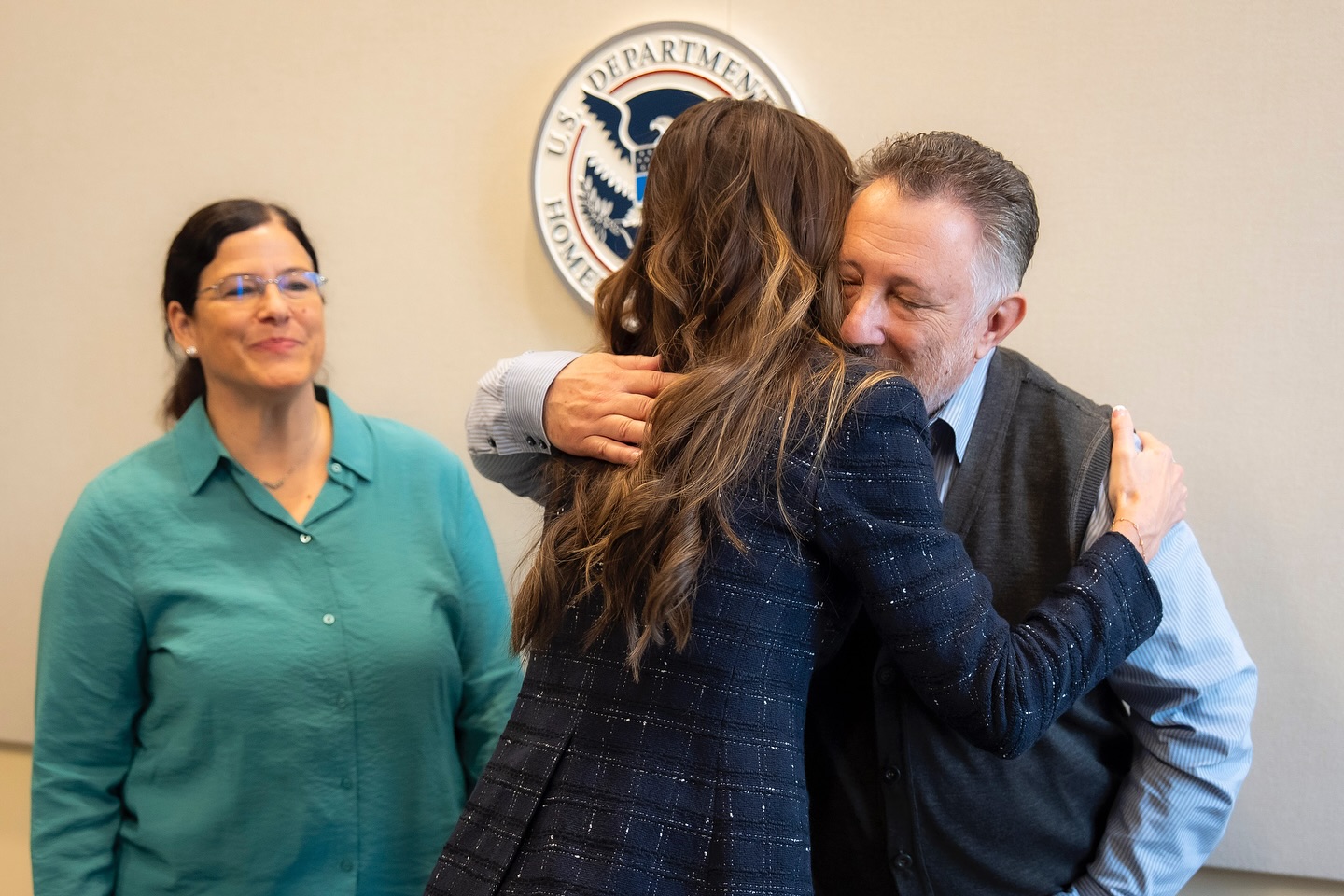
Six months after the death of their son, Yaron Lischinsky, and his girlfriend, Sarah Milgrim — both Israeli Embassy employees — in a shooting outside the Capital Jewish Museum, Daniel and Ruth Lischinsky visited Washington last week, meeting with senior administration officials and visiting the sites where their son lived, worked and, ultimately, died. Speaking to Jewish Insider’s Marc Rod during their time in the U.S. capital, the pair reflected on their son’s life and legacy.
A son’s legacy: “He was a peacemaker. He tried [to make] people understand one [another], talking with the other and not fighting. He was a big fan of the Abraham Accords and he was a peacemaker. He knew that through diplomacy he can reach and he can make achievements,” Daniel Lischinsky said. Ruth Lischinsky said she’s been struck by the number of people that knew her son in Washington.
CAMPUS BEAT
Jewish leaders cautiously optimistic over Northwestern deal with Trump administration

Jewish leaders with ties to Northwestern University are cautiously celebrating a $75 million settlement reached on Friday with the Trump administration to restore federal funding that was frozen earlier this year over allegations that administrators failed to address campus antisemitism, Jewish Insider’s Haley Cohen reports.
What it means: Under the agreement — which will restore at least $790 million in funding that was frozen in April — the Illinois private university agreed to end its commitment to the Deering Meadow agreement, a controversial pact made with anti-Israel encampment participants in the spring of 2024. The agreement allowed students to protest the war in Gaza until the end of the school year so long as tents were removed and encouraged employers not to rescind job offers for student protesters. The document also allowed students to weigh in on university investments — a major concession for students who had demanded the university divest from Israel. The school’s settlement with the Department of Justice also stipulates that Northwestern commit to “clear policies and procedures” around demonstrations, protests and other “expressive activities” and implement mandatory antisemitism training for all students, faculty and staff.
BOOKSHELF
Former Rep. Steve Israel pens Einstein-focused spy thriller set against backdrop of U.S. pro-Nazi movement
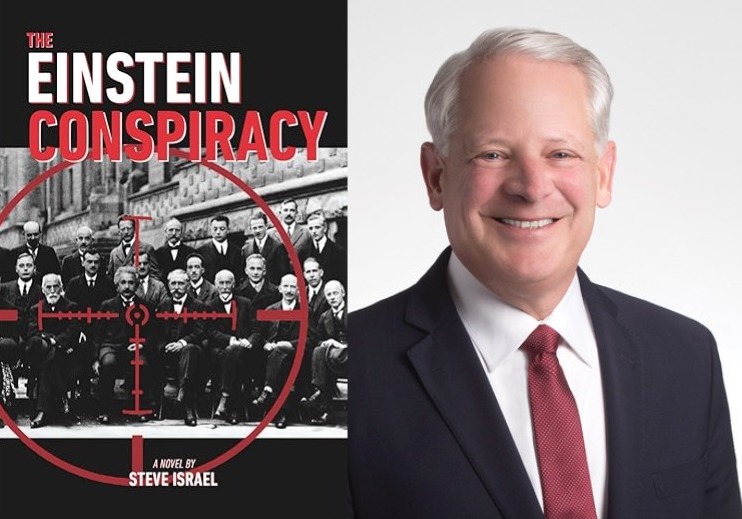
In his latest novel, former Rep. Steve Israel (D-NY) takes readers through a tense spy thriller, with famed physicist Albert Einstein at its center, set against the backdrop of the pro-Nazi movement in America in 1939, Jewish Insider’s Marc Rod reports.
Political moment: Published last week, The Einstein Conspiracy is a fictionalized account of true events, in which the Nazis targeted Albert Einstein to prevent him from helping the United States build an atomic bomb. “The backdrop is the chilling and widespread pro-Nazi movement across America in 1939,” Israel explained to JI. “There was a [Nazi] rally at Madison Square Garden in February 1939 that attracted 20,000 people. On Long Island is a community that used to be known as Camp Siegfried, where the streets were named after Adolf Hitler, Goebbels and Goering. So I’m trying in the book to remind Americans of how close we could have come to staying out of World War II.”
Worthy Reads
Penny Wise: In The Washington Post, philanthropist and Kind founder Daniel Lubetzky considers the overlap in Jewish and American values as he reflects on the rise in global antisemitism. “My maternal grandfather — who fled pogroms in Lithuania and landed on the shores of northern Mexico, where he became a successful cattle rancher — taught his grandchildren about humility and resourcefulness. He used to say, in Spanish, ‘A man who is too arrogant to pick up a penny is not worth a penny.’ The idea harbored by some that picking up a penny is beneath them, and is disgusting in others, isn’t just bad for Jews. Its manifestation today seems to reflect a cultural crisis marked by economic anxiety, frustration and a growing rejection of the very values that have long been the foundation of the American Dream. The crisis has been marked by the emergence of a victim-oppressor mindset; those who feel left behind often believe that they have no agency, and it is all too easy to deflect responsibility onto convenient scapegoats — including those perennial targets, the Jews.” [WashPost]
Qatar Ready For Its Close-up: Variety’s Nick Vivarelli looks at the effort by Qatar to break into Hollywood amid the backdrop of last week’s Doha Film Festival, which kicked off featuring “The Voice of Hind Rajab,” about a Palestinian girl killed in Gaza. “‘We are building the foundations of a world class [film and TV] ecosystem with new infrastructure, production facilities and post-production capabilities supported by vast technology, and data analytics,’ said Hassan Al Thawadi, the Qatari lawyer who oversaw the 2022 World Cup. He is now leading The Qatar Film Committee, an official body that is part of the Media City Qatar hub tasked with driving growth of the country’s entertainment industry. But Al Thawadi made it clear that Hollywood should not be expecting any handouts from Qatar. ‘This agreement is about more than financing films,’ he said, after announcing the relatively modest pact with Neon that involves six to 10 feature films and shorts over a four-year period that Neon will co-finance and distribute. ‘It’s about creating a new platform for Arabic and regional storytelling, ensuring that stories from Qatar and the wider Arab world are seen, celebrated, and shared globally.’” [Variety]
Beyond Denominations: In Tablet, Rabbi Nolan Lebovitz argues that the post-Oct. 7 landscape provides an opportunity for the American Jewish community to find new ways of collaboration and partnership relating to Israel that go beyond the confines of denominations. “We should drop the focus on denominational labels and instead be willing to partner with anyone — Orthodox, Conservative, Reform, and everything in-between — who is a Zionist. Now that the crisis of war is behind us, how do we together foster a new, inspiring Jewish identity of Oct. 8? We can invite rabbis from other regions and other denominations into our communities to speak and to teach to build bonds. We can also work together and pool resources in programming efforts. More communities can work together to share the messages of Zionist thinkers and authors, artists and musicians. Pooling our resources and ideas can help bridge the American Jewish connection with our Israeli brothers and sisters.” [Tablet]
Word on the Street
Rep. Don Davis (D-NC), a pro-Israel stalwart among House Democrats, will run for reelection in his redrawn 1st Congressional District, which under the new state congressional map was won by President Donald Trump by 11 points…
A federal judge ordered the University of Florida’s law school to reinstate a student who had authored a paper arguing that “Jews must be abolished by any means necessary”…
The New York Times interviews former Israeli hostage Segev Kalfon about the more than two years he spent in Hamas captivity in Gaza…
Actor Guy Pearce apologized for sharing antisemitic social media posts, including content that blamed Israel for the Sept. 11 attacks as well as the murder of conservative activist Charlie Kirk…
A tribunal affiliated with the U.K.’s National Health Service suspended for 15 months a British-Palestinian doctor who defended Hamas terrorists as “oppressed resistance fighters” and called Israelis “worse than Nazis”…
U.K. police arrested a man in connection with the deadly attack on a Manchester synagogue on Yom Kippur in which two congregants were killed…
A Nazi soldier photographed executing a Jewish man in the Ukrainian town of Vinnitsa was identified using artificial intelligence decades after the image, whose subjects were unknown, gained notoriety during the trial of Adolf Eichmann…
Wizz Air CEO Jozsef Varadi said the low-cost European carrier plans to open a hub in Israel in early 2026…
Israeli drone manufacturer Heven AeroTech raised $100 million in a round of funding, led by IonQ, that values the company at more than $1 billion…
Iran said it would boycott the 2026 World Cup draw this week in Washington after the U.S. denied visas to members of the soccer team’s delegation…
Iranian Foreign Minister Abbas Araghchi, who met with his Turkish counterpart in Tehran over the weekend, announced a $1.6 billion joint project with Ankara to build a rail link connecting Asia and Europe…
Iran’s Islamic Revolutionary Guard Corps seized an Eswatini-flagged ship carrying oil and more than a dozen crew members as it transited through the Persian Gulf; the incident occurred less than a month after the IRGC seized a Marshall Islands-flagged vessel that originated in the United Arab Emirates…
The Wall Street Journal reports on Iran’s efforts to funnel money to Hezbollah through Dubai-based companies…
In The New York Times’ “Modern Love” column, Rabbi Brent Chaim Spodek reflects on his own marriage and the vows and promises made in his ketubah…
Sen. Cory Booker (D-NJ) and Alexis Lewis, who is Jewish, married in a ceremony co-officiated by Rabbi Matthew Gewirtz, a longtime friend of Booker, in Washington over the weekend…
Tony Award-winning playwright Tom Stoppard, whose “Leopoldstadt” reflected his own life as an assimilated Englishman who did not learn of his family ties to the Holocaust until adulthood, died at 88… Israeli Maj. Gen. (res.) Dan Tolkowsky, who led the Israeli Air Force from 1953-1958 before going on to found the country’s first VC, died at 104… Tekserve co-founder David Lerner died at 72… Architect Robert A.M. Stern, who gained global acclaim for Manhattan’s 15 Central Park West, died at 86… Psychologist Paul Ekman, whose pioneering work on facial recognition was used by Hollywood animators and the FBI alike, died at 91…
Pic of the Day
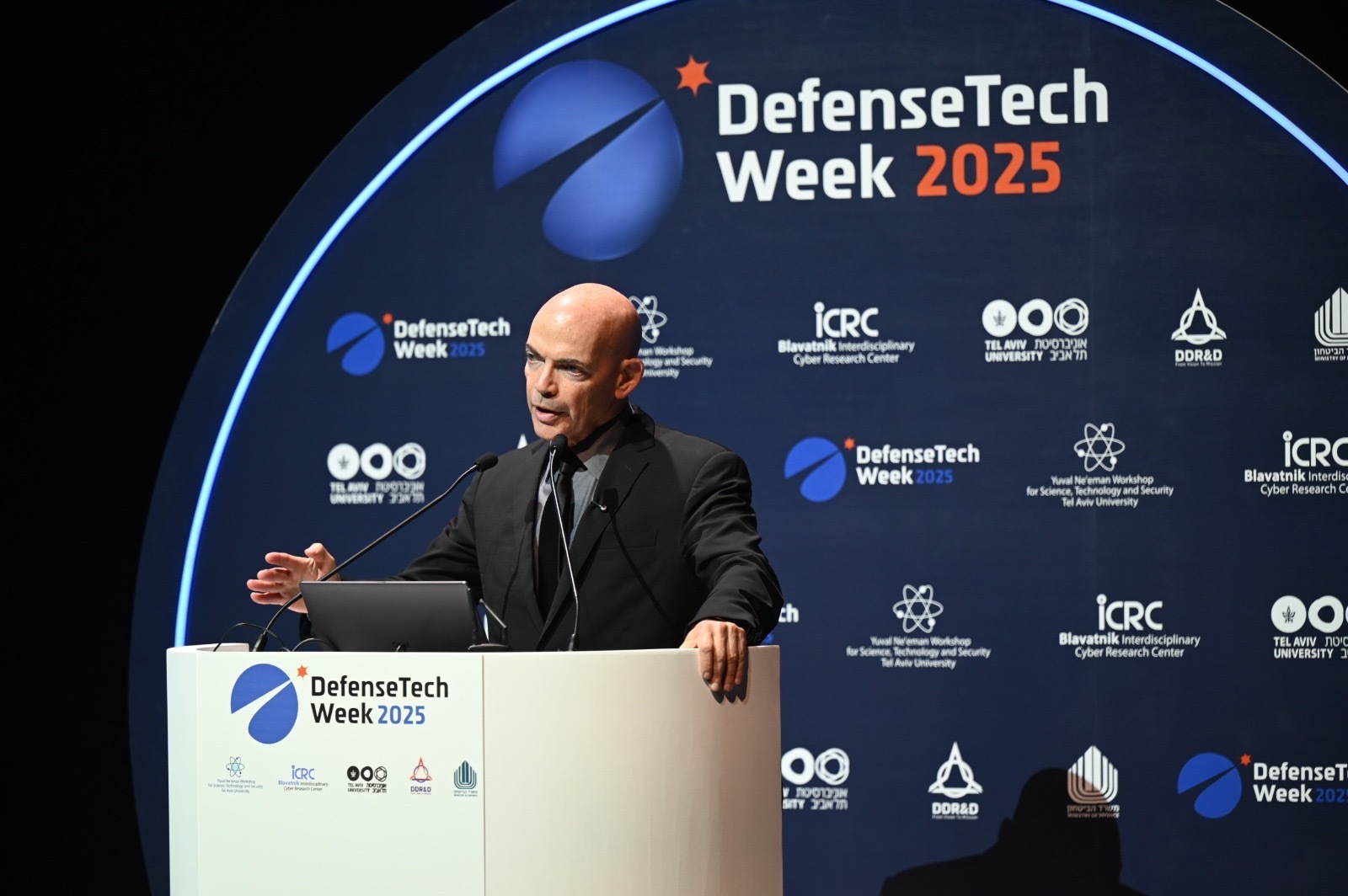
Brig. Gen. (res.) Dr. Daniel Gold, head of the Israel Ministry of Defense Directorate of Defense Research & Development, spoke this morning at the International DefenseTech Summit at Tel Aviv University.
Birthdays
Singer, actress, comedian and author, Bette Midler turns 80…
Former CEO of Marvel Comics and chairman until 2023 of Disney’s Marvel Entertainment, Isaac “Ike” Perlmutter turns 83… Former EVP of Stuart Weitzman, Jane Weitzman… NYC-based real estate mogul, he owned the New York Post, served as chair of NYC’s MTA and is a noted car collector, Peter Kalikow turns 83… Executive producer of over 200 shows with more than 15,000 hours of television over a lengthy career, David E. Salzman turns 82… Comedian, actor and voice actor best known for his starring role in the animated sitcom “Dr. Katz, Professional Therapist,” Jonathan Katz turns 79… Former director of Pardes Institute of Jewish Studies, he is now the director of Yashrut, Rabbi Daniel Landes turns 75… Former president of the American Jewish Committee and a board member at Israel Policy Forum, John M. Shapiro… British playwright, director and scriptwriter who has won many awards for his work on the stage, film and television, Stephen Poliakoff turns 73… U.S. senator (R-FL), Rick Scott turns 73… Newly appointed rabbi at Congregation Beth El of Windsor, Ontario, Rabbi Gordon Fuller… Former chair of the board of the Greater Miami Jewish Federation, Isaac “Ike” Fisher turns 69… U.S. District Court judge in Oregon, Judge Michael H. Simon turns 69… U.S. senator (D-MI), Gary Peters turns 67… CEO of Oracle Corporation until a few months ago, now vice chair of the board, she also joined the board of the recently merged Paramount Skydance, Safra A. Catz turns 64… Professor in the Department of Mathematics and Physics at the University of Cambridge, Raymond E. Goldstein turns 64… Pittsburgh-based entrepreneur, David Seldin… CEO at My Pest Pros in Fairfax County (Virginia), Brett Lieberman… Emmy Award-winning stand-up comedian, actress, producer and writer, Sarah Silverman turns 55… Rabbi of Shaarei Tefillah Congregation in Toronto, Rafi Lipner turns 52… Editorial lead in policy communications on the global affairs team at OpenAI, he is the author of a book on military suicides, Yochi J. Dreazen turns 49… Emmy and Peabody Award-winning director, comedian, producer, writer and actor, Akiva Schaffer turns 48… Marketing and communications executive, Natalie Ravitz… Editor-in-chief at Jewish Insider, Josh Kraushaar… Writer and television producer, including for NBC’s primetime series “Brooklyn Nine-Nine,” Evan Daniel Susser turns 40… English teacher at Jerusalem’s Inbar School, the first secular, girls-only middle-high school in Israel, Shira Sacks… Senior advisor to U.S. Ambassador to Israel Mike Huckabee, David Milstein… Mexican musician influenced by Sephardic brass and klezmer styles, known by his mononym “Sotelúm,” Jorge Sotelo turns 36… Becky Weissman…
The research found that 42% of surveyed Jewish faculty members who belong to an association report feeling alienated because they are Jewish or perceived as pro-Israel
Bryan Bedder/Getty Images for Anti-Defamation League
ADL CEO Jonathan Greenblatt speaks onstage ADL's Never Is Now at Javits Center on March 03, 2025 in New York City.
Antisemitism is on the rise within 20 major U.S.-based professional academic associations, according to a study published Thursday by the Anti-Defamation League.
The research, conducted in September, found that 42% of surveyed Jewish faculty members who belong to an association report feeling alienated because they are Jewish or perceived as Zionist; 25% report feeling the need to hide their Jewish or Zionist identity from colleagues in their association; and 45% report being told by others in their associations what does and does not constitute antisemitism. The data was collected using the International Holocaust Remembrance Alliance’s working definition of antisemitism.
Among the associations the report profiles is the Association of American Geographers, which faced pressure from members to adopt a boycott of Israel in August. Other organizations in which the ADL reported antisemitism include: National Women’s Studies Association, American Public Health Association, American Psychological Association and American Educational Research Association.
A Jewish member of the American Anthropological Association interviewed for the study said that the organization’s 2023 conference, held one month after the Oct. 7, 2023, terrorist attacks in Israel, “was one of the first times I felt afraid professionally as a Jewish person. I felt very vulnerable … if I had been wearing a Star of David, which I wasn’t, I would have taken it off. I did not feel safe.”
“Antisemitic biases in professional academic associations are widespread and reveal a problem that goes far beyond traditional scholarly circles,” said ADL CEO Jonathan Greenblatt.
“When antisemitism and biased anti-Israel narratives are normalized within these influential spaces, they seep into curricula, research, and public discourse, quietly but profoundly shaping how students and future professionals interpret the world,” continued Greenblatt. “By assessing these associations and how they are responding, we are delineating a path forward to ensure that academic spaces remain intellectually rigorous, inclusive and free of antisemitism and accountable to the public they serve.”
The report outlines suggestions for reform, based on practices implemented by associations that have successfully mitigated the spread of antisemitism within their organizations. These guardrails include anti-harassment policies and guidelines preventing an association from straying from its stated mission.
The study follows one published in September by the ADL and Academic Engagement Network that found much of the antisemitism on college campuses is fueled by faculty and staff — both on campus and within professional academic organizations.
Plus, Torres challenger’s 180 on Israel
Tom Williams/CQ-Roll Call, Inc via Getty Images
Heritage Foundation President Dr. Kevin Roberts in Washington, D.C. on October 19, 2022.
Good Friday morning!
In today’s Daily Kickoff, we interview former Minnesota Sen. Rudy Boschwitz, the first Holocaust survivor elected to Congress, on his 95th birthday, and have the scoop on the National Task Force to Combat Antisemitism’s decision to cut ties with the Heritage Foundation. We report on the announcement that Kazakhstan will join the Abraham Accords, cover a Senate Armed Services Committee hearing where Senate lawmakers reiterated grievances with Under Secretary of Defense for Policy Elbridge Colby, and highlight the 180 on Israel and AIPAC made by Michael Blake, who has announced a primary challenge to Rep. Ritchie Torres. Also in today’s Daily Kickoff: Rep. Nancy Pelosi, Mitch Silber and Gov. Josh Shapiro.
Today’s Daily Kickoff was curated by Jewish Insider Israel Editor Tamara Zieve and U.S. Editor Danielle Cohen-Kanik, with assists from Matthew Kassel and Emily Jacobs. Have a tip? Email us here.
For less-distracted reading over the weekend, browse this week’s edition of The Weekly Print, a curated print-friendly PDF featuring a selection of recent Jewish Insider and eJewishPhilanthropy stories, including: The 36 hours in Washington that took hostage families from grief to gratitude; What New York City Jewish leaders are most worried about in a Mamdani mayoralty; and Birthright Israel Foundation celebrates 25 years with $220M raised toward new $900M campaign. Print the latest edition here.
What We’re Watching
- On Sunday, the Zionist Organization of America will hold its annual gala, where it will present awards to Rep. Elise Stefanik (R-NY); Israeli Ambassador to the U.S. Yechiel Leiter; Leo Terrell, head of the Department of Justice’s antisemitism task force; Israeli Ambassador to the U.N. Danny Danon; and philanthropists Irit and Jonathan Tratt.
- Stefanik will be announcing her campaign for New York governor today, setting up a battle against Gov. Kathy Hochul, a Democrat. Stefanik, who led the fight against campus antisemitism in Congress, is expected to make democratic socialist Zohran Mamdani’s election as mayor of New York City a major attack line against Hochul, who endorsed Mamdani in the mayoral race.
What You Should Know
A QUICK WORD WITH JI’S Josh Kraushaar
Former Minnesota Sen. Rudy Boschwitz, who turns 95 today, isn’t necessarily a household name — but is one of the more consequential figures in Jewish political history, as the first Holocaust survivor elected to Congress and one of the most prominent Jewish Republicans during a golden period of Jewish representation on Capitol Hill.
Boschwitz now holds the distinction of being the oldest living elected senator, and remains active in political and business life from his home in Plymouth, Minn. He spoke on the phone to Jewish Insider this week about his life story, legacy and thoughts about our current political moment.
Boschwitz was born in Berlin in 1930. On the day that Hitler took power in 1933, Boschwitz’s father came home and told his family they would be leaving Germany forever. He arrived in the United States in 1935 with his family, completed college at the age of 19, started a retail lumber business and quickly made a career in business and, later, politics.
He was elected as a Republican to the Senate in 1978, scoring an upset against the state’s former Gov. Wendell Anderson. He served there for 12 years, eventually losing reelection in 1990 to Democrat Paul Wellstone.
“When I came to the Senate, I was really the first Jewish conservative that many of my colleagues really met. They hadn’t met many Jewish Republicans at all. I think we had a hand in building some of the pro-Israel feelings now,” Boschwitz told JI. (During the 1980s, four other Jewish GOP senators would end up serving alongside him.)
SCOOP
Heritage-affiliated antisemitism task force to cut ties with embattled think tank
An antisemitism task force affiliated with the Heritage Foundation announced on Thursday that it would cut ties with the conservative institution, as the prominent think tank has come under fire for its defense of Tucker Carlson after the firebrand podcaster hosted neo-Nazi Nick Fuentes for a friendly interview. The co-chairs of the National Task Force to Combat Antisemitism announced in a Thursday email, viewed by Jewish Insider’s Gabby Deutch, that they will continue their work “outside the Heritage Foundation for a season.”
Leaving a window open: A member of the task force told JI that its members had not ruled out working with Heritage again if the organization improves. “We hope that one day we’ll be able to collaborate with Heritage again,” said the member, who requested anonymity to discuss confidential conversations. The task force was formed following the Oct. 7, 2023, Hamas attacks and was instrumental in the drafting of Project Esther, Heritage’s signature counter-antisemitism framework released last year in response to the Biden administration’s national strategy to combat antisemitism. The Project Esther report made no mention of antisemitism on the political right. In their Thursday email, the co-chairs of the task force said they can no longer ignore it.
airing it out
Senate lawmakers air grievances with Elbridge Colby for second time this week
Members of the Senate Armed Services Committee from both parties voiced concerns with Elbridge Colby, under secretary of defense for policy, and his office at the Pentagon, at a committee hearing — for the second time this week, Jewish Insider’s Marc Rod reports.
Consultation and communication: While Thursday’s proceedings, a confirmation hearing for Alex Velez-Green, nominated to be Colby’s top deputy and who has been a senior advisor to him in an interim capacity, were generally less heated than a Tuesday hearing with nominee Austin Dahmer, lawmakers reiterated concerns with a lack of consultation by Colby’s team and alleged rogue decision-making on a range of issues by the office. “Many of this committee have serious concerns about the Pentagon’s policy office and how it is serving the president of the United States and the Congress,” Sen. Roger Wicker (R-MS), the chairman of the committee, said in his opening statement. “In many of these conversations, we hear that the Pentagon policy office seems to be doing what it pleases without coordinating, even inside the U.S. executive branch.”
U-TURN
Torres challenger attacks Israel, AIPAC in campaign launch, but previously sought pro-Israel allies extensively
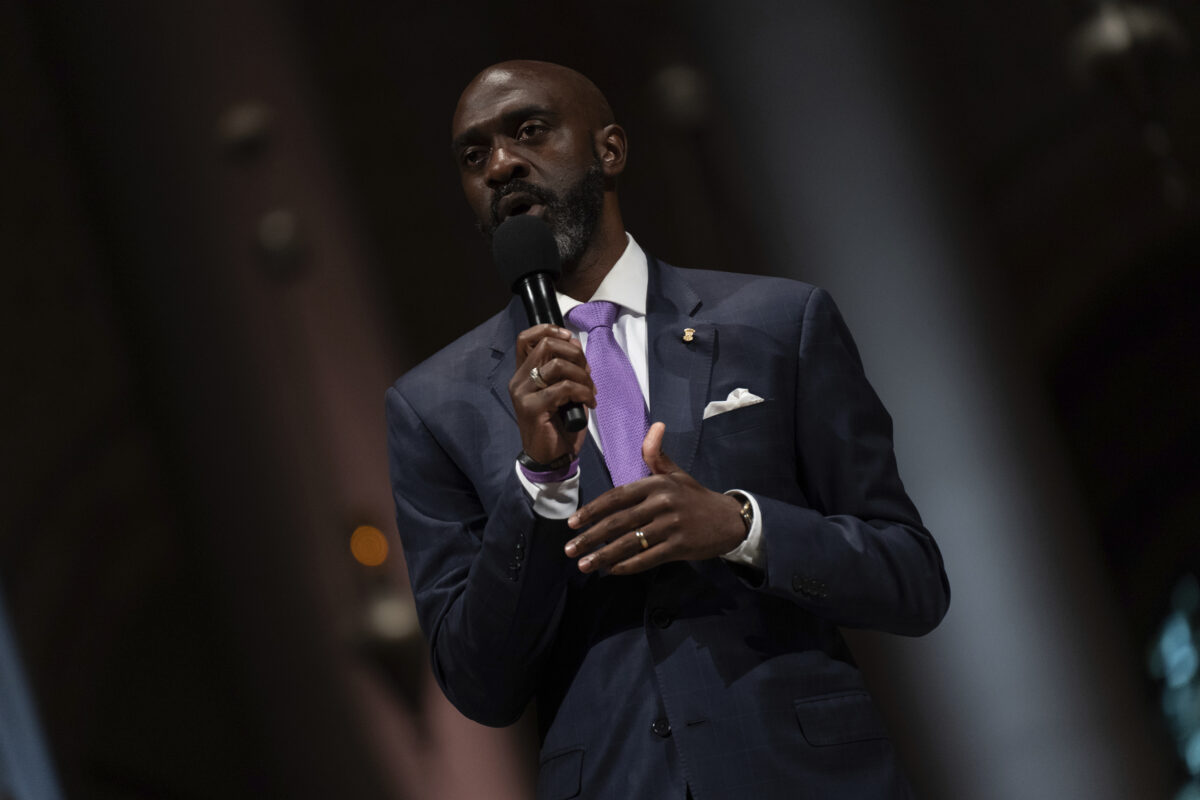
Michael Blake, a former New York state assemblyman and eighth-place-finishing New York City mayoral candidate, announced a primary challenge to Rep. Ritchie Torres (D-NY) on Wednesday focused squarely on Torres’ support for Israel and ties to AIPAC. But Blake himself has an extensive history with AIPAC and was, at least through 2020, a vocal supporter of the Jewish state, Jewish Insider’s Marc Rod reports.
Recent history: In his campaign announcement on X, Blake said, “I am ready to fight for you and lower your cost of living while Ritchie fights for a Genocide. I will focus on Affordable Housing and Books as Ritchie will only focus on AIPAC and Bibi,” a reference to Israeli Prime Minister Benjamin Netanyahu. “I will invest in the community. Ritchie invests in Bombs.” Social media posts by Blake and others show that he was for years a frequent attendee at AIPAC events, having attended no less than 10 of the organization’s events between 2014 and 2019, and was a featured speaker at least once.
community care
Jewish security leaders brace for Mamdani-era policing cuts

New York City’s leading Jewish security organization has prepared a new set of strategies to respond to policies that the city’s Mayor-elect Zohran Mamdani might put into place that would affect public safety. Among the primary concerns of Mitch Silber, executive director of the Community Security Initiative and former director of NYPD intelligence analysis, is Mamdani’s vow to cut the police department’s Strategic Response Group, Jewish Insider’s Haley Cohen reports.
Leaving a void: “SRG is what essentially stands in between ‘Free Palestine’ protesters and the Jewish community,” Silber told JI on Thursday. Disbanding SRG “will diminish public security and security for the Jewish community,” said Silber. Mamdani pledged he would disband the force as mayor in December 2024, saying it had “cost taxpayers millions in lawsuit settlements and brutalized countless New Yorkers exercising their first amendment rights.” SRG was created after the 2008 Mumbai terrorist attacks so that New York City could be prepared in the event of similar multi-site attacks. “There’s no way CSI could replicate that,” Silber said.
ABRAHAMIC ALLY
Kazakhstan set to join Abraham Accords ahead of Syrian, Saudi leaders’ visits to Washington
Kazakhstan, which has maintained diplomatic relations with Israel since 1992, will join the Abraham Accords, President Donald Trump announced on Thursday. The announcement, made during Kazakh President Kassym-Jomart Tokayev’s visit to the White House, came shortly before a planned visit to Washington by Syrian President Ahmad a-Sharaa on Monday, and Saudi Crown Prince Mohammed bin Salman on Nov. 18, Jewish Insider’s Lahav Harkov and Danielle Cohen-Kanik report.
Announcement: In a post on Truth Social, Trump said he had held a call between Tokayev and Israeli Prime Minister Benjamin Netanyahu and that he will “soon announce a Signing Ceremony to make it official, and there are many more Countries trying to join this club of STRENGTH.” The Kazakh Embassy in Washington characterized the meeting as a discussion of “strengthening the Enhanced Strategic Partnership” between the countries. As of Friday morning, Israel had not issued any official statement on the announcement.
Military matters: The Trump administration is weighing a multibillion-dollar sale of F-35 fighter jets to Saudi Arabia, a potential major policy shift that has stirred debate over the military balance in the region and Washington’s commitment to preserving Israel’s “qualitative military edge,” Jewish Insider’s Matthew Shea reports.
BOWING OUT
Nancy Pelosi ends storied career in Congress, remembered as longtime ally of Jewish community
Rep. Nancy Pelosi (D-CA) announced on Thursday that she would not seek reelection, ending a nearly 40-year career in Congress and earning plaudits across a wide spectrum of Jewish voices, from J Street to AIPAC and many in the San Francisco Jewish community who have worked with her since the 1980s. Pelosi, who is 85, rose to become the first and only female speaker of the House, a position she held from 2007-2011 and again from 2019-2023, when she presided over a divided caucus and a resurgent far-left flank of the party. Pelosi was known for keeping tight control over congressional Democrats and squashing intra-party squabbles, Jewish Insider’s Gabby Deutch reports.
Support for Israel: “In my view, she was able to keep a pro-Israel consensus in the caucus, but it certainly came at a time when there was more angst around the issue,” said Tyler Gregory, CEO of the Bay Area Jewish Community Relations Council. “While we haven’t always seen eye-to-eye with her on specific policies, she’s always been pro-Israel, and I don’t think anyone can question that.” Marshall Wittmann, an AIPAC spokesperson, said that during her tenure as speaker, Pelosi “helped ensure that Israel had the resources to defend itself, which advances American interests and values.”
Worthy Reads
The GOP Battle Over Bigotry: Author Jamie Kirchick argues in The Washington Post that the fight on the right over Tucker Carlson is a microcosm of deeper moral and ideological fault lines in the GOP. “Carlson’s promotion of [neo-Nazi Nick] Fuentes was a signal moment in the former Fox News star’s moral atrophy. It also has forced an overdue reckoning on the American right. For far too long, the problem of antisemitism has been allowed to fester there because too many conservatives have been reluctant to speak out against its chief propagator … Stalinists and Holocaust deniers like Fuentes are perfectly entitled to spew their nonsense on street corners, through self-published manifestos or in online livestreams. What they are not entitled to is the imprimatur of purportedly respectable institutions whose reputations hinge upon the voices they choose to amplify.” [WashPost]
Teshuva at Heritage: William Daroff, CEO of the Conference of Presidents of Major American Jewish Organizations, calls on the Heritage Foundation, a place he called a “second home,” to engage in “repentance” in the Washington Times. “Heritage’s decision to defend Mr. Carlson marks a dangerous turning point. An organization that once modeled moral seriousness now tolerates moral confusion. The one that built its reputation on defending Western civilization now aligns itself with those who undermine it. … It pains me to say it, but a relationship that began for me over four decades ago now stands on the edge of breaking. If Heritage cannot right its ship, that long relationship will end. Institutions that trade moral clarity for populist rage do not endure. … Mr. Roberts and Heritage must decide whether they still believe in moral clarity. They can stand for decency, admit error and reaffirm that antisemitism never belongs in conservative thought. Or they can let their silence define them as collaborators in decline.” [WashingtonTimes]
The Mamdani Doctrine: Zineb Riboua, a research fellow at the Hudson Institute’s Center for Peace and Security in the Middle East, writes in The Free Press about New York City Mayor-elect Zohran Mamdani’s worldview. “I grew up amid the lingering echoes of decolonization, which continue to mold perceptions of justice and power, albeit less overtly than in the West. From high school onward, Third World rhetoric permeated everyday discourse on climate change, Palestine, or inequality. The issues evolve, but the lens persists — a moral binary logic that divides the powerful from the powerless. … What Mamdani represents is not a new movement but a continuation of this sensibility. His stances on housing, policing, and Palestine project global anti-imperial archetypes onto contemporary New York City politics. The landlord morphs into the colonizer, the tenant into the colonized. The New York City Police Department becomes the occupier. The city’s streets serve as metaphorical battlegrounds in the decolonization process. Mamdani’s movement transcends socialism, unmoored from class or ownership, and eludes Islamism, unbound by theocratic aims. Here, Islam serves as an emblem of subjugation with universal resonance, a faith recast as resistance against Western dominance.” [FreePress]
Word on the Street
Pennsylvania Gov. Josh Shapiro, in an interview with Semafor, revealed he had a “healthy dialogue” with New York City Mayor-elect Zohran Mamdani in the wake of Mamdani’s win where the two “agreed to disagree” on some issues. Shapiro also commented on the ongoing “conservative infighting over antisemitism”: “I don’t share a lot in common ideologically or on the issues with Sen. [Ted] Cruz,” but Cruz “did the right thing by speaking out against [Nick] Fuentes and [Tucker] Carlson and the Heritage Foundation and others”…
In another interview with Puck, Shapiro commented on the shifting opinions on Israel in the Democratic Party: “I don’t pay attention to shifting political winds. I try and do what I think is right, and say what I believe. … I believe in Israel, but I don’t like the direction that it’s going under Benjamin Netanyahu’s leadership”…
Two top advisors to Mamdani, Ali Najmi and Elle Bisgaard-Church, attended a Somos reception in San Juan, Puerto Rico, on Thursday hosted by the Jewish Community Relations Council and UJA-Federation of New York. “We are here to represent the transition with the Jewish community, and we’re so happy to be here,” Najmi, a Mamdani confidante who serves as chief counsel to the mayor-elect’s transition team, told JI’s Matthew Kassel. “We see so many good friends and old friends, and we’re so looking forward to our new friends, and the food was great here”…
Spotted at the JCRC-UJA Federation event: Rep. Dan Goldman (D-NY), Brad Lander, Alex Bores, Lincoln Restler, Kalman Yeger, Mark Treyger, Micah Lasher, Michael Miller, Leon Goldenberg, Josh Mehlman, Sara Forman, Jason Koppel, Yeruchim Silber, Menashe Shapiro, Joel Eisdorfer, Jacob Eisdorfer, Daniel Rosenthal, Hindy Poupko, Mercedes Narcisse, Sandy Nurse, Eddie Gibbs, Thomas DiNapoli, Noam Gilboord…
Federal prosecutors are conducting a corruption investigation into a foreign trip taken by Washington, D.C., Mayor Muriel E. Bowser with members of her staff that was paid for by Qatar, The New York Times reports…
A new course on “Gender, Reproduction, and Genocide” in Gaza was introduced at Princeton University, taught by a scholar who was briefly arrested for incitement while teaching at Hebrew University in Jerusalem for her inflammatory rhetoric about Israel, which has included calling for the end of the Jewish state…
The Israeli government has hired firms to conduct public diplomacy campaigns, including outreach to evangelical Christians and boosting search results on AI services like ChatGPT, Haaretz reports. The firms and experts hired seem to indicate a focus on amplifying pro-Israel messages among the American right…
The Senate Judiciary Committee unanimously voted on Thursday to advance legislation eliminating loopholes used by museums and other stakeholders to continue possessing Nazi-looted artwork that Jewish families have been trying to recover since the end of World War II. Sens. Dick Durbin (D-IL) and Lindsey Graham (R-SC) asked during the vote that their names be added as co-sponsors to the Holocaust Expropriated Art Recovery (HEAR) Act, led by Sens. John Cornyn (R-TX) and Richard Blumenthal (D-CT)…
Sen. John Kennedy (R-LA) introduced the Ideologically Motivated Violence Accountability Act, which would provide sentencing enhancements for crimes committed “wholly or in part because of the victim’s actual or perceived political or religious beliefs, affiliation, expression, or activity” or to “make a public statement concerning any political or religious belief, practice, institution, group, ideology, event or public figure”…
Rep. Raja Krishnamoorthi (D-IL), a Senate candidate, and Del. James Moylan (R-Guam) introduced a bill requiring a “whole-of-government strategy to interrupt cooperation among China, Russia, Iran and North Korea”…
Israeli Strategic Affairs Minister Ron Dermer is expected to step down from his position next week, with Israeli Ambassador to the U.S. Yechiel Leiter taking over some of his responsibilities regarding ties with the Trump administration…
The Treasury Department announced sanctions today against members of Hezbollah’s “finance team” who “oversee the movement of funds from Iran” in an effort to support the Lebanese government’s moves to disarm the terror group…
The University of Maryland, College Park student government unanimously passed two resolutions hostile towards Israel on Wednesday night, including one that called for the school to ban members of the Israel Defense Forces from speaking on campus, Jewish Insider’s Haley Cohen reports…
Pope Leo XIV met with Palestinian Authority President Mahmoud Abbas on Thursday at the Vatican and the two discussed “an urgent need to provide assistance to the civilian population in Gaza and to end the conflict by pursuing a two-State solution,” according to a statement by the Holy See…
A covert operation reportedly carried out by Qatar sought to find evidence tying the woman who made sexual abuse allegations against Karim Khan, prosecutor of the International Criminal Court, to Israel; according to documents obtained by The Guardian, no such connection was found…
Two 19-year-olds from Montclair, N.J., were arrested on Tuesday on accusations of participating in an ISIS-inspired terror group, with one allegedly planning a Boston-bombing-style attack…
French police arrested four protesters who repeatedly disrupted an Israel Philharmonic Orchestra concert in Paris on Thursday…
British authorities arrested 11 people amid protests surrounding Wednesday’s highly politicized soccer match between Aston Villa and Maccabi Tel Aviv in Birmingham, after police banned Maccabi fans from attending the game. Aston Villa won 2-0…
Iran’s Islamic Revolutionary Court sentenced a 70-year-old Iranian American Jewish man from New York to two years in prison for traveling to Israel 13 years ago to celebrate his son’s bar mitzvah…
Former Vice President Mike Pence announced his forthcoming book, What Conservatives Believe: Rediscovering the Conservative Conscience, will be released June 2, 2026…
Ye, formerly Kanye West, met with Rabbi Yoshiyahu Yosef Pinto, an influential Orthodox rabbi who serves as the chief rabbi of Morocco, to apologize for his repeated extreme antisemitic remarks. “I feel really blessed to sit here and take accountability. I was dealing with various issues. I was dealing with bipolar also, so I would take the ideas I had and forget about the protection of the people around me and myself”…
The Wall Street Journal interviews Ruth Porat, the Jewish chief investment officer and president of Google and its parent company, Alphabet…
The Financial Times details the unraveling of Saudi Crown Prince Mohammed bin Salman’s ambitious megacity project, The Line, now with a significantly reduced vision, due to finance and physical constraints…
Singapore announced it will replace its fleet of Hermes 450 drones, used by the Singapore Air Force for 20 years, with the Hermes 900 model, produced by Israel’s Elbit Systems. Singapore’s Foreign Minister Vivian Balakrishnan met with Israeli Prime Minister Benjamin Netanyahu and Foreign Minister Gideon Sa’ar in separate meetings in Jerusalem on Thursday focused on boosting ties between the two countries…
FIFA announced the creation of a FIFA Peace Prize which will “recognize exceptional actions for peace,” which it intends to present to its recipient, rumored to be President Donald Trump, at the World Cup draw in Washington on Dec. 5…
Pic of the Day

Israeli American citizen Capt. Omer Neutra was laid to rest this morning at the Kiryat Shaul military cemetery in Tel Aviv after his body was returned to Israel from Gaza on Sunday. Neutra was killed and kidnapped in the Oct. 7, 2023, Hamas attacks on Israel. The 21-year-old Long Island native, an IDF tank commander, was among the first soldiers to respond to the attack, serving near the community of Kibbutz Nahal Oz.
Birthdays

Journalist and pioneering podcaster, he is the creator and host of “How I Built This” and “Wisdom from the Top,” Guy Raz turns 50 on Sunday…
FRIDAY: Neuropsychiatrist, a 1944 graduate of Yeshivah of Flatbush and 2000 Nobel Prize laureate in medicine, Eric Kandel turns 96…Former U.S. senator from Minnesota, he later served on the boards of AIPAC and JINSA, Rudy Boschwitz turns 95… MIT professor in electrical engineering and computer science, Barbara Liskov turns 86… Senior fellow at the Brookings Institution, he was the vice chairman of the Federal Reserve System, Donald Kohn turns 83… University professor at Harvard, expert on Shakespeare, he is a Pulitzer Prize-winning author, Stephen Greenblatt turns 82… Founding president of Santa Monica, Calif., synagogue, Kehilat Maarav, and senior partner in the West Los Angeles law firm of Selvin & Weiner, Beryl Weiner turns 82… Past international president of the FJMC International (formerly the Federation of Jewish Men’s Clubs), Thomas “Tom” Sudow turns 73… Entrepreneur, bar owner and television personality, Jonathan “Jon” Peter Taffer turns 71… Constituent affairs representative and community liaison for Rep. Adriano Espaillat (D-NY), Laurie Tobias Cohen… Volunteer coordinator for the Atlanta-Fulton Public Library, Marcy Meyers… President and CEO of the Boston-based Jewish Alliance for Law & Social Action, Cindy Rowe… Funeral director at Berkowitz-Kumin-Bookatz in Cleveland Heights, Ohio, Michael R. Holub… Director, writer and showrunner of the legal drama series “Suits,” Aaron Thomas Korsh turns 59… Former professional racing driver, now CEO of McLaren Racing, Zakary Challen Brown turns 54… Chairman and CEO of luxury apparel company Canada Goose, Dani Reiss turns 52… European casino owner, art collector and CEO of Vestar Group, Leon Tsoukernik turns 52… Deputy mayor of Jerusalem, Aryeh Yitzhak King turns 52… Founder and director of Eden Village Camp, an environmental Jewish summer camp based in New York, Yoni Stadlin… and his twin brother, rabbi, wilderness guide, experiential educator and artist, Pesach Stadlin, both turn 47… EVP of communications at NBC Universal, Jennifer B. Friedman… Reporter for Sportico focused on the business of college sports, Daniel Libit… Baseball outfielder, he won two minor league batting titles, Brian Horwitz turns 43… Consultant for family foundations, he holds two graduate degrees in Nursing, Avi Zenilman… Northeast regional deputy director at AIPAC, Alexa Jordan Silverman… National political reporter at Politico, Elena Schneider… Founder and CEO emeritus at Swipe Out Hunger, Rachel Sumekh… Toronto-native, he is the founder and CEO of Count Me In, a global youth empowerment organization, Shane Feldman… Co-founder and CEO at Moneta Labs Limited, Tomer Aharonovitch…
SATURDAY: U.S. attorney for New Jersey, then a U.S. District Court judge, now a criminal defense attorney, Herbert Jay Stern turns 89… Actress, comedian and writer, she played the recurring role of Doris Klompus on “Seinfeld,” her solo theater shows include “Yenta Unplugged” and “The Yenta Cometh,” Annie Korzen turns 87… French heiress, pediatrician, businesswoman and philanthropist, Léone-Noëlle Meyer turns 86… Former CEO of the Clinton Health Access Initiative, he was a senior White House aide to President Bill Clinton, Ira C. Magaziner turns 78… Leader of the Sephardic baal teshuva movement in Israel, Rabbi Amnon Yitzhak turns 72… Senior managing director and global head of government relations for Blackstone, Wayne Berman turns 69… COO at Forsight, Michael Sosebee… Emirati businessman, developer of the Burj Khalifa and the Dubai Mall, Mohamed Alabbar turns 69… Health-care executive, venture capitalist and real estate developer, Daniel E. Straus turns 69… Financial consultant at Retirement Benefits Consulting, Michelle Feinberg Silverstein… Israel’s former minister of defense, Yoav Gallant turns 67… Television producer, she is the co-author of Sheryl Sandberg’s 2013 book Lean In, Helen Vivian “Nell” Scovell turns 65… NYC area attorney, Charles “Chesky” Wertman… Principal at Lore Strategies, Laurie Moskowitz… Popular Israeli female vocalist in the Mizrahi music genre, Zehava Ben turns 57… Board member at the Jewish Federation of Greater Los Angeles, Allison Gingold… Sports journalist for TelevisaUnivision Deportes Network, he was born in Ashkelon, Israel, and has covered both the World Cup and the Summer Olympics, David Moshé Faitelson turns 57… Professional poker player and fashion designer, Beth Shak turns 56… Founder of Ayecha, Yavilah McCoy turns 53… Congregational rabbi in Paris and co-leader of the Liberal Jewish Movement of France, Delphine Horvilleur turns 51… Kyiv-born CEO of Gold Star Financial Group including sports management, mortgage lending, publishing, film production and venture capital, Daniel Milstein turns 50… Israeli singer, Lior Narkis turns 49… Senior Director for Global Policy and Defense Cooperation at Saronic Technologies, Mira Kogen Resnick turns 43… Canadian entrepreneur and president of Shopify, Harley Finkelstein turns 42… Director of high school affairs at the American Jewish Committee, Aaron Bregman… Principal at Bayit Consulting, he is active in both the Jewish Federation of Greater Los Angeles and the Israel Policy Forum, Roei Eisenberg turns 38… Film and television actor, Jared Kusnitz turns 37…Consultant on media, strategic communications, branding and podcast production, Alana Weiner… Student at Johns Hopkins University in the Class of 2026, Cameron Elizabeth Fields…
SUNDAY: Israeli novelist and playwright, she is the mother of former Israeli Prime Minister Yair Lapid, Shulamit Lapid turns 91… British businessman and philanthropist, formerly chairman of Lloyds Bank, a major U.K. bank, Sir Maurice Victor Blank turns 83… Professional baseball manager in the minor leagues and college, he managed Team Israel in 2016 and 2017, Jerry Weinstein turns 82… Israeli war hero and longtime past member of the Knesset, Zevulun Orlev turns 80… Principal of Los Angeles-based PR and public affairs firm Cerrell Associates, Hal Dash… San Diego-based media developer, Daniel Ajzen… Mitchell Bedell… Founder of the Etz Chaim Center of Jewish Studies in Baltimore, Rabbi Shlomo Porter turns 76… Former deputy national security advisor for President Donald Trump, Charles Martin Kupperman turns 75… Former U.S. senator (D-OH) and current candidate for the U.S. Senate, Sherrod Brown turns 73… Senior producer at NBC Nightly News, Joel Seidman… Political consultant and fundraiser, founder of “No Labels,” Nancy Jacobson turns 63… Executive director of Los Angeles-based Remember Us: The Holocaust Bnai Mitzvah Project, Samara Hutman… Professor of journalism and media studies at Fordham University, Amy Beth Aronson turns 63… Partner in the Chicago office of Kirkland & Ellis, Douglas C. Gessner… Partner at Covington & Burling specializing in export controls and sanctions, he was previously the assistant secretary of commerce for export administration during the Bush 43 administration, Peter Lichtenbaum turns 60… Chairman and CEO of Sky Harbour, he is an American-born Israeli fighter pilot and author of a 2018 book on the future of Judaism, Tal Keinan turns 56… Grammy Award-winning record producer specializing in comedy, Dan Schlissel turns 55… Founding CEO of OneTable, she retired as CEO in 2024, Aliza Kline… Associate justice of the Michigan Supreme Court since 2015, despite being legally blind since birth as a result of retinitis pigmentosa, Richard H. Bernstein turns 51… Israeli singer and actress, Maya Bouskilla turns 48… Co-founder and executive director of the States Project, he was elected the youngest member of the New York state Senate in 2008, serving until 2017, Daniel Squadron turns 46… COO at Orchestra, a PR and communications firm, David Levine… Singer, songwriter and rapper, Ari Benjamin Lesser turns 39… Army JAG officer, Matthew Adam McCoy…
Plus, Patel probes far-left protest funding

Good Wednesday morning.
In today’s Daily Kickoff, we interview Sen. Steve Daines about his weekend visit to Israel and have the scoop on a letter signed by 50 Senate Republicans urging the foreign ministers of the U.K., France and Germany to hold firm in triggering snapback sanctions on Iran. We report on FBI Director Kash Patel’s comments that federal investigators are probing the funding sources of left-wing protest movements and highlight a call by House Republicans on the White House to probe far-left billionaire Neville Roy Singham’s ties to China. We also cover a press conference held yesterday by Israeli Prime Minister Benjamin Netanyahu to clarify his previous comments that the Jewish state will need to be like “super-Sparta” and adapt to “autarkic characteristics.” Also in today’s Daily Kickoff: Gov. Josh Shapiro, Rep. Josh Gottheimer and Alex Karp.
Today’s Daily Kickoff was curated by Jewish Insider Israel Editor Tamara Zieve and U.S. Editor Danielle Cohen-Kanik, with an assist from Marc Rod. Have a tip? Email us here.
What We’re Watching
- President Donald Trump and First Lady Melania Trump are spending the day in England for a royal visit, where they will be welcomed by King Charles III and Queen Camilla at Windsor Castle.
- This morning, the House Foreign Affairs Committee will hold a markup of bills aimed at reorganizing and reforming the State Department. Read JI’s breakdown of the legislation here.
- The Senate Foreign Relations Committee will vote to advance a series of nominees out of committee, including Michel Issa to be ambassador to Lebanon; Richard Buchan to be ambassador to Morocco; Ben Black to lead the U.S. International Development Finance Corporation; and a second vote on the nomination of Mike Waltz, the former national security advisor, to be U.S. ambassador to the U.N., in order to prevent a procedural challenge from Democrats.
- Also on the Hill, the U.S. Helsinki Commission will hold a briefing on “conspiracy theories, antisemitism and democratic decline.”
- The annual Defense of Freedom-Federalist Society Education, Law & Policy Conference examining the most pressing legal and policy issues in education kicks off today in Washington. Featured speakers include Secretary of Education Linda McMahon and Brandeis Center Chairman Kenneth Marcus. One of the panels will focus on discussing the federal government’s efforts to combat antisemitism.
What You Should Know
A QUICK WORD WITH JI’S JOSH KRAUSHAAR
A new poll of young conservatives between the ages of 18-34 commissioned by the Washington Free Beacon shows that Gen Z Republicans are decidedly more supportive of Israel than their liberal counterparts, but that there is a notable faction of those who take a more critical view towards the Jewish state.
The Echelon Insights poll also found that anti-Israel and antisemitic podcasters like Nick Fuentes, Tucker Carlson and Candace Owens are viewed favorably by this right-wing cohort — even among many of the respondents who say they support Israel and recognize antisemitism is a problem.
Carlson’s favorability rating among these Gen Z conservatives, for instance, is 50%, with only 11% viewing him unfavorably. Owens has a similarly strong 49/14% favorability rating. The Holocaust-denying podcaster Darryl Cooper isn’t nearly as well-known, but is viewed positively by those who listen to him, holding a 26/8% favorability rating.
At the same time, pro-Israel podcasters like Ben Shapiro are also viewed very favorably; Shapiro’s favorability rating with this cohort is 50/16%. Fox News host Mark Levin isn’t quite as well-known, but holds a stellar 29/7% favorability rating. Asked about “Jews” generally, half of respondents hold a favorable view with only 12% holding an unfavorable opinion.
The encouraging news? A number of these podcast listeners are tuning in to these transgressive shows featuring conspiracy theories, anti-Israel views and some antisemitism, but many are not being persuaded by them. For all their vitriolic attacks against the Jewish state, 54% of Carlson’s viewers and 58% of Owens’ audience have a favorable view towards Israel.
But the gloomier finding is that a notable minority on the right holds bigoted views towards Jews and is critical of Israel. Between 20-25% of these Gen Z conservatives consistently express anti-Israel or antisemitic views — while support for Israel is not nearly as widespread as it is among older conservatives. While 40% of respondents said they side with Israel in its current conflict, about one-fifth (22%) said they side with the Palestinians. About the same percentage of Gen Z conservatives said they agree that “Israel is a colonizer built on the suffering of others.”
KARP’S CALL
Palantir’s Alex Karp says Jews need to ‘leave their comfort zone’ to defend community

Palantir CEO Alex Karp called for the Jewish community to step outside its “comfort zone” and look for new strategies to defend itself amid rising antisemitism, during a speech on Tuesday at the American Friends of Lubavitch (Chabad) annual Lamplighter Awards in Washington. Karp, who was honored at the Chabad gala, also framed the battle against antisemitism as part of a broader fight for Western civilization and societies, Jewish Insider’s Marc Rod reports.
What he said: “Lessons that we’ve learned at Palantir … might be valuable for defending the West, in this particular case a particular tribe of people that are equally associated with the West, the Jewish people,” Karp said. “Palantir is a metaphor for working when there’s no playbook, and currently there is no playbook because institutions that have historically effectively defended people who’ve been discriminated against, especially Jewish people, are kind of not working.” Karp continued, “If we’re going to have a meaningful chance of fighting, everybody’s going to have to leave their comfort zone a couple times a year. It’s our job and my job to remind people [of] that, especially younger people here.”
trip talk
Following visit to Israel, Sen. Daines reemphasizes the need to ‘eradicate’ Hamas

Sen. Steve Daines (R-MT) said he left Israel from a weekend visit with a renewed belief in the U.S.-Israel relationship and the necessity of fully eradicating Hamas, as the IDF begins expanded operations in Gaza City, Jewish Insider’s Marc Rod reports.
Doubling down: “It just reinforced my position of the importance that the United States stands with Israel, and in supporting Israel in their mission to eradicate Hamas in Gaza,” Daines said in an interview with JI this week, reflecting on a meeting with Israeli Prime Minister Benjamin Netanyahu. “There will never be true peace in Gaza and peace with Israel until Hamas is eradicated.” He said that it’s also crucial for innocent Palestinians that Israel be successful in its mission to defeat Hamas. Daines said that he didn’t discuss the postwar vision for Gaza with Netanyahu, “but clearly the important first step will be eradicating Hamas.”
SCOOP
Fifty Senate Republicans call on European foreign ministers to hold firm on snapback, enforce Iran sanctions

Fifty Senate Republicans wrote to the foreign ministers of the U.K., France and Germany on Tuesday urging them to hold firm in triggering snapback sanctions on Iran and requesting their cooperation in sanctions enforcement, Jewish Insider’s Marc Rod reports.
Notable quotable: “While we back diplomatic efforts to restore Iran’s compliance with its International Atomic Energy Agency (IAEA) commitments, the international community should not allow hollow gestures and cynical threats from Tehran to stop the snapback process,” the lawmakers wrote. “The regime has abused diplomatic processes for years to avoid penalties. Sanctions relief should only be negotiated after snapback is fully implemented.”
COMMENT CLEAN-UP
Netanyahu does damage control after saying Israel to be like ‘super-Sparta,’ ‘autarky’

Israeli Prime Minister Benjamin Netanyahu clarified his remarks that Israel’s economy may “need to adapt to … autarkic characteristics” on Tuesday, after a dip in the Tel Aviv Stock Exchange and after business and industry leaders came out against Netanyahu’s remarks, saying that “an autarkic economy will be a disaster for Israel,” and “this vision … will make it hard for us to survive in a developing globalized world,” Jewish Insider’s Lahav Harkov reports.
Damage control: A day later, Netanyahu called a press conference amid widespread concern in Israel, clarifying that his comments were specific to the Israeli defense industry. In the defense industry, he said “there are limitations that are not economic, but political.” He stated, “If there’s one lesson from this war, it is that we want to be in a situation where we are not limited. We want to defend ourselves by ourselves and with our own weapons. We are going to produce an independent arms industry that is very strong that can withstand any political constraints.”
WH invite: In the press conference, Netanyahu also said he had spoken on the phone with President Donald Trump several times since Israel’s strike aimed at Hamas leaders in Qatar last week, including one in which the president invited him to the White House. Netanyahu said he will be meeting with Trump in Washington on Sept. 29.
PROTEST PROBE
Kash Patel vows to investigate funding for left-wing protest movements
FBI Director Kash Patel said on Tuesday that federal investigators were looking into the funding sources for left-wing groups behind organized protest movements that have resulted in rioting on city streets and civil rights violations on college campuses. Patel made the comments while appearing before the Senate Judiciary Committee for a marathon oversight hearing, where he faced dozens of questions from Democrats and Republicans about the assassination of conservative influencer Charlie Kirk last week, Jewish Insider’s Emily Jacobs reports.
Follow the money: Sen. Ted Cruz (R-TX) urged Patel to investigate the financing of far-left groups that the Texas senator said may have influenced the suspected shooter and supported protests in recent years that saw instances of rioting or other illegal activity. “As I’ve always said, Senator, money doesn’t lie. We’ve been following the money, and that’s what we’re doing, issuing a lawful process to organizations involved with criminal activity because the money has got to come from somewhere,” Patel told Cruz.
Money matters: The House Oversight Committee asked the Trump administration on Monday to investigate if far-left billionaire Neville Roy Singham’s bankrolling of “extremist organizations fueling division and civil unrest across the United States” would qualify him for federal sanctions or make him eligible for criminal or legal penalties.
SHAPIRO’S SERMON
Drawing on Jewish blessing, Shapiro offers ‘words of healing’ to a nation on edge

Amid an alarming rise in political violence, Pennsylvania Gov. Josh Shapiro said Tuesday that the way to combat extremism and division is by bringing people together and restoring their faith in the government — a civic-minded strategy that included some thinly veiled swipes at President Donald Trump and the hard-line rhetoric he has adopted since conservative activist Charlie Kirk was killed in Utah last week, Jewish Insider’s Gabby Deutch reports.
What he said: “I believe we have a responsibility to be clear and unequivocal in calling out all forms of political violence, making clear it is all wrong,” Shapiro, a Democrat, said in a keynote address at the Eradicate Hate Global Summit, a Pittsburgh conference created in the aftermath of the 2018 mass shooting at the Tree of Life synagogue. “Unfortunately some, from the dark corners of the internet all the way to the Oval Office, want to cherry pick which instances of political violence they want to condemn.” Shapiro leaned on Jewish teachings in his speech, referring as he often does to how his faith underpins his public service.
Worthy Reads
Out in Left Field: Former Obama administration official Ken Baer writes in the Washington Post about how DSA-affiliated New York City mayoral nominee Zohran Mamdani is an affront to Democratic Party principles. “It is “spineless politics” to do precisely what [Sen. Chris] Van Hollen, [Gov. Kathy] Hochul and other Democrats have done — and that more Democrats presumably will do in coming days — by casting aside the party’s time-honored liberal principles to back Mamdani. Addressing the affordability crisis is noble. But who’s against affordability? What matters is not just a party’s policy ends, but also its means and its rationale for pursuing them. In the months since President Donald Trump’s victory, Democrats have made no progress in articulating what they are for — and why … At best, this failure presents Democrats as inauthentic as they explain and backpedal when confronted with extreme beliefs from the party’s left but offer nothing in replacement. At worst, it allows the left — within and outside the party — to define the party” [WashPost]
Good Cop, Bad Cop: In The Free Press, Michael Doran, senior fellow and director of the Center for Peace and Security in the Middle East at the Hudson Institute, weighs in on what he describes as President Donald Trump and Israeli Prime Minister Benjamin Netanyahu’s “good cop-bad cop” routine. “Israel’s ability to go on offense places it in a rare category among U.S. allies. Most lack the will or capacity to wage war independently. Critics like Tucker Carlson depict Israel’s independence as a liability, dragging America into fights that don’t serve its interests. Trump sees the reverse: Unilateral Israeli military operations spare American forces and serve U.S. strategic goals. In just two years, Israel has blunted Iran’s nuclear ambitions, hammered Hezbollah, neutered Hamas, and weakened the Houthis—achievements many Americans view as enhancing their own security.” [FreePress]
History Lesson: In The Atlantic, Arash Azizi revisits the history of Zionism amid growing use of the term as a slur. “One summer in Brooklyn, a controversy broke out in my dog-park group chat. Dedicated to the upkeep of the park and welfare of our canines, our chat had never indulged in politics before. But someone was now complaining that a dog-insurance company was ‘Zionist,’ and a passionate debate ensued … To criticize someone for supporting, say, the Israeli government or its war in Gaza is one thing. But this charge is broader and vaguer, uttered sometimes in circumstances with no reference to Israel, and in many cases as little more than an anti-Semitic dog whistle. I’m probably the only Middle Eastern member of that park group chat. I’m also a historian by training. I jumped in to say that I didn’t think Zionist should be used as a term of derision. Zionism is a nationalist movement, I insisted, and like other nationalist movements, it has a story rooted in the 19th century—one that is neither all good nor all bad. To call someone a Zionist as an insult is as strange as attacking someone for being a Ghanaian or Chinese nationalist. I’m not sure how many people I convinced. But to me the history of Zionism bears revisiting as a reminder of its impetus and early diversity.” [Atlantic]
Word on the Street
Israeli and U.S. officials continue to lament the failure of the Israeli strike in Doha, Qatar, both substantively and diplomatically, with one Israeli official telling Axiosthat “none of the top Hamas leaders were killed” and an American official saying they’d advised Israel to take steps to rectify its relationship with the Trump administration…
Rep. Josh Gottheimer (D-NJ) wrote to Kathy Goldenberg, the president of the New Jersey State Board of Education, on Monday urging the state to reject calls from the New Jersey chapter of the Council on American-Islamic Relations for the state’s education boards to cut ties with the Anti-Defamation League, Jewish Insider’s Marc Rod reports…
Advocates with the Anti-Defamation League are set to lobby lawmakers this week on a series of actions related to antisemitism, including a push to jump-start the stalled Antisemitism Awareness Act, Jewish Insider’s Marc Rod reports…
A new plaintiff was added to a lawsuit brought by the Louis D. Brandeis Center for Human Rights under Law against the Massachusetts Institute of Technology. The complaint alleges that a Jewish graduate student was cornered in a campus parking lot by masked individuals calling for death to Israel and Zionists and faced a “campaign of hostility” inside his lab, and the university took no action when it was reported. The original complaint focused on a tenured linguistics professor who publicly harassed an Israeli postdoctoral researcher at the school…
Jerry Greenfield, co-founder of Ben & Jerry’s, has quit the ice cream company, saying that the business has been “silenced” by parent company Unilever on social issues; Unilever and Ben & Jerry’s have clashed in recent years over issues related to the Israeli-Palestinian conflict…
Israel presented Syria with a new security agreement several weeks ago, Axios reports, and Syria is now preparing a counterproposal. Israeli Strategic Affairs Minister Ron Dermer, Syrian Foreign Minister Asaad al-Shaibani and U.S. envoy Tom Barrack are set to meet in London on Wednesday to discuss the proposal…
Israeli strikes in Gaza City have reportedly cut off internet and telephone services in the city…
Iran executed Babal Shahbazi, whom it accused of spying for Israel, Iranian state media reported today…
The U.S. and China are finalizing a deal to transfer 80% of ownership of TikTok’s U.S. business to an investor consortium including Oracle, Silver Lake and Andreessen Horowitz. The new U.S. app will still utilize ByteDance’s algorithm, and Oracle will handle its user data in Texas…
Carl Heastie, the Democratic speaker of the New York State Assembly, is expected to endorse New York City Democratic mayoral nominee Zohran Mamdani this week, The New York Times reports, one of several state leaders in the party who have thus far resisted doing so, while Jay Jacobs, chair of the New York Democratic Party, told several people he does not plan to endorse Mamdani. Rep. Yvette Clarke (D-NY), chair of the Congressional Black Caucus, is reportedly set to endorse him on Monday…
Rep. Elise Stefanik (R-NY) introduced a bill that would “prohibit state and local law enforcement from arresting foreign nationals within the United States” solely based on warrants from the International Criminal Court, as Mamdani has threatened to do to Israeli Prime Minister Benjamin Netanyahu…
Sens. John Fetterman (D-PA) and Dave McCormick (R-PA) appeared on Fox News’ “Special Report” with Bret Baier on Tuesday evening for a discussion on improving political civility, where the duo condemned the use of political rhetoric equating one’s political opponents to Nazis or Adolf Hitler. “When you see dangerous rhetoric like fascist and Nazism and authoritarianism, and the end of democracy, that’s a permission, that takes us down a path where the inevitable next step is violence, and that’s what we see,” McCormick said…
The Democratic PR firm SKDK terminated its contract with the Israeli government, which was meant to run until March 2026. Originally contracted to raise the profile of the Bibas family tragedy, a spokesperson for the firm declined to tell Politico why the deal was cut short…
Gordon Gee, who served as president of five universities, is joining Brownstein as a strategic consulting adviser for the firm’s higher education task force…
Israeli Transportation Minister Miri Regev cleared Uber for entry into Israel’s taxi market, a significant move for the country, which has a strong taxi drivers union…
Ecuadorian President Daniel Noboa signed an executive order on Tuesday designating the Islamic Revolutionary Guard Corps, Hamas and Hezbollah as terrorist organizations…
The Wall Street Journal reviews Yaakov Katz and Amir Bohbot’s new book, While Israel Slept: How Hamas Surprised the Most Powerful Military in the Middle East, calling it “an agonizing litany of might-have-beens” and saying “Katz and Bohbot could have titled their book ‘While Israel Was Busy Doing Other Things.’” Read JI’s Lahav Harkov’s interview with Katz here…
Speaking at The Jerusalem Post Diplomatic Conference yesterday, U.S. Ambassador to Israel Mike Huckabee called out European countries for pushing for a unilateral recognition of a Palestinian state, charging that “it destroyed the negotiations for the hostages.” …
Political commentator, author and former host of “The View,” Meghan McCain accepted the Champion of Israel Award yesterday at the American Friends of Magen David Adom Gala at Cipriani Wall Street in New York City…
The Air Force said it has started upgrading the luxury jet donated by Qatar for use as Air Force One…
The New York Times reports on growing turmoil at Manhattan’s iconic Pierre Hotel, where Commerce Secretary Howard Lutnick, the building’s largest shareholder, now faces backlash from residents over a proposed $2 billion sale involving foreign investors that could force them out…
The Wall Street Journal spotlights the transformation of Manhattan’s 666 Fifth Avenue, once a high-profile real estate debacle under Jared Kushner’s ownership, now rebounding under Brookfield’s leadership with major renovations and new tenants…
TikTok recently removed at least two antisemitic items from TikTok Shop, a spokesperson told Axios, in a sign of the platform’s recent attempts to address antisemitism…
A new Broadway play, “Giant,” will explore the life of children’s author Roald Dahl and his controversial moments around antisemitism and Israel, in particular, including incendiary comments about the First Lebanon War and the Holocaust…
Pic of the Day
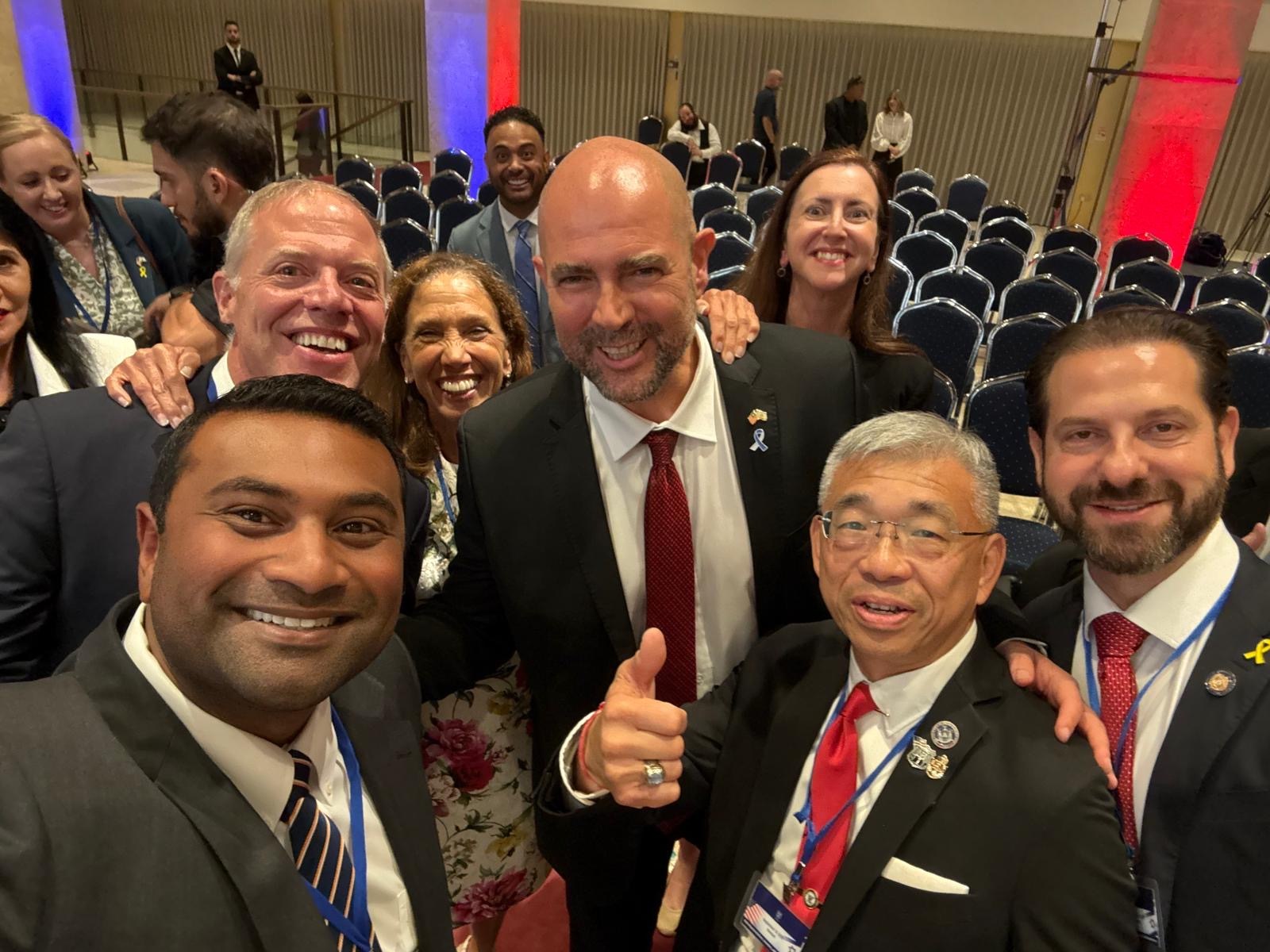
A delegation of New York State legislators met with Knesset Speaker Amir Ohana (center) in Jerusalem on Monday. From left: Assemblyman AJ Beephan, Minority Leader Will Barclay, Assemblywoman Amy Paulin, Assemblywoman Nily Rozic, Assemblyman Lester Chang and Assemblyman Daniel Norber.
Birthdays

Comedian, writer and actress, she was a frequent guest of Johnny Carson on the “Tonight Show,” Rita Rudner turns 72…
Fashion designer, known worldwide for his leading-edge corporate uniforms, Stan M. Herman turns 97… U.S. senator (R-IA) since 1981, Chuck Grassley turns 92… Investment banker who once served as a NYC deputy mayor, Peter J. Solomon turns 87… Newbery Honor-winning author of many young adult books, Gail Carson Levine turns 78… Author of 11 books, Joshua Muravchik turns 78… Former president of the National Technical Institute for the Deaf and then president of Gallaudet University, T. Alan Hurwitz turns 78… Rochester attorney, he has held positions at the UJA-Federation of New York and the Rochester Jewish Federation, Frank Hagelberg… Retired judge on the U.S. District Court for the Northern District of California, Jeremy Don Fogel turns 76… Professional tennis player who achieved a world ranking of No. 5 in 1980, Harold Solomon turns 73… Author, comic book writer and editor, best known as group editor of the Spider-Man books at Marvel Comics, Daniel Fingeroth turns 72… Israeli businessman with real estate holdings in Israel and NYC, Mody Kidon turns 71… Author and graphic designer, Ellen Kahan Zager… Former member of the Knesset for the Yesh Atid party, Rina Frenkel turns 69… Rabbi of the New North London Synagogue with over 3,700 members, Jonathan Wittenberg turns 68… Former consultant at Quick Hits News, Elliott S. Feigenbaum… Journalist, best-selling author including two books on the Obama presidency and Emmy Award-winning executive producer, Richard Wolffe turns 57… Director of the Centers for Disease Control and Prevention (CDC) for the last 18 months of the Biden administration, Mandy Krauthamer Cohen turns 47… Former regional communications director and spokesperson for President Obama, now a partner at Seven Letter, Adam Abrams… Member of the Los Angeles Unified School District’s Board of Education, Nick Melvoin turns 40… Former Obama White House speechwriter who has since written a best-selling comedic memoir, David Litt turns 39… Principal product manager for CathWorks, Adina Shatz… National health-care reporter The Washington Post covering the FDA, Rachel Roubein… Associate at Strand Partners in London, Natalie Edelstein Jarvis… Founder of the Israel Summit at Harvard and board member of the IDF Widows and Orphans Organization, Max August…
Plus, Yossi Cohen talks to JI about political ambitions
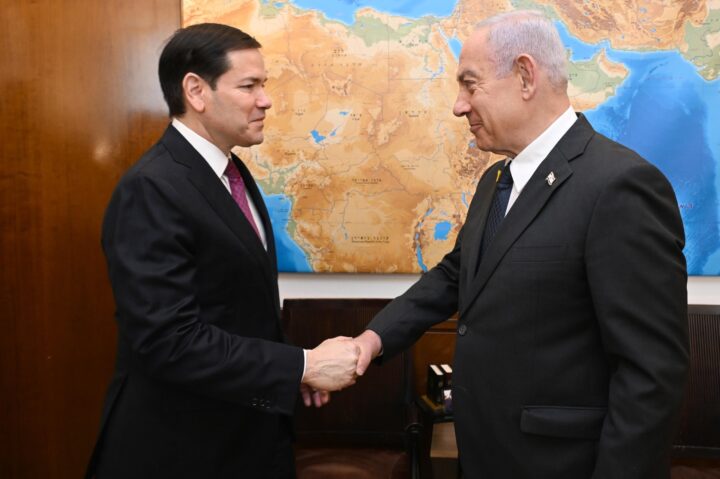
Haim Tzach/GPO
U.S. Secretary of State Marco Rubio meets Israeli Prime Minister Benjamin Netanyahu in Jerusalem, Sept. 15th, 2025
Good Monday morning.
In today’s Daily Kickoff, we cover Secretary of State Marco Rubio’s visit to Israel this week and interview former Mossad chief Yossi Cohen who is releasing a new book tomorrow amid talk that he may enter the political arena. We report on the retirement of Rep. Michael McCaul and highlight antisemitic, white nationalist views expressed by the suspected shooter who critically injured two students at Evergreen High School in Colorado last week. We also report on the anti-Israel views of state Rep. Chris Rabb, who is running in the Democratic primary race for Pennsylvania’s 3rd Congressional District. Also in today’s Daily Kickoff: Gov. Wes Moore, David Rubenstein and Esther Safran Foer.
Today’s Daily Kickoff was curated by Jewish Insider Israel Editor Tamara Zieve and U.S. Editor Danielle Cohen-Kanik, with assists from Marc Rod and Melissa Weiss. Have a tip? Email us here.
What We’re Watching
- Secretary of State Marco Rubio is set to attend the inauguration of the Pilgrim’s Road in the City of David in Jerusalem this evening after meeting earlier today with Israeli Prime Minister Benjamin Netanyahu and Foreign Minister Gideon Sa’ar. More below on Rubio’s visit to Israel.
- Seb Gorka, the White House’s senior director for counterterrorism and a deputy assistant to the president, is also in Israel this week. After landing at Ben Gurion Airport yesterday, he wrote on X, “Utterly sobering to see the pictures of all the innocent hostages still being held by Hamas for more than 700 days lining the walkway to passport control.”
- Also in Israel is a delegation of nearly 250 state lawmakers from around the U.S., organized by Israel’s Ministry of Foreign Affairs.
- A summit of Arab and Muslim leaders is being held in Doha, Qatar, today to denounce Israel’s strike on Hamas officials hosted by the Gulf state. Ahead of the gathering, Iranian Foreign Minister Abbas Araghchi met with his Qatari counterpart in Doha yesterday …
- Stateside, RJC board member Eric Levine is holding a fundraiser for Sen. Lindsey Graham (R-SC). The invite to the event, co-hosted by James Baker, Wayne Berman, Jeff Cohen, Steve Sall, RJC PAC and the NRSC, said the fundraiser will help Senate Republicans maintain their majority and “stand against the tide of communism and antisemitism overtaking the Democratic Party.”
- The Academic Engagement Network is hosting a three-day symposium for college administrators for the launch of its fifth annual Signature Seminar Series. The gathering, taking place in Washington, will focus on how administrations can meaningfully address antisemitism on college campuses.
- The Eradicate Hate Global Summit begins in Pittsburgh today.
- Today is the five-year anniversary of the signing of the Abraham Accords at the White House on Sept. 15, 2020.
What You Should Know
A QUICK WORD WITH JI’S GABBY DEUTCH
Over the weekend, the California State Assembly passed a bill that is intended to address what Jewish community advocates describe as crisis levels of antisemitism in the state’s K-12 schools.
The bill passed despite the objections of the powerful California Teachers Association, the state’s largest teachers’ union, which had stalled the legislation in July, claiming that efforts to combat antisemitism could impinge on teachers’ academic freedom when it came to discussing the Israeli-Palestinian conflict.
It was just one of several examples of influential state and national teachers’ unions presenting a roadblock against efforts to fight antisemitism in public schools, where discrimination against Jewish and Israeli students has skyrocketed over the past two years — even though many of those efforts have broad support from within the Jewish community, and from outside it, too.
In California, the CTA and anti-Israel groups like the Council on American-Islamic Relations were on one side of the issue, facing a diverse coalition of the bill’s backers that included the legislature’s Jewish, Black, Latino and Asian American and Pacific Islander caucuses. In an effort to appease the CTA during negotiations, some parts of the bill were removed, including language that would’ve defined what constituted an antisemitic learning environment.
But the union never changed course.
MOSSAD MEMOIR
Former Mossad chief Yossi Cohen talks covert missions, Oct. 7 failures in new book
Like any former Mossad chief, Yossi Cohen has long been a relatively elusive figure in Israeli public life. So his recent embrace of the spotlight has left Israeli politicos wondering whether he will run for prime minister in the next election. Cohen received attention for commanding ambitious Mossad operations, such as smuggling Iran’s nuclear archive to Israel, and for Israeli Prime Minister Benjamin Netanyahu reportedly naming him as one of his possible heirs, but he rarely gave interviews — until now. Cohen has been on a Hebrew media blitz ahead of Tuesday’s release of his new book, The Sword of Freedom: Israel, Mossad and the Secret War, in Hebrew and English. It reads, in many ways, like the kind of book a politician would publish before a big run, to let potential voters get to know him — albeit with the much more exciting elements of spycraft. Yet, in an interview with Jewish Insider’s Lahav Harkov last week at his office in a Tel Aviv high-rise, where Cohen’s day job is representing the Japanese investment holding company SoftBank in Israel, he dismissed the idea that his book was the first step in a political campaign.
A question of timing: “That was not the reason for me to write the book,” he said. “I started writing the book something like three years ago, much earlier. I decided to [publish the book] now, because I believe that now is the time … Since I started the book we had the judicial reform, the seventh of October, a war against Hezbollah and the Iranian events. Each of those chapters had to be updated.” Still, Cohen added, “I can’t say that one day it will not serve my political goals if I will decide to go into politics.” Thus far, Cohen has kept politics as an “if.” In the past, it was a “no,” he said, but now, he’s thinking about it.
ENDURING FRIENDSHIP
Rubio starts Israel visit with prayer at Western Wall

Secretary of State Marco Rubio arrived in Jerusalem on Sunday, at the start of a five-day trip to Israel and the U.K. Rubio began the visit with prayers at the Western Wall, together with Prime Minister Benjamin Netanyahu and U.S. Ambassador to Israel Mike Huckabee, Jewish Insider’s Lahav Harkov reports.
Premier praise: During a tour of the Western Wall Tunnels, Netanyahu called Rubio an “extraordinary friend of the State of Israel.” Netanyahu said, “The Israeli-American alliance is as strong and as durable as the stones of the Western Wall that we just touched. Under President [Donald] Trump and Secretary Rubio and their entire team, this alliance has never been stronger, and we deeply appreciate it.” Rubio’s visit comes days after Israel’s attempted strike on Hamas leaders in Doha, Qatar, which the secretary said he was “not happy” about.
stepping down
Michael McCaul, prominent GOP voice on foreign policy and homeland security, to retire

Rep. Michael McCaul (R-TX), a former chairman of the House Foreign Affairs and Homeland Security Committees, announced Sunday that he will retire from Congress at the end of next year, after 11 terms in office, Jewish Insider’s Marc Rod reports.
Foreign policy focus: McCaul, 63, has been a critical voice for traditional conservative internationalism at a time of rising isolationist sentiment among some factions of the GOP; he’s seen as a key leader who helped drive the passage of supplemental aid to Ukraine, Israel and Taiwan in the House last year. The Texas congressman has been a staunch supporter of Israel and an Iran hawk in the House and has also been a lead Republican voice in support of expanded funding for the Nonprofit Security Grant Program, which helps protect Jewish and other vulnerable nonprofits.
EXTREMISM IN ACTION
Colorado school shooter expressed antisemitic, white nationalist views

Desmond Holly, the suspected shooter who critically injured two students at Evergreen High School in Colorado on Wednesday, shared antisemitic and white nationalist views online, according to the Denver Post and the Anti-Defamation League, Jewish Insider’s Marc Rod reports.
Concerning history: According to the Denver Post, one of Holly’s online accounts used a coded slogan for Holocaust denial and reposted antisemitic videos and other videos showing individuals in Nazi uniforms. The ADL’s Center on Extremism said Friday that Holly’s TikTok accounts were “filled with white supremacist symbolism,” including a reference to the white nationalist “14 words” slogan, and utilized a neo-Nazi symbol in his profile photo. The suspected shooter, like several other recent attackers, was also active in violent online forums and showed a fascination with previous mass killers.
PHILLY FAULTLINES
Philadelphia House race puts spotlight on virulently anti-Israel Democratic candidate
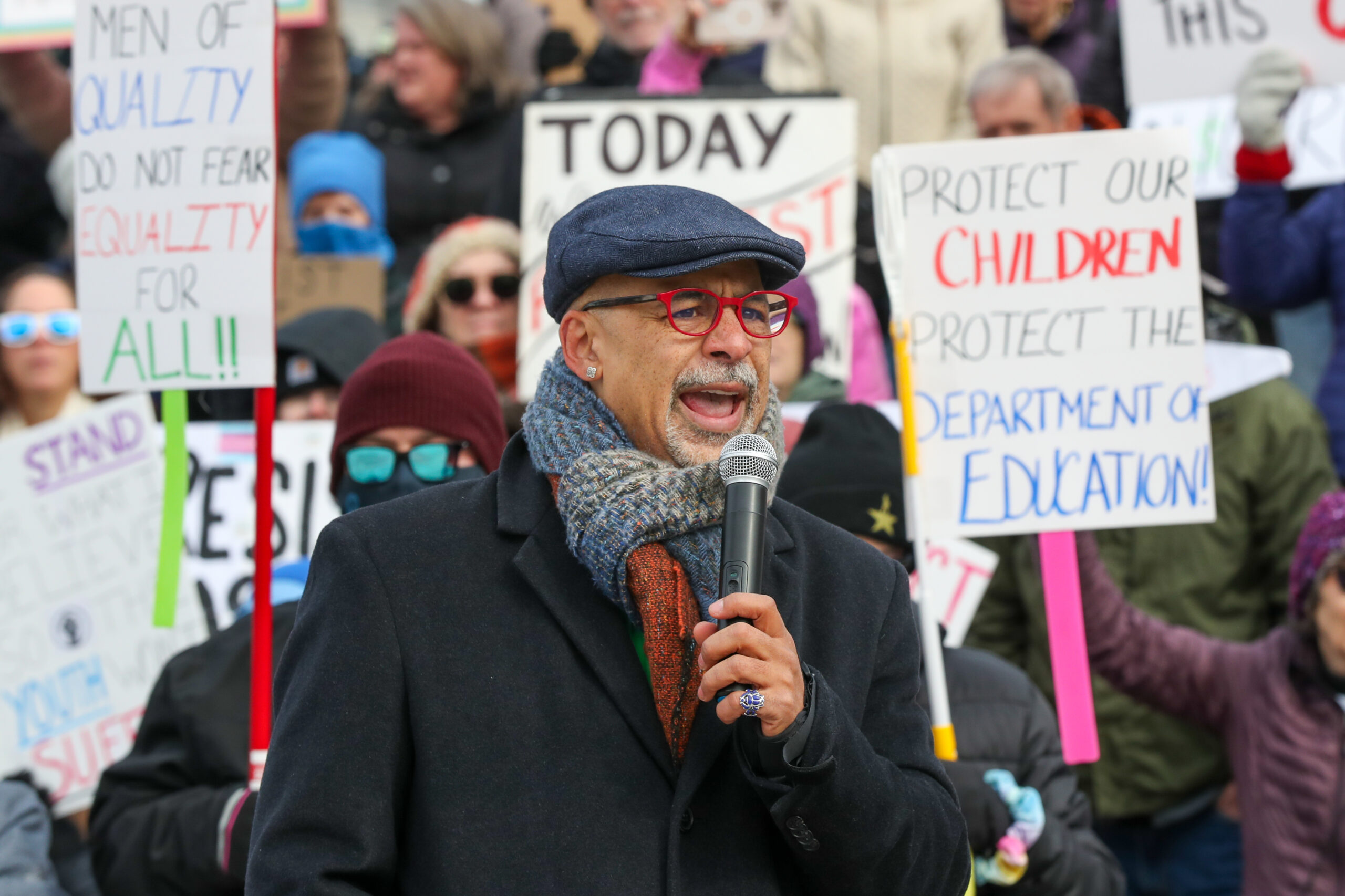
The wide-open primary race for the most Democratic district in the country is highlighting stark divisions in Israel policy among the leading candidates, Jewish Insider’s Marc Rod reports.
Candidate field: The race for Pennsylvania’s 3rd Congressional District — which includes western Philadelphia, Center City and parts of north Philadelphia — is attracting a host of prominent local officials, as well as some outsider candidates, including state Sen. Sharif Street, who recently resigned as state Democratic Party chair, progressive state Rep. Chris Rabb, state Rep. Morgan Cephas and physician Dr. David Oxman. Dr. Ala Stanford, a local surgeon and activist who gained prominence during the COVID-19 pandemic, is also seen as a likely candidate, and former City Councilman Derek Green may also join the race. Rabb has an extensive history, particularly since Oct. 7, of anti-Israel activism, and has accused Israel of genocide.
DUELING ENDORSEMENT
J Street endorses Hakeem Jeffries for the first time
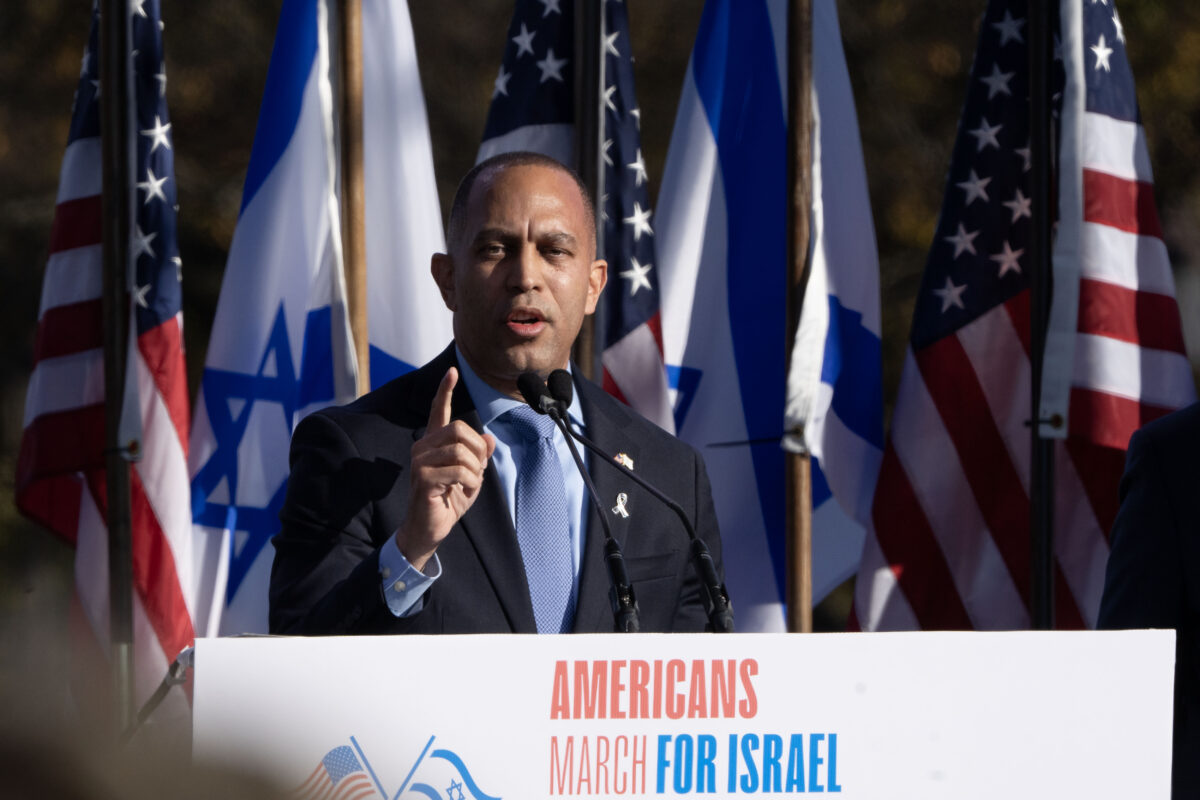
The progressive Israel advocacy group J Street endorsed House Minority Leader Hakeem Jeffries (D-NY) on Friday, marking the first time the top Democratic congressional leader accepted an endorsement from the group. With Jeffries endorsed by J Street, the group has now thrown its support behind the entire House Democratic leadership team: Jeffries, Democratic Whip Katherine Clark (D-MA) and Democratic Caucus Chair Pete Aguilar (D-CA). Jeffries, Clark and Aguilar have all also been endorsed by AIPAC, and they have each traveled to Israel on AIPAC-affiliated trips, Jewish Insider’s Gabby Deutch reports.
Announcement: “J Street is proud to endorse the House Democratic leadership team at such a critical moment in the US-Israel relationship,” J Street President Jeremy Ben-Ami said in a statement Friday. “After 23 months of war, it is important to endorse Democratic leaders who understand the time has come for a just and lasting peace that brings the remaining hostages home and immediately and permanently surges aid to the people of Gaza.”
Worthy Reads
Loaded Language: Andrew Weinstein, a former U.S. public delegate to the United Nations under the Biden administration, writes in Time magazine about why the use of phrases like “globalize the intifada” are so damaging. “Language doesn’t only reflect intention — it carries the weight of past use, of collective trauma, of coded threats. It has an impact. And so, when a community tells you a phrase evokes existential fear, it’s not enough to say, ‘I didn’t mean it that way.’ To do so is more than just a failure of sensitivity — it’s a failure of solidarity. And this is where so many well-meaning people lose their way. They treat empathy as if it were conditional, or zero-sum. They hear Jewish pain and ask first whether it aligns with their politics, parsing slogans instead of listening to those affected by them. This hurts Jews. But even more than that, it fractures coalitions, pushing away people who, too, strive for collective justice — and driving them toward those who cynically (and capriciously) dangle the carrot of protection.” [Time]
Is Mamdani a Team Player? In The Hill, Amanda Berman, founder and executive director of the Zioness Action fund, pushes back against pressure by supporters of New York City mayoral candidate Zohran Mamdani on Democratic leaders to endorse him, highlighting Mamdani’s own recent history during the last presidential campaign. “Mamdani didn’t just fail to support Democratic presidential nominees Vice President Kamala Harris and President Joe Biden in last year’s existentially urgent campaign, he spoke out and organized against them. In March of 2024, Mamdani urged voters to withhold their vote from Biden. ‘As proud Democrats and elected officials and New Yorkers,’ Mamdani declared, ‘we endorse the Leave it Blank campaign.’ Last summer, as the world watched the Democrats make history by nominating the first Black woman on a major party ticket, Mamdani proudly platformed the Uncommitted Movement, which protested her convention. This was not passive disagreement. It was an intentional and successful effort to sabotage the Democratic ticket in a general election — when the risks could not have been more clear, when every vote mattered, when Democrats were working tirelessly to defeat an authoritarian megalomaniac who had already incited a violent insurrection to stop the peaceful transfer of power.” [The Hill]
Word on the Street
New York Gov. Kathy Hochul endorsed New York City Democratic mayoral nominee Zohran Mamdani, becoming one of the few prominent Democrats in the state to do so, saying, “I didn’t leave my conversations with him aligned on every issue” but the two “discussed the need to combat the rise of antisemitism urgently and unequivocally”…
Rep. Elise Stefanik (R-NY), who is mulling a 2026 challenge to Hochul, responded to the endorsement with a statement accusing Hochul of “embrac[ing] this raging Communist who will destroy New York making it less affordable and more dangerous — once again putting criminals and communists first, and New Yorkers LAST”…
In an interview with CNN’s Manu Raju, Sen. John Fetterman (D-PA) said the New York City mayoral race, in which Mamdani is the front-runner, “has really no impact on my life.” Fetterman also said Hamas and Iran are to blame for the humanitarian crisis in Gaza: “It is hell on earth. Why do some people blame Israel for that? I blame Hamas and Iran for that,” he said…
The Washington Post reports that the Mossad declined to implement a ground operation in Doha, Qatar, last week to assassinate senior Hamas officials in the Gulf nation over concerns that such a move would damage ties with Doha as it acts as a mediator between Israel and Hamas. As a result, Israel instead carried out an airstrike that looks like it failed to kill the top targets …
CENTCOM head Bradley Cooper, joined by U.S. special envoy Tom Barrack, met with Syrian President Ahmad al-Sharaa in Damascus…
Antisemitic conspiracy theories proliferated online in the aftermath of the fatal shooting of conservative activist Charlie Kirk, the Anti-Defamation League found, with over 10,000 posts on X that include the phrase “Israel killed Charlie Kirk” posted in the two days after his murder…
Republican officials are considering an effort to persuade former Kentucky Attorney General Daniel Cameron to drop his bid for Senate, as he pursues Sen. Mitch McConnell’s (R-KY) seat upon his retirement, and instead challenge Rep. Thomas Massie (R-KY), Politico reports…
“The Road Between Us: The Ultimate Rescue,” a documentary about Oct. 7, won the People’s Choice Award for best documentary at the Toronto International Film Festival, after originally being canceled due to the festival’s concern that Hamas footage had not been approved for use…
Among several actors who used their platform at the Emmy Awards in Los Angeles last night to criticize Israel, Hannah Einbinder called to “Free Palestine” and Javier Bardem wore a keffiyeh while calling for a “commercial and diplomatic blockade” on Israel…
The Wall Street Journal profiles billionaire Oracle co-founder Larry Ellison, as he backs a bid for Paramount, headed by his son David, to acquire Warner Bros. Discovery and The Free Press…
Nika Soon-Shiong, daughter of the Los Angeles Times owner Patrick Soon-Shiong, has been tapped as the publisher of Drop Site News, a far-left anti-Israel outlet. She told Semafor that she was inspired by the site’s coverage of the war in Gaza…
The Vuelta a Espana bike race in Madrid was called off during its finale on Sunday after anti-Israel protesters occupied the route and overturned barriers…
Police in London arrested and charged a 37-year-old homeless man with smearing feces on synagogues and other Jewish institutions in the city…
Holocaust survivor Fania Fainer, known for the heart-shaped booklet of birthday wishes she was gifted by fellow prisoners at the Auschwitz concentration camp in 1944 — an object she preserved throughout death marches and the war and that went on to become the subject of a film and a book, died at 100…
Pic of the Day

Several hundred people gathered on Sunday evening at the French Embassy in Washington for the Capital Jewish Museum’s second annual gala, in service of a simple theme: “preserving history and building bridges,” Jewish Insider’s Gabby Deutch reports. The gala honored the investor and philanthropist David Rubenstein and Esther Safran Foer, the former longtime CEO of Sixth & I Synagogue and the Capital Jewish Museum’s founding board president. Speaking at the event, Gov. Wes Moore of Maryland decried rising antisemitism in the United States and, in particular, the killing of Israeli Embassy staffers Sarah Milgrim and Yaron Lischinsky outside the museum in May. Read more here.
Birthdays
Film executive, she produced “The Hunger Games” film series, Nina Jacobson turns 60…
Founder and former CEO of Elektra Records, he is a member of the Rock & Roll Hall of Fame, Jac Holzman turns 94… Professor at the Hebrew University and a leading scholar of the Dead Sea Scrolls, Emanuel Tov turns 84… Chief rabbi of Migdal HaEmek, known as the “Disco Rabbi,” Rabbi Yitzchak Dovid Grossman turns 79… Professor emerita of education at Boston University’s Wheelock College, Diane Elizabeth Levin turns 78… NYC-based composer and multi-instrument musician, Ned Rothenberg turns 69… Television comedy writer, he served as a showrunner, writer, and producer for “The Simpsons” and co-created the animated series “The Critic,” Michael L. Reiss turns 66… Business litigator in the Miami office of Gunster, Aron U. Raskas… Managing partner and chief technology officer at Differential Ventures in Philadelphia, he is also the founder of a series of kosher restaurants, David Magerman… NPR’s media correspondent, David Folkenflik turns 56… Actor, best known for his roles on “Sports Night” and “The Good Wife,” Josh Charles turns 54… Comedian, writer and actress, Kira Soltanovich turns 52… VP of leadership at the Anti-Defamation League until earlier this year, Deborah Leipzig… Customer success manager at Screencastify, event organizer and fundraiser, Shayla Rosen… Author and longtime education correspondent at NPR, Anya Kamenetz turns 45… Data scientist, economist and author of the 2017 New York Times bestseller Everybody Lies, Seth Stephens-Davidowitz turns 43… Screenwriter, film producer and director, often in collaboration with his childhood friend Seth Rogen, Evan D. Goldberg turns 43… Model and Israeli beauty pageant winner, Yael Markovich turns 41… Partner in CHW Strategic Advisors and CEO of Harmon Face Values, Jonah Raskas… CFO at Israel on Campus Coalition, Tomer Zvi Elias… Chief strategy officer at PW Communications, Amanda Bresler… Reporter at The New York Times, Eliza Shapiro… Singer and actress, she was the 2009 winner of the Israeli version of “A Star is Born,” Roni Dalumi turns 34… Beauty pageant titleholder, she was crowned Miss Israel 2012, Shani Hazan turns 33…
Plus, an interview with Sarah Huckabee Sanders
Andrew H Walker/WWD/Penske Media via Getty Images
Jay L. Schottenstein, Jeanie Schottenstein
Good Wednesday morning.
In today’s Daily Kickoff, we look at American Eagle CEO Jay Schottenstein and his family’s historic support for Jewish philanthropic causes amid the clothing company’s viral “good jeans” campaign, and interview Arkansas Gov. Sarah Huckabee Sanders about her recent trip to Israel. We report on the Trump administration’s accusation that The George Washington University violated Jewish students’ civil rights, and cover efforts by evangelicals aligned with President Donald Trump to push Republicans to call out right-wing antisemitism. Also in today’s Daily Kickoff: Eric Levine, former Sen. Sherrod Brown, and George and Hal Steinbrenner.
What We’re Watching
- Today marks the fifth anniversary of the announcement that the U.S. had brokered a normalization agreement, later known as the Abraham Accords, between Israel and the United Arab Emirates. Flashback: Read our 2020 coverage here.
- We’re keeping an eye on Harvard’s negotiations with the Trump administration, as the school nears what is likely to be a $500 million settlement with the government to restore federal funding and grants that had been frozen over the administration’s allegations that the school had not done enough to address antisemitism on campus.
- Israeli Prime Minister Benjamin Netanyahu is set to address Newsmax’s U.S. Independence Day celebration this evening in Jerusalem. U.S. Ambassador to Israel Mike Huckabee is also slated to attend the event, which was postponed to August following the Israel-Iran war in June.
- GOP fundraiser Eric Levine is cohosting a fundraiser tonight for New York City Mayor Eric Adams’ reelection bid. Former New York Gov. David Paterson, who had backed former Gov. Andrew Cuomo’s mayoral bid in the Democratic primary, is expected to endorse Adams at the event.
- The Washington Institute for Near East Policy is hosting a web event today focused on Middle East arms sales.
- Senior Hamas official Khalil Al-Hayya is in Cairo today for talks with Egyptian officials focused on reviving hostage-release and ceasefire talks.
What You Should Know
A QUICK WORD WITH JI’S JOSH KRAUSHAAR
A new Siena poll of New York voters illustrates the unpopularity of the state’s leading political figures in the runup to this year’s mayoral contest and next year’s gubernatorial election. Of particular note is the surging dissatisfaction among many Democratic voters towards elected leaders from their own party.
In the poll, Senate Minority Leader Chuck Schumer (D-NY) hits his all-time low in popularity, with just 38% of New Yorkers viewing him favorably and 50% viewing him unfavorably. His favorability with Democratic voters took a slight downturn since the last Siena survey in April, with just 49% of voters in his own party viewing him favorably.
Among Jewish voters, a narrow 52% majority of New York Jews viewed him favorably, with 43% rating him unfavorably.
Schumer doesn’t face reelection until 2028, but amid the wave of anti-establishment sentiment within the Democratic Party, the numbers suggest he could face a credible primary threat if he pursues a sixth term.
Sen. Kirsten Gillibrand (D-NY), who is up for reelection in 2030, also faces a mixed political picture. Her favorability rating is, like every other New York elected official, underwater. But her overall numbers, with 36% viewing her favorably and 38% viewing her unfavorably, are better than nearly all of her counterparts. She’s also the most popular politician among Jewish voters, with 54% viewing her favorably and only 27% viewing her unfavorably.
There’s a notable disconnect between Gov. Kathy Hochul’s job approval rating and favorability rating; more New Yorkers are satisfied with her performance in office than like her personally. Hochul’s job approval rating stands at 53%, with 42% disapproving. But only 42% of New Yorkers view her favorably, while 44% view her unfavorably.
In an early test of a likely 2026 general election matchup between Hochul and Rep. Elise Stefanik (R-NY), Hochul leads 45-31%. In that matchup, Jewish voters would divide nearly evenly, with 45% backing Hochul and 42% supporting Stefanik, according to the poll.
BEHIND THE BILLBOARD
Jay Schottenstein has great genes

In the recent viral debate surrounding American Eagle’s “great jeans” ad campaign with Sydney Sweeney, which used a double entendre that drew accusations of promoting eugenics, it seemed many critics overlooked that the clothing retailer’s chief executive is a leading Jewish philanthropist who has long been committed to fighting antisemitism. It was the sort of irony befitting Jay Schottenstein, 71, a mild-mannered billionaire entrepreneur from Columbus, Ohio, who oversees a sprawling business network that, in addition to American Eagle, includes DSW, the designer shoe chain he leads as executive chairman, among other holdings in wine, real estate and furniture, Jewish Insider’s Matthew Kassel reports.
Quiet contributions: But outside of philanthropic circles — where he is widely recognized as one of the most consequential sponsors of Jewish causes in the United States and Israel — his relatively private lifestyle has otherwise obscured his long-standing dedication to a range of issues including educational efforts, archeological research and translations of Jewish texts. “I think most people really don’t know who he is,” said Brad Kastan, a Jewish Republican donor who lives in Columbus and has long been friendly with Schottenstein. “He kind of keeps a low profile.”
TRIP TALK
Sarah Huckabee Sanders completes first trip to Israel as Arkansas governor

Arkansas Gov. Sarah Huckabee Sanders returned to the U.S. on Sunday following a nearly weeklong trip to Israel aimed at boosting Arkansas’ diplomatic and economic ties with the Jewish state, Sanders told Jewish Insider’s Emily Jacobs in an interview. The trade delegation was Sanders’ first official visit to Israel as governor and her first time visiting the Jewish state since her father, U.S. Ambassador to Israel Mike Huckabee, was confirmed to his role in April.
Meeting the people: “It was an amazing trip,” Sanders told JI in an interview. “The thing that stands out and is so amazing to see in person is just the resiliency of the people of Israel and just their steadfast commitment. Getting to visit with people that are living the day-to-day challenges that they are and yet, they’re still showing up for work, they’re still going to school, they’re still running their businesses and continuing on in the face of some pretty uphill, significant challenges is amazing.”
CHRISTIAN CONCERNS
Trump-aligned evangelicals push Republicans to call out antisemitism on the right
President Donald Trump came into office promising to make tackling antisemitism a priority of his second term. So far, the focus of that effort has been almost exclusively on addressing left-wing and Islamist antisemitism, primarily tied to anti-Israel extremism — while leaving out antisemitism emerging from the political right. Now, a group of staunch Trump allies from within the evangelical Christian community is urging Republicans to also focus on countering what they describe as a growing threat of antisemitism from within their own camp, Jewish Insider’s Gabby Deutch reports.
Around town: Last month, an organization called the Conference of Christian Presidents for Israel hosted a meeting to discuss the topic at the Family Research Council, a powerful Christian advocacy group. Billed as a “private roundtable for key Christian leaders,” according to the event invitation, it identified right-wing antisemitism as a high-stakes challenge: “It is vital that Christian leaders counter the forces on the right who are demonizing the state of Israel, its leadership and the Jewish people,” stated the invitation, which was obtained by JI. Later that day, the Christian Conference co-hosted an event on the Trump administration’s policies in the Middle East with the Heritage Foundation.
eye on academia
Trump’s latest D.C. target: George Washington University

George Washington University became the latest target of the Trump administration’s crackdown on campus antisemitism on Tuesday when the Department of Justice notified the D.C. private school that it is in violation of federal civil rights law. In a letter addressed to GW President Ellen Granberg, the DOJ described the university administration as “deliberately indifferent” to antisemitism on campus and claimed that it took “no meaningful action” to combat increased antisemitism since the Oct. 7, 2023 terrorist attacks, Jewish Insider’s Haley Cohen reports. More than 25% of the undergraduate students on GW’s campus identify as Jewish.
Community reactions: Teddy Schneiderman, a rising junior at GW who is president of the campus chapter of Alpha Epsilon Pi, told JI that if the university makes changes in light of the government crackdown, he would like to see it provide a campus police presence at Jewish events and institutions, such as Shabbat dinners. Rabbi Levi Shemtov, the executive vice president of American Friends of Lubavitch (Chabad), which oversees Chabad’s national and local activities, including on GW’s campus, told JI that during the anti-Israel encampment, he would have agreed with the government’s allegation of GW’s indifference. “I’ll never forget what I saw with my own eyes for weeks,” Shemtov said. “But I do believe things have slightly improved, given President Granberg’s increased focus on the problem.”
comeback king
Sherrod Brown, a pro-Israel progressive, to make bid to return to the Senate against Sen. Husted
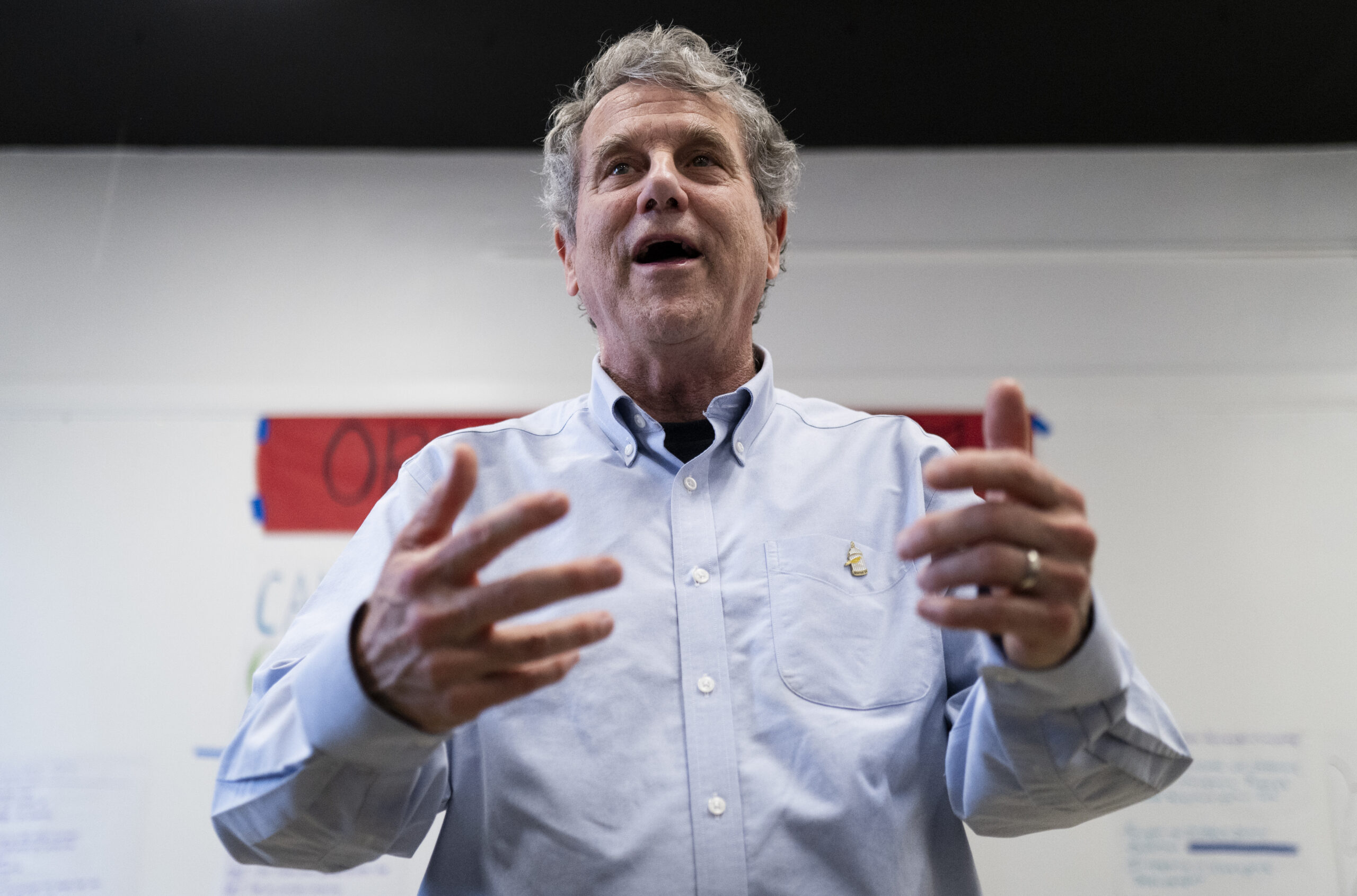
Former Sen. Sherrod Brown (D-OH) is set to make a bid to return to the Senate in 2026, according to the Cleveland Plain Dealer. Brown, who lost his 2024 reelection race by four points to Sen. Bernie Moreno (R-OH), will challenge Sen. Jon Husted (R-OH), who was appointed earlier this year to fill Vice President JD Vance’s seat. President Donald Trump carried the state by more than 11 points in 2024, Jewish Insider’s Marc Rod reports.
Record: The progressive Brown remained relatively popular in the state even as it has trended increasingly red in recent years, and maintained strong ties with the state’s large Jewish community. In late 2024, Brown voted against Sen. Bernie Sanders’ (I-VT) first efforts to block certain U.S. arms transfers to Israel. In 2022, Brown said that he believed that support for Israel was a majority position in both parties, and that those who opposed the Jewish state were a small group of “outliers,” rejecting the notion that “progressive values” were incompatible with support for Israel. He also staked out relatively hawkish positions on Iran and its proxies last year.
Worthy Reads
Demographic Dynamics: Tablet’s Armin Rosen considers the circumstances that led to New York City Democratic mayoral candidate Zohran Mamdani’s primary victory and lack of significant opposition. “For the past decade, New York has reflected the illusions of its rising power centers: namely, young and often childless transplanted degree holders living off public or family subsidies or sometimes both. This is an inherently mobile and perhaps even temporary population that either is insulated from the consequences of urban decline or believes its own values and worldview to be the solution to the evident problems in its midst. Mamdani’s impending victory isn’t the result of what he believes or promises, but of the slow death of New York’s pragmatic and productive middle class and of its replacement with a new category of city dwellers who serve as the implementing middle layer between an activist government and the society it experiments upon. New York is now a city with hundreds of thousands of little Zohran Mamdanis, an agenda-setting constituency of the subsidized that’s at last found a leader and a voice.” [Tablet]
Campus Clashes: The Atlantic‘s Rose Horowitch looks at the ideological split pitting the chancellor of Princeton against the leaders of Washington University and Vanderbilt over how to approach campus climate and governance issues amid legal efforts by the Trump administration to punish schools over their handling of antisemitism. “University officials — led by Washington University’s Andrew Martin and Vanderbilt’s Daniel Diermeier, the chancellors who sparred with [Princeton President Christopher] Eisgruber on the panel — make up the reformist camp. They accept some of Trump’s complaints and believe that the best path forward for higher education is to publicly commit to a kind of voluntary, modified de-wokeification. They argue that some campuses (in, say, Cambridge and Morningside Heights) and departments (much of the humanities) have leaned too far into leftist ideology and allowed anti-Semitism to fester under the guise of protesting Israeli policies. They want the American public to know that they are different from the Ivies. And they think that higher education needs new representation if it’s going to regain the country’s trust.” [TheAtlantic]
Pivot to Asia: In The Wall Street Journal, Seth Cropsey and Joseph Epstein make the case for expanding the Abraham Accords to the Caucasus and Central Asia, citing existing coordination and ties between Israel and a number of countries in the region. “A strategic enlargement of the accords would counter adversaries, diversify supply chains, and build a bloc of moderate, pro-Western Muslim-majority nations aligned with the U.S. and Israel. It would also showcase Israeli outreach, helping counter the anti-Israel global narrative. These nations already maintain strong relationships with Jerusalem. Azerbaijan is Israel’s closest Muslim ally, supplying up to 40% of Israel’s oil and receiving advanced weapons systems in return, which was key to Baku’s success in two wars since 2020. Kazakhstan also is among Israel’s top oil suppliers, and Uzbekistan has stepped in to fill key export gaps like copper after the Turkish boycott.” [WSJ]
Word on the Street
Rep. Greg Casar (D-TX), the chair of the Congressional Progressive Caucus, ruled out a run in what could be Texas’ new 35th District, amid a mid-decade redistricting effort by state GOP officials; Casar would be likely to face off against Rep. Lloyd Doggett (D-TX) in a member-on-member primary in Texas’ 37th District, despite Doggett’s efforts to encourage Casar to run in the 35th, which President Donald Trump won by 10 points last year…
In an interview with CNN’s Bianna Golodryga, Foreign Press Association head Ian Williams equated Hamas to U.S. political parties and questioned the terror group’s designation, saying, “We don’t kill journalists for being Republicans or Democrats or Labour Party. Hamas is a political organization, as well as a terrorist organization, perhaps”; the Anti-Defamation League condemned Williams’ “outrageous” comments, saying that the “dangerous normalization” of Hamas’ activities “has no place in journalism”…
The upstate New York man who fired a gun outside Albany’s Temple Israel in December 2023, yelling “Free Palestine” during the attack, was sentenced to 10 years in state prison…
The Wall Street Journal looks at Hal Steinbrenner’s ownership of the New York Yankees, comparing his management of the Bronx Bombers to his father George, whom the WSJ says “ran the New York Yankees with all the patience of an Upper West Sider stuck behind a tourist in the whitefish line at Zabar’s”…
Four years after switching to a plant-based menu, Eleven Madison Park is adding meat items to its repertoire — dashing the dreams of some foodies who had hoped the famed Manhattan eatery, which has three Michelin stars, could secure kosher certification…
The Forward spotlights the century-old Congregation B’nai Jacob in Charleston, W.V., as the synagogue, which has been led by Rabbi Victor Urecki since 1986, transitions to new leadership, under Rabbi Adam Berman, for just the third time since 1932…
Organizers of the Toronto International Film Festival rescinded the invitation to show the documentary “The Road Between Us: The Ultimate Rescue,” about the Oct. 7, 2023, Hamas terror attacks, at its upcoming festival, citing the use of Hamas footage of the attacks that had not been cleared for use by the terror group; Canada’s Centre for Israel and Jewish Affairs called the decision “shameful” and “unconscionable”…
France’s transportation minister confirmed that an air traffic controller in Paris who told El Al pilots to “free Palestine” was suspended and will face disciplinary measures over the incident…
The State Department released its annual global human rights report; the Israel section of this year’s report, the release of which was delayed by several months, was shorter than last year’s report and does not include mention of the humanitarian situation in Gaza…
Israeli hostage families are calling for a day-long strike on Sunday, despite a lack of support from the Histradut, the country’s main labor union…
Israel is in talks with the government of South Sudan about potentially resettling some of the population of Gaza in the East African nation…
New Zealand Prime Minister Christopher Luxon said that Israeli Prime Minister Benjamin Netanyahu had “lost the plot” regarding Gaza…
World Central Kitchen confirmed video footage shared by the Israeli Defense Forces that showed five armed individuals using a car that was marked with a fake WCK logo; WCK said it “strongly condemn[ed] anyone posing as WCK or other humanitarians as this endangers civilians and aid workers”…
The U.S. is working to facilitate the creation of a humanitarian corridor between Israel and the southern Syria city of Sweida; U.S. Ambassador to Turkey Tom Barrack, Washington’s Syria envoy, is slated to meet in Paris next week with Israeli Strategic Affairs Minister Ron Dermer and Syrian Foreign Minister Asaad al-Shaibani to discuss the effort…
The Washington Post spotlights the ongoing effort to find American journalist Austin Tice, who disappeared in Syria in 2012…
The foreign ministers of the U.K., France and Germany told the U.N. they would be open to reimposing sanctions on Iran if Tehran does not return to nuclear negotiations with Western powers…
Iran’s police spokesperson said authorities in the country had detained 21,000 people during Tehran’s 12-day war with Israel in June…
Pic of the Day

Senate Majority Leader John Thune (R-SD) spoke on Tuesday at the groundbreaking ceremony for the Chabad Jewish Community Center in Sioux Falls, S.D., the first Jewish center of its kind in the state.
Birthdays

Israeli Olympic long-distance runner, she ran the marathon for Israel at the Paris Olympics in 2024, Maor Tiyouri turns 35…
Member of the New York State Assembly for 24 years, since then she has been the county clerk of Queens County, Audrey I. Pheffer turns 84… Retired CPA and senior executive in Los Angeles, Morton Algaze turns 82… Treasury secretary of the United States during the four years of the Biden administration, Janet Yellen turns 79… Documentary still photographer of the American and international Jewish communities since 1970, Robert A. Cumins turns 77… Beverly Hills, Calif., resident, Ruth Fay Kellerman… VP and chief of staff at the Aspen Institute, James M. Spiegelman turns 67… Film producer, writer and director, Susan Landau Finch turns 65… Founder of the Council of Orthodox Jewish Organizations of Manhattan, he is also the executive chairman of LifeHealth Network, Michael Landau… Co-chairman of Warner Bros. Motion Picture Group, Michael De Luca turns 60… Storyteller, producer and writer, Jeffrey Mark “Slash” Coleman turns 58… Editor-in-chief of The Hollywood Reporter, Maer Roshan turns 58… Founder and managing director at Beacon Global Strategies, Jeremy B. Bash turns 54… President of Accessibility Partners, a Maryland firm that hires people with disabilities for tech jobs, she is also the founder of a nonprofit Support the Girls, Dana Marlowe… Three-time Olympian water polo player, now assistant coach at Pepperdine, Merrill Marc Moses turns 48… Professor of government at Harvard University, he was the director of the Harvard Center for Jewish Studies, Eric Matthew Nelson turns 48… Professor of law at the South Texas College of Law in Houston, Joshua Michael Blackman turns 41… Deputy general counsel and global head of contracts and litigation for Tower Research Capital, Matthew Weiss turns 39… Weekend editor for The Washington Post, Sara Sorcher… Attorney at Fried Frank, Nathan Jablow… Account supervisor for crisis communications at Edelman, Jodie Michelle Singer… VP of business development at Azul Hospitality Group, Adam Dahan… Founder of Israel-based AlignUp Advisory Services, David Angel… Elaine Hall… Jonathan Gerber…
Slotkin, in an appearance on an anti-Israel podcast: ‘I was the first Jew elected to the Senate that was not endorsed by any Jewish group — AIPAC, J Street’

Paul Sancya/Pool/Getty Images
Sen. Elissa Slotkin (D-MI) rehearses the Democratic response to President Donald Trump's address to a joint session of Congress.
Sen. Elissa Slotkin (D-MI) indicated in an interview on the “Breaking Points” podcast on Tuesday that she’s open to considering cutting off offensive weapons sales to Israel — comments that came a day before the Senate is set to vote on blocking two arms sales to Israel — as well as distanced herself from “Jewish group[s]” like AIPAC and J Street.
At the same time, while offering criticisms of Israel and its operations in Gaza, Slotkin refused to embrace and pushed back on some of the more heated anti-Israel rhetoric offered by the podcast’s hosts. The podcast, which brings together a progressive and a libertarian host, generally takes an isolationist view toward U.S. foreign policy and is opposed to the close U.S.-Israel relationship.
Asked about cutting off offensive aid, Slokin said, “That certainly, to me, would be a place to look, but I’m not going to cut off a blanket next sale on a defensive weapon that comes through, no.”
One of the hosts, the progressive Krystal Ball, pressed Slotkin over the distinction between offensive and defensive systems, arguing that the U.S. does not provide defensive weapons systems to Russia or Iran — malign global actors and longstanding adversaries.
Slotkin responded by noting her support for the U.S.-Israel relationship in the long term, and argued allies should be treated differently than adversaries even in times of disagreement between the two countries.
“Sometimes we have big breaks with allies, right? Sometimes we have difficult moments with allies. Sometimes it goes the wrong way with allies. But an allied relationship is a long-term relationship,” Slotkin told the duo.
“I think about this from the mirror image way because I do not support the things that Donald Trump is doing, right? But I’m an American. So, do I want other countries to look at America and be like, ‘We can’t stand Donald Trump so we’re going to end the long-standing relationship we have with the American people. We’re going to cut off any support we give them on information sharing or intelligence sharing,’” she continued.
Slotkin also distanced herself from “Jewish group[s],” mentioning that she’d declined to seek endorsements from AIPAC and J Street specifically.
Asked if AIPAC should be forced to register as a foreign lobbying organization, Slotkin said she did not have an answer beyond that she knew “plenty of people who think they should” but would “have to look at the definition.”
Accusations from both political fringes that AIPAC — whose members are American citizens — constitutes a foreign influence operation, have often invoked antisemitic dual loyalty tropes.
After being accused of providing a “cop-out answer,” Slotkin replied by saying that she had stopped accepting money from the group over disagreements about policy and overall strategy in 2021, after having support from AIPAC members when she first ran for Congress in 2018. The group did not officially endorse or fundraise for candidates until the 2022 election cycle.
“You’ve got to get your facts straight. I have not been endorsed by AIPAC. I have not, I’m sorry. I was the first Jew elected to the Senate that was not endorsed by any Jewish group — AIPAC, J Street. In 2018, when I first ran [I was endorsed by] people who were [AIPAC] members, yes, but I’ve not been endorsed since then,” Slotkin said. “And I’ve just got to be honest, like I think that this is where facts really matter. I’ve had very, very difficult conversations with my colleagues in that organization and made a choice back in 2021.”
“2021, so that was the first time I was up for reelection. So I understand that there’s a sort of like, again, cornered position, but to me like I call balls and strikes as someone who served in the Middle East,” she added.
Slotkin was endorsed by one Jewish group, the Jewish Democratic Council of America, which maintains a pro-Israel stance, in 2024.
Slotkin, pressed by Ball on the humanitarian situation in Gaza, said she had signed onto a letter accusing Israel of pursuing a “policy of starvation,” adding that, as an “occupying power,” it has a responsibility to ensure food is supplied to Gaza. But she stopped short of endorsing Ball’s framing of Israel’s actions as a “crime against humanity.”
She also did not embrace Ball’s claims that Israel is pursuing “ethnic cleansing” in Gaza, while criticizing plans from the Israeli government for relocating people within or out of Gaza as illegal.
“I’ve been clear about that,” Slotkin said. “So I would ask for a little bit of an open mind.”
Ball responded by accusing Slotkin of failing to take meaningful action on the issue and criticizing her for voting for aid to Israel, for the Antisemitism Awareness Act, for legislation describing anti-Zionism as antisemitic and for sanctioning the International Criminal Court.
Ball told the Michigan senator that her progressive positions on domestic issues like health care and housing policy were irrelevant to her if she was “still supporting a genocide in Gaza.”
“I’m speaking for myself, but I know there are millions of other people who feel the same, that you have to at least cross this sort of moral threshold,” Ball said.
While Ball framed the conflict in the Middle East as a central issue in the New York City mayoral race, Slotkin, looking to her own senatorial race in 2024, argued that its political significance has been overplayed.
“This issue is motivating people in a very visceral and personal way. But it’s not the only issue that my voters in Michigan care about,” she said. “The online world is extremely, extremely focused on this, but that doesn’t always represent the majority.”
She said it’s the top issue in some areas, but outside of the Detroit area, “it’s not in the top 40.”
Slotkin also said she was proud that she had won a majority of both Jewish voters and the three cities with the largest Muslim populations in Michigan during her Senate campaign, which she attributed to “calling balls and strikes” and leaning on her background in Middle East policy.
The Michigan senator also appeared to argue that the pace of anti-Israel protests has dropped off significantly since the end of the Biden administration
“I just think it’s interesting that there were a ton of protests when Democrats were in charge” against the war in Gaza, adding that it’s “fair to say, just to be honest, that … the number of protests that go on now, versus before,” though she was cut off by the show’s hosts.
She generally declined to weigh in on the results of the New York City mayoral race, saying primarily that she believes the results reflect concerns about the cost of living and the need for a new generation of leadership.
“I can have plenty of disagreements with what I’ve heard Mr. [Zohran] Mamdani propose, and I do,” she said. “I am here because we lived the American dream through capitalism. A lot of free stuff to me is not the answer. … But I can have those disagreements. I would be thrilled to have that conversation with him or anyone else.”
Asked about her condemnation of Rep. Rashida Tlaib (D-MI) for using the phrase “from the river to the sea,” and if she would also condemn Rep. Randy Fine (R-FL) for his comments saying Gazans should “starve away,” Slotkin said she did not know who Fine was but had no reservations denouncing such remarks.
“I have no problem condemning Randy Fine, who I don’t know. I don’t, I’m sorry. I don’t know who that person is. I have no problem condemning someone who talks like that,” she told the hosts.
Slotkin was also asked if she believed that financier and convicted pedophile Jeffrey Epstein “had any connections to U.S. or Israeli intelligence agencies.” Slotkin, a former CIA analyst, said she would be “very surprised” if that was the case.
Pressed by CNN anchor Pamela Brown, Khalil said: ‘I hate the selective outrage of condemnation because this wouldn’t lead to a constructive conversation’

Spencer Platt/Getty Images
Palestinian activist Mahmoud Khalil, who was released from ICE detention, speaks during a rally on the steps of the Cathedral of St. John the Divine in Manhattan on June 22, 2025 in New York City.
Anti-Israel activist Mahmoud Khalil, who was a prominent leader of the Columbia University protest movement, repeatedly declined to condemn Hamas in a CNN interview on Tuesday.
“It’s disingenuous to ask about condemning Hamas while Palestinians are the ones being starved now by Israel,” Khalil told CNN’s Wolf Blitzer and Pamela Brown when asked whether he condemns the U.S.-designated terrorist organization. “It’s not condemning Oct. 6, where 260 Palestinians were killed by Israel before Oct. 7. I hate the selective outrage of condemnation because this wouldn’t lead to a constructive conversation.”
Khalil also accused the Trump administration of “weaponizing antisemitism” to “silence my speech” and denied that he engaged in any antisemitic activity.
Khalil, a U.S. green card holder, was detained in March with the Trump administration claiming that he posed adverse foreign policy consequences to the country, though he was never charged with a crime. Last month, Khalil was released from the immigration detention center where he had been held for three months after a district judge said it would be “highly, highly unusual” for the government to continue detaining a legal U.S. resident who was unlikely to flee and hadn’t been accused of any violence.
In response to Khalil’s remarks, the Department of Homeland Security doubled down on its allegations against him.
“Mahmoud Khalil refuses to condemn Hamas because he IS a terrorist sympathizer not because DHS ‘painted’ him as one,” DHS wrote on X. “He ‘branded’ himself as antisemite through his own hateful behavior and rhetoric.”
“It is a privilege to be granted a visa or green card to live and study in the United States of America,” the DHS post continued. “The Trump Administration acted well within its statutory and constitutional authority to detain Khalil, as it does with any alien who advocates for violence, glorifies and supports terrorists, harasses Jews, and damages property.”
Just one day after his release, Khalil, who grew up in Syria but is of Palestinian descent, appeared at a rally in New York City organized by a group accused of ties to the Iranian regime protesting the U.S.’ airstrikes on Iran’s nuclear facilities.
On Dan Senor’s ‘Call Me Back’ podcast, the Israeli minister of strategic affairs discussed erroneous press leaks about relations between Trump and Netanyahu and ceasefire negotiations with Hamas
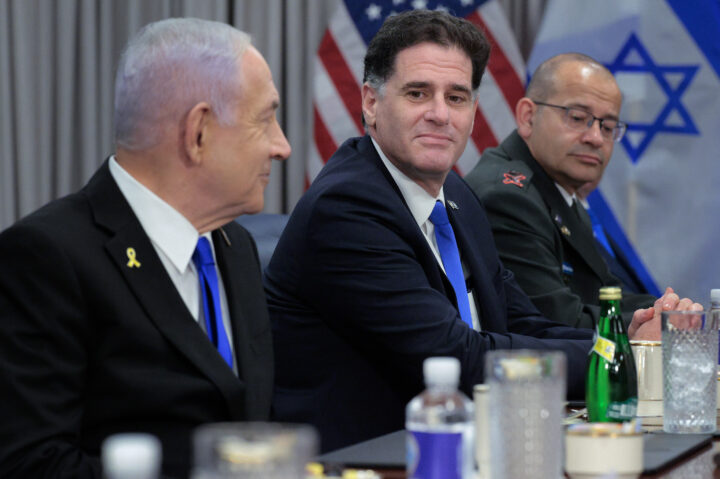
Chip Somodevilla/Getty Images
Israeli Prime Minister Benjamin Netanyahu (L) is joined by Israeli Minister of Strategic Affairs Ron Dermer and other officials for a meeting with U.S. Secretary of Defense Pete Hegseth at the Pentagon on July 09, 2025 in Arlington, Virginia.
In a wide-ranging interview, Israeli Minister of Strategic Affairs Ron Dermer connected Israel’s strikes against Iran’s nuclear facilities with Israeli Prime Minister Benjamin Netanyahu’s opposition to the U.S.’ 2015 nuclear deal with Tehran, saying that President Donald Trump wouldn’t have pulled out of the deal during his first administration without that precedent.
“I believe that what Iran’s strategy was [before Oct. 7] is to surround Israel with this ring of fire,” including Hamas in Gaza, Hezbollah in Lebanon and militias in Syria and Iraq. “And this is another reason why I was so opposed to the nuclear deal that was done in 2015,” Dermer said in the first installment of his interview on Dan Senor’s “Call Me Back” podcast, which dropped on Monday.
“And by the way, the attack [on Iran’s nuclear facilities] that happens now does not happen if Prime Minister Netanyahu doesn’t show up and confront that deal then. People don’t make the connection. I do, because I’ve lived it every day since then,” Dermer continued. “I don’t see Trump withdrawing if Netanyahu doesn’t take a stand, because no one’s going to be more Catholic than the pope, and no one’s going to be more pro-Israel than the prime minister of Israel.”
Dermer said he and Netanyahu began discussing striking Iran shortly after the Oct. 7, 2023, Hamas terror attacks on Israel. “I don’t know if it was Oct. 8, Oct, 9, Oct. 10, but I remember having conversations with [Netanyahu] early that we need to turn the tables on this, but ultimately the address is Iran. If you don’t deal with Iran and you don’t deal with its support for the proxies, then what is the impact you’re going to have if they can just sort of rebuild this stuff over and over and over again?”
“I think we have removed that threat [of the Iranian nuclear program] for the foreseeable future, particularly if we do the things that we need to do now in the aftermath” of the Israeli and U.S. strikes, Dermer continued, without elaborating.
Senor asked Dermer about leaks to the press prior to Israel’s war with Iran that portrayed a strained relationship between Trump and Netanyahu, with the two leaders reportedly at odds over whether to pursue military action or diplomacy with Tehran. “How much of it was orchestrated to throw everyone off, especially the Iranians?” Senor asked.
“I will tell you as somebody who’s been involved at the highest levels of the U.S.-Israel relationship …. [for] around 15 years, you’ve never had a level of coordination and cooperation that you had,” Dermer replied.
“I don’t know if it was the Monday or Tuesday [before the strikes began], there was a conversation between the prime minister and the president. And 50 years from now, people will say that was one of the best conversations ever between a prime minister and a president,” he continued. After press reports arose saying it was a “really tough call,” Dermer said he asked Netanyahu, “Did we leak that to make it look like it was a terrible call? He’s like, ‘No, no. Somebody else came and just assumed that this was a very, very terrible call’ … But we didn’t say anything at the time, because we thought it would help us, ultimately, with what we were trying to do.”
On the ceasefire negotiations with Hamas, which are ongoing in Doha, Qatar, Demer laid out the Israeli objective of removing Hamas from power in Gaza.
“I think the question is, how do you demilitarize Gaza and end Hamas’ political rule?” Dermer said, noting that “to kill every single Hamas terrorist in Gaza … would require us to take over everything and to stay there indefinitely. That’s not what the goal is. Hamas exists today in Judea and Samaria, in the West Bank … But they don’t control it.”
“Now, it might be that Hamas is willing to give up de jure control, and they say, ‘Well, somebody else will take out the trash, but we’ll continue to have this militia again.’ That’s something that’s not acceptable,” the minister continued.
In reference to the proposal under consideration — which includes a 60-day temporary ceasefire during which time around half of the remaining hostages would gradually be returned and the parties would begin to negotiate terms for a permanent ceasefire — Dermer said the question remains to be answered: “Can [Israel’s] minimal security requirements, can our minimum hit the maximum that they [Hamas] are capable of living with?”
“And we’re not going to know that until you have that engagement. And that’s the engagement that you need to have in the 60 days,” he said. “Because is there only one answer for what Gaza can look like the day after? No, I think there are several potential answers of what could happen. I worked on this last year, I mean, very quietly, of a potential plan that could work. And we will continue to work on it now.”
In an interview with independent Iranian media outlet Iran International, Leiter said Israel is ‘not in the position to make a long-term strategy for another country. Our long-term strategy is to stay alive’

Mo Broushaky
Israeli Ambassador to the U.S. Yechiel Leiter speaks at an event with Iran International on June 24, 2025.
When Israeli Ambassador to the U.S. Yechiel Leiter agreed last week to a major interview with Iran International, the biggest independent Iranian news outlet in the world, the geopolitical status of the region looked very different than it did when Leiter sat down with anchor Fardad Farahzad on Tuesday morning at the National Press Club in Washington.
What was billed as a candid conversation with Leiter, where he would answer questions directly from Iranians curious about Israel’s approach to military strikes in Iran, turned into a newsy postmortem on the 12-day war between Israel and Iran, which had shakily come to a close just hours earlier with a ceasefire brokered by President Donald Trump and the Qataris.
Leiter touted Israel’s military victories but did not offer a full endorsement of the ceasefire — and asked whether he was surprised by Trump’s announcement on Tuesday night, he demurred: “I came to Washington on Jan. 27, and there hasn’t been one day where I haven’t been surprised,” Leiter quipped.
“I think we saw it coming, because we accomplished the vast majority of our goals, our military goals, and that’s diminishing to the point of elimination the path to a nuclear bomb and proliferation of ballistic missiles,” said Leiter.
In 12 days, Israel had “decimated [Iran’s] capacity to inflict tremendous damage on Israel,” Leiter continued. When pressed by Farahzad whether that meant Israel had eliminated Iran’s nuclear program, Leiter’s message was less straightforward.
“Eliminated is a big word. Obliterated is a big word. We can’t get into … what, exactly, ‘obliterated’ means,” said Leiter. (Trump said in a Truth Social post on Sunday that “obliteration is an accurate word.”)
While the details of how thoroughly Israel had damaged Iran’s nuclear and ballistic missile programs are still somewhat uncertain, the fact that Israel had achieved great military success in Iran in less than two weeks was not disputed.
Instead, much of the conversation featured Leiter grappling with the limits of Israel’s capabilities in Iran. As barbaric and evil as Israel finds Iran’s regime, Leiter reiterated that regime change is not on the table for Israel.
“There are few things that unite Israelis, but change in Iran is one of them,” said Leiter. “We want regime change. We’re certainly going to support it in every way we can. But militarily? No. War cannot bring regime change. It doesn’t work.”
Farahzad read questions that had been sent in by Iranian viewers and called on several Iranians in the audience. Almost every one of them asked some version of the same question: Now that there is a ceasefire, Iranians are afraid of what will come next for them. The mullahs remain in power, weakened and wounded. What will they do to the people of Iran? How can the U.S. and Israel leave the Iranian people on their own and walk away?
“Please help assuage the people of Iran’s mindset that the world leaders are saying stuff from both sides of their mouths, but they’re not taking into consideration that if the mullahs are left in power, it will do much more damage to the people of Iran,” one audience member pleaded with Leiter.
He acknowledged the precarity of this moment for the Iranian people, and their frustration at Israel’s inability to help them reach the outcome that many of them want. Instead, Leiter said he hoped Israel’s brief incursion into Iran, helped by the U.S., could spur Iranians who want a change in their country’s leadership to overcome their fears and bring about that change.
“I don’t think I have an answer that’s fully going to satisfy you,” said Leiter. “The bandwidth in the United States right now for anything that even smacks of regime change — very small bandwidth. The ability for Israel to act [by] itself for regime change is extremely limited. What we are doing is, I think, advancing the cause of liberty to a great degree. In our efforts to secure ourselves, we are moving the region into a greater effort of liberty. It takes time.”
Leiter presented a vision of a forward-looking Middle East, where the arc of history bends toward justice for the Iranian people, even if that arc is not a straight line.
“Based on history, I think we are moving towards an era of greater freedom, of greater people sovereignty. I think that that’s been helped, facilitated, by what we’ve done,” said Leiter. “We’re not in the position to make a long-term strategy for another country. Our long-term strategy is to stay alive.”
Iranians now worry that they may be left paying a price for Israel’s victory, as the country’s hard-line rulers lash out. Leiter acknowledged that, but countered that it is not only Israel who can help the Iranian people. He called for Europe to step up.
“We’re not the only democracy in the world. Why is it that the chancellor of Germany says Israel is doing the dirty work for all of us? We’re a tiny, little country. Where’s Germany? Where’s England? England has a huge stake,” said Leiter. “Are we the world’s policeman? Please. I would say to the chancellor of Germany, ‘You’re absolutely right. We’re doing the dirty work for the world, but it’s about time that you helped us.’ And if they did, it would be a lot easier for the people of Iran.”
The interview will air several times this week on primetime in Iran, and to Iranian diasporas around the world.
The vice president said the U.S. would welcome direct dialogue with Iran ‘about how we move this thing forward’

(Photo by Andrew Spear/Getty Images)
Vice President JD Vance, shown here at a Fox News town hall with Bret Baier and Martha MacCallum in November 2022, appeared with Baier on Monday night.
When Fox News anchor Bret Baier scored a primetime interview with Vice President J.D. Vance for Monday evening, he likely hoped that Vance would have news to share with him. Instead, Baier was the one to break the news to Vance that President Donald Trump had brokered a ceasefire deal between Israel and Iran, which Trump announced in a post on Truth Social moments before Vance went on air.
“That’s good news that the president was able to get that across the finish line,” Vance told Baier, noting that he was aware those conversations were happening as he left the White House to head to the Fox News studio.
“I knew that he was working the phones as I was on the way over here, so I knew exactly what we were going to do,” Vance said on “Special Report,” after acknowledging that the statement Trump posted on Truth Social was different from a draft that Vance had viewed hours earlier.
“And look, I love that about this presidency and this administration, because he’s always working. He doesn’t say, you know, ‘The vice president’s going to do an interview, so I’m going to stop doing anything.’ He says, you know, ‘We’re going to do the American people’s business.’”
Trump said on Monday night that Israel and Iran had agreed to bring what he called the “12 day war” to an end, with the promise that both sides “will remain PEACEFUL and RESPECTFUL.” He did not say if there would be any binding promises on either side.
Before Iran fired missiles at an American military base in Qatar on Monday, Iran telegraphed to the U.S. that it planned to attack in a symbolic measure. That message was delivered through an intermediary, but Vance said the U.S. would welcome direct dialogue with Iran “about how we move this thing forward.”
Vance has advocated for a more restrained approach to U.S. intervention abroad, including with respect to Iran. But on Fox News, he telegraphed his support for Trump’s actions, which he said “obliterated the Iranian nuclear program.”
“The president has been very clear, and I’ve always agreed with the president, that Iran can’t have a nuclear weapon,” said Vance. “You try to run the diplomatic process as much as you possibly can. When the president decided that wasn’t going to work, he took the action that he had to take. Now we’re in a new phase. That action was successful.”
Vance deflected when asked if he knew where all of Iran’s highly enriched uranium was located, amid reports that the Iranians had removed a large quantity of uranium enriched to 60% from the underground Fordow site ahead of the U.S. strikes on the compound this weekend.
“I think that’s actually not the question before us. The question before us is, Can Iran enrich the uranium to a weapons-grade level, and can they convert that fuel to a nuclear weapon?” Vance responded. “We know that they cannot build a nuclear weapon.”
He reiterated that the U.S. “destroyed” their “ability to enrich uranium,” calling it a “mission success” in Trump’s goal to stop Iran from building a nuclear weapon. Vance warned that the U.S. military stands in the way of Iran following through on its goal of building a nuclear weapon.
“If Iran is desperate to build a nuclear weapon in the future, then they’re going to have to deal with a very, very powerful American military,” said Vance.
Vance said that the U.S. military’s mission is not regime change, and that Trump’s Sunday post expressing support for regime change was a message to the Iranian people to make a choice about it, which is “between the Iranian people and the regime.”
“What the president is saying very clearly, Bret, is, if the Iranian people want to do something about their own leadership, that’s up to the Iranian people. What the American national security interest is here is very simple: It’s to destroy the nuclear program. That’s what we’ve done, and now that the 12-day war appears to be effectively over, we have an opportunity, I think, to restart a real peace process,” said Vance.
The vice president said the U.S. made the decision to strike Iran after assessing it was only using negotiations as a stalling tactic

Screenshot/NBC News
Vice President JD Vance speaks on NBC News' "Meet the Press" on June 22, 2025.
Vice President JD Vance emphasized that the United States is “not at war with Iran” but instead “at war with Iran’s nuclear program,” in an interview with NBC News’ “Meet the Press” Sunday.
Vance also denied that the U.S. is seeking regime change in Iran but is instead seeking peace with a non-nuclear Iran. He said it’s up to Israel whether it wants to take its own action to kill Iran’s supreme leader, Ayatollah Ali Khamenei.
“Our expectation is we’re going to learn a lot about what the Iranians want to do, how they want to proceed over the next 24 hours,” the vice president said. “The president has said he wants, now, to engage in a diplomatic process. But if the Iranians are not going to play ball here, they didn’t leave as many options as it pertains to last night, and they won’t leave as many options in the future.”
He said that if Iran continues its nuclear program, continues to fund international terrorism and attacks U.S. forces, “it will be met with overwhelming force,” but it has the opportunity to rejoin the international community if it changes course.
“What would make sense is for them to come to the negotiating table, to actually give up their nuclear weapons program over the long term,” he reiterated. “And, again, if they’re willing to do that, they’re going to find a willing partner in the United States of America.”
He said the U.S. only took action after it became clear Iran was “stonewalling” in talks and was not serious about negotiations, instead using them as a tactic to build out their nuclear program. “Diplomacy never was given a real chance by the Iranians,” Vance said.
He said that Iran had “stopped negotiating in good faith” and that was “the real catalyst” for the U.S. strikes. Vance said the administration came to the conclusion that talks were stagnant in mid-May.
Vance added that the U.S. had a “limited window” in which to strike Fordow, and that such an operation may not have been feasible in six months.
Asked about the possibility of Iran closing the Strait of Hormuz, a key waterway for the international oil trade, Vance said that such a decision would be “suicidal” for Iran. The Iranian parliament voted Sunday to close the waterway, but that decision will have to be approved by others in the regime.
“Their entire economy runs through the Strait of Hormuz. If they want to destroy their own economy and cause disruptions in the world, I think that would be their decision,” Vance said. “But why would they do that? I don’t think it makes any sense.”
Vance, who has been aligned with the “restrainer” foreign policy camp within the GOP wary of American military interventions, defended Trump’s actions from those critical that the strikes could lead the U.S. to get enmeshed in a protracted conflict in the Middle East once again.
”The difference is that back then, we had dumb presidents, and now we have a president who actually knows how to accomplish America’s national security objectives. So this is not going to be some long, drawn-out thing,” Vance said.
He said the U.S. has “no interest in boots on the ground.”
Vance emphasized on ABC News’ “This Week” that allowing Iran to achieve a nuclear weapon would not have generated peace in the Middle East.
“We can achieve peace much more fully than if we sort of sit on our hands and hope that somehow, if the Iranians get a nuclear weapon, they’re going to be more peaceful,” the vice president said. “That is a stupid approach, and the president rejected it.”
Vance asserted on “Meet the Press” that the raid had “substantially delayed” the regime’s ability to build nuclear weapons by “many, many years.”
“I’m not going to get into sensitive intelligence about what we’ve seen on the ground there in Iran, but we’ve seen a lot, and I feel very confident that we’ve substantially delayed their development of a nuclear weapon, and that was the goal of this attack,” Vance said. The vice president’s comments match an initial assessment provided by Pentagon leaders Sunday morning.
Vance added on “This Week” that the U.S. will have to “work in the coming weeks to ensure” that Iran’s stockpiles of highly enriched uranium are addressed.
“One of the things that we’re going to have conversations with the Iranians about. But what we know is they no longer have the capacity to turn that stockpile of highly enriched uranium to weapons grade uranium, and that was really the goal here,” Vance said, emphasizing that Iran’s enrichment capacity was the primary U.S. target.
“We’re now going to have a serious conversation about how to get rid of Iran’s nuclear weapons program permanently, meaning they have to choose not to have a nuclear weapons program, and they have to give this thing up,” Vance continued.
With congressional Democrats, and a small group of Republicans, denouncing the strikes as lacking the proper congressional authorization, Vance argued on “Meet the Press” that the president has the authority to “act to prevent proliferation of weapons of mass destruction.”
“The idea that this was outside of presidential authority, I think any real serious legal person would tell you that’s not true,” Vance said.
Asked about previous U.S. intelligence assessments that Iran was not actively building a nuclear weapon, Vance said, “There’s of course an open question about whether they were weeks away, whether they were months away. But they were way too close to a nuclear weapon for the comfort of the president of the United States, which is why he took this action.”
He said that the final decision had been made based on American, not Israeli, intelligence, and that U.S. intelligence concluded Iran was not interested in serious negotiations.
The Texas senator's appearance on Carlson's podcast went from civil to contentious as the two sparred over Israel, Iran, AIPAC

Screenshot
Sen. Ted Cruz on Tucker Carlson's podcast in an episode aired June 18, 2025.
Sen. Ted Cruz’s (R-TX) interview on Tucker Carlson’s podcast published on Wednesday devolved into a shouting match at times between the two GOP heavyweights, with insults and charges of ignorance and antisemitism dominating the two-hour conversation between one of the Republican Party’s biggest pro-Israel champions and one of the most vocal critics of the U.S.-Israel relationship.
The interview was relatively civil for the first hour, but began to devolve when Carlson and Cruz started debating the benefits of the U.S. relationship with Israel and the merits of Israel and the United States allegedly spying on one another.
Carlson pressed Cruz to say that allies spying on one another was wrong, which Cruz responded to by asking why Carlson and others had an “obsession with Israel” while ignoring similar behavior from other allies. Carlson rejected that he was “obsessed with Israel” before noting that he has never taken money from AIPAC, which he referred to as “the Israel lobby.”
The conversation started to become more animated as the two could not find common ground on the role and purpose of AIPAC, with Carlson insisting that the organization, which is made up of U.S. citizens advocating for the U.S.-Israel relationship, needed to be registered under the Foreign Agents Registration Act — an argument sometimes used as an antisemitic dog whistle accusing Jewish supporters of Israel of dual loyalty — and Cruz vehemently disagreeing.
The interview grew more tense after Cruz accused Carlson of having an “obsession with Israel” and asked why he was so focused on asking, “What about the Jews? What about the Jews?” without being critical of other foreign governments.
“Oh, I’m an antisemite now?” Carlson replied wryly.
“You’re asking, ‘Why are the Jews controlling our foreign policy?” Cruz told Carlson after the latter said he had accused him of antisemitism in a “sleazy feline way.”
Cruz told Carlson to give him “another reason why the obsession is Israel,” to which Carlson responded: “I am in no sense obsessed with Israel. We are on the brink of war with Iran, and so these are valid questions.”
“You asked me why I’m obsessed with Israel three minutes after telling me that when you first ran for Congress, you elucidated one of your main goals, which is to defend Israel. I’m the one who’s obsessed with Israel,” Carlson said, adding, “Shame on you for conflating” Jews and Israel.
“Israel and Jews have nothing to do with each other?” Cruz asked after Carlson claimed there was not a correlation.
Carlson said he was “totally opposed” to Iran’s desire to kill all Jews and Americans, which Cruz replied to by saying: “Except you don’t want to do anything about it.”
The two then sparred over Carlson’s focus on Israel’s influence on U.S. foreign policy, with Cruz claiming Carlson was placing too much emphasis on the Jewish state while ignoring the malign influence of other governments.
“I don’t even like talking about Israel. I never do because it’s not worth being called antisemites from AIPAC recipients,” Carlson said. “But now we are on the verge of joining a war and I just want to be clear about why we’re doing this.”
Carlson stated that anyone who criticized Israel’s actions were “instantly called an antisemite for asking questions” and said Israel was “the only government that no one will ever criticize.” Cruz said he rejected that assertion, pointing to statements from Rep. Rashida Tlaib (D-MI), a progressive House lawmaker and frequent critic of Israeli Prime Minister Benjamin Netanyahu. Carlson scoffed at Cruz’s Tlaib reference, explaining that he was referring to the consequences for “Republicans that I would vote for, including you.”
Regarding Iran, the two sparred over the regime’s apparent efforts to assassinate Trump, which Carlson denied had occurred.
“I voted for Donald Trump. I campaigned for Donald Trump. He’s our president, and we’re on the cusp of a war. So if there’s evidence that Iran paid a hitman to kill Donald Trump and is currently doing that, where is that? What are you even talking about? I’ve never heard that before. Where’s the evidence? Who are these people? Why haven’t they been arrested? Why are we not at war with Iran?” Carlson asked.
The Justice Department, in November 2024, did, in fact, indict multiple individuals in connection to the assassination plot, arresting two individuals involved in the scheme in the United States and issuing a warrant for a third, described as an Islamic Revolutionary Guard Corps asset.
The plot had been extensively reported upon, both at the time and in the months since. Cruz criticized Carlson for his suspicions about the plot.
The former Fox host asked Cruz shortly after to explain why he’d be proud to say that he came to Washington with the goal of being the most pro-Israel member of Congress, to which Cruz responded by citing his Christian faith, after which the two sparred about Christian scripture.
The senator subsequently argued that he does not solely cite his faith as his reason for supporting Israel in his professional capacity, telling Carlson that he had championed the Jewish state because of his belief that Israel is our best ally in the Middle East.
“I think the most acute national security threat facing America right now is the threat of a nuclear Iran. I think China is the biggest long-term threat, but acute in the near term is a nuclear Iran. And I think Israel is doing a massive favor to America right now by trying to take out Iran’s nuclear capacity,” he continued, later adding, “You want to ask: how does supporting Israel benefit us? Right now, this tiny little country the size of the state of New Jersey is fighting our enemies for us and taking out their top military leadership and trying to take out their nuclear capacity. That makes America much safer.”
Returning to the subject of Cruz’s faith, the Texas senator said that his support for Israel was also rooted in his Christian faith, citing the biblical phrase: “Those who bless Israel will be blessed and those who curse Israel will be cursed.”
Carlson mocked the fact that Cruz’s faith informed his pro-Israel views, and asked specifically the biblical citation. After Cruz acknowledged he didn’t know the exact verse, the podcast host then incorrectly answered his own question, mistakenly saying it was in Genesis. (The verse is from Numbers 24:9.)
The interview again devolved into chaos after Cruz acknowledged that upon sharp questioning that he did not know the exact population size of Iran, prompting both men to question what the other knew, if anything, about the country. Carlson accused Cruz of being dismissive of the consequences of the military actions he was calling for, while Cruz accused Carlson of adopting the foreign policy platform of progressive Democrats.
The first 60 minutes of the interview, which was released on Wednesday, was largely civil with Carlson asking Cruz to explain his support for Israel’s operation to destroy Iran’s nuclear program and regime change in Tehran.
The Texas senator argued that his recent comments in favor of toppling Iran’s supreme leader, Ayatollah Ali Khamenei, were not an endorsement of a U.S. military invasion of Iran but rather of the idea of a democratic Iran.
The two initially agreed that it would be better for the U.S. without an Iranian regime that aspires to destroy Western civilization and that they were frustrated by the interventionist versus isolationist binary that has increasingly characterized Republican foreign policy.
“For a long time, people have perceived two different poles of Republican foreign policy. There have been interventionists, and those have been people like John McCain and Lindsey Graham George W. Bush, and there have been isolationists, and the most prominent of those have been Ron Paul and Rand Paul and there are others. People perceive those are the two choices, you’ve got to be one of the other. I’ve always thought both were wrong. I don’t agree with either one,” Cruz said.
“For whatever it’s worth, I agree with you. I don’t know who set up that binary, but there are lots of choices, actually,” Carlson responded. Carlson is seen by many, however, as one of the leading figures of the isolationist wing.
The two men described themselves as non-interventionist hawks, with each saying they believed in the principle that the “central touchpoint for U.S. foreign policy and for any question of military intervention should be the vital national security interests of the United States” before disagreeing on whether the situation in Middle East qualified as such.
Jewish Insider’s senior congressional correspondent Marc Rod contributed to this report.

MENAHEM KAHANA/AFP via Getty Images
Israeli soldiers clean the gun of a tank at a position near Israel's border with the Gaza Srip on May 4, 2025.
Good Monday morning.
In today’s Daily Kickoff, we interview New Jersey Assembly candidate Tamar Warburg, who would be the first Orthodox woman in the New Jersey legislature, and look at how a dispute over the International Holocaust Remembrance Alliance’s working definition of antisemitism is playing a role in the state’s elections. We report on Rep. Ritchie Torres’ call for New York’s City Parks Foundation to cancel its upcoming concert featuring Kehlani following the singer’s antisemitic and anti-Israel comments, and cover a bipartisan push from House members making the highest-ever request for nonprofit security funding for the upcoming fiscal year. Also in today’s Daily Kickoff: Yuval Raphael, Santa Ono and Robert Kraft.
What We’re Watching
- President Donald Trump is slated to announce Washington as the host of the 2027 NFL Draft. Trump will make the announcement today from the White House, where he’ll be joined by NFL Commissioner Roger Goodell and Washington Commanders owner Josh Harris.
- Jordanian King Abdullah II arrived in Washington today for meetings with senior officials.
- Sen. Kirsten Gillibrand (D-NY) and Reps. Virginia Foxx (R-NC), Carlos Gimenez (R-FL), Brad Schneider (D-IL), Mike Lawler (R-NY) and Dan Goldman (D-NY) are hosting a screening of Wendy Sachs’ “October 8” documentary about antisemitism on college campuses this evening at the Capitol Visitors Center.
- House Speaker Mike Johnson (R-LA) and Sen. Cory Booker (D-NJ) are speaking today at the National Zionist Rabbinic Coalition’s national conference in Washington.
- The Milken Institute Global Conference continues today in Los Angeles. Today’s speakers include Treasury Secretary Scott Bessent, the Carlyle Group’s David Rubenstein, Starwood Capital’s Barry Sternlicht, Apollo Global Management’s Marc Rowan, Mubadala’s Waleed Al Mokarrab Al Muhairi, Mohamed Albadr and Khaled Al Shamlan, Axel Springer’s Mathias Dopfner, TWG Global’s Amos Hochstein, former Treasury Secretary Steve Mnuchin, BDT-MSD Vice Chairman and President of Global Client Services Dina Powell McCormick, former House Speaker Paul Ryan (R-WI), former U.K. Prime Minister Tony Blair, Saudi Investment Minister Khalid Al-Falih, Virginia Gov. Glenn Youngkin, Hawaii Gov. Josh Green, Lazard’s Peter Orszag and Alphabet’s Ruth Porat.
- The Jewish Public Affairs Committee of California is holding its Capitol Summit in Sacramento today and tomorrow. Those addressing the two-day gathering include UCLA Chancellor Julio Frenk, Gov. Gavin Newsom (who is speaking virtually), California Attorney Gen. Rob Bonta, former Heath and Human Services Secretary Xavier Becerra, Lieutenant Gov. Eleni Kounalakis, former Rep. Katie Porter (D-CA) and former Los Angeles Mayor Antonio Villaraigosa.
- The Future Summit kicks off today in Tel Aviv. Lightspark founder David Marcus, Papaya Global’s Eynat Guez, Tinder founder Sean Rad, Insight Partners cofounder Jeff Horing, NFX cofounder Stan Chudnovsky, First Round Capital cofounder Josh Kopelman, Freestyle General Partner Jenny Lefcourt, Sequoia Capital partner Shaun Maguire and Poalim Tech’s Michal Kissos Hertzog are slated to speak at the three-day confab.
What You Should Know
A QUICK WORD WITH JI’S LAHAV HARKOV
For the third day in a row, air raid sirens blared throughout central Israel on Sunday morning after the Iran-backed Houthis launched a missile from Yemen. This time, the IDF was unable to shoot the missile down before it reached Israel, and while no one was killed, it landed in a strategically damaging location: Ben Gurion Airport. Several airlines canceled flights for the coming days.
While Israel dealt with threats to its north and south, the IDF began calling up tens of thousands of reservists ahead of a return to more intensive warfare in Gaza, unanimously approved by the security cabinet on Sunday night and likely to begin after President Donald Trump’s visit to the Middle East next week.
Amid U.N. pressure, the cabinet also approved a plan to allow humanitarian aid in again — once the food currently in Gaza runs out — with a new distribution mechanism meant to prevent Hamas from pocketing the goods and using it as leverage to stay in power.
Since the last ceasefire in Gaza ended on March 18, Israel has been slowly intensifying the war with the aim of ramping up pressure on Hamas, first by stopping humanitarian aid, and then by evacuating the civilian population from more and more areas of the coastal enclave, and continuing airstrikes throughout.
After Hamas rejected the ceasefire and hostage release deal that Trump’s Middle East envoy, Steve Witkoff, attempted to negotiate last month, and the terrorist group’s counter-offer excluded disarmament – a red line for Israel – plus a spike in IDF casualties in Gaza, Israel’s patience began to run out.
The open decision to escalate and the mobilization of reservists to that end is its own form of pressure, another warning shot at Hamas aimed at pushing it to enter a hostage release deal, but Jerusalem views the intensification of fighting as the only way to reach the war’s other goal, “total victory” over Hamas, as Netanyahu said in a video posted to social media on Sunday.
An Israeli official told media that the plan includes occupying Gaza and retaining the territory, moving the Gazan civilian population south, and conducting “powerful attacks” against Hamas.
The mission, the prime minister said, remains to bring back the hostages and defeat Hamas: “There will be no Hamas [in Gaza] … We will not give up on defeating them. Wars must end decisively. We will win.”
At the same time, many hostage families and their supporters continued to speak out against intensifying the war, with the Hostages and Missing Families Forum saying, “The expansion of military operations puts every hostage at grave risk.” The group also noted that “the vast majority of the Israeli public views the return of the hostages as the nation’s highest moral priority.” Recent polls back up that statement, indicating that most Israelis would be willing to end the war in exchange for all the hostages.
IDF Chief of Staff Eyal Zamir warned ministers in recent days that “in a plan for a full-scale maneuver, we won’t necessarily reach the hostages. Keep in mind that we could lose them,” according to Israel’s Channel 13. The channel also quoted Zamir as saying that the goals of defeating Hamas and returning the hostages “are problematic in relation to each other.”
Netanyahu, however, continued to argue that the choice between defeating Hamas and the hostages is not binary. “Military pressure is what worked and it is what will work now,” he said. “If we are victorious, we will free the hostages, and we are in the stages of victory … Victory will bring the hostages.”
The prime minister also waved off accusations that he was continuing the war for his own political longevity as “the propaganda line of the propaganda channels and the left,” saying: “Should we leave Hamas inside [Gaza] so they will be at the [border] fences again? Should Hezbollah be at the fences? That’s political?”
PARKWAY POLITICS
In this NJ election, antisemitism could decide the race — while dividing a Jewish community

Tamar Warburg is hoping to be the first Orthodox woman in the New Jersey legislature, running for office in the June 10 Democratic primary to represent New Jersey’s 37th Assembly district, which includes Teaneck, Englewood and most of Bergen County. She didn’t plan for this: Last year, she was approached by Jersey City Mayor Steve Fulop, a leading candidate for governor, who asked her to run on an unofficial slate affiliated with his campaign. She’s taking on two incumbent Democrats, arguing that they have not been attentive enough to the needs of the district’s large Jewish community. “I realized this was not an offer to Tamar Warburg. This was an offer to my Jewish community, and unless I had a really compelling reason not to do it, I didn’t really have the authority to say no,” Warburg told Jewish Insider’s Gabby Deutch in an interview.
IHRA ire: But to win, she first faces an uphill battle within her own Jewish community. A messy political dispute playing out in the New Jersey gubernatorial election has trickled down to this Assembly race, pitting Warburg against another Orthodox candidate, Yitz Stern — and threatening to split the Jewish vote and deal a win to the incumbents. It all started with what was intended to be a straightforward piece of legislation that would’ve codified the International Holocaust Remembrance Alliance’s (IHRA) working definition of antisemitism, affording law enforcement officers and other state employees a tool to understand and respond to hate crimes and formulate anti-discrimination policies. It passed out of committee in the State Senate in February, but it was never brought to a vote on the floor. Of the two incumbent assembly members from District 37, one — Ellen Park — signed on as a sponsor of the bill, while the other — Shama Haider — did not, earning criticism from many in the Bergen County Jewish community.
nuclear news
Trump says goal of Iran talks is ‘total dismantlement’ of nuclear program

President Donald Trump said the goal of U.S. negotiations with Iran is “total dismantlement” of its nuclear program, contradicting comments made by others in his administration that Iran may be allowed to retain some enrichment capabilities. Speaking on NBC’s “Meet the Press” on Sunday, the president said total dismantlement is “all I’d accept” out of the negotiations and downplayed the suggestion that the U.S. is open to Iran maintaining a civilian enrichment program, Jewish Insider’s Danielle Cohen reports.
Civil enrichment: “Now, there’s a new theory going out there that Iran would be allowed to have civilian — meaning to make electricity and to — but I say, you know, they have so much oil, what do they need it for?” Trump said. Secretary of State Marco Rubio has indicated otherwise as recently as last month, when he told The Free Press, “If Iran wants a civil nuclear program, they can have one just like many other countries in the world have one.” Middle East envoy Steve Witkoff has made similar comments suggesting Iran could be permitted to continue enrichment up to 3.67% as part of a civilian program, though he backtracked after receiving pushback from GOP lawmakers.
CONCERT CONTROVERSY
Ritchie Torres calls on NYC to cancel Central Park performance by anti-Israel artist Kehlani

Rep. Ritchie Torres (D-NY) is calling on New York City officials to cancel a Central Park performance at a city-sponsored event by Kehlani, a performer who has called for the destruction of Israel and Zionism, Jewish Insider’s Marc Rod reports.
Back and forth: Kehlani is set to perform in June at an event for Pride month sponsored by the City Parks Foundation, an independent nonprofit which receives city funding to promote arts, sports, education and other programming in city parks. But Mayor Eric Adams has disputed whether the mayor’s office has any ability to cancel the performance or withhold funds. Torres highlighted Kehlani’s anti-Israel rhetoric in a letter to Mayor Eric Adams, City Parks Foundation Executive Director Heather Lubov and Live Nation Entertainment CEO Michael Rapino and said that “Our public institutions have a duty to ensure that taxpayer dollars are never misspent on subsidizing or sanitizing antisemitism.”
NONPROFIT PROTECTION
House members put forward highest-ever request for nonprofit security funding for 2026

A bipartisan group of more than 130 House members put forward their highest-ever request for funding for the Nonprofit Security Grant Program, asking for an appropriation of $500 million, nearly doubling the current funding level, Jewish Insider’s Marc Rod reports.
Path ahead: Despite the substantial bipartisan support, the request could face strong headwinds as the appropriations process moves forward, with the Trump administration proposing significant cuts to the Federal Emergency Management Agency’s non-emergency grants — a category that includes NSGP — and not, as of Friday, offering a specific budget line-item for the NSGP. “We respectfully ask that $500 million in funding be allocated to NSGP. The program provides critical security resources to at-risk faith-based and nonprofit institutions located in urban, suburban, and rural communities,” a group of 133 House members led by Reps. Gabe Amo (D-RI) and Michael McCaul (R-TX) said.
BUDGET BREAKDOWN
Admin calls for significant cuts to Department of Education’s Office for Civil Rights

The Trump administration’s budget request submitted to Congress on Friday calls for a $49 million cut to the Department of Education’s Office for Civil Rights, the bureau responsible for investigating and adjudicating complaints of campus antisemitism, Jewish Insider’s Marc Rod reports.
Going deeper: The budget proposal, which slashes a total of $163 billion in spending, also includes what Republican defense hawks are condemning as an effective cut in defense spending and cuts to Federal Emergency Management Agency grant programs, Department of Justice hate crime prevention grants and the Federal Bureau of Investigation. The budget request sent to congressional appropriators says that the OCR cut, which amounts to 35% of the department’s 2025 budget, seeks “to refocus away from DEI and Title IX transgender cases” and states that the office has cleared “a massive backlog in 2025.”
Worthy Reads
Bucking Boulos: Politico’s Felicia Schwartz and Robbie Gramer look at the relationship between the White House and Massad Boulos, Tiffany Trump’s father-in-law and the Trump administration’s Africa advisor and senior advisor of Arab and Middle Eastern affairs, whose role has become “diminished” amid reported tensions with the White House. “Trump named Boulos as a senior adviser on the Middle East during the transition last year and he began taking informal meetings with Lebanese officials and other diplomats. But some in the administration say he was overstepping. ‘The job was more symbolic, but he didn’t know that,’ said an administration official. ‘Everyone knew it but him.’ … Boulos was weakened by a spate of early media interviews asserting himself as a dominant voice on Lebanon policy, irking Trump’s inner circle in the process, as well as a New York Times story that exposed he had for years misled the public about the source of his wealth. Two of the people familiar with Boulos’ interactions said he had developed an unfavorable reputation for talking too much. His move away from Middle East work stemmed also from concerns within the administration about some of his political and social connections in the region.” [Politico]
Campus Beat: In The Free Press, Rabbi David Wolpe, who served for a year as a visiting scholar at Harvard Divinity School, reflects on the school’s recently released report on antisemitism. “[The report] explains that anti-colonialism has become the ideological battering ram to mobilize a diverse cult of anti-Western sentiments. The challenge to Zionism becomes a first step in turning disillusion with the West into a wholesale indictment of it. The old antisemitism of the Soviet Union had this double purpose as well — destroy the Jews, and you’ve destroyed the root of Western civilization. Harvard is not just a host for this worldview. It is the dominant view on campus. But what no report can capture is the feeling that Jewishness was something to hide, and the stigma of being a Jew-hater was fading. One student in my class, after having walked through Harvard Yard and being screamed at by some of the protesters, said to me: ‘They don’t just hate what I believe. They hate me.’” [FreePress]
Weiner’s Way: In The Atlantic, Josh Tyrangiel interviews former Rep. Anthony Weiner (D-NY), who is attempting a return to politics in his bid for New York City Council. “Weiner’s a centrist Democrat — he thinks the neighborhood needs more cops and fewer pot shops. ‘If this election is about the most anti-Trump, crazy-making person on the left, you’re not going to pick a Cuomo or a Weiner,’ he said. ‘Now, I could be completely wrong, but there seems to be a disconnect with the brand that New York Democrats are selling and what people want to buy right now.’ I asked what evidence he had to support this. ‘I’m in New York with a head on my shoulders seeing what’s going on on 14th Street.’ … Most politicians know how to live on the surface in these moments. But Weiner uses conflict to make small things feel more urgent, to make local democracy into something worthy of passion. He’s not a beautiful speaker, but he challenges Democrats to hear the jagged melody blaring through his septum: Do we want to be polite, or do we want to solve this? If I’m willing to fight with you, imagine how hard I’ll fight for you.” [TheAtlantic]
Alarm in Africa: In the Jerusalem Post, Amjad Taha and Eitan Neishlos consider the threat posed to Israel by extremist elements in Sudan that are bolstered by support from Tehran. “Sudan is no longer just a battlefield. It is rapidly becoming a terror hub, strategically positioned near Israel’s southern flank and the vital shipping lanes of the Red Sea. The Baraa ibn Malik Brigade, operating under SAF, openly venerates Sayyid Qutb, the ideological architect of jihadism. Its leader, Al-Musbah Abu Zaid, often referred to as the Yahya Sinwar of Sudan, poses with figures like Mukhtar Badri, notorious for anti-Semitic incitement and global terror ties. … Iran is also a central actor in this Islamist resurgence. Port Sudan has quietly transformed into a key node in Tehran’s regional weapons network. Through covert maritime shipments and military contracts, Iran has begun supplying drones to the Sudanese Armed Forces, the same types used by the Houthis to target Israeli-linked vessels in the Red Sea.” [JPost]
Word on the Street
Defense Secretary Pete Hegseth is slated to travel to Israel on May 12, before traveling on to Saudi Arabia, where he will join President Donald Trump, who also is slated to travel to Qatar and the United Arab Emirates…
White House senior policy advisor Stephen Miller is reportedly a top candidate to succeed Mike Waltz as national security advisor, following Trump’s announcement last week that he planned to nominate Waltz to be U.S. ambassador to the U.N….
Politico looks at Secretary of State Marco Rubio’s standing in the Trump administration, noting that the former Florida senator, who was appointed interim national security advisor following Waltz’s ouster, “offers a lesson to others trying to survive under Trump”…
The House of Representatives postponed a vote on the IGO Anti-Boycott Act, which expands existing U.S. anti-boycott laws addressing compulsory boycotts of U.S. allies enforced by foreign nations, following outcry from the far-right, including Reps. Marjorie Taylor Greene (R-GA) and Thomas Massie (R-KY) and influencer Charlie Kirk, online on Sunday; the legislation received near-unanimous support in committee last year…
Beth Davidson, a Democratic Rockland County legislator running against Rep. Mike Lawler (R-NY), shared with Jewish Insider her position paper on Israel and the Middle East, outlining her support for “the continuation and growth” of U.S. military aid to Israel, her plans for countering Iran’s nuclear ambitions and her support for the International Holocaust Remembrance Alliance’s working definition of antisemitism…
Harvard President Alan Garber said that the Trump administration’s threat — made by the president on Friday — to revoke the school’s tax-exempt status would, if carried out, be “highly illegal” and “destructive” to the university…
A Temple University student was suspended after an incident in which he and another individual ordered a sign with antisemitic text to his table at a bar owned by Barstool founder Dave Portnoy; in a social media post, Portnoy said he would, following a conversation with the Foundation to Combat Antisemitism’s Robert Kraft, cover the costs for the two individuals to travel to Auschwitz “to learn about the Holocaust”…
University of Michigan President Santa Ono is departing the Ann Arbor school for the University of Florida, following the UF presidential search committee’s unanimous decision to recommend Ono as the sole finalist to succeed former President Ben Sasse, who stepped down last summer…
Officials in the U.K. arrested seven Iranian men in connection with two separate national security-related threats; police said four of the men were planning a terrorist attack on an unnamed site…
The Associated Press spotlights the “Violin of Hope,” which was recently discovered to have been made by a Jewish craftsman while imprisoned in the Dachau concentration camp; the violin-maker, Franciszek “Franz” Kempa, survived the war and died in his native Poland in 1953…
The Wall Street Journal looks at the increase in online radicalization of European teenagers following the arrests of dozens of young people across the continent in connection with plots to conduct terror attacks…
Israeli Prime Minister Benjamin Netanyahu suggested that Qatar has “decisive influence” over Hamas “that is not always exercised but could be,” a day after the Prime Minister’s Office released a statement calling on Doha to “stop playing both sides with its double talk and decide if it’s on the side of civilization or if it’s on the side of Hamas”…
Hamas released a video of hostage Maxim Herkin, a month after releasing a video showing the first sign of life from the Russian-Israeli citizen who was kidnapped from the Nova music festival on Oct. 7, 2023…
The Israeli government decided not to establish a state commission of inquiry into the events surrounding the Oct. 7 attacks at this stage, citing the intensifying war in the Gaza Strip…
Tehran said it would strike Israel or the U.S. if either responded to the Sunday ballistic missile attack conducted by the Iran-backed Houthis in Yemen…
Iran unveiled the new “Qassem Basir” ballistic missile that Iran’s defense minister said has a range of 745 miles…
Phil Gordon, who served as national security advisor to former Vice President Kamala Harris, is joining the Brookings Institution as the Sydney Stein, Jr. Scholar in the Brookings’ Strobe Talbott Center for Security, Strategy, and Technology…
Rabbi Sholom Lipskar, the longtime leader of The Shul of Bal Harbour, Fla., and founder of the Aleph Institute, died at 78…
Singer Jill Sobule, who was known for her hits “Supermodel” and “I Kissed a Girl,” died at 66…
Attorney Sybil Shainwald, who represented female clients whose health had been damaged by poorly tested devices and treatments, died at 96…
Pic of the Day

Singer and Nova music festival massacre survivor Yuval Rafael met with Israeli President Isaac Herzog and First Lady Michal Herzog before departing for the Eurovision Song Contest in Switzerland, which takes place next week, where she will perform “New Day Will Rise” as Israel’s entrant in the annual competition.
Birthdays

Former Israeli national soccer team captain, he also played for Chelsea, West Ham United and Liverpool in the English Premier League, Yossi Benayoun turns 45…
Senior U.S. district judge for the Northern District of Illinois, Robert W. Gettleman turns 82… Best-selling author of 20 novels featuring fictional Manhattan prosecutor Alexandra Cooper, written by the former head of the sex crimes unit of the Manhattan District Attorney’s office, Linda Fairstein turns 78… Retired chief judge on the Maryland Court of Special Appeals, he was once president of the Jewish Community Council of Washington, Peter B. Krauser turns 78… Docent at NYC’s Metropolitan Museum of Art, Ruth Klein Schwalbe… Gayle Weiss Schochet… Member of the Knesset, almost continuously since 1988, for the Haredi parties of Degel HaTorah and United Torah Judaism, Moshe Gafni turns 73… South African-born president of American Jewish World Service, Robert Bank turns 66… David Shamir… Pulitzer Prize-winning author of three nonfiction books, historian and journalist, Tom Reiss turns 61… Senior managing director of the Jewish Funders Network, Yossi Prager… Emmy Award-winning television writer and producer, known for “The Simpsons,” Josh Weinstein turns 59… Special education consultant and nanny, Nancy Simcha Cook Kimsey… EVP of BerlinRosen, Nicole Rosen… Executive director of public relations at UJA-Federation of New York, Emily Kutner… Executive director of Micah Philanthropies, Deena Fuchs… Head coach of the football team at the University of Washington, Jedd Ari Fisch turns 49… President of Charleston, S.C.-based InterTech Group, Jonathan M. Zucker turns 47… Journalist, stage and film actress, Lara Berman Krinsky turns 45… Mayor of Bat Yam, Israel, Tzvika Brot turns 45… Member of the Pennsylvania House of Representatives since 2013, Michael H. Schlossberg turns 42… Former professional golfer, now an orthopedic surgeon, David Bartos Merkow, MD turns 40… Partner at New Enterprise Associates, Andrew Adams Schoen… Maxine S. Fuchs… Blake E. Goodman… Basketball player for the Under 20 Team Israel in 2023 and the Michigan Wolverines in the Big Ten Conference, he recently declared for the NBA draft, Daniel Wolf turns 21…
In his new book, 'The Telling,' Mark Gerson explores the Haggadah, which he believes is the 'best book ever written word for word'

Courtesy
Mark Gerson
Fifteen years ago, Mark Gerson, the co-founder and chairman of United Hatzalah and African Mission Healthcare, was invited by a friend for the unexpected combination of a cigar and Haggadah study session. Apprehensive to believe the Passover manual required more of his attention, Gerson agreed to join what seemed more an excuse for a cigar than an illuminating discussion.
To his surprise, the evening jumpstarted an obsession with the Haggadah. “It is nothing less than the greatest hits of Jewish thought,” Gerson told Jewish Insider in a recent interview wedged between virtual book tour appearances for his latest title, The Telling: How Judaism’s Essential Book Reveals the Meaning of Life.
The interview has been edited and condensed for clarity.
Jewish Insider: Passover is probably the most popular holiday in Judaism, why is that? Is it for the same reasons the Haggadah is the “greatest hits of Jewish thought”?
Mark Gerson: I don’t know because I don’t think most people recognize the Haggadah as the greatest hits of Jewish thought. If people go through it quickly and basically treat it like a dinner program — literally, the book you get to before you can get to the meal — we’re not going to see this ‘greatest hits of Jewish thought,’ and we’re not going to get very much out of it. Just the fact that it is completely loaded with Jewish wisdom, perfectly oriented, to help us live happier, better and more meaningful lives in the year to come — it’s the best book ever written word for word, but if you treat it like a dinner program we’re not going to see it that way. Alternatively, if we think that the obligation of the Seder is to get through the entire Haggadah, we’re going to have a similarly bad experience, because we’re not going to be able to really stop and contemplate the existential lessons and the life-altering meanings that come out of basically every passage.
JI: Why do you think it’s so significant that the Haggadah and the Seder are so full of questions?
Gerson: That’s such a deep and fundamental question, and it gets to the essence of Judaism. The fundamental characteristic that all children share all over the world and all throughout history is curiosity, and every parent knows that when a child is two or three years old what that child will say about 20 to 25 times an hour… And so Moses — he’s a genius psychologist — identified the curiosity of children. He heard those 20 to 25 ‘whys,’ and he said, ‘That is what I will build the future of the Jewish people on, on the questioning of their children.’ These are all basing education on the question. The idea of using education at all as a means for perpetuation is totally radical. Because if one generation takes it off, the whole previous chain is broken… So it’s paradoxically on the basis of questioning, which leads to unpredictable answers and unexpected responses that we’ve built the future of the Jewish people, and that’s the focal point of the Seder night.
JI: Does that make Judaism more liberal than most religions?
Gerson: I think just the fact that we have no word for obedience is kind of astonishing. I mean you know other cultures and traditions command obedience, we don’t have a word for it. Even in the Bible, what’s our great tradition related to obedience, for which we have no word? It’s arguing with God. It’s Abraham arguing with God at Sodom and Gomorrah. It’s Moses arguing with God after the golden calf. It’s the daughters of Zelophehad arguing with Moses, and ultimately with God. So, yeah, we love questioning and Moses invented the idea of perpetuating a tradition through questioning, and it’s done very well.
JI: What do you think is the most important question in the Seder?
Gerson: I think they’re all important. The Haggadah, because it asks and answers all the great questions in life, it addresses each of us at any stage we’re at. Whatever anyone’s thinking about, aspiring towards or going through, the Haggadah is there to help in different passages. So it’ll be different for each person in each year.
JI: One of the passages you look closely at is perhaps the most perplexing and problematic of the whole Haggadah — the Wicked Son. What did end up finding so redeemable in that passage?
Gerson: It’s a very interesting response because the phrase blunt your teeth, a lot of people think it means punch him in the face. I don’t know if people thought that in ancient times, but certainly now when we hear blunted teeth, we think punch him in the face but then we realized that same expression comes from Ezekiel and Jeremiah. So where was that used? Well, it was used twice, neither of which had anything to do with punching anybody in the face. It was that the father who ate sour grapes and his son’s teeth were blunted. [Ezekiel 18:12 and Jeremiah 31:29] It’s clearly an expression of the father accepting the blame. This is why it’s good to really consider this when one has small children, because then you could think, what might I be doing that will lead to a wayward child when the child is 15 or 16, and then not do it.
JI: After a full year of the COVID pandemic, what new understanding do you bring to the Seder?
Gerson: Exodus 12 has this very strange but deeply instructive passage which says that there can be no leftovers at the Seder meal. Why are leftovers un-kosher for Passover? You can have leftovers any other time, but not after a Seder meal. It explains that if one household is too small to consume a lamb by itself, it must invite another household. Now we know from Josephus and modern science that it took approximately 15-20 to consume a lamb, meaning every household is too small to consume a lamb. So we begin this fundamental night of Jewish peoplehood — the great new year of the Jewish people — in the act of giving and sharing the spirit of hospitality. And that’s why we set big Seders, because it tells us to in the Bible. We couldn’t do that last year, and we really can’t do that this year.
JI: You write about how the Egyptians don’t seem to learn from the plagues. After letting the Israelites go, Pharaoh decides “Actually, we’re going to go after them,” and of course we know what happens then. How do you see that as a warning to us now?
Gerson: Everything in the Haggadah exists to teach us a lesson to be implemented today… and if we don’t see it in the passage, we’ve just got to keep interpreting. The purpose of the plagues was obviously not just to free the Jews, because if God wanted to free the Jews, as my daughter said when she was five years old, well, why don’t you just use a magic carpet or a big waterslide which starts in Egypt and ends in the Promised Land? (I would pick the waterslide.) But that wasn’t his purpose, that was one of his purposes, but his purpose was to educate the world that he is the one true God and that people should turn towards ethical monotheism. That’s the purpose. He wants to win an argument.
JI: Any special plans for this year’s Seder? Anything new or different?
Gerson: Well the difference is it’s the second year of just family, and, God-willing, it looks like the last year of just family. Normally we have 50 people or so — Jews, gentiles, people who have never been to a Seder before. It’s often a gentile at the Seder who is coming with such newness, freshness and appreciation who are the ones who most enhance and enrich the evening.
JI: Who are the Seder guests past or present you would most like to invite?
Gerson: No one’s ever asked that. Number one is Martin Luther King Jr., because he was living the Exodus story. Exodus is the great freedom story for the world and he was magnificently applying it to the struggles of his day… You know who else I’d like to have? I don’t even know who this person is, but in the Capitol there is a relief of 23 lawmakers with 11 facing one way, 11 facing the other, and Moses in the middle. I want to know who designed that, because the greatest Seder of them all is American history. I would say Harriet Tubman, who was nicknamed Grandma Moses. This story massively inspired her as well. It’s the quintessentially Jewish event with quintessentially universal implications and applications so I would want to have Maimonides — the quintessential rationalist whose approach I so deeply admire. I’d love to have some of the early rabbis. I talked in the book about how the early rabbis all had professions. If they weren’t working hard enough at their profession, whether it was a shoemaker or a carpenter or whatever it was, they were criticized by saying people say that you’re not going to be a great rabbi unless you work hard at your profession. I’d love to have that discipline.
Please log in if you already have a subscription, or subscribe to access the latest updates.
 Continue with Google
 Continue with Apple