












































Plus, Hezbollah drone dread
Spencer Platt/Getty Images
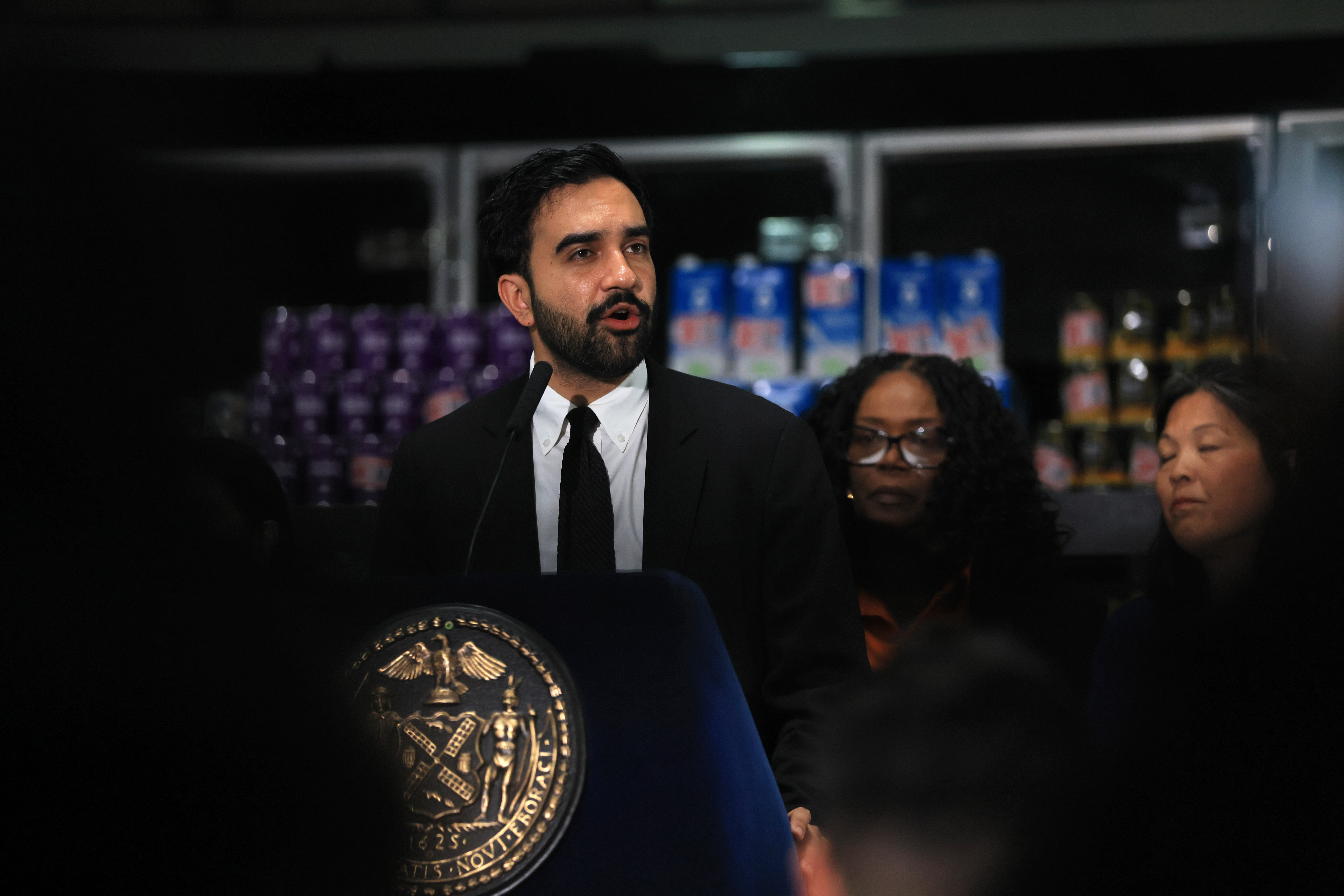
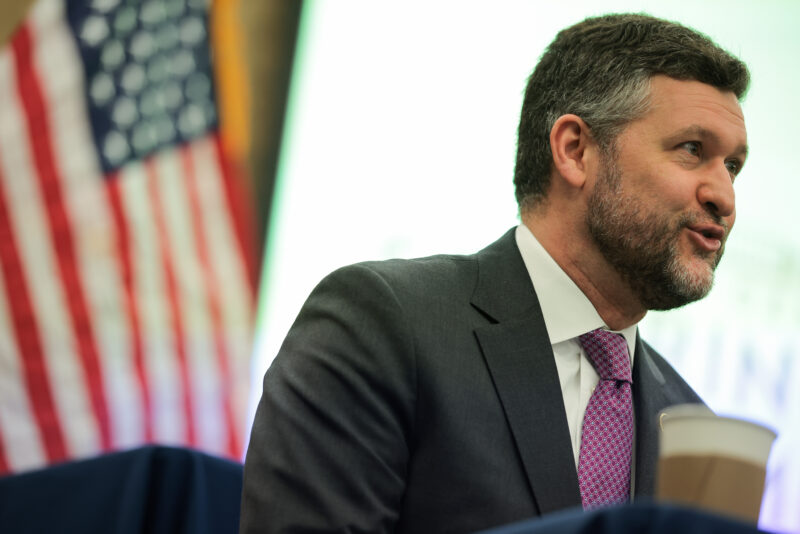
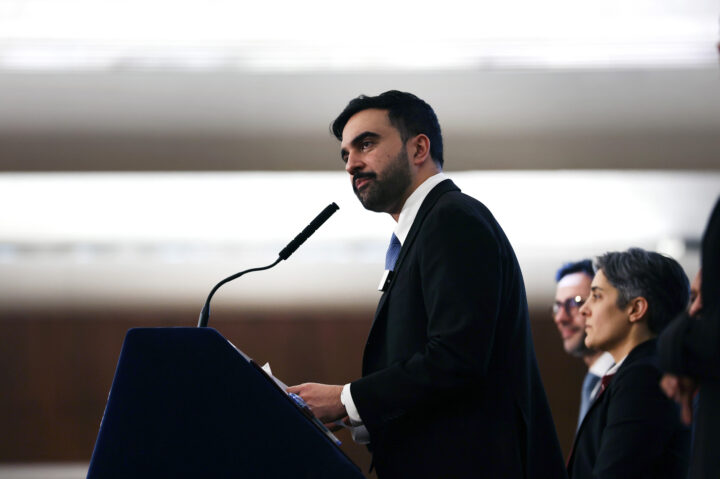
New York City Mayor Zohran Mamdani speaks at a "Rental Ripoff" hearing at Fordham University in the Bronx borough of New York on March 11, 2026, in New York City.


 Add JewishInsider on Google
Good Tuesday morning.
In today’s Daily Kickoff, we cover last night’s debate between Rep. Dan Goldman and Brad Lander, as the two sparred over Israel, and report on New York City Mayor Zohran Mamdani’s backing of a congressional candidate with a history of posting extremist sentiments online, including promoting a post questioning Israel’s existence. We explore the challenges posed to Israel’s security by Hezbollah’s new drones, and look at how Rep. Ro Khanna’s leftward shift on Israel has divided Jewish residents of his Silicon Valley district. Also in today’s Daily Kickoff: Gov. Janet Mills, Marc Rowan and Barry Diller.
Today’s Daily Kickoff was curated by JI Executive Editor Melissa Weiss and Israel Editor Tamara Zieve, with assists from Danielle Cohen-Kanik and Marc Rod. Have a tip? Email us here.
What We’re Watching
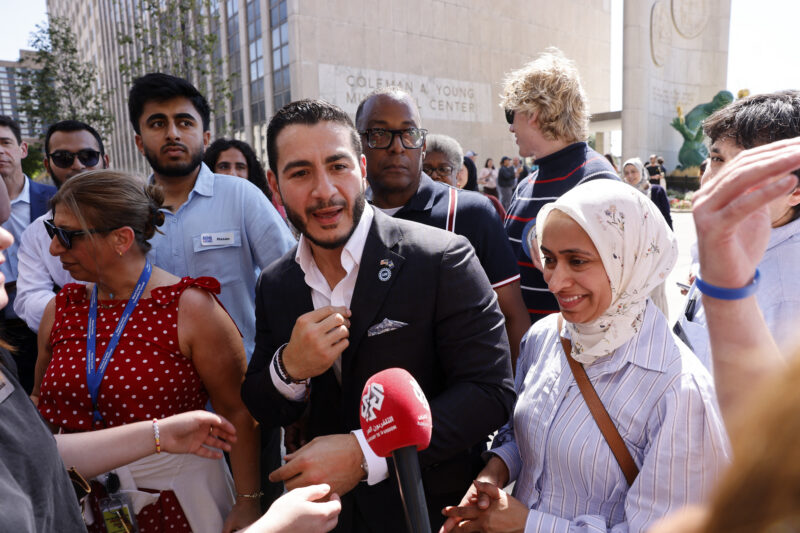
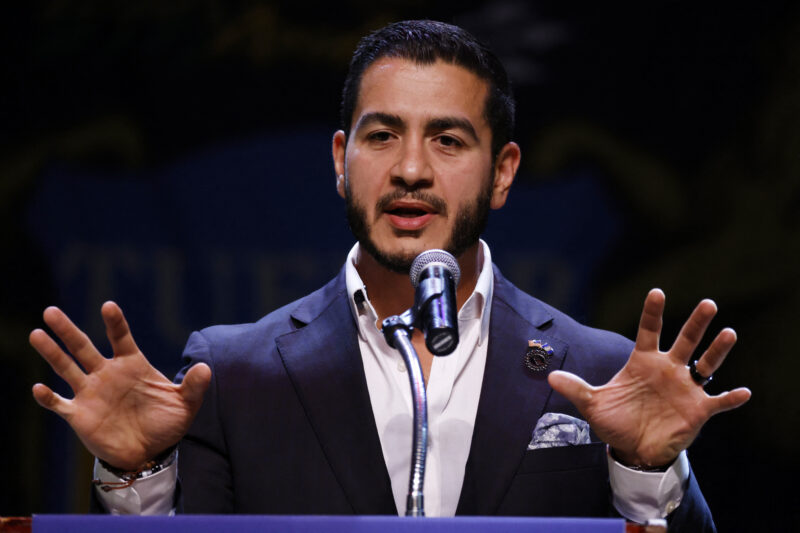
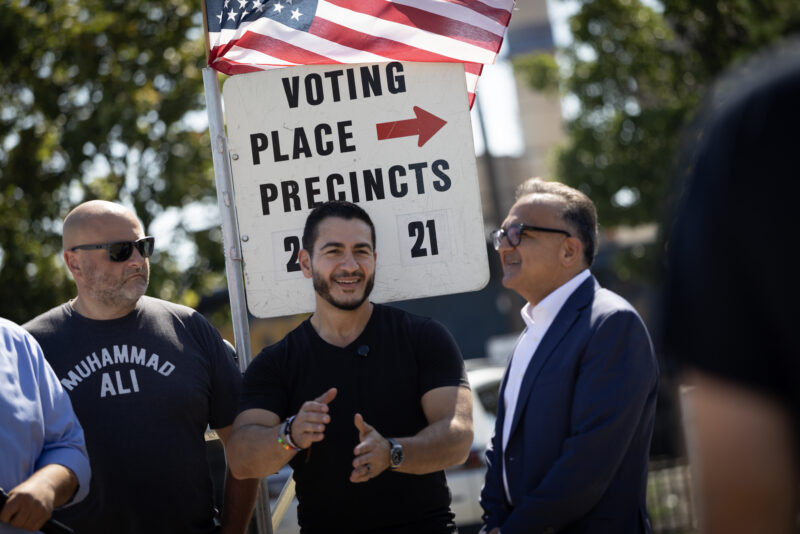
- It’s primary day in California, Iowa, Montana, New Jersey, New Mexico and South Dakota. We’ll be closely following the results as polls close this evening, with an eye toward the results of the Los Angeles mayoral and controller elections, as well as the NJ-12 Democratic primary, where Adam Hamawy, who is under scrutiny for his past ties to Islamist extremists, is the front-runner in the race to succeed retiring Rep. Bonnie Watson Coleman (D-NJ).
- The American Jewish Committee’s Global Forum concludes today. Speakers at the closing plenary include the Justice Department’s Harmeet Dhillon, Sens. John Fetterman (D-PA) and Dave McCormick (R-PA), and Reps. Mike Lawler (R-NY) and Josh Gottheimer (D-NJ).
- Secretary of State Marco Rubio is slated to testify this morning before the Senate Foreign Relations Committee on the State Department’s budget. This afternoon, Rubio will appear before the House Appropriations Committee for a separate hearing on the department’s budget. Following Rubio, acting Attorney General Todd Blanche will appear before the House committee for a hearing on the Justice Department’s upcoming budget.
- Homeland Security Secretary Markwayne Mullin is set to testify before the Senate Appropriations Committee this afternoon on his department’s budget for the upcoming year.
- The Senate Intelligence Committee is holding a closed-door intel briefing today.
- Roman Gofman begins his tenure today as head of the Mossad, after Israel’s High Court rejected two petitions challenging his appointment. He was sworn in earlier today at a command-change ceremony at the Mossad headquarters that was attended by Israeli Prime Minister Benjamin Netanyahu and Israeli President Isaac Herzog.
- The Israel Democracy Institute’s Eli Hurvitz Conference on Economy and Society kicked off earlier today in Jerusalem. Speakers include former Prime Ministers Naftali Bennett and Yair Lapid, as well as MKs Avigdor Liberman, Benny Gantz and Mansour Abbas. Read more here.
What You Should Know
A QUICK WORD WITH JI’S MATTHEW KASSEL
As the 2028 presidential campaign season nears, a handful of prospective candidates from the Democratic Party’s left flank are raising their profiles with efforts to shape a more critical approach to U.S. policy toward Israel.
Sens. Chris Van Hollen (D-MD) and Chris Murphy (D-CT), as well as Rep. Ro Khanna (D-CA), all of whom are seen as potential presidential prospects, have been among the party’s most prominent critics of Israel on Capitol Hill amid a marked decline in Democratic support for the Jewish state.
Recent moves suggest they are each testing voter appetite for a possible White House campaign. Even as they are not considered top-tier contenders in what is likely to be a crowded primary field, history has shown they could be positioning themselves for a Cabinet role — particularly if they prove successful in driving the national conversation on the debate stage and other forums.
Murphy, for instance, released a book last month, Crisis of the Common Good: The Fight for Meaning and Connection in a Broken America, of the sort that typically presages a bid for higher office. The senator has otherwise continued to promote what he terms a “forward-looking foreign policy,” which has included an increasingly antagonistic assessment of Israel and its relationship with the United States.
Van Hollen, meanwhile, published a deeply disputed op-ed in The New York Times last week that argued for wholly jettisoning the Democratic Party’s “unconditional support to Israeli governments” that, he warned, has “increasingly undermined American interests and values.”
candidate concerns
Mamdani-backed House candidate has inflammatory past and extremist reading list
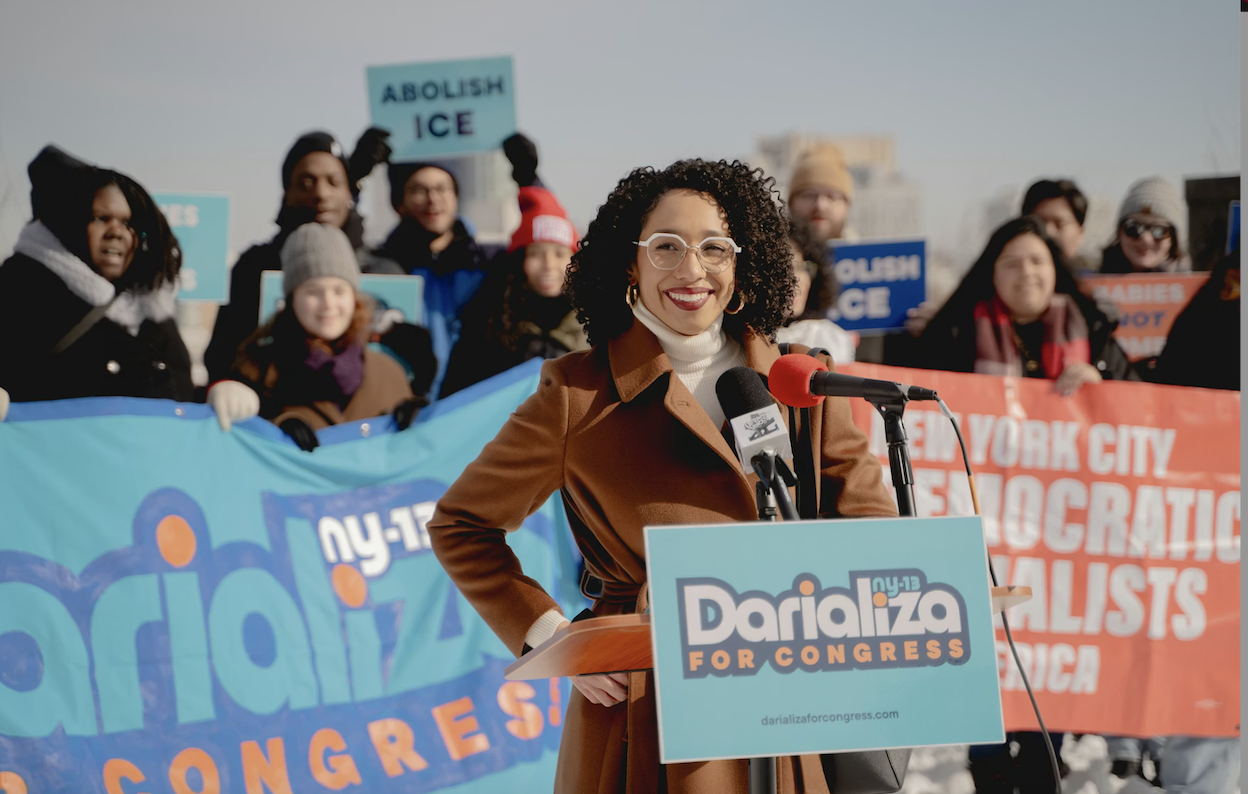
New York City Mayor Zohran Mamdani’s favored candidate to topple Rep. Adriano Espaillat (D-NY) has a history of extremist sentiments — with commentary assailing Israel, interracial relationships, “white liberals” and the U.S. flag and military, Jewish Insider’s Will Bredderman reports.
Problematic posts: Inflammatory posts by Darializa Avila Chevalier, which have received coverage in the New York Post, Politico and AM New York, include: lambasting Black and Arab men for “fetishizing ugly colonizer women,” boasting of wiping her hand on the American flag, attacking former President Joe Biden as a “rapist,” declaring “f*** [Vice President] Kamala Harris,” demanding “No more police at all ever,” asserting Mayor Bill de Blasio “hates Black people” and is “a piece of shit” and calling American military veterans “child murderers” guilty of “war crimes.” She also shared a post stating that “Israel doesn’t exist.”
Bonus: American Priorities PAC plans to spend $2 million to boost three left-wing candidates backed by Mamdani. In addition to Avila Chevalier, the super PAC plans to run ads backing congressional candidates Brad Lander and Claire Valdez.
DEBATE WATCH
Lander and Goldman spar over Israel in televised showdown

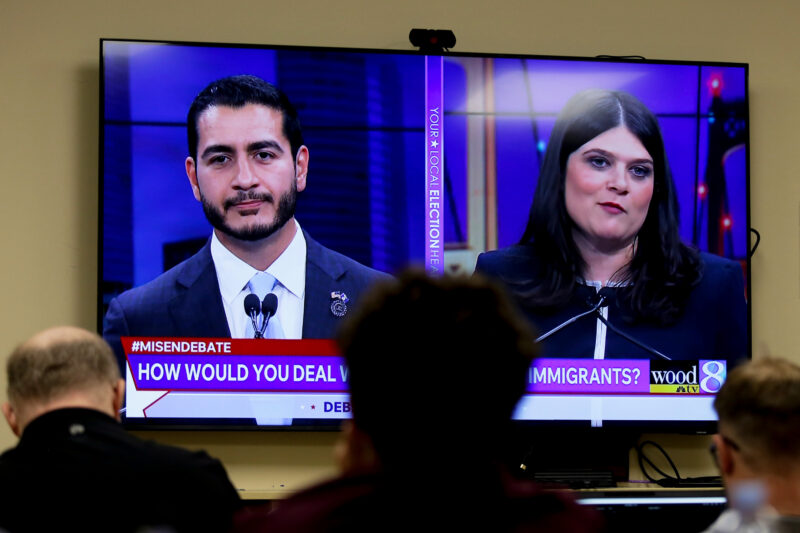
Israel was on the menu — in more ways than one — in former New York City Comptroller Brad Lander’s televised clash with Rep. Dan Goldman (D-NY) Monday night as Lander seeks to oust the incumbent congressman in this month’s Democratic primary. The Jewish state was the centerpiece over which the two congressional contenders clashed for much of the hour-long debate on Spectrum News NY1, Jewish Insider’s Will Bredderman reports.
Fiery feud: Lander criticized Goldman’s support for former President Joe Biden’s policy toward the conflict in Gaza, touted his own pledge to deny further military aid to Israel and voiced sympathy for the successful push to ban Israeli products from the Park Slope Food Coop, though the self-described progressive Zionist maintained he still opposed the effort. So intensely did the two chew over the issue that Goldman at one point burst out, “Israel is not the most important issue in this district!” But when asked for the best place in the Brooklyn-Manhattan district to break bread, Lander returned to the Holy Land once more: or rather, to its cuisine. “I love Masalawala on Fifth Avenue, I love Miriam — I’ll go with those two,” the candidate answered.
HARD RO TO HOE
Khanna’s hostile turn toward Israel divides Silicon Valley Jews

Rep. Ro Khanna’s (D-CA) emergence as a leading Democratic Party critic of Israel — while affiliating with and embracing individuals and groups that have been accused of antisemitism and support for terrorism — is creating divisions within the local Jewish community in his Silicon Valley-area district, Jewish Insider’s Marc Rod reports.
State of play: While Khanna maintains unified support from Jewish elected officials in the district, other Jewish community leaders say they feel abandoned, ignored and even attacked by their congressman, who they once saw as an ally, as he faces what could be his most credible primary challenge in years.
On the air: Pennsylvania Gov. Josh Shapiro defended Israel’s standing as a Jewish state, telling CNN in an interview aired on Monday that the country faces a level of scrutiny and attack over its religious character not applied to the dozens of Muslim states throughout the region, Jewish Insider’s Marc Rod reports.
GROWING THREAT
Cheap, deadly and hard to spot: Hezbollah’s drones create urgent security threat for Israel

One of Israel’s most urgent emerging security threats is not a sophisticated missile or advanced weapons system, but a small, cheap drone that can be bought online and easily assembled. Hezbollah’s use of first-person view drones (FPVs) — a battlefield tactic widely utilized in the Russia-Ukraine war and now adopted by the Iran-backed terror group — has caused Israeli casualties, threatens civilians and exposed vulnerabilities in Israel’s air-defense systems, including the Iron Dome. The drones are small and inexpensive, but difficult to detect, experts tell Jewish Insider’s Matthew Shea.
Rethinking strategy: The growing threat has caught the IDF off guard and is forcing Israeli officials to rethink how they protect soldiers, border communities and critical defense infrastructure during the fragile partial ceasefire between Israel and Hezbollah. “These are very simple, unsophisticated drones,” Yaakov Katz, a senior fellow at the Jewish People Policy Institute, told JI. “Imagine a person can watch with goggles almost and be the eyes of the drone, see what the drone sees and literally fly it to wherever it wants its target to be.”
Beirut breakthrough: President Donald Trump announced on Monday that Israel would not carry out strikes against Hezbollah in Beirut in exchange for the terror group halting its persistent attacks on northern Israel and IDF soldiers, cutting off imminent Israeli plans to expand its operations against Hezbollah in the Lebanese capital, JI’s Emily Jacobs reports.
IN OPPOSITION
JINSA CEO Michael Makovsky: ‘U.S. has lost the plot on Iran’
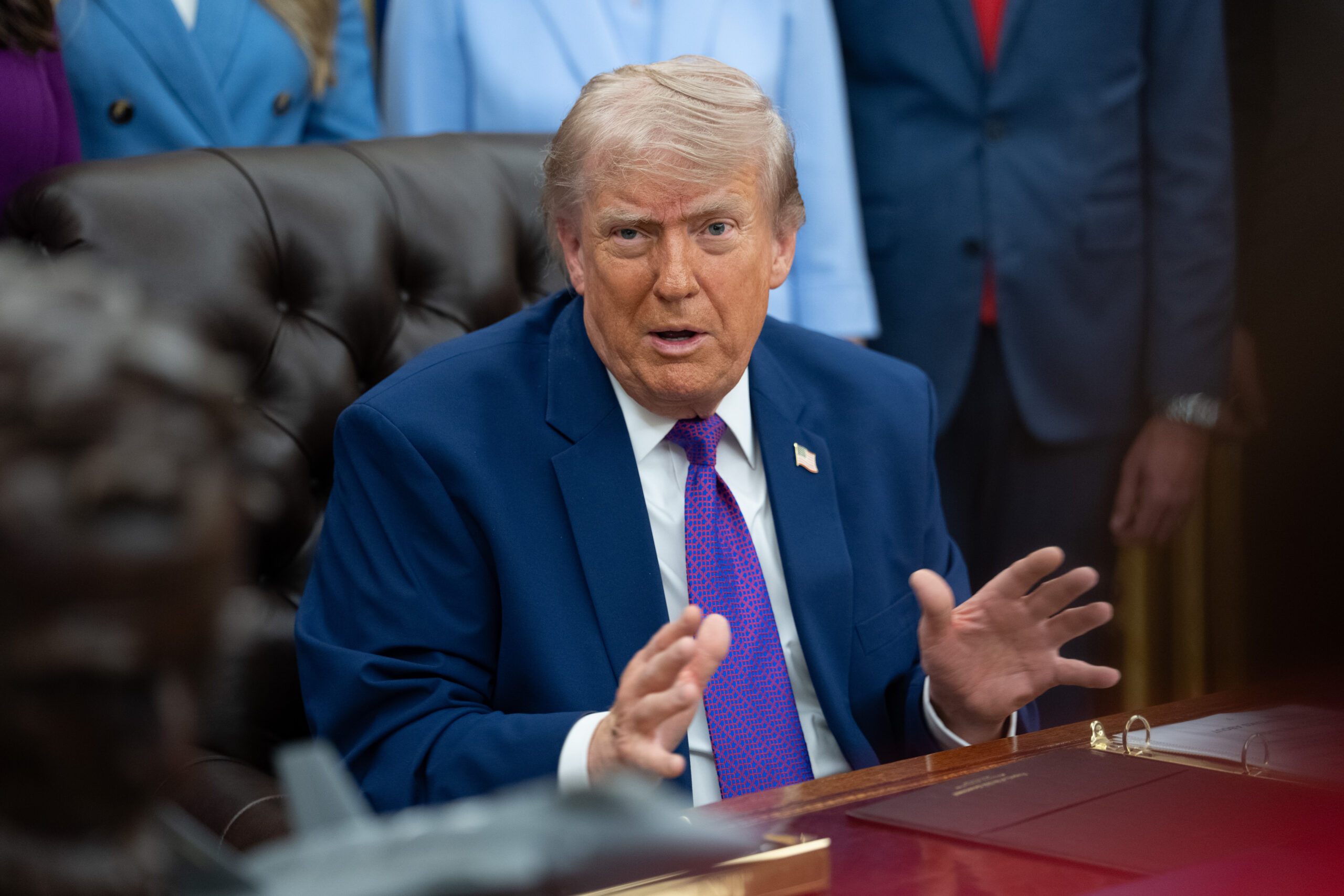
Michael Makovsky, the president and CEO of the hawkish Jewish Institute for National Security of America, criticized the Trump administration’s recent handling of the U.S. war in Iran, expressing concern about the possibility of a broader peace deal that does not address key issues. “The U.S. has lost the plot on Iran,” Makovsky told Jewish Insider’s Emily Jacobs on Friday.
A different tack: “After significant military achievements, declaring the ceasefire was a huge mistake, and there was too much hype about what pressure a blockade alone would achieve,” Makovsky said. “The net result has reduced U.S. leverage, and the perception that America is vulnerable if gasoline nears $5 per gallon.” Makovsky said that the U.S. “should not pursue a deal” with Iran, arguing that such an agreement “wouldn’t be worth the paper it’s written on.” He said that a deal “will only enrich and strengthen the regime and demoralize the Iranian people.”
ON THE HILL
Far left, far right rebel over defense bill provision on U.S.-Israel cooperation

A relatively routine provision that aims to facilitate expanded U.S. cooperation with Israel in the House’s draft of the 2027 National Defense Authorization Act has fueled outrage from the far left and far right, with some prominent figures making inaccurate claims that the provision would subjugate the U.S. military to Israel or otherwise compromise U.S. sovereignty, Jewish Insider’s Marc Rod reports.
The situation: Critics are objecting to a provision in the bill, the “United States-Israel Defense Technology Cooperation Initiative,” which aims to expand and accelerate joint U.S.-Israel technological development and industrial cooperation; allow the U.S. to quickly adopt proven Israeli technologies; and promote joint training exercises, information sharing and co-production in areas including defense manufacturing, anti-tunneling, air- and missile-defense and various advanced technologies. Many such programs are already in place, and former U.S. Ambassador to Israel Daniel Shapiro, now a distinguished fellow at the Atlantic Council, called the provision “quite unremarkable.”
Aid to trade: U.S. Ambassador to Israel Mike Huckabee said on X that the next U.S. memorandum of understanding with Israel will end U.S. aid to Israel in favor of prioritizing trade.
Worthy Reads
Tech-tonic Shift: In The Atlantic, Yeganeh Torbati and Bozorgmehr Sharafedin explore how Iran’s crackdowns on tech startups dealt a death blow to the industry as it was on the rise. “The story of Iran’s start-ups could have been a triumphant one for Iran’s private sector, and for a young generation seeking opportunity and connection with the outside world. Instead, this is a story of thievery. … Iran’s tech entrepreneurs had built their businesses on a paradox. They were inspired by the Silicon Valley mythos of fierce competition, user-first design, and disruption. But Silicon Valley had arisen in a time and place where access to infrastructure, especially the internet, was relatively free and open. Iran’s economy was built on closed networks.” [TheAtlantic]
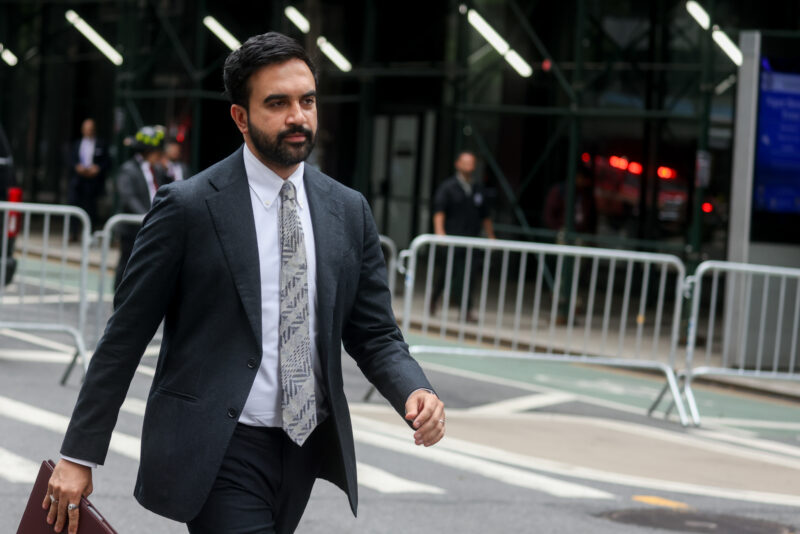
Not Easy Being Green: The Financial Times’ Anna Gross and Rachel Rees do a deep dive into the political evolution of U.K. Green Party leader Zack Polanski, who has come under fire amid numerous reports that he exaggerated or misrepresented elements of his background. “Within months of being overlooked [as a Liberal Democrat candidate], Polanski had joined the Green Party. He now describes himself as an ‘eco-populist,’ and has become the most popular figure on the left, fighting to reduce inequality, lower living costs and oppose Israel’s actions in Gaza. But Polanski has faced allegations that he misled the public about his career, his legal address and whether he voted in local elections.” [FT]
Survivor’s Story: In eJewishPhilanthropy, British-born Nova music festival survivor Maayan Dee describes her experience marching in Sunday’s Israel Day on Fifth parade in Manhattan. “Trauma isolates. It makes you feel that no one can understand, that the world keeps spinning while you’re frozen in the same field, on the same ground, that same Saturday morning. And after Oct. 7, alongside the personal pain, came something else: the feeling that the world doesn’t see us, that our story is being erased. But then something like this happens. You plant your feet on a street in Manhattan and you see a sea of blue and white. Jews and non-Jews who had no obligation to be there, and yet they were.” [eJP]
Word on the Street
President Donald Trump reportedly went on an expletive-laden tirade against Israeli Prime Minister Benjamin Netanyahu during a phone call on Monday over the Israeli leader’s plans, since scrapped, to escalate military activities in Lebanon; a U.S. official speaking to Axios summed up Trump’s comments to Netanyahu as, “You’re f**king crazy. You’d be in prison if it weren’t for me. I’m saving your ass. Everybody hates you now. Everybody hates Israel because of this”…
Israeli journalist Amit Segal said earlier today that the Axios report was “inaccurate,” noting that “Trump did not make personal remarks about jail or claim Netanyahu is hated globally” but indicated that “defending Israel’s global position is difficult and breeds hatred”…
A federal prosecutor told a judge in New York that the government may charge additional people in a wide-ranging terror probe following the arrest of the head of an Iran-backed Iraqi militia…
The Wall Street Journal looks at the White House’s efforts to pressure Oman, which has largely stayed neutral in the conflict with Iran, to side with the U.S. and cut its relations with Tehran…
Speaking to reporters on Monday, Sen. John Cornyn (R-TX) blamed low turnout for his loss to Attorney General Ken Paxton in the state’s GOP Senate primary last week, and said that Trump’s endorsement of Paxton “wasn’t as [impactful] as he thought.” Cornyn said he “absolutely” believes that Paxton’s nomination endangers the seat, and that he stands by his comments during the campaign…
Republican Jewish Coalition CEO Matt Brooks celebrated his group’s role in ousting Rep. Thomas Massie (R-KY) in his primary election earlier this month at the organization’s “America 250”-themed gala Sunday night, JI’s Haley Cohen reports…
The New York Times does a deep dive into the congressional race pitting far-left activist Claire Valdez against Brooklyn Borough President Antonio Reynoso, who was endorsed by outgoing Rep. Nydia Velázquez (D-NY), as the race splits members of New York City Mayor Zohran Mamdani’s coalition…
Maine Gov. Janet Mills said in an interview with a local news outlet that she remains on the ballot in the state’s Democratic Senate primary, amid a new report that Graham Platner, who had been leading Mills in primary polling prior to her suspension of her campaign, had inappropriately communicated with at least half a dozen women while married to his wife…
Apollo Global Management CEO Marc Rowan met on Monday in Qatar with Sheikh Faisal bin Thani bin Faisal Al-Thani, the Gulf state’s minister of commerce…
Barry Diller’s People Inc. is preparing an $18 billion bid to take over MGM Resorts…
In a speech addressing antisemitism in Canada, Prime Minister Mark Carney said that the country’s “civic compact is failing Jewish Canadians; the Canadian premier also announced the establishment of a new Ministerial Advisory Council on Rights, Equality and Inclusion…
The Associated Press spotlights efforts by residents of Bedzin, Poland, and historians in the country to preserve World War II-era artifacts, including a building in what was the city’s Jewish ghetto that had secret bunkers and acted as a hub for Jewish resistance fighters…
El Al will resume its flights between Israel and San Francisco, more than six years after the route was paused amid the onset of the COVID-19 pandemic; the airline will run three weekly nonstop flights — under the flight number LY49, in tribute to the San Francisco 49ers — between Ben Gurion Airport and SFO…
Israel’s Defense Ministry said that France has barred official Israeli participation in the upcoming Eurosatory defense exhibition in Paris taking place later this month…
Thousands of Haredi demonstrators protesting Israel’s proposed draft laws crippled transportation in parts of the country on Monday, blocking highways and train tracks between Tel Aviv and Jerusalem…
The Associated Press reports on rising levels of child marriage in the Gaza Strip since the start of the Israel-Hamas war…
A Russian cargo ship arrived in Syria last month to resupply Moscow’s air base in the country, the first time it has done so since the fall of the Assad regime, signaling Russian officials’ intention to maintain the installation under the government of Ahmad al-Sharaa…
Pic of the Day

A memorial ceremony at the Israeli Embassy in Washington on Monday marking the one-year anniversary of the murders of Israeli Embassy staffers Sarah Milgrim and Yaron Lischinsky was filled with many tears, some anger and even a few laughs, JI’s Marc Rod reports.
Milgrim’s father, Robert, told an assembled crowd of dignitaries, Jewish leaders and D.C. staffers that he was saddened not only by the death of his daughter but by the ways in which her death exemplifies the challenges facing every Jewish community.
Birthdays

Aerospace engineer and a former NASA astronaut, he flew on three shuttle missions and took a memento from the U.S. Holocaust Memorial Museum into space, Mark L. Polansky (right) turns 70…
Former member of the British Parliament from Manchester and then a member of European Parliament, David Anthony Gerald Sumberg turns 85… Co-founder of ReelAbilities, a film festival by, or about, people with disabilities, Anita Altman turns 81… Israeli entrepreneur and inventor, founder of Indigo Digital Press and known as the father of commercial digital printing, Benny Landa turns 80… Johns Hopkins University professor and a pioneer in the field of cancer genomics, Dr. Bert Vogelstein turns 77… Writer-at-large for New York magazine since 2011, following a 31-year career at The New York Times, Frank Rich turns 77… SVP of institutional advancement at Brandeis University, Jordan E. Tannenbaum… Commissioner of the National Hockey League since 1993, Gary Bettman turns 74… Holiday and weekend cantor at Los Angeles Jewish Health (formerly Los Angeles Jewish Home for the Aging), Ben Zion Kogen… Former board chair of Sapir Academic College in the western Negev, he was one of Israel’s senior peace negotiators at the Camp David summit in 2000, Gilead Sher turns 73… Founder of Newark, N.J.-based IDT Corp and numerous affiliates and spinoffs, Howard S. Jonas turns 70… Dinorah Cecilia Baroody… General manager of The Piedmont Club, a Spartanburg, S.C., private social club, Davina Weinstein… Radio and television talk show host, Andrew Joseph “Andy” Cohen turns 58… President of Marvel Studios and chief creative officer for Marvel Comics, Marvel Television and Marvel Animation, Kevin Feige turns 53… Special counsel focused on land use and zoning at NYC-based law firm Goldstein Hall, Jessica Ashenberg Loeser… SVP of EnTrust Global, Jordan David Kaplan… Director of technology at Santa Monica, Calif.-based Action Network, a tech platform for progressive causes, Jason S. Rosenbaum… Woman Grandmaster chess player, she won the 2004 Israel Women’s Chess Championship, Bella Igla Gesser turns 41… Equestrian show jumper, she represented Israel at the 2020 Summer Olympics in Tokyo, Danielle “Dani” Goldstein Waldman turns 41… Co-founder and former CEO of The Wing, now the owner of The Six Bells (“a new old country store”) in Brooklyn, Audrey H. Gelman turns 39… Founder and CEO at Button AI, a company for AI paralegals that settle estates, Jared R. Fleitman… CEO and co-founder at Platform Cannabis Advisors, Benjamin G. Sheridan… Theater, television and film actor best known for his lead role in “SpongeBob SquarePants: The Broadway Musical,” Ethan Samuel Slater turns 34… Israeli K-pop singer, whose first two songs when she was 17 both topped Israeli airplay charts, Ella-Lee Lahav turns 23…
Plus, Mamdani allies bankroll a $10M anti-AIPAC effort

Fatemeh Bahrami/Anadolu via Getty Images
Smoke rises from the area after it was targeted in attacks as a series of explosions are heard in Tehran, Iran on March 01, 2026.
👋 Good Tuesday morning, and happy Purim 🎭
In today’s Daily Kickoff, we report on the latest developments in the Middle East as the conflict with Iran enters its fourth day, and preview the primaries taking place today in Texas and North Carolina. We report on the split on Capitol Hill over the Trump administration’s military moves against Iran, and spotlight the backers of the newly created American Priorities PAC, which has ties to allies of New York City Mayor Zohran Mamdani and is opposing pro-Israel candidates. Also in today’s Daily Kickoff: the Yeshiva University men’s basketball team, Zach Yadegari and Kate Schmier.
Today’s Daily Kickoff was curated by JI Executive Editor Melissa Weiss and Israel Editor Tamara Zieve, with an assist from Danielle Cohen-Kanik. Have a tip? Email us here.
What We’re Watching
- We are monitoring developments across the Middle East as the U.S. and Israel continue to strike Iranian targets, Iran launches attacks against population centers in Israel and Israel strikes Hezbollah targets in Lebanon. Multiple sirens have sounded across central Israel, including Tel Aviv and Jerusalem, throughout the morning as the IDF intercepted the barrages being fired from Iran.
- German Chancellor Friedrich Merz is in Washington today. He’ll meet with President Donald Trump at 11 a.m.
- On Capitol Hill, Secretary of State Marco Rubio, Defense Secretary Pete Hegseth, CIA Director John Ratcliffe, and Gen. Dan Caine, chairman of the Joint Chiefs of Staff, are expected to brief members of the Senate and House on the war in Iran.
- Elsewhere on the Hill, Elbridge Colby, the Pentagon’s under secretary of defense for policy, is testifying before the Senate Armed Services Committee on the Trump administration’s national defense strategy.
- The Capitol Jewish Forum is hosting its annual Purim celebration on the Hill this afternoon, with more than a dozen Jewish legislators, including Senate Minority Leader Chuck Schumer (D-NY), slated to attend.
- The first primaries of the 2026 election cycle are also taking place today. In North Carolina, Rep. Valerie Foushee (D-NC) is facing far-left anti-Israel activist Nida Allam. Read more below.
- In the Texas Senate primary, Rep. Jasmine Crockett (D-TX) faces state Sen. James Talarico; On the Republican side, Sen. John Cornyn (R-TX) faces primary challenges from Rep. Wesley Hunt (R-TX) and scandal-plagued right-wing Texas Attorney General Ken Paxton. Read more here and here.
- In the state’s 23rd Congressional District, Rep. Tony Gonzales (R-TX), also plagued by scandal amid allegations he had an affair with a staffer who later died by suicide, faces his second primary challenge from right-wing social media influencer Brandon Herrera. Read more here.
- Rep. Al Green (D-TX), who has become a consistent detractor of Israel in the House, faces newly elected Rep. Christian Menefee (D-TX), who has built solid relationships with the Houston-area Jewish community. Read more here.
- Rep. Dan Crenshaw (R-TX), a Republican hawk, faces a serious challenge from state Rep. Steve Toth, who is running to his right. Both candidates have been supportive of Israel.
- And Rep. Julie Johnson (D-TX) faces a difficult renomination fight against former Rep. Colin Allred (D-TX), who vacated the seat to run unsuccessfully for the Senate in 2024.
- It’s also primary day in Arkansas and Mississippi — but there are no major congressional primaries of note in either state.
What You Should Know
A QUICK WORD WITH JI’S MARC ROD
In the closing message of her campaign ahead of the North Carolina Democratic primary today, Durham County Commissioner Nida Allam, a far-left antagonist of Israel, is leaning into criticism of the war against Iran.
“President Trump just used our taxpayer dollars to bomb a school in Iran, killing over 100 elementary school children and starting another endless war abroad. This is reprehensible, and I strongly condemn it, as should every elected official,” Allam said in a direct-to-camera video ad posted on social media on Monday — despite no evidence that the U.S. or Israel were responsible for the strike.
Allam, who is Muslim, vowed that she would never accept support from defense contractors or pro-Israel groups, and said she “opposed these ‘forever wars’ my entire career, and I hope to earn your vote to be your proudly uncompromised pro-peace leader in Washington.”
By contrast, Rep. Valerie Foushee (D-NC), aiming to fend off a primary challenge from Allam, offered a condemnation of the “brutal and repressive” Iranian regime in a statement on Monday, while arguing that its “abuses do not give the president the authority to launch military strikes without Congressional approval.” She said Congress must vote to bring the war to an end.
In an initial statement on X over the weekend, Foushee issued an unequivocal condemnation of the operation, calling it “an unconstitutional escalation that risks dragging the United States into another catastrophic and endless war in the Middle East” that “ignores the will of the American people and recklessly puts our servicemembers in harm’s way” — without making mention of the Iranian regime.
Political observers said the Iran conflict could give late momentum to Allam. Given the leftward lean of the 4th Congressional District and Allam’s positioning to the left of Foushee — particularly on Middle East policy — it could very well make a difference,” Chris Cooper, a political scientist at Western Carolina University, told JI’s Matthew Kassel on Monday. “Thousands of votes have already been cast, but for late deciders, this is exactly the kind of issue that could help tilt a voter to one side or the other. It’s hard to get more salient than war.”
In 2022, Foushee won the seat in the 4th Congressional District against Allam with significant backing from the AIPAC-linked United Democracy Project super PAC, but Foushee has taken a more critical posture towards Israel over the last year. This year, significant outside spending has flowed into the race on both sides.
STATE OF PLAY
Day 4: Decrease in Iranian missile strikes on Israel result of targeting launchers, IDF says

A notable decrease in the number and frequency of Iranian missile strikes at Israel is the result of a focused strategy of hunting and taking out its launchers, Lt.-Col. Nadav Shoshani, the IDF’s spokesperson for international media, said on Tuesday, Jewish Insider’s Lahav Harkov reports. “The missile and launcher hunt is happening in real time,” Shoshani told reporters. “We have been able to narrow [Iran’s] capability to fire missiles toward us. … We are putting our focus on continuing to do so in the coming days.”
Military update: “We were able to take out dozens of launchers,” since the operation began on Saturday, Shoshani said, adding that Iran currently has “a lack of capability to fire in large amounts” and that there is a diminished rate of fire. At the same time, he noted that part of the reduction in missile launchers may be attributed to Iran trying to ensure it can keep the war going over the coming weeks.
SUSTAINED CAMPAIGN
Trump, defense officials keep Iran operation open-ended

President Donald Trump and senior U.S. defense officials laid out an open-ended timeline for the ongoing operation against Iran on Monday, announcing more U.S. forces are headed to the region to carry out the American and Israeli campaign aimed at dismantling Tehran’s long-range strike capabilities and nuclear ambitions, Jewish Insider’s Matthew Shea and Emily Jacobs report.
Trump talk: Speaking to reporters at the White House on Monday morning, Trump said that U.S. forces were “already substantially ahead of our time projections” with their mission in Iran, but added that the American military was prepared to continue the operation beyond his initial four-to-five week timeline. “Whatever the time is, it’s OK. Whatever it takes,” Trump said at a Medal of Honor ceremony. “Right from the beginning, we projected four to five weeks, but we have capability to go far longer than that. We’ll do it.”
Caine’s comments: Adm. Brad Cooper, head of CENTCOM, “will receive additional forces even today,” said Gen. Dan Caine, chairman of the Joint Chiefs of Staff, during a separate press briefing alongside Defense Secretary Pete Hegseth. “This rapid buildup of forces demonstrated the joint forces ability to adapt and project power at the time and place of our nation’s choosing.” Caine also made clear the weekend barrage was only the beginning.
Team effort: In his first interview since the U.S. and Israel launched their joint military campaign against Iran, Israeli Prime Minister Benjamin Netanyahu defended the timing of the operation’s launch and rebuffed the notion that he decisively pushed Trump to take action, JI’s Matthew Shea reports.
DUELING NARRATIVES
Congressional leaders split over whether U.S. faced imminent threat from Iran
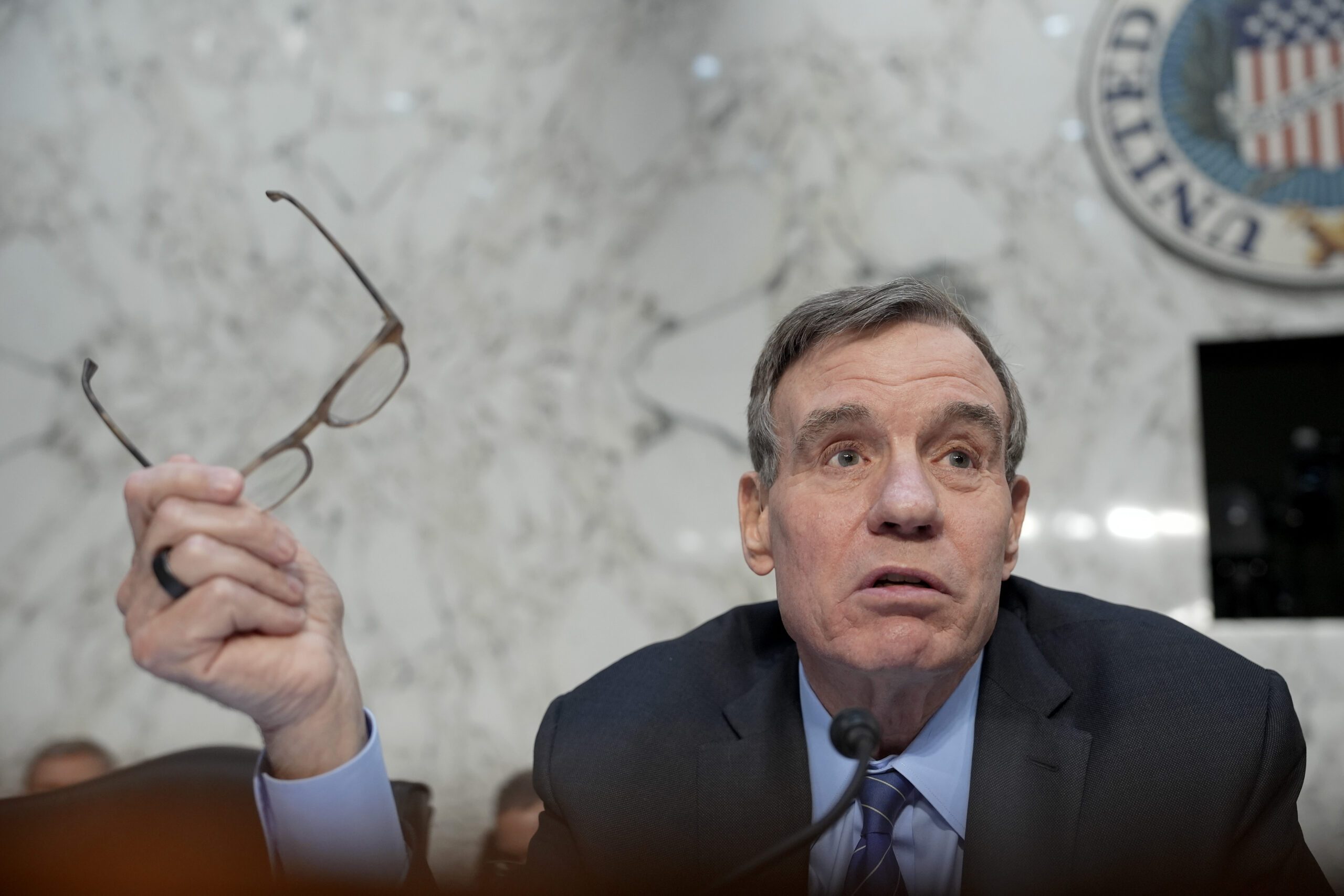
House Speaker Mike Johnson (R-LA) and Senate Intelligence Committee Vice Chairman Sen. Mark Warner (D-VA) emerged from a classified briefing with Cabinet officials on Monday split over whether the U.S. faced an imminent threat from Iran that necessitated and permitted the president to take military action under U.S. statute and the Constitution, Jewish Insider’s Marc Rod reports.
Johnson’s takeaway: “The most critical point is that this was a defensive measure, a defensive operation,” Johnson said. “Israel was determined to act in their own defense here, with or without American support. Why? Because Israel faced what they deemed to be an existential threat. Iran was building missiles at a radical, rapid clip, to the point where our allies in the region do not keep up.”
Warner’s worry: Warner said that the war is “a war of choice that has been acknowledged by others [that] was dictated by Israel’s goals and timelines. Israel is a great ally of America. I stand firmly with Israel, but I believe at the end of the day, when we are talking about putting American soldiers in harm’s way, when we have American casualties and expectations of more, there needs to be the proof of an imminent threat to American interests. I still don’t think that standard has been met.”
SQUARING OFF
Mamdani allies, deep-pocketed donors mobilize millions for anti-AIPAC effort
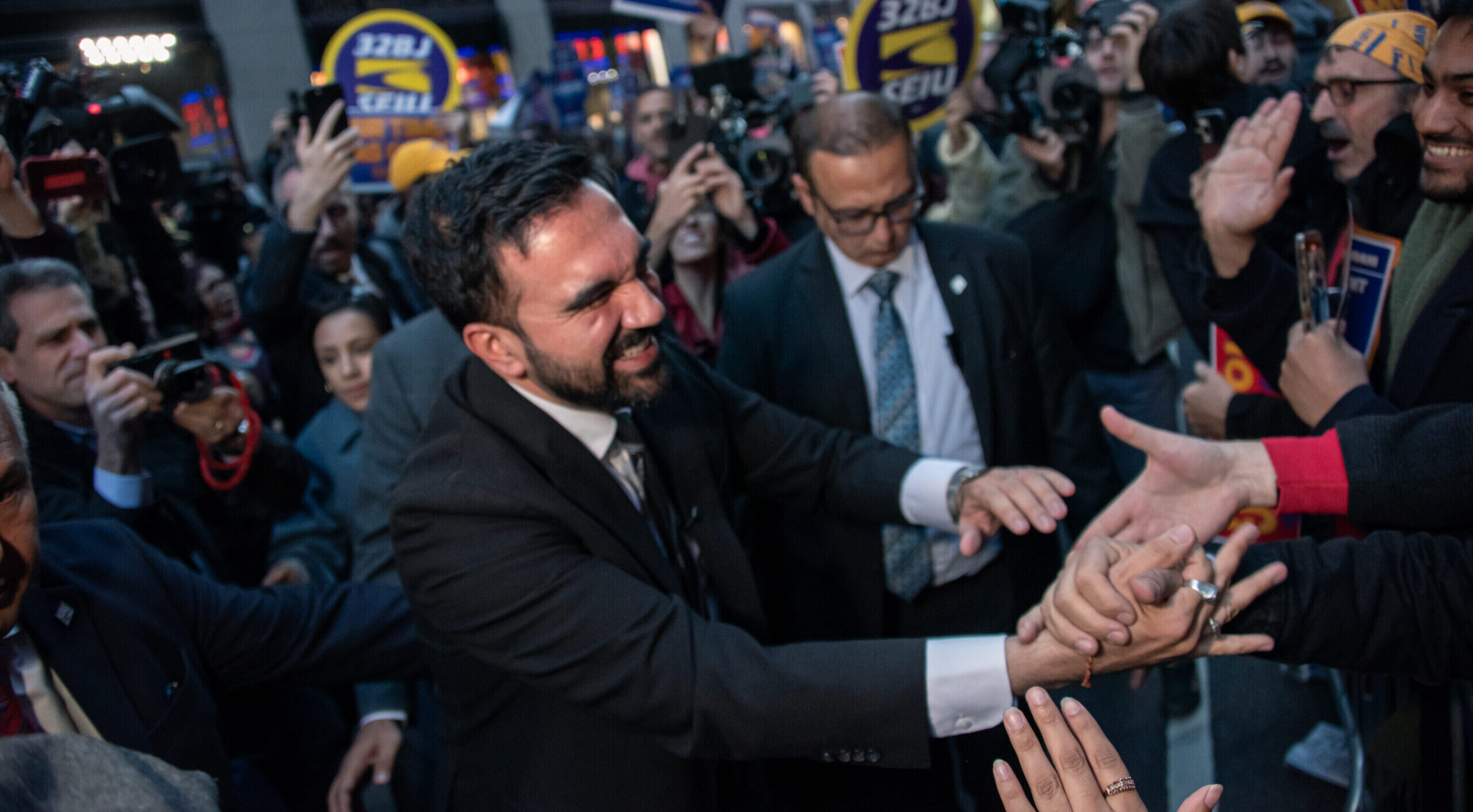
Three figures linked to New York City Mayor Zohran Mamdani — two Silicon Valley entrepreneurs and a Brooklyn political operative — have joined forces with a bevy of wealthy business leaders to pump millions into a new political action committee dedicated to battling AIPAC, Jewish Insider’s Will Bredderman reports.
Follow the money: American Priorities PAC has raised $2,050,000 to date and spent a quarter of it so far boosting Democrat Nida Allam, a vocal detractor of Israel, in her bid to oust Rep. Valerie Foushee (D-NC) in North Carolina’s 4th Congressional District. Filings with the Federal Election Commission show another $67,000 has gone toward promoting the candidacy of the Rev. Frederick Haynes III, the pastor of Rep. Jasmine Crockett (D-TX), who is running for her House seat as she seeks the Senate. It’s all part of a plan to spend a minimum of $10 million countering candidates who have received past support from AIPAC, as NBC News previously reported. A spokesperson for the PAC refused to answer questions about its fundraising and decision-making practices, though they denied Mamdani was in any way involved.
Bonus: Politico talks to government watchdogs about Mamdani’s continued use of the messaging app Signal for official business, despite the platform’s encryption protocols and self-deleting capabilities being incompatible with freedom of information laws.
DEMS DEMAND
Democratic lawmakers rally support for war powers resolutions at J Street conference

Democratic members of Congress addressing J Street’s national convention in Washington on Monday used the occasion to rally support for long-shot resolutions coming before the House and Senate this week that will attempt to end U.S. military strikes against Iran, Jewish Insider’s Gabby Deutch reports.
On the record: “The president’s refusal to pursue consent from Congress, as required by the Constitution, is perhaps his most grievous assault on democracy, and we should not let it stand,” Sen. Chris Murphy (D-CT) said to the 1,500 activists gathered at J Street’s morning plenary. Rep. Sean Casten (D-IL) told the crowd that he expects to see “very robust, possibly unanimous support” from congressional Democrats on the measures, which would put an immediate end to U.S. operations against Iran.
Read the full story here with additional comments from Rep. Madeleine Dean (D-PA) and Sen. Brian Schatz (D-HI).
More from Murphy: Addressing the conference, Murphy leaned on Jewish history to tailor his case to fight President Donald Trump specifically to American Jews. “The answer to thousands of years of the Jewish people’s faith being decided by emperors and queens and czars is not and cannot simply be the State of Israel. No, the rest of the answer is simple. It’s democracy,” he said.
Also spotted at the conference: Former New York City Comptroller Brad Lander, who is mounting a primary challenge against Rep. Dan Goldman (D-NY), and leaning into sharp criticism of Israel as part of his campaign.
Worthy Reads
Theory of Regime Change: In The Washington Post, Rob Satloff, the executive director of The Washington Institute for Near East Policy, considers the history of failed regime-change efforts in the Middle East as President Donald Trump calls for Iranians to rise up against their government. “On one end of the spectrum, will he, like [Franklin] Roosevelt, find an Iranian Delcy Rodríguez, leaving the structure of the regime intact under a new, more pliant leader? Or will he, like the first Bush, content himself with inflicting massive damage to Iran’s offensive military capability and choose an expedient path to end the war? Or, on the other end of the spectrum, will he, like the second Bush, get stuck in the muck of Iranian nation-building, triggering problems that we can’t even imagine today?” [WashPost]
The Warrior Prime Minister: The Atlantic’s Yair Rosenberg posits that Israeli Prime Minister Benjamin Netanyahu’s long-standing reluctance to pursue military options against adversaries ended with the Oct. 7, 2023, Hamas terror attacks, as Israel began to more aggressively pursue its enemies. “Before this seismic shift, Netanyahu’s longevity as prime minister was built on a foundation of conflict avoidance. That posture appealed to a risk-averse electorate. Under his premiership, Israeli voters who were comfortable with the status quo could rest easy knowing that their leader would be unlikely to upset it. … With each successful escalation, Netanyahu’s willingness to use force to settle Israel’s scores increased.” [TheAtlantic]
Remembering 1979: The Wall Street Journal’s Matthew Hennessey suggests that support for U.S. military action in Iran is generational, noting that young Americans have little memory of Iran’s years of targeting American interests. “But I was born in the 1970s. I remember the shocking barbarism of the fatwa against Mr. Rushdie. I remember the Iranian-backed Hezbollah terrorism of the 1980s, the 1994 suicide attack on the Jewish community center in Buenos Aires, the 1996 Khobar Towers bombing. … The livestreamers will say this war is about oil. The Substackers will say it started with Mosaddegh. To them, this is an academic debate, something they heard about on a podcast once. Any American over 50 knows who started it.” [WSJ]
Drive for Democracy: In The New York Times, the Hoover Institution’s Abbas Milani considers Iran’s leadership quagmire, arguing that former Iranian Supreme Leader Ayatollah Ruhollah Khomeini’s 1979 takeover of the country was done under a “bait-and-switch” that rallied Iranians around the cause of democracy while establishing a radical theocratic regime. “The right question today is: What are the ideas for democratic governance, for fixing the economy, for keeping centrifugal forces at bay and for maintaining sovereignty and good relations with the world around which Iranians (inside the country and out) can unite, and how can they do so in a way that will deliver Iran out of political paralysis and economic morass?” [NYTimes]
Word on the Street
President Donald Trump slammed commentators Tucker Carlson and Megyn Kelly, who have criticized the administration’s military strikes targeting Iran; Trump told journalist Rachael Bade that Carlson “can say whatever he wants; it has no impact on me” and that “MAGA is Trump — MAGA’s not the other two,” referring to Carlson and Kelly…
The Financial Times does a deep dive into the yearslong effort by Israel to track the movements of Iranian Supreme Leader Ayatollah Ali Khamenei, who was killed on Saturday, and other senior members of the Iranian regime; among the tactics used by Israel was the hacking of traffic cameras around Tehran, which allowed Israeli intelligence officials access to regime movements around the capital…
The Supreme Court blocked an effort to redraw Rep. Nicole Malliotakis’ (R-NY) 11th Congressional District — the sole Republican-leaning district in New York City — that encompasses Staten Island and parts of Brooklyn; the move preserves the existing districts in the city, including NY-10, where Rep. Dan Goldman (D-NY) is facing a primary challenge from former New York City Comptroller Brad Lander…
Federal prosecutors are filing an additional charge of damaging religious property against the man accused of ramming a car into the headquarters of Chabad-Lubavitch in Brooklyn in January…
The FBI is investigating recent antisemitic emails that were sent to members of Stanford University’s Jewish community, including more than half a dozen Jewish student leaders…
The Yeshiva University Maccabees are again heading to the Division III NCAA Men’s Basketball Tournament after the team’s 79-72 win over the Farmingdale State Rams over the weekend secured their position as Skyline Conference champions…
MyFitnessPal acquired calorie-counting app Cal Al, including 19-year-old CEO and co-founder Zach Yadegari and the startup’s six additional employees…
The Wall Street Journal spotlights Blue Owl Capital co-founders Doug Ostrover and Marc Lipschultz as the firm faces financial challenges tied to upheaval in the broader credit market…
Meta’s Mark Zuckerberg and his wife, Priscilla Chan, bought an under-construction mansion in South Florida’s Indian Creek for $170 million, setting a new record in Miami-Dade County…
A new report from the Jewish Representative Council of Ireland found that Irish Jews self-reported 146 incidents involving antisemitism between July 2025 and January 2026…
Kate Schmier is joining the Jewish Book Council as director of publishing relations…
London retailer and fashion designer Bernard Lewis, the founder of Little Island, died at 100…
Pic of the Day

President Donald Trump posthumously awarded the Medal of Honor on Monday to Army Master Sgt. Roderick “Roddie” W. Edmonds, a World War II soldier whose defiance of a Nazi order saved more than 200 Jewish American prisoners of war, Jewish Insider’s Matthew Shea reports. Edmonds’ son, Chris Edmonds, accepted the award on his father’s behalf.
Birthdays

Vocalist for indie-pop band Lucius, Jess Wolfe turns 40…
Australian residential property developer, colloquially known as “High-Rise Harry,” Harry Triguboff turns 93… Former justice of the Supreme Court of Israel, Dalia Dorner turns 92… Author of 32 books and the editor emeritus of Dissent magazine, Michael Laban Walzer turns 91… Researcher in Yiddish language at Sweden’s Lund University’s Centre for Languages and Literature, Henrik Lewis-Guttermann turns 77… Best-selling and Pulitzer Prize-winning biographer of financiers and politicians, Ron Chernow turns 77… President of CBS News until 2021, now president of See It Now Studios, Susan Zirinsky turns 74… Retired chief investment officer of Neuberger Berman, he served as president of AIPAC, Michael Kassen… Fashion designer and businessman, he is the founder and former CEO of an eponymous company, Steve Madden turns 68… NPR personality and the host and producer of the radio and television show “This American Life,” Ira Jeffrey Glass turns 67… Former director of policy for New York state under Gov. Andrew Cuomo, David Yassky turns 62… Israeli economist and diplomat, he served as Israel’s first ambassador to the UAE, Amir Hayek turns 62… MLB pitcher until 2001, his 557 appearances rank second in career games pitched by a Jewish pitcher, Scott David Radinsky turns 58… Co-founder and co-president of Clarity Capital, David Steinhardt turns 57… EVP and general counsel at Eli Lilly and Company, Anat Hakim… Founder of Bunk1, a provider of parent-engagement software for summer camps, he is a co-owner of the Miami Marlins, Ari Jack Ackerman… President and founder of Heppin Biosciences, Brett S. Abrahams, Ph.D. turns 53… Screenwriter and columnist in the Israeli newspaper Globes, Efrat Abramov turns 46… British rabbi who has run for mayor of London and of Manchester, Shneur Zalman Odze turns 45… Acting U.S. attorney for the Southern District of New York for the first 24 days of the Trump 47 administration, Danielle R. Sassoon turns 40… Senior communications manager for Uber, she was the press secretary for former New York City Mayor Bill de Blasio, Freddi Goldstein… Manager of public policy for hate speech at TikTok, Erica H. Mindel… Member of AJR, an indie pop multi-instrumentalist trio, together with his two brothers, Ryan Metzger turns 32…
Plus, Laura Loomer turns on Israel aid
Syrian Presidency
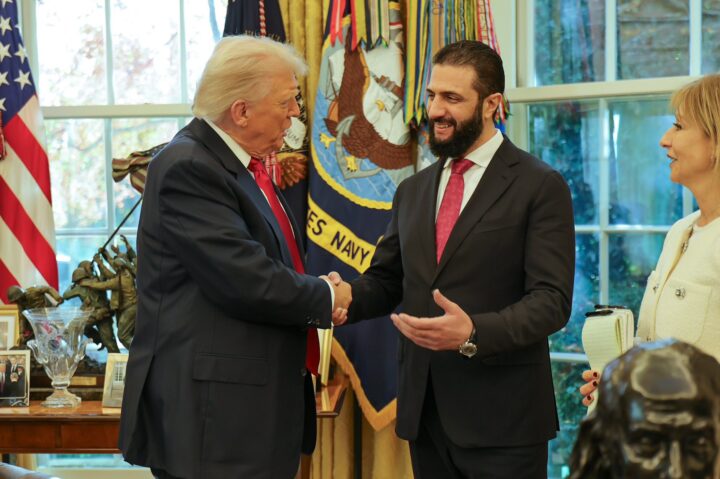
President Donald Trump greets Syrian President Ahmad al-Sharaa in the Oval Office on Nov. 10, 2025.
Good Monday afternoon!
This P.M. briefing is reserved for our premium subscribers like you — offering a forward-focused read on what we’re tracking now and what’s coming next.
I’m Danielle Cohen-Kanik, U.S. editor at Jewish Insider and curator, along with assists from my colleagues, of the Daily Overtime briefing. Please don’t hesitate to share your thoughts and feedback by replying to this email.
📡On Our Radar
Notable developments and interesting tidbits we’re tracking
Despite the historic nature of Syrian President Ahmad al-Sharaa’s White House visit today, his meeting with President Donald Trump was kept a relatively low-key affair. Al-Sharaa entered through a back door and didn’t receive the usual greeting photo op with Trump, and the meeting was closed to the press.
The two leaders made news nonetheless: Syria is now set to join the U.S.-led campaign against ISIS, Trump and al-Sharaa discussed reopening respective embassies in Damascus and Washington and the Treasury Department issued a new order extending the suspension of U.S. sanctions on Syria for six months.
Ibrahim Olabi, Syria’s U.N. ambassador, said the two leaders also discussed a prospective Israel-Syria security agreement. “The term used frequently during the meeting by President Trump and Secretary [of State Marco] Rubio was ‘let’s get this done,’” Olabi said…
Trump has encouraged lawmakers to fully lift the congressionally mandated U.S. sanctions on Syria, but Rep. Brian Mast (R-FL), a Trump ally and the chair of the House Foreign Affairs Committee, did not commit to supporting sanctions relief when he held his own meeting with al-Sharaa yesterday, Jewish Insider’s Marc Rod reports.
Mast and al-Sharaa “had a long and serious conversation about how to build a future for the people of Syria free of war, ISIS, and extremism,” Mast said in a statement, but offered no words of praise for the Syrian leader…
Sergio Gor was sworn in as U.S. ambassador to India today to unusual fanfare — he and Trump were joined in the Oval Office by Rubio; Vice President JD Vance; Treasury Secretary Scott Bessent; Attorney General Pam Bondi; U.S. Attorney for the District of Columbia Jeanine Pirro; Sens. Lindsey Graham (R-SC), Jim Risch (R-ID); Katie Britt (R-AL) and Tommy Tuberville (R-AL); Erika Kirk and Fox News host Laura Ingraham, among others.
Swearing in Gor, who used to serve as the head of the Presidential Personnel Office where he wielded significant influence in assuring political hires shared his skepticism of American engagement abroad, Vance said, “We have such a crowd here, you’d think we were swearing in a vice president”…
Laura Loomer, a right-wing Trump advisor who has historically maintained pro-Israel stances, wrote on social media today that, after spending “an incredible week” in Israel, she has “reached a firm conclusion: Israel must end its dependence on U.S. aid and the U.S. must end all aid to Israel.”
“I truly hope by the end of the Trump administration and by the beginning of a new administration in 2028 that we see zero aid flowing to Israel,” she wrote, calling it a “win-win” for the U.S., which will no longer be a “global baby sitter,” and for Israel, which will be free to conduct its wars as it wishes.
In response, Democratic Majority for Israel accused Loomer of continuing “a troubling pattern on the Right — embracing anti-Israel policies & undermining our allies,” in the vein of Tucker Carlson and Rep. Marjorie Taylor Greene (R-GA)…
Christine Pelosi, daughter of Rep. Nancy Pelosi (D-CA), who was thought to be considering a run for her mother’s seat as she retires, announced today that she is not running for Congress. Instead, Pelosi is launching a campaign for the state Senate seat currently held by Scott Wiener, who is running for her mother’s San Francisco congressional district…
New York City Mayor-elect Zohran Mamdani named two of his top advisors today: Dean Fuleihan to be first deputy mayor and Elle Bisgaard-Church as his chief of staff.
Bisgaard-Church is a democratic socialist who was part of Mamdani’s campaign inner circle. Fuleihan, on the other hand, is a city and state government veteran; he previously served in the same role under former Mayor Bill de Blasio and as his budget director, as well as a budget expert in the state Legislature, among other roles. Rep. Ritchie Torres (D-NY), who was at times at odds with Mamdani during his campaign, called Fuleihan’s appointment “exceptional … in more ways than one”…
Danielle Sassoon, the former interim U.S. attorney for the Southern District of New York who resigned her post rather than drop a case against New York City Mayor Eric Adams at the request of the Trump administration, has joined the law office of Clement & Murphy, The New York Times reports. The conservative boutique firm is known for its “longstanding opposition to executive branch overreach”…
The Wall Street Journal reports on Yale’s attempt to stay out of the line of fire in Trump’s crusade against higher education, including President Maurie McInnis’ increased government lobbying expenditures and a student forum where classmates encouraged each other to refrain from disruptive anti-Israel protests: “‘The only thing continuing to protest will do is to take education and opportunities away from the rest of us,’ said one post [on the forum]. ‘Ppl need to stop being stupid and selfish and realize they will gain no ground under this administration on the Israel issue’”…
Palantir CEO Alex Karp defended his support of Israel in an interview with WIRED, released today, saying, “Israel is a country with a GDP smaller than Switzerland, and it’s under massive attack. Some critiques are legitimate, but others are aggressive in attacking Israel. My reaction is, well, then I’m just going to defend them.”
“When people are fair to Israel and treat it like any other nation, which I don’t think they do, I will be much more willing to express in public the things I express in private to Israelis”…
⏩ Tomorrow’s Agenda, Today
An early look at tomorrow’s storylines and schedule to keep you a step ahead
Keep an eye on Jewish Insider tomorrow morning for reporting on veteran journalists Bianna Golodryga and Yonit Levi’s new book, Don’t Feed the Lion, which they will launch at Temple Emanu-El in New York City tomorrow night, joined in conversation by comedian Elon Gold.
This evening, Syrian President Ahmad al-Sharaa will appear on Fox News’ “Special Report” with Bret Baier.
Stories You May Have Missed
SCENE AT SOMOS
Jewish leaders begin outreach to incoming Mamdani administration, sensitively

At the post-election Somos conference, Jewish officials tried to find areas of common ground with the new mayor
DAYTONA X DAMASCUS DIPLOMACY
The influencer couple selling Syria on Capitol Hill

JI asked senior New York Democratic officials and Jewish community leaders to discuss the top threats that a Mamdani administration could pose to Jewish life in the city
Speaking to Harvard Law students, the ex-NYC mayor seeks to dispel 'horrible stereotype' that progressives don't support Israel, even as he fears for the 'future of democracy in Israel'

Andrew Burton/Getty Images
New York City Mayor Bill de Blasio speaks at a press conference after witnessing police being retrained with new guidelines at the Police Academy on December 4, 2014, in in New York City.
Bill de Blasio, the former mayor of New York City, wasn’t sure what to expect when, a week ago, he met with a diverse group of students at Harvard Law School to defend his long-held belief that progressive values are compatible with, if not contingent upon, maintaining support for Israel.
The topic of the event was sure to be met with at least some resistance, particularly on a campus like that of Harvard University, where instances of anti-Israel activism have drawn national scrutiny in recent months.
But de Blasio said he was largely encouraged by the response to his talk, billed as “The Progressive Case for Israel” and held in a classroom at Harvard’s Wasserstein Hall on Tuesday, Feb. 28. “We had a real dialogue, and folks were struck by that,” de Blasio told Jewish Insider in a recent interview. “There was actually a sustained discussion.”
Even as the tenor of the discussion “was at times heated” and “at times a little tense,” he acknowledged, “it was still civil in the scheme of things.”
“I heard views I would call left-wing, views I would call right-wing, views I would call pro-Israel and views I would call pro-Palestine,” de Blasio recounted. “I heard a range in the course of an hour, and no one left the room, no one walked out. People stuck with it. I actually saw some hope in that.”
De Blasio, who recently concluded a semester-long fellowship at Harvard, was asked to speak at the university by the Alliance for Israel at Harvard and the Harvard Jewish Law Students Association, which co-hosted the event.
“Bill de Blasio served for two terms as mayor of New York City, which has the highest Jewish population of any city across the globe,” Marc Heinrich and Ari Spitzer, co-presidents of the Harvard Jewish Law Students Association, wrote in a joint email to JI. “We were honored to co-host Mayor de Blasio and hear him speak to the greater Harvard Law School community about how New York’s Jewish community impacted his core values as a public servant.”
As a veteran Democrat who built strong relationships with Orthodox Jewish leaders in Brooklyn while in office, de Blasio, 61, said he was eager to reflect on such experiences at the Harvard event. “I talked about meeting Holocaust survivors, and, very powerfully, one woman who showed me and my family the tattoo on her arm from Auschwitz,” he said, recalling “a shock of recognition that the violence associated with antisemitism was so real and so recent and, horribly, continuing all over the world.”
“That’s one of the reasons that, to me, we cannot underestimate for a moment the challenges Jewish people face in this world, and why the State of Israel is absolutely needed as a refuge,” de Blasio insisted. “That does not negate other legitimate issues that need to be addressed, and it certainly doesn’t negate the valid concerns of Palestinians. But my central thesis is, progressives are supposed to stand up for oppressed peoples.”
The invitation to speak at Harvard, de Blasio elaborated, was also an opportunity to “dispel” what he described as “a horrible stereotype that suggests that some vast number of progressives are not supportive of the State of Israel.”
“I think that’s just absolutely inaccurate and based on no evidence, and I think it’s important to bear witness,” he added. “There’s a lot of us who support the State of Israel. Many of us don’t agree with the Netanyahu government, but we support the State of Israel.”
Speaking with JI, de Blasio emphasized that he is troubled by the direction of Israel’s right-wing governing coalition led by Prime Minister Benjamin Netanyahu, whose effort to advance a controversial judicial overhaul has drawn mass protests across the Jewish state. “I think the actions of the Netanyahu government are extremely worrisome,” he said. “I am worried about the future of democracy in Israel.”
He clarified, however, that such concerns, which have recently been echoed by a growing number of Democratic leaders, are consistent with a pro-Israel outlook. “You can still love Israel and support the State of Israel but acknowledge it has a democracy problem,” he said, “just like I love America and acknowledge my own country has a democracy problem.”
“The notion that sometimes people are accused of antisemitism if they disagree with the current Israeli government is obviously outlandish and needs to be called out,” de Blasio added. “That came up in the dialogue, and I said, ‘I know so many leaders who are deeply respectful of the Jewish experience and happen to disagree with the Israeli government, and there’s no contradiction.’ I think that has to be understood better.”
Last summer, de Blasio raised some eyebrows when he dropped his support for AIPAC during a brief run for an open congressional seat in Lower Manhattan and parts of Brooklyn. His objection to the pro-Israel lobbying group, which he had long defended, was that its political arm had recently targeted a fellow progressive Democrat, Nina Turner, in a Cleveland-area House primary.
During that election, Jewish voters in Cleveland had expressed reservations over Turner’s approach to Israel, which drew attack ads from pro-Israel groups including a super PAC affiliated with AIPAC.
In an interview with JI last June, de Blasio defended his decision to denounce AIPAC, noting that he did not agree with all of Turner’s Middle East policy positions but remained loyal to her as a friend. The New York Democrat, who visited Israel during his second year as mayor, maintained that he “can simultaneously be a very proud progressive and a very proud supporter of Israel,” adding, “I don’t see any contradiction.”
The recent event at Harvard was, in many ways, a continuation of that argument, as he reiterated his support for a two-state solution to the Israeli-Palestinian conflict and underscored his opposition to the Boycott, Divestment and Sanctions movement against Israel, among other things.
His remarks came days before Harvard’s Arab Conference, where an outspoken supporter of BDS who has been accused of antisemitism, the former Women’s March leader Linda Sarsour, delivered a keynote address in which she exhorted students to protest “apartheid” Israel. The consulting giant McKinsey & Company, which sponsored the event, announced on Monday that it had “stepped away” from the conference after learning that one speaker, whom it did not identify by name, “had a history of antisemitic comments.”
The weekend speech from Sarsour followed other examples in which debates over Israel have stirred controversy at Harvard. Last year, the editorial board of its student newspaper, the Harvard Crimson, endorsed the BDS movement, drawing a sharp rebuke from the student president of Harvard Hillel, among others. (The paper’s news team covered the Blasio event last week.) In 2016, third-year law student Husam El-Qoulaq, invoked an antisemitism trope during a question-and-answer period at an event with former Israeli Foreign Minister Tzipi Livni.
In January, meanwhile, the Harvard Kennedy School said it would grant a fellowship to the former executive director of Human Rights Watch, Kenneth Roth, after the school’s dean had reportedly vetoed its initial offer amid concerns over Roth’s apparent hostility to Israel.
“I think, in academia, it’s important to respect and hear a diversity of voices,” de Blasio said of the Roth dustup. “That’s my only comment on that.”
As a visiting fellow at the Institute of Politics at the Harvard Kennedy School and the Harvard T.H. Chan School of Public Health this past semester, de Blasio said he had been invited to speak with Jewish and Muslim groups but never had the chance to engage with students together, as he did last week.
“It’s great to speak to people of different viewpoints separately, but it’s especially powerful to bring everyone in the room and be like, ‘let’s hash it out,’” he told JI. “I don’t mean that’s like, you know, kumbaya. I don’t mean it’s going to be easy. But if we’re not devoted to that kind of open dialogue and having the tough conversations, then we are accepting of an absolutely unacceptable status quo.”
During the question-and-answer session of the discussion, de Blasio, who is now a visiting fellow at New York University and American University in Washington, D.C., said he heard from both Palestinian and Muslim students who voiced what he characterized as “very real concerns” about the content of his argument.
“What I tried to do was listen and give them the chance to get their whole statement or question out, even if I disagreed with some elements of it, and answer as someone who respects the Muslim community,” he explained. “Beginning with the atmosphere of, I believe, respect and willingness to listen, doesn’t mean watering down my views. But I do think encouraging dialogue, being willing to take tough questions, is valuable unto itself.”
One student attendee, Ben, a second-year law student at Harvard who declined to share his last name, affirmed the former mayor’s assessment in an email shared with JI. “I couldn’t get over the diverse perspectives that we got to hear from: Israelis, Jewish progressives, right-wing evangelicals, pro-Palestine activists,” he said in a message sent to the Harvard Jewish Law Students Association after the event. “It was intense, exciting and thought-provoking.”
De Blasio, for his part, said he considers it a minor if ultimately meaningful achievement that the conversation did not devolve into a shouting match or result in a walk-out.
“This is a microcosm of what we have to do for our country and for the Middle Eastern region in general,” he suggested. “It was a very, very small, localized first step at Harvard, but it was better than never being in the room together.”

Mayoral Photography Office
Amid a dramatic wave of antisemitic violence, Jewish community leaders excoriated NYC Mayor Bill de Blasio during a roundtable — which was closed to the media — in Borough Park on Thursday, Jewish Insider has learned.
According to several attendees who spoke on condition of anonymity, community leaders challenged the mayor over his response to the situation and expressed their disaffection about a lack of coordination with local NYPD precincts.
Speaking to reporters after the meeting, de Blasio said, “It’s going to take a lot of work at the grassroots to change hearts and minds. We have got to get to the day, and we’ve got to get there soon, where Jewish people in the city never have to worry about walking down the street, never have to worry about their safety.”
During the meeting, one of the leaders criticized the Democratic mayor for “politicizing” the issue of antisemitism by “pointing fingers” at President Trump, according to audio obtained by Jewish Insider. De Blasio pushed back, insisting that “the reality is” that the president “unleashed the forces of hatred” and it would be “dishonest” to claim that the threat doesn’t come from white supremacists and the alt-right.
De Blasio also defended critics of Israel in the Democratic Party, emphasizing that it is generally directed at the Netanyahu government. He added, “I am a Democrat, I am progressive, but I also went to the AIPAC [conference] purposely to make a message that all of us should be able to very clearly call out antisemitism, and we should be ready to oppose BDS and we should be ready to support Israel. But if see something that needs to be called out, I want to hear about it. I think we will probably agree 99 percent of the time. What I am not hearing so much is local leaders in New York City being antisemitic.”
De Blasio also defended the new state bail reform law which eliminates cash bail for those accused of committing misdemeanors and felonies, including non-violent hate crimes, though he pledged to work to change parts of the legislation.
Mayor blames rise in antisemitic attacks on right-wing antisemitism

Michael Appleton/Mayoral Photography Office
Mayor Bill de Blasio, Police Commissioner Dermot Shea and Executive Director of the Office for the Prevention of Hate Crimes Deborah Lauter meet with Jewish community leaders in Williamsburg to discuss the City's response to the attack in Jersey City, on Thursday, December 12, 2019.
New York City Mayor Bill de Blasio pledged on Thursday to increase efforts to root out hate speech and antisemitism in the aftermath of a terror attack at a Jersey City, N.J., kosher supermarket on Tuesday, the deadliest targeted attack against members of the tri-state Jewish community in history.
Calling it out and acting: “This is a moment to be really, profoundly concerned but history is not a teacher only of the negative, history teaches us something else. Which is these horrible trends, these horrible gathering storms can be stopped if people stand up and refuse to accept the reality,” de Blasio said during a press conference with Orthodox Jewish community leaders in the Williamsburg neighborhood of Brooklyn. “We need to be in the vanguard of stopping this hatred, turning the tide. And that is what we will do.”
High alert: De Blasio and Police Commissioner Dermot Shea told JI they were committed to increasing police presence around synagogues and Jewish establishments for as long as necessary. “Until this investigation is absolutely concluded, we are going to be in a state of high alert,” de Blasio told Jewish Insider. “and we’re going to assess the broader backdrop with this new unit focused on racially and ethnically motivated extremism of what kind of threats may be emerging over the horizon. This presence will be ongoing as we make that assessment.”
Shifting blame: The mayor maintained that the growing threat of antisemitism comes from the political right. “Where has the worst antisemitic attacks — before two days ago — happened in the United States of America in recent memory? Pittsburgh, Poway, and other parts of the country. And who were the perpetrators? White supremacists. We know this,” de Blasio explained to JI. “If folks on the right want to play this game with people’s lives, I would say you should be concerned about that. The historic danger to the Jewish people has come from right-wing extremists. That is a fact that is proven so deeply. I will debate anyone, anywhere on that one. De Blasio blamed the rise of violent antisemitic attacks on “a tragic global phenomenon” that has orginiated in Europe with the rise of political movements who are a “direct descendant of Nazism.”
De Blasio also pushed back against criticism that antisemitism has been rising under his watch, attributing it to the dramatic rise of hate speech on the right. “Why is there so much hate speech in America? Why is it different today that it was 4-5 years ago? I think you can fill in the blank. You can love [President Donald Trump], that is your choice, but you can’t miss the fact that the dialogue changed with the election in 2016.” He further insisted that there is an “extraordinary difference” between the rise of antisemitic incidents in New York City and the attacks in Jersey City, Poway and Pittsburgh. “And I will tell you just very clearly, we are going to go at all of it. I don’t care who the perpetrators are.”
De Blasio on the White House’s executive order to combat antisemitism on campus: “I have, honestly, mixed feelings about it. I have not read the exact proper document, but I have mixed feelings. Anything that confronts antisemitism, I support. But I worry, at the same time — as an American — about the balance we always strike in terms of freedom of speech and freedom of expression, particularly on college campuses. So this one leads me to real questions about whether that balance has been struck properly. Someone who disagrees with the Israeli government on a given policy, I don’t consider that antisemitic. If someone bears hatred in their heart towards the Jewish people, that’s antisemitism. So we have to understand where that line is.”

Richard Drew/AP
New York Mayor Bill de Blasio speaks at City Hall, Monday, Aug. 19, 2019.
NEW YORK — New York City Mayor Bill de Blasio is meeting on Wednesday with Palestinian-American leaders.
The meeting — announced in a media advisory as part of de Blasio’s daily schedule — is closed to press, and City Hall declined to release a list of attendees.
Jose Bayona, the mayor’s director of community and ethnic media, told Jewish Insider that the meeting is part of a practice to regularly meet with community leaders from all faith and ethnic backgrounds.
“We cannot predict what this group will raise in the meeting,” Bayona added, “but we anticipate conversation about an array of local issues, including the upcoming 2020 Census and efforts to get everyone counted, public schools and civic engagement.”
Chairman of city council’s Jewish Caucus says he’s ‘cautiously optimistic’ about the hire of Deborah Lauter
Richard Drew/AP
New York Mayor Bill de Blasio speaks at City Hall, Monday, Aug. 19, 2019.
On Tuesday, New York City Mayor Bill de Blasio announced the appointment of Deborah Lauter as executive director of the newly created Office for the Prevention of Hate Crimes.
Lauter previously served as the national civil rights director at the Anti-Defamation League. In her new position, she will supervise a team of six employees and oversee a budget of $1.7 million in the 2020 fiscal year, according to Colby Hamilton, a spokesman for the Mayor’s Office of Criminal Justice.
The opening of the new office follows a renewed push by New York City Councilmembers Chaim Deutsch (D-Brooklyn), Mark Levine (D-Manhattan) and Donovan Richards (D-Queens), who urged the mayor to take immediate action on antisemitism after a rash of recent incidents across New York City.
Earlier this year, a bill requiring educational outreach on the municipal level was passed by the City Council, and was slated to be implemented towards the end of the year. But in June, de Blasio declared the immediate opening of the office to combat the dramatic rise in antisemitic violence.
On Tuesday, three months after his initial announcement, the mayor made good on that promise.
“I’m cautiously optimistic about the mayor’s decision to hire Deborah Lauter as executive director,” Deutsch, chairman of the city council’s Jewish Caucus, told Jewish Insider. “She comes highly recommended, and I look forward to working together with her.”
Levine, who held the chairmanship until last year, lauded the pick as “an excellent choice,” saying Lauter “brings the right experience to this job.”
According to City Hall, Lauter has been on the job for a week now, but has yet to meet with de Blasio, who was reportedly in City Hall at the time of the announcement. “I don’t know the mayor’s schedule but I can assure you that everything that’s been communicated to me [indicates] the mayor is taking this extremely seriously,” Lauter told reporters.
Deutsch told ABC7 that it was “kind of disturbing” that the mayor had not yet met with his new appointee: “Does that kind of beg the question — is the mayor serious about this office or not?” The councilman said de Blasio has been “a little pre-occupied.” The mayor has spent much of the summer outside New York City following his May entrance into the 2020 Democratic presidential primary.
In an interview with Jewish Insider, Levine said: “Now that we have a strong director, we need this office fully staffed, adequately resourced and with the broadest possible mandate as soon as possible.”
By Jacob Kornbluh & JI Staff
DAY 5: Netanyahu: It’s Going To Take Time: “We are here in the midst of a complex operation. We need to be prepared for the possibility that it may take time. This is a serious event and there will be serious consequences. We are working together in a considered, responsible and very determined manner.” Netanyahu urged the international community to decry the kidnapping: “I expect all responsible elements in the international community – some of whom rush to condemn us for any construction in this place or for enclosing a balcony in Gilo – to strongly condemn this reprehensible and deplorable act of abducting three youths.” After 5 days and without mentioning Hamas, the EU finally released a statement: “We condemn in the strongest terms the abduction of 3 Israeli students in the West Bank and call for their immediate release.” [Statement] (more…)
By Jacob Kornbluh & JI Staff
DRIVING THE DAY: UPSET IN ISRAEL’S PRESIDENT ELECTION: Dovish Knesset member Meir Sheetrit surprised everyone this morning by surging to 2nd place in the first round of voting. Out of 117 qualified votes, frontrunner Reuven Rivlin came in first place with 44 votes, Sheetrit in second place with 31 votes and former Knesset speaker Dalia Itzik with 28 votes. The momentum has now shifted towards Sheetrit as the top two face each other in the second round. WATCH LIVE BROADCAST [Knesset Channel] (more…)
Bill de Blasio is getting ready for his inauguration.
Almost exactly one month before the January 1 date when he’ll take the oath of office, the mayor-elect rolled out his inaugural committee today, a list of names “from all five boroughs, every community and every walk of life,” as his transition team put it in a press release.
Jewish Members of the Inaugural Committee
1.
Rabbi Heshie Dembitzer. Bobover Yeshiva B’nai Zion

L-R: Chaim Sieger hosts NYC mayor-elect Bill de Blasio with askanim Yitzchok Fleischer and Heshie Dembitzer. (Credit: Hamodia)
2. Matthew Hiltzik, Founder, Hiltzik Strategies

3. Yitzchok “Isaac” Leshinsky, CEO, Housing Bridge

4. Jona Rechnitz

Rahr and Jona Rechnitz (credit: NYDN)
5. Ronald Perelman, Chairman and CEO, MacAndrews & Forbes

6. Morris Missry, Partner, Wachtel Missry LLP

7. Jay Eisenhofer, Founder, Grant & Eisenhofer P.A.

Please log in if you already have a subscription, or subscribe to access the latest updates.
 Continue with Google
 Continue with Apple