













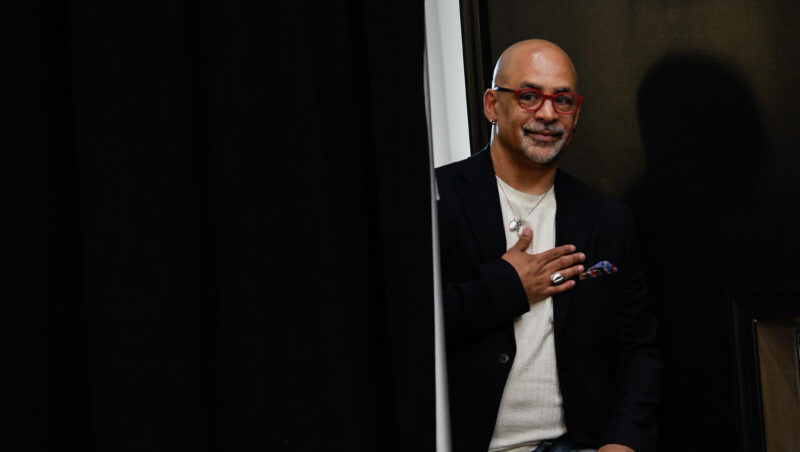













































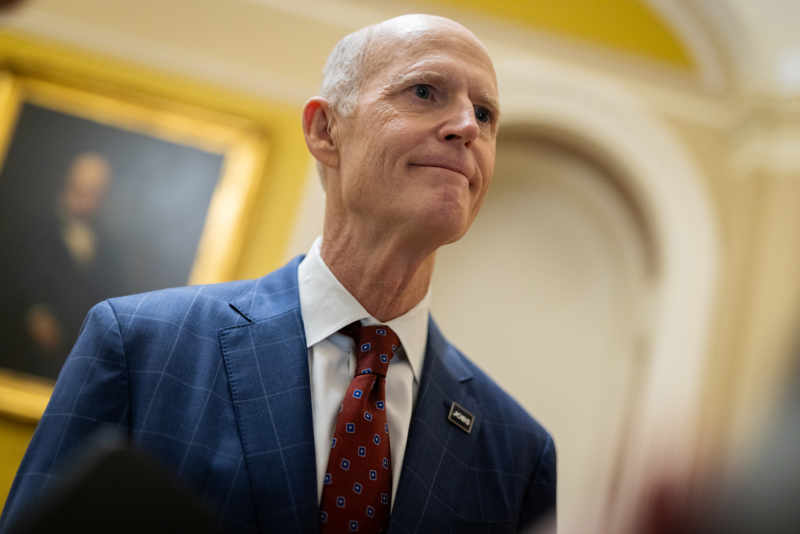











The Well — named for the biblical story of Eliezer finding Isaac’s wife, Rebecca — combines the best of matchmakers and technology, founder Erica Schwartz told JI

Liri Agami
Erica Schwartz mingles with prospective users of The Well at the app's launch event on July 278, 2028, in Manhattan.


 Add JewishInsider on Google
When the biblical Abraham sought a wife for his son Isaac, he dispatched his trusted servant to the city of Nahor in Mesopotamia. The servant, Eliezer, stopped at a well and prayed for a sign: the right woman would offer water not just to him, but to his camels as well. Rebecca did exactly that — and became Isaac’s match.
That story now has a modern namesake. A new dating app called The Well, slated to launch in the coming weeks, exclusively matches Jewish day school alumni. It’s aiming to fill a void for the very affiliated Jews searching for their bashert but tired of swiping.
“As I started to watch the way the world — at least in my Modern Orthodox circle — was meeting or not meeting each other, something felt very broken to me,” Erica Schwartz, the app’s founder, told Jewish Insider on Tu B’Av, the Jewish holiday of love, which began at sundown on Tuesday.
“Back in my day, we’d go to a synagogue and you’d meet and mingle outside and somebody might give you a call. Now everything is through a matchmaker and people aren’t meeting in person so everything is moving to more formal apps or shidduch résumés.”
Schwartz graduated from the Modern Orthodox Ramaz School on Manhattan’s Upper East Side, where she now serves as board chair. She also sent all six of her children to Jewish day schools. She said the aforementioned methods of dating were not “speaking to what I look at as this large middle niche I’m putting under the banner of the day school crowd, where they have a Jewish background and identity so they’re not a random Jew out there on a dating site, and they’re also not the ultra-Orthodox dater who is going to, through a matchmaker, go on six dates and then get married.”
“In that middle camp are all these day school graduates who are looking to meet somebody,” continued Schwartz. “It seems like such a natural place of overlap and connection, they just need to become aware of each other. That’s what The Well is trying to do — build a niche area of Jewish dating.”
Unlike mainstream dating apps — including other Jewish ones — known for endless swiping, The Well features no swiping at all, which makes it feel more personal, said Schwartz. She describes the platform as “human intuition and wisdom working in tandem with technology.”
The Well enters a crowded field of established Jewish dating apps — swipe-based JSwipe, application-only Lox Club and older-skewing JDate. But it’s betting that its swipe-free, day-school-verified niche can reach daters that those other platforms don’t.
Users, who must be in their 20s and 30s, begin by filling out a profile form. The first thing they’re asked to note is the day school they attended and year of graduation. Day school graduates of all backgrounds — from pluralistic to yeshiva — are welcome to join, but users must submit two names of people who can vouch that they attended that school. “That’s our current verification system. We need to see how that works and are prepared to tighten it a bit,” said Schwartz.
The profile form then prompts users to speak with a chatbot named Elli — a nod to Eliezer from the biblical story.
Elli is trained to ask follow-up questions in nuanced ways and pick up the user’s personality, said Schwartz. It asks users to describe their religious beliefs, share their profession and include key dating details like height preference or college alma mater.
Users also have the option to fill out the form manually, but Schwartz said taking advantage of Elli is preferred.
The Well also offers a small, vetted cohort of matchmakers if users wish to open their profile to them. Daters can also book an individual phone session with a matchmaker for $180, but otherwise the app is entirely free of charge.
A team of about a dozen advisors and matchmakers has been involved since the app’s inception, including two Modern Orthodox rabbis: Rabbi Elie Weinstock, senior rabbi of the Jewish Center of Atlantic Beach on Long Island, and Rabbi Daniel Kraus, director of community education at Congregation Kehilath Jeshurun in Manhattan.
“The future of Jewish dating isn’t choosing between technology and people,” Kraus told JI. “It’s combining the best of both. There are many excellent dating apps today. But no single platform can serve every community equally well. Every week I meet remarkable young adults who are ready to build Jewish homes, yet many still struggle to meet the right person. The challenge isn’t a lack of commitment. It’s creating meaningful opportunities for the right introductions.”
“The Well’s model is especially compelling because it pairs the scale and intelligence of technology with the wisdom, intuition and personal touch of experienced shadchanim [matchmakers],” continued Kraus. “Technology broadens the possibilities. People bring the judgment that no algorithm can fully replicate.”
The name itself, said Kraus, is “deeply rooted in Jewish tradition.”
“Throughout Tanach, wells are places where lives change,” he said. “Rivkah, Rachel and Tzipporah each met their future spouse at a well. While the platform is new, the mission is timeless: to help more young Jews find one another and build the next generation of Jewish families.”
The Well features two levels of profiles: public and private. The private one is only seen by Elli or a matchmaker. There’s also a dashboard where matchmakers can discuss the profiles of their clients so they can make suggestions in addition to the ones Elli makes.
Names are drawn for users every Monday and Thursday — the days biblical Jews traditionally went to the market — and they have a certain amount of time to respond; they can say “pass” or can choose to start a conversation. They can also share someone’s profile with another user in their “village,” which is the equivalent of Facebook friends.
“Some of that we’re fine tuning to make sure we’re not infringing on privacy,” said Schwartz, adding that the platform uses vanishing pictures to ensure profiles aren’t screenshotted and sent around.
Since dating apps first launched in the 2010s, they have instantly put hundreds of profiles at users’ fingertips, making them the favored method for nearly half of Americans looking for love, according to a Forbes Health survey. But apps that claim credit for matches made five or ten years ago now face user burnout, with many people saying they prefer to meet in person rather than swipe through an endless pool of potential mates. Seventy-eight percent of users report dating app burnout, according to another Forbes survey conducted last year.
Addressing this, Schwartz said The Well also features an events section of the app that will advertise social gatherings for this demographic across the country. She described that as a “crucial” component.
Before officially going live, The Well hosted an invitation-only launch event Tuesday night at the swanky Bowery Hotel on Manhattan’s Lower East Side, timed to coincide with Tu B’Av, drawing some 200 young professionals eager to mingle and learn about the app.
“What makes The Well stand out is that it rejects the culture of infinite swiping and disposable connections,” Erez Kahan, a 35-year-old who works as a relationship manager in the family office space and attended the launch event, told JI. “Instead, by thoughtfully introducing just a couple of carefully considered matches each week, it encourages people to slow down, be present and give each connection the attention it deserves. It’s a refreshingly human approach — one that values individualized care, quality over quantity and genuine intention over endless choice.”
Kahan, a graduate of The Frisch School, a Modern Orthodox school in New Jersey, said he’s particularly drawn to the symbolism behind The Well’s name — something he expressed hope to experience through the app: “A chance meeting at a well became something guided by purpose rather than endless searching.”
The mayor sidestepped inquiries about whether Rama Duwaji regrets liking and sharing posts supportive of terrorism
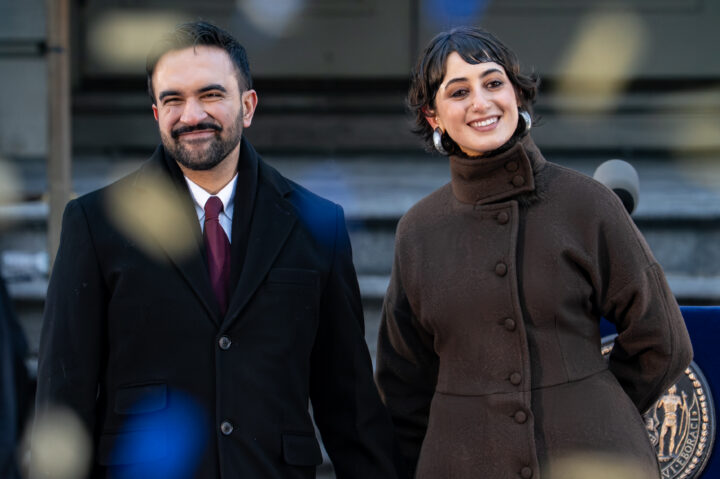
David Dee Delgado/Getty Images
New York Mayor Zohran Mamdani and his wife Rama Duwaji smile as confetti falls after his ceremonial inauguration as mayor at City Hall on Jan. 1, 2026 in New York, NY.
New York City Mayor Zohran Mamdani refused to speak directly to his wife’s inflammatory social media history, a day after First Lady Rama Duwaji indicated in an interview she regrets posting a racial slur online while in high school, but stopped short of apologizing for much more recent activity signaling support for Hamas’ Oct. 7, 2023, terror attacks.
The democratic socialist mayor initially dismissed JI’s reporting by asserting his wife was a “private person.” But on Wednesday, Duwaji made the latest in a string of media appearances, discussing her art career with the online cultural outlet Hyperallergic.
In the discussion, Duwaji appeared to address revelations by The Washington Free Beacon that she had used the N-word on Tumblr as an adolescent — but not the conservative outlet’s reporting of posts she shared celebrating Palestinian terrorist figures, or of JI’s earlier discovery that she had liked posts that applauded and defended the 2023 Hamas assault on Israel.
“I felt a lot of shame being confronted with language I used that is so harmful to others; being 15 doesn’t excuse it,” Duwaji told Hyperallergic’s editor-in-chief. “I’ve read and seen a lot of what others have had to say in response, and I understand the hurt I caused and am truly sorry.”
Hyperallergic did not follow up on this point, and the mayor’s office declined to answer a New York Times query on Wednesday on whether she felt remorse over her more recent political posts.
Mamdani refused to directly answer the question when pressed in person on Thursday, preferring instead to praise Duwaji personally.
“You know, she shared some of her reflections in this interview. I won’t add much to them,” the mayor said following an unrelated City Hall press conference. “What I will say, however, is that she is someone of incredible integrity, she is someone I am lucky to be able to call my wife and that I am proud of her each and every day.”
NYC First Lady Rama Duwaji showed support for far-left orgs applauding Hamas rampage
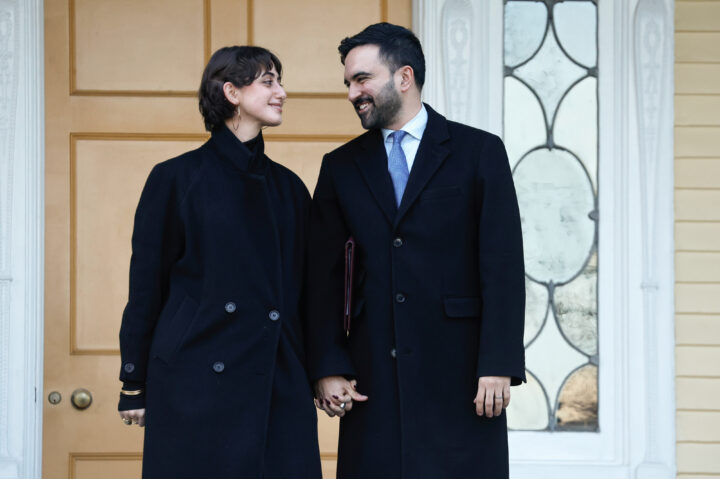
John Lamparski/Bloomberg via Getty Images
Zohran Mamdani, mayor of New York, and his wife Rama Duwaji during a news conference at Gracie Mansion in New York, US, on Monday, Jan. 12, 2026.
New York City Mayor Zohran Mamdani spent the mayoral campaign distancing himself from the most radical anti-Israel elements of his leftist movement, but an examination of his wife’s social media activity reveals she liked multiple Instagram posts cheering on Hamas’ Oct. 7, 2023, assault.
The posts liked by Rama Duwaji, a Syrian-American artist, unambiguously celebrated the terrorist attack, which saw nearly 1,200 Israelis and foreign workers killed, thousands wounded, 251 civilians and military personnel kidnapped and numerous episodes of sexual assault.
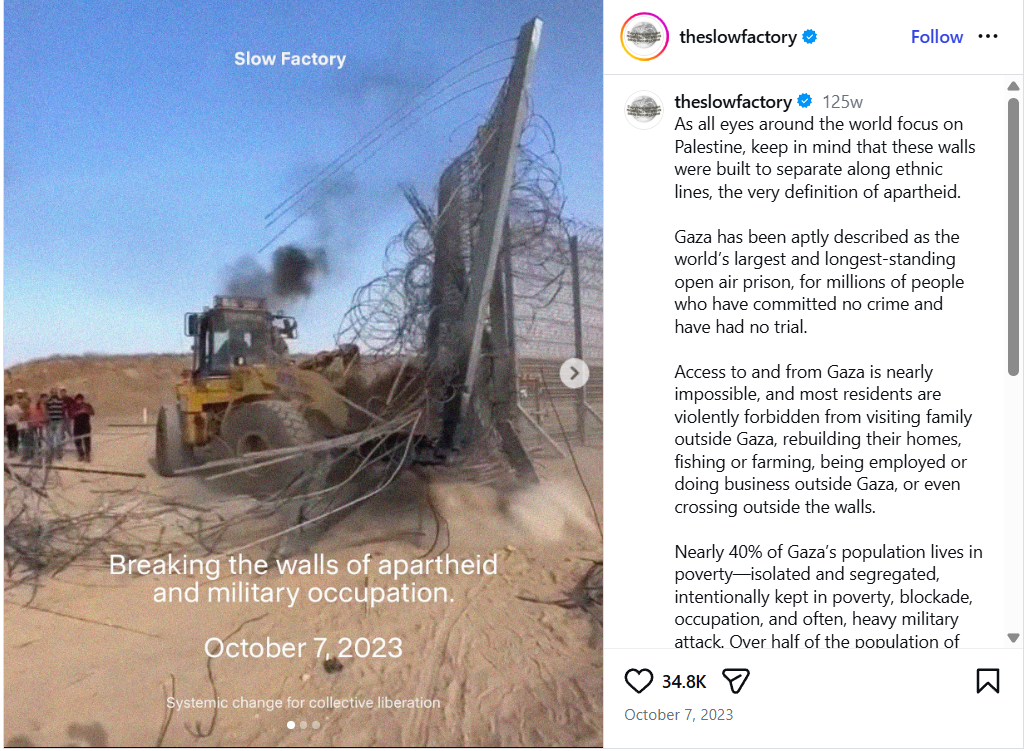
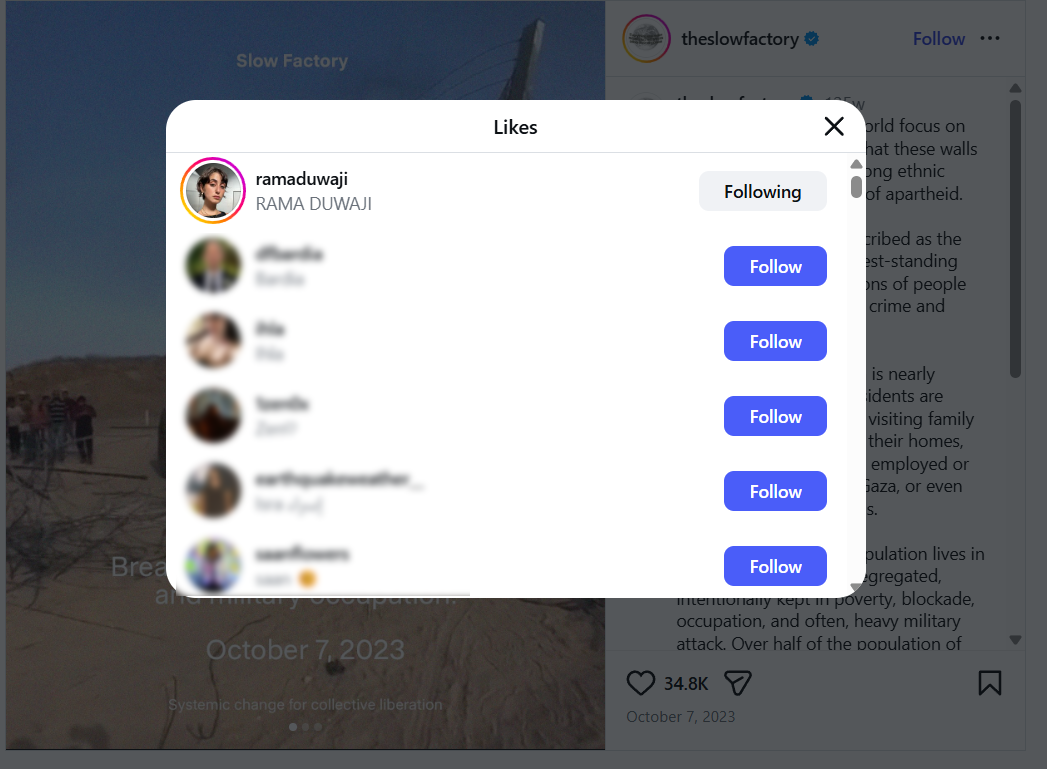
The first post, shared on the day of Hamas’ onslaught, came from The Slow Factory, which bills itself as “a school, knowledge partner and climate innovation organization” that “center[s] the voices and ideas of the Global Majority (Black, Indigenous, and other people of color) to share their knowledge outside the boundaries of institutions & oppressive systems.”
The Instagram post shows stills from participants’ livestreamed footage of the attack: first of a bulldozer that terrorists used to breach the barrier separating Israel from Gaza, the second of attackers riding on a captured IDF vehicle. Printed on the former are the words “Breaking the walls of apartheid and military occupation,” and on the latter “Resisting apartheid since 1948,” and on both the slogan “Systemic change for collective liberation.”

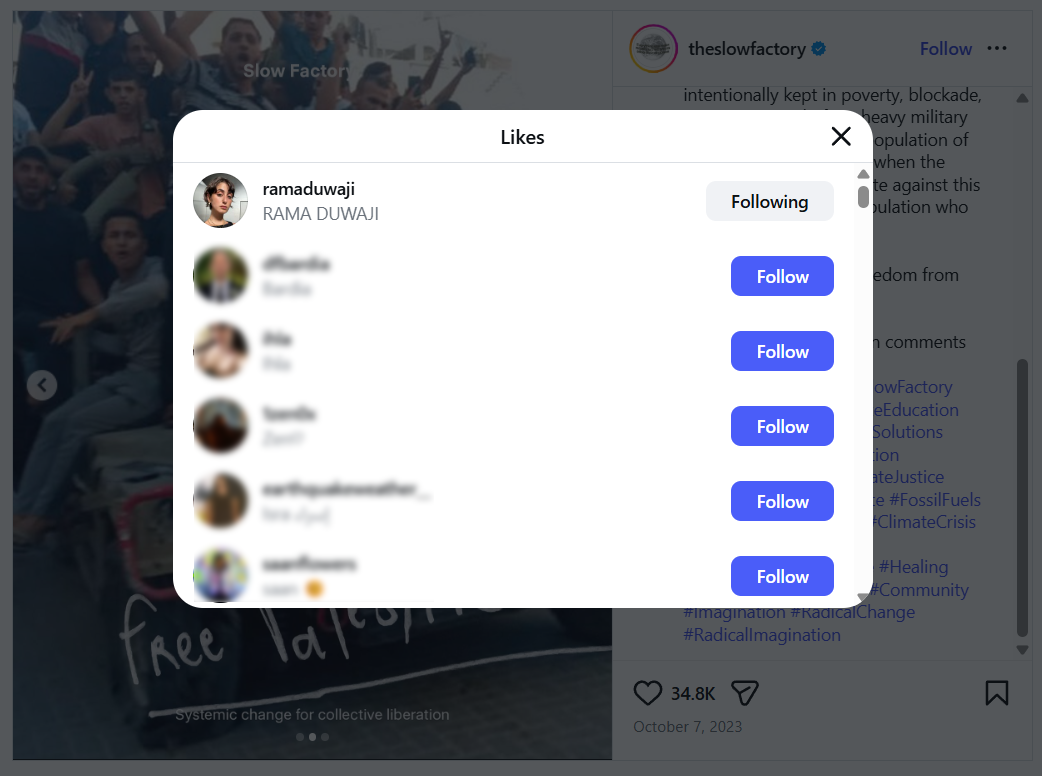
The extensive caption on the post laments that “if and when the occupation forces retaliate against this resistance” Gazans will be “punished for wanting freedom from apartheid.”
Duwaji, who met Mamdani on a dating app in 2021 and married him in early 2025, liked this post and others using a personal account in her own name, on which she has posted her often-political illustrations and with which the mayor has interacted in the past. She has used it also to directly criticize Israeli policy.
The unapologetic tone of the Slow Factory Post contrasts radically with the mayor’s debate-stage messaging on the attack, which characterized Hamas’ actions as “war crimes,” even as he continually lambasted the Israeli military response.
Duwaji did not respond to multiple requests for comment, and the mayor’s office would not answer questions regarding his feelings about her online activity, or whether they had discussed the Oct. 7 attacks at the time. Rather, his team repeated his standard line on the bloody terrorist rampage.
“Mayor Mamdani has been clear and consistent: Hamas is a terrorist organization, October 7th was a horrific war crime, and he has condemned that violence unequivocally,” a City Hall spokesperson said in a statement to Jewish Insider.
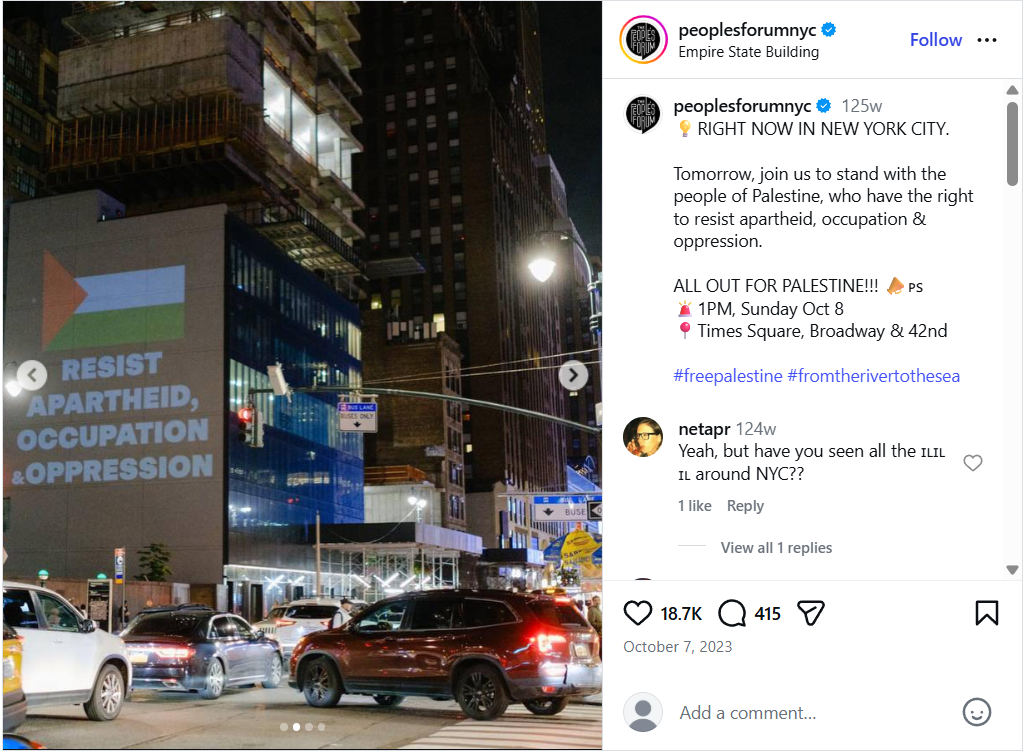
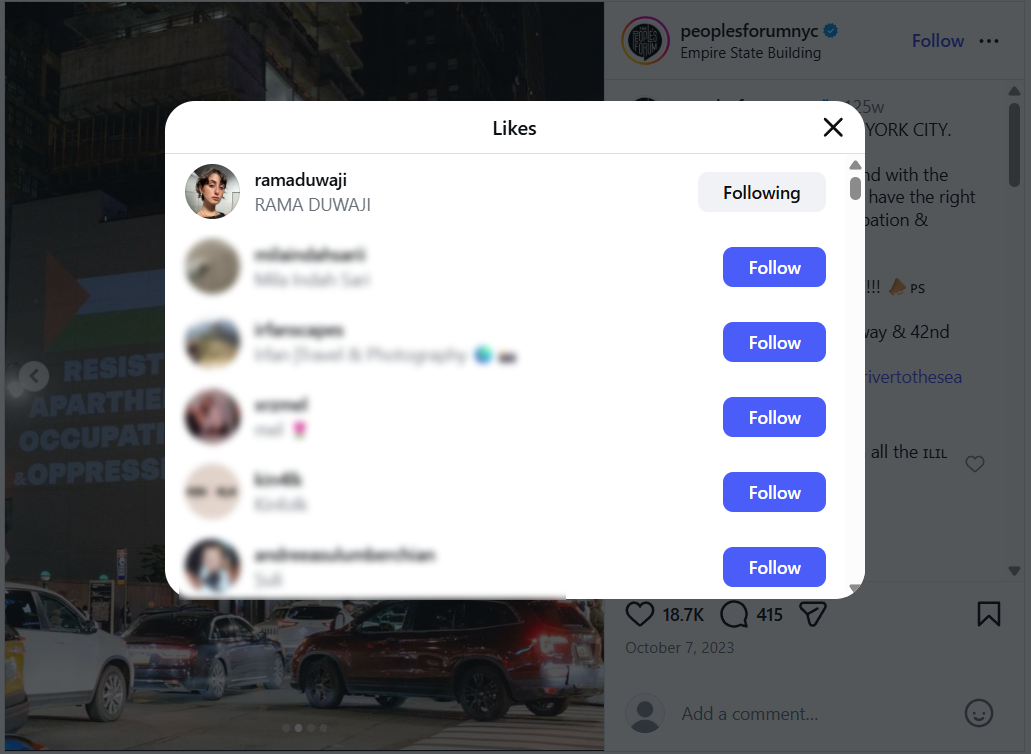
It is unclear when Duwaji liked the Slow Factory post, or the materials that the People’s Forum — part of Shanghai-based Maoist tech mogul Neville “Roy” Singham’s network of nonprofits promoting pro-China, pro-Russia and pro-Iran propaganda — posted to Instagram on Oct. 8, 2023. Duwaji, again using her personal account, liked two posts from protests the organization led alongside the Democratic Socialists of America and allied organizations in Times Square one day after the attack on Israel.
Mamdani, then a state assemblymember, publicly criticized the rally at the time for “making light” of Hamas’ massacre of civilians.
But the posts his then-girlfriend approved of on Instagram enthusiastically justify both the rally and the terrorist actions.
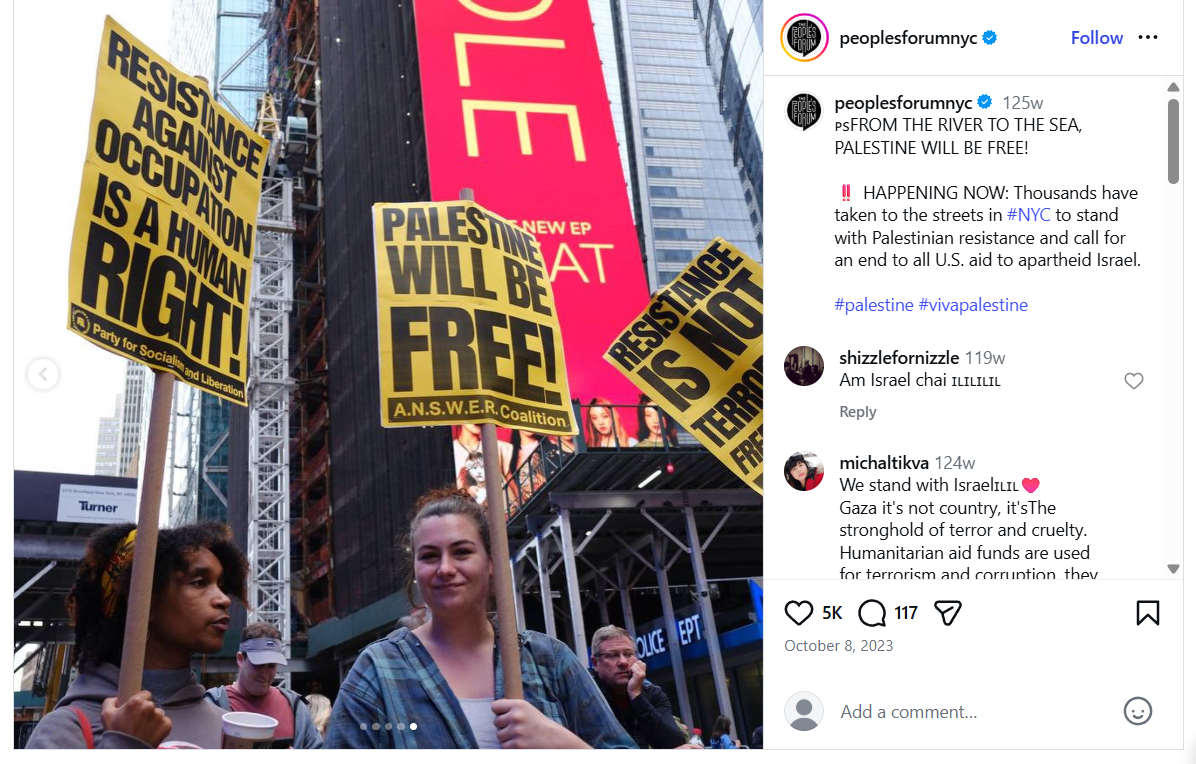
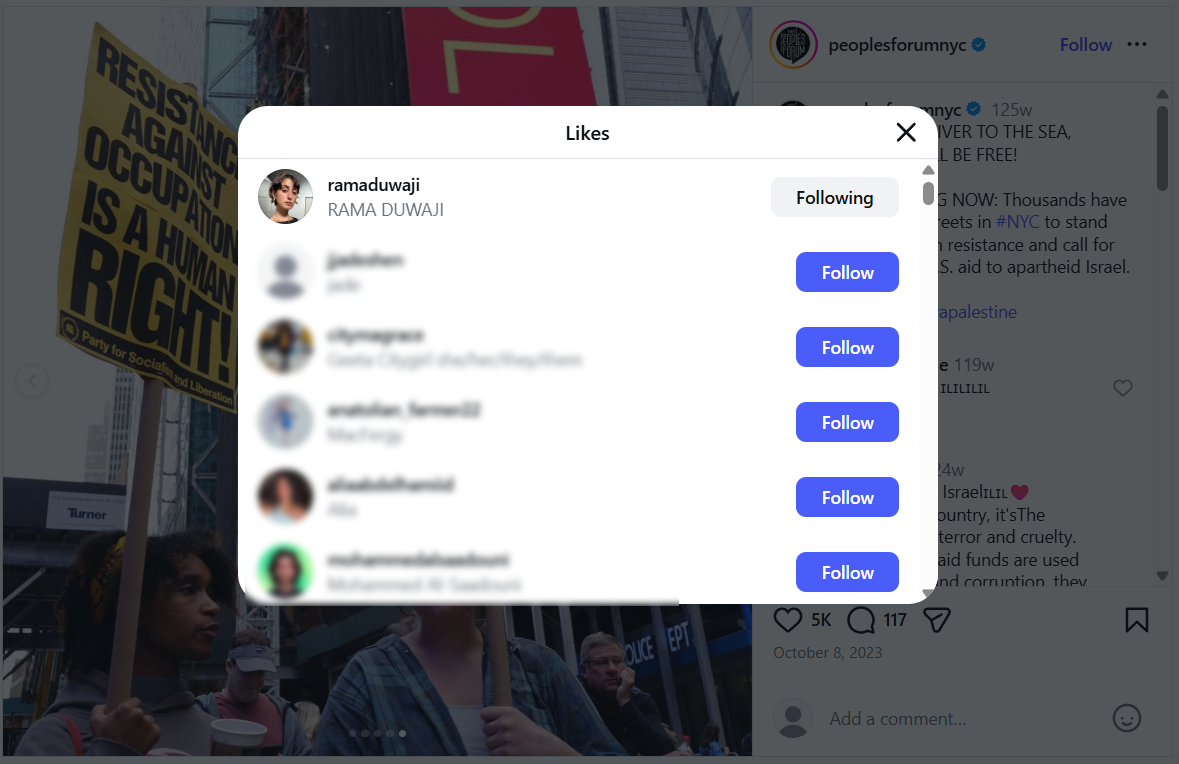
Both captions feature the slogan “from the river to the sea” — often understood as calling for the total elimination of Israel from the lands between the Jordan River and the Mediterranean Sea — and one includes a clip of the crowd chanting, call-and-response style: “Every colonized people, every occupied people has the right to self-defense.”
The images in that post show signs and banners declaring “WHEN PEOPLE ARE OCCUPIED, RESISTANCE IS JUSTIFIED” and “RESISTANCE AGAINST OCCUPATION IS A HUMAN RIGHT.”
“Thousands have taken to the streets in #NYC to stand with Palestinian resistance and call for an end to all U.S. aid to apartheid Israel,” the caption on the post reads.
JI’s findings come amid a growing focus on political spouses: earlier this week, The New York Times reported that the wife of Rep. Dan Goldman (D-NY) had liked or shared numerous controversial posts, including some attacking activists critical of Israel.
Please log in if you already have a subscription, or subscribe to access the latest updates.
 Continue with Google

 Continue with Apple