





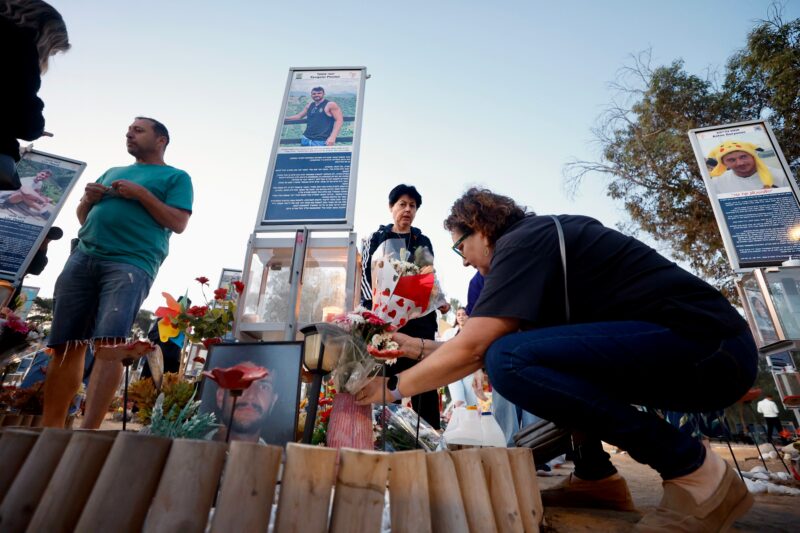



















Jewish groups condemned Mamdani for amplifying rhetoric they said puts Jewish New Yorkers at risk — on a day of mourning for victims of Hamas attacks
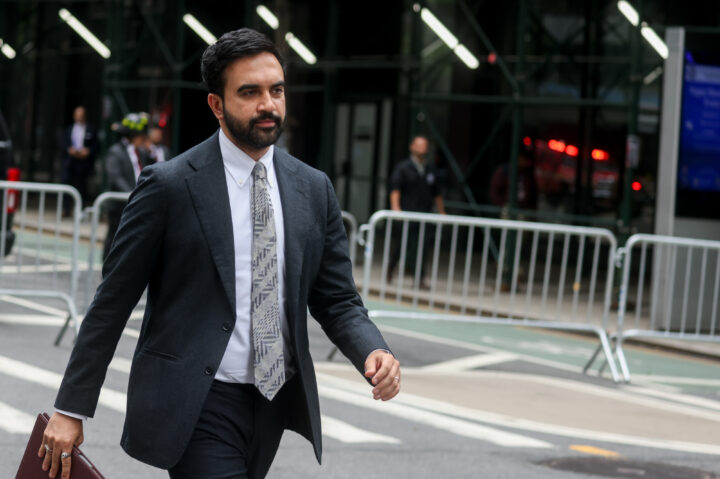
Michael Nagle/Bloomberg via Getty Images
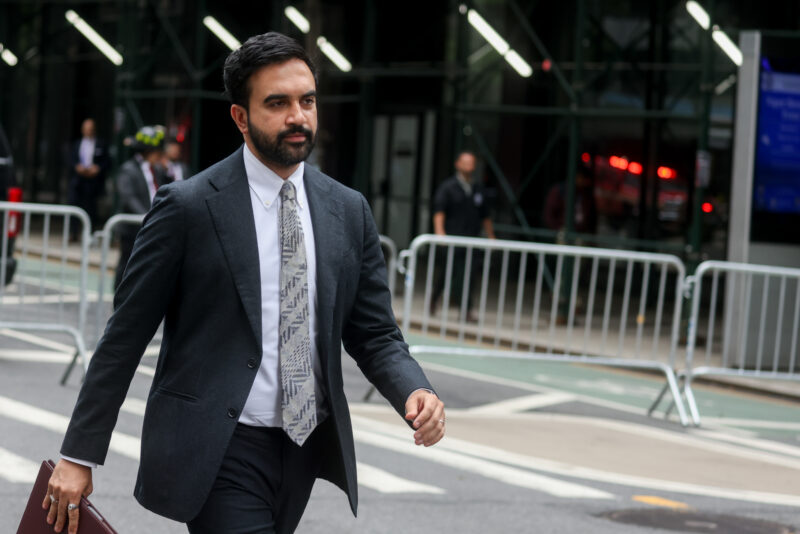
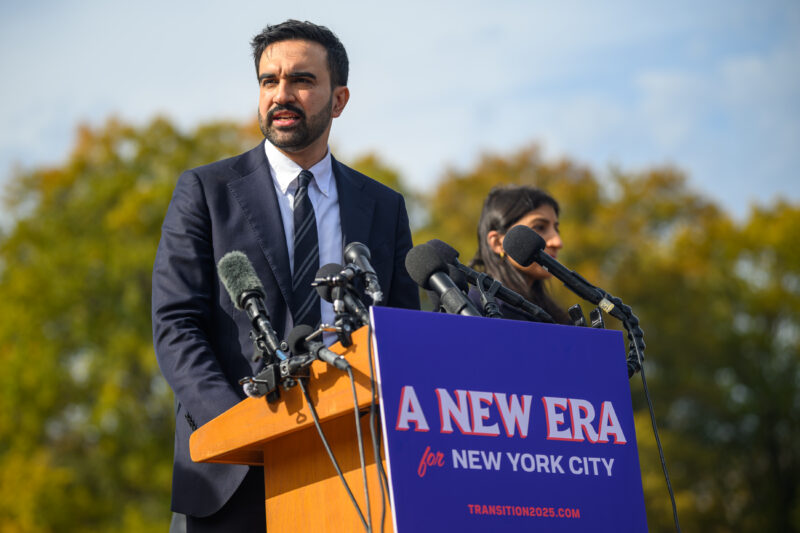
Zohran Mamdani, mayor of New York, arrives to speak to members of the media in New York, on July 7, 2026.


 Add JewishInsider on Google
New York City Mayor Zohran Mamdani observed the third anniversary of the Oct. 7 attacks on Israel with a statement that opened with a denunciation of Hamas and the “horrific war crimes” it committed that day, but spent most of its length excoriating the Israeli response — drawing fierce criticism from mainstream Jewish organizations.
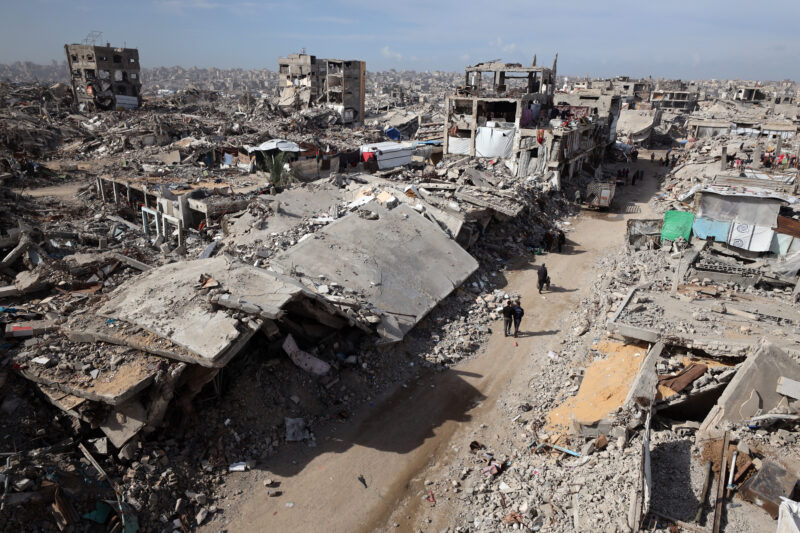
“We grieve alongside our many friends and neighbors who still carry that unthinkable loss,” the top of the statement concludes — before launching into the main body of his remarks attacking Israel. “The suffering did not begin nor end that day. It instead continued through the Israeli government’s devastating, ongoing genocide in Gaza,” it continues.
The mayor then launched into a litany of familiar criticisms of the Israeli military campaign in Gaza and of U.S. support for the Jewish state in a passage more than twice as long as his comments on Hamas and its victims.
“Many New Yorkers are reckoning with this unbearable grief, and we mourn alongside them — all while knowing that our tax dollars fund these war crimes,” the statement continues. “Three years later, we must refuse to accept a world in which occupation and apartheid continue, where war crimes are met with impunity, and our federal government continues its complicity with every arms shipment.”
The mayor concluded his statement with a call “to honor the dead, we must fight for a world in which every person can live with freedom, safety, and dignity.”
The decision to devote the bulk of his statement commemorating the deadliest day for Jews since the Holocaust to attacking Israel infuriated leading Jewish religious civic leaders.
“Today should have been a day for New York to stand with the victims of October 7, their families, and all those still living with the trauma of Hamas’s barbaric attack,” UJA-Federation of New York said in statement. “Instead, Mayor Mamdani chose to respond to the grief of Jewish New Yorkers by advancing false and inflammatory attacks against Israel — not only inappropriately shifting the focus away from the victims of Hamas’s cruelty, but also placing Jewish New Yorkers at risk.”
The Conference of Presidents of Major American Jewish Organizations also released a statement, saying, “Mayor Zohran Mamdani chose this solemn day to advance his familiar attacks on the Jewish state. There is a time for debate over Middle East policy. The anniversary of the October 7 massacre is not that time. Exploiting a day of profound grief to accuse Israel of genocide dishonors the memory of those who were murdered, deepens the pain of survivors and hostage families, and further alienates Jewish New Yorkers at a moment that should unite us in remembrance.”
“Mayor Mamdani cannot give Jewish New Yorkers even a single day to mourn without gaslighting us and appropriating the trauma of Oct. 7,” Rabbi Marc Schneier of the Foundation for Ethnic Understanding said in a statement, re-upping longstanding concerns that the mayor’s constant criticism of Israel feeds into the city’s spike in antisemitic hate crimes under his leadership. “His rhetoric fuels hostility toward Jewish New Yorkers. Today, he could have honored the victims and promoted peace and prosperity for Israelis and Palestinians. Instead, he chose to incite hatred.”
Andrew Gross, New York regional director for the American Jewish Committee, also criticized the mayor for what he described as injecting politics into a solemn occasion.
“Today is about the 1,200 lives stolen on October 7, 2023, the 251 who were taken hostage, and the countless others who were terrorized by Hamas and continue to be haunted by the violence inflicted on them, their families, and an entire country that day,” Gross wrote in a statement to Jewish Insider. “It is not about the mayor or his efforts to advance a false political narrative. His decision to use October 7 to promote slander against the Jewish state and amplify rhetoric that puts Jewish New Yorkers at greater risk is especially painful and egregious.”
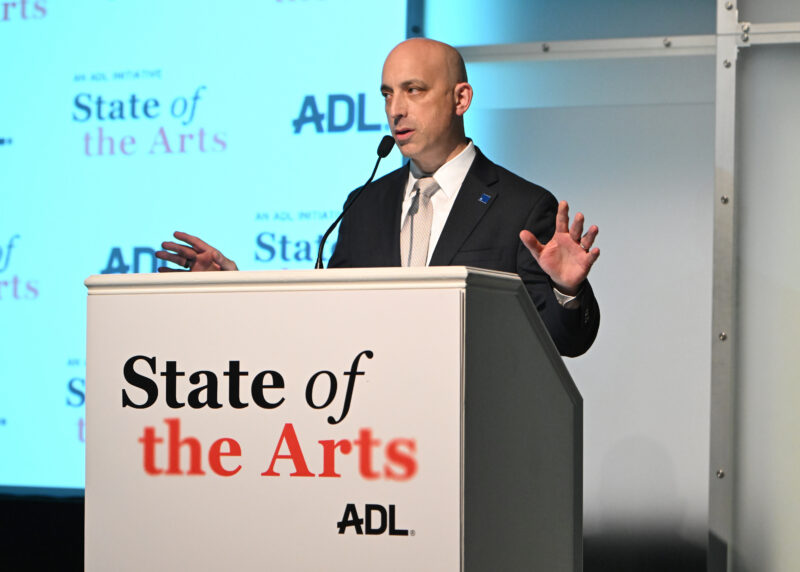
Anti-Defamation League CEO Jonathan Greenblatt, meanwhile, highlighted that the mayor’s statement made no reference to “Jews,” repeating a frequent criticism that Mamdani does not recognize or appreciate that many of the people he represents feel an affinity to Israel as a nation — even as he frequently and explicitly identifies New Yorkers of Palestinian background with events in Gaza and the West Bank.
“You are weaponizing a day meant for mourning the worst massacre of Jews since the Holocaust to recycle your usual antizionist talking points,” Greenblatt wrote to Mamdani on X. “The city with the largest Jewish population outside Israel deserves a mayor who can honor the dead without exploiting them.”
The mayor’s schedule indicated the mayor will attend first a vigil for the Oct. 7 victims before he “meets with Palestinian New Yorkers” on Wednesday. His office did not provide additional details.
JI reported in March that Mamdani’s wife liked multiple posts on Instagram celebrating the Oct. 7 attacks.
Ironically, Mamdani’s statement on X also prompted an outpouring of antisemitic commentary from the site’s users suggesting he was controlled by Jewish interests.
Moore, to Politico: ‘I think that the state of Israel has a right to exist, but I also think that so do the Palestinian people’
Kevin Dietsch/Getty Images
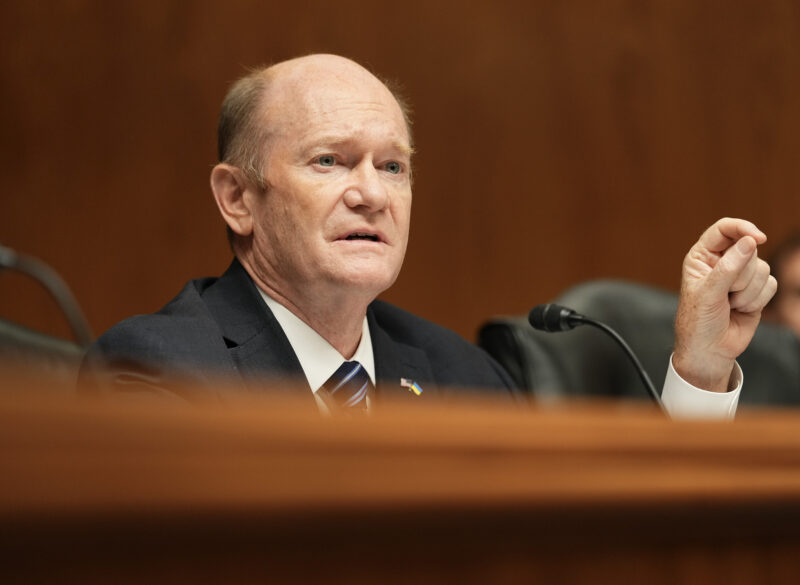
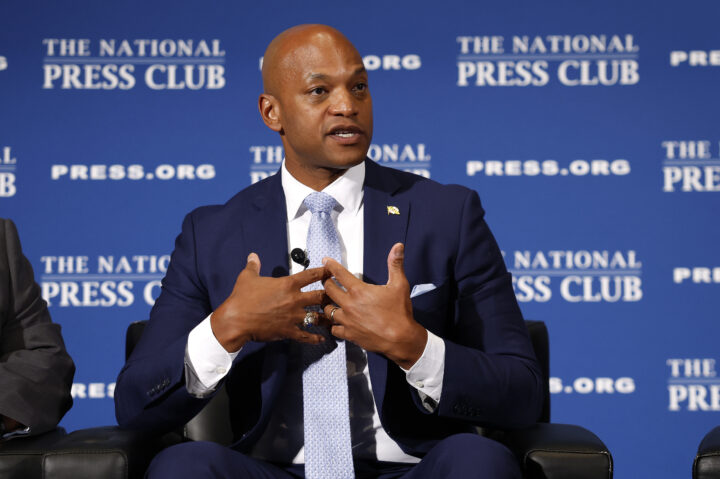
Maryland Gov. Wes Moore participates in a discussion on bipartisanship at the National Press Club on September 04, 2025 in Washington, DC.
Maryland Gov. Wes Moore slammed Israeli Prime Minister Benjamin Netanyahu in a recent interview with Politico, arguing that the Israeli premier has committed war crimes and that his actions make American Jews less safe.
Moore, a Democrat with close ties to Maryland’s Jewish community, reiterated his support for Israel’s existence. But he strongly criticized Netanyahu’s leadership.
“I think that the State of Israel has a right to exist, but I also think that so do the Palestinian people,” Moore said, when asked if he considers himself a Zionist. “From what we’ve seen from Bibi Netanyahu, I just do not know, and nor believe, that he is putting the same measure of focus on Palestinian lives as he does on Israeli lives.”
Moore declined to say whether he believes Israel’s actions in Gaza amount to a genocide, saying instead that the matter will be left to international courts to decide.
“I think that it’s going to have to be international tribunals [that] figure that out, but I do think this,” Moore said. “I know as a military person that you cannot use food as a negotiating tool. That is a war crime, and I think Bibi Netanyahu has committed war crimes.”
When asked whether Netanyahu should be in prison, Moore dodged the question.
“Look at it this way. First of all, he’s actually under investigation and indictment already right now,” said Moore. “But also if you look at what’s happened in Lebanon, even just since the start of the Iran war, he’s annexed and taken over 10% of Lebanon. That, again, is a war crime. I just don’t know how we can continue tolerating these types of actions by Bibi Netanyahu.”
Further, Moore continued, Netanyahu’s actions put Jews in Israel and America at risk, and complicate efforts to combat antisemitism.
“He’s not making Jewish people safe. He’s not making Israelis safe. He’s not making Jewish people in this country safe. We’re dealing with such a rise in antisemitism, Islamophobia, anti-Black. We’re dealing with such a rise of hate,” Moore said. He referenced a recent incident of antisemitic graffiti at an elementary school in Olney, Md., outside of Washington.
“This is real, and we have to be able to deal with this rising level of hate,” said Moore. “But the challenge that I have is I don’t know if Bibi Netanyahu actually believes that there should be Palestinian safety or Palestinian peace.”
Israeli PM also talked about the possibility he could receive a pardon, saying one is needed to ‘seize opportunities’ for peace

David Dee Delgado/Getty Images for The New York Times
Andrew Ross Sorkin interviews Prime Minister of Israel Benjamin Netanyahu remotely onstage during The New York Times DealBook Summit 2025 at Jazz at Lincoln Center on December 03, 2025 in New York City.
Israeli Prime Minister Benjamin Netanyahu said on Wednesday he would visit New York City despite Mayor-elect Zohran Mamdani’s threat to have him arrested on war crimes charges if he does so.
Asked by host Andrew Ross Sorkin at The New York Times’ DealBook Summit, taking place in New York, about Mamdani’s threat to fulfill a warrant issued last year by the International Criminal Court — to which the U.S. is not a party — Netanyahu, speaking via video from Jerusalem, scoffed and said, “I’ll come to New York.”
As to whether he would meet with Mamdani, Netanyahu said: “If he changes his mind and says we [Israel] have a right to exist, that’ll be a good opening for a conversation.” Audible laughter at his response could be heard from the audience.
Netanyahu also addressed one of the major political news stories of the week — his request to Israeli President Isaac Herzog for a pardon amid his yearslong corruption trial.
“What [President Donald Trump] calls a witch hunt — and it is — has been going on for 10 years … I’m supposed to spend three days a week, eight hours a day in that trial, and I have got a few other things to do,” the prime minister quipped.
Netanyahu was indicted in 2020 in three cases: for allegedly advancing the interests of Israeli Hollywood producer Arnon Milchan while accepting gifts from him; for allegedly negotiating with Yediot Aharonot publisher Arnon Mozes to outlaw rival newspaper Israel Hayom’s free business model in exchange for favorable coverage; and for allegedly accepting a bribe of positive media coverage on news site Walla in exchange for regulatory changes benefitting then-Bezeq Telecom owner Shaul Elovitch.
Netanyahu noted in his remarks that the judges overseeing the trial suggested that the prosecution drop the bribery charge, said Walla never stopped covering him negatively, and dismissed the rest of the charges — fraud and breach of trust — as “a Bugs Bunny doll, champagne and cigars.”
The prime minister said that Israeli law does not require him to admit guilt when requesting a pardon, “and I don’t. It’s a nonsense trial. … It’s a joke. It’s so silly, so stupid.”
Netanyahu argued a pardon is “right for the country, right for our future. There are a lot of tasks at hand.”
“I think history beckons. We have opportunities for peace, enormous opportunities in AI and quantum [computing] … We have the opportunity to seize the future in a way that can help the entire Middle East and the world,” he added.
The resolution came after a pro-Israel student group hosted IDF soldiers, which protesters disrupted by calling them ‘baby killers’ and comparing the IDF to the KKK
G Fiume/Getty Images
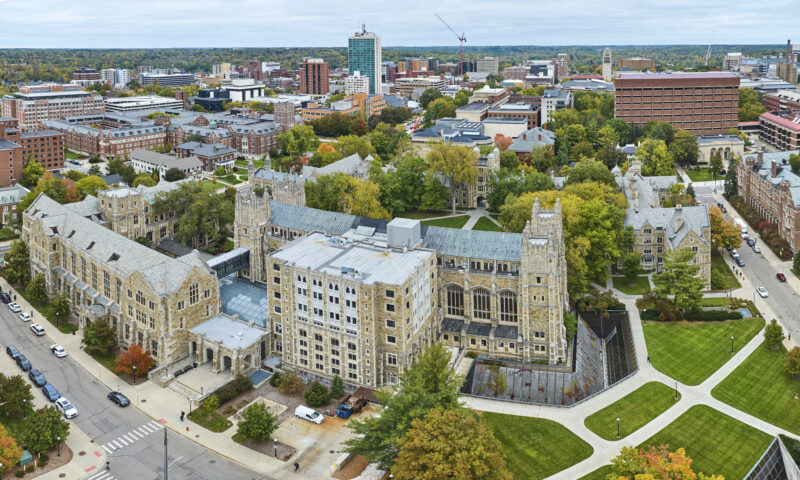
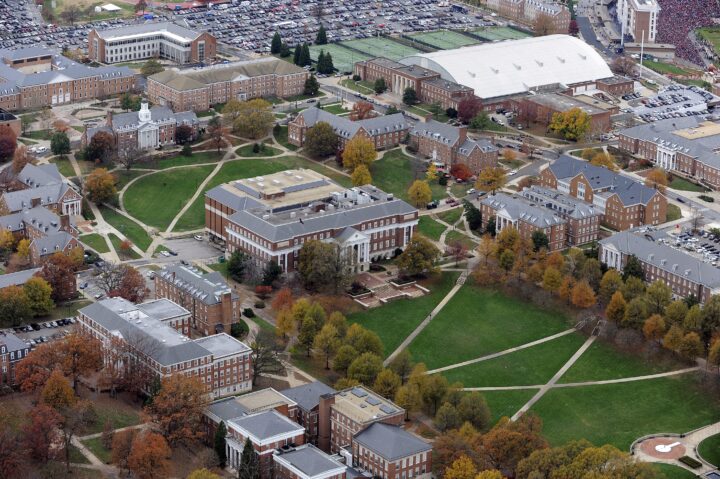
An aerial view of the University of Maryland campus in College Park, Maryland.
The University of Maryland, College Park student government unanimously passed two resolutions hostile towards Israel on Wednesday night, including one that called for the school to ban members of the Israel Defense Forces from speaking on campus.
The resolution, targeting Israelis, called for the university to prohibit people who are “committing war crimes” and “genocide” from speaking on campus.
It came as a response to an event hosted by the campus chapter of Students Supporting Israel on Oct. 21 featuring former IDF soldiers who spoke to students about their experiences serving during Israel’s war with Hamas.
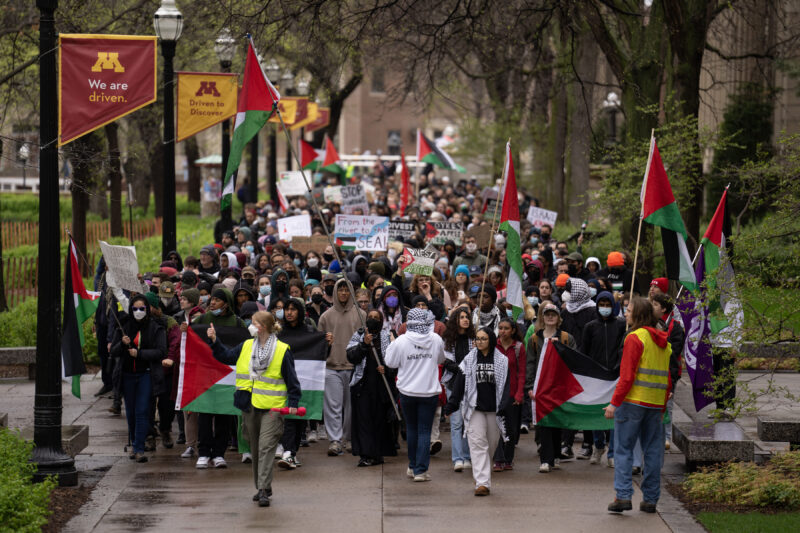
During the event, protesters packed the outside hallway shouting “baby killers” and “IOF [Israel “Occupation” Forces] off our campus,” while several others protested from outside of the building with chants comparing the IDF to the Ku Klux Klan, the university’s student-run Jewish newspaper, The Mitzpeh, reported.
The second resolution called on the university to issue an apology to students who faced disciplinary action for protesting that event. The resolution stated that “two student journalists were wrongfully detained by the University of Maryland Police Department for over an hour while attempting to document the event.” At the time, UMPD said in a statement that the student journalists refused to provide identification or credentials.
Both resolutions passed 25-0, with one abstention.
UMD has one of the largest Jewish student populations in the country — nearly 20% of the College Park undergraduate student body of more than 30,000 students is Jewish, according to Hillel International. But there are “very few” Jewish students remaining in student government, junior criminology and criminal justice major Meirav Solomon told Jewish Insider.
Solomon was removed as a student government member in 2023 after being put on a “blacklist” of students who she said were accused of “not believing in human rights.” She told The Mitzpeh at the time that the list profiled candidates with “Jewish-sounding names,” and most students denounced by the document had never voiced a public opinion on the Israeli-Palestinian conflict.
The current student government is mostly composed of Students for Justice in Palestine members, or people who support the group, Solomon said.
The latest resolutions follow the passing of a separate resolution — voted on at the start of Yom Kippur — calling on the university and its charitable foundation to implement a boycott of companies and academic institutions with ties to “Israel’s regime of apartheid and occupation.”
“Jewish students on campus are already feeling very unsafe,” said Solomon. “But these resolutions have the most shocking language I’ve seen. This is extreme language and doubles down on making Jewish students feel that they don’t have a voice in student government.”
When the BDS vote was announced in October, UMD President Darryll Pines told the university’s newspaper, The Diamondback, that the university supports SGA’s right to debate the issue. But he added that the university wants to ensure the process is “open and fair and has dialogue from all parties of our broad student body.”
“Resolutions voted on by the Student Government Association are student-led and reflect perspectives of voting members of the SGA,” a university spokesperson told JI at the time of the BDS resolution vote. “They have no bearing on university policy or practice.”
This story was updated on Thursday to reflect the outcome of the vote.
Please log in if you already have a subscription, or subscribe to access the latest updates.
 Continue with Google

 Continue with Apple