












































































Senate Democrats voted in lockstep to block a procedural motion to open debate on the 2027 National Defense Authorization Act
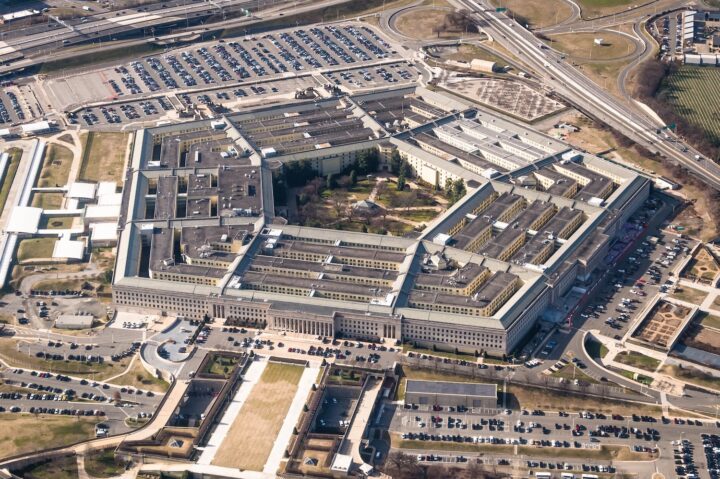
Getty Images
The Pentagon


 Add JewishInsider on Google
Citing concerns about the Iran war and the administration’s elevated defense funding request, Senate Democrats voted in lockstep on Tuesday evening to block a procedural motion to open debate on the 2027 National Defense Authorization Act, despite the bill passing out of the Armed Services Committee with bipartisan support.
The decision to block the start of debate on the NDAA — an annual must-pass bill that typically garners strong bipartisan support — is a rare step by Democrats signaling significant frustrations with the Trump administration’s ongoing war against Iran.
Sen. Jack Reed (D-RI), the top Democrat on the Armed Services Committee, said in a statement that he continues to support provisions in the bill, “but I cannot vote to proceed to a bill that enables an ongoing war against Iran that Congress never authorized and the American people overwhelmingly oppose.”
He said that Democrats are seeking amendments to “require accountability” for the war that have been rejected by Republicans. Reed added that Democrats also cannot support a significant increase in defense spending without more reliable accounting of the costs of the Iran war or “basic information” about it, and without a corresponding increase in non-defense spending.
Sen. Patty Murray (D-WA), the ranking member of the Senate Appropriations Committee, similarly cited the Iran war as a primary reason for her opposition to the bill.
“I will always do everything in my power to take care of our servicemembers and keep our country safe, but this bill authorizes President Trump’s absurd $1.5 trillion defense budget request while doing nothing to put an end to his disastrous war or prevent him from starting more costly conflicts abroad,” Murray said in a statement. “I refuse to endorse President [Donald] Trump’s obscene war budget, and I refuse to move this bill forward as Trump pushes our country deeper into a war the American people oppose”
Sen. Jeanne Shaheen (D-NH), the ranking Democrat on the Senate Foreign Relations Committee, said in a statement that it is “vital that we both pass the NDAA and that we constrain the President’s lawless and costly war against Iran.”
“With the President re-launching his self-defeating war, I voted against the motion to end debate on the NDAA, so we can continue to advocate for greater transparency and an end to this conflict,” Shaheen continued.
She said that amendments to reduce overall spending and withhold any congressional authorization for the Iran war failed along party lines during the closed-door committee markup of the NDAA.
Six progressive Democrats — Sens. Chirs Van Hollen (D-MD), Bernie Sanders (I-VT), Jeff Merkley (D-OR), Peter Welch (D-VT), Ed Markey (D-MA) and Elizabeth Warren (D-MA) — said they would vote against the motion to demand a vote on removing a provision on U.S.-Israel cooperation from the bill, and urged colleagues to do the same.
Though some anti-Israel voices have tried to paint that provision as the reason the Democratic caucus voted en masse against the bill, most Democrats did not cite that in their own statements on the bill.
Sen. John Fetterman (D-PA), the only Senate Democrat who has unreservedly supported the Iran war, was not present for the vote.
Republicans called the Democratic blockade dangerous to national security.
Sen. Chuck Grassley (R-IA) called the vote “SHAMEFUL” and said that the vote demonstrates that Democrats don’t take national security issues, which he described as the most important responsibility of the federal government, seriously.
‘We've degraded a lot of it. But all that is still there, and there's work to be done,’ the Israeli prime minister told CBS

Screenshot
Israeli Prime Minister Benjamin Netanyahu in CBS “60 Minutes” interview with Major Garrett
Israeli Prime Minister Benjamin Netanyahu said in a CBS “60 Minutes” interview on Sunday that the war against Iran is not yet over, in spite of the weekslong ceasefire and assertions by the U.S. administration that the operations that began in February have concluded.
In the interview with Major Garrett, Netanyahu also reiterated his call to end direct U.S. financial aid for Israel over the next 10 years.
Netanyahu said that, while the joint U.S. and Israeli operations in Iran accomplished much, the war is “not over,” with nuclear material still in Iran, and certain Iranian enrichment sites, proxies and ballistic missile efforts surviving.
“We’ve degraded a lot of it. But all that is still there, and there’s work to be done,” he said, adding that any diplomatic agreement with Iran should address all of those areas. Netanyahu said that he would be happy to see an agreement, if it covers those areas, but that both Israel and the United States are prepared to re-engage militarily if it does not.
The Islamic Republic regime, he added, is at its “weakest point” but “it’s not over.” Asked whether there is anyone on the Iranian side capable of negotiating a durable deal, Netanyahu declined to disclose his views publicly, but said he had shared his opinion with Trump.
Netanyahu denied reports that he had assured Trump prior to the beginning of the war that the Iranian regime would fall.
“[We] both agreed that there was both uncertainty and risk involved,” Netanyahu said. “And I remember … I said, and he said that there’s danger in action, in taking action. But there’s greater danger in not taking action.”
Addressing a question about the physical condition and influence of Iran’s supreme leader, Ayatollah Mojtaba Khamenei, who was reportedly seriously wounded at the beginning of the war and has made no public appearances since, Netanyahu said, “I think he is alive.”
“What his condition is, it’s hard to say,” Netanyahu said. “You know, he’s holed up in some bunker or in some secret place and he’s, I think he’s trying to exert his authority. I don’t think he has the same authority that his father had … that’s also creating the disruptions in the regime.”
Asked whether the U.S. and Israel had underestimated the likelihood that Iran would close the Strait of Hormuz, he said that they came to understand the issue over the course of the war. But he argued that Tehran’s decision to close the Strait has proven costly for Iran, in light of the U.S.-imposed blockade.
He also declared that Iran would have had a nuclear weapon now, or within two months, if Israel and the U.S. had not carried out their operations in 2025 and 2026.
“The most pointed success is knocking out 20 top nuclear scientists who were working on the atomic bombs to be used against Israel, America and anyone else,” Netanyahu said.
🇮🇷WATCH: Iran might already have a nuclear bomb, had Israel not launched its two military operations, Israeli PM Netanyahu said on his "60 Minutes" CBS interview.
— Jewish Insider (@jewishinsider) May 11, 2026
Read more here: https://t.co/ABBvkCPGHp pic.twitter.com/chDlNiYKeB
“I think taking out that amount of know-how — it doesn’t eliminate the know-how but it sets them back,” he continued. “Does it mean that they can’t produce a device? No. But it means that if they planned this arsenal of nuclear atomic bombs that they thought they’d have by now — that’s gone, that’s been pushed back, and it’s important they don’t have an atomic arsenal. But they would have had it and we would have faced certain death. So the greatest accomplishment is we’re alive.”
Netanyahu recounted conversations in 2016 and 2024 with Trump in which Trump expressed concern about Iran’s nuclear program. Asked why the U.S. had not acted militarily until 2025, Netanyahu said that Trump had been hopeful that sanctions imposed in his first administration would stop Iran’s nuclear program, but they did not fully do so.
Netanyahu reiterated his call to draw down and ultimately end direct U.S. financial support for Israel over the next decade — despite tensions that his stance has caused with supporters of Israel on both sides of the aisle. He also said he wants to begin drawing down financial support now, rather than waiting for the next Congress, adding that “it could go down very fast.”
Israeli PM Benjamin Netanyahu: "I want to draw down the American support to Israel to zero."
— Jewish Insider (@jewishinsider) May 11, 2026
In a "60 Minutes" CBS interview, Netanyahu reiterated his call to end direct U.S. financial aid for Israel over the next 10 years.
Read more here: https://t.co/4AXZP3RyUc pic.twitter.com/3NI5nWNW47
He said that the future of the relationship should be focused on joint projects equally funded by both Israel and the United States, from which the two countries would share equally. Such a system is how missile defense funding is currently provided, among other projects, but that funding has also come under attack by some in the U.S.
Netanyahu blamed social media, and the manipulation of American social media users by hostile foreign actors using bot farms, for cratering support for Israel among the American people.
“While they’re attacking us with the equivalent of F-35, we’re trying to fight them with a Polish cavalry,” Netanyahu said. “So I think we have to engage on that front, not by censorship but by finding ways that are applicable to democracies. … We have a problem. I recognize it. And we have to get our act together.”
Asked about Gaza, Netanyahu said that Hamas still must be disarmed, demilitarized and deradicalized, and that he has asked the U.S. to provide names of countries that are willing to send in their own troops to carry out that effort, given that Hamas has reneged on its ceasefire obligations. He suggested that Israel may ultimately need to carry out that mission itself.
“If it comes down to us, then we’ll have to do it, but we’ll choose the time and the circumstances in which to do it because we’ve got a few other things,” he said. “But we are not going to let Hamas ever threaten Israel again.”
The Israeli prime minister said that Israel had destroyed more than 90% of Hezbollah’s missile and rocket stockpile, but that the group still maintains thousands of such weapons. He said that an invasion of Lebanon was necessary to prevent a repeat of the Oct. 7, 2023, Hamas incursions into Israel from Israel’s north.
Asked about Russian and Chinese support for Iran during the current war, Netanyahu largely dodged the question. He argued that an emboldened Iran is not in China’s best interests, and said that Russian military support to Iran has “not been a big issue” — while declining to comment on intelligence support, which Moscow has reportedly provided Tehran in the form of targeting data for missile and drone attacks throughout the region.
Jewish Insider’s Israel editor Tamara Zieve contributed to this report.
Former CENTCOM head Gen. Frank McKenzie: ‘If you are sitting down at CENTCOM right now, you are satisfied with where you are’

Tolga Akbaba/Anadolu via Getty Images
A view shows explosions lighting up the skyline amid ongoing US-Israel attacks in Tehran, Iran, on March 25, 2026.
Former U.S. Central Command head Gen. Frank McKenzie said Wednesday that the U.S. military is “in the heart of the plan” in its war against Iran, pointing to major military achievements against Tehran’s missile and military capabilities, while cautioning that the conflict remains a grinding, long-term campaign.
As the conflict between the U.S., Israel and Iran nears the one-month mark, officials say Iran’s capabilities have been severely degraded, while President Donald Trump has asserted that the war is nearly over and that its objectives have largely been achieved.
At the same time, reports indicate that Iran has rejected Trump administration proposals to negotiate an end to the conflict, while the Pentagon is deploying the military’s highly specialized 82nd Airborne Division to the Middle East — raising fresh questions about the trajectory of the war and the broader strategy.
During a webinar hosted by the Jewish Institute for National Security of America, McKenzie said the U.S. is “accomplishing the objectives that we set out. CENTCOM is executing a long-prepared campaign plan. This is not something that we’ve drawn up on the back of the envelope day-to-day. These are things that have been studied and refined for many years. If you are sitting down at CENTCOM right now, you are satisfied with where you are.”
McKenzie said one of the clearest indicators of success is that Iran has been unable to generate the kind of large ballistic missile salvos that U.S. military planners had long feared.
“Iran has not been able to mount massive volleys against Israel. Have they been able to fire some number of missiles against our targets? Yes, but not the massive volleys that we thought would make it hard for us to defend,” McKenzie said, attributing that in part to Iran’s own strategic miscalculation.
“The Iranians made a mistake in designing their ballistic missile force. They mistook hardening and burying for security,” McKenzie said. “The truth of warfare today is this: if you can see it, you can hit it. If you can hit it, you can kill it. And even if you dig yourself deep underground with these beautiful missile cities, that just makes it easier for us to strike and destroy these missiles wholesale rather than retail.”
Yaacov Ayish, former head of the IDF’s general staff, also said that “significant progress” has been made. He noted that Iran’s ballistic missile capabilities have subsided.
“When I’m thinking about the amount of ballistic missiles launched by the Iranians compared to what they had planned, I think they are in a very very bad place, and this is due to the fact that not only their command control capabilities were shattered since day one of this war, but also because we [the IDF] are, together with the U.S., hunting their launching capabilities.”
McKenzie said the U.S. is also making progress against Iran’s drone threat, though he acknowledged that it remains an evolving challenge. Throughout the conflict, Tehran has launched over 2,000 low-cost, easy-to-produce drones at targets across the Middle East.
“We are still absorbing how to employ and defend against drones, as is really everybody else,” he said. “The best way to do that is going to be by striking where the drones are manufactured, where they’re launched. The worst way to do it is to defend them in the terminal area.”
McKenzie also addressed the conflict over the Strait of Hormuz, where Iran has effectively blocked one of the world’s most critical oil routes. He said the U.S. has already struck Iran’s major naval assets and is now focused on “preparatory steps in order to clear” it.
“What that means is first clearing those craft, getting rid of Iranian submarines, looking at the fast-attack craft, the small cigarette-boat type vessels that can swarm out from the northern to the southern coast of Iran … to affect shipping in the region,” McKenzie said. “CENTCOM is busy on a program of doing that. I think there’s probably some days left ahead of work to finish that. But it’s progressing.”
He said Iran also retains a “large and capable stack of mines,” and suggested CENTCOM has likely been targeting both the mines and the vessels used to lay them.
“You don’t have to clear the whole Strait of Hormuz,” McKenzie said. “You’ve got to clear a route that you’re going to bring vessels through.”
Ayish noted that he sees “two ways to solve” the tension at the strait.
“One is the diplomatic channel that is under discussion between the U.S. and the Iranians via certain mediators, and there is the military option,” Ayish said. “When you are analyzing the achievements that were achieved, it seems like both options are viable, and I think the major reason for the Iranians to go into this negotiation is because they know that it’s very imminent. Both options are seriously on the table.”
When asked whether CENTCOM had failed to adequately prepare for what had unfolded in the strait, McKenzie rejected that premise.
“I’m not sure I’d agree with that assertion,” he said. “You build your plan off the forces that you have. We’ve always thought there’d be a struggle over this. The nature of warfare is you can’t get everything you want. Sometimes it takes a little while to get that. I think we’re working toward that end right now.”
McKenzie also declined to rule out the possibility of U.S. boots on the ground, an outcome many Democrats and some Republicans have strongly opposed.
“I think it’s certainly something we want the Iranians to worry about,” McKenzie said. “I would certainly leave that on the table, and then I wouldn’t share what I was going to do. I think we want them to be very worried about that.”
Meanwhile, while Ayish noted a goal of achieving “a situation that will allow a regime change in the future in Iran,” McKenzie said the U.S. is not directly pursuing regime change in Tehran, even if it could emerge as a consequence of the campaign, even as Trump told reporters Tuesday that regime change had already been achieved.
“The United States is not pursuing regime change directly. It may be a product of what we’re doing,” McKenzie said. “We’d like to get to a point where there’s going to be some entity in Tehran that will negotiate the objectives we want for this campaign, whether it’s a completely new regime or a version of this regime that is so affected by pressure that they’re willing to make these concessions.”
Plus, Fetterman rips fellow Dems on Iran

Michael Brochstein/SOPA Images/LightRocket via Getty Images
Ron Dermer, Israeli ambassador to the United States, seen speaking at an AIPAC Policy Conference in Washington, DC.
👋 Good Wednesday morning!
In today’s Daily Kickoff, we look at former Israeli Strategic Affair Minister Ron Dermer’s return to the Prime Minister’s Office to assist Jerusalem during the war against Iran, and report on concerns from two of New York City’s largest Jewish groups over Mayor Zohran Mamdani’s recent hosting of Columbia anti-Israel protest leader Mahmoud Khalil at Gracie Mansion and ties to an activist who called to “strike” Tel Aviv. We spotlight Democratic Majority for Israel’s efforts in three under-the-radar House races in California and Colorado swing districts, and report on moves by a new super PAC looking to blunt far-left congressional candidate Kat Abughazaleh’s last-minute surge in a Chicago-area district. Also in today’s Daily Kickoff: Sen. John Fetterman, Noah Pollak and Aaron Parnas.
Today’s Daily Kickoff was curated by JI Executive Editor Melissa Weiss and Israel Editor Tamara Zieve, with an assist from Danielle Cohen-Kanik. Have a tip? Email us here.
What We’re Watching
- President Donald Trump is speaking at an event today in Hebron, Ky., the home turf of Rep. Thomas Massie (R-KY), the House GOP’s leading isolationist and anti-Israel voice who has also opposed key Trump administration policies. Massie won’t be at the Hebron event, but Ed Gallrein, who is mounting a primary challenge to Massie and has already been endorsed by the president, will be in attendance. Read more here.
- Fox News’ Bret Baier will discuss his years covering the White House and Pentagon in conversation with Gary Rosenblatt tonight at the Temple Emanu-El Streicker Center in New York City.
What You Should Know
A QUICK WORD WITH JI’S LAHAV HARKOV
When Israel and the U.S. launched their first strikes on Iran, Ron Dermer was in Australia, about as far as one could get from the Israeli Prime Minister’s Office in Jerusalem or the Defense Ministry in Tel Aviv. He soon found himself, like many other Israelis wanting to get home from abroad, on a plane to Taba, Egypt, from which point he would cross back into Israel, where airspace remains restricted.
Since November, when he resigned from his official post as strategic affairs minister, Dermer has spent most of his time traveling for speaking engagements. But now, two sources with knowledge of the matter confirmed to Jewish Insider, Dermer is back again in public service.
He may not have an official title, but he is doing what he has done for the previous three years — serving as Israeli Prime Minister Benjamin Netanyahu’s closest and most trusted advisor. Israel’s Walla News quoted a source in the Prime Minister’s Office who said Dermer was reporting for “reserve duty,” like over 100,000 other Israelis since the outset of the war with Iran.
Netanyahu and Dermer’s relationship has been so close for the past 26 years that Dermer has been called the prime minister’s third son and nicknamed “Bibi’s brain.” With a very small inner circle and few advisors whom he truly trusts, Netanyahu views Dermer as a critical asset to his team at a time when the U.S. and Israel are making decisions that will determine the future of the Middle East for years to come.
Dermer is also known as having a good relationship with the Trump administration, and has reportedly been taking part in Netanyahu’s nightly calls with President Donald Trump.
TAX TACTIC

The next frontier for the Trump administration’s war with higher education might be the U.S. tax code, a senior Education Department official said on Tuesday. Speaking at a conference about antisemitism organized by the Republican Jewish Coalition and National Review, Noah Pollak, a senior advisor to Education Secretary Linda McMahon, said that making changes to American tax policy could be a useful vehicle to fight antisemitism on campuses, Jewish Insider’s Gabby Deutch reports.
Pollak’s position: Pollak’s argument was a wonky one, suggesting that changes to IRS rules regulating nonprofits could increase transparency — and require the organizations fomenting antisemitism at U.S. universities to reveal much more information about their operations and staff. Pollak called for the federal government to create limits on fiscal sponsorship, a tool by which an existing nonprofit incubates a new one. This allows a new nonprofit organization to launch quickly, with donations passing through a larger, more established organization. The idea is that once the new nonprofit has a steadier foundation, it will eventually incorporate as a 501(c)(3) nonprofit with the IRS, after which point it must meet certain federal requirements and make information about its finances and activities publicly available.
Raising the alarm: Antisemitism is rising on the American right, Sen. Ted Cruz (R-TX) warned on Tuesday at the same conference, expressing concern that efforts to combat it are not doing so quickly or effectively enough.
DEMOCRATIC DIVIDE

Sen. John Fetterman (D-PA) is criticizing his fellow Democrats over their opposition to President Donald Trump’s decision to launch the U.S. war in Iran, arguing that his party should celebrate efforts to bring down the Iranian regime and its military and nuclear capabilities as a “positive development,” Jewish Insider’s Emily Jacobs and Marc Rod report.
What he said: “First, let’s get to history. Every single Democratic presidential candidate or Democratic president all agreed, we can never allow Iran to acquire a nuclear bomb. Everyone has run the gamut: sanctions, treaties, proxies, other kinds of negotiations. It never worked,” Fetterman told JI in an interview on Tuesday. “But you know what it actually produced? Nine hundred pounds of just pure, weapons-grade uranium.”
Escalation alarm: Sen. Richard Blumenthal (D-CT), following a classified briefing for the Senate Armed Services Committee on the war in Iran on Tuesday morning, said he’s concerned that the U.S. is headed toward putting ground troops in Iran — echoing and elevating concerns he voiced following a classified briefing last week. But other colleagues have, at this point, not affirmed Blumenthal’s view.
TROUBLING TIES
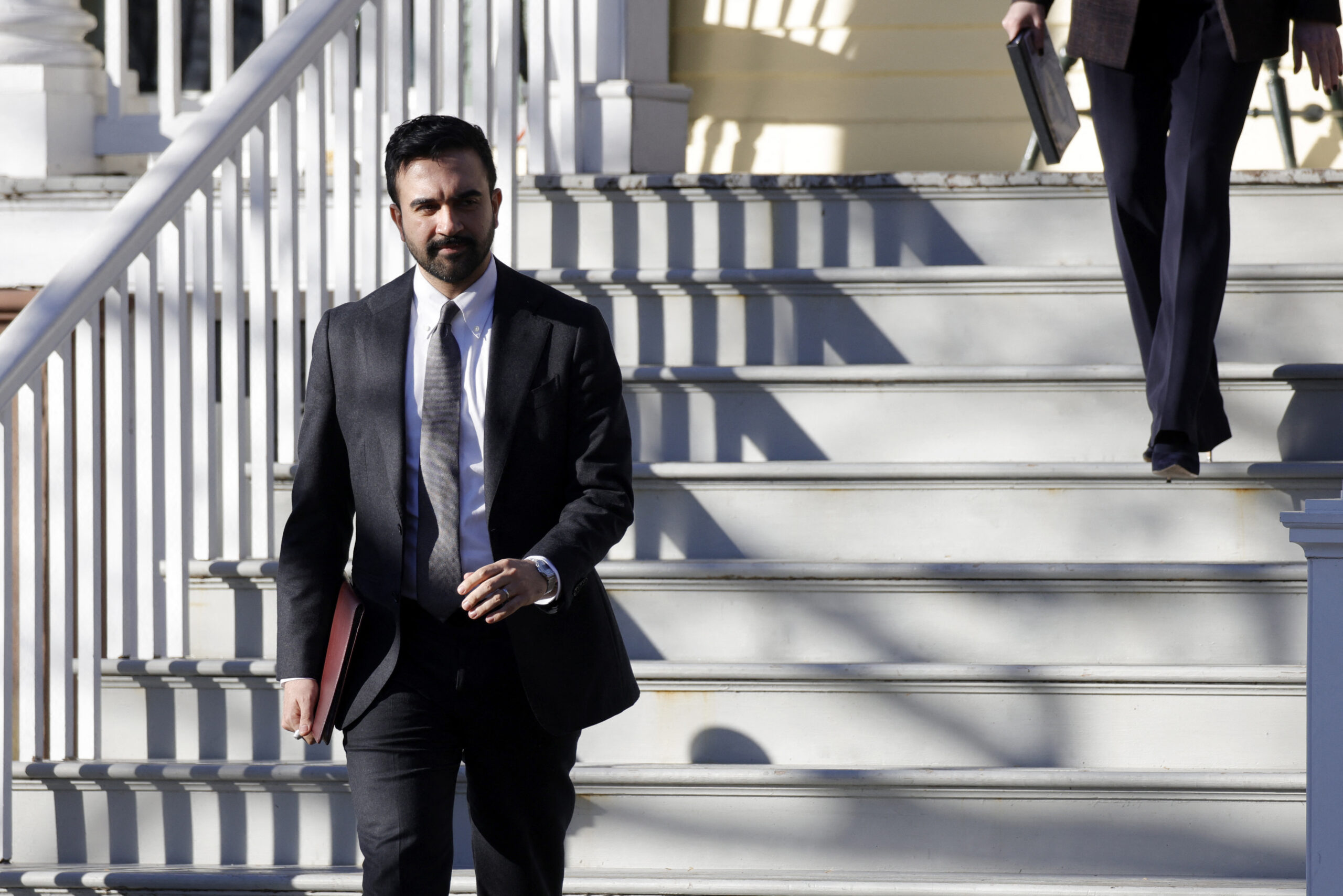
Two of New York’s largest Jewish community groups voiced consternation Tuesday night over New York City Mayor Zohran Mamdani’s recent fraternizing with activists who had defended and even advocated violence against Israel, Jewish Insider’s Will Bredderman reports. The criticism from the Jewish Community Relations Council of New York and the UJA-Federation of New York came after Mamdani shared a photo on social media Monday night of himself and his wife hosting former Columbia University campus activist Mahmoud Khalil at Gracie Mansion — and after reports that an activist who led a chant to “strike Tel Aviv” during a 2024 protest in New York City had introduced the mayor at an event in Staten Island.
What they said: JCRC CEO Mark Treyger highlighted federal findings that the protests that Khalil helped lead created a hostile environment for Jewish students at Columbia. He acknowledged Khalil’s legal fight to avoid deportation, but urged the mayor to also open Gracie Mansion to those subjected to harassment on the Ivy League campus. The UJA-Federation statement noted that Khalil had rationalized the Oct. 7, 2023, attacks as a means of preventing Israeli-Saudi normalization, and noted the “strike Tel Aviv” chant Abdullah Akl, the political director of the Muslim American Society of New York, had led, which also lauded now-deceased Hamas spokesperson Abu Obeida.
Additional condemnation: A spokesperson for the the Anti-Defamation League told JI’s Haley Cohen, “Welcoming someone known for justifying the Oct. 7 Hamas terror attacks as an honored guest at Gracie Mansion — while some in the Mayor’s inner circle have amplified antisemitic content and posts dismissing the atrocities of that day — sends a deeply troubling message.”
PRIMARY PRESSURE

As Democratic Majority for Israel prepares for the midterms amid growing divisions in the party over Middle East policy, the pro-Israel group is now focusing much of its energy on three under-the-radar House races for swing seats in California and Colorado that could be key to the party’s chances of reclaiming the majority in Congress. In those primaries, DMFI’s political arm recently endorsed a trio of relatively moderate, pro-Israel Democrats facing opponents whom, the group feels, have demonstrated anti-Israel records or questionable positions on Middle East policy — qualities that could hamper their odds of winning Republican-held districts in the November election, Jewish Insider’s Matthew Kassel reports.
Who they’re backing: DMFI’s political arm is backing Marni von Wilpert, a San Diego councilwoman seeking the nomination in California’s 48th Congressional District; Jasmeet Bains, a California assemblywoman and a physician competing in the state’s 22nd District; and Shannon Bird, a former Colorado legislator running to unseat a vulnerable freshman Republican in the state’s 8th District. “These definitely rank high on our list of priorities,” Brian Romick, DMFI’s president and the chair of its super PAC, said in an interview with JI on Tuesday. “These are all strong places where this matters.”
PAC PUSHBACK

With one week to go until the hotly contested Democratic primary in Illinois’ 9th Congressional District, a new, well-funded super PAC is spending big on an ad campaign against Kat Abughazaleh, a far-left social media influencer who has staked out strong anti-Israel stances, Jewish Insider’ Marc Rod reports.
Line of attack: The group, Chicago Progressive Partnership, has reportedly spent around $1 million since its campaign against Abughazaleh began last week. A new television ad appears designed to sow doubt about her progressive credentials, referencing her writings from high school, when she backed Marco Rubio, then a senator, in the 2016 presidential primary and expressed conservative views on Social Security. Other ads from the group accused her of taking donations from billionaires, Republicans and Trump supporters, an issue that has become a major point of attack in the race, primarily targeting moderate state Sen. Laura Fine. “Who is the real Kat Abughazaleh? We don’t really know,” one ad states.
LAW AND ORDER

In trying to strike a balance between free expression and anti-discrimination, universities must do a better job at providing a consistent standard, David Schizer, the former dean of Columbia Law School, said on Tuesday during his keynote address at the fifth annual “Law and Antisemitism” conference at Yeshiva University’s Cardozo School of Law, Jewish Insider’s Haley Cohen reports.
Different response: “The rules need to be the same for everyone,” Schizer said. “This means that if a university takes a step to shield Black or female students from harassment, the university needs to take a comparable step to protect Jewish and Israeli students, and vice versa. Unfortunately, universities have not always been consistent … but after Oct. 7, when Jewish and Israeli students complained, the response was different. Instead of deferring, universities invoked free speech principles. Likewise, instead of condemning this offensive speech, many universities adopted institutional neutrality.”
Worthy Reads
Russia-Iran Axis: In The Washington Post, Sen. Jeanne Shaheen (D-NH) argues that the U.S. must address the looming threat posed by Russia as it bolsters Iran in the current war against the U.S. and Israel. “That Russia-Iran partnership is now shaping the war in the Middle East as well. According to The Washington Post, U.S. officials believe Russia is sharing intelligence with Iran as Tehran targets American and allied interests in the region. Russia is not a bystander in this crisis. It is helping Iran challenge the United States. … Stopping Iran’s attacks on Americans must go hand in hand with tightening pressure on the Kremlin. Enforcing sanctions on Russia’s oil exports, cracking down on the shadow fleet that funds Putin’s war and deepening cooperation with Ukraine’s battle-tested military are not favors to Kyiv. They are steps that protect American troops and interests.” [WashPost]
School Daze: The New Yorker’s Nicholas Lemann looks at tensions between universities that have long relied on federal funding and the government as the Trump administration cracks down on campuses over social issues and schools’ alleged failures to address antisemitism. “The Trump Administration has deployed a brutally effective, previously unused technique for getting these institutions’ full attention: suspending their funds, even those appropriated by Congress and legally committed to in contracts. The Trump Administration is unusual in its disregard for the law, rough way of doing business, and heedlessness about the effects of its actions. Still, it isn’t completely out of touch with political reality. These actions are not nearly as unpopular as universities think they should be.” [NewYorker]
The Hamas Caucus: Commentary’s Seth Mandel reflects on the growing tolerance in some political circles for individuals who support Hamas’ Oct. 7, 2023, attack on Israel. “Most of all, it’s just a strange feeling to know how many of the people you interact with would be unmoved if you were to go up in flames right in front of them. Essentially, October 7 became the kind of dividing line that made a lot of Jews understand history. So it’s a useful question to ponder: How should we act? After all, not only must we maintain precisely the values we did before, but we also should work toward returning society to a place in which support for October 7 brings public shame.” [Commentary]
Lev’s Lefty Son: USA Today’s Jay Stahl profiles Gen Z Democratic influencer Aaron Parnas, the son of former Trump associate and congressional candidate Lev Parnas. “From his front-facing iPhone camera, the low-key lawyer, formerly a practicing civil litigator, amassed more than 7.5 million followers on Instagram and TikTok. His fan base eclipses the entire following of progressive American media companies such as The Huffington Post and Mother Jones. … His TikTok has nearly 600 million all-time likes. His Parnas Perspective newsletter on Substack is ranked No. 1 in the news category. He wakes up every day by 7:45 a.m., pours a cup of coffee and releases his first Substack morning report by 9:30 a.m. ET. His loyal fan base is diverse, ranging from Gen Z political observers to White MS NOW moms and Black TikTokers who praise his go-go-go posting schedule.” [USAToday]
Word on the Street
With no clear path to confirmation in the Senate, Jeremy Carl withdrew his nomination to be assistant secretary of state for international organizations on Tuesday, a month after he was grilled at a confirmation hearing and struggled to explain his past antisemitic, anti-Israel and otherwise inflammatory comments, Jewish Insider’s Marc Rod reports…
The Senate confirmed Gen. Joshua Rudd as head of the National Security Agency and U.S. Cyber Command in a 71-29 vote…
The Pentagon said that approximately 140 U.S. servicemembers have been injured since the start of the war with Iran, the majority of whom have suffered minor injuries…
A U.S. diplomatic facility in Baghdad was struck in a drone assault believed to have been launched by a pro-Iran militia; five of the six drones fired at the logistics hub were shot down, with one hitting the compound…
The State Department ordered the evacuation of U.S. diplomats and their families from a consulate in the southern Turkish city of Adana and suspended all consular services at the branch after two missiles aimed at Turkey were shot down…
Iranian and Israeli officials said that newly named Iranian Supreme Leader Mojtaba Khamenei was wounded during the opening salvos of the war last month, though the extent of his injuries was unknown…
Israeli officials told the Financial Times that they expect the country’s conflict against Hezbollah in Lebanon to continue on after the conclusion of the war with Iran…
The New York Times’ Bret Stephens considers the possible scenarios going forward in Iran, including regime change, regime modification and potential state collapse…
The Washington Post looks at an Iran-backed propaganda effort using the conspiracy theory that the U.S. and Israel jointly launched the war against Iran to distract from the Epstein files in an effort to draw attention to Tehran’s talking points…
The Financial Times reports on the use of a “number station” in western Europe that is transmitting what appear to be Farsi codes to receivers in Iran as part of what former U.S. intelligence officials have suggested could be a way for Washington to connect with agents inside the Islamic Republic…
FIFA head Gianni Infantino said that President Donald Trump had provided assurances that the Iranian national soccer team would be “welcome” to participate in this year’s World Cup, which is taking place at a number of venues across North America…
The Wall Street Journal spotlights Saudi Arabia’s East-West pipeline and the United Arab Emirates’ Habshan-Fujairah pipeline, both of which were built to bypass the Strait of Hormuz, which is effectively controlled by the Islamic Revolutionary Guard Corps and is where Iran has begun to lay mines…
A federal judge is weighing whether to force the University of Pennsylvania to turn over records of Jewish students and faculty to the Trump administration as the Equal Employment Opportunity Commission attempts to conduct a probe into antisemitism at the Ivy League school; read more about the legal battle here…
Clay Fuller, a Trump-endorsed district attorney, easily advanced to a runoff in the special election to replace former Rep. Marjorie Taylor Greene (R-GA) in Congress; Fuller will face off next month against a long-shot Democratic candidate, veteran Shawn Harris…
Former House Speaker Nancy Pelosi (D-CA) is endorsing former Capitol Police officer Harry Dunn in the race to replace retiring Rep. Steny Hoyer (D-MD); Hoyer, who served with Pelosi in House Democratic leadership, has endorsed state Del. Adrian Boafo…
Populist political neophyte Allison Ziogas launched a bid for Congress in New York City’s only red district, which covers Staten Island and parts of Brooklyn and is currently represented by Rep. Nicole Malliotakis (R-NY); Ziogas has tapped Democratic consultant Morris Katz, who has worked with far-left candidates including New York City Mayor Zohran Mamdani and Maine Senate candidate Graham Platner…
CNN significantly changed a story and removed a social media post on Tuesday that downplayed an attempted terrorist attack over the weekend outside of Manhattan’s Gracie Mansion, initially writing that the suspects traveled from Pennsylvania for “what could’ve been a normal day” during the city’s “abnormally warm weather,” Jewish Insider’s Haley Cohen reports…
Pershing Square’s Bill Ackman filed for an initial public offering to take his hedge fund public in tandem with a new investment fund, Pershing Square USA…
J., The Jewish News of Northern California spotlights the newly formed Garry’s List, the self-described “radically centrist,” nonpartisan group formed by Y Combinator CEO Garry Tan that seeks to influence California state politics and is attracting Jewish and Israeli tech and business professionals…
Police in San Jose, Calif., are investigating a violent attack against two adult men outside an upscale restaurant as an antisemitic hate crime, a spokesperson for the police department confirmed on Tuesday, Jewish Insider’s Gabby Deutch reports. Tali Klima, a spokesperson for the grassroots advocacy group Bay Area Jewish Coalition, urged elected officials in the Silicon Valley community to speak out against the attack, which occurred in Rep. Ro Khanna’s (D-CA) district…
The Secure Community Network said that there is no known threat to the Jewish community following an active shooter incident Tuesday afternoon near the Agudath Israel of Baltimore synagogue in which a Baltimore Police officer and a suspect were shot, Jewish Insider’s Haley Cohen reports…
Police in Teaneck, N.J., arrested a teenager accused of shooting a Jewish man with a gel pellet gun from a car after stopping to ask the man his views on the Israel-Palestinian conflict…
U.K. Home Secretary Shabana Mahmood approved a request from London’s Metropolitan Police to ban the annual Al Quds Day march, which had been slated for Saturday and had faced criticism for organizers’ support for assassinated Iranian Supreme Leader Ayatollah Ali Khamenei…
Australia assisted two additional members of Iran’s national women’s soccer team in seeking asylum after granting asylum to five of their teammates; one of the women changed her mind and contacted the Iranian Embassy to assist in repatriation efforts, disclosing the team’s location to Iranian officials and prompting those who planned to stay in Australia to have to move…
Former Heritage Foundation staffer Daniel Flesch is joining the Foundation for Defense of Democracies after departing Heritage amid a mass exodus in response to Heritage President Kevin Roberts’ defense of Tucker Carlson…
Pic of the Day

United Hatzalah President Eli Beer (left) on Tuesday visited a site in central Israel where a fragment of an intercepted Iranian ballistic missile landed.
Birthdays

Composer and conductor, he has composed the music for nearly 100 feature films, David Louis Newman turns 72…
Pioneering investor in high-tech startups, he was the chairman of Compaq Computer for 18 years, Benjamin “Ben” M. Rosen turns 93… Professor emeritus at Princeton University whose research focused upon the Cairo Geniza and Jewish life in Muslim countries, Mark R. Cohen turns 83… Doctor of nursing practice, Hermine Jan Warren… Film producer, director and writer, Jerry Gordon Zucker turns 76… Retired office administrator at Creative Wealth Management in Islandia, N.Y., Glenda Kresh… Culinary writer, television host and novelist, Steven Raichlen turns 73… Suzanne Dreyfus… Co-owner of One Oak Vineyard in Sonoma, Calif., Laura Zimmerman… Chairman of Lions Gate Entertainment and head of MHR Fund Management, Mark Rachesky turns 67… President of the United Arab Emirates and the ruler of Abu Dhabi, popularly known by his initials MBZ, Sheikh Mohamed bin Zayed Al Nahyan turns 65… CEO of The Carlyle Group, the world’s sixth-largest private equity firm, Harvey M. Schwartz turns 62… Managing director of Rockefeller Capital Management, Alexandra Lebenthal turns 62… College physician at Stony Brook University, internal medicine specialist, Richard E. Tuckman, MD turns 61… CEO of Weiss Public Affairs, Amy Weiss… President of JCS International, a global media company, she was a journalist for over two decades with Yedioth Ahronoth, Michal Grayevsky… Singer-songwriter, she also promotes an eponymous line of eyeglasses, Lisa Loeb turns 58… Keyboardist for the rock band Foo Fighters, Rami Jaffee turns 57… Technology executive and data scientist, Jon Cohen… CEO of Campus Apartments and a limited partner of the Philadelphia 76ers and New Jersey Devils, David J. Adelman turns 54… Chief of staff at American Friends of Magen David Adom, Daniel Kochavi… United States District Court judge based in Atlanta since 2019, Judge Steven Daniel Grimberg turns 52… Israeli singer-songwriter and pianist who has twice been recognized as Israel’s Singer of the Year, Keren Peles Toor turns 47… Film, theater and television actress, Lucy Chet DeVito turns 43… Partner at Ridgewood Energy, an energy-focused private equity firm, Samuel J. Lissner… CEO of Flowcarbon, Dana Stern Gibber… Financial consultant at Wells Fargo Advisors, Lev Beltser… Assistant director of Ramah Sports Academy, Ayala Wasser… Director of the Israel office at Britain Israel Communications and Research Centre, Richard Pater… Principal and chief strategist at MCS Group, Sharon Polansky…
Please log in if you already have a subscription, or subscribe to access the latest updates.
 Continue with Google

 Continue with Apple