














































































The self-paced program is meant to give higher education professionals a working understanding of how antisemitism shows up on campus today and what their institutions are legally required to do about it
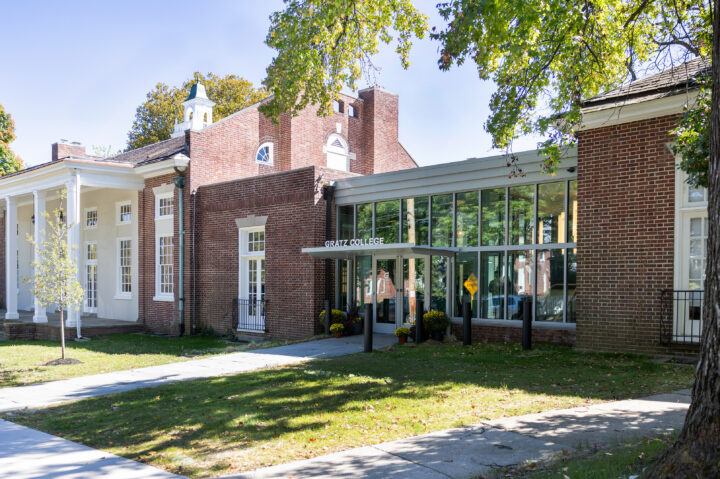
Gratz College
The entrance to Gratz College in Bala Cynwyd, Pa.


 Add JewishInsider on Google
The Anti-Defamation League and Gratz College announced on Wednesday the launch of a free training program on antisemitism aimed at college administrators and faculty.
The program comes amid continued scrutiny of universities over how they handle antisemitism on campus.
The self-paced program, “From Recognition to Response: Antisemitism on Campus,” is meant to give higher education professionals a working understanding of how antisemitism shows up on campus today and what their institutions are legally required to do about it, according to the organizers. Participants who complete all modules and assessments will receive a completion certificate from both organizations, though the program does not offer continuing education credits.
The coursework covers the relationship between Israel, Zionism and antisemitism; campus climate since the Oct. 7, 2023, terrorist attacks; and institutional response protocols. It combines ADL’s campus and civil rights work with Gratz’s Holocaust and antisemitism scholarship, and it is open to administrators, faculty, student affairs staff and conduct teams nationwide.
While the coursework covers institutions’ obligations under Title VI and Title VII, it includes a disclaimer that it is not intended to provide, and should not be construed as, specific legal advice.
The initiative expands on Gratz College’s growing footprint in the field. The Philadelphia-area Jewish college launched what it calls the nation’s first interdisciplinary master’s program in antisemitism studies in 2024, complementing its established Holocaust and genocide studies curriculum.
Ayal Feinberg, director of the Center for Holocaust Studies and Human Rights at Gratz, said in a statement that the new partnership is designed to bring together “deep academic expertise and decades of practical experience to help higher education professionals engage with these questions with greater clarity, rigor and informed judgment.”
“Understanding antisemitism requires more than addressing individual incidents — it requires understanding the history, ideas and contexts that shape how antisemitism appears today,” said Feinberg.
Academics Miri Bar-Halpern and Dean McKay are piloting the curriculum across three Northeast states with the support of AEN, with plans to build a national model for doctoral programs

Getty Images
Illustrative
Two leading psychologists are launching an initiative to help future clinicians better care for Jewish patients, Jewish Insider has learned, amid a surge of antisemitism in the mental health field that has left Jewish therapists and clients facing isolation and discrimination.
Created by Miri Bar-Halpern, a lecturer in psychology at Harvard Medical School, and Dean McKay, a professor of psychology at Fordham University, the pilot program, announced on Tuesday, will roll out in doctoral psychology programs at universities across New York, Connecticut and Massachusetts through faculty workshops and curriculum development. The Academic Engagement Network, a network of faculty and staff countering antisemitism on campus, is supporting the effort.
According to the creators, the ultimate goal of the pilot is to establish a national model for psychology education that addresses antisemitism and includes Jewish identity in training.
The program comes as 75% of Jewish-identifying medical students and professionals in American healthcare reported exposure to antisemitism in the aftermath of the Oct. 7, 2023, terrorist attacks in Israel and ensuing Gaza war, according to a 2025 peer-reviewed study published in the Journal of Religion and Health. Last week, the U.S. Department of Health and Human Services opened a federal civil rights investigation into the American Psychological Association over allegations of discrimination against Jewish and Israeli psychologists.
The launch also comes at a time of historic demand for mental health support. More than 1 in 4 Americans (28%) have talked with a mental health professional in the past year, according to an April poll by the American Psychiatric Association.
McKay and Bar-Halpern warned that the integration of certain ideological frameworks into psychology and counseling education threatens to marginalize Jewish clients.
Among the emerging frameworks drawing growing scrutiny is “decolonization therapy,” an approach that labels Zionism as a source of mental illness.
“When antisemitism begins shaping how future clinicians are trained, the consequences extend far beyond the classroom,” said Miriam Elman, executive director of AEN.
“Future psychologists will care for patients from every background. Ensuring that they understand antisemitism and Jewish identity is essential to providing ethical, culturally responsive care and maintaining trust in the mental health professions,” said Elman.
McKay expressed hope that the initiative “will help ensure that future clinicians are equipped to recognize antisemitism, understand its impact, and provide care that is both culturally responsive and evidence-based.”
Please log in if you already have a subscription, or subscribe to access the latest updates.
 Continue with Google

 Continue with Apple