



































The former congressman, now running in the special election to succeed Mikie Sherrill, says the U.S. should support Israel’s security while also serving as a ‘counterweight’ to its far right and exercising case-by-case oversight on military assistance

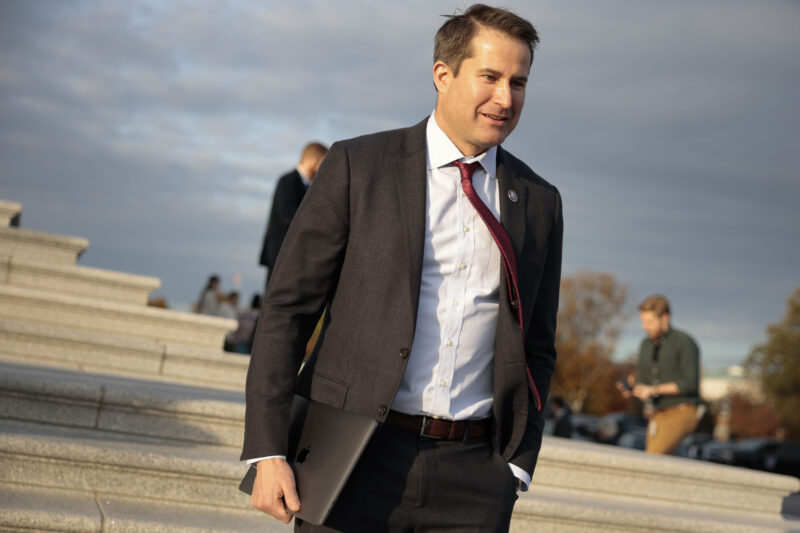
(Photo by Spencer Platt/Getty Images)
Democratic incumbent Representative Tom Malinowski participates in a get out the vote event ahead of next month’s midterm elections on October 29, 2022 in Rahway, New Jersey.


 Add JewishInsider on Google
Former Rep. Tom Malinowski (D-NJ), who established himself as a prominent voice on Capitol Hill on foreign policy and national security issues in Congress between 2019 and 2023, told Jewish Insider last week, as he mounts a congressional comeback bid, that he’s “as pro-Israel as I have ever been.”
But he also expressed more openness to policies conditioning or restricting aid, and called for the U.S. to serve as a “counterweight” to the Israeli far right. And he said that U.S. aid shouldn’t be used in furtherance of Israeli actions that the U.S. itself doesn’t support. At the same time, he expressed support for the Trump administration’s Gaza peace plan and strikes on Iran’s nuclear program.
Malinowski is one of the many Democrats who have declared their candidacies in the special election in New Jersey’s 11th Congressional District, recently vacated by Gov.-elect Mikie Sherrill. The 11th District, an affluent suburb with a sizable Jewish population, borders and incorporates portions of the district Malinowski represented for two terms.
Malinowski said that he’s “as pro-Israel as I have ever been, in the sense that I believe that Israel should be safe and secure as a Jewish and democratic state, and that the United States has a moral and strategic interest in defending Israel as that kind of state at the same.”
Malinowski said that “to be pro-Israel for me also requires listening to what the hostage families have been saying for the last couple of years, to what hundreds of Israeli security officials have been saying to their government and directly to the United States about the need to bring the war in Gaza to an end and to have some plan that addresses the legitimate desire of Palestinians to have their rights respected and to have a future that they can strive towards.”
“I would not seek to enable [any] ally to do something that I thought should not be done. It’s just a basic foreign policy principle that I think most people would agree is straightforward,” Malinowski told JI, when asked about the possibility of conditioning or suspending aid to Israel. “I would make case-by-case judgments given what’s happening on the ground.”
He said he would not support U.S. policies that would hurt Israel’s ability to protect itself, but added that the U.S. should “serve as a counterweight” to the pressure that an Israel government may feel from Israel’s far right and “use our influence and leverage and our honest voice to steer our ally away from policies that are self-destructive.”
He expressed a similar view in public interviews last year when he offered support for President Joe Biden’s moves to suspend some U.S. arms sales to Israel to pressure Israel against mounting a military incursion into the southern Gaza city of Rafah.
“I would not seek to enable [any] ally to do something that I thought should not be done. It’s just a basic foreign policy principle that I think most people would agree is straightforward,” Malinowski told JI, when asked about the possibility of conditioning or suspending aid to Israel. “I would make case-by-case judgments given what’s happening on the ground.”
He said he was not committing to supporting conditions on aid but also did not rule them out depending on the situation. “There’s no U.S. ally in the world that I would guarantee a rubber stamp on every request for military assistance, that’s not the way U.S. foreign policy functions,” Malinowski said.
He said on X in April of last year that the U.S. has, in practice, failed to apply the globally applicable U.S. laws conditioning all arms sales on human rights compliance to Israel. He said that a decision to enforce that law last year to suspend arms sales to certain Israeli units was a “step towards treating Israel as we would any other partner.”
He added that the purpose of the law is to seek remediation of the issues to prevent the need to cut off arms, as was the case for most of the Israeli units to which it was applied.
At the same time, Malinowski indicated to JI a level of skepticism of efforts to halt all offensive aid to Israel, which have been pushed by some former colleagues, arguing that the “distinction between defensive and offensive is hard to make and a bit artificial.”
He expressed support for the Trump administration’s 20-point ceasefire plan for Gaza, saying it “offers the best possible hope for a way forward” and said the U.S. should focus on pushing all parties involved to implement it to its fullest extent, to deploy the international security force to neutralize Hamas and to surge humanitarian aid.
He said any decision on Israel in Congress, including with regard to aid, would be geared toward pursuing that goal.
“I think we’re very far from being able to address the issues of sovereignty and what the ultimate answer to those questions should be,” Malinowski said. “Even many of my Palestinian and Arab American friends, I think, would say that they’re not interested in lip service to a two-state solution right now.”
He said that “serious oversight” is needed from Congress on the deal because he is concerned that Trump will be “tempted to just declare victory and claim his Nobel Peace Prize without doing the hard work of securing implementation of the rest of the plan,” when it will require “steady pressure” — on Hamas and its interlocutors as well as on Israel — to ensure that the situation does not return to the pre-Oct. 7, 2023, status quo.
Malinowski was not supportive of an effort led by some progressive lawmakers to recognize Palestinian statehood, arguing that the U.S. focus should be — and that his focus would be — on more immediate humanitarian and security issues, including ensuring the Trump plan proceeds.
“I think we’re very far from being able to address the issues of sovereignty and what the ultimate answer to those questions should be,” Malinowski explained. “Even many of my Palestinian and Arab American friends, I think, would say that they’re not interested in lip service to a two-state solution right now.”
Malinowski said he did not oppose the U.S. strikes on Iran’s nuclear facilities earlier this year, adding that U.S. intervention likely helped bring the war to a quicker close than it would otherwise have, by bringing the U.S.’ superior capabilities to bear on Iran’s nuclear facilities. He also said he’s “very happy” the Assad regime fell, Hezbollah was “significantly weakened” and the “paper tiger of Iran’s defenses has been exposed.”
At the same time, he argued that any “lasting solution” to Iran’s nuclear program will require a diplomatic agreement with “highly intrusive inspections,” and said President Donald Trump had “exaggerate[d] the impact” of the U.S. strikes.
“My hope is that we will continue to pursue that, rather than imagining that this problem can be addressed just by going to war every few years,” Malinowski said.
At home, Malinowski has spoken publicly at various occasions since the Oct. 7 attacks about anti-Israel and pro-Hamas activism in the U.S. and on college campuses. He argued in May 2024 that students who care about protecting innocent Palestinians were being overshadowed by more extreme voices advocating for the end of Israel, which he called counterproductive.
“The loudest voices are using Gaza’s plight to push a sweeping & more radical agenda of defeating Zionism and “colonialism.” This is not about ending the war but about ending Israel,” Malinowski said on X. “But the actual political effect of these protests has been to shift attention away from Gaza at the very moment (after the World Central Kitchen strike) when opinion was shifting against the war. All our attention should be on getting aid to Gazans, freeing hostages, avoiding more deaths, and what happens post-war. Instead, we have to talk about dumb 19 year olds glorifying Hamas & ‘intifada,’ drowning out the voices of others who sincerely care about saving lives.”
He said those voices also gave right-wing “bad faith partisans” fodder to “cast all legitimate criticism of self-defeating Israeli government policies” as support for Hamas and demand police crackdowns.
“Even though there is a significant problem on the far left that involves anti-Israel protests morphing into calls for an end to Israel as a Jewish state, we don’t quite have a Nazi problem in the Democratic Party in a way that leading Republicans are now acknowledging they do on their side,” Malinowski said.
Malinowski told JI that leaders need to speak up and police antisemitism on their own sides, adding that he “probably underestimated the extent of the problem on the far left” during his time on office but argued that the “problem on the right has gotten much worse and is too often dismissed by critics of the Democratic Party.”
He argued that the problem in the GOP is much more severe than in the Democratic Party. “You have leaders of the party rightly worried, as some on the Republican side are, that a significant share of the young people going into administration positions … have something akin to a Nazi ideology,” he said.
“Even though there is a significant problem on the far left that involves anti-Israel protests morphing into calls for an end to Israel as a Jewish state, we don’t quite have a Nazi problem in the Democratic Party in a way that leading Republicans are now acknowledging they do on their side,” he continued.
He also said that holding social media platforms accountable — a longtime priority for Malinowski — for their amplification of content designed to fuel hatred, will be critical. He said that social media platforms “bear the largest share of responsibility” for increased extremism on both the far left and far right.
Asked about New York City Mayor-elect Zohran Mamdani’s record on Israel and antisemitism issues, Malinowski told JI the Jewish community is “rightly feeling a tremendous amount of anxiety” about rising antisemitic rhetoric and violence.
He said Mamdani has “made a lot of decent promises about the need to reject antisemitism and hatred of all stripes, and about his interest, his determination to listen to people and to bring communities together. And he needs to be held to those promises.”
Malinowski said that if Mamdani follows through, he could prove to be a “potentially very powerful ally against antisemitism” and help to rebuild Jewish-Muslim dialogue that has broken down since Oct. 7.
“But I also understand that he has said things in the past and failed to say some things in the present that cause people understandable anxiety, and therefore everyone has to be vigilant and hold him accountable to the better angels of his nature,” the former congressman continued.
Malinowski said he decided to run for Congress again because “it would be nice to have a Congress again, one that can fulfill its basic constitutional function of checking presidential policies that go too far. … I’d like to contribute to making Congress a coequal branch again.”
And he argued that his experience in foreign policy generally is one of the key factors that makes him stand out from the rest of the field, explaining that there is a “big shortage” in the House of “people who can conduct oversight of the administration’s foreign policy.”
Asked about emerging attacks on him as a carpetbagger — he previously represented a neighboring district that included only part of the district in which he is now running — Malinowski argued he’s the only lawmaker who has represented any part of the district before and he works in the district as a professor at Seton Hall University.
And he argued that voters are looking for a candidate who can effectively pick up Sherrill’s work where she left off from his first day in office, given his previous service. His previous service, he said “is one of the key distinctions” between him and the rest of the field.
A bipartisan group of congressmen are pushing back against the conspiracy theory as it gains prominence

Gage Skidmore
Denver Riggleman speaking with attendees at the 2018 Young Americans for Liberty National Convention at the Sheraton Reston Hotel in Reston, Virginia.
The QAnon conspiracy theory has seen a massive surge in public attention in the month since Marjorie Taylor Greene, a promoter of the conspiracy theory, won the Republican run-off in Georgia’s 14th congressional district, all but ensuring she will be in Washington come January. But a bipartisan group of congressmen is trying to push back.
Reps. Tom Malinowski (D-NJ) and Denver Riggleman (R-VA) have introduced a resolution, co-sponsored by Reps. Josh Gottheimer (D-NJ) and Adam Kinzinger (R-IL), condemning the conspiracy theory. The resolution enumerates a series of concerns, including the numerous violent and criminal acts which have allegedly been inspired by the conspiracy theory, as well as the antisemitic elements central to QAnon.
Both Malinowski and Riggleman told Jewish Insider that QAnon’s increasing prominence — including Greene’s primary victory and President Donald Trump’s recent approving comments — convinced them to take congressional action.
Malinowski emphasized that parts of QAnon’s central conspiracy theory — which claims, falsely, that wealthy political, financial and media elites are part of a cabal that sexually abuses and eats children — constitute “the ancient blood libel in new guise.” Riggleman noted that QAnon also echoes the “Protocols of the Elders of Zion.”
The conspiracy theory seems to have become increasingly mainstream amid the pandemic. A recent Civiqs poll found that more than half of Republican voters believe QAnon is mostly or partly true. It has also found traction in alternative health spheres.
Riggleman said he was shocked by those poll results — although he questioned their accuracy. If they are true, he added, “the Republican Party’s in trouble,” and “we need a massive education effort in the Republican Party to identify what’s ridiculous about QAnon.”
While several Republican leaders — including House Minority Leader Kevin McCarthy (R-CA) — have condemned QAnon, Riggleman and Kinzinger have been more outspoken than most of their colleagues on the issue. And many Republicans — including McCarthy — have declined to distance themselves from Greene.
“There’s gonna be people who don’t want to sign on to this, obviously, but I really don’t care about that,” Riggleman said. “There’s certainly Republicans that have jumped on this… but there certainly hasn’t been enough and I believe a lot of it has to do with — they’re scared of voters or they’re scared of the backlash that they might have going out against something like QAnon.”
Voters will not have an opportunity to punish Riggleman electorally for this resolution — he already lost his Republican primary to a religious conservative challenger in June. But he is considering running for Virginia governor in 2022, possibly as an independent.
Riggleman said the president’s recent comments about QAnon — Trump said last month: “I don’t know much about the movement other than I understand they like me very much, which I appreciate” — shocked him.
“I think a lot of that has to do with, there’s so many conspiracy groups out there,” he said. “And I would hope once the president learns more about QAnon and what they’re talking about… that he would see that and eventually come out and condemn it.”
Riggleman is also a member of the House Freedom Caucus, a strongly conservative group of House Republicans, several of whom supported Greene. The Caucus’s affiliated PAC, the House Freedom Fund, donated more than $200,000 to the Georgia congressional candidate.
Riggleman said he does not have any input on the PAC’s spending, but he would not have given Greene “a penny.”
“Maybe those endorsements are because 80% of what she believes is in line with fundamental conservative principles on spending and things like that,” he said. “But I do think we have to draw a line when you have those who espouse conspiracy theories.”
Malinowski said he’s found his Democratic colleagues are now taking the QAnon threat seriously. “We’re all catching up to the reality that this is extremely dangerous, that it’s not a fringe movement anymore,” he said. “At this point, it is easier to get Democrats to want to do something about QAnon, partly because it’s been associated with the right. The important thing is to demonstrate that there is bipartisan rejection.”
Although only two additional backers have signed onto the resolution so far, Malinowski said he expects that “the overwhelming majority of members” will support the bill if it makes it to the floor. But he acknowledged that the window for that is closing.
“I’m hoping that we will [get a vote],” he said. “If we do, I think you will see a pretty solid bipartisan vote on this.”
But Malinowski acknowledged that this resolution will do little to shake QAnon believers from their views. He plans to introduce legislation addressing social media companies’ recommendation algorithms, noting that his experience in international human rights work showed him how social media can foment violence, extremism and social strife.
“I think that they need to fundamentally change the way their algorithms work,” he said. “The algorithms are designed to keep us glued to our screens by feeding us information that engages our basest emotions. That’s a problem and the companies have been protected from any liability for the harm they cause by encouraging this kind of content to spread, and I think we need to look at them.”
Riggleman — whose background is in military intelligence — said he’s considering legislation boosting funding and information sharing for FBI and Department of Homeland Security operations to counter domestic extremism.
“We need to have a larger cyber presence. They’re using the same type of methodology that radical Islamic terrorists use,” he said. “I think we need to utilize some of the protocols that we perfected to track terrorists and actually use that to identify those who are using coded language to go after law enforcement or to go after innocents.”