






































































William Lawrence, who has won support from progressive lawmakers and groups, has been under fire for his comments attacking Kamala Harris and denigrating Black political leadership

Wikimedia Commons
William Lawrence


 Add JewishInsider on Google
William Lawrence, a virulent Israel critic gaining momentum among progressives in Michigan’s battleground 7th Congressional District, is facing a wave of criticism over past comments denigrating Black political leadership, attacking former Vice President Kamala Harris.
As a result, Lawrence is now facing the opposition of an outside group aiming to block him from winning the Democratic nomination.
The swing district, currently held by Rep. Tom Barrett (R-MI), is a critical pick-up opportunity for Democrats in order to take back the House. It was previously held by Sen. Elissa Slotkin (D-MI), and is currently rated by the Cook Political Report as a toss-up.
On the campaign trail, Lawrence has called for an end to U.S. aid to Israel and accused the country of genocide, something that the other Democratic candidates, former Navy SEAL Matt Maasdam and former U.S. Ambassador to Ukraine Bridget Brink, have declined to do.
During a candidate forum, Lawrence said that Israel “has refused every other form of accountability and we continue to arm them.”
“I don’t know how we can call ourselves a just nation, and my heart is pounding becasue it is dispiriting in our politics to see how many people still refuse” to call Israel’s war in Gaza a genocide, he said in response to the other candidates. “I support a lasting peace for all Palestinians and Israelis. Everybody deserves to live with security and in comfort. We got a lot of work to do with them.”
He said in September 2025 that the war in Gaza involved “war crimes on an historic scale,” adding that it’s a “moral necessity” to stop arming Israel, which is also “the best leverage the U.S. has to end the genocide in Gaza, apartheid conditions in the West Bank, ensure the hostages are finally freed, and move towards a lasting peace for Palestinians and Israelis.”
Asked on the campaign trail whether he views the Iranian regime as “evil,” Lawrence said he did not. “I do not believe any regime in the world is wholly good or wholly evil,” Lawrence said.
He has also called Israel’s operations in Lebanon “a war of aggression and territorial expansion” and said that the situation in Gaza constitutes an “ongoing genocidal siege,” despite the ceasefire and provision of humanitarian aid.
As early as Oct. 9, 2023, Lawrence condemned a public statement by American and European leaders denouncing the Hamas attacks and supporting Israel’s efforts to defend itself.
“This looks like a green light for Israel to bombard Gaza with impunity, regardless of the civilian toll or risk of a regional war. Scary hours. I fear for where this will end up,” Lawrence said.
Maasdam and Brink are preferred by moderate Democrats to face off against Barrett.
Lawrence is a co-founder of the Sunrise Movement, the far-left climate movement that has since refocused significantly on anti-Israel activism. He has also made opposition to data center construction a key feature of his campaign.
Lawrence has recently landed in hot water and faced condemnation from leaders and groups including the Congressional Black Caucus PAC over past comments in which he described Black political leaders as a “pillar” of the “establishment, capitalist, imperialist American power” who “[defang] the white left.” The CBC PAC called Lawrence a “national disgrace” and demanded that Lawrence’s supporters withdraw their backing.
The progressive candidate said that his comments had been “taken out of context” but the “way I made this point was clumsy, and I regret my choice of words.” He said that his comments were in response to “Black elected leaders in D.C. [who] have been among those supporting unnecessary U.S. wars and foreign intervention” and “my horror at the genocide in Gaza.”
He also described former Vice President Harris, Slotkin and Michigan Democratic Party chair Curtis Hertel, who ran for the seat in 2024, as “warmongers.” He said voting for Harris made him “sick” and was the “second or third circle of hell,” also calling her “despicable” and her campaign “cowardly.”
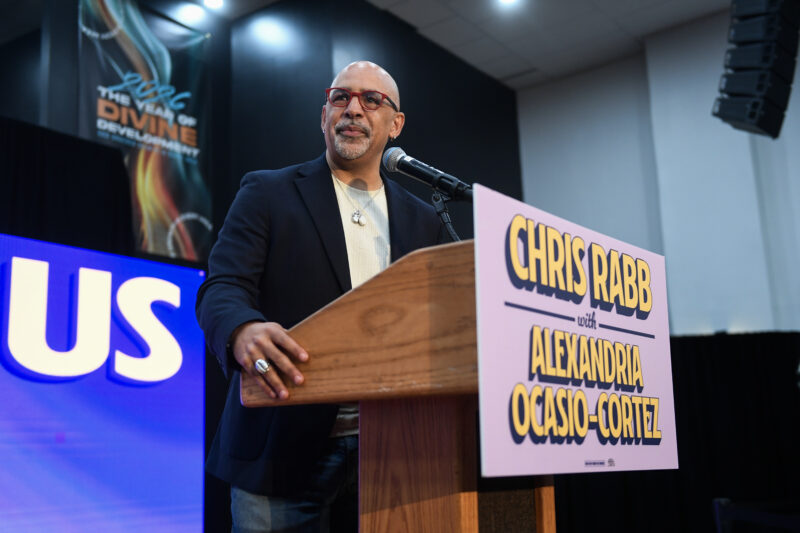
The 35-year-old progressive has gained attention in the past few weeks, picking up the backing of leaders including Sen. Bernie Sanders (I-VT), far-left Senate candidate Abdul El-Sayed and left-wing Reps. Jamie Raskin (D-MD), Ro Khanna (D-CA), Rashida Tlaib (D-MI), Delia Ramirez (D-IL) and Maxwell Frost (D-FL), as well as former Rep. Andy Levin (D-MI) and Pennsylvania state Rep. Chris Rabb, the Democratic nominee for a Philadelphia House seat.
Lawrence is also backed by the anti-Israel group TrackAIPAC, which has been accused of antisemitism; the Working Families Party; the Congressional Progressive Caucus; Sunrise Movement; and the Sanders-linked Our Revolution.
In a sign of concern from opponents about his momentum, Lawrence is now the target of a more than $500,000 ad buy from Crush MAGA PAC, which seeks to paint Lawrence as corrupt and unreliable.
The ad cites his support for the Uncommitted movement opposing former President Joe Biden in the 2024 primaries, work with Sunrise Movement (which the ad describes as a dark money group) and his holdings in a mutual fund (which the ad describes as investments in “Wall Street, big oil, and data centers”).
Lawrence asserted that AIPAC and Democratic Party insiders were responsible for the ad, something a United Democracy Project spokesperson denied, further suggesting that Lawrence’s comments were motivated by prejudice.
“We have absolutely no involvement in any way in running ads against William Lawrence in MI-07. It’s pure fiction and dishonest,” Patrick Dorton, spokesperson for UDP, the AIPAC-linked super PAC, said. “This assertion raises the question of whether Lawrence is trying to stir up some base prejudice in the Democratic primary against Democrats who support Israel. It’s immoral and shameful.”
The influx of outside cash will further compound Lawrence’s fundraising struggles. As of the end of April, Brink led the field with $2.3 million raised and $1.3 million on hand, followed by Maasdam with $1.7 million raised and $937,000 on hand and Lawrence with $572,000 raised and $351,000 on hand.
“Lawrence has the progressive lane to himself, the open question is how valuable that lane actually is outside of Lansing/East Lansing,” Michigan Democratic strategist Adrian Hemond told Jewish Insider. “[Michigan State University] students don’t come back until after the primary, so he’s reliant on high youth turnout to overcome his disadvantages with Black voters and seniors, but a sizable portion of the potential youth vote is home for summer break, i.e. not in East Lansing.”
But he also acknowledged that Brink and Maasdam risk splitting the more moderate lane.
In a potential acknowledgement of the political unpopularity of the war in Iran, Barrett has been one of the few House Republicans who has broken ranks with his party on Iran war powers votes, siding with Democrats to advance such measures.
Barrett also introduced legislation that would provide a limited authorization for military operations against Iran, limited in time and scope.
Rep. Tom Barrett of Michigan said military operations ‘are ongoing’ despite the administration’s claim otherwise
Tom Williams/CQ-Roll Call, Inc via Getty Images
Rep. Tom Barrett (R-MI) conducts a news conference at the Republican National Committee after a meeting of the House Republican Conference on Sept. 9, 2025.
Rep. Tom Barrett (R-MI) on Thursday introduced an authorization for use of military force (AUMF) in Iran that would limit the length and scope of U.S. military operations, dismissing assertions by the administration that the operation that began in February had already concluded.
The AUMF marks one of the most concrete actions by congressional Republicans thus far to limit U.S. operations against Iran, and may preview further action by Republicans wary of the undefined and unclear scope of and plans for U.S. action against Iran. Senate Republicans are working on a similar AUMF effort.
In a statement, Barrett’s office noted that the administration notified Congress on May 1 that the use of military force against Iran had concluded, meeting a 60-day deadline under the War Powers Act for executive use of military force without congressional approval.
But, Barrett’s office noted, U.S. operations “are ongoing” and described his AUMF as an effort “reclaiming Congress’s authority under Article 1 of the Constitution and giving President Trump clear legal authority to stop Iran from procuring a nuclear weapon with clear safeguards and limitations.”
The AUMF would authorize the administration to use U.S. military force against Iran’s nuclear program, against “imminent threats” to U.S. forces or facilities by Iran or its proxies, to blockade Iran’s ports and to protect safe passage through the Strait of Hormuz — but that authorization would terminate on July 30, which falls 90 days after the War Powers Act deadline, irrespective of the current tenuous ceasefire agreement.
Barrett’s AUMF provides a 30-day wind-down period “only as necessary to end the deployment or engagement of the Armed Forces.”
The resolution would ban “sustained ground combat operations” in Iran, seizing or holding any territory within Iran and “nation-building or stabilization operations or the establishment of long-term security governance within Iran.” This would prevent the U.S. from occupying Iran’s Kharg Island oil facilities, an option discussed earlier in the war.
It would permit rescue operations or intelligence collection or sharing.
Barrett’s legislation states that U.S. servicemembers and the American people “deserve to know the clear mission scope and objective for the use of any military force.”
“Two things have been clear from the very beginning: Iran cannot be allowed to develop a nuclear weapon and the United States of America cannot be dragged into another endless war,” Barrett, a veteran, said in a statement. “The Commander in Chief has the sole authority to lead our troops in wartime, but I’ve lost too many friends on the battlefield to allow that to happen without Congress exercising its constitutional role to clearly define the mission with safeguards and a deadline. If we don’t learn from our foreign policy failures of the past, we are bound to repeat them.”
Barrett hails from a swing district rated as a toss-up by the Cook Political Report. His decision to introduce an AUMF comes amid concerns that the war could be a political liability for Republicans in the midterm elections in November.
The AUMF also requires detailed reports to Congress every 30 days on the U.S. operations — addressing frustrations from both sides of the aisle about a lack of information from the administration — including an explanation of the legal authority and policy justifications for “each action and operation” undertaken, the “expected scope and duration” of these actions and an assessment of civilian and military casualties.
The House is likely to vote on a Democratic-led war powers resolution to halt operations in Iran when it returns next week, which could pass. Progressive House Democrats have teed up a series of additional war powers votes in the coming weeks, with plans to force votes as frequently as every day.
Please log in if you already have a subscription, or subscribe to access the latest updates.
 Continue with Google

 Continue with Apple