














































































Republican and Democratic senators paid tribute to his legacy, while wondering if anyone will be able to fill the leadership vacuum

Anna Moneymaker/Getty Images
Sen. Lindsey Graham (R-SC) in the Senate Judiciary Committee on January 30, 2025 in Washington, D.C.


 Add JewishInsider on Google
Sen. Lindsey Graham’s (R-SC) sudden death last weekend is complicating an already difficult dynamic between Senate Republicans and President Donald Trump, as legislators try to muster enough support in the caucus to pass the president’s key legislative priorities.
Graham’s committee chairmanships, vast donor network and his close relationship with Trump and Secretary of State Marco Rubio made him a critical leader in Washington whose presence helped move forward multiple bipartisan efforts, especially on foreign policy. He became one of the most geopolitically connected members of Congress, with world leaders and captains of industry on speed dial.
“It’s impossible to fill that void, number one, so I’ll just take that off the table,” Sen. Tim Scott (R-SC), the chairman of the National Republican Senatorial Committee, told Jewish Insider at a press conference at NRSC headquarters on Capitol Hill on Wednesday.
Scott, who represented South Carolina alongside Graham for 13 years, said he has spoken with Senate Majority Leader John Thune (R-SD) about the challenges Graham’s death creates for the party and detailed several areas where Senate GOP leadership is hoping some of their members will attempt to step in on the late senator’s behalf.
The first of those “three layers,” Scott said, is “the foreign policy front.” The second was Graham’s “budgetary responsibilities” as chair of the Senate Budget Committee. The third area, he said, was “bridging the gap between the two sides of the aisle.”
“Those are the three areas that I know that we’ve been consciously considering,” Scott said. “I have spoken to Leader Thune as well. I think those are three big areas that we’d love to see, probably, a couple people step into.”
On the foreign policy front, Scott noted, “There’s no doubt that when you’re looking at leaders around the world who disagree vehemently with each other, the one guy you might be willing to sit at the table with was Lindsey Graham. He just did a really good job.”
“Frankly, you go to the Middle East and without any question, I’m not sure that there was a bigger, more enthusiastic supporter of the president’s actions in Iran — I happen to be one of them as well — than Lindsey Graham,” Scott said. “[Israeli Prime Minister] Bibi [Netanyahu] calling him at lunch was kind of fun to watch. I’m a big fan of Bibi myself, and just knowing the relationship that they had when I spoke with Bibi myself years ago, I would say without question, Lindsey Graham’s name always came up. You know why? Because, frankly, he took the time to make the trip there.”
“Whether it’s the European front, the Middle East, or frankly, his enthusiasm around Venezuela, he was always in the midst when it came to solving problems around the world because he believed in peace through strength,” he continued. “It was not just a tagline. It was not just a philosophy. It was embedded in his DNA.”
Scott said Republicans will need to focus on “finding someone who has that passion” that Graham applied to his foreign policy dealings. Graham spearheaded the passage of the second Trump administration’s two reconciliation packages — the One Big Beautiful Bill last July, which made the tax cuts implemented in the first Trump administration permanent and enacted a wide range of spending cuts, and the Secure America Act in June to fund Immigration and Customs Enforcement (ICE) and Customs and Border Protection (CBP).
“We are living in polarizing times politically. Lindsey Graham was not completely aware of that. He thought you could still find common ground to get something done,” Sen. Tim Scott (R-SC) said. “He turned out to be right. Being able to have [Sen. Richard] Blumenthal (D-CT) knocking on the door for Russian sanctions is only possible because Lindsey Graham spends so much time talking to people that vehemently disagree with him on 85% or 90% of topics. Find that one, you march together.”
As to the budget reconciliation process, Scott said, Sen. Ron Johnson (R-WI) would step in as budget chair. “Big shoes to fill,” Scott added.
Scott touted his late colleague’s ability to reach across the aisle and argued that “bridging that gap is going to be really important.”
“We are living in polarizing times politically. Lindsey Graham was not completely aware of that. He thought you could still find common ground to get something done. He turned out to be right. Being able to have [Sen. Richard] Blumenthal (D-CT) knocking on the door for Russian sanctions is only possible because Lindsey Graham spends so much time talking to people that vehemently disagree with him on 85% or 90% of topics. Find that one, you march together.”
As one of the few lawmakers capable of closing the gap between Senate Republicans and the president, Graham became somewhat of a mediator.
“Lindsey left an indelible mark on the Senate, on the nation and on the hearts of his colleagues,” Sen. Ted Cruz (R-TX) told JI. “At times when senators were at each other’s throats, were angry, Lindsey could cut the tension with a self-deprecating quip that brought everything to a stop and brought people back together again.”
Leading Democrats also paid tribute to Graham’s legislative acumen. “Lindsey was part of every important policy issue and an indispensable player in every Senate ‘gang.’ He was a fierce Republican partisan one day and a key bipartisan ally the next,” Senate Minority Whip Dick Durbin (D-IL) said of Graham after his death was announced.
“I don’t know who can play this role going forward. I just don’t see it,” Sen. Chris Coons (D-DE) told JI on Sunday of Graham. “He’s just not replaceable. There’s not going to be anyone like him again.”
Graham was involved in every successful bipartisan piece of legislation that Trump has signed into law thus far in his second term. During the Biden administration, Graham was one of the 19 Republican senators who crossed party lines to support the bipartisan infrastructure bill, and his decision to come out against the bipartisan immigration reform deal organized by Sens. James Lankford (R-OK), Chris Murphy (D-CT) and former Sen. Kyrsten Sinema (I-AZ) has been described as the final death knell that sealed the legislation’s fate.
Graham was also the Republican in Trump’s orbit to whom Senate Democrats would go when trying to settle a legislative dispute or join forces on an issue of bipartisan concern.
“I don’t know who can play this role going forward. I just don’t see it,” Sen. Chris Coons (D-DE) told JI on Sunday of Graham. “He’s just not replaceable. There’s not going to be anyone like him again.”
Graham’s passing puts the longtime legislative and geopolitical priorities he fought for in jeopardy.
The South Carolina Republican spent the last five years lobbying Saudi Crown Prince Mohammed bin Salman to bring Riyadh into the Abraham Accords. Graham tried to secure an agreement on several occasions under Trump and former President Joe Biden, and said repeatedly that he was on the verge of reaching a deal that would see Saudi Arabia normalize relations with Israel in exchange for Israel recognizing a Palestinian state.
After Hamas’ Oct. 7, 2023, attacks on Israel, Graham maintained that Iran ordered the attacks to upend his Saudi-Israeli normalization efforts.
Graham was one of the most outspoken and effective Republican advocates in Congress for increasing military funding. Prior to his death, he had been lobbying the president to get behind the Russia sanctions bill he co-sponsored with Blumenthal, and expressed optimism in his final phone call with Morgan Ortagus, the former deputy presidential envoy for Middle East peace in the second Trump administration, that Trump was coming around to the idea.
Trump said on Tuesday that he was considering supporting the bill, which he has long hesitated to get behind, “in honor of Lindsey.”
“This was his thing, he wanted this more than any other thing. You know how he felt,” Trump said from the White House. “There’s a good chance that it gets done. But they’d like to add Iran. And they’d like to add Hezbollah to it. That’s what I’m hearing.”
Ortagus told JI, “There was not a fight on domestic or foreign affairs that he didn’t want to jump into. If he believed in an issue and believed that a particular policy was the right thing, he really didn’t care about the politics.”
Graham Nordone is expected to serve as a caretaker for the seat for the remainder of the year; a larger field of Republicans are looking to run in the primary for the full six-year term
Grant Baldwin/Getty Images
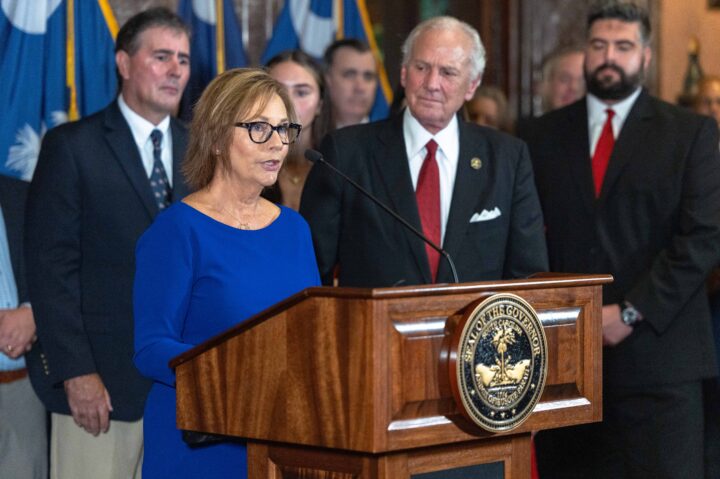
Darline Graham Nordone speaks during a press conference outside the governor's South Carolina Statehouse office on July 13, 2026 in Columbia, South Carolina.
Darline Graham Nordone, the sister of the late Sen. Lindsey Graham (R-SC), was appointed by South Carolina Gov. Henry McMaster on Monday to serve out the remainder of her older brother’s Senate term through January 2027.
McMaster, a Republican, announced his decision to appoint Graham’s sister to fill the vacancy caused by his sudden passing over the weekend at a press conference from the Statehouse in Columbia, S.C., alongside Nordone and Sen. Tim Scott (R-SC), a close ally of both Graham and President Donald Trump.
After hailing Graham, who had been running for a fifth Senate term in November, as “one of South Carolina’s greatest sons,” McMaster explained that he was selecting Nordone to succeed him because he wanted the work that Graham started to be completed by the sister he adored.
“Lindsey took care of his little sister in years long departed,” McMaster said. “It is my honor to ask his little sister, Darlene Graham, to finish his work for him now.”
A source familiar told Jewish Insider that Nordone, who now uses her married name, will be sworn in at the U.S. Capitol on Tuesday at 2:30 p.m. ET.
In brief remarks, Nordone thanked those who had reached out with well wishes or to share memories and funny stories about Graham before expressing gratitude to McMaster for appointing her to fill her brother’s Senate seat.
“Lindsey has always been there for me, and now I will be there for him,” Nordone said. “I think this is what Lindsey would have wanted, and I plan to honor him in this way. Now, to Lindsey, I miss you more than I can ever put into words, but I’m going to do this. I got it.”
Republicans expect Nordone to serve as a caretaker for her brother’s seat for the remainder of the year. Among the top contenders for the upcoming special election for the full six-year term include Rep. Russell Fry (R-SC), a close ally of Trump’s, and Lt. Gov. Pamela Evette, who unsuccessfully ran for governor this year with Trump’s endorsement.
Rep. Nancy Mace (R-SC), who has publicly expressed interest in the seat after finishing fifth in last month’s gubernatorial primary, and Rep. Ralph Norman (R-SC) are also prospective candidates. A special election candidate filing period is scheduled to begin July 21, and will last for a week.
Graham died at 71 on Saturday evening following what his office described as a “brief and sudden illness,” which the Washington, D.C., medical examiner’s office, in a preliminary autopsy report, attributed to aortic dissection caused by arteriosclerotic cardiovascular disease.
Graham and Nordone were raised above a local pool hall and liquor store in Central, S.C. Graham adopted his younger sister when he was 22 and she was 13, after their parents died within 15 months of one another. Graham, who was a senior in college at the time, moved himself and Nordone into a relative’s house and took over raising her, eventually becoming her legal guardian. He joined the Army Reserves, allowing him to stay close to his sister and attend college.
Nordone remained Graham’s closest confidante throughout his life and was one of the most ardent supporters of his political ambitions, campaigning for him in his House and Senate bids and during his 2016 presidential run.
Speaking from the press conference on Monday, Nordone described her late brother as “the most amazing person, outstanding leader, and just a genuinely good man. He was kind and considerate and loved by his family dearly.”
Monday’s announcement came hours after Trump publicly declared that Nordone was his preferred choice to represent South Carolina on Graham’s behalf until the conclusion of his Senate term. “This would be a fabulous tribute to Lindsey, who loved her dearly,” Trump wrote on Truth Social of the idea.
Scott and Senate Majority Leader John Thune (R-SD) also voiced support for Trump’s suggestion to appoint Nordone in the hours before the official announcement.
McMaster said on Monday he had asked Nordone to serve out the remaining six months of Graham’s term after the senator’s passing was announced early Sunday morning, prior to consulting the president.
“After we spoke on the phone in the wee hours of Sunday morning, you agreed to serve through tears. Earlier, I had wondered what you would say, and I was humbled by your quickness to see the duty that you had to serve,” McMaster told Nordone from the podium. “I called the president afterwards and he thought it was a great idea, and I’m sure everyone here does as well.”
Scott, who a source familiar confirmed to JI had “spoken multiple times with Darline in the last 24 hours” leading up to her appointment, did not speak at the press conference, though he said in a post on X that “The appointment of Darline Graham Nordone to the U.S. Senate is an incredible way to honor the legacy of Lindsey Graham.”
“Nobody understands Lindsey Graham’s heart for faith, family, and South Carolina the way she does,” Scott wrote. “I look forward to working alongside her to continue Sen. Graham’s commitment to keeping Americans safe and secure.”
Others that were reportedly under consideration for the role in the event that Nordone turned down the appointment included former Rep. Trey Gowdy (R-SC), a close friend of Scott’s from their time in Congress who now hosts a Fox News program; former Sen. Jim DeMint (R-SC), Scott’s predecessor in the Senate who has led several conservative organizations including the Heritage Foundation and the Conservative Partnership Institute; and Evette, who lost the state’s gubernatorial GOP primary in a runoff last month.
Rep. Joe Wilson (R-SC), who was also reportedly floated as a possible appointment option, said on Sunday that he was committed to staying in the House to protect Republicans’ slim majority in the lower chamber.
The former TV news anchor boasts a consistently conservative, pro-Israel voting record, and has a history of winning tough races

Scott Olson/Getty Images
U.S. Rep. Ashley Hinson speaks to guests during her Ashley's BBQ Bash fundraiser on August 23, 2025 in Cedar Rapids, Iowa. The event was the fifth annual, which she holds to support Iowa Republican causes and candidates.
Rep. Ashley Hinson (R-IA) has emerged as the front-runner in the contest to replace retiring Sen. Joni Ernst (R-IA), with national Republicans swiftly coalescing around her bid for the GOP nomination as they look to avoid a messy primary battle.
Hinson, a politically tested lawmaker who has long been viewed as a potential successor to Ernst, launched her Senate campaign within hours of Ernst’s announcement last Tuesday that she would not seek a third term.
Hinson, in her candidate announcement, said that she would be President Donald Trump’s “strongest ally” in the Senate and would work to “deliver the America First agenda.” She also praised Ernst for her military service and time in public office, saying that, “Our country and state are better off because of Joni’s selfless service.”
Hinson, a prolific fundraiser who entered the race with a $2.8 million war chest, began racking up endorsements shortly after her campaign launch. Trump endorsed Hinson on Friday, as did Senate Majority Leader John Thune (R-SD) and Sen. Tim Scott (R-SC), chairman of the National Republican Senatorial Committee, Senate Republicans’ campaign arm.
Trump described Hinson as “a wonderful person” whom he knows “well,” and praised her devotion to her family before touting her commitment to “our incredible Iowa workers.”
“She is working hard to Create Jobs, Cut Taxes, Promote Products and Services MADE IN AMERICA by our incredible Iowa Workers, Support our Great Farmers and American Agriculture, Champion Innovation, Continue to Help Secure our now very Secure Southern Border, Stop Migrant Crime, Murderers, and other Criminals from illegally entering our Country, Strengthen our Military/Veterans, and Defend our always under siege Second Amendment,” Trump wrote of Hinson on his Truth Social platform.
“From a foreign policy perspective, or even culturally with respect to antisemitism and all that sort of thing, I don’t think that you’re going to see a lot of difference between Joni Ernst, who’s been a strong supporter of Israel and who I think has been a really effective leader on the national stage, and Ashley,” David Kochel, a veteran GOP campaign operative, told JI.
Ernst and Hinson are close professionally and personally; in addition to being friends, the two have long been aligned on foreign and domestic policy and worked together on scores of bicameral legislative efforts.
Both lawmakers have been repeatedly endorsed by AIPAC and the Republican Jewish Coalition, though neither organizations have officially gotten behind Hinson’s Senate bid yet. While Ernst hasn’t endorsed in the race either, Hinson is the candidate she is most aligned with ideologically.
“From a foreign policy perspective, or even culturally with respect to antisemitism and all that sort of thing, I don’t think that you’re going to see a lot of difference between Joni Ernst, who’s been a strong supporter of Israel and who I think has been a really effective leader on the national stage, and Ashley,” David Kochel, a veteran GOP campaign operative, told Jewish Insider.
“On issues of concern to Jewish Americans, Ashley Hinson has been an absolute stalwart,” Sam Markstein, who serves as national political director for the RJC, told JI.
Markstein described Hinson as “an incredibly strong voice in Israel’s defense,” citing her “calling Hamas’ terror attack ‘evil,’ and affirming Israel’s right to defend itself immediately” after the Oct. 7, 2023, attacks on Israel as examples. He also noted that she has “consistently voted for vital military aid to Israel and Iron Dome defense systems,” and pointed to her cosponsoring legislation “to pressure the Biden administration to deliver critical aid that they were holding up as the Jewish state was fighting a seven-front war.”
“She has stood strongly against the Iranian regime by supporting measures to reinstitute maximum pressure and reimpose crippling sanctions. Ashley Hinson also has a very strong record on combating antisemitism. Notably, unlike some on the neo-isolationist far right, when Ashley Hinson says, ‘America First,’ for her, and for the RJC, that means standing strongly with our allies, like Israel, peace through strength, using decisive military action when necessary and rejecting forever wars,” Markstein said.
The swift action on Hinson’s part in launching her campaign and locking down major endorsements has propelled her campaign to front-runner status in the race, and a smooth primary contest could benefit what are already strong general election chances for Republicans in the Hawkeye State.
“Ashley’s been pretty good on the Trump record,” Kochel said. “I think things are going to consolidate pretty quickly around her.”
“She is definitely going to be the leading candidate in the Republican primary, and she’s going to be a very tough candidate in the general election as well,” he told JI.
Thus far in the primary, Hinson is facing Jim Carlin, a Republican former state senator who initially entered the contest to challenge Ernst from the right after winning 27% of the vote against Sen. Chuck Grassley (R-IA) in a 2022 primary, and Joshua Smith, a former libertarian and podcast host who is a sharp critic of the U.S.-Israel relationship.
Smith has espoused virulently anti-Israel beliefs on social media, posting in March of this year on X that Israel is a “fake state of anti Jesus heathens who are fine with killing children” and claiming in a post last May that Jewish people suffer from a “Jewish victim complex.”
Hinson began her career in local television as a broadcast journalist in Cedar Rapids, Iowa, and went on to win two Midwest regional Emmy Awards and become a health reporting fellow for the Radio Television Digital News Association. She entered politics in 2016, when she won a competitive seat in the Iowa state House of Representatives representing the purple Cedar Rapids area by a two-to-one margin.
Hinson was elected to the House in 2020 after defeating former Rep. Abby Finkenauer, a Democrat who flipped Iowa’s 1st Congressional District blue in 2018, by more than two points.
The other rumored candidate looking at the race is U.S. Ambassador to NATO Matt Whitaker, Trump’s former acting attorney general during his first term who lost to Ernst in the GOP primary for her Senate seat in 2014. But with Trump and leading Republicans rallying behind Hinson, the prospects of Whitaker running has dimmed.
The Democratic side of the aisle has a crowded field of candidates competing for the party’s nomination, including state Rep. Josh Turek, state Sen. Zach Wahls and Jackie Norris, chairwoman of the Des Moines Public Schools board.
“Whoever wins the Republican nomination for U.S. Senate in Iowa will have a very, very strong chance of succeeding Joni Ernst,” Sam Markstein, who serves as national political director for the RJC, told JI. “Regarding Ashley Hinson specifically, ask yourself what the telltale signs of a well-run operation are, and you’ll see she is clearly checking all of the boxes: the speed and efficiency of her campaign launch, announcing support from President Trump, as well as House and Senate leadership.”
Democrats have expressed an interest in contesting the open Senate seat in Iowa, a now reliably Republican state that was a battleground before Trump’s political ascendance.
The party has some renewed confidence in their political standing in the state, after Democrats flipped a state Senate seat in a special election last month. The state currently has one state elected official that’s a Democrat: State Auditor Rob Sand.
Whether national Democrats will allocate resources to the Hawkeye State remains to be determined, but winning statewide as a Democrat in deep red Iowa will be a difficult challenge. Democrats haven’t won a Senate race in Iowa since 2008, when former Sen. Tom Harkin handily won a fifth term, prompting Republicans to dismiss the notion that this race will be competitive.
“Whoever wins the Republican nomination for U.S. Senate in Iowa will have a very, very strong chance of succeeding Joni Ernst,” Markstein told JI.
“Regarding Ashley Hinson specifically, ask yourself what the telltale signs of a well-run operation are, and you’ll see she is clearly checking all of the boxes: the speed and efficiency of her campaign launch, announcing support from President Trump, as well as House and Senate leadership. This, and more, illustrates that she’s focused, organized, and has an excellent team around her, all of which is needed to win,” he continued.
The NRSC sent a memo to donors last week expressing confidence that Democrats would face an uphill slog in Iowa, and touted Hinson as a “formidable contender” who “would be exceedingly difficult for any Democrat to challenge.”
A source familiar with how the NRSC is viewing the contest told JI that, “Democrats are trying really hard to say that Iowa is in play and that it is a competitive race. That’s just not electorally where we view it.”
“It’s also just not ultimately what the field on their side signals. They have a very messy, competitive primary right now. It does not appear that [Senate Minority Leader Chuck] Schumer is going to be able to clear the field. That is obviously a direct contrast to what we’re seeing so far on our side,” the source said, noting the growing support for Hinson on the GOP side of the aisle.
Kochel noted that, “Iowa historically was a swing state. [Former President Barack] Obama won it twice and Trump’s won it three times, but certainly the registration advantage that Republicans have has been growing. As the electorate has changed in the last 10 years, more non-college [educated], white, working-class voters are becoming more and more Republican. We’ve got a lot of those in Iowa.”
“Demographically, Iowa is kind of getting away from the Democrats a little bit,” he continued, predicting, “We’ll see this race settle into a pretty familiar framework.”
Plus, Khanna to attend conference featuring antisemitic speakers
Anna Moneymaker/Getty Images
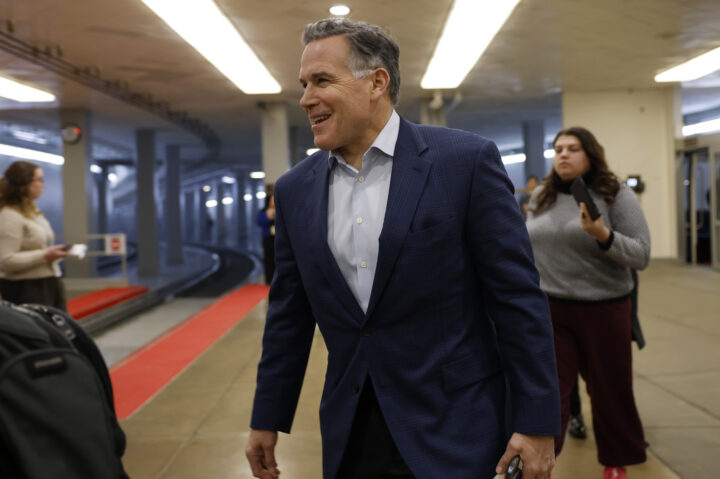
Sen. David McCormick (R-PA) walks through the Senate Subway during a vote in the U.S. Capitol on January 27, 2025 in Washington, DC.
Good Friday morning.
In today’s Daily Kickoff, we report on the campus climate at Columbia, where classes resumed for the fall semester this week, as well as the university’s hiring of an assistant dean who backed the Palestinian “indigenous resistance movement confronting settler colonialism, apartheid, and ethnic cleansing.” We report on Rep. Ro Khanna’s upcoming appearance at a conference that features an array of antisemitic speakers, and cover Sen. Dave McCormick’s call for the Trump administration to respond to the recent decision by Norway’s sovereign wealth fund to divest from Caterpillar and other Israel-linked companies. Also in today’s Daily Kickoff: Robert Kraft, Mia Ehrenberg, Warren Bass and Sam Sussman.
Today’s Daily Kickoff was curated by Jewish Insider Executive Editor Melissa Weiss and Israel Editor Tamara Zieve, with assists from Marc Rod, Lahav Harkov and Danielle Cohen-Kanik. Have a tip? Email us here.
For less-distracted reading over the weekend, browse this week’s edition of The Weekly Print, a curated print-friendly PDF featuring a selection of recent Jewish Insider and eJewishPhilanthropy stories, including: Amb. Leiter: Nature of U.S.-Israel aid may change in coming years; New Humash features Rabbi Sacks’ posthumously published translation; and Negotiations for next U.S.-Israel aid deal faces uphill battle with changing political tides. Print the latest edition here.
What We’re Watching
- President Donald Trump is signing an executive order today to rename the Department of Defense as the Department of War, the name used through the first half of the 20th century until its renaming in 1949 as part of the implementation of the National Security Act of 1947.
- Senate Majority Leader John Thune (R-SD) and Sen. Tim Scott (R-SC), the chairman of the National Republican Senatorial Committee, are endorsing Rep. Ashley Hinson (R-IA) today in her bid to succeed Sen. Joni Ernst (R-IA). Read more from JI’s Emily Jacobs here.
- We’re continuing to monitor the situation in California, where members of the state’s Jewish Caucus are moving toward watering down antisemitism legislation that has faced significant pushback from the California Teacher’s Association. Proposed concessions on the legislation — which has until the end of the legislative session next Friday to pass — include the removal of penalties against schools that foster antisemitic learning environments and a provision setting guidance for teaching subjects that could be considered controversial.
- We’re also keeping an eye on the situation in Israel, following the IDF’s announcement that it was in control of 40% of Gaza City amid continued calls this week from senior Israeli officials including IDF Chief of Staff Eyal Zamir and Mossad head David Barnea for Jerusalem to accept a temporary ceasefire. Earlier today, Israeli Defense Minister Israel Katz announced the beginning of an aerial campaign targeting Hamas operatives in Gaza City. As Israel marks 700 days since the Oct. 7, 2023, Hamas terror attacks, the terror group released a video of Guy Gilboa-Dalal and Alon Ohel.
- Looking ahead to the weekend, Sen. Bernie Sanders (I-VT) is bringing his “Fighting Oligarchy” tour to New York City on Saturday, where he’ll campaign with Democratic mayoral candidate Zohran Mamdani.
- On Sunday, the Jewish Theological Seminary kicks off its inaugural storytelling festival. Etgar Keret, Jonathan Safran Foer, Jodi Kantor, Shalom Auslander, Alex Edelman and Deborah Treisman are all slated to speak at the event, which runs through Tuesday.
What You Should Know
A QUICK WORD WITH JI’S JOSH KRAUSHAAR
Just when it looked like far-left New York City mayoral candidate Zohran Mamdani was on track to become mayor, in part thanks to persistent divisions among his opposition, there are signs of a possible consolidation of the crowded field.
The New York Timesreported that embattled Mayor Eric Adams is considering a job offer from the Trump administration — a position at the Department of Housing and Urban Development or an ambassadorship have been floated — that would entice him to withdraw from the race. The paper is also reporting that Republican nominee Curtis Sliwa has also been approached by Trump allies, but Sliwa has remained adamant that he is sticking in the race.
All told, Trump’s team is doing everything it can behind the scenes to eliminate the structural hurdles for a successful anti-Mamdani coalition, without publicly putting its finger on the scale for the leading Mamdani challenger, former Gov. Andrew Cuomo. (It’s also notable that Trump, even though it would be in his political interest to use a Mamdani mayoralty as a battering ram against Democrats, is more concerned about the policy consequences of a socialist mayor in his hometown.)
A one-on-one Mamdani-Cuomo general election showdown is still far from a sure thing, but it’s worth noting that the matchup would be quite competitive, according to the available public polling. Even the pro-Mamdani pollster Adam Carlson found in July that Mamdani only led Cuomo by three points among registered voters in a head-to-head matchup, though the lead expanded to double digits when the most likely voters were polled.
campus beat

The first day of the new school year on Tuesday at Columbia University was met with a wary sense of relief from Jewish students and faculty, who returned to campus unsure whether recent reforms aimed at combating campus antisemitism would make any difference. Scenes that have become commonplace on Columbia’s campus over the past two years — masked anti-Israel demonstrators barging into classrooms and the library banging on drums and chanting “Free Palestine” or hourslong demonstrations in the center of campus of more than 100 students calling for an “intifada revolution” — were nowhere to be seen. Still, in quieter ways, there were moments behind the tall iron entrance gates reminiscent of the antisemitic turbulence that grew commonplace on the Morningside Heights campus since Hamas’ Oct. 7, 2023, terrorist attacks, Jewish Insider’s Haley Cohen reports.
What went down: Three members of Columbia University Apartheid Divest, a coalition of over 80 university student groups that Instagram banned earlier this year for promoting violence, protested Columbia Hillel’s club fair, distributing fliers urging Jewish students to “drop Hillel” because it “supports genocide.” Elsewhere on campus, an organizer of the 2024 anti-Israel encampment movement, Cameron Jones, paraded a sign that read, “some of your classmates were IOF [Israeli Occupation Forces] criminals committing genocide in Palestine.” Within hours, Columbia announced it had “initiated investigations into incidents that involve potential violations of the University’s Student Anti-Discrimination and Discriminatory Harassment Policies and University Rules.”
faculty faux pas

Columbia University’s new hire for senior associate dean of community and culture was a signatory of a 2021 letter supporting the Palestinian “indigenous resistance movement” and rejecting the “the fiction of a ‘two-sided conflict.’” He is tasked with leading “meaningful dialogue” in his new position. Jonathon Kahn signed on to the “Vassar Community Members’ Statement of Solidarity with the Palestinian People” while a professor of religion at Vassar College, Jewish Insider’s Haley Cohen reports. “We affirm that the Palestinian struggle is an indigenous resistance movement confronting settler colonialism, apartheid, and ethnic cleansing, and stand in solidarity with the Palestinian people,” the letter read.
Now and then: The senior associate dean of community and culture role is a new position, created in the wake of increased antisemitism that has plagued Columbia’s campus since the Oct. 7, 2023, Hamas terror attacks in Israel. Kahn, who has no known social media presence, said in a statement sent to the Washington Free Beacon on Wednesday regarding the petition that he is “a Zionist” who “believe[s] deeply in Israel’s right to exist and thrive as a Jewish state” and also “deeply value[s] Palestinian life and Palestinians’ aspirations for statehood.” He said, “My beliefs are not fully captured in this letter that was authored more than four years ago.”
OSLO AIM
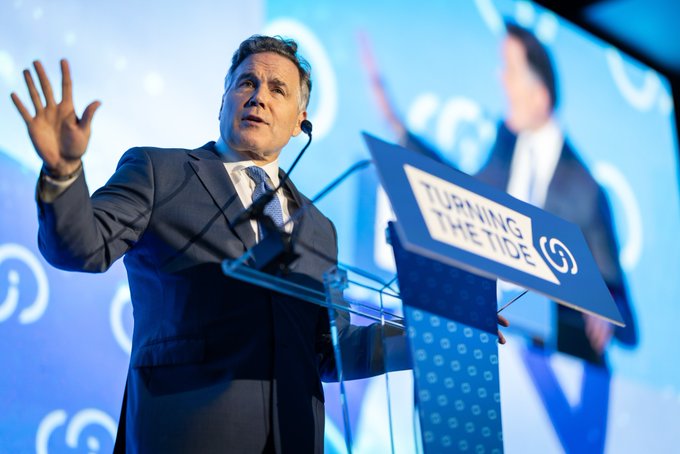
Sen. Dave McCormick (R-PA) wrote to top trade officials in the Trump administration urging them to take action to respond to the decision by the Norges Bank Investment Fund, Norway’s sovereign wealth fund, to divest from U.S. equipment firm Caterpillar because of the Israeli military’s use of its products in the West Bank and Gaza, Jewish Insider’s Marc Rod reports. McCormick served from 2020-2022 as CEO of Bridgewater Associates, which manages portions of Norges’ portfolio.
What he said: “As the Trump Administration continues to take bold action to rebalance global trade, I urge you to also address the disturbing politicization of sovereign wealth fund investment decisions against American companies,” McCormick said in a letter, sent Thursday, to Commerce Secretary Howard Lutnick and U.S. Trade Representative Jamieson Greer. He called on the administration to take Norges’ moves against American companies into account in ongoing trade negotiations with Norway, calling the effort a “form of economic warfare directed by a foreign government against the U.S. economy.”
Flashback: Bridgewater CIO Greg Jensen addressed Norges’ 2024 investment conference.
CONVENTION COTROVERSY

Rep. Ro Khanna (D-CA) is set to speak later this month at ArabCon, an annual convention hosted by the Arab Anti-Discrimination Committee, joining a lineup that includes numerous speakers with records of support for terrorism and antisemitism, Jewish Insider’s Marc Rod reports.
Speaker list: Among the controversial speakers on the ArabCon lineup are Electronic Intifada Executive Director Ali Abunimah, CAIR San Francisco Executive Director Zahra Billoo and activist Linda Sarsour. “I have never been to a conference where I agree with every speaker, but speaking at ArabCon is important,” Khanna said in a statement to JI. “I will discuss my efforts to recognize a Palestinian state without Hamas as part of a two state solution. Recognition of Palestinian statehood — alongside continued efforts to secure Israel’s safety and guarantee its future as a democratic homeland for the Jewish people — is essential to achieving peace.”
flights resume

United Airlines announced Thursday it plans to resume direct flights to Israel from Chicago O’Hare and Washington Dulles international airports for the first time since the Oct. 7, 2023, terrorist attacks on Israel, Jewish Insider’s Haley Cohen reports. Flights from Chicago are set to commence Nov. 1 and will operate four times per week, and flights from Washington are scheduled to begin Nov. 2 and will operate three times per week, according to the airline.
Direct choice: Currently no other airline offers direct flights to Israel from Chicago or Washington. United and Delta offer daily flights between Israel and the New York area. “The resumption of these flights underscores United’s longstanding commitment to Tel Aviv,” Patrick Quayle, United’s senior vice president of global network planning and alliances, said in a statement.
JOINING FORCES

Congregants of a Hindu temple on Long Island that was vandalized last year and worshippers of a Methodist Church in Oklahoma City, who last year put on a musical production of “Fiddler on the Roof” to learn about Jewish culture, may not appear to have much in common. But this Sunday, both houses of worship — together with an expected crowd of nearly 1 million congregants around the country — will join forces for the inaugural “Stand Up Sunday,” a show of force in the fight against antisemitism and all faith-based violence, Jewish Insider’s Haley Cohen reports.
Show of solidarity: As part of the effort, spearheaded by Robert Kraft’s Foundation to Combat Antisemitism and the Appeal of Conscience Foundation, founded by Rabbi Arthur Schneier, organizers said each congregation “will dedicate their services to raising awareness about the sharp increase of antisemitism and all forms of hate against religious communities in the United States by standing together on September 7.” FCAS’ Blue Square pins will be distributed to attendees “as a visible display of solidarity across faiths,” the group said. Congregational leaders will deliver remarks on antisemitism and faith-based hate in their sermons and houses of worship will place signs and posters throughout their buildings.
Worthy Reads
Kim or Khamenei?: In Foreign Affairs, Vipin Narang and Pranay Vaddi of MIT’s Center for Nuclear Security Policy posit that as a result of the damage inflicted to Iran’s nuclear program during the 12-day Israel-Iran war, North Korea will become a model for rogue states looking to advance their nuclear programs. “In contrast to Tehran, Pyongyang largely avoided delays in weaponizing its program; it made steady progress toward a bomb, using periodic engagement to test U.S. resolve over possible agreements, routinely relied on feints and stalling tactics, and weathered tremendous diplomatic and economic pressure along the way. When diplomacy broke down, North Korea rapidly advanced its program so its Kim regime was prepared to approach any future engagement from a position of greater strength. … For would-be proliferator states, the lessons are dangerously clear: do not wait to get the bomb, assume major powers will attack, and do not trust that diplomacy is within reach. In other words, be like Kim, not like Khamenei.” [ForeignAffairs]
The New Axis Powers: In The New York Times, the Center for a New American Security’s Richard Fontaine and Andrea Kendall-Taylor caution that this week’s summit in Beijing with the leaders of Russia, China, North Korea and Iran signals a growing threat to the U.S.-led world order. “Though they may occasionally come to one another’s aid — like the North Korean soldiers who joined their Russian allies in battle against Ukrainian forces — that is not the point. The group has a much more ambitious objective. It seeks, like the World War II era Axis Powers of Germany, Italy and Japan, “a new order of things,” in which each country can claim “its own proper place.” Discontented with an international system they believe denies them the status and freedom of action they deserve by virtue of their power and civilizations, they are united in the desire to change it. … Indeed, the gathering in Beijing suggests that the axis, rather than withering following the war in Iran in June, has momentum. Its members sense an opportunity.” [NYTimes]
Laying Blame: In The Times of Israel, Menachem Rosensaft, who teaches a genocide law course at Cornell Law School, pushes back against the International Association of Genocide Scholars’ recent passage of a resolution labeling Israel’s actions in Gaza a genocide. “Nowhere in the IAGS resolution is there even an allusion to, let alone explicit mention of, the facts that it is Hamas, not Israel, that has used Palestinian civilians in Gaza, including children, as human shields; that it was Hamas, not Israel, that established military installations behind schools and hospitals, making them legitimate targets in Israel’s wholly legitimate efforts to eliminate the threat posed by such military installations; that by all reliable accounts, Hamas bears more than its fair share of responsibility for preventing the distribution of humanitarian aid in Gaza.” [TOI]
Word on the Street
The State Department announced sanctions on Al Haq, the Al Mezan Center for Human Rights and the Palestinian Centre for Human Rights over the groups’ legal moves against Israel at the International Criminal Court…
Secretary of State Marco Rubio told reporters that he had advised European countries against their push for Palestinian statehood, saying that such a move would cause “reciprocal actions” — such as Israeli annexation moves — and “would make a ceasefire [in Gaza] harder”; Rubio’s comments came as Finland joined the group of European nations that issued a declaration in support of a two-state solution following a French- and Saudi-led conference in July on the issue…
The U.S. is mulling restrictions on diplomats from several countries, including Brazil, Iran and Sudan, who are traveling to New York later this month for the U.N. General Assembly; among the restrictions under consideration is banning Iranian diplomats from shopping at big-box stores such as Costco and Sam’s Club…
President Donald Trump hosted tech leaders, including Meta founder Mark Zuckerberg, OpenAI CEO Sam Altman and Google co-founder Sergey Brin on Thursday at the White House; Brin was later photographed with Trump in the Oval Office…
The Wall Street Journal spotlights the tensions between Trump and Rep. Thomas Massie (R-KY), who has opposed key pieces of the president’s legislative agenda and increasingly finds himself at odds with GOP leadership…
Rep. Buddy Carter (R-GA) filed a resolution to censure Rep. Rashida Tlaib (D-MI) for “promoting and cheering on terrorism and antisemitism at the People’s Conference for Palestine.” Carter is a candidate for Senate in Georgia…
Former Rep. Madison Cawthorn (R-NC) is weighing a congressional bid in Florida’s 19th District, as Rep. Byron Donalds (R-FL) vacates the seat to run for governor…
Elias Rodriguez, the Chicago man accused of killing two Israeli Embassy staffers outside the Capital Jewish Museum in Washington, pleaded not guilty to a series of felony charges related to the May attack…
The New York Times profiles author Sam Sussman, whose soon-to-be-released novel Boy from the North Country mirrors his own life as the potential son of singer Bob Dylan…
Argentinian prosecutors filed charges against the daughter and son-in-law of a senior Nazi official who served as financial advisor to Adolf Hitler before fleeing to Argentina with looted artwork; the couple was charged with hiding the looted “Portrait of a Lady” by Italian painter Giuseppe Ghislandi, as well as nearly two dozen Matisse works…
In a new interview with the popular Israeli Telegram channel Abu Ali Express, Israeli Prime Minister Benjamin Netanyahu responded to a question asking if Israel could announce the war over in Rafah and allow civilians back into the city, saying, “It’s a good idea and it’s not theoretical … We are doing work on the ground”; Netanyahu declined to respond to whether the war would end before Israel’s next election, which is set for over a year from now could take place earlier in 2026…
Israel’s national basketball team fell short in its EuroBasket tournament matchup against Slovenia; the team, led by Deni Avdija, will next face Italy or Greece…
In his first visit to Qatar since Iran launched ballistic missiles at the U.S. air base in Qatar, Iranian Foreign Minister Abbas Araghchi met with Qatari Emir Sheikh Tamim bin Hamad Al Thani on Thursday in Doha; Araghchi also met with senior Hamas officials living in Qatar…
Iran’s Foreign Ministry said it had downgraded its diplomatic relations with Australia following the expulsion of Tehran’s ambassador to Canberra and three other Iranian diplomats over Iran’s involvement in attacks on Jewish sites in Melbourne and Sydney…
Warren Bass, who previously worked at the Pentagon as director of speechwriting and a senior advisor to former Defense Secretary Lloyd Austin, is joining The Washington Institute for Near East Policy as director of communications and senior fellow…
Mia Ehrenberg is joining the Democratic National Committee as senior spokesperson…
Holocaust survivor David Schaecter, a co-founder of the Holocaust Memorial Miami Beach, died at 96…
Psychiatrist Robert Jay Lifton, whose most well-known work was a deep dive into Nazi doctors during the Holocaust, died at 99…
Joshua Abram, a co-founder of the NeueHouse coworking space, died at 62…
Philanthropist Harold Matzner, the longtime chair of the Palm Springs International Film Festival, died at 88…
Pic of the Day

Israeli President Isaac Herzog (left) met on Thursday with Pope Leo XIV at the Vatican. In a readout following the meeting, Herzog said the two discussed, “first and foremost, the need and duty to free the hostages and bring them home.”
Birthdays
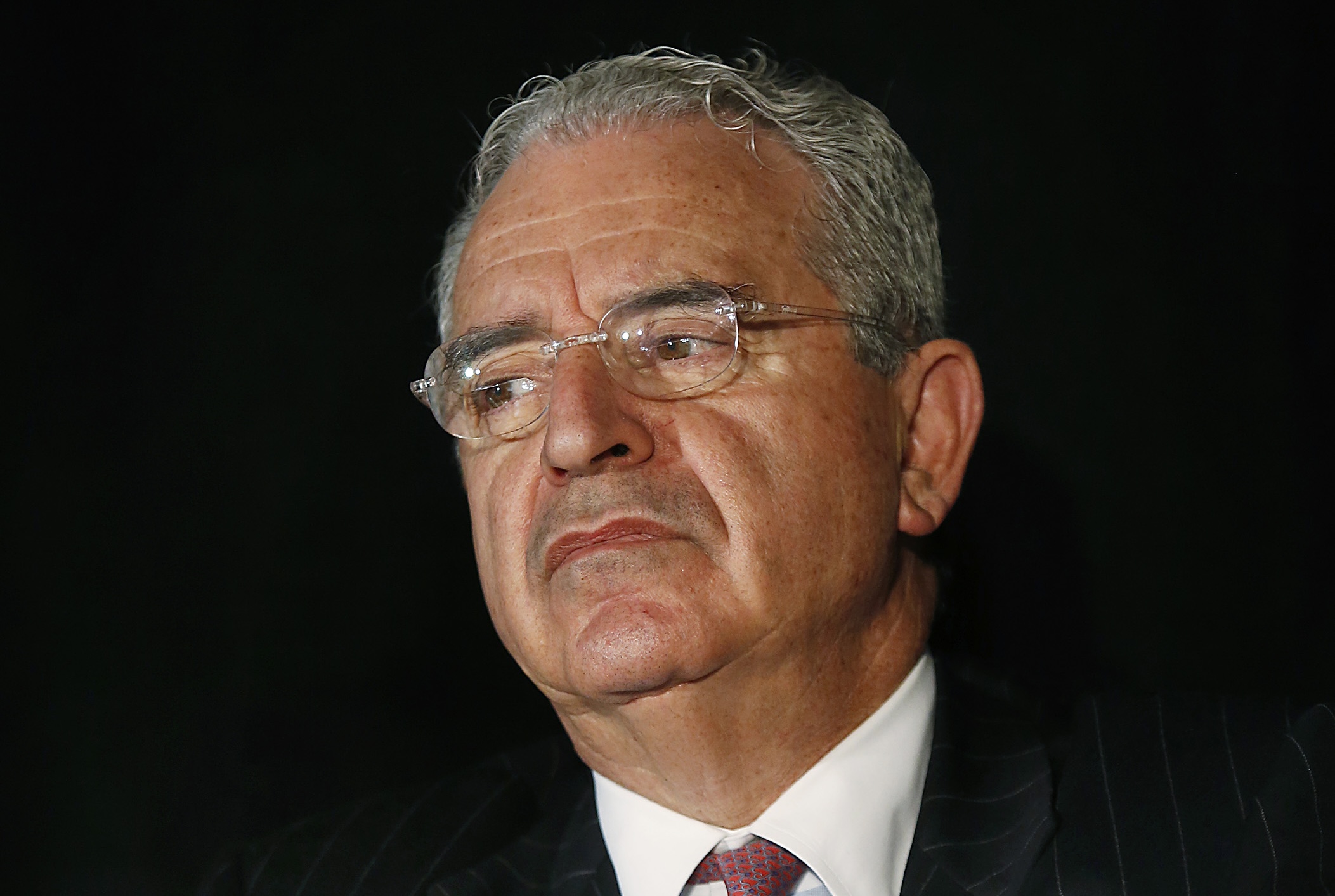
Co-founder and chairman of Murray Hill Properties in NYC, Norman Sturner turns 85 on Saturday…
FRIDAY: Author, educator, and activist, Jonathan Kozol turns 89… Rabbi emeritus of Congregation Rinat Yisrael in Teaneck, N.J., and rosh yeshiva of the Torah Academy of Bergen County, Rabbi Yosef Adler turns 74… Judge of the Wisconsin Court of Appeals, JoAnne Fishman Kloppenburg turns 72… COO of The New York Public Library, she has been married to Senate Minority Leader Chuck Schumer (D-NY) since 1980, Iris Weinshall turns 72… Principal at Watershed Associates, he is a negotiation consultant, Stuart Shlossman… Heidi Beth Massey… New York-based real estate developer, Jacob Frydman turns 68… Judge of the U.S. Bankruptcy Court, for the Southern District of Florida, Laurel Myerson Isicoff turns 68… Investigative journalist, Yevgenia Albats turns 67… Member of the Knesset until 2023, she is the first woman in the IDF promoted to major general (the IDF’s second highest rank), Orna Barbivai turns 63… Canadian lawyer, investor and business executive, he is the co-founder and chairman of Israeli AI company Aiola, Mitch Garber turns 61… Nationally syndicated newspaper columnist and a senior editor at Reason magazine, Jacob Z. Sullum turns 60… Chief assistant district attorney in Manhattan until 2021, now a criminal defense attorney, Karen Friedman Agnifilo turns 59… Entrepreneur and investor, he is the chairman of Mentored, an education technology platform, Eric Aroesty… Managing editor for politics and legal affairs at USA Today, Holly Rosenkrantz… Senior rabbi of Temple Sholom in Vancouver, B.C., and past chair of Reform Rabbis of Canada, Rabbi Dan Moskovitz turns 55… Academy Award-winning filmmaker, Ari Devon Sandel turns 51… Member of the Knesset for the Yisrael Beiteinu party, Yulia Malinovsky turns 50… Payroll specialist at Topaz Financial Services, Jeremy C. Frankel… Voice actor for English versions of anime, animation and video games, Maxwell Braden Mittelman turns 35… Director in the D.C. office of Baron Public Affairs LLC, Jeremy Furchtgott… Founder of Bangalore-based Catoff, Anthony (Tony) Klor… NYC-based director of strategic initiatives and director of IPF Atid, both at Israel Policy Forum, Shanie Reichman turns 30… Shoshanna Liebman…
SATURDAY: Retired 36-year member of the U.S. House of Representatives, Rep. Sander Levin (D-MI) turns 94… CMadelon “Madi” Portugal… Member of the New York State Assembly from 1981 until the end of 2024, Helene Weinstein turns 73… Oncologist and bioethicist, he is the older brother of Rahm and Ari, Ezekiel Jonathan “Zeke” Emanuel turns 68… Co-founder in 2008 of Kol HaNeshamah: The Center for Jewish Life and Enrichment and co-author of a siddur, Dr. Adena Karen Berkowitz… Founding managing director at Olympus Capital, Daniel R. Mintz… Former governor of New Jersey from 2010 until 2018, and two-time candidate for president of the U.S., Chris Christie turns 63… Toronto-based publisher and entrepreneur, she serves on the board of governors of Shalem College, Elisa Morton Palter… Rabbi of Temple Shalom in Louisville, Ky., since 2016, Beth Jacowitz Chottiner turns 61… City treasurer of Southfield, Mich., Irv “Moishe” Lowenberg… Chess Master since age 14, now a FIDE Grandmaster, Ben Finegold turns 56… National director at AIPAC, Joseph S. Richards… Acting president and CEO of the JCC Association of North America until this past July, earlier this week she was named as chief development officer at the Ad Council, Jennifer Mamlet… Chief communications officer at Bloomberg LP, Jason Schechter… Israeli film, television and stage actor, Amos Tamam turns 48… Author, he won the 2022 Pulitzer Prize for fiction for his novel The Netanyahus, Joshua Cohen turns 45… Former rabbi at Beth El Synagogue in Minneapolis for 14 years, now a consultant, Avi S. Olitzky… Senior policy analyst at the Heritage Foundation, he is a veteran of the IDF and an AIPAC alum, Daniel Flesch… Communications director at the William F. Buckley, Jr. Institute at Yale University, Ari Schaffer… Australian-born entrepreneur, now living in NYC, he is the co-founder of two start-ups, Ben Pasternak turns 26… Actor whose career started at 8 years old, Asher Dov Angel turns 23…
SUNDAY: Palm Beach, Fla., resident, the school at the Westchester (N.Y.) Jewish Center bears her name, Beverly Cannold turns 100… Considered one of the “Founding Mothers” of NPR, she is now a special correspondent on NPR’s “Morning Edition,” Susan Stamberg turns 87… Member of the U.K.’s House of Lords, Baron Andrew Zelig Stone turns 83… Longtime political columnist for Time magazine and author of the novel Primary Colors, Joe Klein turns 79… Color commentator for New York Yankees radio broadcasts since 2005, Suzyn Waldman turns 79… Former national political editor at the Washington Post, Maralee Schwartz… Owner and CEO of Gristedes Foods, John Catsimatidis turns 77… Pulitzer Prize-winning former national correspondent for the Los Angeles Times, now director of literary journalism at UC-Irvine, Barry E. Siegel turns 76… Minneapolis-area school counselor and language arts teacher, Sandra Sevig… Russian-born mathematician, he is a professor emeritus at UCSD, he was formerly a professor at both Yale and University of Chicago, Efim Zelmanov turns 70… Chief rabbi of the U.K., he was knighted by King Charles III as part of the 2023 New Year Honours, Rabbi Sir Ephraim Yitzchak Mirvis turns 69… 2023 Nobel Prize laureate in medicine, professor at the University of Pennsylvania, Drew Weissman turns 66… Global co-chair of the Israel practice at Latham & Watkins until his retirement in 2023, Stuart Kurlander… President of Hofstra University since 2021, the first woman to hold this position, Susan Poser turns 62… Bahraini ambassador to the U.S. from 2008 until 2013, after the prior four years in the Bahraini Parliament, both firsts for a Jewish woman, Houda Ezra Ebrahim Nonoo turns 61… Personal finance journalist and CEO of the multimedia company HerMoney, Jean Sherman Chatzky turns 61… Vice provost at Yeshiva University, she is the author or co-author of 15 books on leadership, the Torah and spirituality, Erica Brown turns 59… Award-winning special writer at The Wall Street Journal and author of six best-selling books, Gregory Zuckerman turns 59… Part-owner of the NHL’s New Jersey Devils, the NBA’s Philadelphia 76ers, the NFL’s Washington Commanders and MLB’s Cleveland Guardians, David S. Blitzer turns 56… Tax partner with RSM US LLP, where he serves as the national family office enterprise markets leader, Benjamin Berger… Screenwriter, producer and director of many successful films and TV shows, Alex Kurtzman turns 52… Author of three New York Times bestsellers and an adjunct senior fellow at the Council on Foreign Relations, Gayle Tzemach Lemmon turns 52… Rabbi of Baltimore’s Congregation Shomrei Emunah since 2009, Rabbi Binyamin Y. Marwick… Deputy chief of staff and legislative director for Rep. Jared Golden (D-ME), Eric B. Kanter…
Supporters of the bill allege Schumer is now slow-walking a floor vote because he is fearful that it will highlight divisions within his caucus

Kevin Dietsch/Getty Images
Senate Majority Leader Chuck Schumer (D-NY) speaks after the Senate passed a foreign aid bill at the U.S. Capitol on April 23, 2024, in Washington, D.C.
Senate Majority Leader Chuck Schumer (D-NY) is facing mounting pressure from Jewish leaders and Democratic colleagues who have privately voiced frustrations with the continued delay in moving to advance a major bill aimed at addressing a recent surge in antisemitic activity on college campuses.
Schumer, who has been outspoken against rising antisemitism in the wake of Hamas’ Oct. 7 attack, had endorsed prior versions of the legislation, called the Antisemitism Awareness Act, which first passed the Senate in 2016 under unanimous consent.
But after an initial effort to unanimously fast-track the bill failed last month in the Senate, Schumer has since delayed for weeks in bringing the bill up for a floor vote, even as it is expected to pass comfortably with bipartisan support and has won backing from a large number of Jewish groups.
In a brief interview with Jewish Insider on Thursday afternoon, Schumer, who has rarely addressed the matter publicly, stressed that he is now “looking at every single option to try and get strong, bipartisan legislation passed,” but he did not share a timeline for approving the bill.
“The crusade against antisemitism is in my bones, has been for my whole life,” he said, describing “the goals and aspirations of” the bill as “so important in this fight and to the future.”
Still, the holdup has angered supporters of the bill who allege that Schumer — the highest-ranking Jewish elected official in the country — is now slow-walking a floor vote because he is fearful that it will highlight divisions within his caucus while garnering a larger share of Republican backers.
“He is avoiding this at all costs,” said a person familiar with the matter who spoke with JI on the condition of anonymity to address a sensitive topic. “The reason why he hates this is because Schumer knows there’s going to be 40 to 45 Republicans who are going to vote for this bill, but there’s only going to be 30 Democrats.”
The bill would enshrine a definition of antisemitism used by the International Holocaust Remembrance Alliance into federal law and direct the Department of Education to consider the definition — which, among other things, identifies some criticism of Israel as antisemitic — in evaluating complaints of anti-Jewish discrimination on college campuses. That policy has been in place since 2019 under an executive order signed by former President Donald Trump.
While the legislation passed the House early last month by a wide margin, it has also drawn opposition from members of both parties, including some progressive and right-wing critics who have raised varying objections to the bill on free speech grounds.
Despite some resistance to the bill in the Senate, however, two of the most vulnerable Democrats up for reelection in November — Sens. Bob Casey (D-PA) and Jacky Rosen (D-NV) — are each eager for Schumer to call a vote and are urging him to act, according to sources familiar with their outreach.
A Senate aide confirmed to JI on Tuesday that Casey, who reintroduced the legislation with Sen. Tim Scott (R-SC) in April, is pushing Schumer to move forward.
“At a time when antisemitism has skyrocketed across the United States in the aftermath of the October 7 terrorist attack in Israel, particularly on college campuses, I’ve been working with Senator Schumer to advance the bipartisan Antisemitism Awareness Act,” Jacky Rosen (D-NV) said, adding that the majority leader “is looking at every path forward to get this done.”
“The horrific rise in reported incidents of antisemitism is a clarion call for Congress to step up and protect students on campuses across the nation,” Casey said in a statement shared with JI on Thursday. “The need for my Antisemitism Awareness Act has never been greater and I am working with Leader Schumer on all legislative options to pass it as quickly as possible.”
For her part, Rosen, a Jewish Democrat who is the lead sponsor of a separate antisemitism bill that also remains stalled in the Senate, has grown especially frustrated with Schumer’s delay as the summer congressional recess draws closer, said one well-placed source familiar with her thinking.
In a statement to JI, however, Rosen expressed confidence in Schumer’s approach to the bill, which she called “an important step in addressing rising campus antisemitism.”
“At a time when antisemitism has skyrocketed across the United States in the aftermath of the October 7 terrorist attack in Israel, particularly on college campuses, I’ve been working with Senator Schumer to advance the bipartisan Antisemitism Awareness Act,” she said, adding that the majority leader “is looking at every path forward to get this done.”
Meanwhile, several Jewish leaders who met with Schumer last month to lobby on behalf of the bill indicated in a follow-up letter sent to his office last Friday that their patience has been wearing thin.
In the letter, obtained by JI and written by top officials at a range of major Jewish and pro-Israel groups, the Jewish leaders requested an update from Schumer and “once again” exhorted him to greenlight a vote, emphasizing that in their initial meeting he had “committed to us that there would be movement on the bill within a short timeframe.”
Describing the legislation as “a high priority of the American Jewish community,” the Jewish leaders called on Schumer to move with alacrity before the fall semester begins on campuses, citing “a dramatic increase of antisemitic activity” on college campuses amid the ongoing Israel-Hamas war.
“We must ensure that, when students arrive on campus in the fall, we have adequately equipped the agencies tasked with protecting their civil rights,” the signatories elaborated in their letter to Schumer. “The Antisemitism Awareness Act is a key piece of this effort. In light of this unfolding crisis, we urge you to bring the bill to the Senate floor prior to the beginning of the 2024-25 academic year.”
The letter was signed by William Daroff of the Conference of Presidents of Major American Jewish Organizations; Ted Deutch of the American Jewish Committee; Eric Fingerhut of the Jewish Federations of North America; Jonathan Greenblatt of the Anti-Defamation League; Howard Kohr of AIPAC; Eric Goldstein of UJA-Federation of New York; and Nathan Diament, executive director of public policy for the Orthodox Union.
A source familiar with the situation previously told JI that, during the meeting with Jewish leaders, Schumer had indicated that he is still trying to resolve objections to the bill, which is likely to be a difficult prospect given entrenched opposition from some lawmakers on both sides of the aisle who say the legislation limits free speech. The Jewish leaders urged Schumer to bring the bill to a vote.
In comments to JI on Thursday, representatives of some of the Jewish groups that met with Schumer reiterated their support for the bill. “We are eager for the AAA to be voted on by the Senate,” Diament said in a statement, using an acronym for the bill. “It passed the House by an overwhelming margin and we are confident the same will happen in the Senate when brought for a vote.”
Karen Paikin Barall, vice president of government relations at JFNA, echoed that view, calling the Antisemitism Awareness Act “a critical piece of legislation” and voicing “hope it will come to a vote in the Senate as soon as possible. We are confident that it will pass.”
Sheila Katz, the CEO of the National Council of Jewish Women, who attended the meeting with Schumer last month, said in an interview with JI that “passing legislation to combat antisemitism is a top priority” for the Senate leader. “Once again,” she said, “he has mobilized to ensure critical legislation to combat antisemitism moves forward. He is doing this in a thoughtful and strategic way by actively working with multiple stakeholders and Jewish organizations.”
The ADL has been “working closely with” Schumer and his team, said Dan Granot, the group’s director of government relations, “and as we have discussed multiple times, now is the time for Congress to step up and meet this moment of rising antisemitism.”
Julie Fishman Rayman, the managing director of policy and political affairs at the AJC, called Schumer “a committed ally of the American Jewish community” and said he “knows that it is in the best interest of the community to get a bill that defines and counters antisemitism passed by the Senate before the end of this congressional session.”
On Thursday, some Jewish leaders also came to his defense.
Sheila Katz, the CEO of the National Council of Jewish Women, who attended the meeting with Schumer last month, said in an interview with JI that “passing legislation to combat antisemitism is a top priority” for the Senate leader. “Once again,” she said, “he has mobilized to ensure critical legislation to combat antisemitism moves forward. He is doing this in a thoughtful and strategic way by actively working with multiple stakeholders and Jewish organizations.”
But while NCJW supports the IHRA definition as “an educational tool,” as the group states on its website, it does “not recommend this be codified into law or used to prohibit freedom of speech in any way.” Katz clarified to JI that NCJW “has been focused on advocating for” another bill that Schumer has co-sponsored called the Countering Antisemitism Act, which was introduced in April by Rosen and Sen. James Lankford (R-OK), but noted that “we do not oppose the AAA.”
Amy Spitalnick, the CEO of the Jewish Council for Public Affairs, said that Schumer’s “commitment to addressing the crisis of antisemitism is crystal clear.”
Her group, she told JI, is also working with the senator’s team on “a legislative path forward” for such bills as the Countering Antisemitism Act, which seeks to codify and expand on the Biden administration’s national strategy to combat antisemitism and is endorsed by a broad swath of the Jewish community.
The JCPA, however, has “not taken a position” on the Antisemitism Awareness Act, according to Spitalnick.
The White House declined to comment directly on the bill, noting instead that the Countering Antisemitism Act “is aligned with the administration’s national strategy to counter antisemitism in important ways.” President Joe Biden “welcomes congressional action in this fight,” Andrew Bates, a White House spokesperson, told JI on Thursday.
In a sign of brewing frustration with Schumer across the Jewish denominational spectrum, a sizable coalition of Orthodox rabbis issued a joint statement last week accusing the majority leader of “obstructing” a handful of bills concerning the Jewish community, including the Antisemitism Awareness Act, which now has 31 co-sponsors almost evenly divided between Democrats and Republicans.
With the bill continuing to languish in the upper chamber, some critics are skeptical of Schumer’s commitment to advancing what they see as urgently needed legislation to counter a rise in antisemitism that has riven college campuses in recent months.
The majority leader has given some notable floor remarks where he has condemned antisemitism, including a landmark speech last November in which he argued that anti-Israel animus “in the wake of Oct. 7 is all too often crossing into brazen and widespread antisemitism, the likes of which we haven’t seen for generations in this country.”
“By all accounts, the success or failure of the Antisemitism Awareness Act now depends almost entirely on the decision of one man: Majority Leader Schumer,” Kenneth Marcus, the founder and president of the Louis D. Brandeis Center for Human Rights Under Law, said in an email to JI this week.
More recently, Schumer took to the Senate floor earlier this month to speak out against a widely denounced pro-Hamas demonstration at an exhibit in downtown Manhattan honoring the victims of the Nova music festival massacre.
But Schumer’s more cautious approach to legislation addressing antisemitism has recently drawn scrutiny, particularly as he has also faced backlash from some Jewish and pro-Israel groups over his sharply worded speech in March calling Israeli Prime Minister Benjamin Netanyahu an obstacle to peace and advocating for new elections to replace the Israeli leader.
“By all accounts, the success or failure of the Antisemitism Awareness Act now depends almost entirely on the decision of one man: Majority Leader Schumer,” Kenneth Marcus, the founder and president of the Louis D. Brandeis Center for Human Rights Under Law, said in an email to JI this week.
Marcus, who relied on the IHRA definition while overseeing anti-Jewish discrimination cases as the head of the Department of Education’s Office of Civil Rights in the Trump administration, said that Schumer “need only call the bill to a vote, and it will probably pass.”
“The problem is that a roll call vote could expose fissures within both parties, with far greater problems among the Democrats,” he suggested.
Even as Schumer vowed to explore all available avenues to pass the bill, he emphasized in his comments to JI that “beating back antisemitism also involves public education and fervent voices to say things like I said in my own speech on antisemitism and so many times afterwards, as recently as this week.”
“As I continue to meet with other senators, Jewish groups and other stakeholders,” Schumer added, “my North Star is always going to be the Jewish values I hold and the history we as Jews have learned.”
By Jacob Kornbluh & JI Staff
Please log in if you already have a subscription, or subscribe to access the latest updates.
 Continue with Google

 Continue with Apple