














































The Pennsylvania governor called Netanyahu’s comments that there is no starvation in Gaza ‘quite abhorrent’
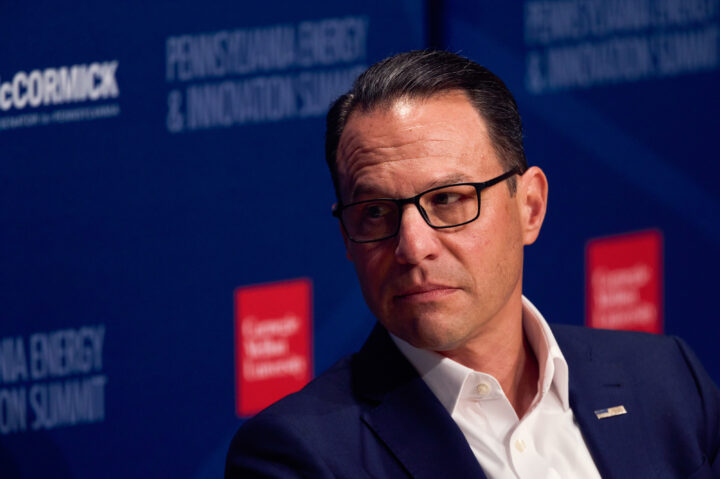
Brian Kaiser/Bloomberg via Getty Images
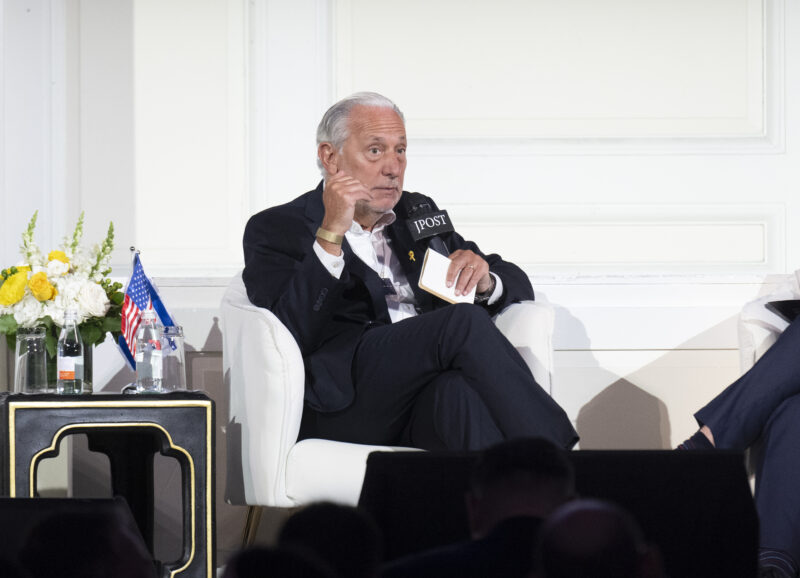
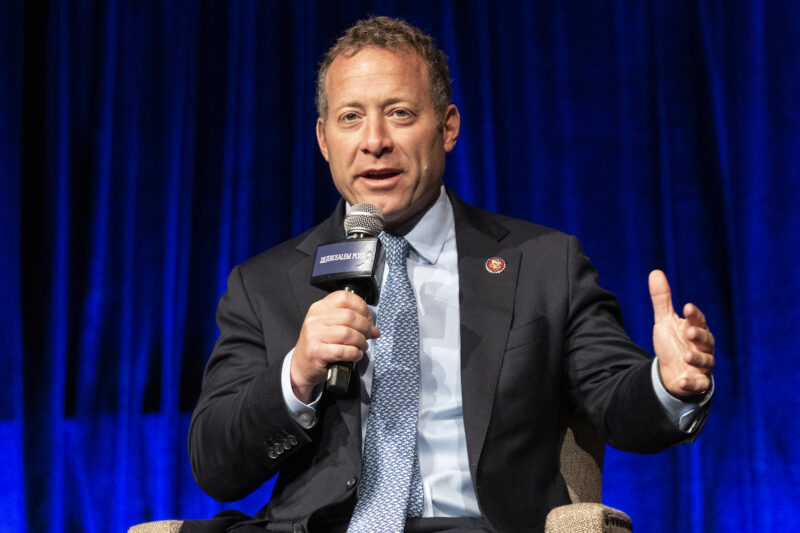
Pennsylvania Gov. Josh Shapiro during a panel discussion at the inaugural Pennsylvania Energy and Innovation Summit at Carnegie Mellon University in Pittsburgh, Pennsylvania, US, on Tuesday, July 15, 2025.


 Add JewishInsider on Google
Pennsylvania Gov. Josh Shapiro called the humanitarian crisis in Gaza “awful” and said the U.S. has a “moral responsibility” to “flood the zone with aid.”
Speaking to the central Pennsylvania Fox34 news channel on Tuesday, Shapiro said, “The fact that kids are starving in Gaza is not OK. It is not OK. And I think everyone has a moral responsibility to figure out how to feed these kids. It is true that Hamas intercepts aid. It is true that the aid distribution network is not as sophisticated as it needs to be, but given that, I think our nation, the United States of America, has a moral responsibility to flood the zone with aid.”
“It is awful, what is happening in Gaza,” the Democratic governor continued.
He also called Israeli Prime Minister Benjamin Netanyahu’s claim that there is no starvation in Gaza “quite abhorrent.”
“He is wrong. He is wrong,” Shapiro said.
“I believe that also, as a result of that type of language, as a result of standing with Donald Trump with plans to occupy Gaza, or, as President Trump said, drive all the Palestinians out and create — his words, not mine — a Riviera of the Middle East, or however the president said it, I think that is not only reckless language, but what it does is it further isolates Israel in the world, and that’s a dangerous place for Israel to be,” Shapiro added.
Shapiro has faced criticism from the left flank of the Democratic Party for his support of Israel in the past, particularly when he was being considered as a potential vice president to join Kamala Harris’ ticket in the 2024 presidential election.
The alleged perpetrator of the arson attack on Shapiro’s residence in Harrisburg, Pa., on the first night of Passover in April said he was motivated by the governor’s stance toward the Palestinians.
‘We need everyone who sees the difficult pictures of Evyatar to understand that we don’t have another minute. We don’t have another day. We can lose him in the coming days,’ Matan Eshet tells JI
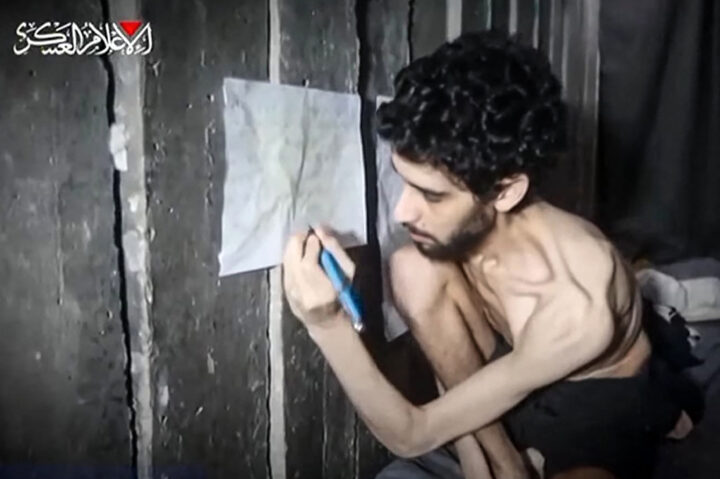
Ezzedine al-Qassam Brigades/AFP via Getty Images
This screengrab from a video released on August 1, 2025 by Hamas, shows Israeli hostage Evyatar David looking weak and malnourished.
Days after Hamas released a video showing hostage Evyatar David emaciated and being forced to dig his own grave in a tunnel under Gaza, David’s family called on the Trump administration to do anything it can to ensure that the hostages are released.
“Evyatar is fighting for his life with what little strength he has left,” Matan Eshet, David’s cousin, told Jewish Insider on Monday. “You can see it in his eyes. You don’t need a medical degree to understand that Evyatar only has a few days to live.”
David, 24, was kidnapped by Hamas terrorists from the Nova Festival on Oct. 7, 2023.
In a video released over the weekend, an extremely gaunt David was shown in a tunnel under Gaza digging, with his bones protruding. He wrote on a calendar documenting the small amounts of food — either lentils or beans — his captors have given him on some days, and on other days he wrote “no food.”
At one point in the video, a Hamas terrorist reaches out from behind the camera to hand him a can of food, and the terrorist’s arm is visibly much thicker than David’s.
“This can is for two days, just to keep me alive,” David said of the food.
“I don’t know what I’m going to eat,” David said. “I haven’t eaten in days … I’m getting thinner and weaker by the day … What I’m doing now is digging my own grave … This is the grave where I think I’m going to be buried. Time is running out.”
Prof. Ronit Endevelt, the former head of the Nutrition Division at the Israeli Health Ministry now on the Hostage Families Forum medical team, estimated that David’s weight dropped about 41% to 40-45 kg.
Hamas released a video of David in February of this year, with hostage Guy Gilboa Dalal in a car, visibly distressed while being forced to watch other hostages being released. David’s health has visibly deteriorated since the previous video; he appears much thinner and paler in the new one.
Eshet said his family is “feeling broken” after seeing the new footage.
“It’s not Evyatar. He doesn’t look like that or sound like that. That’s not how he moves. We see the distress in so many ways. He looks like a shadow of himself,” Eshet said. “He has to get medical care and food already.”
The video of David describing his starvation at the hands of Hamas came as some of the world’s largest media outlets published photos of children in Gaza who they reported were starving, but failed to mention that they suffered from genetic diseases. More broadly, much of the media coverage of Gaza in recent weeks has been about the humanitarian situation and difficulties distributing food to the residents.
“It’s maddening,” Eshet said. “Hamas are the ones taking the aid instead of the civilians. And then they claim that [Israel is] starving them, not Hamas who is preventing people from getting the food, while Hamas is choosing not to let Evyatar receive food.”
Eshet noted that the arm of the Hamas terrorist who handed Evyatar the can of food was “much bigger and more muscular compared to Evyatar.”
“On the news, you can see people walking in the food markets in Gaza. People do not look the way Evyatar looks,” Eshet added. “No one was close to looking the way Evyatar does.”
Eshet called on “Israel and the world to demand that Evyatar come home already.”
“We need everyone who sees the difficult pictures of Evyatar to understand that we don’t have another minute. We don’t have another day. We can lose him in the coming days,” he added.
“The U.S. government succeeded in getting a deal on Day minus-One, before [President Donald] Trump’s inauguration,” Eshet said. “America needs to do the same thing again and stand up and insist that the hostages are freed now, regardless of whatever else is happening.
“They did it once. They made a deal happen. They need to use that power again to make sure Evyatar comes home,” Eshet added.
Asked about the reports that Israel plans to expand its military operations in Gaza, including in areas where the hostages are believed to be held, Eshet said he hopes “these are tactical tools to bring about a change, stand up to Hamas and reach a [hostage] deal from a position of strength.”
Eshet and David are first cousins. Eshet recalled that they “grew up together.”
“Evyatar is a charming and loving person, a good listener with a contagious smile,” Eshet said. “He was a middle child, and was friends with his big brother and little sister. He always paid attention to whoever needed help in the house.”
Eshet said that David loved to play guitar and that his music could always be heard in his parents’ house. Before Oct. 7, David planned to travel the world and try to make a living playing music.
“He had a smile and shining eyes, and we’re all waiting for him,” Eshet said. “He was a boy who became a skeleton in the Hamas tunnels. He needs to come home and be a regular person and live the life that is waiting for him.”
There are 50 hostages remaining in Gaza, 20 of whom are believed to be alive. Hamas rejected the latest attempt by the U.S. and Israel to reach a temporary ceasefire and hostage-release deal late last month.
Palestinian Islamic Jihad also released a video of hostage Rom Braslavski last week, who was also emaciated.
The Hostages Families Forum released a report by its medical team on Monday “warning that the hostages still held alive in Gaza are suffering from deliberate, prolonged, and systematic starvation … causing multisystem damage and posing an immediate risk of death.”
Prof. Hagai Levine, head of the medical team, said that “the outcome of this cruel experiment is foreseeable — body and mind will gradually deteriorate until they collapse. Any further delay in rescuing the hostages may cost human lives. We must not stand idly by while our brothers vanish. We must act now to bring them all home.”
The House speaker said he wants to see the war in Gaza come to an end soon

Kent Nishimura/Getty Images
House Speaker Mike Johnson (R-LA) does an interview with CNN at the U.S. Capitol on April 17, 2024 in Washington, D.C.
House Speaker Mike Johnson (R-LA) expressed strong concern about the humanitarian crisis in Gaza in an appearance on CNN’s “The Lead” on Wednesday.
Johnson’s comments, made days after President Donald Trump said that there is “real starvation” happening in Gaza, indicate growing concern even among pro-Israel Republicans about the humanitarian situation in Gaza, at the same time that such concerns on the Democratic side have reached new heights.
“I do hope it comes to an end soon,” Johnson said about the war in Gaza, “and we bring an end to this suffering and misery, because it is quite sad and quite alarming to see.”
He said that “we’ve got a humanitarian crisis in Gaza — I mean the pictures tell 1,000 words and it’s heartbreaking.” Israeli Prime Minister Benjamin Netanyahu has said that there is “no starvation” happening in the enclave.
The House speaker said that he wants to see an end to the conflict and peace, adding that “President Trump is using a strong hand to try to forge that, and we’re moving in the right direction.”
He also credited Israel with opening up new channels for aid and noted that the U.S. and its partners are going to work to provide additional aid as well.
Johnson did not mention Hamas, which some supporters of Israel argue should shoulder the blame for any aid shortages and the lack of a ceasefire in Gaza.
Johnson didn’t directly address a question from host Jake Tapper about whether he’s concerned that Israel is at risk of becoming a global pariah.
After meeting with U.K. Prime Minister Starmer, the president said the U.S. will be getting more involved in providing aid

Tasos Katopodis/Getty Images
President Donald Trump
President Donald Trump decried the humanitarian situation in Gaza on Monday, telling reporters that he does “not particularly” agree with Israeli Prime Minister Benjamin Netanyahu’s assessment that there is no starvation taking place in the enclave.
“That’s real starvation stuff,” Trump said, following a meeting in Scotland with U.K. Prime Minister Keir Starmer. “I see it, and you can’t fake that.”
Trump said the U.S. will be getting “even more involved” in taking steps toward addressing hunger in Gaza, including by setting up “food centers.” A White House spokesperson declined to comment when asked for specifics about what this plan might entail. Trump said “all of the European nations” would be part of the project.
“We’re going to do it in conjunction with some very good people, and we’re going to supply funds,” said Trump.
Food distribution in Gaza is currently being operated by the Gaza Humanitarian Foundation, which is backed by both the U.S. and Israel. The organization has faced criticism for failing to meet the needs of Gazans, and scenes of chaos at the gates of its distribution centers have spread online.
Without mentioning GHF by name, Trump appeared to take aim at the existing aid mechanisms, saying that the new “food centers” will not have fences to keep people out.
“We’re also going to make sure that they don’t have barriers stopping people here. You’ve seen the areas where they actually have food, and the people are screaming for the food in there, they’re 35-40 yards away, and they won’t let them because they have lines that are set up,” said Trump. “And whether they’re set up by Hamas or whoever, but they’re very strict lines. We have to get rid of those lines.”
Trump blamed Hamas for the failure of recent ceasefire talks and for prolonging the war, including the humanitarian crisis. The president’s comments come after European leaders have pressed Israel to allow a freer flow of humanitarian aid into Gaza.
“We have a good group of countries who can help with the humanitarian needs, which is food, sanitation, some other things. It’s very difficult to deal with Hamas,” said Trump. “Hamas has become very difficult to deal with in the last couple of days, because they don’t want to give up these last 20 [hostages], because they think as long as they have them, they have protection. But I don’t think it can work that way.”
Fifty hostages remain in Gaza, and Israel believes at least 27 of them are dead. The most recent ceasefire proposal would only have seen the release of about half of the living hostages.
Trump also said Iran played a role in the failure of ceasefire talks, saying Iran “interjected themselves in this last negotiation.”
“I think they got involved in this negotiation, telling Hamas and giving Hamas signals and orders. And that’s not good,” Trump said. “For a country that just got wiped out, they’ve been sending very bad signals, very nasty signals. And they shouldn’t be doing that.”
Israel announces new aid measures and temporary ceasefires while defending its broader war strategy
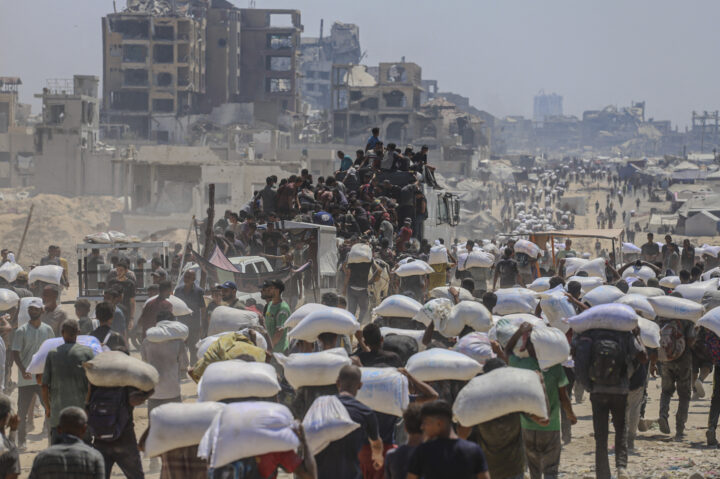
Ramez Habboub/Abaca/Sipa USA via AP Images
Palestinians carry humanitarian aid received through the Zikim crossing as they return to their families near the Al-Sudaniya area in northern Gaza, Palestine, on July 27 2025 amid the beginning of airdrop operations.
In Israel’s effort to conduct a pressure campaign on Hamas to oust the terror group and release the remaining hostages held in Gaza, it has found itself instead on the receiving end of another global pressure campaign.
Facing mounting pressure amid a worsening humanitarian crisis in Gaza, Israel over the weekend announced a series of measures aimed at alleviating the widespread malnutrition and security issues in the enclave, including temporary ceasefires, aid airdrops, facilitating a massive increase in Gaza’s water supply and establishing designated humanitarian corridors — even as the IDF called claims of starvation in Gaza “a false campaign promoted by Hamas” and Israeli Prime Minister Benjamin Netanyahu denied that there was starvation in Gaza.
The crisis hit a fever pitch over the weekend as opposition to Israel’s efforts and limits on aid — first put into place in March as a pressure tactic to push Hamas to release the remaining hostages — surged to the highest levels of government around the world.
Dozens of countries called for an end to the war, a restoration of the flow of humanitarian aid into Gaza and the immediate release of the hostages. The shift in the political dynamic extended to Capitol Hill, where Democratic legislators, including many who have been strong supporters of Israel, expressed their concerns over Israel’s approach to the worsening humanitarian crisis in Gaza.
That backdrop led to a late-night announcement from the IDF’s on Saturday: “In accordance with directives from the political echelon and following a situational assessment held this evening, the IDF has begun a series of actions aimed at improving the humanitarian response in the Gaza Strip, and to refute the false claim of deliberate starvation in the Gaza Strip.”
On Israel’s most-watched news channel, Channel 12, journalists Almog Boker and Amit Segal described the move as a victory for Hamas after a successful propaganda campaign that captivated global opinion.
But not everyone agreed. On the same network, anchor Yonit Levi said, “It’s time to understand that this is not a failure of public diplomacy, but a moral failure.”
Domestically, the resumption of aid has the potential to cause divisions within Netanyahu’s coalition, whose right-wing members have in the past threatened to leave the coalition over moves that have been seen as concessions to Hamas.
Israeli National Security Minister Itamar Ben-Gvir and Finance Minister Bezalel Smotrich — both vocal opponents of allowing aid into Gaza — were excluded from a phone call on Saturday during which the decision was taken to increase aid. According to Ben-Gvir, an official from the Prime Minister’s Office claimed he had been left out to avoid forcing him to violate Shabbat — which Ben-Gvir denied, saying he was “available on Shabbat for any event or important security consultation.”
Smotrich, for his part, reportedly said overnight that he will not quit the government over the decision.
Addressing the move on Sunday during a visit to an Israeli Air Force base, Netanyahu defended the decision, calling it a continuation of existing policy. He said that while continuing efforts to defeat Hamas and release the hostages, “we will need to continue to allow the entry of minimal humanitarian supplies. We have done this until now.”
Amid the cacophony of criticism, Israel has largely stayed in the good graces of the White House. President Donald Trump on Sunday said that “Israel is gonna have to make a decision” about what to do with Hamas. “I know what I’d do, but I don’t think it’s appropriate that I say it.” U.S. Ambassador to Israel Mike Huckabee slammed the United Nations, The New York Times and Hamas for the humanitarian crisis, saying that their “lies & propaganda destroyed cease-fire deal, tried to discredit safe and functioning GHF effort, emboldened Hamas & will result in this complete balagan! Most sad for hostage families-grief prolonged.”
The U.N. World Food Program, which has not shied away from criticizing Israeli government actions, praised the influx of aid, saying the agency has “enough food in – or on its way to – the region to feed the entire population of 2.1 million people for almost three months.”
But while the most immediate concerns are being allayed, Israel will have to face another crisis of its own making — attempting to restore its standing with many of its traditional allies.
Indeed, when Rep. Ritchie Torres (D-NY), a pro-Israel stalwart, is sounding an alarm about his own frosty relationship with the Israeli government, it’s a glaring red flag about the state of Israel’s public diplomacy.