


































































A sprawling web of cash and staff connects anti-Israel candidates and PACs nationwide

Getty Images
Illustrative


 Add JewishInsider on Google
The Justice Democrats PAC, the outside group best known for elevating the congressional Squad to power in 2018, has become the driving force behind this cycle’s slate of far-left primary candidates.
And powering the Justice Democrats this year is a dark-money machine operating out of a PostalAnnex in a strip mall near Anaheim, Calif: the Institute for Middle East Understanding, a fierce critic of Israeli policy, and its new political arm, the IMEU Policy Project.
A review of financial disclosures from these three groups reveals that just as the Middle East conflict has become a defining issue for insurgent candidates on the left, it has also become increasingly crucial to Justice Democrats’ outreach and finances.
With Israel at the center of this year’s primary debates, Justice Democrats has lent considerable resources — cash, staff and know-how — to an array of socialist-minded candidates and smaller committees, including American Priorities super PAC. And helping bankroll it is the IMEU Policy Project, which formed just five months after the Oct. 7 attacks and quickly took in $400,000 from its parent organization.
That $400,000 figure is the exact amount IMEU Policy Project has since pumped into Justice Democrats’ accounts. There is no record of the Policy Project supporting any other federal PAC, just as there is no record of the decades-old Institute for Middle East Understanding providing financial assistance to another organization besides its new political spin-off.
Neither group responded to questions from Jewish Insider. Federal rules prohibit using money raised by organizations with the IMEU’s tax designation for political purposes. The funding from the institute makes up about half of the Policy Project’s budget in its most recent tax filings, meaning it has other revenues from which to pay for its electoral efforts, even as the start-up cash from its progenitor set it on its mission “to educate elected officials, policy-makers, and voters.”
But the original donors behind all of the Policy Project’s income remain hidden from public view.
“Either way, we don’t know where it came from, so it’s dark money being pushed into a PAC,” said Brendan Glavin, director of insights at pro-transparency group OpenSecrets. “People being targeted with content don’t know who’s trying to influence them.”
Progressive politicians and advocates have long decried dark money for enabling the ultra-wealthy to influence elections while concealing their involvement from public view. But Justice Democrats has historically defended its acceptance of such funds to avoid being “outgunned,” in the words of former spokesman Waleed Shahid, now a top aide to New York City Mayor Zohran Mamdani.
For the first 21 years of its existence, IMEU promoted Palestinian narratives in media and the arts but avoided the electoral fray. That changed beginning with the formation of the IMEU Policy Institute in March 2024, and when it made its first gift to Justice Democrats three months later.
But California records show that despite using the same shopping center maildrop address in Tustin, Calif., as the original institute — and despite taking $250,000 in the form of a charitable grant for “Palestine Awareness” from its parent organization, plus a $150,000 loan — the IMEU Policy Project has never registered to operate in the Golden State, the state attorney general’s office confirmed.
That hasn’t stopped the Policy Project from fundraising, or from running multiple ad campaigns in key electoral battlegrounds criticizing elected officials it deems pro-Israel: attacking Rep. Mike Lawler (R-NY) in his swing district, lambasting Sen. Cory Booker (D-NJ) and Kentucky Gov. Andy Beshear in New Hampshire and blasting Sen. Ruben Gallego (D-AZ) in Iowa. It also has run ads and a petition site supporting the Block the Bombs Act to deny military aid to Israel.
It also operates PunishGenocide.org, backing a resolution proposed by Rep. Rashida Tlaib (D-MI) to declare the Jewish state guilty of genocide, and NoWarForIsrael.com, which explicitly blames Israel for President Donald Trump’s decision to bomb Iran.
“This is not America First. This is Israel First,” the webpage reads.
The group also runs the Peace, Accountability and Leadership Political Action Committee, PAL-PAC, which has raised tens of thousands from figures affiliated with the institute and the Policy Project and dumped into the campaigns of such candidates as New York’s Darializa Avila Chevalier and Texas’s Rev. Frederick D. Haynes. Leading the PAC is Amira Hassan, former political director and current board member for Justice Democrats. Its webpage prominently features an endorsement from Tlaib, who calls it “only PAC exclusively committed to justice and accountability for the Palestinian people.”
But the Policy Project’s largest recorded intervention in the political process is the $400,000 it has injected directly into Justice Democrats’ coffers. It is the single biggest donor to Justice Democrats this cycle, outstripping even the left-wing PAC’s principle patron of past years, the Tlaib campaign. The Policy Project also works closely with the congresswoman, platforming her on its social media channels, boosting her bills and lending quotes to her press releases.
Tlaib did not answer questions from JI regarding her relationship with Justice Democrats and the IMEU Policy Project, and whether she had any role beyond providing money for one and publicly supporting the other. The Michigan congresswoman was part of Justice Democrats’ freshman class of elected officials in 2018.
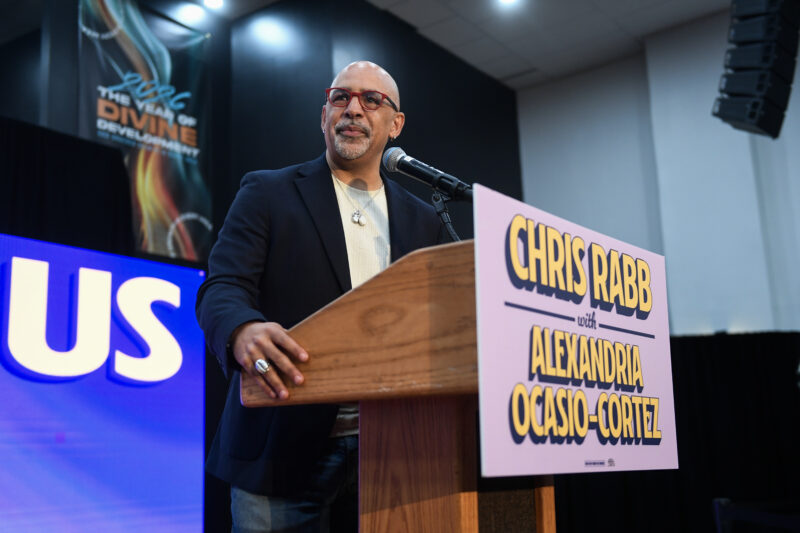
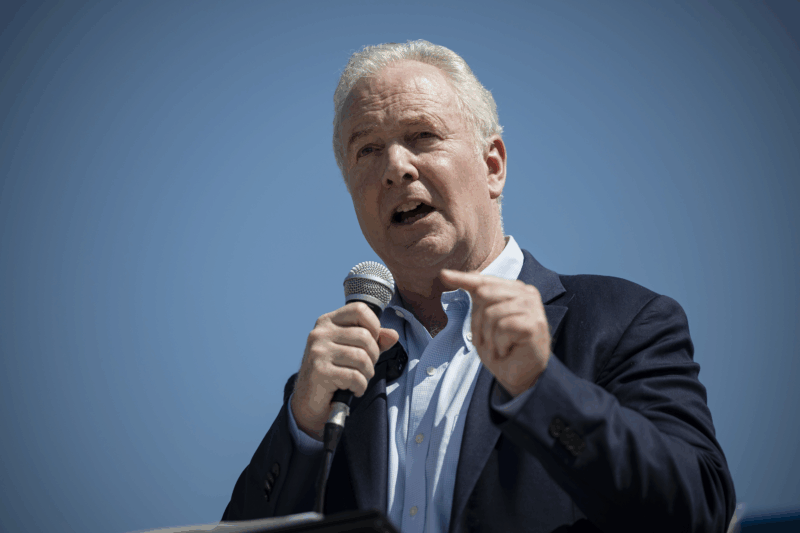
In March, a writer for the left-wing media outlet Zeteo posted that the IMEU Policy Project and Justice Democrats had spent $100,000 on an ad campaign attacking congressional candidate and former Rep. Melissa Bean (D-IL) and pushing her ultimately unsuccessful anti-Israel opponent Junaid Ahmed. In late May, Justice Democrats uploaded an ad to Instagram boosting Philadelphia congressional contender Chris Rabb, who went on to win the nomination, a spot the PAC reported having “put $260,000 behind” as part of a “partnership” with IMEU Policy Institute.
The Policy Institute affirmed this figure in a joint statement with Justice Dems when Rabb triumphed on primary night last week. The two also boasted of spending $200,000 on mail ads promoting the campaign of Adam Hamawy, who carried a plurality of the vote in a crowded Democratic contest to replace Rep. Bonnie Watson Coleman (D-NJ).
The Justice Democrats and IMEU Policy Project did not respond to questions about the cost breakdown for these ad efforts, or whether the Policy Project solicited contributions for Justice Democrats to help pay for them.
Justice Democrats has also coordinated closely with American Priorities super PAC, the professed anti-AIPAC committee, which at its launch described itself as part of a “partner network” that included the IMEU Policy Project and Justice Democrats. That same press release also identified American Priorities’ independent expenditure director as Hannah Fertig, who previously held the identical title at Justice Democrats.
Justice Democrats’ support for the younger organization has come mainly in the form of in-kind donations of digital production services. However, reports of the value and purpose of those services that the two PACs have made to the Federal Election Commission differ radically.
According to Justice Democrats’ most recent FEC reports, it has provided $23,500 worth of production costs to American Priorities, mostly for ads attacking Bean and supporting Ahmed in March.
But in American Priorities’ submissions to the commission, this support is nowhere to be found. Rather, American Priorities recorded $50,000 in donated production costs from Justice Democrats in February, in support of Nida Allam’s failed challenge to Rep. Valerie Foushee (D-NC). It did not report any help from Justice Democrats in the Illinois race.
Neither American Priorities nor Justice Democrats responded to questions from JI about these discrepancies. Glavin, of OpenSecrets, noted that the FEC has repeatedly flagged problems in Justice Democrats’ disclosures, including over in-kind contributions, compelling it to file multiple amended filings in recent months.
“I’m not sure what’s going on with their reporting,” the campaign finance expert said. “We expect to see some things that aren’t here.”
The bulk of American Priorities’ funding has come from three individuals: tech investors Omer Hasan and Tariq Afaq Ahmed, who gave $1 million and $500,000 respectively; and e-commerce executive Mohammad Waqas Javed, who chipped in an additional million. Waqas Javed is also one of Justice Democrats’ largest donors after the IMEU Policy Project and the Tlaib campaign, having contributed $50,000 to the PAC.
This same trio provided much of the money for the New Yorkers for Lower Costs super PAC that helped propel Mamdani into City Hall.
Mamdani attended the institute’s gala in April.
Mamdani’s office — including Shahid, the former Justice Democrats spokesman — did not respond to questions about their awareness of the IMEU Policy Project and its relationship with Justice Democrats.
The Policy Project shares the original institute’s longtime executive director, Margaret DeReus. Early in the institute’s existence, DeReus penned an editorial for the Houston Chronicle calling for immediate recognition of and engagement with the then-newly elected Hamas leadership on the Palestinian Legislative Council.
“When Palestinians in the occupied territories gave Hamas a resounding victory, they sent the world a message. The status quo of Israeli colonization and denial of Palestinian rights is unsustainable,” she wrote under her maiden name Zaknoen. “Hamas earned people’s trust by providing social services, hospitals and schools, and running municipal governments free of corruption. Ironically, Hamas may provide the Palestinians with the good governance and true political reform Fatah denied them.”
The two IMEU groups also share a policy director: Georgetown University adjunct Josh Ruebner. A co-founder of Jews for Peace in Palestine and Israel, which eventually merged into Jewish Voice for Peace, Ruebner blasted then-Georgetown President John DeGioia just days after Oct. 7 for his “one-sided condemnation of Hamas.”
Pro-Israel candidates who received backing from AIPAC or AIPAC-aligned groups won two of the four targeted Democratic primaries in Illinois
Melissa Bean campaign page
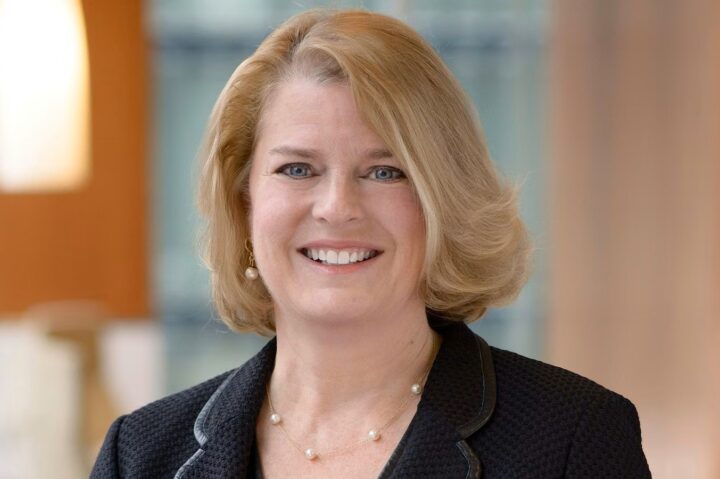
Former Rep. Melissa Bean (D-IL)
Reports of the demise of AIPAC’s political clout in Democratic primaries, it turned out, were greatly exaggerated.
Pro-Israel candidates who received backing from AIPAC or AIPAC-aligned groups won two of the four targeted Democratic primaries in Illinois — and helped block all the Squad-aligned far-left candidates from winning nominations in all of the races.
It was a respectable, if not dominant showing, but one consistent with making an impact with the $22 million pro-Israel groups spent in the four open congressional races.
Former Rep. Melissa Bean (D-IL) held off a credible challenge from anti-Israel activist and businessman Junaid Ahmed, and looks like a lock to hold onto the suburban district as long as she wants.
Cook County Commissioner Donna Miller, who benefited from about $4.5 million in outside spending from a pro-Israel group, comfortably outdistanced former Rep. Jesse Jackson Jr. (D-IL) by a double-digit margin (41-29%) — even though Jackson entered the race as the favorite. The anti-Israel candidate in the field, state Sen. Robert Peters, finished in a distant third place, with only 12% of the vote.
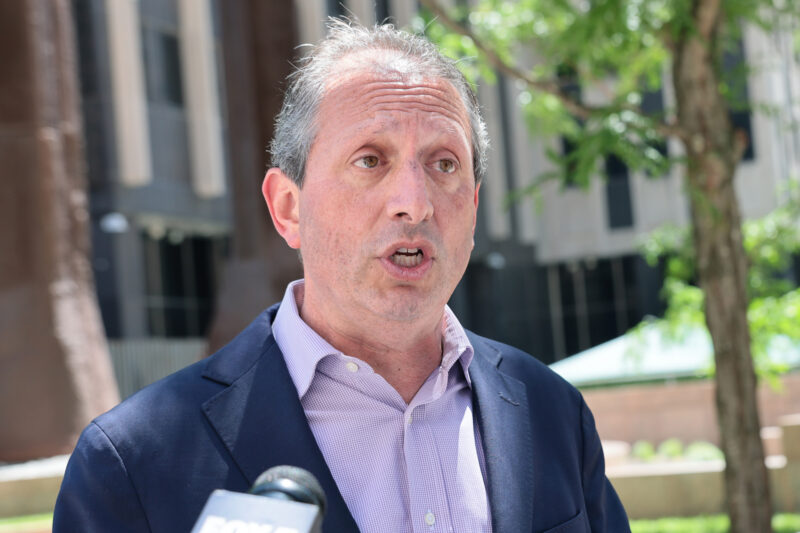
AIPAC’s biggest setback came in the affluent Chicago lakefront seat of retiring Rep. Jan Schakowsky (D-IL), where Evanston Mayor Daniel Biss prevailed over pro-Israel state Sen. Laura Fine despite facing a barrage of attacks from an AIPAC-aligned group. But pro-Israel voters also dodged the worst-case outcome, with anti-Israel social media influencer Kat Abughazaleh finishing in second, and trailing badly in the district’s suburban precincts.
All told, Biss won with 30% of the vote, Abughazaleh finished with 26%, and Fine tallied 20%.
And despite AIPAC’s super PAC spending nearly $5 million in positive ads to boost Chicago city Treasurer Melissa Conyears-Ervin, state Rep. La Shawn Ford narrowly prevailed in the crowded primary, 24-20%. Ford was backed by retiring Rep. Danny Davis (D-IL), with the congressman’s political machine ultimately making a bigger difference than the money spent on behalf of Conyears-Ervin.
Anthony Driver, Jr. and Kina Collins, the two candidates running on anti-Israel platforms, lagged well behind in third and fourth place, tallying a combined 20% of the vote.
AIPAC managed to block all six of the far-left candidates it viewed as potential Squad-aligned lawmakers, which a source close to AIPAC told JI was the group’s top goal in the home stretch of the campaign — once it backed off of anti-Biss attacks that failed to dislodge him as the front-runner and Abughazaleh closed in in second place. AIPAC is treating that as a win as well.
One way of looking at the Illinois results from a pro-Israel perspective is to consider whether the representation of any of the seats will be more or less favorable as a result of Tuesday’s results.
Biss is a self-described “progressive Zionist” in the mold of Schakowsky, another Jewish left-winger who gradually evolved into a reliable critic of Israel as progressive politics surrounding the Middle East shifted. Both Schakowsky and Biss have been embraced by J Street. Call it a wash.
The retiring Danny Davis had a fairly rocky relationship with Chicago’s Jewish community, and supported placing restrictions on aid to Israel. If his handpicked successor Ford follows in his footsteps (and he said he wouldn’t commit to unconditional Israel aid), there won’t be any change in representation — for better or worse. (J Street also endorsed Ford’s candidacy.)
But in Illinois’ 2nd District, Miller will likely be a decidedly more favorable vote than Rep. Robin Kelly (D-IL), who campaigned as the candidate in the state’s Democratic primary most critical of Israel. That counts as a likely upgrade for pro-Israel forces in Chicago.
And Bean was one of the most moderate Democrats during her first stint in Congress, compiling a reliably pro-Israel record. She’s likely to maintain the same mainstream voting record that Rep. Raja Krishnamoorthi (D-IL) held during his House tenure.
So all told, the Illinois delegation is likely to be slightly more pro-Israel next year as a result of this year’s primaries. Given the tough headwinds AIPAC is facing, that’s not a small accomplishment — aided by the successful fundraising of its super PAC.
And even though pro-Israel groups didn’t weigh in on the Illinois Senate race, AIPAC sounded a positive note on Illinois Lt. Gov. Juliana Stratton’s victory over Kelly, whose recent actions, it said, “undermined the U.S.-Israel alliance.” Stratton’s leading opponent was Krishnamoorthi, whose record was viewed as the most pro-Israel of the three leading candidates.
Given that outgoing Sen. Dick Durbin (D-IL) has become a vocal critic of Israel, if Stratton is more aligned with AIPAC, that would also be an improvement for pro-Israel advocates in the state, or at minimum a wash.
Stratton’s win was also a big victory for Gov. JB Pritzker, who spent significant political and financial capital on behalf of his running mate in preparation for a potential presidential campaign — and came out a winner.
In the end, pro-Israel forces can be reassured that they held their own despite the rough political environment, defeated all of the most virulently anti-Israel candidates, and began to repair their image from the New Jersey blunder that set the cycle on a down note. Five states down, 45 to go.
Please log in if you already have a subscription, or subscribe to access the latest updates.
 Continue with Google

 Continue with Apple