














































































One X-factor keeping Republicans competitive is the Democratic Party’s lurch leftward in the last year, leading to the emergence of extreme, exotic and out-of-the-mainstream candidates in pivotal battleground races
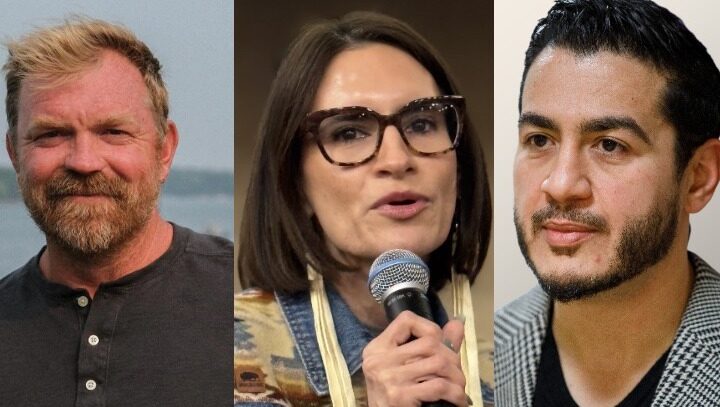
Graham Platner campaign/Travellers & Tinkers/Wikimedia Commons/Kenneth C. Zirkel/Wikmedia Commons
Graham Platner/ Lt. Gov. Peggy Flanagan/Abdul El-Sayed


 Add JewishInsider on Google
The combination of history and polling is pointing to the likelihood of a Democratic wave election in the 2026 midterms, which would give Democrats control of the House and a fighting chance to claw back a Senate majority.
Polls show Democrats holding a sizable edge on the generic ballot, their favored candidates are running competitively even in red states and congressional districts, all while President Donald Trump’s approval rating is sagging amid high gas prices, executive overreach and an uncertain outcome in the aftermath of the war in Iran.
But the one X-factor keeping Republicans competitive is the Democratic Party’s lurch leftward in the last year, leading to the emergence of extreme, exotic and out-of-the-mainstream candidates in pivotal battleground races.
Indeed, a new poll commissioned by The Argument magazine finds that the generic ballot shows Democrats have been stuck with a six-point lead for a while even as Trump’s job approval has declined precipitously in the last several months. They’re voting to put a check on the GOP’s dominance of Washington, without endorsing the direction of the Democratic party.
“Democrats still have tangible policy misalignments with many voters who dislike Trump,” The Argument concluded in its polling analysis.
All told, the question becomes: Will the anticipated Democratic wave closely resemble the Democrats’ version of the GOP Tea Party election of 2010? In that election, Republicans swept into power in the House but far-right and extreme Senate candidates in key races blew golden opportunities, costing Republicans the upper chamber.
That dynamic repeated itself in 2022, when many experts anticipated a Republican wave election, but the party’s nomination of hard-line MAGA candidates in battleground contests led to a marked underperformance.
The alternative outcome is that partisanship and tribalism now run so deeply that an individual candidate’s flaws — even seemingly disqualifying ones — don’t mean what they used to. Right now, Democratic primary voters look like they’re ignoring personal baggage in favor of candidates that are the most ideologically progressive, personally authentic and who are burning hot with rage against Trump and the leadership class.
On the Senate side, Maine Democrat Graham Platner fits that profile to a tee, and is all but locking down a primary victory against longtime Gov. Janet Mills, the favorite of the party establishment. If he’s the nominee, he’d then face Sen. Susan Collins (R-ME), who has a record of winning tough races even in dismal environments for her party.
In Michigan, Abdul El-Sayed holds both a radical record and support from a dedicated progressive base of young voters and Arab Americans. That has put him in contention for the Democratic nomination, but many Democrats fear he’d lose the seat to former Rep. Mike Rogers, the expected Republican nominee.
And in Minnesota, Lt. Gov. Peggy Flanagan holds lots of left-wing baggage but that’s not hurting her insurgent primary campaign against Rep. Angie Craig (D-MN), a more traditional and moderate Democratic contender. Former sportscaster Michele Tafoya is the GOP favorite in this race.
There are even more House races where problematic candidates are in contention in swing districts — like Ammar Campa-Najjar in the race of retiring Rep. Darrell Issa (R-CA) and Colorado state Rep. Manny Rutinel, running to unseat Rep. Gabe Evans (R-CO).
If 2010 offered any lessons, it’s that ideologically extreme, problematic candidates typically underperform expectations. That often makes the difference in a battleground state or district, where the margin of victory is typically close. It’s easy to get nostalgic for a time when a candidate like Christine O’Donnell (who notoriously proclaimed she was not a witch!) was as exotic as it got in politics. Now one of the Democrats’ leading Senate candidates is known for proclaiming he’s “not a secret Nazi.”
But given the tribalism of the current environment and the intense anti-Trump sentiment among Democrats and independents, do voters care about candidate quality anymore? Last November, Virginia voters elected an attorney general who survived revelations that he wished violence on a political opponent, only mildly underperforming the rest of the Democratic ticket.
This year’s midterm elections will put that proposition to the test. With strong battle-tested moderate recruits — like former North Carolina Gov. Roy Cooper and former Alaska Rep. Mary Peltola — in purple and red states, Democrats are expanding the Senate map and giving themselves a fighting chance for a clean sweep.
But they risk jeopardizing those gains with some (potentially) not-ready-for-primetime players in the biggest battlegrounds of all: Maine and Michigan.
Gov. Janet Mills is facing anti-Israel oyster farmer Graham Platner, who called himself a ‘communist’ in 2021
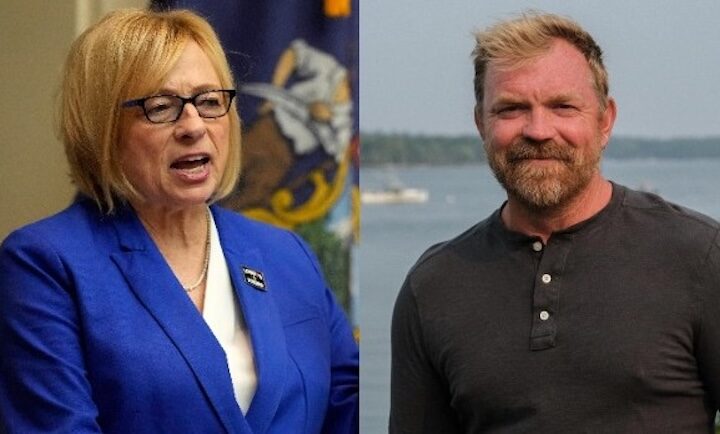
Robert F. Bukaty/AP/Graham Platner campaign
Gov. Janet Mills and Graham Platner
The Democratic Senate primary in Maine is shaping up to be among the most significant proxy battles over Israel in the upcoming midterm elections, pitting the state’s moderate two-term governor against a left-wing populist upstart who has vocally embraced an anti-Israel platform.
Gov. Janet Mills, who announced her campaign to unseat Sen. Susan Collins (R-ME) on Tuesday and is backed by Senate Democratic leadership, is set to face a well-funded challenge from Graham Platner, a veteran and oyster farmer who boasts high-profile support from Sen. Bernie Sanders (I-VT).
In contrast with Mills, who has criticized anti-Israel divestment efforts in her state and warned against a “deeply troubling” rise in antisemitic incidents after Hamas’ Oct. 7, 2023, attacks, Platner has promoted more hostile views on Israel and its alliance with the United States.
Since entering the race in August, Platner has accused Israel of genocide in Gaza and endorsed measures to block U.S. arms sales to Israel. His campaign did not respond to a request for comment regarding the recently brokered ceasefire and hostage-release deal between Israel and Hamas.
Platner has also been an outspoken critic of the pro-Israel advocacy group AIPAC, whose affiliated political arm is supporting Collins, one of the most vulnerable Republicans now seeking reelection — in a state President Donald Trump lost by seven points in 2024.
“We are focused on helping to re-elect Senator Collins, who has long been a leader and champion of strengthening the partnership between the U.S. and Israel,” Marshall Wittmann, a spokesperson for AIPAC, told Jewish Insider on Thursday.
Wittmann did not address whether AIPAC has plans to get involved in the primary. Collins, a five-term senator, has defended her relationship with AIPAC, which has faced growing criticism from Democratic candidates in recent months as intraparty tensions over Israel have intensified.
It remains to be seen if the Maine Senate race will draw outside spending from other pro-Israel groups including Democratic Majority for Israel, which has engaged in a number of recent primaries. The group did not respond to requests for comment from JI.
The primary also includes Jordan Wood, a former congressional aide whose campaign says that he has raised $3 million since April. Dan Kleban, a brewery owner in Maine, dropped out of the race on Tuesday and endorsed Mills, who was aggressively recruited by Senate Minority Leader Chuck Schumer (D-NY).
Mills’ campaign said this week that she had raised $1 million in the 24 hours after she announced her bid. Platner’s team reported a $4 million haul since entering the race over the summer, with prominent contributors ranging from Ron Klain, a former chief of staff to President Joe Biden, to the billionaire donors Donald Sussman and Chris Hughes, according to campaign filings.
While Platner, 41, has drawn scrutiny over his views on Israel — which he has made a central component of his campaign messaging and national fundraising appeals — the political newcomer has more recently weathered controversy surrounding past comments in which he identified as a “communist,” called “all” police “bastards” and said rural Americans are racist and stupid, among other incendiary statements.
Platner has said that such views, unearthed in a CNN investigation published on Thursday, do not reflect his current thinking. Still, the deleted posts underscore how a previously untested candidate is likely to navigate additional vulnerabilities in a race that Democrats view as one of their top priorities as they seek to win back the Senate majority next year.
Following Mills’ launch this week, Larry Sabato’s Crystal Ball, a top elections forecaster, said that it had changed its ranking of the Maine Senate race from “leans Republican” to “toss-up” — a rating also echoed by The Cook Political Report.
Mills — who, at 77, would be the oldest freshman senator in history if elected — has won praise from Sen. Kirsten Gillibrand (D-NY), the chair of the Democratic Senatorial Campaign Committee. The two-term governor also formed a joint fundraising committee with the Senate Democrats’ campaign arm earlier this week, according to a new campaign disclosure.
Mills’ campaign team features veterans of her 2022 bid for governor, a person familiar with the matter told JI on Thursday, including Eric Adelstein of the communications consultancy AL Media and Jefrey Pollock of the polling firm Global Strategy Group — which has conducted a number of surveys on Israel and the Jewish vote.
Chelsea Brossard, a Democratic strategist who recently advised Rep. Josh Gottheimer (D-NJ) in his bid for governor of New Jersey, is also joining Mills’ team as campaign manager, according to the source, who asked to remain anonymous to discuss undisclosed details.
Mills’ campaign did not respond to requests for comment from JI on Thursday. Pollock declined to comment.
Please log in if you already have a subscription, or subscribe to access the latest updates.
 Continue with Google

 Continue with Apple