

















































Jewish leaders say neither Ken Paxton nor James Talarico has done much outreach — and Talarico's leftward tack on Israel and Paxton's scandals give them pause
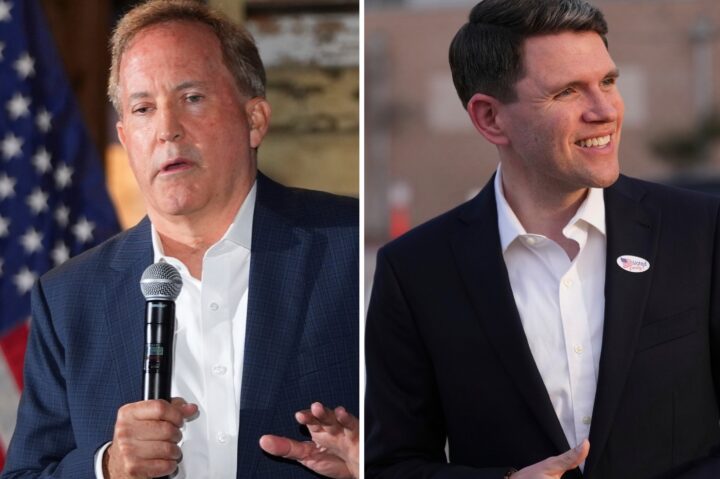
LM Otero and Eric Gay/Photo
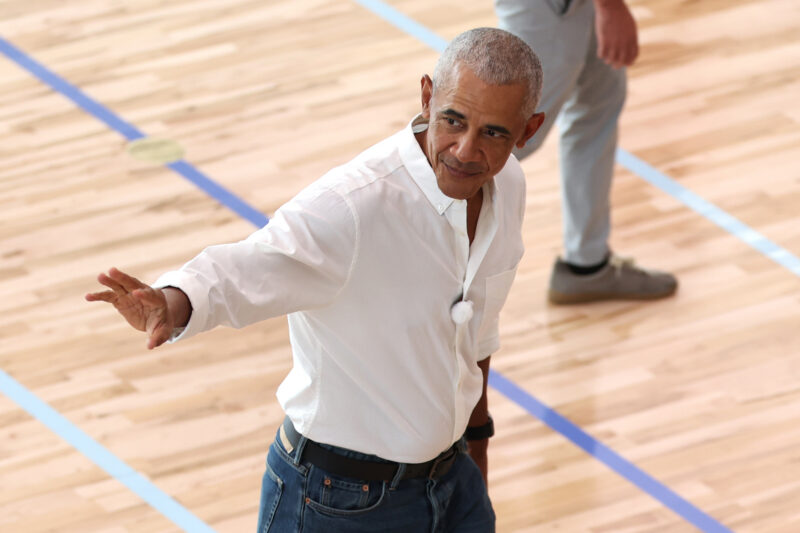
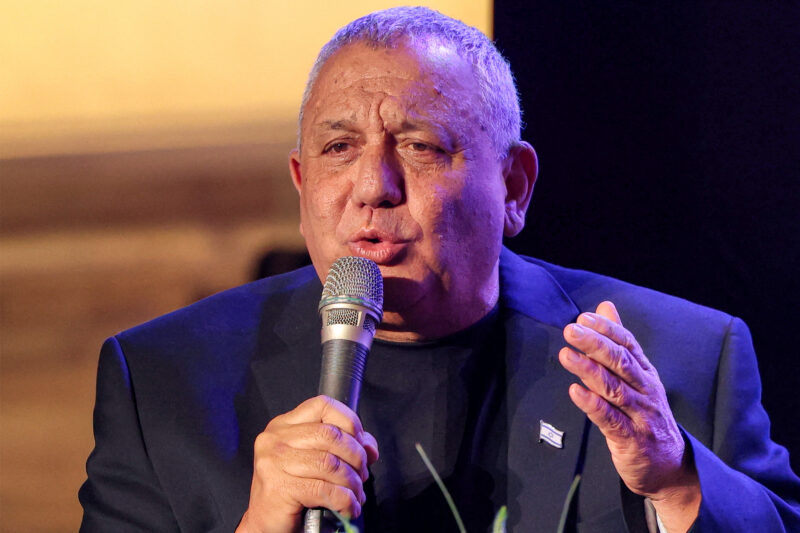
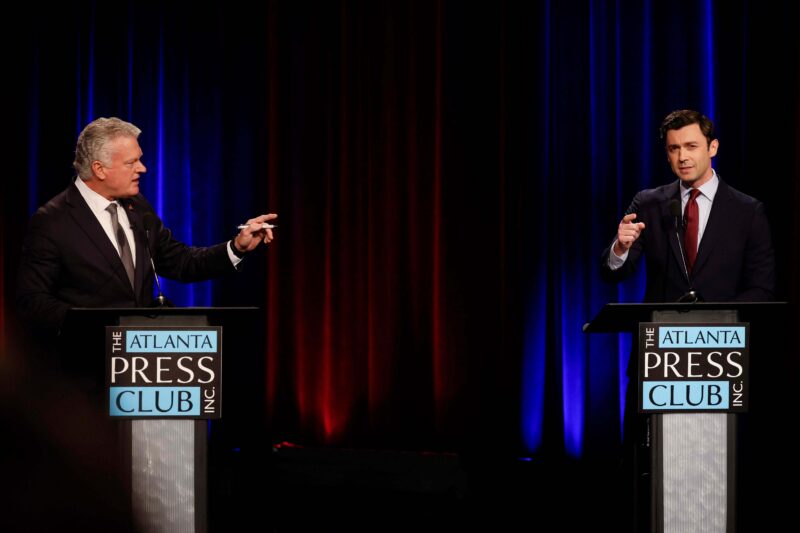
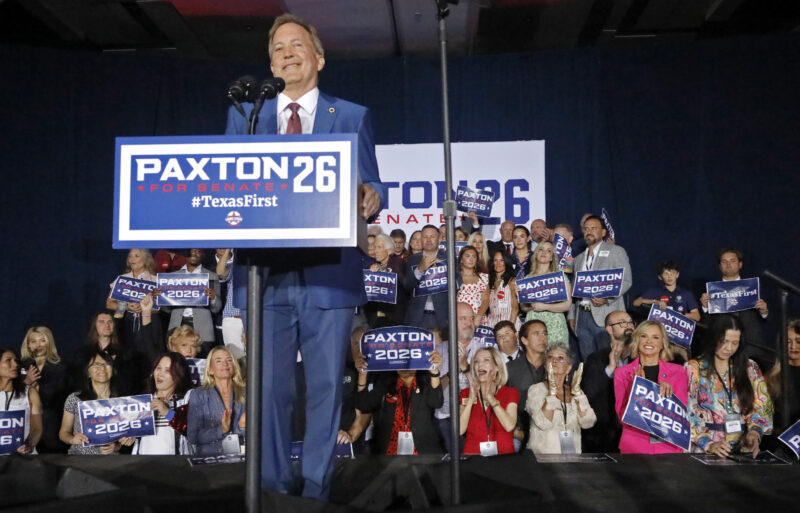
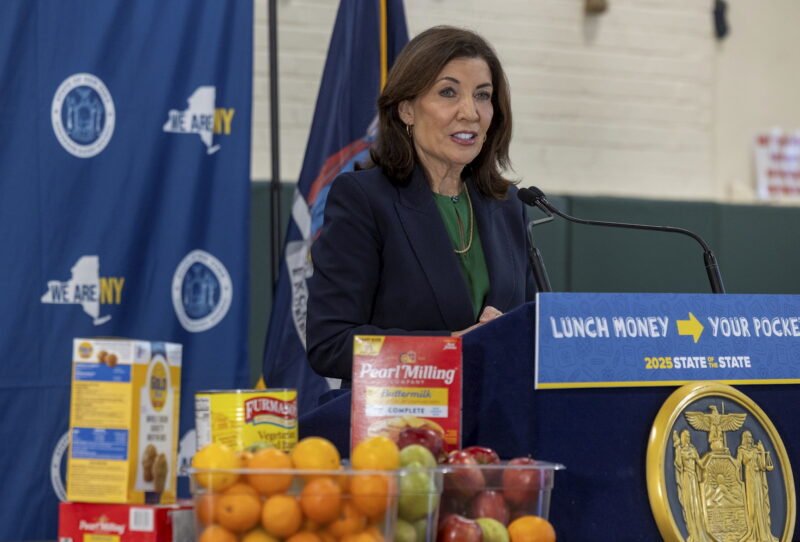
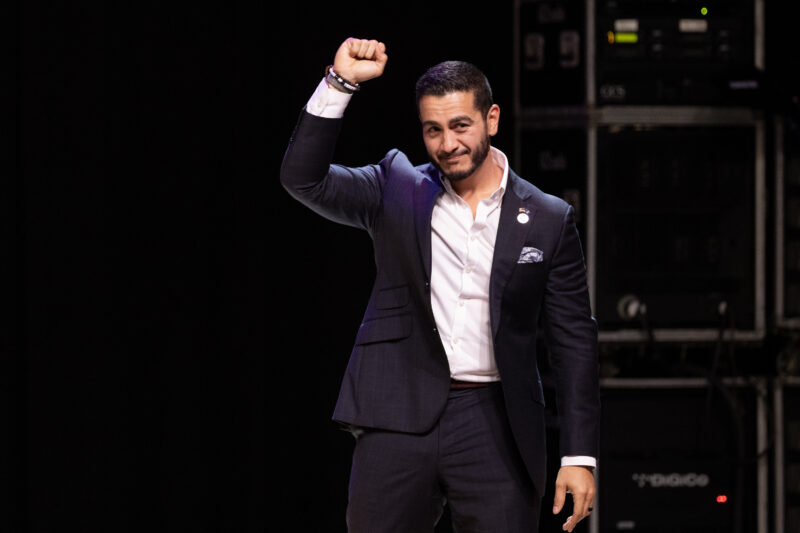
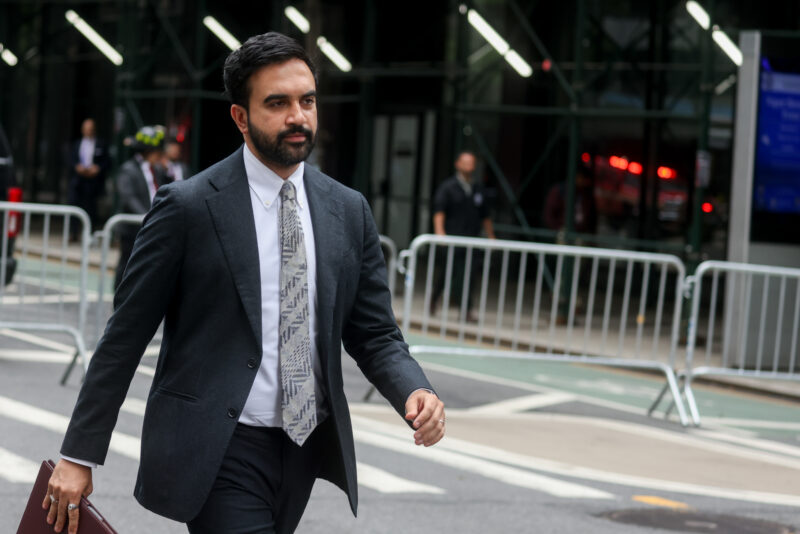
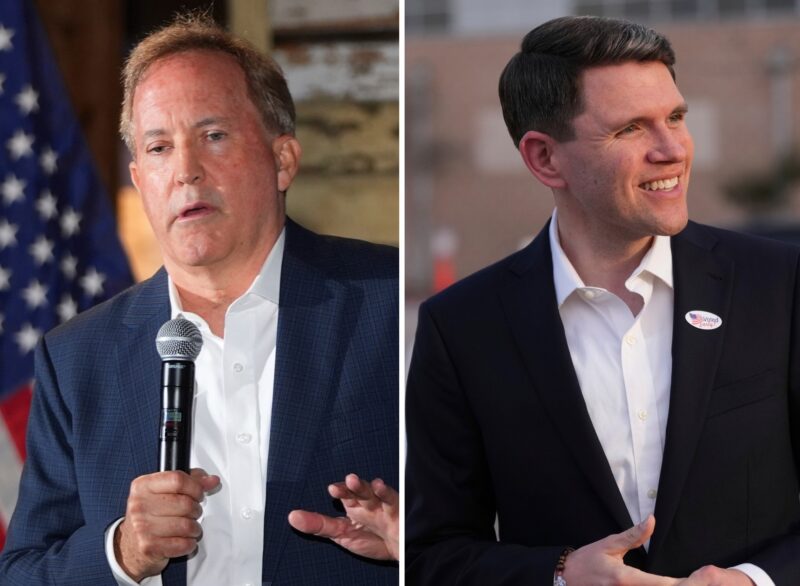
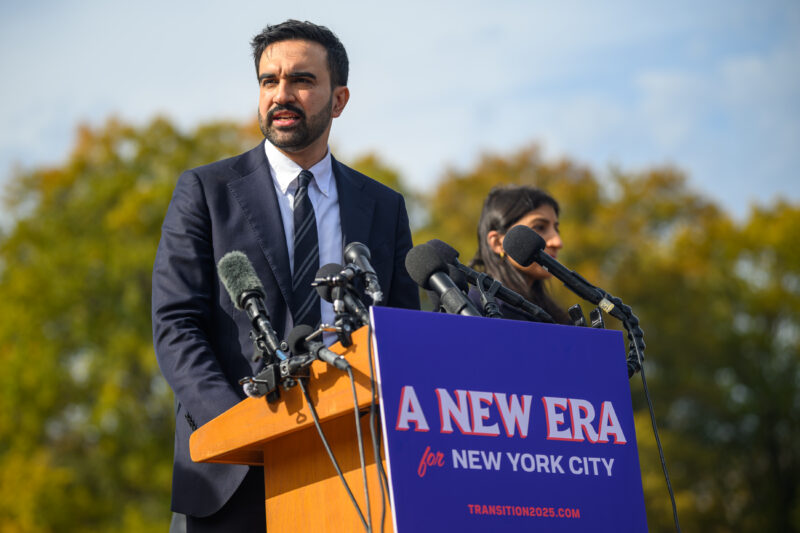
At left, Texas Attorney General Ken Paxton speaks in McKinney, Texas, May 19, 2026, and at right, Texas state Rep. James Talarico, after voting, in Austin, Texas, Feb. 17, 2026.


 Add JewishInsider on Google
Caught between a scandal-plagued Republican nominee and a young Democrat who tacks further left on Israel than many are comfortable with, Jews in the Lone Star State find themselves in a Texas-sized bind when it comes to the pivotal Senate race between state Attorney General Ken Paxton and state Rep. James Talarico.
“I think Texas Jews are between a rock and a hard place in this race,” Norri Leder, a co-founder of Houston Jewish Women Vote and a board member of the local Jewish Federation, told Jewish Insider. “On one hand, you have Ken Paxton, who has a lot of ethical issues that trouble a lot of voters across party lines. With Talarico, you’ve got someone who, like many Democrats, is just afraid to discuss this subject [Israel] with the Jewish community too much. That’s been hard.”
Leder added: “I don’t think he’s in the same camp as [Michigan Democratic Senate nominee] Abdul El-Sayed, but he hasn’t robustly engaged with the Jewish community so we can fully understand his positions.”
In fact, Jewish leaders in Texas say, neither candidate has done much in the way of outreach to their community, which has left them seeking more engagement in what is a neck-and-neck race.
Art Pronin, who leads the Meyerland Area Democrats Club, a largely Jewish Democratic group in the Houston area, said that while he could not “remember a statewide race in Texas that had a heavy focus on reaching Jewish voters, because there are not a lot of us,” he believed that the state’s Jewish community was “seeking a little more open courting of our voices and our vote given the national climate.”
“I think this is a moment where our voices and our votes as Jewish Americans matter in this country and in this state,” Pronin told JI. “Let’s say the polling that calls this race a 50-50 split is correct. There’s more than 200,000 of us. Neither candidate can afford to alienate or dismiss any minority group, including Jews.”
Talarico, despite running in a reliably Republican state, has not moderated his rhetoric around Israel, calling for reductions in military aid to the Jewish state though not going as far as to label Israel’s war against Hamas in Gaza as a genocide, as many progressive Democrats have done. He has also vowed not to take any money from AIPAC in the campaign, despite having no such qualms about support from the pro-Israel group during his time in the state legislature.
“He really wants to maximize turnout and enthusiasm among the Democratic activist base, and we know the reality is that all of the energy in the Democratic Party right now is anti-Israel,” Southern Methodist University political scientist Matthew Wilson told JI.
Wilson added that Talarico’s positions on cultural issues are so progressive that he has little ability to make inroads with the socially conservative evangelical constituencies that are also strongly supportive of Israel.
Despite his critical rhetoric towards Israel, many Jewish voters in Texas view Talarico’s overall record on Jewish issues as acceptable, noting his support of legislation in the Texas Legislature that would require all state schools to adopt the International Holocaust Remembrance Alliance’s working definition of antisemitism.
While his Jewish outreach has been limited, he did attend a Rosh Hashanah service at Congregation Emanu El in Houston and took part in a roundtable with Jewish community leaders at the Dallas Holocaust and Human Rights Museum last month (which was not announced by the campaign). He also participated in a virtual event hosted by the Jewish Democratic Council of America in May.
As one Texas Jewish leader put it while noting Talarico’s limitations: “This is Texas, not Manhattan. He needs to have these conversations with the Jewish community, and I don’t just mean the most liberal elements of it, because most of us dislike Ken Paxton in this state. I mean people in the center and the center-right.”
Seth Krasne, Talarico’s campaign manager, said in a statement to JI, “James has a record of standing up for Texas’ Jewish community and Jewish safety — combating antisemitism, defending Jewish students on the floor of the Texas House, and supporting Israel’s right to exist.”
Paxton, meanwhile, has not made Jewish outreach a focus of his campaign during the campaign, though he has discussed his support for Israel and touted his record on combating antisemitism when asked. His campaign has not promoted any Jewish community events or meetings with Jewish leaders, though he made appearances at churches across the state throughout the month of August.
During the primary campaign, Sen. John Cornyn (R-TX), who built up strong relationships with the state’s Jewish community, attacked Paxton for associating with far-right, anti-Israel podcast host Steve Bannon and not speaking out against the rise in antisemitism on the far right.
While Texas Gov. Greg Abbott and Sen. Ted Cruz (R-TX) spoke out against the University of Texas College Democrats’ recent decision to invite antisemitic streamer Hasan Piker to speak on campus, Paxton’s campaign attacked Piker but didn’t address whether the school should rescind the invitation. (Talarico’s campaign declined to respond to questions about Piker.)
Jewish Democratic leaders in the state believe Cornyn would have had a chance at winning the state’s Jewish vote against Talarico, but that Talarico is likely to comfortably prevail against Paxton.
“Paxton doesn’t [show up]. Never has,” Pronin said. “He’s never been on our side as attorney general. He doesn’t have that communal relationship with us at all. He may try to say in your story he’s a friend now, but he’s not been a friend.”
Reached by JI, Paxton campaign spokeswoman Madison Cercy said in a statement, “James Talarico is a part of the antisemitic radical left that wants to see Israel destroyed. He is a part of the Democratic Socialist Movement and is no different from Hasan Piker, Zohran Mamdani, and AOC.”
These two unexpected nomination fights are serving as a microcosm of both parties’ ideological directions

Joe Raedle/Getty Images
Democratic U.S. Senate candidate Graham Platner and Troy Jackson stand together during a “Fighting Oligarchy” tour stop at the Collins Center for the Arts on the University of Maine campus on May 24, 2026 in Orono, Maine.
July was scheduled to offer a break from primary politics, but two seismic developments this month — the collapse of scandal-plagued Graham Platner’s campaign in Maine and the sudden death of Sen. Lindsey Graham (R-SC) — are forcing both parties to deal with messy internal conflicts as they choose replacements in these key races.
The outcome of the July 25 Maine Democratic convention choosing an alternative candidate to run against Sen. Susan Collins (R-ME) and the Aug. 11 special election primary to choose a GOP nominee for Graham’s seat are offering clarity on the ideological directions of the two parties as the November midterm elections approach.
Already, we’re seeing that Democrats want to nominate a candidate as ideologically similar to Platner as possible, with most of the convention delegates chosen this weekend gravitating towards former state Senate President Troy Jackson, an anti-Israel progressive who unsuccessfully ran for governor this year as a champion of Sen. Bernie Sanders (I-VT).
As Maine counties completed the process of choosing delegates for the nominating convention, Jackson’s campaign expressed confidence that he rallied enough backers to secure a victory. Most of his leading rivals dropped out of the race on Sunday, indicating that the state party is clearly intent on pushing forward a candidate that shares Platner’s anti-establishment, left-wing worldview but without the personal baggage he brought to the table.
Jackson was the candidate whom Platner preferred to replace him on the general election ballot. Indeed, the Platner camp’s reported demands that the party choose someone who shares his values — even as his own campaign was sinking — caused such a backlash that the Maine Democratic Party’s executive director put out a video rebuking Platner for trying to influence the selection of his own successor.
If Jackson is the nominee, he’ll have to answer why he continued to support Platner even as the candidate’s other scandals piled up around him. Jackson finished in third place in June’s Democratic gubernatorial primary, only winning 21% of the vote in the five-candidate field.
In a sign of where the Democratic Party is headed, most of the leading candidates to challenge Collins sought to underscore their anti-Israel bona fides in the race, even the more-moderate Democrat Nirav Shah, who called Israel’s war against Hamas a “genocide” in a candidate questionnaire.
Meanwhile in South Carolina, there are growing indications that appointed Sen. Darline Graham (R-SC), who was tapped to fill the remainder of her late brother’s term, is seriously considering running for the seat herself, and has the president’s endorsement to do so.
That would greatly scramble the internal politics for next month’s primary, which was seen as a wide-open contest between several politically established South Carolina lawmakers. An endorsement of Graham from President Donald Trump would immediately make her the front-runner — given his near-perfect track record in congressional primary endorsements — even as she’d still likely face credible primary opposition.
It’s impossible to guarantee how Graham will end up voting in the Senate, but it’s safe to assume she’ll continue her brother’s hawkish record, maintaining strong support for Israel and Ukraine. Some of the other candidates for the seat — namely Reps. Nancy Mace (R-SC) and Ralph Norman (R-SC) — have been less enthusiastic supporters of military spending, and more reticent in aiding Ukraine in its war against Russian aggression.
These two unexpected nomination fights are serving as a microcosm of both parties’ ideological directions. Democrats are accommodating their populist left flank, even at the risk of damaging the party’s midterm prospects. Republicans, meanwhile, continue to march to the beat of Trump’s drum, and are fine maintaining the party’s conservative status quo even with rumblings from the isolationist right.
After socialist candidates scored several surprise victories, party leaders are fighting with renewed vigor to rally behind Rep. Haley Stevens (D-MI) in the primary against her left-wing challenger, Abdul El-Sayed
Kristen Norman/AP
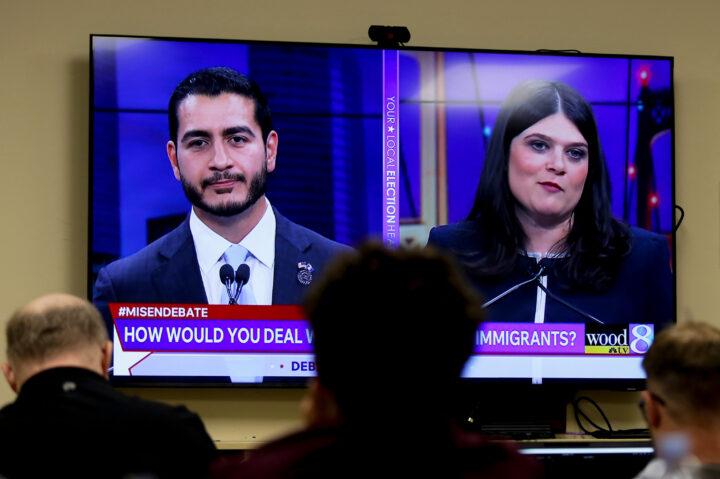
Michigan U.S. Senate candidates, Abdul El-Sayed, left, and Rep. Haley Stevens, D-Mich., are displayed on a television during a debate inside the spin room at WoodTV studios on Tuesday, July 7, 2026, in Grand Rapids, Mich.
As Maine Democrats pick up the pieces of Graham Platner’s failed Senate campaign and quickly try to find a replacement for the scandal-tarred candidate on the ballot, moderate Democrats in Michigan, where a primary is fast approaching, are in a race against time to prevent another far-left Senate candidate from capturing a valuable nomination.
The final three weeks of the Michigan primary will be 2026’s most consequential test yet for the power the party establishment still holds, particularly in a pivotal swing state. After socialist candidates scored a number of surprise victories in heavily blue districts in New York City, Philadelphia and Denver, party leaders are fighting with renewed vigor to rally behind Rep. Haley Stevens (D-MI) in the primary against her left-wing challenger, Abdul El-Sayed.
Retiring Sen. Gary Peters (D-MI) endorsed Stevens on Monday, a pivot from his announcement in May that he planned to stay out of the race, joining Senate Minority Leader Chuck Schumer (D-NY), who had already backed the congresswoman. The party’s left flank — including Sens. Bernie Sanders (I-VT) and Chris Van Hollen (D-MD) — is backing El-Sayed.
“The change of heart is we just know that we have to hold Michigan,” Peters said on “Morning Joe” on Tuesday of his decision to endorse, with Stevens sitting beside him. “She’s an outstanding candidate and I certainly hope that folks get behind her around the country and understand that she’s the right person to be the next senator from the state of Michigan.”
There are fresh signs that the late push for Stevens from Democratic leaders — along with millions in ad spending from pro-Stevens outside groups — has given the congresswoman momentum in the closing stretch of the race. A new poll commissioned by the Detroit News found Stevens pulling ahead of El-Sayed by seven points, 48-41%, after she trailed in most public polls this year.
The United Democracy Project, AIPAC’s affiliated super PAC, is spending big to attack him, dropping nearly $15 million in the race so far. A new 30-second ad attacks El-Sayed as sexist, referencing criticisms he’s made against former First Lady Michelle Obama and Gov. Gretchen Whitmer. A mailer sent to Michigan voters criticized El-Sayed’s response to the attack on Temple Israel in West Bloomfield in March. El-Sayed condemned the attack but said that “hurt people hurt people,” referring to the assailant having lost his brother — a Hezbollah commander — in an Israeli airstrike in Lebanon.
“We are going to continue educating Michigan voters on El-Sayed’s track record of making disparaging and sexist comments about women,” Patrick Dorton, a UDP spokesperson, told JI on Tuesday.
Platner’s collapse in Maine has, for some Democrats, raised questions about the electability of far-left candidates in must-win Senate battlegrounds for the Democratic Party.
The centrist Democratic think tank Third Way published a memo on Tuesday underscoring that Democrats could lose other winnable races if they continue taking the advice of ideologically driven left-wing consultants who advised Platner. (Fight Agency, the political ad firm that was used by Platner and New York City Mayor Zohran Mamdani, is also consulting for El-Sayed’s campaign.)
El-Sayed has continued to play to his base, doubling down on radical rhetoric in interviews at a time when Democrats are concerned about holding onto the swing seat in November. He called Israel a “rogue state” in a recent CNN interview and said that Democrats who support Israel only do so because of money. As his rhetoric has become more extreme, and the race tightens between the two candidates, Jewish Democratic groups are planning to amp up their campaigning for Stevens ahead of the Aug. 4 primary.
“It is now a direct, high-stakes two-way race between Haley Stevens and Abdul El-Sayed,” the Michigan Democratic Jewish Caucus wrote in a recent email to members. The Jewish Caucus is hosting a canvassing event on behalf of Stevens in Farmington, a heavily Jewish suburb of Detroit, this weekend.
“With early and absentee voting already underway, to ensure Haley wins on Aug. 4, we need to leverage our deep community roots, personal relationships, and trusted voices,” Jewish Caucus Chair Decky Alexander told Jewish Insider on Tuesday.
The Jewish Democratic Council of America, a national organization, is hosting a virtual phone bank for Stevens this week. The group had previously issued a joint endorsement of Stevens and state Sen. Mallory McMorrow, who withdrew from the race earlier this month, but is now planning a five-figure digital ad buy in support of Stevens’ campaign.
“JDCA is focused on mobilizing Jewish voters across Michigan in support of Haley Stevens,” JDCA CEO Halie Soifer told JI on Tuesday. “Haley has always stood with the Jewish community, and we’re proud to support her in this critically important election. We also believe she has the best chance of beating Mike Rogers in November, and we’re committed to keeping Michigan blue.”
The Stevens campaign expects a close race but views McMorrow’s decision to drop out as a boon for Stevens. McMorrow did not endorse either candidate. A source working with the Stevens campaign, who was not authorized to speak on behalf of the congresswoman, said the campaign is particularly focused on winning over Black voters, as well as older and non-college-educated voters, many of whom remain undecided. (The Detroit News poll showed Stevens with a substantial advantage with Black voters, leading El-Sayed 67-21%.)
The Michigan Jewish community, which is centered in Stevens’ congressional district, is also a part of the campaign’s get out the vote plan.
“I think that Haley wants all Michiganders to vote, but obviously has a very special connection with the Jewish community, especially in her district in Oakland County,” said the campaign source.
El-Sayed routinely tars Stevens for receiving the backing of AIPAC. She has not said much during the primary about her ties to the group, instead highlighting her support for a two-state solution to the Israeli-Palestinian conflict, which she described as “the difference between my opponent and myself on this issue” in a debate last week. El-Sayed has said he struggles with the question of whether Israel should exist as a Jewish state.
This week, El-Sayed announced a major fundraising haul from the second quarter of the year: $4.5 million, up from $2.3 million he raised in the first quarter. A spokesperson for Stevens declined to share her latest fundraising totals, which legally must be reported by Wednesday. She took in $1.9 million in the first three months of the year.
The Maine Democrat, who won his primary in June, had been dogged by controversy for months before a rape allegation finally cost him his political allies
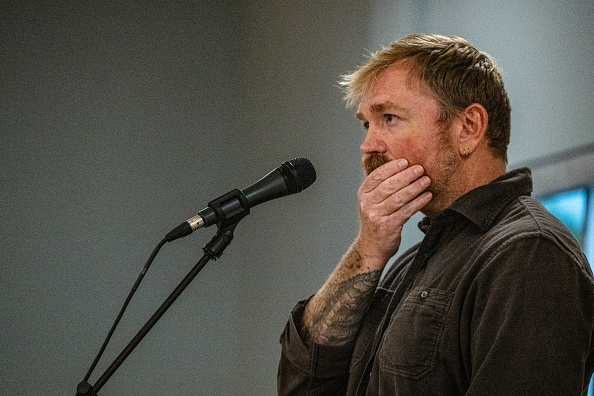
Photo by Laura Brett/Getty Images
Democratic U.S. Senate candidate Graham Platner speaks to voters at a town hall on June 7, 2026 in Portland, Maine.
Maine Senate candidate Graham Platner, the scandal-plagued progressive insurgent, announced on Wednesday evening that he plans to drop out of the race amid intense pressure, two days after a former romantic partner accused him of rape.
Even as he announced his withdrawal, Platner remained defiant, claiming that the allegations against him were a conspiracy aimed at forcing him out of the race.
The sexual assault allegation by Jenny Racicot, who shared the details of the incident with Politico, followed months of controversies — including allegations of domestic abuse — that Platner withstood with the backing of top Democrats, including Sens. Elizabeth Warren (D-MA) and Bernie Sanders (I-VT) and, after the primary, Senate Minority Leader Chuck Schumer (D-NY). He lost the support of his political allies after the report was published on Monday.
Even before that, Platner had been dogged by controversy for months. Last October, Platner acknowledged that he had a tattoo of a Nazi symbol known as a Totenkopf for nearly two decades.
He denied knowing what the symbol meant, but a past acquaintance told Jewish Insider that Platner was aware of its Nazi association. Another former romantic partner, Lyndsey Fifield, who accused Platner of domestic violence, shared text messages with the New York Times showing she had informed friends of the Nazi symbol months before it became public knowledge and said he and his Marine colleagues had chosen the symbol deliberately.
In Reddit posts, Platner regularly used slurs, criticized sexual assault victims and praised Hamas’ tactics during the terror group’s 2014 war against Israel.
In his announcement, Platner continued to deny the sexual assault allegation, claiming that “large forces,” the “corporate media” and the “political establishment” are conspiring against him — specifically timed in order to force him off the ballot before the drop-out deadline next week.
“We live in a political system that is not built for normal people,” Platner asserted. “It is a system that is built structurally to make sure that movements like ours cannot flourish, that if they begin to succeed, they can be crushed. … We did it the way that we were told we are supposed to make change, and we won, and now they are not going to let us have it, not if it’s me.”
He said he’s leaving the race because “those in power … are using these allegations as an excuse” to block his ability to fundraise, access voter data and otherwise campaign.
Platner insisted he was not attempting to influence the process to replace him on the ballot — a claim disputed by the Maine Democratic Party and numerous news reports. He said that the process “needs to be open, transparent and democratic” and not shaped by “party apparatchiks” or party leadership in Washington.
He also said he “intend[s] to file my paperwork to withdraw,” indicating he had not yet actually done so.
In his statement, Platner also referenced his repeated claim that Israel committed genocide in Gaza, a charge that had become central to his campaign.
“All we were asking for was healthcare, was to end the genocide, to use our taxpayer dollars at home to uplift our communities, instead of waging war overseas,” Platner said.
Shortly before Platner’s announcement, the Maine Democratic Party’s state committee members met and voted to hold a nominating convention to choose a new nominee should Platner withdraw from the ballot. Party leaders said they’d disclose further details about the process “soon.”
Media reports indicate that county committees would be charged with selecting 500 to 600 total delegates for the convention.
In a text message to supporters on Wednesday, Platner’s campaign manager claimed that the Maine Democratic Party has been coordinating behind closed doors with the Democratic Senatorial Campaign Committee to cut Platner’s camp and supporters out of the nominating process.
Platner entered the Senate race to challenge Sen. Susan Collins (R-ME), a five-term incumbent, last August. From the beginning of the race, he touted his bona fides as a veteran who served in Iraq and Afghanistan and positioned himself as an anti-war candidate. He has blamed his past conduct on PTSD and his resulting alcohol dependence.
From the beginning, Platner positioned himself as a working-class outsider taking on the establishment — including both Collins and the Democratic establishment, which was backing Janet Mills, Maine’s governor, in the Democratic primary. His viral first campaign video was produced by Morris Katz, a political consultant who had also made political ads for New York City Mayor Zohran Mamdani.
Criticism of Israel was central to Platner’s campaign. He regularly attacked AIPAC and described Collins as “bought and paid for by [Israeli Prime Minister] Benjamin Netanyahu.” Liberal Jewish groups, including the Jewish Democratic Council of America and J Street, had opted not to endorse Platner, even after Mills dropped out of the race in April. Platner handily won the Democratic primary in June. Mills did not endorse him.
Democrats saw the race as a possible pickup opportunity in a midterm election year when many voters in the purple state are disillusioned by President Donald Trump.
Numerous Maine Democrats have already announced plans or filed paperwork to take Platner’s place on the ballot, including former Maine Centers for Disease Control Director Nirav Shah, former state Senate President Troy Jackson, former House candidate Jordan Wood, former Senate candidate David Costello, Secretary of State Shenna Bellows, former House candidate Paige Loud, state Rep. Valli Geiger and brewery owner Dan Kleban.
Geiger claimed on Wednesday that she was Platner’s preferred replacement, but a campaign spokesperson denied that, though the spokesperson said he had encouraged her to run if he dropped out.
The progressive Israel advocacy group said it did not ‘have anything to share at this time’ about Maine’s scandal-plagued Democratic Senate nominee
Sophie Park/Bloomberg via Getty Images
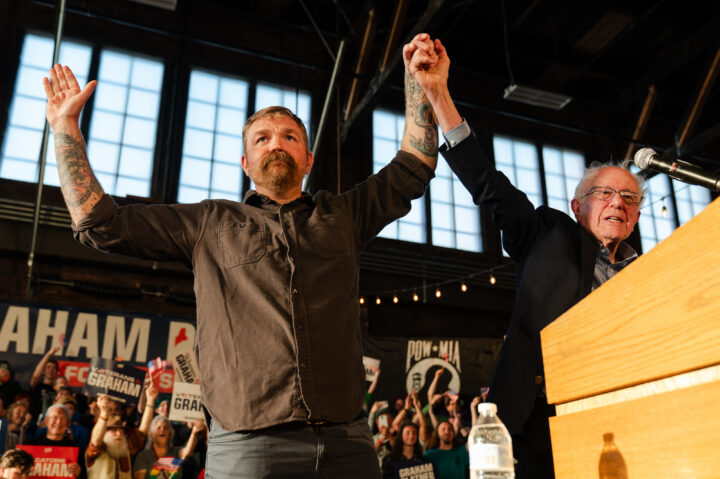
Graham Platner, Democratic Senate candidate for Maine, left, and Sen. Bernie Sanders (I-VT) during a Fighting Oligarchy event in Portland, Maine, on May 25, 2026.
J Street, the progressive Israel advocacy group, is for now withholding an endorsement of Graham Platner, the scandal-plagued Democratic Senate nominee in Maine, underscoring the extent to which even some left-wing Jewish activists appear skeptical of his insurgent campaign.
A spokesperson for J Street told Jewish Insider on Wednesday that the group did not “have anything to share at this time” about a Platner endorsement but would provide more information “if that changes.”
The spokesperson declined to confirm if J Street, which this cycle has backed a handful of Democratic Senate candidates vying for open seats or challenging Republican incumbents, had considered whether it will make an endorsement. The group had told JI in early May that it did “not currently have a position in the race.”
In a statement to JI on Thursday, the spokesperson said that it “is incorrect to frame J Street as actively withholding an endorsement from Graham Platner.”
The group “evaluates candidates and makes endorsement decisions on a rolling basis,” and its “endorsement process is ongoing,” the spokesperson said. “The timing of endorsement decisions does not reflect judgment about any individual candidate.”
J Street’s response came after Platner had clinched the nomination on Tuesday to challenge Sen. Susan Collins (R-ME), in a high-profile race Democrats see as crucial to reclaiming control of the upper chamber.
Platner won the Democratic primary decisively even as he has faced a mounting series of controversies over alleged “toxic” relationships with past girlfriends, sexual messages he sent to women while married and deleted Reddit comments expressing a range of incendiary views.
He also weathered a scandal relating to a Nazi tattoo on his chest for nearly two decades that he covered up last October. Platner has insisted that he did not recognize its imagery, despite claims to the contrary from a former girlfriend who first spoke with JI last year, shortly after he had announced his campaign.
The tattoo, along with Platner’s hostile criticism of Israel and insistent demonization of AIPAC, have stoked ongoing concerns among Jewish Democrats. Halie Soifer, CEO of the Jewish Democratic Council of America, has said the group is not ready to endorse Platner.
“We won’t support a Democrat who doesn’t represent the views and values of the vast majority of American Jews,” Soifer said in a statement in late April echoing a sense of discomfort with Platner’s candidacy felt by mainstream Jewish leaders.
JDCA had endorsed Maine Gov. Janet Mills, who suspended her campaign amid lackluster fundraising but remained on the ballot Tuesday, pulling in 19% of the vote. Platner won 72%.
Following Tuesday’s win, some prominent Senate Democrats have also declined to endorse Platner as he prepares for a bruising and expensive campaign.
J Street, which has moved to the left in recent years as it has sought to capitalize on growing Democratic frustration with Israel, is in many ways aligned with Platner on Middle East policy, including accusations that Israel committed genocide in its war in Gaza and calls to block U.S. military aid to the Jewish state that are now gaining momentum in Congress.
Still, the group has shown its intolerance for some extreme views that could be seen as antisemitic. In 2024, for instance, J Street revoked its endorsement of former Rep. Jamaal Bowman (D-NY), who was at the time fighting for reelection in a bitterly contested primary he would later lose, saying his inflammatory rhetoric on Israel had crossed a line.
Even as the group officially stays on the sidelines in Maine’s marquee Senate race, J Street’s state leader, Steven Koltai, who helped organize a Passover Seder with Platner, told the Jewish Telegraphic Agency he is “still very much” supporting the oyster farmer and former Marine in spite of recent revelations about his past.
In the statement to JI on Thursday, J Street’s spokesperson said the group “remains steadfast in our commitment to ensuring a pro-Israel, pro-peace majority in the Senate and House come January.”
In his victory speech, Platner railed against the political establishment and criticized U.S. wars in the Middle East
Sophie Park/Bloomberg via Getty Images
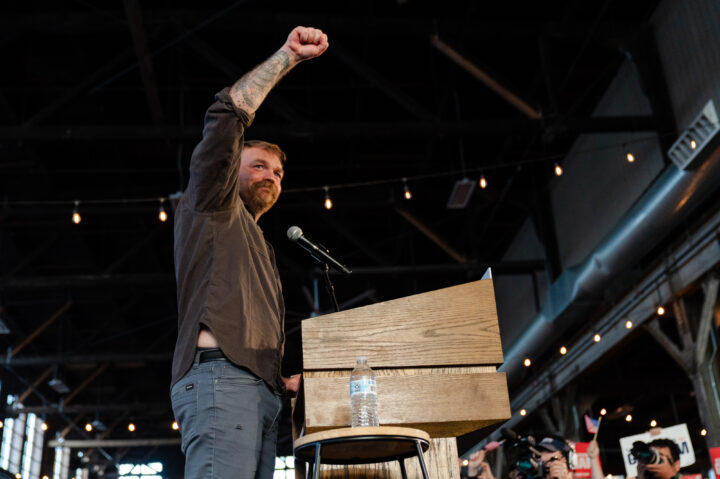
Graham Platner, Democratic Senate candidate for Maine, arrives to speak during a Fighting Oligarchy event in Portland, Maine, on May 25, 2026.
Maine Democrats rallied behind scandal-plagued oyster farmer and military veteran Graham Platner as their Senate nominee against Sen. Susan Collins (R-ME) in Tuesday’s primary, turning to a left-wing outsider running against the political and institutional establishment as its standard-bearer for the general election.
Platner — whose controversies, including his now-covered Nazi tattoo and abuse allegations, have unnerved many Democrats — will be a political test over whether his brand of progressive populism can win over swing voters in a state critical to the Democrats’ hopes of winning back the Senate.
“In trying so hard to understand me, [the media] failed to understand that this is not about me at all. This is a movement about us, about the far too many, working far too hard and struggling far too much,” Platner said in his victory speech.
Attacking “forever wars,” Platner railed against the Trump administration’s war in Iran, and slammed Collins for “closing hospitals while using our tax dollars to destroy them halfway around the world.” (The line was an apparent attack against Israel’s targeting of Hamas terror infrastructure that was often lodged in medical facilities during the war in Gaza.)
Platner won about 72% of the primary vote despite Gov. Janet Mills remaining on the ballot, a solid enough showing amid all the controversies that should mute any calls for him to drop out of the race. In a statement on Platner’s victory, Senate Minority Leader Chuck Schumer (D-NY) and Democratic Senatorial Campaign Committee Chair Kirsten Gillibrand (D-NY) reiterated their support for the nominee: “In November, Maine voters will elect Graham Platner, and we will win a Senate majority.”
Mills, for her part, did not mention Platner at all in her statement about the election results.
The most recent polls in the race, conducted as Platner’s scandals hit the news, suggest a highly competitive matchup between Collins and Platner. Maine is the only state Trump lost in the 2024 presidential election that is represented by a Republican in the Senate, but Platner’s personal baggage is complicating the party’s path to victory.
Collins, meanwhile, is one of the most politically resilient senators, winning reelection even when the political environment for her party has been less than favorable.
Platner was surrounded by mostly older women as he delivered his victory speech, a critical constituency for him to win in the general election in the state with the oldest median population, especially given the allegations of abuse towards several ex-girlfriends.
In other primary news on Tuesday, Sen. Lindsey Graham (R-SC) coasted to renomination, though he only won 58% of the GOP vote against weak competition.
In his victory speech, Graham railed against Rep. Thomas Massie (R-KY) and former Rep. Marjorie Taylor Greene (R-GA), two isolationist, anti-Israel GOP lawmakers who left or were ousted from Congress. “What did we prove tonight? That South Carolina is Trump country, not Massie country. We proved tonight that nobody gives a damn what Marjorie Taylor Greene thinks about who to vote for in South Carolina,” Graham said.
In South Carolina’s governor’s race, Lt. Gov. Pamela Evette, who was endorsed by President Donald Trump, will face state Attorney General Alan Wilson in a runoff for the nomination. Reps. Ralph Norman (R-SC) and Nancy Mace (R-SC) lagged well behind in the primary, with Mace’s fifth-place finish serving as a disappointing conclusion to her congressional career.
Ratner decamped to Israel in 2023 after being accused of sexual misconduct; he returned to filmmaking with the ‘Melania’ documentary

Craig Hudson/Variety via Getty Images
Brett Ratner at Amazon MGM Studios' film, "MELANIA" World Premiere held at the Trump-Kennedy Center on January 29, 2026 in Washington, D.C..
Scandal-plagued filmmaker Brett Ratner, who moved to Israel after being accused of sexual misconduct, is joining President Donald Trump’s delegation to China this week to scout out locations for the newest “Rush Hour” movie.
Ratner, the director behind the “Rush Hour” franchise as well as the recent documentary about Melania Trump, accompanied Trump administration officials to their meeting with Chinese President Xi Jinping on Thursday, traveling aboard Air Force One. Also participating in the delegation to Beijing are several top business executives including Elon Musk and outgoing Apple CEO Tim Cook.
Warner Bros. cut ties with Ratner in 2017 after he was accused by several women of sexual assault, including by actress Olivia Munn. Ratner, who has denied the allegations, fled Hollywood for Israel in 2023.
The release of “Melania” this year marked Ratner’s big-screen comeback. Paramount, which is headed by David Ellison, son of Trump donor Larry Ellison, is in talks to produce “Rush Hour 4.” The film is planned to shoot in China.
Trump’s meeting with Xi Jinping comes amid a New York Times report that Chinese companies have been negotiating arms sales to Iran that would go through third countries so as to hide the shipments’ origins.
Warren lauded Platner’s economic populist message rather than address his extremist rhetoric
Brian Stukes/Getty Images for Vanderbilt Policy Accelerator
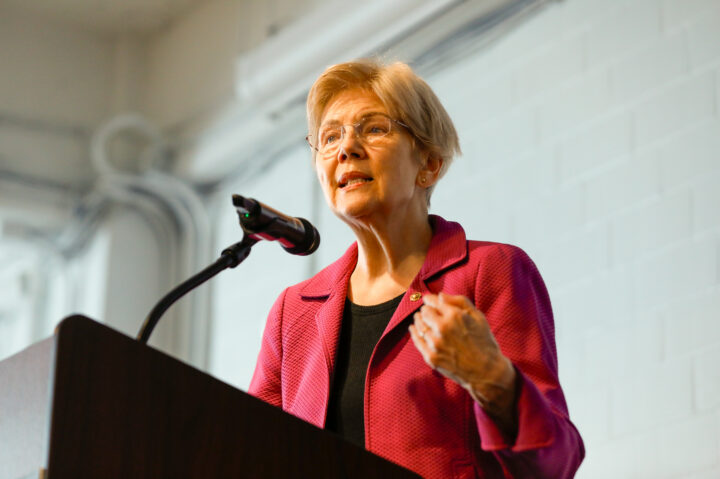
Sen. Elizabeth Warren (D-MA) speaks during the Vanderbilt Policy Accelerator (VPA) Luncheon at Eaton DC on April 22, 2026 in Washington, DC.
Sen. Elizabeth Warren (D-MA) dismissed criticism of Maine Senate candidate Graham Platner’s scandals on Wednesday, after calling him “my kind of man” at his rally in Maine on Saturday.
“You care about character,” CNBC host Sara Eisen said to Warren. “This is a guy that had a chest tattoo with a Nazi symbol — OK, he apologized for it. It’s a guy that reportedly wrote that people concerned about rape should take some responsibility for themselves and not get so effed up that they wind up having sex with someone they don’t mean to. He praised military tactics used by Hamas, reportedly, in comments online when they were murdering Israeli soldiers. So I’m just curious why you think he’s ‘your kind of man’?”
Warren responded, “So, as you rightly point out, he has apologized. He’s out meeting with the people of Maine every single day so they can evaluate not who Graham Platner was but who Graham Platner is today.” She went on to say her comment was in reference to her experience reading an interview of Platner’s where he condemned the lack of consequences for bankers during the 2008 financial crisis.
Eisen said, “OK, well, ‘I dig it,’ next to a video of a bunch of terrorists killing five soldiers?” referring to a Jewish Insider report unearthing Platner’s 2014 Reddit comments. “I don’t know, I mean, you guys want to be the party of inclusivity, right?”
“I want to be the party that stands up for hardworking people,” Warren answered. “I want to be the party that is transformative of an economy that right now is hip deep in corruption … and that’s what Graham Platner wants to do and I’m there to stand with him and to help in that fight.”
The lawmaker, who may soon be expelled from the chamber, is already in a heated primary race with Elijah Manley, a young far-left candidate endorsed by TrackAIPAC

Tom Williams/CQ-Roll Call, Inc via Getty Images
Elijah Manley, who is running in the FL-20 primary against Rep. Sheila Cherfilus-McCormick (D-FL), left, attends a House Ethics Committee adjudicatory subcommittee on a motion for summary judgment regarding accusations against her, in Longworth building on Thursday, March 26, 2026.
The scandal surrounding Rep. Sheila Cherfilus-McCormick (D-FL) could send another far-left Israel critic to Congress, after a House Ethics Committee panel found her guilty on Thursday of 25 charges and lawmakers now move toward expelling her from the chamber.
Cherfilus-McCormick was indicted in late 2025 for a range of financial crimes including allegedly stealing $5 million in Federal Emergency Management Agency funds, money laundering and illegal campaign contributions.
Cherfilus-McCormick has been a consistently strong supporter of Israel since taking office, when she defeated a Democratic rival by just four votes in a 2021 special election race. She served last year as ranking member of the House Foreign Affairs Committee’s Middle East subcommittee, but stepped aside, as required by Democratic Caucus rules, after her indictment.
Even before the indictment and Ethics Committee inquiry, Cherfilus-McCormick faced primary challenges including from Elijah Manley, a young progressive who has been critical of Israel. Manley, 27, who has leaned into Cherfilus-McCormick’s indictment as fuel for his campaign, sat prominently behind her at her Ethics Committee trial last week. Dale Holness, the candidate who lost by a hair to Cherfilus-McCormick in 2021, is also running again.
A poll of 300 likely primary voters in Pensacola in February found Manley leading the field with 38% of the vote, followed by Cherfilus-McCormick with 35% and Holness with just 10%. In a head-to-head matchup with Holness, Manley held a double digit lead, 45%-33%.
Manley has topped the field in fundraising with $678,000 to Holness’ $185,000, but Manley reported having burned through nearly all of that war chest as of the end of 2025, with just $6,000 left on hand with months to go until the mid-August primary.
Manley has been endorsed by the anti-Israel group TrackAIPAC, which requires its endorsees to support an arms embargo on Israel and describe the war in Gaza as a genocide.
Last summer, he argued that the U.S. should not defend Israel from Iranian counterattacks during the 12-day war, saying, “It’s not America’s responsibility to defend Israel from the consequences of attacking Iran right now, especially while we’re trying to negotiate a nuclear deal. Americans don’t want more forever wars.”
Even before the war in Gaza, he accused supporters of Israel of acting like the country is “above criticism and act cultishly about it.”
But Manley has also condemned Hamas and its Oct. 7, 2023 attacks on Israel, called on various occasions during the Gaza war for the return of hostages and celebrated their return. He also criticized those who planned to withhold their votes from Democrats in the 2024 election in protest of the situation in Gaza.
“Elijah condemns Hamas terrorists for the brutal and unacceptable October 7th, 2023, terror attack that claimed the lives of 1,300 Israeli civilians and the kidnapping of hundreds more,” his campaign website reads. “He also condemns the far-right Netanyahu government for its bombardment of Gaza, illegal settlement expansion in the West Bank, and blockade of humanitarian aid.”
“Elijah Manley believes in the right to peace, dignity, and safety for both Israelis and Palestinians, including Israel and Palestinian right to self determination and the right to exist,” the site continues. “In Congress, Elijah will be an advocate for a just and lasting peace rooted in the value of human rights, an end to violence and suffering, and security for both peoples.”
An unfolding scandal involving Rep. Tony Gonzales could cost him his seat at the hands of a far-right social media influencer

screenshot
Brandon Herrera pictured here in a video about Nazi guns.
An unfolding scandal implicating Rep. Tony Gonzales (R-TX) could catapult an anti-Israel social media influencer with a history of antisemitic posts to Congress in Texas’ upcoming 23rd District Republican primary.
Brandon Herrera, who ran against Gonzales in 2024, came under fire from Gonzales and Jewish and pro-Israel groups in the previous election cycle over a series of YouTube videos replete with imagery, music and jokes about the Nazi regime and the Holocaust. He also expressed opposition to U.S. aid to Israel.
But Tuesday evening, corroborating a long-running rumor, the San Antonio Express News reported that Gonzales had been having an extramarital affair with a female staffer who died by suicide last year. The Express News reported that the relationship was allegedly well-known to staffers and cited multiple sources close to the woman, including a former colleague, and a text message she sent confirming the relationship prior to her death.
Both Gonzales and the woman were married to other people at the time of the relationship and had children. Gonzales’ campaign did not respond to a request for comment from Jewish Insider, though he has previously denied the affair.
The Express News’ editorial board announced, hours after the paper broke the story, that it was withdrawing its endorsement of Gonzales.
“The affair is troubling for many reasons,” the editorial board wrote. “First, it is an act of deception. Gonzales is married and has six children. Second, this was not an equal relationship but one involving a staffer. Third, while an attorney for Santos-Aviles’ husband has said he does not believe the affair played a role in the suicide by self-immolation at her home in Uvalde, it still looms over the tragedy.”
Herrera demanded that Gonzales drop out of the race and resign, warning that Gonzales clinching the Republican nomination could allow Democrats to flip the seat in November.
“[Gonzales] not only broke House ethics rules by having an adulterous affair with a member of his congressional staff and by using taxpayer money to fund the affair, but he also broke trust with the public by insisting that the initial reporting of the affair was false,” Herrera said. “If he prevails in the primary and becomes our party’s nominee in the general election, Democrats will seize the opportunity to flip a reliable Republican seat blue.”
Democrats have an outside shot of flipping the district, which voted for President Donald Trump by 15 points in 2024, in November.
“It’s shameful that Brandon Herrera is using a disgruntled former staffer to smear her memory and score political points, conveniently pushing this out the very day early voting started,” Gonzales responded in a statement to The Texas Tribune. “I am not going to engage in these personal smears and instead will remain focused on helping President Trump secure the border and improve the lives of all Texans.”
The late staffer’s husband said in an interview on Wednesday, his first time speaking out about the situation, that Gonzales had “abused his power” and that his wife’s mental state deteriorated after he discovered the affair and the spouses separated. He said he did not believe she was trying to kill herself, but that it was “a cry for help that turned into a tragedy.”
He said he wants Gonzales to face accountability and criticized the congressman for “pushing, you know, family values and Christian morals … denying the fact that he’s ruined somebody’s life.”
Gonzales narrowly beat Herrera in a head-to-head primary runoff in 2024, 51%-49%, a margin of less than 400 votes. Herrera has spent the last two years on the campaign trail, gearing up for a rematch.
Even before the scandal broke, a Political Intelligence (PI) poll published last week by the Daily Caller showed that Herrera led Gonzales 33%-29% among likely Republican primary voters, growing his lead to 43%-34% in a head-to-head matchup.
Neither the AIPAC-linked United Democracy Project nor the Republican Jewish Coalition, which collectively spent $1.4 million opposing Herrera in 2024, responded to inquiries about whether they plan to be involved in the race again this year.
Gonzales maintains a significant lead over Herrera in fundraising, closing out 2025 with $2.5 million on hand to Herrera’s $722,000. If neither candidate breaks 50% in the primary election, the highest vote-getters will advance to a head-to-head run-off election.
Two other Republican candidates, former Rep. Quico Canseco (R-TX) and veteran Keith Barton, are also in the race, but both trail significantly in fundraising.
Gonzales also has the backing of Trump, despite efforts by Herrera to tie himself to the president. Trump sent a cease-and-desist letter to Herrera’s campaign in January demanding that he stop using Trump’s image in campaign materials, which a Trump representative called misleading.
Brendan Steinhauser, a Texas Republican strategist, noted to Jewish Insider that the report came days into the early voting period, putting the issue front-and-center for voters as they head to the polls.
But the extent of the story’s impact, he continued, will depend on how much voters are aware of it — whether they’re seeing it repeatedly in conservative media and to what extent the Herrera campaign invests in spreading the news widely, and through what channels. He also noted that the latest reporting will likely be most voters’ first exposure to the story.
“I think it’s complicated, and I think it’s definitely not good,” Steinhauser said. “The news is tragic and horrible, and he clearly made bad decisions, and the voters are going to have their say on that, and we’ll see what they do.”
Steinhauser predicted that the race is likely to go to a runoff, and said some voters might also stay home, if they have negative views of both candidates.
When the results are tallied, the impact of the story may be measurable, he added, in whether Gonzales’ share of the votes drops from the start of early voting to later in the early voting period and election day ballots.
The revelations about Gonzales will also make it harder for Republicans to hold onto the seat in November, with both potential Republican nominees now carrying baggage into the general election. “If I were the Democrats, I would probably be looking at investing more money here,” Steinhauser said.
Mark Jones, a Texas pollster and political science fellow at Rice University’s Baker Institute for Public Policy, said that Gonzales has “had a whirlwind” turnaround from solidifying the support of the president and the GOP establishment to the latest revelations.
Though rumors had been circulating for a number of months about the affair, “it’s one thing to have them be allegations with him denying them, and another thing for it to be increasingly credible evidence that not only was he having an affair with this woman, but then he was disingenuous in terms of his responses and when questioned about it,” Jones said.
Jones added that Trump’s response, if any, to the news would be decisive, given the president’s immense popularity and the value of his endorsement with Texas voters.
He said that the Gonzales scandal is most likely to be a problem for Republicans in November if there is a “continued drip, drip of information that increasingly links Congressman Gonzales to this woman’s death.”
“Herrera has a fair point, certainly, the Tony Gonzales without this whole incident is a much stronger candidate than the Tony Gonzales with this incident,” he continued, while arguing that Gonzales is still likely to be “viewed more positively than Herrera” — and, as a moderate, is better aligned with the district — particularly if Democrats spend millions on an anti-Herrera campaign.
The Massachusetts congressman is the first Democratic lawmaker to call on the scandal-plagued candidate to drop out

Courtesy
Rep. Jake Auchincloss (D-MA)
Rep. Jake Auchincloss (D-MA) became the first elected Democrat to call on scandal-plagued Democrat Graham Platner to drop out of the race for Senate in Maine amid controversy over a tattoo on his chest with Nazi origins and other controversies.
Jewish Insider earlier reported that Platner had on at least one occasion identified the tattoo on his chest as a Nazi SS symbol, known as a “Totenkopf,” to a former acquaintance and had been fully aware of the tattoo and its meaning well before jumping into the race to replace Sen. Susan Collins (R-ME), even bragging about having it.
Auchincloss urged Platner to abandon his Senate bid on Sunday, telling Politico that he finds the progressive candidate’s conduct “personally disqualifying.”
Platner has dismissed wrongdoing and claimed he had no idea the tattoo symbol was a Nazi insignia when he got it with fellow Marines while in Croatia in 2007.
“I am not a secret Nazi. Actually if you read through my Reddit comments, I think you can pretty much figure out where I stand on Nazism and antisemitism,” Platner said on the “Pod Save America” podcast last week.
Auchincloss expressed dissatisfaction with Platner’s defenses, in which the progressive candidate has said his actions aren’t a “liability.”
“I think it’s a liability, and I think we should have high standards for United States senators and one of them is: you don’t have a Nazi tattoo on your body,” Auchincloss told WCVB Channel 5 Boston on Sunday.
“I hope that Maine voters would agree with me,” Auchincloss said to Politico. “Democrats would be united in condemning a Republican candidate who has this episode, and we should be consistent.”
Platner is running against Gov. Janet Mills in the Democratic primary. The winner will face Collins in what is expected to be a hotly-contested race.
Some progressive members of Congress, led by Sen. Bernie Sanders (I-VT), have defended Platner amid his numerous scandals.
“He sounds like a human being to me,” Sen. Chris Murphy (D-CT) said of Platner’s tattoo in a CNN interview on Sunday. “A human being who made mistakes, recognizes them, and is very open about it.”
The Democratic candidate has remained defiant amid CNN’s reporting confirming he was aware of the Nazi roots of a recently revealed chest tattoo
Daryn Slover/Portland Press Herald via AP
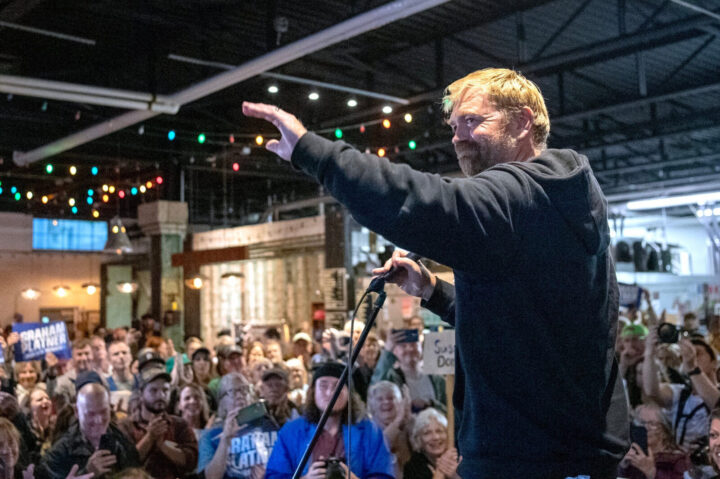
Senate candidate Graham Platner acknowledges the large crowd that attended Platner's town hall, Sept. 25, 2025, at Bunker Brewing in Portland, Maine.
Graham Platner, the scandal-plagued Democrat running for Senate in Maine, continued to insist he only recently became aware that a black skull tattoo on his chest resembles a Nazi SS symbol, even amid mounting evidence suggesting he was aware of what the image represented long before he announced his campaign this summer.
A new investigation published on Friday by CNN confirmed Jewish Insider’s earlier reporting that Platner had on at least one occasion identified the tattoo as a Nazi SS symbol, known as a Totenkopf, to a former acquaintance more than a decade ago.
The former acquaintance spoke with CNN, which also interviewed a second person who said that the acquaintance had mentioned Platner’s tattoo years ago. In addition, CNN reviewed a more recent text exchange from several months ago in which the acquaintance discussed the tattoo, before Platner himself revealed he had the tattoo in an interview last week, in an effort to preempt what he described as opposition research seeking to damage his insurgent Senate campaign.
Both JI and CNN also cited deleted Reddit posts in which Platner, a 41-year-old Marine veteran and an oyster farmer, defended the use of Nazi tattoos, including SS lighting bolts, among servicemembers. In one thread, a user had mentioned the Totenkopf, further indicating that Platner had been aware of its symbolism before he entered the race in August to unseat Sen. Susan Collins (R-ME).
While Platner has apologized for some recently unearthed Reddit posts in which he had described himself as a “communist,” called all cops “bastards” and downplayed sexual assault in the U.S. military, he has otherwise dismissed JI’s reporting about the tattoo, which he said he had gotten with a group of “very inebriated” Marines while they were on shore leave in Croatia in 2007.
Platner said the group had no idea it was a Nazi insignia and chose it simply because “skulls and crossbones are a pretty standard military thing,” as he put it in an interview with the “Pod Save America” podcast.
He has also dismissed claims by a former political director — who recently resigned from his campaign over objections to his past posts — who said last week that Platner had an “antisemitic tattoo on his chest” that he acknowledged “could be problematic” at the beginning of his campaign.
Platner said on Wednesday he had covered up the tattoo with a dog-themed Celtic knot, displayed in a video he posted to social media soon after JI published its story.
“The amount of money and time it takes to dig through somebody’s entire past who has not lived a very public life is extensive, and yet they are willing to expend those resources,” Platner told a crowd of supporters during an event in Ogunquit, Maine, last week. “They are not trying to organize people. They are trying to destroy my life,” he said, alluding to his perceived political enemies.
Progressives also continued to rally behind Platner, who is facing Gov. Janet Mills and other candidates in the Democratic primary next year — a prelude to what party leadership views as a key race to regain a majority in the Senate.
Sen. Bernie Sanders (I-VT), who is backing Platner and campaigned with him in Maine last month, was among top progressives who stood by the embattled Democrat hoping to withstand the ongoing scrutiny over his tattoo and now-deleted Reddit comments.
And not one Democratic senator has yet to say that Platner’s tattoo or his other controversies disqualify him from running, according to a recent NBC News report.
“He sounds like a human being to me,” Sen. Chris Murphy (D-CT) said of Platner’s tattoo in a CNN interview on Sunday. “A human being who made mistakes, recognizes them, and is very open about it.”
Some polling has shown that Mills, a two-term governor who landed an endorsement from Senate Minority Leader Chuck Schumer (D-NY), is trailing Platner by double digits — even among respondents surveyed amid the controversy over his past Reddit remarks.
A more recent survey released Saturday, however, showed Platner behind Mills by five points with 36%. But while his deficit broadly increased after voters were informed of his Nazi-linked tattoo, according to the poll conducted by SoCal Strategies, younger voters ages 18-29 still favored the former Marine.
Another recent poll, screenshots of which were shared with JI on Friday, included questions that had inaccurately described Platner’s tattoo as an “anti-Israel tattoo” and asking if such a tattoo “is disqualifying for a candidate seeking public office.”
It was unclear who had commissioned the poll. A spokesperson for Platner said he was not behind it. And the National Republican Senatorial Committee, which also released a poll late last week that showed Platner ahead of Mills, did not respond to a request for comment from JI on Friday.
Meanwhile, Jordan Wood, a former congressional aide also running in the Democratic primary, wrote last week that Platner’s “Reddit comments and Nazi SS Totenkopf tattoo are disqualifying.”
And another Democratic candidate in the primary, Daira Smith-Rodriguez, announced on Friday that she was ending her bid and endorsing Mills, citing her concerns over Platner’s past Reddit comments “as a survivor of military sexual assault.”
Please log in if you already have a subscription, or subscribe to access the latest updates.
 Continue with Google

 Continue with Apple