














































































Senators on both sides of the aisle say they’re eager to see the text of the agreement, but the administration has not yet made plans to brief Congress
Tom Williams/CQ-Roll Call, Inc via Getty Images
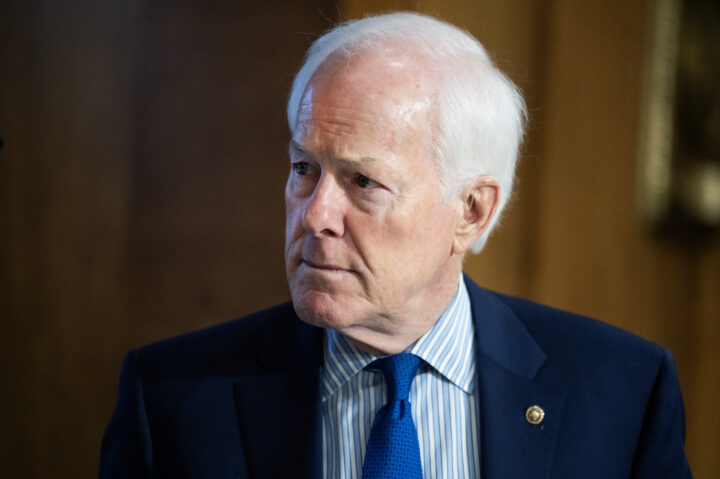
Sen. John Cornyn (R-TX) attends the Senate Foreign Relations Committee hearing titled "Arms Control and Transforming International Security Functions at the State Department," in Dirksen building on Tuesday, March 24, 2026.


 Add JewishInsider on Google
Republican senators said on Tuesday that they’re skeptical that Iran will hold to any commitments it has made or may make in negotiations with the U.S., and urged the administration to release the terms of the memorandum of understanding announced on Sunday.
The administration has not yet communicated any specific plans to brief Congress on the deal.
“Rather than an end to the activities in Iran, I think it’s more of an intermission,” Sen. John Cornyn (R-TX) told reporters. “We still haven’t seen what the documents look like, and regardless of what they look like, I don’t think you can trust the Iranian regime.”
Cornyn added, “I need to see the writing — I need to see the print. But I don’t believe that the regime will abide by it.”
Sen. Thom Tillis (R-NC) emphasized that the U.S. has been in similar positions with Iran before, and that they have not resulted in a viable long-term agreement. He told Jewish Insider that he thinks it’s “generous to call it a deal, it sounds like it’s a deal in progress … and if we’re making progress, that’s good.”
But he said that it’s hard for him to assess an agreement “that we only get described in broad strokes.”
He said he would also be uncomfortable with any arrangement that provided Iran with a financial windfall. Multiple outlets reported Tuesday afternoon that the MOU includes financial incentives for Iran, including lifting various sanctions.
“I’m worried only because at least some of our decisions seem to be affected by the short-term economic impact [of the war], and that’s not a good decision,” Tillis said. “Talking about some of the money that Iran’s going to start receiving. … If all of the sudden we’re pulling back some of the things that were in place even before the operation, I’ve got a real concern because they’re a totalitarian regime.”
He told JI that the U.S.’s current posture and negotiations with Iran make it appear that “we’re willing to accept a totalitarian regime, and so the question is, how does this agreement match up against the original objectives of this initiative” as laid out by the administration at the beginning of the war.
Tillis added that Trump should explain to the country the national security interests and necessities of the U.S. operations against Iran, and that some short-term economic harm might be a consequence of that.
“That should be the case to the American people, and then you stay strong, versus have a sub-optimal or bad deal that actually enriches the very people that you were focused on trying to take out,” Tillis said. “Now that we’re here, you can’t all of a sudden say that because people are really frustrated with gas prices, that the nuclear threat in Iran is a manageable risk, because that is 180 degrees away from the predicate for going in there to begin with.”
Tillis said that the final deal should be made public, or at least shown to members in a classified setting — though he said he was skeptical there was much substance in the page-and-a-half document described by Vice President JD Vance, given its length.
He also reiterated comments from Monday that any final agreement should be subject to ratification by Congress, as the only way to ensure that such a deal would last.
“Trump could have a real foreign policy legacy but he’s been poorly influenced because he’s just so insecure. I’ve never seen anything like it. His conviction is his own popularity, his own attention, his own credit. It hurts my heart a little,” another Republican senator told JI. “I just was hoping that the second term he wouldn’t do what he’s done, and that is to make it all about himself like his first term.”
“I don’t know what’s in [the MOU],” the senator added. “Don’t trust any senator who says they know what’s in the deal. They don’t know. I mean, none of us know, not really.”
Sen. John Kennedy (R-LA) told JI the agreement “looks to me like it’s a deal to make a deal.”
“The only facts I know today are that the blockades on both sides have been lifted. We’re supposed to negotiate more over [60] days,” Kennedy continued. “The Iranian government Iran lies like fish swim. I have no idea, and neither does anyone else, whether they will make concessions. The other thing I know is that Iran is immeasurably weaker today than it was a year ago.”
He added that he does not expect that the “religious zealots” in Iran have “had an epiphany” and will give up their nuclear program.
Kennedy said he’s “sure” the text of the deal will be released this week. In the interim, “If you don’t know [what’s in it], you should shut up, and none of us … know what’s in it. I think we ought to wait and see what’s in it first,” Kennedy continued.
Asked about reports that Iran would be receiving up-front sanctions relief as part of the MOU, Sen. Rick Scott (R-FL) said, “I’d be surprised, I haven’t seen that. I think we’re all in the position we’d like to see the MOU. Unless there’s something in there that they’ve already changed their ways, I don’t know how you’d be entitled to sanctions relief.”
“I think we’d all like to see it,” Scott reiterated, when asked whether he was concerned the administration hasn’t released the text yet. “Then we’d be able to answer questions on specifics.”
Though some Senate Republicans are eager to see the agreement, there do not yet appear to be any specific plans to brief them on it. Senate Majority Leader John Thune (R-SD) told JI on Tuesday that he was not yet aware of any plans for the administration to brief Congress on the contents of the MOU between the U.S. and Iran, as lawmakers continue to call for transparency on the agreement.
“Not that I’m aware of yet. [I’m] going to find that out,” Thune told JI, when asked whether the administration had notified him of plans to brief lawmakers.
On the other hand, Sen. Pete Ricketts (R-NE), said, “The administration probably has a reason for doing what they’re doing. I don’t know what it is, have not been briefed. We’ll all find out on Friday, and then I expect a briefing after that.”
Sen. Eric Schmitt (R-MO) likewise said his understanding is that the text of the agreement will be released after the formal signing ceremony on Friday.
Democrats have also been critical of the administration for failing to release the text of the MOU, and described it as a bad deal — though many say they support an end to the conflict anyway.
“He has not released text, but we know one thing about this president: if he had a great deal, he’d be jumping up and down, and doing a press event with the text. The fact that he announced the deal, got on a plane, left the country, and is now letting JD Vance explain it tells you everything you need to know,” Sen. Chris Coons (D-DE) told JI.
He said he doesn’t expect the administration to come to “consult, brief or include us” in any capacity, including under the Iran Nuclear Agreement Review Act.
“They should have come to us, consulted us, briefed us and explained to the American people what their objectives were at the outset, but I don’t expect their conduct to be any different at the conclusion, if there is one. This is such an internally flawed arrangement that it seems to be inevitable that it will fall apart in a matter of weeks,” Coons continued.
“Trump must hold a classified meeting on his so-called ‘understanding’ with Iran. He must brief all of Congress,” Senate Minority Leader Chuck Schumer (D-NY) said. “He must inform the American people and make the ‘understanding’ public. … Americans need to know how and when this war will truly end.”
Sen. Tim Kaine (D-VA) said that if the deal touches on Iran’s nuclear program, the administration legally has to submit the agreement to Congress, but if the current deal does not include specific commitments on the nuclear program, it may not need to be submitted.
“We’ll know on Friday, and at that point, when it’s all out on the table, I probably have more to say,” Kaine said, declining to comment on potential concessions in the deal until it has been publicized.
A source told JI that Republican leadership and the administration may seek to sidestep INARA review, at least for the current 60-day agreement with Iran
Kayla Bartkowski/Getty Images
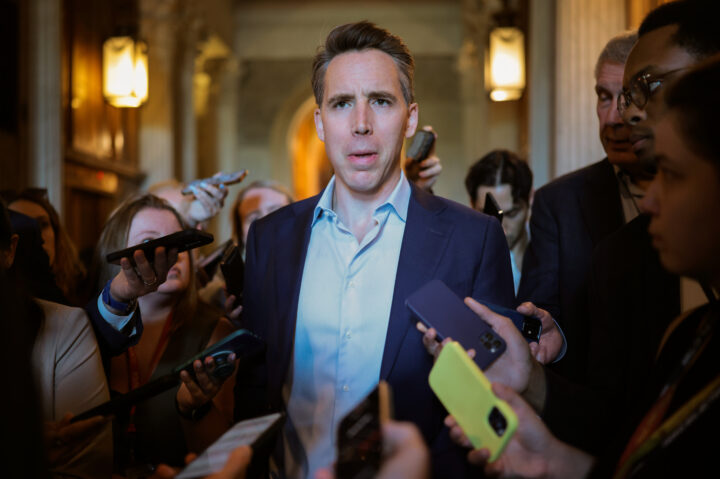
Sen. Josh Hawley (R-MO) speaks to the press on June 2, 2025 in Washington.
Some Republican senators said that the administration does not need to submit the recently signed 60-day memorandum of understanding with Iran to Congress for review and a potential vote under the Iran Nuclear Agreement Review Act, potentially sidestepping the first major opportunity for Congress to weigh in on the agreement.
Under INARA, the administration is required to promptly submit any deal with Iran relating to its nuclear program to Congress for review, with an opportunity for Congress to vote to reject the deal. But the administration may attempt to avoid that step, at least until a broader agreement is reached during the 60-day negotiating period — if one comes about.
A source familiar with the situation said Republican leadership is in discussions with the administration about what is included in the MOU — senior Republicans have said publicly they have not yet been informed — but they are collectively moving toward a view that the MOU is an agreement for further negotiations, not a deal on Iran’s nuclear program in itself, thereby sidestepping INARA for the time being.
The White House did not immediately respond to a request for comment.
Some senators offered a similar view on Monday evening.
Sen. Josh Hawley (R-MO) said that he’s “not aware of any precedent” for Congress to vote on an MOU.
“This is like a template for further negotiations,” Hawley said. “I don’t even know constitutionally if we have a role on that.”
Sen. Eric Schmitt (R-MO) said that he does not believe that a congressional vote on the MOU is necessary. He also went further, emphasizing that even under INARA, there is no requirement for Congress to vote on any Iran agreement.
“People may have different points of view of whether or not we should or we shouldn’t, but there’s certainly nothing required,” Schmitt said.
Pressed on why lawmakers wouldn’t want an opportunity to vote on the deal, Schmitt responded, “on whether or not a president can cease conflict in that way?”
“I don’t think it’s necessary,” he continued. “I’m just stating the law. … I will say that I do think that there are certain people in this building that want to undermine this, there’s no doubt about that. … You have the camp that wants us to lose, and then you have a camp that wants a forever war. President Trump’s not in either one of those camps.”
Sen. John Kennedy (R-LA) said that “if there’s a final” deal with Iran, he believes Congress should have the opportunity to review and vote on it, but that he does not believe that such a vote is necessary for the current MOU.
“When there’s a final agreement — if there’s a final agreement — just like the JCPOA Congress should be able to weigh in,” Kennedy said.
Sen. Tim Kaine (D-VA), who said he was involved in crafting INARA during the Obama administration, said that whether the MOU needs to be submitted is a question of what it includes.
“If the details are opening the ports, opening the straits and ceasefire, but let’s talk about the nuclear program — I don’t know that that would have to be submitted,” Kaine said. “If the details that we hear Friday include some nuclear elements, and maybe we’ll talk about some other ones down the road — well then it might have to come to us. You just have to see whether the deal that is announced Friday includes an agreement on any of the elements of [their nuclear program].”
He emphasized, however, that meeting the 60-vote threshold in the Senate to pass a joint resolution of disapproval under INARA to block a deal would be difficult given current political dynamics around the war.
Others, however, are more eager for congressional scrutiny and even Senate ratification of the deal as a treaty.
Sen. Thom Tillis (R-NC) said that he hopes the U.S. doesn’t “make the mistake Obama made [with the original nuclear deal]. We had an agreement that never really got ratified by Congress, didn’t have a lot of visibility, and I think that’s a mistake.”
Sen. James Lankford (R-OK) emphasized that any lasting agreement would need to be submitted to Congress.
“If it’s going to be long lasting, you’ve got to pass law, and that was what President Obama figured out: he could make an executive agreement, but the next president just turns it off,” Lankford said. “The president has the power to be able to negotiate foreign policy. He is the person who speaks for the country on foreign policy issues, but lasting agreements that last beyond that president have to be put in statute.”
Sen. Mike Rounds (R-SD) also said that if the deal is strong, it should be submitted to Congress for ratification as a treaty. “The JCPOA was torn apart, taken apart, because it could not meet that standard,” Rounds said.
Sen. Lindsey Graham (R-SC), asked if the Senate should vote on the MOU or only the subsequent negotiated agreement said, “It’s the law. Any nuclear deal with Iran has to be voted on. There is no way that we will not review a deal.”
Rep. Julia Letlow is now the favorite to win the Louisiana race; she faces state Treasurer John Fleming in a June runoff

Tyler Kaufman/Getty Images
Sen. Bill Cassidy (R-LA) speaks to media on the first day of early voting outside of the Louisiana State Archives on May 02, 2026 in Baton Rouge, Louisiana.
Dogged by his vote to impeach President Donald Trump in 2021, Sen. Bill Cassidy (R-LA) lost his bid for reelection on Saturday night, finishing in third place in the Louisiana Republican primary behind Trump-endorsed Rep. Julia Letlow (R-LA) and state Treasurer John Fleming.
Letlow and Fleming, the top two finishers, will now compete in a runoff, which will be held on June 27. Cassidy only received 25% of the primary vote, lagging well behind Letlow, who received 45% of the vote, and Fleming, who won 28%.
The race offered another strong signal that Trump’s backing is the most important factor in Republican nomination fights. Of the seven Republican senators who voted to convict Trump at his 2021 impeachment trial, only two remain in the Senate. One of them, Sen. Susan Collins (R-ME), faces her own difficult reelection.
The results also come two weeks after Trump and his political allies successfully ousted five Republican state senators in Indiana primaries, after they opposed the Trump administration’s push to redraw the state’s congressional lines to further favor Republicans.
Cassidy, first elected to the Senate in 2014, had long been one of the more bipartisan members of his caucus, using his experience as a doctor to take the lead on health care issues. He drew close scrutiny for his decision supporting Robert F. Kennedy, Jr. to be confirmed as health and human services secretary in his role as HELP Committee chairman, despite holding serious misgivings over Kennedy’s record opposing vaccine requirements.
In his concession speech, Cassidy told supporters: “When you participate in democracy, sometimes it doesn’t turn out the way you want it to. But you don’t pout. You don’t whine. You don’t claim that an election was stolen from you.”
The next big test of Trump’s influence in party politics will come on Tuesday, when Rep. Thomas Massie (R-KY), a virulent opponent of Israel, will face off against Trump-endorsed challenger Ed Gallrein, a Navy veteran. Trump allies and outside pro-Israel groups have poured millions into the race to defeat Massie. Polls show the race is competitive, with Gallrein holding late momentum.
John Phelan was on Capitol Hill meeting with the leaders of the Armed Services Committee minutes before the Pentagon announced his dismissal on social media — a move that caught even Senate Majority Leader Thune off guard
Tasos Katopodis/Getty Images
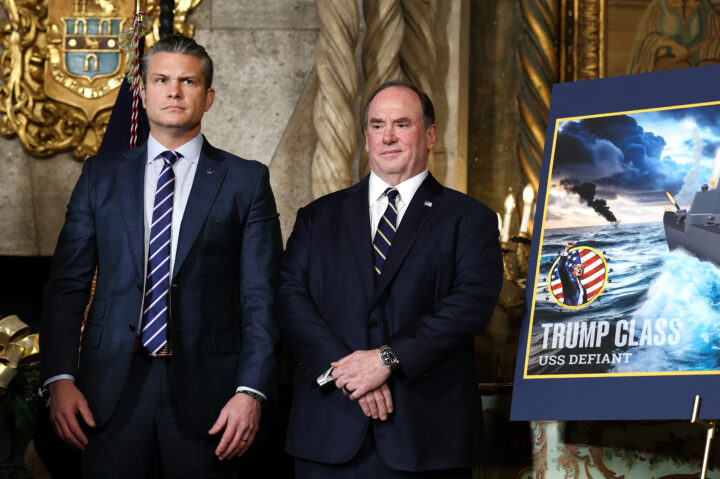
Secretary of War Pete Hegseth and Secretary of the Navy John Phelan stand together as U.S. President Donald Trump announced the creation of the “Trump-class” battleship during a statement to the media at Trump’s Mar-a-Lago estate on December 22, 2025 in Palm Beach, Florida.
Defense Secretary Pete Hegseth did not give advance notice to senior Republican senators before announcing on Wednesday that he was firing Navy Secretary John Phelan and had already tapped his replacement, causing surprise and confusion on Capitol Hill.
“I found out about it the way everybody else did,” Senate Majority Leader John Thune (R-SD) told Jewish Insider of the Pentagon’s announcement on social media of Phelan’s dismissal.
Reached for comment, the Pentagon referred JI to Pentagon spokesperson Sean Parnell’s statement on X — the first public announcement of the news.
“Secretary of the Navy John C. Phelan is departing the administration, effective immediately. On behalf of the Secretary of War and Deputy Secretary of War, we are grateful to Secretary Phelan for his service to the Department and the United States Navy,” Parnell said on X. “We wish him well in his future endeavors.”
After taking part in White House meetings earlier Wednesday, Phelan was on Capitol Hill in the afternoon for a pair of pre-scheduled meetings, the first with Sen. Roger Wicker (R-MS), the chairman of the Senate Armed Services Committee, and the second immediately after with Sen. Jack Reed (D-RI), the committee’s ranking member. Phelan’s departure was posted to the Pentagon’s social media pages minutes after Phelan walked out of Reed’s office, a source familiar with the matter told JI.
A GOP senator on the committee who spoke to Reed and Wicker after the Pentagon announced Phelan’s immediate dismissal told JI that the topic of Phelan’s future in his role did not come up in either meeting, and that none of the three men was expecting such a move.
“This was a total surprise to Senate Republican leadership, to the two leaders of the Armed Services Committee and, clearly, to the secretary of the Navy himself,” the senator said.
Senators on the committee privately expressed concern to JI over Phelan’s firing, which comes amid as the U.S. is maintaining a naval blockade of Iranian ports and has begun boarding Iranian-linked tankers around the world, with three U.S. aircraft carriers on station or en route to the Middle East.
“I mean, I’m sure there are going to be some questions asked about the reasons, etc.,” Thune told JI. “But hopefully the authorizing committee will get a briefing and be informed about some of these decisions.”
Prior to his role at the Defense Department, Phelan ran an investment firm and was a major fundraiser for President Donald Trump’s presidential campaign. Phelan and other administration officials had reportedly been clashing over how best to grow the U.S. shipbuilding industry, a longtime challenge, though Phelan has heralded his own close relationship with Trump.
Hegseth’s term has also been marked by ongoing friction with other senior officials in the department, including Army Secretary Daniel Driscoll, and the firings of multiple top officials. Hegseth fired Army chief of staff Gen. Randy George earlier in April.
Phelan is being replaced by Under Secretary of the Navy Hung Cao, a former House and Senate candidate in Virginia.
Sen. Lindsey Graham: ‘I look forward to the architects of this proposal, the Vice President and others, coming forward to Congress and explaining how a negotiated deal meets our national security objectives’

Office of Sen. Lindsey Graham (R-SC)
Sen. Lindsey Graham (R-SC) and Sen. Tom Cotton (R-AR) hold a joint press conference on Iranian nuclear negotiations at the U.S. Capitol on May 8, 2025.
Despite skepticism over the terms and reports of ongoing Iranian strikes, several prominent hawkish Republicans are voicing support for President Donald Trump’s fragile two-week ceasefire agreement with Iran.
Sen. Lindsey Graham (R-SC), among the most prominent backers of the war in the Senate, said in a post on X that a “diplomatic solution to end the reign of terror in Iran is the preferred outcome” but said he has concerns about the supposed 10-point plan presented by Iran, which would require the lifting of all U.S. sanctions on Iran, among other steps.
U.S. officials, including Vice President J.D. Vance, said the U.S. did not agree to that version of the deal, but that at least three versions of the Iranian proposal have circulated. White House press secretary Karoline Leavitt said Wednesday that the original 10-point plan proposed by Iran was “fundamentally unserious” and was “literally thrown into the garbage by President Trump and his team.”
“I look forward to the architects of this proposal, the Vice President and others, coming forward to Congress and explaining how a negotiated deal meets our national security objectives in Iran,” Graham said.
He added that all of Iran’s enriched uranium must be turned over to the United States and that Iran cannot have any enrichment capacity.
“To those who say, Iran needs to save face by having a small enrichment program, I’m not remotely interested in providing face-saving cover to a regime that murders its own people, beats a 16-year-old girl to death for not wearing a headscarf appropriately, and is dripping in American blood,” Graham said.
Sen. Ted Cruz (R-TX) said on his podcast that he believes Trump was prepared to follow through on his threats against Iran, but agreed to hold off in response to Pakistan’s mediation efforts and Iran’s agreement to reopen the Strait of Hormuz as he had demanded.
“Many of the military objectives have been accomplished. The military has been degraded almost out of existence,” Cruz said, though he acknowledged that it doesn’t take much for Iran to disrupt trade in the Strait of Hormuz. “There’s virtually no military left. It’s like four guys with a slingshot sitting on the back of a camel.”
But Cruz said he would be skeptical that the ceasefire would hold if Iran’s attacks on its neighbors continued.
He said his definition of success in Iran would be taking away Iran’s ability to kill Americans and innocent people in the region and its ability to become a nuclear power. He said that full regime change is the responsibility of the Iranian people, not the United States.
Responding to a post by Trump about the agreement and the damage to Iran’s nuclear program, Senate Intelligence Committee Chairman Tom Cotton (R-AR) said, “President Trump has always been crystal clear: there must be no uranium enrichment for Iran. And he’s absolutely right. That was a central flaw in Obama’s disastrous deal. Because the only reason Iran would demand to enrich uranium is to build a nuclear weapon.”
He didn’t address the substance of the ceasefire deal itself.
Sen. Kevin Cramer (R-ND) praised Trump’s execution of the war and the ceasefire, saying that the war had shown that the U.S. is the strongest nation and has the strongest military on the planet.
“He has made it clear – Iran will not get a nuclear weapon. And so, it’s really through his efforts that the U.S. not only secured a temporary ceasefire but more importantly, they obtained a commitment from Iran to reopen the Strait of Hormuz,” Cramer said in a statement. “That has been his short-term goal in recent days, and it’s an important goal that affects a lot of people, not just the United States but our Middle East friends and certainly Europe.”
He called on other allies to step up — and predicted they would following the ceasefire agreement. But he also urged continued caution.
“Now we have to keep our eyes wide open obviously, it’s not like the Iranian regime is good for keeping its word, but in my mind, this is a pretty good breakthrough,” Cramer continued. “I’m grateful for President Trump’s unwavering dedication to defending our country and holding our adversaries accountable, and frankly, holding some allies accountable as well. I certainly hope they learned from this lesson.”
Other senior Republicans haven’t commented on the ceasefire agreement yet.
Off Capitol Hill, some prominent right-wing voices who have had the president’s ear are taking a different view of the deal.
Conservative commentator Mark Levin emphasized that Iran violated the ceasefire deal shortly after it was signed. He accused Iran of trying to use the negotiations to “blackmail us and Israel” to allow Hezbollah to continue its attacks on Israel and divide the U.S. and its allies.
“The 2-week ceasefire is being violated right now by the Iranian-Nazi regime. Missiles are being fired into Israel and perhaps other countries in the region. Are they able to defend themselves?” he said on X. We have the right man as president, and I bet he’s furious about this.”
“But this will be the question throughout — that is, do we expect the Iranian regime to honor a deal, how will we monitor it, and how will we enforce it. These will all be very difficult issues to resolve,” he continued.
Responding to the 10-point Iranian proposal, Levin said simply, “Uh oh.”
Far-right influencer Laura Loomer said on X the deal is “a negative for our country” and “we didn’t really get anything out of it.”
Under the Iran Nuclear Agreement Review Act, passed in response to the Obama administration’s negotiations with Iran in 2015, any agreement pertaining to Iran’s nuclear capabilities must be submitted to Congress for its review, and Congress has the ability to vote to block any such agreement.
In spite of the ceasefire, Democrats are continuing to agitate for Trump’s removal from office and plan to pursue war powers resolutions to force an end to the war.
In a Dear Colleague letter on Wednesday, House Minority Leader Hakeem Jeffries (D-NY) said that Democrats plan to attempt to pass a war powers resolution during a pro-forma session on Thursday by unanimous consent — an effort that is likely to fail.
Jeffries also said that Rep. Jamie Raskin (D-MD), the ranking member of the House Judiciary Committee, and committee Democrats plan to hold a briefing on Friday on “Trump administration accountability and the 25th Amendment” — indicating that the doomed push to remove Trump from office has backing from the top echelons of the Democratic Party.
Senate Minority Leader Chuck Schumer (D-NY) said that Democrats are planning to force a vote on a war powers resolution next week, the fourth since the war began on Feb. 28, when the Senate returns from its own recess.
But with Iran maintaining various capabilities and continuing its attacks, other leading GOP senators say it would be premature to end the war now
Al Drago/Getty Images
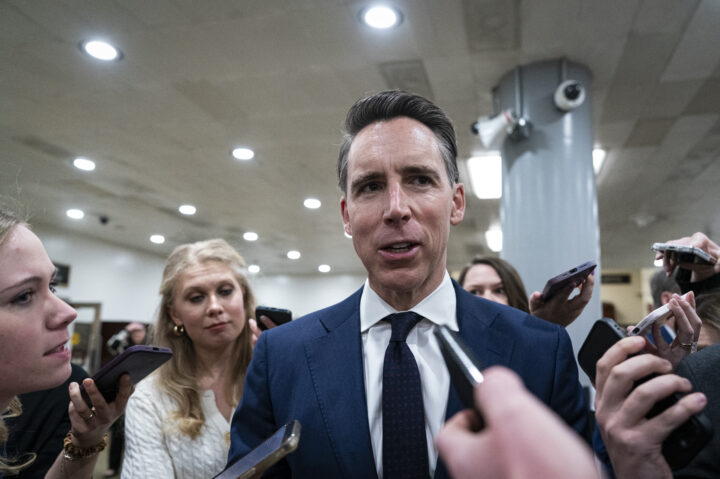
Sen. Josh Hawley (R-MO) speaks to reporters prior to the Senate Republicans weekly policy luncheon, in the US Capitol on March 25, 2025 in Washington, DC.
Both of Missouri’s Republican senators, Josh Hawley and Eric Schmitt, argued that the administration seems to have largely achieved its key objectives for the war in Iran — a posture that distinguishes him from most GOP colleagues and highlights subtle but emerging divisions among Republicans on the proper scope and duration of the war.
Pointing to comments by President Donald Trump saying that the war was substantially complete and that the U.S. had achieved its objectives, Hawley said on Fox News earlier this week, “I agree with what the president said last night. You look at all the success that we’ve had in the last 10 days. I mean, this thing is a victory. I think we should be hailing our military. We ought to be saying we’ve achieved our objectives here. … If this isn’t success, I don’t know what would be. … Now it’s time to declare victory.”
He also posited that Iran has nothing remaining with which to reconstitute its nuclear program — though the regime maintains a stockpile of enriched nuclear material which many experts argue cannot be fully secured without some form of on-the-ground presence.
Continuing a trend of making contradictory comments on the war’s timeline, Trump had said the same day that the U.S. could and would go much further in Iran, and that the U.S.’ aims could expand significantly.
Asked by Jewish Insider on Thursday about the metrics by which he was judging the success of the war, Hawley — who is one of the more prominent senators from the populist wing of the GOP — said he was referring to Trump’s own comments on the subject.
“I assume our overriding national security objective when it comes to Iran is to prevent them from getting nukes. And between our bombing last June and in the last … 12 days, I don’t know how they’re going to reconstitute their nuclear program anytime in, maybe, our lifetimes,” Hawley said.
“Our military has done an amazing job. I think it’s been an overwhelming display of force,” Hawley continued. “I know my Democrat colleagues, a bunch of them are saying, ‘This has accomplished nothing, nothing’s happened.’ It seems to me a lot has happened. And I think we should say that’s a good thing.”
Pressed on whether the war can be ended while Iran continues to fire missiles and drones at countries throughout the Middle East and is dropping mines in the Strait of Hormuz, Hawley said he would defer to Trump’s judgement on when to end the war.
“My point is just that I think the military has achieved a tremendous amount. It has ended [Iran’s] nuclear program for all intents and purposes. It has destroyed their navy. It has eliminated most of their ballistic missiles — those are good things,” he continued. “I’d be glad to take that [win].”
“Seems pretty good to me,” Hawley added.
Schmitt, who is also aligned with the populist wing of the party, likewise emphasized the progress the U.S. has made and pushed for a quick conclusion to the war.
“I know they’re way ahead of schedule. I’d look for a swift end to it,” Schmitt told JI. “I’m not interested in forever war in the Middle East, I don’t think the president is either. And I think that, again, they’ve laid out clear objectives and [are] making a lot of progress.”
Other Republicans are taking a distinctly different approach. Sen. Kevin Cramer (R-ND) told reporters on Thursday that “victory isn’t determined by declaration, it’s determined by the outcome.” He argued that the U.S. can’t and shouldn’t end the war prematurely.
“If you pull 90% of the weeds of our garden and you leave 10%, you’re going to have a weedy garden,” Cramer continued. “The last 10% are the hardest, in many cases.”
The North Dakota senator, who sits on the Senate Armed Services Committee, expressed surprise that the U.S. had not been better prepared to secure the Strait of Hormuz, calling it a potential “miscalculation” and saying that the attacks on ships in the critical waterway “could have been avoided.”
Sen. Lindsey Graham (R-SC), one of the most vocal supporters of the Iran war on Capitol Hill, said that he thinks there are “weeks more of this coming.”
“I don’t see this conflict ending today. I think the mission is to make sure they cannot regenerate, that they’re going to be beyond capable of building missiles to hit us, and they’ll never go back to the nuclear business,” Graham continued.
Also on Thursday, in a rare Senate floor speech, Sen. Mitch McConnell (R-KY), emphasized that the war against Iran cannot be decoupled from the global axis, including Russia and China, with which Iran is aligned.
Russia, McConnell emphasized, has reportedly been providing Iran with targeting intelligence. He criticized Special Envoy Steve Witkoff, who said earlier this week that he takes Russia at its word that it has not been doing that.
“I’ve warned successive presidents to take the Russian-Iranian axis, actually, more seriously,” McConnell said. He emphasized the supportive role that Ukraine has taken in helping to protect the U.S.’ allies in the Gulf, and criticized administration officials for not moving more quickly in pre-war discussions to acquire Ukrainian anti-drone technology.
He also urged lawmakers who oppose the war to nonetheless support an expected request for supplemental military funding as “an overdue opportunity to invest in urgent and strategic defense priorities.”
Four Democrats and two Republicans broke with their parties to oppose and support the resolution, respectively
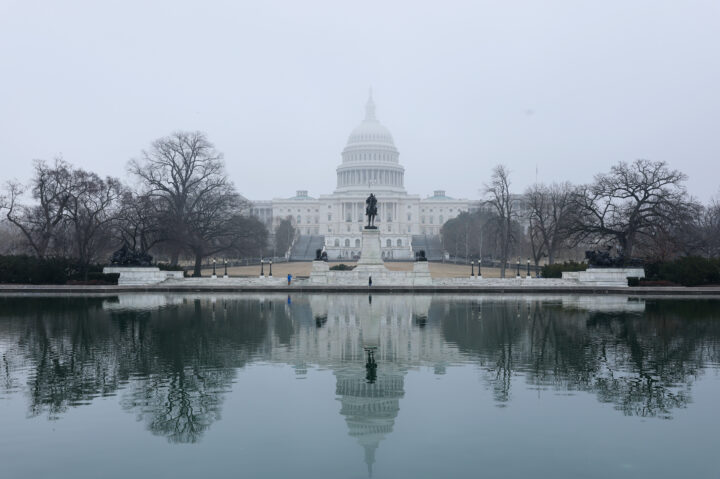
Anna Moneymaker/Getty Images
U.S. Capitol on March 05, 2026 in Washington, DC.
A day after Republican senators blocked a vote to end the U.S.-Israeli operations in Iran, the House voted 219-212 to defeat a similar war powers resolution, with four Democrats breaking with their party to oppose an immediate end to the war, and two Republicans voting with other Democrats to oppose military action.
Reps. Greg Landsman (D-OH), Jared Golden (D-ME), Henry Cuellar (D-TX) and Juan Vargas (D-CA) were ultimately the only Democrats to vote against the resolution, which was led by Reps. Ro Khanna (D-CA) and Thomas Massie (R-KY). Reps. Josh Gottheimer (D-NJ) and Jared Moskowitz (D-FL), who said they would oppose the resolution before the war began, ultimately voted in favor.
On the Republican side, Massie and Rep. Warren Davidson (R-OH), both of whom have isolationist leanings, were the only members of the GOP to support the resolution.
Moskowitz had argued before the war that voting preemptively on the resolution would remove U.S. leverage in negotiations, but argued that the situation has since changed and that the U.S. is now in a full-scale war.
“I didn’t flip at all,” Moskowitz told Jewish Insider. “Circumstances have changed since my first statement two weeks ago.”
In a statement, he condemned Iran and its regime, saying he is “happy that [Ayatollah Ali Khamenei] is no longer able to reign terror on his country,” but added, “Regardless of how one feels about this war, or this President, Congress’s constitutional role in any declaration of war is a completely separate issue,” expressing concern at the erosion of congressional war powers over the past year.
“We must reestablish our Article I authority which grants Congress all legislative powers,” Moskowitz said, adding that he did not believe the resolution would prevent continued efforts to protect U.S. bases and personnel nor intelligence sharing with allies.
Gottheimer emphasized in a statement that the U.S. “simply can’t afford to get this wrong — we must win and crush” the Iranian regime’s military capabilities, emphasizing that he is not, in principle, opposed to military action against Iran and that the regime “deserves the punishment they’re receiving.
“With the defeat of the War Powers Resolution in the Senate, the vote in the House today shifted from an unacceptable call that could put our troops in harm’s way to a clear call for this Administration to articulate the goals for the mission, the end game, and their plan to avoid a protracted conflict,” Gottheimer continued — suggesting that he voted for the resolution because it was, in essence, symbolic given that it did not pass the Senate.
“Unlike some of my colleagues who are opposed to combatting the Iranian regime, the world’s leading state sponsor of terror, I’m supporting this resolution to send a clear message to the Administration: the American people deserve a coherent explanation of what precipitated this war, what success looks like, and how we will know when the mission has been achieved,” he continued, criticizing “shifting justifications and objectives” from the administration. “I’m not opposed to taking action against Iran. I believe that steps to address the persistent threats are merited and necessary to protect our broader national security interests.”
He pledged to make sure the military has sufficient resources, signaling that he may support supplemental funding for the mission if and when requested.
The beginning of combat operations, the loss of some American soldiers and the administration’s inconsistent messaging and strategy — as well as an aggressive push from Democratic leadership — likely helped Democrats close ranks on the war powers resolution.
After the vote, Rep. Greg Meeks (D-NY), the ranking member of the House Foreign Affairs Committee, said that he would call up another war powers resolution 60 days from the start of the war, the limit under which an administration can conduct military operations without congressional authorization under the War Powers Act.
“Members who voted against today’s WPR on the assumption that Trump’s war will be swift or limited will not have that excuse once we’ve entered the third month of open-ended hostilities,” Meeks said.
Like Moskowitz and Gottheimer, a handful of other Democrats who have offered a degree of support for the U.S. operations in Iran ultimately voted for the resolution. Some have pointed to concerns about constitutional process and the administration’s failure to seek congressional approval for the war, rather than opposition to the war in general.
“I will vote for the war powers resolution because I cannot support unchecked authority for the administration to engage, indefinitely, in an already deadly war with unknown size and scope, especially considering Secretary [of Defense Pete] Hegseth’s suggestion that he is willing to” use ground troops in the operation, Rep. Tom Suozzi (D-NY), a moderate House Democrat, said.
At the same time, Suozzi said that “Iran is weaker and the regime’s leadership has been decimated — those are good things. If these operations make the region more secure and America safer, those would also be good things.” He added that the war powers resolution would not prevent Congress from authorizing the use of force in Iran “if necessary and properly presented to Congress.”
Davidson, one of the two Republicans who voted for the resolution. said on the House floor on Wednesday that operations against Iran were just, and potentially necessary, but unconstitutional.
“For some this debate will be about whether we should even be fighting in Iran. For me, the debate is more fundamental: is the president of the United States, regardless of the person holding the office, empowered to do whatever he wants?” Davidson said. “That’s not what our Constitution says. … I rise in support of this war powers resolution today because the moral hazard posed by a government no longer constrained by our Constitution is a grave threat.”
Davidson argued that his Republican colleagues were ignoring the clear definition of what constitutes a war, and repudiating Trump’s campaign promises.
The House resolution, unlike the Senate version, included no specific protections to allow for continued U.S. intelligence sharing with Israel and other allies, and defensive operations to protect allies like Israel and U.S. forces.
Earlier this week, Gottheimer, Landsman, Suozzi, Cuellar, Golden and Reps. Jimmy Panetta (D-CA), Jim Costa (D-CA), Vicente Gonzalez (D-TX) and Adam Gray (D-CA) had introduced an alternative resolution that would give the administration 30 days from the start of the war to wind down operations in Iran, rather than demanding an immediate halt, while banning any ground operations.
Gottheimer said in his statement he plans to call up his resolution during the week of March 23, but he hopes that, “Between now and then, I hope either the conflict has reached its objectives or the Administration has made a strong case to Congress and the American people for why this mission must continue.”
But most ultimately voted for the Massie-Khanna resolution.
Suozzi said that the Gottheimer resolution “would prevent a reckless and potentially unsafe removal of our forces and allow us to continue to protect American troops and our allies in the region during this perilous time,” a seeming indictment of the war powers resolution he nevertheless supported.
Top lawmakers supporting the war powers resolution have largely failed to articulate what the implications of immediately ending operations would be, with some claiming, in spite of the resolution’s language, that U.S. forces would be allowed to finish their mission and wind down.
Some former Democratic officials argued that Gottheimer’s alternative effort would be a more prudent path, with U.S. forces and embassies under fire from Iran, and that any realistic and safe withdrawal would take time. One also argued that the resolution, if brought to a vote, might pick up enough Republican support to pass.
Daniel Silverberg, a former advisor to Rep. Steny Hoyer (D-MD), emphasized that a similar effort to cut off the U.S.’ Libya operations led by “one of the most ardent anti-war activists in the House,” then-Rep. Dennis Kucinich (D-OH), included a 15-day wind-down provision.
“The Massie-Khanna resolution lacks it. The notion that Democrats would not, at a minimum, support that amendment to allow for a responsible withdrawal of forces is problematic from a national security perspective and from a messaging perspective,” Silverberg said.
Jeremy Bash, a former chief of staff at the Department of Defense and Central Intelligence Agency under the Obama administration, told JI that the Khanna-Massie resolution “requires [a] very strange outcome” that would be “dangerous for our troops” and that it was not “credible” because it lacked any buffer period.
Ahead of reported talks between the U.S. and Iran, Sen. Mike Rounds said the regime ‘would love to deceive us … I just don’t think we’re going to have much success’

Iranian Leader Press Office / Handout/Anadolu via Getty Images
Iranian Supreme Leader Ayatollah Ali Khamenei makes remarks in Tehran, Iran, on May 20, 2025.
Several Republican senators expressed skepticism that the Iranian regime would negotiate in good faith with the United States on its nuclear program or on its crackdown on pro-democracy protesters, as the administration pursues a diplomatic approach with Tehran following threats of military action.
Some, including Sen. Lindsey Graham (R-SC) — and the Saudi defense minister, behind closed doors — have warned that, if the U.S. fails to act after President Donald Trump promised Iranian protesters that “help is on its way,” it would be a blow to the U.S.’ credibility in the Middle East and would strengthen the Iranian regime.
Sen. Rick Scott (R-FL) expressed skepticism that the Iranians would engage sincerely or willingly give up their nuclear program in talks with the U.S., reported to be taking place in Turkey on Friday.
“Wouldn’t that be great? It’d be great if they did. It’d be great if they got rid of their nuclear weapons,” Scott told JI. “Do I actually believe they’re going to negotiate in good faith? I don’t.”
Scott added that he was in favor of Trump taking action to support the protesters after promising to do so. “I think if you tell somebody you’re going to help them, you’ve got to help them,” the Florida senator said.
Sen. Mike Rounds (R-SD) said he believes Trump “wants to avoid a war.”
“I hope he’s successful,” Rounds added, but said that he is not optimistic that a viable deal is achievable. “I, personally, am really discouraged. I don’t think Iran really wants to negotiate a deal that would stop them from doing their terrorist activities, supporting terrorism around the area, and I don’t think they really want to give up their nuclear ambitions — although they would love to deceive us,” Rounds said.
“I wish [Trump] the best. I think he’s right in trying to do [make a deal]. I think that’s what we should be trying to do, but I don’t, I just don’t think we’re going to have much success,” he added.
Sen. Markwayne Mullin (R-OK) said, “You can’t trust anything the ayatollah says at all.”
“I don’t know what the details are, so it’s hard for me to say what I’d like to see in [an agreement],” Mullin continued. “We all know that a nuclear Iran can never happen, so that’s got to be part of it. What else happens there? I don’t know, but I still go back to the fact that you can’t trust anything that the ayatollah or this current regime says.”
Mullin disagreed that not striking Iran would be seen as a shift in U.S. policy, describing the administration’s current approach as an extension of the president’s “peace through strength” policy.
“People respect that the president will always strike, or ratchet that up, when the time is right. He always wants diplomacy first, but he’s willing to use the strength part if he has to get to that point,” Mullin said. “And I think that’s what the president has positioned himself to do, but he has multiple options … so hopefully we’ll have a positive outcome without anyone getting hurt.”
Sen. John Kennedy (R-LA) said that he’d want to see Iran surrender its enriched uranium, give up any future potential to obtain a nuclear weapon, stop funding terrorist groups and “start being a responsible member of a stable world order.”
He disputed the notion that a failure by the U.S. to launch strikes now would hurt the country’s credibility, arguing that any military strikes would be based on U.S. intelligence, which he does not have.
“It’s a lot more complicated. I mean, these folks are entitled to their opinion … obviously I hope the negotiations are successful,” Kennedy said. “Whether the president decides to go further is going to depend an awful lot on national and military intelligence, which I don’t have access to. We have the best spies in the world, and I don’t know what they’re telling the president, but it matters. So I can’t advise him if I don’t have the information from the intelligence community.”
Sen. Richard Blumenthal (D-CT) said that any deal with the Iranians would need to include “a complete renunciation of nuclear arms and ballistic missiles that can reach Israel or our European allies.” He also said the regime’s crackdown on protesters would need to be “renounced.”
“They’re a country that continues to maintain ‘death to America, death to Israel.’ It is what it is,” Blumenthal said. “On a military front, there has to be a complete renunciation of nuclear weapons and long-range ballistic missiles, and I think the brutal and inhumane tactics toward its own people have to be renounced.”
“I think we should do something, but it may not be a military strike,” he added. “There are a range of actions that we could take, [such as] to expand economic efforts and [implement] a stronger enforcement of sanctions. So between those, there are options.”
Sen. Tim Kaine (D-VA), who recently introduced a war powers resolution to block military action against Iran without congressional authorization, explained to JI that the resolution was a response to Trump’s comments about a potential attack and the current deployment of U.S. military assets to the Middle East.
Kaine said that the resolution would be eligible for consideration on the Senate floor next week, and that whether he calls it up will depend on how events develop and whether it will have the votes to pass.
“What really prompts me is when I think I can get the votes,” Kaine said. “Usually that means something beyond saber-rattling and it’s some kind of step, like in the international waters or Venezuela, we’re actually killing people — that clearly demonstrates we need to do this.”
Kaine also emphasized that the administration’s explanation for potential military action against Iran has shifted — citing both the protests and nuclear issue — and said he was concerned by a report last week that the administration may be considering some ground deployment of special forces into Iran.
“I’ve just got an awful lot of military families in Virginia who don’t want their kids to be in another war in the Middle East,” Kaine said.
Please log in if you already have a subscription, or subscribe to access the latest updates.
 Continue with Google

 Continue with Apple