










































































Kings County Victory Project seeks to elevate three Dems, including in contest between Syrian Jewish and Russian Jewish candidates
John Lamparski/Getty Images
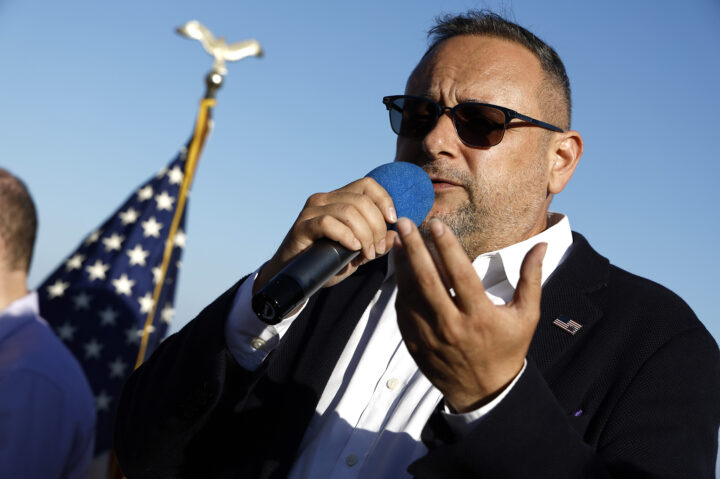
Candidate for NYS Assembly District 45 Michael Novakhov speaks during a "Save New York" rally for Republican gubernatorial candidate Lee Zeldin in Brighton Beach on August 03, 2022 in the Brooklyn Borough of New York City.


 Add JewishInsider on Google
The Mamdani-world operative serving as treasurer for a national anti-AIPAC campaign is now running a New York State committee seeking to oust three Republican lawmakers in Brooklyn — two of whom are Jewish.
State Board of Elections records show that attorney and activist Mark Hanna submitted paperwork to establish the Kings County Victory Project committee in late September. The PAC’s stated purpose is to boost the candidacies of three Democrats running against incumbent Republicans in centrist and right-leaning parts of southern Brooklyn: Joey Cohen-Saban, running against Assemblymember Michael Novakhov; Chris McCreight, seeking to unseat Assemblymember Alec Brook-Krasny; and Joyce Xie, vying against Assemblymember Lester Chang.
“I intended for it to be a bit more of a useful thing for the November elections, for any of the Democrats that are running in, like, contested Republican districts, to flip seats,” Hanna told Jewish Insider.
Novakhov and Brook-Krasny are two of the most prominent elected officials from Brooklyn’s Russian-speaking Jewish community, which has grown increasingly Republican since the early 2010s. Cohen-Saban hails from the borough’s sizeable Syrian Jewish community, which is politically conservative but mostly votes Democratic in local elections.
Hanna worked with now-New York City Mayor Zohran Mamdani on the 2017 City Council campaign of Rev. Khader El-Yateem, an unsuccessful bid backed by the Democratic Socialists of America, a campaign that Mamdani has credited with having “transformed” his political outlook and engaged him in local affairs. More recently, Hanna has served as treasurer of the American Priorities PAC, a self-styled anti-AIPAC effort which has taken in huge sums from Mamdani supporters in the tech sector and spent the funds boosting left-wing critics of Israel. Among the PAC’s most prominent recipients are Michigan Senate candidate Abdul El-Sayed, and congressional candidates Adam Hamawy and Rev. Frederick Haynes III in New Jersey and Texas, respectively.
Hanna also ran alongside and served as election attorney for Carmella Charrington, who won a race for Democratic district leader — an unpaid but influential internal party position — as part of a left-wing wave in June. Jewish Insider discovered that Charrington had shared an Instagram post promoting industrialist Henry Ford’s infamous antisemitic tract ‘The International Jew,’ which she described as “the truth.” Hanna condemned Charrington’s comments at the time but declined to call for her resignation.
Hanna’s involvement with the new committee prompted an attack from the embattled Novakhov, who edged out Cohen-Saban in a tight race in 2024.
“I’ve said it before: my opponent keeps very bad company,” the incumbent said in a statement to JI. “Now we know that the same political operative helping oversee the effort to elect Joey Saban is also running the finances of a multimillion-dollar Super PAC working against pro-Israel candidates.”
But Cohen-Saban said he had no knowledge of the Kings County Victory Project’s existence, and did not want its support unless Hanna recanted his stance on Israel and denounced Charrington.
“I’m a proud supporter of AIPAC, and if there is any organization, PAC, whatever you want to call it, that is trying to get involved in my race, but doesn’t share my values, I don’t welcome their help,” the Democratic challenger told JI, highlighting his family’s ties to Israel, where they lived after fleeing Syria but before coming to Brooklyn. “You need to share my values, and you need to have my interests in order to be able to play any role in my campaign, whether it’s direct or indirect.”
The race between Cohen-Saban and Novakhov has been one of the most closely watched in New York Jewish politics — not only because it pits two of the city’s Jewish immigrant populations against each other, but because a Cohen-Saban victory would add a pro-Israel Democratic to the dominant Assembly majority in a year that has seen a raft of anti-Israel candidates elected to the state legislature.
Cohen-Saban, McCreight and Xie are, like Hanna and Charrington, Democratic district leaders. But recent weeks have found them on opposite sides of an internecine battle for control of the Brooklyn party organization. Hanna, McCreight and Charrington are part of a left-liberal bloc seeking to remove the current centrist leadership, while Cohen-Saban and Xie have backed the present establishment. Cohen-Saban further highlighted that he was among the first district leaders to demand Charrington’s resignation after JI reported her remarks.
Hanna, for his part, argued that he meant for the Kings County Victory Project to overcome these internal divides and focus on dislodging Republican electeds. However, he said that the ongoing legal battle for control of the Brooklyn organization had prevented him from raising meaningful funds for the PAC to date, and he was uncertain how much of a role it could play in next month’s elections.
Brook-Krasny declined to comment for this article.
Sen. Josh Hawley: ‘The European states have been anti-Israel forever, and I just think this is the latest iteration of that’

Amir Levy/Getty Images
A view over the Jewish settlement of Kedumim in the West Bank on Sept. 8, 2026 in Kedumim, West Bank.
Republican lawmakers are speaking up against recent moves by European countries to impose new sanctions and trade restrictions on Israeli settlements in the West Bank, east Jerusalem and the Golan Heights.
The latest restrictions took effect in the Netherlands on Sept. 22, when the country began barring goods obtained or produced wholly or partly in Israeli settlements from entering the country, including products carried by private travelers. Violations can carry a maximum sentence of six years in prison. Israel has since revoked the diplomatic status of Dutch diplomats serving in Ramallah.
On Sept. 9, the United Kingdom announced that it would ban imports produced in Israeli settlements in the West Bank and impose sanctions on companies and individuals involved in settlement construction, financing and related services, while also prohibiting the advertising of settlement properties and goods. France, Canada and other European countries have also committed to — or have already implemented — restrictions involving goods from Israeli settlements, the West Bank, East Jerusalem and the Golan Heights.
Sen. Rick Scott (R-FL) told Jewish Insider he was “disappointed” by the European measures and argued that Israel should be receiving greater support from those governments.
“First off, I’m disappointed. We ought to be supporting the only democracy in the Middle East, somebody that is part of making sure Europe is safe because Iran doesn’t have a nuclear weapon,” Scott said. “I think they ought to be thanking Israel rather than targeting them.”
Asked whether the Trump administration should respond to the European measures, Scott said he believes the White House is already working to address them.
“I think they are, they’re working hard,” he said.
Sen. Josh Hawley (R-MO) likewise criticized the sanctions, arguing that they represent another effort by European governments to pressure Israel over its settlement policy.
“That sounds anti-Israel to me. I don’t support it. I think that’s a bad deal,” Hawley said. “The European states have been anti-Israel forever, and I just think this is the latest iteration of that. It sounds a lot like the BDS movement just sort of laundered now into a different form. So no, I don’t like that at all.”
Hawley also said he expects the Trump administration to retaliate in some form against the European measures, pointing to the president’s previous statements on the issue.
“Well, I assume they will. The president has been very vocal about this, so I hope we’ll continue [to be],” Hawley said.
Rep. Claudia Tenney (R-NY) focused specifically on reports that Dutch customs officials had inspected the luggage of passengers arriving from Israel, calling the reported searches “intrusive” and “unconscionable.”
“The new Dutch BDS law forces Americans and American companies to undergo intrusive searches and prove that they do not possess any goods from Jerusalem or Judea and Samaria,” Tenney wrote on social media. “This is absolutely unconscionable and @USTreasury should IMMEDIATELY add the Netherlands to the list of countries requiring cooperation with a boycott under Section 999 of the Internal Revenue Code.”
Reports provided indicate that passengers were not searched writ large and that some goods were confiscated during routine customs searches.
Scott acknowledged the possibility that Democrats could pursue similar policies in the U.S. if they regain control of Congress. JI has previously reported that should Democrats retake one or both chambers, they could bring up legislation targeting Israeli settlement activity and settler violence.
“Democrats don’t support Israel. They don’t. They don’t fight antisemitism. If you care about stopping hatred in this country, you’re clearly not going to vote for a Democrat,” Scott said.
Several Democratic lawmakers said they were not yet familiar with the European measures and declined to comment.
Sen. Chris Coons (D-DE), the sponsor of legislation targeting companies and Israeli officials involved in settlement construction in the E1 area of the West Bank, drew a distinction between the European restrictions and his bill.
“Look, I think there’s a lot of concern here about settlement expansion and how to send a strong signal to discourage significant settlement expansion, particularly the E1 block,” Coons said. “I recognize that is distinct from some position blocking exports from settlements. I do think after our elections and the Israeli elections, there’s going to be some serious conversations about our long-term relationship and how to ensure that the West Bank continues to be a place in which there may be a viable future for a Palestinian territory.”
Meeks said he will likely bring up a war powers resolution for a vote this week, and is waiting to see if several of his colleagues will flip their votes in favor

Tom Williams/CQ-Roll Call, Inc via Getty Images
Rep. Gregory Meeks (D-NY)
Rep. Greg Meeks (D-NY) said he’s aiming to call up a war powers resolution this week to force an end to the war in Iran, but that he’s still working to lock down the support of a few wavering Democratic and Republican lawmakers whose support will be necessary to pass the legislation.
Meeks had considered calling up the legislation before Congress’ two-week recess, but ultimately declined to do so, saying he was waiting until the legislation could pass and he didn’t yet have the votes.
“I’m probably going to do war powers this week. I’m still working [on] it. I’m very close,” Meeks told Jewish Insider. “I’ve got just about all of the Democrats — just about — and [some] Republicans. And I have some that are contemplating, but I don’t know what they’re going to do.”
He said that there are a few lawmakers who voted against a previous war powers effort in the House who are talking to him and considering now voting in favor, but haven’t disclosed their final plans to him yet.
Meeks said that he thinks he will get “just about every Democrat … maybe the exception of one.”
Of the four Democrats who voted against a previous war powers effort, two — Reps. Greg Landsman (D-OH) and Henry Cuellar (D-TX) — said that they would vote for the next war powers resolution, and Cuellar affirmed those plans to JI on Tuesday. Reps. Juan Vargas (D-CA) and Jared Golden (D-ME) haven’t announced their plans yet.
Vargas told JI on Tuesday that he has made up his mind, but declined to preview how he plans to vote. Golden, who is not running for reelection, could be the hardest of the four to flip.
On the Republican side, Rep. Lauren Boebert (R-CO), who said she would oppose a supplemental funding request for the war, declined to comment on how she would vote, saying she isn’t currently focused on a potential war powers resolution.
Meeks said that the current ceasefire makes it an important time for Congress to weigh in, and that he may ultimately bring the resolution forward for a vote even if he’s not sure if there are sufficient votes to pass it.
“We don’t know what the president may do or may not do afterwards,” Meeks explained. “I’ve been waiting to get commitments … it may be time for them to get on one side of the fence or the other, as opposed to staying on the fence. I may just do it. I haven’t decided yet, but I may just do it.”
Even if the resolution passes the House, it currently would not pass the Senate and would almost certainly be vetoed by the president. But Meeks argued that passing the resolution in the House would send an important message to the administration anyway.
“I think this is giving a message to the president — and it becomes really important, because the 60 days will be up soon, and they have to come to Congress for the money,” Meeks said, referring to a 60-day deadline for the operation cease or to come to Congress for authorization under the War Powers Act. “And it lets the president know that unless he comes to Congress and lets us know what the plan is, he’s not going to get the money.”
Rep. Don Bacon (R-NE), who has said the administration hasn’t properly articulated its plans and goals for the war to Congress, told reporters he will “support continued operations until we get this job done, or it’s clear to me it’s fruitless.”
“I support the military campaign. I think some of the commentary has not been helpful from the White House, but yes, I think the military has done a great job,” Bacon said, pointing to the destruction of Iran’s leadership and military capabilities.
He said that an Authorization for Use of Military Force would be legally required to continue the war beyond the 60-day deadline — a point that other Republicans have disputed — but said that he would be “inclined to support” such an authorization.
“Maybe not a blanket one, but yes, I think we should finish the job,” Bacon said. “These guys have been our enemy. These guys have been our enemy, they’ve killed young [U.S. troops].”
Jewish Insider’s Washington reporter Matthew Shea contributed reporting.
Sen. Lisa Murkowski said she’s concerned Trump will deploy ground troops while the Senate is on recess
Heather Diehl/Getty Images
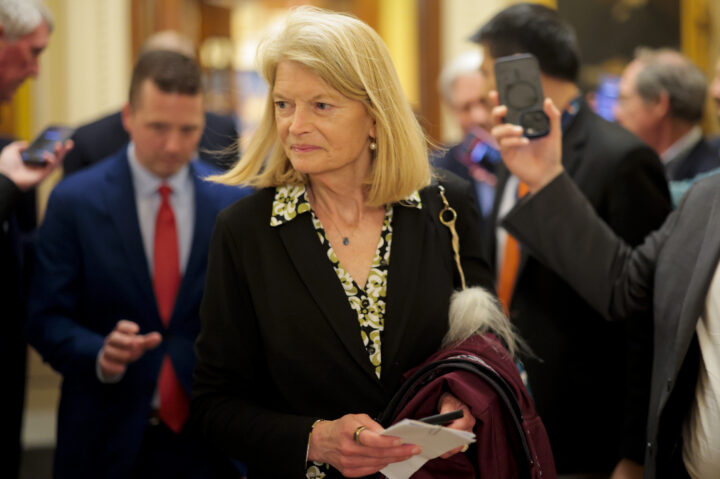
Sen. Lisa Murkowski (R-AK) walks through the Capitol on March 23, 2026 in Washington, DC.
Thursday brought a series of new signals that at least a small number of ideologically varied Republican lawmakers are growing frustrated with the war in Iran and with the administration’s frequently shifting rhetoric about it — including from some otherwise-hawkish lawmakers.
Sen. Lisa Murkowski (R-AK), who previously called for an end to the war, told Bloomberg on Thursday that she’s working on a potential authorization for use of military force in Iran, to limit the scope of the U.S. operation and prevent the deployment of ground troops.
“I don’t know what else to do,” Murkowski told the outlet. “I’m worried we get out of town and the president goes in with ground troops aiming for a full takeover.” The Senate is scheduled to be in recess for the next two weeks.
After Murkowski’s comments, The Wall Street Journal reported that President Donald Trump was considering deploying an additional 10,000 troops to the Middle East.
Rep. Don Bacon (R-NE), who has generally been supportive of the war effort, told NOTUS on Thursday after a House Armed Services Committee briefing the day prior that he was unclear on the U.S.’ plans and goals in the war.
“I don’t know the plan,” Bacon said. “What is the end-state goal? What is the mission? I think clarity there would be helpful.”
Rep. Rob Wittmann (R-VA) also told the outlet that he’s seeking “more granularity, more specificity on what specifically is happening on the ground, and then how is that leading to achieving the military objectives.”
Rep. Mike Rogers (R-AL), the Armed Services Committee chairman, emerged from the briefing Wednesday frustrated with what he said was a lack of information from the administration, warning officials that their reticence could have “consequences.”
Meanwhile, Rep. Nancy Mace (R-SC), who’s been more critical of the war in general, indicated to Axios she’s now inclined to vote for an upcoming war powers resolution to end the war, bringing it closer to the threshold for passage. She added, “War with Iran needs to end. President Trump has won the war, time to exit.”
House Democrats were initially expected to call a vote on that legislation this week, but have delayed their plans until after the congressional recess, saying they still don’t think they have the votes to pass it.
Regardless of whether the resolution passes the House, it remains unlikely to pass the Senate and could be vetoed by Trump. But passage of the resolution in the closely divided House would be a rebuke of Trump and his strategy.
Most Democrats are pushing for a war powers resolution next week, amid ongoing military operations

Win McNamee/Getty Images
The American flag flies in front of the U.S. Capitol on February 28, 2026 in Washington, DC. U.S.
A number of Republican lawmakers rallied behind President Donald Trump’s military strikes against Iran on Saturday, while leading Democrats expressed quick and strident opposition to the administration’s decision to attack Iran.
Democrats are also demanding Congress reconvene promptly next week to vote on war powers resolutions to block further military operations in Iran without congressional approval. The resolutions were already expected to come up for votes in the coming week.
A few Democratic lawmakers sounded more open-minded about the attack against Tehran. Sen. John Fetterman (D-PA), one of the few foreign policy hawks in his party, said the president “was absolutely” correct to attack Iran in an appearance on Fox News. “God bless the United States, our great military, and Israel,” Fetterman said.
Rep. Greg Landsman (D-OH), who told Jewish Insider earlier this week that limited strikes on Iran could be necessary and productive, echoed that stance on Saturday. He said that he would oppose the war powers resolution.
“I hope these targeted strikes on the Iranian regime’s military assets end the regime’s mayhem and bloodshed and makes way for this lasting peace in the region,” Landsman said. “Thank you to our brave service members who are leading this effort, and I pray their work will finally free the people of Iran and those in the region from more violence or war. May peace emerge from all of this.”
Rep. Josh Gottheimer (D-NJ), who had been planning to oppose the war powers resolution, praised the attack while highlighting the administration’s obligations under the War Powers Act, which limits the duration for which the president can unilaterally commit forces to armed conflict without congressional approval.
“Today, the United States, with our key democratic ally Israel, took decisive action to defend our national security, fight terror, protect our allies and stand with the Iranian people who have been massacred in the streets for demanding freedom from the murderous Iranian regime,” Gottheimer said. “I applaud the extraordinary bravery and professionalism of our servicemembers and pray for their safety as Iran and its terrorist proxies retaliate against American bases and our partners in the region.”
“Confronting the Iranian threat is essential to America’s national security and to global stability. The world is safer because of the courage and skill of our service members. I am praying for their safety and the safety of all of our allies who have been targeted by Iranian retaliation,” he continued.
Sen. Jacky Rosen (D-NV) offered more muted support for the operation, praising U.S. servicemembers while saying she “stand[s] with the Iranian people in their hope for a better future and will continue to work in a bipartisan way in Congress to provide them the support they need.” She called for an immediate and detailed briefing on the administration’s plans, and highlighted Iran’s long record of malign activity and attacks on its own citizens.
But Rosen also warned against a protracted conflict and criticized the lack of congressional authorization.
Rep. Tom Suozzi (D-NY), among the most moderate Democrats in the House and a potential swing vote on the war powers resolution, said Trump needs to seek congressional authorization for the operation, while offering support for the administration’s goals.
“I agree with the President’s objectives that Iran can never be allowed to obtain nuclear capabilities. The President must now clearly define the national security objective and articulate his plan to avoid another costly, prolonged war in the Middle East,” Suozzi said. “Iran remains the leading state sponsor of terrorism in the region and must never be allowed to obtain a nuclear weapon. Preventing that outcome is vital to our national security, the safety of our allies, and the stability of the Middle East.”
Most of the leading voices in the Democratic Party, however, are rallying against the Iran attack.
Sen. Tim Kaine (D-VA), who is leading a war powers resolution in the Senate that he planned to call up for a vote next week, said in a statement, “Every single Senator needs to go on the record about this dangerous, unnecessary, and idiotic action,” calling the strikes a “colossal mistake,” accusing the president of having “learned nothing from decades of U.S. meddling in Iran and forever wars in the Middle East” and of being “mentally incapacitated.”
Rep. Ro Khanna (D-CA), who is leading similar legislation in the House, said that “the American people are tired of regime change wars that cost us billions of dollars and risk our lives. We don’t want to be at war with a country of 90 million people in the Middle East.”
Rep. Thomas Massie (R-KY), one of the few GOP isolationists in Congress and Khanna’s cosponsor on that resolution, also said he opposes the operation.
“This is not ‘America First,’” Massie said. “When Congress reconvenes, I will work with @RepRoKhanna to force a Congressional vote on war with Iran. The Constitution requires a vote, and your Representative needs to be on record as opposing or supporting this war.”
Rep. Warren Davidson (R-OH), another isolationist-minded Republican who indicated this week that he was leaning toward voting for the war powers resolution, sent similar signals on Saturday.
“We need a government small enough to fit within the Constitution. We need a government effective enough to solve problems and serve its own people. Or, we need a new Constitution,” Davidson said.
The House is not scheduled to reconvene until Wednesday.
Rep. Jim Himes (D-CT), the top Democrat on the House Intelligence Committee, who was one of the handful of congressional leaders briefed on the administration’s plans earlier this week, said that “everything I have heard from the administration before and after these strikes on Iran confirms this is a war of choice with no strategic endgame.”
He said he expressed his concerns to Secretary of State Marco Rubio during the briefing this week.
Republicans are largely lining up behind the administration, with the exception of Massie.
Sen. Lindsey Graham (R-SC), who had urged Trump to take action, praised the administration, saying Trump had “met the moment.”
“My mind is racing with the thought that the murderous ayatollah’s regime in Iran will soon be no more. The biggest change in the Middle East in a thousand years is upon us,” Graham said. “The likelihood of normalization between Saudi Arabia and Israel getting back on track is exceedingly high – a subject I brought up last week to the key players in the region who concurred if the ayatollah goes down, historic peace advances.”
Graham met with leaders in Israel, Saudi Arabia and the United Arab Emirates this month and said on Fox News on Saturday morning that he plans to return soon. Following retaliatory strikes by Iran on U.S. military facilities in several Arab states, Saudi Arabia issued a statement condemning Iran and offering its support for measures the Arab states may take in response.
“This operation has been well-planned,” Graham continued. “It will be violent, extensive and I believe, at the end of the day, successful. Again the demise of the ayatollah’s regime with American blood on its hands is necessary and more than justified.”
He later urged Arab and other allies to “get behind President Trump and go all in to ensure the ayatollah’s Iran, which has become the largest state sponsor of terrorism in the world is no more.”
Sen. Tom Cotton (R-AR), the chairman of the Senate Intelligence Committee, who was also briefed, said, “The butcher’s bill has finally come due for the ayatollahs. May God bless and protect our troops on this vital mission of vengeance, and justice, and safety,” highlighting the regime’s long record of attacks against Americans.
House Speaker Mike Johnson (R-LA) said Iran is “facing the severe consequences of its evil actions,” and said Trump had “made every effort” at diplomacy. “For decades, Iran has defiantly maintained its nuclear program while arming and funding Hamas, Hezbollah, and other internationally recognized terrorist organizations. Iran and its proxies have menaced America and American lives, undermined our core national interests, systematically destabilized the Middle East, and threatened the security of the entire West.”
“The Gang of 8 was briefed in detail earlier this week that military action may become necessary to protect American troops and American citizens in Iran. I received updates from Secretary Rubio thereafter, and I will remain in close contact with the President and the Department of War as this operation proceeds,” Johnson continued.
Other rank-and-file Democrats, including some moderates, drew parallels with the Bush administration’s war against Iraq in their criticism.
Sen. Mark Warner (D-VA), the top Democrat on the Senate Intelligence Committee, said that the strikes raise “serious legal and constitutional concerns.”
“The American people have seen this playbook before — claims of urgency, misrepresented intelligence, and military action that pulls the United States into regime change and prolonged, costly nation-building,” Warner continued. “We owe it to our service members, and to every American family, to ensure that we are not repeating the mistakes of the past. The president owes the country clear answers: What is the objective? What is the strategy to prevent escalation? And how does this make Americans safer?”
Sen. Ruben Gallego (D-AZ), an Iraq war veteran representing a GOP-leaning state, expressed concern for U.S. forces, who Trump acknowledged could be lost in the ensuing war.
“I lost friends in Iraq to an illegal war. Young working-class kids should not pay the ultimate price for regime change and a war that hasn’t been explained or justified to the American people,” Gallego said. “We can support the democracy movement and the Iranian people without sending our troops to die.”
Rep. Brad Schneider (D-IL), a co-chair of the House Jewish caucus and a key pro-Israel leader, criticized the administration’s move and said he would support the war powers resolution. “The President of the United States is not allowed to take our nation to war without authorization from Congress.”
“This is a moment of peril and opportunity,” Schneider said. “Congress must step up to meet the moment, fulfill its constitutional duties, and ensure American action — with our allies in the region and around the world — leads to a more stable and peaceful Middle East, not another generational entanglement ending in failure.”
Former Rep. Elaine Luria (D-VA), among the House’s most vocal Democratic Iran hawks while she was in office and who is now running to reclaim her former seat, also said Congress should “immediately return to Washington” to vote on Kaine’s war powers resolution.
Rep. Jake Auchincloss (D-MA) said that Trump has “no credibility on either the strategy or law guiding foreign policy” — pointing to the president’s delayed promise to Iranian protesters earlier this year that help would be coming — and said he plans to support the war powers resolution.
“I am ready to work across the aisle to craft congressionally directed strategy on Iran, especially for securing American air supremacy in the region and supporting the Iranian people’s right to self determination,” Auchincloss said. “But first congressional Republicans must call the question on this fundamental issue of war powers by voting against a reckless commander-in-chief and for the Constitution.”
At a hearing of the House Ways and Means Committee, witnesses offered ways to increase transparency in IRS financial disclosure forms

Bill Clark/CQ-Roll Call, Inc via Getty Images
Chairman Jason Smith, R-Mo., speaks with an aide before the start of the House Ways and Means Committee markup hearing in the Longworth House Office Building on Wednesday, September 11, 2024.
Republican lawmakers on the House Ways and Means Committee urged their Democratic colleagues on Tuesday to work with them on legislation to update the Internal Revenue Service’s 990 forms used by tax-exempt organizations to include disclosures for donations from foreign actors.
The overtures took place at a House Ways and Means Committee hearing on the rise of foreign influence operations targeting the U.S. nonprofit sector, where Democratic and Republican witnesses agreed on the need for reforms to the disclosure forms to ensure foreign donations are easily identifiable for IRS investigators.
Witnesses included Scott Walter, president of Capital Research Center; Bruce Dubinsky, a veteran forensic accountant and managing director of Dubinsky Consulting; Caitlin Sutherland, executive director for Americans for Public Trust; Adam Sohn, CEO of Narravance, a financial firm focused on cybersecurity; and Robert Weissman, co-president of Public Citizen, a consumer advocacy organization.
Rep. Jason Smith (R-MO), the committee’s chairman, said at the outset that the hearing was a continuation of “our investigations into the money trails behind tax-exempt organizations failing to operate within their stated tax-exempt purpose and sowing chaos, fueling antisemitism, and interfering in elections across America.”
Smith mentioned several anti-Israel nonprofits in his opening statement, including Alliance for Global Justice, Samidoun and American Muslims for Palestine. He also pointed to Beijing-based tech mogul Neville “Roy” Singham and the People’s Forum, a Manhattan-based arm of the global network Singham finances.
“Certain tax-exempt organizations funded by foreign donors are exploiting their lucrative U.S. tax benefits to incite violence and unrest in our communities and destabilize our political process, all to the benefit of the foreign flags their donors fly,” Smith said. “Other tax-exempt organizations are masking the flow of foreign money by allowing separate entities to utilize their tax-exempt status in order to hold riots across the United States featuring intimidation and violence.”
Democrats largely used the hearing to accuse their Republican colleagues of hypocrisy, pointing to the committee’s failure to look into President Donald Trump’s foreign financial dealings since returning to office and arguing that Republicans were not serious about addressing the full scope of the issue. Several Democrats on the committee expressed willingness to engage on the proposed reforms to Form 990, though they argued doing so without looking into foreign influence in U.S. politics would be insufficient.
Walter, a Republican witness, said in his remarks, “We possess near universal agreement that foreigners and foreign money should not meddle in our politics. To ignore this overwhelming democratic consensus against foreign meddling is to suppress our democracy.”
“I heartily agree with you, and I think there’s a lot to learn from this,” Rep. Don Beyer (D-VA) said. “For example, 990 reform. I’d love to be participating in that. We don’t want foreigners affecting our elections, but I want you to share my horror at the amount of dark money that poured into seven battleground states at the end [of the 2024 election]. Billions of dollars. We have no idea where it came from. I can’t determine where it came from.”
Weissman, a Democratic witness, concurred with the need for reforms to the IRS reporting process for tax-exempt organizations, and suggested that Democrats reintroduce the Disclose Act, legislation from 2023 requiring organizations that spend money in U.S. elections to disclose donors who have given $10,000 or more.
“On the election side, there is a problem with foreign money coming in, and we have no idea the scale of that. The solution for that is the Disclose Act, which would require these different forms … to disclose from whom they were receiving funding and to certify they are not receiving funding from foreign entities,” Weissman said. “I think if we move away from these individual cases and selecting out organizations based on political viewpoints and actually look at the policy issues, there should be room for agreement.”
Smith, along with several of his GOP colleagues on the committee, said they hoped to find common ground with Democrats on this issue.
“Nothing about today’s hearing should be partisan. Republicans and Democrats should work together to stop foreign actors from interfering with our politics and public discourse through non-profits,” Smith said. “The people who want America weak, divided, and torn apart would love nothing more than a partisan battle. This is not politics, it’s national security.”
Several witnesses suggested specific changes to Form 990, including the addition of questions about foreign donations and special projects that are not tax exempt.
Dubinsky urged lawmakers to take “a fresh look at the form” and work on “basically reconstructing it from top to bottom.” He suggested that tax exempt organizations be required to disclose the source of contributions “above a certain threshold.”
“I would start by taking a fresh look at the form and basically reconstructing it from top to bottom. I think there’s some good information on the current 990,” Dubinsky said. “There are a lot of different schedules and sub-schedules, but it needs to be designed in a way that information can be easily used and not for political purposes. I’m totally against that, but for proper purposes by the IRS, for transparency.”
“Banks have a tremendous anti-money laundering and know-your-customer regime that they have to follow. I’m not suggesting that nonprofits and tax exempts should do that. It’s very onerous,” he continued. “But I think if you have some questions along the lines of: ‘Who’s the ultimate beneficial owner? Do you know?’ If certain contributions are above a certain threshold, we need to know who’s behind those. I think that that’s very important.”
Walter noted that adding an Employer Identification Number (EIN), which the IRS assigns to businesses as a form of identification, and disclosures about salaries or fiscal sponsorships to the form could prove beneficial.
“EIN numbers are not always used on 990s when one nonprofit is giving to another, that’s certainly an important way to help track,” Walter said. “You could expand the disclosures for the highest paid employees, highest paid contractors, the fiscal sponsorships could be required to be listed, possibly with a basic budget for them, or the name of the individual who’s the principal officer of the fiscally sponsored project, when the project begins and ends, then whether the project applied for its own exempt status independently. And obviously, the simple thing of, do you accept foreign money?”
“One simple thing would be requiring that sponsored projects be named on the 990, perhaps the basic budget of revenues, expenses, assets,” he later added. “You certainly could also designate a person as the principal officer for the fiscally sponsored project, the dates of when the sponsorship began [and] when it ended, yes or no to whether it received foreign funding and yes or no to whether the fiscally sponsored project applied for its own independent tax exempt status.”
Rep. Lloyd Smucker (R-PA) and Walker agreed with the former’s suggestion that the fiscal sponsorship model used by 501(c)(3) nonprofits for special projects that are not tax exempt is being misused to prevent full public disclosure of the funding of those projects.
The Pennsylvania lawmaker, who is working on legislation on the issue, said that fiscal sponsorships “are often used for legitimate purposes, to help new nonprofits sort of get off the ground, if you will, but it also can allow a non-exempt entity to maintain limited public disclosure.”
Walker told Smucker that “one of the most egregious examples of the abuse here would be a fiscal sponsor that was helping Samidoun,” a Vancouver, B.C.-based NGO against which the Biden administration and Canada issued terrorism sanctions in October 2024 for raising money for the Popular Front for the Liberation of Palestine (PFLP), a proscribed terror organization.
Sen. John Kennedy told JI that Barrack was ‘very incorrect’ when casting doubt on Israel’s status as a democracy
Leigh Vogel/Getty Images for Concordia Annual Summit
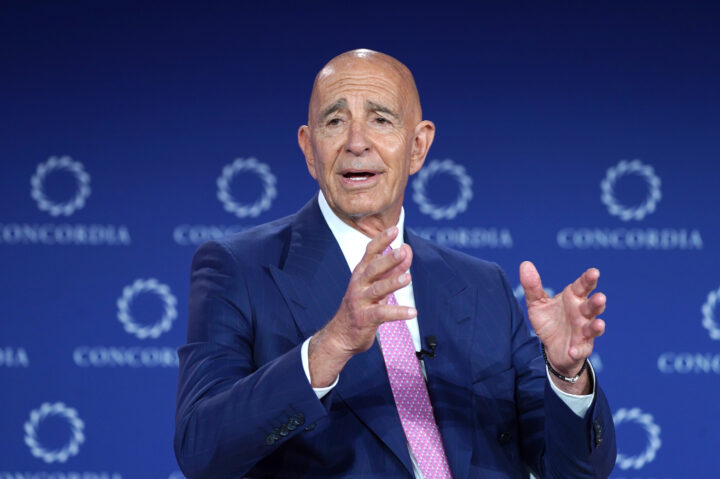
U.S. Ambassador to Turkey Tom Barrack speaks during the 2025 Concordia Annual Summit on September 24, 2025 in New York City.
Republican lawmakers are criticizing U.S. Ambassador to Turkey Tom Barrack over his recent comments questioning whether Israel is a democracy while voicing support for Turkey joining the proposed U.S.-led International Stabilization Force to operate in Gaza.
Barrack raised eyebrows with his comments on Sunday at the Doha Forum in Qatar — where the Syria envoy appeared to cast doubt on Israel’s status as a democracy while suggesting that “benevolent” monarchies were typically more successful in the region. Earlier last week, the ambassador drew attention for endorsing Turkey’s inclusion in the ISF because their “criticized relationship” with Hamas would “soften whatever has to be done” to disarm them.
Barrack’s comments in Doha were made in the context of criticizing previous efforts by the U.S. and others to impose democratic governing models in the Middle East. “Almost every decision that the West has imposed on the region, rather than allowing it to evolve on its own, has been a mistake,” Barrack said.
“The first thing that has to happen is that we have to allow them, Syria, to define it themselves without going in with Western expectations and saying, ‘We want a democracy in 12 nights,’” Barrack said on Sunday. “We’ve never had a democracy [in the Middle East]. I don’t see a democracy anywhere. Israel can claim that it’s a democracy, but in this region, really what has worked the best, whether you like it or don’t like it, is a benevolent monarchy.”
At the Milken Institute’s Middle East and Africa Summit in Abu Dhabi, United Arab Emirates, on Friday, Barrack said, “If you think about it, having Turkey, who has a relationship and an Islamic foothold, will soften whatever has to be done in this, disarming Hamas. … How are you going to disarm them? Are you really going to militarily disarm them? Are we going to be in the soup again? Do you have caches and say, show up at public storage, and we’ll give you a ticket, and this is going to go into the IDF?”
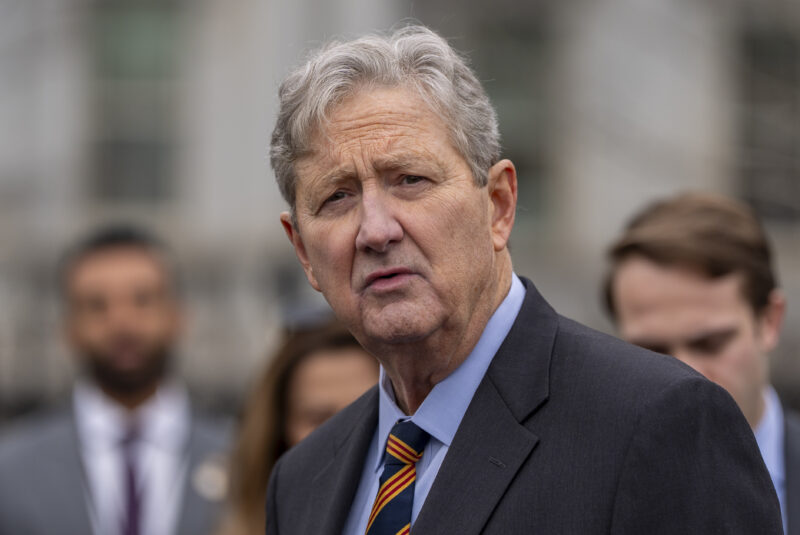
Sen. John Kennedy (R-LA) told JI that Barrack was “very incorrect” with his musing about Israel’s standing as a democracy. “I think Israel is a democracy, and Israel is our only true friend in the Middle East,” Kennedy said.
Asked for his reaction to Barrack’s public support for Turkey joining the ISF, the Louisiana senator replied: “I don’t trust Turkey.”
Sen. Lindsey Graham (R-SC) said about Barrack’s comments, “If I had to give you an example of a robust democracy, it would be Israel. If you don’t like the government, stick around a month, they’ll get a new one.”
Daniel Shapiro, who served as U.S. ambassador to Israel during the Obama administration and as deputy assistant secretary of defense for the Middle East for a year and a half of the Biden administration, told JI that Barrack’s comments about Israel’s democratic bona fides were “a bit chilling.”
“There’s no cause for calling into question Israel’s status as a democracy,” Shapiro said. “I’ll give him the benefit of the doubt that that was simply a misstatement that he probably will think better of.”
“I know it’s better when ambassador’s statements are fully aligned with the policies of their administration,” he continued. “This administration generally may be less coordinated in that regard than others because our president speaks so frequently and extemporaneously, but that actually raises the importance of ambassadors ensuring that they are fully aligned with whatever the president’s policy is.”
The remarks also prompted criticism from foreign policy analysts and experts, who suggested the ambassador to Ankara was acting more in the interests of Turkey than the United States.
“There’s no question that he often reflects the Turkish view on a number of things,” Michael Makovsky, president of the Jewish Institute for National Security of America, told JI. “That might be his view, or in my opinion, he doesn’t really understand the Middle East or proper U.S. interests in the Middle East. Generally, he often reflects Turkish views of the region.”
“That happens sometimes with ambassadors, they sometimes strongly reflect the views of the countries to which they’re posted, but he’s really been out there on this,” he continued. “Personally, that is concerning to me.”
Makovsky questioned Barrack’s broader approach to the media while criticizing his remarks about whether Israel is a democracy as “a bit incomprehensible.”
“I find that Barrack speaks a lot in public or to journalists, to the media. Frankly, a number of the statements he makes are kind of hard to understand, and certainly this is one of them,” he explained, describing Barrack’s previous statements to the media as “word salads.”
Sinan Ciddi, a senior fellow at the Foundation for Defense of Democracies, similarly voiced concerns about Barrack’s warm stance toward the Turkish government.
“He’s made it no secret that he is essentially very pro-Turkey, and that he sympathizes [with the view that] the key to stability or [achieving] U.S. interests goes through projecting Turkish interests in the region,” Ciddi told JI. “For a long time [he has been] suggesting that if there is going to be lasting peace and essentially a cessation of hostilities inside of Gaza, then Turkey has to play a role, which means putting Turkish troops inside of Gaza as part of the stabilization force.”
“Obviously, Israel has a problem with that,” he added. “Not only Israel, but also significant parts of the U.S. government and a handful of Arab states, because they feel that a Turkish presence there would unsettle the balance there because of Turkey’s ties to Hamas.”
Ciddi noted that the United Arab Emirates, Saudi Arabia and Egypt have all voiced concerns about what type of involvement Ankara would have in the ISF. He added that Turkish President Recep Tayyip Erdogan sees the ISF “as a momentous opportunity to step into Gaza and undermine Israel and really project Turkey’s power.”
The Arab states are “deeply worried that Turkey’s military presence there would be to basically prop up Hamas. They’re not going to be there to essentially disarm and dissolve Hamas, that Turkey is basically going to stand shoulder to shoulder [with Hamas],” Ciddi told JI. “That’s going to just basically heighten tensions between Turkey and Israel and could lead to the potential of an arms conflict between them. Nobody wants that. Nobody understands why Barrack is pushing for that.”
“Either Tom Barrack is ignorant of the facts pertaining to Turkey’s deep enmeshment and involvement with Hamas over the years, particularly since Oct. 7 in terms of the material support it has provided Hamas … or he is choosing to ignore that,” he continued. “I think he’s either coming at it from a perspective of ignorance, or he’s choosing to ignore it. But neither bodes well, and that is the unfortunate circumstance.”
Ciddi also accused Barrack of “essentially running a portfolio where he feels very emboldened as ambassador to Ankara, as well as special envoy to Syria,” citing that he “doesn’t come from a traditional diplomacy or foreign service background. He knows he has the ear of [President Donald] Trump. He knows he’s one of the few people that Trump listens to.”
Barrack faced backlash from Israel on Tuesday for his recent comments, with Walla News reporting that Israeli Prime Minister Benjamin Netanyahu and his team view Barrack as too closely aligned with Turkey.
“Barrack is acting like a Turkish ambassador and undermining regional stability,” a senior Israeli official told the outlet, adding that Barrack is “overly influenced by Turkish interests in Syria” and is operating “to a significant extent in line with Syrian interests.”
An Israeli diplomatic source confirmed the Walla report, adding that they were “stunned by [Barrack’s] statements praising benevolent monarchies and belittling Israeli democracy,” and saying that the remarks were unprecedented.
The White House did not respond to JI’s request for comment.
Lahav Harkov contributed to this report.
Some Republicans worry the terms of the agreement currently being negotiated could hurt Israel’s ability to defend itself and eliminate future terrorist threats

Amir Levy/Getty Images
Medical workers take out released hostages from an Helicopter at Sheba hospital on November 28, 2023 in Ramat Gan, Israel.
Despite President-elect Donald Trump’s push for a deal to secure the release of the remaining hostages in Gaza before his inauguration, some Republicans are raising concerns that the terms of the agreement currently being negotiated could hurt Israel’s ability to defend itself and eliminate future terrorist threats.
Details are still being finalized on the deal, which could be announced in the coming days, but it includes a 42-day cease-fire between Israel and Hamas that requires the IDF to evacuate from the heavily populated areas of Gaza to the edges of the Gaza Strip. It will also swap dozens of hostages for hundreds of Palestinian terrorists in Israeli prisons, with 30 prisoners released for each civilian hostage and 50 prisoners for each female soldier.
The agreement has been in the works under the outgoing Biden administration, with talks falling apart several times in the last year. Negotiations picked up again after the U.S. election in November, when President Joe Biden, Secretary of State Tony Blinken and National Security Advisor Jake Sullivan kicked their efforts to reach a deal before leaving office into overdrive. The team also began updating Trump and Steve Witkoff, the president-elect’s incoming Middle East envoy, on the talks.
Terms of the deal have not changed since Trump and Witkoff got involved, though the speed at which progress has been made has increased since the president-elect reiterated last week that “all hell will break loose” in the region if Hamas did not return the remaining hostages by the time he was sworn in. “I don’t want to hurt your negotiation,” Trump said to Witkoff before issuing the threat last Tuesday. “If they’re [the hostages] not back by the time I get into office, all hell will break out in the Middle East.”
Behind the scenes, congressional Republicans have begun fretting that Trump could force them to back a deal that involves terms they’ve opposed for over a year. Some lawmakers and senior staffers have privately discussed the issue among themselves, though none of them have taken additional steps beyond engaging with Trump’s transition team about their concerns.
None of the GOP lawmakers who spoke to Jewish Insider for this story praised or defended the terms of the deal as it is currently written. The few GOP lawmakers willing to voice their skepticism publicly pointed to specific details that worried them.
Sen. Thom Tillis (R-NC) said that he was “really in the skeptical column for anything related to Hamas.” Tillis expressed concern that the terror organization was included in negotiations at all.
“I feel like they’re the wrong people to be brokering the deal because, in some respects, that means you’re a part of the future of Gaza. That’s a bad thing,” Tillis told JI.
Sen. John Cornyn (R-TX) said that while he wasn’t read up on the specifics of the deal as it currently stands, he had reservations about some of the terms negotiated under the outgoing administration, pointing to the release of Palestinian terrorists being held in Israeli prisons.
“The Biden administration hasn’t shown itself to be a very effective negotiator, period,” Cornyn told JI. “I’d be concerned that he [Biden] negotiated a bad deal, which would be consistent with everything he’s done the last four years. While I would applaud the release of the hostages, I am concerned that Hamas is incentivized to take more hostages so they can trade them for more prisoners.”
Sen. Rick Scott (R-FL) said that he viewed the release of all remaining hostages and the complete surrender of Hamas as critical components for a deal. “I’d want all the hostages back and I’d want Hamas to drop their weapons,” Scott said of his conditions to support an agreement.
“My attitude is that the way to end this is for Hamas to surrender,” Sen. Pete Ricketts (R-NE) told JI when asked about the deal. “I think it’s up to Israel to decide how this should work. It’s about Israel’s security.”
Sen. Ted Cruz (R-TX) did not criticize the deal directly, but rather argued that the Biden administration’s inability to get the hostages released paired with Trump’s recent threats against Hamas proved that pressuring Israel had prolonged the conflict.
“Everyone knows that Hamas was emboldened to extend their war against Israel, and keep these hostages in unimaginable hell, because Hamas leaders were hoping that the Biden administration would force Israel to capitulate. Everyone also knows that the hostages would not be getting out without President Trump’s threat to unleash hell against Hamas and its patrons,” Cruz told JI in a statement. “The fundamental lesson from the first Trump administration remains just as true today as it was four years ago: The way to secure peace and stability in the Middle East is to stand shoulder-to-shoulder with our Israeli allies.”
Given the opportunity to speak anonymously, most Republicans said they thought the deal needed to be renegotiated or tossed altogether. Two sources told JI that the Trump team had responded to their concerns by arguing that this deal served as the best vehicle to deliver on the president-elect’s promise to get this done by his first day back in office.
“To me the fundamentals of this deal are flawed. My heart goes out to the victims’ families, but what we’re trying to do is to also make sure that we have something that has staying power and gives us certainty that there’s not going to be another tranche of victims,” one Republican senator said. “I’m not sure that we’re there yet. I don’t know that this deal works practically, so regardless of what may occur in the waning hours of the Biden administration, I believe that there are going to be additional requirements for the new administration to impose.”
“If we’re not getting basic concessions like every hostage returned or other guarantees, then what are we getting out of this Biden deal? I don’t see how it is sustainable if Hamas is still in the picture,” another GOP senator told JI.
Those who responded optimistically to the developments largely focused on Trump’s influence in moving the deal along after multiple failed efforts to bring the remaining hostages home. They did not, however, praise the deal itself.
Senate Majority Leader John Thune (R-SD) said that he hadn’t been tracking the most recent developments, “but obviously, any news that suggests we’re coming closer to a resolution in that part of the world would be welcome news.”
Asked if he was confident Trump and Witkoff wouldn’t endorse a deal that hurt Israel, Thune answered affirmatively. “I haven’t followed closely, but I’m aware of some of the conversations that have been engaged in around those issues. Yes, I am confident. I think President Trump and Mr. Witkoff will be very careful to ensure that Israel’s interests are protected and preserved.”
Another GOP senator, speaking on condition of anonymity, told JI, “I’m not worried about Trump accepting a deal that isn’t strong enough for Israel, because I can’t imagine [Israeli Prime Minister Benjamin] Netanyahu would feel that kind of pressure to take a weak deal.”
Sen. John Kennedy (R-LA) says he worried that Biden, Blinken and Sullivan would take any deal as they depart the White House because they were “trying to create their legacy.” Regardless, he said he would get behind an agreement if Trump and Sen. Marco Rubio (R-FL), Trump’s nominee to be secretary of state, gave it their blessing.
“Unless Trump and Rubio sign off on it, I wouldn’t support it. If they can look me in the eye and tell me that this does not hurt Israel’s effort to destroy Hamas and Hezbollah and the Houthi rebels, then I would consider it,” Kennedy told JI.
Kennedy added that any deal must “keep that Philadelphi corridor secure, because that’s how the weapons are getting in. They’re coming in from Egypt.”
A spokesperson for Trump did not respond to JI’s request for comment.
Please log in if you already have a subscription, or subscribe to access the latest updates.
 Continue with Google

 Continue with Apple