




































































Mayor Zohran Mamdani called his international affairs commissioner’s scheduled sitdown with Iran’s U.N. representative ‘an error’

Yuki Iwamura-Pool/Getty Images
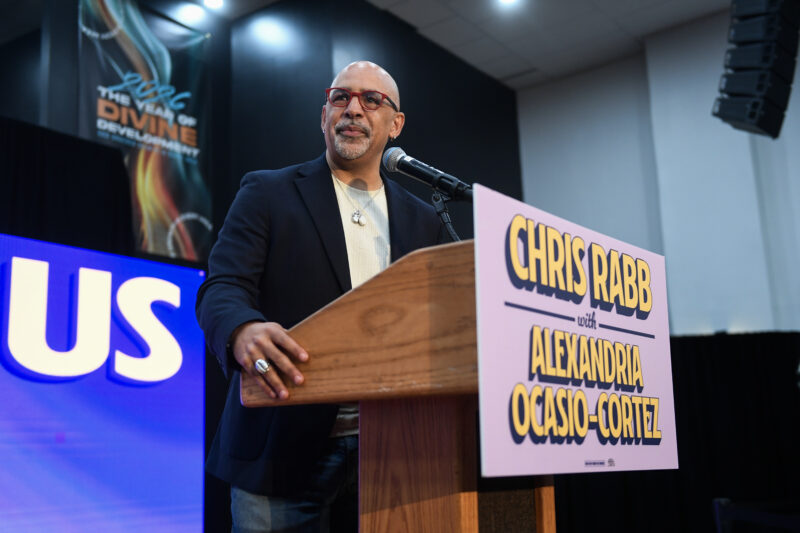
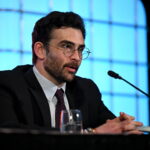
Democratic mayoral candidate Zohran Mamdani


 Add JewishInsider on Google
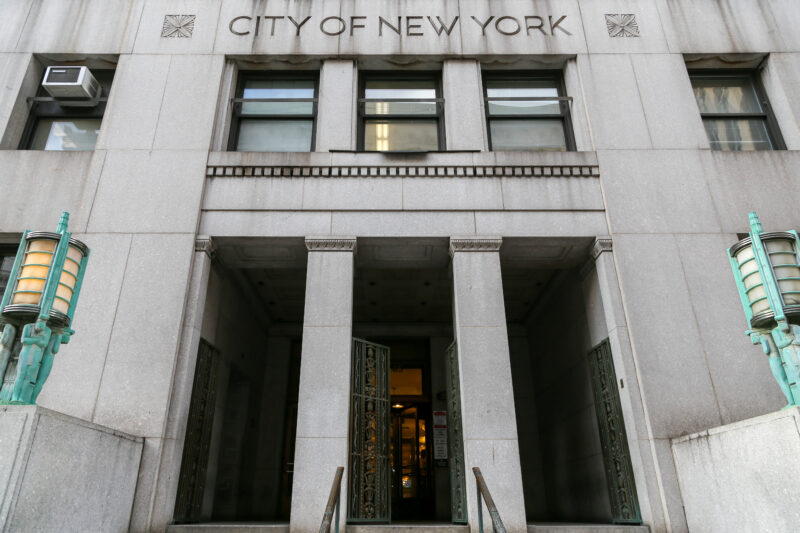
New York City Mayor Zohran Mamdani told reporters on Friday that he had been unaware that top officials in his administration planned to meet with Iran’s ambassador to the United Nations earlier this month — calling the decision “an error” on the part of one of his most prominent and politically active commissioners.
Speaking after an unrelated event, the mayor maintained he only learned from a request for comment from City Journal that International Affairs Commissioner Ana Maria Archila and what the publication described as “two other senior officials” working under her had planned to sit down on Tuesday with Amir-Saeid Iravani of the Iranian Mission to the U.N. City Journal, affiliated with the right-of-center Manhattan Institute, reported that the State Department stepped in to preempt the meeting.
“That meeting did not take place, it will not take place, and I did not know about it until there was a press inquiry regarding it,” Mamdani told reporters, vowing a change in internal policy to prevent it from occurring again. “The commissioner recognizes that this was made in error, and we’re working on a new process, in terms of new meeting requests.”
The democratic socialist stressed that the Iranian mission had reached out to his team, not the other way around, and maintained that the office’s function is to maintain the city’s international relationships.
However, City Journal and El Pais have reported that Archila has taken a decidedly political tack in her outreach to foreign governments, explicitly seeking to engage with those that are “in political alignment/leftist,” including Colombian President Gustavo Petro, a fierce critic of Israel.
Archila first gained attention for confronting then-Sen. Jeff Flake (R-AZ) in a Senate elevator over the nomination of now-Supreme Court Justice Brett Kavanaugh in 2018, and subsequently ran unsuccessfully for New York lieutenant governor in 2022. Prior to joining the Mamdani administration, she served as co-director of the New York chapter of the left-wing Working Families Party.
The press freedom group has already removed eight people confirmed as Hamas or Palestinian Islamic Jihad from its database of journalists killed during the Israel-Hamas war
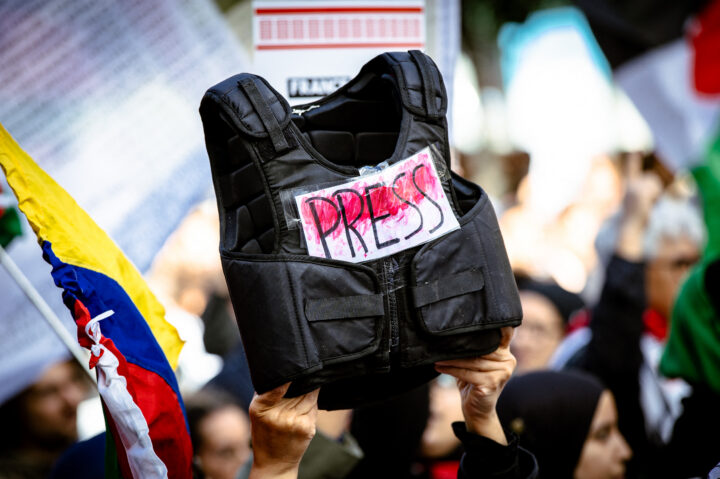
AMAURY CORNU/Hans Lucas/AFP via Getty Images
Demonstration against Israel, in Paris, France on October 4, 2025.
The Committee to Protect Journalists announced it will conduct a review of its database of members of the media killed during the Israel-Hamas war, after Hamas and Palestinian Islamic Jihad published obituaries that identified individuals CPJ listed as journalists as members of the terrorist groups.
“CPJ has always been clear that we do not include anyone in our data sets if there is evidence that they were engaging in combat or inciting imminent violence,” said CPJ CEO Jodie Ginsberg. “This is consistent with international humanitarian law, which considers journalists affiliated with non-state actors to be civilians, provided they do not directly participate in hostilities.”
CPJ, which has faced criticism for an alleged anti-Israel bias, said it recently removed eight individuals from its “killed” database after confirming they were Hamas or PIJ members. Another 12 names were removed for unrelated reasons. All 20 of these individuals were previously documented on CPJ’s Journalist casualties page.
Currently, CPJ — which said it uses at least two independent sources of information to identify someone as a journalist — claims 209 journalists or members of the media were killed by Israel amid its war in Gaza. In cases where the Israel Defense Forces is accused of killing a Palestinian, CPJ said it asks Israel for further information.
Jewish Insider reported in 2024 that one-third of the Palestinian journalists listed by CPJ as being killed in the war in Gaza were employed by terrorist groups. Out of 100 Palestinian journalists on the list, 33 worked for “Hamas-affiliated” media, such as Al-Aqsa Voice Radio, Al-Quds Al-Youm, Quds News Network and others. Another two worked for Palestinian Islamic Jihad outlets Kan’an and Mithaq Media Foundation.
During the Israel-Hamas war, CPJ said Israel was “engaging in the deadliest and most deliberate effort to kill and silence journalists that CPJ has ever documented.”
CPJ said the review is expected to be completed in July.
'When We See You Again,' Goldberg-Polin told JI, is ‘a pain-filled love story, or it's a love-filled pain story’
Amazon/AHIKAM SERI/AFP via Getty Images
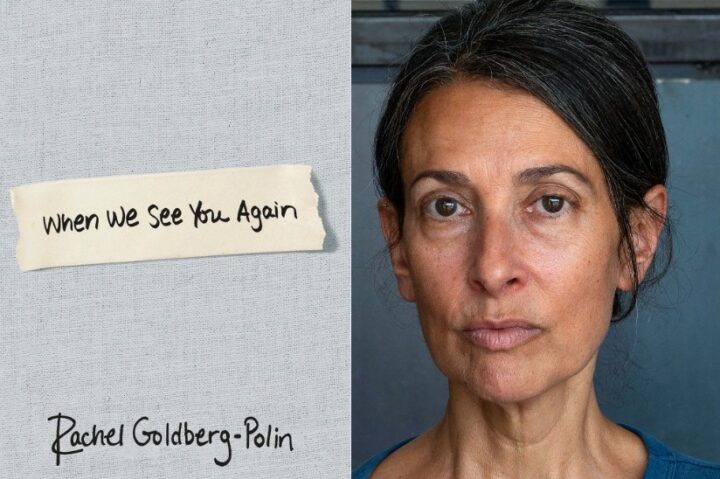
Book cover/Rachel Goldberg-Polin
On Oct. 10, 2023, Rachel Goldberg, an American Israeli woman from Chicago, told a roomful of reporters in Tel Aviv about her last communications — two text messages — from her son, Hersh Goldberg-Polin, that she had received three days prior.
“The first one said, ‘I love you’ and immediately at 8:11 also it said, ‘I’m sorry,’” Goldberg said. “And so I knew immediately wherever he was, it was a terrible situation.” Hersh, she would soon learn, had been kidnapped by Hamas terrorists near the Nova Music Festival and taken into Gaza.
As Goldberg spoke about the text messages, a man speaking loudly at the back of the room was shushed by someone near him. It would be among the last times anyone would try to speak over Rachel Goldberg.
She would soon become known as Rachel Goldberg-Polin, or, almost as often: Hersh’s mom. And for more than 300 days, she and her husband, Jon, traversed the globe as they worked to secure their son’s freedom from captivity in Gaza before he was killed in August 2024 by his Hamas captors.
In the months after their son’s death, the Goldberg-Polins, who had for nearly a year been the faces of hope and persistence, became the faces of a unique kind of grief — one that they experienced in the public eye.
Goldberg-Polin recounts some of those moments in her new book, When We See You Again, a chronicle of her life before, during and after her son’s captivity and murder.
“I think people don’t know what to expect,” she told Jewish Insider days before the release of When We See You Again, which comes out on Tuesday. “I know that, because people are writing, ‘Oh my gosh, I’m so excited,’ and I’m thinking, ‘Oh gosh, you are not excited. This is, like, not a fun read.’”
When We See You Again is separated into five parts, beginning with “The Before” and “The After,” which follow the Goldberg-Polin family’s life in the U.S. and then in Israel, where they moved in 2008, through Hersh’s murder, until the final day of the shiva.
The later parts — “Lost in The After,” “Still in The After” and “Ever After,” which comprise the majority of the book — detail Goldberg-Polin’s life as a bereaved mother navigating the world as one of what she calls “The Broken.”
“I don’t think of this book at all as a memoir or a tell-all,” she told JI. “It’s like little Tupperware of pieces of a life that was, and then figuring out a life that is, and how do you do this? How do we do this, breathing in a world where we no longer have air?”
She had started writing because she found it therapeutic. “I couldn’t bear the intensity of the suffering that I was carrying; [it] was making my knees buckle and my soul buckle,” Goldberg-Polin explained. “And I just really couldn’t shoulder it on my own, and so I was just writing.” It felt, she said, like “when you’re just drowning because there’s too much [and you have] to just get it out, to spill it out.”
Between the stories and anecdotes from the nearly 11 months she and her husband spent advocating for the release of the hostages, followed by the year of mourning after Hersh’s death, Goldberg-Polin intersperses vignettes from her childhood in Chicago, details about the family’s life as they adjusted to life in Israel and the Jewish teachings that have guided her.
She even reflects on the decision to change her last name to match her son’s, comparing it to the moment the biblical Jacob’s name was changed to Israel, after a tussle with a mysterious figure that causes him to walk with a limp for the rest of his life.
“I think of Jacob becoming Israel as I limp forward,” Goldberg-Polin writes, “noting all of the ways I, too, have been transformed, but also searching for the blessing this crisis must give me, looking for opportunities for birth and light.”
Something that has touched her in the 20 months since Hersh’s death is the vast number of people who have experienced loss who have made contact with her.
“Since Hersh was killed, we’ve had thousands and thousands and thousands of people from all different backgrounds and all different faiths and all different brands and all different spectrums who have reached out to share their pain and not commiserate, but sort of to come together in this enterprise of the human condition of loss.”
She feels especially close to the families of the five others who were killed alongside Hersh in that tunnel in Gaza — a group of young people now referred to as the “Beautiful Six”: Eden Yerushalmi, Carmel Gat, Almog Sarusi, Alexander Lobanov and Ori Danino. When they were found after their executions, Yerushalmi’s body was leaning on Hersh’s lap.
“There are literally five families on earth who’ve walked the path we’ve walked, and I’m grateful that I know they just breathe the way I breathe, so I don’t even have to talk to them every day in order to know that they get it,” she said. “They they know my torture, they know my torment, they know my pain. They know my misery.”
As someone who spent the majority of her life as a private person, she has struggled with the fame that has come with her public fight, which often includes being recognized while out and about with her family. Sometimes it’s a wave from a stranger. Other times it’s a conversation.
“When people do approach us and say these heartfelt, gorgeous words of comfort and connection, I am truly thankful for the benevolence,” she said. “It’s me that’s broken. It’s not them. They’re being human. I am trying to figure out how to behave in a normal way.”
“When people say, like, ‘We’re with you,’ I literally act like a crazy person. Because I am a crazy person. I’m a crazy person. I actually thought, well, I have a disorder, and what is the etymology, the root of ‘disorder’? It is ‘not in order.’ I’m not in order. You know what? Burying Hersh was out of order for me. I didn’t want that order.”
Those who know Goldberg-Polin have known since Oct. 7, 2023, not to ask her, “How are you?” (In the book, she shares that she and her father will jokingly ask the other the question and prompt them, “Lie to me,” garnering the response, “Dandy!”)
For her, the book is the answer to that question. “This book is saying, ‘I know you don’t see it, and I really don’t blame you for not seeing it, and I didn’t see it.’ I haven’t seen it before. I’ve met people who are bereaved, who are grieving, who are suffering, who are mourning, and I didn’t say the right thing because I didn’t get it either.”
“If someone was born blind,” she continued, “they don’t know what the color blue is, and it’s very difficult for someone who knows what the color blue is to describe it to someone who has never seen it. And the book is my attempt to describe blue. It’s my attempt to describe pain.”
“This is simply me giving over my love and my pain, and I hope that maybe people just understand me a little bit more, maybe understand people who are suffering and really in grief and mourning more, and I don’t know that it has to do anything beyond that.”
Ultimately, Goldberg-Polin said, “I think that it’s a book about two things. I think it’s about love and pain. It’s a pain-filled love story, or it’s a love-filled pain story, and that’s what the book is.”
Please log in if you already have a subscription, or subscribe to access the latest updates.
 Continue with Google

 Continue with Apple