














































































Pro-Israel candidates who received backing from AIPAC or AIPAC-aligned groups won two of the four targeted Democratic primaries in Illinois
Melissa Bean campaign page
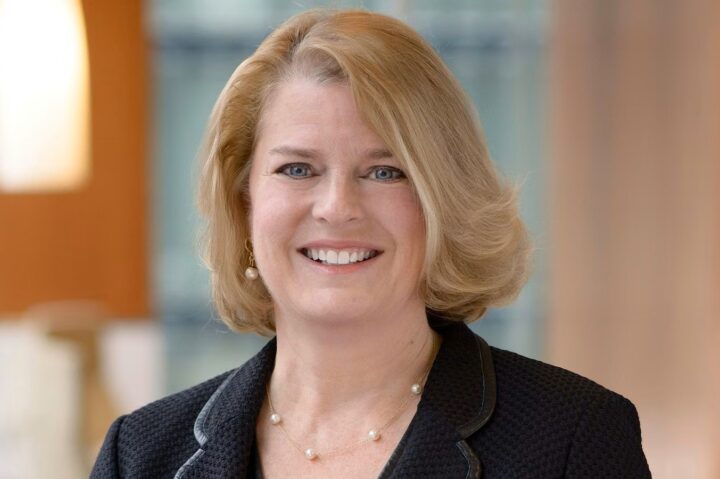
Former Rep. Melissa Bean (D-IL)


 Add JewishInsider on Google
Reports of the demise of AIPAC’s political clout in Democratic primaries, it turned out, were greatly exaggerated.
Pro-Israel candidates who received backing from AIPAC or AIPAC-aligned groups won two of the four targeted Democratic primaries in Illinois — and helped block all the Squad-aligned far-left candidates from winning nominations in all of the races.
It was a respectable, if not dominant showing, but one consistent with making an impact with the $22 million pro-Israel groups spent in the four open congressional races.
Former Rep. Melissa Bean (D-IL) held off a credible challenge from anti-Israel activist and businessman Junaid Ahmed, and looks like a lock to hold onto the suburban district as long as she wants.
Cook County Commissioner Donna Miller, who benefited from about $4.5 million in outside spending from a pro-Israel group, comfortably outdistanced former Rep. Jesse Jackson Jr. (D-IL) by a double-digit margin (41-29%) — even though Jackson entered the race as the favorite. The anti-Israel candidate in the field, state Sen. Robert Peters, finished in a distant third place, with only 12% of the vote.
AIPAC’s biggest setback came in the affluent Chicago lakefront seat of retiring Rep. Jan Schakowsky (D-IL), where Evanston Mayor Daniel Biss prevailed over pro-Israel state Sen. Laura Fine despite facing a barrage of attacks from an AIPAC-aligned group. But pro-Israel voters also dodged the worst-case outcome, with anti-Israel social media influencer Kat Abughazaleh finishing in second, and trailing badly in the district’s suburban precincts.
All told, Biss won with 30% of the vote, Abughazaleh finished with 26%, and Fine tallied 20%.
And despite AIPAC’s super PAC spending nearly $5 million in positive ads to boost Chicago city Treasurer Melissa Conyears-Ervin, state Rep. La Shawn Ford narrowly prevailed in the crowded primary, 24-20%. Ford was backed by retiring Rep. Danny Davis (D-IL), with the congressman’s political machine ultimately making a bigger difference than the money spent on behalf of Conyears-Ervin.
Anthony Driver, Jr. and Kina Collins, the two candidates running on anti-Israel platforms, lagged well behind in third and fourth place, tallying a combined 20% of the vote.
AIPAC managed to block all six of the far-left candidates it viewed as potential Squad-aligned lawmakers, which a source close to AIPAC told JI was the group’s top goal in the home stretch of the campaign — once it backed off of anti-Biss attacks that failed to dislodge him as the front-runner and Abughazaleh closed in in second place. AIPAC is treating that as a win as well.
One way of looking at the Illinois results from a pro-Israel perspective is to consider whether the representation of any of the seats will be more or less favorable as a result of Tuesday’s results.
Biss is a self-described “progressive Zionist” in the mold of Schakowsky, another Jewish left-winger who gradually evolved into a reliable critic of Israel as progressive politics surrounding the Middle East shifted. Both Schakowsky and Biss have been embraced by J Street. Call it a wash.
The retiring Danny Davis had a fairly rocky relationship with Chicago’s Jewish community, and supported placing restrictions on aid to Israel. If his handpicked successor Ford follows in his footsteps (and he said he wouldn’t commit to unconditional Israel aid), there won’t be any change in representation — for better or worse. (J Street also endorsed Ford’s candidacy.)
But in Illinois’ 2nd District, Miller will likely be a decidedly more favorable vote than Rep. Robin Kelly (D-IL), who campaigned as the candidate in the state’s Democratic primary most critical of Israel. That counts as a likely upgrade for pro-Israel forces in Chicago.
And Bean was one of the most moderate Democrats during her first stint in Congress, compiling a reliably pro-Israel record. She’s likely to maintain the same mainstream voting record that Rep. Raja Krishnamoorthi (D-IL) held during his House tenure.
So all told, the Illinois delegation is likely to be slightly more pro-Israel next year as a result of this year’s primaries. Given the tough headwinds AIPAC is facing, that’s not a small accomplishment — aided by the successful fundraising of its super PAC.
And even though pro-Israel groups didn’t weigh in on the Illinois Senate race, AIPAC sounded a positive note on Illinois Lt. Gov. Juliana Stratton’s victory over Kelly, whose recent actions, it said, “undermined the U.S.-Israel alliance.” Stratton’s leading opponent was Krishnamoorthi, whose record was viewed as the most pro-Israel of the three leading candidates.
Given that outgoing Sen. Dick Durbin (D-IL) has become a vocal critic of Israel, if Stratton is more aligned with AIPAC, that would also be an improvement for pro-Israel advocates in the state, or at minimum a wash.
Stratton’s win was also a big victory for Gov. JB Pritzker, who spent significant political and financial capital on behalf of his running mate in preparation for a potential presidential campaign — and came out a winner.
In the end, pro-Israel forces can be reassured that they held their own despite the rough political environment, defeated all of the most virulently anti-Israel candidates, and began to repair their image from the New Jersey blunder that set the cycle on a down note. Five states down, 45 to go.
The pro-Israel group’s super PAC has spent over $2 million in ads attacking Tom Malinowski, who has come out in favor of conditioning some aid to Israel, in hopes of electing a more reliable ally in Tahesha Way
Michael M. Santiago/Getty Images
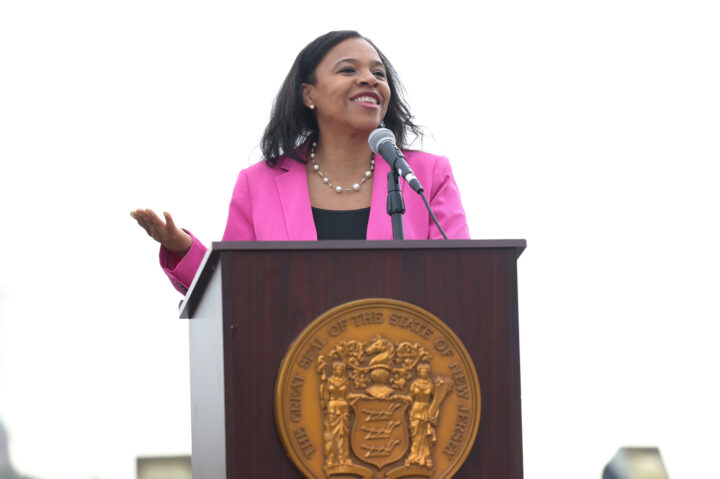
New Jersey Lt. Gov. Tahesha L. Way, speaks during a Naturalization Ceremony at Liberty State Park on September 17, 2024 in Jersey City, New Jersey.
Tomorrow’s New Jersey special Democratic primary election to fill Gov. Mikie Sherrill’s vacant House seat will offer an early test of AIPAC’s ability to continue showcasing its political clout. The pro-Israel group’s super PAC, in a potentially risky move, has spent over $2 million in ads attacking former Rep. Tom Malinowski (D-NJ), who has come out in favor of conditioning some aid to Israel, in hopes of electing a more reliable ally in former Lt. Gov. Tahesha Way.
The group’s ad hits Malinowski not for his views on Israel, but for a bipartisan vote in 2019 funding the Immigration and Customs Enforcement (ICE) and over stock trades he made as a congressman. The ICE attacks, in particular, are expected to resonate in the affluent, center-left district. Because of his name recognition representing a neighboring district before losing reelection in 2022, Malinowski started out as the early front-runner but is taking a serious hit on the airwaves.
But complicating that strategy is the presence of a far-left, anti-Israel candidate in Analilia Mejia, who leads a progressive advocacy group and has been endorsed by Sen. Bernie Sanders (I-VT) and Rep. Alexandria Ocasio-Cortez (D-NY). Mejia has been polling in second place, according to some reports, and has a path to winning the nomination — and the seat, given the 11th Congressional District’s Democratic lean.
The race also features Essex County Commissioner Brendan Gill, an establishment-oriented politician — endorsed by former Gov. Phil Murphy — who has expressed consistently pro-Israel views on the campaign trail and in an interview with Jewish Insider.
Even as the political environment within the Democratic Party has shifted to the left, AIPAC isn’t backing down from its aggressive, on-offense playbook from 2024, when a number of mainstream pro-Israel Democrats backed by the group won their elections to Congress — while two of AIPAC’s most extreme opponents, former Reps. Cori Bush (D-MO) and Jamaal Bowman (D-NY), fell short in their reelection bids.
Given the changed intraparty mood, there was a question about whether pro-Israel groups would need to play a little more defense this election cycle, or at least refocus attention on stopping the most radical candidates with a chance of winning instead of going all-out for the most principled allies.
That’s looking — at least for now — not to be the case.
In Illinois’ upcoming primaries, state Sen. Laura Fine has emerged as the pro-Israel favorite against one frequent critic of Israel (Evanston Mayor Daniel Biss) and one outspoken anti-Israel activist (social media influencer Kat Abughazaleh) in another affluent Democratic district just outside of Chicago. The pro-Israel community isn’t hedging its bets in a bid to prevent Abughazaleh from prevailing.
The confident pro-Israel playbook looks like it’s working. Fine just announced raising a whopping $1.2 million in the last three months of 2025, and a new internal poll for Fine’s campaign shows her tied with Biss in first place, holding the momentum in the crowded primary.
That same dynamic is playing out in Michigan’s three-way Senate primary, where Rep. Haley Stevens (D-MI) is being rewarded with political support and donations for her long record of pro-Israel allyship. Her opponents offer two different shades of opposition to Israel: state Sen. Mallory McMorrow, who tagged Israel’s war against Hamas as a genocide but has now been looking to pivot away from talking about the Middle East; and virulently anti-Israel physician Abdul El-Sayed, who has made hostility to Israel a central part of his campaign message. But McMorrow doesn’t appear to be winning — at least for now — much support from pro-Israel Democrats worried about stopping El-Sayed at all costs.
The New Jersey special election primary also features some quirks that incentivize AIPAC’s involvement. The district, in the northern part of the state, has a significant Jewish constituency, and is one of the most affluent districts in the country, making it uniquely well-suited for a mainstream pro-Israel centrist regardless of the national party trends. “This is a capitalist district,” one Democratic strategist who lives in the district told JI.
In addition, there will be another regularly scheduled primary in June for the full two-year term starting in 2027 — as opposed to the special election, which will only elect a lawmaker for the remainder of the year. If Malinowski gets elected, he’ll likely maintain a lock on the seat for as long as he wants it. As a former congressman, he’d reenter Congress as a more-influential, longer-tenured member of the House Foreign Affairs Committee. But if a left-wing candidate like Mejia surprisingly squeaks through, she’d likely face difficulty winning the primary for a full term.
AIPAC’s super PAC — the United Democracy Project — also has another good reason to play an active role in this year’s primaries. It reported $96 million cash on hand at the end of 2025, more than twice as much financial firepower as it had last cycle at this time.
Please log in if you already have a subscription, or subscribe to access the latest updates.
 Continue with Google

 Continue with Apple