

























































Rabbi Noah Farkas, CEO of Jewish Federation Los Angeles: ‘California has a special obligation to … protect the people who power this industry from antisemitism’
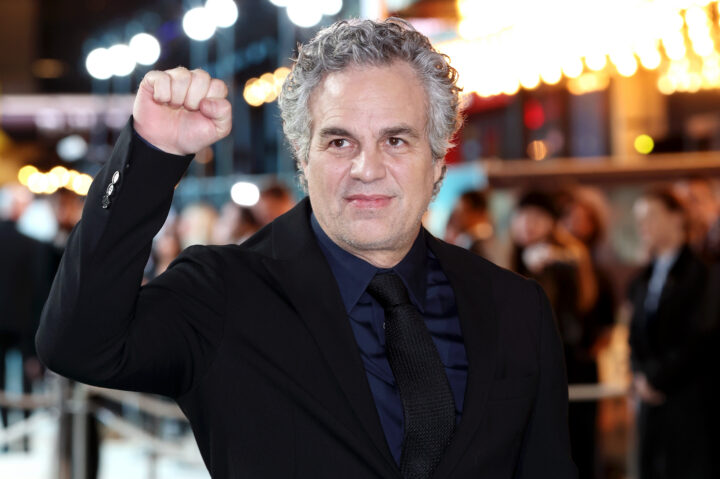
Hoda Davaine/Getty Images
Mark Ruffalo attends a screening at Odeon Luxe Leicester Square on Jan. 28, 2026 in London, England.


 Add JewishInsider on Google
Several leading Jewish and pro-Israel organizations condemned actor Mark Ruffalo for using what they deemed antisemitic rhetoric in his social media commentary targeting the Ellison family amid the pending merger of Paramount with Warner Bros. Discovery.
Ruffalo posted an Instagram story last week featuring footage of Safra Catz, the executive vice chair of Oracle and a Paramount board member, discussing the company’s engagement in Israel following the Oct. 7, 2023, Hamas terrorist attacks. In the post, Ruffalo called Larry Ellison, Oracle’s co-founder and executive chairman, a “classic oligarch,” accusing him and his son, Paramount Skydance chairman and CEO David Ellison, of “powering some of the most destructive and inhuman forces in the world.”
Pointing to Catz, who is Israeli American, Ruffalo wrote that she “revels in what we now have come to see as a genocide, which was built on an apartheid system of oppression powered by Oracle.”
Paramount condemned Ruffalo on Friday, saying it was “troubled when antisemitic tropes are invoked in purported service of a business dispute. Words like ‘genocide’ and ‘apartheid,’ applied to a corporate transaction, aren’t just wrong — they’re a bridge too far, and they cheapen the very real suffering those words are meant to describe. This doesn’t deserve a response in kind — and to be clear, we don’t tolerate prejudice of any kind, against anyone.”
The studio said Ruffalo’s remarks “expose the true motive of some of those who have acted against the deal” and urged those involved to “lower the temperature, not raise it.”
The “Avengers” star fired back on Paramount’s accusations of antisemitism, calling it “appalling and fundamentally dishonest,” and stating that “everything I know about acting, activism, and humanism has been profoundly shaped by the Jewish friends, colleagues, and loved ones.”
On Monday, Rabbi Noah Farkas, president and CEO of Jewish Federation Los Angeles — which serves the epicenter of the entertainment industry — said Ruffalo’s “unhinged rant, which combined Jewish wealth, media control, secret technology and sinister global power, is not legitimate criticism. It draws on recognizable antisemitic tropes with a long and dangerous history.”
Farkas called on California Attorney General Rob Bonta — who told Ruffalo in February “Mark, I hear you,” regarding earlier criticism of the deal and said the state has a “special interest in protecting competition” — to clarify his comments. On Sunday night, Bonta canceled planned settlement talks with Paramount after accusing the company of acting in bad faith by misrepresenting details from an earlier meeting.
“We agree that California has a special obligation to protect Hollywood, but not only from anticompetitive conduct. It must also protect the people who power this industry from antisemitism and every form of hate,” Farkas said.
“Bonta has done the right thing on some issues, but his record with Jewish Californians remains mixed. In some important moments, he has failed to stand up with the clarity and urgency our community deserved. This is why it is so important that Bonta clarify what ‘Mark, I hear you’ means. Hearing legitimate antitrust concerns cannot mean excusing rhetoric that invokes age-old tropes about Jewish wealth, media control and sinister power.”
Several other Jewish leaders condemned Ruffalo over the weekend, stating that his comments repeat old antisemitic tropes and could put Jewish people in danger. Since the Oct. 7 attacks and ensuing war in Gaza, Ruffalo, a four-time Oscar nominated actor, has frequently pushed accusations of Israeli-led “genocide,” “apartheid” and “famine” to his millions of followers.
“Oppose the Paramount merger on the merits, find arguments grounded in facts, and draw on what you know about the industry without engaging in antisemitic rhetoric,” Jonathan Greenblatt, CEO of the Anti-Defamation League, wrote on X.
“Introducing the Jewish state out of the blue when it’s entirely unrelated, making baseless claims about Israel, and then trying to avoid accountability by essentially claiming that ‘some of my best friends are Jewish’ is gaslighting 101,” Greenblatt wrote, asserting that Ruffalo’s words “continue to put Jewish communities around the world at risk while antisemitic incidents are far too common.”
Simon Wiesenthal Center CEO Jim Berk said, “Invoking Israel in an issue where it is completely irrelevant is a textbook case of obsession and demonization.”
Ari Ingel, executive director of Creative Community for Peace, said Ruffalo’s statements “echo some of the oldest antisemitic conspiracy theories in history, depicting Jews as a wealthy and sinister elite who accumulate control over media, money and power, then use that control against society.”
CCFP, an organization that works to counter anti-Israel sentiment in the entertainment industry, called for Hollywood to boycott Ruffalo until he retracts the remarks and apologizes.
Two progressive groups took a different approach, defending Ruffalo by stating that his criticism of a corporation and the Israeli government is not antisemitic.
“What is antisemitism? Blaming Jewish people for the actions of the Israeli government. Hatred or discrimination directed at people because they are Jewish,” the Israel advocacy group J Street wrote Monday on X. “What isn’t? Criticism of a corporation’s monopolistic actions and investments. Criticism of Israel’s government. We cheapen the fight against antisemitism when we blur that distinction.”
The Nexus Project wrote Sunday on X that claiming Ruffalo is antisemitic is “misguided.”
“He expressed his opinion about a corporation’s actions and investments, not an executive’s religion,” the group said. “Whether you agree with him or not, he did not cross the line into antisemitic speech. The same is true of his longstanding opposition to Israel’s actions in Gaza.”
Ruffalo was among more than 20 Hollywood actors known for their roles in Marvel films who on Friday reportedly signed a petition calling for the release of Marwan Barghouti, an imprisoned Palestinian terrorist serving five life sentences in Israel, according to an Instagram post published by the group.
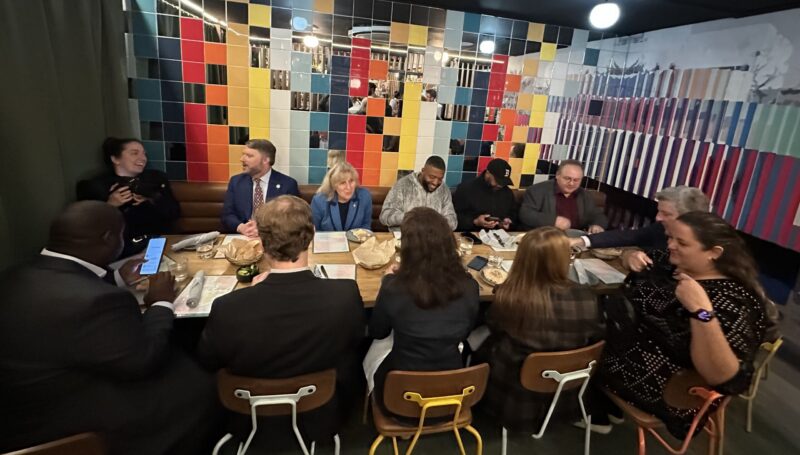
Paramount Skydance CEO David Ellison hosted the gathering, as protesters outside denounced the company's lobbying for its proposed merger with Warner Bros. Discovery

Gilbert Flores/Variety via Getty Images
David Ellison at the Paramount Pictures Presentation during CinemaCon 2026, the official convention of Cinema United held at The Dolby Colosseum at Caesars Palace on April 16, 2026 in Las Vegas, Nevada.
President Donald Trump was honored alongside CBS News’ White House correspondents at a private event at the U.S. Institute of Peace on Thursday night hosted by Paramount Skydance CEO David Ellison ahead of the White House Correspondents Dinner on Saturday.
The gathering, which was not open to the press, marked what is expected to be Trump’s sole appearance at a WHCD event outside of the dinner itself, which he is set to attend for the first time as president on Saturday. CBS News Editor-in-Chief Bari Weiss was among those in attendance, though Deadline reported on Thursday that most of those invited were “from Paramount corporate, rather than the news division.”
An invitation to the dinner described the event as an “intimate gathering in celebration of the First Amendment honoring the Trump White House and CBS White House correspondents.”
Dozens of protesters gathered across the street from the Institute of Peace to protest the dinner and Paramount’s proposed $110 billion acquisition of Warner Bros. Discovery, which Ellison has been lobbying the Trump administration, the Department of Justice and Congress to approve.
Opponents of the merger — including thousands who signed onto a letter earlier this month raising concerns about the potential deal — have said it will result in higher costs and fewer opportunities and jobs for those in the industry.
Attorney Norm Eisen, a co-founder of Democracy Defenders Action; Alvaro Bedoya, who served as FTC commissioner under President Joe Biden; Reps. Jamie Raskin (D-MD) and Becca Balint (D-VT); and Robert Weissman, the president of Public Citizen, a left-wing consumer advocacy group that organized the protest, were among those who spoke at the demonstration.
The White House did not respond to Jewish Insider’s requests for comment on the dinner.
What Trump said on and off the UNGA stage
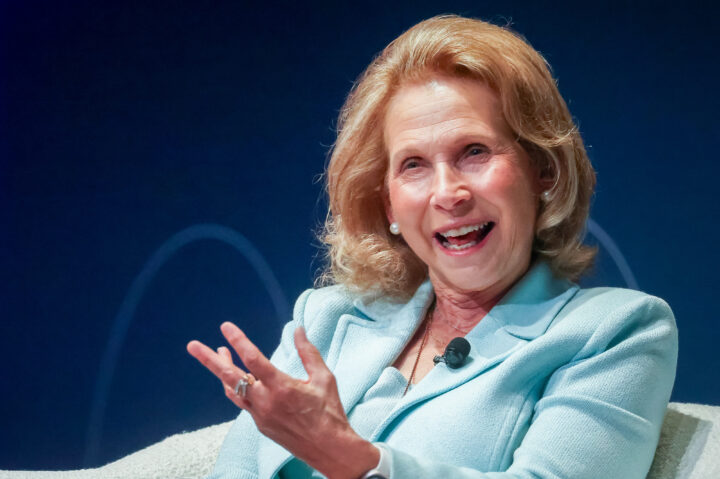
Michael Nagle/Bloomberg via Getty Images
Shari Redstone, chief executive officer of the Redstone Family Foundation, during the Axios Media Trends Live event in New York, US, on Thursday, Sept. 18, 2025.
Good Thursday morning.
In today’s Daily Kickoff, we interview Shari Redstone about her mission to fight antisemitism after selling Paramount, and talk to diplomatic sources in Jerusalem about the Qatari and Egyptian officials poised to take over key roles at UNESCO. We highlight a letter by House Democrats warning Israel against unilaterally annexing territory in the West Bank or Gaza, and talk to a Syrian Jewish community leader about his opposition to leaving sanctions against Damascus on the table. We also report on a call by a bipartisan group of House lawmakers for President Donald Trump to “be very careful” in negotiations with Turkey today. Also in today’s Daily Kickoff: Reps. Jared Moskowitz, Maria Elvira Salazar and former Secretary of State Mike Pompeo.
Today’s Daily Kickoff was curated by Jewish Insider Executive Editor Melissa Weiss, Israel Editor Tamara Zieve and U.S. Editor Danielle Cohen-Kanik, with an assist from Marc Rod. Have a tip? Email us here.
What We’re Watching
- President Donald Trump is hosting Turkish President Recep Tayyip Erdoğan today at the White House. More below.
- On the sidelines of the U.N. General Assembly in New York, MILE and Pillsbury’s Climate Week is holding a daylong event focused on energy tech and development in the Middle East. Speakers include Rich Goldberg, Mark Donig and former Israeli chief scientist Dr. Gideon Friedmann.
- The American Jewish Committee is holding its annual Global Jewish Diplomacy Reception this evening on the sidelines of the U.N. General Assembly. Attendees include: former Ambassador Daniel Shapiro, former White House Middle East envoy Jason Greenblatt, and Ambassador Serge Berdugo, president of the Council of Jewish Communities of Morocco.
- Elsewhere in New York, the Marlene Meyerson JCC Manhattan is holding a screening tonight of the first episode of the second season of “House of David.”
What You Should Know
A QUICK WORD WITH JI’s gabby deutch
By calling the United Nations “useless” and saying many countries were “going to hell” by pursuing liberal governance, President Donald Trump was his usual provocative, impolitic self in his Tuesday speech at the United Nations General Assembly. Where other nations and the U.N. itself have promoted a vision of greater global cooperation in an interconnected world, Trump doubled down on a call for national sovereignty and closed borders. Where nearly all U.N. member states have pledged to make tackling climate change a priority, Trump took issue with the very concept of sustainable energy.
“Immigration and the high cost of so-called green renewable energy is destroying a large part of the free world and a large part of our planet,” Trump said at the close of his address. “Countries that cherish freedom are fading fast because of their policies on these two subjects.”
But it was Trump’s continued support of Israel, even in the face of growing hostility from European countries and other Western allies to the Jewish state, that stood out the most. Trump, in his General Assembly speech, blasted the European nations that this week formally recognized a Palestinian state.
“Now, as if to encourage continued conflict, some of this body is seeking to unilaterally recognize a Palestinian state,” he said. “This would be a reward for these horrible atrocities, including October 7th, even while they [Hamas] refuse to release the hostages or accept a ceasefire.”
The U.S. also joined Israel in boycotting the two-state solution conference on Monday, which was hosted by France and Saudi Arabia, and was joined by several major nations, including the United Kingdom, Australia and Canada.
But even while Trump used his nearly hourlong address to place himself firmly on Israel’s side in its nearly two-year-long war with Hamas, reports indicate that he is privately advocating for restraint. During a meeting Tuesday with Arab and Muslim leaders where U.S. special envoy Steve Witkoff proposed a 21-point plan to end the war in Gaza, Trump promised the world leaders in attendance that he would not allow Israeli Prime Minister Benjamin Netanyahu to annex the West Bank, Politico and The Times of Israel reported.
Q&A
Shari Redstone, 71, has been busier than she had expected after selling Paramount, where she served as chair, to Skydance Media in a widely scrutinized merger this summer. The Jewish media mogul recently joined the Israeli entertainment studio Sipur as chair, and in leading the Redstone Family Foundation, she is involved in a range of projects fostering cultural ties between the Black and Jewish communities and combating the rise in antisemitism, among other initiatives. In an interview with Jewish Insider’s Matthew Kassel on Friday, Redstone explained how her current efforts underscore a renewed commitment to fighting antisemitism and supporting Israel in the wake of Hamas’ Oct. 7, 2023, attacks, an event she cites as accelerating her decision to finally agree to offload Paramount in an $8 billion deal with Skydance, the Hollywood studio led by David Ellison.
Oct. 7 impact: “I was in Israel years and years ago. My kids studied there, and Israel was always important. But after Oct. 7, it was the first time I thought about what my life would be without Israel, and how in so many ways, we’ve taken for granted the existence of Israel and everything that they do, frankly, for peace in the Middle East. You know, to give Jews a place that they know they will always have a home, which has become even more important in the past several months. It took on a new energy for me, and a new desire to really be supportive of Israel in every way I can,” Redstone told JI.
EYE ON UNESCO
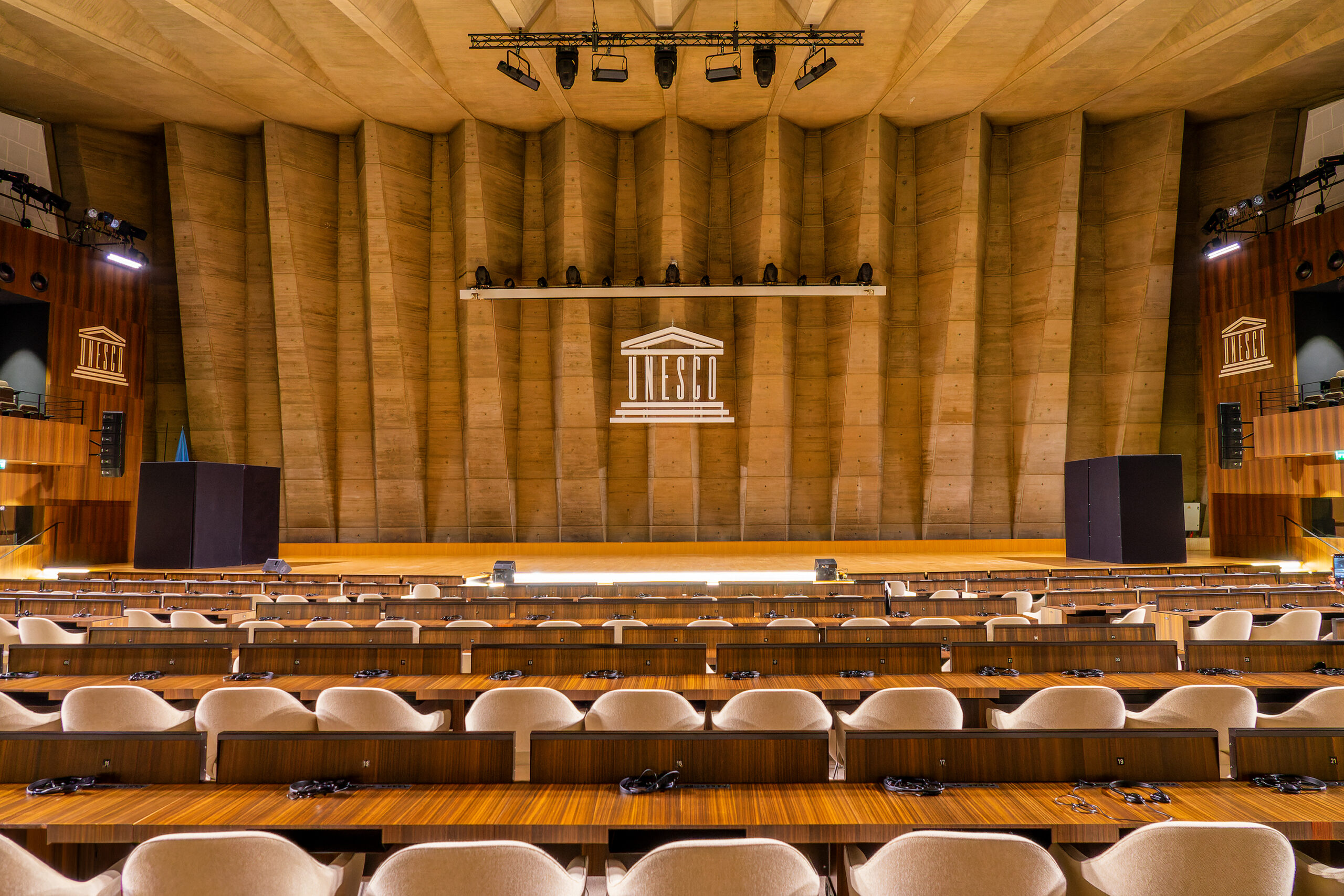
Israel is eyeing the upcoming United Nations Educational, Scientific and Cultural Organization executive board meeting with concern, with Egypt and Qatar poised to take influential roles in the body. Qatar is set to take the body’s chairmanship, and former Egyptian Tourism and Antiquities Minister Khaled el-Enani is considered a leading candidate for the organization’s director general. The UNESCO Executive Board Meeting will begin on Wednesday in Paris and continue for two weeks, during which the new board chairperson and director general will be selected. The director general must receive a majority vote on Oct. 6, while the executive board chairmanship rotates between geographic blocs and the Middle East bloc agreed to put Qatar in the role, Jewish Insider’s Lahav Harkov reports.
Israel angle: With two Arab countries expected to assume UNESCO’s leading positions, some observers have expressed concern that Israel may again face disproportionate scrutiny and criticism — a pattern seen in other U.N. bodies where geopolitical tensions often surface. The potential new leadership of UNESCO is “bad for Israel and bad for America,” an Israeli diplomat told JI this week. Another Israeli diplomatic source said that it is an “unusual combination to have a director general and chairman of the executive board from Arab countries. It puts Israel at a disadvantage. … Israel is not a member of the executive board and has no influence on who will be chairman.”
WORDS OF WARNING
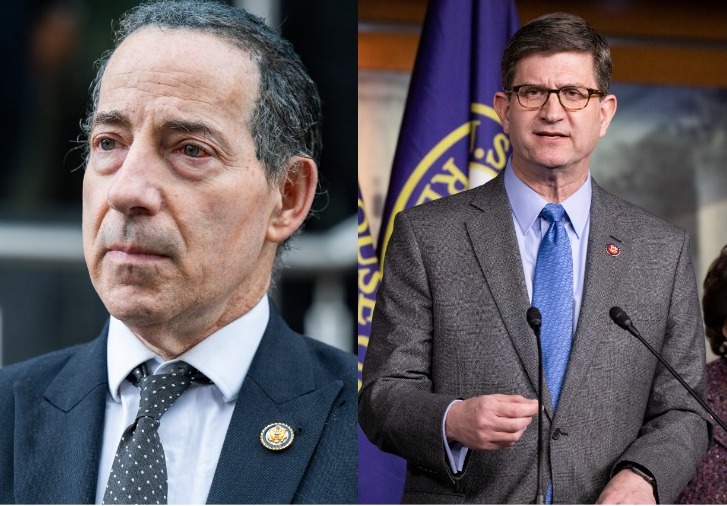
Most House Democrats, including all of the current and former top Democratic leaders, signed onto a letter on Thursday to Israeli leaders warning them against unilaterally annexing territory in the West Bank or Gaza, Jewish Insider’s Marc Rod reports. At a time when Democrats are increasingly divided over the U.S.-Israel relationship and its direction, the letter highlights a strong degree of unanimity within the party against annexation, among both Democrats who largely remain supportive of Israel and those who have become more critical over the war in Gaza.
What they said: “As long-standing supporters of the U.S.-Israel relationship, Israel’s security, and Israel’s future, we are deeply opposed to proposals for unilateral annexation of territory in the West Bank,” the 178 lawmakers, led by Reps. Brad Schneider (D-IL) and Jamie Raskin (D-MD), said. “Such a move would not only violate international law but undermine decades of bipartisan U.S. policy and threaten the progress of the Abraham Accords, which offer Israel and its neighbors the opportunity to build a more secure, cooperative, and prosperous regional future. Unilateral annexation of the West Bank would plunge the region, already reeling from tens of thousands of deaths in the horrific Gaza war, into further chaos and violence.”
DAMASCUS DEALINGS
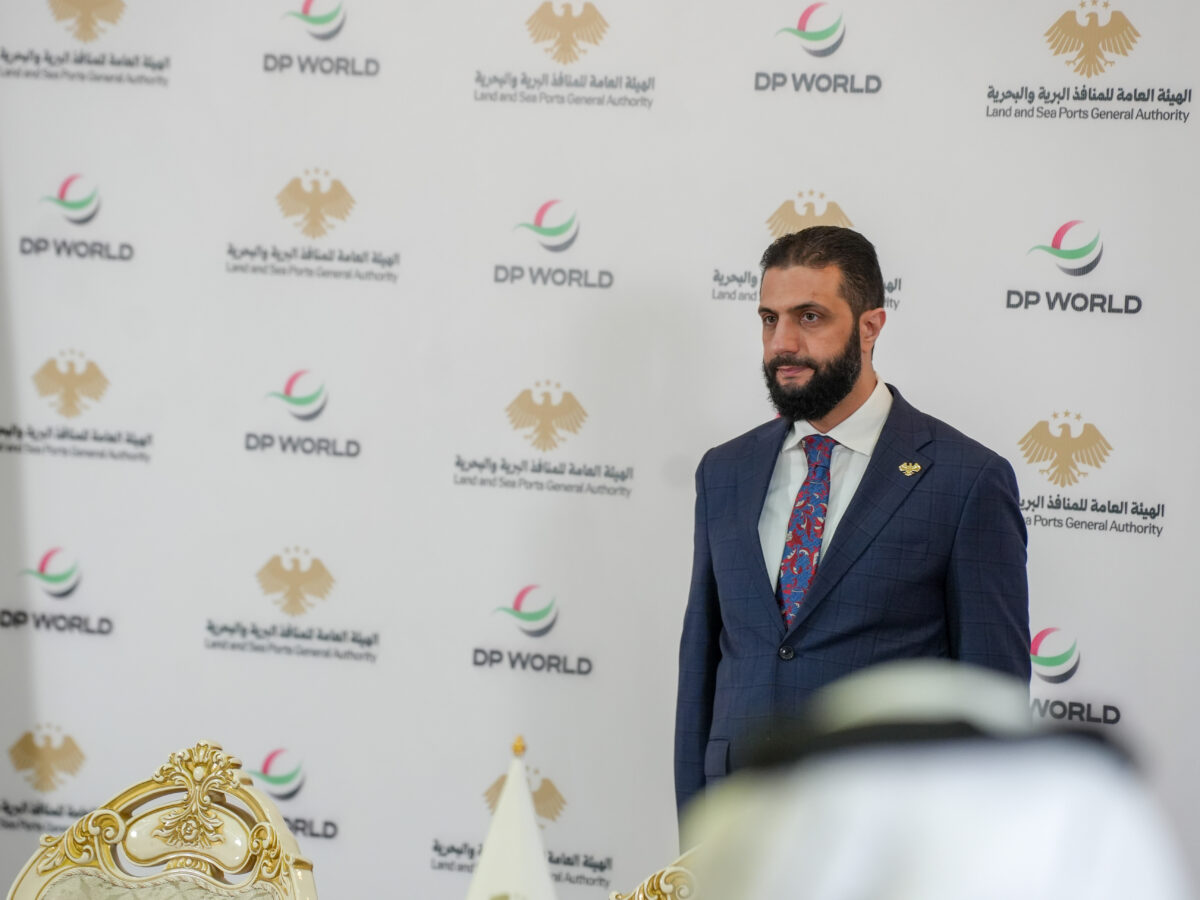
A debate is quietly simmering in Washington over the prospect of repealing congressionally mandated sanctions on Syria, an effort that has bipartisan support — but is not without its opponents, Jewish Insider’s Marc Rod reports. As part of the Senate’s consideration of the 2026 National Defense Authorization Act, a provision is moving forward to fully repeal the Caesar Act, which placed strong sanctions on the Assad government in response to human rights violations. But other lawmakers are attempting to place conditions on the repeal of those authorities.
Community concerns: Some, like Rabbi Yosef Hamra, the nephew of the last chief rabbi of Syria, have argued that leaving the sanctions on the books in any capacity would cripple rebuilding efforts. But others say that the U.S. must maintain that tool as leverage to prevent future sectarian and human rights issues. Hamra, in a letter to congressional offices on behalf of the Jewish Heritage in Syria Foundation that was shared with JI, said, “Lifting the Caesar sanctions is essential to restore synagogues and cemeteries, safeguard irreplaceable Jewish heritage and re-establish a mutli-faith community in Syria after more than 30 years in exile. Simply put, this amendment would be devastating to the Jewish community in Syria.”
TALKING TURKEY
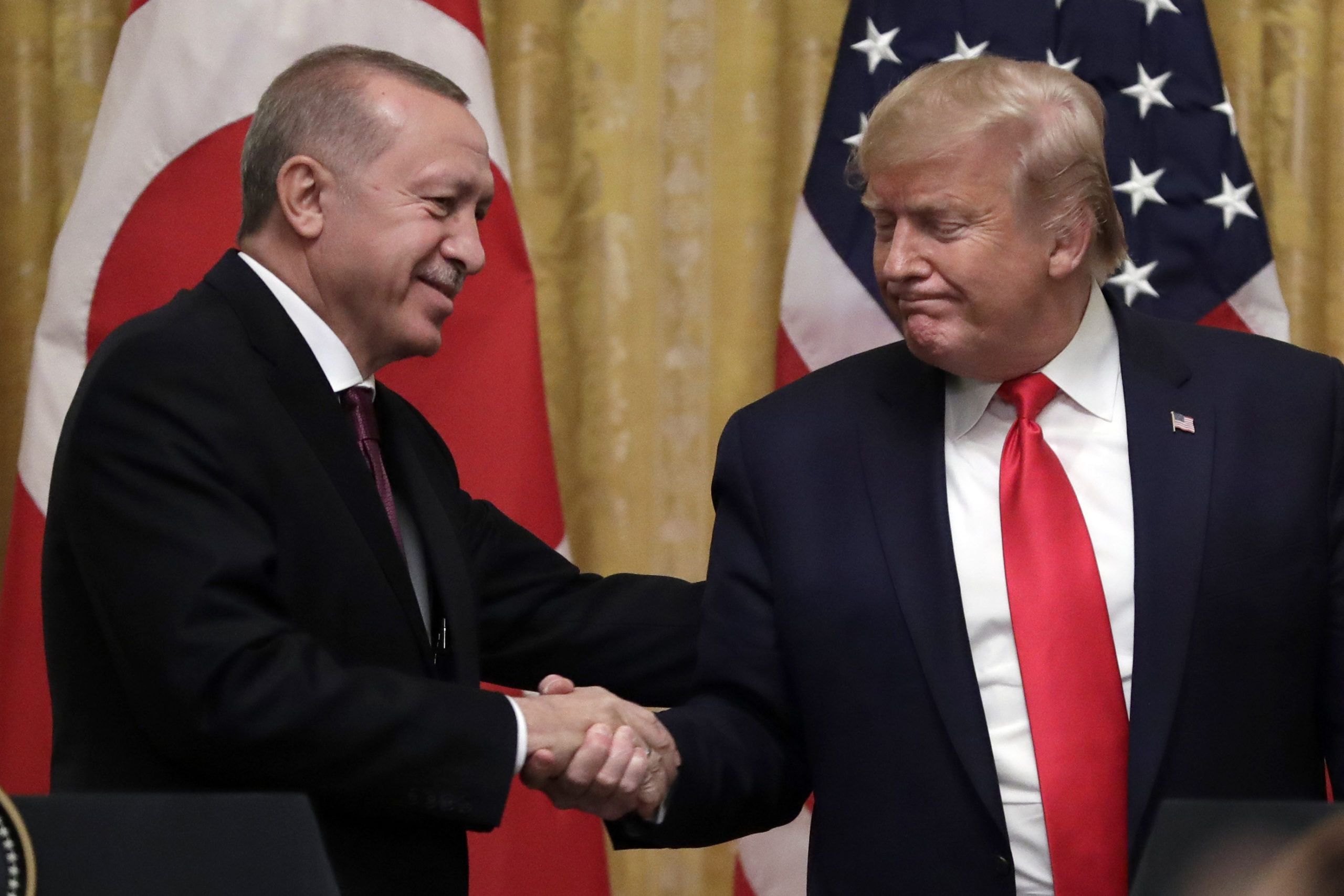
A bipartisan group of House members urged the administration to “be very careful” in negotiations with Turkey about its potential reentry into a program allowing it to acquire and potentially co-produce F-35 fighter jets, ahead of a White House meeting today between President Donald Trump and Turkish President Recep Tayyip Erdogan, Jewish Insider’s Marc Rod reports.
Background: Trump said Friday that he would host Erdogan at the White House for trade and military talks, “including the large-scale purchase of Boeing aircraft, a major F-16 Deal, and a continuation of the F-35 talks, which we expect to conclude positively.” Lawmakers have been pressing for months for the administration to be cautious in allowing Turkey to acquire the advanced fighter jets, something it has been banned by law from doing since it purchased a Russian S-400 missile defense system. By law, Turkey must dispense with that system before it can be readmitted into the F-35 program, but some lawmakers have pushed for additional conditions, given various conflicts with Turkey, including its hostile posture toward Israel.
COLOMBIA CONCERNS
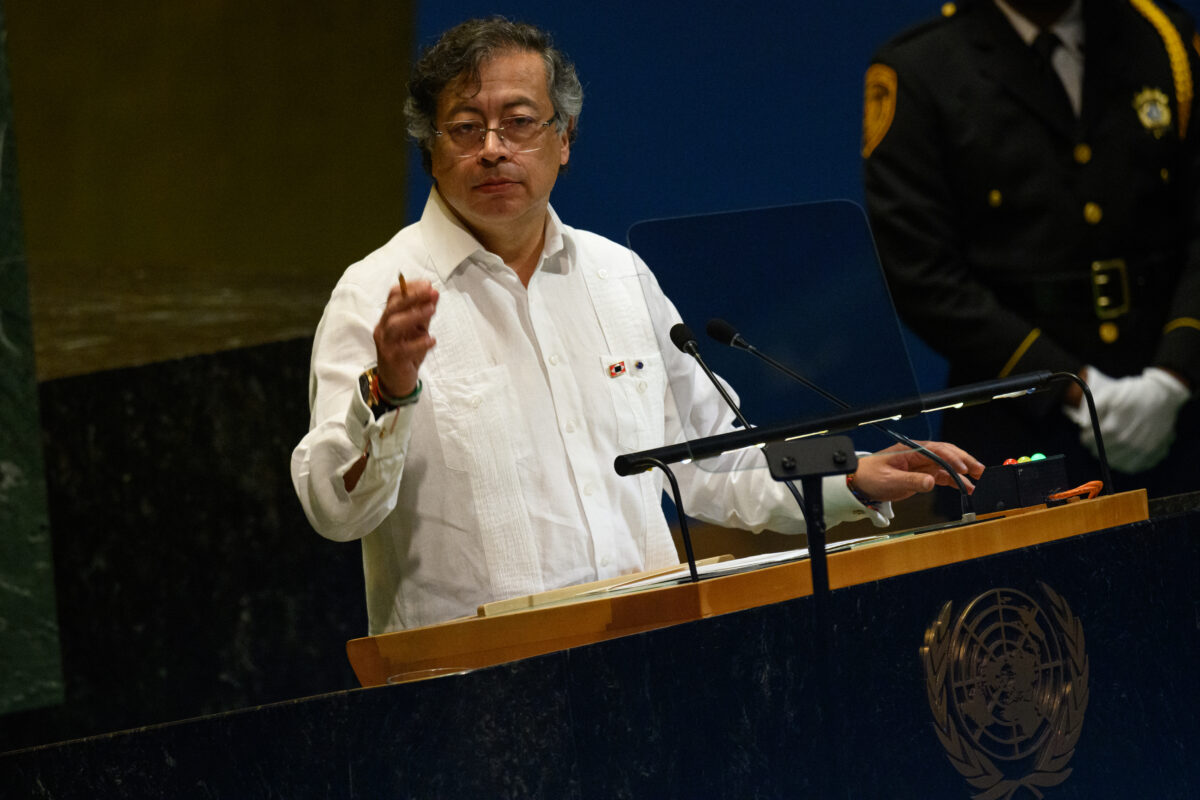
A bipartisan group of 18 House members is urging the State Department to pressure Colombia’s government to change course on what the lawmakers describe as a dangerous pattern of antisemitic rhetoric and policies by government officials, including the country’s president, Jewish Insider’s Marc Rod reports.
Call to action: “As U.S.-Colombia relations continue to be strained by numerous issues, including the increasingly troubling antisemitic rhetoric and discriminatory policies from Colombian President Gustavo Petro, which are directly threatening the safety and well-being of Colombia’s Jewish community, we write to urge the administration to consider even stronger actions, including leveraging U.S. assistance to push for meaningful change in President Petro and his government,” the lawmakers, led by Reps. Jared Moskowitz (D-FL) and Maria Elvira Salazar (R-FL), said in a letter sent on Monday to Secretary of State Marco Rubio.
Worthy Reads
Pompeo’s Point: In The Free Press, former Secretary of State Mike Pompeo criticizes recent moves by European nations, as well as the U.K., Australia and Canada, to unilaterally recognize a Palestinian state. “The move to recognize a Palestinian state where none exists did not just reward terror groups. It was also a boon to a faltering regime in Tehran desperate to repair its standing among Iranians after its decisive defeat in June’s 12-Day War. Any leader who genuinely desires peace should instead seize the historic opportunity to continue to diminish the Iranian regime and empower the forces across the region that seek a constructive relationship with Israel. History shows that peace has never been secured through appeasement—a lesson one would have thought our European and Anglosphere allies would keenly appreciate. Israel does not have the luxury of forgetting that lesson, and so they will continue to hold the line against barbarism, even if their supposed friends in the West will not.” [FreePress]
Awkward Alliance: The Atlantic’s Helen Lewis details how the rapid demise of the far-left Your Party — born from tensions between its “Gaza left” and “gender left” wings — illustrates the deeper challenges facing the left in Britain and beyond. “… the alliance of ‘rainbow and crescent’—as the historian James Orr, a friend of J. D. Vance, has described it—is extremely fragile. Gay marriage, abortion, and transgender rights are obvious flash points, but other issues can be equally divisive. For instance, many British Muslims support fee-paying schools, which can offer students a more religious curriculum than government-run institutions. The traditional left-wing position, however, is that private schools are engines of privilege and should be abolished. Can these groups happily coexist in a left-wing movement in the long term? The experience of Your Party suggests not.” [TheAtlantic]
Word on the Street
In her new book, former Vice President Kamala Harris writes that concerns about Gaza war protests factored into her decision not to select Pennsylvania Gov. Josh Shapiro as her running mate last year…
At her first book event in New York on Wednesday, Harris was interrupted by anti-Israel protesters, and said later, “I was the first person at the highest level of our United States government or administration to talk about the fact that the people in Gaza were starving. … I was not the president, I couldn’t make the decision, but I made my position clear”…
Rep. Seth Moulton (D-MA) is reportedly preparing to mount a primary bid against Sen. Ed Markey (D-MA), hiring campaign staff with a potential campaign kickoff slated for October…
Several countries including the U.S. are looking to develop copycats of Iran’s Shaheed drones, after seeing Russia’s success in using the low-cost, long-range model in its war in Ukraine…
Right-wing commentator Tucker Carlson is among the public figures set to tour U.S. college campuses with Turning Point USA, following the assassination of TPUSA founder Charlie Kirk earlier this month during the first stop of his campus tour. Carlson will speak at the University of Indiana on Oct. 21…
Federal prosecutors agreed to move faster in providing discovery evidence in the case of the alleged Capital Jewish Museum shooter, as the Department of Justice considers whether it will seek the death penalty in the shooting of two Israeli Embassy staffers outside the museum in May…
Two Syracuse University students are facing hate crimes charges and disciplinary actions for throwing a package of pork products into a Jewish fraternity house during Rosh Hashanah…
The U.S. is mulling sanctions against the entire International Criminal Court, with a State Department spokesperson saying that the body poses “a threat to our national interests”; previously the Trump administration had imposed sanctions on individuals tied to the court, including its chief prosecutor, Karim Khan…
Queen Rania of Jordan and First Lady Melania Trump met at an event launching the first lady’s Fostering the Future Together initiative on the sidelines of the U.N. General Assembly on Tuesday, the fourth time the women have met…
More than 20 people were injured, including two seriously, in a Houthi drone attack on the Israeli port city of Eilat…
Archeologists in northern Israel discovered a trove of coins dating back to the fourth century…
New satellite images indicate that Iran is beginning to rebuild the missile-production sites that were degraded by Israel during the 12-day war between the countries in June…
The Iranian rial fell to an all-time low of 1.1 million rials to the dollar hours before Iranian President Masoud Pezeshkian’s address to the United Nations General Assembly, during which he pledged that Tehran “has never sought and will never seek to build a nuclear bomb”…
Iranian diplomats traveling to the U.S. for the UNGA were banned by the Trump administration from shopping at Costco and other big-box stores…
Jailed Egyptian-British pro-democracy activist Alaa Abd el-Fattah was pardoned and released after serving 12 years in an Egyptian prison for his role in anti-government protests…
The debut of Apple TV+’s “The Savant,” which stars Jessica Chastain as a woman who attempts to foil domestic terror attacks, was postponed; Chastain said in a social media post that she disagreed with Apple TV+’s decision, citing “an unfortunate amount of violence” since the show began filming that “illustrate[s] a broader mindset that crosses the political spectrum and must be confronted.” The series is based on an Anti-Defamation League staffer profiled in a 2019 Cosmopolitan article…
Abdulaziz Al Asheikh, the grand mufti of Saudi Arabia, died on Tuesday…
Pic of the Day

Oyster Bay (Long Island) Town Supervisor Joseph Saladino and members of the Town Board were joined on Sunday by Nassau County Executive Bruce Blakeman, District Attorney Anne Donnelly, community leaders, clergy, students and residents to dedicate a parklet in Plainview in memory of Omer Neutra, who grew up in the community and was killed in the Oct. 7, 2023, Hamas attacks on Israel while serving in the IDF.
Birthdays
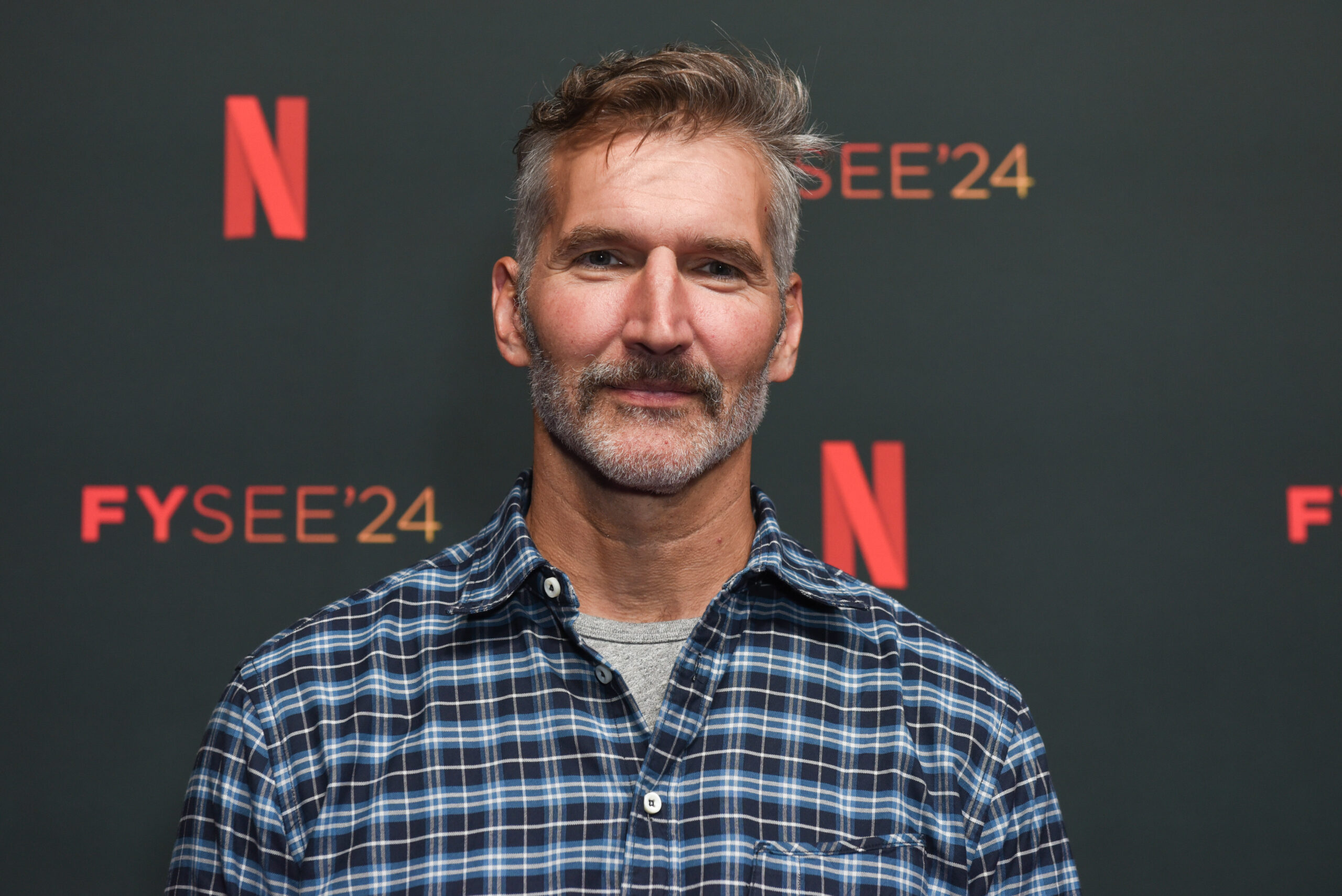
Director and co-creator of the award-winning HBO series “Game of Thrones,” known professionally as David Benioff, David Friedman turns 55…
Member of the U.K.’s House of Lords, Baroness Vivien Helen Stern turns 84… Former member of Knesset, he also served as Israel’s ambassador to France and then the United Nations, Yehuda Lancry turns 78… Lakewood Ranch, Fla., resident, Dvora Millstone turns 77… Israeli television anchor and popular singer, Yardena Arazi turns 74… Founder of ALMA, she served as a member of Knesset for Yesh Atid from 2013-2015, Ruth Calderon turns 64… President and CEO of Israel Aerospace Industries, Boaz Levy turns 64… Founder, chairman and CEO of Salesforce, Marc Russell Benioff turns 61… Best-selling author and serial entrepreneur, Marissa Levin… Son and grandson of leading British rabbis, he is the senior rabbi at the Beverly Hills Synagogue, Pinchas Eliezer “Pini” Dunner turns 55… Former member of the Knesset for Likud, she has appeared on multiple Israeli reality television shows, Inbal Gavrieli turns 50… White House correspondent for NPR, Tamara Keith turns 46… Member of the California State Assembly where he serves as co-chair of the Legislative Jewish Caucus, Jesse Gabriel turns 44… VP of government relations at the ADL, Carmiel Arbit… Features writer at New York magazine and its culture magazine Vulture, Lila Shapiro… Actor and comedian, best known for his role as Gabe Lewis on the NBC sitcom “The Office,” Zach Woods turns 41… Videographer and virtual program producer for the U.S. State Department, Mitchell Israel Malasky… Assistant appellate federal defender at Federal Defenders of San Diego, Daniel Yadron… Former center and power forward for Maccabi Tel Aviv of the Israeli Basketball Premier League and the EuroLeague, Jacob Greer (Jake) Cohen turns 35… Asset manager for Capital Realty Group, Yanky Rodman… Senior director of Next Gen at Christians United for Israel, Destiny Albritton… Strategic director at Laurel Strategies, Adam Basciano…
The media mogul told JI she’s excited to show the world a different view of Israel through the Sipur production company, which she joined as chair

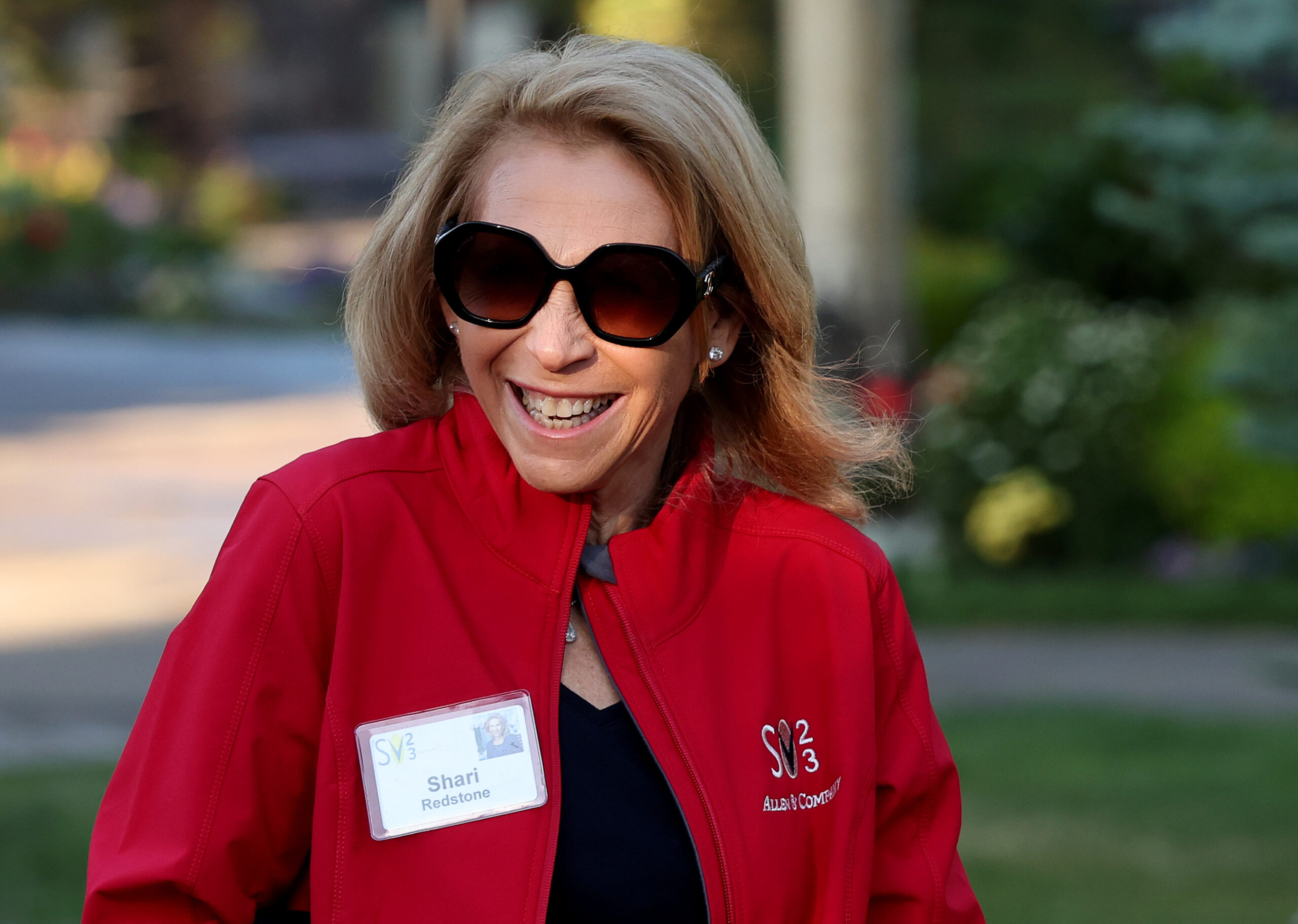
Photo by Kevin Dietsch/Getty Images
SUN VALLEY, IDAHO - JULY 13: Shari Ellin Redstone, President of National Amusements, walks to a morning session at the Allen & Company Sun Valley Conference on July 13, 2023 in Sun Valley, Idaho. Every July, some of the world's most wealthy and powerful figures from the media, finance, technology and political spheres converge at the Sun Valley Resort for the exclusive weeklong conference.
Shari Redstone, 71, has been busier than she had expected after selling Paramount, where she served as chair, to Skydance Media in a widely scrutinized merger this summer.
The Jewish media mogul recently joined the Israeli entertainment studio Sipur as chair, and in leading the Redstone Family Foundation, she is involved in a range of projects fostering cultural ties between the Black and Jewish communities and combating the rise in antisemitism, among other initiatives.
Her current efforts underscore what she describes as a renewed commitment to fighting antisemitism and supporting Israel in the wake of Hamas’ Oct. 7, 2023, attacks, an event she cites as accelerating her decision to finally agree to offload Paramount in an $8 billion deal with Skydance, the Hollywood studio led by David Ellison.
“It took on a new energy for me, and a new desire to really be supportive of Israel in every way I can,” Redstone said of her thinking in an interview with Jewish Insider on Friday. “I just want to be part of that community, because it is so important to the future of Judaism, and so important as a core way, ultimately, to fight antisemitism and to bring people together.”
As she embarks on her new ventures, Redstone said she hopes to promote content to counter what she views as an inordinately negative focus on Israel in the media and entertainment industries — an issue she highlighted at CBS News in her final months at Paramount, when she had criticized the company’s handling of its coverage relating to the war in Gaza.
Before the merger with Skydance, Paramount had settled a $16 million lawsuit with President Donald Trump over his claim that “60 Minutes,” CBS News’ flagship program, had tried to influence the results of the election by selectively editing a comment in an interview with former Vice President Kamala Harris about Israeli Prime Minister Benjamin Netanyahu.
With the sale and lawsuit behind her, Redstone says she is now “very encouraged” by the direction of CBS under Ellison, praising Paramount’s recent decision to publicly denounce a Hollywood boycott of the Israeli film industry. “It’s really nice to have people use their voices and their platforms and not be afraid and just do the right thing,” she told JI. “I hope that more people can stand up to that standard, because it isn’t always easy.”
She was somewhat more oblique, meanwhile, in addressing ABC’s decision last week to suspend the late-night TV host Jimmy Kimmel over his comments on Charlie Kirk’s assassination, and the Trump administration’s role in pressuring the company to take him off the air. (Kimmel returned to his show Tuesday night, though TV station owners Sinclair and Nexstar are still refusing to air his show on their ABC affiliates.)
“I don’t know what went into ABC’s decision,” she said. “I just know that we’re living in a world right now that’s very divisive, and those of us who have platforms really need to use it to try to unite people and not just divide people.”
In the interview with JI, Redstone discussed her plans at Sipur and elsewhere, shared her thoughts on the broader news ecosystem and weighed in on Trump’s heightened efforts to silence his critics in the media industry, among other issues.
The conversation has been edited for length and clarity.
Jewish Insider: You’ve suggested that your decision to leave Paramount and to sell the business was in many ways fueled by an increased desire in the wake of Oct. 7 to work more on fighting antisemitism and supporting Israel. Can you elaborate on your thinking there and what particular issues or causes you’re hoping to focus on now?
Shari Redstone: Oct. 7 impacted me and made me want to get more engaged than I had ever been before. It just really accelerated my desire to be able to focus on the issues that were so important here and around the world. I made a trip to Israel in January, right after Oct. 7, and that was really what changed everything for me. The first stop was the Nova music festival [site], and just being there made me realize that this is what I needed to do, and I haven’t looked back. I’m really excited about being able to spend more time and resources addressing the issues of antisemitism and hate.
I already had a bunch of programs that I was working on, including a program I did at the Y with children aged 4 to 5 to really appreciate different cultures, and it uses books, activities and family events to introduce kids to various cultures with a focus really on fighting antisemitism. But we can’t fight antisemitism unless we really give individuals, especially kids, an understanding of all cultures and differences that exist, and how to address those differences. So I had a lot of programs going, but now I’m just full speed ahead and super excited.
JI: Is that work through your foundation?
SR: It’s mostly for my foundation. The main mission there is to empower individuals and communities by using education, film media to create opportunities for open, civil dialogue and to really promote cross-cultural understanding. I did a program at the Jewish Museum in New York with a Black artist who was significantly influenced by a Jewish artist. As part of our Film Impact Series, we did two films, including “From Swastika to Jim Crow,” which talked about the Jewish-Black relationship when [Jewish academics] came here after the war, and nobody would take them in, except for the HBCUs.
I’m now focusing on a movie called “Shared Legacies,” which is about the historic relationship of the Black and Jewish communities, especially during the Civil Rights Movement. I really find that if we can bridge the gap and bring different communities together, and we can be each other’s advocates, that’s a lot stronger than being our own advocates — and that’s one of the reasons why so much of my programming is around cross-cultural education.
JI: Are there any new or upcoming initiatives that you’re looking forward to working on through the foundation?
SR: For the Film Impact Series, we’re actually going to Washington to do a screening at the Library of Congress, where we’re bringing together Black and Jewish leaders, both in Congress and outside of Congress, to screen the film and to have a dinner. I’m very excited about that. One of the things I try to do is not do one-off programming, to try to build a community and continue to bring them back.
Another other thing I’m super excited about is my program at the Y. We’re now expanding that program from one Y to 13 Ys, and we’re not only working with the children — we’re working with teenagers, parents and families to really create a community around these issues. One of the things I’ve found is if you want to do a program with the children, you need to engage with the family. It needs to be part of their life, not just one great day of fun or learning.
JI: On top of that, you recently joined Sipur as chair. Can you talk about what you’re expecting to do there now, and why you chose to join this particular studio?
SR: I have to start by saying I was absolutely not looking for another business opportunity. But the reality is, I worked with Emilio Schenker, who’s the CEO of Sipur, and his team on bringing the movie “We Will Dance Again” to Paramount. During that time, I just got to know him and his team and his supporters, and I love his vision of being the first international studio based in Israel. He has a great business model, great team, great content. I love it, because so much of our time is spent on dealing with more of the controversial issues that involve Israel, so for me, it’s very consistent with the work I’m doing in my foundation.
Hopefully we can present a larger view of Israel. We can present the successes of Israel. We can have positive stories of Israel. Right now, they’re doing a project in Argentina with one of the top singers in Israel, Noa Kirel. It’s going to be a telenovela for the Latin American market. We’re doing another TV series I’m very excited about in Australia. We’re doing a great series in Israel. We’re really getting visibility for a different side of Israel, which I think is really important. It’s very consistent both with a great business and with trying to have an impact, because so much of what we do is about promoting cross-cultural understanding and relationships and proactivity, and I think what Sipur is doing is going to further that cause.
JI: You mentioned that it’s nice to focus on less controversial issues related to Israel, but it seems difficult to avoid controversy even with apolitical projects given the pitched debate in Hollywood over Israel and the mounting boycotts and other issues we’ve seen at recent film festivals in Venice and Toronto. What do you make of that dynamic and how do you feel like you can address it in your new position?
SR: I want to start by saying I always address that issue, because I think if we don’t use our voices and our platforms to advocate for what we think is important, then we really fail at what our core mission is. I honestly am concerned about the boycott. I think people do not always have the right information to make the decisions that they make. But I also feel that one of my jobs now in creating content for Israel, in working with Sipur, is to provide these opportunities for these relationships to continue. I do not believe a boycott is the answer, and as we found on college campuses, so many people get involved in activities and boycotts and protests without even really understanding what the issues are. Hopefully this will lead to better education for everyone. That was an issue I had at the news as well. People need to be educated. They need to understand the facts before they go out and make statements and take actions. So, quick answer, I don’t like it. Longer answer, I’m going to do everything I can to both change it and to fight the narrative.
JI: Can you talk more about your connection to Israel and how it developed over time? When did you first visit?
SR: I was in Israel years and years ago. My kids studied there, and Israel was always important. But after Oct. 7, it was the first time I thought about what my life would be without Israel, and how in so many ways, we’ve taken for granted the existence of Israel and everything that they do, frankly, for peace in the Middle East. You know, to give Jews a place that they know they will always have a home, which has become even more important in the past several months. It took on a new energy for me, and a new desire to really be supportive of Israel in every way I can.
I think all of us — Jews, non-Jews — we take certain things for granted, and that kind of taught me, don’t take anything for granted. That’s why I’m just so excited to double down on my work in Israel, to spend more time there, to work with Sipur, to work with the survivors of the Nova music festival. I’ve worked with lone soldiers. I’ve worked with the IDF. And I just want to be part of that community, because it is so important to the future of Judaism, and so important as a core way, ultimately, to fight antisemitism and to bring people together.
There’s never enough stories told about how, where else do you have Jews and Arabs working together in the government? Nobody talks about all of the things that Israel does to try to provide a very positive existence for the Arabs living in Israel. Nobody did too much for them in Gaza for the last 15 years.
JI: Have you yourself faced antisemitism?
SR: You know, we all have. I’m not going to go into it, but, yeah.
JI: You took issue with CBS’ handling of some Israel issues while you were at Paramount, including a ‘60 Minutes’ segment that drew almost exclusively on interviews with former officials who resigned from the State Department in protest of the Biden administration’s support for Israel. What are your thoughts on the mainstream media’s coverage of Israel at the moment? Do you feel that it’s become skewed against Israel amid the war in Gaza, and if so, why do you think that’s the case?
SR: Look, antisemitism has existed in this country and around the world for a very long time. I think what happened after Oct. 7 was boiling up. I don’t think it suddenly became an issue, and I think the issues that I try to address go back to what I said: Educate people, give them the facts. I think media and news in particular needs to be more balanced. We need to have fact-based reporting that enables people to understand the bigger picture, the context. That’s what I advocate for, more education, more balance, for differentiation between opinions and facts.
I think right now, it’s very difficult for audiences to distinguish between facts and the opinions given by journalists, and I think we need to do a better job of that. And by the way, people are entitled to their opinions. If you’re a news broadcaster, you need to present a diversity of opinions, and people now are using their opinions as if they’re the facts, so I think we need to do a better job of just fact reporting, educating people and having more balance.
JI: Are there any positive examples of media companies upholding those values you’d like to point to?
SR: I can’t speak to what goes on in other companies. I know, while I was at CBS, we ultimately did bring somebody on to deal with standards, to have more checks and balances and accountability. From what I understand, I think that is continuing.
JI: That would be Susan Zirinsky you’re referring to? You praised the decision to hire her as interim executive director of CBS News last January.
SR: Yeah, Susan. When she was brought in, I felt it takes too long for the right things to happen, but I thought that was a really good move. I think we’re going to have to wait and see. But I think it’s very hard because it’s very ingrained, and people’s opinions are based a lot on misinformation and not understanding the context. And that’s true for all of us when it comes to many issues. So we have to take a step back from what we think and what we believe and what we feel and really educate ourselves and see whether or not that is going to impact the positions that we’re taking.
JI: Are you encouraged by the direction that David Ellison is taking at CBS, including reports he could acquire The Free Press and install Bari Weiss in a senior editorial role there?
SR: I just want to say I’m very encouraged by the fact that he’s trying to provide more fair and balanced news, from what I can read from the outside. And frankly, I don’t read it, but I’m told about it. But I’m very encouraged by that. He brought in somebody else, Ken Weinstein, to focus on standards and accountability. And I think if it goes through with Bari, she’s certainly a voice that’s different than the voices that have appeared on air and through the company over the last couple of years. So I think he’s definitely going in the right direction. They came out against the boycott. It’s really nice to have people use their voices and their platforms and not be afraid and just do the right thing. I hope that more people can stand up to that standard, because it isn’t always easy.
JI: What was your impression of mainstream news coverage of Israel before the Oct. 7 attacks?
SR: I think the coverage of politics, the coverage of Israel, the coverage of a lot of topics, has become unfair and unbalanced, not to quote somebody who talks about the opposite, and I think that we haven’t even realized that trend taking place. I think it took place in society, it took place on the news. And I think the issue of media bias is something that we need to be very conscious of. I do believe it existed a long time before Oct. 7. Things can’t just happen overnight. They’re brewing, and I think as the world has changed, as people’s politics have changed, it’s gotten much more divisive. I think that comes across in the news and other media.
JI: With regard to ABC’s decision to suspend Jimmy Kimmel’s show, you said at the Axios Media Trends conference this week, ‘Not because of Trump or because of any other reasons, but I do think we all need to be thoughtful of the content we are putting on air given the division that exists in this country.’ Do you want to elaborate on that point?
SR: I don’t know what went into ABC’s decision. I just know that we’re living in a world right now that’s very divisive, and those of us who have platforms really need to use it to try to unite people and not just divide people. And that doesn’t mean you don’t have a broad array of opinions, and people can’t express them. But it goes back to what I said: a broad array of opinions, and trying, as hard as it may be, to get people to agree on the facts. It is often very difficult for people consuming media to understand, when somebody’s talking, is this their opinion or is this their fact? Because they speak with such authority that you sometimes don’t realize, ‘Wow, this is just their opinion.’ And I think that’s part of the problem.
JI: How, in your view, does that apply to Israel?
SR: I was involved with this conference in D.C. a couple of weeks ago, and somebody made a comment about how Israel is like .02% of the population [Ed. note: As of 2025, Israel makes up approximately .12% of the world population], but 60% of the coverage. And why isn’t anybody talking what’s going in Africa and other places where there really is genocide? Why is it that everybody chooses to focus on Israel and always make it a target? That, again, is one of the reasons why I’m so excited to work with people to try to change the conversation, to try to show all of the ways in which Jews and Arabs live together in Israel in a very positive way.
JI: Are there any other areas where you’re working to address this problem?
SR: Right now, I’m working a lot with Sipur. I’ve also started funding the production of content. I’m working with Jonathan Silvers, who’s producing a movie on what’s going on in Israel now, post-Oct. 7. I’m working with one of the survivors of Nova on a film. And we have a show coming to Broadway. I’ve got involved a bit with the production of Broadway shows, and we announced on Tuesday that the play ‘Giants,’ about the author Roald Dahl’s legacy of antisemitism, is coming to Broadway this month. We were involved in the play in London, and I think that’s just another opportunity to use media in a positive way.
I’ve always believed that content leads to conversation that leads to change, so the more content we can create that people can see together cross-culturally and have conversations about, the better off we’re going to be able to address these issues and to hopefully bring people together.
JI: Sounds like an ideal example of engaging in a civic culture.
SR: It’s interesting, because I think in many ways, the decline in our democratic institutions is very much tied to the increase of hate and antisemitism. Because you need to be able to have civil discourse, you need to have checks and balances, and you need to have accountability. And we’ve lost some of that — both in our government, and certainly in media, and certainly in our conversations with others.
JI: Are you worried about the FCC’s more activist role and President Trump’s threats to the media?
SR: I worry about everything. But the reality is, if any of their work leads to more fair and balanced coverage of issues and of the world, I think that would be great, because I’m a big believer in free speech, but just remember that hate speech is not free speech.
Please log in if you already have a subscription, or subscribe to access the latest updates.
 Continue with Google

 Continue with Apple