












































































Analysts who spoke to JI last week said the deal could portend a more aggressive posture against Israel by Ankara and its ally in Damascus

Bonnie Cash/Getty Images
Rep. Joe Wilson (R-SC) looks on during a hearing to examine war crimes from Syria to Ukraine at the U.S. Capitol on July 10, 2024 in Washington, DC.


 Add JewishInsider on Google
Rep. Joe Wilson (R-SC) on Sunday praised the new mutual defense pact between Saudi Arabia, Turkey and Pakistan as an accomplishment by President Donald Trump.
“The mutual defense pact of Saudi Arabia, Türkiye, and Pakistan is another achievement of [Trump] promoting stability, peace, and prosperity in the Middle East,” Wilson, a vocal supporter of Israel who has also been strongly supportive of Turkey, said in a post on X. “With our prosperous Gulf allies, a liberated Syria, and Lebanese-Israeli negotiations, it is clear the murderous regime in Iran is isolated and the people of Iran can regain a new government worthy of Iran’s rich history.”
Wilson has been among the most prominent supporters on Capitol Hill of the new Syrian government, which is tied closely to Turkey’s own government.
The pact has been seen by many in pro-Israel circles as a sign that some of the U.S.’ Gulf allies are attempting to hedge against the U.S. and Israel, creating an alternative to the Abraham Accords and empowering those hostile to Israel.
There also has been no public reporting about Trump or the U.S. having been involved with the deal.
Multiple U.S. analysts told Jewish Insider last week that the agreement should be cause for concern for both the U.S. and Israel, and could portend a more aggressive posture against Israel by Ankara and its ally in Damascus.
Foundation for Defense of Democracies senior fellow Edmund Fitton-Brown: ‘For Turkey, it is an assertion of its centrality to security arrangements in the region’

Getty Images
Turkish President Recep Tayyip Erdogan delivers a speech during a joint press conference, July 19, 2022, in Tehran, Iran.
A coalition of Sunni regional powers signed a historic joint defense pact on Friday, but national security experts expressed deep unease over the arrangement, arguing that it reflects U.S. shortcomings in the Middle East while raising serious questions about its practical military feasibility.
The agreement, dubbed the Mecca Joint Defense Agreement, was signed in the Saudi holy city of Mecca by Saudi Crown Prince Mohammed bin Salman, Turkish President Recep Tayyip Erdogan, and Pakistani Prime Minister Shehbaz Sharif.
Under the pact, Saudi Arabia, Turkey, and Pakistan agreed to treat an armed attack on one signatory as an attack on all. The move solidifies security and defense cooperation between the three powers amid a period of heightened regional turmoil and uncertainty stemming from the war in Iran.
As a result of the ongoing conflict with Iran, Saudi Arabia has seen its critical infrastructure and oil facilities targeted by strikes, which analysts say has prompted Riyadh to diversify its strategic and security partnerships. The trilateral agreement follows a bilateral mutual defense pact signed between Pakistan and Saudi Arabia last September.
Edmund Fitton-Brown, a former British diplomat and senior fellow at the Foundation for Defense of Democracies, explained that the military alliance formed in response to an “uncertain security situation” across the wider region.
“For Turkey, it is an assertion of its centrality to security arrangements in the region. For Saudi Arabia and Pakistan, it is a reflection of weakness and uncertainty, as both feel threatened (by Iran and India respectively),” Fitton-Brown said. “Although the agreement is not primarily directed against Israel or the United States, both should be concerned about it.”
Fitton-Brown emphasized that the pact poses strategic complications for both Jerusalem and Washington, while raising alarms for regional actors.
“For Israel, it is further confirmation of Turkish ambitions, which are explicitly directed against Israeli interests,” Fitton-Brown said. “For the U.S., it is questioning how reliable or permanent it is viewed as a player in the region. Stirring up a hornet’s nest in the Gulf and then appearing unsure about an end game, or even clear red lines, has left American allies uncertain about the future and willing to hedge their bets.”
Jonathan Ruhe, a fellow at the Jewish Institute for National Security of America, similarly labeled the agreement as problematic, noting that it reflects U.S. diplomatic shortcomings rather than an effective counterweight to Tehran.
“This alignment is problematic to the extent it is about Washington and its regional relationships, not Tehran,” Ruhe said. “These three countries have almost zero shared ability or interest to meaningfully contain Iran. The Trump administration certainly should have done better coalition-building before the Iran war.”
Ruhe added that for Turkey, the pact serves to “support Ankara’s longstanding pretensions to be a major player and arms exporter in the Middle East and beyond, independent of the United States and NATO.”
Fitton-Brown also highlighted how regional shifts in Syria intersect with the new alliance.
“There is also a Syrian dimension: President Sharaa now leads a Sunni Islamist government in Damascus, where Turkey is the most influential foreign power and Saudi Arabia is a key investor and stabilizing influence,” Fitton-Brown said. “Israel will worry that this consolidates Turkish influence in Syria and will ultimately turn Sharaa’s Syria against Israel.”
Fitton-Brown noted that the emerging alliance signals a broader realignment of regional power dynamics following recent geopolitical shifts.
“On one hand, the new agreement looks like a Sunni axis that is replacing the Iran-led Axis of Resistance, following the weakening of the Islamic Republic, Lebanese Hezbollah, and the collapse of the Assad regime in Syria,” he explained. “On the other hand, Iran remains threatening to the Gulf States, especially, and the Saudis are probably comforted by the appearance of Sunni solidarity.”
Simon Henderson, a senior fellow at The Washington Institute for Near East Policy, similarly assessed that the pact acts as a strategic signal to Tehran.
“The alliance is reminding Iran that it isn’t the only big power in the region,” Henderson said, adding that the dynamic is less about sectarian identity than geopolitical posturing. “[The alliance is] not particularly a Sunni-Shia thing. Pakistan is mainly Sunni, but any tensions are mainly Iran and Saudi playing games.”
Despite the high-profile announcement, Fitton-Brown expressed skepticism over the operational capabilities of the agreement, noting that paper commitments rarely translate to direct military intervention across disparate conflicts.
“In practice, it is inconceivable that Turkey or Saudi Arabia would get involved in a conflict with India if the latter came to blows with Pakistan again, as is more or less inevitable on a regular basis,” Fitton-Brown said. “The extension of Pakistan’s nuclear deterrent to cover Saudi against Iran or Turkey in any circumstances looks equally implausible. But defense industrial collaboration may flesh out the substance of the alliance over time.”
Analysts warn that the emerging bloc could complicate future diplomatic breakthroughs in the region, particularly regarding U.S. efforts to broker Saudi-Israeli normalization. Ruhe noted that as a result of the new axis, Riyadh is significantly raising its leverage against Washington.
“With this new axis, Riyadh also is telling Washington that the price for normalization will be incredibly high, greater even than the incredibly one-sided deal for U.S.-aided nuclear enrichment on Saudi soil,” Ruhe said. “As part of the ultimate goal of normalization, the Trump administration should pursue a more comprehensive and balanced partnership with Saudi Arabia: Riyadh gets a truly safeguarded nuclear program and U.S. defense guarantees, but only in exchange for the kingdom formally aligning with Washington and concretely doing more for collective defense.”
To counter the fallout from the alliance, Ruhe argued that the U.S. must recalibrate its regional policy and tighten its focus on existing partnerships.
“The United States should focus more immediately on deepening, not broadening, the Abraham Accords, by redoubling security cooperation with Israel and the UAE,” Ruhe said. “Trump also needs to stop fawning over Erdogan and feeding his ambitions to reap all the benefits of being a U.S. partner without assuming any corresponding responsibilities.”
Sen. Lindsey Graham said that he ‘wouldn’t be surprised’ if the report was true and it may require a ‘complete reevaluation’ of the country’s mediator role
Jacquelyn Martin - Pool/Getty Images
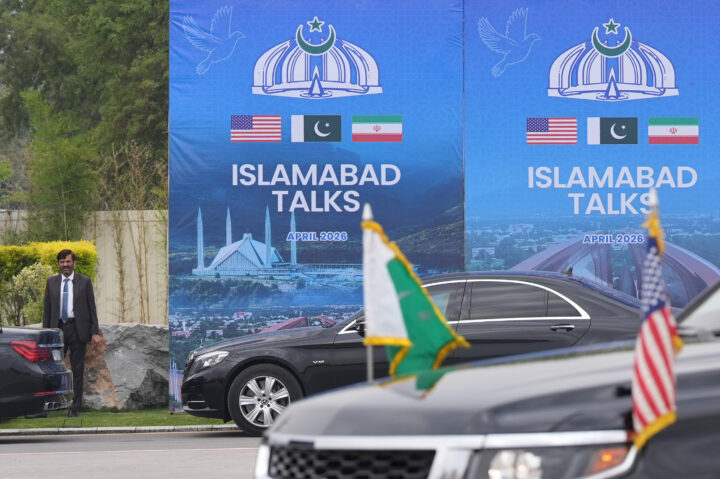
Vice President JD Vance arrives for talks with Iranian officials on April 11, 2026 in Islamabad, Pakistan.
Senators on both sides of the aisle on Monday expressed concerns about a report by CBS News that Pakistan had sheltered multiple Iranian military aircraft at an air force base in the country since shortly after the U.S.-Iran ceasefire in April, raising questions about the country’s neutrality as a meditator.
Sen. Lindsey Graham (R-SC) said the U.S. may need to reassess whether Pakistan, which helped broker the recent U.S.-Iran ceasefire deal, can continue to serve as a mediator between the warring parties.
“If this reporting is accurate, it would require a complete reevaluation of the role Pakistan is playing as mediator between Iran, the United States and other parties,” Graham said on X. “Given some of the prior statements by Pakistani defense officials towards Israel, I would not be shocked if this were true.”
Sen. Roger Wicker (R-MS), the chairman of the Senate Armed Services Committee, told Jewish Insider that the report is “not good news,” adding, “I don’t think there will be any more negotiations taking place in Pakistan.”
Sen. Mark Kelly (D-AZ) said he’d seen the CBS report and suggested it raised questions about Pakistan’s neutrality.
“Does that make you neutral? Not as neutral as we would like,” Kelly said. “I do think there needs to be somebody, some country in the middle, that has a stake in this.”
Sen. Ted Budd (R-NC) said that the report raises concerns for him about Pakistan’s neutrality as an arbiter in the talks as well.
The report comes as Pakistan is making moves to assert itself as a regional leader, signing a defense pact with Saudi Arabia and working toward one with Qatar, as well as building ties with Egypt and Turkey.
Islamabad also worked to support Iran’s economy during the war, despite U.S. sanctions and financial pressure.
Pakistan’s role as a mediator raised some questions on Capitol Hill, but other lawmakers have viewed Islamabad as a potentially productive partner — at a time when few other mediators were available.
The move came just hours after Secretary of State Marco Rubio lauded the launch of the short-lived Project Freedom
Win McNamee/Getty Images
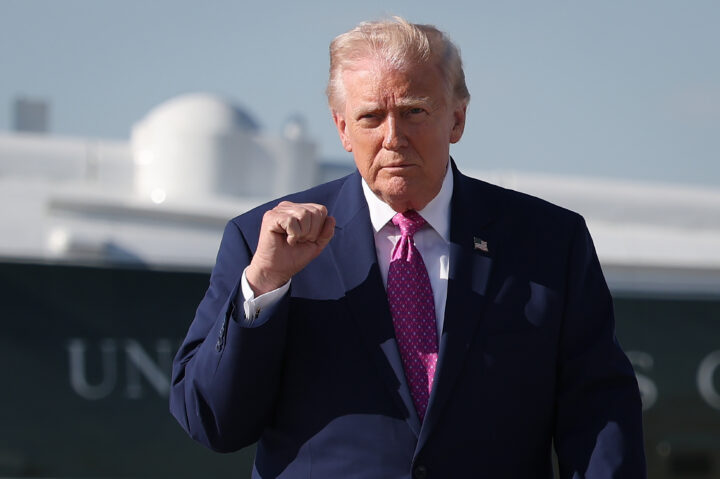
President Donald Trump walks toward reporters before answering questions prior to boarding Air Force One on April 10, 2026 at Joint Base Andrews, Maryland.
President Donald Trump announced on Tuesday that he was temporarily pausing “Project Freedom,” the three-day-old operation aimed at reopening the Strait of Hormuz to commercial traffic, at the request of Pakistan and due to progress in negotiations — hours after Secretary of State Marco Rubio heralded the start of the operation.
The president wrote on Truth Social on Tuesday evening that all elements of Project Freedom, a U.S. mission to escort commercial vessels safely through the Strait of Hormuz, “will be paused for a short period of time” in order to see if a “[peace] agreement can be finalized and signed.”
The U.S. blockade of Iranian ports, however, “will remain in full force and effect,” Trump noted.
The president said that the decision had been made “based on the request of Pakistan and other countries” as well as due to the “great progress” made toward “a complete and final agreement with representatives of Iran.”
The comments came a few hours after Rubio held a lengthy press conference at the White House, where he repeatedly insisted that the U.S. had completed Operation Epic Fury, the administration’s name for the war in Iran, and was now solely focused on Project Freedom, as well as diplomatic efforts.
“Operation Epic Fury has concluded. We achieved the objectives of that operation. We’re not cheering for an additional situation to occur. We would prefer the path of peace. What the president would prefer is a deal,” Rubio said. “He would prefer to sit down and work out a memorandum of understanding for future negotiations that touches on all the key topics that have to be addressed. That’s the route he prefers.”
“That is, so far, not the route that Iran has chosen,” he continued. “And so the result has been that the United States has to do something about the fact that we’re the only nation on earth that can do anything to open up a lane within the Straits of Hormuz to get product and to rescue these people that are trapped in there, and that’s what we’re undergoing now,” Rubio said of launching Project Freedom.
The nation’s top diplomat emphasized on multiple occasions that any future U.S. attacks on Iran should be viewed with a different lens than prior instances of fighting.
“What’s really important for you to report and for everyone to understand is this is not an offensive operation — this is a defensive operation. What that means is very simple: There’s no shooting unless we’re shot at first,” Rubio said.
He also acknowledged that any peace agreement with Iran would need to address its nuclear enrichment, and allow for the U.S. or others to remove any enriched material currently in Iranian facilities buried in the U.S. and Israeli strikes in June of last year.
“As far as the negotiation is concerned, I think the president’s been clear that part of the negotiation process has to be not just the enrichment, but what happens to this material that’s very deep somewhere that they have still have access to if they ever wanted to figure it out,” he added. “That has to be addressed, and that’s being addressed in the negotiation.”
The secretary of state could not say if the president had followed through on his public musings to send weapons to Kurdish groups and Iranians looking to take up arms against the regime, but again tried to create distance between any prior offers and Project Freedom.
“I think what the president is expressing is the desire that he wishes the Iranian people had an ability to fight back against some of these things that are happening to them,” Rubio said. “And I would view that as distinct and separate from the specifics of this operation that was ongoing before it concluded, and certainly different from the operation that’s going on now.”
‘Don’t trust, but verify,’ Sen. Blumenthal said of Washington’s discussions with Islamabad
Jacquelyn Martin - Pool/Getty Images
Vice President JD Vance arrives for talks with Iranian officials on April 11, 2026 in Islamabad, Pakistan.
Lawmakers are expressing skepticism over Pakistan’s expanding role in the Middle East, cautiously welcoming its involvement in U.S.-Iran negotiations while questioning its defense aspirations in the region and whether it can truly serve as an impartial intermediary — even as the Trump administration increasingly engages with the country.
Pakistan has taken on a more prominent role in Middle East geopolitics in recent months, deepening defense ties with Gulf states — including signing a mutual defense agreement with Saudi Arabia in September 2025 and nearing a potential security pact with Qatar — while also positioning itself as a key intermediary between Washington and Tehran.
Islamabad’s involvement in the negotiations has helped facilitate a ceasefire between the U.S. and Iran, even as Pakistan has taken steps to support Iran’s economy, including opening transit routes that allow it to import goods amid the conflict.
President Donald Trump has spokenly highly of Pakistani Prime Minister Shehbaz Sharif and maintains close ties with army chief Asim Munir, who nominated Trump for a Nobel Peace Prize for brokering a ceasefire between India and Pakistan in May 2025. Munir has since been invited to a private White House lunch and later to the Oval Office alongside Sharif — part of a longstanding pattern of close ties between U.S. presidents and Pakistani military leadership.
However, Islamabad’s posture toward Israel has not been as warm: Israel and Pakistan do not share diplomatic relations and Pakistan continues to strongly back the Palestinian cause. Islamabad has also refused to recognize or allow its citizens to travel to Israel. In a since-deleted tweet earlier this month, Pakistani Defense Minister Khawaja Asif called Israel “a curse for humanity” and a “cancerous state.”
Sen. Richard Blumenthal (D-CT) said that despite Pakistan’s complicated track record, the U.S. should “welcome” any “constructive role” it is willing to play — while remaining vigilant.
“I think the approach has to be: don’t trust, but verify,” Blumenthal told Jewish Insider. “[Pakistan] has certainly been a somewhat ambiguous force in many ways. They’ve been disruptive to some relationships. They’re a nuclear-armed power, but they are definitely a force, and if they can play a constructive role here we should welcome it. It doesn’t mean that we have to accept their word on everything they do or say.”
Rep. Tim Burchett (R-TN) struck a similarly cautious tone, questioning whether any actor in the region can be considered a truly neutral mediator.
“I’m not sure if anybody over there is an honest broker, to tell you the truth,” Burchett said. “They’ll all side with the winner, and that’ll be us when it’s all over, because they need those American dollars.”
Burchett warned that Pakistan’s growing engagement with Washington “could” strain U.S. ties with India.
“India has been a strong ally of ours, so I think we need to be very careful about that,” he said. “But I think Trump understands that, and he’s going to keep that in mind. Him and [Indian Prime Minister Narendra] Modi are fairly close.”
Rep. Brad Sherman (D-CA) was more critical, arguing that Pakistan’s role stems from its close ties to Iran — a dynamic he said raises concerns.
“[Pakistan has] good relations with Iran, which doesn’t speak well of them,” Sherman said. “I mean, I don’t have any friends of mine who engage in terrorism. So, you make peace with your enemies, not with your friends, so certainly we would like to have more support from Pakistan than we have.”
Sherman also warned that deepening U.S.-Pakistan ties could have consequences for Washington’s relationship with New Delhi.
“If we grow our ties with Pakistan to the point that we’re not calling upon them to clamp down on [hostility toward Israel] and other terrorist groups, then it would [hurt the U.S.-India relationship],” he said. “If it goes to the point that we [the U.S.] forget that there are terrorist groups that are finding haven in Pakistan and that Pakistan should be doing more to clamp down on them, then I will be upset and Modi will be upset.”
He further expressed concern over Pakistan’s expanding defense relationships in the region, cautioning that “you certainly don’t want Pakistan sharing nuclear weapons technology with Saudi Arabia or anyone else.”
Sen. John Cornyn (R-TX), meanwhile, suggested the U.S. may not have a choice as it faces limited options in choosing a mediator. “I don’t think we have a lot of alternatives,” he said. “I don’t think we’re in a position to be too picky in terms of interlocutors. I hope it works.”
Foreign policy experts have also expressed caution over Pakistan’s expanded role and the Trump administration’s apparent friendliness with Islamabad.
“The Trump administration’s Pakistan policy suffers from deep historical amnesia,” said Sadanand Dhume, a senior fellow at the American Enterprise Institute and columnist for The Wall Street Journal. “It appears as though the U.S. has decided to completely ignore decades of painfully learned lessons about Pakistan’s propensity to host anti-American and anti-Israeli terrorists. The Trump administration also risks upturning a robust U.S.-India relationship built over decades by Republican and Democrat administrations alike.”
“Pakistan is one of the world’s most strident critics of Israel,” Dhume added. “Pakistan’s obsessive hatred of the Jewish state masks the Islamic nation’s profound failures, including an inability, so far, to allow democracy to take root and a moribund economy that makes Pakistan one of the poorest countries in south Asia.”
He added that Islamabad’s broadening defense ties are in part due to a growing “insecurity following Israeli strikes on Qatar, and a widespread perception that the Pakistani Air Force performed credibly in a four-day-conflict with India in May 2025.”
Edmund Fitton-Brown, a former British diplomat and senior fellow at the Foundation for Defense of Democracies, noted that Pakistan’s emerging defense alignment in the region is based on its “historically close relationship with all the Arabian Peninsula countries because of geographical proximity, religious compatibility and the complementarity of small, wealthy countries with labor shortages and a populous poorer country that exports labor.”
Fitton-Brown said that “Qatar is especially attractive to religiously conservative Pakistani expats.” He added that the current conflict between the U.S. and Iran has “driven [Gulf Cooperation Council] countries closer to each other” and that Qatar has sought to bring “Saudi Arabia into a Sunni Islamist axis with Turkey and Pakistan.”
Blaise Misztal, vice president of the Jewish Institute for National Security of America, said that the Iran war has underscored certain Gulf states’ vulnerability to conflict despite U.S. security guarantees, presenting a need to seek multiple defense agreements.
He noted that prior to the Iran war, “reports suggested an even bigger agreement lashing Pakistan, Qatar, Saudi Arabia and Turkey all together into a defense pact.”
“The fact that the idea appears to have been revived should be a warning to Washington that all the gains that it had made in demonstrating American strength and resolve and convincing Gulf countries that only the United States can provide for their security are already beginning to evaporate as the region contends with the possibility of Trump cutting a deal that leaves the Iranian regime in place and in control of the Strait of Hormuz,” Misztal said.
Though much change has occurred in the last six weeks, the decisions made in the next two could determine the future of the region for decades to come
JONATHAN ERNST/ POOL/ AFP via Getty Images
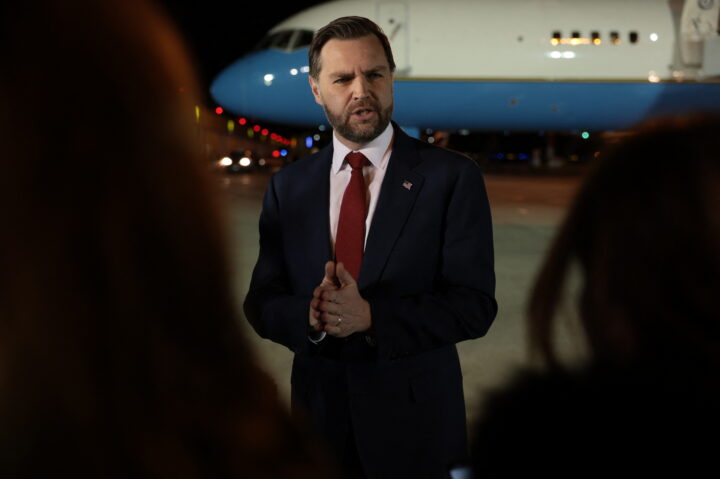
Vice President JD Vance speaks to the media before boarding Air Force Two in Budapest, Hungary, on April 8, 2026.
American and Iranian officials are meeting on Saturday in Islamabad, Pakistan, to begin conversations aimed at ending the conflict that has consumed the Middle East since late February. Though much change has occurred in the last six weeks, the decisions made in the next two could determine the future of the region for decades to come.
The “fog of diplomacy,” as The Washington Post’s David Ignatius put it, has shrouded much of what is known about the talks and their contours. The first 24 hours after the ceasefire was announced saw dueling — and often conflicting — statements, denials and claims about various points, including the inclusion of Lebanon in the agreement, Iran’s “right” to enrich uranium and the status of the Strait of Hormuz, that were proposed and supposedly agreed to by the parties.
Those sticking points deepened in the days between the ceasefire announcement and Saturday’s meeting in Pakistan. On Wednesday, Israel conducted widespread strikes in Lebanon targeting Hezbollah infrastructure and operatives whom the IDF said had embedded in civilian areas, while Hezbollah has launched dozens of missiles into Israel — including one fired at the southern city of Ashdod that also triggered sirens across Tel Aviv and surrounding towns early Friday morning. Meanwhile, Trump on Thursday accused Iran of “doing a very poor job, dishonorable some would say, of allowing Oil to go through the Strait of Hormuz.”
It is against that backdrop that Vice President JD Vance, joined by White House Special Envoy Steve Witkoff and Jared Kushner, will enter into negotiations tomorrow in Islamabad.
In tandem, a separate set of negotiations is slated to take place in Washington early next week, when the U.S. will convene the envoys from Israel and Lebanon for rare direct, public talks aimed at reaching a peace agreement between Beirut and Jerusalem. If reached — and if Lebanon takes meaningful action to demilitarize Hezbollah — Iran could lose its most powerful proxy in the region. Under pressure from Washington, Israel has limited its attacks on Lebanon.
While the inability to agree on the parameters for a ceasefire does not portend well for the ability to secure a more lasting agreement,both sides have a vested interest in reaching an accord that allows both to declare victory. Watching from the sidelines are Israel and the Gulf states, which will not be represented in Islamabad, and will instead have to hope from their respective capitals that the U.S. does not acquiesce to an agreement that emboldens Iran — and leaves the American allies vulnerable.
With the regime still intact — and still pledging destruction — Israel has reason to worry. Iran’s new supreme leader, Ayatollah Mojtaba Khamenei, warned on Thursday night that “we definitely won’t allow the criminal aggressors who attacked our country to go unpunished.”
And even as Pakistan positions itself as a convener, its senior officials make clear it is not hosting talks as an impartial actor. On Thursday morning, Pakistani Defense Minister Khawaja Asif posted on X — and later deleted — that “Israel is evil and a curse for humanity,” adding, “I hope and pray people who created this cancerous state on Palestinian land to get rid of European jews burn in hell.”
With elections in both the U.S. and Israel later this year, both Washington and Jerusalem have a vested interest in U.S. negotiators securing the best possible deal with Tehran. With rising fuel prices, the White House will want to project strength in reopening the Strait of Hormuz, while Israeli Prime Minister Benjamin Netanyahu will need to convince voters that they are safer now than they were a year ago — and that Israel won’t find itself in an ongoing cycle of wars that bring the country to a halt for weeks on end every year.
But the longer-term questions remain. Will Iran, whose nuclear and ballistic missile programs were dealt significant blows, further conceal aspects of both? What degree of threat can Israel live with on its borders? How has the Iranian regime’s survival emboldened its allies in Beijing and Moscow? And what of the Iran-backed Houthis in Yemen, who have largely held their fire over the last six weeks?
Those are questions unlikely to be resolved in Islamabad in the coming days, but they are the ones that Israel and the West will have to grapple with once the dust from this war has settled.
Trump made the remarks in a Truth Social post, in which he threatened that the U.S. would bomb the South Pars gas field if Iran does not stop attacking Qatar
Alex Wong/Getty Images
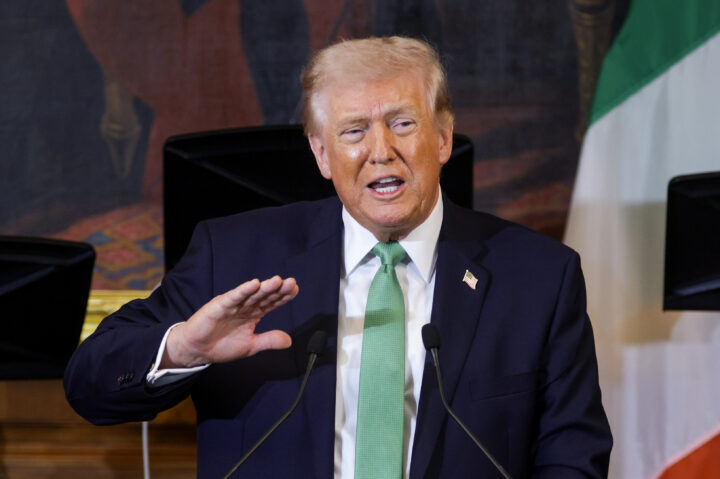
President Donald Trump speaks during the annual Friends of Ireland Luncheon at the U.S. Capitol on March 17, 2026 in Washington, DC.
Current and former Israeli and U.S. officials suggested that an Israeli strike on an Iranian gas field on Wednesday that prompted the Islamic Republic to strike Qatar was coordinated with the White House, despite President Donald Trump’s claim that the U.S. “knew nothing about this particular attack.”
Trump made the remarks in a Truth Social post, in which he threatened that the U.S. would bomb the South Pars gas field, the Iranian portion of the larger field shared with Qatar, if Iran does not stop attacking Qatar.
“The United States knew nothing about this particular attack, and the country of Qatar was in no way, shape or form involved with it, nor did it have any idea that it was going to happen. Unfortunately, Iran did not know this … and unjustifiably and unfairly attacked a portion of Qatar’s [liquid natural gas] facility,” the president wrote.
If “Iran unwisely decides to attack a very innocent, in this case, Qatar,” he added, the U.S., “with or without the help or consent of Israel, will massively blow up the entirety of the South Pars Gas Field at an amount of strength and power that Iran has never seen or witnessed before.”
An Israeli official told Kan News, Israel’s public broadcaster, that the attack on the South Pars gas field was coordinated with the U.S.
Dan Shapiro, the former U.S. ambassador to Israel and Pentagon official in the Biden administration, wrote on X, “Trump can post whatever he likes. But there is zero, I mean zero, chance the IDF would conduct a strike in that location without giving CENTCOM full visibility.”
“Trump knew (and approved),” Shapiro added. “Now he realizes it caused a major escalation with Iran’s (entirely unjustified) attacks on Gulf energy targets.”
Shapiro later clarified that the Israeli strike “could not have been carried [out] without U.S. knowledge and explicit or implicit approval.”
“It was predictable that strikes on Iranian energy facilities (by US or Israel) would lead to Iranian strikes on Gulf energy facilities,” he wrote. “There is a narrow window following the Israeli and Iranian strikes, and Trump’s Truth Social Post (untrue, but possibly useful in this context), to de-escalate away from further strikes on energy industry targets in either direction. That will still leave a very challenging situation to unwind, but [it] would be the best near-term development.”
Gilad Erdan, a former Israeli ambassador to Washington and a former member of Israel’s Security Cabinet, told Jewish Insider that it was highly likely the U.S. knew about the strike, saying that Trump did not criticize Israel in his post, and “in the same breath” as saying the U.S. was unaware, “[Trump] himself threatened to erase the [gas] field.”
Erdan noted that the South Pars gas field is “used for Iran’s domestic energy needs [and] doesn’t harm the international energy market.”
“Israel took upon itself to be at the front [of the situation] in my estimation because the field is also Qatari,” Erdan, who is also a senior fellow at the Misgav Institute for National Security, said. “Someone had to send the deterrent message about the energy field to the Iranians, that if they continue, then all options are open against them and they will be hurt badly.” (The writer is a senior fellow at the Misgav Institute and cohosts its podcast.)
Yaakov Katz, an Israeli military expert and author of While Israel Slept: How Hamas Surprised the Most Powerful Military in the Middle East, told JI that he agreed with Shapiro’s assessment. “There is no way Israel would attack such a strategic facility [without coordination] because they know it would draw the Iranians to attack the Gulf states,” he said.
Katz pointed to Israeli Prime Minister Benjamin Netanyahu’s behavior since the war with Iran began late last month as further indication that Israel was unlikely to make such a move without coordinating with the U.S.: “Why would Netanyahu who behaved so carefully all throughout the war, coordinating with Trump to not upset him so he keeps the war going … do something that would anger Trump and potentially lead him to do something brash and declare the war is over?”
“It was coordinated, and now Trump is saying what he’s saying to distance himself, but it was done to send a message to the Iranians,” Katz added.
Also Thursday, Saudi Arabia released a statement with the foreign ministers from Azerbaijan, Jordan, the UAE, Bahrain, Pakistan, Turkey, Syria, Qatar, Kuwait, Lebanon and Egypt urging Iran to stop its attacks.
“The participants held Iran fully responsible for the losses and called on Iran to immediately and unconditionally cease its aggression and to comply with UN Security Council resolutions. The meeting also emphasized the dangers of supporting militias and destabilizing security, stressing that Iran must seriously reconsider its miscalculations,” the statement read.
If Iran continues, the foreign ministers stated, there will be “serious consequences for Iran and the security of the region, and will exact a heavy price, casting a shadow over its relations with the countries and peoples of the region, who will not stand idly by in the face of threats to their capabilities.”
Analysts tell JI that the move ‘is not the behavior Washington can reasonably expect from a partner who would like to be trusted with the F-35’
ASIF HASSAN/AFP via Getty Images
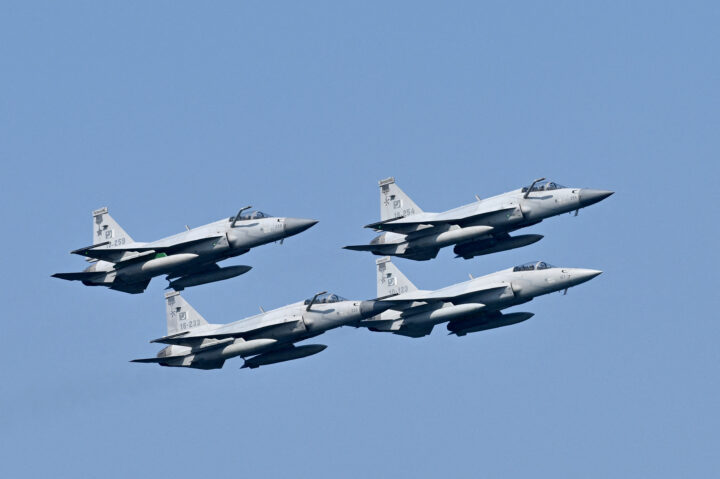
Pakistan's Air Force fighter JF-17 fighter jets fly past during the multinational naval exercise AMAN-25 in the Arabian Sea near Pakistan's port city of Karachi on February 10, 2025, as more than 50 countries participating with ships and observers.
Reports that Saudi Arabia may strike a deal with Pakistan to acquire Chinese-Pakistani JF-17 Thunder fighter jets are raising concerns in Washington, as Riyadh’s potential acquisition of the aircraft signals a continuation of its recent shift in alliances and could complicate its efforts to secure the U.S.’ F-35 jet.
The discussions between Saudi Arabia and Pakistan, first reported by regional outlets, would deepen defense ties between the two longtime partners while easing Karachi’s financial strain by wiping out its $2 billion in loans from the kingdom.
The JF-17, which is widely used by the Pakistani Air Force, was jointly developed by Pakistan and China, and incorporates Chinese electronic systems and a Russian engine.
Grant Rumley, a senior fellow at The Washington Institute for Near East Policy, said the aircraft would offer little operational benefit to Saudi Arabia, which already fields a fleet of U.S.- and European-made fighter jets, and could instead be a sign that Riyadh is aiming to strengthen ties with multiple defense partners.
“I don’t think there’s any military justification for Saudi Arabia purchasing this plane,” Rumley said, noting that the kingdom’s existing F-15s and Eurofighter Typhoons — along with its planned acquisition of the F-35 — would significantly outperform the JF-17. “Saudi understands Pakistan is in a tough economic situation and converting it into JF-17s is a way to alleviate some economic pressure and further intensify or accelerate defense cooperation.”
Rumley added that despite the lack of military advantage from the JF-17, Saudi Arabia’s desire to acquire the fighter jet linked to U.S. adversaries raises concerns about U.S. national security and Riyadh’s political alignment, potentially prompting backlash that could complicate or even derail Riyadh’s procurement of F-35s from the U.S.
“The fact that [the JF-17] has a Russian engine and Chinese avionics means it will very likely be viewed as a security risk if it’s co-located near U.S. forces,” said Rumley, who warned this arrangement could pose a danger to the protection of U.S. intel. “The F-35 is one of the crown jewels of American military equipment. Protecting that proprietary information and capabilities is a top priority across party lines in the U.S. national security apparatus.”
Such a deal could create “undue turbulence” for Saudi Arabia’s acquisition of the F-35, potentially “complicating the discussion” around the deal and even putting it “into jeopardy,” Rumley said.
While experts said it is unlikely Congress would be able to stop an F-35 sale to Riyadh if the White House gives it the green light, they warned the JF-17 talks could provoke internal pushback within the administration, particularly among officials focused on competition with China.
“The Saudis are publicly entertaining this deal because of their dissatisfaction with U.S. policy, their desire to build leverage that brings America around to the Saudi position and, if that fails, to enable Riyadh to develop alternative security ties,” said Jonathan Ruhe, a fellow at the Jewish Institute for National Security of America. “The fact that the Saudis are considering such inferior aircraft, from a less established partner, emphasizes their dislike of how the broader U.S. defense relationship is trending.”
“The China hawks within the U.S. will not look favorably on this type of arrangement in general,” said Rumley. “Buying a fighter jet that’s co-produced with China and has Chinese technologies, as well as Russian technologies, is going to burn through a lot of goodwill with the folks in Washington.”
Jonathan Ruhe, a fellow at the Jewish Institute for National Security of America, said a Saudi deal for the JF-17s could also “throw a major wrench in existing defense cooperation with Riyadh,” framing the reported talks as part of a potential reassessment of the kingdom’s security partnerships.
“The Saudis are publicly entertaining this deal because of their dissatisfaction with U.S. policy, their desire to build leverage that brings America around to the Saudi position and, if that fails, to enable Riyadh to develop alternative security ties,” said Ruhe. “The fact that the Saudis are considering such inferior aircraft, from a less established partner, emphasizes their dislike of how the broader U.S. defense relationship is trending.”
He added that Saudi Arabia has historically used major arms purchases to build political leverage rather than to fill operational gaps, noting that Saudi officials have closely watched Qatar’s use of “checkbook diplomacy” to secure a unilateral U.S. security guarantee last year, even as Riyadh’s own mutual defense treaty discussions stalled.
In recent weeks, observers have noted that Saudi Arabia has increasingly pivoted away from moderation and toward Turkey, Qatar, Iran, and Pakistan, as seen in their actions in Yemen, Sudan, and the horn of Africa, along with attacking the UAE over its relationship with Israel.
“Riyadh’s current security cooperation with China is not the behavior Washington can reasonably expect from a partner who would like to be trusted with the F-35,” said Justin Leopold-Cohen, a senior research analyst at the Foundation for Defense of Democracies, who noted that any deal should be viewed “in the context of Riyadh’s recent naval exercises with China.”
“Saudi Arabia looks at Turkey and Pakistan and sees sort of a middleweight power that is able to exert a ton of influence in the profession of arms and is able to put platforms on the market that drive, not only revenues at home, but is also a pretty effective instrument of national power,” said Rumley. “And they [Saudi Arabia] want that.”
Justin Leopold-Cohen, a senior research analyst at the Foundation for Defense of Democracies, said the reported talks likely reflect Saudi Arabia’s desire to “avoid overreliance” on any single defense partner, though he echoed concerns from the U.S. perspective.
“Riyadh’s current security cooperation with China is not the behavior Washington can reasonably expect from a partner who would like to be trusted with the F-35,” said Leopold-Cohen, who noted that any deal should be viewed “in the context of Riyadh’s recent naval exercises with China.”
However, Rumley argued that such a deal may not necessarily reflect “realignment from a security standpoint,” but could be “more about gaining access to some other technologies.”
“It may be that this is simply a way for Saudi Arabia to get access to these jets, rip them up, or reverse engineer them and take those technologies and use them for their own defense, industrial base development,” said Rumley.
Please log in if you already have a subscription, or subscribe to access the latest updates.
 Continue with Google

 Continue with Apple