














































































The show, which bridges Orthodox and secular perspectives with humor, will expand its reach through the production company behind Dan Senor's 'Call Me Back’

ChayaLeah Sufrin and Yael Bar Tur


 Add JewishInsider on Google
There aren’t many places where an Orthodox Chabad mother of four and a secular Israeli social media strategist can debate Jewish life, Israel and dating — and still leave the conversation laughing.
That’s the premise behind “Chosen People Problems,” the podcast hosted by ChayaLeah Sufrin and Yael Bar Tur, whose friendship grew after they appeared on another podcast together.
For the past four years, the two have built an audience by bringing their very different perspectives to conversations about the Jewish world, with the goal of making listeners — about a third of whom they said are not Jewish — feel less like they’re tuning into an interview and more like they’re overhearing friends at the dinner table. No topic is off that table: from Holocaust jokes to debating which Houthi terrorists are attractive.
“And serious stuff, too,” Sufrin told Jewish Insider in a recent interview. “Oh, very serious stuff, too. But three years post-Oct. 7 we think everyone deserves a laugh,” added Bar Tur.
Now the podcast is getting a bigger platform. “Chosen People Problems,” formerly called “Ask a Jew,” is relaunching with Ark Media, the media company behind Dan Senor’s podcast “Call Me Back.” Moving forward, listeners can expect a new weekly free episode alongside a second, exclusive “Ask Me Anything” episode for Ark+ subscribers.
“This is a dream come true for us that they approached us,” said Bar Tur. “We’re big fans of Dan [Senor] and Ark Media. We listen to ‘Call Me Back.’ We’re bringing in humor and saying the things people usually don’t say out loud, for better or worse.”
Beyond being “funny and not giving a sh*t,” as Bar Tur puts it, the duo’s appeal comes from the fact that they occupy “two parts [of Judaism] that don’t really talk to each other a lot.” That divide is not incidental to the podcast; it is what gives their conversations tension — and, they say, the potential to build bridges.
“I think that Yael really sees herself as an Israeli in a way that I can’t relate to,” Sufrin said. “I see myself as a Jew and I don’t have that Israeli identity. Yael comes at things most often from an Israeli perspective. As an Orthodox Jew, I’m often coming at things from a religious perspective, and that sometimes makes Yael uncomfortable. Sometimes the things that she says about how she views Jewish ritual or practice, I’m confused. But we talk through these things so much that it’s becoming normal.”
What keeps those differences from becoming divisive, Sufrin said, is a shared sense of what they ultimately want for the Jewish community. “The best part is both of us understand that we have the same goal in mind, and that’s to have a strong, safe, thriving Jewish world, whether it’s in Israel or the U.S.”
That combination of disagreement and common ground is also central to how they think about the podcast. “Someone described the podcast as ‘light but not shallow,’” Sufrin said. “We’re really talking about things that Jews around the country, and around the world, are talking about at their dining room tables. We’re just making it a public conversation.”
The hosts say they have found themselves agreeing more since the Oct. 7, 2023, Hamas attacks, but their differing vantage points remain part of what makes the conversations interesting. “We come from such different parts of the Jewish world that it brings something different: an added layer of bridge-building and seeing the other perspective,” Sufrin said.
When “Chosen People Problems” first launched, its conversations most often centered on pop culture or finding meaning in Jewish rituals and practices. But Oct. 7 changed the tenor of the show — and, the hosts said, the audience they were speaking to. In the aftermath of the attacks, they saw a surge of interest in Judaism from people who had previously engaged with their Jewish identities only occasionally, as anger, grief, confusion and a desire for community brought Jewish identity to the forefront of their lives.
“We were just talking about those things bluntly and it resonated,” Sufrin said. Bar Tur said many listeners felt isolated after Oct. 7, and that one of the best compliments they receive is, “I feel like I’m overhearing friends talking.” The relaunch with Ark, she said, is an effort to extend that sense of community beyond the two hosts themselves — creating a space for the Jewish diaspora to see itself as a single, if complicated, people. “It’s not just the Israeli people, or Orthodox people, or secular people,” she said. “It’s all of us.”
“Chosen People Problems” has featured guests — not always Jewish — from a broad range of backgrounds, including rabbis, journalists, political commentators, activists and comedians.
“The best guests are ones we can be ourselves with, and they can be themselves. We want people to feel like they’re listening to a conversation, not an interview,” said Bar Tur.
While not much is off limits for the show, Sufrin said a boundary is that they won’t bring on anti-Zionists. “We’re happy to talk with people who are thinking about the problems we’re facing right now, and sometimes just to laugh about it. It’s important to acknowledge there’s a problem and then be able to laugh,” she said.
Their lineup has already featured prominent figures including CNN political analyst Scott Jennings, Foundation for Defense of Democracies CEO Mark Dubowitz and Senor. So if they could have any Jewish person in the world — living or dead — sit down for an episode, who would it be?
Sufrin said she would love to talk with sex therapist Dr. Ruth Westheimer, who died in 2024.
“I would want to talk to her about choosing to be a public Jew and holding on to her passion and Jewish pride, throughout all the different iterations in her life. She went from being a fighter in the [Haganah] to being a sex guru. Her Judaism always seemed centered and central to her identity. I would just love to have a conversation with her.”
Bar Tur’s pick is Irving Berlin, the Jewish songwriter behind the iconic holiday classic “White Christmas.” She even keeps a photograph of him in her apartment.
“I love his music,” she said. “A lot of these songs written by Jews were actually about the fantasy or yearning of what it would be like to celebrate Christmas. I’d just love to hear about that time and industry, and compare notes from today.”
Path-breaking academic Nechumi Yaffe is running for Knesset in a party of Orthodox Israelis who want to bring change to their community

Hatzibur HaHaredi
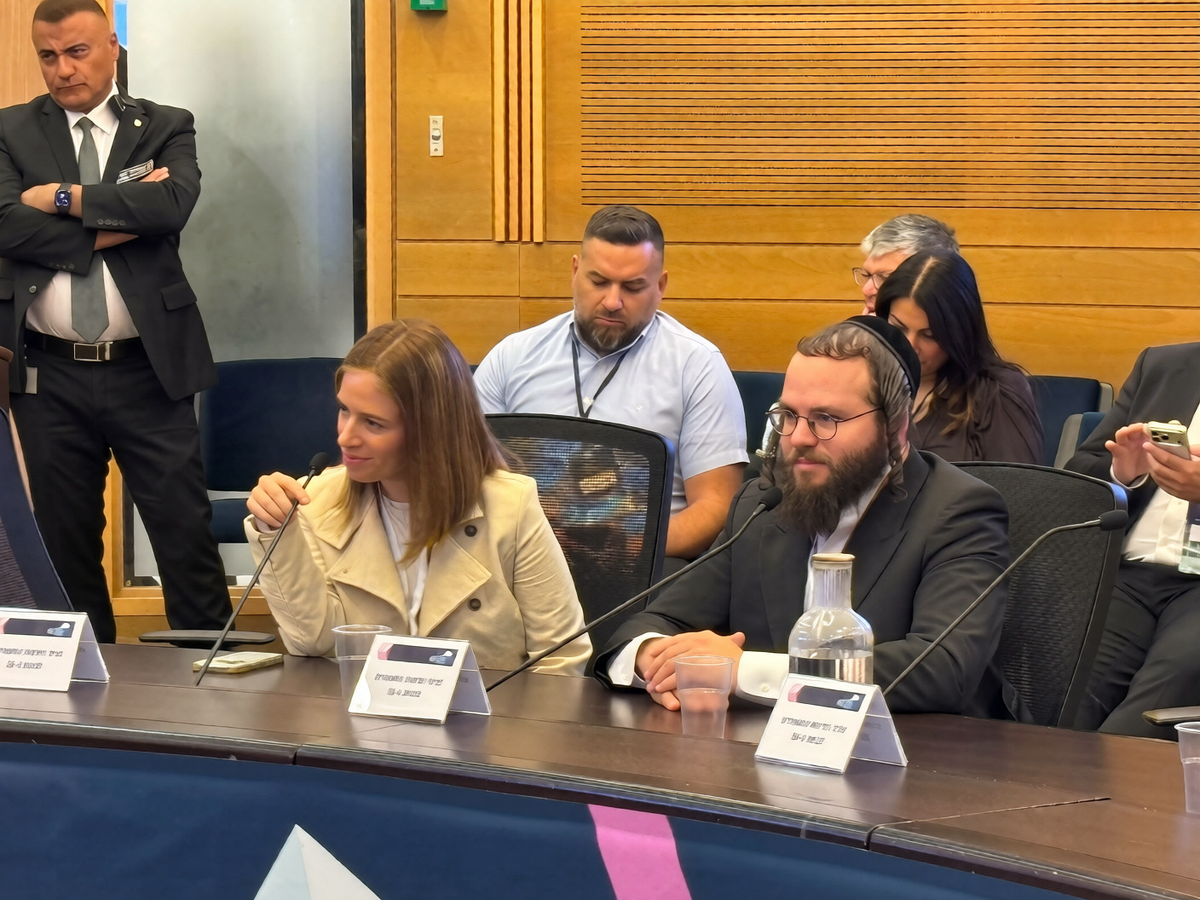
Nechumi Yaffe, with party leader Motti Leitner at the Hatzibur HaHaredi headquarters
Just don’t call it “change.”
Nechumi Yaffe, a norm-shattering Haredi woman, and her fledgling political party, Hatzibur HaHaredi, may be tilting at ultra-Orthodox windmills, but they are seeking nothing less than a wholesale transformation of Haredi society. Yaffe wants to pull the community out of poverty. She wants to alter its relationship to the army on the contentious issue of Haredi conscription. And she wants to “make higher education the default” in order to bring more men into the labor force.
Call it “repair, rehabilitation, healing,” she said, but don’t call it “change,” a word she said was too threatening to a community bound by tradition and ritual.
Yaffe is the first woman to run for Knesset in a Haredi party, after a series of career firsts: She’s the first Haredi woman to receive a Ph.D. from Hebrew University, and the first Haredi woman faculty member at Tel Aviv University, where she teaches at the School of Public Policy, focusing on Haredi society. She also founded “Achdut,” a Haredi volunteer command center, after the Oct. 7, 2023, Hamas-led attacks on Israel, coordinating over 100,000 volunteers.
Yaffe, who is 50, spoke with Jewish Insider on Wednesday about Hatzibur HaHaredi’s plans and why change has been so difficult in the Haredi community. A graduate of the prestigious Gateshead Jewish Academy in the U.K., a Haredi teachers’ seminary, and with a post-doctorate from Princeton University, she spoke near-perfect English.
“I think the Haredi community needs to take more responsibility and take initiative and do its share,” she said. “Most Haredi people feel like victims and feel like they’ve been [persecuted] … I think people have broad ignorance of what it means to be citizens and do their share. … They were never taught civics and don’t understand their duties and obligations.”
Most Haredim, Yaffe argued, feel that they contribute by learning Torah, which they believe leads God to protect Israel. They think they pay taxes, she said, because they have sales tax and that they are major consumers because they have many children, not understanding that far fewer of them pay income and municipal taxes than in general society, because of widespread poverty in their sector. The average Haredi household’s consumption was 58% of the average Israeli household in 2024, according to an Israel Democracy Institute study. But when the broader public makes demands, Yaffe said, the Haredi population thinks, “what more do these people want from us?”
Meanwhile, those who should know better pursued “short-sighted, lazy policies” and ignored the needs of the Haredi population, she added.
“A bad political agreement was made for them,” Yaffe said. “Haredi politicians [tell potential coalition partners] ‘all we want is autonomy and we will vote any way you want.’ Non-Haredi politicians would overlook what that really means for the economy and said ‘let them rot in their ghetto.’ All that came back to bite us. … We have rapid growth in a community that doesn’t understand what is wrong. They are not participating in the army or the economy. Their poverty is affecting the Israeli population. The autonomy is a threat to the entire country.”
Hatzibur HaHaredi (“Haredi Public”) are people who are “loyal to our Haredi identity, put Torah at the center of our lives … but we want to take responsibility for the financial and educational future for our children and for the State of Israel. We want to be part of designing our future,” Yaffe said.
The party’s first priority is education, by promoting Haredi public schools that are affiliated with the Education Ministry. Currently, most Haredi schools are independent, meaning that they do not use a government-backed curriculum, though they still receive government funding, and very few prepare students for national high school matriculation exams.
“We want to change norms through resource allocation, to encourage people to move their kids” to the public schools, Yaffe said. “My vision is that [the schools] become the mainstream, the natural automatic choice. Those who don’t want their children to get a secular education should be the ones deviating from the norm.”
Yaffe took issue with the current situation regarding Haredi conscription in the IDF, by which over 100,000 young Haredi men are considered to be illegal draft-dodgers who could, potentially be arrested.
“It’s not conducive to making them love their country more or go to the army. It’s making people illegitimate and not pushing them in the right direction,” she said, calling for the government to “be very strategic.”
She called to start with the young men who do not actually study in a yeshiva. The rabbis of those yeshivas know which students are falsely registered and which actually study, she said.
“They should be recruited ASAP,” Yaffe said. “This should be done tomorrow. Thousands can be recruited. This will normalize the army” in Haredi society.
As for leading Haredi rabbis who have said that even those who are not actually learning Torah should not join the IDF, Yaffe said: “My research has shown that we always think the rabbis are the movers and shakers, but statistically, it’s social norms. No one wants to be alienated from the community. We have to normalize the army as part of life.”
Another major priority for Hatzibur HaHaredi is employment for men after yeshiva and military service. While about 83% of Haredi women work, only 54% of men do.
“We have to make higher education the default in order to realize their potential and create jobs for thousands of men who could be part of the labor force,” she said.
Increasing employment will better integrate Haredim into society, Yaffe said.
“One of the main components of poverty is having no control over your life,” she said. “When these men get jobs and have a salary, they can normally plan their monthly expenditures and gain control of their lives … and then I trust people to get things right.”
Yaffe compared the potential of Haredim in the workforce to major waves of Jewish immigration “that revived and strengthened the country. The next wave will be Haredi immigration into Israeli society. We’re going to take the talent and ambition of this community and harness it.”
Yaffe also plans to fight for the rights of “neglected, overlooked and used” Haredi women. She believes that they are the party’s “weapon,” and will be a large part of their voter base.
“We are sent to work and bring in money, but have no legal protections,” she said.
Haredi women are often employed as teachers, but their labor rights are frequently violated, and contrary to nearly all public school teachers in Israel, few Haredi teachers are union members. A common practice in Haredi schools – including those once managed by the current head of United Torah Judaism, Yitzhak Goldknopf – is to hire teachers as contractors and sign new contracts with them annually, so they do not receive tenure or raises. Yaffe also said that hiring and promotions are often based on personal connections.
“It’s like a third-world country; it’s so corrupt,” Yaffe said of employment practices in Haredi schools. “The corruption needs to end, full stop. We need to get women into senior jobs and around the decision-making table.”
While one may think that being the primary breadwinners would grant haredi women more power, Yaffe said that “the culture is that Torah is more important than money, and they don’t have access to Torah [at the same level as the men].”
“It ends with us,” Yaffe promised. “Women are making the money and don’t get to make the decisions. That will end when women are around the table and see the mechanisms and say we won’t play this game anymore.”
Much of Israeli Haredi society has very closed social ranks, and those who break the norm are often ostracized. Haredi commentators have attempted to criticize Yaffe and others in the party as not really Haredi.
“The easiest way to refute criticism is to ostracize someone,” Yaffe said. “I think it’s hard to say that about me. I wasn’t just a teacher; I wrote the curriculum. My name is on their children’s textbooks.”
Yaffe said she has gotten “mixed reactions” and some people think she’s “off,” but that “most say [I am] trying to do something good.”
She is used to deviating from the norm, since she turned to academia, but the criticisms are more difficult for other members of her family, who received phone calls telling them that she is “terrible and how dare [she] go against the establishment.”
“Some people disapprove, but I don’t care,” she said. “I hope my kids are OK receiving criticism, because they may not be as resilient as I am. … It’s not easy having this kind of a parent, but you can’t choose your parents.”
Earlier this week, leading Haredi Rabbi Dov Lando sparked controversy by saying that religious Zionist soldiers were killed in the war because of their “distorted Torah.”
Yaffe was careful not to criticize specific rabbis, but said that Hatzibur HaHaredi is “demonstrating that there are enough Haredi people who want to do things differently and are proud to be part of this country. We want to serve. We are not alienated from the pain, sacrifice and heroism of our brothers who are keeping us safe and alive. We don’t take this state for granted and are grateful for the miracle of this country’s establishment.”
“We are trying very hard to do something different, and with God’s help we will succeed,” she added.
As to their consistently polling under the threshold, Yaffe said: “This is a country of miracles. We hope we’ll be part of it and get in [to the Knesset].”
“This is a movement of repair, responsibility, of a shared fate [with the rest of the country]. We’re here to stay. Eventually, we’ll make it in and lead the Haredi community into normal lives,” she said.
Uri Fraenkel made an improbable ascent from bus-managing bureaucrat to Mamdani’s Borough Park chaperone

Uri Fraenkel blows a shofar during New York City Mayor Zohran Mamdani's visit to Borough Park.
Footage from New York City Mayor Zohran Mamdani’s visit to a Brooklyn Judaica store showed a little-known Orthodox City Hall staffer blowing the shofar and explaining aspects of Hasidic garb to the democratic socialist — as well as ushering aside a heckler — provoking questions and commentary from Jewish observers.
Uri Fraenkel, who accompanied Mamdani and faith liaison Rabbi Miriam Grossman on the pre-High Holidays trip to Borough Park, cuts an unlikely figure in a leftist City Hall: an Israel-supporting Lubavitcher from Crown Heights, whose social media features multiple photos with former Mayor Eric Adams (“a true Mayor who fights for all New Yorkers,” a caption on LinkedIn reads), in whose administration he previously served.
Even more ironic, for a man all sources Jewish Insider spoke to described as apolitical, is the arm of the mayor’s office he now works in: the new Office of Mass Engagement, created with the explicit mission of “bringing the people-powered movement that elected Mayor Mamdani to the work of governance” — an office stocked with members of the Democratic Socialists of America all the way up to Commissioner Tascha Van Auken.
But Fraenkel, whom Mamdani’s team would not make available for an interview, followed an unorthodox route to City Hall in the first place. Rather than being a political appointee, of the type that typically resigns or gets removed when a new mayor enters office, he is a longtime civil servant. And he rose to the role of director of special projects for Adams’ Community Affairs Unit not on the strength of personal ties, but from a career in the city Department of Education.
“Usually people who come in that position, they come in because they’re loud enough and they have a lot of connections,” said Benny Polatseck, another Adams administration veteran. “Uri’s a quiet guy.”
Fraenkel oversaw student transportation, including for yeshivas, under both Mayor Michael Bloomberg and Mayor Bill de Blasio. Meanwhile, at home in Crown Heights, he was “just a member of the community,” according to Rabbi Yaacov Behrman, who handles public relations for Chabad headquarters.
“Community Affairs would get a call from somebody about buses, for Jewish schools or not Jewish: ‘The routes don’t make sense,’” Behrman remembered. “They would go to Uri and ask him, ‘Does this person have a point?’”
He transitioned to City Hall in 2024 at a moment of strained municipal finances. Because he was already a public employee, the move did not require a new salary or the standard hiring process. Inside Adams’ office, according to Behrman and others, he continued to work in a purely technical capacity, helping people from diverse communities with issues involving city agencies and permitting processes.
However, sources — who requested anonymity to speak freely — told JI that Fraenkel long wanted to work more specifically on Jewish issues, and to increase his personal visibility. But this was difficult in the Adams administration, where multiple Orthodox Jews held high-profile roles, including Fred Kreizman, then-head of the Community Affairs Unit.
Behrman, however, disputed that Fraenkel held any such ambitions.
“He’s a very humble guy. He likes helping, he likes doing stuff, he likes being involved,” he said. “He’s a very genuine guy.”
Either way, Mamdani’s election represented an odd sort of opportunity. Because of his civil service designation, the new administration could not quickly fire Fraenkel as it did other Adams staffers; at most, it could demote him back into the Department of Education. But the new Office of Mass Engagement, staffed largely with activists and political professionals, lacked personnel who understood city government, insiders said.
Despite the new office’s political tenor, Behrman and others who know Fraenkel emphasized he continues to handle strictly bureaucratic matters in his new role of director of constituent services at Mass Engagement.
“I’ll reach out to Uri for the Parks Department, or issues with city agencies,” said Behrman. “An organizational need, a community need. But never for political things.”
In the job, Fraenkel continues to engage with New Yorkers from across various backgrounds, though he has also featured in a number of Jewish events to date. He handed the mayor a mishloach manot gift at Purim, and sat with Mamdani and an array of Orthodox leaders at a roundtable later in March.
“Uri Fraenkel represents the very best of public service. Every day, he helps New Yorkers navigate our city’s complex network of services and resources and connects people across the five boroughs with the support they deserve,” Van Auken, the Office of Mass Engagement commissioner, said in a statement to JI. “We are incredibly lucky to have Uri on our team.”
However, his prominent appearance alongside Mamdani at Eichler’s Judaica, and on-camera encounter with frequent Mamdani protester Stephanie Ben Shimol at the store, sparked a heated online reaction.
“I feel bad for him. I’ve had so many calls in the last 24 hours: ‘Why was he there, and why was he legitimizing them?’” Polatseck said. “He is there to represent the mayor and the community. What do you want him to do? Somebody screams at your boss and you’re standing right next to him, what are you going to do?”
Behrman agreed.
“If the mayor didn’t hire an Orthodox Jew, we would scream he doesn’t have an Orthodox Jew in the administration,” the rabbi said. “What if a person in a yeshiva needs to work with somebody in the city? Do you want them not to have anybody they’re comfortable with in the administration?”
The closure of Oro Nami after less than a year has reignited a long-running debate about why the nation's capital is stuck with just one full-service kosher option

Gabby Deutch
Rabbi Levi Shemtov, executive vice president of American Friends of Lubavitch (Chabad), prepares to hang a mezuzah on the doorpost at the grand opening of Oro Nami, a new kosher sushi restaurant in the West End neighborhood of Washington on June 25, 2025.
At last year’s grand opening for Oro Nami, a kosher sushi spot in Washington, the restaurant’s splashy aesthetic — red velvet booths, multicolor clocks projected on the ceiling, dark walls, a light-up floor — did not exactly align with the clientele: Capitol Hill staffers, new Trump administration appointees, K Street lobbyists and a handful of Orthodox rabbis.
But even if Oro Nami’s atmosphere felt slightly out of place in Washington’s quiet West End neighborhood, where the city’s small Orthodox community is centered, that incongruity was no match for the excitement among observant Jews living in the nation’s capital. For years, people had been clamoring for more kosher dining options in the city, and in particular one that would be open past 8 p.m. Oro Nami seemed like the answer.
That is, until it shut down in May, after less than a year in business.
Now Char Bar, the meat restaurant in the West End that has been serving observant Democratic and Republican officials — and their friends and colleagues — for years, is once again the only sit-down kosher restaurant with a liquor menu. Nearly all of the area’s kosher restaurants are located in Maryland suburbs like Silver Spring and Rockville, where the bulk of the region’s Orthodox community lives. In a city that thrives on power lunches, kosher-keeping Jews have only one option.
The closure of yet another kosher restaurant in the District has reignited one of Jewish Washingtonians’ favorite conversation topics: Why aren’t there more kosher restaurants in a city as important as the nation’s capital?
People with knowledge of the restaurant business say that the answer is straightforward, if unsatisfying: economics. The Washington metro area has more than 300,000 Jews, according to a community-wide study completed in 2017. Just 5% of them are Orthodox, and most of the Orthodox Jews live in Maryland.
“Kashrut in general in D.C. I think is tricky, because from a real estate perspective, everything is priced like a normal restaurant,” said Rabbi Charlie Schwartz, the director of Lehrhaus, a kosher restaurant in Boston that plans to expand to Washington. “It’s assuming that you’ll do a high volume of business on Fridays and Saturdays, and for larger restaurant spaces that you’ll have pretty high alcohol sales, and kosher restaurants just don’t operate that way.”
“There isn’t a concentrated district [in D.C.] where all the Orthodox Jews work. There isn’t a district where everybody is going to particular museums. Even the museums and the things that tourists do are spread out,” said Dani Klein, who runs the popular blog “YeahThatsKosher.”
In 2024, Lehrhaus announced to great fanfare that it planned to open in Washington, its second city, in 2025. But the restaurant, which bills itself as a “Jewish tavern and house of learning,” has not even broken ground on a location in D.C. yet. (“We’re 100% in on D.C,” Schwartz promised. “We’re not dismayed in any way.”)
Dani Klein, who runs the popular blog “YeahThatsKosher,” said that the layout of the city doesn’t help.
“There isn’t a concentrated district [in D.C.] where all the Orthodox Jews work. There isn’t a district where everybody is going to particular museums. Even the museums and the things that tourists do are spread out,” said Klein. He compared it to Midtown Manhattan, where he works in corporate marketing. Due to its proximity to major tourist attractions such as Times Square, Broadway and Central Park, along with scores of office towers, the neighborhood has a wealth of kosher options, though he noted several restaurants have closed recently.
He described Chicago as a more apt parallel to D.C., although Washington actually has more kosher options downtown.
“As you go further north [in Chicago], outside of downtown, and you start going to where the Jewish community lives, then you get massive pockets of kosher,” said Klein. Washington’s kosher restaurants are mostly in the suburbs, too.
Char Bar’s owner, Michael Chelst, does not primarily earn a living from running a kosher restaurant. He also works in the mortgage business, and he recently took over operating Moti’s Market, the kosher grocery store in Rockville.
“I call us a ‘likely for profit’ business. We’re not a nonprofit,” Chelst told Jewish Insider recently. “I get frustrated when people go, ‘Oh, why don’t you do more of this and that.’ I’m like, ‘Listen, we’re just trying to keep it open and keep it going for our community and for the people there.’” Still, the vast majority of Char Bar’s customers are tourists, according to Chelst.
Despite the addition of Oro Nami last year, 2025 was Char Bar’s highest-revenue year since it opened in 2014. (Chelst previously ran a different kosher spot, Eli’s, in the same location.) Chelst said he thinks Washington would benefit from a dairy restaurant, even if it competes with Char Bar.
“I’m sure that would hurt our business, but I wouldn’t be upset if one opened, because that would be good for the community,” said Chelst.
People know there’s an appetite for more options, even if the money isn’t quite there to support them.
“I get a call, I’d say, every other month or so from someone who’s very interested in starting up any of a range of Kosher cuisine enterprises here,” said Rabbi Levi Shemtov, executive vice president of American Friends of Lubavitch (Chabad). “I know of a few currently still considering doing so. They’re watching downtown business lunch traffic, and when that picks up, I think you’ll see another one or two actually get established.”
Other options have opened and closed over the years. Jack Abramoff, the Republican lobbyist who went to prison on corruption charges, ran a kosher deli for a period in the early 2000s. An upscale kosher French restaurant called L’Etoile closed in 2002 after three years. The local Israeli chain Shouk closed last year, in part due to boycotts by anti-Israel activists. In earlier eras, when the local Jewish community was actually centered in the District and not the suburbs, kosher options were not so hard to come by; following the Civil War, six kosher restaurants were operating in D.C.
“I urge the relatively new kosher-keeping residents of Washington, D.C., to understand the privilege that they have to live in this time,” said Aaron Keyak, a Democratic consultant who moved to Washington nearly 20 years ago. “And with the advent of all these food delivery apps, you can reach into the suburbs and get everything from kosher Chinese to pizza.”
But despite the kvetching from locals, Washington’s kosher restaurant scene has not actually been stagnant in recent years. Oh Mama Grill, a casual Israeli-style falafel and shawarma restaurant, opened in Adams Morgan in 2022 and is still operating. During the academic year, anyone — whether affiliated with George Washington University or not — can visit Zingers, a kosher restaurant in the GW Hillel that opened in 2023 and is operated by the university’s dining operation, as part of the school’s pledge to provide kosher options for Jewish students. Zingers serves sandwiches and bowls alongside what it deems “the best chicken sandwich in Foggy Bottom.” At $12, the sandwich can compete with non-kosher options.
“People eat there because the food is good,” said GW Hillel’s executive director, Daniel Novick. “A lot of non-Jewish students are eating there.”
There are even now kosher deli sandwiches available for purchase in the cafeteria at Longworth, one of the congressional office buildings.
Other kosher options in the city include Pow Pow, a vegan Asian restaurant with two locations in the city, and Baked By Yael, a bakery across from the zoo in Woodley Park that sells pastries, challah, bagels and cake pops. They are certified by a kashrut agency operated by local Modern Orthodox rabbis — so while some strictly religious Jews may not eat there, the creation of DC Kosher to give the seal of approval to local plant-based restaurants was a boon to most of the city’s observant Jews.
“I urge the relatively new kosher-keeping residents of Washington, D.C., to understand the privilege that they have to live in this time,” said Aaron Keyak, a Democratic consultant who moved to Washington nearly 20 years ago. “And with the advent of all these food delivery apps, you can reach into the suburbs and get everything from kosher Chinese to pizza.”
“People are always kvetching about why there aren’t more establishments,” said Rabbi Levi Shemtov, executive vice president of American Friends of Lubavitch (Chabad). “But once they open, the proprietors feel that the community doesn’t show enough support.”
D.C. is a foodie city, at least for the non-kosher keepers. Two Washington restaurants appeared on The New York Times’ vaunted “50 Best Restaurants” list last year. Don’t expect to find kosher restaurants on the list — but that doesn’t mean the city’s kosher food scene is a lost cause.
Shemtov, one of the best-known Orthodox rabbis in Washington, had a blunt message to Jewish Washingtonians about the local food scene.
“People are always kvetching about why there aren’t more establishments,” said Shemtov. “But once they open, the proprietors feel that the community doesn’t show enough support.”
It was like the now-famous Barack Obama line from the 2016 Democratic National Convention, when he urged Democrats to vote in that year’s elections. Don’t boo. Vote.
Shemtov’s message is similar. Don’t kvetch. Eat.
Rabbi Mordechai Lightstone: ‘When we ascribe human attributes — emotions, consciousness and soul — to AI, we risk transforming a sophisticated instrument into an idol’

Getty Images
Illustrative
When Rabbi Joseph Potasnik, an Orthodox rabbi from Brooklyn, stepped up to the microphone in April to share his perspective on what Judaism has to say about artificial intelligence, his remarks resembled a sermon he might deliver on the bimah.
Except the audience for this talk was not congregants. It was interfaith religious leaders, and — more importantly — representatives of the Silicon Valley giants Anthropic and OpenAI.
Potasnik quoted the Book of Deuteronomy, when Moses delivers his final address to the Israelites before they cross into the Promised Land. “I call heaven and earth to witness against you today: I have put before you life and death, blessing and curse. Choose life, so that you and your offspring may live,” Moses says, channeling the words of God.
“Of course you’re going to choose life,” Potasnik said at the AI convening, comments he relayed to Jewish Insider this week. “But sometimes when you choose it, it also comes with certain dangers. If you look at the story of the Garden of Eden, for example, you are forbidden to eat of the tree of knowledge. Why? You can understand when you look at AI, because knowledge without guardrails, knowledge without a moral component, can be a very dangerous thing.”
Potasnik, who is the executive vice president of the New York Board of Rabbis, delivered this word of caution at the inaugural gathering of a new initiative called the Faith-AI Covenant, which argues that religious communities have something valuable to teach the companies developing the large language models that are reshaping the way many humans engage with knowledge and with the world around them.
A group of rabbis, educators and thinkers in the Jewish world is deeply engaged in considering related questions.
Some of them are theological, almost halachic: Should rabbis be allowed to use AI to write sermons? Can an AI chatbot be considered a havruta, or study partner, in place of an actual human? Should AI even be used for serious Jewish study?
DZ Kalman, a research fellow at the Shalom Hartman Institute who studies Judaism and technology, argued strongly against AI being used to write sermons. “I think people in religious communities would like to know that there’s at least one space in their lives when they are able to be free of machines, when they can actually just be humans interacting with other humans,” he said.
The Orthodox Union faced criticism from within its ranks after releasing a new app in March that uses AI to help people study Torah. Rabbi Netanel Wiederblank, an instructor of Talmud, halacha and philosophy at Yeshiva University’s rabbinical school, delivered a talk at YU where he criticized the app and said AI should not be used to resolve rabbinic debates.
“It’s true the OU says you shouldn’t rely on such an app for practical halacha, though one wonders what purpose there is in putting it out,” Wiederblank said.
Other questions are more philosophical in nature. How can Jewish wisdom guide people who are looking for meaning at a moment of massive technological and even societal upheaval, with the possibility of looming job loss? What is the value of God when AI comes across as all-knowing?
“We spent a few thousand years thinking really hard about what it means to be human and how to be human and how to live a purposeful life,” said Joshua Foer, the founder of Sefaria, an online library of Jewish texts. “At a moment when we’re going to be really challenged about how to be human, I think Judaism’s got a lot of compelling answers, and maybe this is the moment that we really need to stand up and be a light.”
And then there is the matter of whether LLMs should be shaped, in some way, by religion. They already are being built with certain parameters for morality.
Anthropic was created by several former OpenAI employees who were concerned about AI safety, and the company has built its brand on the idea that AI should be constructed responsibly. Anthropic employs Amanda Askell, a philosopher, to teach morality to Claude, Anthropic’s popular chatbot. In January, Anthropic published its 30,000-word “constitution” for Claude, which details how the company trained Claude and the values it hopes to imbue in the chatbot. “We want Claude to have good values,” the document states.
“A lot of people, I imagine, are very happy just to be told that they’re absolutely right, so I think that this could be an instance where potentially some Talmudic AI that’s more designed to offer a counter argument or multiple perspectives off the bat might be an interesting way to counter this default solipsism,” said Zohar Atkins, a rabbi and philosopher.
OpenAI also professes to value safety, and OpenAI founder Sam Altman told a Senate hearing in 2023 that people are “rightly anxious” about the technology. The company released a document in December described as its “model spec,” which discusses “our approach to shaping desired model behavior.” ChatGPT is taught to “love humanity,” and “humanity should be in control of how AI is used and how AI behaviors are shaped,” according to the model spec.
“All of [the chatbots] are interested in the question of how do you align the AI to not do bad things and to do good things, and then there’s obviously a lot of complexity under the hood of defining what the good is and what do you do when there’s ethical dilemmas,” Zohar Atkins, a rabbi and philosopher, told JI.
Atkins is building an AI chatbot called Yochai to help people engage with Jewish texts. Could there be a “Torah values AI,” he asked, where Jewish virtues like debate and humility are baked into the way a chatbot engages with users? He drew a contrast between that idea to the way most chatbots adopt a sycophantic approach, telling the user what they want to hear.
“A lot of people, I imagine, are very happy just to be told that they’re absolutely right, so I think that this could be an instance where potentially some Talmudic AI that’s more designed to offer a counter argument or multiple perspectives off the bat might be an interesting way to counter this default solipsism,” said Atkins.
This spring, Anthropic convened two major summits for faith leaders. The first, in March, was a two-day gathering for Christian leaders. Several weeks later, Anthropic hosted another two-day event featuring guests from several religious minorities: Confucian, Hindu, Jewish, Latter-day Saint, Sikh, Unitarian Universalist, African indigenous, Islamic and Taoist, according to Politico.
“As AI becomes more consequential for society, questions about the values and moral considerations that shape these systems are important ones, and we think they benefit from a wide range of perspectives,” an Anthropic spokesperson told Politico. (JI did not receive a response to a request for comment to Anthropic. OpenAI declined to comment for this article.)
“Increasingly powerful general purpose AI is not inevitable. It’s a choice, and moral choice as much as anything else. Just because you can build something, doesn’t mean you should build it,” said Alex Pascal, the executive director of Harvard’s Berkman Klein Center for Internet & Society and a former advisor to President Joe Biden on AI policy. “What I hope the faith leaders are communicating is that the potential impact of AI and the impact already of AI is gargantuan, and it’s really affecting almost everybody, and that the power to design and deploy the technology should not be in the hands of a very, very select few people.”
Kalman, who attended the April meeting, declined to share much, noting that it was conducted under the promise of privacy. But he described Anthropic as a new company that “has found itself with huge amounts of power and is trying to understand how to wield that power responsibly.” He entered the meeting with a good deal of skepticism, he wrote in a blog post afterward, but he left feeling hopeful.
Even if AI companies are engaging with the diverse users of their products in good faith, any guardrails placed on their LLMs come entirely at the discretion of the companies creating those products. That leads to potentially conflicting motivations — grow their product and build their bottom line, or err on the side of responsibility and safety?
“Right now, there’s gargantuan power asymmetry. It’s really a few people, at the end of the day, who are designing and deploying AI to all of us,” said Alex Pascal, the executive director of Harvard’s Berkman Klein Center for Internet & Society and a former advisor to President Joe Biden on AI policy.
“Increasingly powerful general purpose AI is not inevitable. It’s a choice, and moral choice as much as anything else. Just because you can build something, doesn’t mean you should build it,” Pascal continued. “What I hope the faith leaders are communicating is that the potential impact of AI and the impact already of AI is gargantuan, and it’s really affecting almost everybody, and that the power to design and deploy the technology should not be in the hands of a very, very select few people.”
Anthropic, for instance, recently said it would not release a new AI model called Mythos because it is too powerful, and runs the risk of severely undermining global security. But any decisions like this rest on the goodwill of the people running these companies, each of whom have their own biases and blind spots.
“The people creating this are going to introduce a certain level of their own worldview into what they’re creating,” said Rabbi Mordechai Lightstone, the director of Tech Tribe, a New York-based affiliate of Chabad Young Professionals that serves as a gathering place for Jews working in the tech sector.
Lightstone considers himself an advocate for the technology, but he has warned of the risks of putting too much faith in AI.
“When we ascribe human attributes — emotions, consciousness and ‘soul’ — to AI, we risk transforming a sophisticated instrument into an idol,” Lightstone wrote in a recent blog post. “Key to our harnessing AI is understanding it for what it is: A tool — an immensely powerful one — but not a being with a soul.”
One Jewish response to the almost-messianic belief that AI will usher in a utopia comes from Sefaria’s chief learning officer, Sara Wolkenfeld and Sam Arbesman, a scientist-in-residence at the venture capital firm Lux Capital. The pair wrote in Arc Magazine last month that a Jewish approach to AI might be rooted in the incremental approach of tikkun olam, repairing the world step by step.
They compared it to the Talmudic story of Rabbi Akiva, who “is said to have been inspired to reach for greatness after observing the power of water to wear away stone, drop by drop, as he drew water from the local well,” the Wolkenfeld and Arbesman wrote. “Therein lies the potential of artificial intelligence from a Jewish perspective — not as a far-off goal or panacea, but as a set of tools that provide each of us the means to chip away at barriers and obstacles and create an improved society.”
Last month, Pope Leo XIV released a 42,000-word document known as an encyclical that called for the safeguarding of human dignity as AI develops further and becomes even more integrated into people’s lives. Some rabbis have explored similar questions, but nothing has come close to exerting as much power or reach as the pope’s document. Some of that is by design; Judaism has no central leader of any kind. But some of it may be because many religious leaders have not fully comprehended the scope of the developing technology’s potential.
“A problem I’d say in the Jewish world right now is it’s not clear whose job it is to think about this,” Wolkenfeld told JI.
“I think the Jewish community needs to be actively grappling with a whole range of questions. What does it mean to be human? What are we outsourcing to technology versus retaining for ourselves? We’re going to be seeing massive job dislocation, and so what does that mean, first of all, socioeconomically in our communities?” Zvika Krieger, the rabbi of Chochmat HaLev, said. “Also, for so much of human history, people’s worth and their days were tied to their profession, and we’re seeing a fundamental change of how to build a meaningful life.”
Zvika Krieger is the rabbi of Chochmat HaLev, a progressive minyan in Berkeley, Calif. He does not have the typical resume for a rabbi: He was Facebook’s director of responsible innovation, and a State Department “ambassador” to Silicon Valley in the Obama administration. He now consults for Silicon Valley tech companies, including both Anthropic and OpenAI.
“Most of the leaders in the Jewish community don’t know much about AI, so it can feel like the blind leading the blind. I’m often the only person in the room for these conversations who’s actually worked in a tech company, and the knowledge gap limits how productive these conversations can be,” Krieger told JI.
He described AI as an “epochal technology that is going to fundamentally change the nature of humanity in a way that I think we haven’t seen since the printing press.”
“I think the Jewish community needs to be actively grappling with a whole range of questions. What does it mean to be human? What are we outsourcing to technology versus retaining for ourselves? We’re going to be seeing massive job dislocation, and so what does that mean, first of all, socioeconomically in our communities?” asked Krieger. “Also, for so much of human history, people’s worth and their days were tied to their profession, and we’re seeing a fundamental change of how to build a meaningful life.”
In some ways, conversations about AI are everywhere within the Jewish community — at congregations, at Shabbat dinner tables, at campus Hillels — because of how rapidly the technology has become a part of everyday life. But discussing how to best use specific tools is different than the biggest questions about life and society that AI prompts.
The Jewish conversation about AI needs to be “top-down and also bottom-up,” said Wolkenfeld. “I think every rabbi needs to be thinking about this.”
Potasnik, the New York rabbi who addressed the interfaith tech convening in April, agrees that AI is a transformative technology. But Potasnik, who is 79, remembers how other technological innovations have upended his rabbinate, too, a perspective he brings into his observations on AI.
“We used to think that the newspaper, the radio, those were the popular places for dissemination of information. Well, how many people listen to the radio for information [now]?” Potasnik said. “When I first became a rabbi, I said, ‘If you don’t know baseball, you can’t be a successful rabbi.’ Today, if you don’t know technology, you’re not going to be successful either. You’re going to be seen as ancient, not advanced.”
But Potasnik believes there is one thing that AI cannot replace that is at the heart of what it means to be Jewish.
“We have what’s called the theology of presence. You have to be present, you have to show up, that’s what people want,” Potasnik said. “I think AI cannot take that from us. We still need the human to hug, to hold. We need to see each other, listen and learn from each other. These are important, indispensable ingredients in our human relationships.”
Plus, McMorrow slams politicians palling around with Piker

Screenshot
"Rabbi Goldman" on Instagram
👋 Good Friday morning!
In today’s Daily Kickoff, we report on an AI-generated Instagram account of an Orthodox-looking rabbi that is pushing antisemitic conspiracy theories, and look at the discrepancy between Israeli estimates of Iran’s remaining ballistic missile launchers and ongoing fire from the Islamic Republic. We report on Michigan Senate candidate Mallory McMorrow’s condemnation of rival Abdul El-Sayed for campaigning with far-left activist Hasan Piker, and look at what the diversion of global attention and resources to Iran has meant for Hamas’ control in Gaza. Also in today’s Daily Kickoff: David Sacks, Sheryl Sandberg and Nadav Lapid.
Today’s Daily Kickoff was curated by JI Executive Editor Melissa Weiss and Israel Editor Tamara Zieve, with assists from Danielle Cohen-Kanik and Marc Rod. Have a tip? Email us here.
What We’re Watching
- President Donald Trump will give the closing speech this afternoon at FII PRIORITY in Miami. The president’s address caps off the final day of panels and speakers at the three-day, Saudi-backed confab, and will be preceded by separate sessions with White House Special Envoy Steve Witkoff and Paramount Skydance’s David Ellison, as well as a speech by FIFA head Gianni Infantino.
- Trump’s appearance in Miami comes a day after he announced a 10-day delay in potential plans to strike Iran’s energy infrastructure to allow for continued talks. More below.
- Secretary of State Marco Rubio is heading to France today for a G7 meeting. One person who will be absent from the Paris gathering is South African President Cyril Ramaphosa, who was uninvited from the summit following pressure from the U.S. Speaking to reporters before departing for France, Rubio said that “countries that care about international law … should be doing something about” Iran’s efforts to disrupt shipping routes.
- UJA-Federation of New York and the Jewish Community Relations Council-New York are holding a rally this morning in Manhattan to celebrate the City Council’s passage yesterday of two pieces of legislation establishing buffer zones around schools and places of worship.
- The two bills now head to New York City Mayor Zohran Mamdani for his signature. Mamdani has not indicated if he will sign either bill, one of which — the legislation mandating a perimeter around synagogues — passed with a veto-proof majority. Read more from JI’s Will Bredderman here.
What You Should Know
A QUICK WORD WITH JI’S LAHAV HARKOV
Days after launching the war against Iran last month, Israel and the U.S. began signaling that they were quickly degrading the Iranian ballistic missile threat. Two weeks into the war, the White House posted on X that “Iran’s entire ballistic missile capacity [was] functionally destroyed.”
Israeli Prime Minister Benjamin Netanyahu said in a press conference last week that “Iran’s missile and drone arsenal is being massively degraded and will be destroyed.” The IDF has repeatedly sent updates over the past month about having destroyed the majority of Iran’s ballistic missiles and launchers.
So why are missile barrages and rushing to the bomb shelters still a part of most Israelis’ daily lives?
Sirens sounded 10 times in Israel’s center on Thursday. In the last week, about 1,000 alerts were sent out to different parts of Israel due to Iranian missiles. Israelis from Eilat to the Golan have spent many hours in shelters since the war began. Two fatalities were reported in recent days, but nearly 300 people have been injured since the beginning of this week, according to the spokesperson for Magen David Adom emergency services.
Jonathan Schanzer, executive director at the Foundation for Defense of Democracies, told Jewish Insider that “this is a war, and wars have tides that come in and out … [they] require a certain amount of adjustment and patience. You’re not going to get everything you want in a linear fashion.”
Yaakov Katz, a military expert and author of While Israel Slept: How Hamas Surprised the Most Powerful Military in the Middle East, argued to JI that missile launcher destruction is the wrong way of looking at the war, meant to “create a narrative of accomplishment,” when there is still much work to be done.
While Katz said that he doesn’t “diminish from the value of taking a threat, degrading it and having more time to live in a place of security,” he does not view that as a victory, because the threat will return. He pointed to how rapidly Iran was able to produce new ballistic missiles after last year’s 12-day war: “They’re going to rebuild everything.”
“Just saying they destroyed 70-80% of missile launchers … If that’s your measure of success, you’re basically confirming there will be another war in the future,” he added.
SCOOP
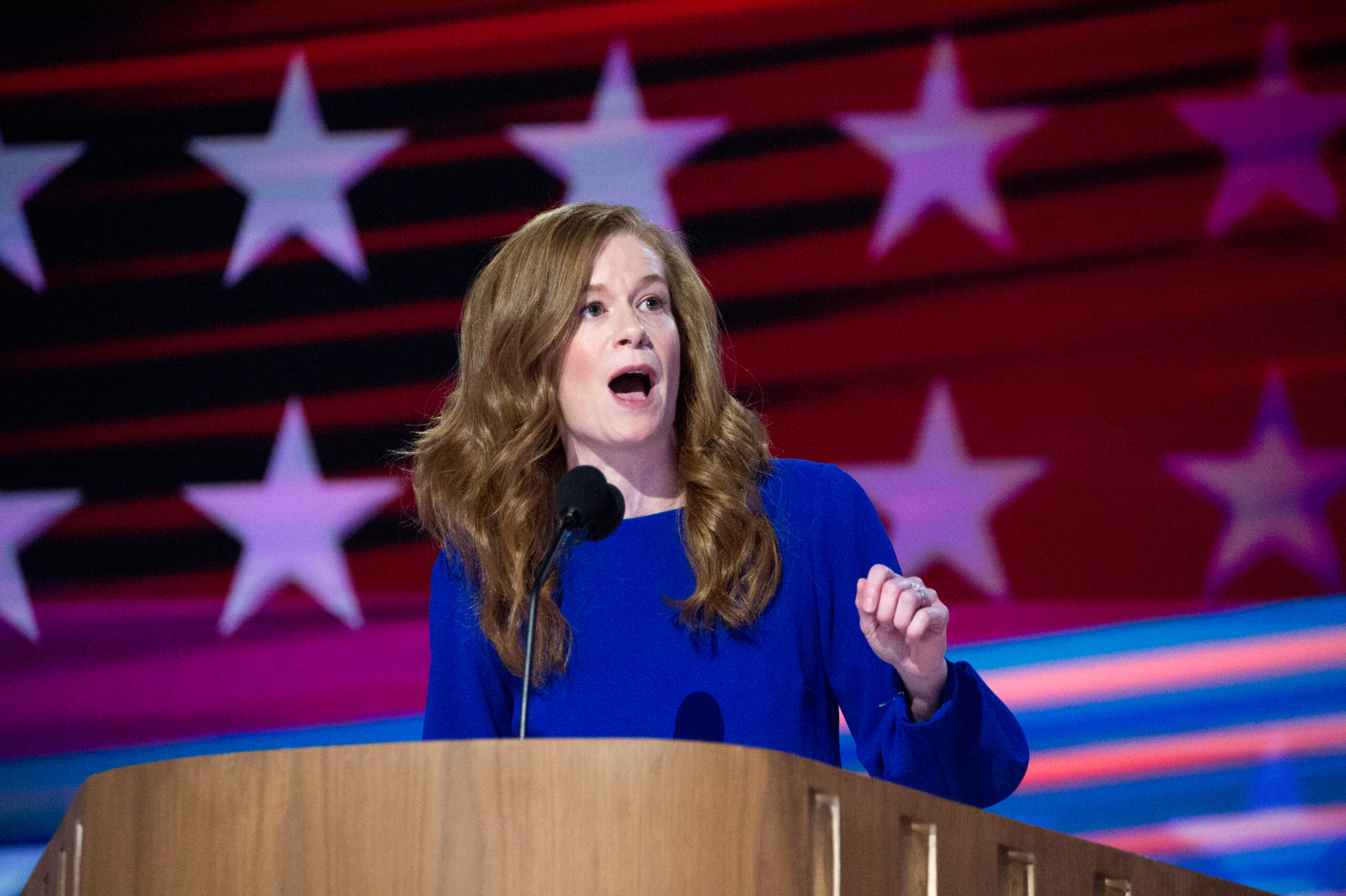
Michigan state Sen. Mallory McMorrow, who is running in a tight three-way Democratic primary for U.S. Senate, slammed one of her opponents, Abdul El-Sayed, for his decision to campaign with the far-left political streamer Hasan Piker, Jewish Insider’s Gabby Deutch reports from Royal Oak, Mich. Piker, who has a history of antisemitic and pro-Hamas remarks, is slated to appear at two campaign rallies with El-Sayed and Rep. Summer Lee (D-PA) in April.
What she said: “It is somebody who says extremely offensive things in order to generate clicks and views and followers, which is not entirely different from somebody like Nick Fuentes,” McMorrow told JI in an interview Thursday, referring to the neo-Nazi podcaster. “[Piker] is a provocateur, to put it lightly, who says things that are misogynistic and antisemitic, and said that the United States deserved 9/11. That is not somebody that you should be campaigning with at a moment when there is clearly a lot of pain and trauma across our state.”
TOXIC TECHNOLOGY

An AI-generated Instagram account portraying an Orthodox-looking rabbi is pushing antisemitic conspiracy theories to its more than 1.4 million followers, and it’s not the only one, a study published this week about antisemitic content on the social media platform has found, Jewish Insider’s Haley Cohen reports.
Findings: An account called “Rabbi Goldman” “uses fake, AI-created authority figures to spread hate” in “a troubling and growing tactic,” according to the report, published on Wednesday by the Combat Antisemitism Movement. The 12-page report documents 100 posts that researchers described as antisemitic, pushed directly to Instagram accounts over a 96-hour period from March 19-22. These posts, actively suggested by the platform’s recommendation systems, generated more than 5.3 million likes and 3.8 million shares, with an estimated reach of 150 to 280 million users, according to the report.
EXCLUSIVE
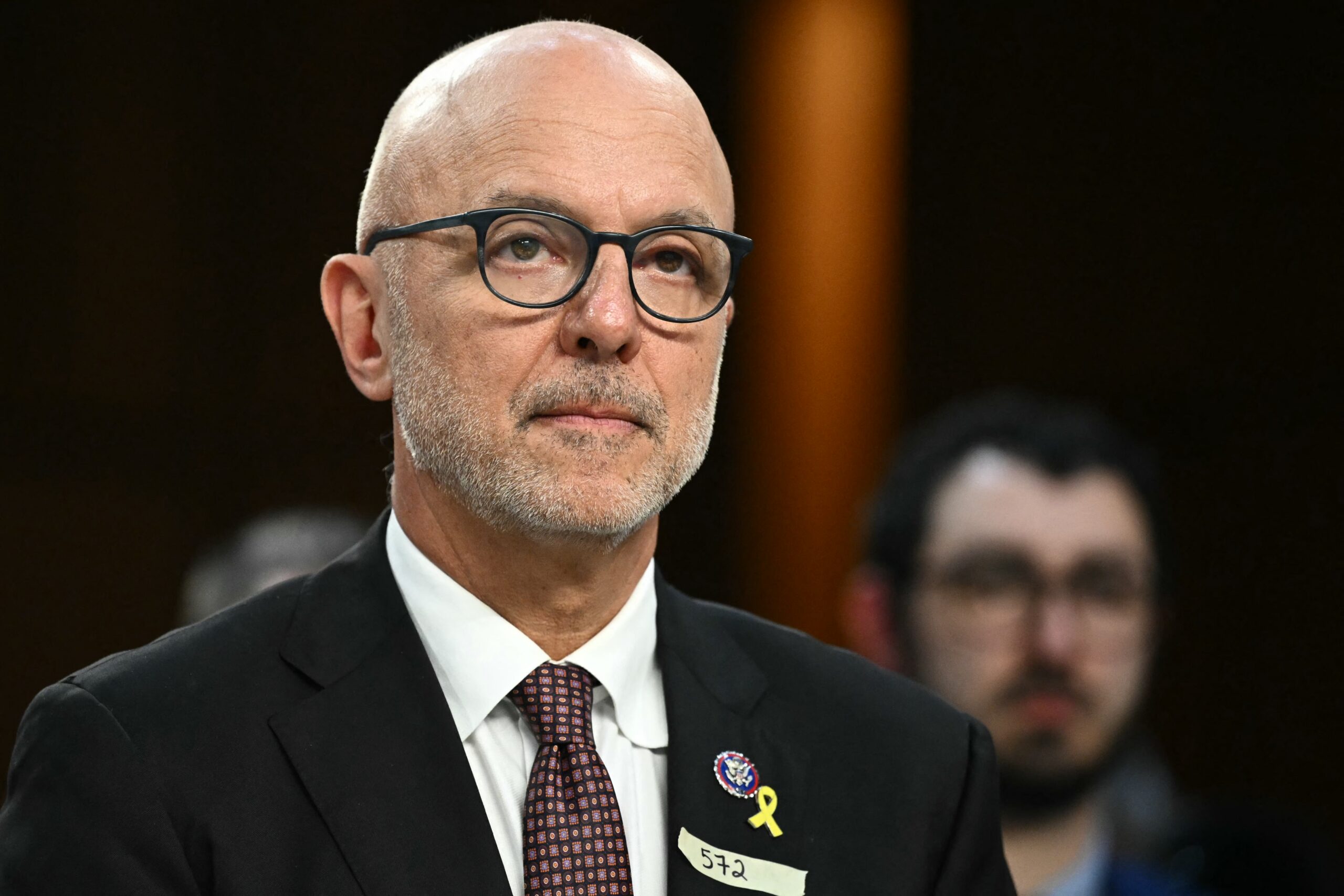
A new report by the American Jewish Committee, released on Friday, found that 73% of American Jews saw or heard antisemitism online in the last year and 21% said that the antisemitism they witnessed made them feel physically threatened, Jewish Insider’s Marc Rod reports.
Getting to the root: Top officials at the group say that this pervasive antisemitism online is the fundamental root of the current wave of antisemitic sentiment society-wide, including violent extremist attacks on Jewish communities in the U.S. and globally, and that protecting the Jewish community requires making real progress in tackling that problem. The group’s CEO, Ted Deutch, told JI in an interview on Thursday that the report further finds that those pushing antisemitic content have found an “alarming number of ways” to avoid rules on various platforms to safeguard against hate.
Piker problem: Deutch also said that Democratic lawmakers and candidates should not associate with far-left streamer Hasan Piker, who has a record of antisemitism and support for terrorism, drawing parallels between Piker on the far left and white supremacist influencer Nick Fuentes on the far right. “In both cases, each party should make clear that voices that aren’t representative of their parties have no place in an official campaign setting — shouldn’t be welcomed, shouldn’t be welcomed in to share their views,” Deutch said.
RIPPLE EFFECT?

As the conflict between the United States, Israel and Iran nears the one-month mark, experts say the war has diverted diplomatic and military attention away from Gaza, creating a mixed picture: Hamas has used the pause in sustained Israeli military pressure to reassert control in areas it still governs, while the degradation of Iran’s capabilities could ultimately leave the group weaker and more isolated once the conflict subsides, Jewish Insider’s Matthew Shea reports.
State of play: Matthew Levitt, director of The Washington Institute for Near East Policy’s program on counterterrorism and intelligence, said that while Hamas’ retrenchment in the enclave may cause concern, “the reality is [Hamas is] not able to expand beyond the less than half [of the enclave] that it controls.” He also noted that the current conflict in Iran may actually create the conditions to further weaken, pressure and isolate the terrorist group when the war subsides.
Fog of war: President Donald Trump announced on Thursday afternoon that he would extend his pause on plans to strike Iran’s energy infrastructure, “per Iranian government request,” for an additional 10 days amid ongoing diplomatic negotiations to end the war, JI’s Emily Jacobs reports.
GOP GAPS
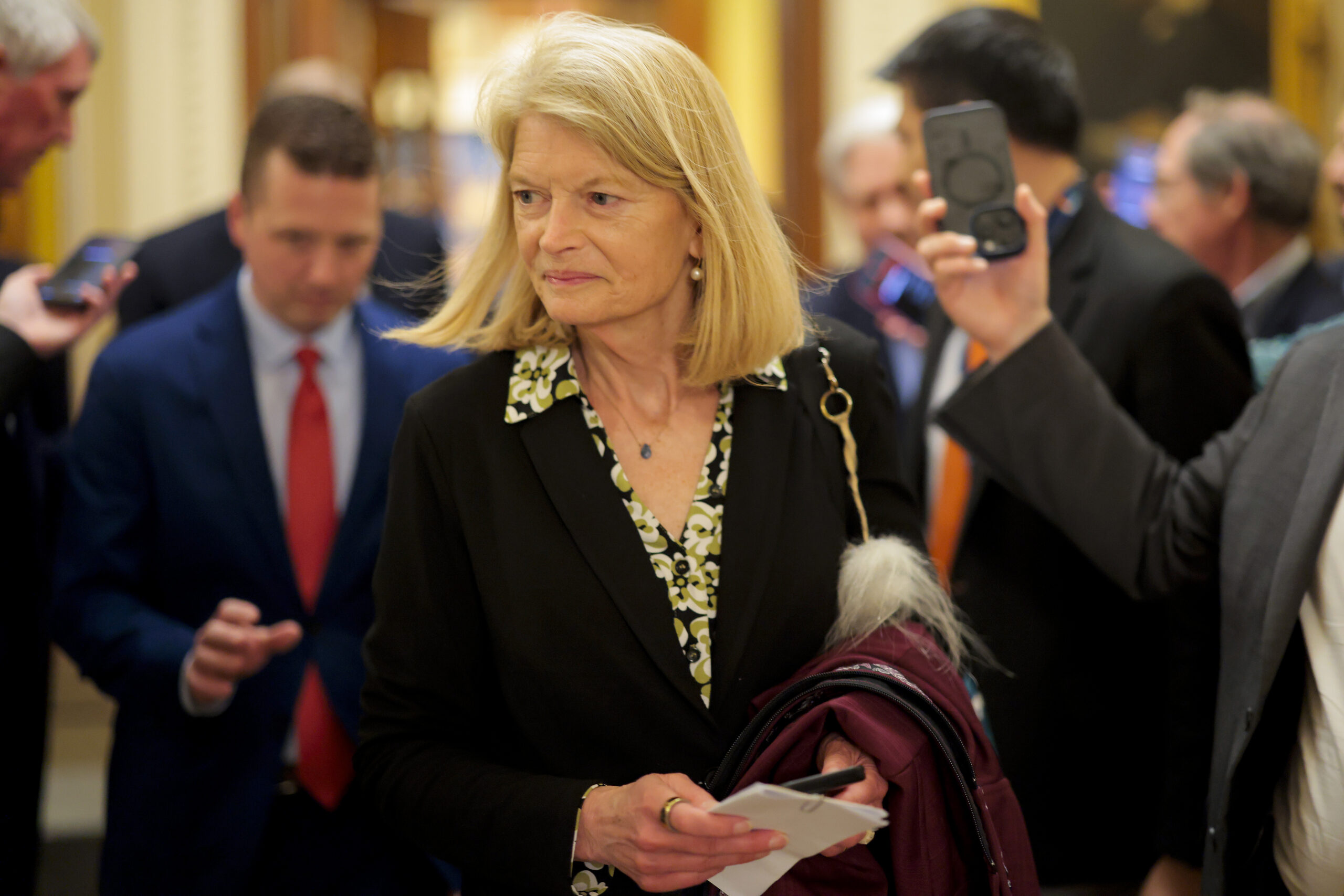
Republican lawmakers are growing frustrated with the war in Iran and with the administration’s frequently shifting rhetoric about it — including from some otherwise-hawkish lawmakers, Jewish Insider’s Marc Rod reports. Sen. Lisa Murkowski (R-AK), who previously called for an end to the war, told Bloomberg on Thursday that she’s working on a potential authorization for use of military force in Iran, to limit the scope of the U.S. operation and prevent the deployment of ground troops.
Cracks showing: “I don’t know what else to do,” Murkowski told the outlet. “I’m worried we get out of town and the president goes in with ground troops aiming for a full takeover.” The Senate is scheduled to be in recess for the next two weeks. Rep. Don Bacon (R-NE), who has generally been supportive of the war effort, told NOTUS on Thursday after a House Armed Services Committee briefing the day prior that he was unclear on the U.S.’ plans and goals in the war. “What is the end-state goal? What is the mission? I think clarity there would be helpful,” Bacon said.
Read the full story here for additional comments from Reps. Rob Wittmann (R-VA), Mike Rogers (R-AL) and Nancy Mace (R-SC).
Tehran talks: Jared Kushner, an informal Middle East envoy to the White House, said Thursday that Iran had not been serious about reaching a nuclear deal with the United States before President Donald Trump, his father-in-law, chose to attack the country in a joint military operation with Israel, JI’s Matthew Kassel reports.
PLAYING DEFENSE
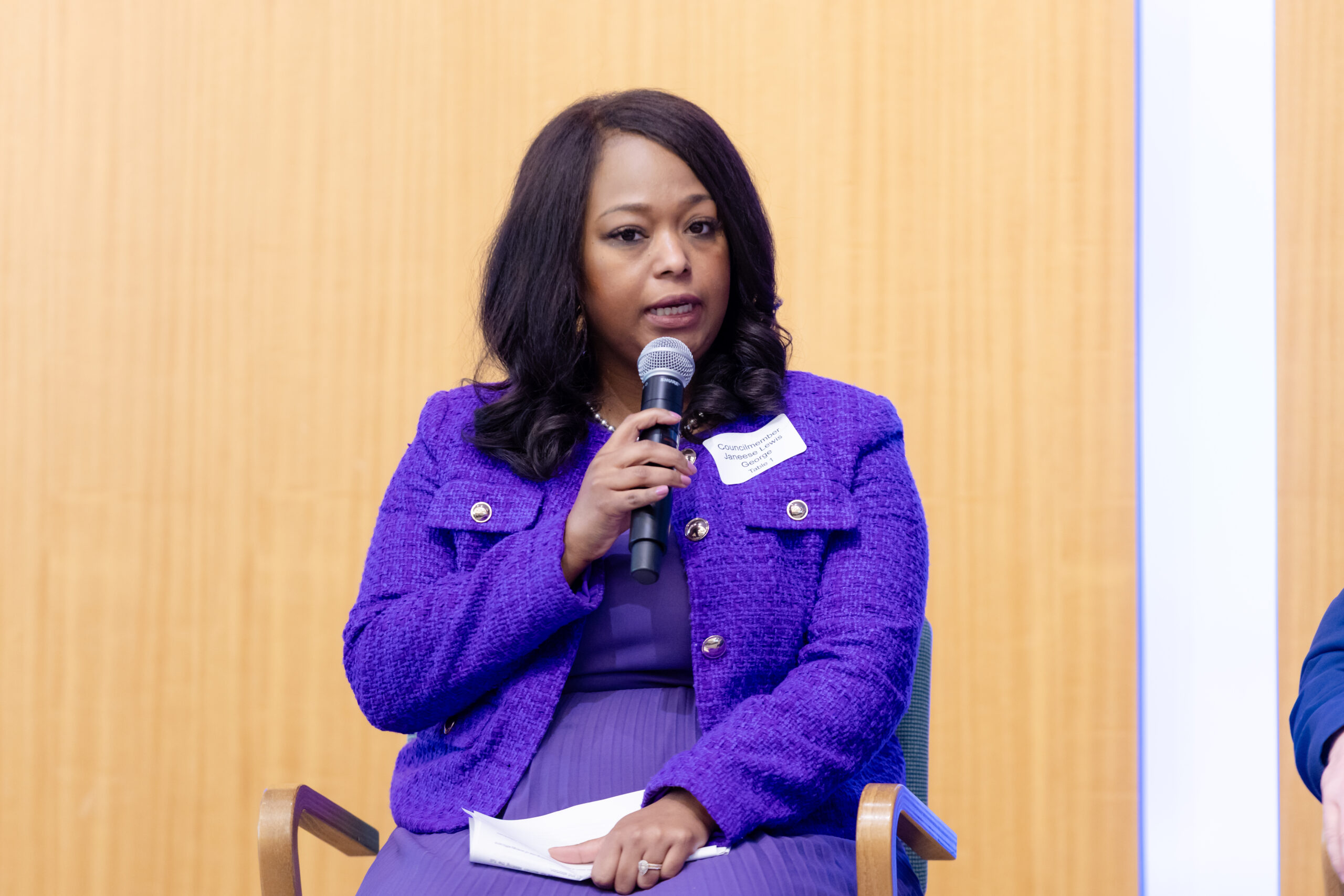
After Janeese Lewis George met last week with Washington rabbis and other local Jewish leaders who were concerned about her views on Israel and antisemitism, the Washington, D.C., mayoral candidate released a statement pledging to stand firm in both her opposition to antisemitism and her support for the Palestinian cause, Jewish Insider’s Gabby Deutch reports.
Statement: “Those two things are not in conflict,” Lewis George, who is endorsed by the Democratic Socialists of America, wrote in a statement that was posted to her campaign website on Wednesday. “To the Jewish community in DC: I will not be a mayor who includes or excludes you based on your opinions or feelings on matters here and across the world. I will always protect your freedom, safety, and sense of belonging,” Lewis George, a D.C. councilmember, wrote in the statement. Lewis George also noted that she was one of the first councilmembers in the District to call for a ceasefire in Gaza and that she met with students at George Washington University who were advocating for a ceasefire.
Worthy Reads
Blind Spot on Hate: In The Free Press, former U.K. Prime Minister Tony Blair examines what he considers to be the unwillingness of Western leaders to fight the ideologies that breed antisemitism. “The problem is that, under pressure from party activists and parts of the Muslim community, many progressive politicians who do sincerely reject antisemitism are not making these arguments, and failing to take head-on this literally ‘unholy alliance’ between parts of the left and Islamists in our own societies whose ideology leads inexorably to antisemitism. Because failure to do so creates the climate in which, even if antisemitism is not explicitly condoned, it flourishes.” [FreePress]
The 1930s Redux: The Wall Street Journal’s Natasha Dangoor looks at Jewish communal concerns about rising antisemitism in the West as “Jews the world over” become targets amid increasingly violent antisemitism tied to Israel’s wars in Gaza and Iran. “While the attacks gain global media attention, it is daily life that has gotten less comfortable for many Jews who participate in communal life. Outside synagogues and Jewish schools, concrete barriers, high walls and security personnel are a constant reminder of the threats they face. … ‘It feels like the 1930s,’ said Ralph Pais, a 45-year-old real-estate investor who splits his time between Antwerp and Brussels.” [WSJ]
The Brotherhood’s New Turf: In The Washington Post, Tareq Alotaiba, a fellow at the Belfer Center at Harvard University, considers why the Muslim Brotherhood has proliferated across Europe. “The modus operandi of the Brotherhood is patience — it waits until it is confident in its strength, then moves against the established state structure. … One challenge in addressing the threat lies in the group’s approach to its Islamist agenda. Although its ideology has inspired much terrorism, its methods have seldom been violent. The Brotherhood’s strategy is to slowly indoctrinate youth until the organization can leverage its societal influence into political control.” [WashPost]
Word on the Street
Vice President JD Vance, who Axios reports is increasingly taking on the Trump administration’s Iran negotiation efforts, met yesterday in Washington with Qatari Prime Minister Mohammed bin Abdulrahman Al Thani…
The Pentagon is mulling sending an additional 10,000 troops to the Middle East, after calling up thousands of paratroopers from the 82nd Airborne Division earlier this week…
The potential move comes as Israel, reportedly concerned that the U.S. could potentially wind down the war against Iran, increasingly targets the Islamic Republic’s military infrastructure in an effort to hobble the regime’s arms-production abilities…
Iran is indicating to the U.N. that it will enforce a kind of “toll” for vessels to access the Strait of Hormuz, as it maintains control of the vital waterway…
The New York Times does a deep dive into Binance’s failure to stop the transmission of $1.7 billion in cryptocurrency to Iran-linked groups in violation of U.S. sanctions…
David Sacks departed his role as the White House’s AI and crypto czar after hitting the 130-day limit as a special government employee; Sacks will continue to serve as co-chair of the President’s Council of Advisors on Science and Technology…
The State Department is sending $1.25 billion to the Board of Peace, the majority of which was taken from funds ear marked for international disaster assistance…
The Senate approved by unanimous consent a proposal to fund most of the programs under the Department of Homeland Security; Immigration and Customs Enforcement and the Border Patrol were omitted from the late-night deal…
Sens. Ted Budd (R-NC) and Joni Ernst (R-IA) introduced the Abraham Accords Defense Cooperation Act, which requires the administration to establish a cooperation initiative with Abraham Accords countries and creates a funding avenue for such cooperative efforts…
The selection committee in Columbia University’s history department recommended the school hire Rosie Bsheer, who was removed from her leadership role at Harvard’s Center for Middle Eastern Studies over the center’s imbalanced programming on the Israeli-Palestinian conflict, for the New York school’s next Edward Said Professorship in Modern Arab Studies and Literature…
The Free Press spotlights the political trajectory of far-left activist Calla Walsh, the former Democratic organizer who interned for Sens. Elizabeth Warren (D-MA) and Ed Markey (D-MA) before becoming more aligned with the Democratic Socialists of America, serving jail time for anti-Israel vandalism and eventually relocating to a Hezbollah stronghold in Lebanon, where the 21-year-old now lives…
The Jewish Federation of Detroit condemned “recent remarks from prominent individuals praising U.S.-designated terrorist organization Hezbollah and downplaying the attack on Temple Israel,” following Detroit News interviews with prominent Arab American activists in the Detroit area, including the publisher of the Arab American News, expressing support for the terror group…
Lean In, the nonprofit founded by Sheryl Sandberg, has lost approximately a quarter of its staff as the Sandberg Goldberg Bernthal Family Foundation scales up its efforts to combat the “manosphere” and “tradwife” movements gaining traction among young people…
The New York Times reviews “Yes,” writer-director Nadav Lapid’s latest satirical film, which takes place in the aftermath of the Oct. 7, 2023, attacks and spotlights a fictional couple who tries to ingratiate themselves with the country’s powerbrokers…
A judge in Montreal dropped charges against a woman who made a Nazi salute at pro-Israel demonstrators and repeatedly threatened that they would be targeted with a “final solution”…
Authorities in London announced charges against a Palestinian British doctor with a history of making antisemitic comments online of having invited support for Hamas on multiple occasions…
Two British men arrested in connection with an arson attack on Hatzola ambulances in London’s Golders Green suburb were released on bail…
Israeli-born professor Edna Foa, who pioneered the use of prolonged exposure therapy to treat PTSD, died at 88…
Pic of the Day

Former Israeli hostage Bar Kupershtein released the music video for his song, “The Last War,” which recounts his time in captivity in Gaza and recovery after his release in October. The music video includes clips of Kupershtein with his father, Tal, who relearned to talk after surviving a stroke in order to advocate for his son’s release.
Birthdays
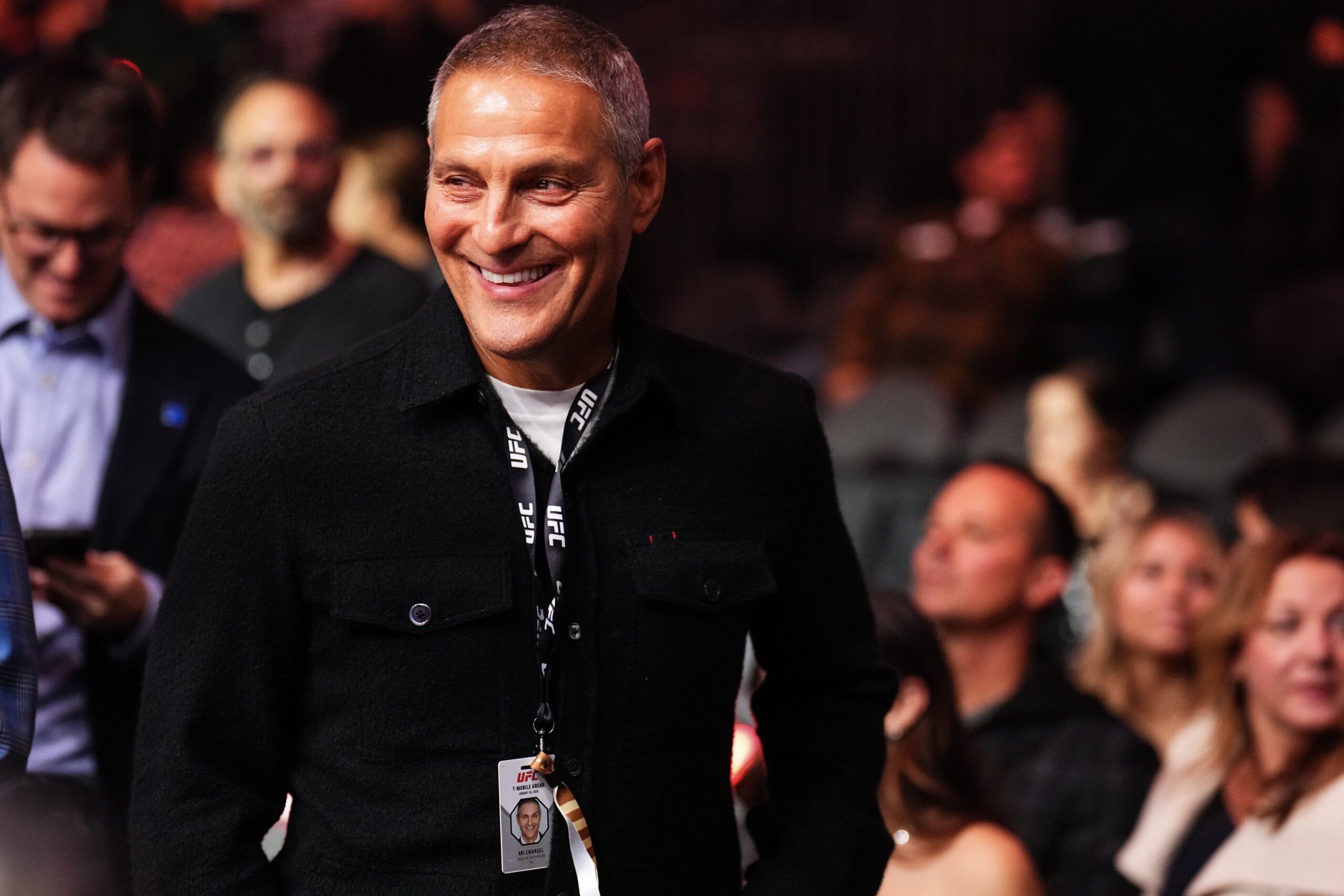
Hollywood mogul, CEO of Endeavor and CEO and executive chairman of TKO Group Holdings, which owns the UFC and WWE, Ariel Zev “Ari” Emanuel turns 65 on Sunday…
FRIDAY: Composer and violinist, he has been active in the presentation of new music and dance since the early 1960s, Malcolm Goldstein turns 90… President for 28 years at the Jewish United Fund/Jewish Federation of Metropolitan Chicago, he is now its executive vice chairman, Steven B. Nasatir turns 81… Principal technology columnist for The Wall Street Journal until 2013, then the executive editor of The Verge and editor-at-large of Recode, he is now retired, Walter S. Mossberg turns 79… Executive director at Milwaukee’s Grand Avenue Club (a mental health center), Rachel Forman… Chairman and CEO of First International Resources in Fort Lee, N.J., Zev Furst turns 78… Sports agent who has represented the No. 1 overall pick in the NFL draft eight times, he is the real-life inspiration of the sports agent in the film “Jerry Maguire” in 1996, Leigh Steinberg turns 77… Retired host of the “Matty in the Morning Show,” which ran for 41 years in Massachusetts on KISS 108, Matt Siegel turns 76… Deputy director of leadership giving at Baruch College, Linda Altshuler… Former member of the Knesset, he resigned in January 2026 to become deputy communications minister, Yisrael Eichler turns 71… Moral philosopher, she is the director of the Einstein Forum in Potsdam, Germany, Susan Neiman turns 71… Former NFL linebacker, now president of Performance Coaching (training real estate agents), he was a captain of the Miami Dolphins in Super Bowl XVII (1983), Steven Mark Shull turns 68… Economist and banker in Latvia, Valerijs Kargins turns 65… Smooth jazz saxophonist, he has been recognized with a star on the Hollywood Walk of Fame, Dave Koz turns 63… Actress and producer, now serving as senior VP at the Youth Renewal Fund, Sabrina Wachtel Kurzman turns 62… Managing director of Maimonides Fund, he is a 1994 graduate of Columbia Law School, Daniel Gamulka… CEO since 2004 of BBYO, an organization launched almost 100 years ago (formerly B’nai B’rith Youth Organization), Matthew Grossman turns 55… President of NYC’s Tenement Museum, Dr. Annie Polland… Founder and CEO of the Movement Vision Lab, a grassroots think tank, she is a political commentator and community organizer, Sally Kohn turns 49… Associate professor at Columbia University School of the Arts, she is the author of six full-length collections of poetry, Dorothea Lasky turns 48… Human rights attorney and head of the Sydney office of the Australia/Israel & Jewish Affairs Council, Arsen Ostrovsky turns 46… Senior political reporter at MS NOW, Jacob Hirsch Soboroff turns 43… Hitting coach in the Los Angeles Dodgers organization, he played for Team Israel at the 2017 World Baseball Classic and the 2020 Olympics, Blake Shane Gailen turns 41… Former professional ice hockey player, he played on Israel’s national team and in the U.S., Canada and Japan, now a partner at McKinsey & Company, Oren Eizenman turns 41… VP at SignalFlare.ai, he is a former associate director in the NYC area for AIPAC, Adam B. Engel… Assistant principal at Snowden Farm Elementary School in Clarksburg, Md., Kayla Brameyer… Communications and social media specialist, Daniella Greenbaum Davis… Son of Jared and Ivanka, Theodore James Kushner turns 10…
SATURDAY: Professor emeritus of physics at the Massachusetts Institute of Technology, winner of the 1990 Nobel Prize in physics, Jerome Isaac Friedman turns 96… Chairman and CEO of the Hartz Group and Hartz Mountain Corporation, a leading seller of pet supplies, Leonard Norman Stern turns 88… Israeli electrical engineer and business executive, he was the founder and first general manager of Intel Israel and the inventor of the EPROM chip, Dov Frohman turns 87… Expert on the pharmaceutical and healthcare industries, and wife of the late U.S. Sen. and VPOTUS candidate Joe Lieberman, Hadassah Lieberman turns 78… Glenview, Ill., resident, Genie Kutchins… Iranian-born CEO of Los Angeles-based toy company MGA Entertainment (maker of Little Tikes and Bratz and Lalaloopsy dolls), Isaac Larian turns 72… Former member of the Knesset for 13 years, she served as the leader of the Israeli Labor Party, Shelly Yachimovich turns 66… Special envoy and coordinator for the U.S. Department of State’s Global Engagement Center during the Biden administration, James Phillip Rubin turns 66… One of four hostages held at gunpoint for 11 hours at Congregation Beth Israel in Colleyville, Texas, in January 2022, Jeffrey R. Cohen… Former rhythmic gymnast, now teaching yoga in Connecticut, she represented the U.S. at the 1984 Summer Olympics, Valerie Le Zimring-Schneiderman turns 61… “Lexington” columnist at The Economist, he is the younger brother of U.S. Sen. Michael Bennet (D-CO), James Douglas Bennet turns 60… Presidential historian and Jewish liaison in the Bush 43 administration, he is now a senior scholar at Yeshiva University and a senior fellow at the Ronald Reagan Institute, Tevi Troy turns 59… President and CEO of Hillel: The Foundation for Jewish Campus Life, Adam Lehman turns 59… Film producer, entertainment executive and director of movies, music videos and television programs, Brett Ratner turns 57… Journalist, crime writer and blogger who has spent most of his career in Japan, he assisted the U.S. State Department’s investigation into human trafficking in Japan, Jake Adelstein turns 57… Israeli journalist, she is both a television and radio news presenter, Keren Neubach turns 56… Novelist, television producer and journalist, one of her novels was made into a major motion picture, Jennifer Weiner turns 56… U.S. senator (R-FL), she was appointed last year to the seat vacated by Secretary of State Marco Rubio, Ashley Moody turns 51… Author of eight best-selling novels including in 2003 The Devil Wears Prada, based upon the author’s time as an assistant to Vogue Editor-in-Chief Anna Wintour, Lauren Weisberger turns 49… Member of the Knesset since 2015 for the Likud party, now serving as the minister of culture and sports, Makhlouf “Miki” Zohar turns 46… Benjy Spiro… Los Angeles-based, Israeli-born fashion designer, Yotam Solomon turns 39… Retired MLB outfielder for the Boston Red Sox and the Chicago Cubs, now a real estate developer in Bali, Indonesia, Ryan Kalish turns 38… VP at Tradepoint Atlantic, a 3,300-acre global logistics center near Baltimore, Michael Hurwitz… SVP of asset management at Hackman Capital Partners, Zachary David Sokoloff… Quarterback for the Tulane University Green Wave football team, Jake Retzlaff turns 24…
SUNDAY: Israeli chemist, professor emeritus at the Hebrew University of Jerusalem and at UCLA, winner of the 1974 Israel Prize and the 1988 Wolf Prize in Chemistry, Raphael David Levine turns 88… Organizer of the annual morning minyan services since 1983 for runners in the NYC Marathon, Peter Berkowsky turns 84… Attorney, New York Times best-selling author and sports agent for many athletes including Cal Ripken, Jim Palmer, Brooks Robinson, Kirby Puckett and Eddie Murray, Ronald M. Shapiro turns 83… Houston-based labor law, employment law and personal injury attorney, active in Jewish organizations, Carol Cohen Nelkin… University of Chicago professor and winner of the 2007 Nobel Prize in economics, Roger Myerson turns 75… Investor, computer scientist and founder of D. E. Shaw & Co., a hedge fund based upon high-speed quantitative trading, David Elliot Shaw turns 75… Economist, professor emeritus at NYU and chairman and CEO of consulting firm Roubini Macro Associates, Nouriel Roubini turns 68… Miami businesswoman, JoAnne Papir… U.S. Deputy Secretary of Defense, he was the co-founder and co-CEO of Cerberus Capital Management, Stephen Andrew Feinberg turns 66… U.S. senator (D-NV), Catherine Cortez Masto turns 62… Director of the Mossad, Israel’s national intelligence agency, David Barnea turns 61… French film director and writer, best known for his 2011 film “The Artist,” which won five Academy Awards including Best Picture, Michel Hazanavicius turns 59… Budget secretary for the Commonwealth of Pennsylvania, Uri Z. Monson turns 57… Vice president and senior advisor at The Rockefeller Foundation and adjunct fellow at The Washington Institute for Near East Policy, Eric Pelofsky… Founder of Leopard Strategies, Liz Jaff… White House staff secretary in the Trump administration, Will Scharf turns 40… Communications director for Sen. Cory Booker (D-NJ), David A. Bergstein… Associate director at Power Insights, Annie Rosen Pai… Director of business development at Logical Buildings, Alex Zafran…
The report from Combat Antisemitism Movement found the platform has actively recommended this content to millions of users
Illustration by Jonathan Raa/NurPhoto via Getty Images
The Instagram logo is being displayed on a smartphone among other social media networks in this photo illustration in Brussels, Belgium, on January 22, 2024.
An AI-generated Instagram account portraying an Orthodox-looking rabbi is pushing antisemitic conspiracy theories to its more than 1.4 million followers, and it’s not the only one, a study published this week about antisemitic content on the social media platform has found.
An account called “Rabbi Goldman” “uses fake, AI-created authority figures to spread hate” in “a troubling and growing tactic,” according to the report, published on Wednesday by the Combat Antisemitism Movement.
The 12-page report, titled “Engineered Exposure: How Antisemitic Content Is Pushed and Amplified to Millions Across Instagram,” documents 100 posts that researchers described as antisemitic, pushed directly to Instagram accounts over a 96-hour period from March 19-22.
These posts, actively suggested by the platform’s recommendation systems, generated more than 5.3 million likes and 3.8 million shares, with an estimated reach of 150 to 280 million users, according to the report.
CAM defined antisemitic posts as ones that invoke conspiracy theories — such as Jews controlling the media or manipulating global conflicts — and posts that claim Jews, often referred to as “Zionists,” are linked to demonic forces or satanic imagery, all of which have been used to justify antisemitic violence.
The report raises particular concern around the creation of “closed content environments,” in which users are repeatedly fed similar antisemitic themes, with little or no countervailing content.
“This type of algorithmic clustering reaffirms dangerous beliefs, contributing to a process of radicalization that can have lethal real-world consequences,” the report states. Researchers identified 12 AI-generated “rabbis” with a combined following of 2.1 million Instagram users, all of which promote classic antisemitic stereotypes.
The “Rabbi Goldman” account features many of these, including one video in which the “rabbi,” wearing a tuxedo and seemingly seated in a luxury airplane, claims that Jews utilize empty private jets to evade taxes. The community note attached to the clip reads, “This is an AI generated rabbi who is trying to scam you by selling a fake 9$ get rich handbook. This account is ran by scammers based in south India.”

Meta, which is the parent company of Instagram — as well as Facebook and WhatsApp — did not respond to a request for comment from Jewish Insider about the report’s findings.
“Simply put, this is evidence of a broad systemic failure on the part of Instagram and Meta,” Sacha Roytman, the CEO of CAM, said in a statement. “When a platform actively recommends content that dehumanizes Jews to mass audiences, we are no longer talking about a simple oversight or a mistake in the algorithmic design. We are talking about infrastructure that normalizes hatred at scale that must be addressed immediately.”
“CAM is calling on Meta to go beyond basic enforcement and take real responsibility. What’s been uncovered here must be taken seriously. This isn’t a fringe problem. Rather, it points to a broader, systemic issue with global reach, shaping how millions of people encounter and engage with antisemitic ideas in 2026,” the report states.
Last year, Meta received pushback from Jewish leaders when it introduced a new community-driven fact-checking system, ending its third-party fact-checking program and replacing it with a system modeled after the community notes feature on Elon Musk’s X. Some Jewish leaders expressed concern that the move would “open the floodgates to content” that could target Jewish communities and individuals, and called the decision a “step back” in the fight against rising antisemitism.
Dangerous implications of social media have extended beyond the Jewish community, with a jury in Los Angeles ruling on Wednesday that Meta, as well as Google, are liable for creating addictive products that caused a teenager’s depression and anxiety. The verdict marks the first time juries have decided that tech companies are at least partially liable for distress online and offline.
As chief of staff for freshman Rep. Michelle Steel, Arie Dana makes history on Capitol Hill

Hilary Eldridge/Jewish Insider
Arie Dana
When Arie Dana walked up to a Capitol Hill coffee shop on a recent spring morning, I called him over to my table. “How’d you know it was me?” he asked. “Because I look like the Jewish guy?”
In a fitted blue suit, a navy sweater and light brown oxfords, Dana looked the part of a young, ambitious congressional staffer. He wore round tortoiseshell glasses; his combed-back graying hair appeared perfectly in place.
What gave Dana away as “the Jewish guy” — even more than the yarmulke on the back of his head — was his beard. In some places it extended more than a foot, the dark brown hair interspersed with gray. Dana has an identical twin brother, but “I’m the only bearded one of the family,” he told me, smiling. During our conversation, a young man with unkempt curly hair walked by and shouted “Nice beard, dude!” Dana thanked him.
Nine days after his December 2020 wedding to a woman he met at the University of Southern California Chabad house on Rosh Hashanah, Dana moved to Washington D.C. to serve as the chief of staff for newly elected freshman Rep. Michelle Steel (R-CA), for whom he has worked since graduating college more than a decade ago.
***
Dana’s journey to this moment began during his freshman year at USC. “I was a College Republican, and one of my fellow College Republican friends was Michelle [Steel]’s daughter,” Dana said.
After graduating, he took an internship with a California state assemblyman, until he received a call from his College Republicans friend. “Michelle’s daughter said to me, ‘Hey, I think my mom is looking for a communications director, are you interested in applying?’” Dana had previously volunteered on her 2006 campaign for the State Board of Equalization, the only elected tax commission in the country. He took the job.
Last November, Steel, then a member of the Orange County Board of Supervisors, beat incumbent first-term Democrat Harley Rouda (D-CA) to become one of the first three Korean-born members of Congress. (Young Kim (R-CA) also represents parts of Orange County, while Marilyn Strickland (D-WA) represents the area around Tacoma, Wash.)
“I was actually in Crown Heights” — the Brooklyn neighborhood home to the global headquarters of the Chabad-Lubavitch movement — “doing some pre-wedding shopping with my fiancée, and I got an email: ‘Arie, book your flight to D.C. for orientation,’” he recounted. He got on a plane to Washington, and “by the end of the orientation, she asked me to be her chief of staff,” Dana recalled.
“Arie has been a dedicated member of my team for more than 10 years in three different elected positions,” Steel told JI. “Arie is the one who introduced me to Orange County’s Jewish community, and I’m grateful for his leadership, which is needed here in Washington.”

Dana is far from the first Orthodox Jew to work on the Hill. There was Peter Deutsch, a former member of Congress who now lives in Israel, and of course Sen. Joe Lieberman (I-CT), who went on to serve as Al Gore’s running mate on the 2000 Democratic ticket. Before Jack Lew served as Treasury secretary under Barack Obama, he was a staffer for House Speaker Tip O’Neill.
But according to Rabbi Levi Shemtov, executive vice president of American Friends of Lubavitch (Chabad) and Washington’s most prominent Chabad rabbi, “there has never before been a chief of staff to a member — which is the most senior position you get — who was Hasidic in appearance and in observance.” Put more bluntly: “You’ve had many people who were shomer Shabbas, but they were not as outwardly recognizable as observant as Arie Dana,” Shemtov explained. “This speaks volumes about what it is possible to achieve in America without compromising religious principles.”
***
When Dana was a freshman at USC, he met Rabbi Dov Wagner, the school’s Chabad rabbi. “We always do, on Sukkot, a sukkah in the middle of campus, and offer students the opportunity to make a blessing over the lulav and etrog,” Wagner told JI. “He stopped by the sukkah at that time and made a little connection.” Dana would not reconnect with Wagner in a serious way until after he graduated.
Raised by Mexican parents in the Brentwood neighborhood of Los Angeles, Dana did not grow up Orthodox. “In Mexico, some of the different Jewish denominations that you see in [the U.S.] don’t really exist,” he explained. “There’s less religious and there’s more religious, but it’s a very traditional environment.”
Dana had his bar mitzvah at a Reform congregation. “We were the first people, I think, who put on tefillin, ever, in this temple for our bar mitzvah, and it was something that I kept up doing,” Dana said. In college, “I was looking for ways to be more religiously involved. But I also had my parents at home, and we had Shabbat dinner every Friday night,” which did not leave much time for him to get involved with Jewish groups on campus.
Both Dana and his twin brother started at USC as architecture majors, though Arie later changed his major to religion. (His brother and his sister-in-law, who is also an architect, are now working on an expansion for the USC Chabad house.)
Dana’s family was not politically active when he was growing up. He was a teenager on Sept. 11, 2001, “which was a very transformative thing to happen your freshman year of high school,” Dana noted. He started reading up on the Middle East, terrorism and foreign affairs, before expanding into other topics.
“I started reading a lot of libertarian thinkers and philosophers and got into the idea of the free market [as] a great way to help individuals from all backgrounds earn their own success,” Dana explained. “Freedom — in that sense of letting people on their own choose how they want to create their own communities without external force — made me really interested in the political world.”
Apparently, it’s a value espoused by Steel as well: Years later, when she was elected to Congress, she joined the “Freedom Force,” a group of Republican members formed to counter Alexandria Ocasio-Cortez’s progressive “Squad.”
But first, at the State Board of Equalization, Dana received an education in big government. There’s “this big state agency,” Dana explained, that, in his view, could get in the way of “allow[ing] people to have the most freedom possible to live their lives the way they want to.”
At the same time, he was also receiving a new religious education. “I had this great idea that I was going to be an Orthodox Sephardic Jew,” Dana said. But there was no Sephardic community near where he was living, so he began learning again with Rabbi Wagner from USC. They had reconnected when Dana came to Chabad alumni events with a woman he was dating at the time.
“He had this incredible journey of really engaging in his Judaism very seriously and making it an important part of his life,” said Wagner, the USC rabbi. Dana and Wagner would study the teachings of the Lubavitcher Rebbe, Menachem Mendel Schneerson, together. “Learning those things drew me into starting to study chassidus more. And then over time, I was just like, ‘Oh, I think I think this is where I’m supposed to be,” he noted.
He began to observe Shabbat and keep kosher, which is when people close to him noticed his new observance. “With friends, it was a little bit harder than it was at work,” Dana recounted. “The standard thing is to go out to dinner, or [hang out on] Friday nights, and you can’t do any of those things anymore.”
At work, “it started out with me just turning off my phone on Friday evenings. I didn’t really say so much about it,” he recalled. “Then [Steel] asked me, ‘Hey, why do you wait and not answer your phone until Saturday night?’” [I responded] ‘Oh, because I’m starting to keep the Sabbath.’”
Last winter, Dana and Steel “already had a general understanding of many years,” he said. So when Orange County officials had to have an emergency press conference about the coronavirus, Steel knew not to call Dana. “It ended up being a Saturday morning press conference in Orange County, where they ended up announcing that there was going to be a state of emergency,” Dana explained. “I found out about it Saturday night. I was like, okay, it’s gonna be a busy week,” he said.
It ended up being not just a busy week but a busy year, as the virus spread and Steel’s campaign for Congress heated up. “It was a lot of work in those days. I was leaving barely enough time to get home, and I would just rush home and change quickly and go to synagogue — or not go to synagogue; I stayed at home because everything closed, which in a way makes it easier,” he said.
“Arie has been a dedicated member of my team for more than 10 years in three different elected positions,” Steel told JI. “Arie is the one who introduced me to Orange County’s Jewish community, and I’m grateful for his leadership, which is needed here in Washington.”
One silver lining of the pandemic was the Rosh Hashanah dinner where Dana met his soon-to-be wife. “Even during COVID,” said Wagner, “the right people come together.” Dana had been spending a lot of time with Wagner, with most other Jewish organizations not holding events. On Rosh Hashanah, his future wife Chana “just showed up at our door, looking for a place” to celebrate the holiday, Wagner recalled. “Of the very few guests there, two of them met and, thankfully, hit it off.”
They got married in December, and nine days later moved across the country to the first place Dana had ever lived outside of Los Angeles. About a week later, rioters stormed the Capitol.
Dana and his team were in Steel’s office, trying to get the congresswoman out of the Capitol complex — she had tested positive for the coronavirus that morning and did not want to infect her staffers. “We had doctor’s orders, of course, to get her out of the Capitol as fast as we could so that she could go isolate,” Dana said. But when he called the sergeant-at-arms’ office to ask for the best way out, the response was: “There is no safe way out at this time.” So Dana and the other staffers stayed in one wing of the office while Steel isolated in her personal office, keeping the door closed for the next 10 hours that they were trapped together. Her case ended up being mild, and no one else in the office got sick.
Insurrection aside, Dana has also missed the celebrations and events that typically mark the beginning of a new congressional session. He had to a hire an entirely new team, looking for people who “have experience on what the Hill is like” and understand things like ”what the schedule for a day is like, what do the votes mean, the procedural rules.” Back in Orange County, “there aren’t 2 a.m. votes on Friday night,” Dana explained. “Official business was a lot more regimented and scheduled.” Amid all the new things to learn, he at least knew that his boss understood why he could not be present during those rare Friday night votes.
The new job brings new policy areas for Dana to learn about, but “we’re trying to be focused on local issues anway,” he said. “The foreign policy side is probably the biggest single change,” he added, but “with the congresswoman being very involved in the Asian-American community,” she already had some experience in foreign affairs. Since coming to Washington, Steel has joined with other Asian American members of Congress to call out violence against the Asian American Pacific Islander community, including after the mass shooting at a series of Asian-owned massage parlors in Atlanta this week. “What happened in Atlanta last night was senseless and tragic, and unfortunately only adds to a long list of recent violent crimes against our Asian American and Pacific Islander community,” Steel said in a statement, before testifying yesterday at a congressional hearing on anti-Asian American discrimination.
According to Dana, Steel also sees collaboration with Israel as a priority. “Water issues are something that’s a huge deal in California, and we have hi-tech and biomedical innovation,” said Dana. “She’s talked a lot about trying to find priorities of places to work together with Israel and the United States to advance that type of innovative spirit and find solutions to those types of issues.”
Dana is excited to explore Washington’s Jewish community more as the weather improves and the pandemic subsides. “I’m really eager to see what the Jewish community is like,” Dana said. Capitol Hill is not known for having a large Orthodox community, but “we’ve had a very warm welcome from the community that there is.” On a typical Saturday, Dana normally walks across town to Chabad in Dupont Circle.
The lack of kosher restaurants in the District is also an adjustment, with the presence of just a single kosher meat restaurant, CharBar. But in some ways, that reminds Dana of home: “Orange County also had only one kosher restaurant.”
Please log in if you already have a subscription, or subscribe to access the latest updates.
 Continue with Google

 Continue with Apple