














































































The U.S. ambassador to Turkey floated an overland route for regional trade centered on Iraq, sidelining the India-Middle East-Europe Economic Corridor meant to run through Israel
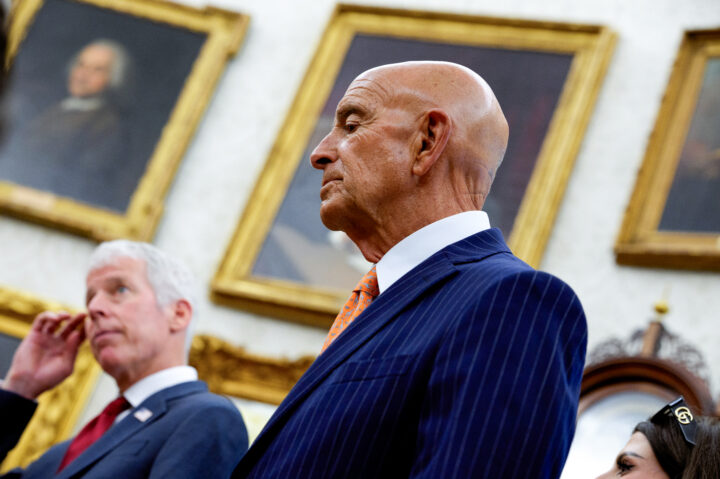
Photo by Andrew Harnik/Getty Images
U.S. Ambassador to Turkey Thomas Barrack attend a meeting with U.S. President Donald Trump and Prime Minister of Iraq Ali al-Zaidi in the Oval Office of the White House on July 14, 2026 in Washington, D.C.


 Add JewishInsider on Google
U.S. Ambassador to Turkey Tom Barrack on Friday promoted a new regional trade and security alignment in the Middle East centered around Iraq, Turkey and neighboring Arab states, appearing to sideline a similar regional project including Israel.
Speaking at the U.S.-Iraq Business Summit, Barrack told attendees that Iraqi Prime Minister Ali al-Zaidi, who visited with President Donald Trump at the White House this week, is considering a transformative agreement “that will make the Strait of Hormuz” — which has been effectively shut down due to the Iran war and continued hostilities — an “afterthought in two years” by shifting trade that usually passes through the waterway to overland routes.
“What this young leader [al-Zaidi] has in mind — aligned with Syria, Jordan, Turkey, Lebanon, Egypt — is a program that will make the Strait of Hormuz an afterthought in two years,” Barrack said. “We’re going from just-in-time delivery on boats through these minor straits to just-in-case delivery going the other way.”
The proposal appears to serve as an alternative framework to the stalled India-Middle East-Europe Economic Corridor (IMEC), which has faced roadblocks following regional turmoil and the Oct. 7, 2023, Hamas terror attacks. While the original IMEC agreement included Israel as a vital transit point connecting India to Europe via the UAE and Saudi Arabia, the newly envisioned corridor relies instead on a coalition featuring Syria, Lebanon and Jordan.
The State Department also released a statement on Friday welcoming the announcement of cooperation between Iraq and Syria on the “rehabilitation and reconstruction of the Iraq-Syria crude oil pipeline as a priority infrastructure project of bilateral and regional strategic significance.”
“We feel the chaos on one side, but actually, what’s happened is a brilliant realignment of security and strategic alliances in the region,” Barrack said in his remarks, with “Iraq being at the forefront of a new strategic security alliance.”
Barrack praised Trump for recognizing the necessity of working with localized “strong leaders” rather than enforcing Western-style regime change, which he admitted has historically failed.
“The connectivity of what can happen is mind-boggling,” he continued. “So, if we now take from Turkey, Azerbaijan, to Turkmenistan through Central Asia, the amount of gas that can be sent the other way towards Europe through commerce, we’re starting to find a way to create a different fabric.”
A U.S. official called Iran's actions ‘wholly unacceptable’ but said negotiators continue to work ‘in good faith’ toward a final deal
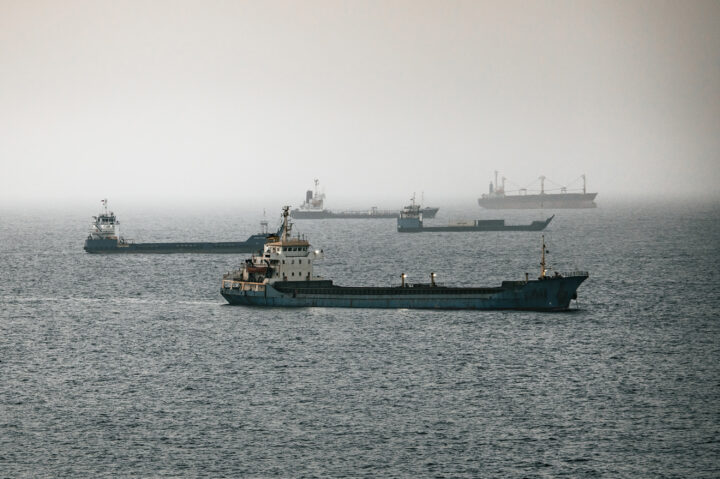
Photo by Elke Scholiers/Getty Images
Crude oil tankers, bulk carriers and vessels sit anchored around Qaboos Port on June 22, 2026 in Muscat, Oman.
A brief window of U.S. sanctions relief for Tehran closed on Tuesday as the Trump administration revoked a waiver that allowed the sale of Iranian oil in response to continued Iranian attacks on shipping vessels in the Strait of Hormuz.
Last month, the Treasury Department lifted sanctions on Iranian oil sales by issuing a 60-day license, a decision experts told Jewish Insider risked providing Tehran with significant revenue for malign activity. Treasury Secretary Scott Bessent had said the temporary license was issued due to Iran’s commitments under the memorandum of understanding, including guaranteeing safe passage through the Strait of Hormuz and inviting international nuclear inspectors back into the country — a claim that Iran swiftly denied. The license allowed Iran to produce, deliver and sell oil, including to U.S. importers, through Aug. 21.
But since the agreement was signed, Iran has since continued its attacks on commercial vessels navigating the Strait of Hormuz, including strikes on three commercial tankers since the beginning of the week, which a U.S. official called “wholly unacceptable.”
“As President [Donald] Trump and the administration have repeatedly affirmed, the MOU in effect with Iran is entirely performance-based. Iran will only reap benefits if they exhibit good behavior,” the official told JI. “Iran’s actions in the Strait were wholly unacceptable to the United States and will be met with consequences. Our negotiators continue to work in good faith towards a final deal.”
An Iranian Foreign Ministry spokesperson had warned that commercial vessels using routes outside of Iranian control could face consequences and said that Iran was “diligently fulfilling its commitments” within the MOU to manage the strait, according to Axios.
Abu Dhabi cited instability in global oil markets amid the Iran war in its decision to pursue an independent strategy
Ryan Lim / AFP via Getty Images
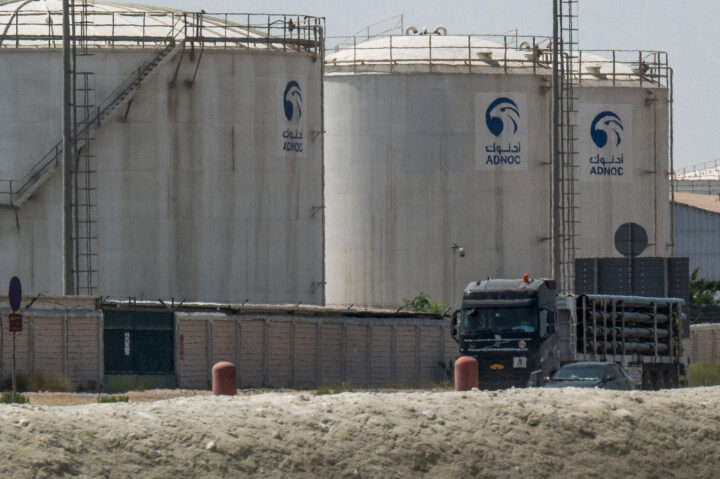
ADNOC Gas, a subsidiary of the Abu Dhabi National Oil Company, facility in Abu Dhabi on March 3, 2026.
The United Arab Emirates announced on Tuesday it will withdraw from the Organization of the Petroleum Exporting Countries (OPEC) effective May 1, dealing a significant blow to the oil-producing bloc and its de facto leader, Saudi Arabia.
OPEC, which coordinates production policies among major oil producers to influence global supply and prices, accounts for roughly 36% of global oil output and nearly 80% of proven reserves.
Saudi Arabia is widely viewed as the group’s leader, but the UAE has been a key contributor, producing the third-largest output within OPEC behind Saudi Arabia and Iraq. The organization was founded in 1960 by Saudi Arabia, Iran, Iraq, Venezuela and Kuwait. Abu Dhabi joined in 1967, with the UAE maintaining membership after its formation in 1971.
In a statement, the UAE’s state-run news agency said the decision reflects the country’s “long-term strategic and economic vision and evolving energy profile” and serves its “national interest.”
The statement also pointed to regional instability amid the Iran war, including tensions in the Strait of Hormuz, as a factor shaping global energy dynamics.
Following its exit, the UAE said it will continue to act “responsibly,” gradually increasing production in line with market conditions.
“This decision does not alter the UAE’s commitment to global market stability or its approach based on cooperation with producers and consumers,” the statement said. “Rather, it enhances the UAE’s ability to respond to evolving market needs.”
Please log in if you already have a subscription, or subscribe to access the latest updates.
 Continue with Google

 Continue with Apple