













































































A U.S. official called Iran's actions ‘wholly unacceptable’ but said negotiators continue to work ‘in good faith’ toward a final deal

Photo by Elke Scholiers/Getty Images
Crude oil tankers, bulk carriers and vessels sit anchored around Qaboos Port on June 22, 2026 in Muscat, Oman.


 Add JewishInsider on Google
A brief window of U.S. sanctions relief for Tehran closed on Tuesday as the Trump administration revoked a waiver that allowed the sale of Iranian oil in response to continued Iranian attacks on shipping vessels in the Strait of Hormuz.
Last month, the Treasury Department lifted sanctions on Iranian oil sales by issuing a 60-day license, a decision experts told Jewish Insider risked providing Tehran with significant revenue for malign activity. Treasury Secretary Scott Bessent had said the temporary license was issued due to Iran’s commitments under the memorandum of understanding, including guaranteeing safe passage through the Strait of Hormuz and inviting international nuclear inspectors back into the country — a claim that Iran swiftly denied. The license allowed Iran to produce, deliver and sell oil, including to U.S. importers, through Aug. 21.
But since the agreement was signed, Iran has since continued its attacks on commercial vessels navigating the Strait of Hormuz, including strikes on three commercial tankers since the beginning of the week, which a U.S. official called “wholly unacceptable.”
“As President [Donald] Trump and the administration have repeatedly affirmed, the MOU in effect with Iran is entirely performance-based. Iran will only reap benefits if they exhibit good behavior,” the official told JI. “Iran’s actions in the Strait were wholly unacceptable to the United States and will be met with consequences. Our negotiators continue to work in good faith towards a final deal.”
An Iranian Foreign Ministry spokesperson had warned that commercial vessels using routes outside of Iranian control could face consequences and said that Iran was “diligently fulfilling its commitments” within the MOU to manage the strait, according to Axios.
The House speaker said he wants negotiations to play out before passing judgment
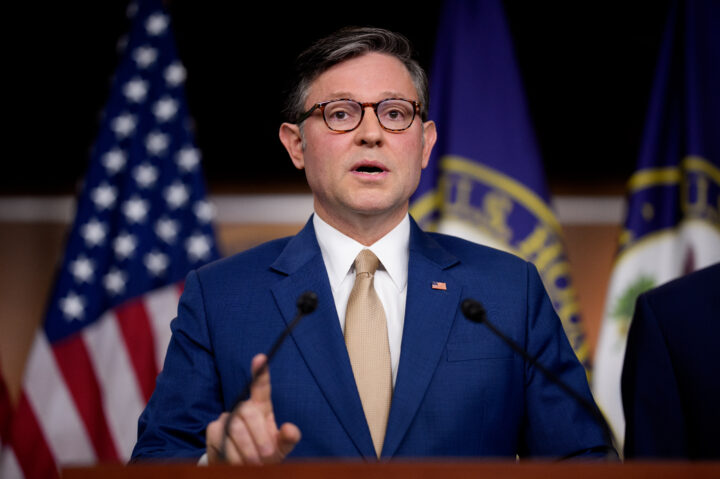
Andrew Harnik/Getty Images
Speaker of the House Mike Johnson (R-LA) speaks during a news conference on Capitol Hill on October 20, 2025 in Washington, DC.
Breaking with many Senate Republicans who have expressed skepticism about various elements of the Trump administration’s memorandum of understanding with Iran, House Speaker Mike Johnson defended the deal on Tuesday.
House Republicans returned to Washington on Tuesday for the first time since the deal with Iran was finalized.
“We need to keep forward with good progress, the details are still being negotiated, so I’m not going to prejudge,” Johnson said.
“There’s a lot of moving parts right now,” Johnson said, when asked whether he has concerns about the lifting of oil sanctions under the agreement, as he did for the Obama administration’s 2015 nuclear deal. “It is something the Trump administration is working around the clock on. I trust that they’re going to come to a lasting solution on that. The world desperately needs it and we do as well.”
When pressed, he said that he has “always been a supporter of strong sanctions against Iran” but added that there’s “a lot of moving parts to this” and that he’s “not going to tell the administration how to negotiate that.”
Johnson added that he is “heartened to see” gas prices decreasing and the Strait of Hormuz reopened.
While several Republican defense hawks in the Senate have criticized the administration’s deal with and concessions to Iran, others say they want to see the full effects of the agreement and the potential outcome of negotiations first.
Sen. Kevin Cramer (R-ND) said at an Orthodox Union luncheon on Tuesday that he is currently weighing in privately with Republican leadership and the White House about his views on the deal, “in the hopes that at the end of all of this, that Israel is in a better neighborhood, and I believe that … can happen.” He said he would speak out publicly if “appropriate.”
Other hawkish Republicans have pointed blame for the deal away from the president himself.
Sources say that the administration had delayed the bill and watered it down due to a reluctance to impose sanctions on China, the primary importer of Iranian oil
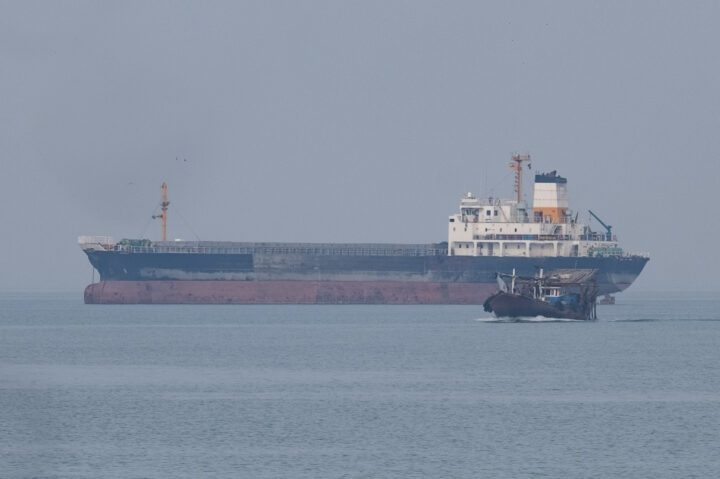
Morteza Nikoubazl/NurPhoto via Getty Images
An oil tanker is being pictured in the Persian Gulf near the seaport city of Bushehr, in Bushehr Province, southern Iran, on April 29, 2024.
The Trump administration intervened to water down a broadly bipartisan sanctions bill targeting Iran’s oil exports to China, sources told Jewish Insider.
The House is set to vote next week on the Enhanced Iran Sanctions Act, led by Reps. Mike Lawler (R-NY) and Sheila Cherfilus McCormick (D-FL), which has nearly 300 cosponsors and advanced out of the House Foreign Affairs Committee in April 2025 by a voice vote, indicating broad bipartisan support. It began moving to the House floor earlier this year using a consensus measure for legislation with at least 290 cosponsors.
But the version of the bill now up for consideration is significantly different from the version that was first introduced and passed out of committee.
A congressional source and another person familiar with the legislation said that the changes, which they said would soften the impact of the bill, had been made at the behest of the Trump administration, which had delayed progress on the bill for months over concerns about placing sanctions on China, which would have been caught up in the expanded sanctions on Iran’s oil trade as the primary importer of Iranian oil.
The administration has been engaging in trade talks with Beijing, which it felt could have been disrupted by the enactment of sanctions, though the Treasury Department has still sanctioned some oil processing facilities in China under other authorities passed by Congress in 2024.
As currently written, the legislation gives the administration the authority to impose sanctions on foreign individuals or businesses that have “knowingly engaged in any significant transaction related or incidental to the processing, refining, export, transfer or sale of oil, condensates, or other petroleum or petrochemical product in whole or part from Iran” or conducted significant transactions with individuals or institutions sanctioned under a previous Iran oil sanctions bill.
The sanctions would also apply to corporate officers of such companies and immediate family members who “demonstrably benefit” from these activities.
The original version of the sanctions legislation, however, mandated the imposition of such sanctions — providing less latitude to the administration in implementing the bill — and specified that banks and financial institutions, insurance providers, ship-flagging registries, pipeline builders and operators of processing facilities would all specifically be subject to sanctions under the legislation.
It applied to successors and aliases of sanctioned companies, as well as to individuals or organizations that directly or indirectly owned or controlled a majority interest in a sanctioned institution or were majority owned or controlled by a sanctioned institution. And the sanctions applied to all immediate family members of those directly sanctioned.
The original bill applied to any transaction related to the Iranian petrochemical trade, rather than only “significant” transactions, and included specific mention of natural gas exports as well.
The updated legislation modifies the presidential waiver provision, which originally applied only if the president determined that waiving the sanctions was “vital to the national interests” of the U.S. The updated version allows a waiver if it is “in the national interests” of the country.
The original bill required the administration to notify Congress 15 days before it planned to renew a waiver, if applicable, whereas the new bill does not include any specific timeline for such notification.
The updated bill also entirely eliminates provisions creating an interagency working group responsible for working with international partners to coordinate sanctions and share intelligence.
The new version of the bill includes a provision that would terminate the sanctions if Iran ceases its malign activities.
The House will also vote next week on the Holocaust Expropriated Art Recovery (HEAR) Act, which aims to help Jewish families recover Nazi-looted artwork by eliminating loopholes used by museums and other stakeholders that have continued to hold such works.
The bill passed the Senate by unanimous consent.
Both bills are being offered under suspension of the rules, a procedure requiring two-thirds support from the chamber.
Please log in if you already have a subscription, or subscribe to access the latest updates.
 Continue with Google

 Continue with Apple